




Abstract
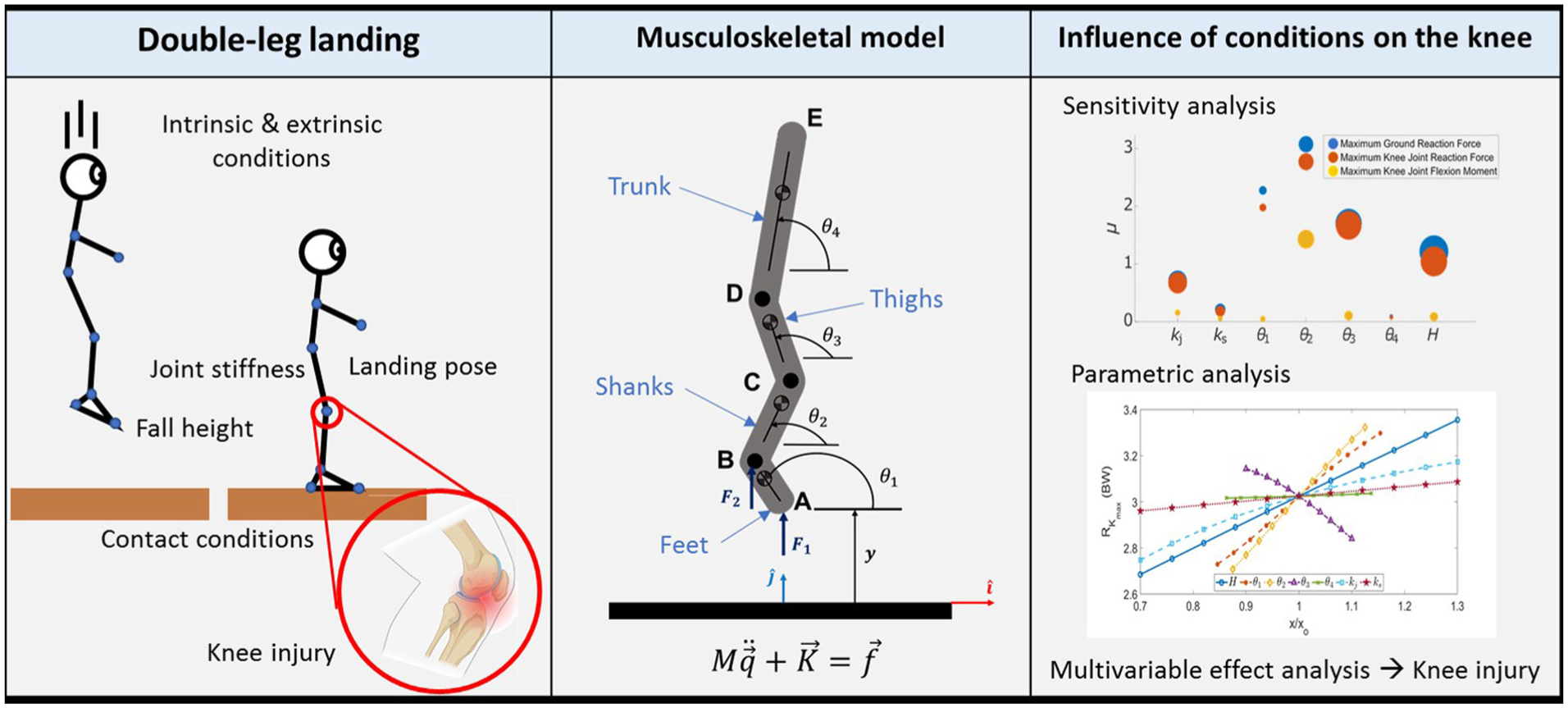
Knee injuries are prevalent in the sports world, particularly during single and double-leg landings. These injuries can affect various structures of the knee, including ligaments, menisci, condyles, the patellar tendon and others. While body posture at the time of ground impact plays a significant role in the occurrence of such injuries, extrinsic factors such as fall height, contact conditions and landing surface properties are also critical. Additionally, the stiffness-damping characteristics of the human joints may contribute to the risk of knee injury. This paper proposes a new dynamic model to investigate the influence of intrinsic and extrinsic parameters on knee joint forces and moments during a double-leg landing task. The model considers the mass, posture and movement of the body segments, the stiffness-damping of the joints, the ground reaction force and the landing surface conditions. The calibration of the model is based on ground reaction force behaviour reported in the literature. A sensitivity analysis using the Morris method is conducted to evaluate the influence of intrinsic and extrinsic parameters on knee joint forces. The results indicate that foot, shank and thigh posture, as well as the fall height, have the most significant influence on the knee joint forces and moments. This study provides valuable insights into the mechanisms of knee injuries and highlights the importance of considering both intrinsic and extrinsic factors in injury prevention strategies.
Get full access to this article
View all access options for this article.