



Abstract
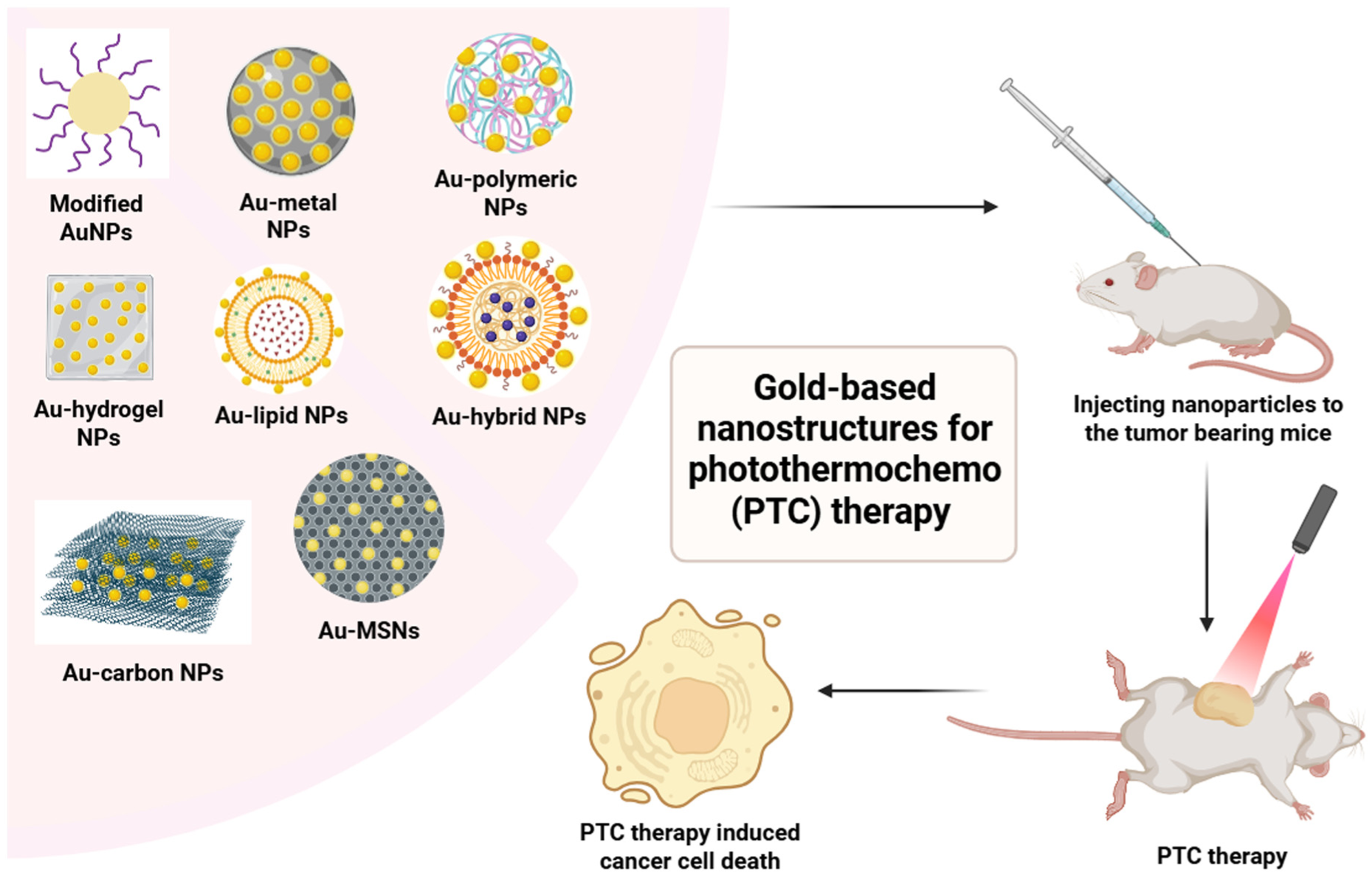
According to the Global Cancer Observatory of the International Agency for Research on Cancer (IARC), Asian countries have a high incidence, mortality, and prevalence rate of cancer among other countries. Owing to the complexity and different stages of cancer, treating cancer remains difficult. Chemotherapy is a conventional strategy used to treat cancer, along with surgery, immunotherapy, and radiotherapy. Chemotherapeutic agents are effective in killing cancer cells; however, they also cause various side effects, such as fatigue and high systemic toxicity. To address this issue, nanomedicine plays a crucial role in developing externally stimuli-responsive smart nanocarriers to enhance cancer treatment. Among the various types of therapies, photothermochemotherapy (PTC) is one of the most effective ways to treat cancer where nanocarriers are designed to release drugs through NIR light-induced hyperthermia in the tumor microenvironment. Gold nanoparticles (AuNPs) are the best photosensitizers that convert near-infrared (NIR) light into heat and are used to fabricate PTC nanocarriers. In addition to AuNPs, other materials have been used to fabricate PTC nanocarriers to enhance various properties, such as drug loading efficiency and targetability. This review systematically examines a broad spectrum of gold-based nanocarriers, including structurally modified AuNPs and composite formulations incorporating metal, polymer, carbon, hydrogel, lipid, hybrid, and mesoporous silica components, all of which are engineered to enhance cancer cell ablation through synergistic PTC.
Keywords
Get full access to this article
View all access options for this article.