



Abstract
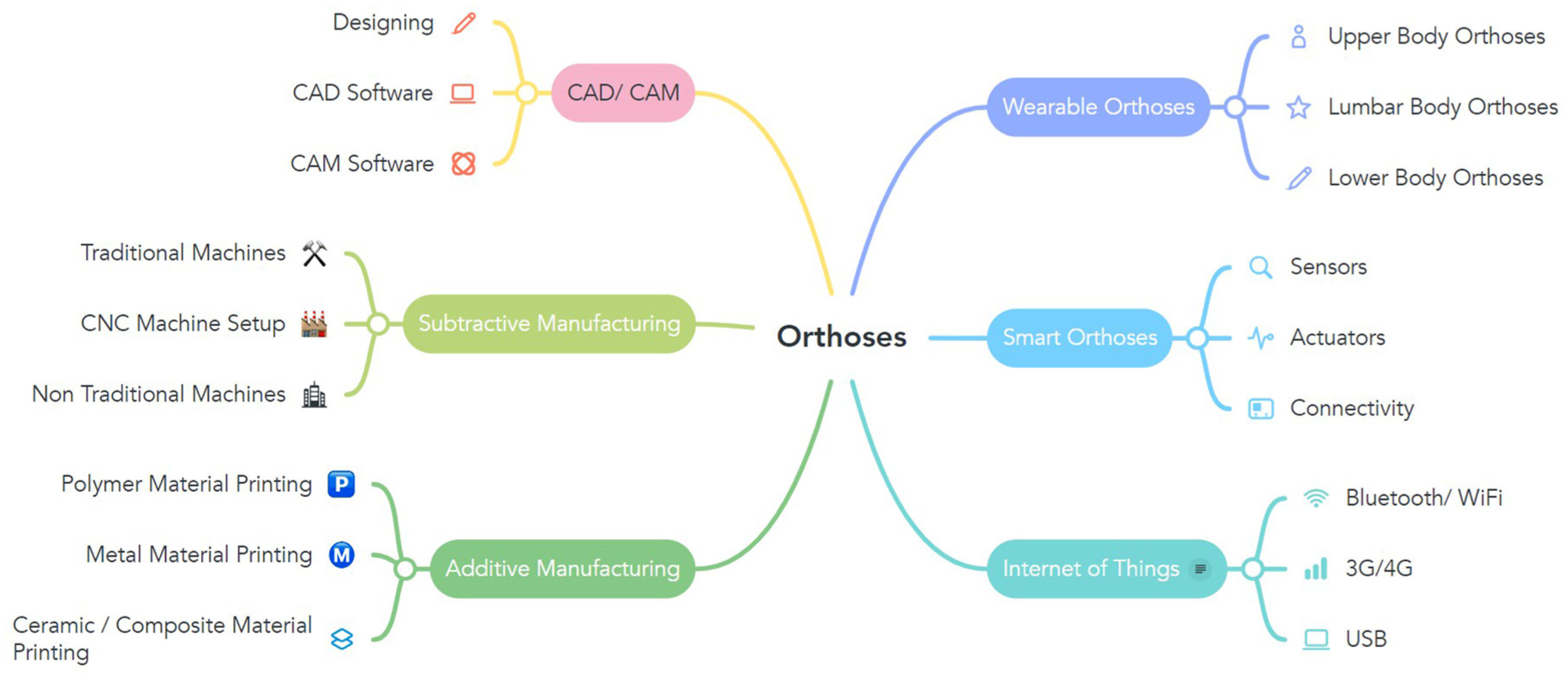
The growth of assistive technology has increased the use of smart wearable orthoses. This is driven by improved sensors, actuators, cheaper integrated circuits, better data connectivity for data acquisition, and advanced manufacturing techniques. These smart devices correct, support, and monitor physical deformities and movements. This study reviews recent literature on smart wearable orthotic devices’ design, application, and fabrication. The focus is on biomedical uses and advanced manufacturing methods. A total of 79 peer-reviewed articles were identified. After screening based on titles, abstracts, and full texts, 52 articles were selected. This article provides a state-of-the-art review and analysis of smart wearable orthoses with sensor systems and manufacturing techniques such as computer-aided design, computer-aided manufacturing, additive manufacturing, and the Internet of Things used in medical rehabilitation and health monitoring. The findings highlight the role of smart orthoses in physical rehabilitation and deformity management. They offer valuable support in managing musculoskeletal conditions. This review provides researchers with insights into current trends and technologies in the field. It also identifies opportunities for innovation in orthotic design. Based on the review, researchers in the field of assistive technology can understand the avenue of development of newer and more innovative orthoses for different deformities and identify relevant technology to their work. One such promising domain is smart orthotics intervention in clubfoot treatment in low-resource environments where access to conventional long-term care is restricted.
Get full access to this article
View all access options for this article.