



Abstract
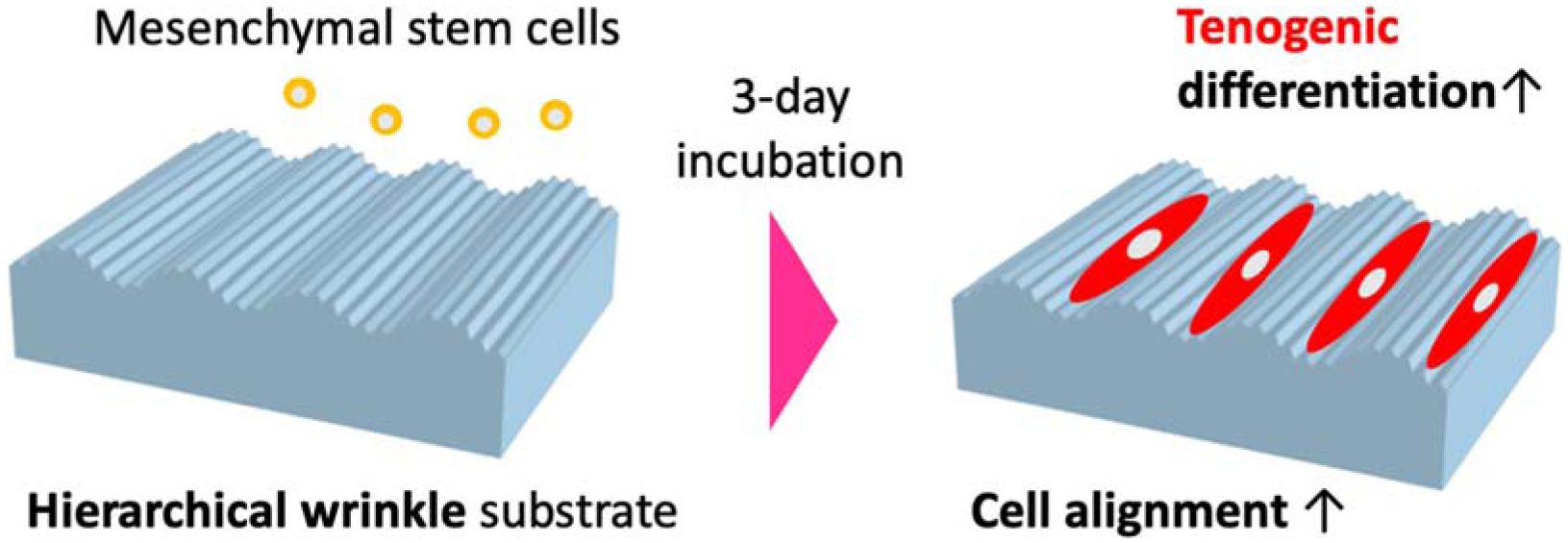
Stem cells possess the unique abilities to self-renew and differentiate into various cell types, making them invaluable in tissue engineering and regenerative medicine. This study explores the behavior of human bone marrow-derived mesenchymal stem cells (hMSCs) on poly(dimethylsiloxane) (PDMS) substrates with hierarchical wrinkle patterns. These bio-inspired patterns were created using the surface instability of gold-coated elastomer bilayers. The results indicate that the hierarchical wrinkles not only promote cell alignment but also up-regulate tenogenic differentiation markers without chemical induction. The cells exhibited increased expression of tenocyte markers (Mkx, and Col1) and decreased expression of osteoblast (Alp, and Opn) and chondrocyte (Sox9) markers. This bio-inspired substrate design, mimicking natural extracellular matrix structures, provides a promising approach for developing functional tissue constructs and advancing stem cell-based regenerative therapies. The study underscores the importance of substrate topography in directing stem cell fate, highlighting its potential in mechanobiological applications and tissue engineering.
Keywords
Get full access to this article
View all access options for this article.
References
Supplementary Material
Please find the following supplemental material available below.
For Open Access articles published under a Creative Commons License, all supplemental material carries the same license as the article it is associated with.
For non-Open Access articles published, all supplemental material carries a non-exclusive license, and permission requests for re-use of supplemental material or any part of supplemental material shall be sent directly to the copyright owner as specified in the copyright notice associated with the article.
