




Abstract
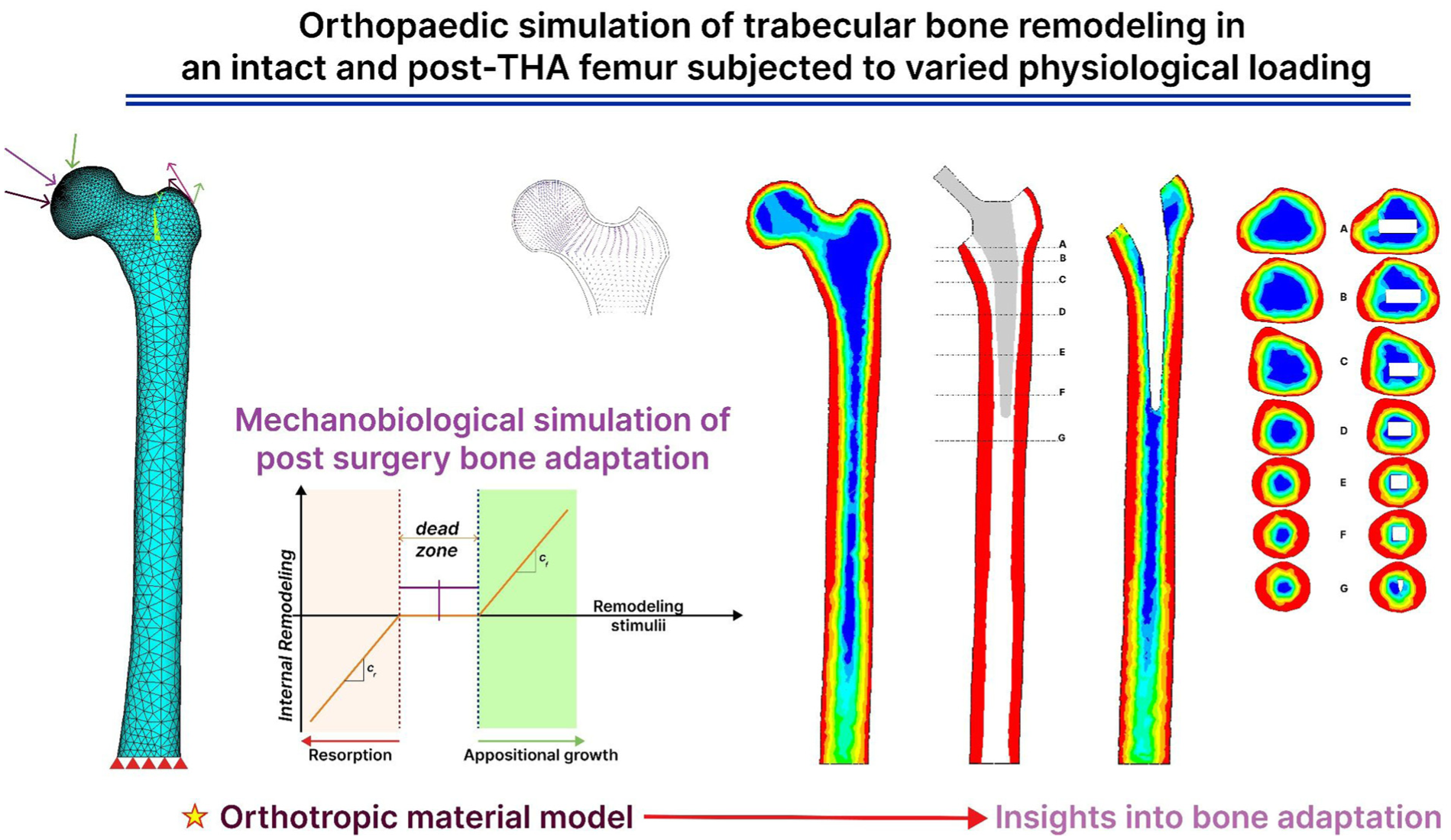
Traditional bone adaptation algorithms considering bone as isotropic, though explain bone density distribution but fail to account for the complex trabecular microarchitecture and mechanical significance of bone material characterization. This study enhances predictions of spatio-temporal adaptation of femoral trabecular structure by utilizing an orthotropic material model. A bone remodeling algorithm using finite element analysis was developed to precisely assess the element-wise material properties and its local orientation within the femur. The orthopedic simulations incorporated a multiple loading scheme reflecting a wide range of daily locomotor activities, thereby providing a more comprehensive evaluation of bone adaptation. The simulations could effectively capture the material directions, directional stiffnesses and density distributions, aligning closely with the actual morphology of the femur. Findings from the present simulations highlight the differential impact of total hip arthroplasty (THA) on peri-prosthetic bone remodeling. By integrating an orthotropic material model, this study offers profound insights into the bone remodeling processes post-THA. This approach, by capturing the directionality and complex mechanical behavior of bone, improves predictions of post-surgical bone growth and healing, contributing to improved outcomes in THA. The findings underscore the importance of considering multiple loading scenarios and patient-specific factors in predicting bone response and optimizing clinical outcomes.
Get full access to this article
View all access options for this article.