



Abstract
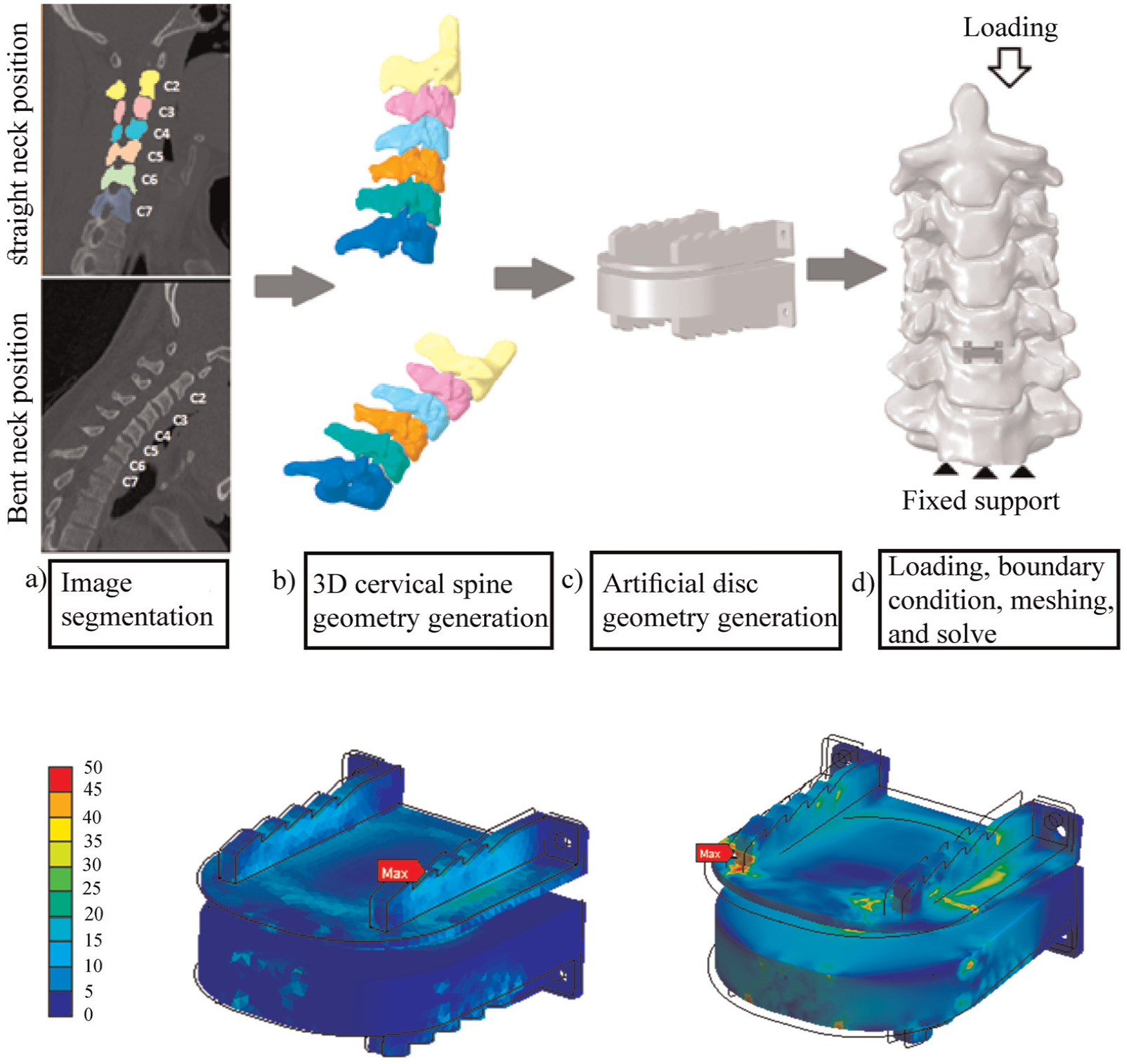
One of the most common diseases of the spine is the degenerative intervertebral disc, which in extreme cases requires surgery. Replacing a damaged disc with an artificial disc (AD) is a common treatment method. Nowadays, due to the extensive use of smartphones and other similar devices, our cervical spine is often in a vulnerable position, such as a bent position, which results in more stress on the components of the spine, especially intervertebral discs. In this research, the effects of geometrical parameters of an AD on the biomechanics of the cervical spine are investigated in a bent neck position, using the finite element method. In this regard, computed tomography scans of the neck of a 29-year-old male in two states of straight and bent neck are used. Nine different AD geometries are generated by varying three geometric design variables, including the height, position of the centre of rotation and rotation radius of the AD. The results of stress distribution in the spine for the straight and bent neck positions are compared, and the maximum von Mises stress on the AD and healthy discs are assessed to choose an optimum geometry. The results show that proper selection of the geometrical parameters of the AD can lead to up to an 85% reduction in the AD’s maximum von Mises stress for a bent neck position. The sensitivity analysis shows that the location of the rotation centre has the highest impact on the distribution of von Mises stress in the artificial disc.
Get full access to this article
View all access options for this article.