



Abstract
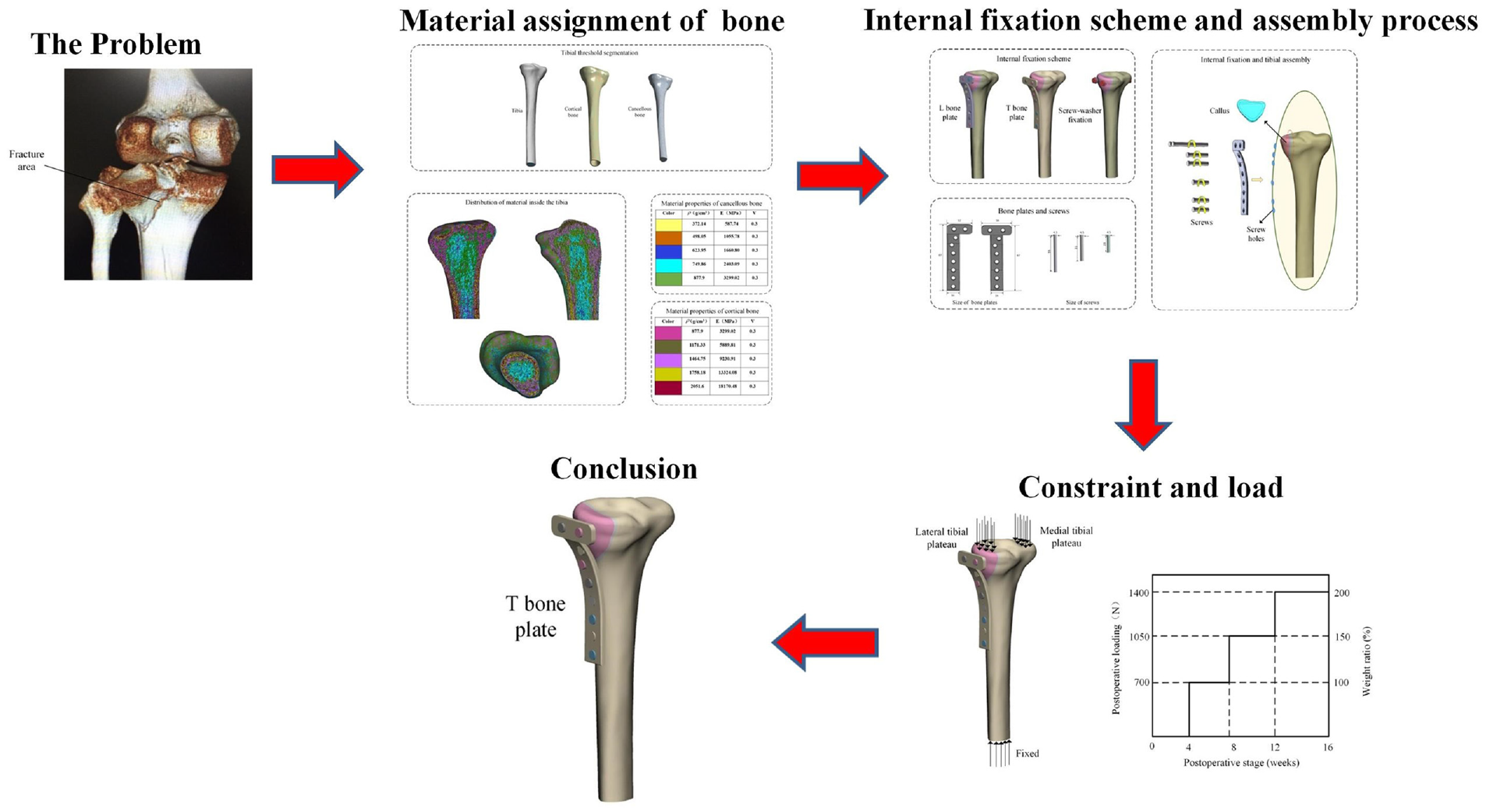
The selection of internal fixation as the primary fixation modality for the patient is one of the challenges for the surgeon treating the patient in question. A model of the lateral tibial plateau fracture was established. Three different configurations of internal fixators namely L bone plate, T bone plate, and screw-washer were analyzed. Three stages after surgery were simulated to assess the displacement of bone plates, screws, washers, and the stress shielding ratio in the fracture area.
At three stages after surgery, the T bone plate showed better stability for patients during rehabilitation compared with the remaining two schemes, and the screw-washer scheme was the least stable due to the larger internal fixation displacement and stress shielding ratio in the fracture area. In contrast, the L bone plate scheme showed better stability in the early stages after surgery but was second only to the screw-washer scheme in the middle and late stages after surgery. The T bone plate showed better stability and became a new selection for surgeons to treat related patients. At three stages after surgery, the T bone plate has better biomechanical stability compared to the L bone plate and screw-washer schemes.
Get full access to this article
View all access options for this article.