




Abstract
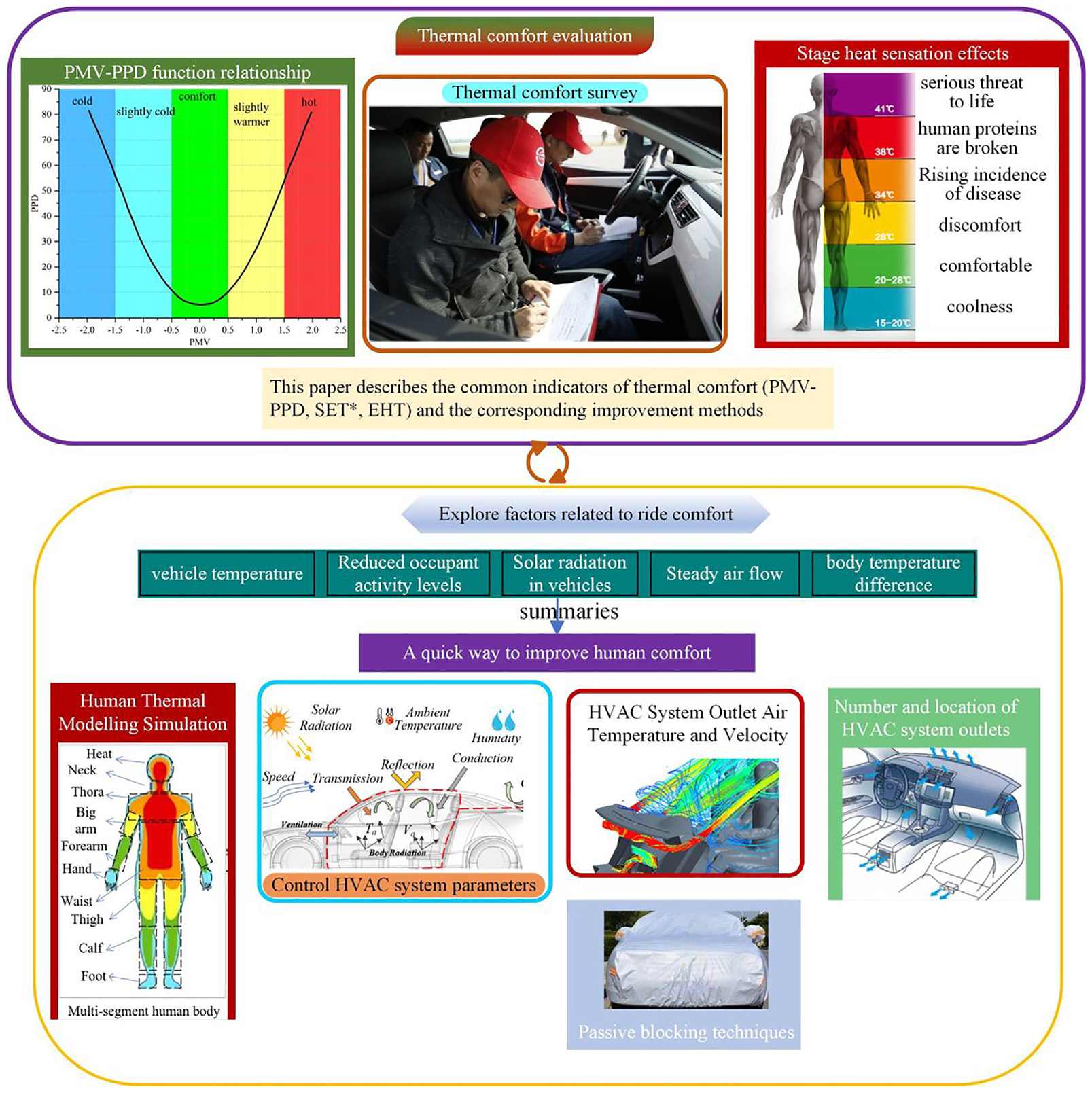
With the development of society and the enhancement of people’s living standards, people are paying increasing attention to the safety and comfort of travel. Incorporating solar radiation blocking technology into heating, ventilation, and air conditioning systems presents a fundamental solution to addressing cabin comfort issues. This paper reviews the recent research progress on evaluation methods, influencing factors, and strategies aimed at enhancing passenger comfort. Firstly, it provides a concise overview of objective methods employed for assessing thermal comfort, along with a summary of the factors that impact ride comfort. Secondly, human thermal models capable of responding to the physiological response mechanisms of the human body have been summarized. Thirdly, the factors influencing comfort in varying environments during winter and summer, along with methods to enhance ride comfort, have been emphasized. Finally, a brief overview of the multi-physics field coupling between computational fluid dynamics and cabin human thermophysiological models is presented. The paper underscores previous endeavors aimed at enhancing vehicle occupant comfort and identifies potential avenues for future academic research and commercialization.
Get full access to this article
View all access options for this article.