




Abstract
The suspension system is critical in maintaining vehicle stability in roll and pitch directions. Hydro-pneumatic interconnected suspension systems, in which the suspension struts are connected through hydraulic hoses, flow control valves, and accumulators, have great potential to further enhance anti-roll and anti-pitch characteristics. To address the existing designs’ shortcomings, this study introduces an interconnected suspension with adjustable roll and pitch stiffness (IS-ARPS). It not only eliminates the conventional anti-roll bars but also enables adjustment of roll stiffness depending on the driving and vehicle load conditions. In the pitch direction, the IS-ARPS provides an additional amount of pitch stiffness to reduce the dive/squat during braking/acceleration. The mathematical modeling of the IS-ARPS is also straightforward, requiring less computational cost and making it more practical for real-time implementations. Overall, the IS-ARPS system represents a significant advancement in the design of roll and pitch coupled interconnected suspensions, offering a more practical and versatile solution. The above features are examined through co-simulation between MATLAB/Simulink and ADAMS/Car.
Introduction
A vehicle suspension system provides a smooth ride over rough roads while ensuring that the wheels remain in contact with the ground and vehicle roll is minimized. 1 A soft vehicle suspension is highly desirable for improving the vehicle ride comfort by attenuating the Whole Body Vibration (WBV) arising from the tire-ground interaction. 2 However, it tends to reduce the vehicle roll stability where a firm suspension is needed to reduce the vehicle rollover tendency and to improve the handling stability during extreme turning maneuvers. This is mainly due to the strong coupling between the ride and roll of the vehicle that poses complex design challenges associated with conflicting requirements between ride comfort and directional stability, especially in heavy commercial vehicles, which are exposed to wide load variations. 3 This conflict needs to be eased by introducing advanced suspension technologies. A shock absorber works well with transient and fast-changing inputs like road disturbances, but it becomes ineffective when dealing with slow-changing motions, such as braking, accelerating, and turning maneuvers. In these situations, higher roll and pitch stiffness is preferred for reducing the vehicle rotational motions. Hence, the hydro-pneumatic interconnected suspension system, which can provide adjustable rotational stiffness and damping, is a good approach for improving vehicle handling stability during steady maneuvers. Meanwhile, the suspension stiffness and damping properties can be easily assigned by designers.
One solution is to use various interconnected structures, such as mechanical, 4 electrical, 5 hydraulic, 6 and pneumatic 7 connections. The most popular mechanical interconnection is the anti-roll bar, which applies additional roll stiffness to achieve better roll stability. However, it adds extra weight to the vehicle chassis and deteriorates ride comfort to some extent. 8 To replace anti-roll bars, hydraulic interconnection has received a lot of attention in the past few decades because of its anti-roll/pitch abilities.9,10 The vehicle’s harsh roll and pitch motions can be improved without compromising the ride comfort. Besides, the suspension roll and pitch characteristics can be varied by interconnecting different suspension struts.
One of the roll-plane interconnected configurations in the literature is the
Other than roll stiffness, pitch stiffness is another critical characteristic that affects vehicle stability and handling performance. Pitch refers to the vehicle’s tendency to rotate about its front-to-back axis, which can be caused by acceleration or braking. Appropriate pitch stiffness helps maintain vehicle stability during acceleration and braking, improves handling, and reduces the risk of accidents. In addition, it can improve the vehicle’s overall performance by reducing weight transfer, which can improve traction and grip. Although anti-roll bars are standard on many vehicles, anti-pitch bars are not as commonly used. Most cars use a combination of shock absorbers, springs, and other suspension components designed to resist pitch and provide a stable ride. 16 In addition, adding an anti-pitch bar could negatively affect vehicle handling and ride quality. It could also make the vehicle more difficult to control in certain situations, such as when driving on slippery roads. However, some vehicles may require higher levels of pitch stiffness, such as high-performance sports cars or race cars. 8 These vehicles typically have powerful engines designed to accelerate and brake quickly, which can cause significant pitch motions. Some off-road vehicles, such as trucks or SUVs used for heavy-duty towing or hauling, may require higher pitch stiffness to maintain stability and control under heavy loads. 2 Overall, pitch stiffness is still essential for a vehicle system, but it cannot be maintained by simply adding an anti-pitch bar due to the compact space of the chassis. Thus, some pitch-plane interconnected suspension systems were invented to enhance pitch stiffness without sacrificing ride comfort.
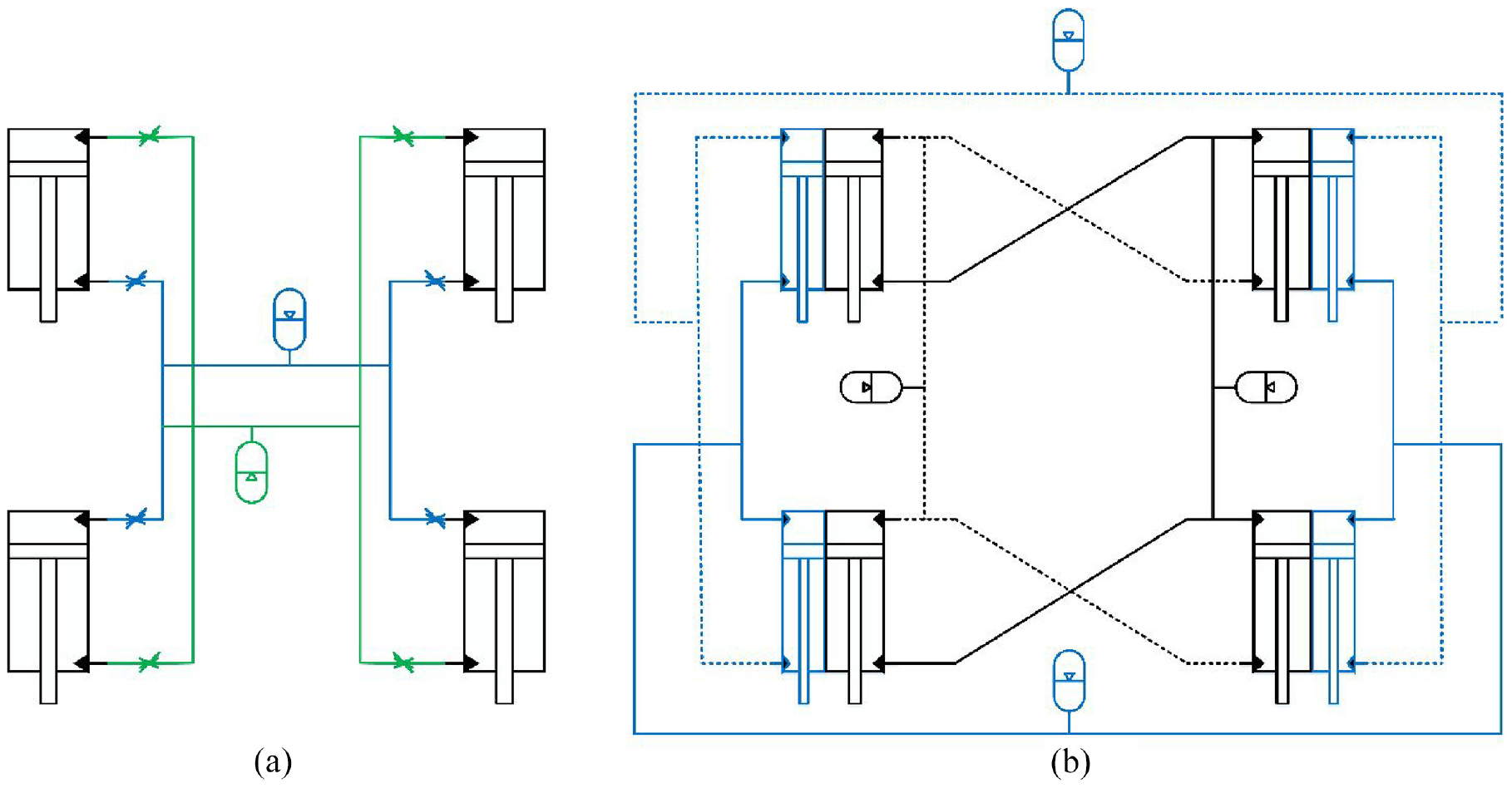
Zhang et al. 17 introduced a bounce and pitch plane hydraulicly interconnected suspension (HIS) for mining vehicles focusing on improving ride quality and pitch stiffness, as shown in Figure 1(a). In detail, a lumped-mass vehicle model with a mechanical-hydraulic coupled suspension system was developed using the free-body diagram method. The impedance of the hydraulic system was modeled according to the transfer matrix method, which was integrated to form the dynamic equations of the mechanical-hydraulic coupled system. The simulation study indicated that the proposed HIS system effectively suppressed the pitch motion to guarantee vehicle handling performance and favorably provided soft vertical stiffness to improve the ride quality. Meanwhile, the force distribution between the front and rear wheels was more reasonable, and the sprung mass vibration decay rate increased somewhat. However, the suspension roll stiffness was not considered by this interconnected configuration. Xu et al.10,18 developed a roll and pitch independently controlled hydraulically interconnected suspension. As shown in Figure 1(b), the inside four cylinders and fluid circuits formed roll-plane HIS, and the additional four cylinders outside formed pitch-plane HIS. The modal analysis showed the modes-decoupling property of the proposed system. Specifically, the roll-plane HIS increases roll stiffness without affecting other modes. This study demonstrated that the vehicle ride comfort and handling stability could be improved simultaneously by integrating the roll and pitch plane HIS. Meanwhile, it decoupled the four vehicle modes (bounce, roll, pitch, and warp) that could be independently tuned without compromise. Besides, Cao et al.19,20 developed two novel hydro-pneumatic struts to enhance roll and pitch stiffness, providing a compact design with a considerably large effective working area.
Compared to the existing designs, a new topology is introduced in this study to realize better anti-roll/pitch characteristics with a less complicated structure. In addition, a stiffness adjustment method is developed, by which the suspension rotational stiffness can be conveniently adjusted to fit various vehicle models, loads, user preferences, driving conditions, etc. The remainder of this paper is structured as follows: Section 2 introduces and models the topology of IS-ARPS and its stiffness characteristics. Section 3 presents and discusses the co-simulation results. In the end, Section 4 summarizes the benefits and highlights of the proposed design.
System modeling
A novel interconnected topology is introduced in this section, as shown in Figure 2. It comprises four double-acting hydraulic cylinders that are connected with each other through hydraulic hoses, four accumulators, and eight flow control valves. The model considers four wheels with vertical degrees of freedom (
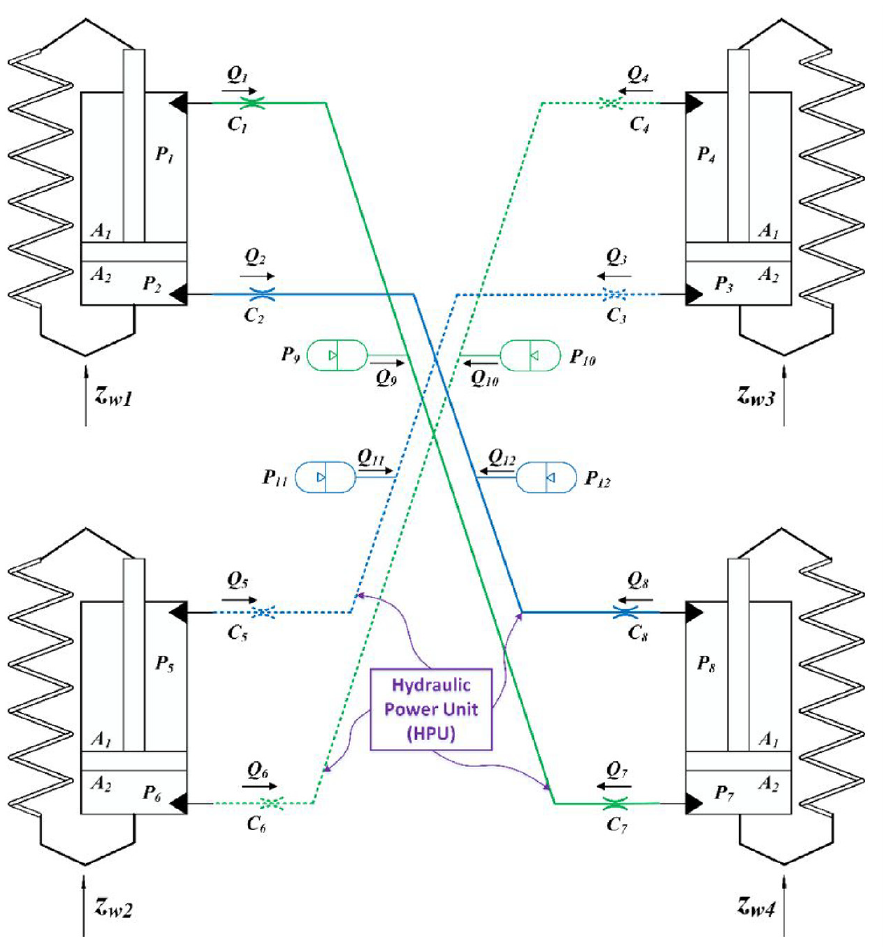
Schematic of the tandem IS-ARPS.
In the first hydraulic circuit (solid green line), the upper chamber of the front left cylinder is connected to the lower chamber of the rear right cylinder. In the second hydraulic circuit (solid blue line), the lower chamber of the front left cylinder is connected to the upper chamber of the rear right cylinder. In the third hydraulic circuit (dashed green line), the upper chamber of the front right cylinder is connected to the lower chamber of the rear left cylinder. In the fourth hydraulic circuit (dashed blue line), the lower chamber of the front right cylinder is connected to the upper chamber of the rear left cylinder. Four accumulators are assembled along the four hydraulic circuits to generate enough roll and pitch stiffness. In addition, the adaptive damping functionality can be realized by utilizing eight solenoid flow control valves.
Moreover, a Hydraulic Power Unit (HPU) is connected to the two hydraulic circuits beside the accumulator inlets. It usually contains motor, tank, solenoid valves, and other essential hydraulic components, as shown in Figure 3. The HPU can be used to pump in or drain hydraulic oil from the interconnected suspension system. In this study, the HPU has three operation modes: off (nominal mode), charging (increase stiffness), and discharging (decrease stiffness). Thus, the system pressure can be easily controlled, which results in adjustable roll and pitch stiffness.
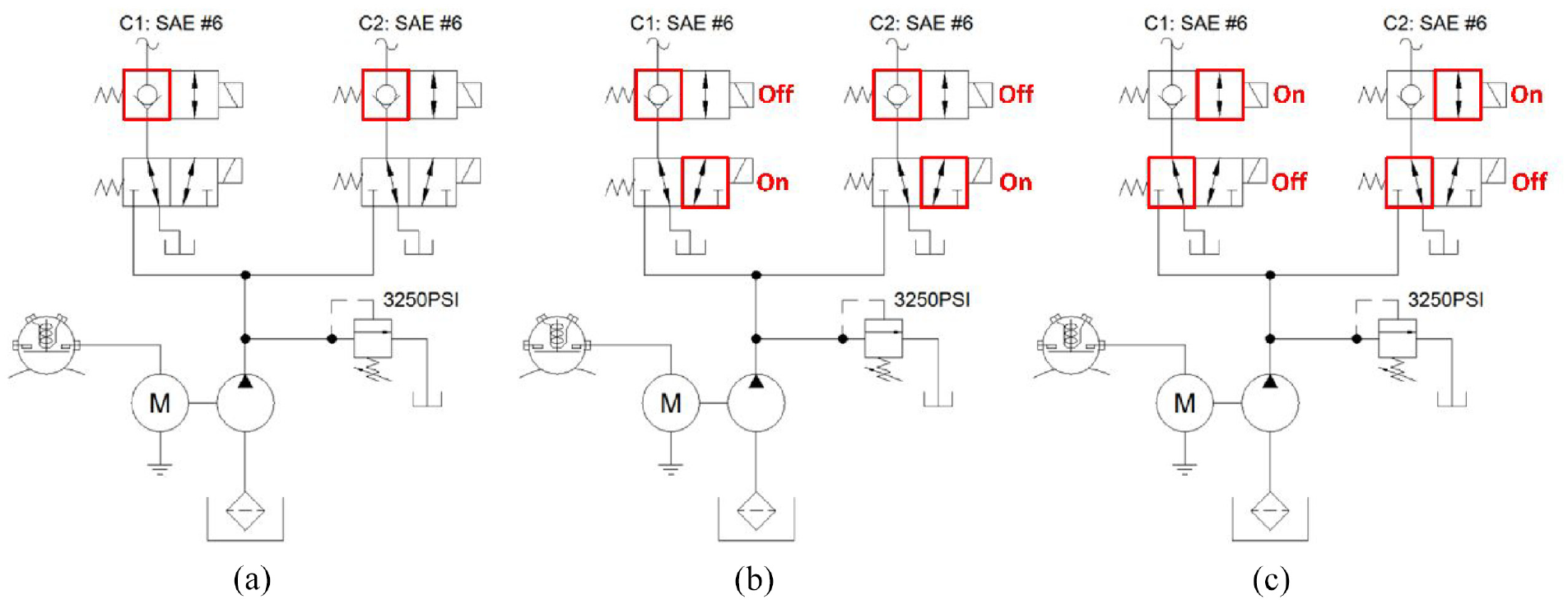
Operation of HPU.
Considering the compressibility of the fluid in each chamber and the continuity of the cylinder movement, the continuity equation in the chamber can be written as

in which
The gas pressure and gas volume in the accumulator always have the following relationship based on the Ideal Gas Law and Boyle’s Law 22 :

where
The flow control valves are utilized to realize the damping characteristics. A simplified linear orifice model is used in this study, which assumes that the orifice has negligible fluid volume and involves linear pressure loss. Thus, the orifice equation can be written as

Based on the hydraulic components and their characteristics introduced above, the mathematical modeling of the IS-ARS can be derived. Firstly, the chamber volumes of hydraulic cylinders can be calculated based on the suspension relative displacement. Assuming the strokes of the hydraulic cylinder at its nominal position are




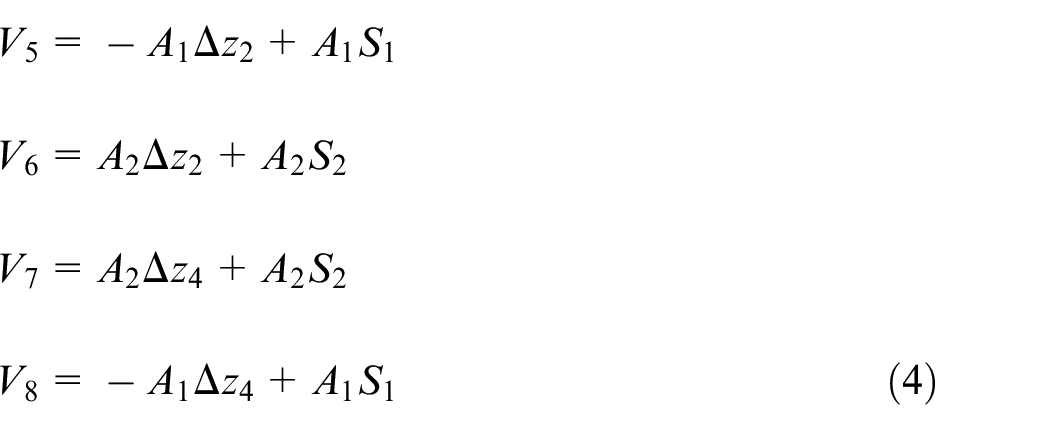
in which the suspension relative displacements at four corners are
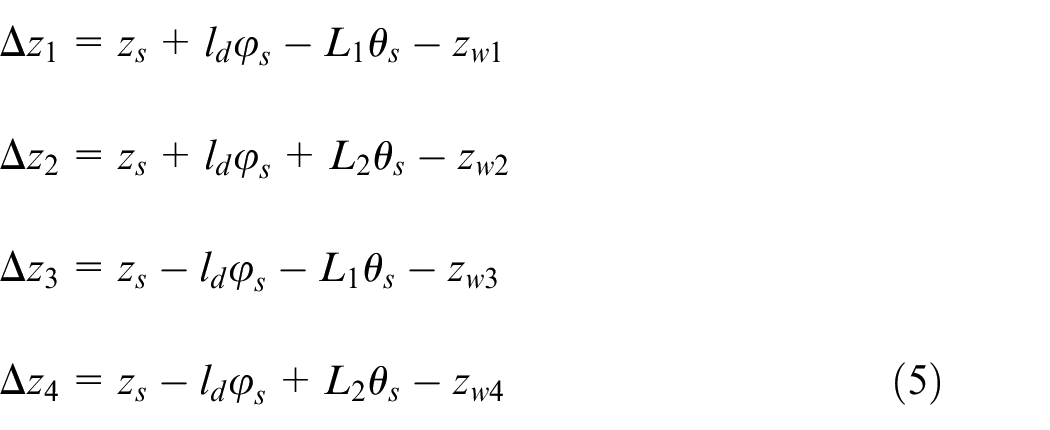
where
Secondly, the time derivative of fluid pressures in the hydraulic cylinders can be calculated according to equations (1) and (3) as follows 23 :



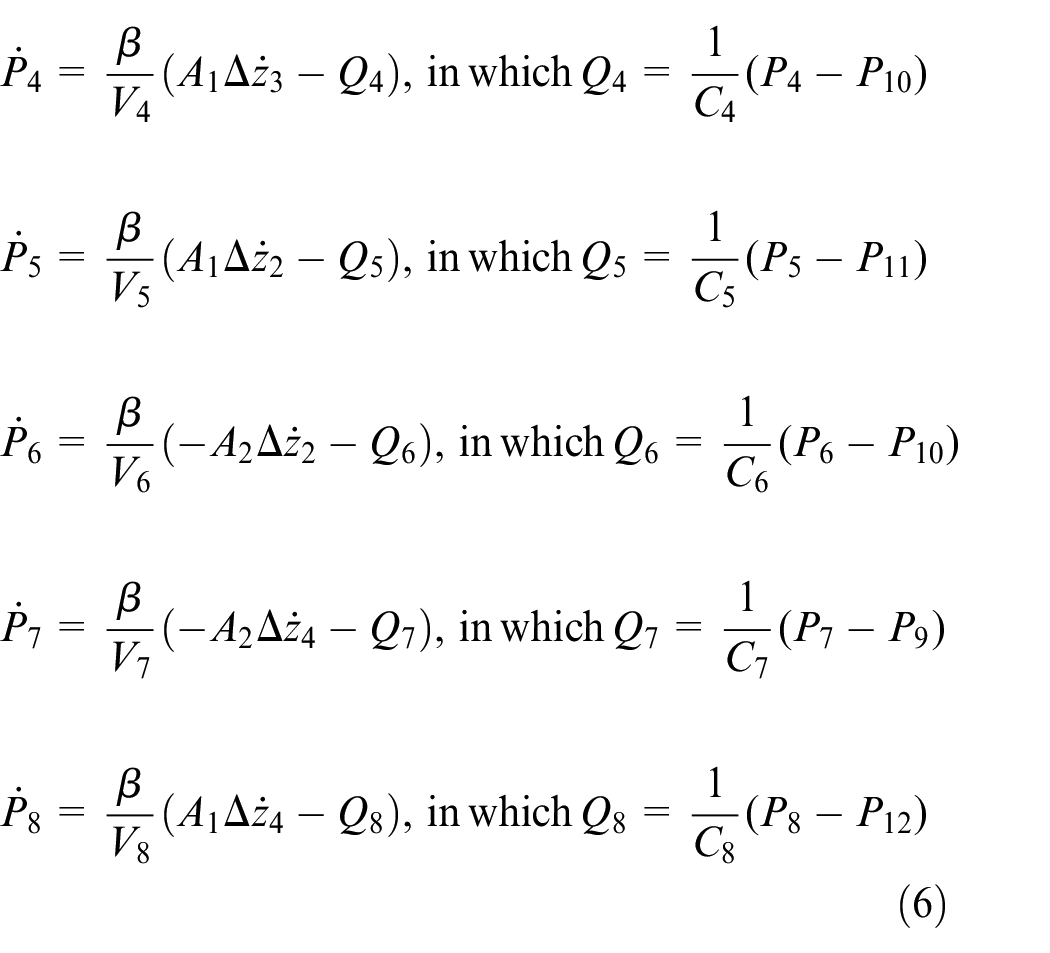
in which
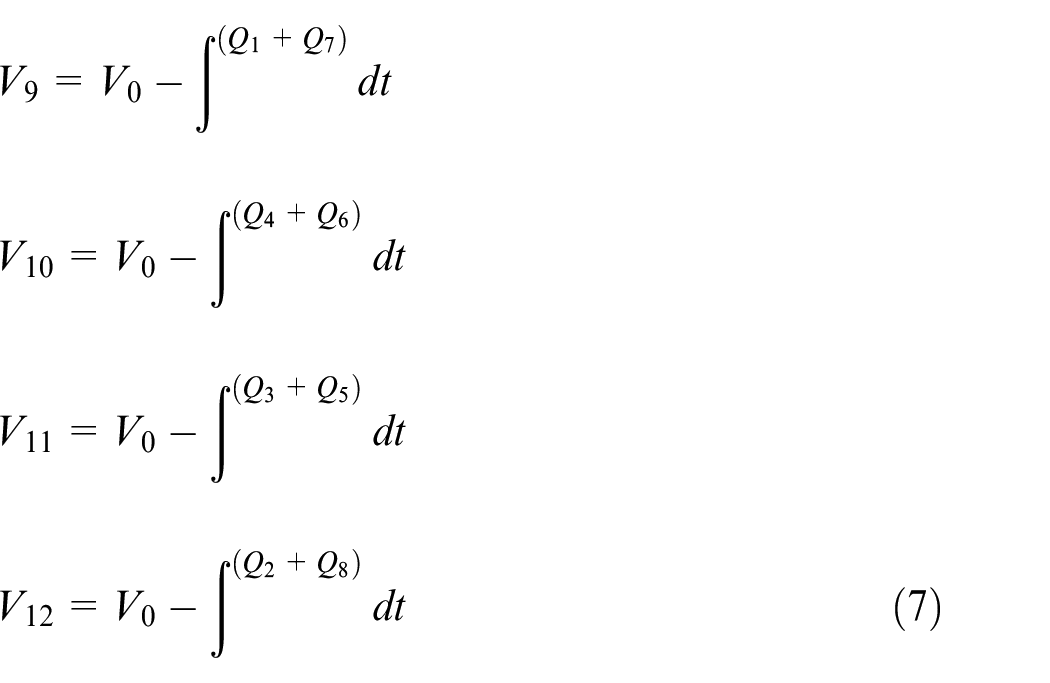
Thirdly, the two accumulator gas volumes can be iteratively calculated based on the nominal gas volume.
Fourthly, the time derivative of the gas pressures in the accumulators can be calculated according to equation (2).
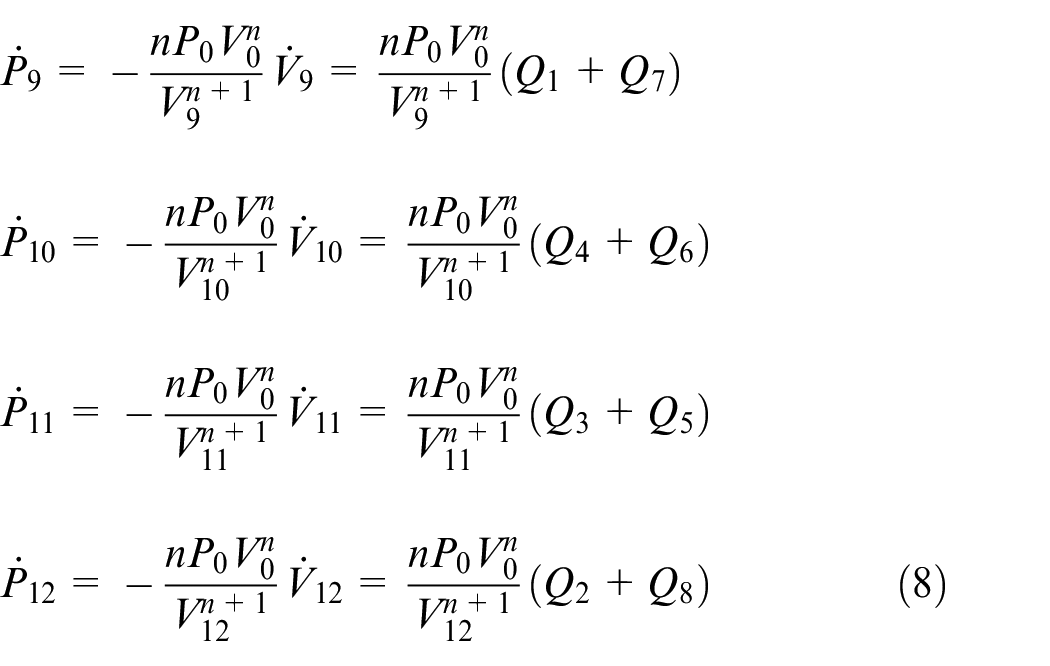
Thus, all the differential equations of the hydraulic system are derived. In this way, the pressures
Roll stiffness analysis
At the suspension steady status, its roll moment can be written as
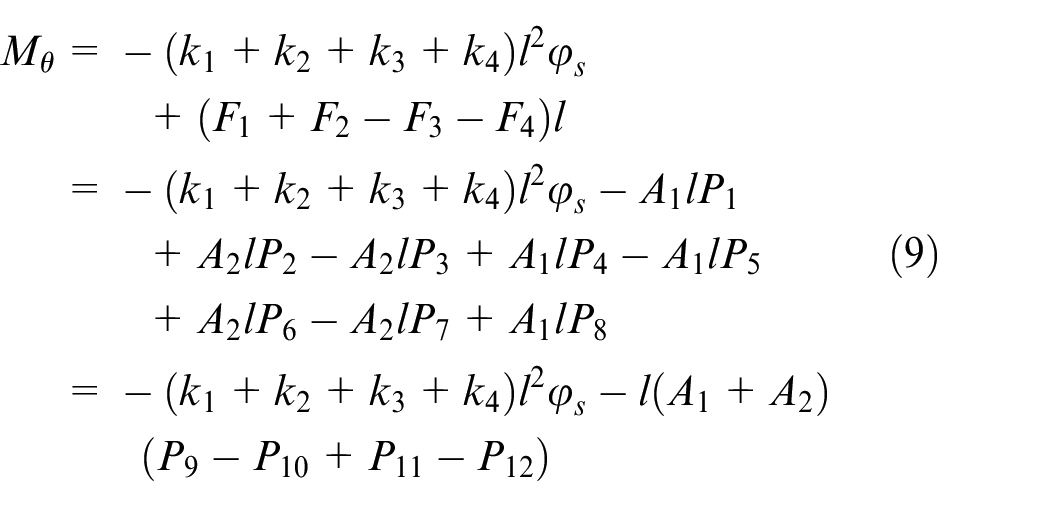
The roll stiffness can be derived from the restoring roll moment subject to the relative roll deflection as
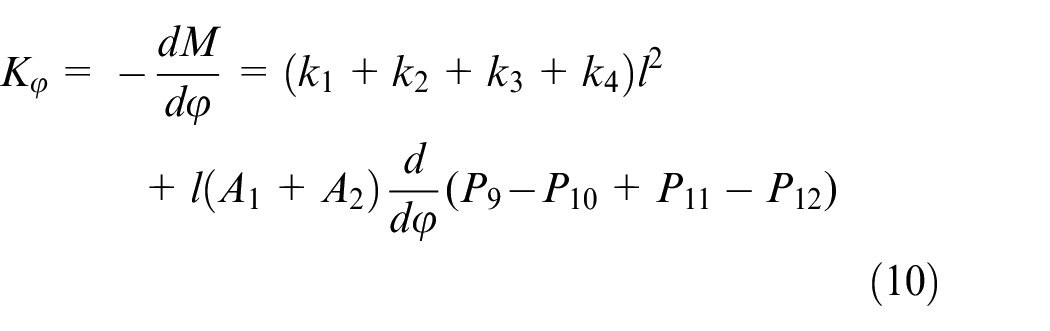
The corresponding derivative of the gas pressures in the accumulators can be calculated as
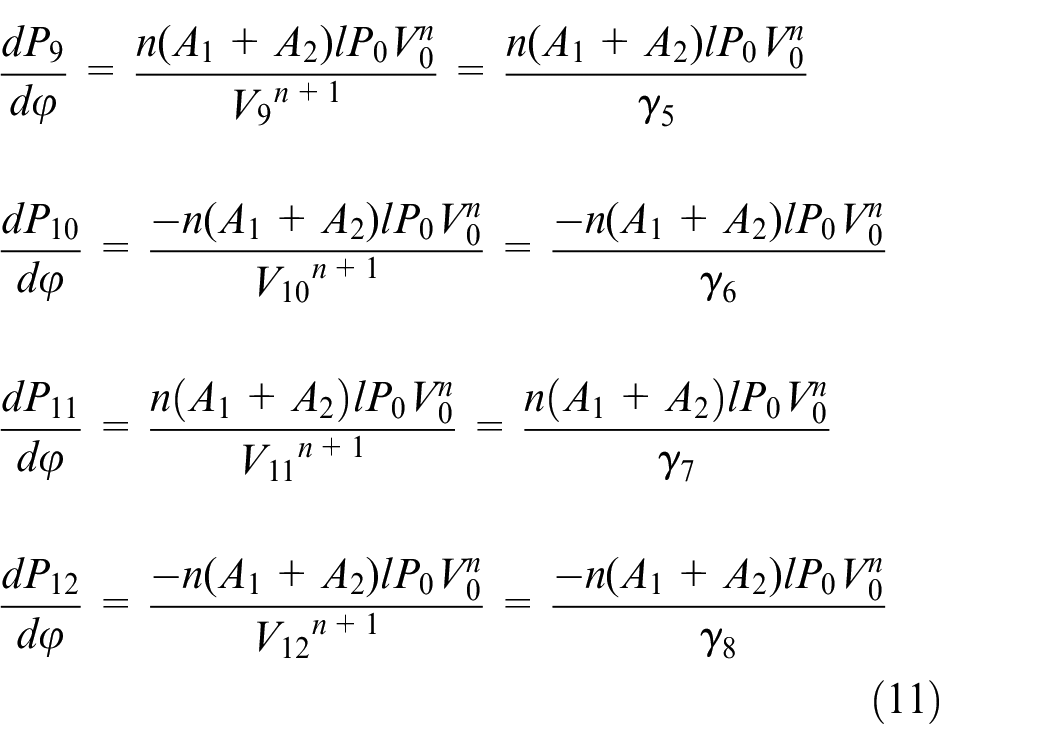
in which
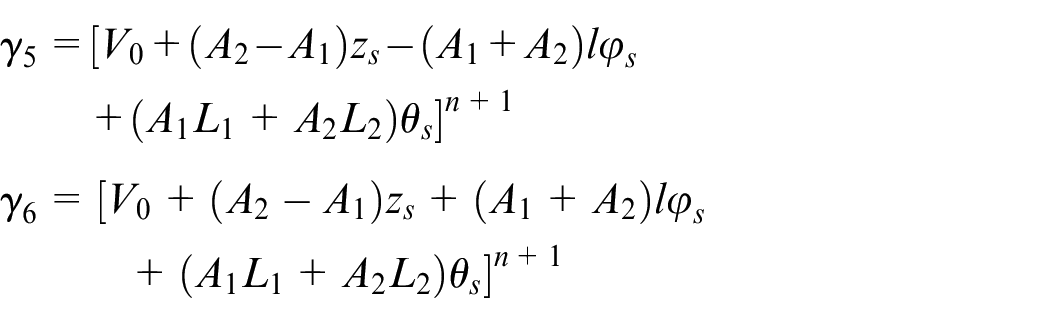


Hence, the roll stiffness of the proposed IS-ARPS can be represented as
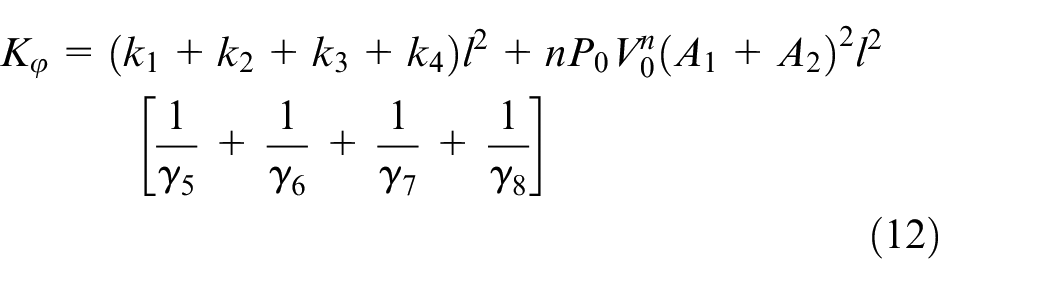
When the Polytropic coefficient

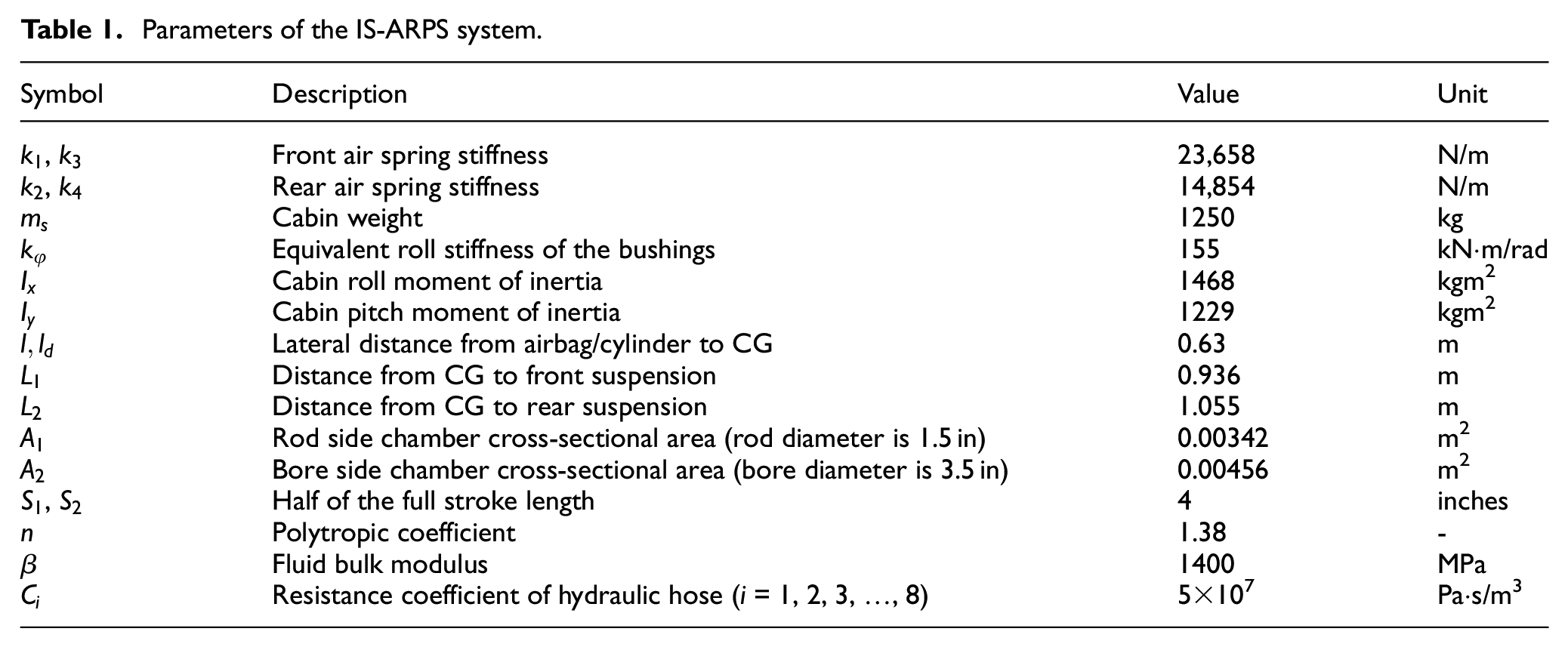
Based on equation (12) and the parameters listed in Table 1, the estimated roll stiffness of the IS-ARPS is presented in Figure 4. Specifically, the estimated results of the four example settings are plotted in different colors, that is,
Parameters of the IS-ARPS system.
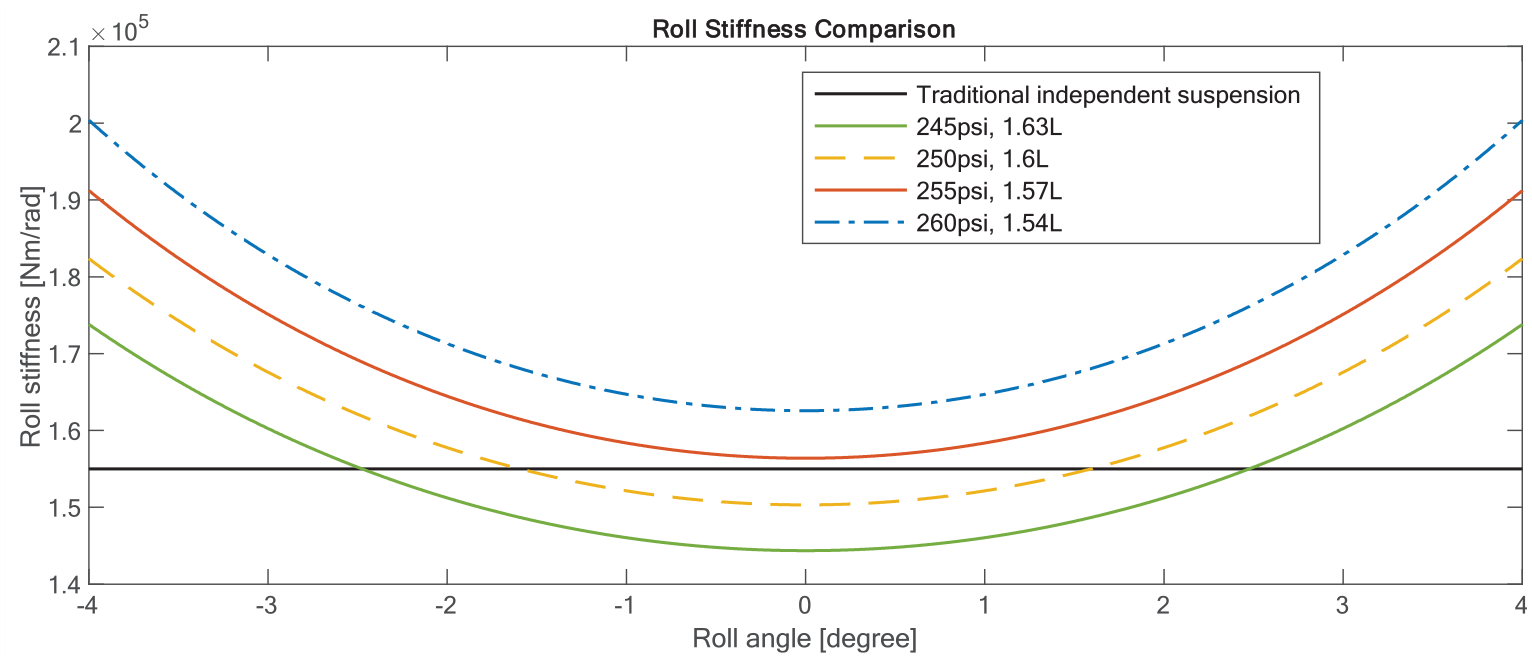
Comparison of the dual-axle suspension roll stiffness.
Pitch stiffness analysis
Suspension pitch stiffness measures the tilting resistance about its transverse axis. It determines how much the cabin will tilt forward or backward in response to longitudinal acceleration. A higher pitch stiffness results in less body pitch, which leads to better stability. In conventional air suspension, the pitch stiffness is mainly provided by springs, while it is difficult to be independently adjusted since the springs affect many other suspension design factors. The proposed IS-ARPS adds an additional amount of pitch stiffness to the suspension system. Meanwhile, the rotational stiffness can be easily adjusted for different vehicle models or applications, which is analyzed in the following section.
The pitch moment can be written as
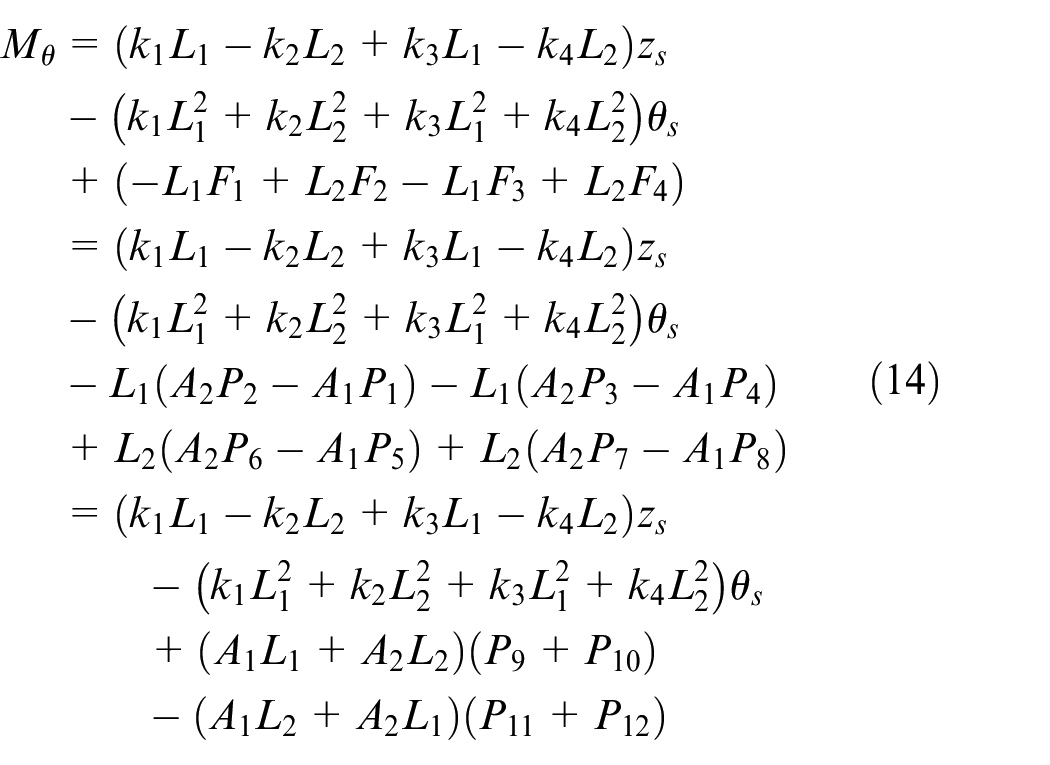
The pitch stiffness can be derived from the restoring pitch moment subject to the relative pitch deflection as
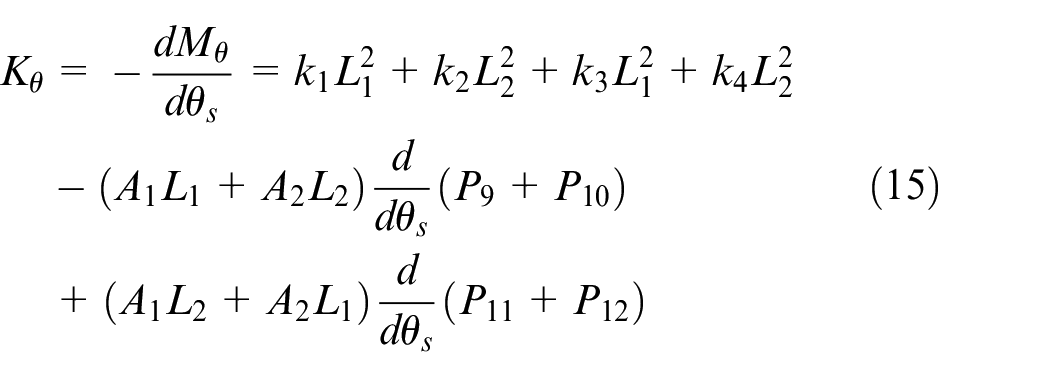
The corresponding derivative of the gas pressures in the accumulators can be expressed as
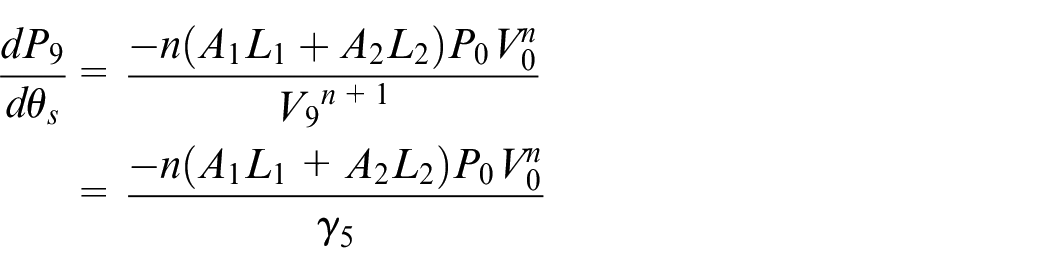
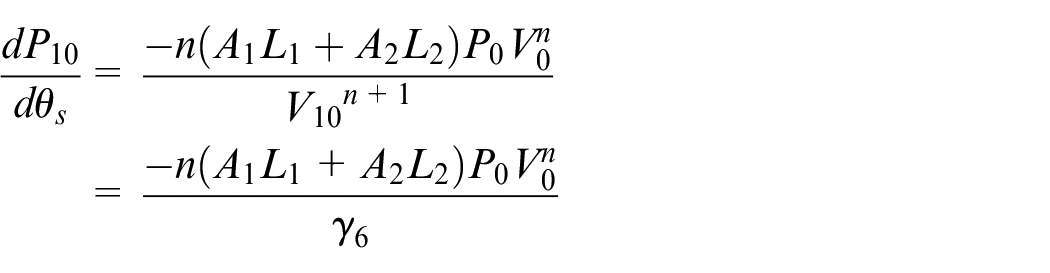
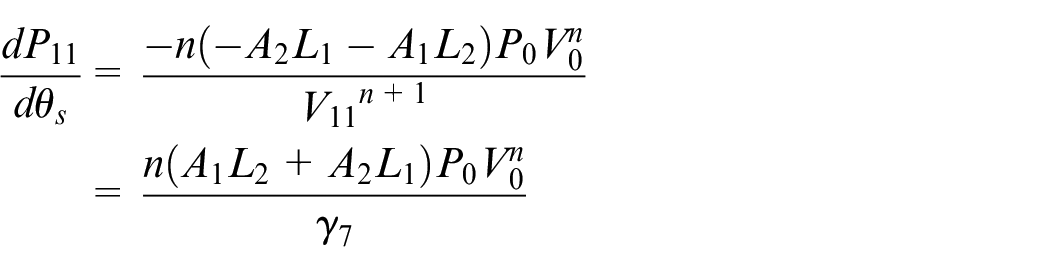
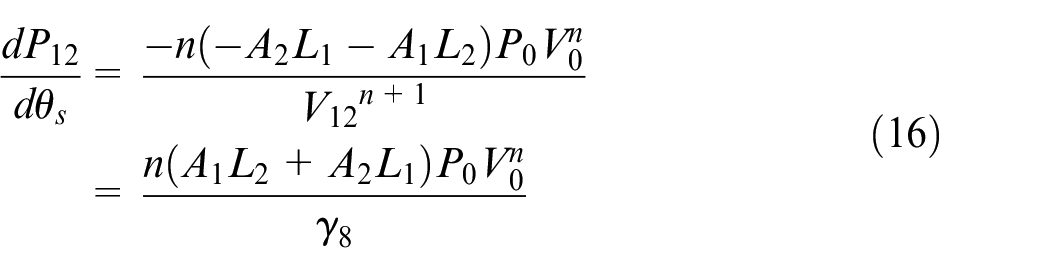
Hence, the pitch stiffness of the proposed interconnected suspension can be represented as
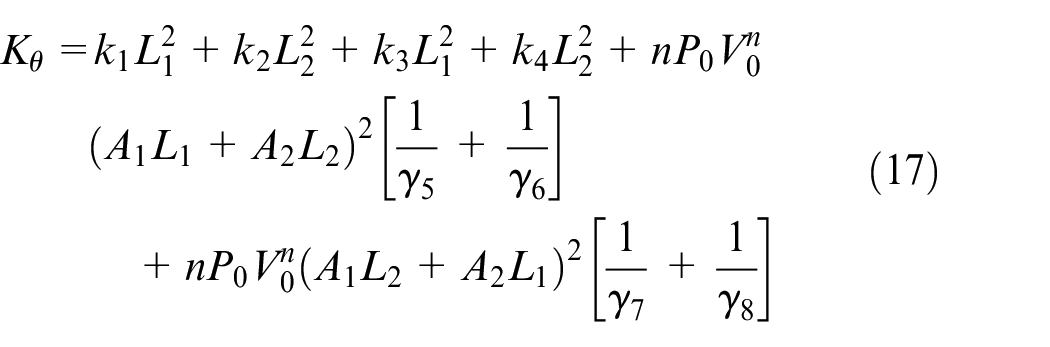
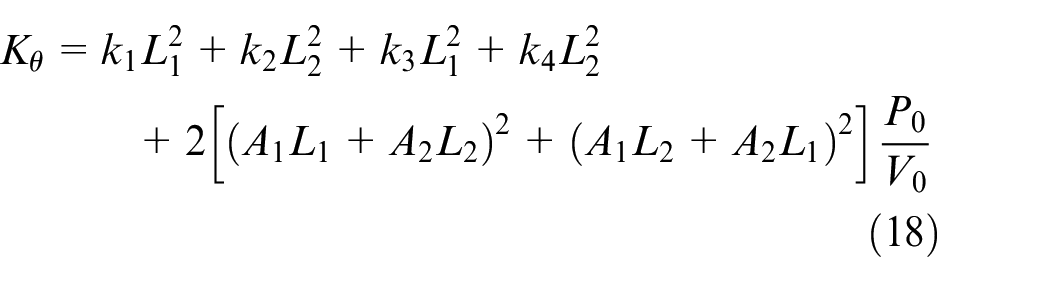
When the Polytropic coefficient
As shown in Figure 5, the estimated results of the four settings are plotted in different colors, that is,
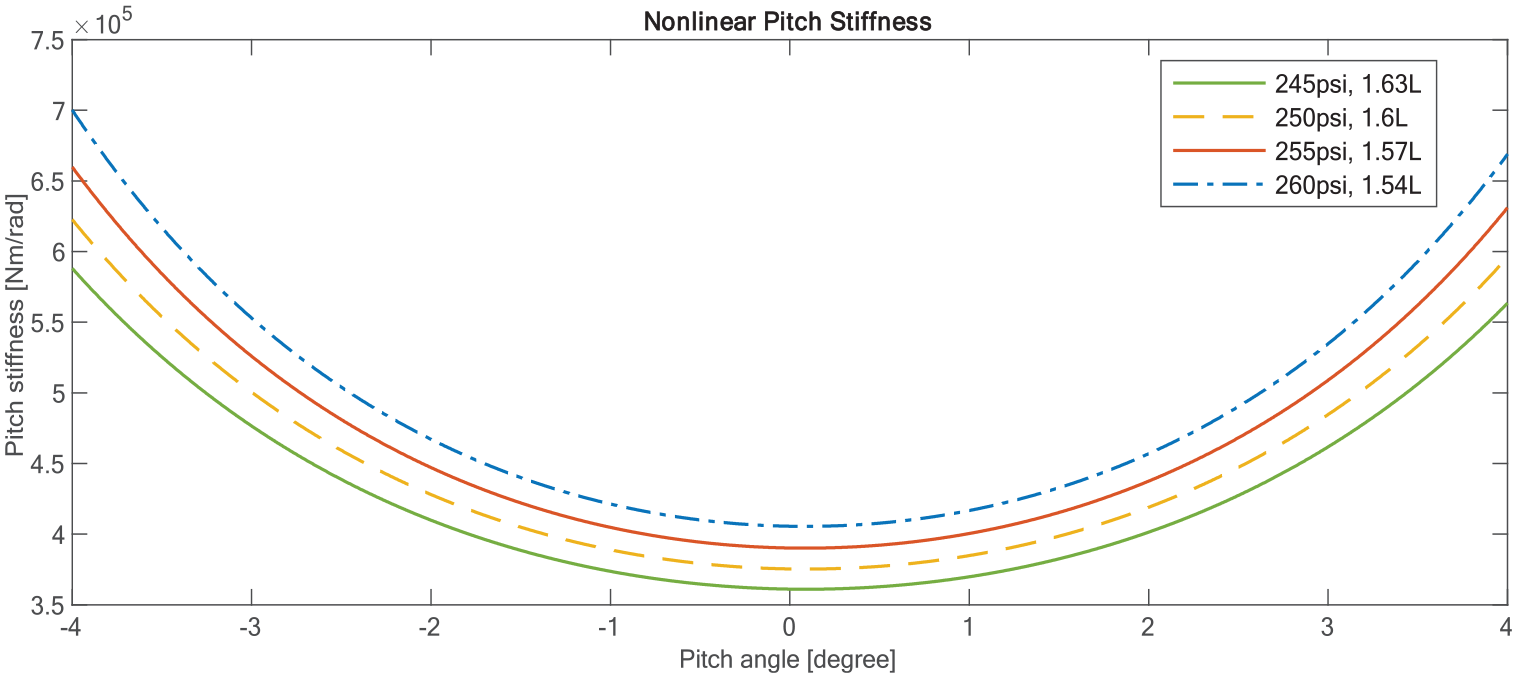
Nonlinear pitch stiffness.
Simulation results
The IS-ARPS is examined through the co-simulation between MATLAB/Simulink and ADAMS/Car. A high-fidelity truck model was built in ADAMS/Car based on a 6 × 4 truck, as shown in Figure 6. Three axles are modeled in the truck’s primary suspension, comprising one steering axle at the front and two driving axles at the rear. A cabin equipped with IS-ARPS is installed on the chassis frame. The parameters used in the ADAMS model are listed in Table 1. These two software programs communicated during runtime to simulate the truck’s dynamic responses. In this study, the interconnected suspension system was implemented in MATLAB/Simulink. Therefore, the truck motions were simulated in ADAMS/Car based on the control forces received from MATLAB/Simulink. These two software programs updated their information in each time step, which generated a reliable simulation environment. The simulation results of three testing scenarios are presented in this section: double lane change, steady turn, and emergency braking.
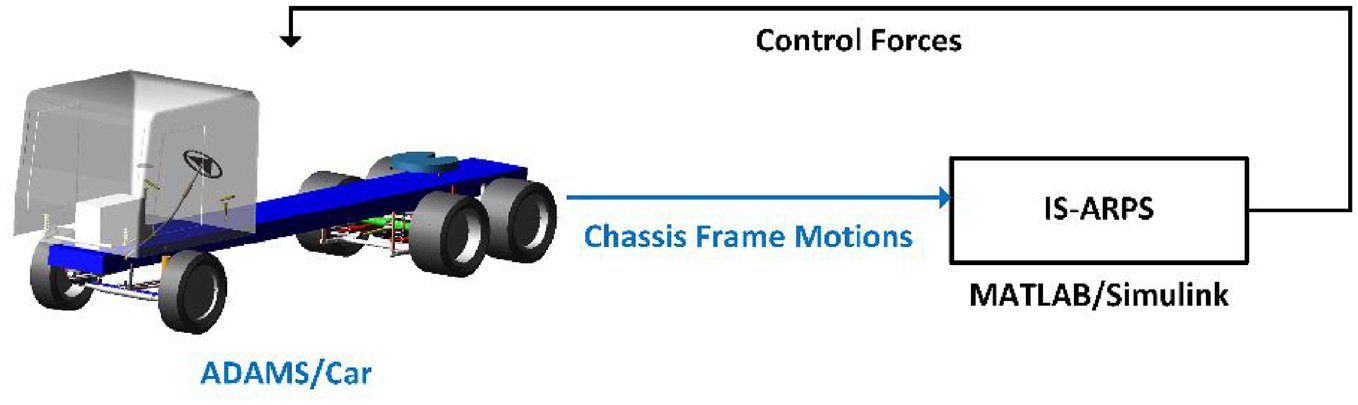
Co-simulation between MATLAB/Simulink and ADAMS/Car.
Double lane change
Double lane change is a driving maneuver in which a vehicle changes lanes twice in quick succession. It is commonly used in situations where a driver needs to quickly move from one lane to another to avoid an obstacle, merge onto a highway, or get around slower-moving traffic. In this test, the truck was driven on a flat road at 60 km/h, and its trajectory is shown in Figure 7. The responses of conventional air suspension and the IS-ARPS charged at 300 psi are compared.
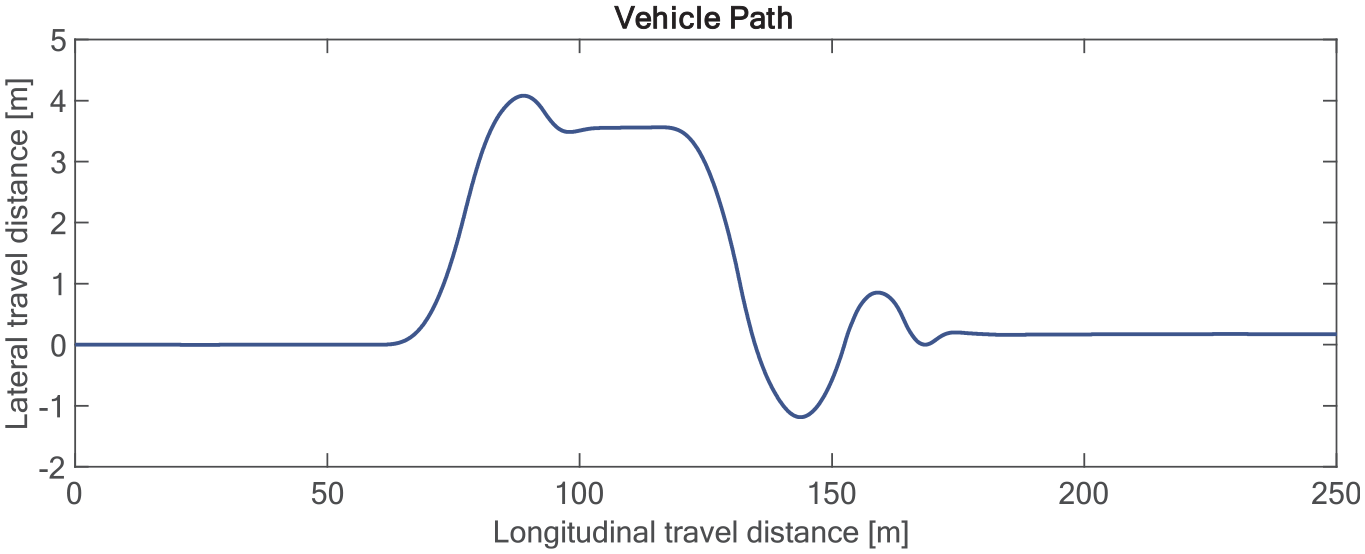
Vehicle path (DLC at 60 km/h).
Figure 8 shows the cabin suspension relative roll angles. It can be seen that the maximum roll angle was approximately 6° using the conventional air suspension, which was reduced by IS-ARPS to 4°. Regarding the RMS values, the IS-ARPS improved the anti-roll characteristic by 42%. Meanwhile, the cabin roll rate was reduced by 30%, as shown in Figure 9.
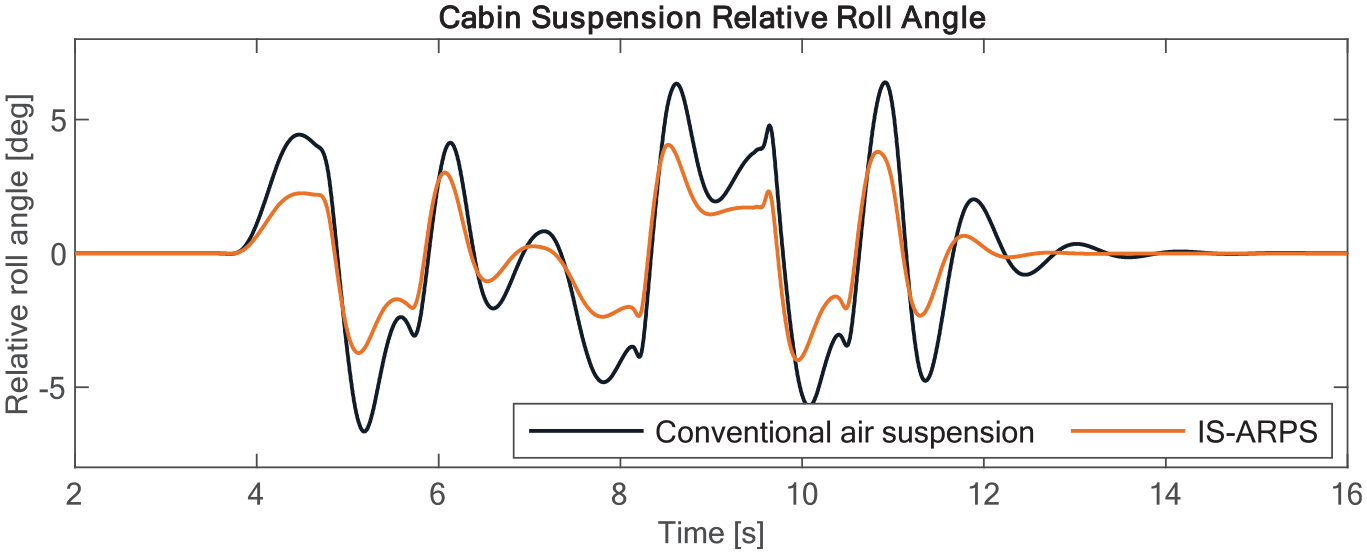
Cabin suspension relative roll angle (DLC at 60 km/h).
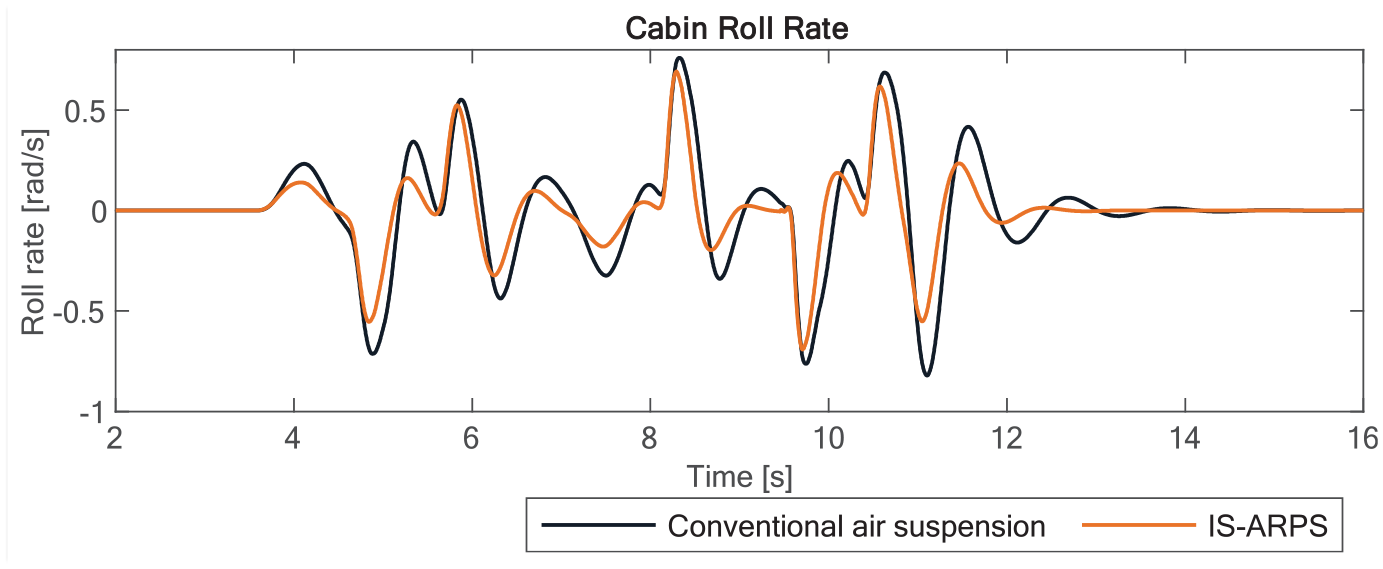
Cabin roll rate (DLC at 60 km/h).
One of the benefits of the proposed interconnected suspension is the adjustable stiffness, as shown in Figure 10. In other words, a higher nominal pressure results in a smaller suspension relative roll angle. Thus, the roll stiffness characteristics can be conveniently adjusted according to load, user preference, driving condition, etc. Besides, the stiffness range can be further adjusted for different vehicle models by using the proposed topology.
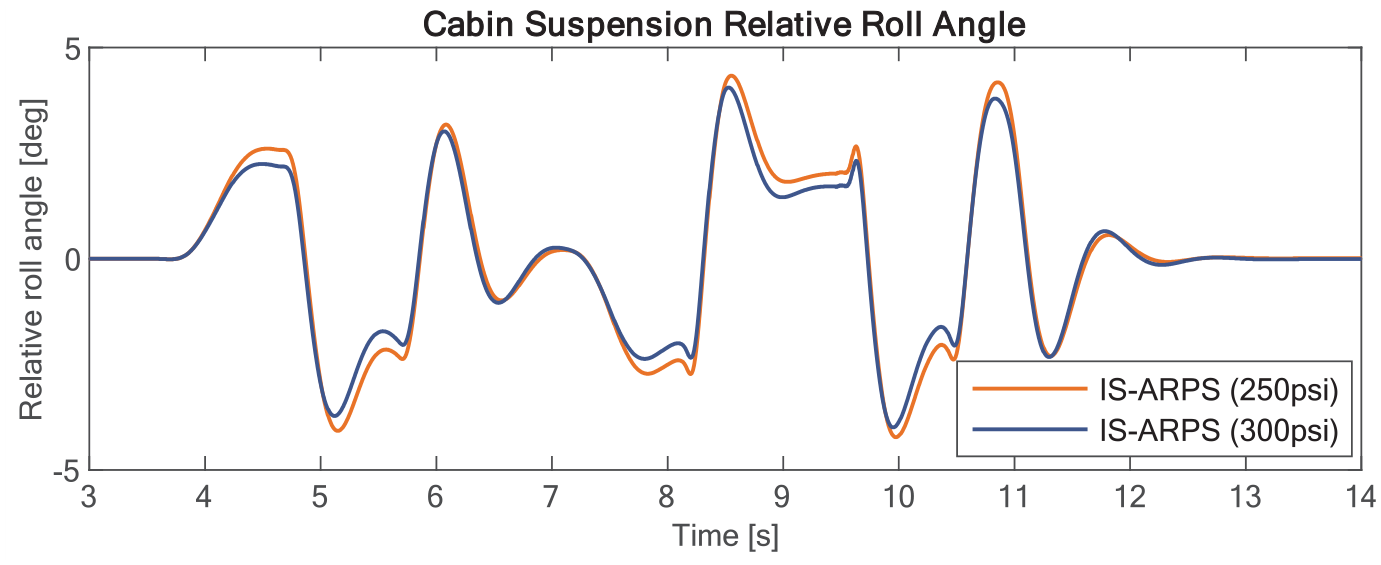
Cabin suspension relative roll angle at different pressures (DLC at 60 km/h).
Steady turn
A steady turn maneuver means a vehicle makes a controlled turn at a constant speed and radius. This type of turn is commonly used when driving through curved highway ramps or making turns at intersections. Figure 11 shows the vehicle trajectory in this scenario, and the truck turned at 60 km/h.
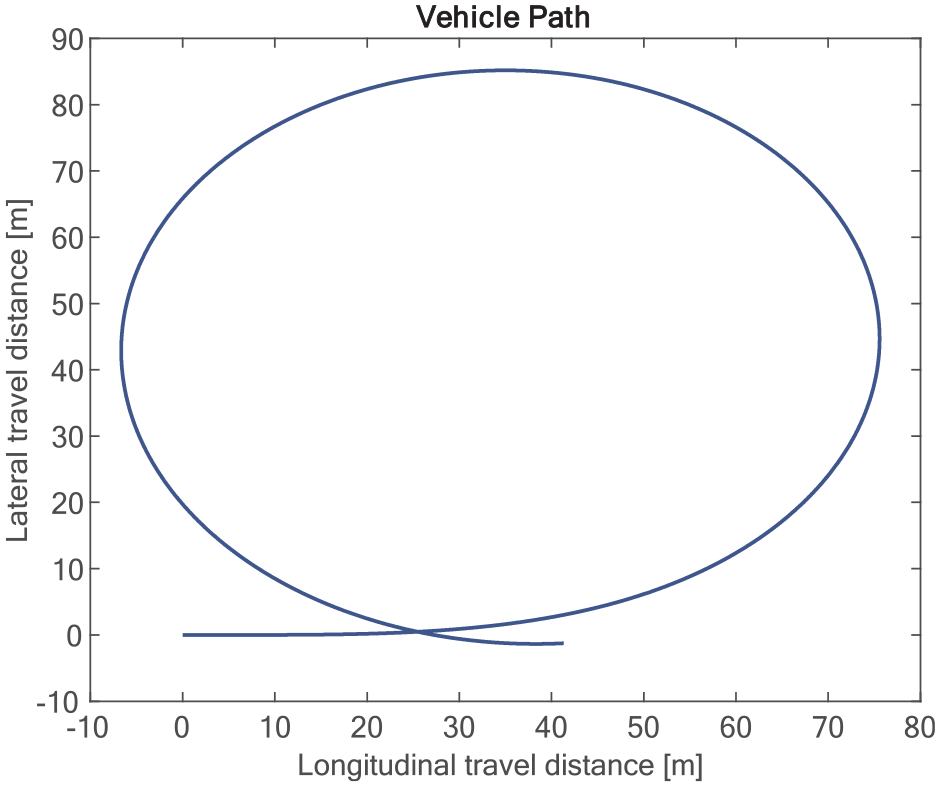
Vehicle trajectory (steady turn at 60 km/h).
Figure 12 shows the cabin suspension relative roll angles. It can be seen that the maximum roll angle was approximately 3.5° using the conventional air suspension, which was decreased to 2° by implementing the IS-ARPS. In terms of the RMS values, the IS-ARPS improved the cabin anti-roll characteristic by 45%, and the cabin roll rate was reduced by 42%, as shown in Figure 13.
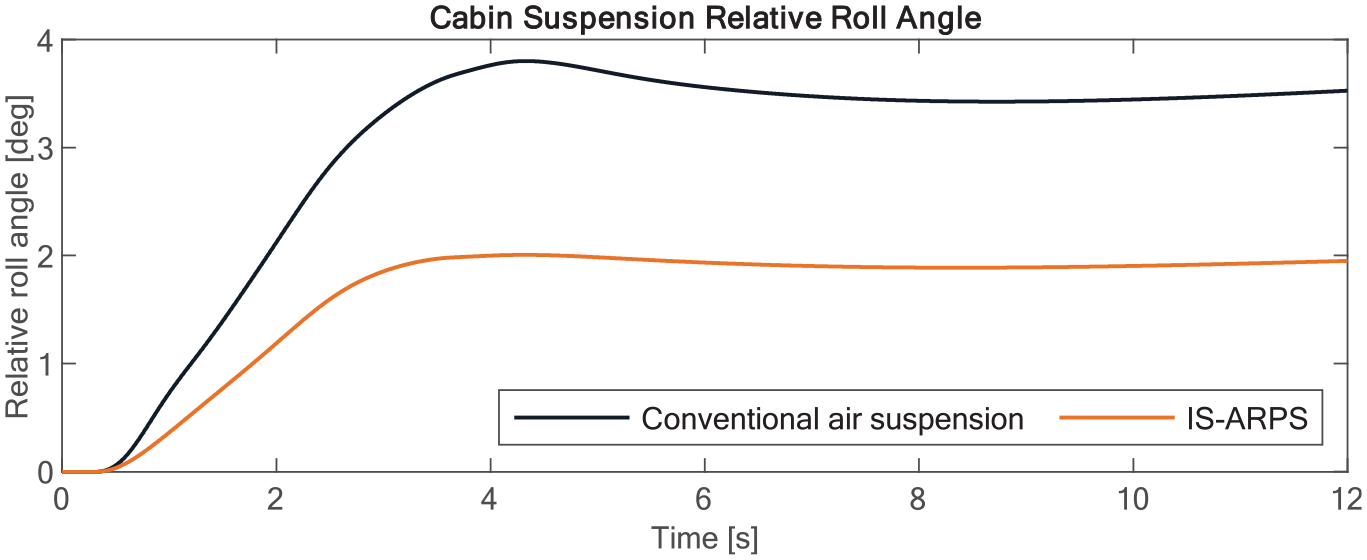
Cabin suspension relative roll angle (steady turn at 60 km/h).
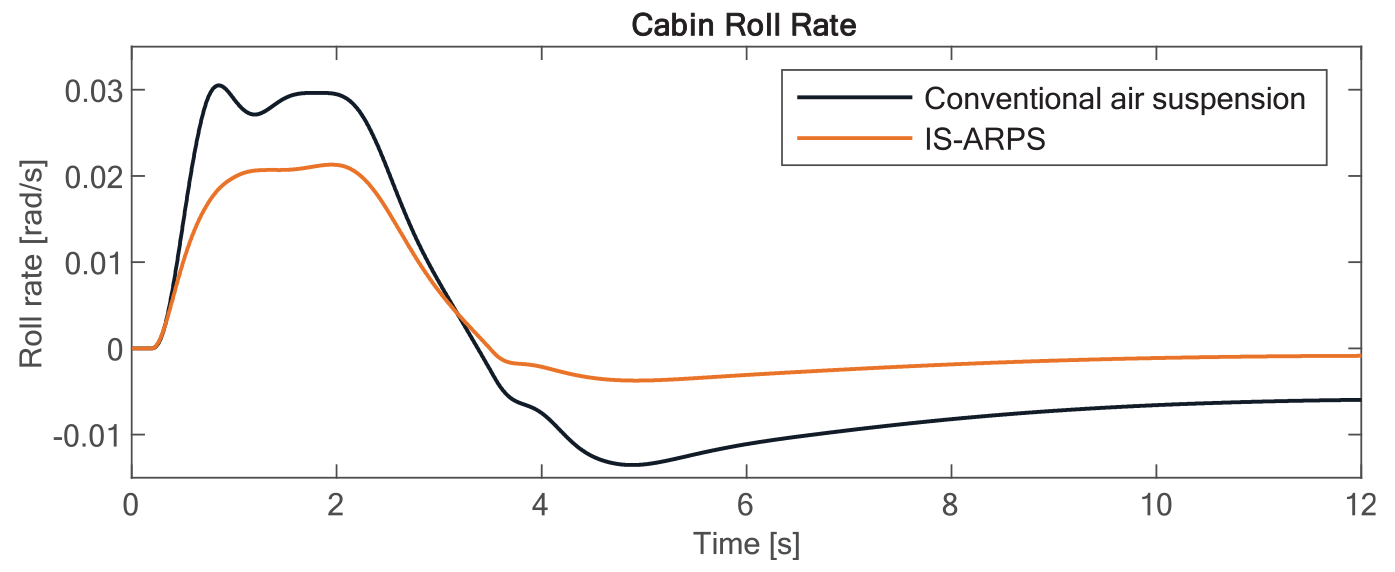
Cabin roll rate (steady turn at 60 km/h).
Emergency brake
On average, a fully loaded truck can have a maximum braking acceleration of around 0.5g to 0.7g. In this scenario, the truck was driven at 80 km/h and braked under non-constant accelerations within 0.45g. The corresponding speed and longitudinal acceleration are plotted in Figure 14.
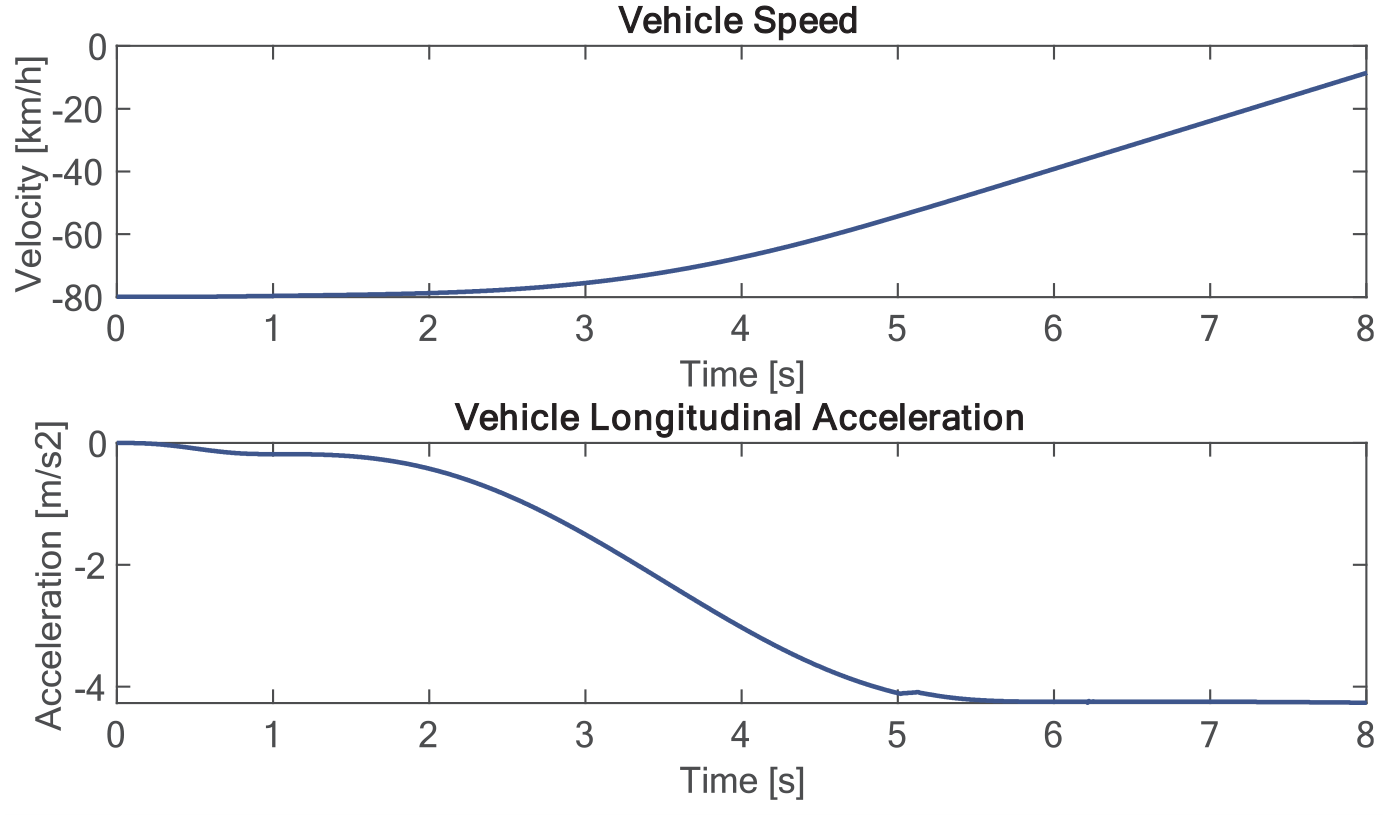
Vehicle longitudinal motion (emergency brake).
Figure 15 shows the cabin pitch angles. It can be seen that the maximum pitch angle was 4° using the conventional air suspension. When the nominal pressure equals 250 psi, the maximum pitch angle was reduced to 1.5° by the IS-ARPS. Meanwhile, the cabin pitch rate was reduced by 52% in Figure 16, which significantly improved the anti-pitch characteristic as expected. Moreover, the anti-pitch characteristic could be adjusted by changing the nominal pressure. When the nominal pressure increased to 300 psi, the maximum pitch angle dropped to 1.1°, and the cabin pitch rate was reduced by 59%.
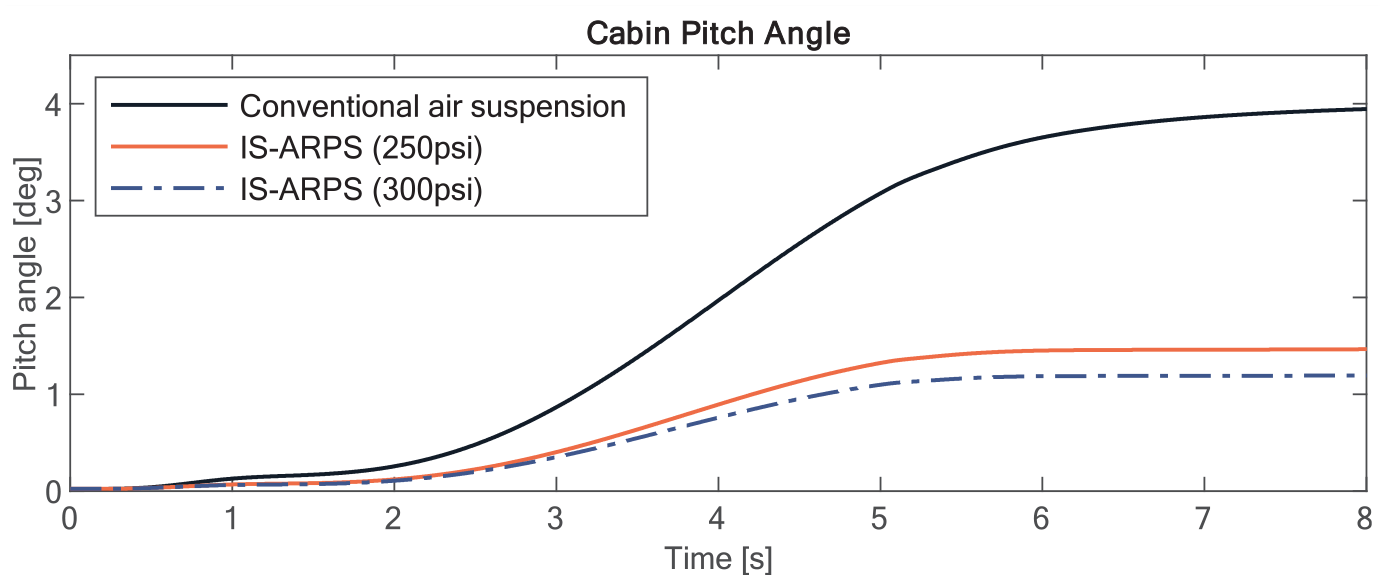
Cabin suspension relative pitch angle (emergency brake).
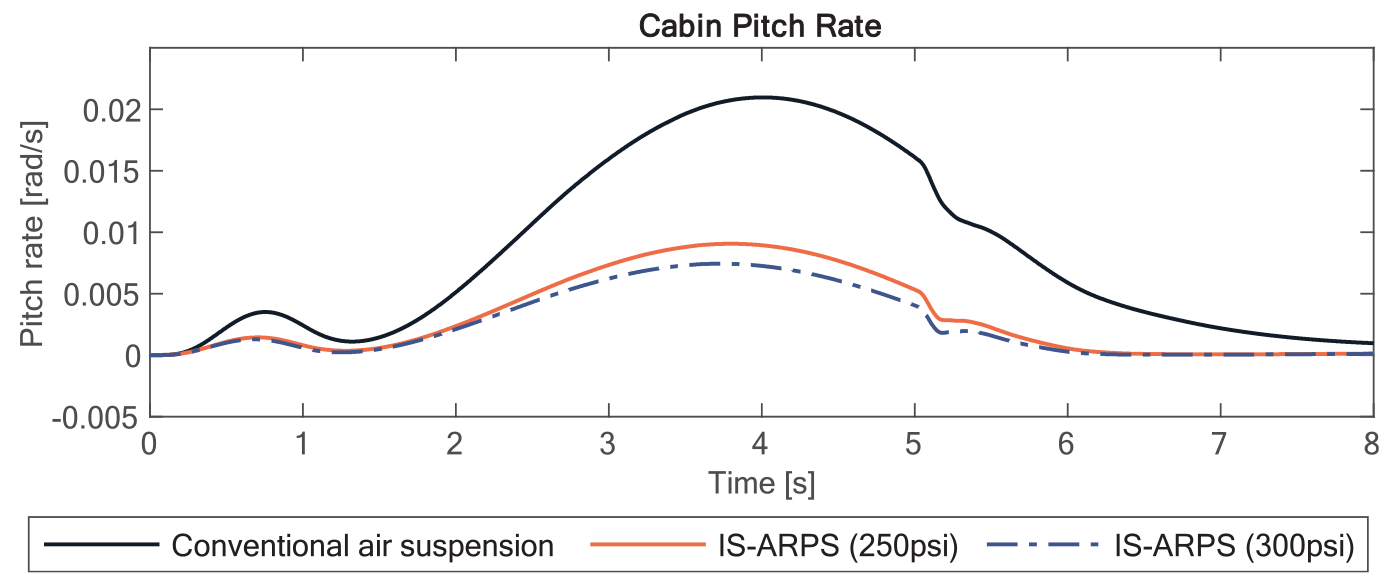
Cabin pitch rate (emergency brake).
Conclusion
A new roll and pitch coupled hydro-pneumatic interconnected suspension named IS-ARPS is introduced in this paper. Its performance was examined through co-simulation between ADAMS/Car and MATLAB/Simulink. Compared to the existing designs, the proposed topology has the following benefits:
Enhanced roll and pitch stability: The IS-ARPS has nonlinear rotational stiffness characteristics, that is, the rotational stiffness increases with the suspension relative roll/pitch angle. Hence, it enhances the suspension’s anti-roll and anti-pitch characteristics.
Adjustable rotational stiffness: The IS-ARPS’s rotational stiffness can be conveniently adjusted according to the driving scenario, road condition, and vehicle load by operating a compact HPU to charge or discharge the hydraulic system.
Feasibility for various applications: The IS-ARPS can be easily tuned and fitted to different car models. Various rotational stiffness levels can be achieved by adjusting the system’s nominal pressure, resulting in one topology for any vehicle suspension. Besides, the proposed topology can be easily extended to multi-axle suspension systems.
As for future work, the IS-ARPS needs to be evaluated in experiments. Besides, a stiffness adjustment algorithm needs to be developed by which the suspension roll/pitch stiffness can be intelligently adjusted according to the vehicle load, speed, and road conditions.
Footnotes
Acknowledgements
The authors gratefully acknowledge the assistance of Dr. Amir Soltani and Dr. Alireza Pazooki.
Declaration of conflicting interests
The author(s) declared no potential conflicts of interest with respect to the research, authorship, and/or publication of this article.
Funding
The author(s) received no financial support for the research, authorship, and/or publication of this article.
