




Abstract
Screw compressors are essential elements in various industrial sectors, such as manufacturing, energy, and construction, representing roughly 10%–20% of industrial electricity usage. Notwithstanding their prevalent application, the energy requirements of multi-stage screw compressors substantially contribute to carbon emissions. The global market for screw compressors is anticipated to expand at a compound yearly growth rate (CAGR) of 6.5%, achieving a market value of $19.37 billion by 2030. This highlights the increasing demand for more energy-efficient compressor systems. The utilisation of multi-stage screw compressors for applications surpassing 30 bar is constrained by issues including rotor bending deformation, diminished bearing longevity, inadequate oil cooling, and condensate separation in oil separators. Moreover, screw compressors encounter operational constraints in multi-staging, even at reduced pressure ranges, when compared to reciprocating compressors. This study seeks to examine the existing constraints of multi-stage screw compressors and investigates potential solutions for power levels of 22–315 kW and delivery pressures of 6–12 bar. A cost-effective compressor design was designed by utilising modern rotor profiles and optimising sealing and cooling systems. A prototype two-stage oil-flooded air screw compressor, intended for water-well applications, was fabricated and evaluated for performance and dependability. The efficacy of the two-stage compressor was evaluated against that of a single-stage air screw compressor of comparable capacity. An extensive economic evaluation, grounded in lifecycle costs, was performed over a decade. The results indicate that the two-stage compressor reduces operational expenses by roughly 20%–75%, leading to markedly lower lifecycle costs. These insights underscore the capability of multi-stage screw compressors to provide improved performance and economic advantages, promoting broader implementation in applications necessitating mid-range pressures.
Keywords
Introduction
Since the beginning of the 20th century, when screw compressors were first developed, there have been considerable technological breakthroughs concerning these machines. Compressors are essential components in a broad variety of industries, including construction, energy, and manufacturing, where they play an important part in processes that require compressed air and gas. Compressors are also employed in the construction industry. Since screw compressors are used in a wide variety of applications, they are subject to demanding international standards. One example of such a standard is ISO 8573, which defines the quality of compressed air in order to satisfy the requirements of the industry. Compliance with these standards guarantees that screw compressors are able to provide the required air quality, hence improving their dependability and performance in a variety of industries.1,2 According to the research conducted, 3 it is anticipated that the global market for screw compressors would experience a compound annual growth rate (CAGR) of 6.5%, ultimately reaching a valuation of $19.37 billion by the year 2030. This market growth is a reflection of the growing need for high-performance compressor systems that are also energy-efficient. This demand is being driven by global measures to reduce carbon emissions and energy consumption. 4
A pair of interlocking helical rotors are used in the operation of screw compressors. These rotors are responsible for capturing and compressing gas within the compression chamber. They are well-known for their ability to undergo continuous operation, their resilience, and their low maintenance requirements, which makes them excellent for a variety of industrial applications. In spite of this, one of the most significant difficulties that are related with screw compressors is the significant amount of energy that they consume. Compressors are responsible for around 10%–20% of the electricity consumption in industrial settings, with screw compressors being a substantial contributor to this figure.5,6 A high energy consumption results in increased operational expenses as well as increased carbon emissions, which in turn prompts the development of systems that are more energy-efficient. It is vital to do a lifetime cost analysis in order to evaluate the economic worth and long-term viability of these systems. This analysis should take into consideration the original investment, operational costs, and maintenance expenses.7,8
Single-stage screw compressors
Single-stage screw compressors are extensively utilised in applications necessitating moderate pressure levels, generally up to 10 bar. These compressors execute the compression process in a singular continuous stage, rendering them appropriate for low to medium pressure applications. 9 Nonetheless, single-stage compressors encounter constraints at elevated pressures. The elevated temperatures produced during the compression process might deteriorate material characteristics and diminish mechanical performance.10,11 Materials like stainless steel and specialised steel alloys, typically employed in screw compressors, possess defined temperature limits beyond which they exhibit softening, diminished tensile strength, and heightened vulnerability to wear and corrosion. 12 The material limitations hinder the efficacy of single-stage compressors at elevated pressures, requiring alternatives like multi-stage systems.
Multi-stage screw compressors
Multi-stage screw compressors mitigate certain constraints of single-stage systems by compressing air across numerous stages, thereby progressively elevating pressure with each phase. This method is especially advantageous for high-pressure applications, generally over 20 bar, where increased efficiency and superior thermal management are crucial.13,14 Multi-stage compressors utilise intercooling between compression stages to decrease the temperature of the compressed air. This cooling enhances volumetric efficiency and alleviates the detrimental impacts of elevated temperatures on compressor components. 15 Studies indicate that multi-stage compressors typically attain greater efficiency than single-stage compressors in high-pressure conditions. Nevertheless, owing to heightened complexity and expense, multi-stage systems are frequently limited to two stages in industrial applications.16,17
Numerous research have examined the efficacy of multi-stage screw compressors. Hauser et al. 14 illustrated the thermodynamic benefits of multi-stage compression, emphasising decreased power usage and enhanced cooling efficiency. In a similar vein, Stosic et al.15,18 investigated the impact of intercooling between stages on the overall efficacy of multi-stage screw compressors. These studies highlight the significance of stage optimisation in attaining optimal efficiency, especially in high-pressure settings. Notwithstanding these developments, the operational limitations of multi-stage screw compressors continue to provide a difficulty, especially in comparison to reciprocating compressors. Reciprocating compressors, extensively utilised for high-pressure applications exceeding 30 bar, have benefits in managing extreme pressures with negligible performance deterioration.10,19
Challenges in multi-stage screw compressors
The constraints of multi-stage screw compressors, especially in high-pressure scenarios, encompass rotor bending deformation, diminished bearing longevity, insufficient oil cooling, and ineffective condensate separation in oil separators. 10 The challenges are exacerbated by the reliance of screw compressors on oil injection to sustain efficiency and minimise wear. Nonetheless, oil-contaminated air poses difficulties for particular applications necessitating oil-free air. This aspect further restricts the extensive implementation of multi-stage screw compressors in sectors requiring ultra-clean air. Notwithstanding these problems, multi-stage screw compressors provide certain advantages in applications necessitating medium to high-pressure air compression, especially in sectors where reliability and efficiency are critical.
Multi-stage screw compressors have superior overall energy efficiency relative to single-stage systems, particularly when managing elevated pressure ratios. Distributing the compression task across numerous stages diminishes the stress on each step, leading to reduced overall power consumption. 20 Nonetheless, enhancing the efficacy of each phase is essential. Innovative rotor designs, superior sealing technologies, and optimised cooling systems can markedly enhance compressor performance. Recent breakthroughs in materials science and manufacturing methods have facilitated the creation of more resilient components that can endure the demands of multi-stage compression.10,21
Lifecycle cost analysis
This research primarily examines the lifespan cost analysis of single-stage and multi-stage screw compressors. Although multi-stage systems require a greater initial capital expenditure due to their complexity and supplementary components, their reduced operating costs render them economically sustainable in the long run. Enhanced compression efficiency, especially in high-power applications, can result in substantial decreases in operational costs. This research expands upon other studies that have investigated the economic effects of employing screw compressors across diverse sectors. Basha 22 emphasised the significance of lifecycle cost analysis in assessing the total cost of ownership for compressor systems, whereas Vittorini and Cipollone 5 investigated the potential of energy-efficient screw compressors to diminish industrial electricity consumption.
A comprehensive analysis of the lifespan expenses for a standard single-stage compressor system, with a 22 kW power rating and functioning over a decade, is depicted in Figure 1.
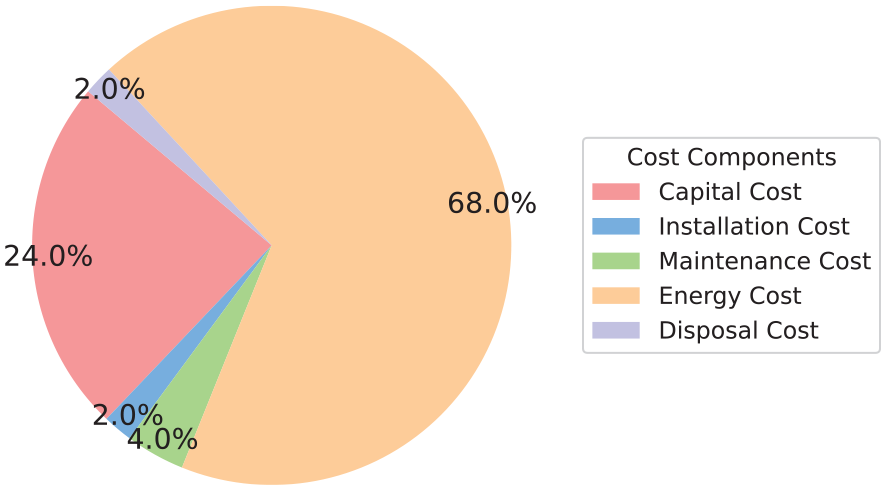
Lifecycle cost distribution of a typical single-stage oil-flooded air screw compressor system with a 22 kW power rating and an 8.5 pressure ratio over a 10-year period.
Novelty of this research
The literature offers significant insights into the performance and efficiency of multi-stage screw compressors; nonetheless, there exists a notable deficiency in studies concerning the economic assessment of multi-stage compared to single-stage systems in medium-pressure applications. Most research emphasises high-pressure applications, when multi-stage systems are the evident selection. This research enhances the field by concentrating on medium-pressure applications (6–12 bar) with power ratings between 22 and 315 kW, a domain where the advantages of multi-stage compressors are inadequately documented. This study offers actual proof of the economic feasibility of two-stage systems in medium-pressure environments through a comprehensive lifecycle cost analysis. The study presents a prototype two-stage oil-flooded screw compressor, specifically engineered for water well applications, which has undergone performance and reliability testing and evaluation.
This research is innovative due to its thorough methodology in enhancing the efficiency of two-stage screw compressors for medium-pressure applications. This study boosts compressor performance and illustrates the long-term cost savings of two-stage systems through the integration of current rotor profiles, innovative sealing technologies, and efficient cooling systems. The results demonstrate that two-stage compressors can save operational expenses by 20%–75%, contingent upon the power rating and application, rendering them an attractive alternative to single-stage systems in medium-pressure contexts.
The structure of this paper is as follows: Section 2 discusses the selection and optimal sizing of single-stage and two-stage screw compressors. Section 3 presents a comprehensive assessment of the lifecycle costs. In Section 4, the experimental measurements of a two-stage screw compressor are detailed. Finally, Section 5 provides a summary of the key findings and conclusions.
Selection and sizing of single-stage and two-stage screw compressor systems
This study concentrates on the design and optimisation of a two-stage oil-flooded air screw compressor system. The choice to restrict the investigation to two stages is predicated on the intrinsic limits of screw compressors at elevated pressure stages. In high-pressure stages, the rotor dimensions are diminished, resulting in decreased tip velocities and, subsequently, a reduction in efficiency. Moreover, the ratio of oil volume to gas volume increases at elevated pressures, hence diminishing performance. Consequently, screw compressors beyond two stages are typically not favoured in industrial applications.
The main aim of this research is to determine the ideal dimensions for two-stage oil-flooded air screw compressors, using data from 7 distinct single-stage compressor sizes produced by Kirloskar Pneumatic Company Limited (KPCL), Pune, India. The appropriate sizing was established with an internally created modelling tool that combines a chamber model with machine learning approaches to precisely forecast compressor performance while optimising computational efficiency.17,23
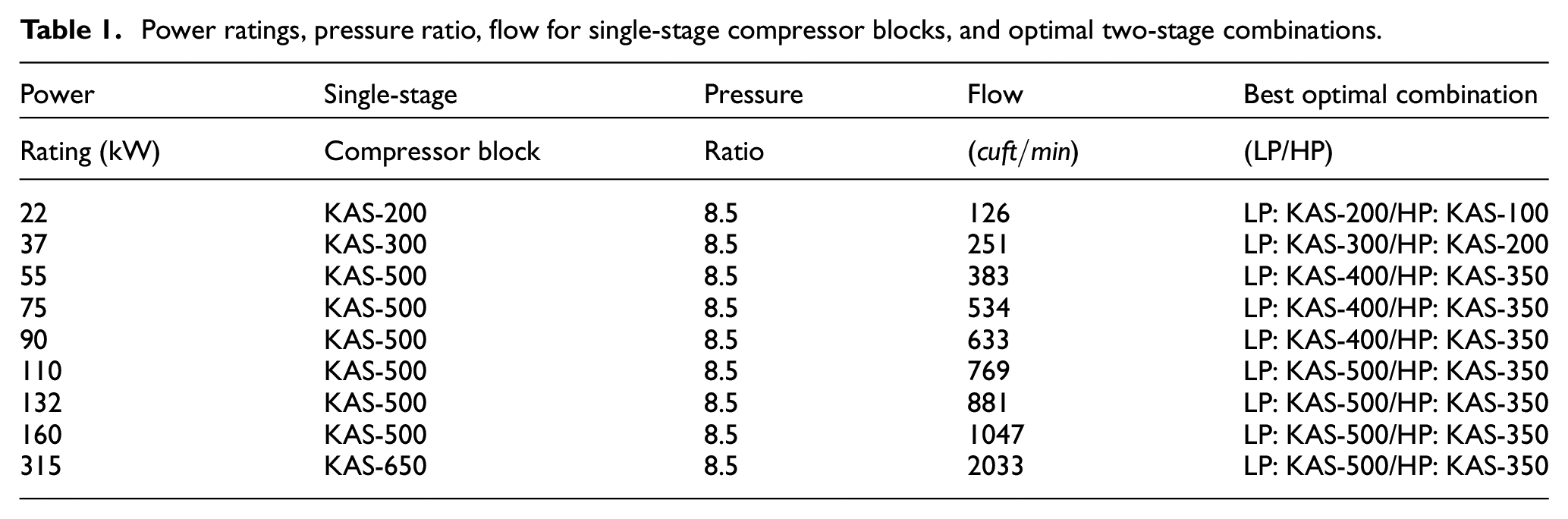
After determining the ideal dimensions for the low-pressure (LP) and high-pressure (HP) phases, a thorough economic analysis was performed. This comparison was founded on essential performance parameters and the subsequent power ratings (see to Table 1). The investigation was confined to an 8.5:1 pressure ratio utilising oil injection and air as the working fluid to maintain uniformity in the comparison. The study emphasises these factors; nonetheless, it is noteworthy that two-stage screw compressors can attain discharge pressures of up to 30 bar, contingent upon application requirements. The prototype two-stage compressor, created for this research, was engineered to achieve a final pressure of 25 bar for experimental validation.
Power ratings, pressure ratio, flow for single-stage compressor blocks, and optimal two-stage combinations.
A conventional two-stage screw compressor system comprises two compressor blocks of varying sizes, linked by an intermediate pipe that serves as an intercooler, akin to reciprocating compressors. The system has a gear configuration with a bull gear and two pinions affixed to the LP and HP male rotors. The rotors are powered by a singular motor, guaranteeing effective functioning across both stages.
Table 1 outlines the technical parameters of the single-stage oil-flooded compressor blocks employed in this study, each with a 4/5 lobe configuration and a length ratio of 1.55. KAS-350 is the sole compressor block featuring a 4/6 lobe configuration with a relative length of 1.65. Confidentiality agreements restrict the revelation of precise rotor measurements and specific technical information. The compressor blocks are identified as KAS, with the number indicating the specific compressor model.
A proprietary modelling technique was employed to ascertain the ideal dimensions for a two-stage screw compressor based on the existing single-stage sizes. The architectural framework of this tool is depicted in Figure 2. The tool employs a robust modelling framework that incorporates either the chamber model or Gaussian Process Regression (GPR) model, contingent upon the required accuracy and computing efficiency. This methodology guarantees that the modelling process complies with essential boundary conditions vital for precise forecasts of multi-stage compressor performance:

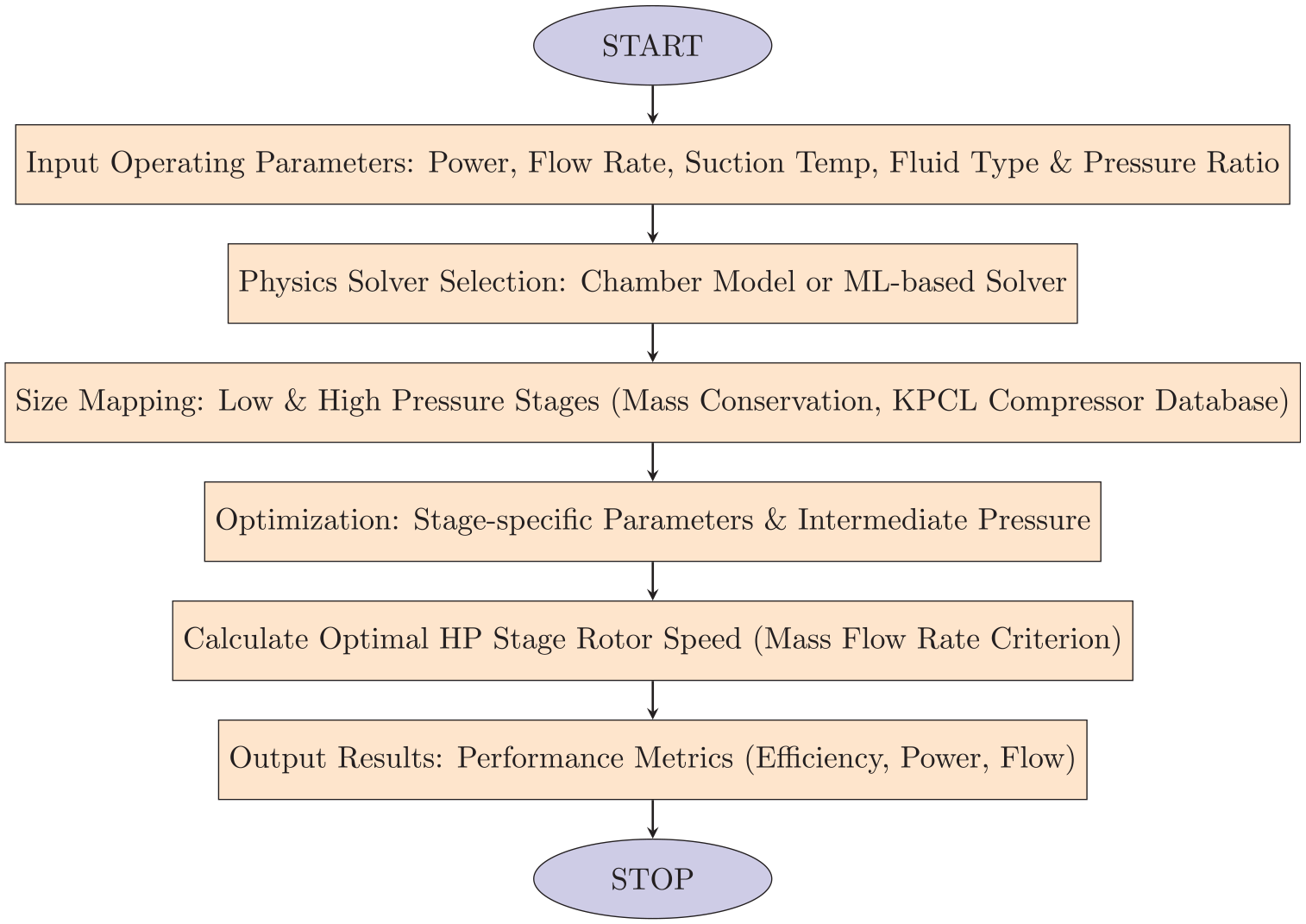
Modelling framework architecture for optimising two-stage screw compressors and individual stage parameters using a chamber model and machine learning-based approach.
Where:

This equation shows that for a multi-stage screw compressor, the minimum power occurs when the intermediate stage pressure is the geometric mean of the suction and discharge pressures. In the case of systems with multiple stages, the pressure ratio for each individual stage should be balanced to minimise power consumption. For a compressor with

This formula helps to determine the optimal pressure ratios for each stage, ensuring the overall system operates efficiently by minimizing the required power for compression. While ideal conditions assume that the intermediate pressure remains constant, minor pressure drops may occur due to system inefficiencies, such as losses in the interstage piping or heat transfer during compression.
•
The aforementioned boundary requirements are crucial for preserving the thermodynamic consistency of the system. The modelling framework assesses these conditions in the background to guarantee the proper configuration of the compressor stages. The instrument employs a blend of optimisation methodologies and performance simulations to determine the most effective configuration of LP and HP stages, as shown in Table 1.
Figure 2 illustrates the architecture utilised in the modelling tool. The framework is designed to permit the adaptable choice of the physics solver—either the chamber model or a machine learning-based solver, contingent upon the study’s requirements. This adaptability guarantees that the tool can be utilised in many contexts, from swift initial assessments to comprehensive performance enhancements.
The modelling tool finally produces essential performance metrics including efficiency, power consumption, and mass flow rate. These results offer critical insights into the optimal design and performance of two-stage screw compressors, guaranteeing that the system is both technically and economically feasible for diverse applications.
Analysis of lifecycle costs for different compressor systems
The lifecycle costs of a compressor system include initial capital expenditure, operating expenses (mostly energy consumption), maintenance costs, installation costs, and disposal costs. Each of these criteria is essential in ascertaining the total cost of ownership during the system’s operating lifespan.
Disposal costs, determined by the materials utilised in compressor construction, are presumed to be identical for both single-stage and two-stage systems of equivalent size. Since disposal costs remain relatively consistent across all configurations in this analysis, they will not be discussed further.
The cost data obtained from Kirloskar Industry cannot be released due to confidentiality agreements. All costs are instead shown as normalised values for the sake of comparison. The normalisation method preserves the relative disparities between single-stage and two-stage systems while ensuring data confidentiality.
The cost normalisation adheres to the following formula:

Where:
The cost normalisation is determined by referencing the lifecycle cost of a single-stage compressor with the same power rating as the two-stage compressor under evaluation. For instance, when calculating the lifecycle cost of a two-stage compressor with a power rating of 22 kW, the corresponding lifecycle cost of a single-stage compressor with a 22 kW power rating is used as the baseline. This approach ensures consistency in comparisons across all power ratings, as detailed in Table 1.
To further clarify the systems under evaluation, Figure 3 provides a schematic of a screw compressor system. This configuration applies to both single-stage and two-stage compressors, highlighting essential components such as the screw compressor block, motor, air-oil separator, and air delivery system. Such a system forms the basis for the lifecycle cost comparisons in this study.
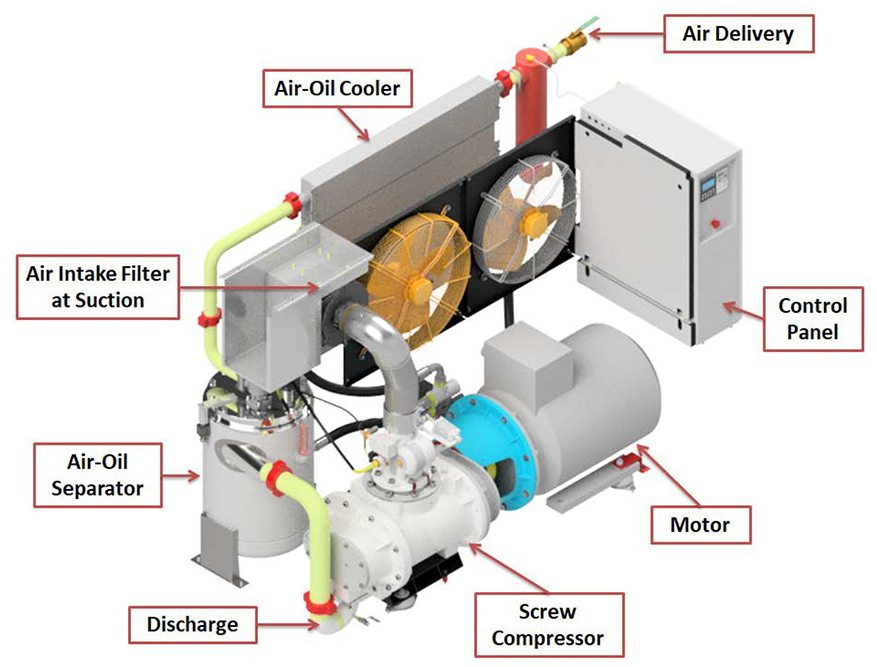
Schematic representation of a screw compressor system illustrating key components, including the air-oil cooler, control panel, air-oil separator, motor, and discharge system. This configuration can represent either a single-stage or two-stage screw compressor system, commonly used in various industrial applications for compressing air or gas.
Initial costs
The initial expense of two-stage compressors typically exceeds that of single-stage compressors. The cost disparity is due to the intricate design and supplementary components associated with two-stage systems. In contrast to single-stage compressors, which have a singular compression unit, two-stage compressors feature two distinct compression stages. This encompasses:
The cumulative impact of these considerations leads to a greater initial expenditure for two-stage compressors relative to single-stage models. Figure 4 depicts the normalised initial cost comparison between single-stage and two-stage compressors.
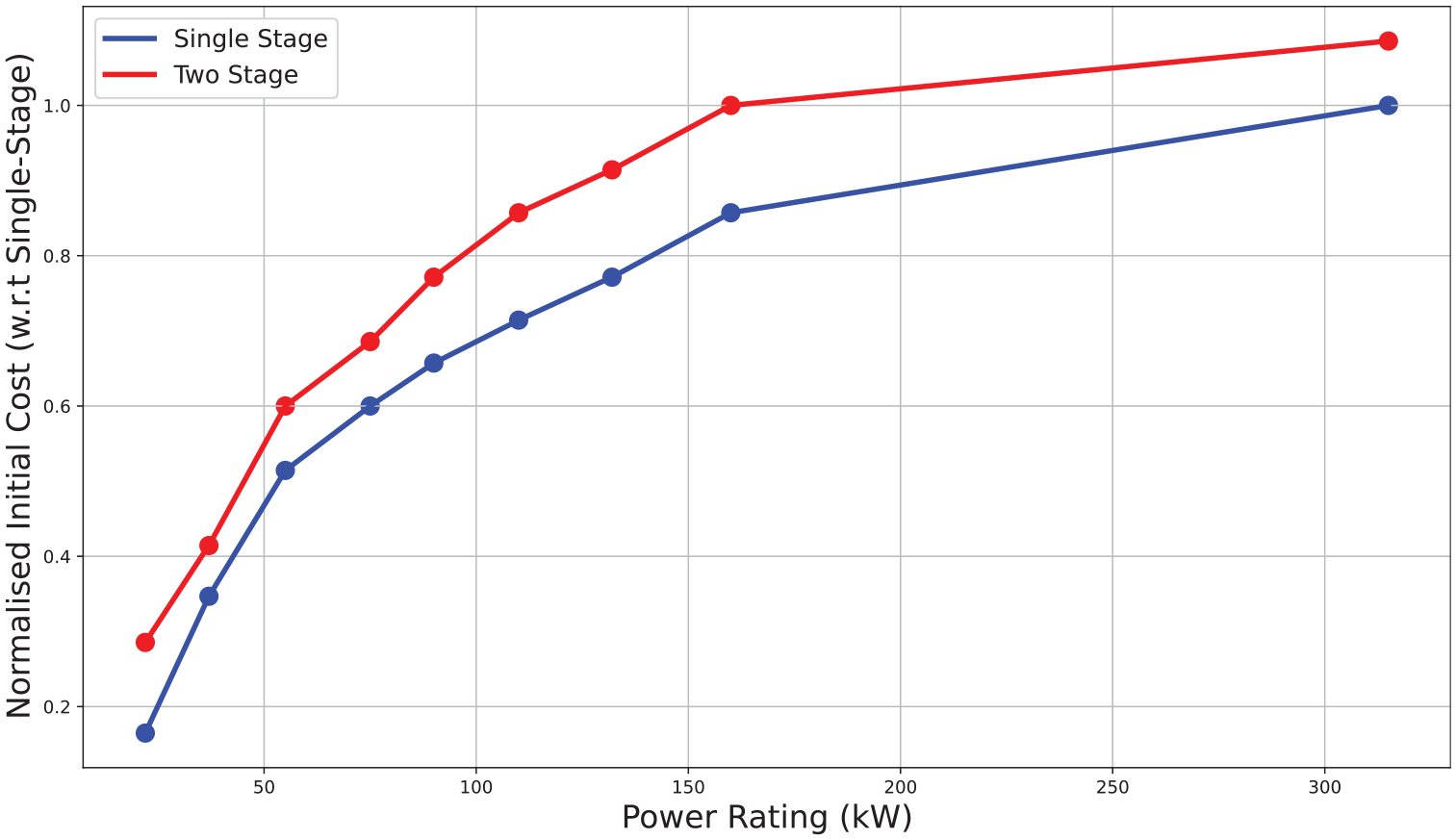
Normalised initial cost comparison between single-stage and two-stage compressors across the power range of 22–315 kW.
Operating costs
The operating cost of compressors is a critical factor in their overall lifecycle costs, and it is calculated based on the specific power consumption (SPC), the total operating hours, and the cost of energy per unit of consumption. The operating cost formula is given as:

Where:
●
● SPC is the specific power consumption of the compressor in kw/m3/min,
● H is the total operating hours, which is calculated based on 22 hours of operation per day for 10 years (i.e., H = 22×365×10 hours),
● C energy is the cost of energy per unit (in INR or other currency).
The power consumption differs between single-stage and two-stage compressors, with two-stage compressors typically exhibiting greater energy efficiency, especially at elevated power ratings. The normalised operating cost comparison illustrated in Figure 5(a) indicates a substantial decrease in operating costs for two-stage compressors across all power ratings. The trend becomes increasingly apparent with higher power ratings, and the specific power consumption of two-stage systems enhances their performance.
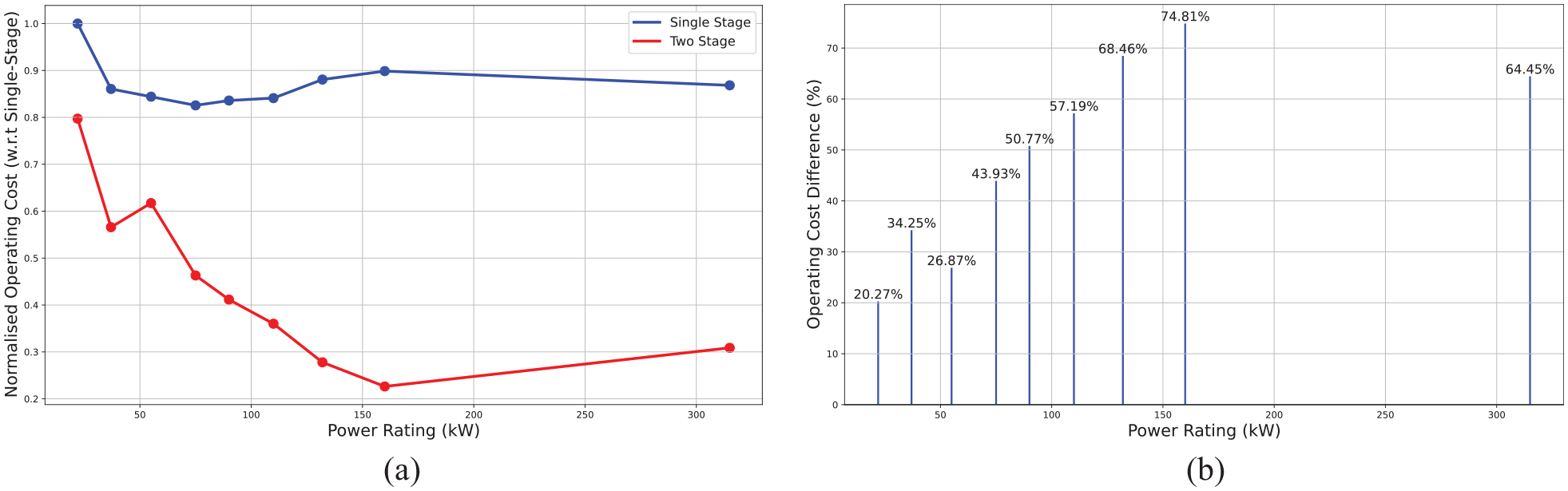
Comparison of operating costs for single-stage and two-stage compressors across power ratings from 22 to 315 kW: (a) normalised operating cost comparison and (b) percentage difference in operating costs relative to single-stage screw compressors.
For lower power ratings, such as 22 kW and 37 kW, the cost reduction is very modest, indicating the incremental efficiency improvements realised by two-stage compressors under reduced pressure settings. Nonetheless, for mid-range power ratings (75, 90, and 110 kW), the reduction in running costs becomes increasingly evident. This is due to the improved efficiency of two-stage compressors, which manage elevated pressures more effectively and gain from superior cooling between stages.
At elevated power ratings, specifically 160 kW and 315 kW, the energy savings linked to two-stage compressors are significantly greater. This is chiefly because to their capacity to sustain reduced specific power consumption, hence considerably diminishing energy usage during prolonged operational durations. With a rise in power rating, the efficiency improvements and operational cost savings of two-stage compressors become progressively beneficial.
Figure 5(b) further depicts the % disparity in operating expenses between single-stage and two-stage compressors with a bar graph. This visual depiction distinctly shows the escalating benefits of two-stage systems as the power rating rises.
Lifecycle costs
The lifecycle cost of a compressor system denotes the aggregate ownership expense during its operational duration, generally assessed over a term of 10 years. The lifecycle cost is calculated by aggregating the initial capital cost, maintenance cost, installation cost, operating cost, and disposal cost. The lifecycle cost for this analysis is determined using the subsequent formula:

Where:
Figure 6(a) depicts the comparative analysis of normalised lifespan costs for single-stage and two-stage compressors. Similar to operating expenses, two-stage compressors exhibit a cost benefit, especially when the power rating escalates. The percentage decrease in lifetime costs is less significant than that of operating expenses, as the initial capital investment for two-stage compressors is elevated due to increased complexity and more components.
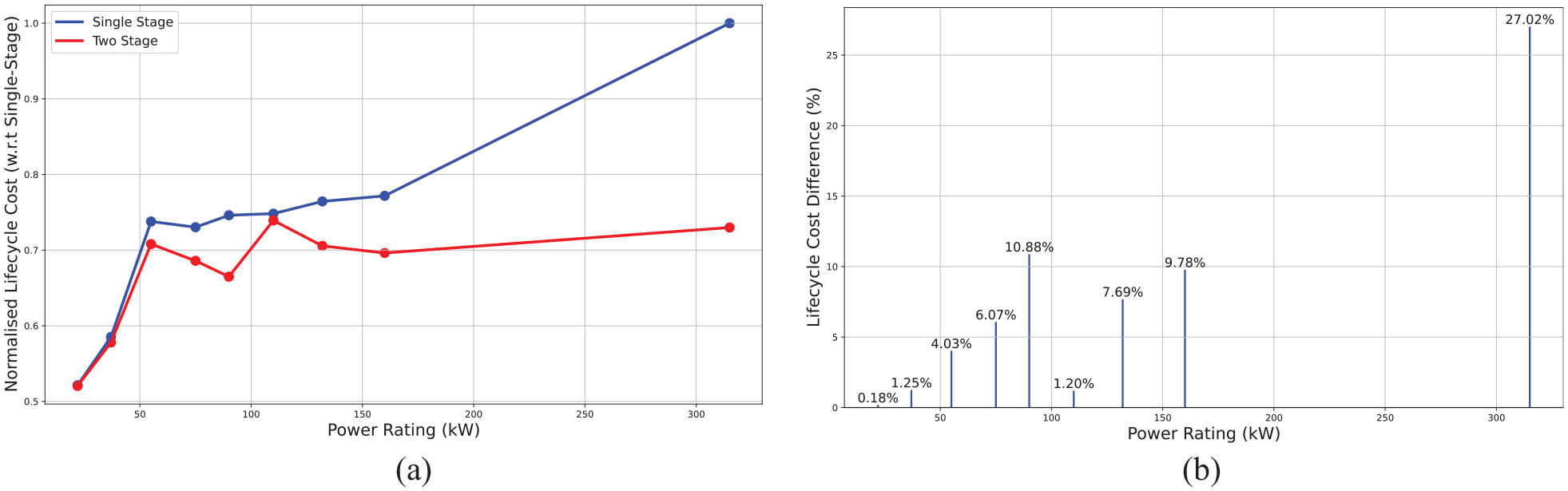
Comparison of lifecycle costs for single-stage and two-stage compressors across power ratings from 22 to 315 kW: (a) normalised lifecycle cost comparison and (b) percentage difference in lifecycle costs relative to single-stage screw compressors.
The percentage decrease in lifespan costs for two-stage compressors, relative to single-stage compressors, fluctuates with power rating. Figure 6(b) illustrates the trend in lifespan cost reduction across different power ratings:
At lower power ratings, such as 22 kW and 37 kW, the lifecycle cost reduction is modest at approximately 0.18% and 1.25%, respectively. This reflects the smaller difference in efficiency and capital investment at lower power levels.
In the mid-range power ratings (55, 75, and 90 kW), the lifecycle cost reduction becomes more significant, with values of up to 10.88% at 90 kW. This is attributed to the increased efficiency of two-stage compressors and the ability to handle higher pressure ratios, which leads to lower operating costs over time.
For higher power ratings, such as 160 kW and 315 kW, the lifecycle cost savings become even more pronounced, reaching up to 27.02% at 315 kW. This is a direct result of the substantial energy savings achieved by two-stage compressors at these higher capacities, despite the initial capital cost being higher.
The bar graph in Figure 6(b) clearly illustrates the disparity in lifespan costs between single-stage and two-stage compressors, with the cost benefit becoming increasingly evident as power ratings rise.
It is essential to note that the lifecycle cost analysis presented in this study has been conducted with respect to conditions prevailing in India, including energy tariffs, labour costs, and maintenance expenses. These factors can vary significantly across different countries, influencing the share of operating and maintenance costs in the total lifecycle cost. Therefore, the economic feasibility and optimal operating zones for single-stage and two-stage compressor systems are subject to regional conditions. Future work may explore the impact of varying economic conditions in other regions to provide a broader perspective on lifecycle cost analysis.
Experimental measurements
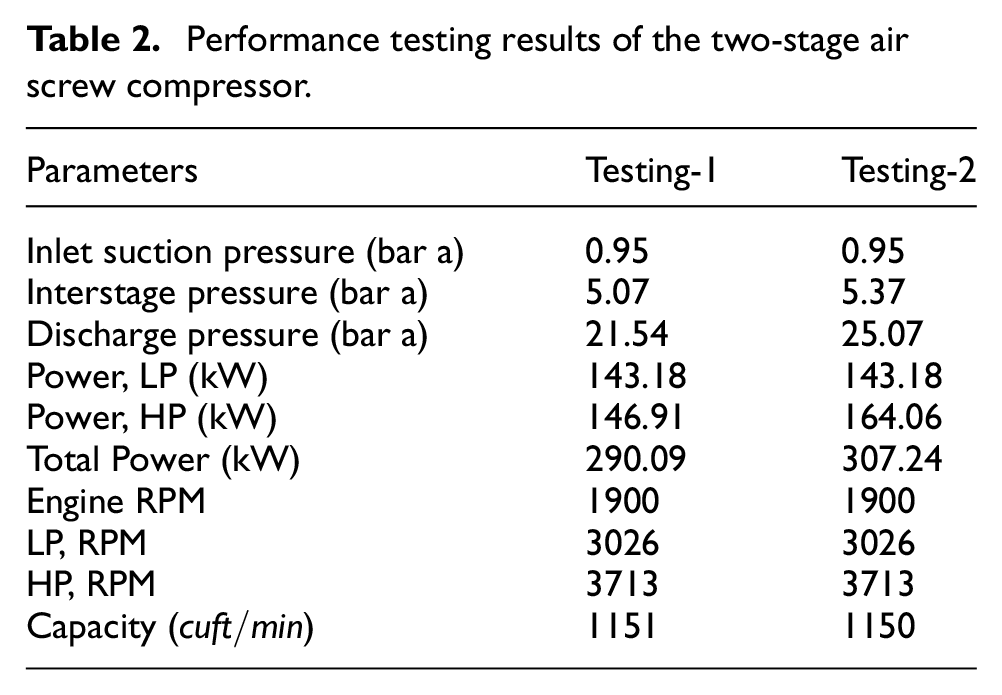
A prototype of a two-stage air screw compressor was conceived and manufactured for water-well applications to assess the theoretical outcomes and lifetime cost analysis outlined in this study. The compressor was designed to function within a power range of 290–308 kW, producing discharge pressures from 21 to 25 bar. The low-pressure (LP) stage functions at 3000 rpm, and the high-pressure (HP) stage operates at 3700 rpm, delivering a flow rate of roughly 1150 cubic feet per minute (CFM). The low-pressure (LP) stage features a 4/6 lobe configuration, while the high-pressure (HP) stage adopts a 6/8 lobe design, optimising efficiency and ensuring smoother operation throughout the compression process. The two-stage compressor is driven by a single engine shaft, which is connected to a bull gear that powers the compressor block. The LP and HP stages are each driven by pinion gears mounted on their respective main rotor shafts. A detailed schematic of the complete gear arrangement for the two-stage system is presented in Figure 7. Due to proprietary restrictions, further technical specifications regarding the compressor design cannot be disclosed.
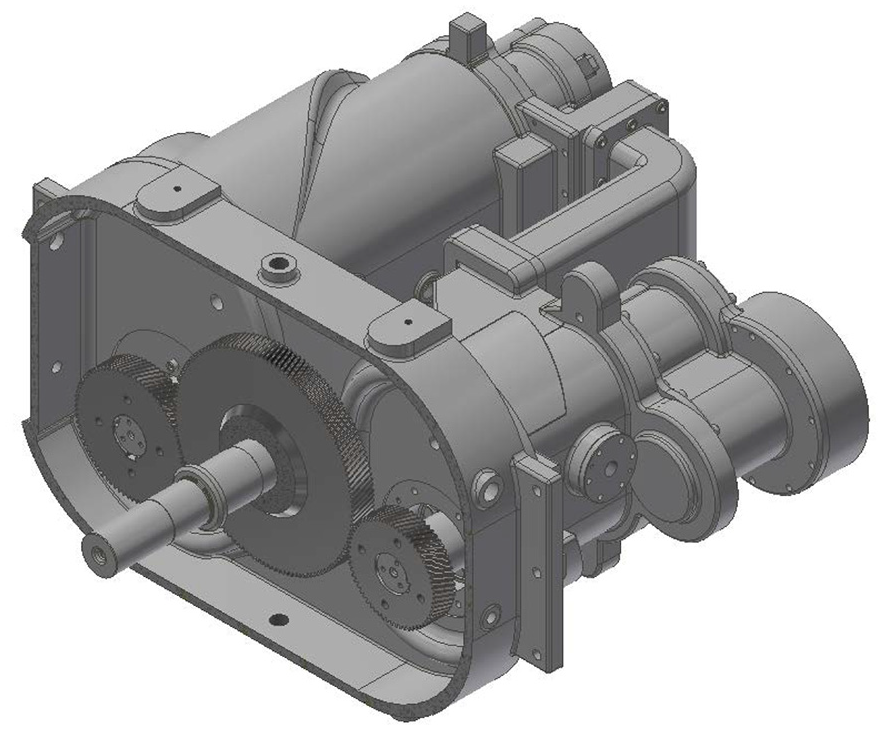
Schematic diagram of the two-stage screw compressor gear arrangement, featuring a bull gear with 129 teeth and two pinions, comprising 81 and 61 teeth, respectively. The pinions are mounted on the low-pressure (LP) and high-pressure (HP) stage main rotor shafts.
The experimental apparatus was carefully designed to comply with the ISO 1217 standard for displacement compressor evaluation, guaranteeing precise and consistent outcomes. The prototype underwent a series of performance evaluations under steady-state settings, with the compressor functioning at specified operating points until stable parameters, including pressures, temperatures, and rotating speeds, were attained. Data gathering initiated solely after the system attained thermal and mechanical equilibrium, hence guaranteeing dependable performance data.
Each test was executed for a minimum of 10 min to obtain reliable performance measurements. Data was collected at intervals and averaged across several samples to reduce transitory fluctuations, and the data were normalised to the specified pressure ratios and rotor speeds for comparison. The processes were meticulously executed to guarantee that the test findings conformed to industry standards, yielding dependable performance benchmarks for subsequent study.
The performance test findings are encapsulated in Table 2, emphasising critical parameters including power consumption, rotational speeds, interstage pressure, and compressor capacity under both testing situations.
Performance testing results of the two-stage air screw compressor.
Following the initial performance testing, the compressor underwent comprehensive in-house evaluation for approximately 150 h to confirm its performance in relation to design specifications and adherence to industry standards, including ISO 1217 for displacement compressors and ISO 5389 for performance assessment. The experimental setup is depicted in Figure 8. These standards guarantee the accuracy of airflow, pressure, and power consumption measurements in real-world operational settings. Upon satisfactory completion of all quality assurance evaluations, the prototype was transferred to a client location, where it has been functioning consistently for over a year. The prolonged operational time has yielded significant empirical evidence, illustrating the resilience and economic efficiency of the two-stage system. The reductions in lifecycle costs, stemming from decreased operational expenses due to diminished specific power consumption and enhanced efficiency at elevated discharge pressures, correspond with the findings of this paper. The lifecycle cost analysis for the assessed two-stage compressor over a 1-year duration is illustrated in Figure 9, emphasising the distribution of each cost component.
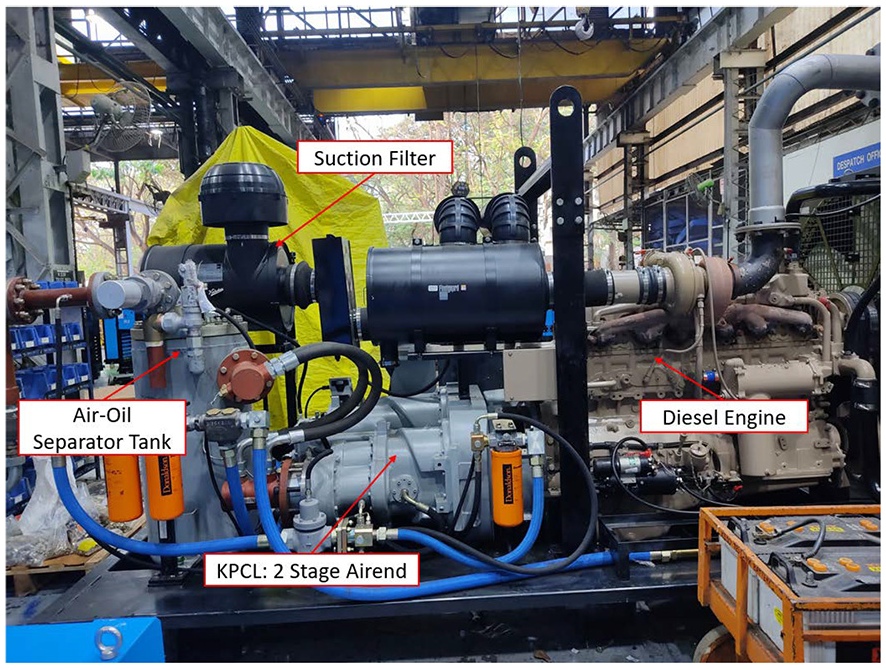
Schematic labelled diagram of the two-stage compressor test rig. The diagram illustrates the complete test rig components, including the bare two-stage KPCL compressor, providing a comprehensive view of the experimental setup.
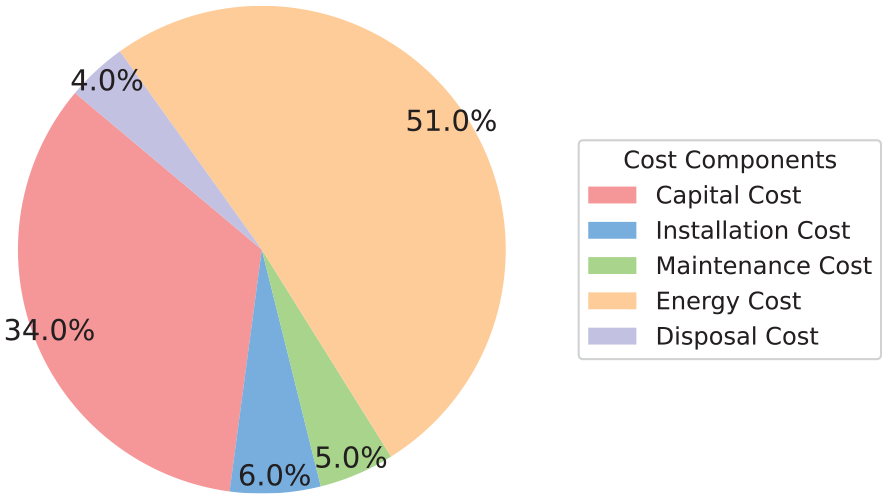
Lifecycle cost breakdown of a two-stage oil-flooded air screw compressor system with a 307 kW power rating and 25 bar discharge pressure, based on 1 year of operation.
The experimental results, along with the lifetime cost evaluation, demonstrate that two-stage screw compressors are both feasible and economically beneficial for high-pressure discharge applications, such as water-well systems. Empirical evidence substantiates the conclusions derived from modelling and analysis, providing a compelling rationale for the lifecycle cost savings realised by two-stage systems.
Conclusions
This research provided an exhaustive analysis of the lifecycle costs related to single-stage and two-stage screw compressors, emphasising the economic advantages of two-stage systems. The research included theoretical modelling, lifecycle cost analysis, and practical validation to emphasise the benefits of two-stage screw compressors for operational cost reduction and overall efficiency, especially in high-pressure applications.
The findings demonstrate that although two-stage compressors need a greater initial capital outlay, their lower specific power consumption and enhanced efficiency at elevated discharge pressures lead to substantial operational cost reductions. The savings are more significant at elevated power ratings, as evidenced by experimental results, where a two-stage prototype functioned for almost a year, realising considerable lifecycle cost reductions. The experimental data, certified per ISO 1217 and ISO 5389 standards, substantiates the results derived from the theoretical analysis. The lifespan cost distribution of the evaluated compressor underscores the significance of operating expenses as a pivotal element in achieving long-term cost savings.
Future endeavours should focus on the creation of an optimised two-stage compressor prototype designed for an 8.5 bar discharge pressure. This prototype will have optimised compressor dimensions and an integrated volume ratio (VI) specifically engineered to provide economic advantages at reduced pressures. The objective is to transfer the economic benefits observed in high-pressure systems to mid-range pressure applications by optimising design parameters for enhanced efficiency and reduced operating expenses. Utilising the results of this study, the subsequent development phase seeks to attain optimal economic efficiency, rendering two-stage compressors a more appealing option for a broader spectrum of industrial applications.
Footnotes
Appendix
Acknowledgements
We express our sincere gratitude to Kirloskar Pneumatic Company Limited, Pune, India for financing this research. We wish to express our gratitude to the Centre for Compressor Technology at City St George’s, University of London for their ongoing guidance and support in this project.
Declaration of conflicting interests
The author(s) declared no potential conflicts of interest with respect to the research, authorship, and/or publication of this article.
Funding
The author(s) disclosed receipt of the following financial support for the research, authorship, and/or publication of this article: Kirloskar Pneumatic Company Limited, Pune, India for the research and/or publication of this article.
Data availability
Data will be made available on request.
