



Abstract
As a new two-dimensional material with unique friction and wear properties, graphene often serves as a solid lubricant. In order to better understand the lubrication effect of graphene in the process of three-body polishing of single crystal silicon with diamond abrasive, a molecular dynamics model of this process was established in this study. Further, the changes of coordination number, friction coefficient, temperature, potential energy, stress, and surface/subsurface damage in the process of three-body polishing were analyzed in detail. The results showed that graphene lubrication could enhance the heat dissipation and reduce the number of defect atoms, friction coefficient, potential energy, stress, and chips. Therefore, less subsurface damage and material resistance were observed in the workpiece with graphene lubrication during machining. In general, graphene can be used as a high-quality solid lubricant in the three-body polishing of single crystal silicon using diamond abrasive because of its excellent lubricating effect.
Keywords
Introduction
Silicon, especially single crystal silicon with smooth surface, forms the foundation of modern microelectronics industry. Many industries1–5 are inseparable from single crystal silicon, but how to process single crystal silicon with high-quality surface is a critical issue that needs immediate attention. Polishing as an important processing method is widely used in the processing of silicon to obtain high surface quality for enhanced device performance. However, as one of the hard and brittle materials, the surface of monocrystalline silicon gets easily damaged during ordinary precision grinding processing.6–8 Therefore, the fundamental understanding of the surface/sub surface damage characteristics of monocrystalline silicon in the polishing process is the premise to further improve the surface quality of monocrystalline silicon and find a better polishing process. Rambabu and Ramesh 9 investigated the influences of different machining temperature on mechanical and tribological properties of alloy with abrasive polishing under the experiment. In recent years, extensive research efforts have been devoted to exploring different methods to study the ultra-precision machining process. For example, Xie and Bhushan 10 conducted polishing experiments and investigated the influence of particle size and contact pressure on the quality of polished surface. Zhang et al. 11 studied the material removal from a surface during polishing process with fixed abrasives by theoretical calculation. Furthermore, relevant theoretical models have also been established to predict the mode of material removal in ultra-precision machining process. Adachi and Hutchings 12 predicted the wear mode of the micro-scale ball-cratering abrasion test by using a theoretical model. They reported that two-body abrasion and three-body abrasion constitute the main wear mode during micro-scale polishing. Jain and Jain 13 compared the theoretical model with the experimental results. It was found that the roughness curves of two-body abrasive particles are not consistent. On the other hand, studies14,15 have also shown that three-body polishing has better polishing effect than two-body polishing, because there is no wear, condensation, adhesion, and pear cultivation when the hard and brittle materials are deformed during the two-body polishing process. Fang et al. 16 indicated that the movement mode of abrasive particles significantly influences the material removal in three-body polishing. In addition to experiments and theoretical models, molecular dynamics (MD) simulation has been proven to have a great advantage in the research of ultra-precision machining. For example, by using MD simulation, Zhang and Tanaka 17 found that single crystal silicon mainly undergoes amorphous phase transition on the atomic scale during surface nano-modification, which is hard to be observed by experiments. Furthermore, Zarudi et al. 18 studied the nano-modification of monocrystalline silicon during ultra-precision machining by comparing the experimental results with MD simulation results. It was found that the MD simulation results are consistent with the experimental results. MD simulation has evolved into a mature technique that can be used effectively because of its advantages far better than those of experiments. To further understand the ultra-precision polishing process, Zhang and Tanaka 14 established MD models for polishing single crystal silicon under two-body and three-body contact sliding. Furthermore, Yang et al. 19 studied the factors influencing the polishing force change in the process of three-body polishing. They pointed out that the rotation speed and direction of abrasive would change the polishing force. Notably, the change of polishing force directly affects the removal method of materials, resulting in the change of workpiece quality, surface morphology, and distribution of defect atoms. These researches indicate that MD simulation can be successfully used in the study of three-body polishing process.
It is well known that improving the lubrication effect during polishing helps to improve the surface quality of the workpiece after machining. Coatings and lubricants (liquid or solid) addition are effective methods to reduce friction and wear,20,21 which is conductive to processing at high speed and broadening the application fields of materials.22,23 As a new material, graphene possesses several unique properties such as anti-friction, anti-wear, and excellent self-lubricating properties,24,25 thus graphene can be used as an effective lubricant to improve the quality of workpiece after processing.26,27 Bai et al. 28 established a MD model for the scratching process with graphene lubrication. By observing the simulation results, they found that graphene shows good lubrication when a diamond tip is used to scratch diamond-like carbon films. Moreover, Zhang et al. 29 pointed out that the super lubrication effect of graphene layer is closely related to the scratch depth. When the scratch depth is larger than 5.3 Å, the graphene layer undergoes several phase transformations and loses its lubrication effect, resulting in a sharp increase of friction coefficient. It is generally accepted that graphene or graphene-based materials can reduce the friction coefficient of contact interface. However, the scale of this phenomenon is limited. At such a small scale, it is difficult to observe the internal mechanism of lubrication through experiments. According to literature study, 30 high pressure phase transformation (HPPT) occurs in single crystal silicon during processing. Different phases have different properties, and the brittle–ductile transition mechanism is directly related to the transformation. 31 Wang et al. 32 and Zhang et al. 33 pointed out that different coordination numbers (CN) can be used to distinguish different phases. Furthermore, Goel et al. 34 indicated that the process is often accompanied by a large amount of heat generation. Single crystal silicon materials are known to be hard and brittle at room temperature. However, when the temperature is high enough, the single crystal silicon acquires elastic–plastic properties, and its internal dislocations are easy to move and climb. Therefore, it is necessary to study the effect of graphene lubrication on temperature during the processing. Furthermore, many scholars understand the damage forms of workpiece through the analysis of corresponding stress and potential energy.31,35 To find out whether graphene layer can reduce the damage of workpiece after machining, analysis of these data is extremely important. Although the theoretical information is difficult to be measured by experiments, it can be easily processed through MD simulation.
The main objective of this study is to investigate the lubrication effect of graphene layer in the three-body polishing process of monocrystalline silicon with diamond abrasive grains. Therefore, a comparison model of three-body polishing with and without graphene layer are established in this study. Based on the analysis of CN, friction coefficient, temperature, potential energy, stress, and polishing surface morphology, the internal lubrication mechanism of three-body polishing by graphene was revealed.
Simulation model
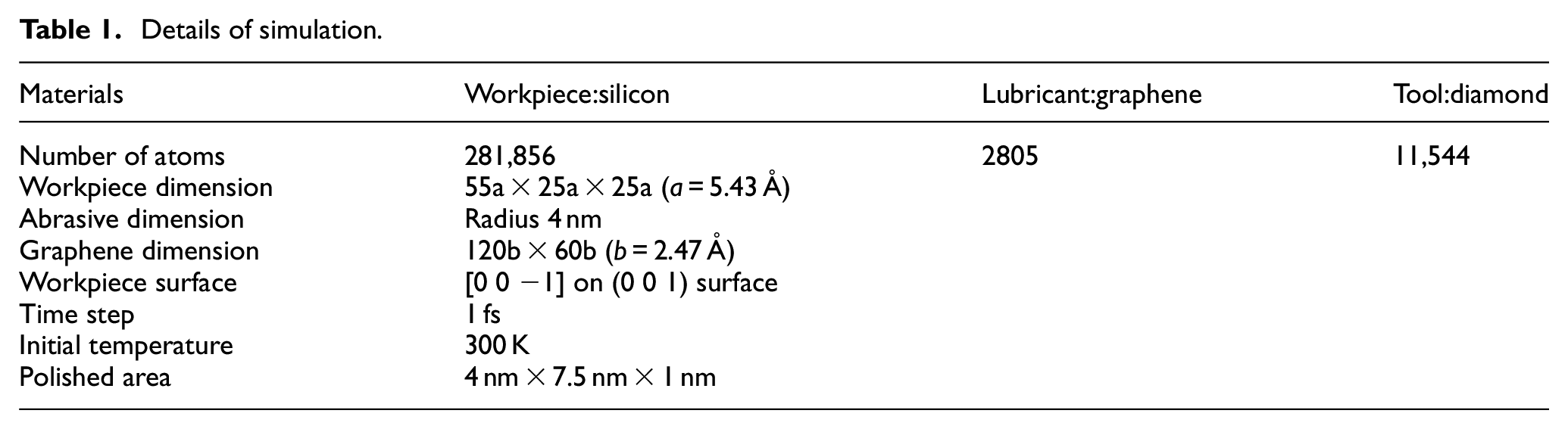
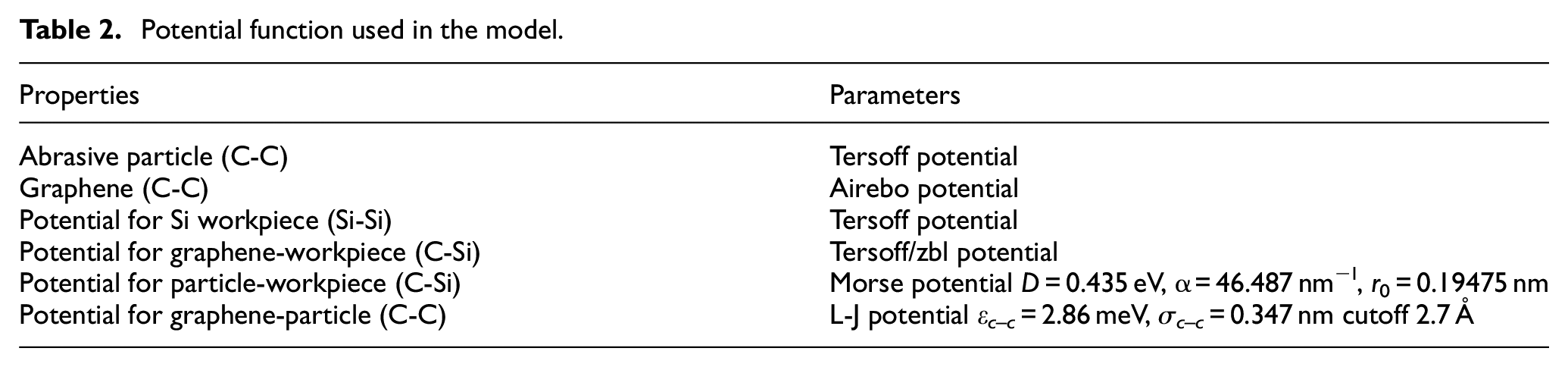
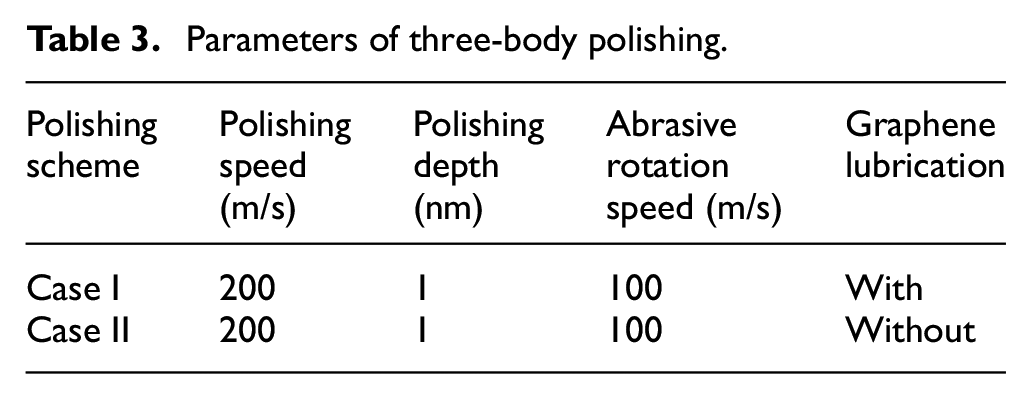
The MD model of three-body polishing with graphene layer is shown in Figure 1. The specific information about simulation parameters is illustrated in Table 1. The potential function and parameters are summarized in Table 2.29,36–43 Table 3 lists several important parameters used in the process of three-body polishing, where case I involves graphene layer and case II does not involve graphene layer. There are three parts of the workpiece in the MD model: Newtonian layer, thermostatic layer, and boundary layer. In order to reduce the scale effect, the boundary layer is fixed and treated as a rigid body in the simulation process. The temperature of the thermostatic layer is controlled at 300 K by the Gauss-Constraint method to effectively transmit the heat generated during the contact process in time. The atoms in Newtonian layer are those atoms that actually participate in the simulation, and the motion of these atoms follows Newton’s equation. For the convenience of data measurement, the cutting area was set at the position where the workpiece was scratched. The changes of various physical factors were observed in the polishing process with and without graphene.
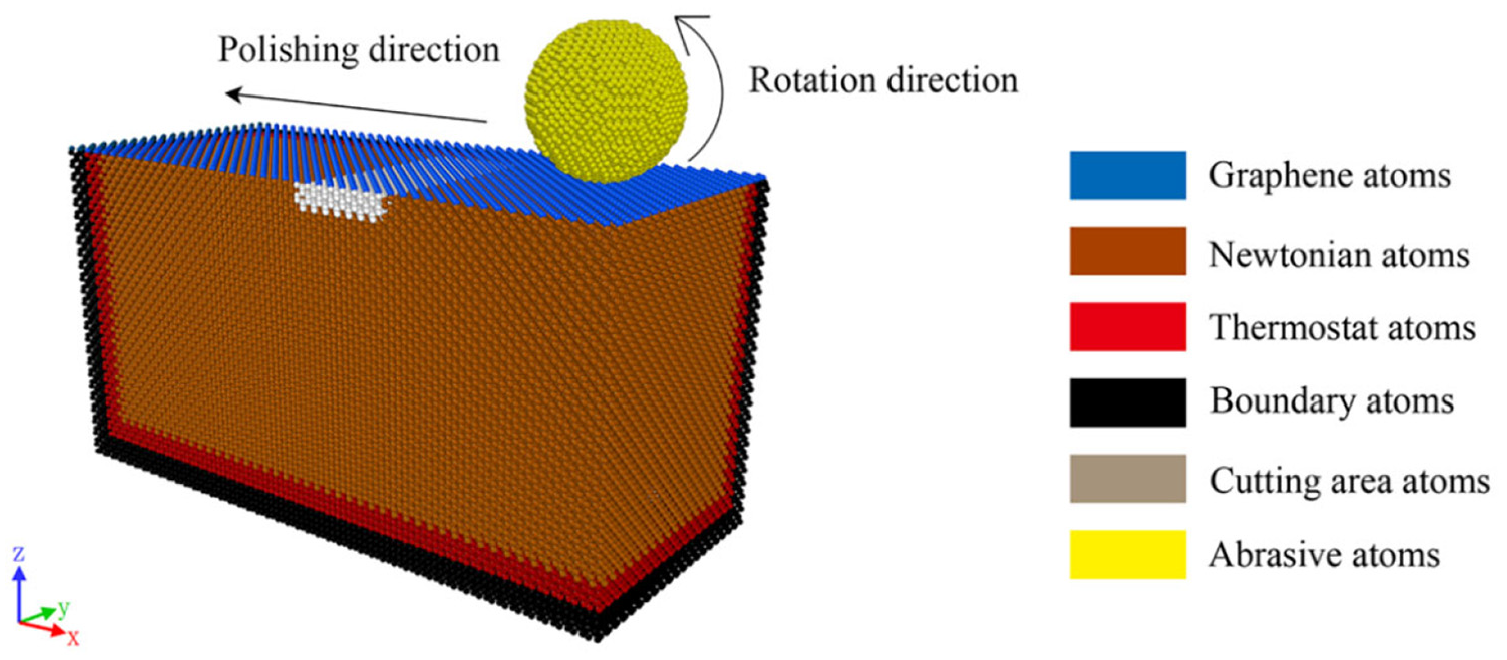
MD model of three-body polishing with graphene layer.
Details of simulation.
Potential function used in the model.
Parameters of three-body polishing.
Results and discussion
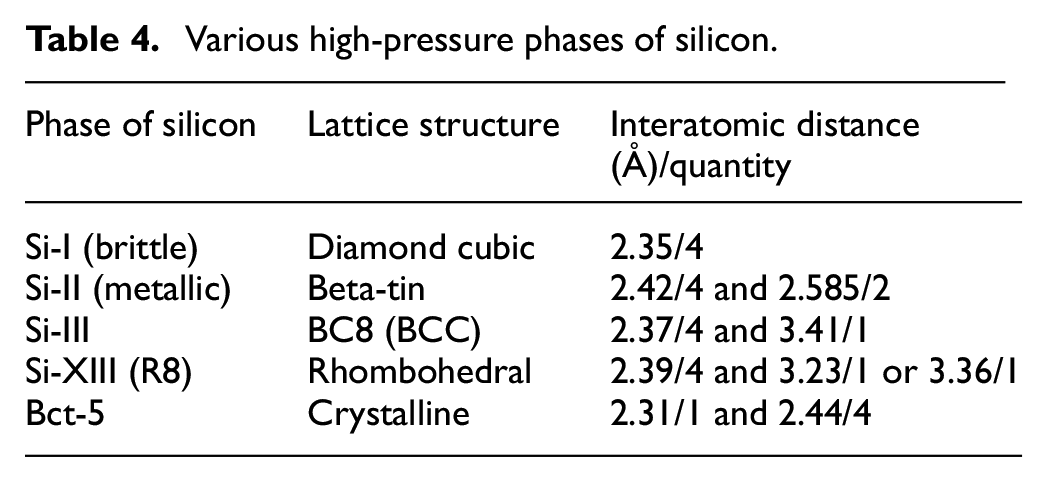
As the three-body polishing process progresses, many other phases such as Si-II and Bct-5 are generated in the workpiece. Previous studies have shown that the distance between atoms can be used to distinguish different phases.40,44–47 The single crystal silicon has four adjacent atoms with an equal distance of 2.35 Å, when it is not machined. Si-II phase (metallic and ductile), on the other hand, contains six adjacent atoms, four of which are at a distance of 2.42 Å and the other two are at a distance of 2.585 Å. The distance and number of Si-I (brittle), Si-II (metallic), Si-XII (R8), Si-III, and Bct-5 phases with neighboring atoms are presented in Table 4. The change of atomic distance results in the change of the CN. In order to distinguish more different phases, cutoff radius was selected as 2.6 Å. The HPPT conversion relationship of silicon during contact loading is shown in Figure 2(d).34–36 Figure 2(a) and (b) exhibit the distribution of atoms with different CN in the workpiece after Ovito visualization, wherein only the atoms with phase transition are visible. Thus, it is not difficult to find that the addition of graphene in the polishing process is very helpful to reduce the phase transition atoms in the workpiece. Moreover, Figure 2(a) displays a line chart, exhibiting the variation of the number of atoms with CN = 5 and 6 with the polishing distance. Neither the number of atoms with CN = 5, nor the number of atoms with CN = 6 is lower than that of the three-body polishing without graphene in the case of graphene-lubricated polishing. Moreover, with the increase of polishing distance, the number of Bct-5 shows little change, while the number of Si-II increases with the increase of polishing distance. Previous studies 48 have shown that Si-II is unstable at a pressure below 4 GPa, which is the reason why the number of Si-II varies only slightly with the polishing distance. Figure 2(d) demonstrates that ductile Si-II loses its crystal structure or gets converted to other phases under different unloading modes, such as amorphous-Si and Si-XII. 49 As a result, although graphene lubrication can reduce the total number of Si-II and Bct-5, it has little effect on their change trend during polishing process.
Various high-pressure phases of silicon.
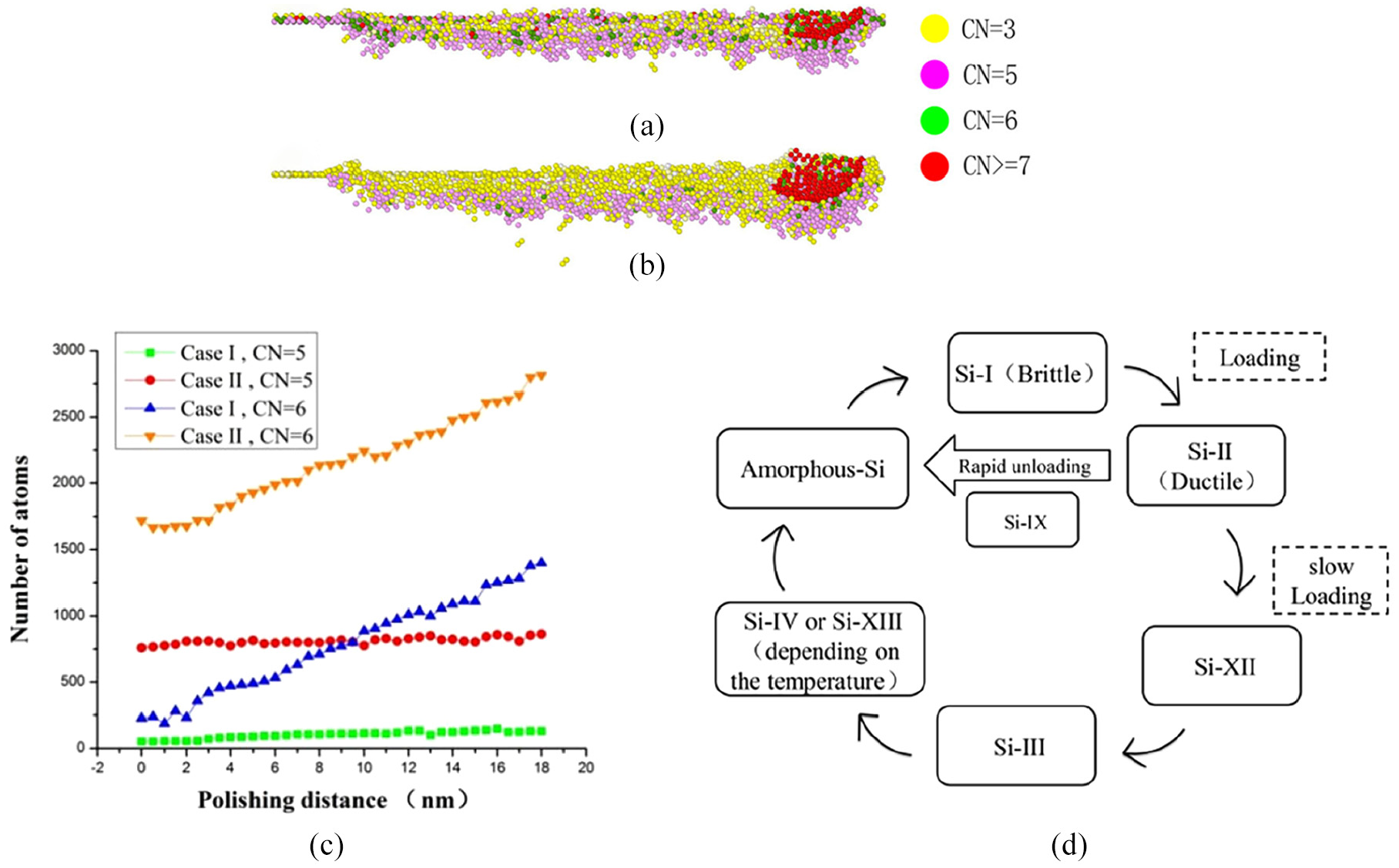
Coordination number (CN) change of atoms in workpiece: (a) case I, (b) case II, (c) change in the number of atoms with CN = 5 and 6 with polishing distance, and (d) conversion of HPPT.
Till date, the neighbor grain structure technique has been used as the identification method to distinguish defective atoms, dislocation atoms, and surface atoms from Si-I. Common Neighborhood Analysis (CNA) used in normal situation cannot be used to distinguish different diamond structures. Different from CNA, the neighbor grain structure identification method can identify different types of neighboring atoms in different layers. Interestingly, this method can well distinguish different neighboring atoms with very small differences in different layers and calculate the CNA map between the two layers. Finally, according to arrangement of maps, atoms are identified as cubic or hexagonal diamond structures. 34 In Figure 3(a) and (b), SI-I atoms are represented in blue, and phase transition atoms and surface atoms are gray colored. It can be easily detected that there are obviously more defective atoms in the workpiece without graphene layer. Figure 3(d) demonstrates that the growth rate of defect atoms is higher in the workpieces without graphene lubrication as the abrasive particles move forward. This again proves that graphene lubrication is of great significance to reduce the subsurface damage and defects in the process of three-body polishing.
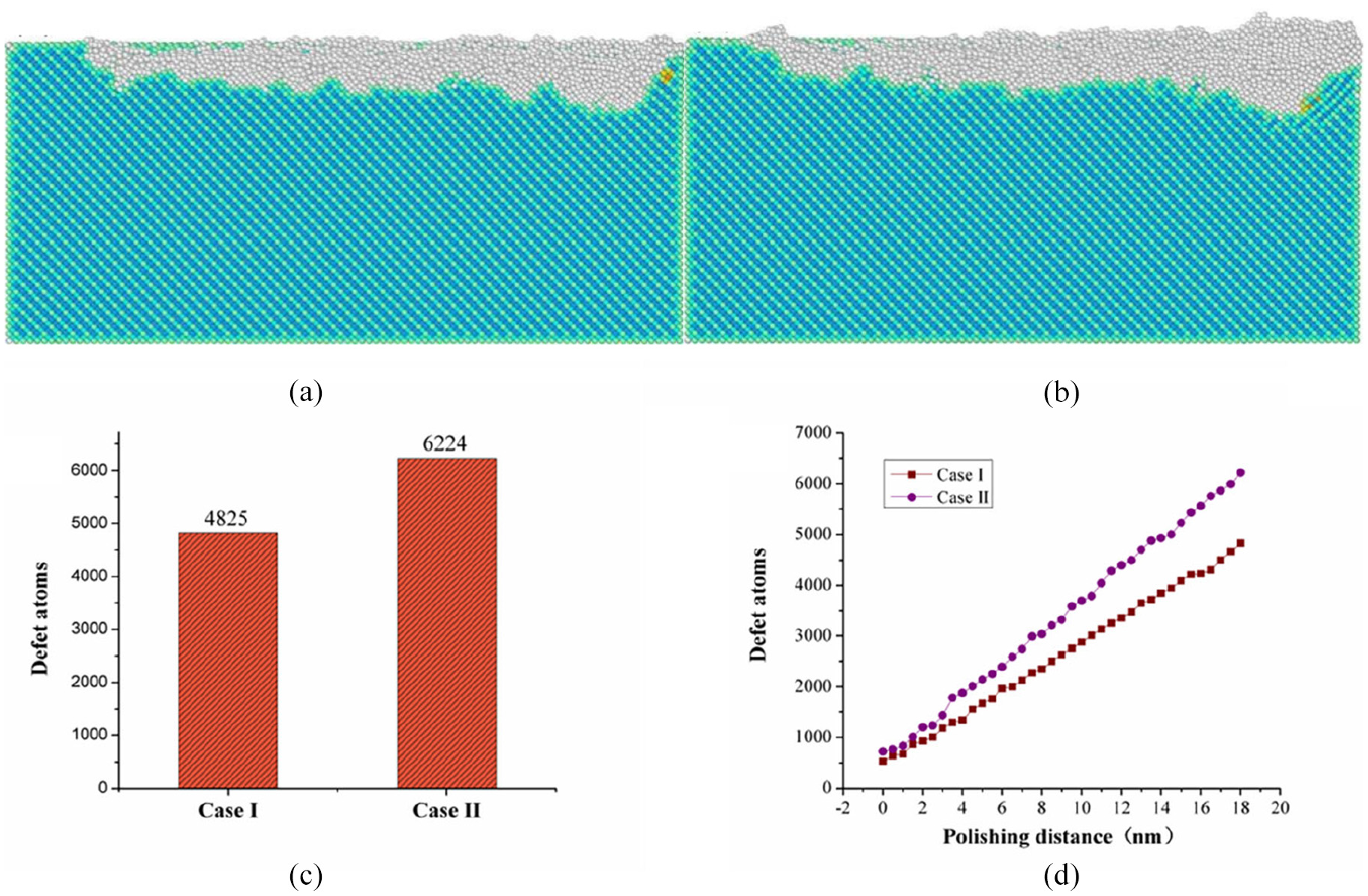
(a) Cross-sectional view of the defect structure of case I, (b) cross-sectional view of the defect structure of case II, (c) total number of defect atoms under different conditions, and (d) the variation of number of defect atoms with polishing distance.
The two images count the depth difference of the surface morphology in the Z-axis direction in different colors. Clearly, the addition of graphene significantly influences the surface quality and chip height after polishing. It is well known that with the increase of polishing distance, chips gather on both sides and front of the abrasive and produce greater material resistance. However, it is found that the accumulated debris on both sides and front of the abrasive grains are significantly less as indicated by the comparison analysis made between Figure 4(a) and (b). Moreover, accumulation of excessive amount of debris was not observed in the movement track of the abrasive grains under the lubrication of graphene. The reason why few debris accumulate on both sides and in the groove is that debris may fall into the groove or more silicon atoms stay in the groove. Under the action of abrasive grains, they react with atoms in the groove, reducing pits and bulges of the machining surface and forming the initial atomic structure. As a result, it improves the surface quality. Therefore, it is proved that graphene can improve surface quality and reduce the amount of material removed. Friction coefficient is the ratio of tangential force to normal force, which is an important parameter to evaluate the extent and characteristics of lubrication effect. Figure 4(c) presents the average values of coefficient of friction between the workpiece and the abrasive particles in two different processing environments. Obviously, the friction coefficient is much smaller during polishing in the presence of graphene layer on the workpiece. When graphene is used as lubricant in three-body polishing process, reduction in the surface damage of the workpiece and the amount of material removed and improvement in the surface quality after processing are observed.
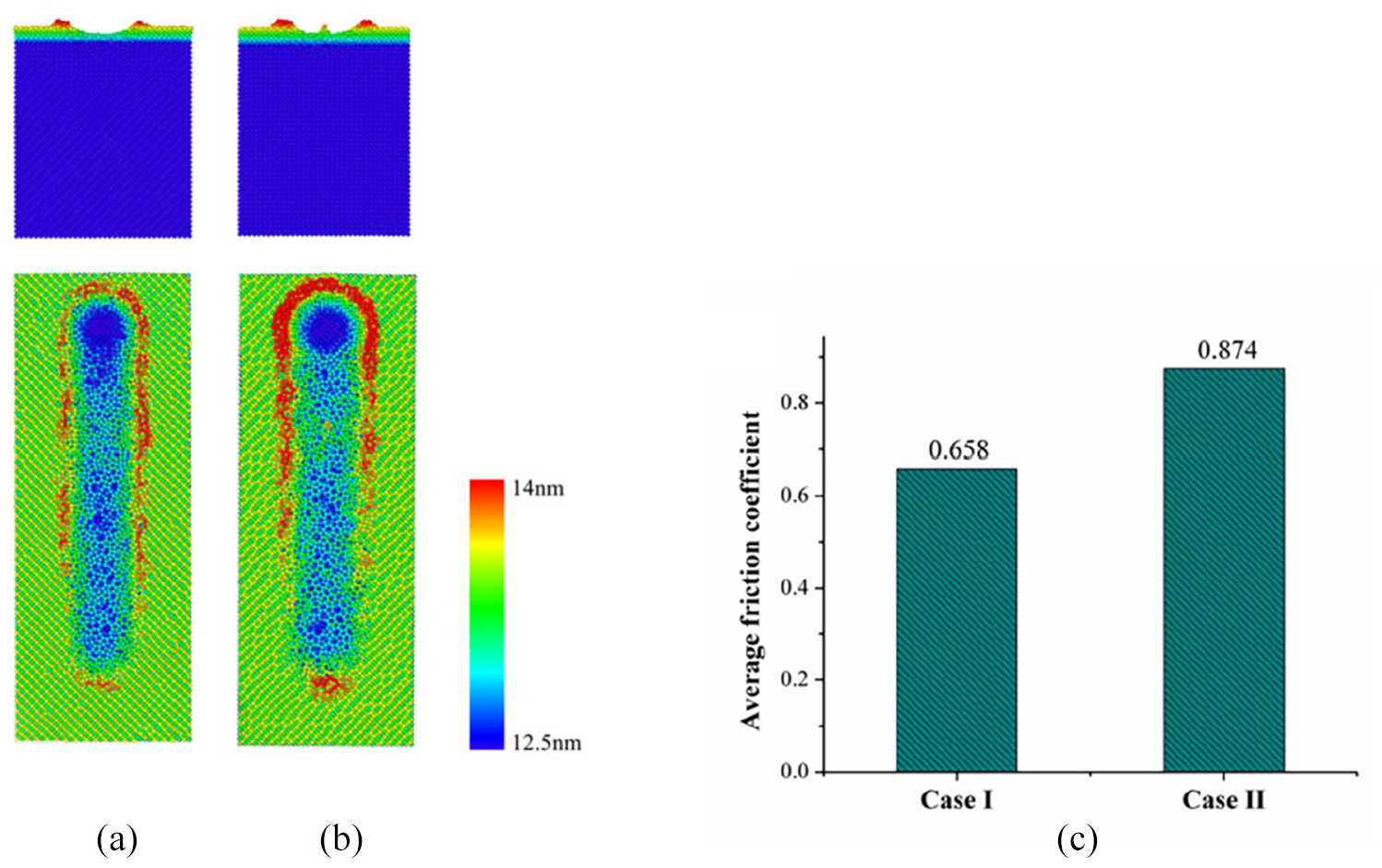
(a and b) Surface topography of the workpiece and (c) comparison of friction coefficient.
In order to better study the influence of graphene lubrication on the three-body contact sliding, the curves of temperature comparison and potential energy comparison were obtained and presented in Figure 5. Temperature is an intrinsic measurement of the calculated overall properties of the workpiece, and the formula is:
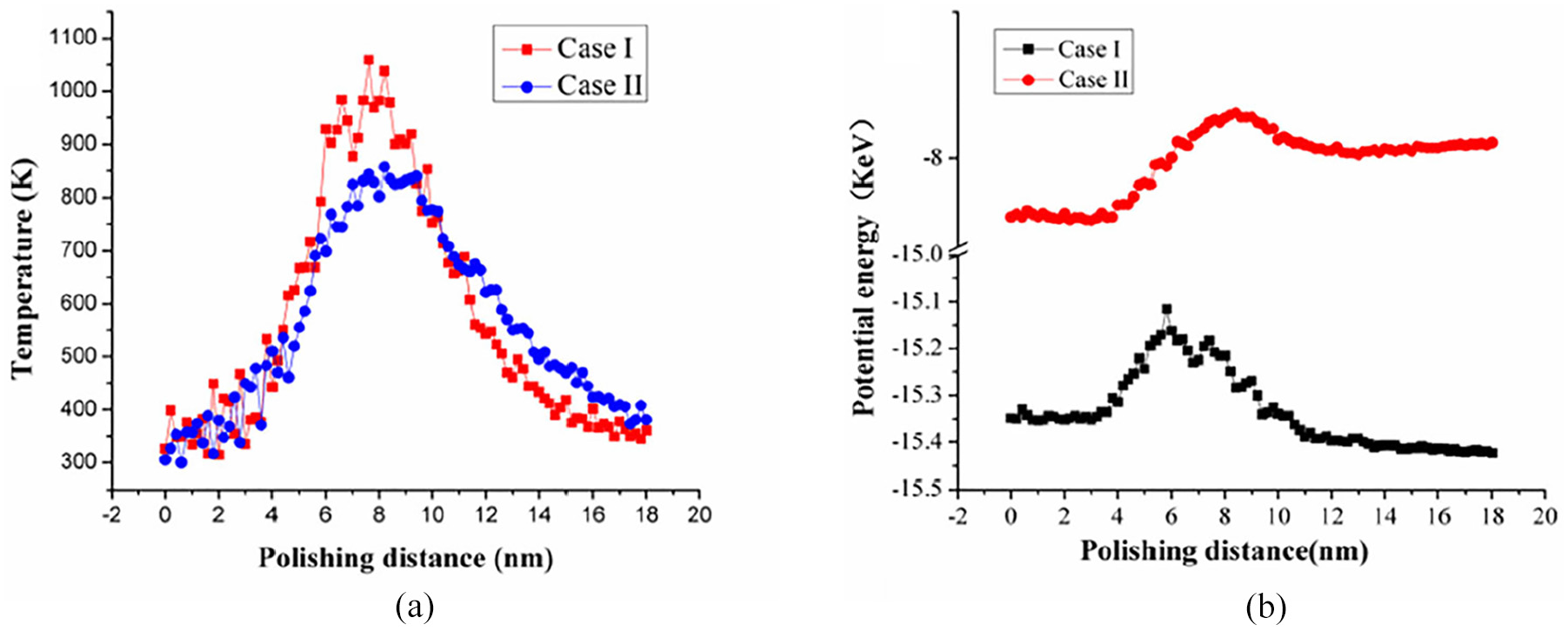
(a) The change of temperature and (b) potential energy trend.
It is helpful to understand the failure mode of the workpiece by analyzing the stress during processing.
37
In order to further understand the damage of workpiece during polishing when graphene is involved as lubricant, the change of different stress components with polishing distance was studied and the variation trend is presented in Figure 6.
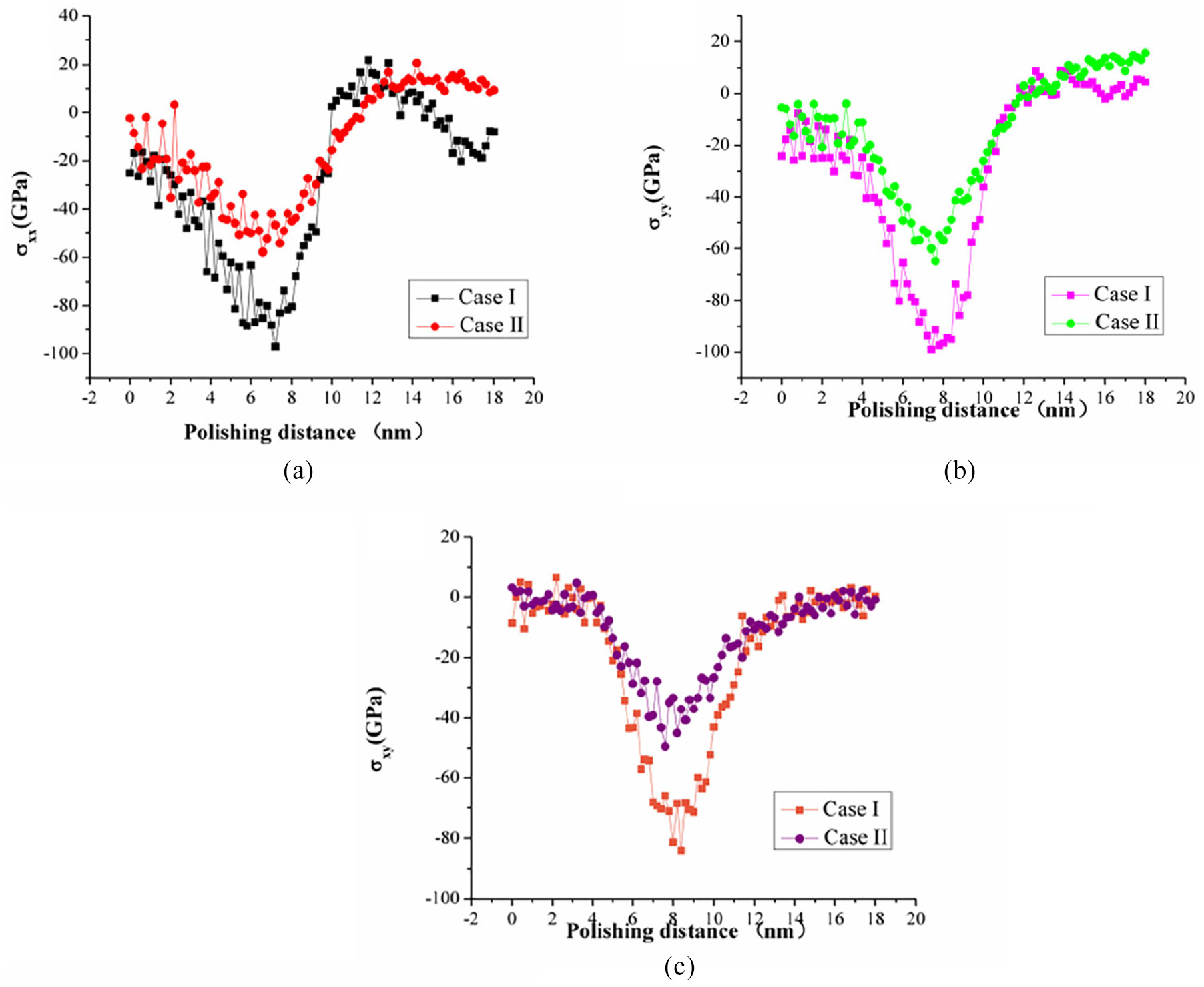
(a) Change of normal stress in x-axis direction (σxx) with polishing distance, (b) change of normal stress in y-axis direction (σyy) with polishing distance, and (c) change of shear stress (σxy) with polishing distance.
Conclusion
In this study, the lubrication effect of graphene in the three-body abrasive polishing process was investigated via atomic scale simulation. Based on the above-mentioned discussion, the following main conclusions were drawn:
(1) Under the condition that the other processing parameters remain unchanged, the friction coefficient is obviously reduced after the addition of graphene. In other words, graphene has an obvious lubrication effect in the process of three-body contact sliding between diamond abrasive and monocrystalline silicon.
(2) After adding graphene layer, the defect atoms of the workpiece are fewer, the potential energy is smaller, the surface quality is better, and the heat dissipation effect is better. Nonetheless, the material removal rates are low during polishing.
(3) After adding graphene layer;
Footnotes
Declaration of conflicting interests
The author(s) declared no potential conflicts of interest with respect to the research, authorship, and/or publication of this article.
Funding
The author(s) disclosed receipt of the following financial support for the research, authorship, and/or publication of this article: The authors would like to appreciate the Natural Science Foundation of China (52105178, 12162008) and Guizhou University cultivation project (Guida cultivation [2020] No. 10).
