



Abstract
Owing to the cost constraint, it is difficult to incorporate all critical features into a single product design. To deal with this issue, analytic hierarchy process is a well-known method that compares the relative priorities of critical features. This study aims to illustrate that the judgment of a designer can be used to generate multiple diversified product designs. To this end, this study proposed a multibelief analytic hierarchy process and nonlinear programming approach. In the proposed methodology, a decision maker’s judgment matrix is decomposed into several single-belief judgment matrices that are more consistent than the original judgment matrix and represent diversified points of view regarding the relative priorities of factors. To this end, a nonlinear programming model is established and optimized. The proposed methodology was applied to a smart backpack design problem. It was concluded that a designer’s judgment was often inconsistent, which was ignored in the conventional analytic hierarchy process method but could be employed to diversify product designs.
Introduction
A product design is often subject to the cost constraint. Therefore, it is difficult to incorporate all critical features into a single product design. To deal with this issue, analytic hierarchy process (AHP) is a well-known method that compares the relative priorities of critical features to be incorporated into a single product design. However, AHP is based on subjective pairwise comparison results.1,2 In addition, it is difficult to satisfy the multiplication requirement used in AHP. This leads to inconsistency in pairwise comparison results. 3 Therefore, a consistency check is required to ensure that the designer did not conduct pairwise comparisons either inconsistently or randomly.4,5 For a standard consistency check, the consistency index or consistency ratio should be less than 0.1 for a small AHP problem.
Numerous attempts have been made to overcome the problem of inconsistency. It is widely acknowledged that the inconsistency in a judgment matrix (or in a pairwise comparison matrix) can be lessened by minimizing the logarithmic least square error when deriving the priorities. 6 According to Karapetrovic and Rosenbloom, 4 the standard consistency check is not reliable. They considered consistency as a quality that can be improved by applying a quality control process. When the size of the judgment matrix is large, the consistency index or ratio can be relaxed to ù 0.3.7,8 According to Franek and Kresta, 9 the judgment scale affects the consistency evaluation results. Therefore, the random indices for different judgment scales should not be the same. For a multiple-designer AHP problem, if the judgment matrix for each designer is consistent, then the weighted geometric mean of the judgment matrices for all designers is also consistent. 10 For a fuzzy AHP problem, Leung and Cao 11 did not evaluate the consistency of the fuzzy pairwise comparison results but derived the values of fuzzy priorities that approximately conformed to all fuzzy pairwise comparison results while allowing some deviations. Conventionally, a fuzzy judgment matrix is a multiplicative reciprocal matrix. Wang and Chen 12 defined an additive reciprocal fuzzy judgment matrix in which consistency could be ensured more easily. They also derived formulas for calculating fuzzy priorities from an additive reciprocal fuzzy judgment matrix.
Current methods largely deal with the inconsistency problem either by modifying the inputs (the pairwise comparison results) or by changing the rules used to derive the priorities. Both methods alter the original AHP problem. To address this, an innovative method is proposed in this study that generates multiple priority sets from a judgment matrix. The motive behind this approach is that occasionally a designer may have several beliefs about the relative priorities of factors. These beliefs may be conflicting, even if the designer is compelled to consolidate them to generate inputs for the conventional AHP process. Such a consolidation process is usually casual, which accounts for the inconsistency in the overall judgment matrix. Each belief can be mapped to a single-belief judgment matrix that is more consistent than the overall judgment matrix.
In this article, a multibelief AHP and nonlinear programming (NLP) approach is proposed for generating diversified product designs. To the best of our knowledge, similar methodologies have not been proposed. In the proposed methodology, a judgment matrix is decomposed into several single-belief judgment matrices that are more consistent than the original judgment matrix. In addition, single-belief judgment matrices represent diversified points of view regarding the relative priorities of factors. Therefore, the distances between single-belief judgment matrices are maximized. As a result, an NLP model is formulated and optimized to generate single-belief judgment matrices. The scope of this study covers product design, critical feature selection, multicriteria decision making, and data mining. This study provides a novel viewpoint of interpreting a designer’s judgment. Using the proposed methodology, it is easy to determine multiple optimal product designs. In addition, the optimal product designs determined using the proposed methodology are diversified, which is also novel.
The proposed methodology was applied to a smart backpack design problem to assess its effectiveness. Smart backpacks, also known as augmented backpacks, are an innovative application of smart technologies with functions such as action recording, navigation, and energy harvesting. Giovannella et al. 13 designed a smart backpack that autonomously captured pictures, recorded sounds, and measured temperature for a user on the move. The required modules were attached to the shoulder straps of the backpack. Lee et al. 14 embedded an ultrasonic sensor into a backpack to detect obstacles in front of a user with visual impairment. In addition, the user’s location could be detected and transmitted using a Zigbee module to facilitate navigation. The sensors and modules were attached to the shoulder straps of the backpack. Granstrom et al. 15 used a piezoelectric polymer, polyvinylidene fluoride (PVDF), to fabricate the straps of a smart backpack so that the differential forces in operation between the wearer and the backpack could generate electricity. Chandrasekhar et al. 16 designed a smart backpack that harvested energy from human motions, such as walking, running, and bending. The energy harvesting module, which generated a power supply with a voltage and current of 120 V and 5.8–15 µA, respectively, was attached to an ordinary backpack and could be used to power a light-emitting diode in case of an emergency. However, most smart backpacks on the market are equipped with only a single (and usually different) function, which makes it impossible to compare them.
The proposed methodology is expected to fulfill the following tasks in smart backpack design:
To determine the critical features in a smart backpack design.
To compare smart backpack designs that have optimal functionalities.
To distribute the total costs incurred in fabricating a smart backpack.
The remainder of this article is organized as follows. “The manufacturing of smart objects” section reviews the manufacturing of smart objects. “The proposed methodology” section introduces the multibelief AHP and NLP approach for generating diversified product designs. To illustrate the applicability of the proposed methodology and to assess its effectiveness, a smart backpack design problem was studied, which is detailed in the “Application to a smart backpack design problem” section. Some existing methods were also applied to the problem for making a comparison. The “Conclusion” section concludes this study and provides several possible topics that can be explored in the future.
The manufacturing of smart objects
Although advances in communication and miniaturization technologies have overcome some difficulties in manufacturing smart objects, 17 such manufacturing is still subject to several challenges. For example, Hwang et al. 18 discussed the design and manufacturing of a smart tile for harvesting energy from footsteps. A difficulty they faced was that the piezoelectric modules broke easily. To manufacture smart carpets through a reel-to-reel process, manufacturing time and costs had to be minimized to form a reliable interconnection by embedding the sensing modules into conductive fibers. 19 According to Kallmayer et al., 20 to package a smart object, hardware, software, and technology should not be processed separately. In addition, the whole system should be optimized for further reduction in size. Lee and Tarbutton 21 developed a new additive manufacturing technology called electric poling-assisted additive manufacturing for constructing piezoelectric structures from PVDF polymeric filaments. Such products are an indispensable part for the sensing, actuation, and energy harvesting applications of a smart backpack.
In addition, smart objects have provided real-time traceability, visibility, and interoperability for improving the planning, execution, and control of a shop floor. For example, according to Mittal et al., 22 smart materials are one of 28 enabling technologies for smart manufacturing. Wang et al. 23 adopted a separate single-layer piezoelectric film as a sensing unit to detect the orthogonal cutting force of a cutting tool, thereby decreasing the influence of tool wear on the cutting force. Smart objects, such as radio frequency identification (RFID) and smart tags, have been embedded in workpieces to enable them to be traced remotely and automatically. 24 A similar methodology was proposed by Zhang et al., 25 in which RFIDs were adopted to track various manufacturing resources, including employees, machines, and materials for an extended enterprise. In another study, collected information could be used to enrich an enterprise information system. 26 To employ smart objects on a shop floor in a plug-and-play manner, Zhang et al. 27 assigned centrally managed agents to smart objects.
The proposed methodology
The aforementioned multibelief AHP and NLP approach is an extension of the conventional AHP approach. AHP methods have been extensively applied to computer-aided product or system design. For example, Macharis et al. 28 applied a hybrid AHP and data envelopment analysis (DEA) approach to assist in computer-aided layout design in which AHP was utilized to weigh the attributes of a facility layout, and DEA was used to compare the performances of various facility layouts. Lin et al. 29 applied a combination of AHP and the technique for order preference by similarity to ideal solution (TOPSIS) for the computer-aided design of a product. To determine the optimal product design, AHP was applied to determine the priorities of the attributes of a product, and TOPSIS was applied to compare the performances of various product designs. Furthermore, for a computer-aided facility design problem, Hadi-Vencheh and Mohamadghasemi 30 applied AHP to evaluate the qualitative performance of a facility design and formulated an NLP model to weigh the qualitative and quantitative aspects to maximize the overall performance. The NLP model used by Hadi-Vencheh and Mohamadghasemi 30 and the NLP models proposed in this study have completely different purposes and cannot be compared. Wang et al. 31 applied a fuzzy AHP method to identify critical factors related to the application of advanced three-dimensional (3D) printing technologies in computer-aided aircraft design and manufacturing.
In the present study, a multibelief AHP and NLP approach is proposed to decompose a judgment matrix into several single-belief judgment matrices, each of which represents a diverse point of view regarding the relative priorities of factors. The approach consists of the following steps:
Step 1. Start.
Step 2. Make pairwise comparisons of all factors and place the results in an overall judgment matrix.
Step 3. Evaluate the consistency of the overall judgment matrix. If the consistency is high, proceed to Step 6; otherwise, go to Step 4.
Step 4. Formulate and optimize the NLP model to decompose the overall judgment matrix into several single-belief judgment matrices. If feasible solutions can be found, go to Step 5; otherwise, go to Step 6.
Step 5. Derive the priorities of factors from each single-belief judgment matrix. Go to Step 7.
Step 6. Derive the priorities of factors from the overall judgment matrix.
Step 7. End.
Figure 1 illustrates the procedure of the multibelief AHP and NLP approach.
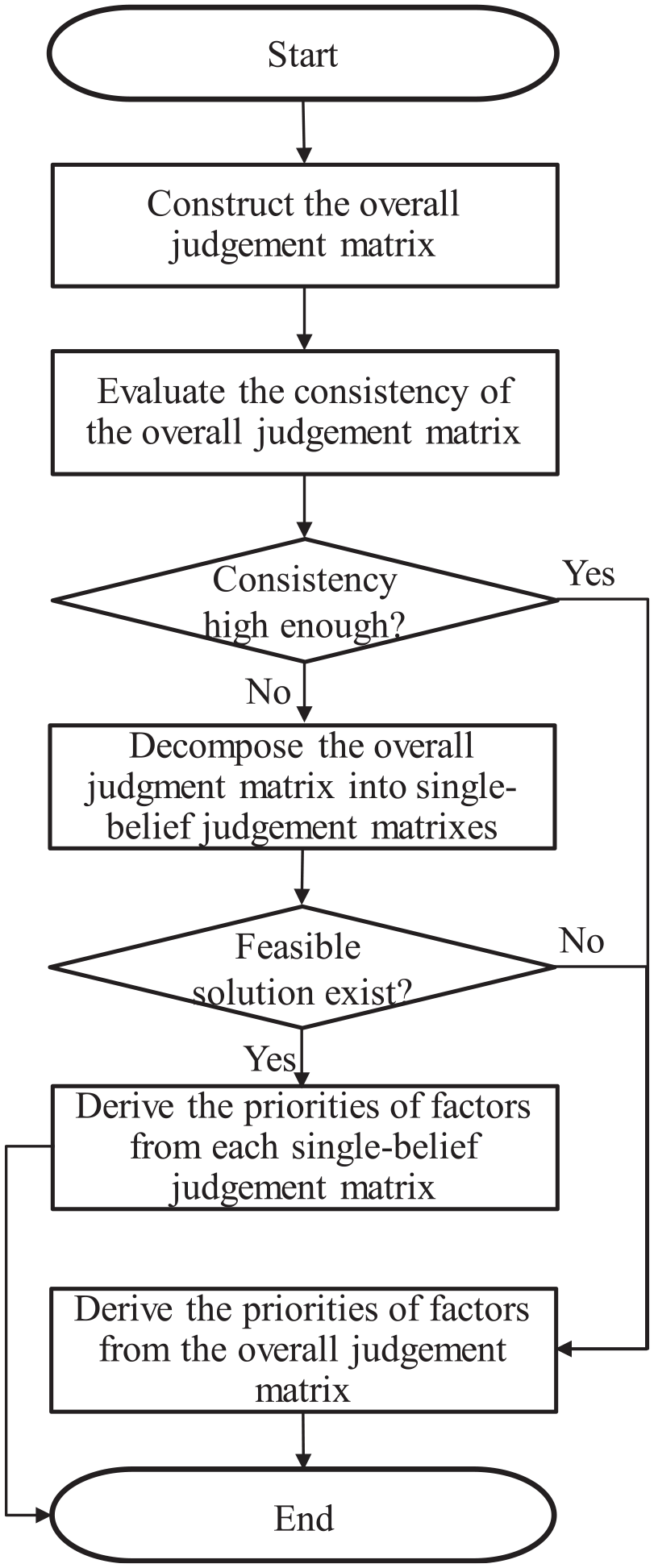
The procedure of the multibelief AHP and nonlinear programming approach.
AHP
In the conventional AHP approach, each designer expresses his or her opinion on the relative priority, importance, or weight of a factor, attribute, or criterion over that of another using linguistic terms such as “as equal as,”“weakly more important than,”“strongly more important than,”“very strongly more important than,” and “absolutely more important than.” These linguistic terms are usually mapped to integers within [1, 9]:
L1: “As equal as” = 1
L2: “Weakly more important than” = 3
L3: “Strongly more important than” = 5
L4: “Very strongly more important than” = 7
L5: “Absolutely more important than” = 9
If the relative priority lies between two successive linguistic terms, then values such as 2, 4, 6, and 8 are applicable. Based on the pairwise comparison results, a judgment (or pairwise comparison) matrix is constructed as follows

where


and

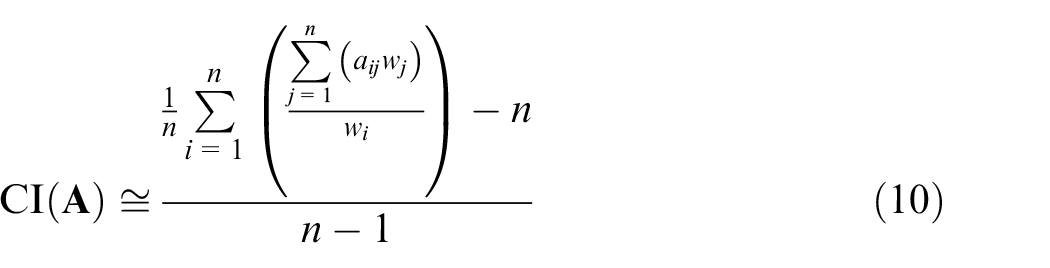
The maximal eigenvalue and the priority of each factor are derived, respectively, as


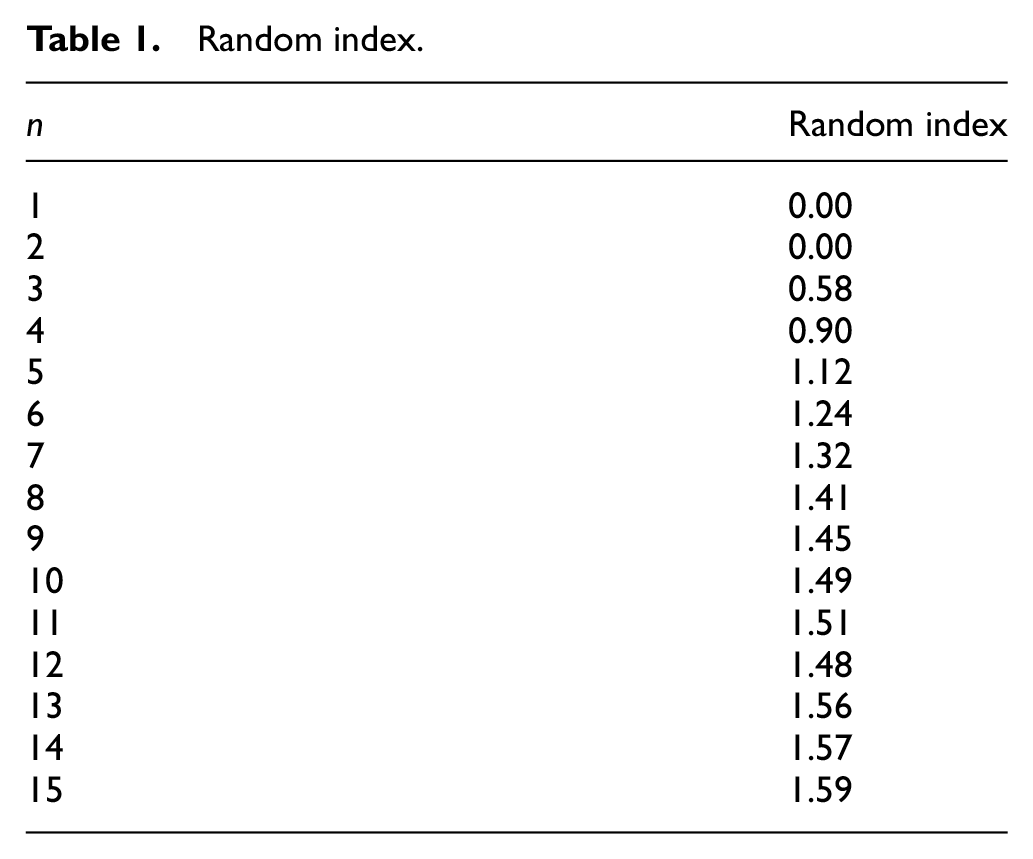
Based on


where RI is the random index (see Table 1).
Random index.
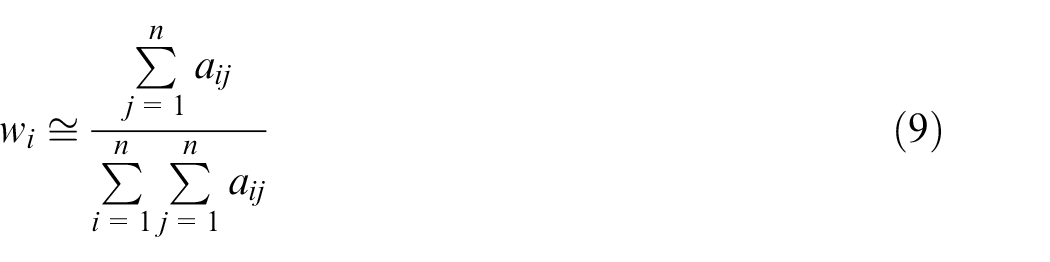
The arithmetic mean is an approximation method for deriving priorities and is shown as follows
Theorem 1
Proof
According to equation (4)

Therefore, the maximal eigenvalue can be estimated as follows
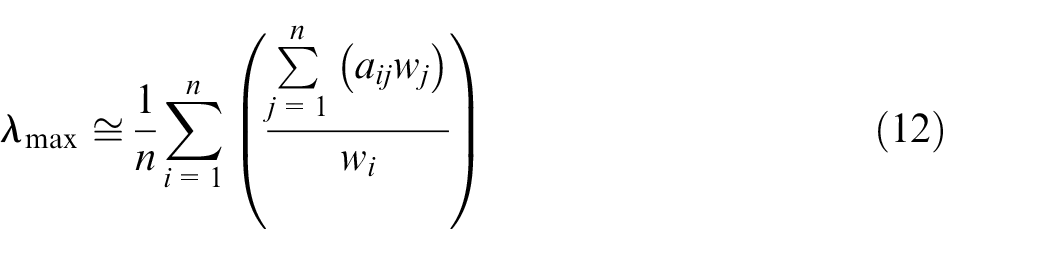
Substituting equations (12) into (7) gives the following
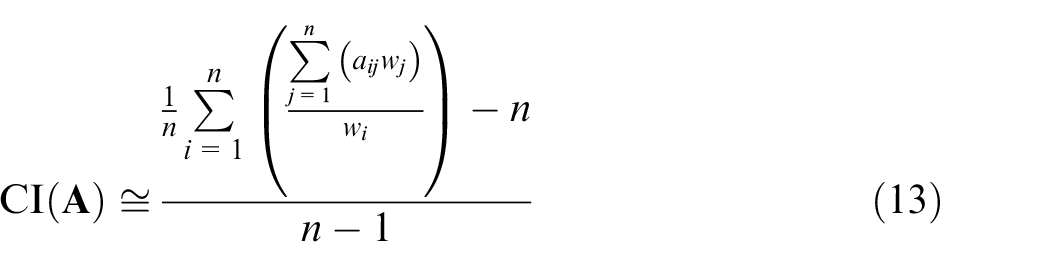
Therefore, Theorem 1 is proved.
Methodology
In the proposed methodology, a designer may have multiple beliefs about the relative priorities of factors, which are mapped to multiple single-belief judgment matrices [

Namely

All single-belief judgment matrices meet the basic requirements defined in equations (3) and (4)


It is expected that by considering a single belief at a time, the single-belief judgment matrix will be more consistent than the overall judgment matrix

This is illustrated in Figure 2.
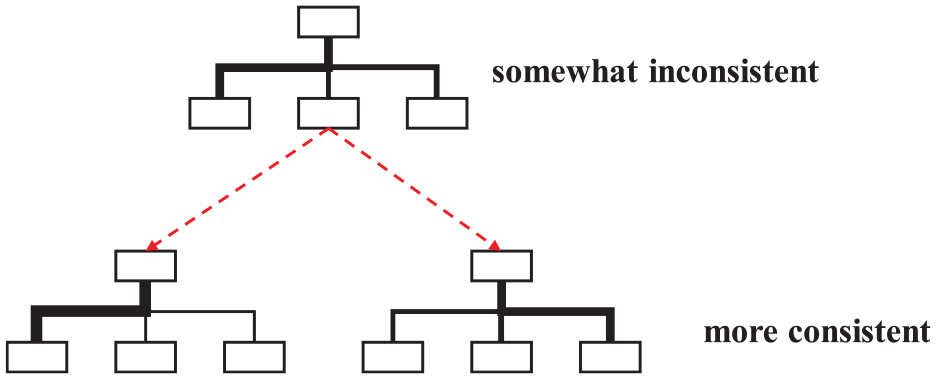
Decomposing the overall judgment matrix into several single-belief judgment matrices.
However, there are numerous possible combinations of the single-belief judgment matrices. In the proposed methodology, the optimal combination of single-belief judgment matrices is chosen so that the single-belief judgment matrices are as different from each other as possible

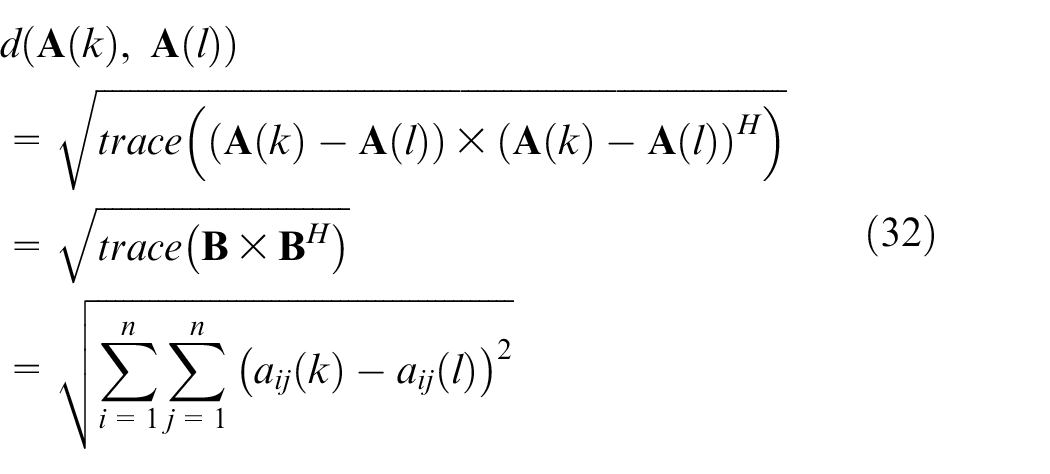
where d() is the distance function. The objective is to identify beliefs that are as diverse as possible. Theoretically, several methods are available for measuring the distance between two matrices, such as the Frobenius distance 32
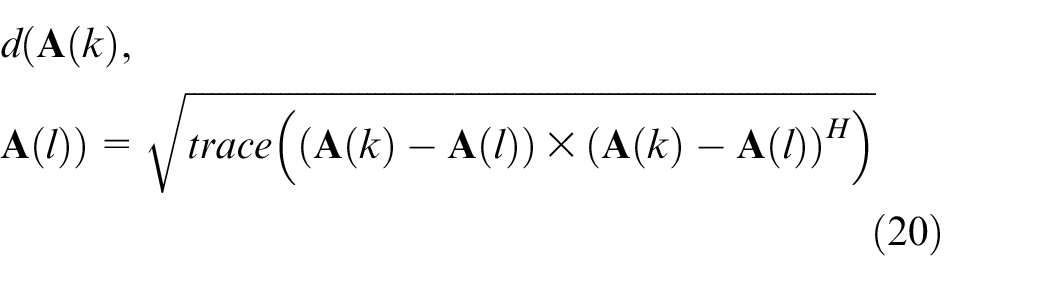
where

and

is the conjugate transpose. When all elements of

Example 1
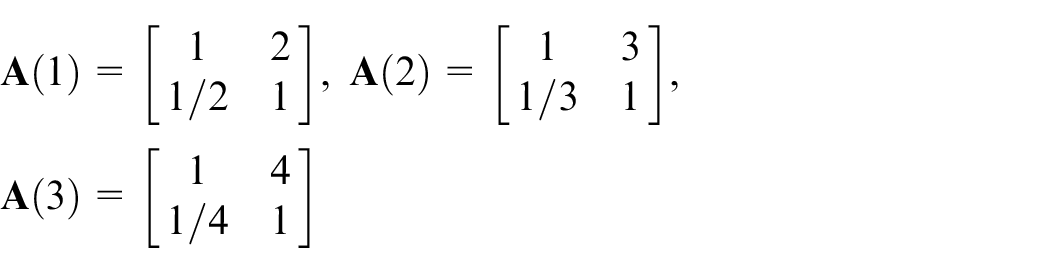
Then
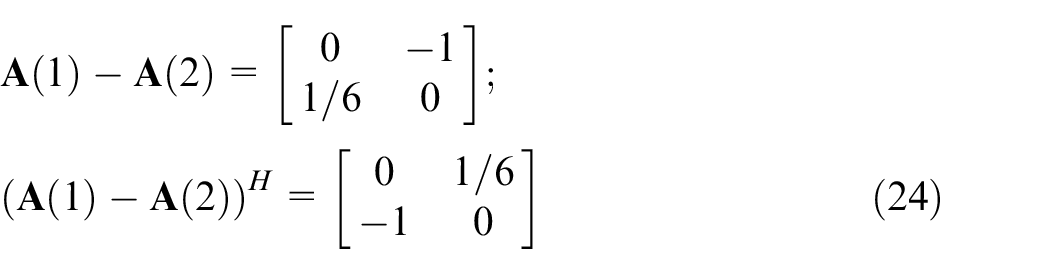

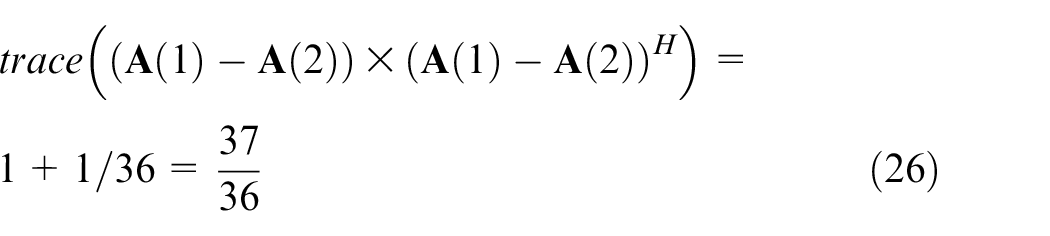

In the same way

Obviously,
Theorem 2

Proof
Let

In addition, according to equation (23)
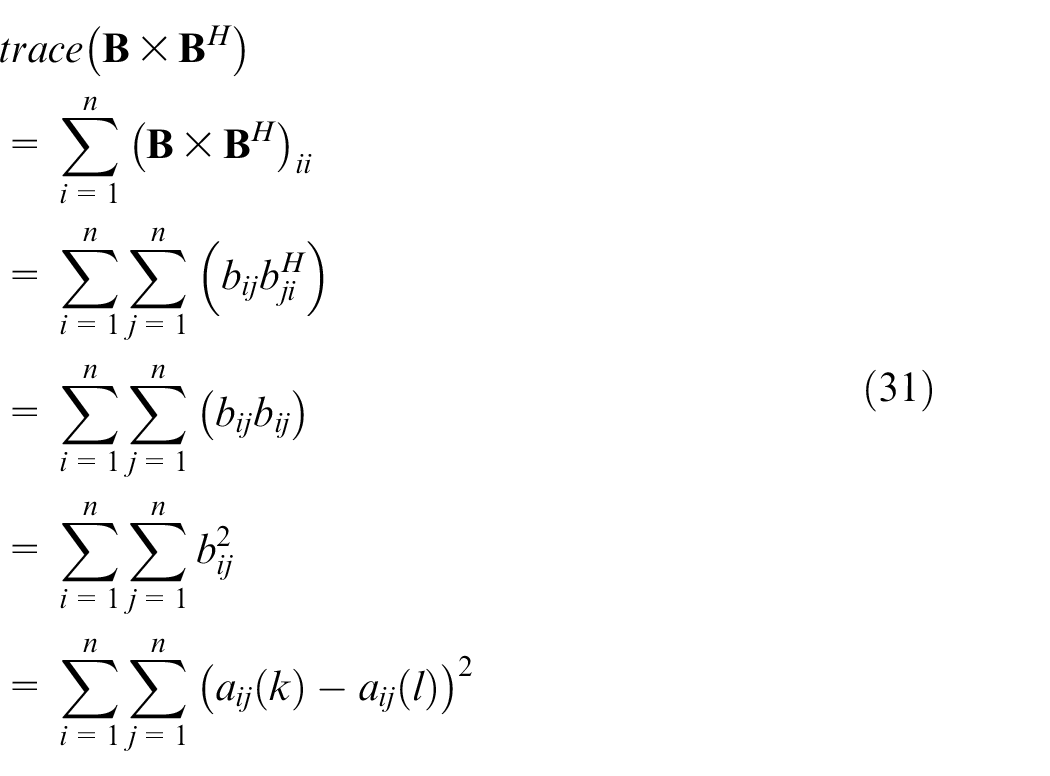
Therefore
Theorem 2 is proved.
Applying Theorem 1 to equation (15), the objective function becomes
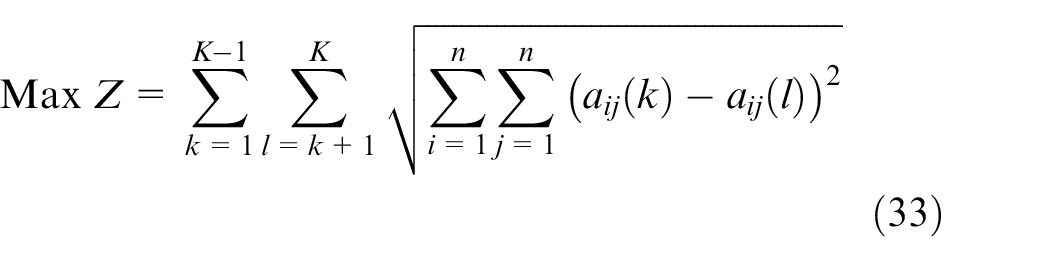
Then, the following NLP model is to be optimized.
NLP model I
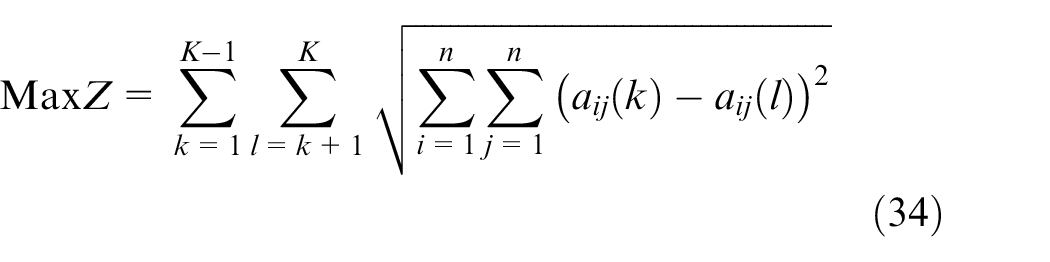
subject to





Equation (35) is the decomposition constraint. Constraints (36) and (37) are the basic rules of the AHP. Constraint (38) requires that each single-belief judgment matrix be more consistent than the overall judgment matrix.
The NLP model must be converted into a more tractable form to be solved. First, the objective function can be replaced with

where

Subsequently, according to Theorem 1, the following equations can be used to convert constraint (38)
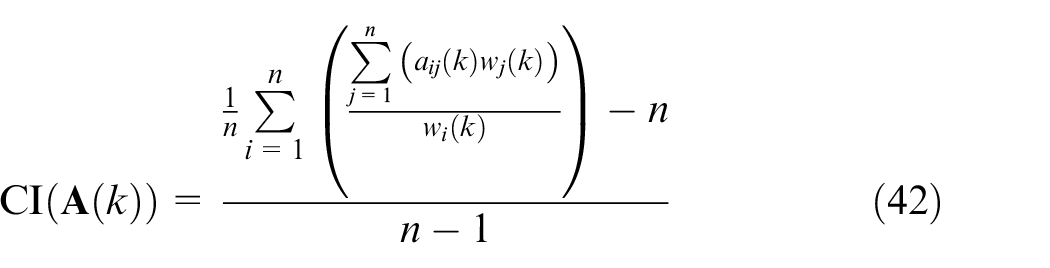
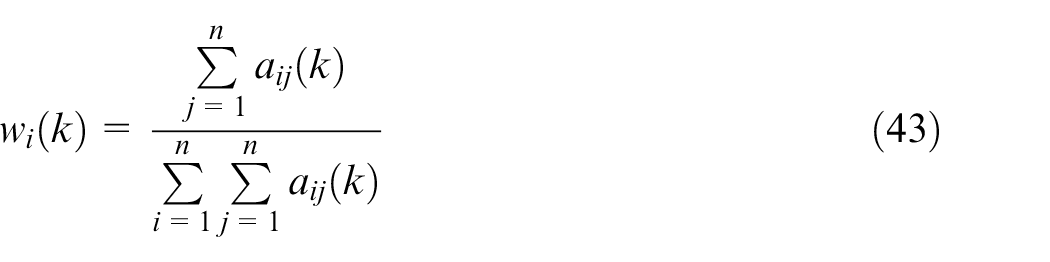
Equation (42) is equivalent to


Equation (43) can be rewritten as follows

Finally, the following NLP problem is solved.
NLP model II

subject to
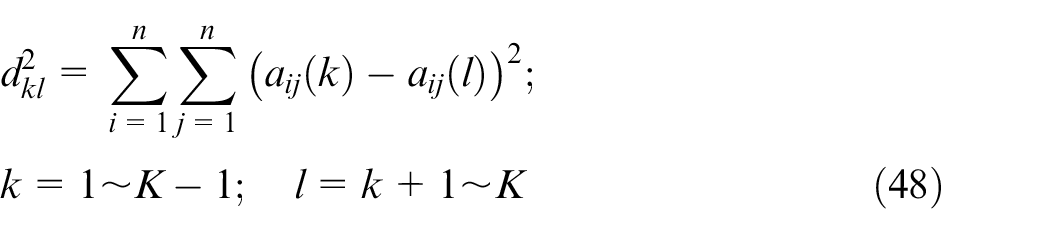








Constraint (48) defines the distance between matrices. Equation (49) is the decomposition constraint. Constraints (50) and (51) are the basic rules of the AHP. Constraint (52) requires that each single-belief judgment matrix be more consistent than the overall judgment matrix. Constraints (53) to (55) are a series of constraints for estimating the consistency index.
Two types of methods exist for solving an NLP problem: the outer approximation/generalized Benders decomposition method 33 and the branch-and-bound method. The present study employed a branch-and-bound algorithm.
Application to a smart backpack design problem
Problem description
The proposed methodology was applied to a smart backpack design problem, as illustrated in Figure 3. According to the literature review results, the three critical features of a smart backpack are action recording, navigation, and energy harvesting. Owing to the cost constraint, it was not possible to incorporate all critical features into the design of a smart backpack. A compromise among the critical features was required. To this end, the designer compared the relative priorities of the three critical features, and the results were as follows:
For a smart backpack, “action recording” is weakly more important than or at least as equal as “navigation” is.
For a smart backpack, “action recording” is strongly more important than “energy harvesting” is.
For a smart backpack, “navigation” is weakly more important than or at least as equal as “energy harvesting” is.
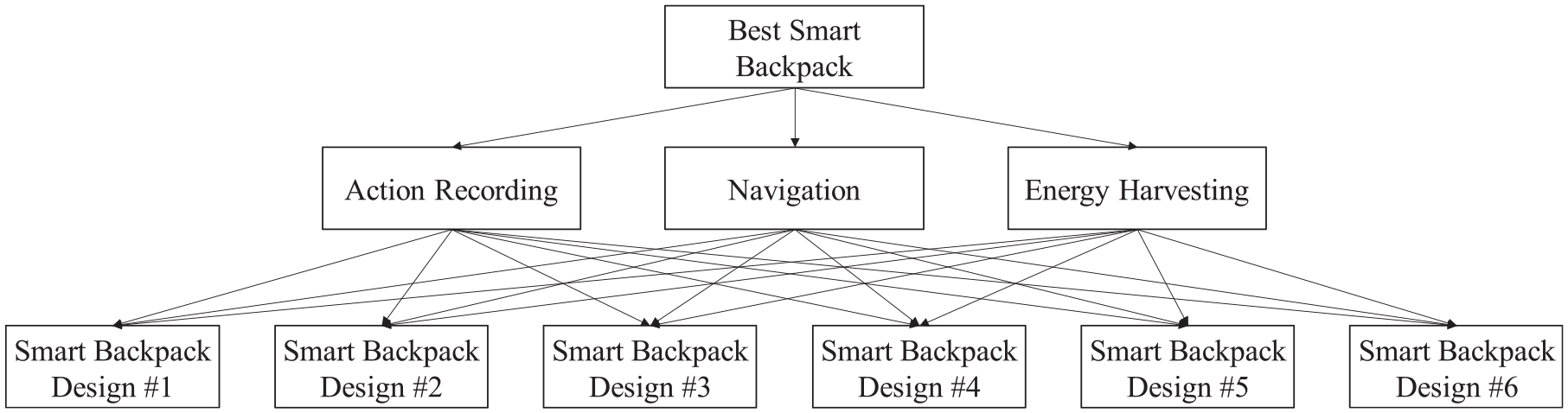
The smart backpack design problem.
Based on these comparisons, the judgment matrix was constructed as follows

The priorities of the critical features were derived as 0.61, 0.18, and 0.21. The consistency of the judgment matrix was evaluated as follows

which indicated that the pairwise comparison results were somewhat inconsistent, which was not surprising because smart backpacks were still under development, and a perfect combination of the critical features had not been determined yet.
Application of the proposed methodology
The proposed methodology was applied to address the inconsistency issue. Two single-belief judgment matrices were to be formed. The required NLP model II was coded using Lingo and solved using the branch-and-bound algorithm on a PC with i7-7700 CPU 3.6 GHz and 8 GB RAM, as shown in Figure 4. The optimization time was less than 2 s. The optimal solution was obtained as follows
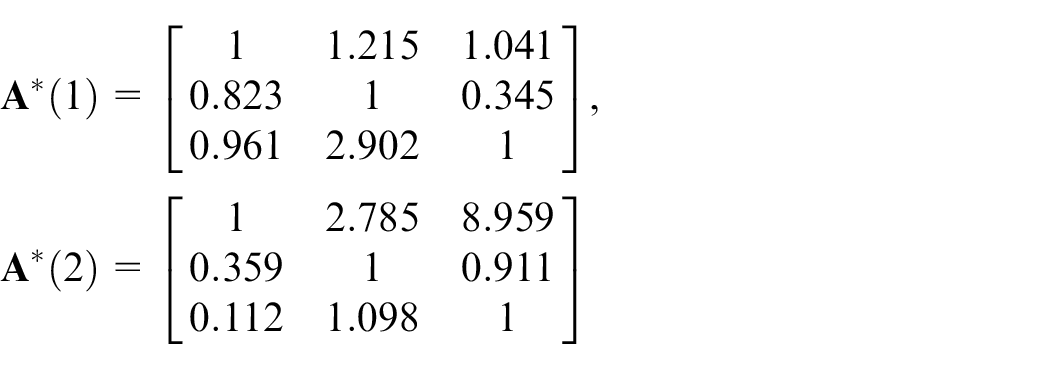
Therefore,

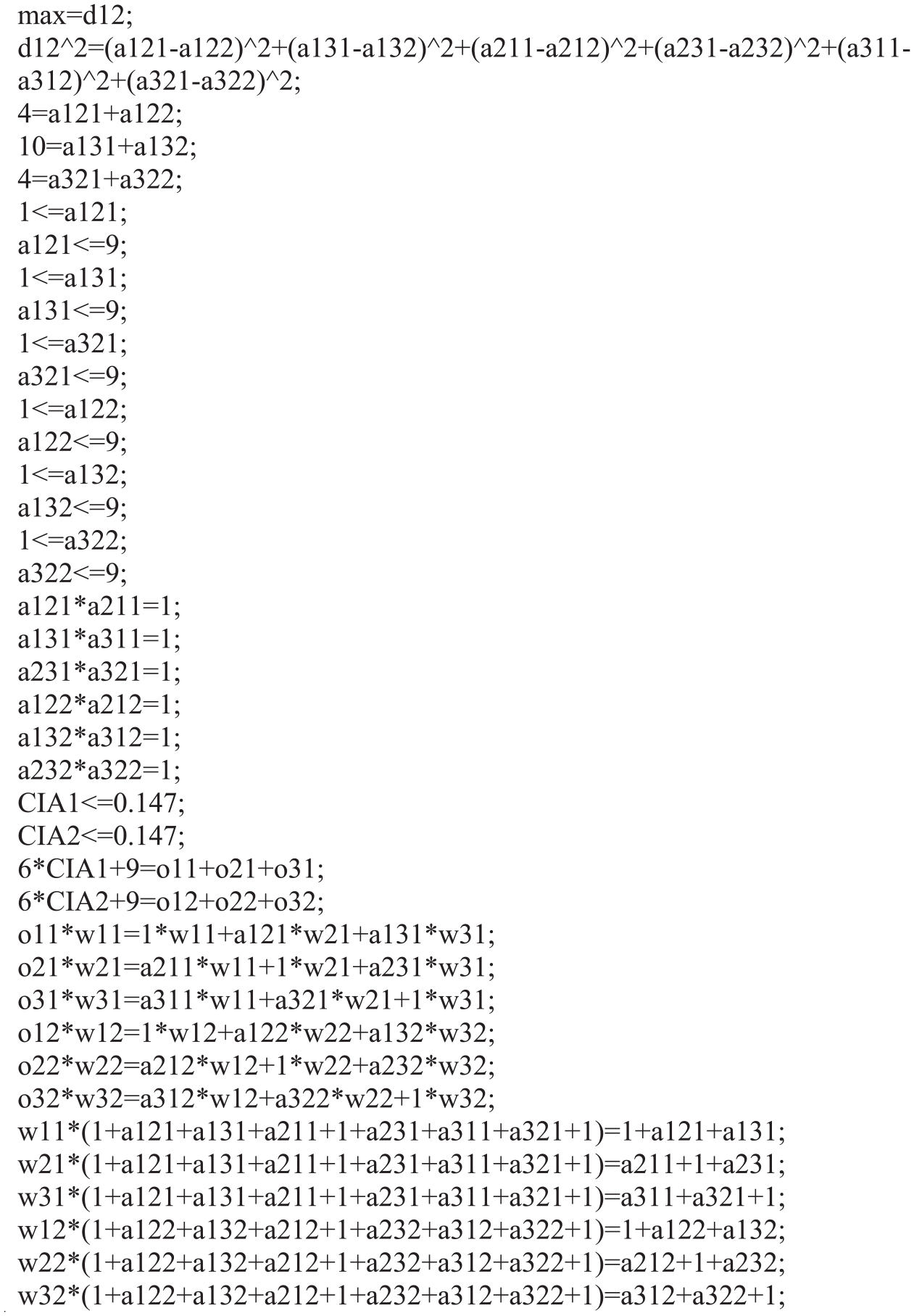
The NLP model II for example 1.
The consistency indices of the two single-belief judgment matrices were 0.046 and 0.090, respectively. Therefore, the single-belief judgment matrices were more consistent than the overall judgment matrix. In addition, the single-belief judgment matrices were consistent, whereas the overall judgment matrix was not. The priorities of the critical features determined by the two single-belief judgment matrices were {0.344, 0.209, 0.447} and {0.711, 0.168, 0.121}, respectively.
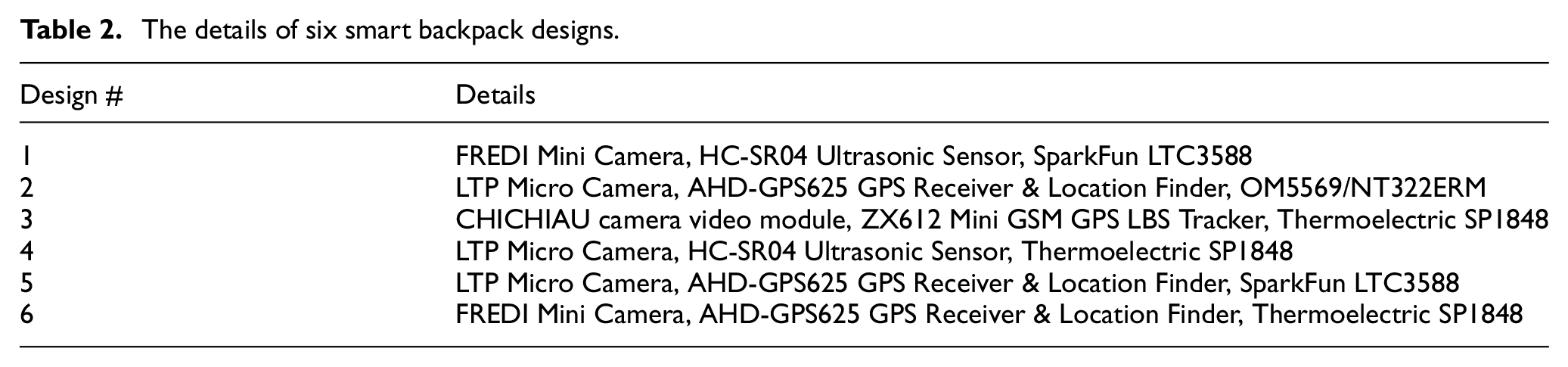
Based on the derived priorities, six smart backpack designs were compared. At present, smart backpacks are expensive products. Therefore, their prices are not a critical issue in consumers’ selection process. The design team set an upper bound on the cost of a smart backpack, and all six smart backpack designs met this cost constraint. However, no one was the perfect design. The details of the smart backpack designs are given in Table 2. The performances of the smart backpack designs in supporting the three critical functions were measured with an integer from 1 to 10. The results are summarized in Table 3.
The details of six smart backpack designs.
The performances of six smart backpack designs.
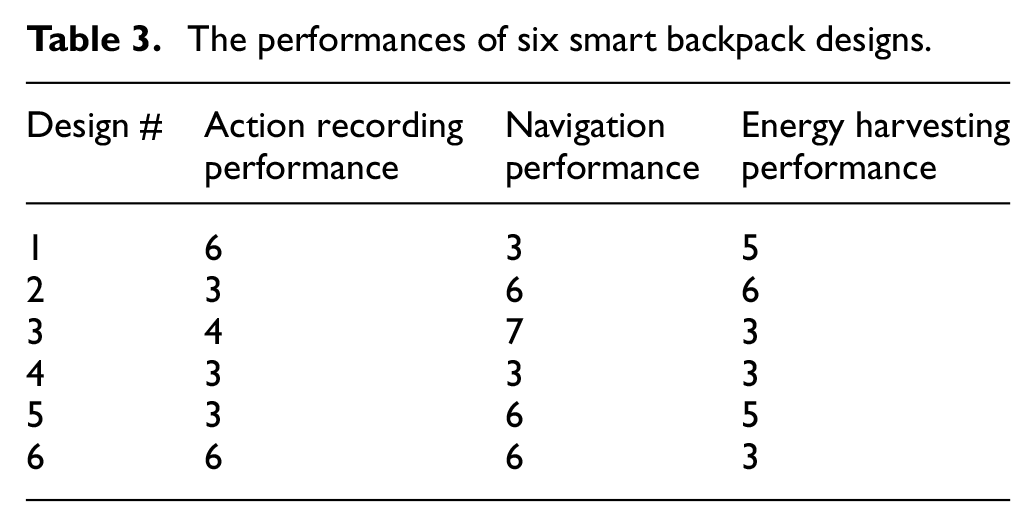
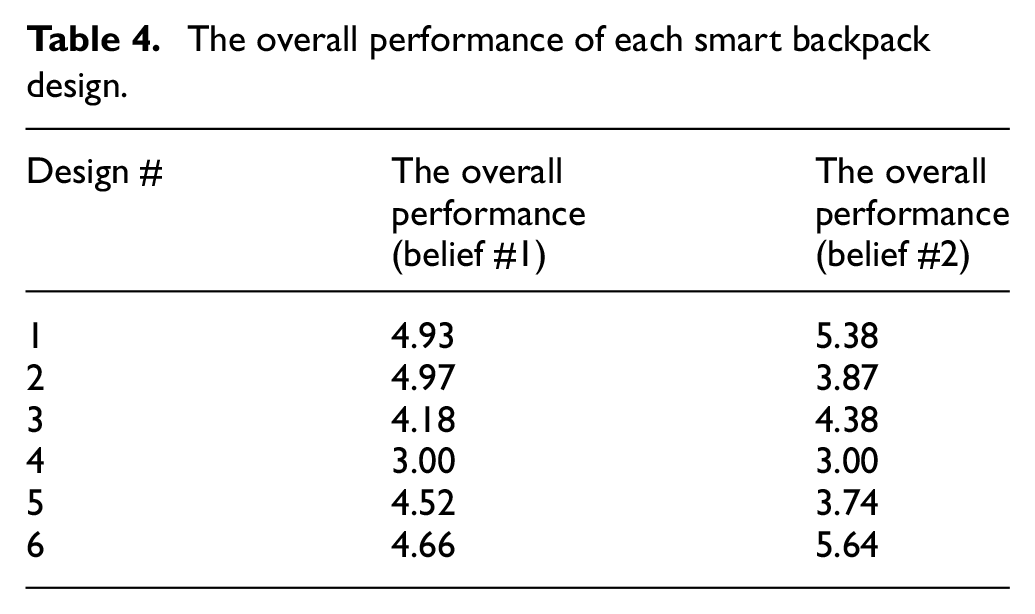
The priorities derived from either single-belief judgment matrix were used to evaluate the overall performances of the smart backpack designs using the weighted sum. The results are summarized in Table 4. The optimal smart backpack designs, based on the two beliefs that were diversified and optimized, were designs #2 and #6, respectively, as shown in Figure 5.
The overall performance of each smart backpack design.
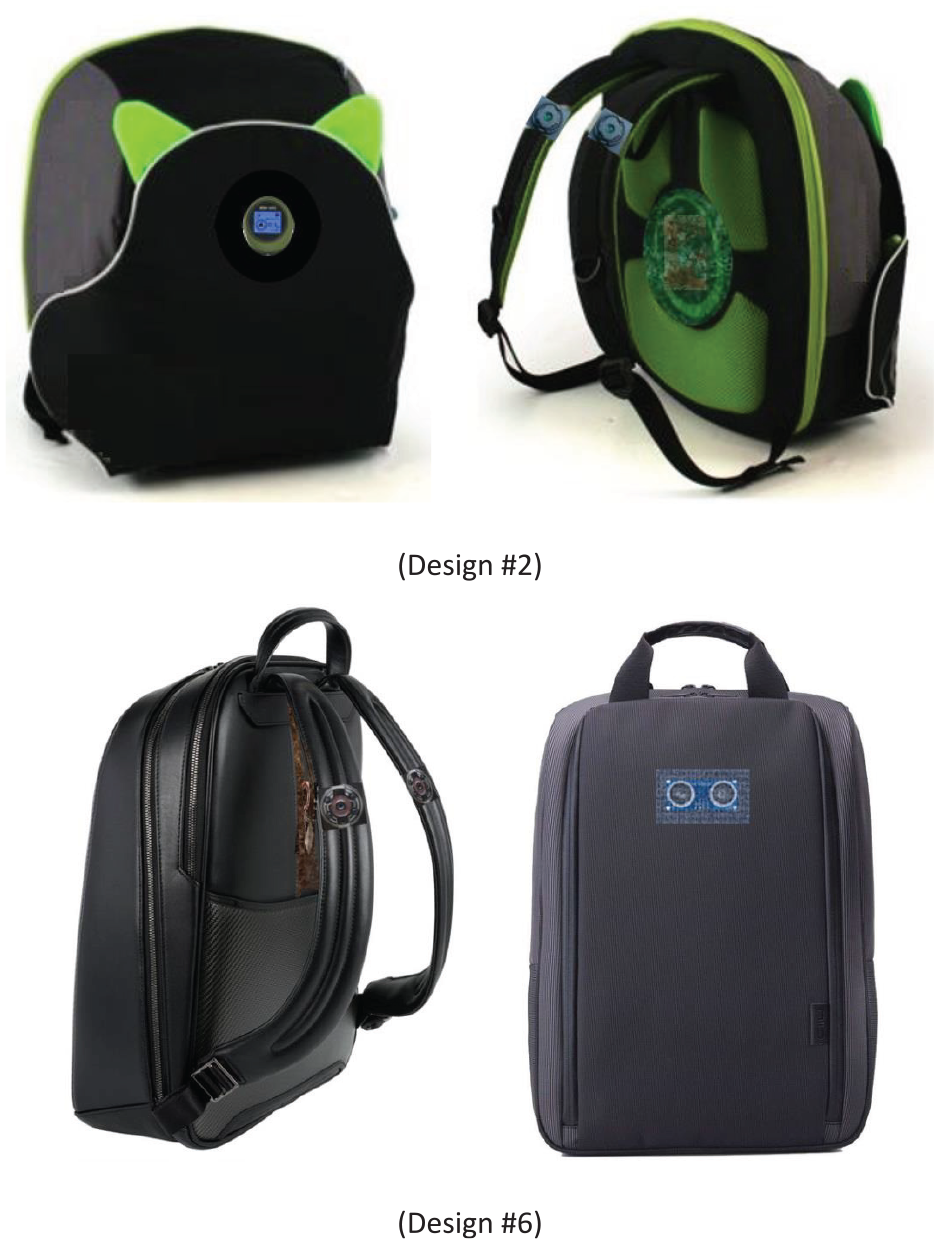
The two best smart backpack designs determined using the proposed methodology.
Parametric analysis
Subsequently, three single-belief judgment matrices were generated using the overall judgment matrix. Thus, NLP model II was rebuilt and reoptimized. The results are as follows
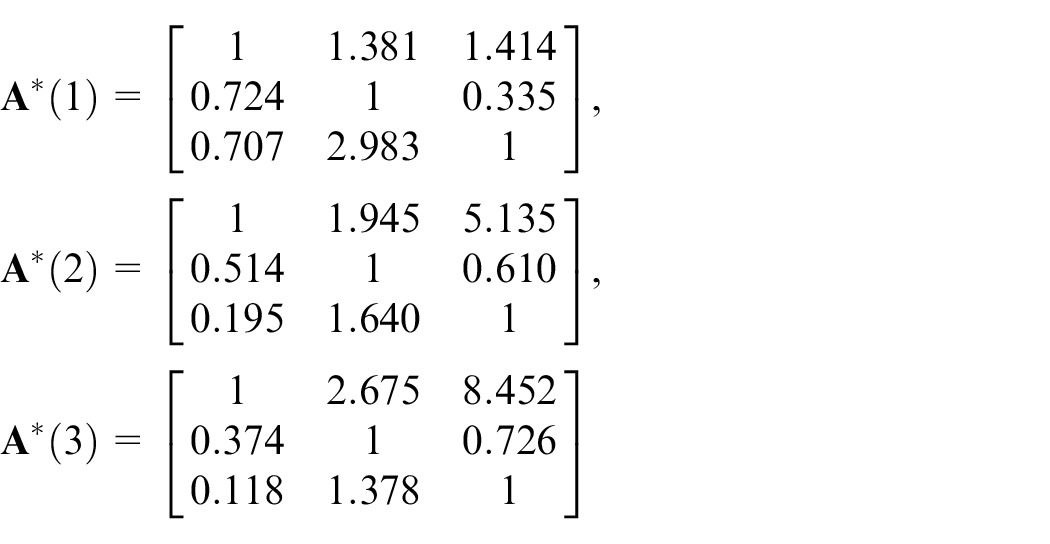
Therefore,
Similarly, the overall judgment matrix was decomposed into four single-belief judgment matrices. The optimization results are as follows
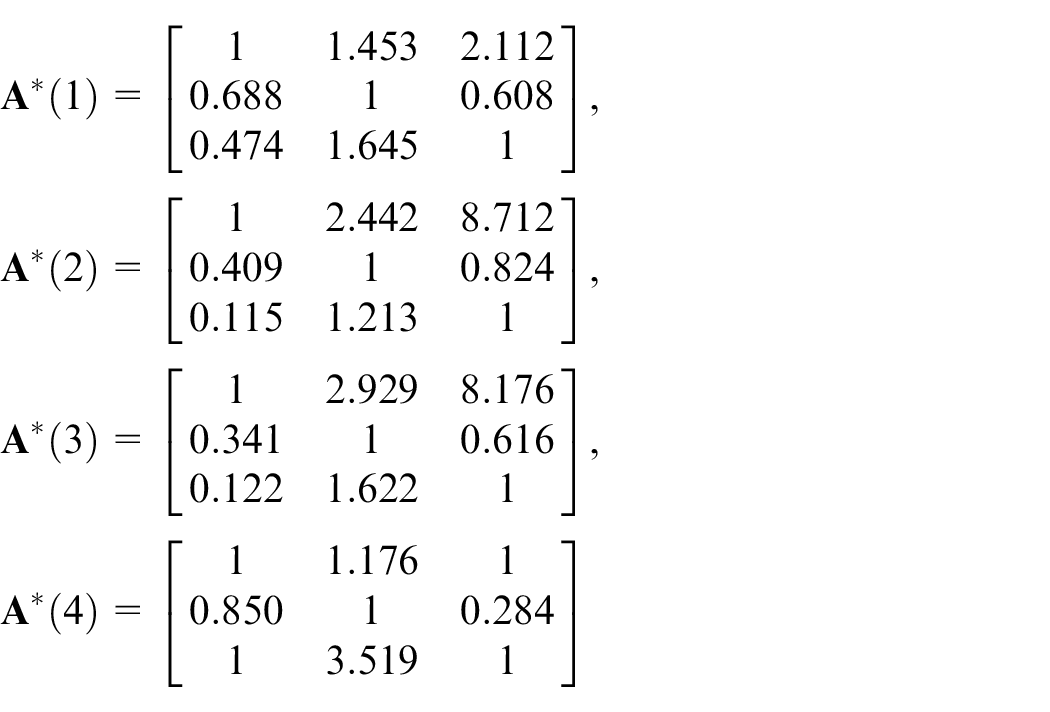
The optimal objective function value of
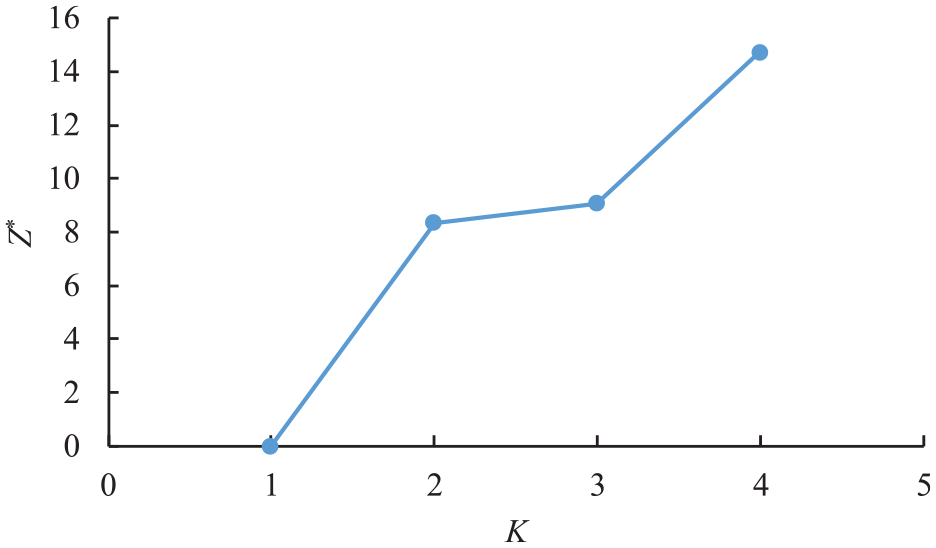
The changes in the objective function as the number of single-belief judgment matrices increased.
A comparison with existing methods
The first existing method compared is the traditional AHP method. The priorities of the three critical features were 0.61, 0.18, and 0.21, respectively. The overall performances of the smart backpack designs are summarized in Table 5. Design #6 had the optimal performance. If two designs were to be chosen, then designs #6 and #1 were the best choices, with design #1 being the second best design. By contrast, the top two designs determined using the proposed methodology were designs #2 and #6. Both of them were the best designs.
The overall performances of the smart backpack designs using the traditional AHP method.
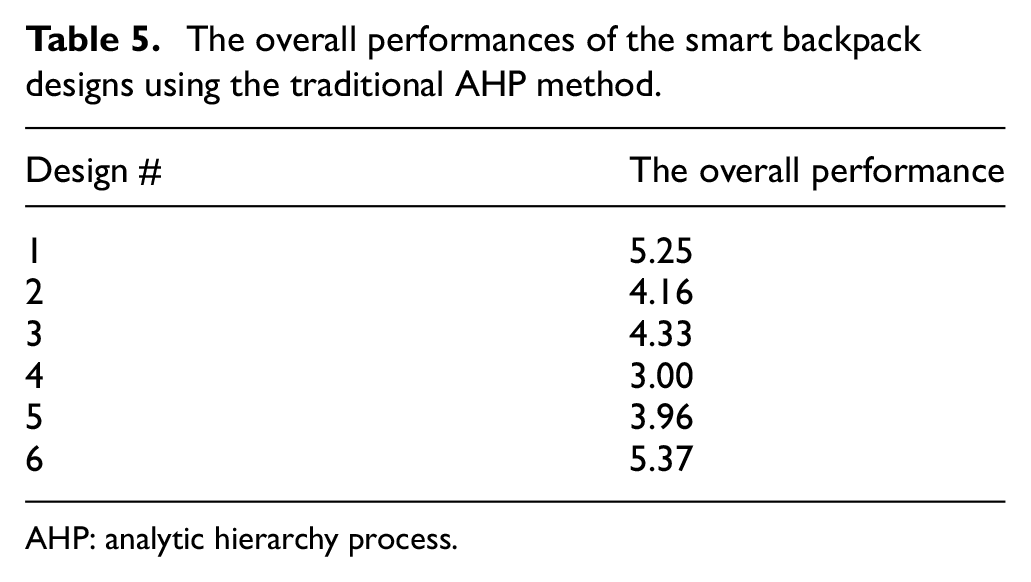
AHP: analytic hierarchy process.
The second existing method that was compared in the experiment was the ordered weighted average (OWA) method, for which the weights assigned to the ordered performances were determined as

In the experiment, the moderately optimistic decision strategy was adopted, which set the value of α to 0.3. As a result, the weights assigned to the sorted performances were 0.72, 0.27, and 0.11, respectively. Based on the weights, the overall performances of the smart backpack designs were evaluated, and the results are presented in Table 6. The best and second best smart backpack designs were designs #3 and #2 (or #6), respectively.
The overall performances of the smart backpack designs using the OWA method.
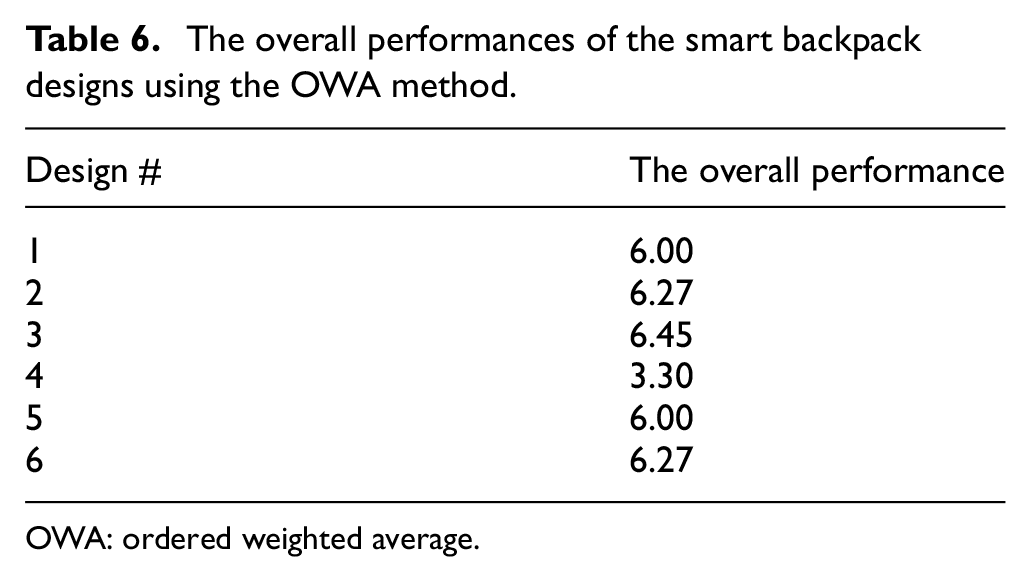
OWA: ordered weighted average.
The third existing method compared is the measuring attractiveness by a categorical-based evaluation technique (MACBETH).
34
MACBETH is similar to AHP. Both methods are outranking methods based on pairwise comparisons done by the designer. However, MACBETH uses an interval scale, and AHP adopts a ratio scale. In addition, the calculation process of MACBETH is different from that of AHP. For the smart backpack design problem, MACBETH solved the quadratic programming (QP) problem in Figure 7, to derive the priorities of criteria. The results were
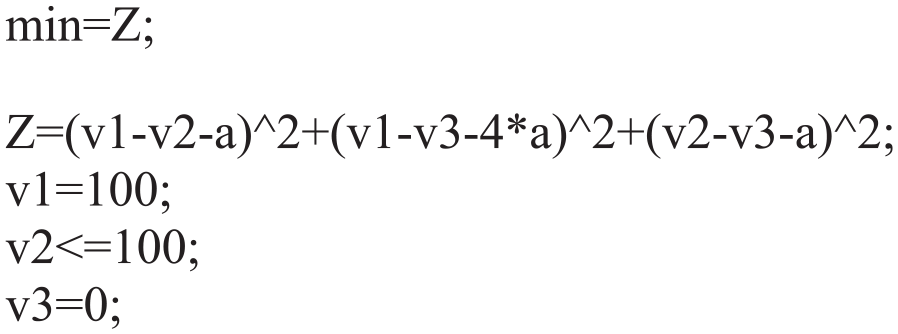
The QP problem solved in MACBETH.
The evaluation results using various methods are compared in Table 7. Based on the experimental results, the following discussion was made:
It was easy to determine multiple smart backpack designs that were simultaneously optimal using the proposed methodology. In contrast, in the existing methods, only when there was a tie between the overall performances of smart backpack designs could the designer have multiple optimal designs.
In an existing method, the optimal smart backpack designs were similar to each other because they were chosen based on the same priorities. In contrast, in the proposed methodology, the optimal smart backpack designs were different from each other because they were chosen based on different priorities.
In addition, although it was possible to generate more single-belief judgment matrices from the overall judgment matrix to enable choosing more diversified designs, the required optimization time of NLP model II increased rapidly, which had to be considered in practical applications.
However, it is not always possible to generate single-belief judgment matrices from the overall judgment matrix, especially when some elements of the overall judgment matrix assume extreme values (1 or 9). In constraints (49) and (50), when
The evaluation results using various methods.
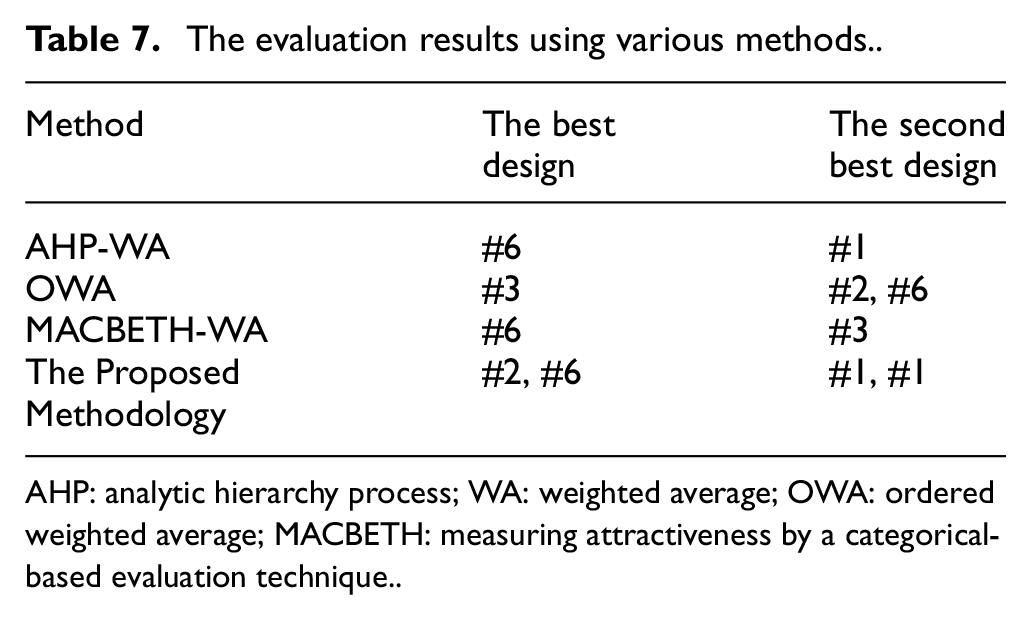
AHP: analytic hierarchy process; WA: weighted average; OWA: ordered weighted average; MACBETH: measuring attractiveness by a categorical-based evaluation technique.
Conclusion
Smart backpacks are an innovative application of smart technologies with functions such as action recording, navigation, and energy harvesting. However, all these functions are expensive and trade-offs need to be made among them. To this end, this study proposed a multibelief AHP and NLP approach to generate diversified smart backpack designs. This approach overcomes the problem of the traditional AHP by assuming that a judgment matrix is inconsistent because the designer has several beliefs about the relative priorities of factors. Furthermore, the judgment matrix of a designer is decomposed into several single-belief judgment matrices that are more consistent than the original judgment matrix and represent diverse points of view regarding the relative priorities of factors. To this end, an NLP model was formulated and optimized. To illustrate the applicability of the proposed methodology and to assess its effectiveness, a smart backpack design problem was studied. Some existing methods were also applied to the problem for making a comparison. The following conclusions were drawn based on the experimental results:
It was possible to determine multiple optimal smart backpack designs from the judgment matrix using the proposed methodology.
In addition, the smart backpack designs chosen using the proposed methodology were diversified.
It was theoretically possible to determine any number of optimal and diversified smart backpack designs from the judgment matrix of a designer.
If only a single backpack design was required, the traditional AHP method could be applied. When two or more similar backpack designs were required, the traditional AHP was also applicable. However, when multiple, distinct backpack designs were required, the proposed methodology was helpful.
The multibelief AHP and NLP approach differs from the existing AHP methods based on the cooperation between multiple designers. The proposed methodology generates several single-belief judgment matrices from the overall judgment matrix, whereas the existing multiple-designer AHP methods aggregate multiple judgment matrices into a single matrix.35,36 The multiple-designer AHP method is hampered by a lack of consensus among the designers.37,38 In addition, if a single-belief judgment matrix is still inconsistent, it can be further decomposed into sub-single-belief judgment matrices. Thus, an AHP problem can be represented with a tree-like structure composed of many single-belief judgment matrices.
Different objective functions or formulations of NLP model II can be tested to enhance the effectiveness or efficiency of the multibelief AHP and NLP approach. Approaches other than the NLP models adopted in this study may be used to generate single-belief judgment matrices. These constitute possible directions for future investigations.
Footnotes
Declaration of conflicting interests
The author(s) declared no potential conflicts of interest with respect to the research, authorship, and/or publication of this article.
Funding
The author(s) received no financial support for the research, authorship, and/or publication of this article.
