




Abstract
This article describes an approach in organizational development to develop an innovation culture for radical product development in a small mature engineering company. The research took place in a business based in the United Kingdom that designed and manufactured instrumentation and specialized packing machines. An initial study within the company’s new product development team identified key aspects that influenced a radical innovation culture. Nine key themes were found to be pertinent, following an iterative process with the development team. These themes were triangulated using the established Organization Culture Assessment Instrument and the Creative Climate Assessment Tool. A third assessment was developed that gauged the development team culture proximity to an ideal position. Seven interventions were developed in conjunction with the company development team, senior managers, the analysis of previous empirical case research and dialogue with UK companies that promote discontinuous innovation. The results of the interventions were evaluated 4 years after implementation. The culture was re-assessed using the same assessment tools and the changes were identified. The outcomes are described and they indicate the success of the company’s attempt to embed a sustainable radical innovation culture into the product development area.
Keywords
Introduction
The company that funded this research was a small design and manufacturing business which was part of a larger UK-based engineering group. Design, development and manufacturing were all carried out exclusively at the UK facility. Established in 1961, the company had grown to be a dominant player in its international market sectors but found itself unable to provide the ‘stream of innovative new products’ that the competition were delivering. It had a robust new product introduction process that had been used to generate ‘me too’ products that were responding to competitor offerings by developing an evolution of an existing product. In early 2000, the company embarked on a programme to develop a new-to-company, new-to-industry instrument. Early attempts to create this ‘radical’ product were unsuccessful, despite significant investment in consultancy support for development. The company subsequently undertook research focused on developing a radical innovation capability. At the time of the research, the company employed 100 people.
There has been extensive discussion about challenges posed by what have variously been called ‘disruptive’, ‘discontinuous’, ‘breakthrough’ and radical innovations.1–5 Although the terminology may vary, under conditions in which the ‘rules of the game’ change, even businesses with well-developed innovation capabilities can run into difficulties. 6 Christensen 7 highlighted the difficulties of following the existing customers and suppliers too closely within particular value networks. Day and Schoemaker 8 indicate the need to develop better peripheral vision to avoid being caught out by emergent technology developments. Mature companies face problems in reframing their underlying mind-sets and hence their response to take account of radical shifts in their operating environment.9–11 Such companies often develop different operating processes and policies which may actively conflict with those routines developed for handling innovation under more steady-state conditions.12,13 Their concern is about managing innovation in two different modes – what March 14 termed ‘exploitation’ and ‘exploration’. The challenge for the company undertaking the research was to develop capability in exploration while retaining the ability to maintain exploitation, enabling a degree of ‘ambidexterity’– being able to sustain both kinds of innovation organization under the same business roof – as opposed to spinning off or setting up elsewhere. 15 This article describes an attempt to develop this ambidextrous capability within a mature engineering business, and the results are obtained. The focus is particularly on the development and shifts in the organizational culture – the underlying pattern of shared beliefs and values which shape behaviour and which make up ‘the way we do things around here’.
Organization culture and innovation management
Cultural enablers and inhibitors influence the ability of a business to be innovative, in terms of new product development (NPD).16,17 Incremental innovation usually emphasizes cost or feature improvements in the existing products or services and largely depends on exploitation competencies. In contrast, radical innovation relates to the development of new business or product lines. This may be based on new ideas or technologies or substantial cost reductions that transform the economics of a business and require exploration competencies. 18 Whereas incremental innovations in new product introduction appear to be dependent on traditional management structures and processes, 19 radical innovation requires a response that goes beyond the ‘steady-state’ approach to managing innovation. 20 Radical innovation can be high risk but with potentially high levels of return. It may not respond well to the management practices that are effective with incremental innovation activities. 20 For radical product innovation, the emphasis is on the major change from the existing products or their logical extensions. 21
Although there are many dimensions that influence both incremental and radical innovations, for example, knowledge management, national systems and labour markets, it is generally agreed that organizational culture is a significant influence on the propensity of an organization towards innovation. 22 Many definitions of organizational culture exist, but the phrase ‘the way we do things around here’ reflects the influence culture has on individuals’ behaviour. 23 While there is some disagreement about how to best manage radical innovation, most managers agree it is an uncertain process when compared to incremental improvement – an on-going process with a systematic approach to change. 24 Leadership shown by managers at the top of the organization has a major impact on the development of a radical innovation culture.3,11 This is not surprising as leadership is a significant influence in changing organizational culture.25–27
Assessing organizational culture can be undertaken by a number of assessment instruments. Sleezer and Swanson 28 suggest that for a successful culture survey, the instrument should be designed to collect specific information and should consist of a set of written items that require employees to respond in some meaningful way. Two established assessment tools appropriate for this task are the Organization Culture Assessment Instrument (OCAI) 29 and Creative Climate Assessment Tool (KEYS). 30
Methodology
The framework used for understanding innovation culture was based on Schein’s 31 model. He suggests that culture is a pattern of underlying assumptions that have been evolved, discovered or developed by a group as it learns to cope with its problems of external adaptation and internal integration. His model exists at three levels. (1) artefacts – the visible organizational structures and processes; (2) values – the principles, goals and standards held to have intrinsic worth and (3) underlying assumptions – the most invisible level of the model. These assumptions are taken-for-granted beliefs and habits of perception, thought and feeling that are rarely made explicit. Schein’s view focuses on what artefacts and values reveal about underlying assumptions.
A second complementary framework adopted was that of organizational archetypes. 32 An archetype is defined in terms of two general statements. A holistic perspective that organizational structures and management systems are best understood by analysis of overall patterns rather than by analysis of narrowly drawn sets of organizational properties and patterns that are a function of the ideas, beliefs and values that underpin and are embodied in organizational structures and systems. An archetype is thus a set of structures and systems that reflect a single interpretative scheme.
Different kinds of innovation require different kinds of organizational hardware – structures, systems and rewards – and different kinds of software – human resources, networks and culture. 33 During periods of incremental change, organizations tend to rely on relatively formalized roles and responsibilities, centralized procedures, functional structures, efficiency-oriented cultures, strong manufacturing and sales capabilities and relatively homogeneous experienced human resources. These organizations are characterized by a high degree of inertia, emphasizing efficiency, teamwork and continuous improvement. 17 During periods of discontinuous innovation, organizations may require entrepreneurial ‘skunkworks’ type of units. 34 These units are relatively small, have loose decentralized product structures, experimental cultures, strong entrepreneurial and technical competencies and heterogeneous employees. They build new experience bases and knowledge systems. 17 Incremental innovation usually emphasizes cost or feature improvements in the existing products or services largely depend on exploitation competencies. In contrast, radical innovation concerns the development of new business or product lines, based on new ideas or technologies or substantial cost reductions that transform the economics of a business and require exploration competencies. 13 Table 1 summarizes some of the basic differences between incremental and radical innovations.
Characteristics of incremental and radical innovation.
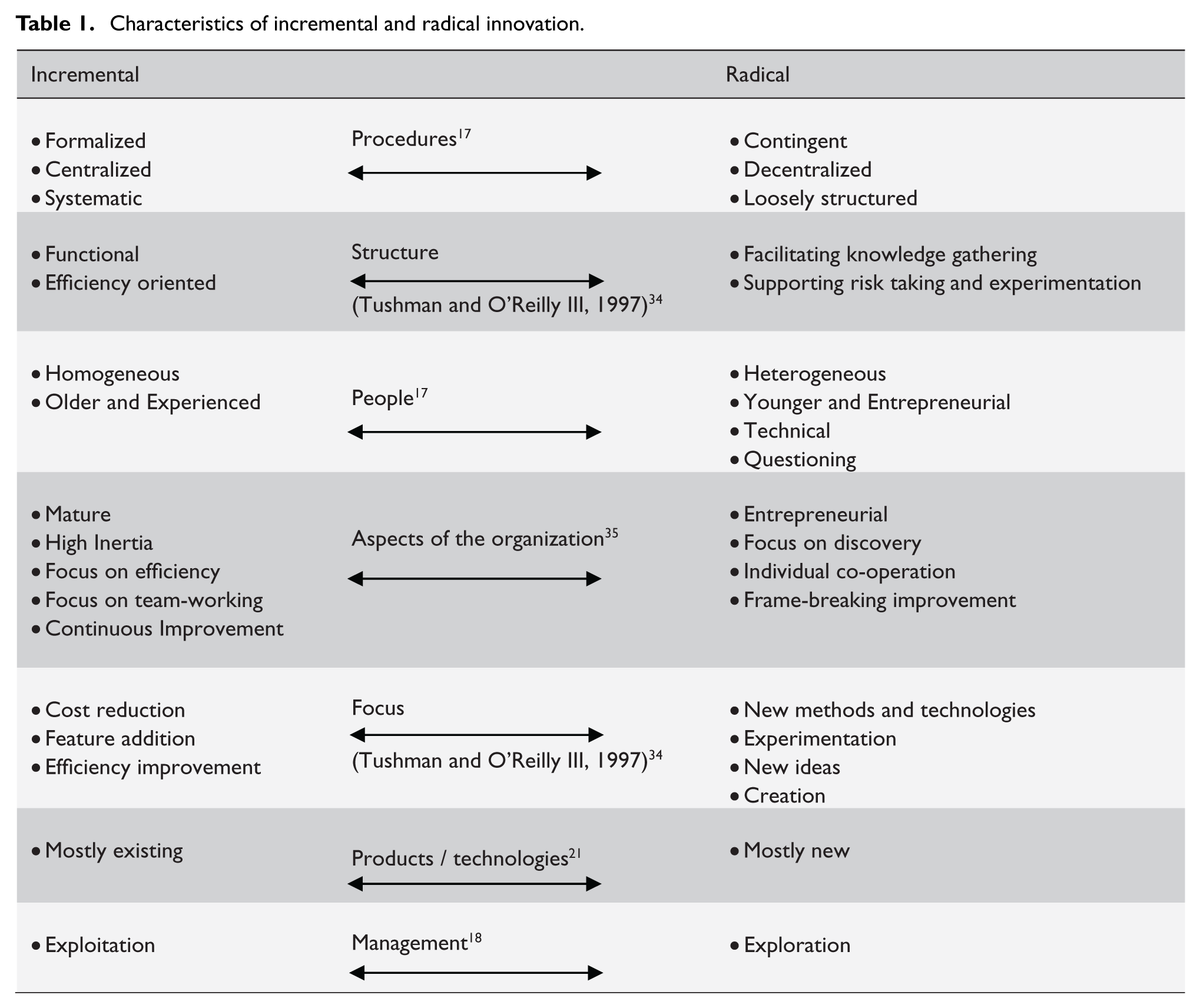
Greenwood and Hinings 32 suggest that the structures and systems are not neutral, but include, knowingly or unknowingly, aspirations, intentions and purposes. These two perspectives can be applied to examine the innovation culture. 36
The research project
This project took place as an insider action research project37–39 within the case company. A grounded theory approach was adopted for the research. Grounded theory40,41 is a systematic generation of theory from data that rely on both inductive and deductive thinking. The goal of a grounded theory study is to uncover the participants’ perceptions about an issue, and how they continually try to resolve this issue. The approach is a systematic generation of theory from data. It uses a set of rigorous research procedures leading to the emergence of conceptual categories. These concepts are related to each other as a theoretical explanation of the actions that continually resolve the main concerns of participants in the area being researched. The company was an autonomous organization which was part of a UK-based engineering group.
It designed, manufactured, marketed and supported a range of quality measurement equipments worldwide. The NPD team involved with the research comprised 14 development engineers who had a length of service ranging from 2 to over 30 years. Organization culture characteristics were identified using an ‘issue’ focus. 42 This allowed the team members for a number of interactions in a highly participative manner.43,44 Cognitive maps45–47 showing aspects of organizational culture influencing radical product innovation were developed and refined in follow-up interviews with each member of the NPD team. These maps were individually validated and conflated into a single collectively validated map to represent the team’s collective cognition. Interview data were analysed and coded using theme-based content analysis to show emerging themes and aspects of organizational culture that influenced radical product innovation. To triangulate the findings, the OCAI 29 and KEYS 30 were used to gauge the extant NPD team culture and its visible and audible behaviour patterns – what Schein described as the level of artefacts. 26 Based on the emerging themes, Greenwood and Hinings’ concept of archetypes was deployed to conceptualize a model of incremental and radical as ideal types of an innovation culture. Finally, the NPD team carried out a self-assessment to gauge its proximity to the ‘ideal’ radical innovation culture in this model, using a Likert scale from 1 (least similar) to 10 (most similar). These three areas of assessment are represented graphically in Figure 1 based on Schein’s model.
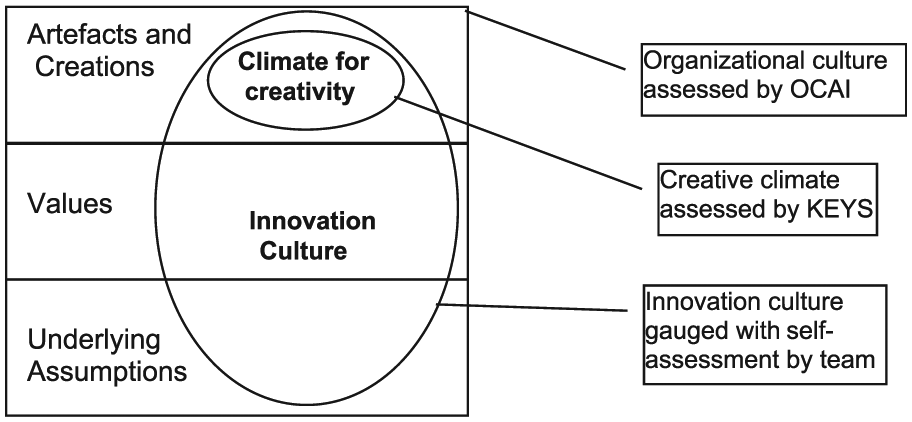
Culture and climate assessments based on Schein’s model.
Success factors for radical innovation
The interviews with the NPD team members generated 20 h of recording and 325 pages of transcription for analysis. In order to avoid contaminating the data with the researcher’s perceptions and to provide a focus for the team members to describe their thoughts, an issue focus 42 was used to surface the innovation culture aspects that influenced the radical innovations selected. The objective was to take a good, and a less successful, example of products containing a radical innovation aspect, experienced by the case company NPD team members and allow them to talk about their experience of the innovation. The selection of the examples of radical innovations was made by the NPD team members. Analysis of the interview transcripts revealed 58 aspects of organizational culture that influenced the radical innovation. In a participative workshop with the NPD team members, these 58 aspects were grouped into nine key emerging themes that represent the aspects of innovation culture influencing radical innovation. The grouping was the result of the NPD team members’ deliberations, and they also chose the theme titles. The nine themes developed were as follows:
Freedom/latitude – relates to the opportunity to take autonomous action.
Attitude to risk – relates to the attitude within the team to taking risks.
Growth/development – relates to the development team gaining knowledge and experience, and exploration of potential solutions.
External confidence – relates to the team’s view about how they are perceived by company members who are outside the development team, in particular the top management.
Internal confidence – relates to the confidence the team have in their own capability to produce solutions that are radical.
External perspective – relates to links to outside agencies and organizations that influence the radical innovation capability of the team.
Clear objectives – relates to the concept of having a clear and well-defined objective for the development project and having an unmoving target during the time the development project is active.
Team constitution – relates to the nature, skill-set and composition of the team members.
Company infrastructure – relates to the infrastructure of the company around the development team, the resources made available to the team and the management style in which the team operate.
The OCAI analysis indicated an organizational culture that was perceived to be in line with a ‘do better’ culture – more biased towards Hierarchy and Market cultures. The team members’ preferred culture was the one that was highly scored in aspects that supported radical innovation – biased towards Adhocracy and Clan cultures. KEYS assessed climate based on six dimensions: Challenging Work – challenging tasks and important projects; Freedom – autonomy concerning the means but not necessarily the ends; Resources – time and money; Work Group Support – members share excitement and help team-mates; Supervisory Encouragement – encouraging the work of the team and its members and Organizational Support – from the whole organization. The results from the first use of KEYS showed a very low climate for creativity.
Interventions to develop a radical innovation culture
The OCAI 29 and KEYS 30 assessments along with a radical innovation assessment instrument based on the nine themes provided an estimate of the team’s perception of the innovation culture in comparison to an ideal position – the radical innovation culture archetype. The results showed that freedom of operation and willingness to take risk was perceived as being low. The use of an archetype facilitates the ‘end point’ towards which any change process or activities should be directed in order to enable the desired characteristics for radical (or incremental) innovation.
The sequence of interventions suggested was planned to facilitate aspects of a radical innovation culture. The ideal type as defined in the innovation model provided the desired position – the aspects of a radical innovation culture the interventions are designed to facilitate. The interventions themselves were considered less important than the underlying beliefs and values being developed and embedded. It was these underlying beliefs and values that propagated the desired behaviours associated with a radical innovation culture.
The interventions required a significant input from the top management, in providing resources, time and the infrastructure for the team. The involvement of the top management was an important intervention in its own right, as evident in the literature, empirical and case study examples.
Transition between archetypes was facilitated by using Schein’s model. The dynamics of the process are different from incremental to large-scale change, which involves movement from one archetype to another. 32 A series of interventions to facilitate larger scale change rather than a diffusion from one archetype to another were suggested as a method of moving towards a radical intervention culture. The results of the assessments indicated areas of inadequacy with respect to a radical innovation culture. Companies that have been successful with radical innovation demonstrate strong leadership, and commitment from the organization, for this type of activity. The plan of interventions was developed to foster aspects of an ideal radical innovation culture in the company development team. The intervention plan was built on the interventions identified from empirical examples that included BMW, 48 Hewlett-Packard, 49 Mattel, 50 3M 51 and Harley Davidson, 52 UK companies that participated in a discontinuous innovation forum and the research findings. The research conceived a series of linked interventions suitable for nudging the innovation culture to be more supportive of radical innovation. In conjunction with the NPD team, seven interventions to develop a radical innovation were developed. 52 The plan comprised the following seven interventions as a sequence of steps:
1. Team membership
Team membership was modified to add in ‘do different’ skills and attitude. This intervention sought to add individuals to the team who had a ‘can-do’ attitude, who had a high level of training or skills and who were willing to think of do different solutions to problems. Selection of such individuals necessitated some form of assessment of their attitude and skills levels. Although innovative or adaptive behaviour can be assessed using the Kirton adaption innovation (KAI) measure 53 and attitude and psychological profile could be assessed by using Myers–Briggs Type Indicator (MBTI) psychometric evaluations, 54 these tools were not applied. Rather, part of the interviewing process sought to establish the willingness and propensity to act in a do different manner. This intervention sought to add people to the development team, rather than develop the ability of the existing team. Adding people with higher degrees and post degree experience was considered likely to improve the skill levels in the team. The desired artefacts from this intervention were the presence of skilled individuals in the team. The values being developed were a desire to question and challenge the existing beliefs, to re-frame problems and re-use knowledge from the external sources to solve those problems. The original company NPD team showed significant risk aversion and comprised individuals with long service. Many of them had no degree-level qualification. Adding in the do different attitudes of new team members begins to change the attitude of the team members to risk taking and thinking of do different solutions.
2. Idea/knowledge gathering and sharing system
This was planned to be achieved through two different parts. First, creating and operating a system that trapped ideas and facilitated sharing across all team members. This system was to be based on a database and be used to log ideas and facts about new technologies. This intervention was at the artefact level, in that it provided a tool to gather and share new ideas and facts. The system on its own was not planned to provide radical breakthroughs, but to act to support the values of the team members in making these breakthroughs. Second, the creation of an ‘ideas area’ for the team. This was a physical space where ideas could be put forward in physical form, refined, critiqued, where new technology could be examined, and interesting pieces of equipment could be evaluated and retained for future inspection. It would act in the same way as the database, but in this case it would retain physical objects rather than ideas or knowledge. Having a display area for team members to add or critique ideas related to the physical objects would act in conjunction with the knowledge-based system. This intervention was planned to provide some of the framework to support the do different behaviours.
3. External input
This intervention was planned to encourage and facilitate input from the external sources. These were sources outside the company, which could also be outside the industry sector. The team members were encouraged to visit the external sources for ideas and new knowledge. This information was then recorded in the system described in Intervention 2. The external sources included exhibitions of technology, trade fairs, university contacts and other companies who offer access to new technologies. In addition, external speakers, ‘experts’ in their own area, were asked to present their ideas and views to the team at regular intervals to support the external input. The contact with universities was a suitable initial source for these external speakers. This intervention was designed to develop a sense that going outside for ideas is part of the way things are done.
4. Idea gathering as a process
The objective of this intervention was to develop the first three interventions into a process whereby idea gathering and development was perceived to be part of the routine of the group. A weekly brainstorming session to evaluate possible new products or select a solution to a particular problem was proposed to initiate this. This session was held at the same time each week in order to embed the process into the behaviour of the group. This session was facilitated by different people each week. The output was fed back into the idea gathering system described in Intervention 2. This became a suitable venue to invite people external to the company to attend. This external input added new ideas to the group knowledge. The intention was that each session selected a particular focus that was relevant to the business and allowed the session to generate multiple ideas for resolving the issue. The generation of these ideas would be enhanced by the external knowledge gained as part of Intervention 3.
5. New product areas to be identified
This intervention took the ideas and knowledge generated from Interventions 2, 3 and 4. The intention was to ask the team to create potentially new product areas. These product areas had to be described in sufficient detail to allow the team to select one and then develop a product that fitted into the new product area. The product areas had to be new to the company and new to the industry, or from a different industry. The objective of this intervention is to encourage the team to develop possible opportunities for product development that moved the team into the radical innovation area. The specification for the product groups had to be sufficiently clear to indicate that an iteration of an existing product would not be suitable, but sufficiently open-ended to allow the creativity of the team to provide a series of potential new areas for product development. The task was defined as identifying a new product area, potential product applications, benefits to the business, estimated costs and selling process along with the associated outline plan for development. This intervention builds on the preceding interventions to produce a number of possible development routes for the company.
6. Show and tell presentation
This intervention took the new product opportunities created in Intervention 5 and, with input from the commercial and operations areas of the business, selected one suitable for developing into a new product for the business. There was a group evaluation of the product opportunities. Each idea was presented by the individual or team responsible for its creation. These proposals were evaluated at a session where other members of the company had the opportunity to test the thinking and feedback their view of the probability of the product proposal being of benefit to the company. On occasions, such sessions were run internally within the development team, prior to opening the ideas up to the company at large. This venue was used to discuss the relative merits and drawbacks of each of the product proposal. This intervention provided a showcase for the creative output of the development team and provided a degree of confidence in the team being able to think of do different solutions. This, in turn, strengthened the confidence of the team.
7. Do different project
This was the final stage in the series of interventions. It built on the preceding steps and used one of the product opportunities from Intervention 6 as the basis of a radical innovation project. This project was initiated on the basis that it may, or may not, become a production product, but that the development of the product would still take place, providing there was a valid commercial justification. The selection of a do different project had a degree of ownership by the team as it flowed from their involvement in the preceding interventions. The project was given to a team drawn from the development team members with a clear overall goal, but without a high degree of specification being provided. As the product opportunity had evolved from the work of the team, this created a different scenario from providing a full specification for a new product. This ownership of the project was important to reinforce the willingness to undertake the development of such a do different project. A segregated area was provided to create the perception that the project was ‘different’. Resource allocation was provided in the same manner as for other development projects, as it was considered to be a legitimate product development. A bonus for completion of project deliverables was offered to the project team. These deliverables reflected that the project may or may not deliver a viable product, but nevertheless would contribute to the knowledge of the team. This step again builds the confidence of the team and those outside the team, indicating that do different in product development was an acceptable, and indeed expected, behaviour for the development team.
The sequence and outline timescale for these seven implementation initiatives are shown in Figure 2.
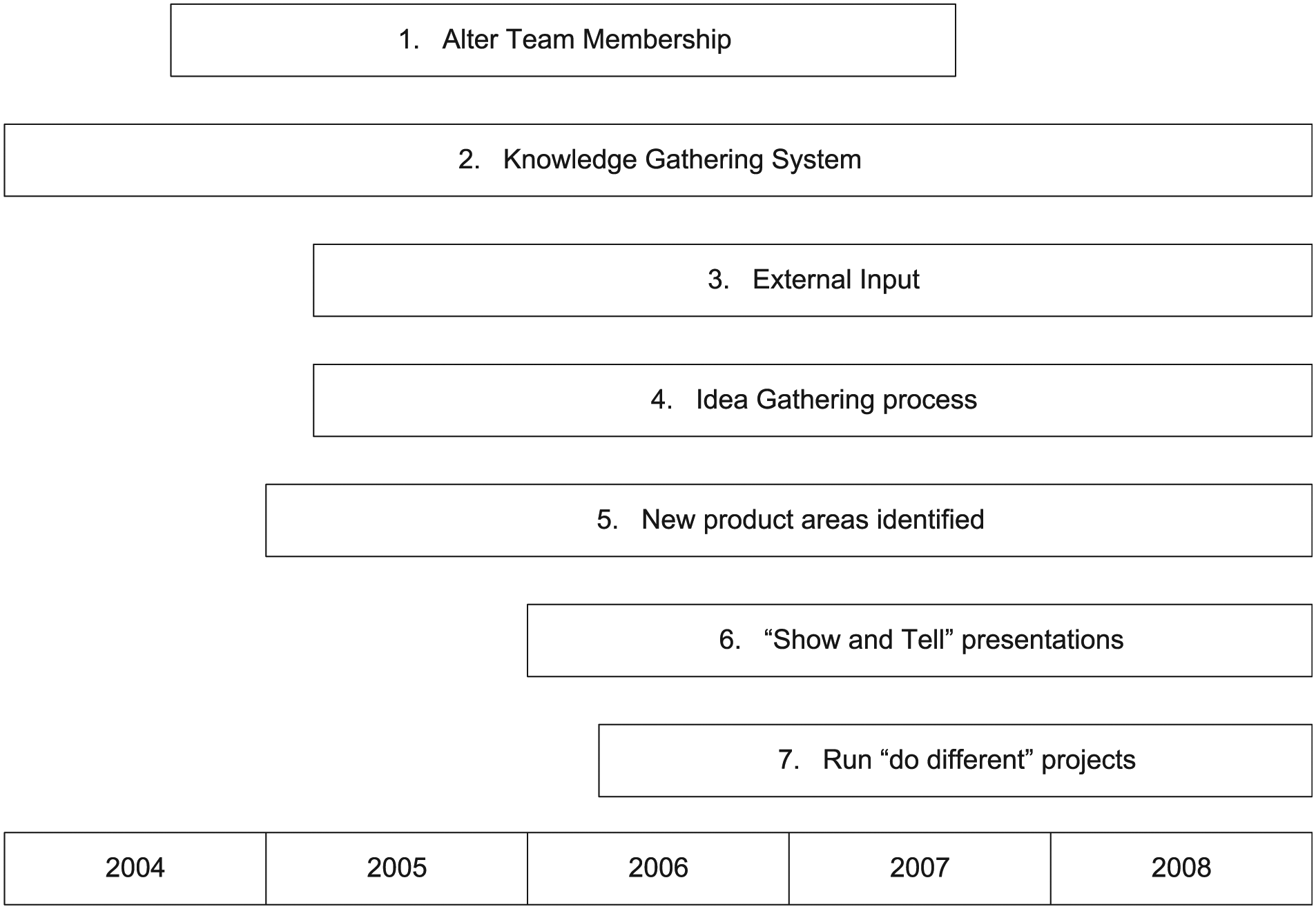
Timing of implementation initiatives.
Results achieved after implementation
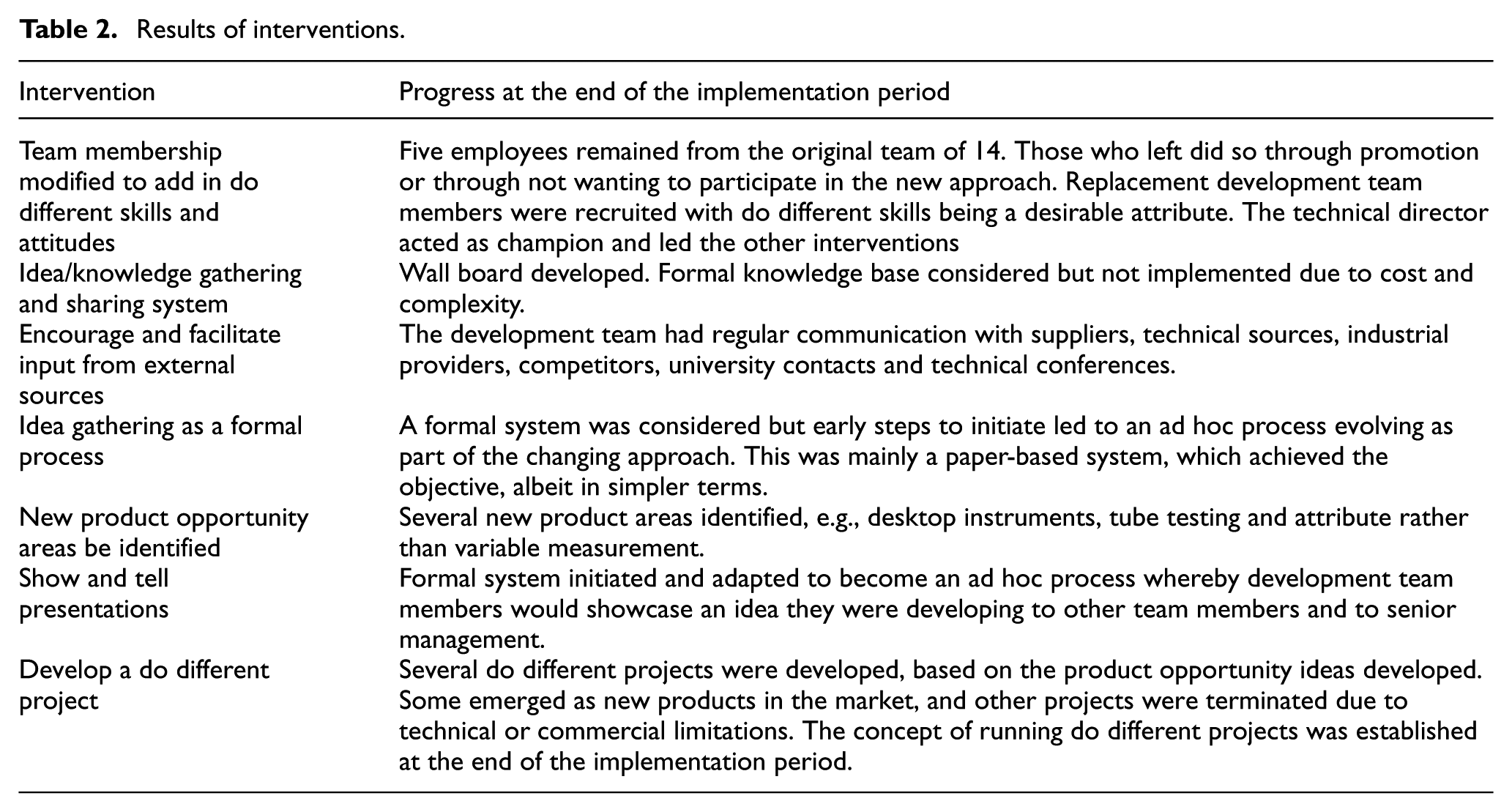
The interventions were implemented by engaging the development team and working with them to implement rather than imposing the solution. One exception to this was the recruitment of a technical director, who was tasked with building the team’s capability to improve do different skills. The technical director led the intervention programme and became the champion for developing a do different culture. The subsequent interventions were implemented over a 4- to 5-year period. Although each intervention was initiated with the intent outlined above, the practicalities and day-to-day limitations of the business meant that some of the interventions were adapted during the course of the change process. This was done in conjunction with the NPD team to ensure that engagement was maintained. The extent of progress with each of the interventions at the end of this implementation period is shown in Table 2.
Results of interventions.
At the end of the implementation period, 4 years after the commencement of the interventions, the climate and culture assessments were deployed again. OCAI indicated a move towards a more innovative (Adhocracy) culture. The desired position remained substantially unchanged (see table in Figure 3).
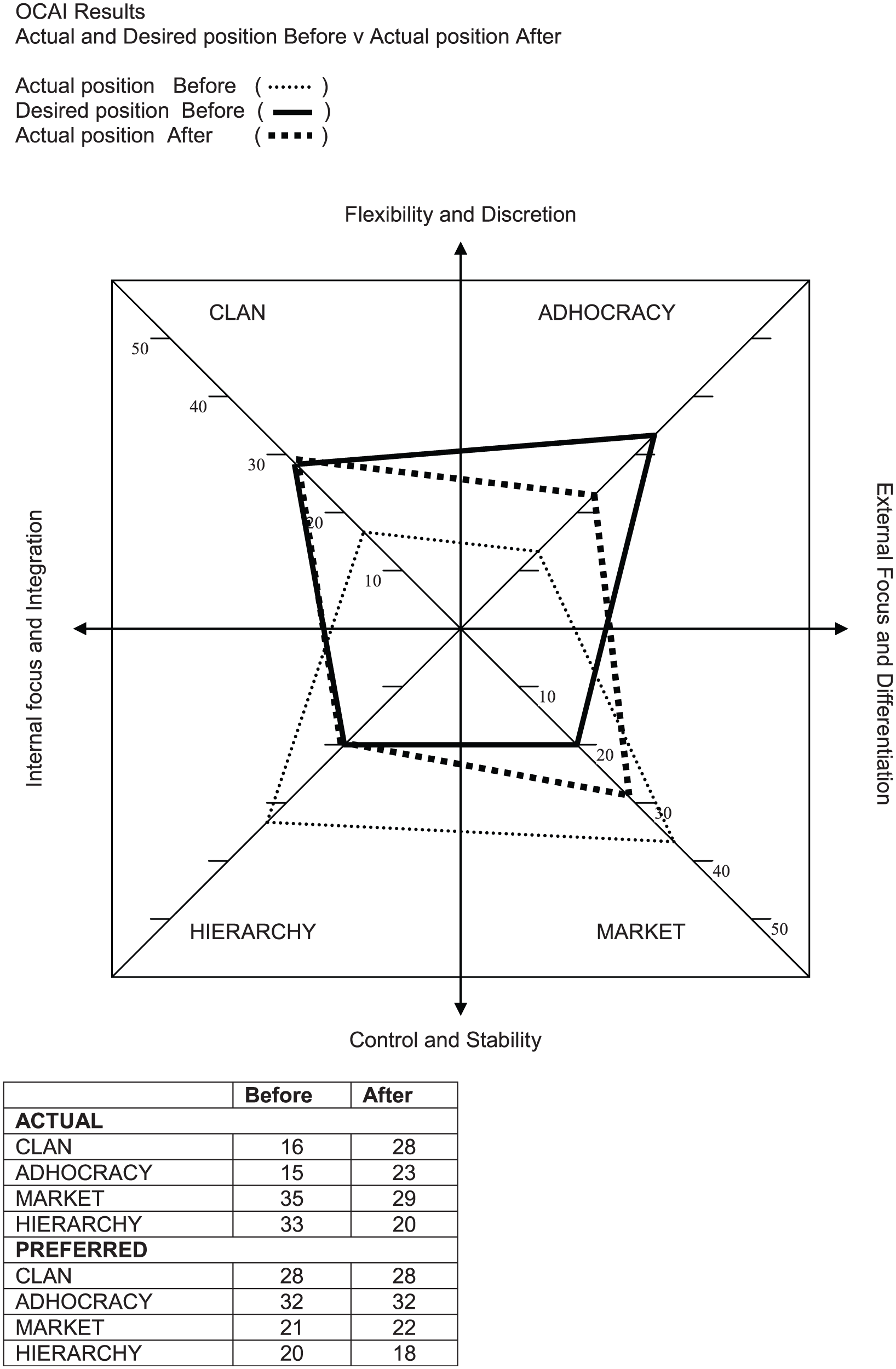
Before and after scoring on OCAI.
The actual position had moved much closer to the desired position with respect to Clan culture, but showed further movement was required to reach the desired position for Adhocracy. The KEYS climate for creativity assessment showed a significant increase on all the dimensions with significant improvements on five (Figure 4).
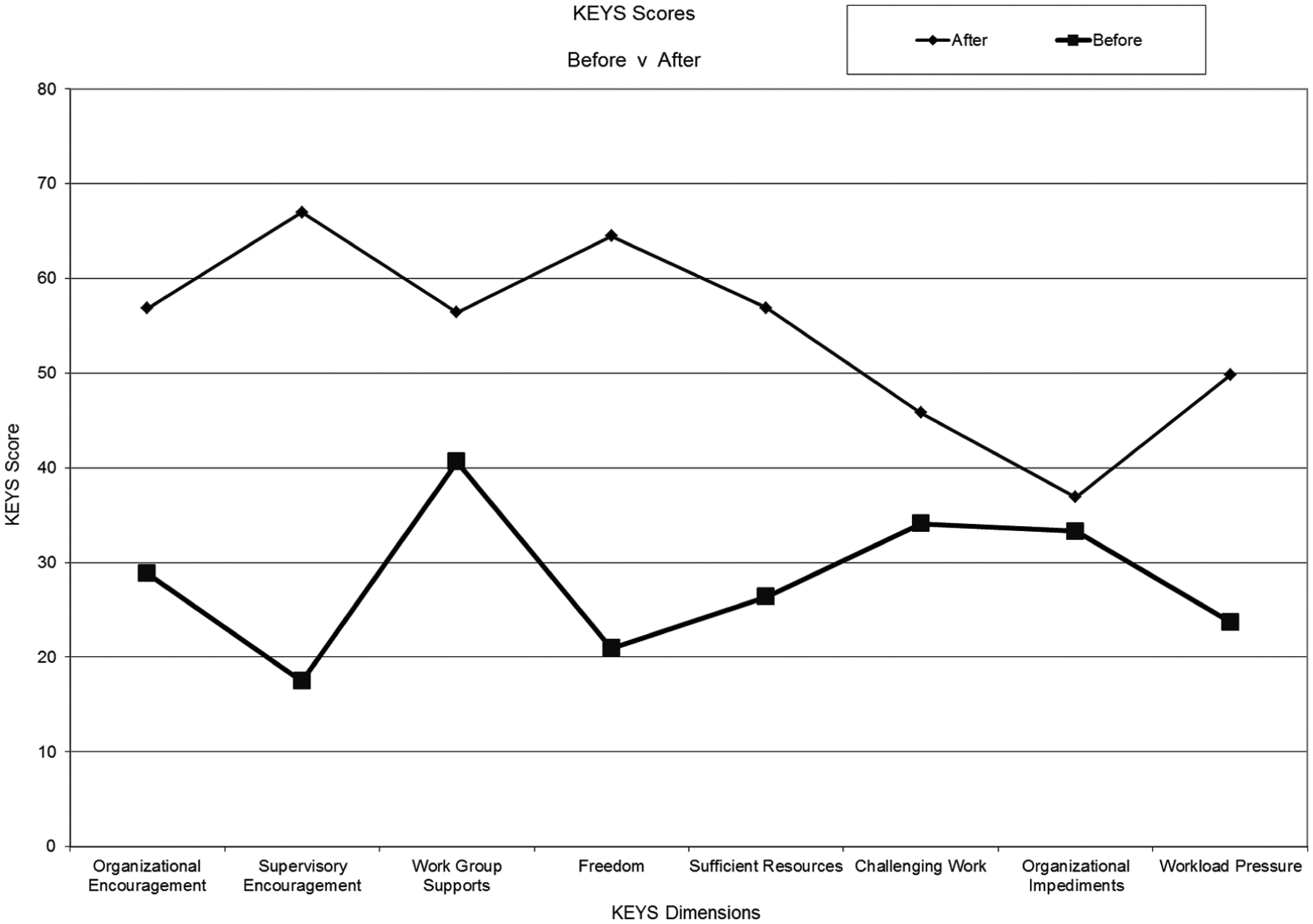
Before and after scoring on KEYS.
It was clear that there had been a change in the organizational culture and in the creative climate within the NPD team. A change towards a culture that facilitated radical innovation was supported by the improvement shown in the assessment of proximity to the ideal radical innovation culture. The before and after scores display improvements in all nine dimensions, as shown in Figure 5.
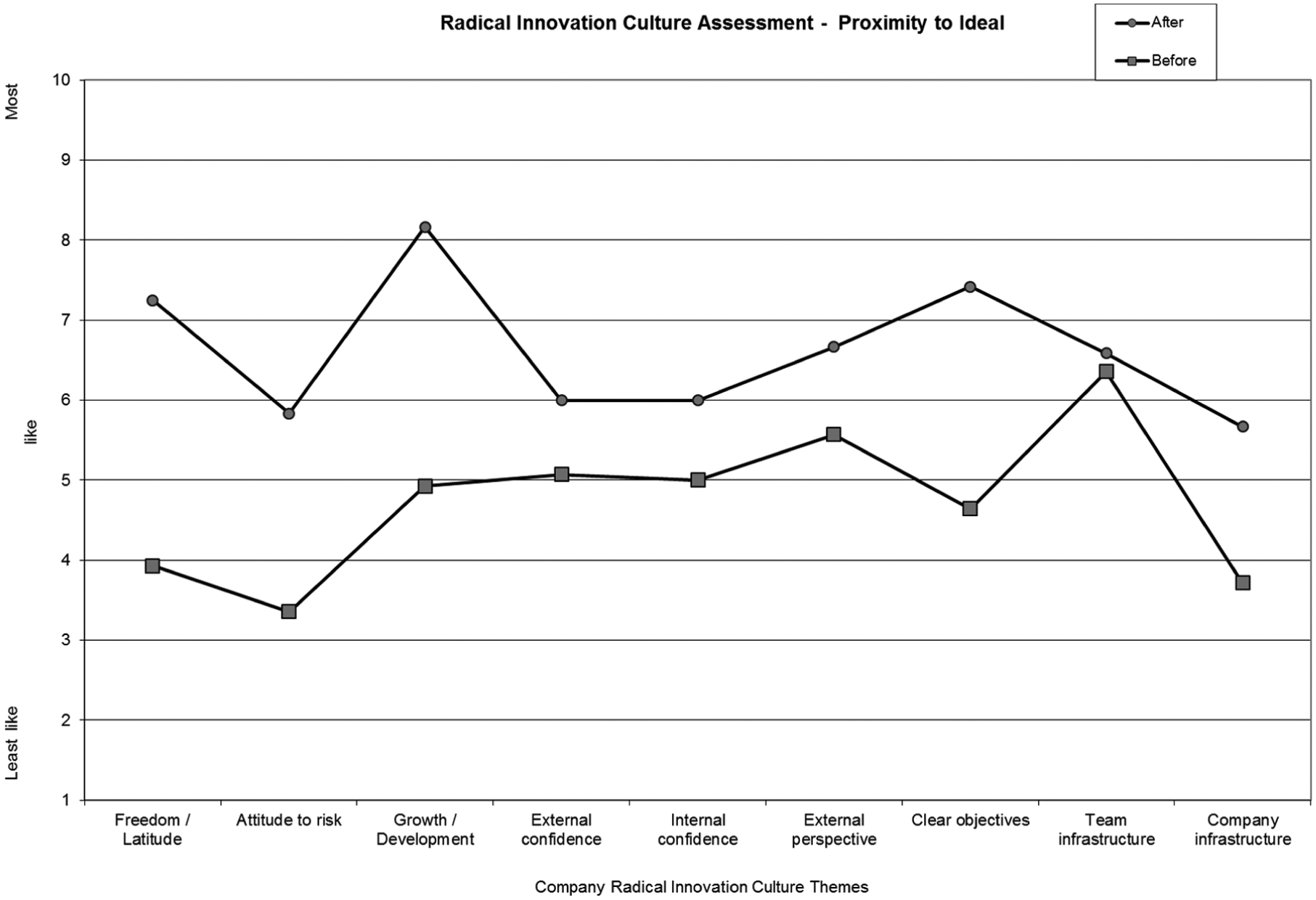
Before and after scoring on innovation culture.
From a company perspective, the interventions launched a change in the NPD team that allowed them to create a series of radical innovations. This was reflected by the increase in the number of patent applications; increasing from zero during the previous 24 months prior to the project being initiated, to an average of five at the point the ‘after’ culture and climate assessments were made. This is shown in Figure 6.
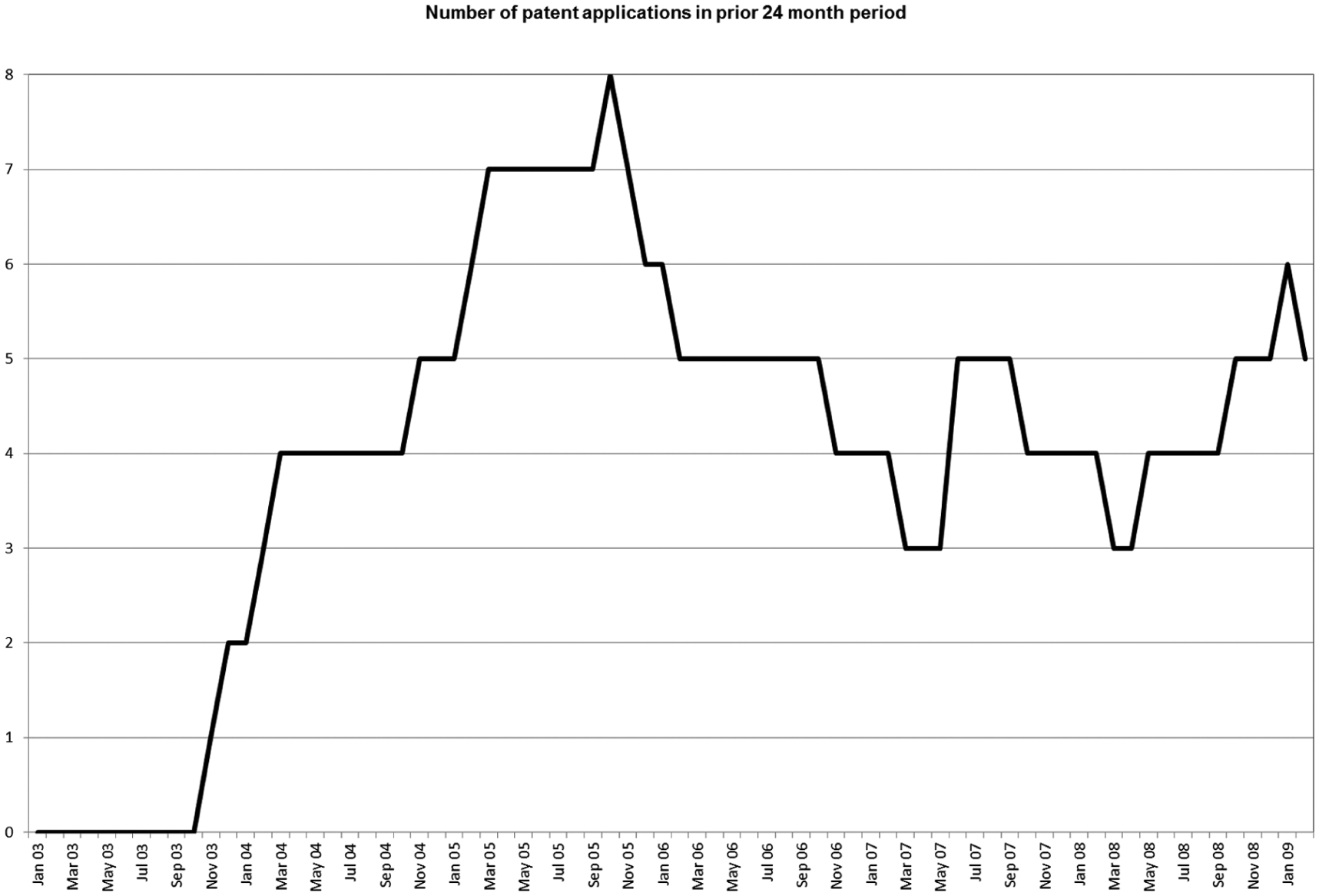
Number of patent applications.
Patent application rate indicates research and development (R&D) intensity and is considered to be the single most common indicator of a company’s propensity to undertake radical innovation. 55 During the same period, the number of new products launched during the preceding 24 months increased from 0 to 18. This is shown in Figure 7.
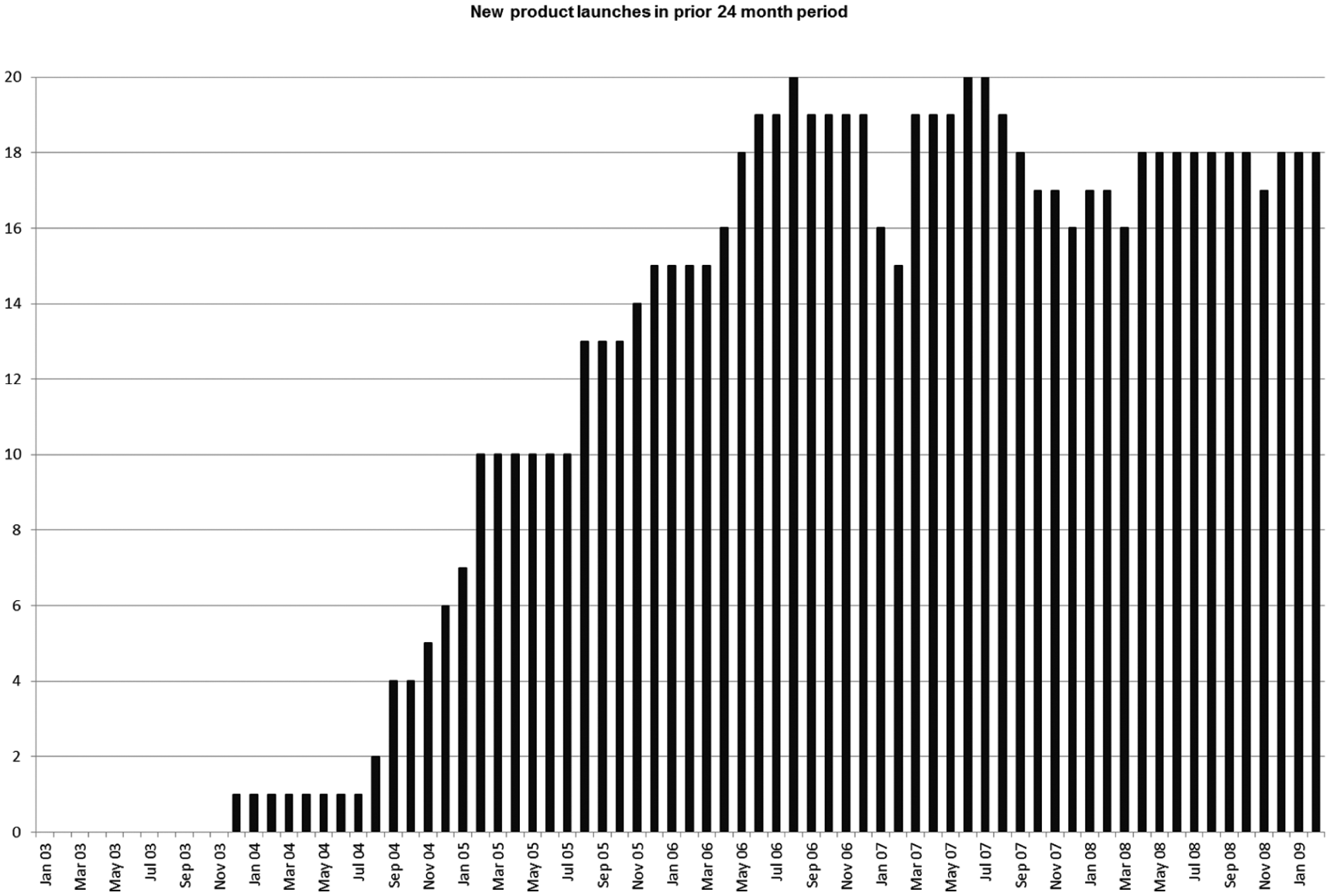
New product launches.
The new product launches included both incremental enhancements of the existing products and new-to-company and new-to-industry radical products. No attempt was made to classify new products as ‘incremental’ or radical.
Discussion
The research adopted a ‘probe and learn’ approach that engaged the development team as participants in the data gathering, the analysis, synthesizing the interventions and in implementing the interventions. The development team grew to be an area of focus within the company and were perceived as contributing to the strategic objective of becoming more innovative and delivering a stream of new products. This was likely to have influenced their attitude towards engaging with the research and in making the interventions effective – the ‘Hawthorn effect’.56,57 The project was initiated in an environment where the company was perceived by senior managers to be losing ground to the competition, but where this was not so readily visible to the employees. A change of management in the senior manager team created the initiator for the change to take place. The culture change then followed the eight steps suggested as being an effective change process: (1) establish a sense of urgency, (2) form a powerful coalition, (3) create a vision, (4) communicate the vision, (5) empower others to act, (6) plan for and create short-term wins, (7) consolidate improvements and produce still more change and (8) institutionalize the new approaches. 58
The overall strategic change in the company included the innovation culture change and relied to a great extent on it to enable the other components of the strategic plan to be realized. The criticality of the culture change was emphasized to the development team. Notwithstanding this effect, the interventions were adopted and adapted by the development team as key initiatives in changing the culture within the team. The interventions were considered as starting points for enabling the change, rather than interventions which must be completed in their own right. This approach allowed the team to adapt and modify the interventions as necessary to achieve the desired change. At the end of the implementation period, there was a distinct change in the approach the development team took in dealing with new ideas, technologies and product opportunities. The assessments supported the change in the way we do things round here. There was a clear move towards a more innovation enabling culture on the OCAI assessment. The KEYS assessment indicated a greater degree of creativity within the team. The proximity to the ideal radical innovation culture showed a clear move towards the ideal position compared to the position at the beginning of the project. The number of patent applications increased during the intervention period, indicating a more innovative business, or at least a business that recognized the value of intellectual property associated with new ideas and was willing to invest to protect those ideas.
When the assessments for KEYS and proximity to ideal radical innovation culture were carried out at the end of the interventions, there was little improvement in the KEYS dimension ‘Organizational Impediments’ and in the theme ‘Team Infrastructure’ in the assessment of proximity to ideal radical innovation culture. This indicates that there was still work to be done within the NPD team and its perception of how the team worked within the company organization structure. This was a clear area where further improvement could be realized. However, as the company had made significant progress with developing a pipeline of new products, including radical products, no plan was initiated to address this issue.
Ultimately, for the company, the benefit of the research project was seen in the flow of new products, both incremental and radical that re-positioned the company as the leader in its market sector, reinforcing the brand value that was being developed as an innovative business. This flow of products allowed the company to improve its market share and to grow both revenue and profit during the course of the implementation.
The position the company found itself in at the project outset was similar to many small- to medium-sized businesses that had matured. In the maturation process, a move to exploit rather than explore had dulled the capability to come up with radical new products. The drive for efficiency and the cost cutting initiatives had all blunted the capability of the development team to be adventurous and try out new ideas. The research project allowed the development team to re-create a culture of innovation and exploration that was able to operate with a fiscally controlled business – creating an ambidexterity.15,34,60 As the conditions in the development team at the outset of the research project are not unique, there is a likelihood that similar interventions, adjusted for other businesses’ history and extant conditions, are applicable in developing a radical innovation capability and innovation ambidexterity in small to medium mature businesses.
Conclusion
This research project enabled a practitioner change, built upon an organizational development approach, in developing an innovation culture for radical product development in a small- to medium-sized mature engineering company. The company achieved the ability to develop radical new products, while retaining the ability to incrementally improve the existing products – an innovation ambidexterity. The research took place in a small mature business based in the United Kingdom. An initial study within the company’s NPD team identified key aspects that influenced a radical innovation culture. The key themes found to be pertinent to a radical innovation capability, following an iterative process with the development team, were refined in workshops and triangulated using assessment instruments. Seven interventions were developed in conjunction with the company development team, senior managers, the analysis of previous empirical case research and dialogue with UK companies that promote discontinuous innovation. The interventions were developed from the perspective of the underlying themes influencing radical innovation. The impact of the interventions was evaluated 4 years after implementation commenced. The organizational culture was re-gauged using the same assessment tools and significant changes were identified. The outcomes indicated the success of the company’s attempt to embed a sustainable radical innovation culture into the product development area. The opportunity to conduct research in a ‘live’ NPD team allowed the co-development of an organization culture that was more predisposed towards radical innovation prior to the project commencing. The proximity to an ideal culture to facilitate radical innovation and the climate for creativity indicated an improvement over the duration of the project. This improvement was borne out by a 5-fold increase in patent applications and a 19-fold increase in the number of new products launched. While the interventions were conceived for the company hosting the research, their applicability to other mature small and medium-sized enterprise (SME) businesses can be considered with some adaptation to suit individual company cultures.
Footnotes
Declaration of conflicting interests
The author(s) declared no potential conflicts of interest with respect to the research, authorship and/or publication of this article.
Funding
The author(s) received no financial support for the research, authorship and/or publication of this article.