




Abstract
Analyzing the history of design is helpful in creating the computer numerical control turret design. Knowledge acquired from reasonably organizing and reusing designs may contribute to establishing computer numerical control turret design tasks. This article presents the results of our study on the representation and reuse of computer numerical control turret design knowledge and highlights the application of a case-based reasoning method in the structure design of a computer numerical control turret. The primary step in case-based reasoning systems is case retrieval where the similarity measure plays a significant role. The objective of this study is to develop a new method for a hybrid similarity measure with five formats of attribute values: crisp symbols, crisp numbers, fuzzy numbers, fuzzy linguistic variables, and fuzzy intervals. First, a hybrid similarity measure for a mixture of crisp and fuzzy sets is proposed for retrieving cases. Subsequently, a synthesis weight is formed through the combination of the subjective weight and objective weight. The calculation formula of the global similarity, which can retrieve the proper historical case, can be established by combining the hybrid similarity measure and the synthesis weight measure accordingly. Finally, the hybrid similarity measure and weight assignment method were applied in a computer numerical control turret conceptual design case-based reasoning system. The results showed that the global similarity of these five attribute types and the distribution of weight coefficients could improve the accuracy of case retrieval, which would help designers achieve the goal of rapid design.
Keywords
Introduction
The computer numerical control (CNC) turret is the core functional part of the CNC machine tools. Thus, its performance can directly affect the reliability, service life, and economic indicators of the CNC machine tools. To ensure the function of all the CNC machine tools, performance indicators of the CNC turret need to be designed. The design scheme can be finalized after going through several changes and a test validation. The entire design process is not only time-consuming but also relies heavily on the experience and expertise of designers. In addition, duplication of the effort in the revision process of each design task occurrence results in the difficulty of promoting and preserving the former design experience. The CNC turret design can draw on the successful development of the typical structure of the design scheme and experience formed in the design process, which is inherited from previous processes and reused accordingly. The reuse of design knowledge can reduce the unnecessary duplication of effort and shorten the development cycle, which are important to the product design of the CNC turret.1–3
To advance the retrieving efficiency and quality further, the method of design knowledge representation, similar case matching, and knowledge reuse in the case-based reasoning (CBR) system were studied. This article presents the results obtained through a case-based method of knowledge reuse in the structure design of the CNC turret. This method constructs the representation of the case by organizing the geometric and nongeometric features of the CNC turret and adopts similarity-based retrieving in the case retrieval algorithm. Finally, a CNC turret conceptual design was demonstrated in detail to show the rationality and validity of the proposed methods.
Design method of CNC turret based on CBR
Traditional design process of CNC turret
Figure 1 shows division of the traditional design process into user requirements, design constraints, program establishment, and program adjustment. The whole design is subjected to the user demand constraints to determine all the parameters, such as the structural parameter, accuracy characteristics, performance indicators, turret encoder, and power source of the CNC turret. 4 Only a small number of these parameters can be obtained using the empirical formula. Determining most of these parameters relies on the experience and expertise of designers. However, inexperienced designers may encounter many difficulties in the creation and modification of the design process. Even experienced designers cannot form a consensus about every aspect of the design in a short time because of subjective judgment. These factors affect the quality and development cycle of the design. Furthermore, every program adjustment must go back to the design origin. Consequently, recalculation and further analysis and evaluation have to be performed. These processes demand a significant amount of time.5–7
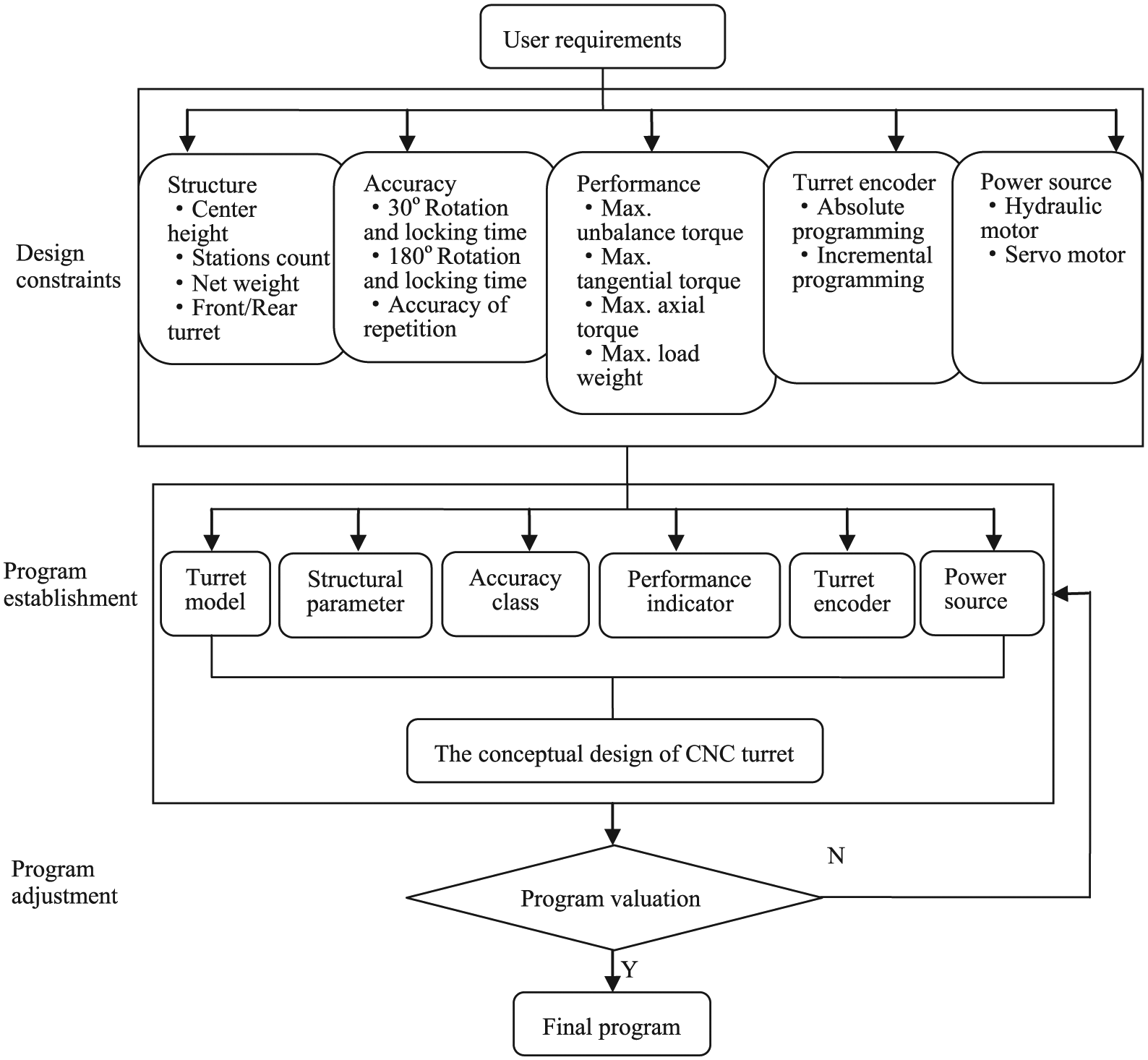
Traditional design process chart.
Design method of CNC turret based on CBR framework
As shown in the CBR system in Figure 2, the examples of a certain organization were stored in the case library and were classified after establishing a good indexing mechanism to enable quick searches for relevant examples. The core tasks of the CBR system are recognition of features of new issues from the description, retrieval and extraction of similar cases, and the use of similarity metrics to match similar case. The most similar case is used as the design prototype, and then, with function decomposition and unit split, the chief function units and the assistant units are all obtained. Then, the designers can modify it until the requirements are met, which is the reuse process of design knowledge. Subsequently, the system is updated by the learning mechanism.8–10 Accumulating and inheriting the established design knowledge and experience are very crucial in the design process.
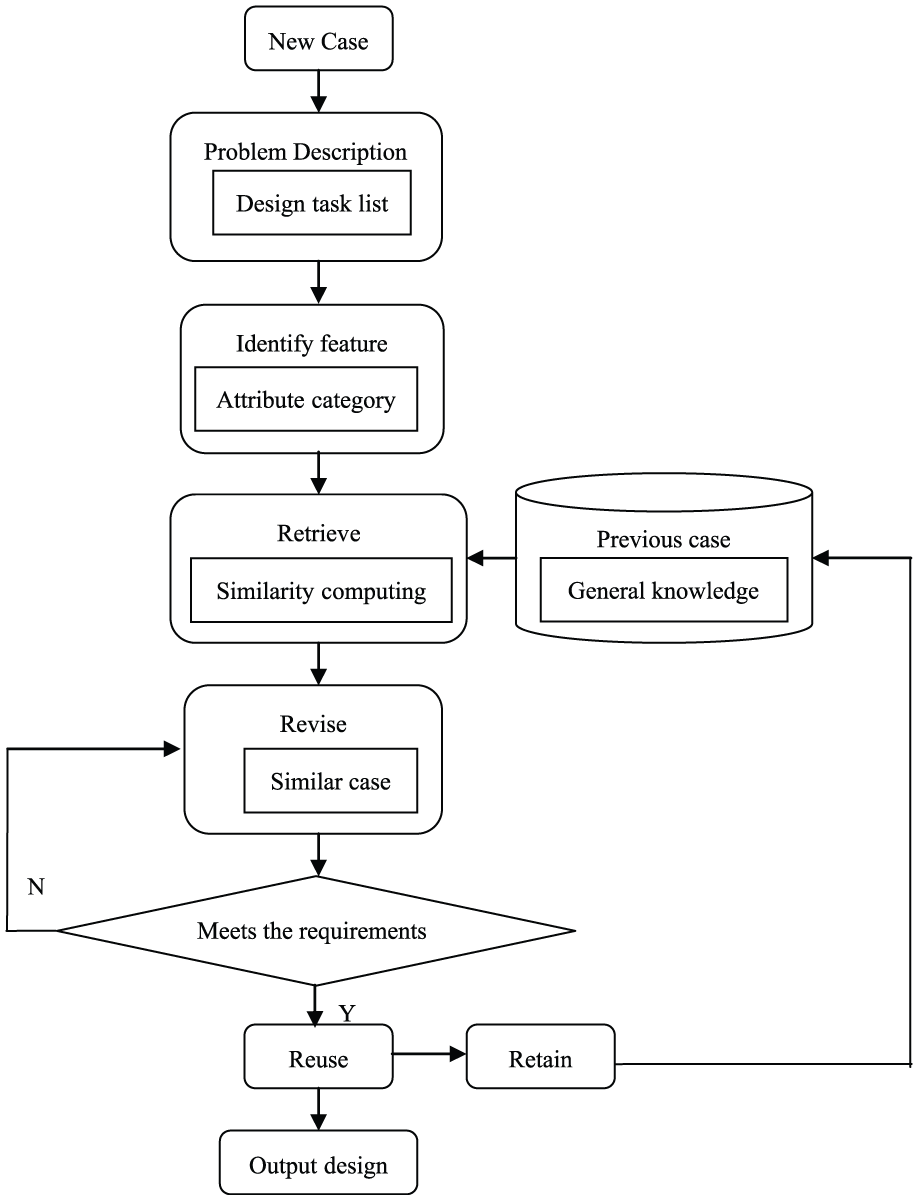
CBR system framework.
Instance representation
Using the instance of a consistent representation in the construction of the CBR case base is essential because it will directly affect the efficiency and effectiveness of CBR system applications. In general, instances can be defined as a set of attributes, whose contents include problem description and problem solving.11–13 At present, the CBR system does not have a unified instance representation, which can be achieved by selecting, combining, or modifying various existing knowledge representation methods based on the analysis of the specific problem areas. The key is the process of extracting the essential attributes of an instance.
We considered only the conceptual design of CNC turret actually. Attributes of the conceptual design are based on indicators of user requirements for CNC turret products. To enhance retrieval and flexible matching of the CNC turret instances, the attributes were extracted according to the structure, performance, accuracy, turret encoder, and power source, as shown in Table 1. These attributes can be divided into five formats, which include the crisp and fuzzy sets. Although the formats of attribute include fuzzy logic, these crisp and fuzzy sets are only used as attribute values to retrieve the most similar instance. The most similar instance can be used as the design prototype, which should be modified to satisfy user requirements in the detailed design stage. In addition, it may not lead to a subjective approach with expected values through its detailed design stage. This method can greatly shorten the product development cycle and avoid unnecessary duplication of effort.
Instance properties of CNC turret.
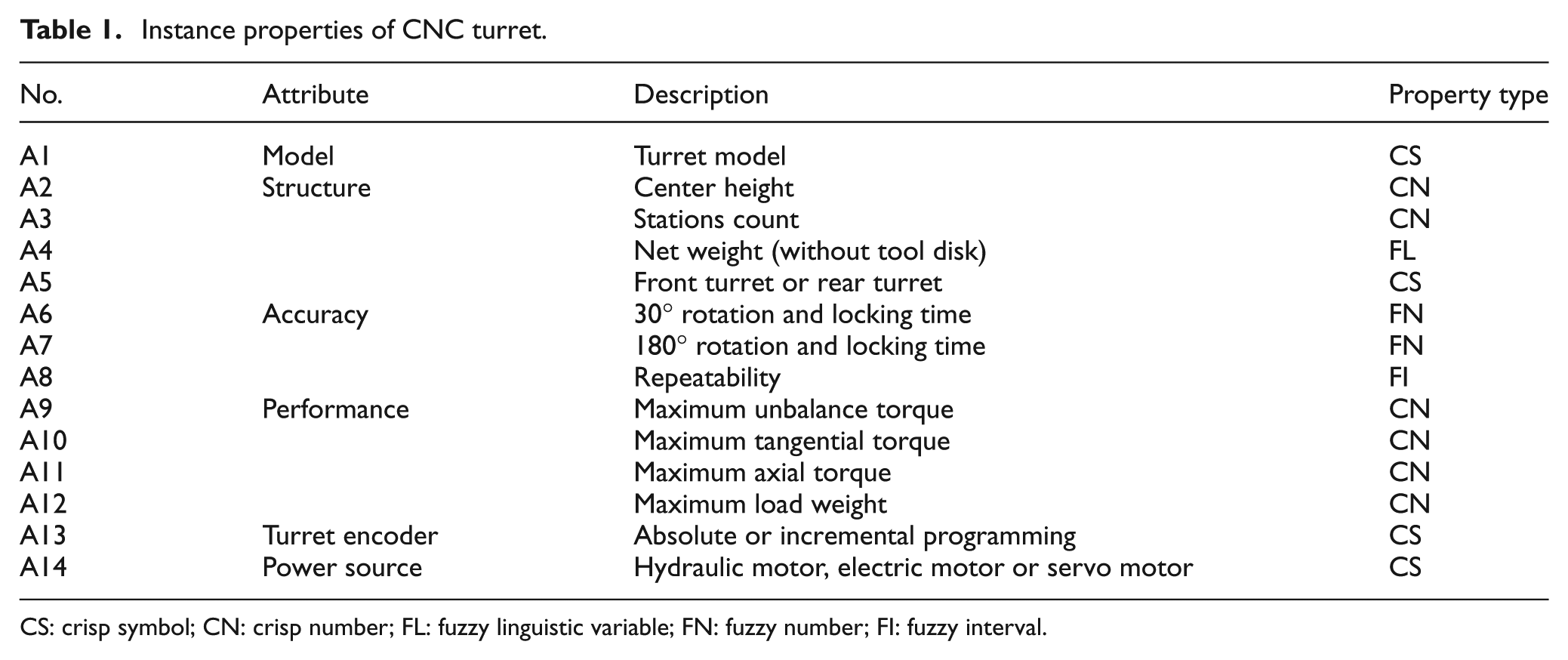
CS: crisp symbol; CN: crisp number; FL: fuzzy linguistic variable; FN: fuzzy number; FI: fuzzy interval.
Case retrieval
Case retrieval is the process of searching useful examples and matching the most similar cases from the case library accurately and rapidly. The entire retrieval process can be divided into two stages. The first stage is the extraction of useful examples from the case library based on the user requirements and designer experience. Therefore, the efficient indexing mechanisms should be established to facilitate quick and convenient extraction of the instances. In this study, the attributes of the CNC turret were divided to provide a quick indexing mechanism. The second stage is the process of matching the most similar instances through the hybrid similarity measure.14,15
This study applied the distance-based computational approach. Although it is the most common similarity algorithm, it is hindered by its main problem of reliance on designers’ experience and subjective judgments in relation to the attribute weight configuration. As a result, the differences in the attribute weight configurations of different designers increase, which further affect the quality of extraction of similar instances. To address this concern, this study introduced the concept of objective weight and used the synthesis weight to match similar instances.
Attribute categories
In practical CBR applications, some similarity methods with multiple formats of attribute values have been established. However, in-depth research has remained lacking. The descriptions of the cases are often represented by multiple attributes. The formats of the attribute values are diverse. For example, the attributes of the cases for a CNC turret can be represented by multiple formats, that is, crisp symbols (CSs), crisp numbers (CNs), fuzzy numbers (FNs), fuzzy linguistic variables (FLs), and fuzzy intervals (FIs).
The five formats of attribute values are summarized as follows:
CSs are expressed as the terms with definite meanings and as types of enumeration values. For example, the value of attribute “Turret model” is in the format of CSs. A vocabulary of precise and consistent symbolic representation is needed to improve user interactions and the failure analysis process.
CNs can be continuous or discrete. For example, the value of attribute “Center height” is in the format of CNs.
FIs are used to describe the uncertainty of an attribute value. For example, the value of attribute “Repeat position accuracy” is in the range from a lower limit to an upper limit, that is, it is in the format of interval numbers.
FLs are used to express the vagueness or fuzziness of an attribute value. For example, the value of attribute “Net weight (without knives disk)” is “heavy,”“medium,” or “light,” that is, it is in the format of FLs.
FNs are used to express the statistical regularity of an attribute value. For example, the value of attribute “Turn 180° and lock” is approximately 1.16 s.
Hybrid similarity measure for case retrieval
Considering that most of the traditional tools for formal modeling, reasoning, and computing are crisp, deterministic, and precise in nature, so the majority of proposed similarity measures in the CBR field are based on crisp sets. The CNC turret have five common formats of attribute values, which include the crisp and fuzzy sets; however, if the general similarity calculation method remains in use, the fuzzy attribute values retrieval will fail. It has been recognized that fuzzy set theory is a major issue in designing similarity measures in the CBR systems. Furthermore, fuzzy set theory can model reality more naturally and suitably. 16 To ensure that the CBR system is more efficient and powerful, the fuzzy set theory should be incorporated. Thus, this study constructed the hybrid similarity measure to compare cases with a mixture of crisp and fuzzy features in case retrieval. 17
Similarity measures for crisp sets
Generally, the most widely used similarity measures are based on the Hamming distance or Euclidean distance. That is

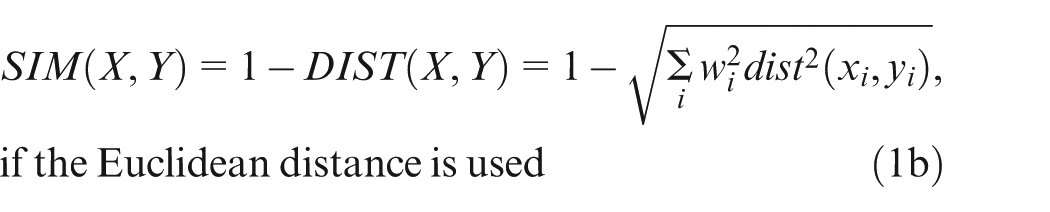
The normalized

For crisp numerical attributes, “
Similarity measures for fuzzy sets
The similarity measures for crisp sets are not suitable for fuzzy sets either. Given the simplicity and accuracy in consideration, this article presents an area ratio method, which can calculate the similarities between two fuzzy sets.18–20 The formula is as follows
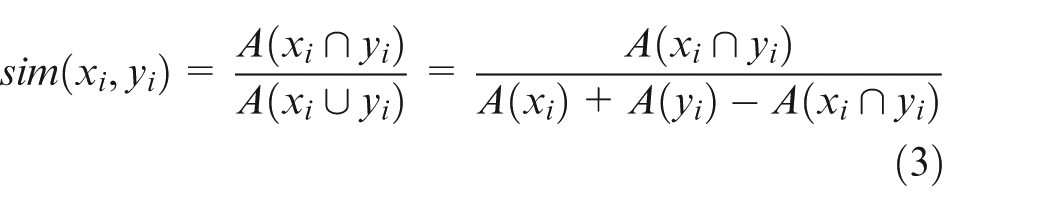
where
Algorithm method:
if
if
else
if
else //it belongs to type(c),(d) or (e).
if
else
endif
endif
Endif
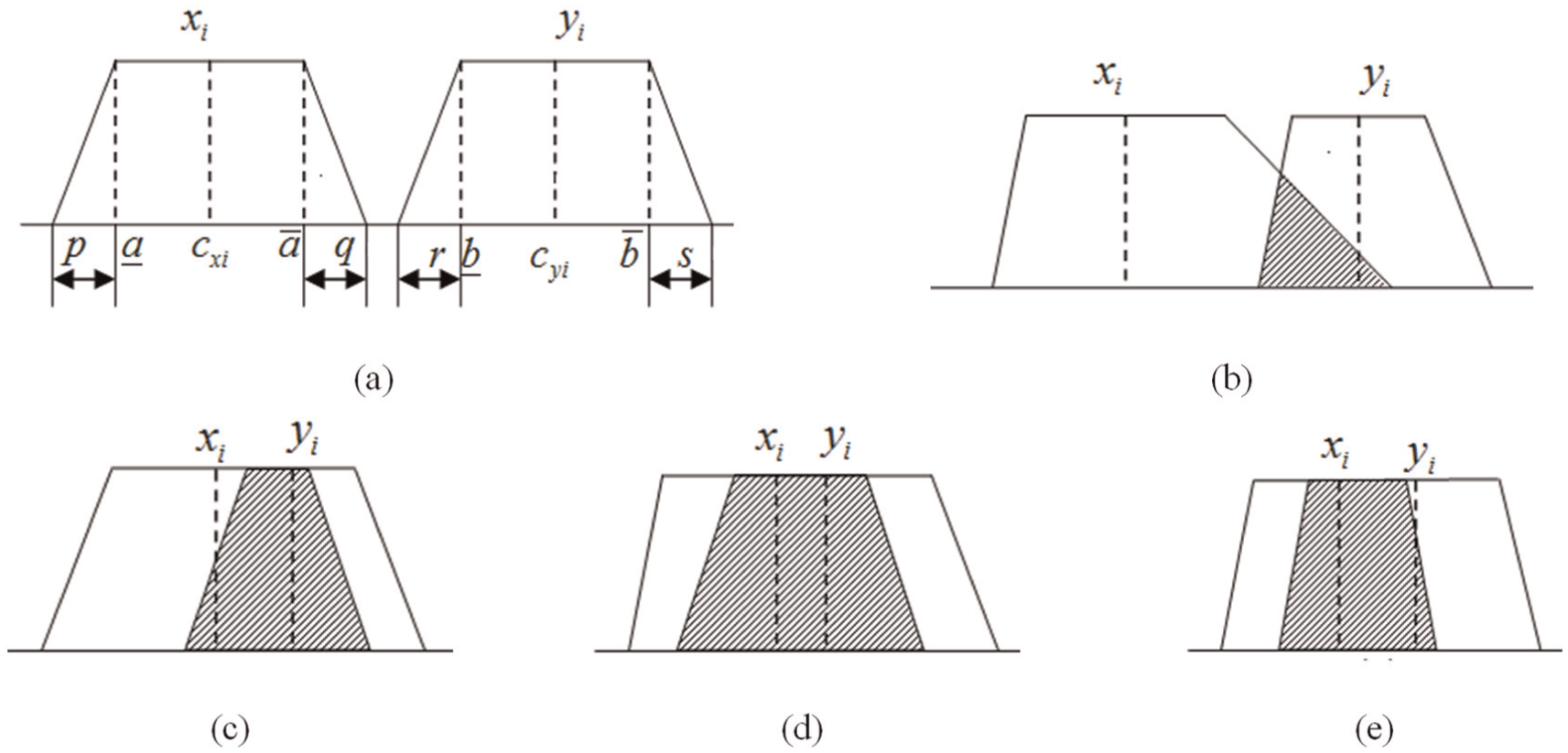
Five similarity types of two fuzzy sets
For the attributes of fuzzy sets, the values of
In this study, the similarities between two FLs were computed and stored in the CBR system in advance, which can save retrieval time. When the FN and FI formats of attribute values are considered in the process of case retrieval, the distance between centers

where
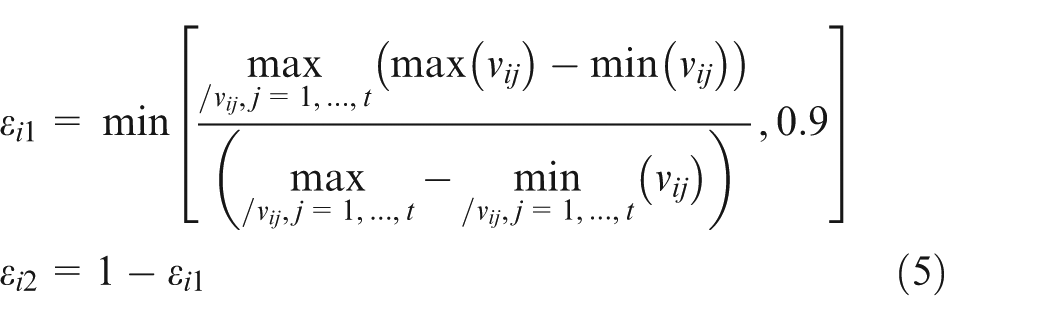
where
Attribute weight coefficient configuration
Another important way to improve the performance of similarity measures is by assigning reasonable attribute weight coefficients according to their relative importance. The determined attribute weights include the subjective weight
The subjective weight method can reflect the will of the decision makers, but the decision leads to highly subjective and arbitrary results. By contrast, the objective weight method that is based on a strong mathematical theory avoids the subjective and arbitrary evaluation results. However, these results cannot reflect the will of the decision makers. According to the above analysis, these two methods have their own advantages and limitations as well. Thus, this study used the synthesis weight method to determine each target weight coefficient. The synthesis weight method can organically integrate various weighting methods to overcome the shortcomings of a single weighting method.22,23
Measure for objective weight
A new design instance
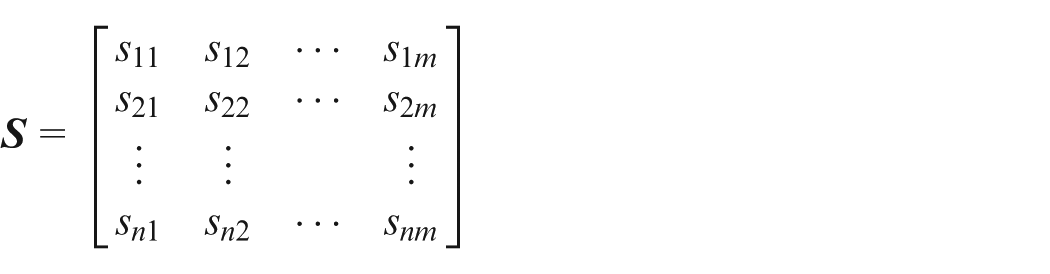
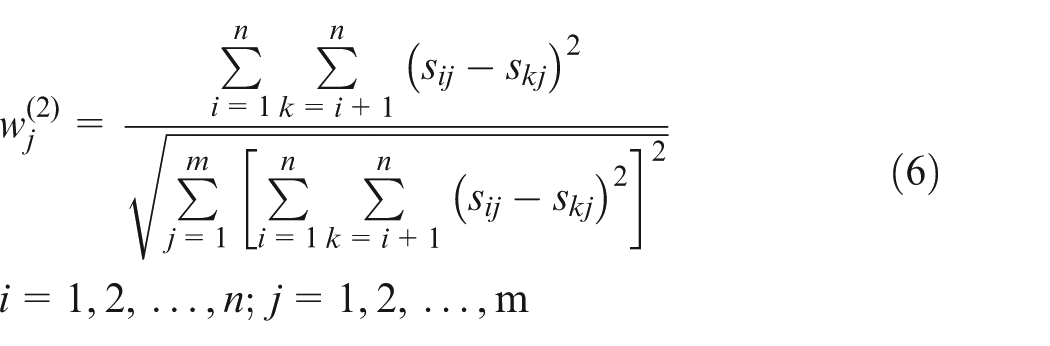
The property of the objective weight shows that the differences between the similarity matrix elements can determine the influence of the attributes on the retrieval results. For the
As mentioned above, the assignment of objective weight coefficient of attribute is related to the information of similarity matrix; thus, the objective weight coefficient can be calculated and expressed based on the deviation information of the similarity values. 24 The calculation expression is as follows
Synthesis weight
Synthesis weight is the combination of the objective and subjective weights. The most common methods, including the linear weighted sum method, multiplication synthesis method, mixing method, and substitution method, are utilized here for this. The synthesis method is mainly determined based on the differences between the attribute data and the influence of each attribute on the retrieval results.25,26 Generally, the principles presented below can be used to select the synthesis method.
The influence of each CNC turret attribute on the retrieval results does not vary, but large differences exist among the turret attribute data; thus, the multiplication synthesis method is appropriate. Furthermore, the weight coefficient of the multiplication synthesis method has minimal contribution, and as such, the method can adapt to a slight influence of the attributes on the retrieval results. Moreover, this method is more sensitive to the differences among the attribute data, which allows this method to better reflect the differences among the relative roles of the attributes. Hence, this article selected a relatively simple multiplication synthesis method to calculate the synthesis weight
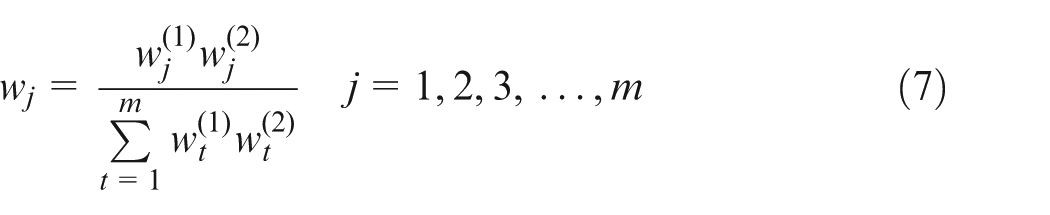
The synthesis weight takes into account the characteristics of the attributes and the influences of the attributes on the retrieval results. Thus, the synthesis weight is more conducive to the global similarity calculation example, which ensures the accuracy and reliability of the case retrieval results.
Global similarity
The processes of CBR systems include retrieval, reuse, revise, and retain. Among them, case retrieval is a primary step in CBR applications. Without effective case retrieval, a CBR system cannot do anything. As the CNC turret has five formats of attributes, it is necessary to use the hybrid similarity measure to retrieve the proper historical cases. The hybrid similarity measure can solve the attribute similarities of the mixture formats.27–29 The synthesis weight method, which is formed through the combination of the subjective weight and objective weight, can overcome the limitations of a single weighting method. So, this article proposed the global similarity measure approach to retrieve the most similar case in the conceptual design of the CNC turret, which was established by combining the hybrid similarity measure and the synthesis weight measure. The calculation formula of
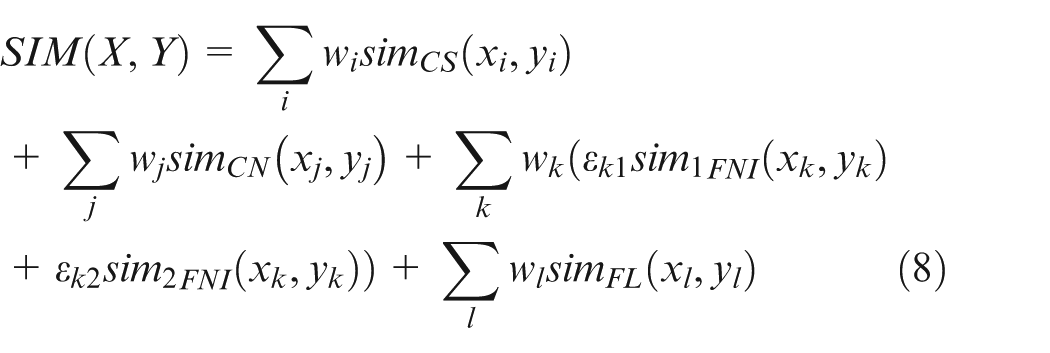
where
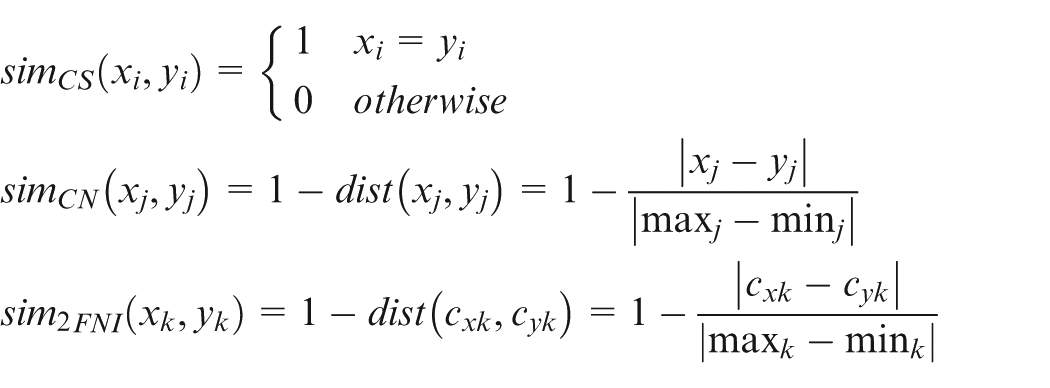
where
Case study
To illustrate the use of the global similarity measure approach, a case study on the rapid response toward the CNC turret conceptual design was conducted here. Assuming that new case
Instance library for CNC turret conceptual design.
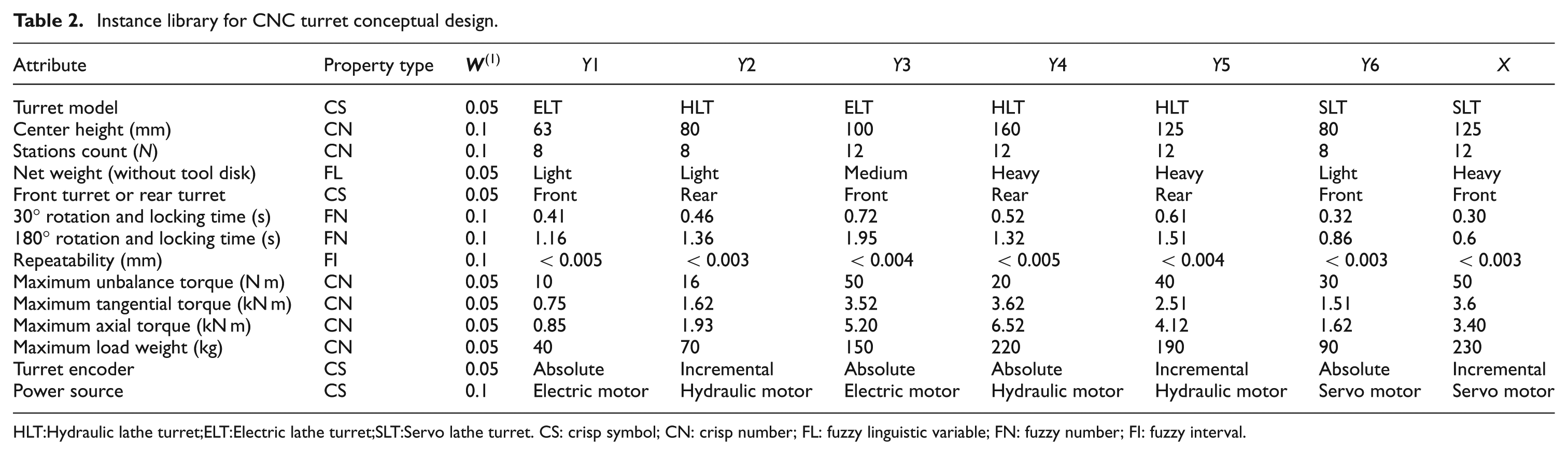
HLT:Hydraulic lathe turret;ELT:Electric lathe turret;SLT:Servo lathe turret. CS: crisp symbol; CN: crisp number; FL: fuzzy linguistic variable; FN: fuzzy number; FI: fuzzy interval.
For the CS attributes, taking “Turret model” as an example, the values of
For the attribute “180° Rotation and locking time,” its type is FN.
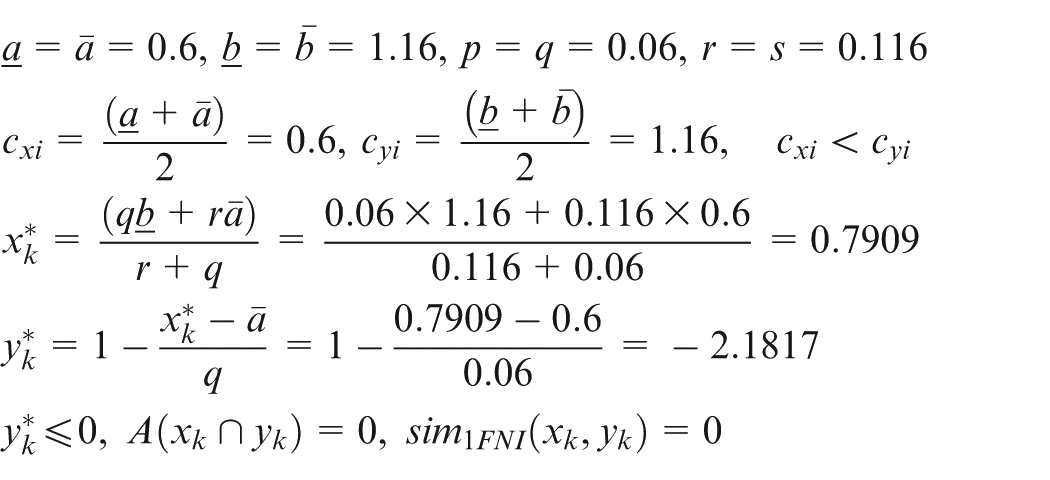
So, it belongs to type a in Figure 3 and
In using “Net Weight” as an example of the FL attributes, this article first defined “light” as 20–80 kg, “Medium” as 80–160 kg, and “heavy” as 160–220 kg. According to the algorithm method,
Based on the similarity calculation methods for the five formats, the similarity matrix can be calculated, as follows

Based on the similarity matrix, the objective weight coefficient can be calculated by the deviation information of similarity values through formula (6)
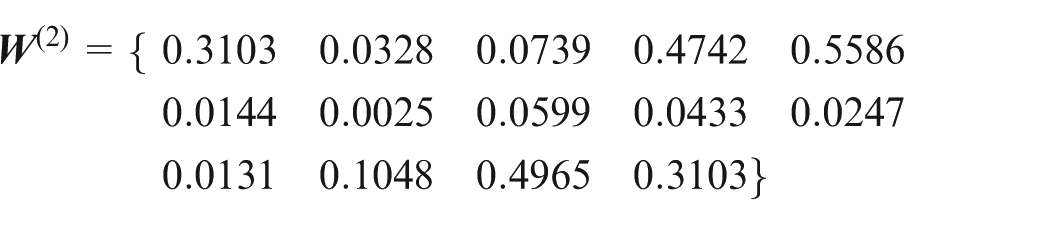
From Table 2, we can obtain the subjective weight coefficient

The synthesis weight is the combination of the objective and subjective weights, which can be calculated using the formula (7)
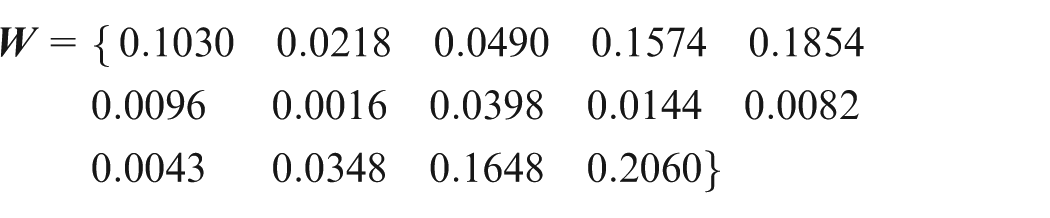
The synthesis weight results show that center height, stations count, and power source to the subjective right of weight are equal. However, after considering the similarity deviation information, some differences between their weights were observed. Synthesis weight includes the contributions of attribute information to the results from the decision-making process. As such, it is more conducive to the retrieval of the instance.
Finally, the global similarity can be obtained, based on the hybrid similarity measure and the synthesis weights method

The computation results indicate that the retrieved historical case (
Conclusion
This article presented a hybrid similarity measure with five formats of attribute values for handling applications with a mixture of crisp and fuzzy features and the synthesis weight method. The global similarity can be established through integrating these two methods, and the proper historical cases can be retrieved. The application of the measure to the CNC turret cases was illustrated. A theoretical analysis and empirical study validated the effectiveness of the proposed method. The distinct characteristics of the method are summarized below.
The proposed method comprehensively considers the multiple formats of the attribute values involved in the process of case retrieval. Compared with the consideration of only three or four formats of attribute values in most of the existing methods for hybrid similarity measure, the proposed method here considers five formats: CSs, CNs, FNs, FLs, and FIs. These five formats basically cover all types of attribute values in the CBR systems. In addition, this study proposed the area ratio method for the fuzzy set, which has the advantages of both accuracy and simplicity, and developed the clear logic and a simple computation procedure for fuzzy attributes. Subsequently, attribute similarities for the five formats were aggregated to form the hybrid similarity measure.
This study proposed the synthesis weight method to determine the weight of each attribute. This method can organically integrate the objective and subjective weight methods, overcoming the limitations of a single weighting method. In addition, the global similarity was established by combining the hybrid similarity measure and the synthesis weight method, thereby ensuring the accuracy and reliability of the case retrieval results.
Footnotes
Appendix 1
Acknowledgements
The authors are thankful to the anonymous reviewers for their constructive comments and suggestions.
Declaration of conflicting interests
The author(s) declared no potential conflicts of interest with respect to the research, authorship, and/or publication of this article.
Funding
The author(s) disclosed receipt of the following financial support for the research, authorship, and/or publication of this article: This work was supported by the China Major Scientific and Technological Programs (No. 2012ZX04002032 and No. 2013ZX04012032) and Natural Science Research Projects in Jiangsu Province Universities (No. 15KJD460001).