




Abstract
This study proposes an adaptability index system for product development to enhance engineering system management. The index system takes into account the need to reduce the time required to market new products. The adaptability index is defined by the relationship between the time to develop a current product and the time to develop a subsequent (next) one, so that the recommended index will be useful when a new product with shorter execution times than those of the previous one is introduced into the product design and manufacturing process. Implementing an adaptability system’s parameters are derived from responsiveness, competitiveness, engineering, and marketing activities as reflected in adaptability indices. The study’s methodology is case study through questionnaires, interviews, and records. The authors recommend increasing adaptability by reducing complexity through computer-integrated manufacturing, standardization, and others methodologies. The significant outcome based on the case study is the assessment that is enabled by the proposed adaptability index. This index will guide engineering companies in the selection of the most relevant development processes, protocols, production tools, and procedures aimed at reducing the time-to-market required to generate new products, thus allowing it to meet market demand, increase product diversification, and reduce product lifetimes.
Introduction
An enterprise’s competiveness is significantly impacted by external forces, which can be categorized as the market, technological developments, society, and environmental regulations. Acting simultaneously, these factors can induce a state of external competitiveness.1–6
The enterprise’s external competitiveness, in turn, serves as reference for measuring its internal competitiveness, which is supported by organizational, methodological, and technological activities as integral parts of its business operations.7–11
It is in this context that the study addresses the following question:
Can one create an index system that assesses the evolution of adaptability in product development?
To answer this question, the study focuses on the competitiveness and responsiveness of engineering management systems that provide conditions for adapting product and service design and manufacture to market needs. It proposes adaptability indices to manage engineering systems to increase the capacity of product design and manufacture.
Thus providing competiveness and responsiveness can be related in a framework.12,13 This article is structured as follows. Following section “Introduction,” which sets forth the study’s objectives and the context in which they arose, section “Literature review” provides the findings of the literature review. Section “Implementing an adaptability index system: a framework” examines the framework adaptability indexes system in the light of research and section “Case study” describes the study’s methodology. Section “Discussion” provides the discussion and, finally, section “Conclusion” presents the conclusions.
Literature review
In developing a product, it is necessary to define competitiveness and engineering responsiveness in the project’s strategic plan. Enterprise competitiveness can be understood as the capacity to review competitive strategies continuously, attaining favorable market position when they are implemented in manufacturing. 14
Consequently, enterprise competitiveness provides conditions to generate higher than average profits in markets in which it is activated on a sustainable basis, characterized by quality, speed, and flexibility. It must also satisfy stakeholders and comply with environmental regulations. 15
There are numerous aspects to competiveness. First of all, competitive enterprises must be capable of convincing consumers to change their purchase patterns from the companies where they customarily buy the product to their own. 16
Their capacity to drive such internal competiveness can be understood as a set of synergic methodological and technological factors. This state of competiveness is obtained through the enterprise’s organizational and technological behaviors, which can be defined as competitive attributes. Competitive attributes are characterized according to their application spectrum, as for example, market-driven attributes.17–19
Responsive production systems are required to meet the market’s demand for diversified products with reduced life cycles through simultaneous manufacturing, while reducing lot sizes.20–22 Looking toward the challenges that lie ahead, engineering managers must think globally as they help their organization to advance from the present into the future. 23
In short, the responsiveness of the manufacturing system reflects its capacity to efficiently implement changes to address market needs, primarily by developing new products and simultaneously manufacturing diverse parts and quantities on the shop floor. 24
A responsiveness has significant contemporary factors include introduction of products to market in shorter time, more frequent release of new products, increased product diversification, global competition, improving lifecycle control, and product innovation. Market-driven attributes are deployed to enhance innovation and agility. Innovation is a technological process that comprises a complex set of activities to transform the findings of scientific research into products and services with practical applications. It also integrates existing technology and inventions to create new products, services, and processes. Innovative companies look for promising ideas and provide an organizational culture that supports their development into profitable goods and services. 25
Agility can be attained, when the technological and administrative infrastructure is flexible and can be rapidly created, configured, and reconfigured to meet market needs, for example, by reducing the time it takes to bring new products and services to market. 26
An effective enterprise business system requires the use of methodologies designed to provide conditions to address market needs through the organization. 27 A proper organizational management system provides conditions to note external needs that determine competitiveness and responsiveness and also consider them in determining the way business processes are applied and managed throughout the enterprise. 28 It is necessary to develop a program of selecting, educating, and training human capital or new talent that will enable the company to become highly competitive.24–29 This way it is recommendable to propose an adaptability index system.
Implementing an adaptability index system: a framework
The proposed adaptive system is a product and manufacturing development process that entails three phases: (a) adaptability, (b) activities, and (c) indices (see Figure 1). When a product is introduced, an adaptive system is classified as open, that is, able to adapt to environmental changes.
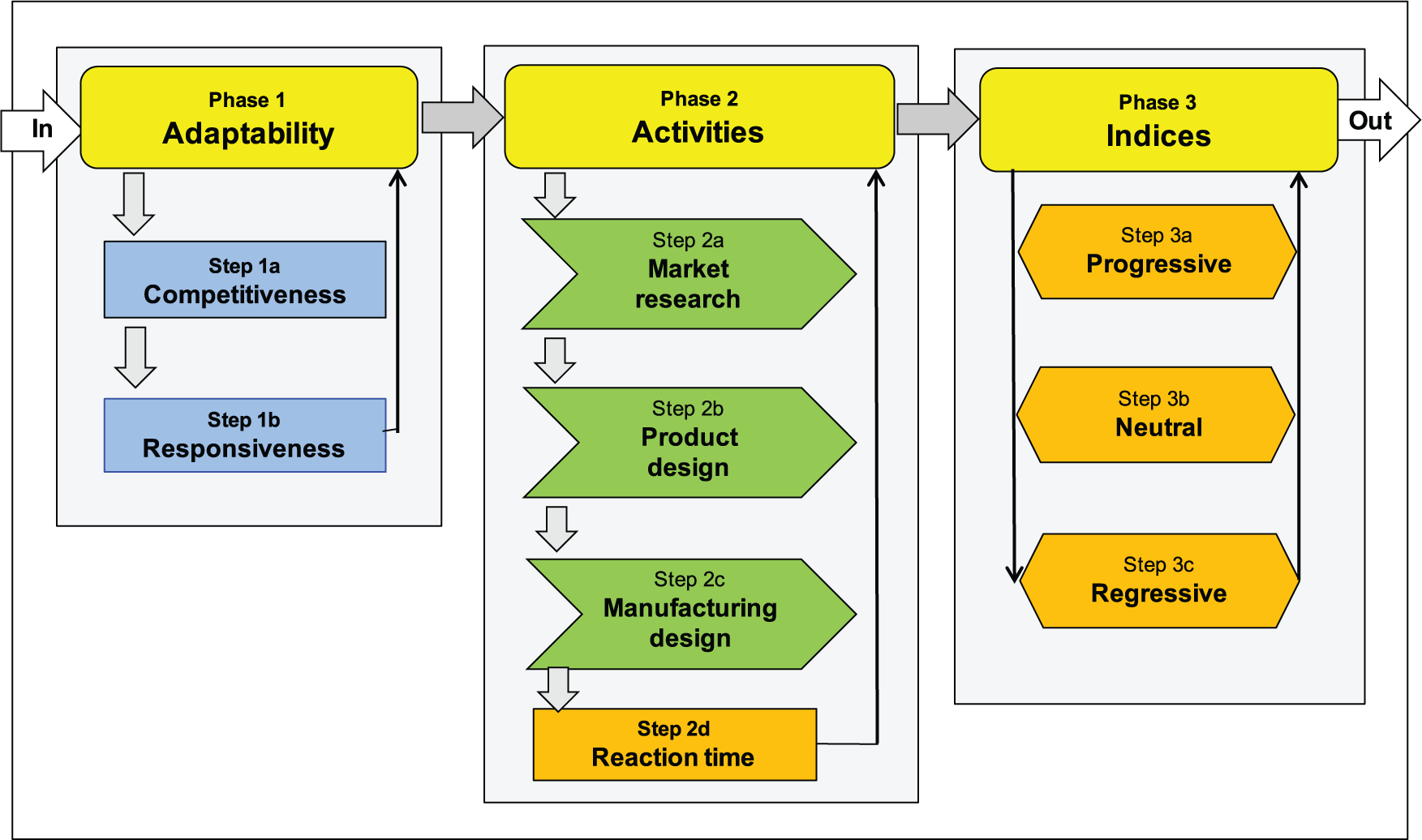
Framework adaptability indexes system.
Phase 1: adaptability
Step 1a: competitiveness
The relationship between the external and internal environments, that is, the market and the enterprise, should be responsive to consumers and preserve the enterprise’s capacity to compete. To these ends, innovation, agility, and human capital are required (see Figure 2).
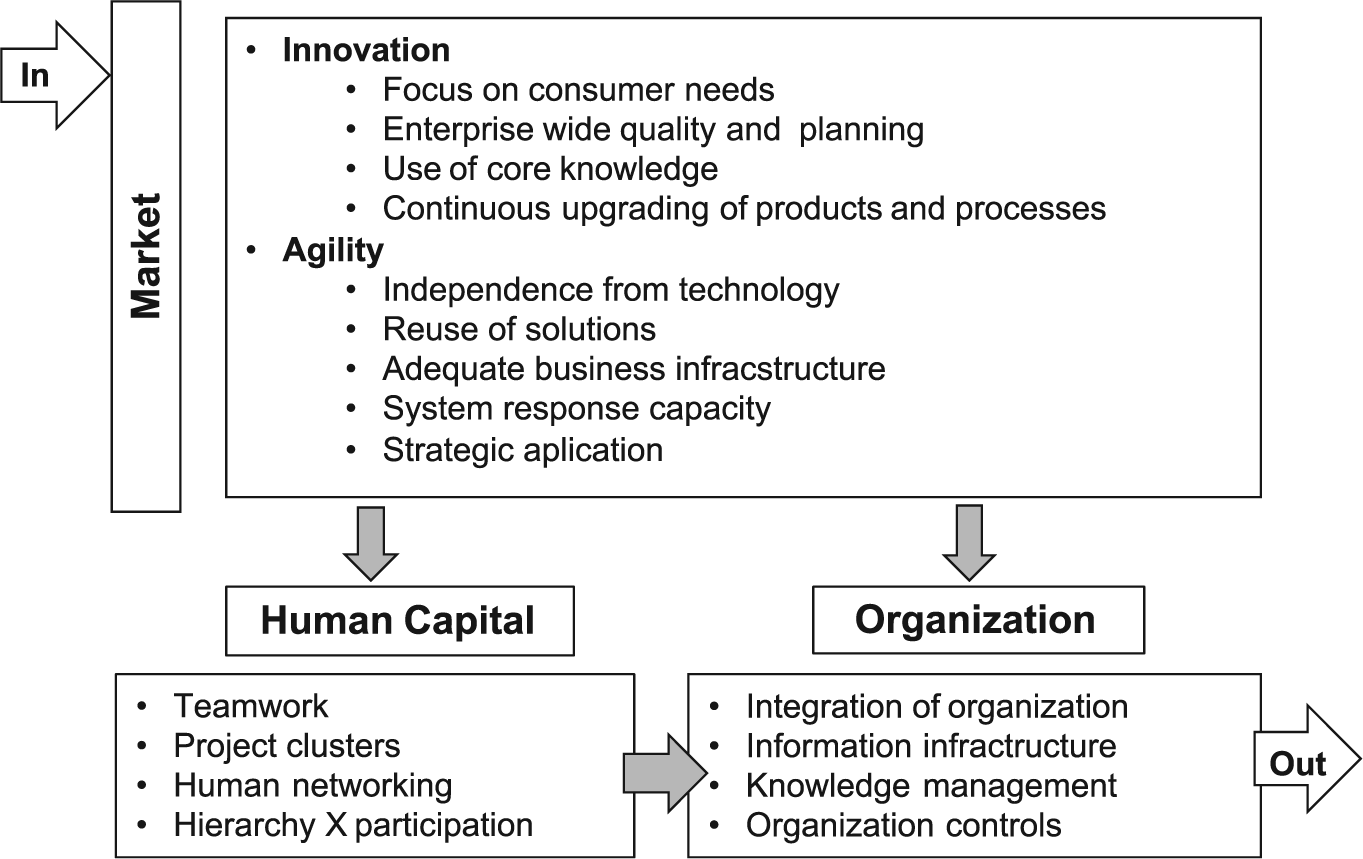
Enterprise competitiveness system.
Step 1b: responsiveness
A responsive enterprise is capable of adapting to external market stimuli that reflect consumer needs. Responsiveness is analyzed in two contexts: (a) responsiveness of marketing and engineering systems in introducing products in adequate time, while addressing customer needs using Design For Six Sigma (DFSS) with, for example, technique quality function deployment (QFD), failure mode and effect analysis (FMEA), and voice consumer (VoC); (b) responsiveness of manufacturing on shop floor systems in producing different products simultaneously, while maintaining adequate productivity rates and addressing customer needs. Examples include lean manufacturing and/or just-in-time (JIT) techniques, such as total productive maintenance (TPM) and single minute exchange of die (SMED). The capacity to accommodate shorter product lifecycle management (PLM) necessitates: CAXs and DFXs (see Figure 3).

Techniques to accommodate responsiveness.
Standardization of components in several projects with reutilization of existing parts and tooling reduces development time. The application of group technology (GT), supported by a sufficient database of analogous parts, enables
Categorizing parts in groups to increase project rationalization;
Retrieving data related to current projects to apply in new ones;
Standardizing specifications, characteristics, and materials;
Enhancing products through eliminating duplicative drawings;
Developing standard routing and manufacturing processes from part groups;
Standardizing tooling derived from standard manufacturing processes.
Figure 4(a) and (b) provides examples of parts groups using similar forms and manufacturing routing criteria, respectively.
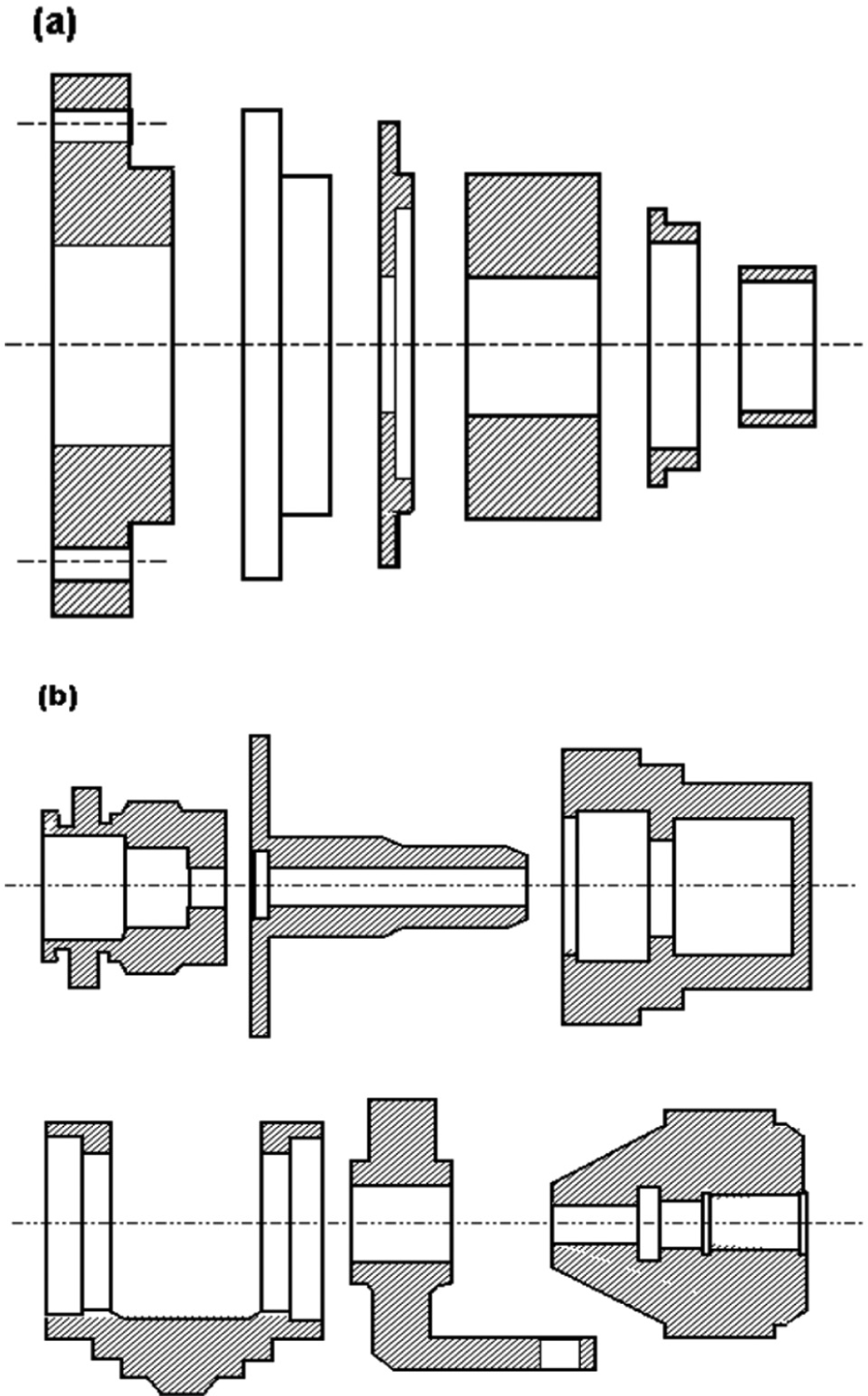
(a) Family of parts using the similar forms criteria and (b) family of parts using the manufacturing routing criteria.
Phase 2: activities
To refine the adaptability concept, it is necessary to delineate the activities related to the introduction of new products. The activities detailed in phase 2 (Figure 21) are graphically illustrated in Figure 5.
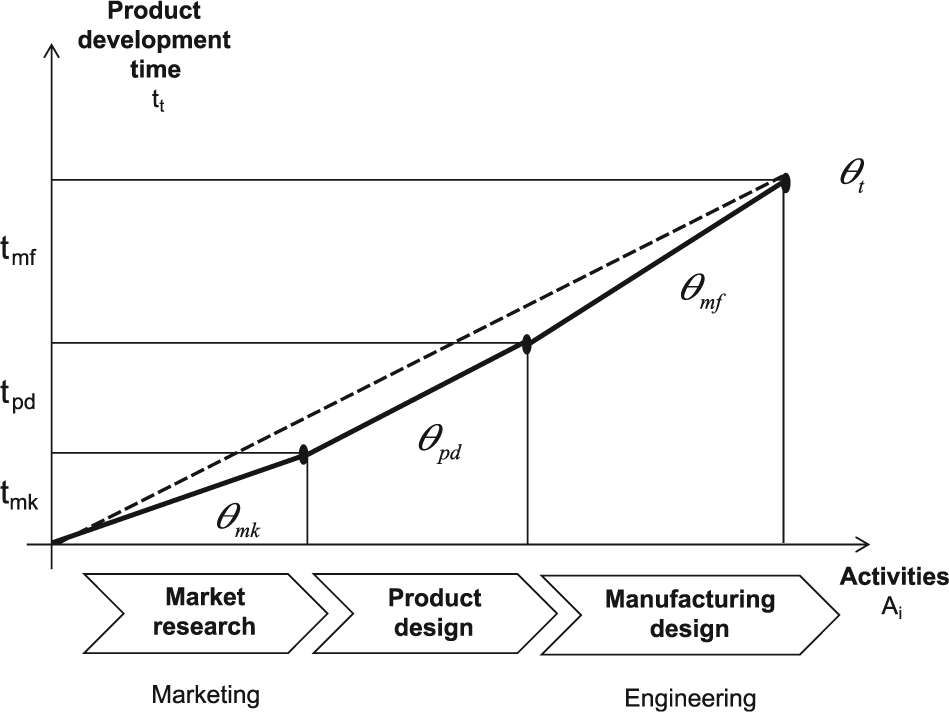
Product development activities.
For each activity (marketing and engineering), there is an execution time. Product development time (tt) is expressed as follows

where tt is the product development time, tmk is the market research time, tpd is the product design time, and tmf is the manufacturing design time.
As depicted in Figure 5, it is possible to associate a corresponding angle for each activity and time:
θt: product development angle;
θmk: market research angle;
θpd: product design angle;
θmf: manufacturing design angle.
It can be observed that the angles (θmk, θpd, θmf), and consequently (θt), are functions of the relationship between activities and the execution times. The organization of market research, product design, and manufacturing design impact each activity and its respective time (θi → 0 to turn out ti → 0).
Step 2a: market research
Marketing activities of product acceptance research are related (see Table 1).
Marketing activities.
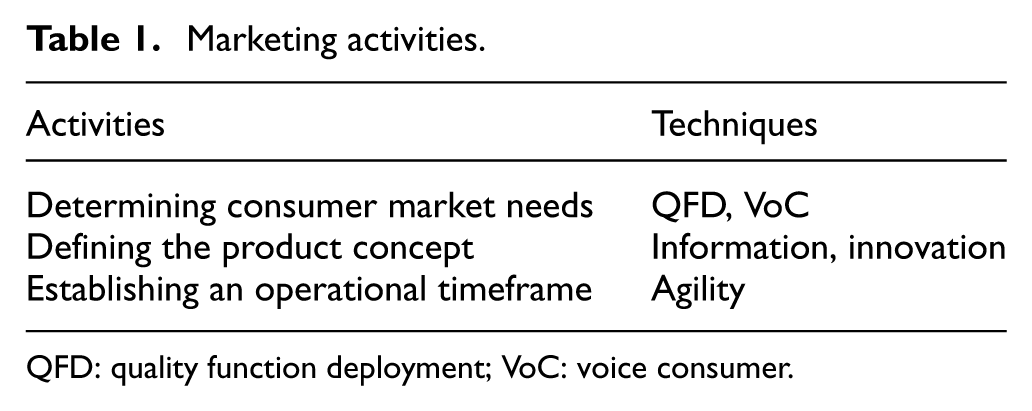
QFD: quality function deployment; VoC: voice consumer.
Step 2b: product design
Product engineering activities are showed (see Table 2).
Product engineering activities.
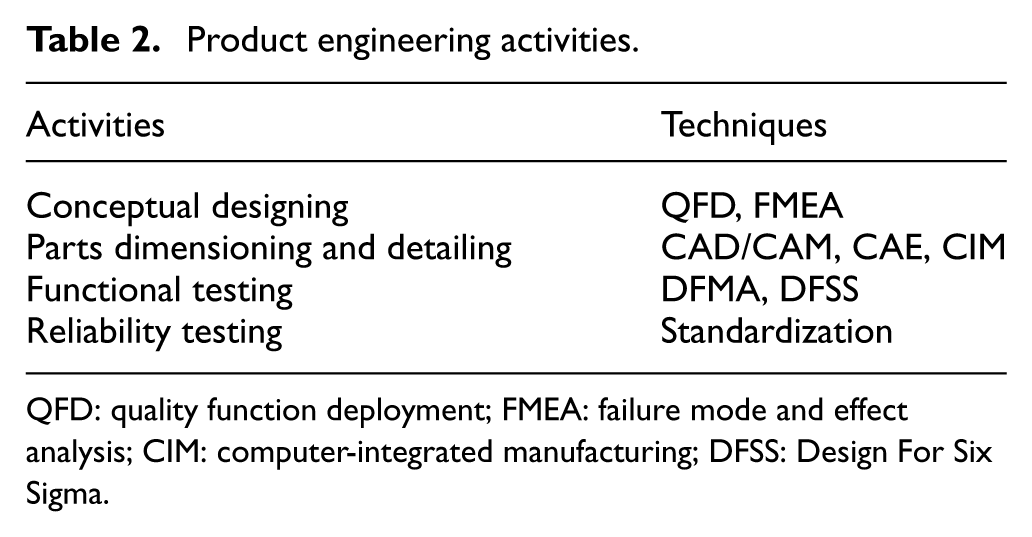
QFD: quality function deployment; FMEA: failure mode and effect analysis; CIM: computer-integrated manufacturing; DFSS: Design For Six Sigma.
Step 2c: manufacturing design
Manufacturing specification are demonstrated (see Table 3).
Manufacturing engineering activities.
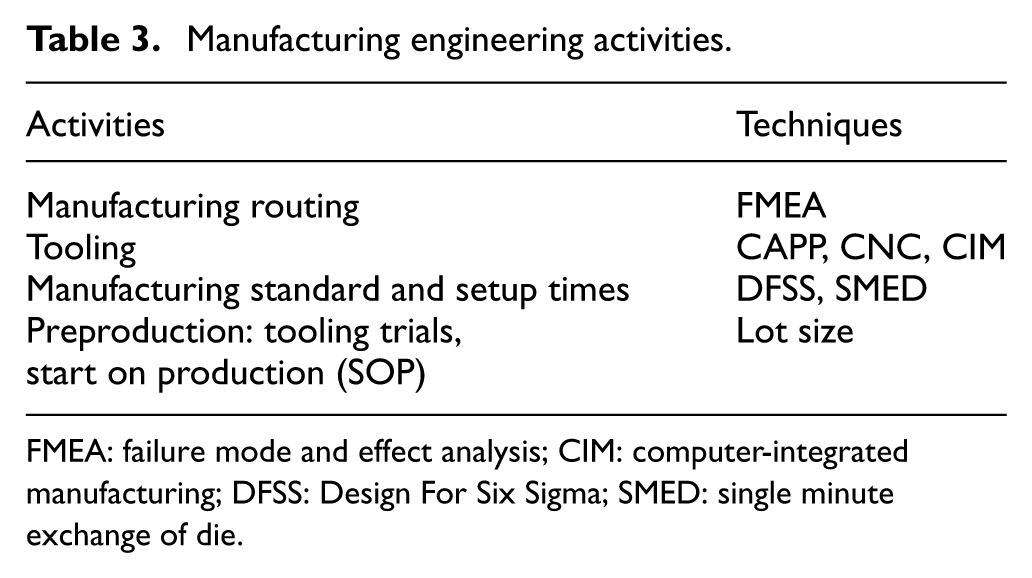
FMEA: failure mode and effect analysis; CIM: computer-integrated manufacturing; DFSS: Design For Six Sigma; SMED: single minute exchange of die.
Step 2d: reaction time
Reaction time is an indicator proposed in this study to measure design improvement since competitiveness and responsiveness increase with reduced product development as follows

where tr is the reaction time, teg is the engineering design time (time to required to develop product that address market needs), tpd is the product design time, tmf is the manufacturing design time, tmk is the market research time (time to determine specifications of the result), teg > tmk, and tr → 0 (when: teg → tmk → 0).
It expresses the relationship between the time needed to identify consumer needs (market research) and the time required to address these market needs through product development (product and manufacturing design) (see Figure 6). Reducing research and development time through QFD on DFSS is the most effective way to reduce reaction time. In this Figure 6, “what” represents VoC (input), “how” is product design, and “how many” is manufacture (output).
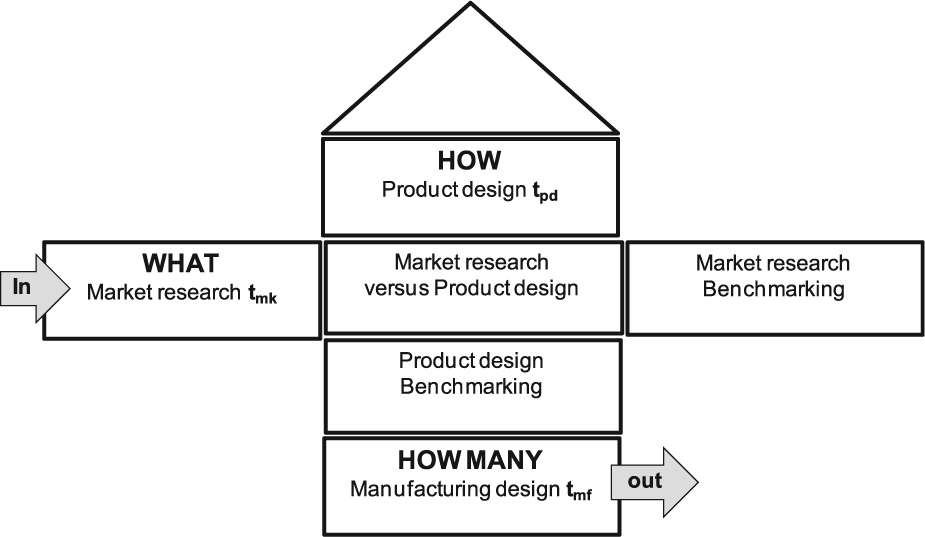
Relationship between QFD and reaction time and activities.
Phase 3: indices
To establish numerical values for adaptability, enhance operational performance, and address consumer needs, the study defines the indices of adaptability. Suppose that an enterprise needs to launch a series of new products [products (i) until (i+n)] within a defined timeframe. After developing the initial product (i), subsequent products (i+1) and (i+2) are developed with similar activities (Ai). It can be observed that (tti+1 > tti) and (tti+2 < tti) (see Figure 7).
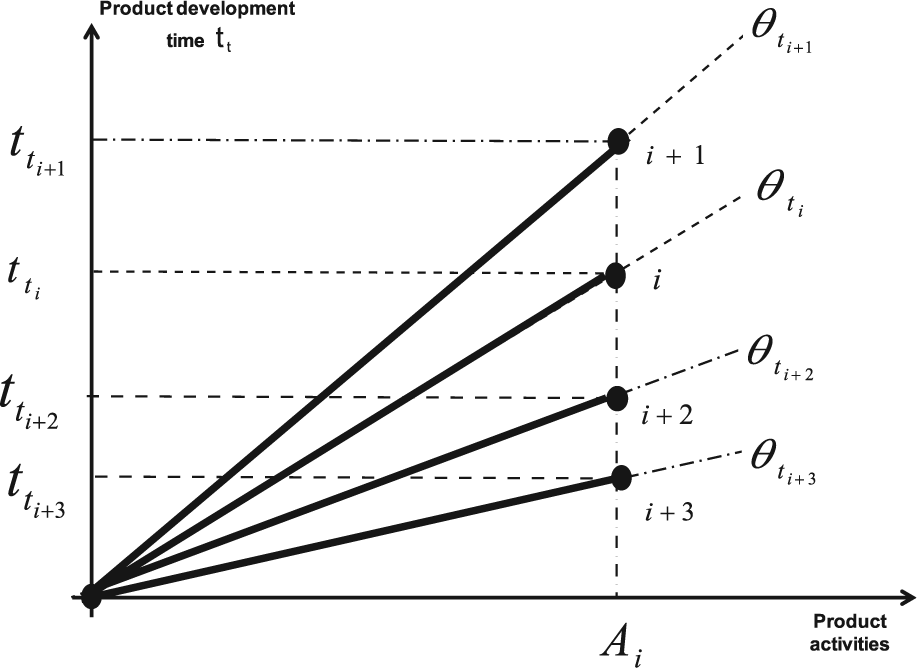
Product development with similar activities and diverse times.
The enterprise’s adaptability in introducing products (i+1) and (i+2) and (i+3) after product (i) is expressed by the following equations, respectively



Generally, the adaptability to introduce a product (i+1) after (i) can be defined as follows

Adaptability indices (
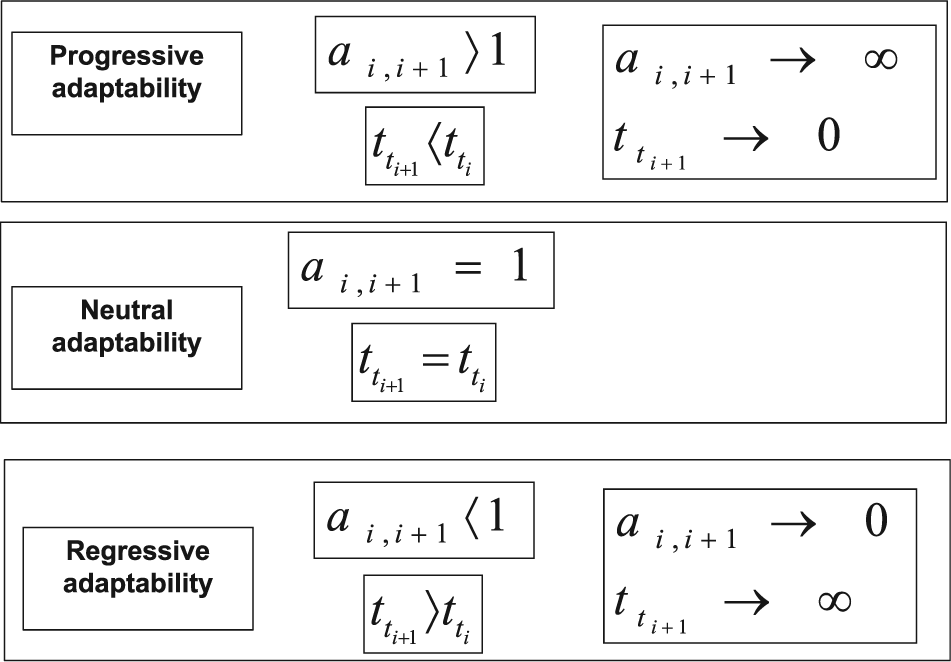
Adaptability indices.
Step 3a: progressive
Progressive adaptability (
Step 3b: neutral
Neutral adaptability (
Step 3c: regressive
Regressive adaptability (
In this study, Table 4 shows the levels of adaptability indices. The authors define
Adaptability index.

Case study
The objective of this study is the application of an adaptability index system to product development. To this end, the authors propose a framework adaptability indexes system and, given the dearth of relevant research, describe the system’s application in an actual case.
The methodology adopted is case study, a form of empirical research to investigate a contemporary phenomenon in a real-life context, particularly when the boundaries are indistinctly defined. The method generally involves the investigation of a small number of cases that facilitate comprehension of the studied phenomenon. 30
For this study, an enterprise that had implemented computer-integrated manufacturing (CIM) tools in certain areas of its system engineering and a sample of projects undertaken from 2011 to 2014, using an adaptability index system, were reviewed. The Brazilian manufacturing site produces transmissions (gearbox) for its multinational parent corporation based in the United States that employs 95,000 employees in 200 plants across the globe in more than 170 countries.
The unit studied, a leader in transmission manufacturing, is located in the state of Sao Paulo, Brazil, that employs 2000 employees. It works as a team to design and produce products and assess practices and lessons learned. Oracle and PLM software draw on the steps delineated in phase 2 (see Figure 1), to inform such activities as product conception and design and such manufacturing techniques as CAD, CAM, CAE, and CAPP. This section presents a consideration of reaction time in the development (i) and (i+1) of an automobile gearbox.
In this study, the product development time (tt) is 360 days, the engineering design time (teg) is 284 days and the market research time (tmk) is 76 days. Thus, the reaction time [tr(i)] is 208 days, as can be seen in the following equation (see also Table 5)

Reaction time.
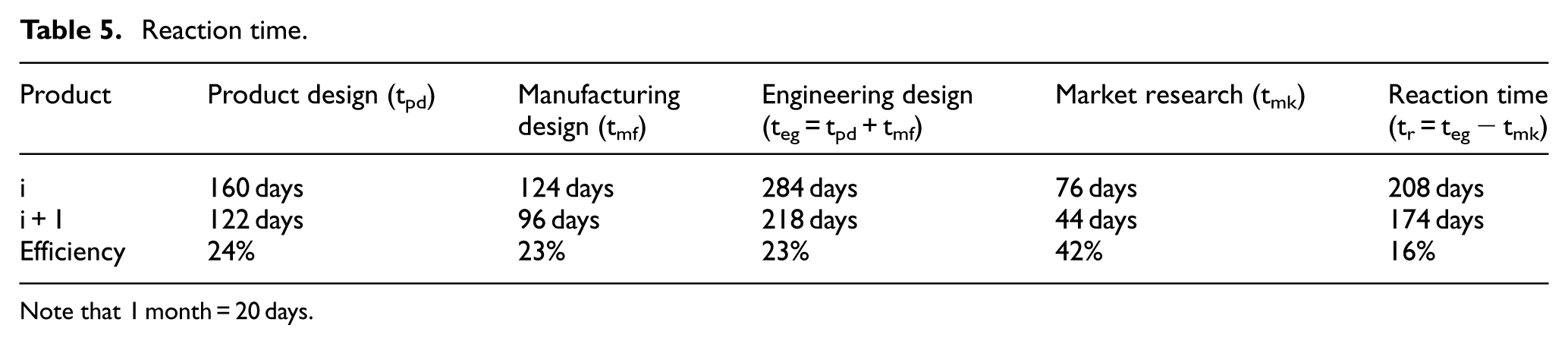
Note that 1 month = 20 days.
Consider the development of a new gearbox (i+1) 3 years later. The product development time (tt) is 262 days; the engineering design time (teg) and the market research time (tmk) are 218 and 44 days, respectively. Thus, the reaction time [tr(i+1)] is 174 days, as follows (see Table 5)

As shown, the reaction time of product (i) is 208 days, while that of product (i+1) is only 174 days (16% of reduction time in the development) (see Table 5). Table 6 shows some marketing and engineering activities that affect the adaptability indices, such as information, CAXs, DFXs, standardization, and product lot size. The authors choose some sub-activities belongs to company case (information, CAXs, and so on) in this study.
Activities maturity.
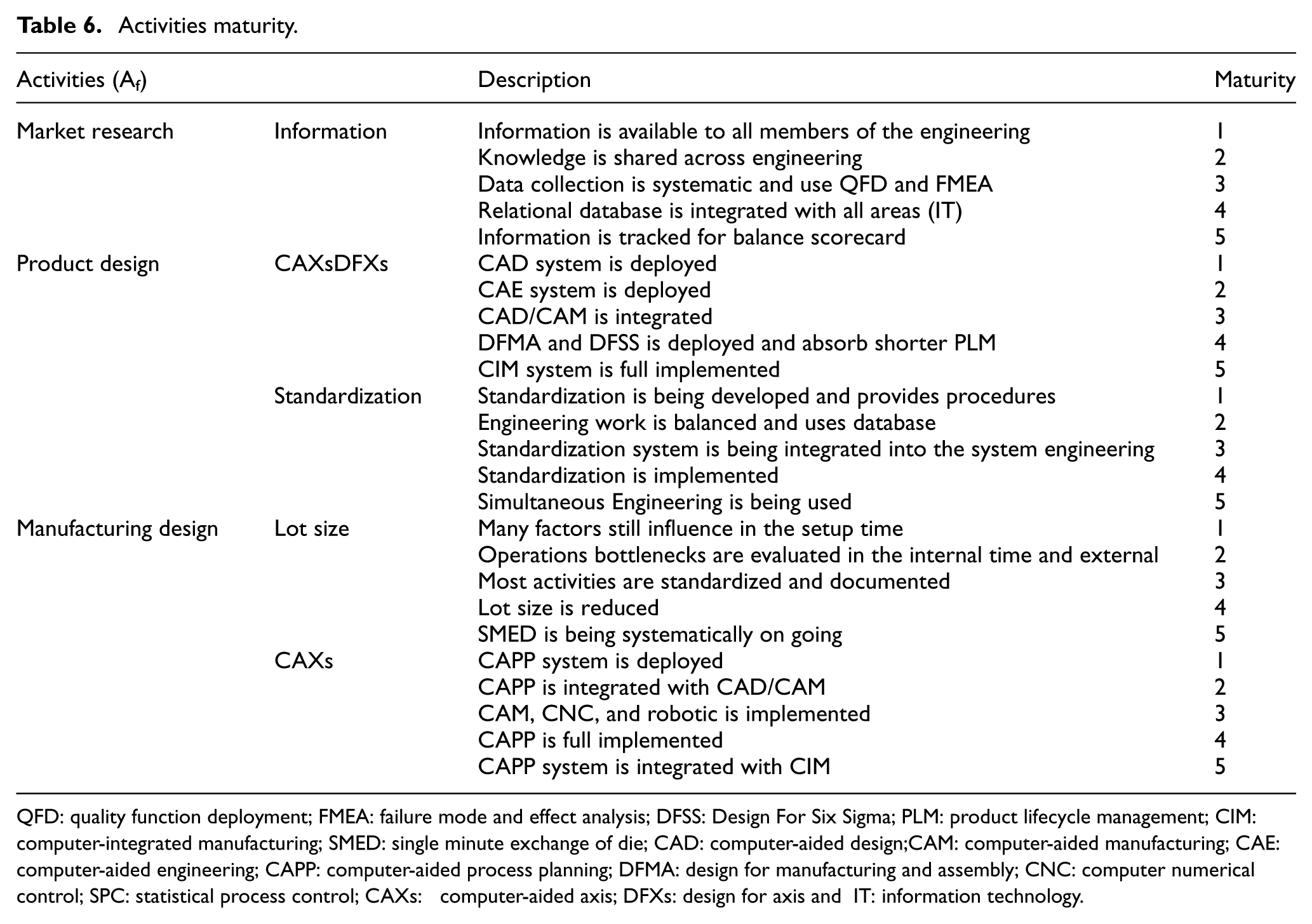
QFD: quality function deployment; FMEA: failure mode and effect analysis; DFSS: Design For Six Sigma; PLM: product lifecycle management; CIM: computer-integrated manufacturing; SMED: single minute exchange of die; CAD: computer-aided design;CAM: computer-aided manufacturing; CAE: computer-aided engineering; CAPP: computer-aided process planning; DFMA: design for manufacturing and assembly; CNC: computer numerical control; SPC: statistical process control; CAXs: computer-aided axis; DFXs: design for axis and IT: information technology.
Table 7 shows the degree of maturity of the contour parameters and the levels of adaptability indices. The times (days) are tracking on project management office (PMO) in this study.
Adaptability indexes from product (i) to (i+1).
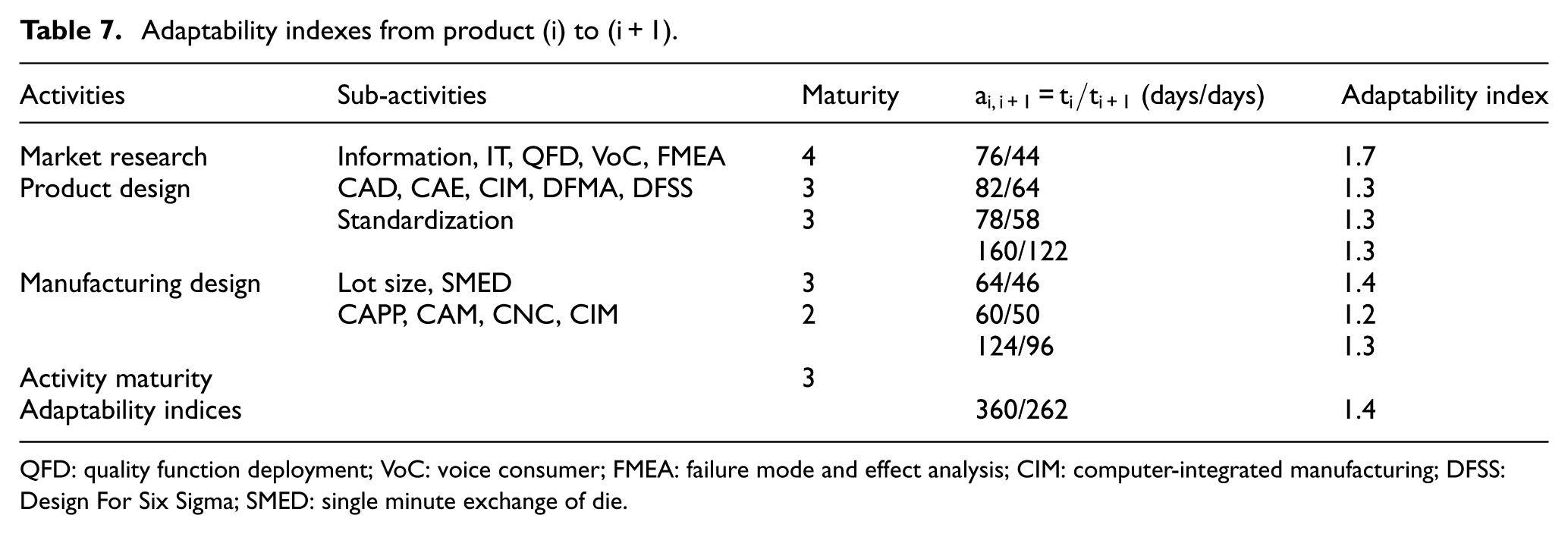
QFD: quality function deployment; VoC: voice consumer; FMEA: failure mode and effect analysis; CIM: computer-integrated manufacturing; DFSS: Design For Six Sigma; SMED: single minute exchange of die.
The results from project (i) to project (i+1) are: (a) the sub-activity information has adaptability index maximum (in the study); (b) the sub-activity CAXs in the manufacturing has adaptability index minimum (in the study); (c) the activity maturity is 3 (three); and (d) adaptability indices (
Discussion
To compete effectively under market conditions marked by continual innovation in products with increasingly shorter shelf lives, enterprises must maintain progressive adaptability indices. This will require improvements in market research, product design, and manufacturing design. Product development time should be reduced in view of the product lifecycle. This, in turn, contributes to a more efficient reaction time and adaptable.
Regressive adaptability (
Neutral adaptability (
Progressive adaptability (
Let us consider the level of engineering and marketing systems of enterprises that cannot succeed in highly competitive markets, but only in niche markets, where competitive demands are less intense and product brand may guarantee sales even in less favorable market conditions. The relationship thus described defines the varying adaptability indices of such enterprises as follows

Designing products that are less complex contributes to increased adaptability. Such products can be optimized and reproduced, simplifying the database of standard parts. Reducing the number of activities required to develop a product can be accomplished in several ways. The first is to apply the methodology of business process reengineering to eliminate nonproductive steps in the engineering and marketing processes by critically analyzing their necessity. For example, is the activity of checking drawings necessary? Are there ways to increase project robustness while avoiding unnecessary reviews? To attain these objectives, simplification and standardization of product design and manufacturing processes should be implemented using such method as GT.
Another way to reduce the number of product development activities involves superposition activities that change from serial to parallel or simultaneous activities through concurrent engineering. Besides, CIM is a further method to reduce complexity. In engineering organizations, complexity can be aided by the key contribution of this proposal, which offers managers, vice-presidents, and CEOs a simplified method to evaluate the organization’s current capacity, analyze market demands, and increase its product diversification and hence its competitiveness in today’s challenging business environment. In this regard, the significant aspects of this study are its combination of methodologies and programs that can be effectively applied to product development, and its proposal of an adaptability index system for measuring and adjusting progress.
The engineering management control system is also feasible in view of the practical implications of this study, which are considerable, such as providing expert guidelines for project analysis, based on the interpretation of indices. This will enable companies with widely varying profiles to eliminate activities that do not add value and to use more efficient means, such as engineering automation concepts, which, controlled by a system, can reduce the time from product design to delivery.
The method can be applied to a broad spectrum of cases at companies that have mapped their product development and production processes to eliminate nonproductive steps in engineering and have measured the time spent on each activity, thus underscoring the critical importance of such data. It will also enable them to identify the most appropriate tools for their processes and to implement the proposal.
However, the method may have limitations for engineering organizations whose product development and manufacturing processes are not standardized, and which do not measure the time spent on each activity. This may lead to greater difficulty in implementing the adaptability index.
Moreover, the uncertainties resulting from such limitations underscore the prerequisite that companies that wish to apply the study’s method effectively must first address the need for standardized product design and manufacture. They must also discuss their business processes with the IT area and correlate them with the company’s other significant business processes.
On the other hand, the robustness of this method is ensured by the use of several concepts such as business processes for new product development supported on three pillars: marketing, product design and manufacturing. In addition, based on the identification of several activities that are part of these pillars, the number of activities involved in product development can be reduced to create better projects, and the determination of times to perform each of these activities can help to control their effectiveness. Also, the proposed relationships that define the adaptability indices and their interpretation meet the current needs of managing the engineering structure through appropriate tools, techniques and procedures for each product design and manufacturing activity.
It is known that organizations need to address the competitiveness factors of time-to-market reduction, more frequent release of products, and lifetime reduction. We believe that the proposed adaptability indices and their interpretation will render engineering organizations more competitive through the use of this simplified and robust adaptability control, which contributes to the company’s engineering management system. The index value must be linked with key performance indicators (KPIs) of the enterprise, enabling the effects of a high (or low) adaptability index to fall substantially within the profit margin (or delivery, velocity, agility, flexibility, or other KPIs), for which indicators can be used that are useful for controlling design and manufacturing systems.
Thus, the authors recommend increasing the adaptability indices that reflect the relationship between the time to develop a current product and the time to develop a subsequent product in the engineering organization; or the time it will take to introduce a new product in shorter execution times than those of the previous one. This should be a continuous improvement that demonstrates the company’s ability to catch up with world class manufacturing (WCM).
Also, during the ongoing project, step-by-step checklists can be used at the end of each implementation step through a stage-gate (or tollgate) process that authorizes the transition from one step (milestone) of the development sequence to the next in order to further guide the subsequent steps. In this situation, the time-to-market to develop a new product is better prepared to support the return on assets (ROA) and return on investment (ROI).
Finally, this assessment should be aligned with the enterprise’s KPIs and with the finance department. One way to assess this alignment is to determine the financial impact resulting from the faster time-to-market attained in product development on the profit margin, using the balanced scorecard (BSC), so that by focusing on proactive actions, the results of its implementation will meet stakeholder expectations.
Conclusion
Twenty-first century enterprises face stiff competition on a myriad of external fronts, such as reduced product life, increased product diversification, reduced time-to-market, and increasingly global markets. Effective engineering system management is critical in adapting to constantly changing market demands. To enhance its ability to do so, this study recommends the use of an adaptability index system.
The index system, which provides a practical and manageable indicator method for an engineering enterprise to evaluate its system management, can be linked with ongoing KPI. This assessment will, in turn, enable the enterprise to adjust its product development and manufacturing processes to more effectively meet current market demands, in line with the enterprise’s strategic 5-year plan, and significantly increase its competitiveness in today’s business environment.
The rigor of the study’s proposed approach is further strengthened by the fact that the method can be applied to different case studies in a variety of enterprises, thus underscoring the critical importance of mapping their product development and their standardization efforts. The main contribution of the case study is that it identifies the current status of the product engineering organization by means of a practical indicator method for the firm to evaluate its systems management.
In addition, the proposal of this study is to aid companies that can produce a wide range of current products in a timely fashion, which are best positioned to compete in today’s market, taking into account the reality of reduced product shelf life and the need for increased product diversification through innovation.
Further research should assess the method’s application to the product development in companies whose products and services have limited or very short lifetimes and which are characterized by broad and aggressive increase in diversification, such as desktop computers, telephony, data transfer, and software development, where adaptability and agility are critical to competitiveness in the modern market.
Footnotes
Declaration of conflicting interests
The author(s) declared no potential conflicts of interest with respect to the research, authorship, and/or publication of this article.
Funding
The author(s) received no financial support for the research, authorship, and/or publication of this article.