




Abstract
The main purpose of this study is to propose a multi-criteria model for selection of end-of-life electronic products (e-waste) collection system in a reverse supply chain. The pertinent criteria for such decision analysis and selection are determined through an extensive literature review and a questionnaire survey method. On collection systems, a few alternatives are considered for evaluation. Subsequently, fuzzy analytical hierarchy process rating method is used to evaluate the priorities of the criteria and the alternatives. Finally, global weights of the criteria and evaluation score of the alternatives are combined to get the final ranking of the collection systems evaluated. The result demonstrates the relative importance of the criteria for evaluating the alternative collection systems. Also, a real application substantiates the preference of collection system(s) to be selected. The use of this newly proposed fuzzy analytical hierarchy process analytical model indicates that decision-makers can use it to determine the appropriate collection system(s) from a set of available options in a given place or country, where cultural and other parameters are varied. Moreover, this model guides the decision process to be systematic and helps reduce considerable amount of efforts needed conventionally by using the criteria weights generated by fuzzy analytical hierarchy process approach.
Introduction
Rapid technological advancement and shortened Electrical and Electronic Equipment (EEE) products’ life cycles resulted in e-waste, one of the fastest growing waste streams now creating significant risks to human health and environment. 1 Many parts of e-wastes are hazardous when exposed to natural environment. E-waste management has become a serious concern in many societies. Use of the reverse supply chain approach is one way of minimizing the environmental impact from of end-of-life (EOL) electronic products. Thus, reverse logistics can directly contribute to the protection of our mother-nature or environment.2–4 This approach can control important dimensions relating to value reclamation.5,6
Collection of e-wastes is the first activity to trigger the reverse supply chain as part of product recovery activities. So, manufacturers and e-waste management authorities are looking for effective and efficient e-waste collection system from their end users.7,8 It is plausible that no single collection system can ensure the maximum collection of e-wastes because it largely depends on the geographical, social and economic conditions of the people or country under consideration. By now, some systems are established in the developed countries but may not be economically feasible in the developing countries. Conversely, some systems might be economically feasible but are not well accepted by stakeholders. Therefore, use of inappropriate methods or systems ultimately leads to a lower collection rate and higher investment or operating costs. Hence, there is a need for finding a systematic approach for selecting the appropriate collection system(s) by identifying and prioritizing the pertinent criteria and evaluating the trade-offs between strategic, economic, operational and social performance aspects.
The objective of this research is to come up with a solution of the aforesaid problem and development of a model that would be a useful decision-making aid for the companies and organizations in any territory to rank and select the effective and suitable method(s) for their concerned areas. This work applies the fuzzy analytical hierarchy process (FAHP) method in identifying the feasible and effective e-waste collection system(s) by using fuzzy triangular numbers for making pair-wise comparison and extent analysis solution method to find their priority weights. This is done to improve the decision-making process in this area in a systematic manner.
Literature review
A large number of researchers studied different aspects of e-waste and reverse supply chain management. Hao et al. 9 investigated the collection method of domestic e-wastes in urban China. They analyzed the effectiveness of the four alternative collection modes currently being applied in Beijing and then proposed a few other modes. The existing modes are door-to-door (D2D) collection, take-back in related business (second-hand marketing), collection at designated recycling spot and collection-for-donation. They found them inadequate. The proposed modes are through (1) government to formal recycler, (2) enterprise to formal recycler and (3) collectors to formal recyclers. They did not rank those modes in order of their effectiveness.
The use of multi-criteria decision analysis (MCDA) is becoming popular among the researchers in the field of reverse supply chain and environmental management. Tian and Ma 10 presented a study on selection of reverse logistics operating modes using analytical hierarchy process (AHP). An application of MCDA in designing a sustainable environmental management system framework is presented by Khalili and Duecker. 11 Ravi et al. 12 analyzed the alternatives in reverse supply chain for EOL computers. Analytic network process (ANP)-based decision model was presented by them that structured the problem related to various options in reverse logistics for EOL computers in a hierarchical form. They also linked the determinants, dimensions and enablers of the reverse logistics with alternatives available to the decision-maker. Rousis et al. 13 applied an MCDA methodology to examine alternative systems for managing e-wastes in Cyprus. In total, 12 alternative management systems were compared and ranked according to their performance and efficiency. Partial disassembly and then forwarding of recyclable materials to the local market with the remainder deposed at landfill sites appeared as the best option and thus selected. Rong et al. 14 proposed a method for enterprise waste evaluation that combines the analytical hierarchy process (AHP) and fuzzy set theory and establishes a three-step procedure consisting of evaluation, clustering and ranking. First, a waste evaluation index system is established using the AHP so that the harmfulness of each type of waste can be measured systematically and the more harmful waste sources could be identified. However, MCDA is not widely used for e-waste supply chain; it is commonly used for solid waste15,16 and hazardous waste management. 17 MCDA has been recommended as an appropriate method for investigating the social response to e-waste management. 18 So, we approach a fuzzy MCDA method for our analysis to select the best-suited collection method(s) for an e-waste supply chain. As e-waste collection includes a number of confronting factors and criteria, MCDA could be a useful approach to decide one or a set of effective collection systems and they can be ranked in order to ascertain their priorities. However, previous studies did not address the use of fuzzy multi-criteria approach to select the appropriate collection system(s) for e-waste reverse supply chain. Therefore, this research used fuzzy MCDA approach for analysis to select the best-suited e-waste collection system(s) in a reverse supply chain.
Identifying the criteria and sub-criteria
The factors of e-waste collection system can be described within four major categories—economic, managerial, strategic and social. The criteria and sub-criteria for this research are determined through a questionnaire survey. Before conducting the survey, questionnaires were sent to three academic experts in the area of e-waste management. The questionnaire was modified according to their opinion and some new criteria were included. The final questionnaire was mailed to the 20 selected respondents.
In order to identify the relevant criteria and sub-criteria, the respondents were requested to rate each factor in selecting a collection system for an e-waste supply chain using the judgment of “not important (1),”“somewhat important (2)” and “very important (3),” that is, on the scale of 1–3. Figure 1 below summarizes the results of the survey. The weighted-mean value of each factor is calculated by multiplying the percentages of respondents with the values of 1, 2 and 3 and by adding the resultant products. The criteria are arranged in descending order of their mean values.
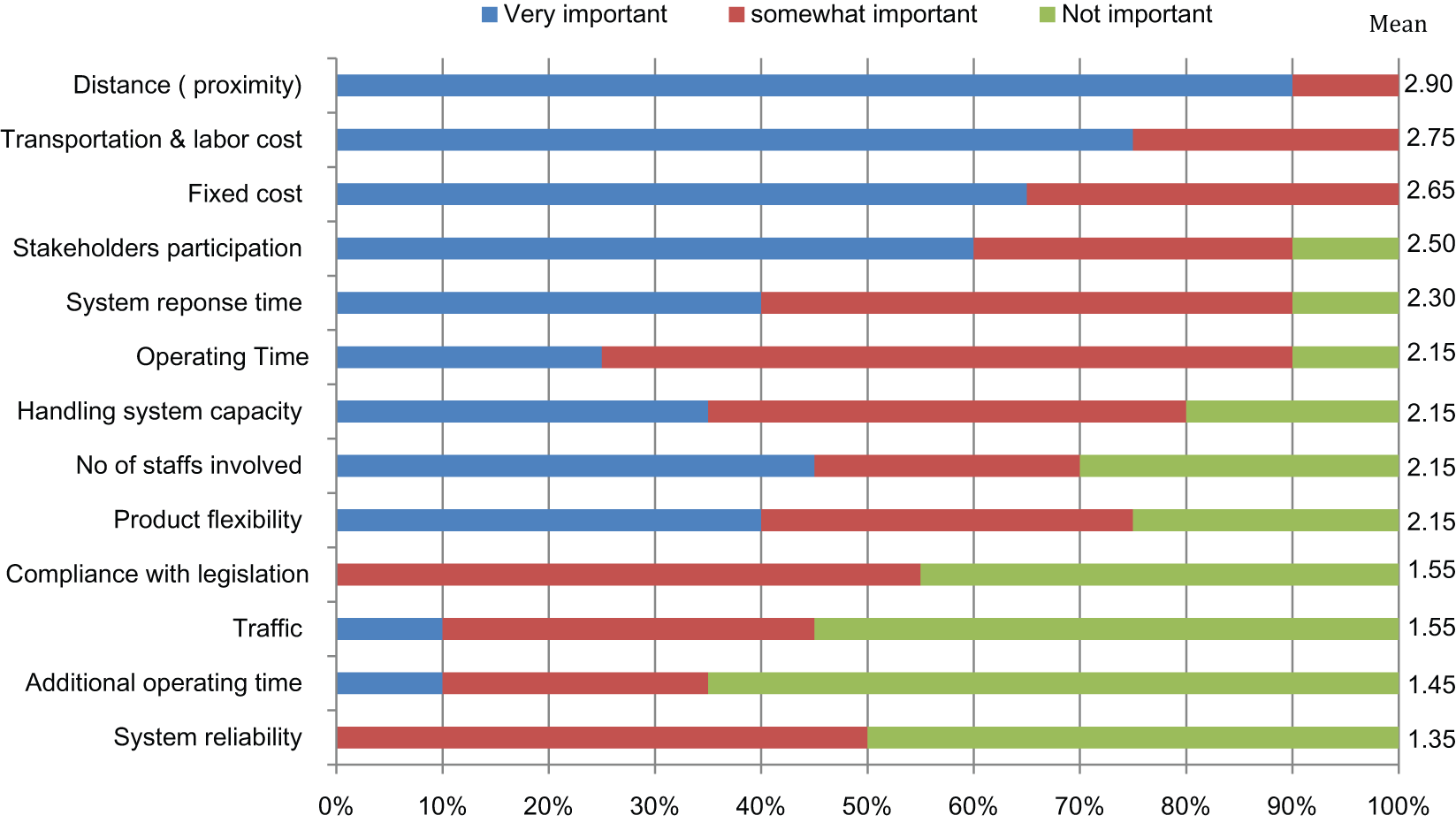
Factors affecting the selection of collection system in an e-waste supply chain.
Pair-wise comparisons become difficult and time-consuming if there are too many criteria in consideration. It may also lead to evaluators’ assessment bias. To overcome these problems, the cut-off value or other similar method is widely used to reduce the number of criteria. 19
A cut-off value of 2.12 is used and those are identified as the relevant criteria for which the mean values are greater than or equal to 2.12. It is calculated as the average of the highest (2.9) and the lowest (1.7) (may refer Figure 1) mean rating values of all criteria included in the survey. Thus, we identified the criteria with respect to economic, managerial, strategic and social aspects as below.
Economic factors
Operating cost: transportation and labor
Fixed cost: capital investment
Operating time
Operational factors
Handling system capacity
Human resources: number of staff involved
Strategic
Accessibility: proximity to the customer (distance)
Flexibility and responsiveness: product flexibility (type of products accepted)
System response (time)
Social
Stakeholders’ participation/willingness to cooperate
Alternatives for conducting e-waste reverse logistic operations (collection methods/modes)
Some of the important selection criteria for conducting reverse logistics operations are identified after reviewing the literature and collecting the opinions of experts in the field of e-waste reverse logistics, both from industry and the academia. For the purpose of illustration of our model, we select and analyze four distinct alternatives. These are as follows: (1) company/authority D2D collection-recovery facility that is defined as System A, (2) company/authority-municipality waste collection centers or recovery facility: System B, (3) company/authority-drop-off collection point in various locations: System C and (4) company/authority-retailers’ take-back center or recovery facility: System D.
There are various options for collecting EOL electronic products. Based on the respective legislations, e-waste collection is accomplished somewhere by individual producer responsibility (IPR) and somewhere by extended producer responsibility (EPR).20,21 Shared responsibilities are also not really less common. The collection system we analyze may be used under IPR, EPR or shared responsibilities. The D2D system is very effective in collecting e-waste, especially in the developing countries because people do not want to carry them when they can easily sell to the scavengers or street buyers. But economically how much it is feasible is of a relevant question. However, discussing with experts, it is revealed that they are advocating for this system and strongly encourage testing the economic feasibility. Municipality collection centers are very common for solid waste collection. This facility can be used for e-waste collection as well. This will incur less cost, but mixing with other wastes and probability of landfilling with nonhazardous waste are substantial. Also, municipality centers are not feasible for large electronic appliances. Drop-off collection centers are very effective and widely accepted worldwide. The most successful e-waste collection systems in the world are from Europe, namely, Norway, Sweden and Switzerland, with respect to the highest collection rate, 22 and they mostly employ drop-off centers as part of other options like retailers’ take-back centers. Retailers’ take-back centers are getting popular and seem to be effective, especially for large appliances. Companies ask their retailers to take back in the same vehicle when they deliver a new one. This is, however, not found suitable for the cases where customers have to drive a lot of their discarded products to drop-off centers.
Methodology: AHP and fuzzy AHP
In multi-criteria decision problem analysis, AHP is being widely used. 23 However, the major disadvantage of AHP is the use of 1–9 judgmental scale that cannot handle the uncertainty during administering pair-wise comparison among the attributes. Advantageously, the fuzzy extension of AHP can efficiently handle the woolliness in the decision process to select the appropriate collection system(s) by using both qualitative and quantitative data in the multi-attribute decision-making problems. 24 Instead of 9-point scale in AHP, this approach uses triangular fuzzy numbers (TFNs) and then the extent analysis method to calculate the synthetic extent value for pair-wise comparisons. Once the synthetic value is determined, weight vectors are calculated and normalized to get the consistent weight vectors. Final priority weights of the alternative collection systems are computed by using different weights of criteria and attributes. Collection systems are ranked according to the priority weights and selected as necessary.
Fuzzy sets and fuzzy numbers
Fuzzy set theory was first introduced by Zadeh in 1965 to deal with vagueness in human judgment in case of inevitable imprecise data in decision-making through the use of linguistic terms and degrees of membership. A membership function in fuzzy sets assigns to each object a grade of membership in [0, 1]. A tilde “∼” is used above the symbol that represents a fuzzy set. A TFN
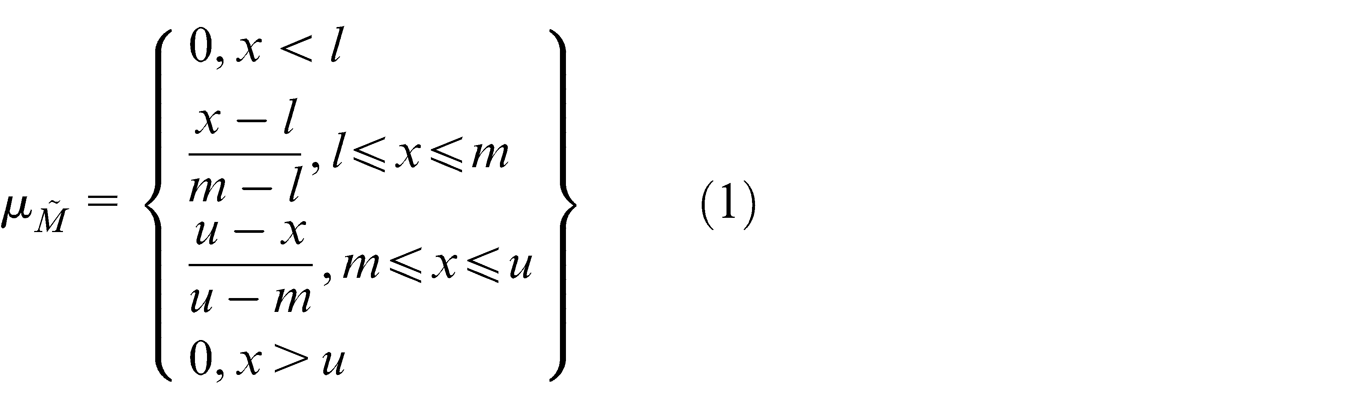
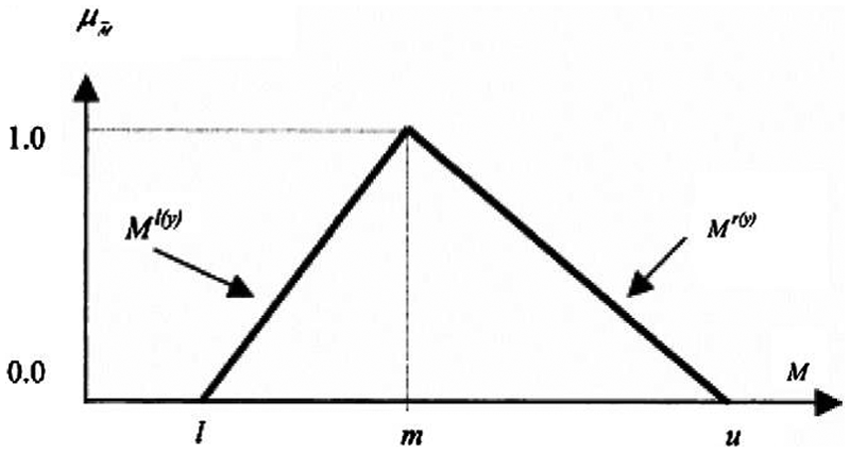
A triangular fuzzy number. 25
Naturally, it is easy to use fuzzy numbers in expressing qualitative assessments based on decision-makers’ opinions. A fuzzy number can always be given by its corresponding left and right representations of each degree of membership 26

where l(y)and r(y) denote the left and the right side representations of a fuzzy number, respectively.
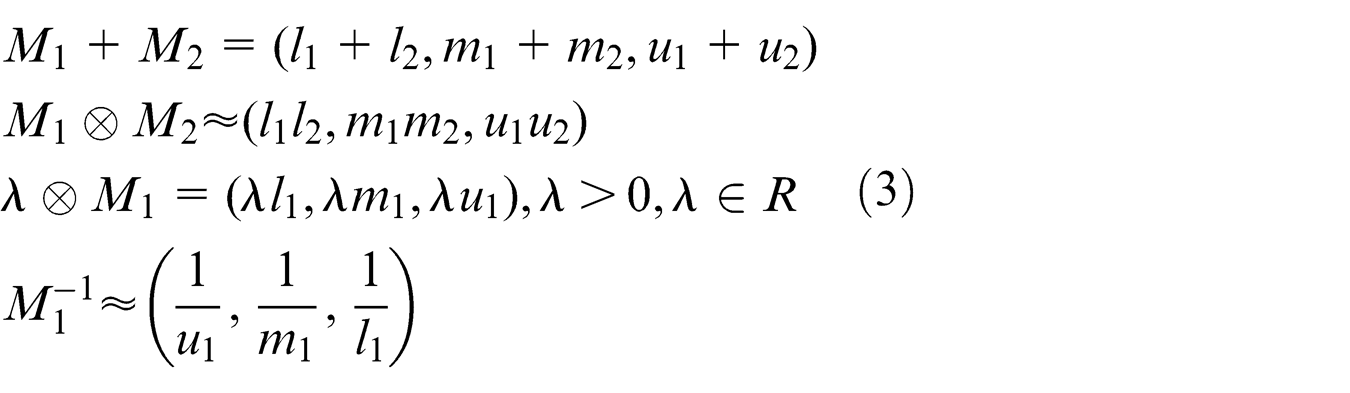
The algebraic operations with two fuzzy numbers M 1 and M 2 can be expressed as below
Extent analysis method on fuzzy AHP
While a discrete scale of 1–9 is used in crisp AHP, in fuzzy AHP linguistic variables are used to decide the priority of one decision variable over another. In practice, decision-makers usually prefer triangular or trapezoidal fuzzy numbers. 26 As fuzzy numbers are used, solution methods in fuzzy AHP are different from those of crisp AHP. Extent analysis proposed by Chang 27 is a common method used in fuzzy AHP solution. The extent of an object to be satisfied for the goal is determined by this method. This “satisfactory extent” is quantified by using a fuzzy number. On the basis of the fuzzy numbers for the extent analysis of an object, a fuzzy synthetic degree value can be obtained, which can be defined as follows.
Let

where all the
The steps of Chang’s 27 extent analysis can be given as in the following manner: 25
The value of fuzzy synthetic extent with respect to the ith object is obtained by

To obtain

and to obtain

and then compute the inverse of the vector in equation (6) such that
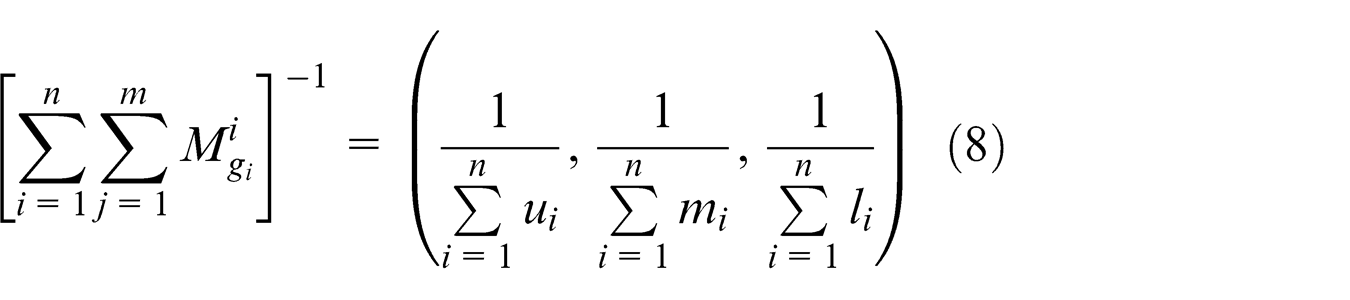
The degree of possibility of

and it can be equivalently expressed as follows

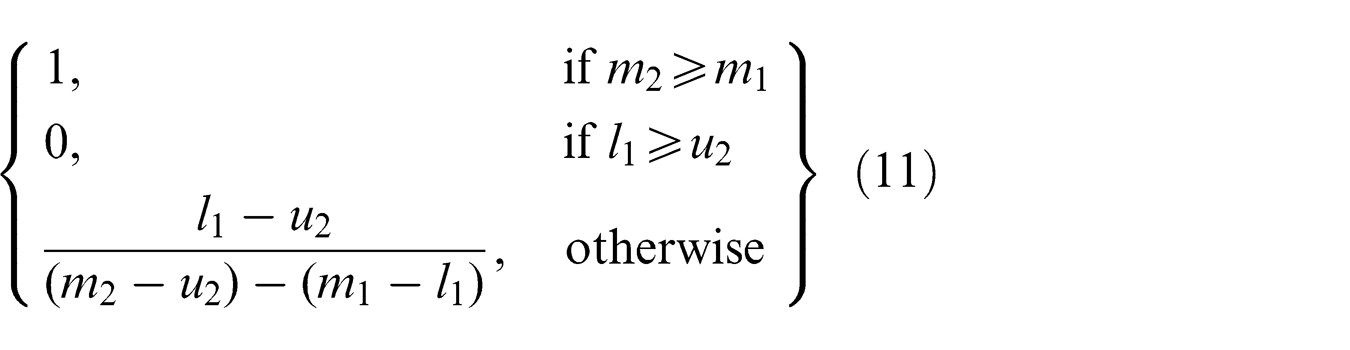
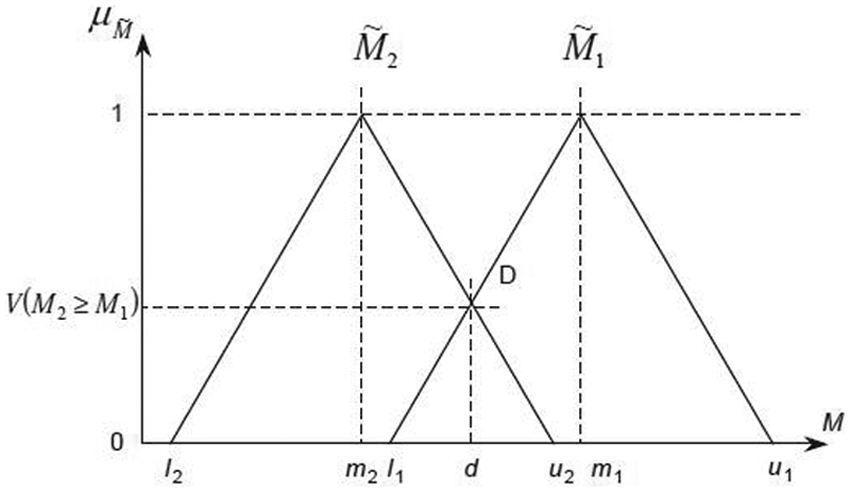
where d is the ordinate of the highest intersection point D between
Intersection between M
1 and M
2
The degree of possibility for a convex fuzzy number to be greater than k convex fuzzy numbers
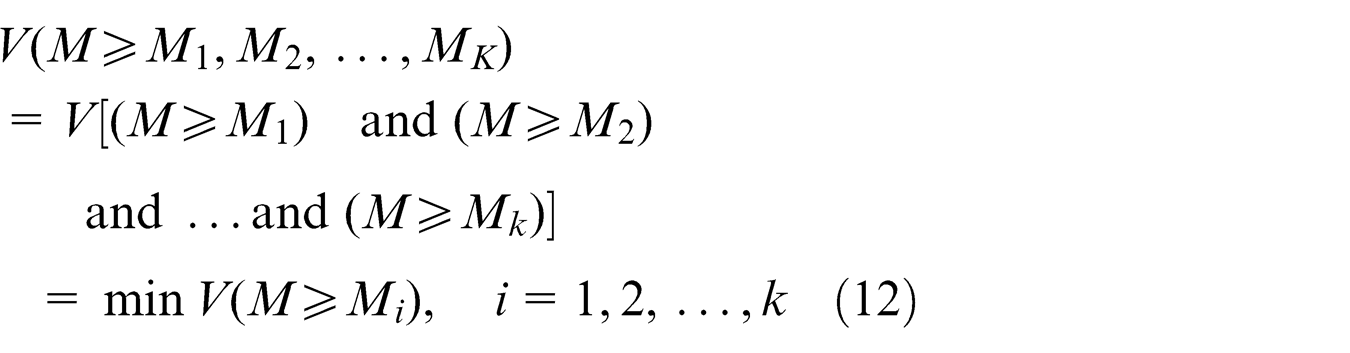
It can be assumed that

For

Through normalization, when normalized weight vectors are

where W is a non-fuzzy number. This gives the priority weights of one alternative over another.
Model development and problem formulation
Fuzzy AHP procedure for selection of e-waste collection system(s)
Figure 4 represents the AHP model and decision environment graphically. The main objective is to carry out reverse logistics operations for selection of e-waste collection system. To decide the preferences among the decision variables, TFNs are used in this analysis. Reviewing the pertinent literature, TFNs are determined. 28 Detailed explanations of the method and the main steps with sample calculations are given in the following sections.
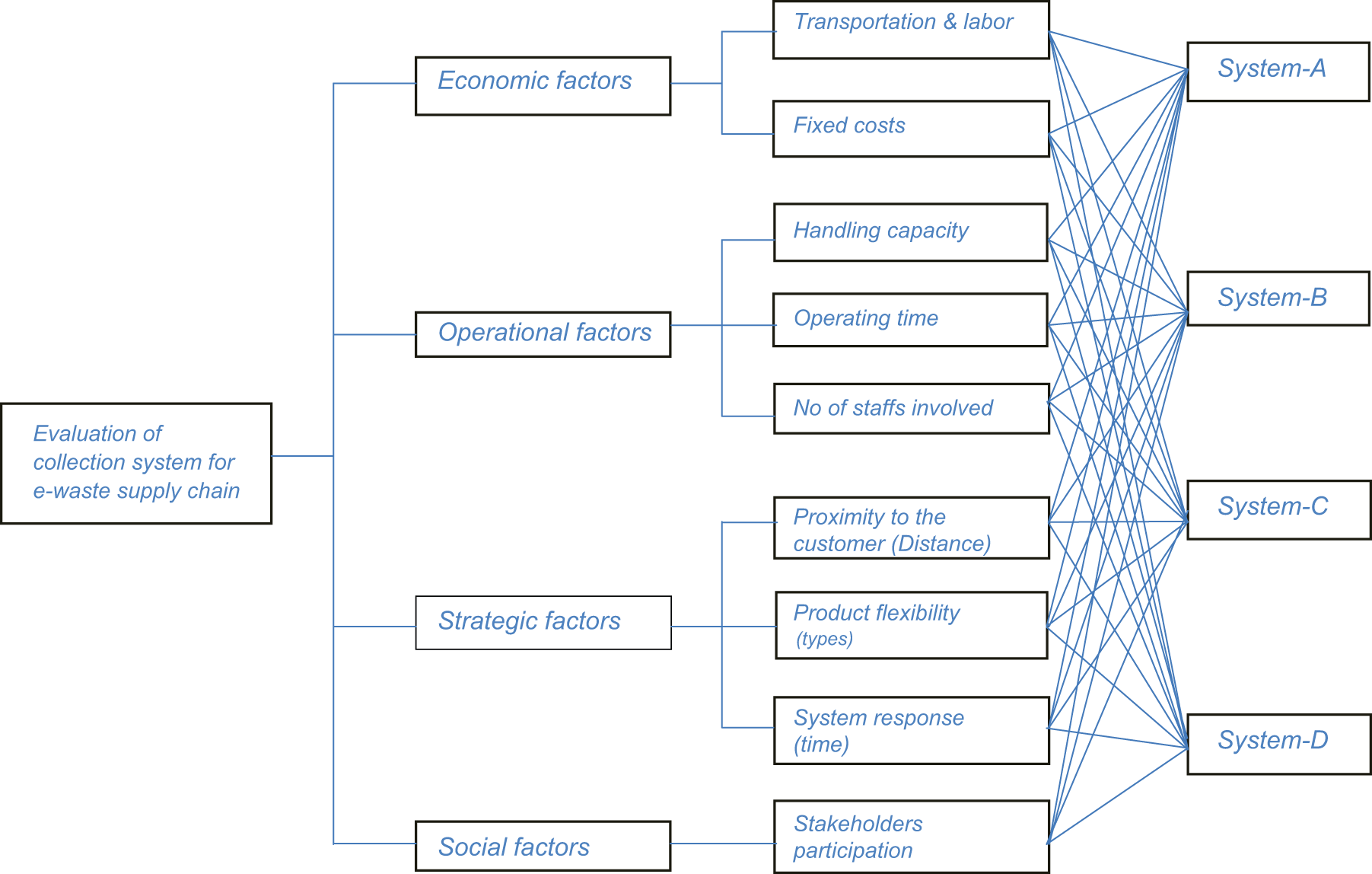
AHP model for collection system selection in an e-waste supply chain.
Structuring the problem into hierarchy
Hierarchical structure of the FAHP model is figured out by taking into account the goal, factors, criteria, sub-criteria and the alternatives. The goal and other items are depicted in Figure 3. Economic, operational and strategic and social factors are recognized to achieve the goal and these are placed in the second level of the decision tree. The third level of the hierarchy involves the criteria defining these factors put in the second level. Two criteria related to economic factors, namely, cost and time, have been considered, while the operational factor includes handling system and human resources. Strategic factors include the most important criteria that are the accessibility of the system to the user including flexibility and responsiveness of the collection system. Accessibility means the proximity of the system to potential users—how easily users can reach the system and can discard their EOL products. Flexibility refers to product variety the system can accommodate, and responsiveness is pertaining to time length it takes to discard their products once they are in the system. For instance, during the peak hours, retailers are assumed to be busy and may not response quickly to drop-off EOL products. In case of a D2D collection system, customers may make a phone call to the collector and wait until the vehicle arrives to collect. Furthermore, social factor incorporates the social acceptance in the form of stakeholders’ willingness to participate. Altogether, in the third level, nine criteria are considered as identified in section “Identifying the criteria and sub-criteria.” All these factors and the relevant criteria are located by extensive literature review, and questionnaire survey, described in section “Literature review.”
The possibilistic alternative collection systems are placed at the lowest level of the hierarchy. Suitability of each system is to be evaluated in order to select the appropriate system(s) for a given context. Generally, as many as possible alternatives can be included as the e-waste management authority wishes to evaluate before making any decision.
Analytical evaluation: finding the weight of the criteria, sub-criteria and alternatives
After constructing the hierarchical levels, the next step is to determine the priority weights of the criteria and sub-criteria by applying fuzzy AHP approach. To collect judgmental or imprecise data, a three-member expert panel is formed to give their opinions in order to draw comparison of the importance of the criteria and sub-criteria by administering a questionnaire. The first member is a senior person having more than 20 years of experience in solid waste and e-waste management. The second expert is a senior manager in an electronic company that runs an e-waste collection system, and the third expert is from an international development organization involved in developing e-waste collection model for the developing countries. The questionnaire facilitated the answering of a set of pair-wise comparison questions.
In order to handle the imprecise data for assessment of criteria and sub-criteria, triangular numbers M 1, M 2, M 4, M 6 and M 8 are used to represent the assessment from equal to absolutely preferred and M 3, M 5, M 7 and M 9 are intermediate values. Figure 5 shows the membership functions of the TFNs Mt = (lt , mt , ut ), where t = 1, 2, 3,..., 9 and where lt , mt and ut represent the lower, intermediate and upper values of fuzzy number Mt , respectively.
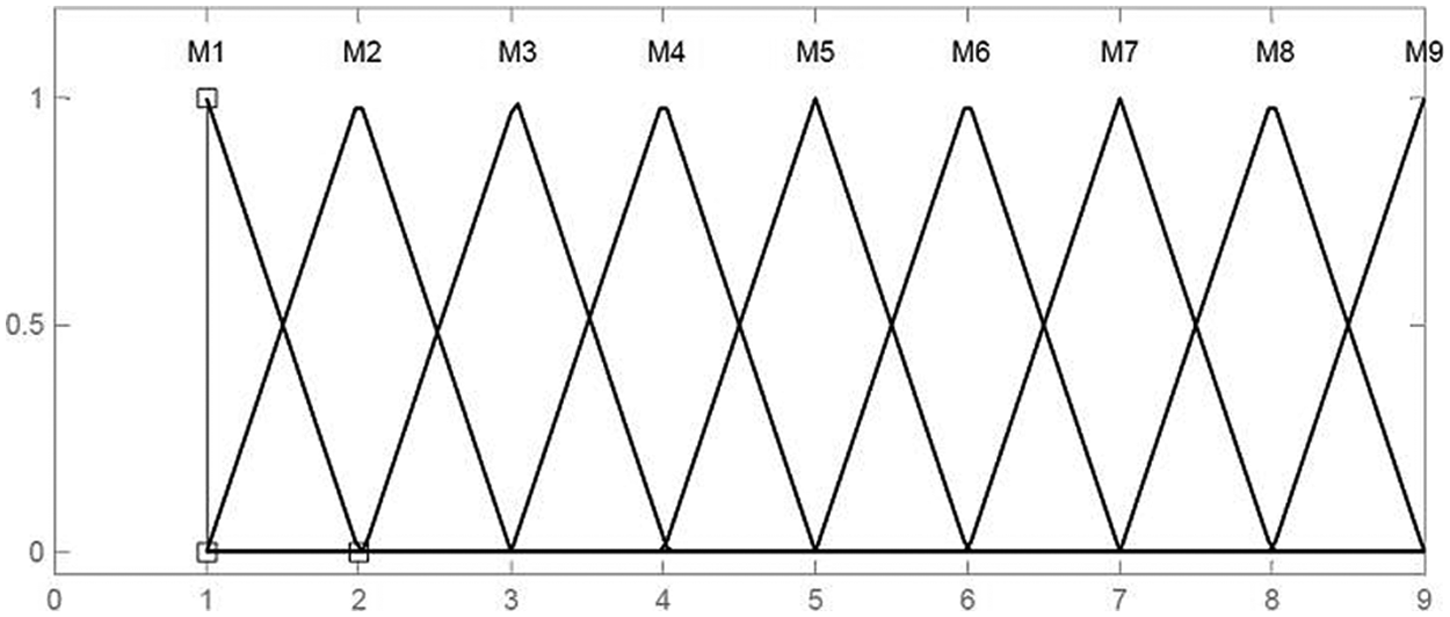
The membership functions of the triangular numbers.
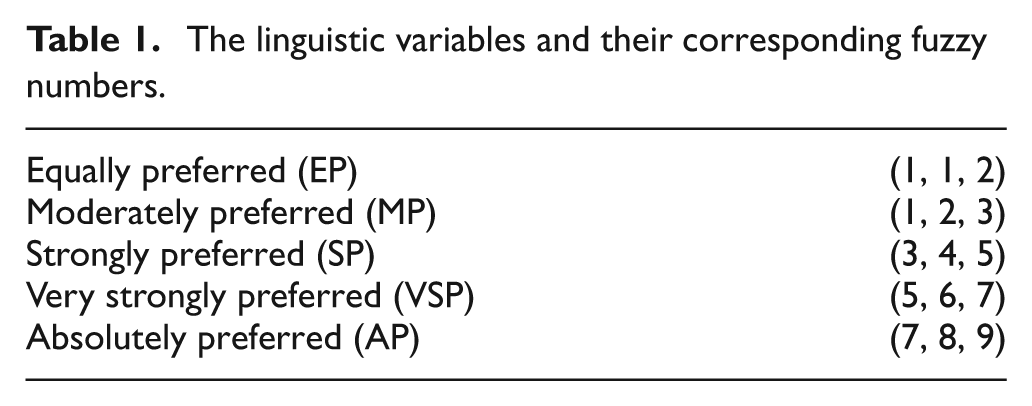
Linguistic variables are used to make the pair-wise comparisons by the experts. Judgments by linguistic variables are converted to TFNs by using membership functions shown in Figure 5. The linguistic variables and their corresponding TFNs are shown in Table 1. Then, the judgments from the experts are combined by using operational laws for two TFNs as shown in equation (1). Due to space constraints, we present here the pair-wise comparisons of the factors with respect to the goal.
The linguistic variables and their corresponding fuzzy numbers.
Saaty 29 introduced AHP methodology and provides a consistency index to measure the inconsistencies accompanied by the opinions provided by the experts. For this, the defuzzification method of fuzzy triangular numbers is used to convert the fuzzy comparison matrices into crisp matrices. The equations is

The consistency index of each matrix is found by using
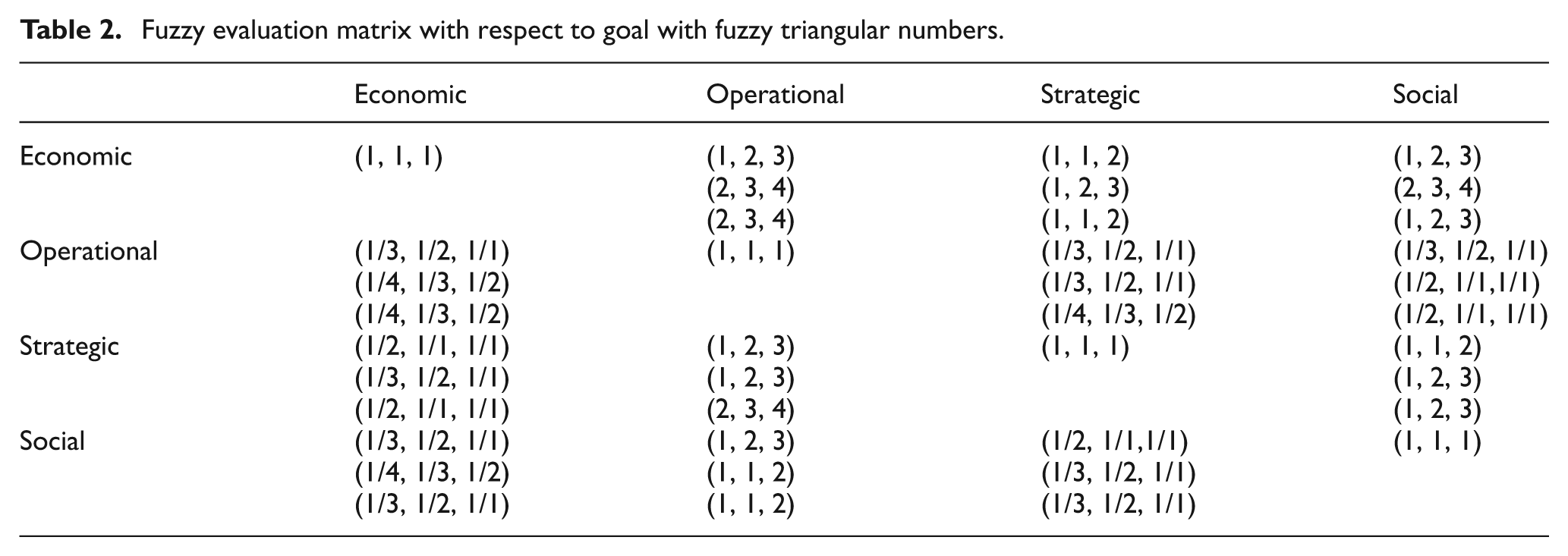
Fuzzy evaluation matrix with respect to goal with fuzzy triangular numbers.
After consistency test, FAHP method is applied to obtain the priority weights of each main factor and criteria. As a sample calculation, steps for the main criteria (level 2) are given as follows.
Table 2 presents the fuzzy evaluation matrix with respect to the goal. This is done by converting the linguistic variables to TFNs. Equation (5) is applied to determine the fuzzy synthetic extent values of the criteria as the priority weights. The detailed calculations are shown in Appendix 1.
So, the weight vector found is W′ = (1, 0.23, 1, 0.70) (calculations are given in Appendix 1). The weight vector of the main factors (economic, operational, strategic and social) after normalization is found to be
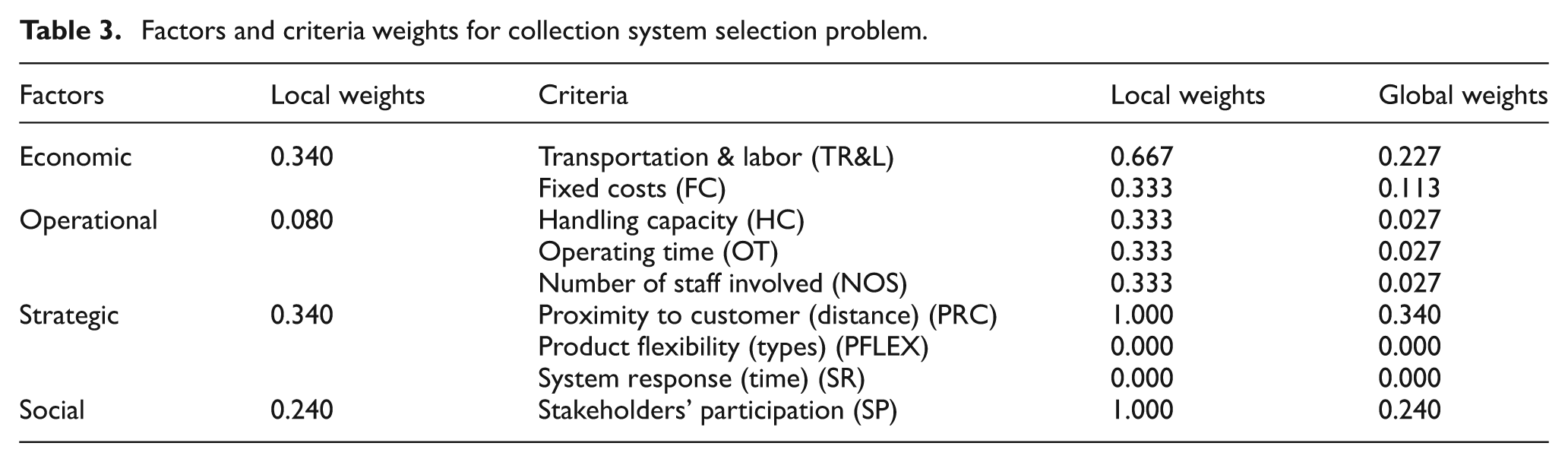
Similar calculations are done to achieve the global weights of each criterion at level 3, and all that are shown in Table 3. It can be noticed that the strategic and economic factors occupy the top-most weights in the list, the top rank being the proximity (distance to the user), followed by stakeholders’ participation, transportation and labor costs, fixed costs, operating time, handling capacity, number of staff involved, product flexibility and system response.
Factors and criteria weights for collection system selection problem.
Application of the FAHP model to a specific collection system selection
As part of testing the validity of the results for aforesaid analyses, a case is considered. The company in question is operating in Malaysia for more than 30 years and manufacturing electronic products for local and international market. As part of the corporate social responsibility and to be complied upon solid waste regulations of the government, this company has recently started collecting EOL products from its customers through their retailers. So far, it did not get adequate customers’ response as they expected.
So, the company is looking for a mode of collection system that could improve the situation. Also, several consulting agencies for government and other organizations are doing survey to come up with effective collection system(s) for the country. However, they are looking for customer preferences based on some isolated factors and not applying any multi-criteria qualitative and quantitative analytical system. So, the problem still remains, the authority cannot find a complete solution, which system is the most appropriate and should be implemented. This study considers all the main factors and defines criteria and alternatives (shown in Figure 2) based on academic research. We apply the proposed FAHP model for this case company in order to demonstrate how it can be used and how the results obtained can contribute to the decision of implementing a collection system for this company and also for Malaysia. The results obtained by applying the model developed by this research are discussed in the following section.
Discussion
We invited one independent decision-maker involved in developing and maintaining e-waste collection system in Malaysia and requested him to evaluate the alternative collection systems based on the model developed in this research. The expert evaluates each alternative with respect to each of the nine criteria developed in our model by fuzzy linguistic variables. Also, the same calculations as described in earlier sections are employed to get the preference weights of the alternative collection systems.
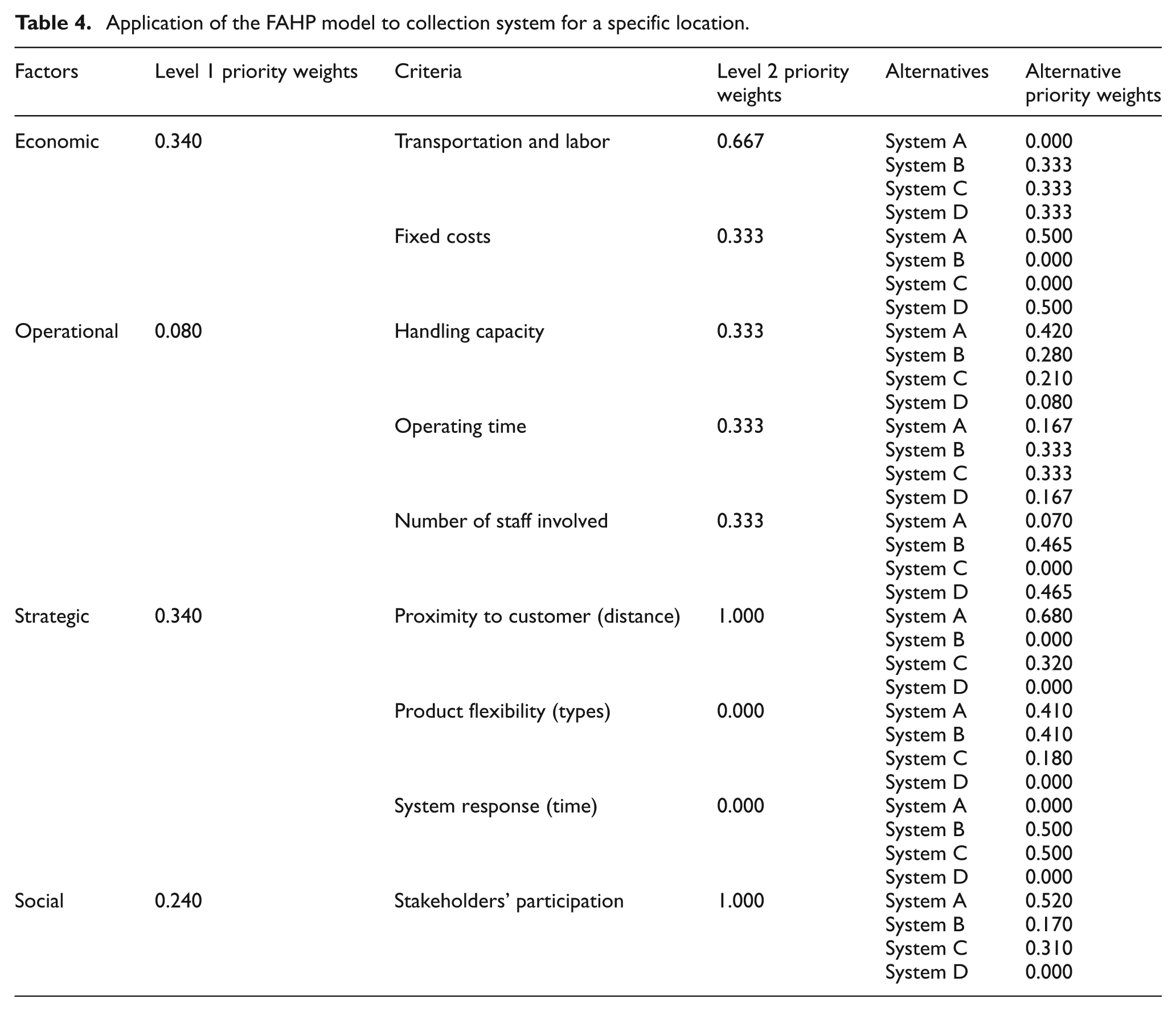
Table 4 shows the priority weights for alternatives with respect to the weights of each criterion developed in Table 3. Tables 5–8 show the alternative priority weights for economic, operational, strategic and social factors, respectively. This is done by multiplying each column with respective priority weights at the top and then the values are added up for each row. Thus, the alternative priority weights of the alternatives with respect to each factor were achieved.
Application of the FAHP model to collection system for a specific location.
Evaluation of alternatives based on the criteria under economic factors.
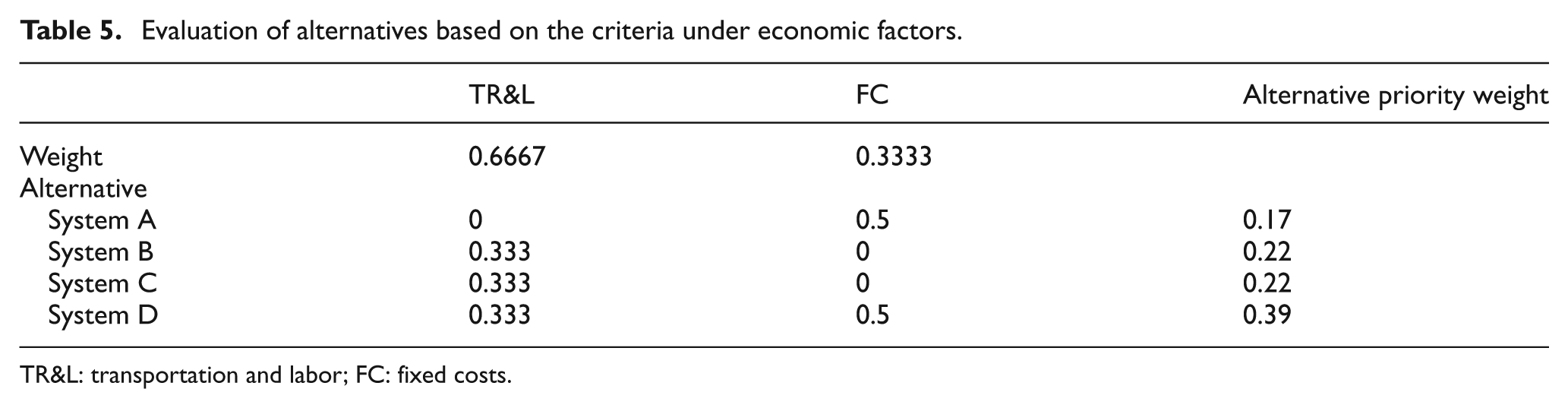
TR&L: transportation and labor; FC: fixed costs.
Evaluation of alternatives based on the criteria under operational factors.
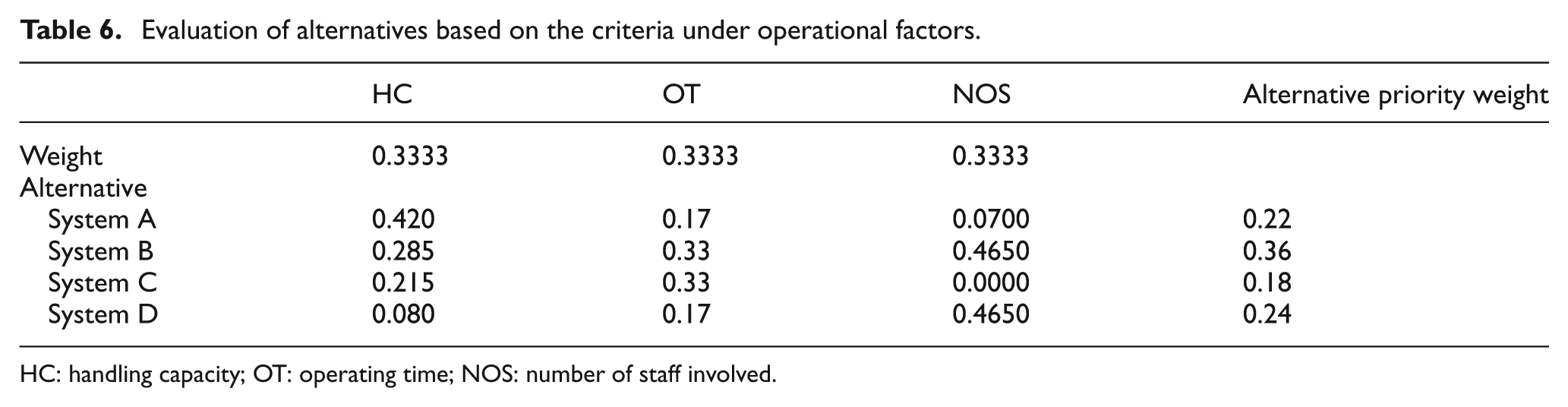
HC: handling capacity; OT: operating time; NOS: number of staff involved.
Evaluation of alternatives based on the criteria under strategic factors.
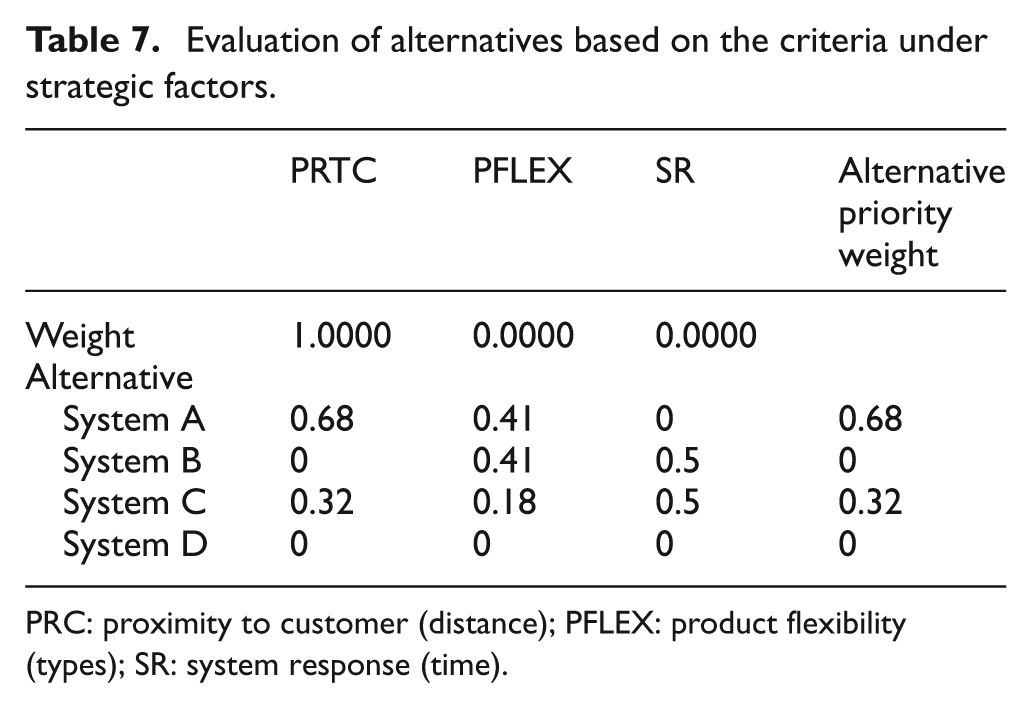
PRC: proximity to customer (distance); PFLEX: product flexibility (types); SR: system response (time).
Evaluation of alternatives based on the criteria under strategic factors.
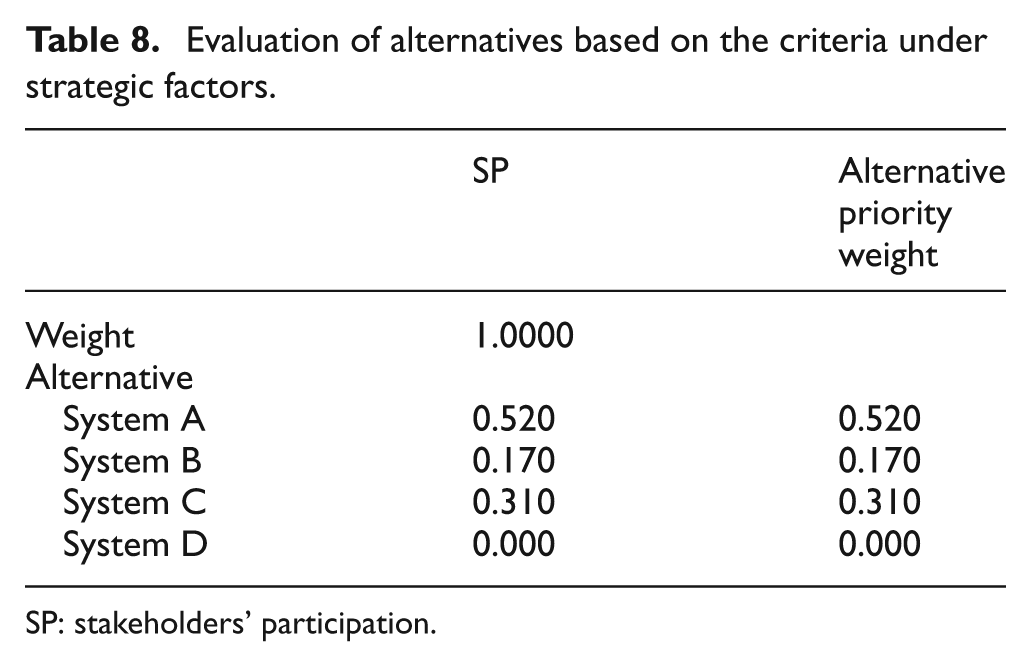
SP: stakeholders’ participation.
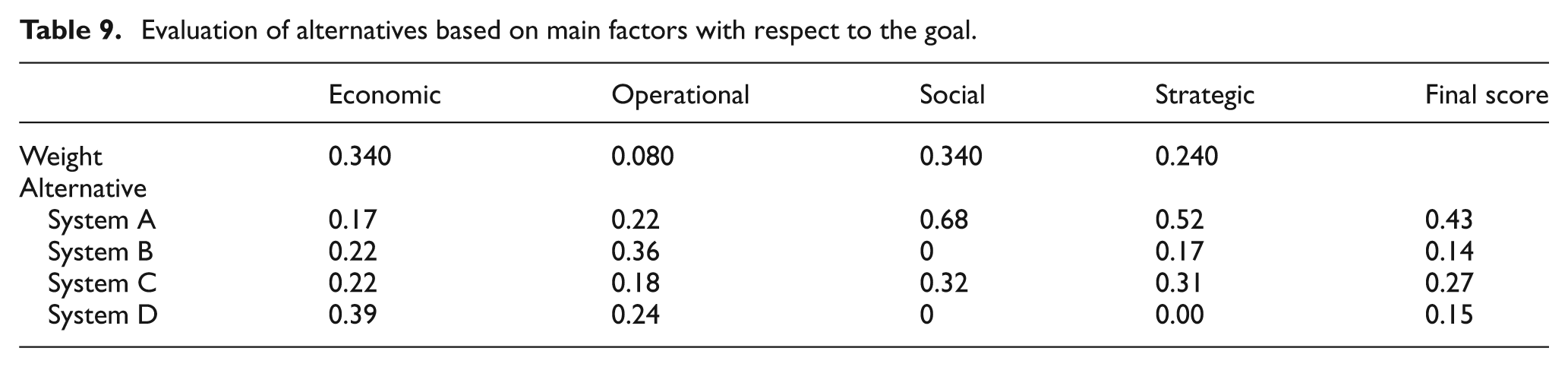
Finally, priority weights of the alternatives with respect to the main factors were combined and final priority scores of the alternatives were determined. The final scores (weights) of the alternative collection systems are shown in Table 9. We find that collection system A has the highest weight followed by systems C, D and B. Therefore, decision-makers can select the appropriate collection system(s) to satisfy the goals and objectives of the company or any organization in managing their e-waste supply chain.
Evaluation of alternatives based on main factors with respect to the goal.
Implications of this research
The results show that the FAHP approach is effective for selecting an appropriate collection system for an e-waste management company or an organization. Systematic structure of the problem is constructed and the criteria for the collection system selection are clearly identified. The proposed FAHP method is applied for analysis. Decision-makers are thus able to examine the strengths and weaknesses of collection systems by comparing them with respect to the appropriate criteria and hence to arrive at a consensus that would be much easier now. Thus, we conclude that the use of the proposed FAHP model can facilitate the decision-making and significantly improve the decision-making process for selecting the appropriate collection system(s) in an e-waste supply chain. Also, it is hoped that the successful accomplishment of this work would help the industrial communities and companies or organizations to use the proposed model in their e-waste supply chain management.
Conclusion
In this article, a new approach is proposed for evaluation and selection of collection systems in e-waste supply chain. The proposed FAHP model is flexible in nature in terms of incorporating new criteria and considering new alternatives.
This model is applied in Malaysia. Several probable and possible systems are considered. The result shows that one system (System A) is preferable for this case with the highest priority weight, but it is not limited to select just one collection system. Decision-maker can select one or more systems according to the preference weight. Based on the case study results, it can be expected that the application of the FAHP in collection system selection of e-waste supply chain will improve the decision-making process. It is comparatively easier for the managers or decision-makers to arrive in a consensus decision by comparing the strength and weaknesses of collection systems with the factors and criteria presented in the model.
Based on the results obtained from this study, further research can be carried out to develop a complete e-waste collection model that will include the selected collection system itself with all the stakeholders’ financial and operational responsibilities clearly defined.
Footnotes
Appendix 1
SECO, SOP, SST and SSOC are the symbols used to denote the different values of the fuzzy synthetic extent analysis
By using equations (10) and (11), the degree of possibility of Si with respect to Sj (i≠j) was calculated as shown below
Based on equation (13), weight vectors are calculated with the minimum degree of possibility as shown below
Declaration of Conflicting Interests
The author(s) declared no potential conflicts of interest with respect to the research, authorship, and/or publication of this article.
Funding
The author(s) disclosed receipt of the following financial support for the research, authorship, and/or publication of this article: The authors thankfully acknowledge the financial support from University of Malaya through HIR PROJECT UM.C/HIR/MOHE/ENG/31.