




Abstract
Generating product design concepts to meet functional requirements while maintaining a specific brand identity is a daunting task for a designer. Shape grammars have been applied to describe the creation of branded product shapes via a set of shape rules and were manually used to create a family of new design concepts, which maintain the product brand identity. Nevertheless, shape grammars are not able to evaluate whether the generated new product concepts can fulfil specified functional requirements of a product. In this research work, shape grammar is combined with an optimisation technique known as the Bees Algorithm to derive a computational architecture for generating branded design concepts that can meet a specified functional requirement. This combination approach allows shape rules to evolve while evaluating how well the outcomes of the new design concepts meet a specified functional requirement. This paper describes how the combination of the Bees Algorithm with shape grammar is created to generate branded product concepts, and shows that this approach can outperform a combination of shape grammar with an evolutionary algorithm.
Introduction
In current global market, competitiveness is the key to success and sustainability to any product in the market. A product, as an artefact developed for selling to consumers by an enterprise, 1 needs to meet the aspirations, expectations and the needs of the customers. Hence, business enterprises compete to identify customer’s needs and customise products to meet those needs quickly at required quality and with a competitive price. As such competition progresses and the technology matures when the consumer market continues to develop. 2 When the technology reaches a state where it is taken for granted, enterprises and its competitors will produce products that have similar technological features and claims. 2 These products that have similar features and functions will soon fill the consumer market, and the market is then said to be mature. A good example of such product is the shampoo product, where inevitably all shampoo products will claim that they are beneficial and good for your hair.
Therefore, in such mature consumer market, consumers often look at the differentiating elements in products before deciding to buy. One of the crucial differentiating elements that is found to be significant in any decision to buy a product is the brand of the product.3,4 In view of this important brand element, enterprises have tried to brand their products in a distinctively manner and promote their product brand identity to attract consumer and capture a larger market share.5,6
In the process of developing a new improved product, in which a current successful product is already in the market, it is vital to acquire additional benefits from those established by the current product in the market. 7 One of these additional benefits is the brand image that reflects the successful current product, and these benefits include the current product shape and its design parameters. Hence, the shape of a product is just as crucial as meeting the functional requirements, and new product concept must include these two aspects during the design process.8–10 The shape of a branded product must reflect or portray the identity of the brand. Therefore, it is essential that when an enterprise develops a branding strategy, the strategy must take into consideration the appropriate product shape that is able to reflect the brand during the product development stage. Hence, a good branding strategy is to transform the product shape into a branding requirement in the product specification. This means that the product specification for a branded product will have both the branding and the functional requirements.
With the need to consider the branding and functional requirements, the job to derive product concepts is not an easy job 9 and the designer needs to depend on his or her past experience, creativity and knowledge to derive a good design. 10 With the ultimate aim to generate product concept that meets the requirements listed in the product specifications and the task to do is a difficult one, there is a need to support the designer to carry out this challenging task. Such support will be crucial to assist the designer to generate better branded product shape/form in the product development phase. Although there were research works that provided design support for designers to meet functional requirements or constraints, most of them focused on design optimisation11–18 and not many included considerations on the importance of branding.
Shape grammars
Shape grammars are a formal method that defines the process of creating shapes via a sequence of rule applications 19 and were first introduced by Stiny and Gips. 20 Shape grammars are also known as a type of generative design systems that enable users to create shapes syntactically.19,20 In research, shape grammars were applied in architecture, arts and product design to produce a family of shapes, which conform to various styles and brand identities.21–25 Most of the application of shape grammars is in deriving new shapes/forms of consumer products.
One of the consumer products that was first to be derived using shape grammar was the coffeemaker. 26 In the design of coffeemakers, Agarwal and Cagan 26 were able to develop a coffeemaker grammar to generate four existing branded models of the coffeemaker. In 2002, the Dove soap bar grammar was developed, 21 followed by the Harley–Davidson Motorcycle grammar. 24 In 2004, the Buick automobile grammar 23 and the Coca-Cola bottle grammar 27 were published.
The application of shape grammars to produce a variety of shapes to be used in the early phases of product concept development is an advantage. It is also crucial that these shapes are also able to meet the functional requirements. However, shape grammars are not meant to assess or perform evaluation on shapes to determine whether these shapes can meet the functional requirements. Hence, researchers have started to combine optimisation techniques such as adaptive and evolutionary computing such as genetic algorithm and simulated annealing with shape grammars to generate two-dimensional (2D) shapes and three-dimensional (3D) structures that also meet structural28,29 and functional requirements 30 to help designers to produce potentially viable solutions. Further work on such combination then focuses on branded product design where an evolutionary algorithm (EA) is combined with shape grammars to generate and explore solution concepts for branded product design such as Coca-Cola bottle31,32 while meeting a specified bottle volume (functional requirement). The research work on combining an EA with a shape grammar has showed that it is viable to generate branded product concepts that are able to meet a functional requirement and the work has been compared with an EA. This research work is an extension of the work done earlier that further explore the work of combining the Bees Algorithm with shape grammars to generate branded product design. 33 Additional experiments not only compares the results from the combination of shape grammars with Bees Algorithm with the results from the combination of the shape grammars with an EA, they also investigate the effects of different maximum generation and parameter settings on both bio-inspired algorithms.
Bees Algorithm
In 2006, Pham et al.34,35 introduced the Bees Algorithm; an advanced adaptive computing technique and the results from their research have shown that the algorithm is a very promising one. The application of Bees Algorithm has been successful in solving problems of continuous type 34 to the combinatorial type 36 including multi-objective optimisation problems.37,38 In addition to that, these applications also showed that the Bees Algorithm produced better results than those generated from EAs and other algorithms.12,33,39,40 The strength and the advantages of the Bees Algorithm based on the findings from these literature showed that the Bees Algorithm is an intriguing algorithm that deserved to be further explored. However, there are several versions of the Bees Algorithm in the literature and they differ slightly from each others, 35 but for this research work, the Bees Algorithm derived by Pham et al.34,35 was used. Hence, in this research, the Bees Algorithm will be applied to combine with the Coca-Cola grammar to generate solution concepts for the Coca-Cola bottle concepts that are able to meet the predetermined volume as a functional requirement. The results are then analysed and compared with the work done earlier using the combination of the EA with the Coca-Cola grammar. 31
Framework to combine the Bees Algorithm and a shape grammar to generate branded product concepts
Figure 1 illustrates the framework of how the Bees Algorithm is combined with a shape grammar to generate new branded product concepts. This framework consists of four phases: Phase 1 – preparation; Phase 2 – construct the Bees representation; Phase 3 – formulation of evaluation function and Phase 4 – implementation of the Bees Algorithm. In Phase 1, the branded product is identified, and its branding features and functional requirement were determined from its branding strategy. In this article, for Coca-Cola, the distinct shape of the Coca-Cola bottle is identified as representing its brand, and it is crucial that new Coca-Cola bottle concepts reflect that feature based on its branding strategy. The shape of the bottle is then defined as shape grammar (a list of shape rules), as shown in Figure 2. 27 These rules are then encoded as the Bees representation in Phase 2, and the shape of the bottle is parameterised to enable the evaluation of the volume for the bottle (functional requirement). The shape rules in the data structure of the Bees representation are defined into types or groups based on bottle sections to avoid generation of awkward bottle shape, as shown in Figure 4. The evaluation on the volume for the bottle depends on the objective function defined in Phase 3.
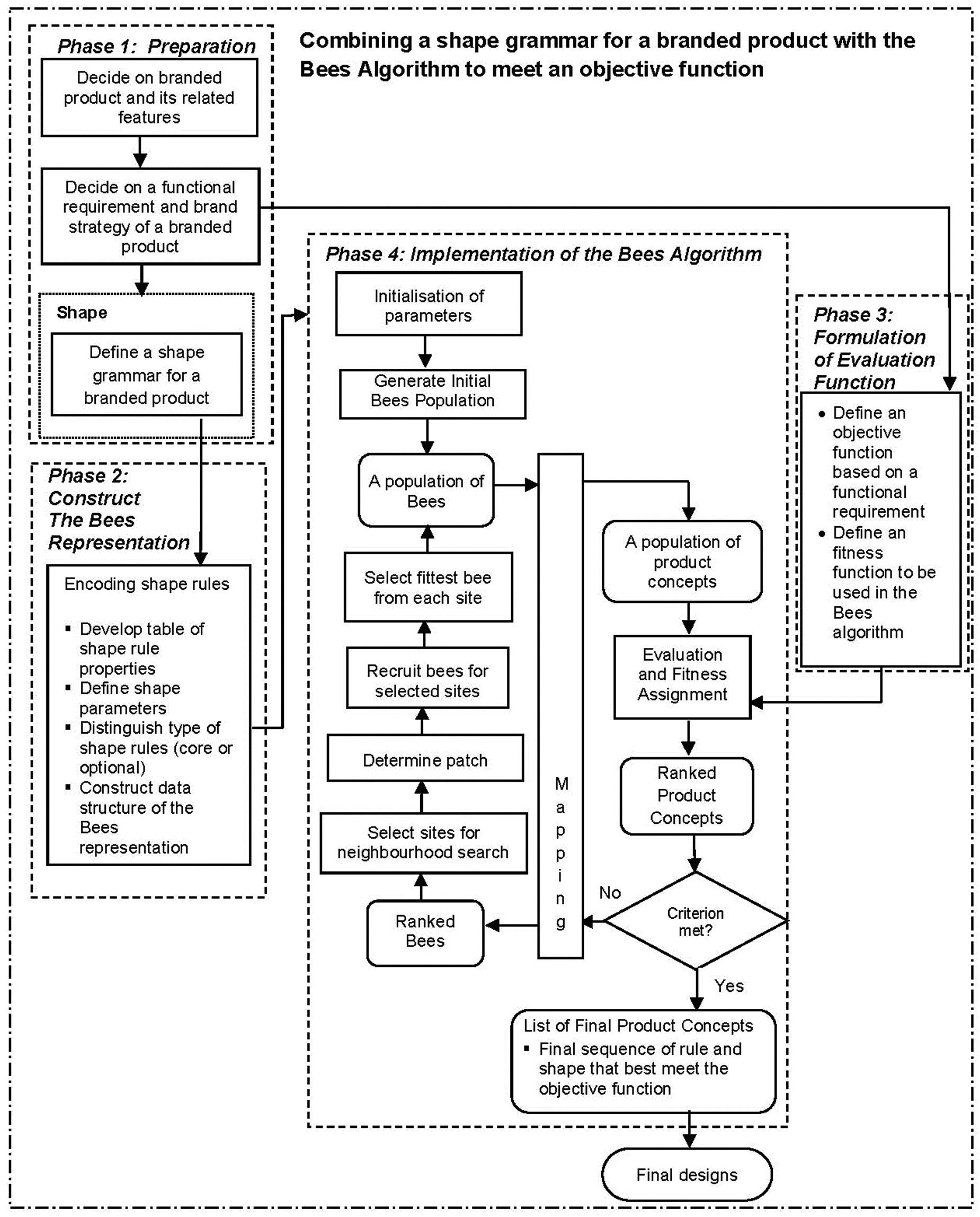
Framework of combining the Bees Algorithm with a shape grammar to generate new branded product concepts.
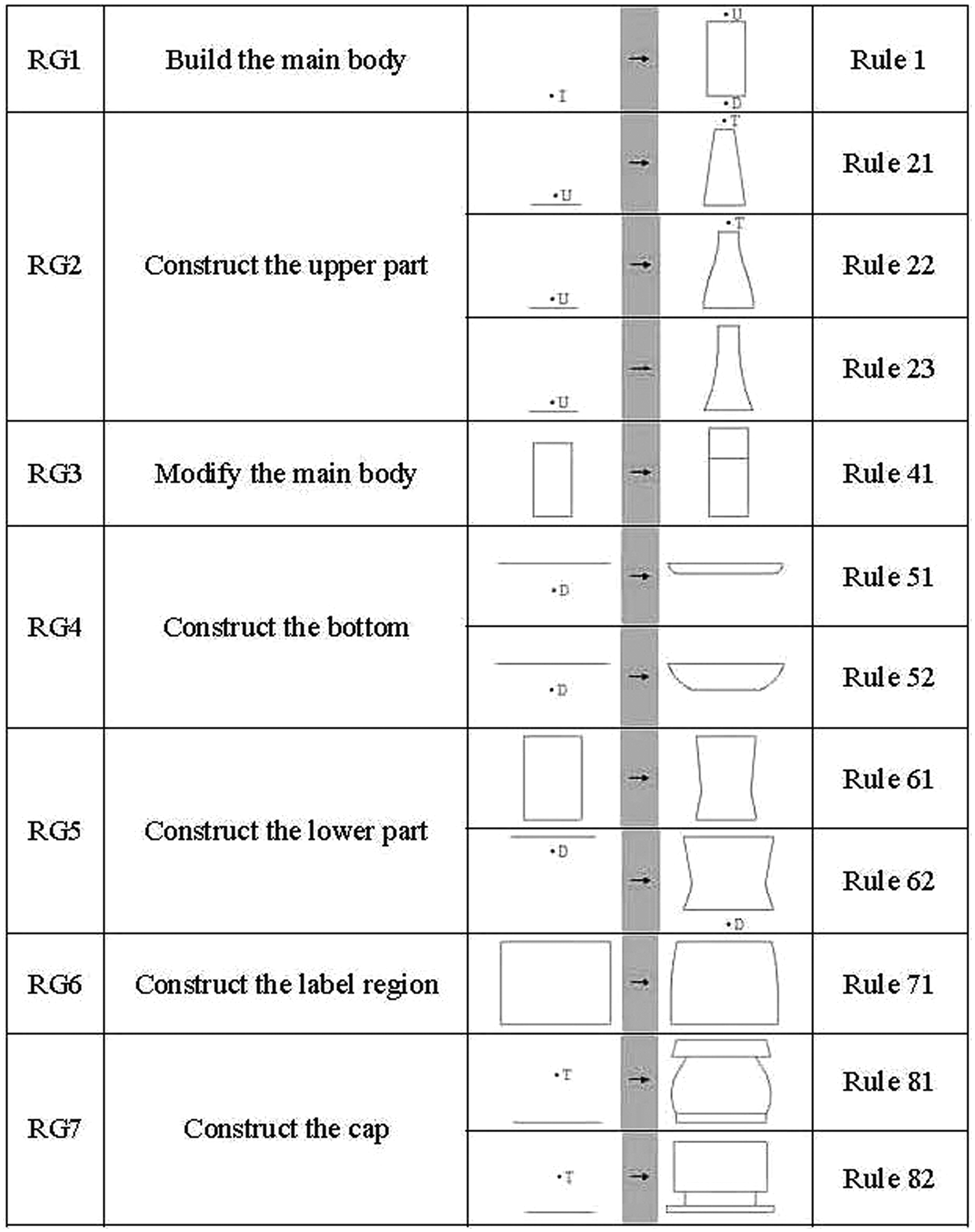
Coca-Cola bottle shape grammar.
After the Bees representation has been defined, the implementation phase (Phase 4) is a phase where the Bees Algorithm is utilised to generate the new branded product concepts. The implementation process started with the initialisation of parameters of the Bees representation to generate an initial population of Bees (also known as scouting bees). The initial population of Bees will produce a population of new branded product concepts (in this case, Coca-Cola bottle). These initial branded product concepts are then evaluated based on the predefined objective function (in Phase 3). After evaluating the newly generated product concepts, these product concepts will be ranked based on how well they met the objective function. If these product concepts met the stopping criterion, the final list of product concepts will be produced. The stopping criterion is usually based on a predefined number of iterations (Gm) or when the outcome of evaluations are within a predefined range. If the stopping criterion is not met, the ranked product concepts will be mapped back as bees representation and ranked accordingly. Within these ranked bees, a predefined number of top ranked bees will be selected (m), and the sites in which these top ranked bees have visited will undergo neighbourhood search by the recruited bees after patch size (ngh) is determined. A predefined number of bees will be recruited (n1 and n2) and sent to perform the neighbourhood search, and the fittest bee from each selected site will then form a new population of bees. These processes are repeated until the stopping criterion is met.
Case study: Coca-Cola bottle
The contours of the trademark Coca-Cola bottle across different timelines were captured by Chau et al. 27 to create the Coca-Cola shape grammar. The information from this Coca-Cola bottle shape grammar defines each section of the bottle, the characteristics of the shape as well as the contour in each section and the relationships between sections. Although the Coca-Cola bottle shape grammar is able to provide the information mentioned, there is no specific rules to produce the dimensional values for each sections, namely, the diameters and the heights. Without these dimensional values, it is not possible to generate shapes that are able to meet a functional requirement such as volume. Hence, a system to parameterise each bottle section using diameters and height was developed. The start point and the end point of each connecting curve were determined by the point where the diameter and the height were measured, and the start point was located at the base of each section (refer to Figure 3). The values of the diameters and heights for all sections were defined in the ranges of finite values during implementation to enable to calculation of the volume of the bottle concepts generated by the prototype system.
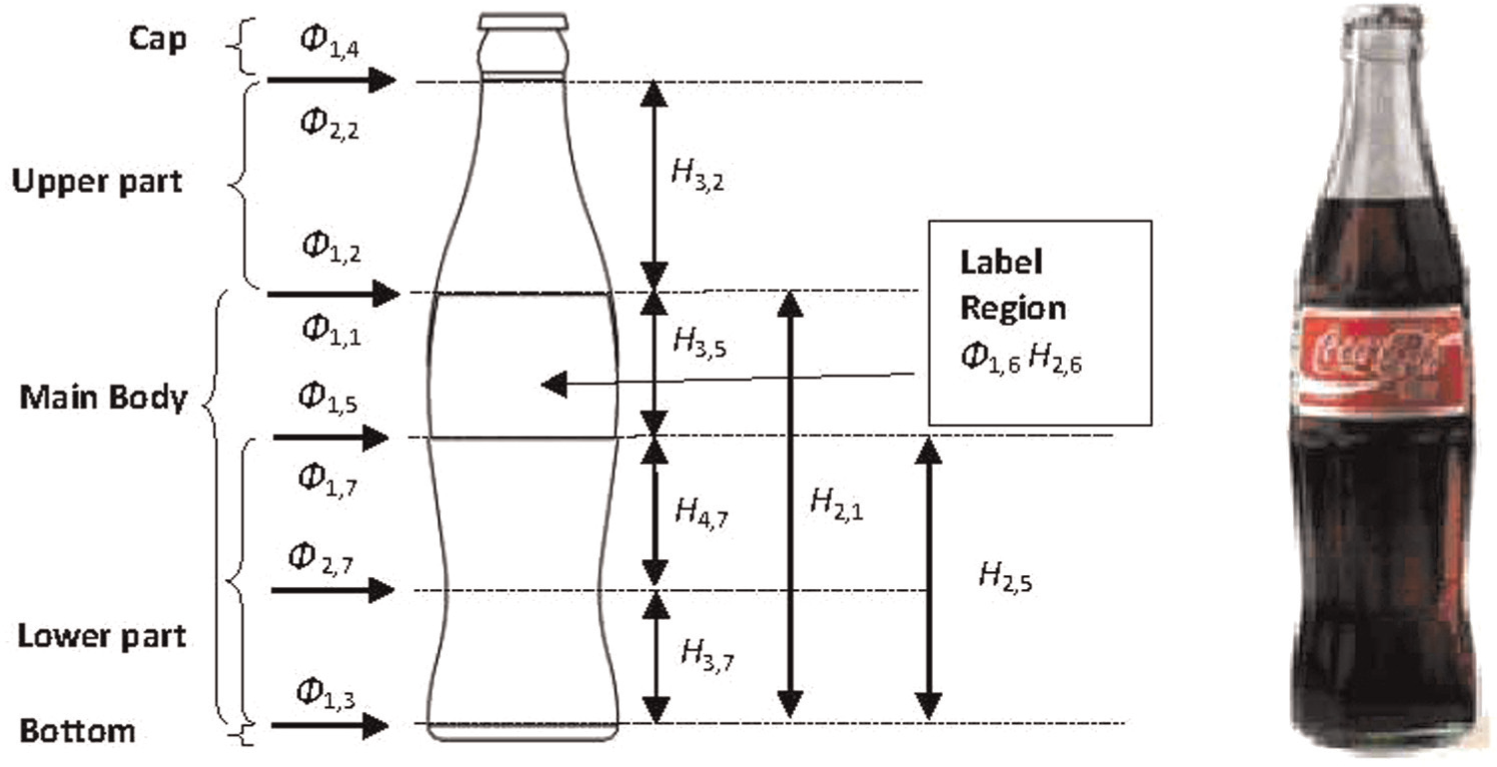
Parameterisation of Coca-Cola bottle.
In this case study, the Coca-Cola bottle grammar defined the shape of the Coca-Cola bottle based on seven rule groups (refer to Figure 2). Each rule group defined the construction or the modification of the shape of a section for the Coca-Cola bottle. Hence, the main body rule group (RG1) defined the rules for building the main body, the upper part rule group (RG2) was for the construction of the upper part section and the rule group RG3 was for modifying the main body section. The other rule groups were applied to construct the bottom section (RG4), the lower part section (RG5), the label region section (RG6) and finally the cap section (RG7). Some rule groups contain a set of rules (more than one rule) to define the shape of each section. For example, in this case study, three separate rules were used in the construction of the upper part section (RG2) to generate different shapes on top of the main body.
In any given computational step for the Coca-Cola bottle grammar, only a single rule could be selected for execution, even though there were several rules in each rule group. Therefore, in this case study for Coca-Cola bottle, there were four compulsory rule groups, namely, RG1, RG2, RG3 ad RG4, in which at least a rule from these groups must be used to construct the bottle. This is because a complete bottle must have the main body, the upper part section, the bottom section and the cap section. The other rule groups, namely, RG5, RG6 and RG7, were optional rule groups, where the rules in these groups are only applied to create variations in the shape of the bottle, and hence, it is not necessary to use the rule from these groups. For this case study, the Bees Algorithm was applied to select shape rules randomly within the same group to change the bottle shape while meeting the functional requirement of the volume for the bottle.
The parameters associated for the diameters and height for each bottle sections were shown in Figure 3. As shown in Figure 3, the upper part section was defined by three parameters, namely, the bottom diameter (Φ1,2), top diameter (Φ2,2) and height (H3,2). The two parameters, Φ1,2 and Φ2,2, representing diameters were set in the range of [minwidth, maxwidth] while the height parameter, H3,2, was set in the range of [minheight, maxheight]. Similarly, all other parameters of diameters and heights were set in such range. A total of 26 parameters of diameters and heights were used to define the whole Coca-Cola bottle, as shown in Figure 4.
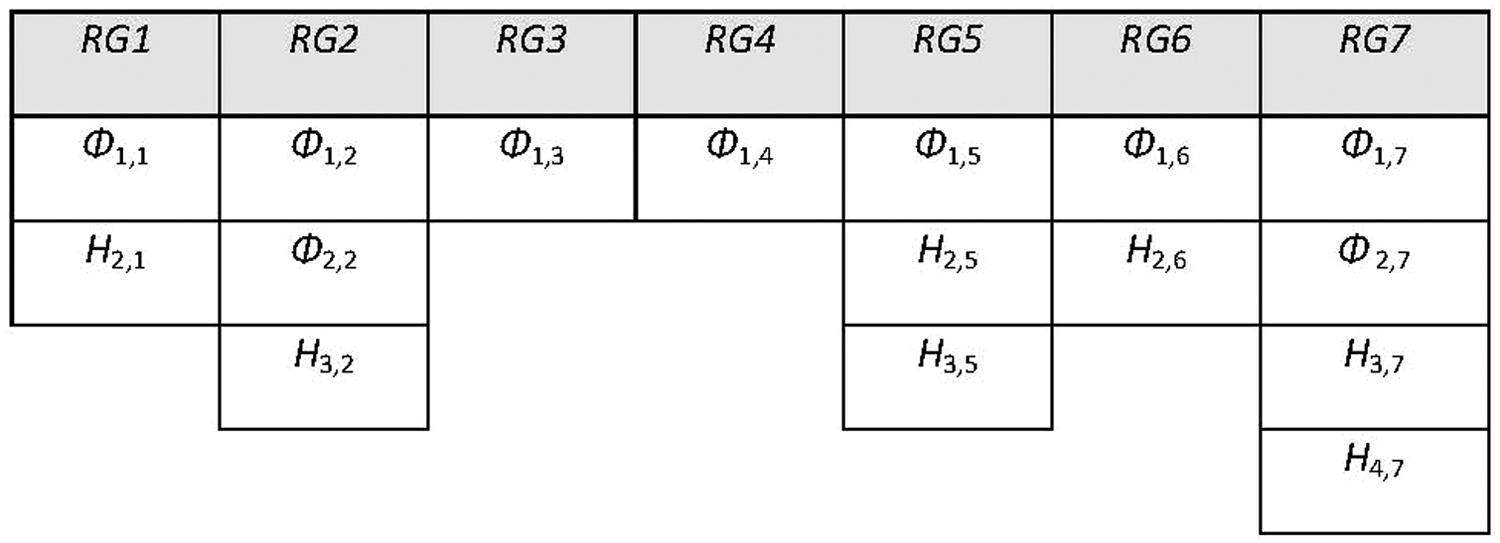
Rule group and their associate parameters.
Although there were 26 parameters representing the diameters and the heights of the Coca-Cola bottle, the Bees Algorithm only generates the diameter (Φ1,1) and height (H2,1) to reduce the complexity of computation. The remaining parameters were used for individual computation using ratio relationships between the main body and each bottle section, respectively.
Every execution of a shape rule will produce a different shape of bottle sections. Hence, from the shape of the bottle sections generated, the dimensions of the whole Coca-Cola bottle can be determined based on approximation (excluding the bottom and the cap). With the dimensions of the whole Coca-Cola bottle defined, the volume of the Coca-Cola bottle can be calculated. The bottom section and the cap section of the bottle were not taken into consideration in the volume calculation. For this case study, the rule sequences and the values for the parameters to achieve the total volume were generated by the Bees Algorithm. For this case study, it was crucial to generate new Coca-Cola bottle concepts with the volume of 500 mL. Hence, the objective of the case study was to generate new Coca-Cola bottle concepts with the difference between the volume of the bottle concepts generated and the targeted volume of 500 mL to be minimised.
In this case study, the Bees Algorithm was applied with the selected site (m) divided into two groups, the elite sites (e) and the rest of the sites (m–e). Elite sites (e) were sites that top the ranking in terms of results obtained after each iteration. This means that the list of results obtained that has smallest difference in volume between the bottle concepts generated and the targeted volume will constitute the elite sites. The recruited bees were also categorised into two types, namely, the recruited bees around elite sites (n2) and the recruited bees for rest of the sites (n1). The distribution of the recruited bees for these two categories was decided by the user. Both categories of recruited bees carried out neighbourhood search with a predefined area of search space (ngh), also known as patch size of their respective selected sites.
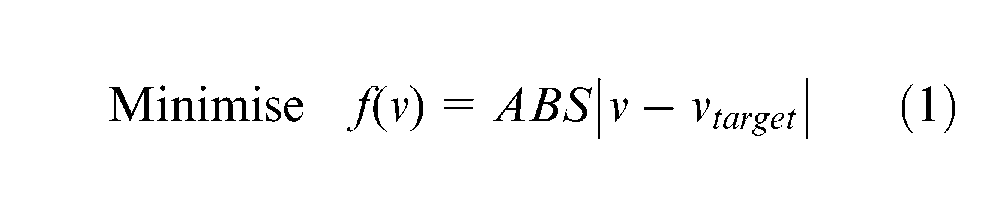
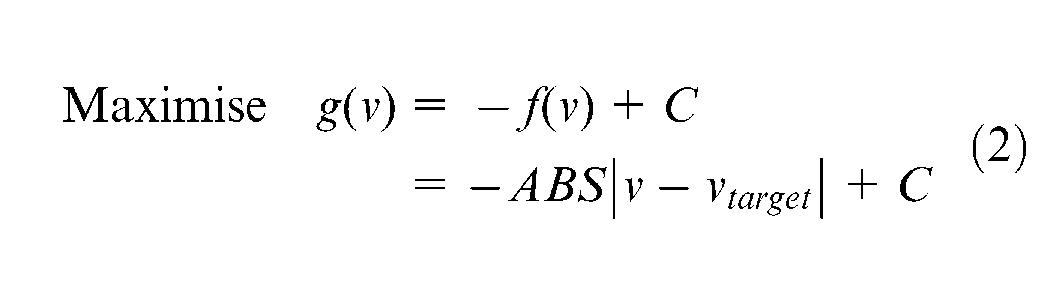
Although the constraint of the volume for the bottle is set at 500 mL, in this case study, the objective to minimise the difference in volume between the bottle concepts generated (v) and the targeted volume (vtarget) allows the final volume of the bottle generated to less than or to exceed the 500 mL limit. With the consideration of the volume of the bottle excluding the volume contributed by the cap section and the bottom section, the objective function can be stated as equation (1), which is then equivalent to equation (2), where C is a constant added to make sure that the value for the objective function is consistently positive. 41
Results and discussions
A software tool was developed, which combine the Bees Algorithm with shape grammar to perform the task of generating the new Coca-Cola bottle design concepts. Figures 5 and 6 illustrate the user interfaces for the software tool that allows users to determine several Bees Algorithm parameters. The software tool initialised with a user interface (refer to Figure 5) that allowed the designer to determine the parameters of the Bees Algorithm, namely, maximum number of iteration or maximum generation (Gm), swarm size (n), elite sites (e), selected sites (m), initial patch size (ngh), bees around elite points (N2), bees around other selected points (N1) and maximum section height and width in centimetre to be explored. The maximum height and width explored provided a limit to the height and width of the bottle to ensure the bottle is able to fit into the shelf and the pallet that is used to transport them. After defining these parameters, the second user interface, which is shown in Figure 6, is launched, and the results will be generated after clicking the ‘execute’ button.
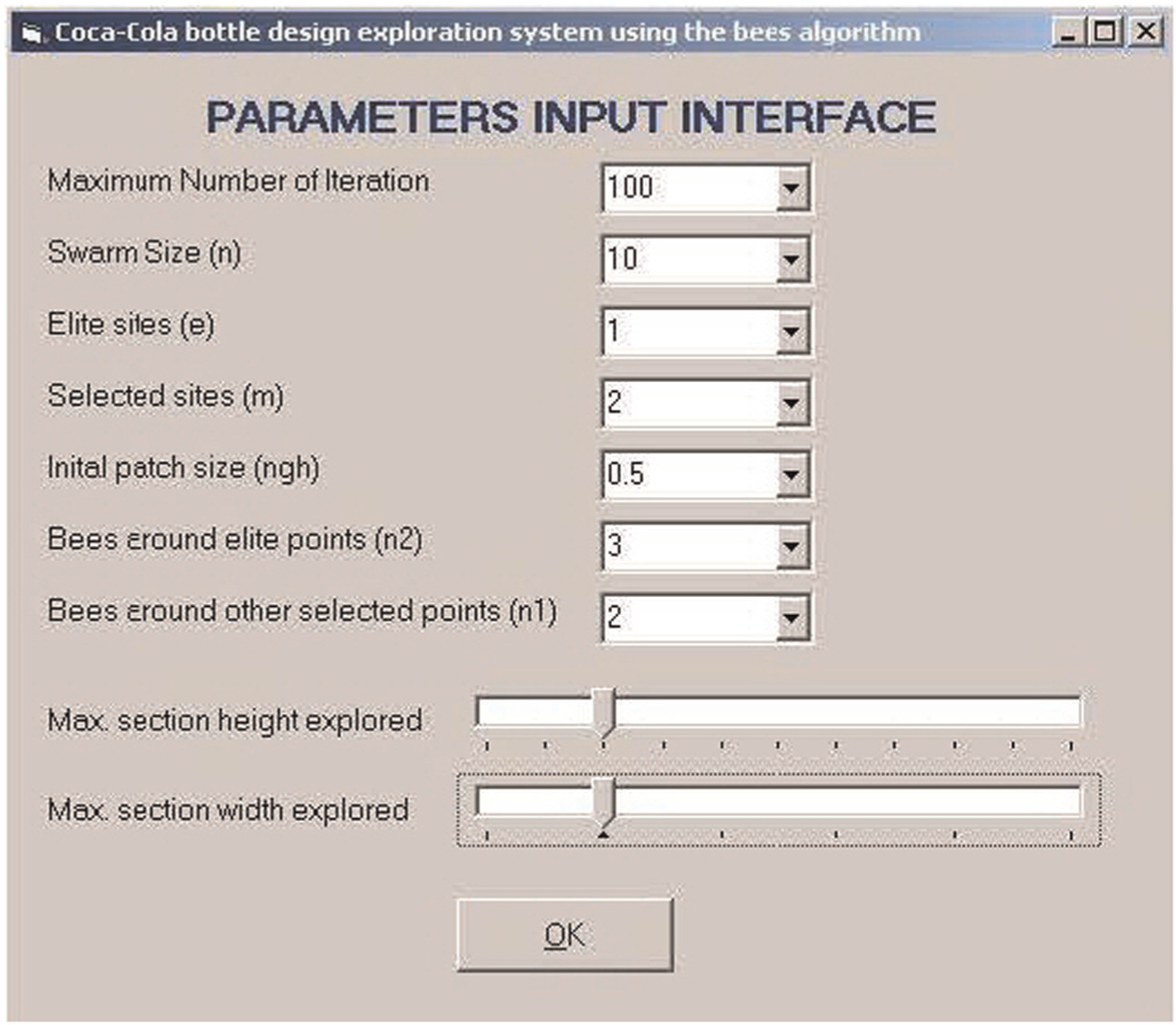
Initial user interface that allows user to define the parameters of the Bees Algorithm.
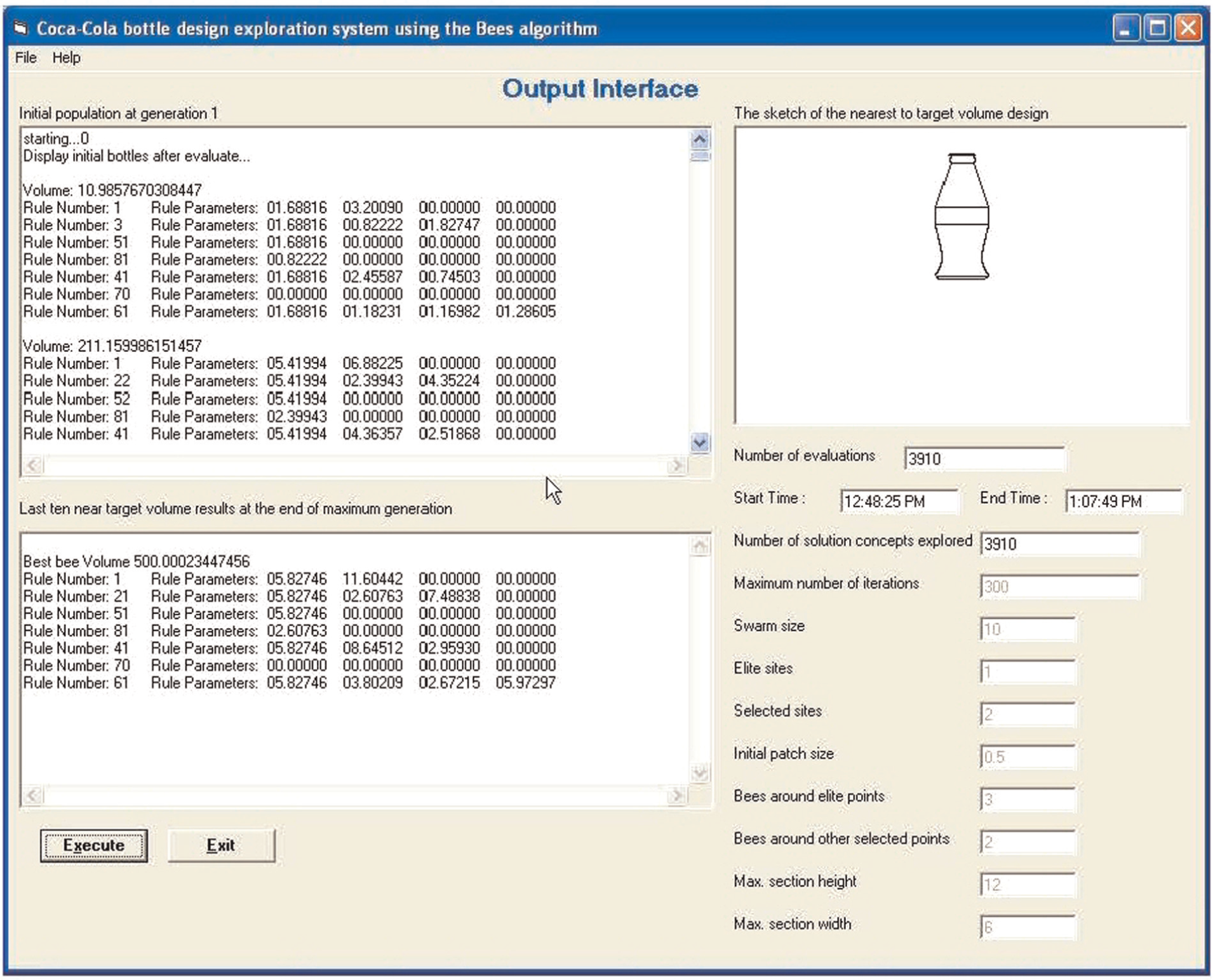
User interface that generates and displays new Coca-Cola bottle concepts using the Bees Algorithm.
Similar software tool was developed for the EA to generate a number of new Coca-Cola bottle design concepts. The initial user interface for this tool is shown in Figure 7, and the user interface that generates the new Coca-Cola bottle concepts using EA is shown in Figure 8.
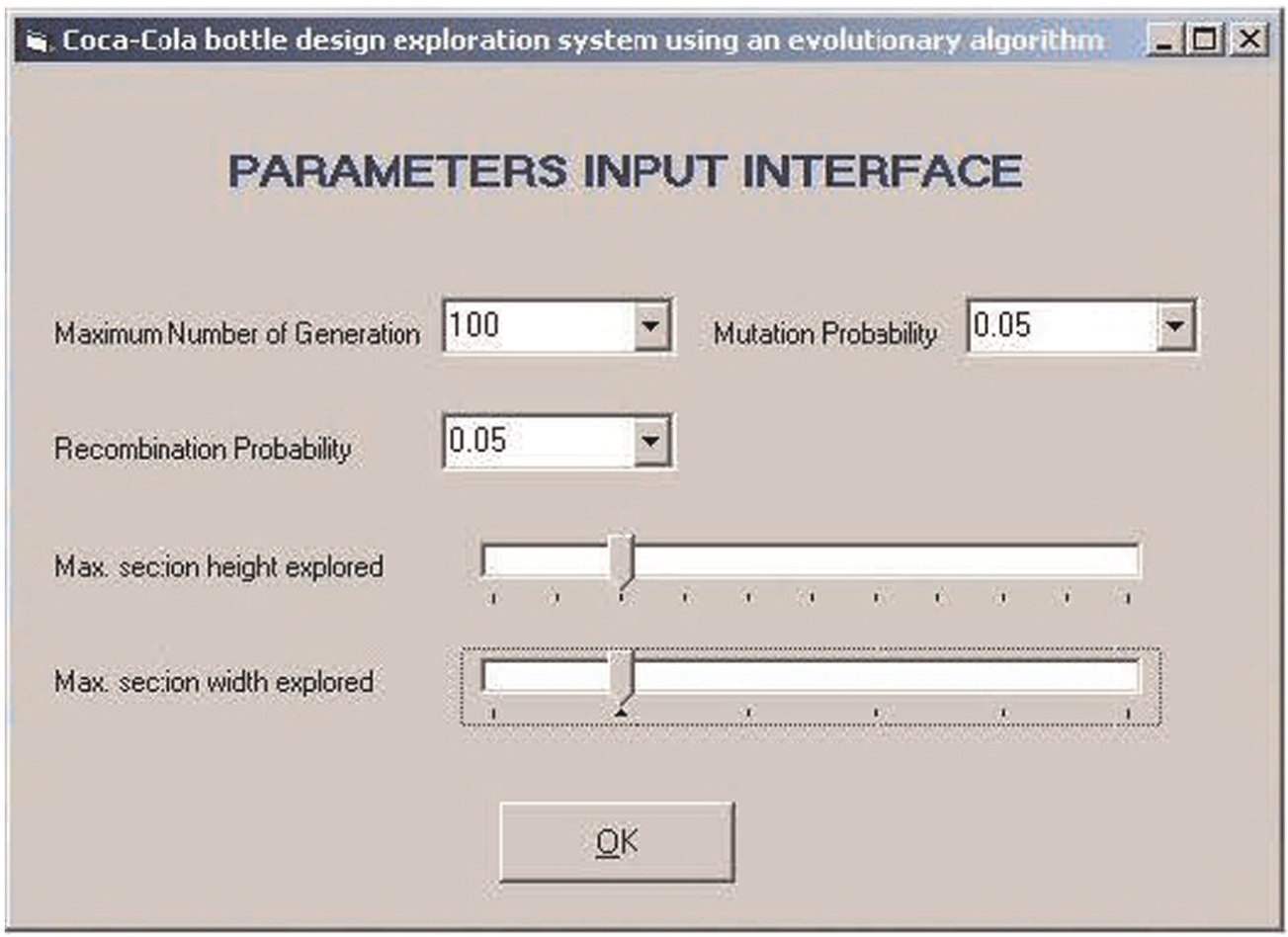
User interface that allows user to define the parameters of the evolutionary algorithm.
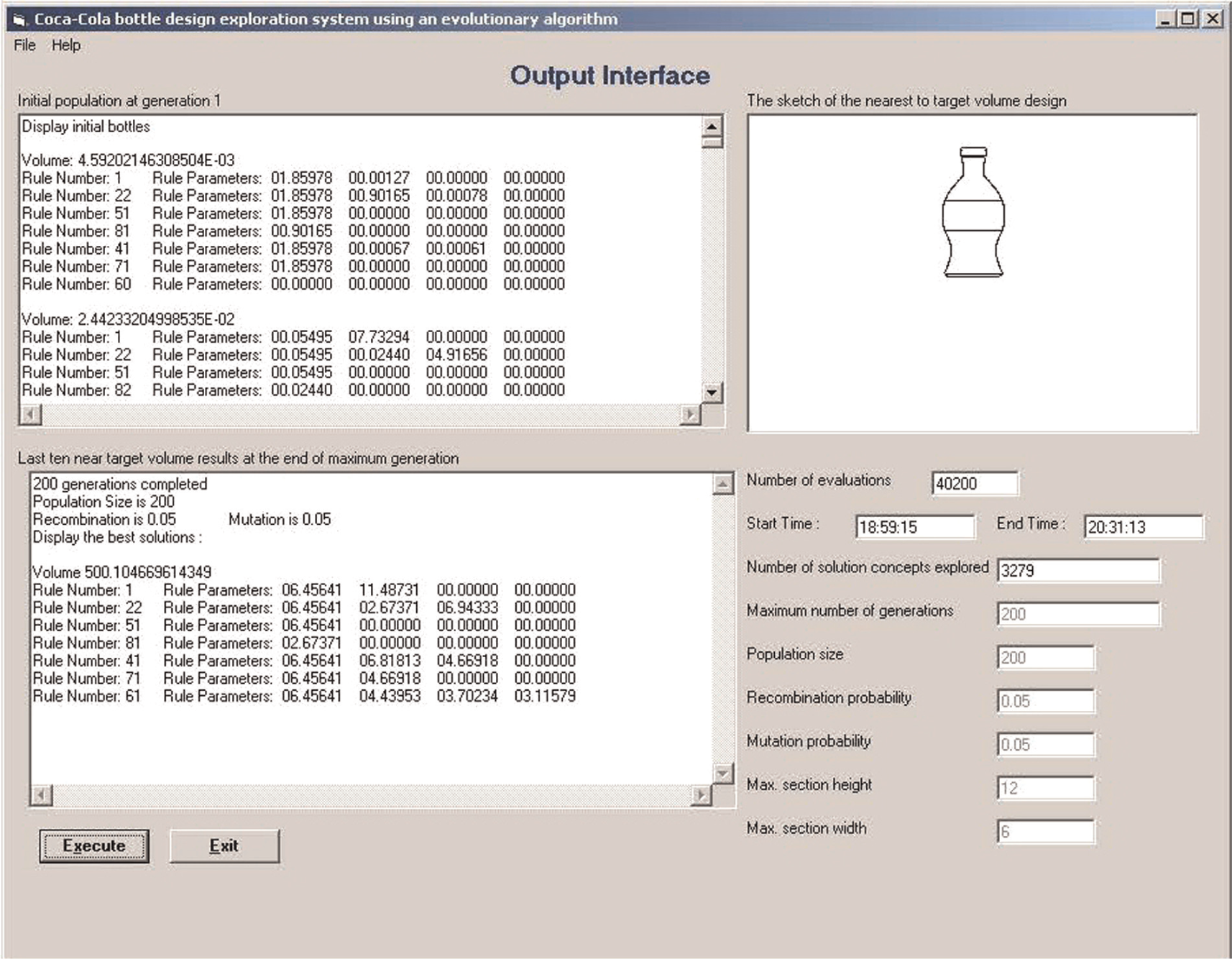
User interface that generates and displays new Coca-Cola bottle concepts using the evolutionary algorithm.
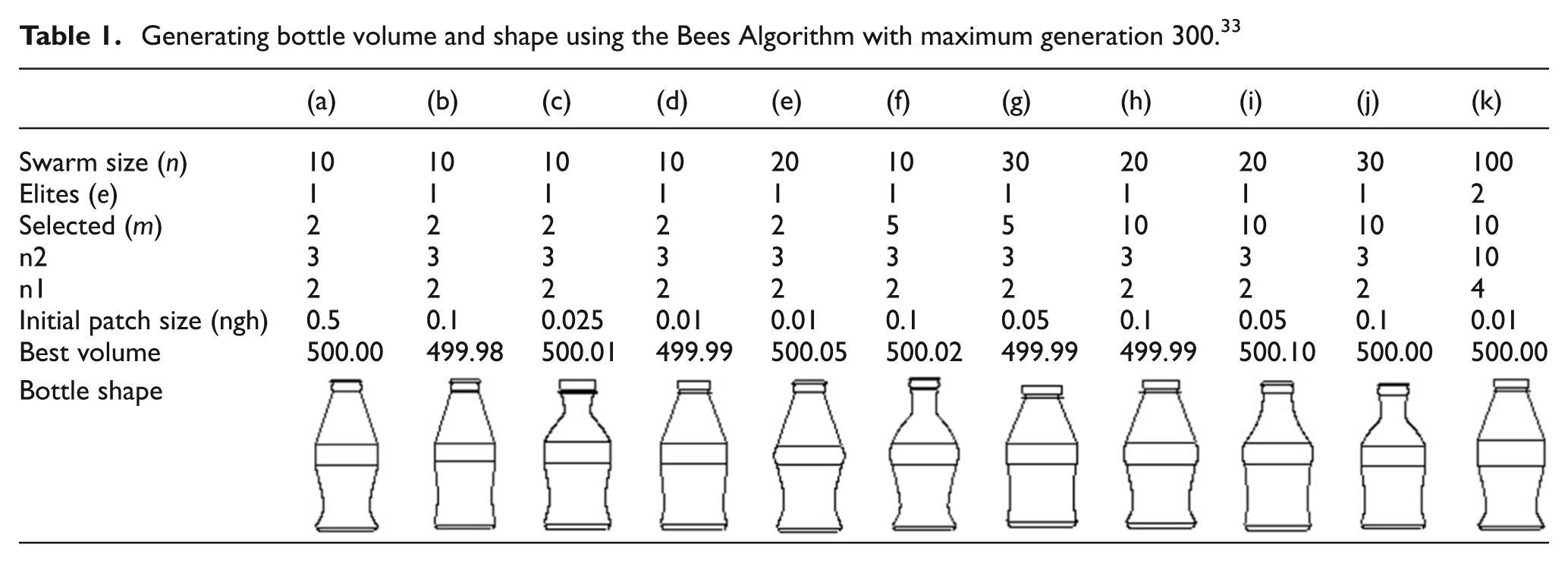
Using these two software tools mentioned above, the new branded Coca-Cola bottle concepts were generated using different parameters for both the Bees Algorithm and EA. The results generated using different combinations of parameters for the Bees Algorithms are shown in Table 1. The results demonstrated that the Bees Algorithm was able to find optimal solutions that achieved a 500 mL target volume within a ±0.1 mL tolerance. The bottle shapes were generated using parameters and shape rules optimised by the Bees Algorithm. The contour of this family of bottles has a similar style to the existing trademark Coca-Cola bottle shape.
Generating bottle volume and shape using the Bees Algorithm with maximum generation 300. 33
An EA was also applied to generate bottle shape using Coca-Cola shape rules and associated parameters.31,32 The genotype was a 5 × 7 matrix similar to that shown in Figure 4. Single-point crossover was performed on a pair of selected parents and followed by an intermediate recombination operator of Breeder Genetic Algorithm to recombine the diameters and height at the crossover point. Mutation was allowed to be performed on either, altering the shape rule within the rule or altering the parameter value in specified range. Recombination and mutation were executed with the respective recombination probability (Pr) and mutation probability (Pm). Further details of the EA implementation can be found in the study by Ang. 32 Different population size, maximum generation, recombination probability, and mutation probability were tested in the EA implementation. The population size of 200 and the maximum generation of 200 were selected, and the results were shown in Table 2. These settings allowed the EA to achieve the bottle volume within 0.1 mL tolerance and did not consume high computation cost. Further investigations were conducted to obtain the best parameter combination for EA, and the results obtained were compared with the Bees Algorithm. It is found that the Bees Algorithm can achieve bottle volume in less number of evaluations. The diagram in Figure 9 shows a comparison between the Bees Algorithm and the EA. The Bees Algorithm parameters were swarm size (n) = 100; elites (e) = 2; selected (m) = 10; number of bees around elite site, n2 = 10; number of bees around other selected site, n1 = 4 and initial patch size (ngh) = 0.01. The EA parameters were population size (Sp) = 200, maximum generation (Gm) = 200, recombination probability (Pr) = 0.9 and mutation probability (Pm) = 0.1.
Generating bottle volume and shape using an evolutionary algorithm with 200 population size and 200 maximum generation. 33
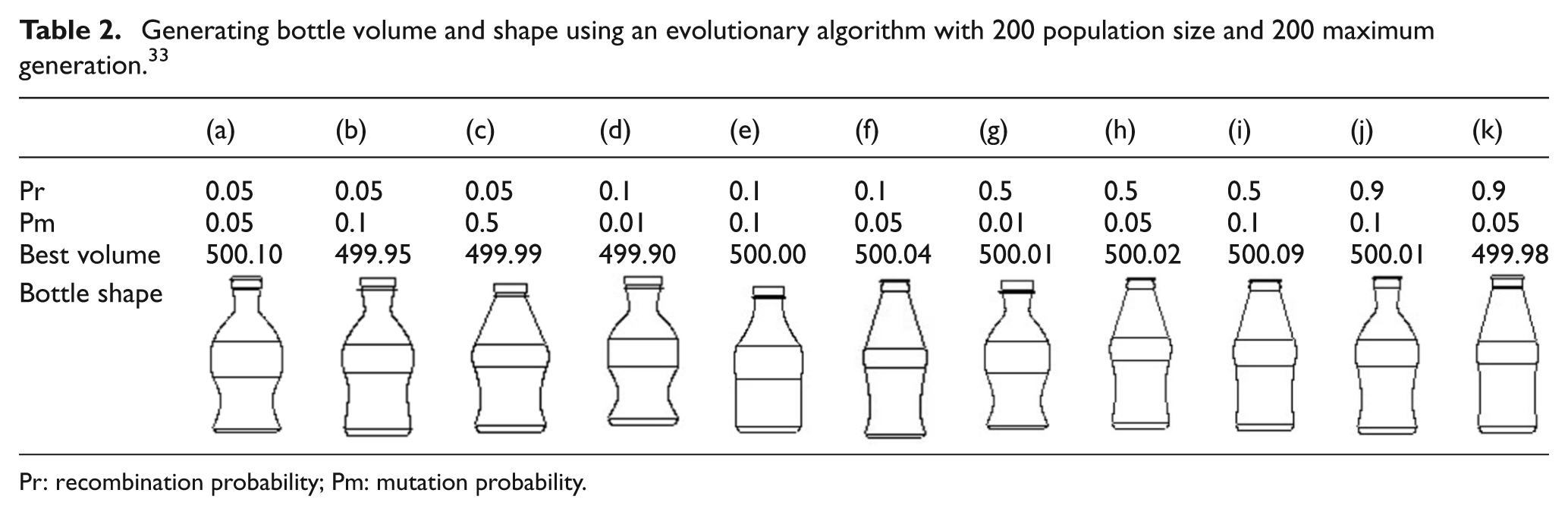
Pr: recombination probability; Pm: mutation probability.
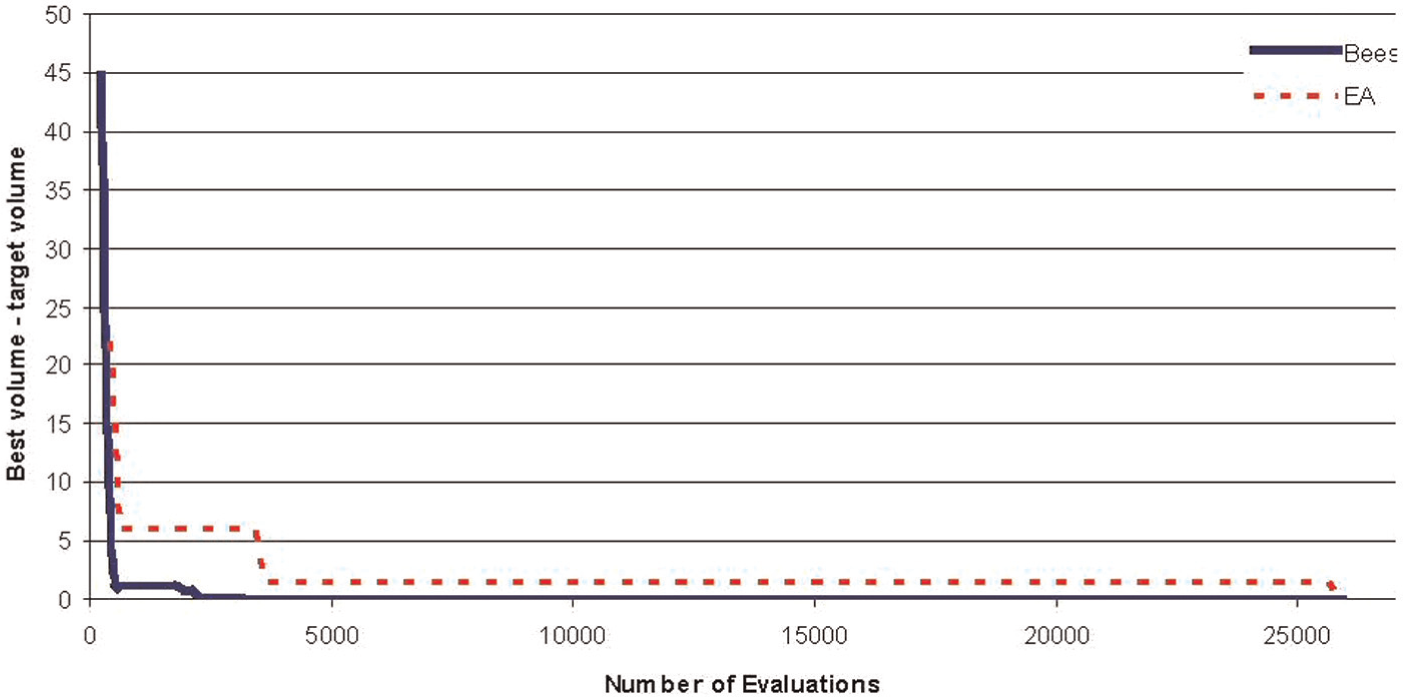
Bees Algorithm versus evolutionary algorithm (EA). 33
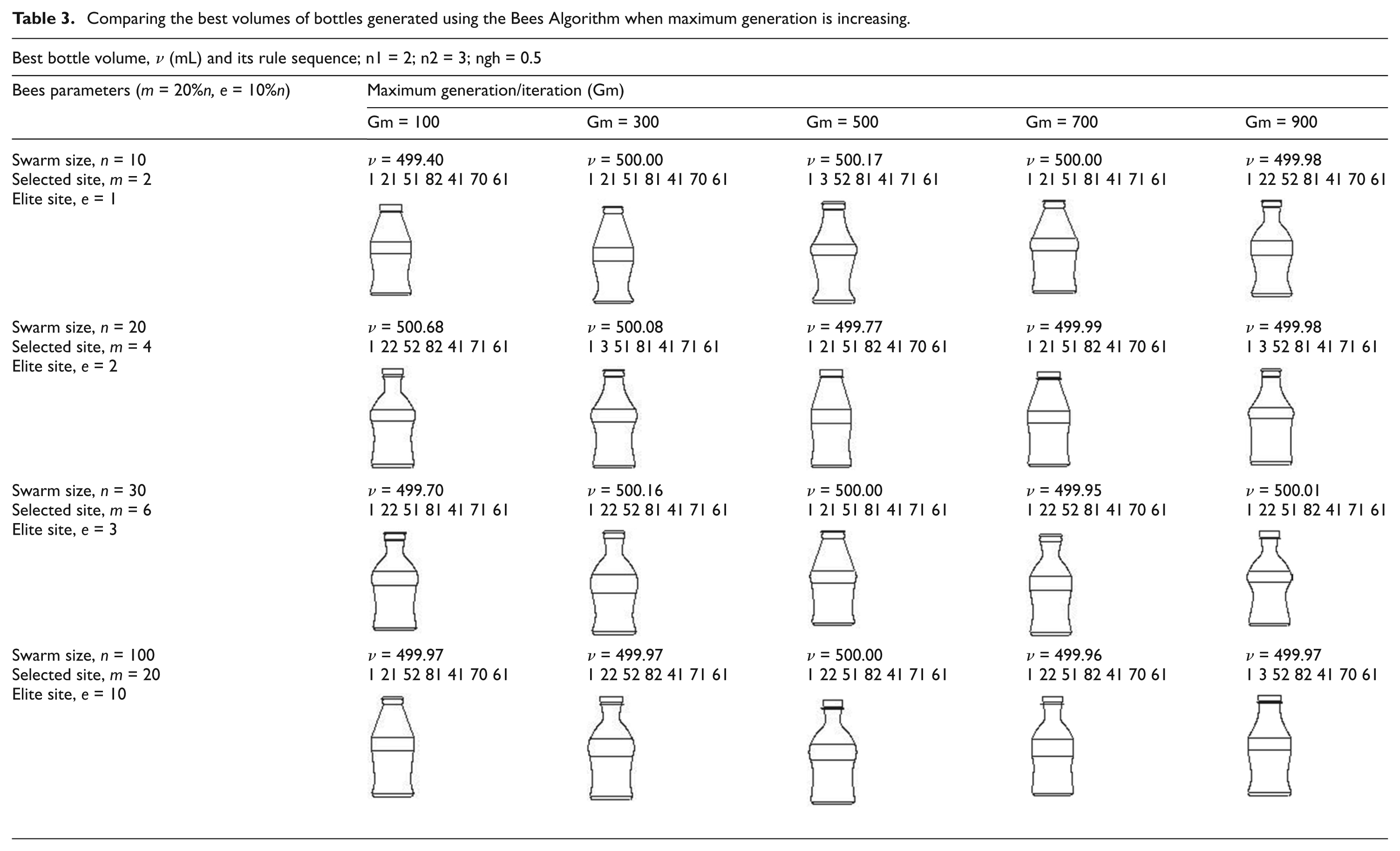
Further results were generated from the software tools to compare the effects of the maximum generation, the parameters of both algorithms and the overall results obtained from the perspective of how well they met the functional requirement specified (the volume of the bottle). Table 3 details out the results obtained from the investigation mentioned using the Bees Algorithm, while Table 4 shows the results using EA reproduced from Ang. 32
Comparing the best volumes of bottles generated using the Bees Algorithm when maximum generation is increasing.
Comparing the best volumes of bottles generated using evolutionary algorithm when maximum generation is increasing.
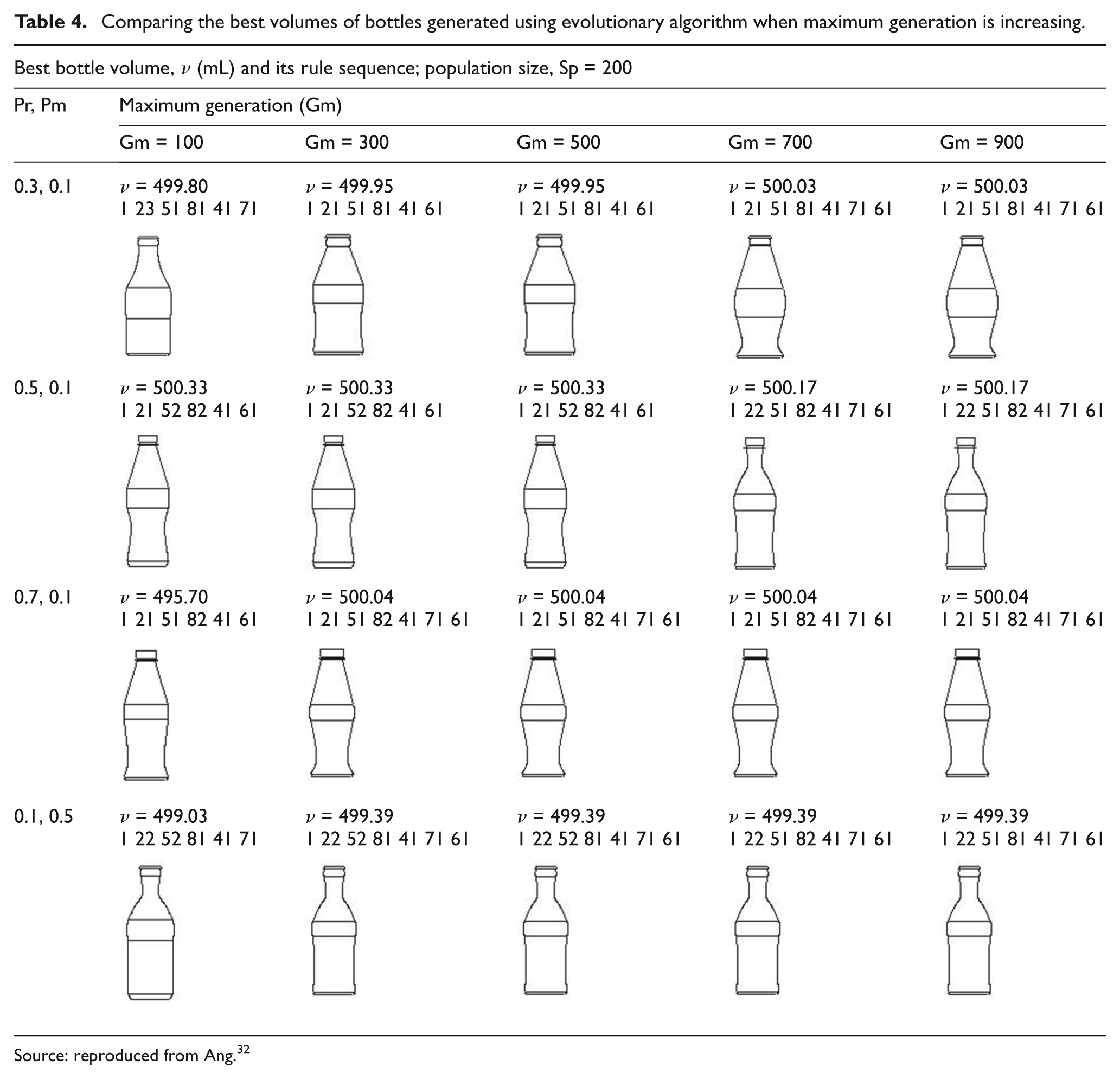
Source: reproduced from Ang. 32
From these two tables, a graph that links the volume of the bottles generated using both algorithms with different maximum generations is plotted, as shown in Figure 10. From Figure 10, it can be observed that both the Bees Algorithm and the EA need at least 300 maximum generations to achieve within the tolerance of ±1.00 mL of the functional requirement (the bottle volume of 500 mL).
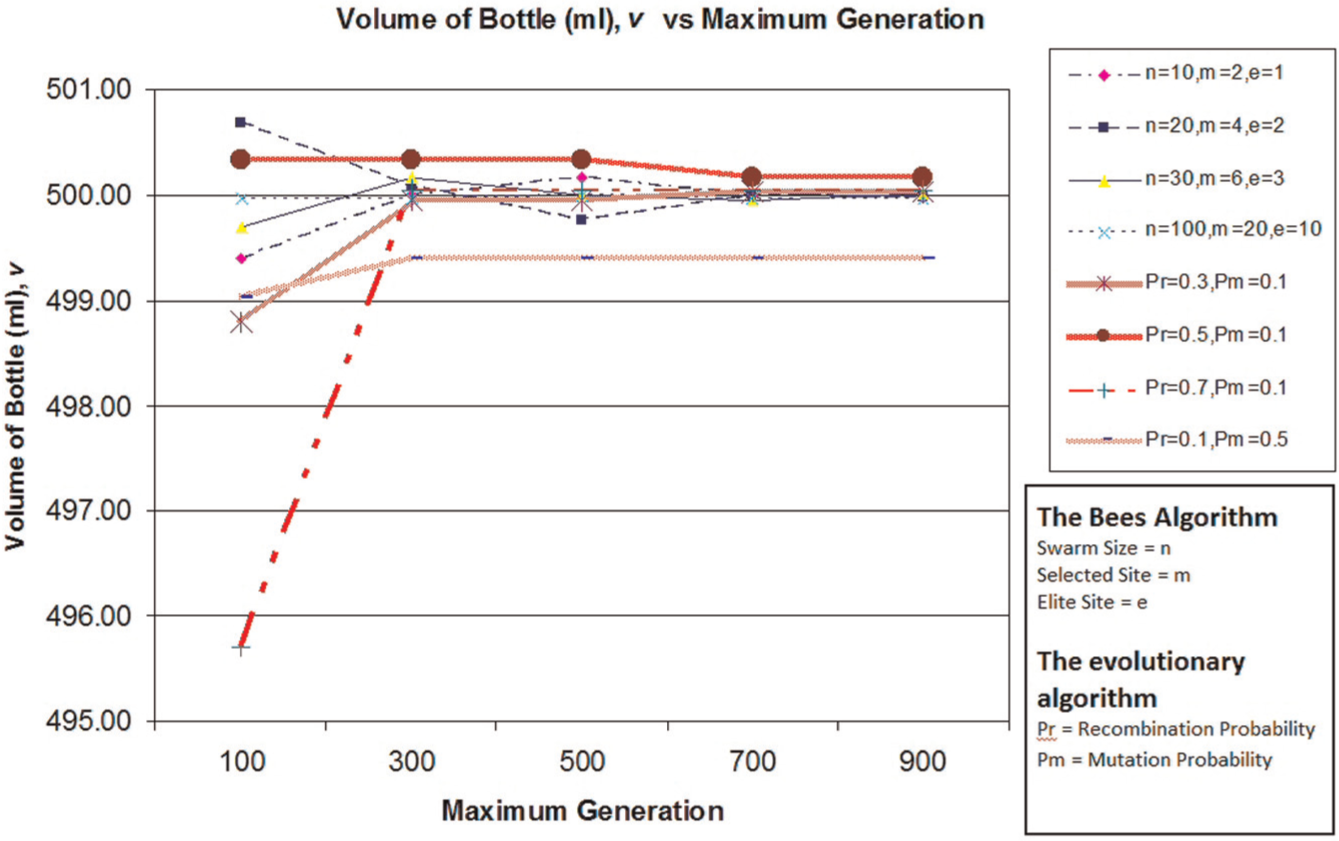
Effects of maximum generation on Bees Algorithm and evolutionary algorithm on the functional requirement (volume of bottle) of Coca-Cola bottle.
Figure 10 also shows the results obtained from experiments using the Bees Algorithm with different parameter settings achieved the predefined 500.00 mL bottle volume except for the experiment using the parameter settings of n = 20, m = 4, e = 2, but the results from the EA are unable to achieve this. The best result from the experiments using EA was with the parameter settings of the recombination probability (Pr) of 0.3 and mutation probability (Pm) of 0.1, and it can only achieve 500.03 mL. These results (from Figure 10) can be further analysed and tabulated, as shown in Table 5.
Differences between the results obtained using the Bees Algorithm when compared to the evolutionary algorithm based on meeting the functional requirement (volume of bottle for Coca-Cola).
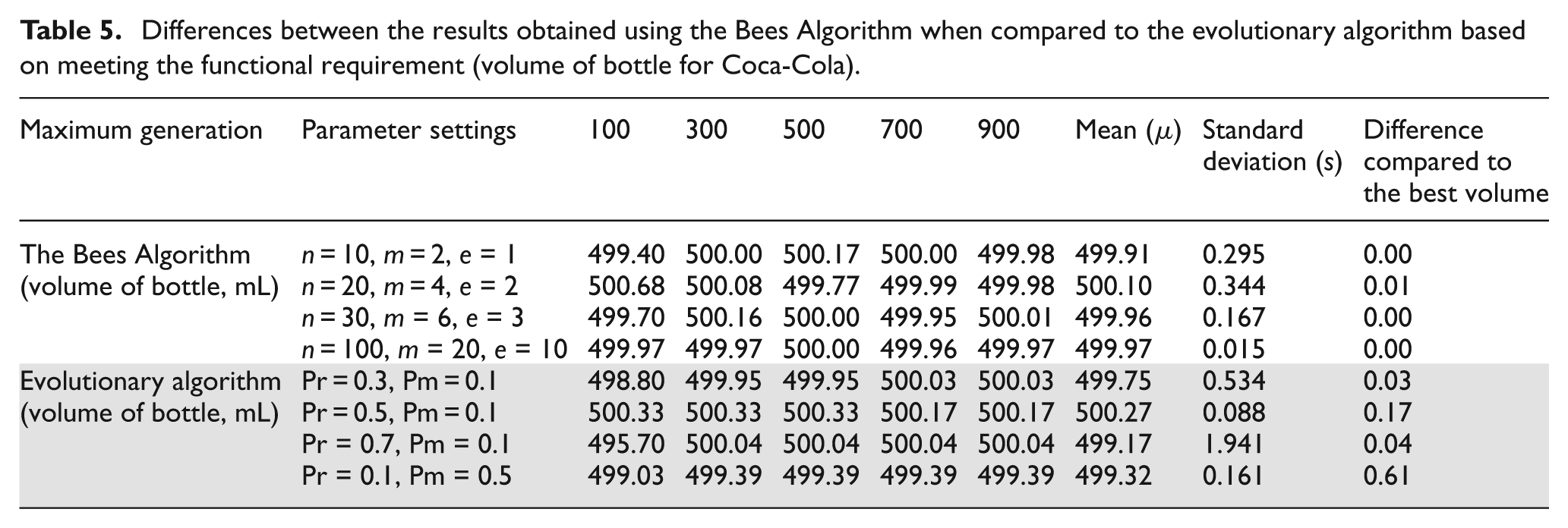
From Table 5, the results from the Bees Algorithm are less affected by different parameter settings when compared to the EA. This is because the standard deviation for the results from the EA is large (1.941 mL) when Pr = 0.7, Pm = 0.1 with increasing maximum generation. Generally, the best results generated from the Bees Algorithm with increasing maximum generation can achieve a difference of up to 0.01 mL, while the best results from EA can reach up to 0.61 mL.
Conclusion
This article demonstrated that the optimisation techniques such as the Bees Algorithm and the EA when combined with the shape grammar can be utilised to assist designers to generate and explore new branded product concepts extensively.
In addition to that, the study also found that when combined with shape grammars, the Bees Algorithm and the EA were able to generate branded product shapes and, in this case, the branded Coca-Cola trademark bottle. However, when the Bees Algorithm was compared with the EA, the Bees Algorithm was able to outperform the EA from the perspective of achieving the target volume of the Coca-Cola bottle with less number of evaluations. This is possibly because of the fact that the EA is imitating the Darwinian evolution process, which is inevitably a slow process. Unlike the EA, the Bees Algorithm is imitating the foraging process of the bees, and this process is a relatively more aggressive process.
When further experiments were performed and analysed with increasing maximum generation and different parameter settings, the results from using the Bees Algorithm also proved to be able to achieve the predefined functional requirement of 500 mL bottle volume better. The results from further experiments also showed that the results from the EA were more affected to the parameter settings compared to the Bees Algorithm. Previous work involving EA 31 and this current work that used the Bees Algorithm showed that optimisation techniques could be applied with shape grammar rules to explore and generate designs that conformed to a particular brand while meeting the functional requirements.
The framework and the software tool described in this article provide a general platform that can be extended to other product shape grammar with more shape rules and sophistications. They can also be extended to solve multi-objective problem to support designers while considering different functional and even aesthetic requirements. Such tool will provide the designers the ability to search for the desired solutions more effectively.
Footnotes
Acknowledgements
This article is an expanded version of the original conference paper titled ‘Generating branded product concepts: comparing the Bees Algorithm and an evolutionary algorithm’ with permission from Whittles publishing. The authors were members of the EU-funded FP6 Network of Excellence for Innovative Production Machines and System (I*PROMS).
Declaration of conflicting interests
The authors declare that there is no conflict of interest.
Funding
This study was supported by the Universiti Kebangsaan Malaysia and the Ministry of Higher Education, Malaysia (grant UKM-TT-07-FRGS0249-2010).