Sustainable synthesis of a novel bio-based low temperature curable benzoxazine monomer from quercetin: Synthesis,curing reaction and thermal properties
Free accessResearch articleFirst published online February, 2024
Sustainable synthesis of a novel bio-based low temperature curable benzoxazine monomer from quercetin: Synthesis,curing reaction and thermal properties
In an attempt to make polybenzoxazines more sustainable, a novel bio-based benzoxazine monomer namely Q-Bz was synthetized via the Mannich condensation reaction utilizing Quercetin, paraformaldehyde and aniline. The chemical structure of the monomer was confirmed by 1H nuclear magnetic resonance (1H NMR) and Fourier transform infrared spectroscopies (FTIR). The curing behaviour was studied by differential scanning calorimetry (DSC) and the polymerization process was investigated by FTIR. The obtained results showed very low melting and polymerization temperatures (73 and 183°C, respectively) and the disappearance of the oxazine ring absorption bands due to the ring opening polymerization of the monomers. Afterwards, the cured bio-based thermoset, referred to as PQ-Bz, was obtained and its thermal stability and thermo-mechanical properties were also assessed by DSC and thermogravimetric analysis (TGA). As expected the newly developed thermoset exhibited high thermal stability along with excellent processability. Indeed, the results showed that PQ-Bz had a relatively high Tg of approximately 280°C, with a 53% char yield at 800°C, 5% and 10% weight reduction temperature (T5% and T10%) values of 349 and 373°C, respectively. These findings demonstrate the potential of the novel bio-based benzoxazine monomer as a sustainable alternative to traditional petroleum-based thermosets in high performance applications.
Polybenzoxazine (PBz) have emerged as a relatively new class of high performance thermoset with a variety of excellent properties including: high glass transition temperature,1 near zero curing shrinkage,2 excellent mechanical properties,3 low water absorption,4 flame retardency, in addition to low surface energy5,6 due to the presence of intra- and inter-hydrogen bonding interactions, these unique characteristics make PBz highly suitable for potential applications in aerospace, transportation and electronic industries.7 PBz are generally obtained through the ring opening polymerization (ROP) of a six membered heterocycle oxazine ring fused to a benzene cycle, this benzoxazine (Bz) monomer is easily synthetized by the Mannich condensation reaction of phenol, primary amine and formaldehyde8 offering a tremendous amount of molecular design flexibility, therefore different sorts of reactants can be employed to tailor a wide range of polymer properties.8
Despite all their advantages traditional Bz resins suffer from several drawbacks as they demonstrate high curing temperatures (≥230°C), poor processibility and high brittleness caused by a low cross-linking density.9 On the other hand the majority of PBz are prepared from the limited and the rather expensive petroleum based sources, the extensive and massive use of these precursors has led to potential toxic waste, causing environmental issues.10
Therefore and in order to meet the requirements for sustainable development scientists have recently turned to nature attracted by the abundance of chemicals from renewable resources aiming to replace petroleum based reagents by equivalent bio-based phenolic coumpounds such as: daidzein,11 vanillin,12 eugenol,13–15 chavicol,16 guaiacol,17 sesamol,18 umbelliferone,19 arbutin,20 urushiol,21 catechol22 paracoumaric acid.23 In comparaison to bio-based phenolics numerous sources, utilized bio-based amines are limited to stearylamine, furfurylamine, dehydroabietylamine, chitosan and rosin-based amines, while the aldehyde part only originated from benzaldehyde.24 These bio-sourced molecules and due to the presence of inherent functionalities are desirable as a molecular framework, which otherwise is challenging to produce from petrochemical derived substances. Exploiting the Mannich condensation reaction outstanding flexibility along with naturally occurring phenols and amines researchers have synthetized numerous partially, fully and even truly bio-based monomers with properties that are similar or superior to traditional Bz, the presence of additional active sites in these bio-based Bz may impact ROP temperature, melting temperature, enhance cross-linking density, improve flame retardancy, and can be used as a solution to overcome issues of mass loss during polymerization.25–27 Furthermore acidic functionalities such as phenolic-OH, carboxylic acid, and thiol in the monomer’s molecular structure helps to enhance the polymerization reaction of oxazine rings. This is achieved by protonating the ring, which aids in the ring-opening reaction and thus catalyzes the polymerization process by providing intramolecular assistance. In addition to the use of renewable resources and bio-based derivatives, researchers have also adopted green synthesis techniques to make the process more sustainable and environmentally friendly. Green synthesis involves the use of eco-friendly and sustainable methods, such as the use of green solvents, mild reaction conditions, reduced waste generation and microwave curing. Typical sustainable solvents include acetone, ethanol, ethyl acetate, super critical fluids and ionic liquids. These solvents have low toxicity and therefore low environmental impact, additionally some green solvents are biodegradable.25
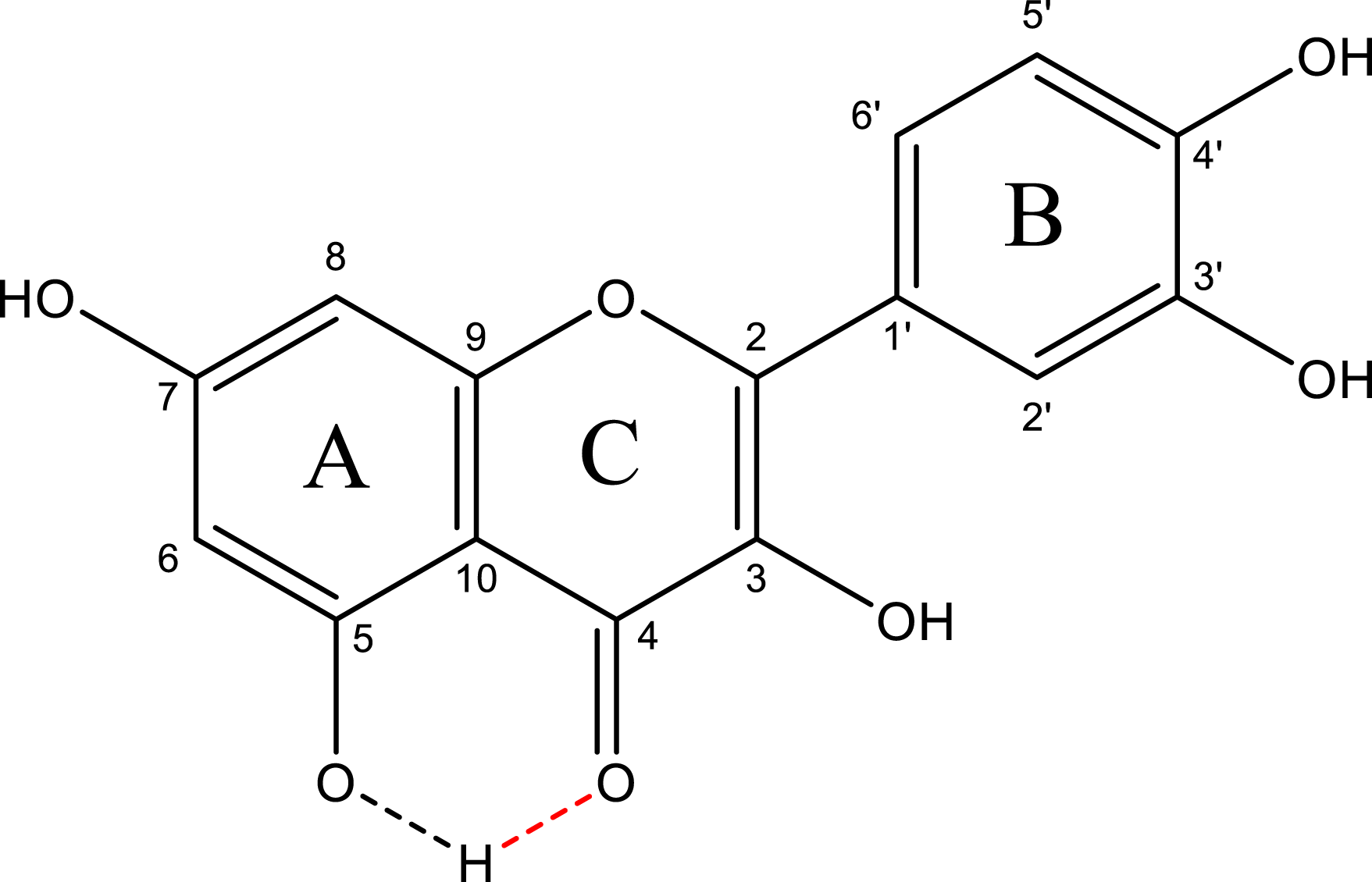
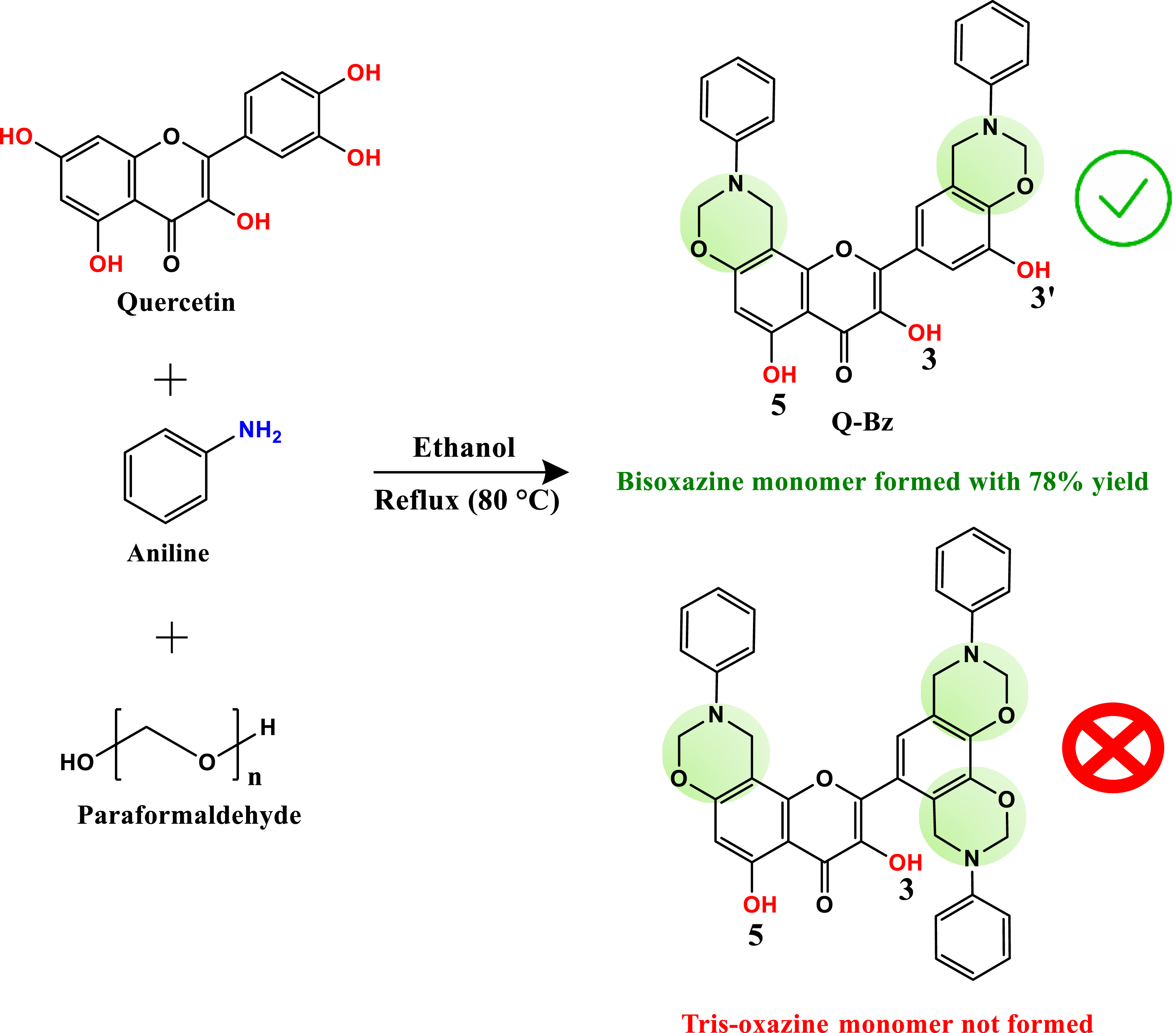
In the present work we report the synthesis of a novel bio-based Bz monomer using quercetin as a molecular scaffold. Quercetin (Q) is a type of polyphenol, which is a naturally occurring flavonoid compound. It is found abundantly in a variety of fruits and vegetables.28 Quercetin is recognized for its anti-inflammatory and antioxidant properties.29,30 Chemically, quercetin has a unique rigid tricyclic structure based on a flavone backbone, consisting of two phenyl rings (A and B) linked by a heterocyclic pyrone ring (C). The quercetin molecule has five phenol groups with different reactivities at carbon positions (3', 4', 3, 5, 7) (Figure 1).31,32 This structure provides many opportunities for modification and functionalization, making it a promising framework for the synthesis of new monomers with desirable thermo-mechanical properties. While quercetin has been used in epoxy33 and methacrylate networks,34 as well as in biodegradable polymers35 and nanomaterials,36 its use in the backbone of PBz materials has been limited. The targeted Bz monomer is formed using aniline as the source of amine and paraformaldehyde as the source of aldehyde. After synthesis completion the three phenolic –OH in quercetin are expected to get consumed in the oxazine ring formation, indeed the OH(5) proton is implicated in the formation of a strong intramolecular hydrogen bond with the adjacent carbonyl37 leading to a more stable hydroxyl and thus a decreased reactivity. Unforeseeably the formation of Q-Bz monomer with bisoxazine functionality is instantaneously completed within 1 h in ethanol. This monomer showed latent catalytic properties, with potential participation of the unreacted phenolic-OH group in intramolecular hydrogen bonding.38 Upon thermal treatment, this bonding becomes free, resulting in a labile acidic free phenolic-hydroxyl group that initiates polymerization at a low temperature of approximately 115°C. Extensive structural and thermal characterization studies were conducted to verify the monomer's structure. This work highlights the usefulness of this novel quercetin-based monomer, as it exhibited a tremendously low melting temperature due to the latent catalytic effect, high Tg of 280°C, low melt viscosity and excellent thermal stability, also it could be considered as a source of hydrogen bonding interactions, these outstanding properties are highly beneficial in the field of high performance thermosets.
Numbering of the hydroxyl groups in a quercetin molecule.
Experimental
Materials
Quercetin hydrate (95%) was purchased from Thermo Fisher Scientific (USA). Aniline and paraformaldehyde were acquired from VWR Chemicals (France). Ethanol (97%) was supplied from VWR-Prolabo. ethylacetate, acetone, sodium hydroxide, were acquired from Sigma Aldrich (France). The 1,4-dioxane and dimethyl sulfoxide (99.9%) were supplied from Honeywell Riedel-de-Haen (Germany). All chemicals used in this work were reagent-grade and were directly used without any further purification.
Synthesis of quercetin based benzoxazine (Q-Bz)
The synthesis of the desired tri-substituted Bz monomer was carried following the typical two-pot Mannich reaction involving quercetin, aniline and paraformaldehyde, indeed the addition of the three reagents simultaneously prevented the formation of the monomer. The detailed synthetic route for the Q-Bz monomer is presented in Figure 2.
Synthetic route for the Q-Bz monomer.
The synthesis was also investigated under various reaction conditions and with different solvents, as summarized in the previous table (Table 1). Results showed a polymerized product, unreacted starting materials, or varying degrees of conversion of phenolic-OH to oxazine ring, only one reaction carried out in ethanol for 1 hour surprisingly lead to the formation of a bis-benzoxazine monomer instead of the targeted one with 78% yield. Leaving the reaction mixture in ethanol for longer periods up to 24 h yielded insoluble oligomers this may be attributed to the unreacted phenolic-OH due to intramolecular hydrogen bonding interactions, which prevented it from existing in the free state and participating in the ring-closure reaction to form the oxazine ring.
Experimental conditions of the Q-Bz synthesis.
Solvent
Temperature (°C)
Time (h)
Inference
Ethanol
80
1
Bis-substituted product with 82% yield
DMSO
130
6
Mono-substituted, impure product
1,4-dioxane
100
24
Polymerization of the reaction mixture
Solventless
N/A
N/A
No reaction
Overall the reaction was achieved by adding Quercetin (1.5 g, 4.96 mmol) and aniline (1.32 g, 14.1 mmol) in an ethanol solution, the mixture was placed in a 300 mL three-necked round bottom flask equipped with a magnetic stirrer, a reflux condenser and a thermometer, stirred at 60°C for 15 min. Paraformaldehyde (0.84 g, 28 mmol) was then added gradually and reacted at 80°C for 60 min. After being cooled to room temperature, the reaction solution was washed three times with 3N NaOH aqueous solution and distilled water. The product was recrystallized from mixed solvents, acetone/ethyl-acetate in a 1:3 ratio. Finally Crude Q-Bz as a solid yellowish color was obtained with a yield of about 78%.
Preparation of the quercetin-based polybenzoxazine
The production process for the bio-benzoxazine monomer involved casting it in a custom-made stainless steel mold and curing it with high-pressure heat (approximately 60 MPa). The ring-opening cationic polymerization process was achieved without the use of initiators or catalysts, and the curing program was selected based on the thermal analysis data obtained from the monomer using differential scanning calorimetry (DSC). The final result, known as “PQ-Bz,” was produced by heating the monomer at four different temperatures (120, 140, 160, and 180°C) for 1 hour each, followed by a final post-cure at 200°C for 2 hours.
Characterization techniques
Fourier transform infrared (FTIR) spectra of the monomer samples were acquired using a Perkin Elmer100 spectrometer equipped with a deuterated triglycine sulphate (DTGS) detector and KBr optics. Transmission spectra in the range from 4000 to 500 cm−1 with a resolution of 4 cm−1 were obtained after averaging two scans by casting a thin film on a KBr monomer plate. Proton 1H NMR spectra were recorded with a Bruker NMR400 spectrometer (400.13 MHz) using DMSO-d6 as solvent and tetramethyl silane (TMS) as internal standard. The curing behavior and the thermal resistance of the studied monomers and polymers were assessed by DSC and thermogravimetric analysis (TGA), respectively. The DSC analyses were conducted using a DSC 2920 model from TA Instruments with a heating rate of 10°C/min and a nitrogen flow rate of 60 mL/min for all tests, while the TGA experiments were carried out with a TGA analyzer (Perkin Elmer TGA 4000 analyzer) under a nitrogen atmosphere (100 mL/min) and a heating rate of 20°C/min. The monomer’s processing window was determined using an Anton Paar rheometer (MCR302) equipped with a convection temperature device (CTD-450). A disposable lower measuring plate (25 mm) was loaded with the sample and heated to its melting point by convection radiation. The sample underwent oscillatory analysis using an amplitude of 0.5% and a frequency of 1 Hz. The upper plate, initially positioned 8 mm above the sample, was lowered. The analysis took place in an air atmosphere, with a heating rate of 2°C/min. The temperature range spanned from 70 to 160°C.
Results and discussion
Synthesis of the Q-Bz monomer
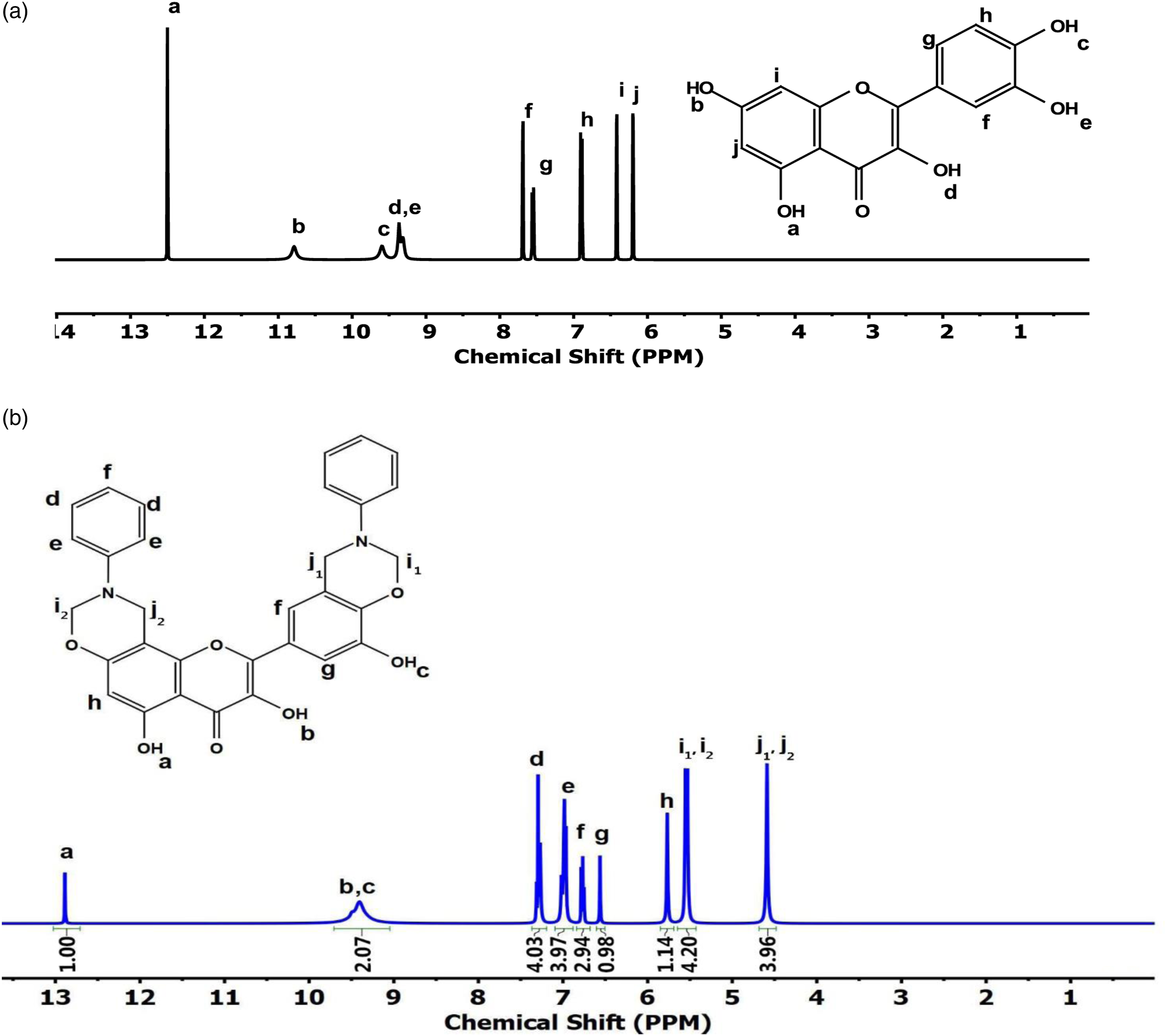
The 1H NMR spectrum of quercetin is shown in Figure 3(a). From the spectrum, two characteristic signals are identified as aromatic protons and hydroxyl protons. Aromatic proton resonances of the pyrone ring appeared as doublets at 6.2 ppm (1H, Ar-H-j) and 6.42 ppm (1H, Ar-H-i), whereas on the substituted catechol ring aromatic proton resonances appeared as singlets at 6.9 ppm (1H, Ar-H-h), 7.55 (1H, Ar-H-g) and 7.68 (1H, Ar-H-f). On the other hand, hydroxy proton resonances of quercetin are depicted as a doublet at 9.34 ppm (2H, Ar-OH-d,e), 2 singlets at 9.6 ppm (1H, Ar-OH-c) and 10.78 ppm (1H, Ar-OH-b), and a sharp singlet further downfield at 12.52 ppm (1H, Ar-H-a).
(a) 1H NMR spectrum of quercetin and (b) 1H NMR spectrum of the Q-Bz monomer.
Successful synthesis of the new Q-Bz monomer was verified by 1H NMR spectroscopy (Figure 3(b)) by the appearance of two superposed singlets at 4.62 ppm and a doublet at 5.54 ppm, representing the characteristic protons of the oxazine ring (2H, Ar-CH2-N-j) and (2H, O-CH2-N-i) respectively, the aromatic proton resonances appeared from 5.54 ppm to 7.8 ppm (13H, Ar-H-h,g,f,e,d). Moreover hyroxy proton resonances of the non-reacted phenolic OH(3’,3,5) appeared at 9.45 ppm (2H, Ar-OH-b,c) as a broad doublet and at 12.9 ppm (1H, Ar-OH-a) as a diminished singlet, compared to quercetin unreacted phenolics appeared slightly shifted downfield due to the surrounding groups of the newly synthetized monomer.
In contrast to quercetin, the synthetized Q-Bz monomer retained only three phenolic hydroxide all of which exhibited perfect integration ratios of 1 and 2 for OH(5) and OH(3,3’) respectively, this indicates the involvement of only two phenolic groups in the oxazine ring closure reaction with aniline and paraformaldehyde. Additionally the integration ratios of protons in O-CH2-N and Ar-CH2-N accurately reflects the presence of four hydrogen atoms, providing strong evidence that no isomeric forms were generated.
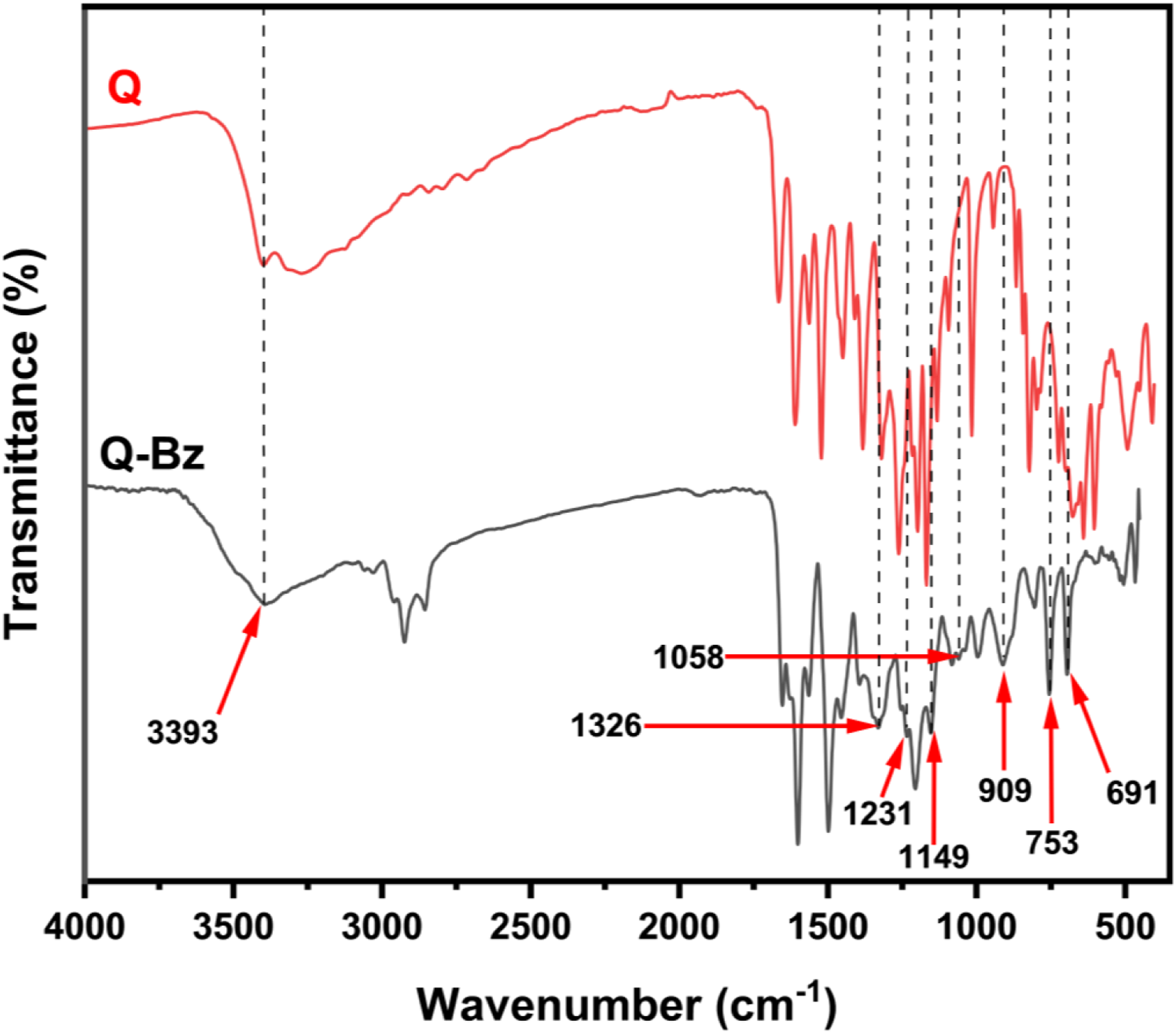
To further confirm the structure of the newly synthesized quercetin-derived benzoxazine and to verify the presence of each of its functionalities, an FTIR spectrum of Q and Q-Bz was obtained. As depicted in Figure 4, the stretching vibration bands of the (−OH) group were observed as a reduced narrower band at 3393 cm1. In juxtaposition to the substrate molecule Q, absorption bands related to oxazine rings were detected at several characteristic frequencies, including the wagging of CH2 into the closed benzoxazine ring at 1326 cm−1, the asymmetric and symmetric stretching of the C-O-C bond at 1231 cm−1 and 1058 cm−1, respectively.39 The asymmetric stretching of the C-N-C bond was detected at 1149 cm−1,40 the out-of-plane deformation of C-H in the aromatic ring fused to the oxazine ring was detected at 909 cm−1.441 Finally, mono-substituted benzene rings were detected based on the presence of characteristic peaks at 691 and 753 cm−1, which corresponded to the out-of-plane wagging deformation of aromatic C-H. The absorption peaks around 1651 and 1200 cm−1 were respectively attributed to the C-CO-C stretch and bending of ketone and C-O-C stretch in the pyrone ring.42 The in-plane vibration modes of the cycle’s double bond C=C were detected at 1496 cm−1 and 1598 cm−1 for the pyrone ring and the benzene respectively. Thus, all the above results of characterization are consistent with the successful synthesis of bifunctional benzoxazine in high purity.
FTIR spectrum of Q and the Q-Bz monomer.
Curing behavior
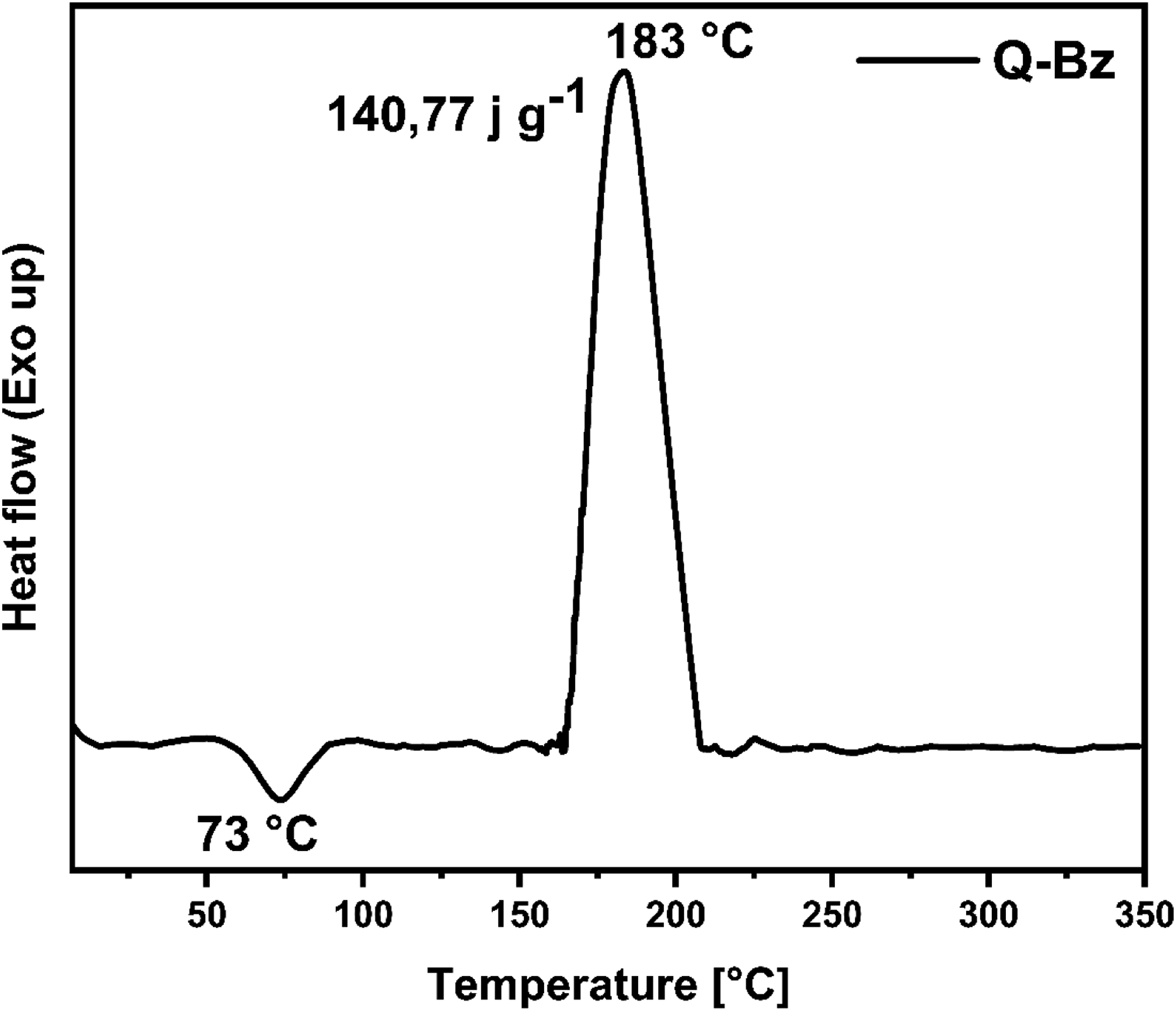
In order to study the curing behaviour of the newly developed Q-Bz monomer, DSC analysis was conducted. Figure 5 shows the obtained DSC curve. Q-Bz exhibited a small broad endothermic peak at 73°C mainly attributed to the melting point of the monomer. The exothermic peak, assigned to the ROP of benzoxazine was detected at 183°C with an onset temperature of 115°C. In comparison to previously reported bis-benzoxazine monomers, the polymerization temperature drastically decreased, this result support the successful synthesis of the Q-Bz monomer with a latent catalyst-effect. The phenomenon is mainly attributed to the presence of non reacted phenolic (OH) within the monomer’s structure. Indeed it has been demonstrated that the presence of such catalytically active groups will lower the polymerization temperature and increase the rate of the ROP reaction.43 Among all known traditional benzoxazines Q-Bz showed one of the lowest polymerization temperature ever recorded and this without the addition of any external catalyst or initiator,44 this exceptionally low temperature may be explained by the existence of an intramolecular hydrogen bond between the non-reacted ortho-positioned hydroxyl group OH(3’) and the oxygen of the neighboring oxazine ring.45
DSC curves of the studied monomer.
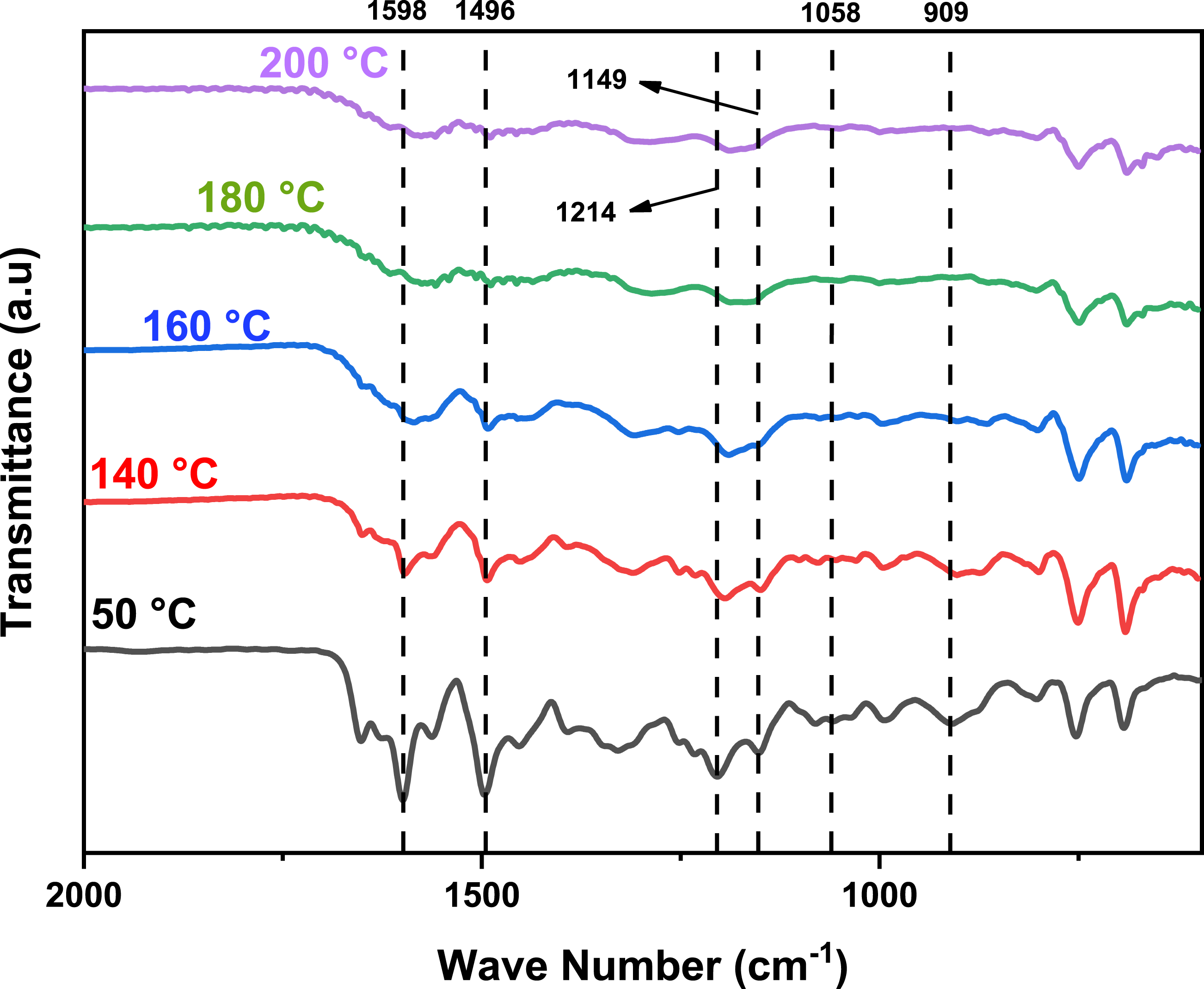
To elucidate the polymerization behavior of the newly synthetized Q-Bz monomer, a temperature dependent FTIR analysis was carried out, Figure 6 represents FTIR spectra of the sample after each curing stage (120, 140, 160, and 180°C). The FTIR spectra of the monomer exhibited distinctive vibrational peaks corresponding to specific bond vibrations. These included the asymmetric C–O–C vibration (approximately 1214 cm−1), the symmetric C–O–C vibration (around 1058 cm−1), the C–N–C vibration (approximately 1149 cm−1), and the characteristic out-of-plane mode vibration related to Bz (around 909 cm−1). These vibration bands associated with Bz were monitored to track the progress of the ROP reaction of the Q-Bz monomer. Furthermore, the characteristic C=C band at 1496 cm−1 and 1598 cm−1 was also monitored. Observations revealed a gradual reduction in the intensity of these bands as the temperature increased. This phenomenon provides evidence of the involvement of these specific bonds in the polymerization reaction. Notably, at a temperature of 180°C, the FTIR bands associated with benzoxazine and the characteristic olefin bands completely disappeared, which aligns well with the findings obtained from DSC analyses.
FTIR spectra of the Q-Bz monomer after each curing stage.
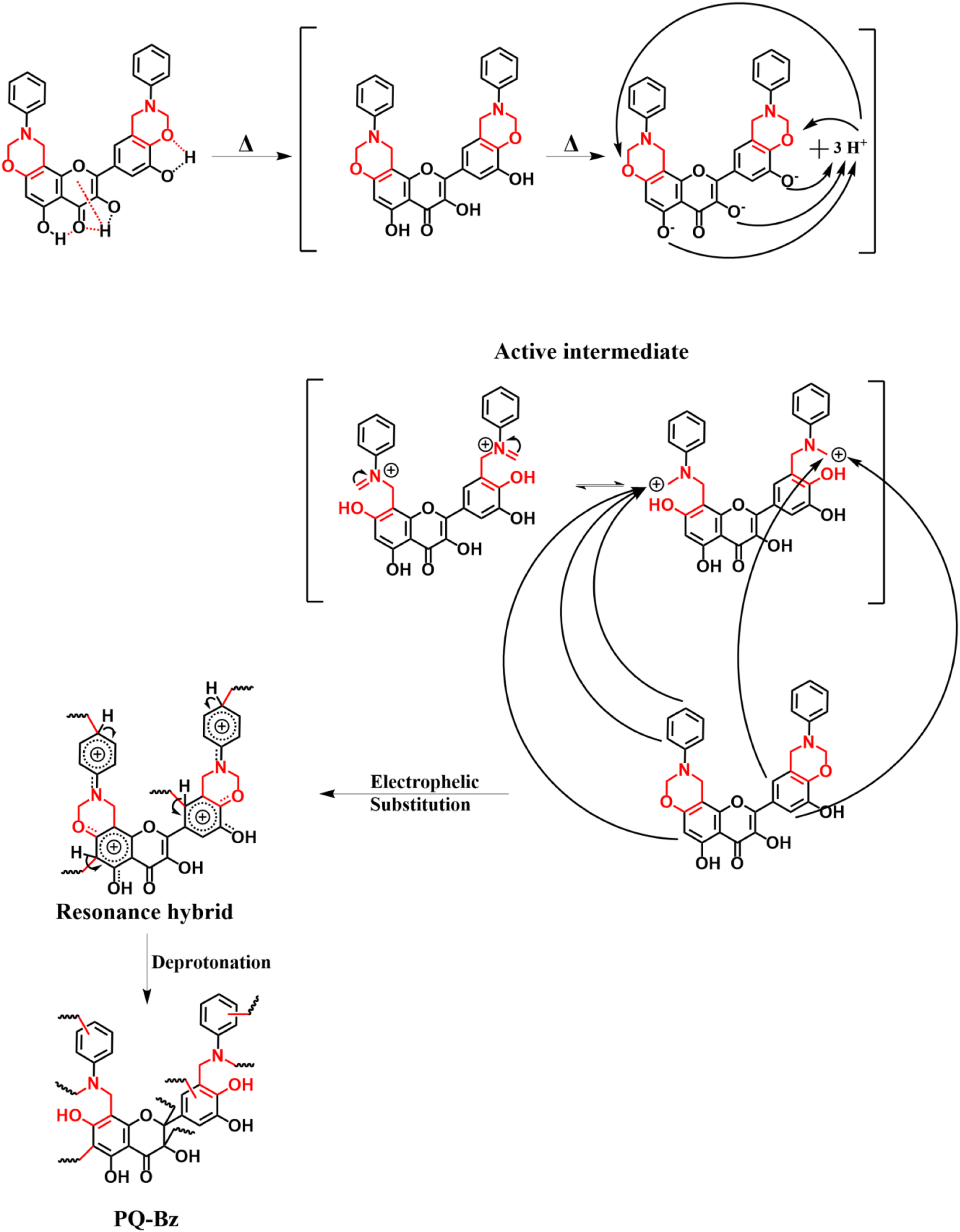
Thus, and in the light of all the previous findings a putative polymerization mechanism of the Q-Bz monomer is proposed in Figure 7. As previously discussed low polymerization temperature is supported by the presence of three hydroxyl groups in the molecule, which leads to a latent catalytic effect. When heated, the acidic hydroxyl groups −OH(3,3’,5) in the monomer are considered to release protons and assist in the opening of the oxazine ring through the protonation of oxygen. This protonation is followed by the cleavage of the O–CH2–N bond and the formation of an iminium ion intermediate.46 Finally, this active intermediate participates in an electrophilic aromatic substitution reaction (on the ortho-position by preference) to form the cross-linking network of the polymer.47 Afterwards released protons further accelerate the mechanism by thermal activation providing a second initiation process at higher temperatures. In addition to the oxazine ring it should be pointed out that the carbon-carbon double bond of the benzopyrone could also have participated in the cross-linked structure. In general the extension of the polymer network can be influenced by the availability and distribution of various propagation sites within the monomer. These sites, located remotely from each other, play a crucial role in the cross-linking process. However, to accurately understand and validate the specific steps involved in the polymerization and cross-linking reactions, further comprehensive research is necessary.
Putative polymerization mechanism representation for PQ-Bz formation.
Processing window
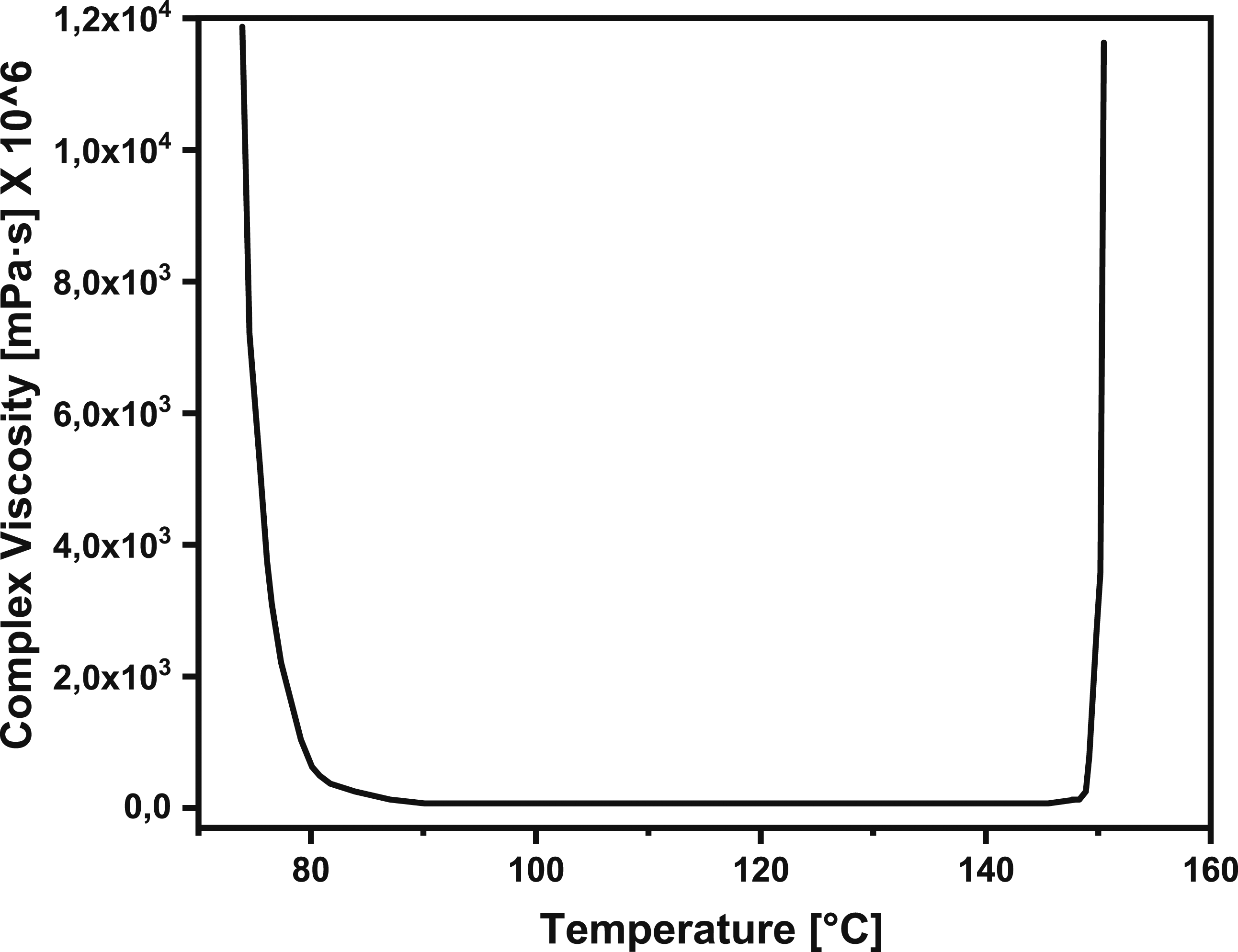
In order to assess the polymerization ability of Q-Bz and to validate its processing range, rheology dynamic analysis was conducted for evaluating the fluidity of the precursors. Figure 8 illustrates the dynamic viscosity profile as a function of temperature. Initially, below 73°C, Q-Bz exhibited a high viscosity due to its crystallinity, resulting in limited flow. Upon reaching 73°C a sudden viscosity drop to 2.3 MPa.s was observed, as the temperature slightly exceeded the melting point of the precursors at approximately 80°C viscosity further decreased to 0.15 MPa.s. These results are in well accordance with the findings obtained from DSC analysis. On attaining 150°C, the viscosity increased exponentially, due to the polymerization and crosslinking of the resin. Interestingly, in the temperature range of 80°C–150°C, the viscosity of the resin remained relatively constant while maintaining a liquid state. This characteristic signifies that the resin displays favorable flow properties over a wide temperature range (80°C–150°C). Accordingly, Q-Bz demonstrates excellent processability and holds potential for high performance applications at an industrial scale.
Temperature ramp rheology measurement for the Q-Bz monomers.
Thermal stability
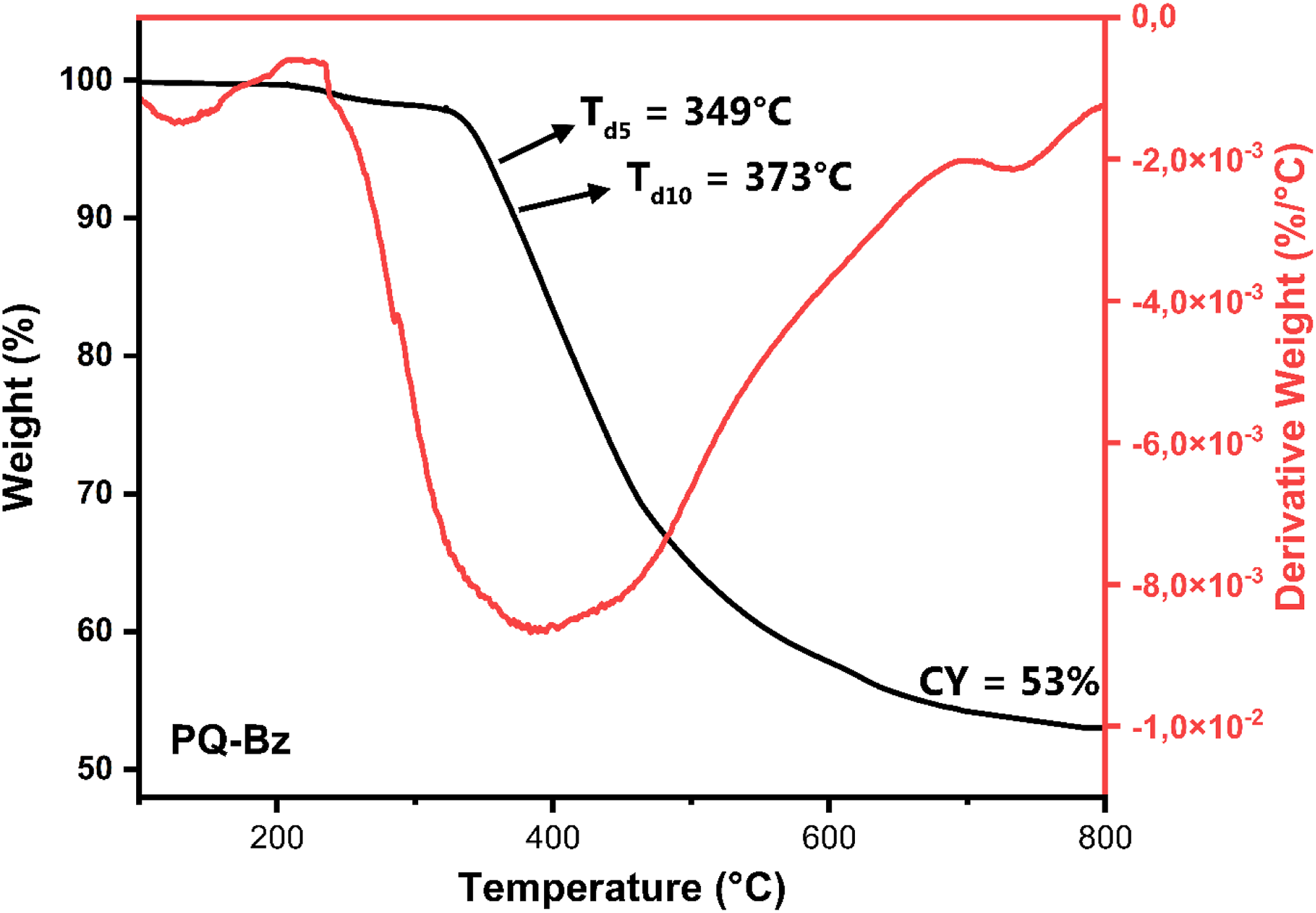
Following the confirmation of the monomer’s molecular structure and the study of its curing behavior, a TGA was conducted on the fully cured polymer, PQ-Bz. The TGA-DTG curves are depicted in Figure 9. Initially, a small mass loss below 100°C was observed at the outset of the TGA-DTG analysis, as indicated by the noticeable peak in the DTG curve. This initial mass loss can be attributed to the absorption of water, which occurs due to the highly polar nature of the developed polymer. Notably, a single decomposition step ranging from 290 to 671°C was observed. Remarkably, the 5 and 10% weight loss temperatures of PQ-Bz were significantly higher compared to other traditional bis-benzoxazine thermosets, such as BA-a.48 Specifically, the Td5 and Td10 temperatures were measured at 349 and 373°C, respectively. This excellent thermal stability can be attributed to the enhanced crosslinking density resulting from the polymerization of the C=C group in quercetin, in addition to the ROP of the oxazine ring. Moreover, PQ-Bz exhibited a high char yield value of 53% at 800°C. As a result, the design of a quercetin-based benzoxazine with multiple phenolic groups not only reduces the polymerization temperature but also provides excellent thermal stability. This makes it an ideal candidate material for high-temperature applications.
TGA-DTG curves of the studied polymer under N2 atmosphere.
Glass transition temperature
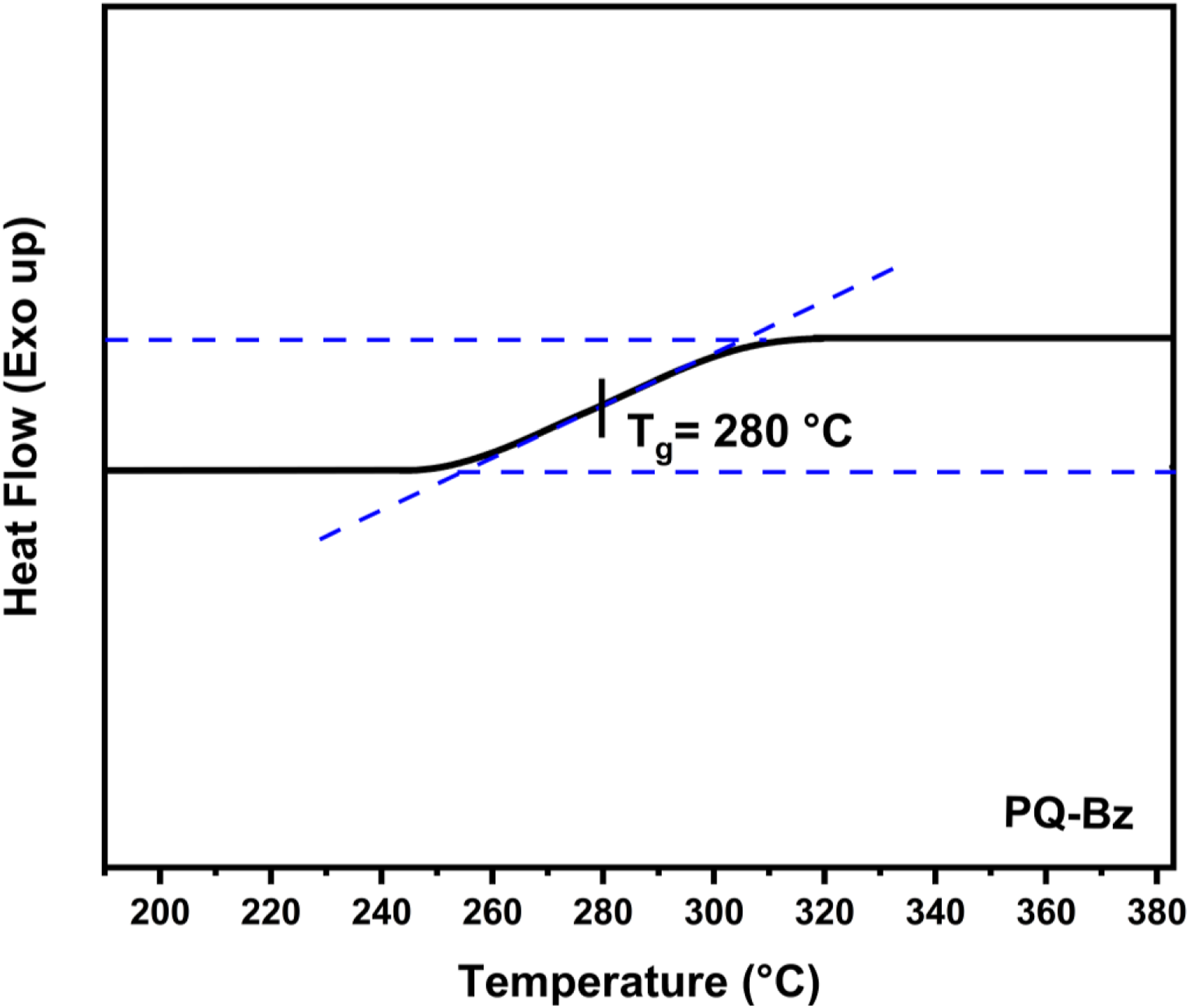
The cured PQ-Bz system was the focus of investigation, and its Tg was determined using DSC. However, it was noted that detecting the Tg in this particular system proved to be challenging, as shown in Figure 10. Despite the difficulties, the Q-Bz resin exhibited a relatively high Tg of approximately 280°C. Comparative analysis with other bio-based benzoxazines revealed that the Q-Bz resin demonstrated good and competitive performance in terms of its Tg. This finding confirms that the newly developed polymer has promising properties and potential applications.
Measurement of the glass transition temperature of PQ-Bz.
Comparative study
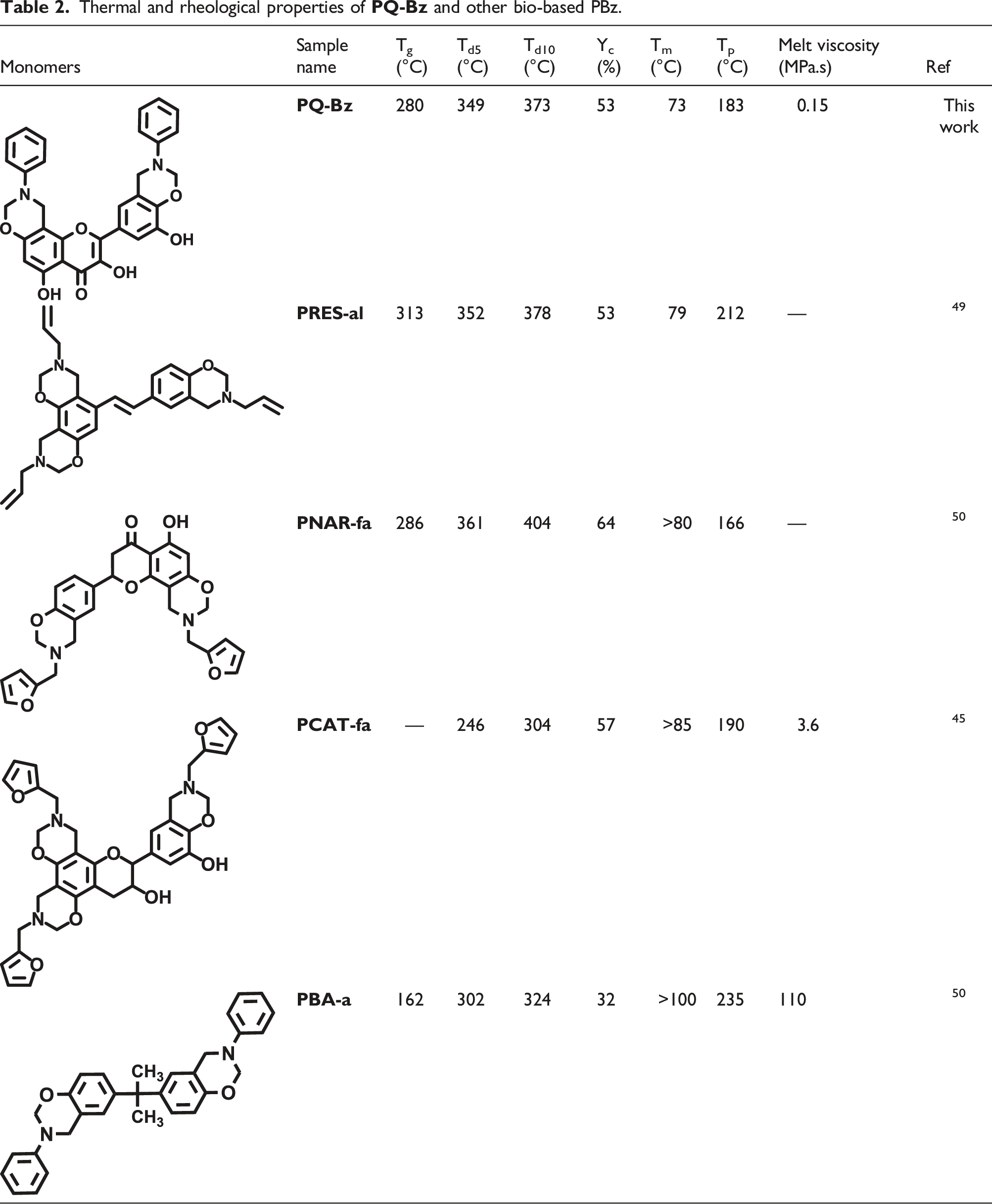
Table 2 lists the thermal and rheological properties of four different bio-based benzoxazine resins, including PQ-Bz, in comparison to the traditional BA-a resin. Generally, bio-based benzoxazines exhibit superior thermal stability and higher glass transition temperature (Tg), resulting in improved structural integrity due to enhanced polymerization reactions. Moreover, their naturally derived diverse molecular structures offer a wide range of additional functionalities. Notably, hydroxyl groups, among these functionalities, play a crucial role in reducing both the melting and polymerization temperatures of the monomers,51 consequently lowering their melt viscosity. In line with these observations, our newly synthesized PQ-Bz resin aligns with the aforementioned characteristics and demonstrates competitive properties, particularly in terms of its melting (73°C) and polymerization (183°C) temperatures, as well as its melt viscosity (0.15 MPa). Therefore, PQ-Bz exhibits promising potential for heat-resistant coating applications.
Thermal and rheological properties of PQ-Bz and other bio-based PBz.
A novel bio-based benzoxazine monomer was successfully synthesized and purified using green solvents. The monomer was derived from a renewable resource, namely quercetin, aniline, and paraformaldehyde. Its molecular structure was confirmed through investigation using 1H NMR and FTIR spectroscopy. The curing behavior of the monomer was studied using DSC and FTIR. The results revealed a remarkably low melting temperature of the precursor at 73°C. Additionally, the newly synthesized monomer exhibited a low polymerization temperature of 183°C. These findings were supported by the presence of weak intramolecular hydrogen bonds within the monomer, which generated a latent catalyst effect. This effect increased the reactivity of the precursor towards polymerization and facilitated ring-opening polymerization, as evidenced by the temperature-dependent FTIR analysis. Rheology measurements indicated that the Q-Bz monomers possessed excellent processability, as demonstrated by its wide processing window. The fully cured polymer exhibited a high glass transition temperature of 280°C and demonstrated high thermal stability, with initial decomposition temperatures (Td5 and Td10) of 349°C and 373°C, respectively. Furthermore, the polymer showed a char yield of 53% at 800°C. Overall, these findings validate the successful synthesis of a novel, high-performance, bio-based polybenzoxazine. The presence of a built-in latent catalyst functionality further enhances its potential. However, further studies will be necessary to fully evaluate the practical applications and limitations of PQ-Bz as a bio-based material.
Footnotes
Declaration of conflicting interests
The author(s) declared no potential conflicts of interest with respect to the research, authorship, and/or publication of this article.
Funding
The author(s) received no financial support for the research, authorship, and/or publication of this article.
ORCID iDs
Abdelwahed Berrouane
Mehdi Derradji
Oussama Mehelli
Wenbin Liu
Data availability statement
The data that support the findings of this study are available from the corresponding author upon reasonable request.
References
1.
LiXYaoHLuX, et al.Effect of pyrogallol on the ring-opening polymerization and curing kinetics of a fully bio-based benzoxazine. Thermochim Acta2020; 694: 178787.
2.
KrishnanSArumugamHChavaliM, et al.High dielectric, low curing with high thermally stable renewable eugenol-based poly-benzoxazine matrices and nanocomposites. J Appl Polym Sci2019; 136(6): 47050.
3.
ZhangKCaiRZhuangQ, et al.High performance crosslinked system based on reaction of benzoxazine with benzoxazole. J Polym Sci, Part A: Polym Chem2014; 52: 1514–1518.
4.
ZhangKLiuJOhashiS, et al.Synthesis of high thermal stability polybenzoxazoles via orthoimide-functional benzoxazine monomers. J Polym Sci, Part A: Polym Chem2015; 53: 1330–1338.
5.
ZhangGEl-MahdyAFAhmedLR, et al.Metal complexes of the porphyrin-functionalized polybenzoxazine. Polymers2022; 14(3): 449.
6.
LiWLiuJAshrafU, et al.Exogenous γ-aminobutyric acid (GABA) application improved early growth, net photosynthesis, and associated physio-biochemical events in maize. Front Plant Sci2016; 7(8): 919–932.
GhoshNKiskanBYagciY. Polybenzoxazines new high performance thermosetting resins: synthesis and properties. Prog Polym Sci2007; 32: 1344–1391.
9.
HariharanASrinivasanKMurthyC, et al.A novel imidazole-core-based benzoxazine and its blends for high-performance applications. Ind Eng Chem Res2017; 56(33): 9347–9354.
10.
MooreCJ. Synthetic polymers in the marine environment: A rapidly increasing, long-term threat. Environ Res2008; 108: 131–139.
11.
ChenQZhangLZhangJ, et al.Bio-based polybenzoxazines coatings for efficient marine antifouling. Prog Org Coating2023; 174: 107298.
12.
SoudjrariSDerradjiMAmriB, et al.Novel vanillin-based benzoxazine containing phthalonitrile thermosetting system: Simple synthesis, autocatalytic polymerization and high thermomechanical properties. High Perform Polym2022; 34(7): 818–827.
13.
DumasLBonnaudLOlivierM, et al.Eugenol-based benzoxazine: from straight synthesis to taming of the network properties. J Mater Chem A2015; 3: 6012–6018.
14.
DaiJYangSTengN, et al.Synthesis of eugenol-based silicon-containing benzoxazines and their applications as bio-based organic coatings. Coatings2018; 8: 88.
15.
DumasLBonnaudLOlivierM, et al.Bio-based high performance thermosets: stabilization and reinforcement of eugenol-based benzoxazine networks with BMI and CNT. Eur Polym J2015; 67: 494–502.
16.
DumasLBonnaudLOlivierM, et al.Chavicol benzoxazine: ultra high Tg biobased thermoset with tunable extended network. Eur Polym J2016; 81: 337–346.
17.
WangCSunJLiuX, et al.Synthesis and copolymerization of fully bio-based benzoxazines from guaiacol, furfurylamine and stearylamine. Green Chem2012; 14: 2799–2806.
18.
SalumMLIguchiDArzaCR, et al.Making benzoxazines greener: design, synthesis and polymerization of a biobased benzoxazine fulfilling two principles of green chemistry. ACS Sustainable Chem Eng2018; 6: 13096–13106.
19.
Rodriguez ArzaCFroimowiczPIshidaH. Smart chemical design incorporating umbelliferone as natural renewable resource toward the preparation of thermally stable thermosets materials based on benzoxazine chemistry. RSC Adv2015; 5: 97855–97861.
20.
DumasLBonnaudLOlivierM, et al.Arbutin-based benzoxazine: en route to an intrinsic water soluble biobased resin. Green Chem2016; 18: 4954–4960.
21.
XuHZhangWLuZ, et al.Hybrid polybenzoxazine with tunable properties. RSC Adv2013; 3: 3677–3682.
22.
KotzebueLRVde OliveiraJRda SilvaJB, et al.Development of fully biobased high-performance bis-benzoxazine under environmentally friendly conditions. ACS Sustainable Chem Eng2018; 6: 5485–5494.
23.
BonnaudLCholletBDumasL, et al.High-performance bio-based benzoxazines from enzymatic synthesis of diphenols. Macromol Chem Phys2019; 220: 1800312.
24.
DerradjiMMehelliOLiuW, et al.Sustainable and ecofriendly chemical design of high performance bio-based thermosets for advanced applications. Front Chem2021; 9: 691117.
25.
ClarkeCJTuWCLeversO, et al.Green and sustainable solvents in chemical processes. Chem Rev2018; 118(2): 747–800.
26.
WangYChenJBenestyJ, et al.Synthesis and properties of benzoxazine monomers bearing both 3-methyltetrahydrophtalimide and nitrile groups: para-para vs. ortho-ortho. Macromol Res2020; 21: 74–81.
27.
XuMWuTJvan ZanteA, et al.Mortality risk after clinical management of recurrent and metastatic adenoid cystic carcinoma. Polymer2018; 47: 28–39.
28.
MieanKHMohamedS, Flavonoid (myricetin, quercetin, kaempferol, luteolin, and apigenin) content of edible tropical plants. J Agric Food Chem2001; 49(6): 3106–3112.
29.
FormicaJVRegelsonW. Review of the biology of quercetin and related bioflavonoids. Food Chem Toxicol1995; 33: 1061–1080.
30.
BootsAWHaenenGRMMBastA. Health effects of quercetin: from antioxidant to nutraceutical. Eur J Pharmacol2008; 585: 325–337.
31.
JurdL, Plant polyphenols.V. Selective alkylation of the 7-hydroxyl group in polyhydroxyflavones. J Am Chem Soc1958; 80(20): 5531–5536.
32.
JurdL, The selective alkylation of polyphenols. II. methylation of 7-4'-and 3'-hydroxyl groups in flavonols. J Org Chem1962; 27(4): 1294–1297.
33.
ShibataMYoshiharaSYashiroM, et al.Thermal and mechanical properties of sorbitol-based epoxy resin cured with quercetin and the biocomposites with wood flour. J Appl Polym Sci2013; 128: 2753–2758.
34.
GuptaPAuthimoolamSPHiltJZ, et al.Quercetin conjugated poly(β-amino esters) nanogels for the treatment of cellular oxidative stress. Acta Biomater2015; 27: 194–204.
35.
DasguptaF. Biocompatible and biodegradable polymers from renewable natural polyphenols. U.S. Patent2013; 8: 374–513.
36.
El-GogaryRIRubioNWangJT, et al.Polyethylene glycol conjugated polymeric nanocapsules for targeted delivery of quercetin to folate-expressing cancer cells in vitro and in vivo. ACS Nano2014; 8(2): 1384–1401.
37.
KyriakouEPrimikyriACharisiadisP, et al.Unexpected enzyme-catalyzed regioselective acylation of flavonoid aglycones and rapid product screening. Org Biomol Chem2012; 10(9): 1739–1742.
38.
BaqarMAgagTHuangR, et al.Mechanistic pathways for the polymerization of methylolfunctional benzoxazine monomers. Macromolecules2012; 45: 8119–8125.
39.
JinLAgagTIshidaH, Bis(benzoxazine-maleimide)s as a novel class of high performance resin: synthesis and properties. Eur Polym J2010; 46(2): 354–363.
40.
WangJFangXWuMQ, et al.Synthesis curing kinetics and thermal properties of bisphenol-AP-based benzoxazine. Eur Polym J2011; 47(11): 2158–2168.
41.
DunkersJIshidaH. Vibrational assignments of N,N-bis(3,5-dimethyl-2-hydroxybenzyl)methylamine in the fingerprint region. Spectrochim Acta1995; 51: 855–867.
42.
DaiJTengNPengY, et al.Biobased benzoxazine derived from daidzein and furfurylamine: microwave‐assisted synthesis and thermal properties investigation. ChemSusChem2018; 11(18): 3175–3183.
43.
KayaGKiskanBYagciY, Phenolic naphthoxazines as curing promoters for benzoxazines. Macromolecules2018; 51(5): 1688–1695.
44.
LochabBMonishaMAmarnathN, et al.Review on the accelerated and low-temperature polymerization of benzoxazine resins: addition polymerizable sustainable polymers. Polymers2021; 13: 1260.
45.
MukherjeeSAmarnathNRamkumarM, et al.Catechin and furfurylamine derived biobased benzoxazine with latent-catalyst effect. Macromol Chem Phys2022; 223: 2100458.
46.
RibeiroFWRodrigues-OliveiraAFCorreraT, et al.Benzoxazine formation mechanism evaluation by direct observation of reaction intermediates. J Phys Chem A2019; 123(38): 8179–8187.
47.
HanLSalumMLZhangK, et al.Intrinsic self-initiating thermal ring-opening polymerization of 1,3-benzoxazines without the influence of impurities using very high purity crystals. J Polym Sci, Part A: Polym Chem2017; 55: 3434–3445.
48.
SiniNKAzechiMEndoT. Synthesis and properties of spirocentered benzoxazines. Macromolecules2015; 48: 7466–7472.
49.
XingYHeXYangR, et al.Design of high-performance polybenzoxazines with tunable extended networks based on resveratrol and allyl functional benzoxazine. Polymers2020; 12: 2794.
50.
ZhangKLiuYHanM, et al.Smart and sustainable design of latent catalyst-containing benzoxazine-bio-resins and application studies. Green Chem2020; 22(4): 1209–1219.
51.
KiskanBKozBYagciY. Synthesis and characterization of fluid 1, 3-benzoxazine monomers and their thermally activated curing. J Polym Sci Polym Chem2009; 47: 6955–6961.