




Abstract
Research into psychical phenomena such as telepathy and spiritualism in the 19th century was so much hampered by fraudulent mediumship that researchers and the subjects found themselves caught up in what Watzlawick called a ‘pragmatic paradox’, i.e. the only way for a researcher to prove that their medium was ‘real’ consisted in trying to expose them as ‘fakes’. This had consequences for the epistemic claims both parties could make. By the early 20th century, both researchers and mediums freed themselves from this paradox and redefined their respective practices as ‘parapsychology’ and ‘performing telepathy’, and simultaneously reconsidered their epistemic claims. In this article, I shall argue that it is necessary to explore the intricate relations between the epistemic claims raised by mediums and researchers, their social identities, and the struggle to appropriate the object of knowledge by both parties, approached here from a social epistemology perspective. I shall try to answer the question why it may have been reasonable for psychical researchers and parapsychologists to not give up on their research endeavors – even when seemingly insurmountable obstacles stood in the way of gaining knowledge – by referring to the concept of ‘perseverance of ignorance’.
Introduction
Though long considered a subject unworthy of serious discussion (Boring, 1950), or even somewhat of an embarrassment to present-day psychologists (Leahey, 2000), today, it is acknowledged that several pioneers and founding fathers of psychology – most notably Edmund Gurney, Frederic Myers, and William James – were deeply interested in what were then called ‘psychical phenomena’ (a series of singularities taking place in the realm of non-physical existence). This dimension is especially recognized in the works of James (see Ford, 1998; James, 1986; Sech Junior, de Freitas Araujo, and Moreira-Almeida, 2012). In recent decades, the historiography of the occult sciences, too, has come to maturity (Lapachelle, 2011; Luckhurst, 2002; Mauskopf and McVaugh, 1980); Oppenheim, 1985; Sommer, 2012), as has historical and biographical research of mediums, often from a critical viewpoint (Leonard, 2005; Owen 2004). However, the relationship between early psychical researchers and their objects of investigation has not been studied extensively. These relations were strained from the start by mutual suspicion – if not outright distrust – but also by mutual dependency. When these issues of dependency and distrust proved insurmountable, some researchers and mediums redefined their respective ‘fields’ in the first decade of the 20th century, which, in turn, had consequences for the respective epistemic claims they subsequently would make. I argue that it is necessary to explore the intricate relations between the epistemic claims raised by mediums and by researchers, their social identities, and the struggle to appropriate the object of knowledge. This analysis is approached from a social epistemology perspective (Fuller, 2002; Schmitt, 1994).
Although ‘mediumship’ is often associated with a whole array of somewhat spectacular behaviors, strictly speaking, it refers only to an agent's claim of being able to mediate between the world of the living and that of the dead – hence the term. While certainly not all psychical researchers were anti-religious or even anti-spiritual, many felt at unease with the idea that one could ‘tap into the domain of the spirits’, and preferred to reinterpret it as an ability to ‘transfer thoughts’ (telepathy). This reinterpretation laid the foundations for a fundamental divide between researcher and their subject.
What defines telepathy from the perspective of science, as Gurney, Myers, and Podmore (1918: 61) pointed out, is the fact that thought-transference is probably the true explanation of certain results professedly produced by ‘spiritualistic mediumship’, for till telepathic percipience is allowed for, as a natural human faculty, the occasional manifestations of it in dubious circumstances are certain to be a source of confusion and error.
For the first part of this study, I rely on the biographies of several well-known mediums from the 19th century and their relations to psychical researchers. For the latter part, I rely on the biography of Eugen de Rubini, a little studied 20th-century performing telepath, and examine his connection to the emerging discipline of ‘parapsychology’. In the conclusions, I return to the problem of knowledge claims, and shall argue that perseverance of ignorance, and not suspension of disbelief, is what enabled psychical researchers and parapsychologists to carry out their work. This concept may help us understand why it can be reasonable to persist in research, even when seemingly insurmountable obstacles stand in the way of gaining knowledge.
Scientific approaches to telepathy
The rising public interest in ‘spiritism’ and the quickly emerging investigations into these phenomena in Western Europe and the US during the second half of the 19th century have often been understood as part of the larger ‘modernist project’ (Pettman, 2001) in which spiritism functioned as a ‘counter-culture’, or even a ‘religion’ of sorts, allowing, as Alex Owen (2004) argued, the intellectual and cultural avant-garde to redefine our understanding of rationality and consciousness. The 19th century may have been a ‘confusing place to dwell’, writes George Cotkin, but that's precisely what encouraged scientists and artists alike to engage ‘in the act of creating a new world’, which, among other things, encompassed uncovering ‘truths of nature and self’ (Cotkin, 2004: xii). A fair number of these ‘truths of nature and self’ were of occult essence; that is, they pertained to, in the well-known words of William James (1890: 361), ‘a dust cloud of exceptional observations, of occurrences minute and irregular and seldom met with’. These phenomena were to be investigated with scientific rigor (precise observation, experimental testing) in the hopes of understanding their working mechanisms (Carrington, 1945; Connor, 1999; Luckhurst, 2002; Podmore, 1902; Wilson, 2013). This is how that ‘great field for new discoveries’ (James, 1890: 361) was originally conceived, which would soon be called ‘psychical research’, and in which telepathy was to play such a central role.
While spiritist phenomena, especially telepathy, were conceived of as legitimate research subjects, the suggestion, expressed by practicing mediums, that they were able to communicate with the souls of dead spirits was in fact not accepted prima facie by all or even most psychical researchers. While it is true that the founding members of the British Society for Psychical Research (SPR) may have hoped to find empirical evidence for the survival of the soul after death (Podmore, 1908: 204), others were much more skeptical regarding spirits claims. To them, mediums were believed to be ‘tapping the memory-stores of living persons’ (Alvarado, Nahm, and Sommer, 2012: 856). The question was which (natural) processes allowed this to happen?
The first psychical researchers who offered an explanatory framework outside spiritism sought to locate the source of telepathy in a particular property of the brain or its processes, suggesting that through some yet unknown material mechanism or force, a person's brain may be able to impinge ‘content’ onto another brain. Later psychical researchers would regard telepathy rather as a property of certain psychological processes. What follows below is a short, selective discussion of some of the most important attempts to understand telepathy by psychical researchers, leaving aside explanations of other spiritual phenomena, such as telekinesis, clairvoyance, automatic writing, somnambulism, etc. I also leave aside the vast difference among psychical research regarding methodologies and approaches to telepathy, and focus solely on their conceptualization of the phenomenon.
It was James Knowles, architect and author, who as early as 1869 reasoned that the mind may transmit certain ‘electromagnetic undulations’ that travel from brain to brain, producing ‘impressions, dim portraits of thoughts’, allowing for what would later be called telepathy to take place (quoted in Shure, 2018: 8). His work not only preceded the discovery of the electroencephalogram (EEG) by some 70 years, it would also put ‘brainwaves’ on the same scale as electromagnetic waves (defined by Maxwell in 1865), radio waves (discovered in the 1880s), and X-rays (1895). This, Caitlin Shure argues, made Knowles something of a forerunner of modern day brain research. He was mistaken only, she argues, in believing that brainwaves take place outside the brain, allowing for telepathy to occur, which she dismisses as ‘fanciful thinking’, although, of course, the whole point of describing ‘electromagnetic undulations’ was to explain telepathy.
Knowles was not a ‘psychical researcher’, however, but the idea of electromagnetic waves proved a useful hypothesis for future telepathy research. In 1884, Oliver Lodge, a British physicist who identified electromagnetic radiation, proposed to liken telepathy to the way a discharge in an electric circuit can cause a discharge in another circuit at some distance; similarly, ‘sensory consciousness’ in a person may be thought of as ‘a faint echo in space or in other brains’ (quoted in Luckhurst, 2002: 79). The likening of telepathy to electrical waves was adopted by researchers such as William Barrett and William Crookes in the late 19th century, and remained a powerful metaphor until well into the 20th century (see Noakes, 2016).
William Crookes, trained as a chemist and physicist who turned to psychical research in the mid-1870s, postulated that telepathy requires a ‘physical change’ in the brain of one person brought about by some manipulation of another brain, accompanied by ‘certain molecular movements’ in that brain. All the phenomena of the universe are presumably in some way continuous, and it is unscientific to call in the aid of mysterious agencies when with every fresh advance in knowledge it is shown that ether vibrations have powers and attributes abundantly equal to any demand – even to the transmission of thought. (Crookes, 1897: 338)
Philosopher and founding father of American psychology William James, quite a skeptic when it came to occultism in general, believed telepathy to be not merely a possibility but a likely probability. He was reluctant to offer an explanation of it, but, as Marcus Ford (1998) proposes, being a ‘panpsychist’ who, not unlike Myers, believes that all material has a psychic dimension or component, James may well have believed it possible that one body ‘feels’ the psychology (psychological content) of that of another, by which telepathic communication could take place. This, at any rate, seems to be what James was alluding at when he wrote in 1895 that agents under certain conditions can project impressions on another person, and ‘that the telepathic “impact” in such a case produces hallucinations’ (James, 1986c[1895]: 125).
At the turn of the 19th century, dynamic psychologists such as Theodor Flournoy, Carl Gustav Jung, and several of Freud's followers, sought to explain telepathy equally non-materialistically, namely as the result of unconscious mental processes. The extra-sensory perception of distant thoughts might be a special ability of the unconscious (or ‘subliminal’) mind. Thus, Flournoy argued that certain types of personality were more prone to become a medium, especially those that had been through strong emotional experiences (Flournoy, 1911). Freud proposed along similar lines that if telepathy existed, surely the emotional content of the messages transferred would play a role (Freud, 1933: 36). Like William James and other skeptics, Freud believed telepathy to be possible. However, unlike James, he never worked with mediums, although he had done some experiments with his daughter Anna and one of his followers, Hungarian psychiatrist Sandor Ferenczi.
It was Ferenczi who got engaged in experiments with mediums and who proposed that anxiety reinforces the capacity to send telepathic messages, while a calm state of mind increases the capacity to receive them. The receiver of these telepathic messages then responds unconsciously and ‘activates’ unconscious complexes in the sender, which in psychoanalytic terms is understood as transference and countertransference (see Gyimesi, 2012: 137–8). Carl Jung, a former student of Flournoy and future student of Freud, also worked with a medium in an early stage of his career, a girl named ‘S. W.’ (his cousin), who allegedly was able to communicate with the spirits and with whom he had also done some telepathic experiments. Initially, Jung sought an explanation of the medium's abilities ‘in harmony with the natural sciences’, but later switched to a psychodynamic approach, more in line with Flournoy. He would view the medium's ‘mystic system’ as an example of ‘heightened unconscious performance’ that transcended her normal intelligence (Shamdasani, 2015: 296).
In sum, we have observed a gradual succession of perspectives in the work of psychical researchers between the 1870s and 1920s. The initial use of physiological analogies – using the natural sciences as the explanatory model, replete with a mechanical conceptualization of the mind – was eventually replaced by a dynamic approach in which new terminology and new metaphors circulated, and, above all, a new conceptualization of the mind, stressing its autonomy. Of course, this development must be understood against the backdrop of discipline formation and institutionalization of psychology as an emerging scientific field that played out differently in various European countries and in the United States, but also, as Johan Heilbron (1995) has pointed out, in the light of the emergence of the social sciences from rivalling philosophies and methodologies, with naturalism relying on experimentation in search of natural laws in human behavior on the one hand, and anti-reductionalism on the other. We find these scientists trying to establish specific principles proper to the human sciences while still operating from within a naturalistic framework as their main philosophy of science. For some, including Wilhelm Wundt, father of experimental psychology in Germany, this meant rejection of spiritist notions when they seemed to defy the natural laws (Wolffram, 2012), while others, such as William James, were less sure about that. I shall return to the problem of what it means to accept propositions about which one cannot be ‘too sure’ at the end of this article, and complete this section with one additional observation. Psychical researchers not just harbored different methodological and philosophical assumptions, they also encountered fierce opposition from some fellow researchers who posed as defenders of ‘scientific psychology’, attempting to purify its emerging discourse by ‘othering’ psychical research (see Coon, 1992; Danziger, 1997; Morawski, 1988). Hugo Münsterberg, Granville Stanley Hall, James Cattell, and Edward Titchener, among others, sought to actively disengage the field of psychology from psychical research and wrote critically of the works of William James and others (see Alvarado, 2017; Ford 1998). These opponents were unconvinced of the reality of telepathy, believing mediums to be frauds, and accused psychical researchers of being gullible. Some even took it upon themselves to unmask mediums and were often quite successful, too. Psychical researchers thus had to ward off two forms of distrust: one coming from their peers, and another from the mediums, the subjects they had to work with, who had very different conceptions of telepathy and could be mistrustful of the researcher's intentions. Before I get into the question of who deceived whom, I shall first examine the knowledge claims made by the research subjects.
Mediumships and the social epistemology of mediumistic knowledge
Who were the mediums that claimed to be able to tap into spirits of other people? It is easy to assume that they were mostly young, uneducated girls seeking to escape the constraints of society (see Moore, 1975). Female mediums have certainly been more frequently the subject of historical studies than their male counterparts, especially by feminist scholars (see Braude, 2001; Galvan, 2010; Stone-Blackburn, 1993). However, perhaps as many as half of them were males, and since mediumship could be considered a religious, spiritual, or even a philosophical calling, it required cultivating a credible identity. Practitioners had to navigate between the identity of a magician or illusionist, who – like the medium – performed astonishing feats before an audience, and that of a priest or clergyman, who offered spiritual hope and consolation. Mediums offered neither mere entertainment nor pure religion; rather, they facilitated a semi-sacred practice in which they appeared to communicate with the dead, conveying ‘secret information’ they were not supposed to possess.
It is to this highly specific, context dependent knowledge claims that I turn my attention here. I shall emphasize the way mediumistic knowledge claims were based on contested testimonies from agents who asserted certain ‘epistemic privileges’. More importantly, I stress the situatedness of these knowledge claims, which emerged within specific social domains populated by various parties with different interests, all seeking to exercise ownership over these ‘units of knowledge’. First, I examine how mediums constructed epistemic privilege in relation to their social identities; next, I explore these claims in relation to peer disagreement in the field of psychic research.
Though the term ‘epistemic privilege’ is often associated with feminist standpoint theory, where the ‘right to speak’ of marginalized voices is underscored, especially of women (see Bar On, 2013; Janack, 1997), a wider application of the term, beyond the question of marginalization, seems warranted here. In this context, I take ‘epistemic privilege’ to signify that only certain agents are supposed to be in a position to know certain things – which of course is precisely the claim mediums made. To justify these privileges, a number of demands had to be met.
First, knowledge was understood as ‘gifted’ to the medium rather than acquired through learning, though mediums claimed they could ‘refine’ their skills with practice. Spiritist knowledge originated from an external source (spirits, ghosts) that would visit or even temporarily take over the medium. In a trance state, mediums would sometimes speak in different voices, produce discourse unconsciously (‘automatic writing’), or communicate in languages they were not supposed to know. Biographical and autobiographical accounts of mediums often emphasize that their abilities ‘awakened’ spontaneously at a young age (typically before or during puberty), sometimes following what Schleber Lowry (2017) calls an ‘inaugural illness’, or after attending a spiritist séance where they sensed the presence of another being. For instance, when American medium Leonora Piper attended a clairvoyant session in her 20s, she fell into a trance and ‘channeled’ messages in broken French from a supposed guiding spirit. Her gifts were recognized by William James and Richard Hodgson, who introduced her into the circles of psychical research, after which she became a full-time paid research subject (Figure 1). The Italian medium Eusapia Palladino reportedly experienced ‘spontaneous manifestations’ at around age eight and was later ‘discovered’ by an academic (Alvarado, 2011). Similarly, English clairvoyant Emma Hardinge Britten realized in her youth that she could predict future events and see spirits of deceased relatives (Pendleton, 2011). English medium Florence Cook began seeing spirits and hearing disembodied voices at age 14. Scottish spiritualist Daniel Dunglas Home recounted in his 1864 autobiography that hearing the voice of his deceased mother made him aware of his ability to connect with spirits. These narratives consistently emphasize the external and involuntary nature of mediumistic abilities.
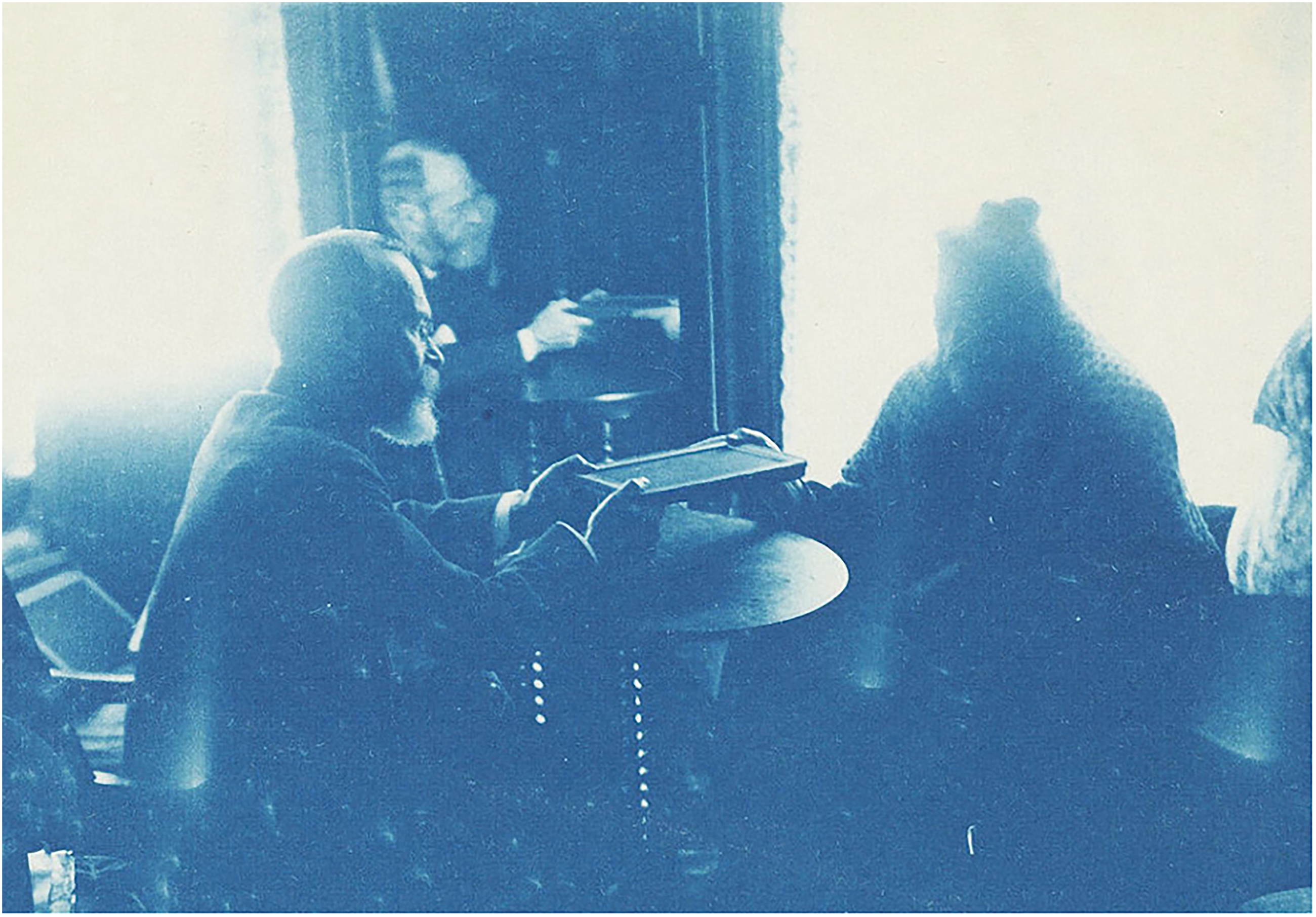
William James Sitting with Mrs. Walden in Séance. Undated but Before 1910.
Second, mediums portrayed their work as a duty imposed upon them rather than a role they actively sought. Swiss medium Hélène Smith claimed to be ‘overcome’ by visiting spirits and refused financial compensation for her séances. Similarly, Daniel Home never charged fees, though he accepted ‘gifts’ and ‘donations’ and enjoyed the hospitality of those he performed for. Others, such as Mrs. Piper, did accept payment – she received a generous annual income from the SPR – but considering the long and exhausting sittings she endured, during which she had to channel numerous responses to endless questions, compensation seemed fair. These tropes, emphasizing the ‘involuntary’ nature of their work, served to distinguish mediumistic knowledge from ordinary sources of knowledge, reinforcing their claim to a unique epistemic privilege.
A third factor in establishing epistemic privilege involved the authorization of their knowledge claims. ‘Extraordinary claims require extraordinary evidence’, Carl Sagan (1979) famously wrote, and mediums were generally aware that something ‘extraordinary’ was required to establish credibility. Scientists, as rational skeptics who in many ways represented the opposite of mediums, became an ideal source of authority to validate their claims. Many mediums actively engaged with scientists, submitting to extensive research during séances and even forming long-term collaborations with them, despite their own reservations. Mrs. Smith allowed Flournoy to investigate her case for over a year, while Mrs. Piper agreed to perform for the SPR in both the U.S. and England for approximately 14 years. Mrs. Palladino sought credibility through sheer volume, undergoing investigations by a small army of well-known researchers, including Cesare Lombroso, Pierre and Marie Curie, Oliver Lodge, Frederic Myers, Henry Sidgwick, and William Crookes.
These scientists, in turn, produced extensive reports and minute descriptions of the phenomena they witnessed, generating thousands of pages of intricate observations and transcriptions. By bearing witness to these events and testifying to the proceedings, scientists became complicit in the knowledge-making process. As Steven Shapin (1994) argues, this transformation of singular experiences into public knowledge occurred through a body of scientific discourse, reinforcing the epistemic status of mediumistic claims.
Fraud, self-deception, and ignorance
As mediums and researchers worked in tandem to produce scientific knowledge about spiritistic and especially telepathic phenomena, both parties were, of course, aware that they often had very different claims about the nature of these phenomena. This did not necessarily have to result in conflict as long as both mediums and researchers could claim that their realities coexisted, with researchers offering an ‘alternative explanation’ for what were real – though not necessarily spiritual – phenomena. However, conflicts arose when it was suggested that the medium's reality was entirely illusory, based on fraud or self-deception. This was the case when Flournoy proposed that the messages from his medium, Mrs. Smith, essentially came from herself (Flournoy, 1994: 247), leading her to angrily break off relations with him. Self-deception, or worse, fraud was a simpler and far more reasonable explanation for the medium's accomplishments, as both parties knew. Consequently, suspicion had always stood between researchers and mediums, but, as I shall argue here, it also united them.
From the famous Fox sisters to the Creery sisters, and from the parade of mediums discussed by Podmore (1908) to the ones mentioned here, with few exceptions, all were at one time or another accused of using trickery or, at the very least, of having fallen victim to self-deception. Some indeed were caught cheating red-handed, and though most mediums vehemently denied fraud, some actually admitted to it (the Creery sisters confessed to secretly signaling to each other). Many mediums, however, sought to bypass the issue by claiming to ‘not understand their own powers’ while in trance, thereby excluding deliberate deception (though leaving the door open to self-deception). During her career as a medium, Mrs. Palladino was exposed more than once. She cheated in the ‘most barefaced manner’, wrote William James (1986a[1909]: 362). Such accusations often caused her to furiously withdraw cooperation with researchers; Podmore (1908: 200) reports that she ‘fought hard’ and even tried to bite a researcher who attempted to use a photographic plate. This led skeptic Münsterberg to declare her case ‘closed’ in 1895 (quoted in de Ceglia and Leporiere, 2020). Fascination with Palladino persisted regardless. A report on her ‘case’, published in Science in 1910, drew an ‘unfavorable conclusion’ regarding the existence of her powers. However, it did not exclude them entirely, as the authors argued that ‘it has been said that Eusapia finds trickery more easy than the exercise of her supernormal power; that she consequently resorts to the former whenever the control by the sitters permits it’ (Wood, 1910: 777; emphasis added). Similarly, when a Russian attempt to replicate Crookes’s experiments with Daniel Home failed, Crookes wrote in defense of Home (and himself), stating that the medium's powers were ‘very variable, and at times entirely absent’ (Crookes, 1874: 16). Home himself, meanwhile, claimed an ‘agnostic’ position. He maintained: ‘I am not imaginative; I am skeptical and doubt things that take place in my presence’ (quoted in Brandon, 1984: 53).
When Mrs. Piper confided unexpectedly in 1901 to a reporter that she ‘did not believe that spirits of the dead [had] spoken through [her]’, that she never was a ‘spiritist’ and had only remained with the SPR for all those years merely because she desired to know whether or not she was ‘possessed’ (quoted in Bell, 1902: 161), this understandably caused quite a stir in the circles of psychical research. Yet, surprisingly, it did not upset the scientists’ fundamental trust in their research project. In a volume published by the Medico-Legal Journal entirely devoted to the Piper case, various authors argued that her statement was ‘no confession’, that her ‘own opinions’ on the case did not matter, and even that ‘the situation was not altered in the least’ (quoted in Bell, 1902: 102). Indeed, one author questioned why everything of a spiritual nature must be presumed fraudulent. Richard Hodgson, too, dismissed Mrs. Piper's statement, believing it to be ‘of no value’ because she was not ‘competent’ (knowledgeable) nor in a position ‘to deal with such a complicated problem’ (i.e. telepathy) (quoted in Bell, 1902: 108). William James, who had studied Mrs. Piper intently and had never been quite convinced of her ‘guiding spirit’, which he thought to be the product of her ‘dream-creations’ (James, 1986b[1909]: 254), nevertheless remained convinced of her sincerity. He wrote that he was still ‘absolutely certain that she knows certain things in her trances that she cannot possibly have knowledge of in her waking state’ (quoted in Bell, 1902: 150).
All the seemingly obvious cases of fraud and assumed self-deception may have distressed psychical researchers in their work, yet they never lost confidence that there still might be ‘something going on’, believing that not everything was yet ‘fully explained’, or even that only this time ‘it didn’t work’ – in short, that true mediumship could exist. Podmore (1908: 172) wrote, ‘Occasional revelations of fraud on the part of mediums had done little to damp the ardor of the believers. So long as it was possible to appeal to unexplained marvels in the past, so long was it easy for most minds to regard each successive exposure of trickery as an isolated incident’. William Crookes (1889: 98–9) noted that he was ‘well aware [that] there have been many exposures of fraud on the part of mediums’, that he himself had ‘frequently detected fraud of various kinds’ and ‘made it a rule in weighing Spiritualistic evidence to assume that fraud may have been attempted’, but in the case of Home – whom he considered ‘not incapable of fraud’ – all the discussions aiming to transform ‘vague possibilities of illusion and deception into definite possibilities’ actually strengthened his conviction that no ‘sleight of hand’ was involved.
In one of his last contributions to the field of psychical research, William James contemplated the significance of fraud, freely admitting that he himself had once cheated during a lecture but had done so ‘for the larger truth’. In the same vein, he argued that it may well be that however ubiquitous the mental manifestations of mediums seemed to rest on fraud, it need not necessarily mean that mediums attempted to simulate reality, it could well be that ‘reality (if any reality there be) has the bad luck of being fated everywhere to simulate fraud’ (James, 1986a[1909]: 365). James regarded Mrs. Piper as the one example (his ‘white crow’) among the many fraudulent mediums (the ‘black crows’) that he could not discredit (ibid.: 362). As a scientist, he had to ‘remain unsatisfied’, meaning he remained open to the possibility that reality might be broader than what science currently accepted.
Thus, psychical researchers and mediums were not only divided by suspicions of fraud but also united. They were divided when fraud was considered the probable – and in most cases, the best – explanation, reducing much, though not necessarily all, of the work of mediums to chouse. They were united, however, in acknowledging that understanding ‘reality’ required expanding one's horizon of rationality, perhaps even ontology, and that fraud, rather than distracting from this view, actually helped refine it. Here, the scientists’ sober methodology played a role. Psychical researchers requested that mediums prove their legitimacy, while simultaneously designing experiments to demonstrate that their powers were not legitimate. If mediums failed to meet the requirements of refutation, this was taken as an indication of their authenticity. Thus, the message they gave to the medium was: ‘show me you’re a fake so I can prove that you’re not’.
Watzlawick, Beavin, and Jackson (1967) used the term ‘pragmatic paradox’ to describe any instruction that contains an impossible or contradictory command. When parties are committed to each other through such paradoxical commands, their relation tends to become all-encompassing and difficult to escape from. As a matter of fact, paradoxical commands impose impossible choices that are paralyzing rather than refreshing, Watzlawick, Beavin, and Jackson argued. Indeed, both psychical researchers and mediums found themselves entangled in repetitive patterns of research routines that were designed to ascertain the reality of a phenomenon that could only be proven through absence of disproof. Consequently, mediums found themselves entrapped in research designs that fundamentally negated their intentions. But researchers, too, felt trapped, complaining that they had not made any progress since they started researching spiritism. William James, acutely aware of this problem, wrote: I am theoretically no ‘further’ than I was at the beginning; and I confess that at times I have been tempted to believe that the Creator has eternally intended this department of nature to remain baffling, to prompt our curiosities and hopes and suspicions all in equal measure, so that, although ghosts and clairvoyances, and raps and messages from spirits, are always seeming to exist and can never be fully explained away, they also can never be susceptible of full corroboration. (James, 1986a[1909]: 361; original emphasis)
The emergence of parapsychology
When sometime during the second decade of the 20th century, a new generation of psychologists researching ‘psychic phenomena’ – more particularly, telepathy – emerged on the scene, the primary aim of many of them had not fundamentally changed since the early days of psychical research. They were still trying to confirm (or disconfirm) its existence, and they acknowledged that their predecessors had largely been unsuccessful in providing sound explanations. Whatley Carrington, for example, thought that even though there was ‘firmer and better founded assurance of its occurrence’, we still knew ‘very little about telepathy’ (Carrington, 1945: 7; original emphasis), while Joseph B. Rhine complained about the ‘real lack of progress in understanding “telepathy”; its requirements and functioning are still so little understood’ (Rhine, 1935: 30). They all were well aware of the prejudices against spiritism and ‘occult phenomena’ among academics – not to mention the dangers that deception and fraud posed to the field. In light of this, it is conceivable that many 20th-century telepathy researchers sought to break with the 19th-century research traditions in their field in several respects, thereby redefining the boundaries of telepathy research and its conceptualization, and effectively seeking to achieve what would later be called a ‘paradigm shift’ in the field of psychology. I briefly outline the main modifications.
The first modification consisted in rebranding the field, for which Rhine successfully reintroduced the word ‘parapsychology’ (the term had already been coined in 1889 but was only now widely used). In doing so, Rhine hoped to shake off some of the mysticism associated with ‘psychical research’ and to more closely align the field with the now firmly established discipline of experimental psychology in order to gain scientific credibility (see Beloff, 1997; Ebon, 2016; Groome and Roberts, 2017). As a subdiscipline of psychology, parapsychology was to become the ‘science of those mental manifestations that appear to transcend recognized principles’ (Rhine, 1954: 13).
Secondly, many parapsychologists began to re-evaluate psychic abilities. Certain so-called ‘supernatural phenomena’, as argued by Joseph Rhine, William MacDougall, and Rudolf Tischner, were not that special after all but were, in fact, common and neglected forms of human communication – albeit of the ‘extra-sensory’ kind – long known to mankind. They argued that presumably all humans, not just ‘mediums’, were endowed with the ability to sense such signals, although some individuals appeared more sensitive to these forms of communication than others. ‘[Almost] everyone one meets has some more or less “queer” incident to relate, at first- or second-hand, which suggests that something of the kind has occurred and is not too easy to explain away on normal lines’ (Carrington, 1945: xi).
This third point implied a shift in research methodology for some. A number of researchers began to shy away from ‘spontaneous manifestations’ of supernatural phenomena occurring ‘in the wild’ and instead sought to study summoned or invited manifestations occurring in the laboratory under controlled and replicable conditions. They insisted on a sound methodology – especially on the development of refined experimental designs and ‘fool-proof statistics’ – so as to defy the accusation that chance or fraud might explain the phenomena observed. Although not all researchers followed this approach, their work had significant repercussions for the development of psychology as a whole (see Hacking, 1988; Porter, 1995). Paradoxically, it also meant that the discussions in parapsychology moved even further away from attempting to explain supernatural phenomena and became increasingly aimed at simply establishing that there was ‘something going on’ (see Utts, 1991). This is understandable, as hypothesis testing can only establish whether or not something is statistically significant – not whether a certain hypothesis has any meaning.
Finally, and most importantly for the scope of this article, the relationship between researchers and research participants changed. Professional performing mediums began to disappear from the laboratory, and ‘amateur performers’ were ushered in. These were often friends of the researchers, their children, or students who showed some interest in parapsychology. As laymen, they stood above the suspicion of fraud and also had the advantage of being willing to submit to repeated experimental conditions. In line with newly established traditions in experimental psychology, they were now also – though somewhat reluctantly – referred to as ‘subjects’ (Carrington, 1945: 8, Note 1). This allowed, as Kurt Danziger (1990) observed, the researcher to isolate the individual from their context, impose on them certain objective characteristics or traits, and gain a firm grasp of their behavior.
What consequences did this have for the knowledge claims made by these parapsychologists? To answer this question, I discuss one such study in some detail. The study was carried out by Dutch philosopher and psychologist Gerard Heymans and his co-workers and marks the transitional point from psychical research to parapsychology.
In the wake of the 1919 ‘telepathy craze’ instigated by the show telepath Eugen de Rubini, who toured the Netherlands that year (more about him in the next section), Heymans and his colleagues set up a thought transference experiment in the laboratory at Groningen University, using a 23-year-old mathematics student named Abraham van Dam as their lay research subject. Van Dam, who exhibited telepathic powers similar to de Rubini's, was asked to perform a series of ‘senseless tasks’ while sitting blindfolded in a darkened cell. He was to serve as the ‘receiver’ – that is, he would have to let himself be ‘guided’ by the mental instructions of a ‘sender’ (either Heymans or one of his co-workers). The sender would attempt to mentally guide the receiver's hand to a certain field on a board with 6 × 8 numbered boxes that were visible to the researcher (but not to the subject). Van Dam was to tap on the board whenever he felt he had arrived at the right spot. Out of a total of 157 trials carried out in the spring and summer of 1920, Van Dam tapped the correct field 55 times (a hit ratio of 35%). This of course is by all accounts an impressive result, as chance would predict no more than four hits. Various conditions (with the researchers being either nearby or at a distance, and with Van Dam sometimes under the influence of different substances such as alcohol or bromide) resulted in slightly different yet consistently significant outcomes (see Heymans, Brugmans, and Weinberg, 1921). However, toward the end of the trials, Van Dam seemed to be losing his telepathic capacities, and consequently the researchers decided to discontinue the experiments without being able to conclude anything other than that telepathy had been confirmed to exist ‘beyond reasonable doubt’.
Of particular interest are the preliminary tests carried out in the autumn of 1919 with several subjects. They were designed to determine exactly what kind of ‘telepathic sensitivities’ the subjects possessed, and also to find out who performed best (which, as it turned out, was Van Dam). These studies were conducted by Heymans’s assistants, Dr. Weinberg and Dr. van Loon, who had their subjects sit blindfolded in a chair while taking turns trying to transfer certain colors, tastes, feelings, or moods by intently thinking about them. A little over half of the trials were considered ‘successful’, with the remainder classified as either ‘failures’ or ‘imperfect’ (Heymans, Brugmans, and Weinberg, 1921). Detailed transcripts from the trials were published, from which I have extracted several details.
The experiments began with a replication of the ‘willing game’ routines (described in the next section), after which, an attempt was made to transfer the color white by having one of the researchers think about it intently. The subject involved, however, reported perceiving the color ‘blue, but partly white’ and, after a while, ‘violet-red’ (van Loon and Weinberg, 1921: 9). Although this attempt was considered a failure, the researchers wondered whether the experiment had ‘suffered from an aftereffect produced by the preceding one’ (when the subject had produced the response ‘red’). Similarly, when the sender had to transfer the color ‘green’ and the percipient answered ‘blue’, the researchers noted, ‘percipient is a little green-blue color-blind’. When the sender was to transfer the shape of a large ‘F’ and the percipient instead thought about a ‘light round ball’, the researchers observed that there was an electric light in a globe positioned by the side of the percipient's table, ‘so that the lighted globe is in the agent's range of vision’. These and other unsuccessful trials show that the researchers were not only interested in perfect transfer but also in accounting for any failures. Raising the question ‘how?’ they noted that fraud from the side of the subject was ‘quite excluded’, and that ‘one has all the factors in one's power that may influence the result of the experiment from the agent's [researcher’s] side’ (van Loon and Weinberg, 1921: 38). And yet, while they were happy to conclude that thought transference existed, they had to admit that they were entirely in the dark as to how it took place.
The discussions regarding the outcome of the experiment illustrate Collins’s (1994) notion of ‘experimenter's regress’, as one of the reviewers of an earlier version of this article rightly observed. Telepathy as a ‘fact’ can only be determined by the use of ‘good instruments’, yet what qualifies as a good instrument can only be determined when it produces ‘facts’ – leaving the problem of telepathy essentially ‘up in the air’ (no pun intended).
So, while parapsychologists attempted to restore control over the situation in order to escape the pragmatic paradox that had, in a sense, corrupted the field, they unintentionally altered an important aspect of the relationship between researcher and subject. Previously, it had been assumed that the medium had exclusive access to certain bits of information (whether or not spiritual in nature), and that it was the researcher's task to critically test the validity of these knowledge claims. Now, by insisting that the telepath had no epistemic privilege, all knowledge derived from the experiment became dependent on its design. The drawback of this new setup becomes apparent once one realizes that the researcher could no longer use the subject as a counterpoint to confirm or disconfirm their knowledge claims. The psychical researcher's old dilemma – being unable to distinguish bona fide from fraudulent mediums – appeared in a new form, namely as the inability to distinguish a failing design from a faulty answer. The problem for the parapsychologist committed to an empirical/statistical approach was that any experiment failing to produce positive results could have been executed poorly or not understood correctly by the subject, while any experiment producing positive results provided no proof of any particular telepathic faculty or extra-sensory perception. This was for the simple reason that the researcher had no way of knowing what had actually occurred – there was no one to inform him.
The development outlined here should not be understood as how parapsychologists came to be the natural successors of ‘amateurish’ psychical researchers, only that those who attempted to free themselves from the pragmatic paradox were now faced with a new problem: a fundamental lack of understanding of their own experiments.
The making of a modern telepath: The story of de Rubini
In this section, I shall explore how a number of modern telepaths sought to escape the pragmatic paradox associated with their work by examining the biography of Eugen de Rubini. His name appears among a long list of performing mentalists who flourished in the years directly before and after World War I in Vienna – then the epicenter of modern occultism. All belonged to the same generation (born in the late 19th century), and many knew each other well. They include colorful figures known by their aliases, such as ‘Hauptman Gross’, ‘Joe Labero’, ‘Erik Jan Hanussen’, ‘Otto Otto’, ‘Kara Iki’, ‘Dr. Leopold Thoma’, and ‘Sven Onno’. Eugen de Rubini, too, performed under a stage name. He was born as Evžen Plachy on July 7, 1891, in Lazanky, a hamlet about 20 kilometers from Brno, in the Czech province of Moravia, then part of the Austro-Hungarian Empire. Not much is known about his youth except that at an early age, he and his older brother were brought to Brno to be placed under the custody of their aunt and uncle, and that at the age of 10, he was placed in an institution for neglected children (Rettungsanstalt).
By the time he was 19, Plachy found himself living in Vienna – broke and unemployed. He attempted to extort a shopkeeper, was caught, and brought before the courts. During the trial he behaved erratically and made wild, verifiably false claims. When asked whether he believed his sister was dead (even though he claimed she was), he answered: ‘I know for a fact that she lives, but it is in the second world of the souls, that most people can’t see, except those who know how to perceive the dead, as I do, because I have learned from the philosophers, whom I have studied’ (Anon., 1911: 10). His lawyer pleaded insanity, but to no avail: he was sent to six months in prison.
After his release, he began to frequent Café Louvre, the stomping ground of Viennese artists, bohemians, and misfits. There, allegedly, he accidentally discovered his telepathic gifts. While at first simply pretending to read the minds of others, he discovered that he actually could. Thereupon, he decided to refine his ‘gift’ and began performing for small audiences. Around this time, he also adopted the stage name ‘Eugen de Rubini’ (Marilaun, 1918: 5).
By the end of 1913, he had a manager who set up his first major gig – a ‘bet’ with the owners of the ‘Vienna photoklub’ (in spite of its casual name, a posh society for the rich and famous). The bet commissioned de Rubini to carry out a ‘secret assignment’ that involved tracking down certain objects hidden at various locations in Vienna using thought transference alone (Figure 2). A ‘guide’ familiar with the assignment was assigned to him. This guide was to indicate every step along the way by merely thinking, for example, ‘Go left!’, ‘Turn back!’, or ‘Open this door’. De Rubini would ‘sense’ these commands and thus be able to find his way and carry out the task.
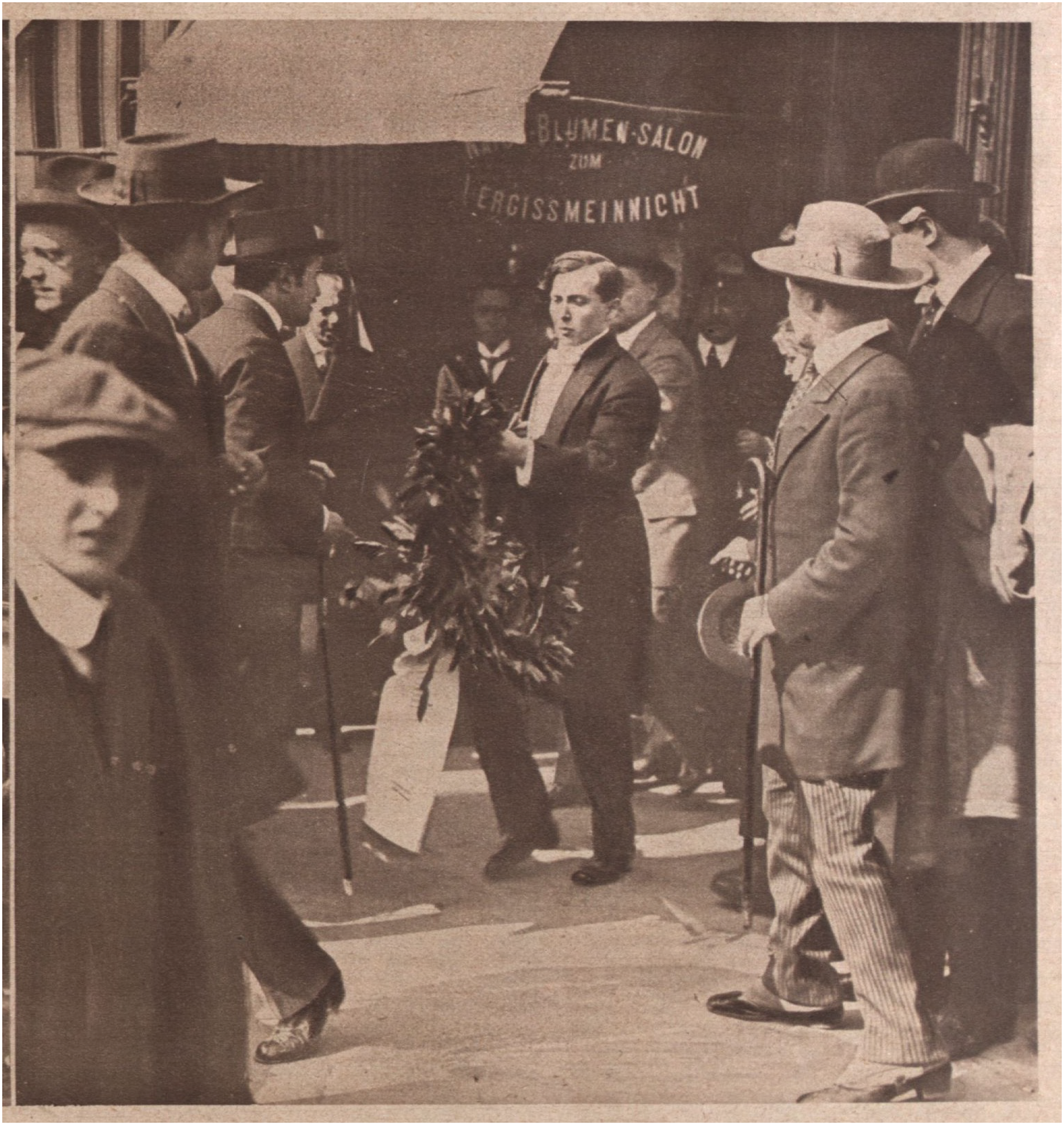
Eugen de Rubini on His Telepathic Tour Through Vienna.
After he succeeded in executing the assignment to the letter, flattering newspaper articles began to appear, calling him ‘the man with the sixth sense’. From then on, de Rubini performed before large audiences at theatres and concert halls throughout the Austro-Hungarian Empire, presenting two routines. The first – a hide-and-seek operation similar to the assignment described above – was actually a variation on an old parlor pastime known in the literature as ‘the willing game’ (see Barrett, 1911). The second required the telepath to perform hypnotism on members of his audience. These two routines may be thought of as ‘mirror operations’: in the first, the telepath is supposedly under the influence of another person's mind, while in the second, the influence is reversed.
As a performing telepath, de Rubini combined different styles. Like old-school mediums, he presented his capacity as a ‘gift’ that he claimed not to understand himself. He, too, went into a trance while performing, during which he appeared to transform into a different person. Yet he also borrowed scientific terminology and choreography from modern-day parapsychologists. I will briefly discuss these alterations.
Like many performing telepaths at the time, de Rubini advertised his shows as ‘experiments in thought transference’ rather than as ‘séances’ (although that term was used on occasion). More importantly, he strategically advertised himself as an ‘experimental psychologist’. This term came into circulation after the Berlin-based Society for Experimental Psychology began using it in the late 1890s to refer to experimental research into psychical phenomena such as telepathy (Sommer, 2013). While de Rubini's telepathic performances never conformed to scientific standards, they nevertheless mimicked tests performed by researchers in one important respect: both aimed to investigate the existence of thought transference as a ‘true phenomenon’. The chief difference was that in de Rubini's ‘experiments’, the researcher was effectively discarded. Instead, the telepath himself cleverly incorporated both the roles of research subject and experimenter, since the experiments were performed on him as well as by him.
To facilitate this transformation, the meaning of the term ‘medium’ was also altered. The term was still used but not to refer to the telepath as the one who channels between the living and the dead. Instead, it referred to those lay members of the audience who served as the telepath's ‘mental guide’ under whose influence the performer had to carry out a certain task. The medium ‘channeled’ the assignment to the telepath. By stressing that the telepath was merely a ‘subject’ (albeit in his own ‘experiment’), whose task was to sense the thoughts transmitted by the medium, a change in choreography took place. For one, members of the audience were no longer mere witnesses – they became participants. Maxime Benkhar, who, like de Rubini, practiced ‘experimental telepathy’ in the 1920s, noted how his shows had transformed into ‘attractive plays with the audience’ (Benkhar, 1930: 48).
The drawback of this setup was, of course, that by discarding the objective scientist, the telepath lost a valuable source of authority. The ‘medium’ (i.e. the audience member) might have stood above suspicion but could nonetheless be easily duped, as was often suspected, and thus the problem of fraud reappeared. The establishment of a so-called ‘committee of control’, usually consisting of a few medical doctors, the local chief of police, or another authority figure engaged for the duration of the show (ostensibly to ensure that no trickery or fraud was involved), served to increase the performance's credibility (but note that this element, too, had already been part of the ‘willing game’ routine; see Barrett, 1911).
Furthermore, when explaining his ‘gift’, de Rubini appropriated parts of the then-prevalent scientific discourse regarding telepathy. He claimed to be ‘highly sensitive’, maintaining that his sole competence lay in ‘picking up signals’ from real, living people in the here and now by means of ‘extrasensory perception’ (de Rubini, 1919: 2-3). Apart from a brief flirtation with spirituality in his youth, de Rubini was careful to steer clear of any suggestion that he possessed supernatural powers, as evidenced by a ‘declaration’ he produced in the mid-1920s after having emigrated to the U.S., where he met magician and escape artist Harry Houdini (whose real name was Erich Weiss). Houdini was a modern ‘debunker’ of fraudulent spiritists. His 1924 volume A Magician among the Spirits (a signed copy of which he gave to de Rubini) discusses the works of a parade of spiritists and mediums and offers possible explanations for their ‘miraculous achievements’ as mere tricks. When Houdini met de Rubini, he was sufficiently impressed and agreed to help further his career on the condition, however, that de Rubini never made any ‘spiritualist claims’. De Rubini was happy to oblige. ‘[At] no time have I claimed supernormal or psychic power, that spirits help me, or that I possess the faculty of thought transference. Everything I do is accomplished by natural means’ (quoted in Rinn, 1950: 536).
De Rubini presented thought transference as a ‘real’ and ‘natural’ phenomenon whereby conscious content is allowed to travel from one mind to another by ‘natural means’. He offered no explanation as to how this might happen but suggested that science had no explanation for it either (de Rubini, 1919).
Finally, a comment on the ‘locus of control’ of the telepath. Many 19th-century spiritualist mediums portrayed themselves as almost unwilling objects of forces located outside themselves. They often claimed to have little control over these forces and were only able to communicate with the spirits while in a trance. When visited by spirits, they merely ‘channeled’ information from the ‘other world’ to the ‘present world’. Modern telepaths such as de Rubini claimed to operate under quite different conditions. They never lost control over the situation and remained in close contact with the ‘real world’, of which they were fully conscious, even while in a trance. In fact, going into a trance was portrayed as an act of will, ‘I turn myself into a state of passivity when I wish a foreign agent to act upon me. And I then immediately either feel at harmony or disharmony with the agent’ (de Rubini, 1919: 3; emphasis added).
The various changes in discourse, choreography, and audience engagement had consequences for the knowledge claims modern telepaths such as de Rubini would make. Portraying themselves as instruments or vessels of other people's will, performing telepaths did not claim to see beyond the here and now or, in fact, to ‘see’ at all. Thus, they found themselves in agreement with at least some parapsychological researchers, including Heymans, Rhine, and Carrington, who believed that telepathy, if real, must be the capacity to directly access the propositional content of another person's mind without using the known senses. This hypothesis resonates with a question discussed by Wittgenstein during a lecture on 7th October 1930, when he proposed that telepathy can mean only one of two things: either there are two people thinking about the same thing at the same time ‘under certain conditions’, or the sender provides the receiver (or telepath) with symbols that can be interpreted (Stern, Rogers, and Citron, 2016: 75). The first option – the idea that there might be a ‘direct language’ that contains no symbols and can be read or understood immediately – is exactly the claim made by de Rubini when he said he could ‘sense’ an internal command (e.g. the sender thinking ‘go left’) and that he could do so even without speaking the language of the other. He proclaimed that it made no difference ‘in what language the mental commands were given’ because he ‘could interpret the desired action if the order were given step by step logically’ (de Rubini, quoted in Anon., 1924). It is the same kind of ‘sensitivity’ that Heymans and his colleagues were looking for in their experiments when they hypothesized that there might be different kinds of telepathic sensitivity – including one for direction.
When Wittgenstein considered the two explanations of telepathy, he resolutely rejected the one involving mediumless or ‘direct’ communication of thought content, maintaining that thoughts always require a symbolic process (Stern, Rogers, and Citron, 2016: 75). This leaves open the other option – namely that telepathy involves mediated information transfer. While Wittgenstein did not explicitly state this, the implication is that such mediation rests on the use of trickery or fraud, because the receiver (knowingly or unknowingly) picks up on certain cues from the sender that can be read or interpreted, much like any other language. There are strong indications that this was indeed the case. As de Rubini regularly performed before researchers, one observer (Zeehandelaar, 1919) noted that de Rubini was likely able to interpret minimal changes in the posture of his ‘guide’, which allowed him to guess correctly where to go – probably without realizing it himself. The ability to ‘read’ such signs is known as muscle reading and was already described in 1882 by neurologist Georg Miller Beard (Beard, 1882). In 1921, psychologist Georg Stratton had the opportunity to test the hypothesis that de Rubini operated under these conditions. He persuaded de Rubini to take part in a series of experiments both with and without wearing blinders, and concluded that the telepath probably ‘received visual aid from signs unintentionally given him by each of the persons who acted as his guide’ (Stratton, 1921: 314). Parapsychologist Joseph Rhine, who witnessed a private performance of de Rubini in 1936, persisted, however, that Stratton's experiment had not done justice to the telepath – echoing once again the notion of the ‘experimenter's regress’. ‘[It] seems to me that he [Stratton] subjected Rubini to too much paraphernalia to allow him to work properly’. 3
His subsequent attempt to engage de Rubini as a research subject at his parapsychology lab at Duke University never came to fruition. De Rubini probably ended his telepathic career in the late 1930s, and died on February 19th, 1964, aged 73 (for further biographical details, see Bos and Hoeneveld, 2022).
There are two conclusions to be drawn from this case study. First, even though performing telepaths such as de Rubini severed formal ties with academics, they remained dependent on them in several respects – not least in regard to the choreography and vocabulary of their art, but also to their epistemological claims. Second, while researchers were far more hesitant to employ telepaths at this time, they nevertheless remained unwaveringly interested in their art, as evidenced by the long list of academics who sought to study de Rubini – perhaps because they had yet to crack the secret of telepathy.
Perseverance of ignorance
In this article, I unpacked the relationship between psychical researchers and their mediums (later, parapsychologists and performing telepaths) and argued that their respective perspectives on telepathy developed along symmetrical lines – almost as if in a magnetic dance of attraction and repulsion. We observed that during the first decades of their collaboration, psychical researchers and mediums found themselves ‘condemned’ to each other in multiple ways. The researcher to the medium, firstly, because they were the only source of access to an otherwise unattainable domain; the medium to the researcher because they were an important and credible source to authenticate telepathy as a real phenomenon. They were doomed to each other, secondly, through the pragmatic paradox triggered by suspicion of fraud. To prove that a medium was bona fide, they had to fail the ‘fakery test’ – meaning mediums had to constantly refute attempts by scientists to unmask them as frauds in order to demonstrate their legitimacy. And although many actually failed this test and were exposed as frauds, this did not shake the researchers’ confidence nor did it deter the mediums for that matter, because evidence of fraud does not rule out the possibility that genuine mediumship might exist — even among those accused of fraud. And so the cycle of chasing impossible negative proof continued.
By the 1920s, when psychical research partly transitioned into parapsychology, many researchers began to prefer working with lay subjects rather than professional mediums in order to avoid the problem of fraud (though many continued working with traditional mediums as well). At the same time, a new type of performing telepath emerged. These performers mimicked psychological practices by doubling as both research subjects and principal investigators – freeing themselves from controlling researchers but at the cost of losing an authoritative ally. Thus, the mutual dependency between researcher and subject dissipated, and with it, the pragmatic paradox. Yet the problem of negative proof persisted, and perhaps even deepened, because experimental outcomes could neither confirm nor disconfirm any specific hypothesis regarding telepathy, at best merely demonstrating that there was ‘something’ that escaped current understanding. I conclude the article by asking: How did researchers deal with this uncertainty? I briefly explore three possibilities.
First, it may be tempting to regard the unwillingness of both psychical researchers and parapsychologists to acknowledge the extreme difficulty of researching telepathy – given rampant fraud, deceit, and inherent shortcomings in experimental design – as a form of suspension of disbelief. That is, one might assume that researchers allowed themselves to be drawn into a largely imaginary discourse, not based on hard facts. Since suspension of disbelief is an essential aspect of an ‘esthetic illusion’ (Coleridge, 1997[1817]), the seductive ‘reality’ of telepathy might have prevented researchers from abandoning a subject that seemed promising merely because the evidence appeared weak. This explanation, however, does not correspond to what we have observed. Psychical researchers were not interested in any illusions created by mediums; they sought instead to test their own hypotheses independently of the claims made by mediums. For the parapsychologists we have studied here, telepathy was never regarded as something extraordinary but rather as a common, albeit little understood, phenomenon. For both groups, the aim was to explain thought telepathy by some known mechanical or psychological mechanism.
A second possibility is that researchers operated under the principle of ‘motivated ignorance’. This principle implies that a person may refuse to accept information about a situation because the costs of doing so are deemed too high – thus preferring to remain ignorant (see Hertwig and Engel, 2016; Lynch, 2016). Allowing oneself to be informed would mean accepting that one's suppositions might have to be abandoned if countervailing evidence mounts. Unwilling to make that concession, psychical researchers and parapsychologists may have preferred to remain ‘ignorant’ in this sense. However, I argue that this explanation does not tally with what we have observed in the discussions between researchers and mediums. Both psychical researchers and parapsychologists were not naive; they were well aware of the objections, refutations, and alternative explanations presented to them, yet they remained unconvinced. In fact, Feldman and Conee (2018: 83) argue that one ‘can have good reason to believe a view that one finds attractive, or to advocate for it, even if believing it is not epistemically justified’. Indeed, William James defended telepathy against Titchener by stressing that there are facts, ‘however anomalous’, that must be acknowledged ‘against other facts’ (letter dated 26th May 1899, quoted in James, 1986: 482). This seems to contradict the idea that one prefers to remain ignorant in order to avoid painful truths.
A third option is that psychical researchers and parapsychologists operated under what might be called the principle of ‘perseverance of ignorance’. A persevering ignorant subject is informed, is aware of the costs involved, is critical, yet refuses to accept that whatever we know about telepathy can lead to any definitive conclusion. They remain ignorant in spite of what they know. Perseverance of ignorance thus means that one chooses to remain in a state of ‘not knowing for sure’, rather than assuming one form of knowledgeability or another. This means that both positive knowledge claims are dismissed as ‘unproven’, and likewise negative ones as ‘not definitive’.
At first glance, this may seem to contradict the positive outcomes produced by nearly all psychical research and parapsychological investigations – that is, the confirmation of telepathy as a ‘fact’ or a ‘real’ phenomenon. However, I believe it still fits our explanation. When telepathy was embraced as a ‘real’ phenomenon by such diverse scientists as James, Flournoy, Freud, Heymans, Carrington, and Rhine, it was primarily to confirm that certain phenomena could neither be reduced to mere chance nor fully explained by existing theories. They accepted telepathy not on faith but on the basis of inconclusive evidence – evidence that was neither strong enough to support a well-formed theory of telepathy nor weak enough to be dismissed. Thus, accepting telepathy as ‘real’ implied accepting a certain amount of ignorance. For instance, Joseph Rhine wrote, ‘one may say that the evidence for general E.S.P. [extra-sensory perception, including telepathy] is good, but the theories are bad’ (1935: 39), while William James was even more straightforward, he wrote: ‘I understand that the word “thought-transference” implies no positive theory whatsoever as to how knowledge is conveyed from the agent's to the percipient's mind’ (James, 1889: 36). Both men accepted, albeit for very different reasons, that they ‘did not know’ – and it was this ‘not knowing’ that propelled their research.
This understanding of telepathy is not so much a promise of a radically different conception of the mind – or a call for a ‘paradigm shift’ in psychology, as some parapsychologists have proposed – but rather the far more modest proposition that we may not yet fully understand how the mind works. This, I argue, could be the true gain after a century and a half of psychical and parapsychological research. If this seems rather noncommittal, I will argue that it nevertheless contains a promise of sorts – one that we could call, loosely following Berislav Marušić (2013), a ‘promise against evidence’. This promise entails the vow that until we have found an explanation for something we have reason to believe exists – but for which no good evidence or plausible explanation has been provided – we reserve the right to remain in a state of not knowing.
In contrast to accusations of deception and fraud leveled against psychical researchers and parapsychologists on the one hand, and to peer critiques on the other (both essentially negative epistemic claims that deny there is anything new to learn), this state of ‘not knowing’ may be regarded as a positive claim – even if it is, in some respects, mostly empty. It remains the researcher's prerogative to search without knowing exactly what to look for or in which direction to search – and yet to keep searching. Most breakthrough discoveries rely on that very prerogative. As do failures.
Footnotes

Funding
The author received no financial support for the research, authorship, and/or publication of this article.
Declaration of Conflicting Interests
The author declared no potential conflicts of interest with respect to the research, authorship, and/or publication of this article.