




Abstract
Co-production involves citizens and service providers collaborating in the design and delivery of services, but its application to disadvantaged individuals remains underexplored. This study addresses this gap by examining the Y Heritage project in the Midlands, UK, which implemented co-production with disadvantaged young people as a means to develop local heritage services. Using a qualitative case study approach, data were collected through interviews and observations with service users and providers over the project’s duration. Findings highlight the challenges and opportunities of engaging young people with multiple disadvantages in co-production, revealing that tailored, creative approaches can foster empowerment, resilience, and social inclusion. The study concludes that co-production in non-traditional service contexts, such as heritage, can address barriers to participation, generating meaningful outcomes for marginalized groups. These insights offer practical guidance for practitioners and expand theoretical understanding of co-production’s potential in addressing complex social challenges.
Introduction
The co-production of services has emerged as a key focus in public administration and social innovation, emphasizing the active participation of citizens alongside service providers in designing and delivering services (Osborne, 2006; Torfing et al., 2023; Vargo and Lusch, 2004). Unlike traditional models of service delivery, which often treat citizens as passive recipients, co-production views them as integral contributors, fostering collaborative processes and building value through shared relationships and interactions (Brandsen et al., 2018).
While much has been written about co-production in mainstream public services with willing and engaged service users, its application with disadvantaged citizens who face complex and intersecting challenges is less well understood (McNaughton Nicholls, 2009; Broadhurst 2024; Cullingworth et al., 2024). Empirical reviews suggest that co-production is often absent in practice for these groups, with existing initiatives leaning more towards peer support models (Slay and Stephens, 2013) or paternalistic approaches to service user involvement (Bradley, 2015). Consequently, there is a need to explore how co-production can be effectively applied to support those experiencing multiple disadvantages and how it can address barriers to their active participation.
This paper aims to address this gap by presenting findings from an empirical study – the Y Heritage project in the Midlands, UK – that employed co-production with disadvantaged young people in the design and delivery of local heritage services (Rahim and Mavra, 2009). The focus on heritage is significant, as it highlights the potential of creative and non-traditional public service responses in addressing the needs of disadvantaged citizens. Traditional public services have been critiqued for fostering dependence and disempowerment, often undermining individuals’ resilience and confidence (Brown, 2014; Cluley et al., 2020; Farr, 2018). In contrast, alternative approaches such as social prescribing and personalised, participatory service models are gaining traction for their ability to foster holistic, empowering outcomes (Drinkwater et al., 2019; Sellman, 2015). These approaches include gardening projects, arts-based initiatives, and mentoring programmes, which address issues such as vulnerability and social isolation while preventing involvement in crime and violence (Gaffney et al., 2022; Pudup, 2008; SCIE, 2017). The Y Heritage project reflects these principles in practice.
The significance of this study lies in its dual contributions to both theory and practice. Theoretically, it deepens our understanding of the factors that enable effective co-production with disadvantaged citizens and the value such approaches can generate. Practically, it provides actionable insights for practitioners seeking to implement co-production methodologies in comparable contexts.
The paper is structured as follows: The next section reviews the theoretical background on co-production and its application with disadvantaged citizens, identifying critical factors for effective service user participation. The research methodology and contextual background of the case study are then outlined. Following this, the findings are presented, organised around the research propositions. The discussion and concluding sections consider the theoretical and practical implications of the study, before reflecting on the research’s limitations and proposing directions for future investigation.
Setting the context: Understanding co-production with disadvantaged citizens
Since Arnstein’s (1969) Ladder of Citizen Participation, efforts to enhance citizen involvement in public decision-making have been a focal point for scholars. Co-production, introduced by Ostrom in the 1970s, emphasizes the collaborative role of citizens in public service design and delivery (Bovaird et al., 2019; Osborne et al. 2021; Sicilia et al., 2019). This approach challenges the traditional production-centric view of public services by promoting dynamic, relational processes where value is co-created (Hodgkinson et al., 2017; Osborne et al., 2015; Petrescu, 2019).
Co-production can occur at multiple stages of the public service cycle, and is commonly described as ‘co-planning,’ ‘co-delivery,’ and ‘co-monitoring’ (Bovaird and Loeffler, 2013). In this paper the term co-production is used to capture all phases. Central to this concept is the recognition of both service providers’ and users’ active contributions, which include knowledge, skills, and resources to co-create public value (Gronroos and Gummerus, 2014; Parker et al., 2023; Rossi and Tuurnas, 2021). Through collaboration, services are tailored to the needs and preferences of users to enhance overall value in use. This is seen when a user’s personal context interacts with a service, and broader social, cultural, economic, and institutional factors shape the value derived from a service (Osborne, 2018).
Co-production, when implemented effectively, enhances service outcomes, user satisfaction, and the relationships between providers and users (Alford, 2014). However, realizing its potential requires overcoming contextual tensions, particularly when engaging marginalized populations (Kinder and Stenvall, 2023; Trischler et al., 2023). The focus of this paper is on how co-production can be applied to disadvantaged services users. By this we mean, those who have experienced societal disadvantage which may encompasses a range of interconnected issues such as homelessness, substance misuse, and poor mental health, that often intersect to create severe and multiple disadvantage (SMD) (Bramley et al., 2015; Brandsen et al., 2023).
These complexities can limit disadvantaged individuals’ ability to engage in co-production, posing unique challenges for service providers seeking inclusive and equitable participation.
To explore how co-production can effectively support disadvantaged groups, this study builds upon insights from a systematic literature review (Broadhurst, 2024), which examined co-production in the context of service users with severe and multiple disadvantages. The review identified key principles necessary for effective co-production, shaping the thematic framework and research propositions explored in this paper: motivation to engage; establishing trust; activating lived experience; and reciprocity and accountability. These themes address critical barriers and enablers of co-production for marginalized populations, emphasizing the distinct needs of this group compared to other service users. Each theme ends with a research proposition to guide the research methodology and findings.
Motivation to engage
Disadvantaged service users are likely to face greater barriers when engaging in co-production due to systemic inequities, social exclusion, and a lack of resources. Motivation in co-production is influenced by both intrinsic and extrinsic factors. Extrinsic motivation, such as tangible rewards or practical benefits, may encourage participation (Verschuere et al., 2012). However, intrinsic factors like a sense of personal achievement, belonging, or empowerment are equally important (Alford, 2014).
For disadvantaged users, barriers such as low self-efficacy, stigma, and inaccessibility disproportionately hinder engagement. Research suggests that these users may require additional support to develop the skills necessary for active participation, including problem-solving, decision-making, and partnership working (Kings Fund, 2013; SCIE, 2022; Wilson, 2001). Comparatively, while other users may face barriers such as time constraints or lack of awareness, disadvantaged users often contend with deeper structural disadvantages that necessitate tailored interventions.
Establishing trust
Trust is a foundational element of co-production but can be particularly difficult to establish with disadvantaged groups due to historical mistrust of public services. Negative past experiences, systemic discrimination, and perceived stigma often lead to a suspicion of professionals and reluctance to engage (Pote et al., 2019). Professionals must be mindful of how these experiences shape service users’ perceptions and adjust their practices to foster trust. Engagement depends significantly on users’ confidence in service providers offering meaningful opportunities for involvement (Alford, 2014; Ostrom, 1996; 2014; Van Eijk and Steen, 2016). Trust, however, is dynamic and reciprocal in nature, whereby successful co-production reinforces confidence between users and providers (Fledderus, 2018).
The development of trust requires a consistent and empathetic approach to service user engagement through professional relationships that promote shared decision-making (Cullingworth et al., 2024). Professionals need to adopt flexible roles—friend, mediator, and leader—to create trust (Vanleene et al., 2018). For disadvantaged young people who may have had negative ‘service careers’ marked by care disruptions and strained relationships, trust-building must address their unique barriers (Jakobsen and Andersen, 2013; Ramsay-Irving, 2015).
The nature of co-production—whether preventative, crisis-focused, or voluntary—also shapes trust-building strategies, requiring practitioners to adjust approaches to users’ specific needs and policy contexts. Creative engagement methods, such as peer-led initiatives or arts-based programs, can serve as effective trust-building mechanisms by providing accessible entry points for participation (Broadhurst, 2024). While trust is essential for all service users, it is particularly critical for disadvantaged groups, for whom mistrust poses a significant barrier to engagement and well-being.
Activating lived experience
Lived experience is a valuable resource in co-production, enabling service users to contribute unique insights that can enhance service design and delivery (Brandsen and Honingh, 2016; Strokosch and Osborne 2016). The question of ‘who’ in co-production is of interest because in certain contexts, co-production may be more straightforward, including one off activities which are less demanding, but it can become increasingly challenging where there is severe and multiple disadvantage, such as the service users reported in this paper. SMD includes a wide-ranging set of concerns across education, health, employment, income, social support, and housing whereby disadvantaged or vulnerable groups are identified according to various socio-economic factors (Broadhurst, 2024; Liddle and Addidle, 2023).
Disadvantaged groups often face stigma or lack the confidence to view their experiences as assets. Activating their ‘sleeping resources’ (Palumbo and Manna, 2018) requires deliberate efforts to create equitable partnerships between professionals and users through the development of user-led mechanisms of planning, delivery, management and governance (Durose et al., 2017; Sicilia et al., 2019).
For disadvantaged users, power imbalances and societal marginalization often limit their ability to recognise and then assert their expertise. Comparatively, some users may be more accustomed to asserting agency within co-production processes. Strategies such as capacity-building workshops and collaborative decision-making tools can help disadvantaged users overcome these barriers, empowering them to co-create services meaningfully.
Reciprocity and accountability
The co-production literature emphasises the need for a shift from provider-driven models to reciprocal partnerships where users share power and responsibility (Needham and Carr, 2009). The limited literature on co-production with disadvantaged groups demonstrates that they can experience a ‘provider knows best’ approach, resulting in the tokenistic and paternalistic adoption of co-production (Park, 2018, 2020; Thom and Burnside, 2018). For these users, achieving reciprocity can be challenging due to limited resources, prior disempowerment, and mistrust of service providers. Ensuring accountability requires transparent processes that empower users to hold providers to account while also ensuring personal responsibility for accountability.
Disadvantaged users may need additional support to understand their roles and responsibilities in co-production processes. For example, mentorship programs or participatory governance structures can help bridge the gap between users and providers. In comparison, other users may require less intensive support but still benefit from clear mechanisms of accountability.
Case study background and methodology
The research used a case study to examine how disengaged service users, particularly young people, can be encouraged to participate and gain value from service co-production. The case study, set in the Midlands, UK, involved the engagement of young people in the co-creation of heritage and cultural services across the city. Museum and heritage services are a vital component of the cultural and community engagement functions of local authorities in England, but as a non-statutory service they face numerous challenges. A combination of austerity-driven budget constraints and rising demands for statutory services such as social care and public health have made it difficult to sustain delivery. Additionally, certain communities exhibit low engagement and participation levels, perceiving museums and other heritage services as irrelevant, inaccessible, and lacking in value (Blamire et al., 2022). To address these challenges, some local authorities have sought to attract more commercial revenue, relied on volunteers to operate services like museums and worked alongside local partners to partially or fully transfer responsibilities for delivery.
In this case study the city council collaborated with local partners to deliver the Y Heritage programme. Funded through the Heritage Lottery Kick the Dust grant fund, the programme was designed to engage young people aged 11–25 in local heritage and to develop the skills and confidence of local heritage sites and services to sustain and extend their work with young people over a longer-term period. To drive delivery of the programme, the city council partnered with the YMCA, a city based voluntary sector organisation providing accommodation and support to single homeless people aged 16–25 who often present with a range of support needs relating to mental health, trauma, and substance misuse. In supporting this cohort, the YMCA adopts a trauma-informed approach in their work with young people. Exposure to different types of traumas has been linked to a range of negative outcomes, including effects on cognitive function and behaviour. As trauma-informed research grows and highlights its prevalence and consequences, efforts to implement systems and services have emphasised the importance of creating supportive and empowering environments for all individuals (Bloom, 1997; Maynard et al., 2019).
The delivery team comprised a project co-ordinator and two project workers who were based at the YMCA to provide support for young people and to build connections with local heritage services who were keen to engage a greater diversity to their audiences. Each year the project team delivered two cycles of activity each lasting around 20 weeks with co-production as an essential component. Young people were involved in co-decision making, co-design and co-delivery of the new heritage activities as summarised in Figure 1. Co-production model for the Y Heritage project.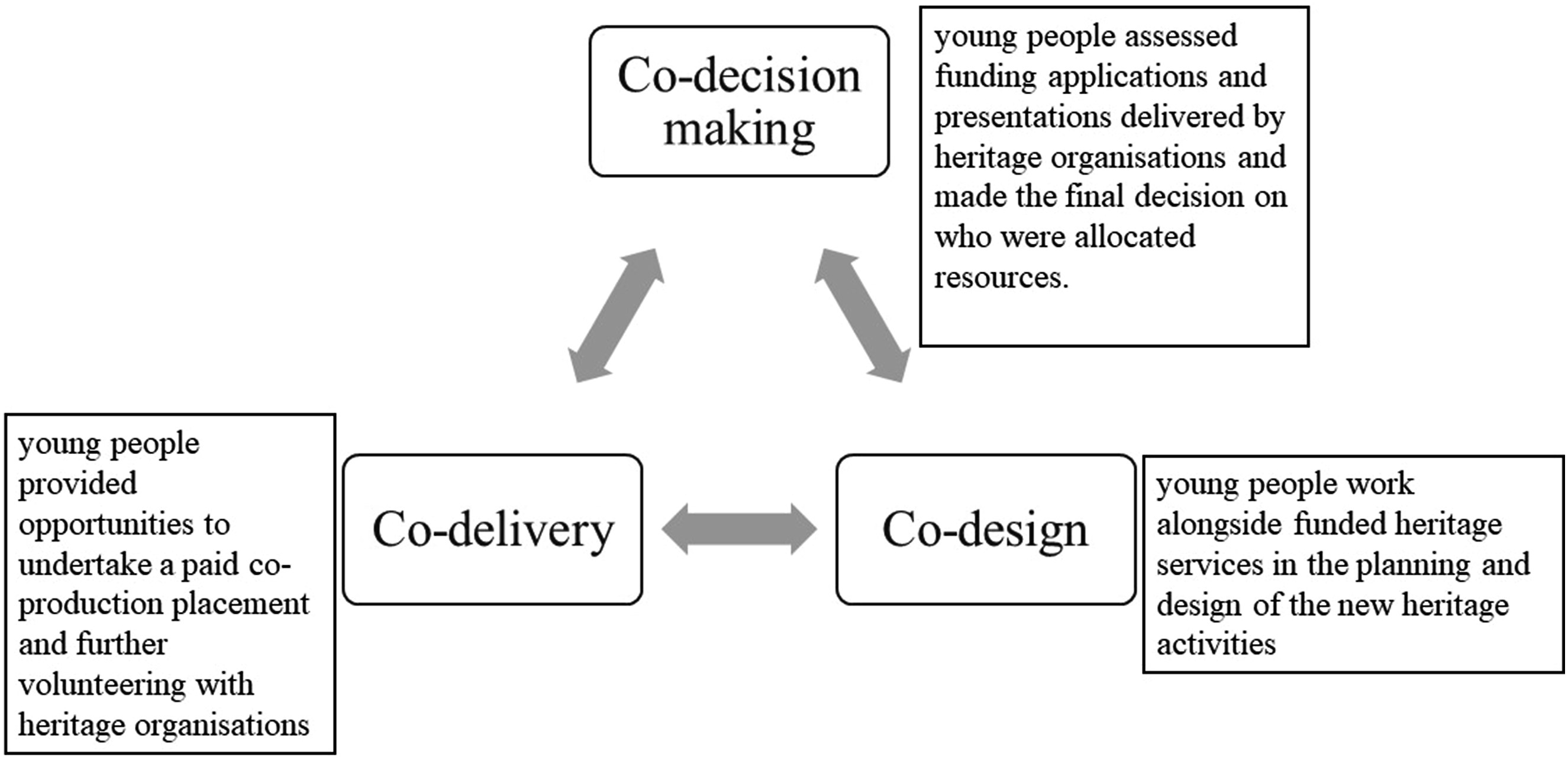
Activities were organised to engage young people in visits to local heritage sites and museums whilst also receiving specialist training on commissioning services and project management. This enhanced the co-production offer and enabled young people to evaluate, shortlist, and interview heritage organisations through a ‘Dragon’s Den’ process, where applicants pitched their proposed projects. Successful applicants then designed and delivered activities within their heritage service, with at least one young person working as a paid co-producer. Out of 30 pitches, 15 heritage providers were funded to work alongside young people.
Overall, 123 young people engaged in the programme, with 15 of them taking on a paid work placement within a heritage organisation. Their ages ranged from 16 to 26 years, and where gender was recorded, 56 participants identified as female, 65 as male, one as nonbinary. Where ethnicity was recorded, most young were White British (71%) with other ethnic groups recorded as Mixed / Multiple ethnic groups – 5%, Asian / Asian British – 2%, Black / African / Caribbean / Black British – 12%, other ethnic group – 1%, Not recorded – 9%. Participants in this study included care leavers, asylum seekers, young homeless people and those recovering from substance misuse and whilst clearly not a homogenous group, they all shared characteristics of vulnerability associated with a range of adverse childhood experiences. Examples included potentially traumatic events or circumstances such as emotional, physical, or sexual abuse, neglect, and household challenges like domestic violence, substance abuse, mental illness, or parental separation occurring during childhood that is likely to have affected their health and well-being.
The study tested its research propositions through 109 semi-structured interviews and observations focused on co-production’s impact on young people and heritage providers. Interview questions aligned with key areas: motivations and barriers to participation, experiences of co-production, and perceived impacts on personal growth and organizational engagement. This format allowed flexibility to explore each proposition in depth, with interviews recorded, transcribed, and thematically analysed in NVivo. Observations were conducted during key activities, documenting engagement dynamics, support needs, and outcomes of participation. Observational notes provided real-time insights, triangulating with interview data to validate findings against the study’s propositions.
Findings
Before reporting the findings, it is useful to remind ourselves that many of the disadvantaged young people involved with the Y Heritage project had typically engaged with traditional public services, including the city council’s children and young people and youth justice service departments. It was considered that a focus on heritage, rather than a casework approach, would provide a creative way to engage young people in co-production in contrast with established patterns of service delivery. The four research propositions frame the findings by reporting on how heritage co-production can be used to engage and support disadvantaged young people. We provide additional analysis to ensure that the findings and assumptions are critically evaluated.
RP1: Motivation to engage in co-production for disadvantaged service users is influenced by structural and personal barriers, requiring targeted strategies to enhance both intrinsic and extrinsic motivators
A key focus of the project was to provide a creative alternative to previous experiences, particularly if they had significant involvement with a case-based service approach. The young people interviewed stated that their initial motivation with the Y Heritage project provided an opportunity for both themselves, or others who lacked confidence or were isolated, to test out meeting other people. As one young person said: “I gained a lot of confidence. I was very unmotivated at the time. So, this [project] gave me a purpose.” (Young male aged 23).
Although some participants also cited extrinsic rewards like pizza and movie nights as an initial hook for engagement, it was expressed that over time the additional intrinsic motivations of learning about ancestors, making friends, gaining new skills, and improving mental health had become more significant.
For those who experience societal disadvantages, the availability of skills and confidence may be limited and awakening those dormant or ‘sleeping’ resources can be challenging. In this case study, two of the three members of staff recruited to the delivery team were existing YMCA employees and so were familiar to the young people engaging in the project. This existing relationship meant staff already had some understanding of how to best motivate and support them in early stages of co-decision making. Consideration of the young people’s initial involvement with the project subsequently led into opportunities later on to progress deeper engagement in activities that they had not experienced previously, including museum visits, skills acquisition, and participation in activities like re-enactment and leading group activities. Building upon the opportunities provided by co-production, these provided freedom to focus on interests which were less case-based and therapeutic, but which presented different routes for reflection and self-development. It was stated: “Y Heritage gives us a voice and the chance to do things we have never done before. It’s not just the materialistic things they give us; it’s the meaning behind it as well.” (Young female aged 20).
Consequentially, training on commissioning processes, project management and grant funding benefited young people by providing insight into how organisations design, deliver and evaluate services. For some young people this was further enhanced by undertaking co-production placements with reputable local heritage organisations, providing experiences to understand how service design and delivery was understood from different organisational perspectives.
Whilst the extrinsic rewards initially hooked young people into co-production, it was the subsequent intrinsic rewards that sustained their motivation. Given their sense of exclusion from heritage before engaging in the project, greater involvement with phases of co-production activity sustained their involvement in the project, including ‘co-planning,’ ‘co-delivery,’ and ‘co-monitoring’ (Bovaird and Loeffler, 2013). Many reported enhanced confidence through developing softer skills of communication and presenting information, as well as increased specialist knowledge. Young people valued the wider skills that would enable them to unlock other opportunities such as returning to education or finding employment. As one participant commented: “I find myself in this situation of where I've now got the skills, that I've learned through this [project], and … I can use them skills to get a job.” (Young male aged 22).
In summary, the evidence for RP1 indicated good levels of motivation for the disadvantaged service users, but stimulating this requires a personalised approach to meet their needs during different stages of the co-production process (Bovaird and Loeffler, 2013). As the young people were ‘experts by experience’ (Brandsen and Honingh, 2016), carefully and gradually introducing them into the process is required, with enhanced understanding of vulnerability, so as not to undermine the project by reverting to habitual processes. This will ensure a safe experience delivered at their speed, cognisant of some of the barriers and which might be expected to be more challenging for disadvantaged young people.
RP2: Trust-building with disadvantaged service users requires overcoming systemic barriers and prior negative experiences through innovative and empathetic engagement strategies
Some disadvantaged service users may be less trusting when there has been historic experience of engaging with public services, and particularly where there has been significant involvement by the state in their family and community (Cluley et al., 2020; Pemberton 2016). Furthermore, being a resident at the YMCA itself demonstrated that their relationships were insecure, or that the young person could no longer depend on previous services they had engaged with.
The project staff worked closely throughout with the young people to build trust, sensitive to their previous adverse experiences but also wanting to promote their interests and strengths. By encouraging young people to talk about their past, many spoke of how their self-esteem had improved by engaging with the project. This approach also extended to matching young people’s interests with particular co-production heritage activities, and other young people reported a sense of increased motivation and responsibility by engaging in placements. This led to respect from young people who appreciated the support and approachability of staff, for example one young person who worked on a project curating an anime heritage exhibition: “(The project lead) trusted me to plan out activities by myself. I had the ideas and the freedom but was supported along the way. I liked the freedom and the creative control I was given” (Young female aged 18).
Once placed within this heritage services this young people felt trusted and empowered, being given decision-making responsibilities by the service provider. This required skill and patience by staff to ensure that they celebrated individual achievement, personal growth and confidence building (Jakobsen and Andersen, 2013). In the background, to strengthen the relationship between young person and provider, project staff acted as a broker by empowering young people to connect with a heritage sector they were often disengaged from.
As residents at the YMCA, young people already trusted the core project staff, who facilitated connections with external heritage providers. The project staff dedicated considerable time to building relationships with individual and group work to nurture the fledging relationships with heritage providers. In addition, the project team also trained heritage organisations in trauma-informed approaches, to increase confidence for working in co-production with disadvantaged young people, some of whom had difficult childhoods. The organisations were able to understand the impact childhood adversity may have had and not exclude them for behaviours resulting from prior trauma.
Nurturing trust requires a dynamic, reciprocal process to embed confidence (Fledderus 2018) but trust might be damaged if providers felt let down and ended a placement, whereas it might increase when patience and using creative ways to continue a young person’s involvement were used. As one provider explained: “These young people have lots of other stuff to deal with and so regular participation doesn’t mean they will be there on time and all of the time, so we need to be flexible in our approach and expectations”. (Heritage Organization (HO) interview).
For example, one young person spoke of their previous engagement with the heritage sector and had found it was poorly connected to their interests. However, with the Y Heritage project they were encouraged to experiment in a reimagination of heritage, which was valuable for building confidence and trust.
Being engaged in the project over 3 years, a core group of young people were able to develop enduring positive relationships with some heritage providers. With their previous experiences of engaging with public services, confidence in the project staff and heritage service providers enabled some young people to overcome barriers to engagement. A young person working in a local museum learned about historical armour and designed activities for other young people visiting the museum. By doing so they gained confidence and transferable skills of interview skills and creative design: “I've got a lot more confidence from talking to people—it wasn’t one of my strongest points before.” (Young female aged 16).
Another young person involved with a local arts organization co-curated an art installation and managed a community heritage site project, leading to further volunteering and paid opportunities: “Confidence was a big thing for me, but by getting involved in looking after young people working on the project with me, I felt a sense of responsibility.” (Young female aged 17).
The findings reported in RP2 indicate that there was a good level of trust by service users of the YMCA, and less evidence that they mistrusted services. The findings suggest that the innovative and empathetic engagement practised in the broader Y Heritage project and co-production initiative was important for building trust as a corrective to past experiences of being a SMD young person.
RP3: Effective co-production with disadvantaged service users depends on integrating mechanisms for valuing and activating their lived experience, mitigating power imbalances and stigma
Before reporting on RP3, it is useful to consider how co-production with service users experiencing SMD might be thought to be different to the broader use of co-production. This question of the ‘who’ of co-production is of interest because participants engaging in public service design and delivery present different motivations and abilities to interact with providers (Parker 2015). In certain contexts, and for certain users, co-production may be more straightforward, and less demanding, but in this case where service users experience severe and multiple disadvantage (SMD) it may be more challenging.
Although it easy to state that power between provider and user needs to be shared, in practice this is not always easy. Although there may be structural inequalities between them, it is important to design co-production underpinned by a key principle of equality of power (Farr 2018). In practice, the Y Heritage project staff played a crucial role in empowering young people to identify their own knowledge, strengths and skills in the co-production process, heightened by the workers’ experience of supporting SMD young people. Additionally, the workers’ expertise and understanding provided a viewpoint which respected the young people’s experiences would be invaluable for re-designing heritage services to become more relevant for other young people.
It was noted that co-production also needs commitment, and a key activity for mobilising skills and knowledge was by enabling young people to lead decision-making processes, notably the commissioning of the heritage activities. Young people were trained to evaluate, shortlist and ultimately commission heritage projects, scoring funding applications and conducting ‘Dragon’s Den’ style panels with potential providers. The process was innovative and not without risk but embedding equality of power (Farr 2018) required the project to embrace this challenge. As the project progressed the ‘Dragons’ Den’ method became a pivotal point in the programme, to disrupt and equalise traditional power dynamics between service provider and user by positioning young people as co-decision makers. As a staff member acknowledged: “Enabling young people to do the commissioning has been a key part of the project and for the heritage sector this put a twist on the process so that they weren't the experts anymore. And the point behind that was always to dispel that myth that young people here would not be interested in heritage or wouldn't have anything to offer the sector” (YMCA staff interview).
Young people valued their influence in the selection process, commenting this had enabled them to truly have their voices heard. This was particularly important for the service users whose life experience to this point is likely to have lacked these opportunities. As one young person reflected: “I was there for the second Dragon Den pitch. It went really well - it was a difficult process and I am not used to having that much power. It was interesting to see the effect that had on the professionals coming in and how they spoke to us and involved us” (Young male aged 25).
Another young person worked with a local organisation to restore an 1840s printing press. Connecting with other young people and local schools they collaborated with a filmmaker to document the restoration process. Commenting on the experience they said: “I genuinely feel like I have done something that has made a difference – like the funding of the printing press has enabled the sharing of that knowledge, passing that knowledge on to future generations” (Young male aged 22).
Being fully included in this process provided confidence for the continuing relationships with heritage providers, as young people were encouraged and supported to actively engage in the design and delivery of local heritage assets. Through visits to local museums and heritage sites, young people were supported to observe and report on how staff behaved towards them and how engaging they found these services. This provided young people with an understanding and appreciation of customer service, and the heritage providers gained insight for appreciating different expectations of visitors.
Integrating ways for valuing and activating their lived experience in service design and delivery (Strokosch and Osborne 2016) mitigated power imbalances and stigma. The findings indicate that the project workers’ skills and attention to power dynamics ensured the young people were able leverage their own knowledge and skills, facilitating their active role in redesigning heritage services to be more relevant to youth. By involving young people in decision-making processes and fostering direct interactions with the providers, traditional power dynamics were disrupted and the valuable contributions and perspectives of young service users in the heritage sector were highlighted.
RP4: Reciprocity and accountability in co-production with disadvantaged service users require equitable power-sharing and targeted support to enable shared decision-making and mutual responsibility
For co-production to work, the literature stresses the need for both providers and service users to take shared responsibility for their contribution to the process (Cullingworth et al., 2024). The YMCA’s trauma-informed approach created a supportive and empowering environment which was vital for enabling young people to engage in co-production. As Bramley et al. (2015) note, complexities arising from SMD may lessen an individuals’ ability to engage in co-production. Therefore, sustaining young people’s engagement in and accountability to the co-production process was sometimes challenging. Participation data demonstrated that whilst larger numbers of around 30 young people chose to engage on the periphery and intermittently during each cycle, only a handful of young people fully engaged in co-production activities by collaborating with a heritage organisation on a regular basis to co-design and deliver activities. Crucially, the trauma-informed nature of the project meant their participation was voluntary, allowing the young people to manage their engagement around other commitments and personal challenges that could arise urgently. This flexibility was stated as being central for engaging with vulnerable young people, especially for those with mental health issues. As one staff member explained: “The difficulty will always be that for our young people, it's like Maslow's hierarchy of needs...as soon as something essential like housing or income falls apart, co-producing heritage is no longer a priority.” (YMCA staff interview).
Some young people had part-time jobs or attended college, while others faced challenges of anxiety and depression which meant they often disengaged from the project suddenly and for a period of time. One young person stated that their poor mental health had sometimes affected managing their daily life, making it difficult to commit to regular involvement in activities like the co-production initiative. However, despite limited involvement their engagement remained meaningful and valuable both to this young person and heritage providers. One provider commented that even with relatively limited involvement from one user, this young person’s experience had resulted in a positive outcome for their service: “She was a breath of fresh air for our organisation and the young people we work with. She came with a different cultural heritage and from a city environment and our young people who are from rural communities took to her immediately. This was a great opportunity for everyone to grow and learn” (HO interview).
The successful engagement of vulnerable young people in co-producing heritage projects required adaptions to service provision to accommodate the complexity of their lives for enabling them to contribute. To facilitate this, participating service providers were offered training in trauma-informed care from the project team. This training led to examples of positive changes to organisational processes and culture to accommodate and support the service users. For example, some heritage organisations subsequently amended policies and processes to improve support for disadvantaged young people. One museum changed its processes for recruiting and supporting volunteers to ensure they were accessible to people with limited internet access via a smartphone as is often the case for young people experiencing homelessness. Of note, the majority of the heritage organisational representatives interviewed recognised that whilst project planning was important, it needed to be flexible enough to respond to young people and the complexities and challenges they faced: “We have had to adapt how we work – think on our feet. The young person we worked with was very focused on some parts of the heritage project but wasn’t interested in other activities I was hoping he would get involved in. So, I have had to adapt” (HO interview).
Other participants corroborated this by arguing that this was a more appropriate way to deliver the heritage programme to benefit young people, ensuring activities were relevant and of value to users. As two service providers commented: “We understood working with young people within the Y Heritage programme would need additional thinking and planning, and as a team we are well used to partnership working and working with anyone needing some additional support” (HO interview). “Young people have lots of other stuff going on so regular participation doesn’t mean they will be there on time or all of the time, so we need to be flexible in our approach and expectations. We still need a structure in place because we need to deliver the project but we recognise that we need to have flexibility in the way we execute that” (HO interview).
However, adapting to young people’s needs did not come easily to every participating provider, and some remained attached to existing organisational norms and ways of working, meaning they could lose the engagement of a young person. This was particularly the case where organisations failed to build flexibility into a placement’s working hours or offer support to the young person with the cost of travel. In some cases, there was evidence of the power balance returning to favour service providers. While all organisations developed contingency plans to ensure project continuity, some were more inclined to resort to these alternatives rather than persist in adapting their approach to maintain co-production with young people. For some, having a Plan B was a way to pragmatically manage co-production while still allowing space for young people’s input. However, in other cases, there was a tendency to default to these backup plans, reducing opportunities for genuine engagement. As a provider explained: “What I have done is to explain to others in our organisation to be cautious about how much you embed the young person from the YMCA into the project and that you need to have a plan b …. and even a plan c to deliver without them” (HO interview).
The findings suggest that providers were mostly attentive to equalising power dynamics between themselves and the young people, and supportive of implementing changes to improve this. For co-production to succeed, implementing shared decision-making and mutual responsibility must be integrated into practice which will in turn strengthen reciprocity and accountability.
However, patience and flexibility also need to be employed by providers so that rigid adherence to procedures does not undermine the broader co-production vision. Having a Plan B does not necessarily negate co-production; rather, the key distinction is whether it is used as a support mechanism to enhance engagement or as an easy alternative to avoid the challenges of working flexibly with vulnerable young people.
Discussion
This study explored how the Y Heritage project engaged disadvantaged young people in co-production, drawing on four themes—motivation (RP1), trust-building (RP2), power dynamics and lived experience (RP3), and reciprocity and accountability (RP4). The findings add depth to our understanding of how co-production can be used with service users experiencing severe and multiple disadvantage.
Motivation and engagement (RP1)
The findings confirm Parker’s (2015) observation that participants’ motivations for co-production vary depending on their circumstances and the context of engagement. In line with this, the Y Heritage project revealed that extrinsic motivators—such as social rewards and access to resources—were initially crucial for engaging disadvantaged young people. Over time, intrinsic motivators, including personal growth, skill acquisition, and enhanced mental health, played a larger role in sustaining engagement.
The project staff’s ability to connect young people’s interests with heritage activities echoes Jakobsen and Andersen’s (2013) emphasis on fostering alignment between service users’ strengths and opportunities. For example, participants who initially engaged for social interaction often transitioned to meaningful contributions, such as designing exhibits or running workshops.
In the context of supporting service users with SMD, the findings expand our understandings of how staff expertise in trauma-informed care is a valuable resource to encourage sustained motivation. Unlike co-production with more confident service users, this approach was vital for creating a psychologically safe space that allowed participants to explore and develop their potential.
Trust-building and overcoming barriers (RP2)
Building trust is central to successful co-production, particularly with populations who have experienced systemic marginalization. This study confirms previous studies that argue historic negative experiences with public services can foster mistrust among disadvantaged groups (Cluley et al., 2020; Pemberton, 2016). Many young people in the Y Heritage project carried such scepticism, shaped by adverse childhood experiences and prior interactions with state systems.
The findings provide further evidence that trust-building requires dynamic, patient, and empathetic engagement (Fledderus, 2018). The Y Heritage staff cultivated trust by celebrating participants’ strengths and providing tailored opportunities. This personalised approach mitigated participants’ mistrust and helped them build confidence in their abilities. Additionally, the study corroborates the importance of empowering service users to take on meaningful responsibilities (Jakobsen and Andersen, 2013). By giving young people decision-making roles over service commissioning, the project fostered trust in both the staff and the broader heritage sector.
While confirming the literature’s focus on flexibility and trauma-informed practices, the study reported in this paper also highlights the potential for trust to deepen over extended engagement periods. The longitudinal aspect of the project allowed participants to form enduring relationships with staff and providers, illustrating the value of sustained co-production efforts.
Power dynamics and valuing lived experience (RP3)
The findings endorse the importance of equitable power-sharing as a cornerstone of effective co-production (Farr, 2018). Involving young people in decision-making processes—such as the “Dragon’s Den” commissioning panels—disrupted traditional hierarchies and positioned participants as equal partners. This approach aligns with Strokosch and Osborne’s (2016) argument that recognizing and activating service users’ lived experience enhances service relevance and effectiveness.
Participants’ reflections reveal how the redistribution of power impacted both their confidence and their perceptions of heritage services. One young person noted that their involvement in commissioning projects provided a rare opportunity to influence decision-making, challenging their preconceptions about the heritage sector’s accessibility. This outcome underscores the transformative potential of empowering young people as “experts by experience.” However, the study also highlights the practical challenges of embedding power-sharing in co-production with disadvantaged groups. Providers needed to balance relinquishing control with maintaining support structures to ensure participants could navigate their roles effectively. By demonstrating how providers adapted their practices to value young people’s input, this study contributes new insights into the dynamics of power-sharing in co-production. It emphasizes the importance of training providers to navigate these dynamics while maintaining a commitment to inclusivity and equity.
Reciprocity and accountability (RP4)
This study confirms the importance of shared responsibility as a critical element of co-production (Cullingworth et al., 2024). For co-production to succeed, both providers and participants must be accountable for their contributions. However, as Bramley et al. (2015) argue, individuals experiencing SMD may face unique challenges that limit their ability to fully engage in co-production. The findings illustrate how these challenges manifested in the Y Heritage project. Many participants engaged intermittently, influenced by factors such as mental health issues, housing instability, and competing priorities. YMCA staff addressed these barriers through a trauma-informed, flexible approach, allowing young people to participate at their own pace. This flexibility requires responsive co-production practices that are tailored to service users’ needs.
While providers were largely successful in adapting to participants’ circumstances, the findings also highlight instances where organizational rigidity undermined reciprocity. For example, some providers reverted to traditional practices when faced with low engagement, prioritizing project delivery over the broader co-production vision. This underscores the need for clear guidance and ongoing support for providers to balance accountability with flexibility.
These findings extend the literature by emphasizing the importance of trauma-informed care in fostering mutual responsibility. They also highlight the potential for co-production to enhance service providers’ understanding of marginalized communities, as evidenced by changes to volunteer recruitment processes and organizational policies.
Overall, the findings confirm that the four themes drawn from the existing literature on co-production apply to working with disadvantaged groups and highlight additional dimensions specific to the application of co-production in the study. This insight deepens the understanding of co-production with disadvantaged groups and underscores the need for tailored approaches, which have significant implications for practitioners and policymakers aiming to implement inclusive and effective co-production strategies.
The findings offer valuable lessons for practitioners and policymakers seeking to engage marginalized communities in co-production: 1. Trauma-Informed Practices: Adopting trauma-informed approaches is essential for creating safe and supportive environments that accommodate the needs of disadvantaged participants. Flexibility and Adaptation: Providers must balance the need for service structure with the flexibility required to support individuals facing mental health challenges and other barriers. 2. Valuing Lived Experience: Recognizing service users as “experts by experience” enhances both their confidence and the relevance of services. 3. Provider Training: Ongoing training in trauma-informed care and equitable power-sharing is crucial for enabling providers to navigate the complexities of co-production. 4. Long-Term Engagement: Sustained involvement over extended periods allows participants to build trust, develop confidence, and form meaningful relationships with providers.
Conclusion
The Y Heritage project demonstrates the potential of co-production to empower disadvantaged young people while enriching public services. By addressing barriers to engagement, fostering trust, and promoting equitable power dynamics, the project created meaningful opportunities for participants to contribute to the heritage sector.
The findings align with and extend existing literature, offering practical insights for designing co-production initiatives that prioritize inclusivity, flexibility, and mutual respect. While challenges such as intermittent engagement and power imbalances persist, these can be mitigated through trauma-informed, adaptive practices that recognize the unique strengths and needs of marginalized service users.
As co-production continues to gain traction in public service delivery, the lessons from this study provide a valuable framework for engaging disadvantaged communities. By fostering reciprocal partnerships and valuing lived experience, co-production can serve as a powerful tool for addressing systemic inequalities and creating user-centred services.
Future research might focus on several key areas to extend the findings further. Longitudinal studies could explore the long-term impact of co-production on disadvantaged individuals, particularly in terms of sustained outcomes like mental health, education, and employment. Additionally, comparative studies across different marginalized groups would help deepen understanding of common challenges to inform more universal frameworks.
Footnotes
Acknowledgements
We would like to thank all of the participants and local stakeholders who participated in the study.
Declaration of conflicting interests
The author(s) declared no potential conflicts of interest with respect to the research, authorship, and/or publication of this article.
Funding
The author(s) received no financial support for the research, authorship, and/or publication of this article.
