




Abstract
Smart city technologies provide promising solutions for local governments to tackling societal challenges and enhancing public service provision. The global embrace of these digital innovations represents a new era in public sector advancements. However, it has also brought to light difficulties that existing public sector innovation (PSI) theories struggle to address. One key issue is the lack of comprehensive knowledge regarding the most critical barriers to implementing smart city projects and their intensity. We address this knowledge gap with a systematic literature review within the smart city domain, focusing on literature reporting on the barriers that local governments commonly encounter. This effort has culminated in the development of a conceptual framework that categorize smart city project barriers, forming a taxonomy that builds on and expand the most recent development in the PSI literature. This study contributes to PSI theory refinement by offering a more nuanced understanding of the barriers that local governments might experience when attempting to sustain digital innovation efforts. Moreover, this insight into PSI dynamics is a valuable resource for local governments as they seek to devise realistic mitigation strategies tailored to local development needs.
Keywords
Introduction
Public sector organisations have long been seeking innovative approaches to enhance the quality of public service delivery and improve internal efficiencies (De Vries et al., 2016). These efforts have gained momentum, particularly in the face of austerity measures (Qiu and Chreim, 2022; Salge and Vera, 2012). Moreover, recent technological advancements have further propelled local and national governments towards integrating smart city technologies in their innovation strategies. Some examples include applications leveraging Internet of Things (IoT), machine learning, and artificial intelligence (AI) technologies (Hong et al., 2022).
However, embarking on these innovation projects presents internal and external obstacles. For example, digital transformation projects within the public sector often encounter resistance to change, as they challenge established interests, routines, and administrative structures (Qiu and Chreim, 2022). Financial constraints also loom as a significant issue (Micheli et al., 2015). In addition, these innovation projects are expected to thrive in highly collaborative arenas where citizens (Torfing, 2019) and private sector organisations play crucial roles (Bryson et al., 2015). Managing these partnerships has proven to be complex, given the intricacies arising from power struggles (Hambleton and Howard, 2013) strict policies and regulations (Bjørner, 2021), and the need to harmonise the differing expectations of heterogenous stakeholders (Cinar et al., 2019).
Fragmented in the academic literature is a multidisciplinary knowledge domain reporting on the barriers that local governments might experience while implementing smart city projects. Despite various attempts to tackle this subject, a comprehensive understanding of these barriers and their examination within the context of public administration and management theories is still missing. While current studies offer a comprehensive, cross-sectoral view of the hurdles in smart city project implementation, they tend to neglect the distinct perspective of public sector organisations.
Furthermore, prior research has separately delved into the barriers associated with public sector innovation (PSI) and those associated with smart city projects. Examples of such research include De Vries et al. (2016), Cinar et al. (2019, 2021) and Rana et al. (2019). However, these studies have not been collectively analysed to identify common threads and distinctions. This gap in the literature presents a valuable opportunity to deepen our comprehension of innovation processes within the public sector. However, the focus of these studies has never been analysed in conjunction. This gap presents an opportunity to enhance our understanding of innovation processes within the public sector.
Drawing from this background, we conducted a systematic review addressing the following research question: what barriers do local governments experience when implementing smart city projects? The main output of our study is a comprehensive and systemic overview of these barriers, sourced from a very large set of multi-disciplinary studies and examined though the lens of theories on PSI processes. Drawing on our findings, we develop a conceptual framework that enriches public administration views on innovation management, expanding upon the macro-dimension view of PSIs proposed by Cinar et al. (2019, 2021). Our framework also provides a more granular understanding of the barriers to the implementation of a specific type: smart city solutions. Our findings are also instrumental in providing practical recommendations to policymakers in the public sector, with the objective to facilitate substantial enhancements in their decision-making processes. We expect these recommendations to contribute to the refinement and optimisation of policy implementations in the smart city area, fostering more effective and informed governance approaches.
The reminder of the article is structured as follows. Theoretocal framing discusses the extant literature on barriers to PSI, providing the theoretical background for analysis. Methdology section discusses the methodological approach adopted conduct our systematic review. Next, we discuss the findings of the review in which we present the barriers captured during the analysis and link their observation to public administration theory. Finally, the article is concluded by discussing the theoretical and practical contributions of this review, together with its limitations and potential areas for future research exploration.
Theoretical framing
This section delineates the theoretical framework underpinning our systematic literature review. Initially, we introduce key studies that explore different paradigms of public administration and management and how they have been driving PSI, particularly in the smart city area. Subsequently, we examine the literature that offers valuable perspectives on the obstacles encountered by public sector organisations in their pursuit of PSI.
Public sector innovation and the main paradigms of public administration and management
Public sector organisations strive to fulfil their mission by constantly enhancing the quality of public service delivery in response to external and internal changes occurring across social, economic, and political landscapes. The obligations derived from their mission introduce growing pressures and demands for innovation (Hartley et al., 2013). Examples of factors influencing this imperative to innovate include the following: increasing fiscal pressures (Bartlett and Dibben, 2002), the rising expectations of citizens for improved public services (Borins, 2001; Demircioglu and Audretsch, 2017; Hartley, 2005), and the necessity to develop specialised responses to complex societal challenges like climate change and poverty (Hartley et al., 2013; Sørensen and Torfing, 2012).
Current studies extols the virtues of PSI, underscoring its potential to enhance organisational productivity, problem-solving abilities, and the quality of service delivery (Bloch and Bugge, 2013; De Vries et al., 2016). Moreover, it has been observed that the adoption of innovative practices by public sector organisations is profoundly shaped by shifts in the paradigms of public administration and management. Three major paradigms stand out for their significant impact on how scholars and practitioners understand and apply the principles of public administration and management (Hartley, 2005): Traditional Public Administration (TPA), New Public Management (NPM), and New Public Governance (NPG). Existing evidence shows that these paradigms introduce diversity across nations and among public sector entities in crafting innovation management strategies and in allocating authority to policymakers, innovation managers, and citizens (Arundel et al., 2015; Hartley, 2005).
Traditional Public Administration advocates for a state-as-a-producer model, wherein societal needs are addressed by public professionals through standardised services (Hartley, 2005). In this framework, politicians at various levels of public administration wield significant influence over PSI activities (Hartley, 2005), fostering a top-down management of innovation predominantly steered by political decisions (Arundel et al., 2015; Walker, 2006).
In contrast, NPM shifts these dynamics, advocating for public sector organisations to adopt practices from the private sector, including the introduction of market-based competition (Osborne and Gaebler, 1992) and the application of private sector management techniques (Hartley et al., 2013; Lapuente and Van de Walle, 2020). New Public Management core objectives emphasise outcome control in PSI operations (Sørensen and Torfing, 2012) and typically aims to commercialise government services and the government-citizen relationship (Gonzalez et al., 2013). Within the NPM framework, innovation activities focus on organisational forms and processes, highlighting the importance of decentralised decision-making and granting more autonomy to individual departments (Hartley, 2005). An entrepreneurial strategic outlook is encouraged among PSIs as they seek to identify and capitalise on new service and market opportunities (Andrews and Van de Walle, 2013). Moreover, NPM views the role of citizens in innovation as akin to that of customers, with public managers and policymakers acting as agents of market and efficiency maximisation (Hartley, 2005).
The NPM framework has faced significant criticism regarding its approach to fostering innovation in public service provision. For example, Hartley et al. (2013) have pointed out that NPM may discourage knowledge sharing across organisations, thereby impeding certain types of innovation. While NPM’s strong emphasis on performance management and control has been recognised for its positive impact on enhancing the efficiency of service production, Andrews and Van de Walle (2013) contend that an overemphasis on quantifiable performance metrics can limit the flexibility of public sector organisations in adapting services to meet the varied needs of different citizen groups. Furthermore, Hartley (2005) has argued that the “customer focus” inherent in NPM has improved certain services but has simultaneously neglected others that require closer relationships, such as co-design and co-production of services.
Some scholars have also highlighted that the principles of NPM can stifle the adoption of a bottom-up approach that centers services around citizens and involves collective decision-making by key stakeholders (Arundel et al., 2015). This body of research advocates for the adoption of new governance models, like NPG, which emphasises networked governance to facilitate collaboration among various public sector organisations (Christensen and Lægreid, 2007) as well as the development of innovative strategies through leveraging the expertise of policymakers, public managers, private sector entities, and citizens (Sørensen and Torfing, 2012). This shift towards NPG aims to prioritise collaboration and innovation by tapping into a broader range of insights and expertise.
New Public Governance conceptualises public administration and management being shaped by the diverse and evolving needs of citizen groups. It highlights the crucial role of networks and partnerships between local and national public sector organisations in driving the successful delivery of public services (Hartley, 2005), while arguing for the importance of national actors in providing the necessary space for local authorities (Van Duijn et al., 2021). This enables the development of interorganisational collaborative networks that include various stakeholders, thereby fostering innovation through collective effort.
Innovation within the NPG framework is portrayed as a collaborative act that involves a wide array of stakeholders, from different citizen groups to public and private sector organisations. This collaborative environment facilitates the cross-pollination of ideas and the co-creation of new solutions aimed at improving service delivery (Hartley et al., 2013). The networked governance paradigm positions policymakers, public managers, and citizens as co-explorers and co-producers of transformative changes and ongoing improvements in service quality across all levels of public administration (Hartley, 2005). Evidence shows that increased collaboration strengthens PSI management throughout the entire process (Gonzalez et al., 2013; Sørensen and Torfing, 2012). Moreover, organisations engaged in peer networks exhibit enhanced innovation capabilities (Hartley et al., 2013).
Smart city projects serve as a prime example of PSI attempts where an NPG approach to innovation is needed. Smart city technologies are increasingly recognised for their potential to tackle a broad spectrum of social, environmental, and economic challenges that citizens and local governments face (Barrutia et al., 2022). The primary aim of such projects is to deploy digital solutions that make urban systems and services more accessible and create public value (Bjørner, 2021; Martin et al., 2018). The advancements in Information and Communication Technologies (ICTs) over the last two decades have simplified the process for local authorities to collect and analyse large data sets, supporting evidence-based policymaking (Ullah et al., 2021). By engaging multiple stakeholders in smart city projects, local governments can be in a better position to enhance economic prosperity and public management efficiency (Andrea et al., 2013; Meijer, 2018; Nilssen, 2019).
While smart city technologies offer promising advantages and have seen several successful implementations worldwide, these projects are increasingly subjected to scrutiny due to various strategic and operational concerns. Martin et al. (2018) highlighted a notable gap in evidence supporting the achievement of smart and sustainability objectives by smart city projects, suggesting that these initiatives often embody a technocratic and neoliberal vision without providing a coherent, actionable plan for implementing and measuring sustainability metrics. This critique aligns with other studies that point out the predominance of a technocratic approach in the deployment of smart city projects (Arundel et al., 2015; Meijer, 2018), underpinned by managerial philosophies that resonate with the the NPM paradigm (Hartley, 2005; Hartley et al., 2013).
In addition to the challenges rooted in high-level public management paradigms, several other factors impede the successful implementation and long-term financial sustainability of smart city projects. These include the absence of effective governance mechanisms, the high costs of project implementation, difficulties in scaling up, a lack of interoperability among technologies and devices, as well as concerns related to data management and information security (Mora et al., 2023). These issues frequently emerge as critical obstacles, significantly influencing the success of smart city initiatives. However, these barriers have never been examined in the framework of PSI theory.
Categorisation of barriers to public sector innovation
Research examining barriers to PSI has grown rapidly in recent years, and so has its importance; it is widely acknowledged in public administration literature that public sector organisations can better manage their innovation efforts when they possess a clear understanding of what barriers can prevent their projects from being successful (e.g., see (Cinar et al., 2019; Mu and Wang, 2022; Torugsa and Arundel, 2016). Several single case studies have been presented, looking at an array of policy areas where the public sector has crucial obligations to meet, such as education, safety and security, healthcare, waste management, and mobility oversight (Cinar et al., 2019; Qiu and Chreim, 2022; Torvinen and Jansson, 2023). By analysing several exemplary projects, these studies help provide a broader understanding of what barriers can hinder successful implementation of PSI projects in the context of specific policy domains. However, they have a reduced generalisation capability, which results from the limitations imposed by their research design (Tangi et al., 2020), and these limitations have triggered the need for more systematic examinations focused on the framing of taxonomies of barriers.
To address this gap, public administration scholars have conducted several systematic literature reviews. These studies introduced different approaches to the examination and categorisation of barriers experienced by public sector organisation when dealing with innovation projects. Barriers are interpreted as either obstacle to overcome (D’Este et al., 2012; Meijer, 2015) and predictors of outcomes, or antecedents of innovation (De Vries et al., 2016). Research by De Vries et al. (2016), for example, exposes the need for public administration research to further explore barriers to PSI by considering the environmental and organisational contexts in which innovation processes take place. Other studies have focused on categorising barriers as internal versus external (Bloch and Bugge, 2013) or revealed as opposed to deterring (D’Este et al., 2012). Attempts to address these issues can be observed in some recent review articles. In line with the argument brought about by De Vries et al. (2016), the systematic literature review by Cinar et al. (2019) suggests that conceptualising barriers only as negative or enabling factors reflect a static view that fails to visualise the phased development of innovation processes. Accordingly, the authors create a taxonomy of barriers to PSI that accounts for different project phases, exposing how challenges may emerge and evolve over time.
Mu and Wang (2022) add to these cognitive frameworks with a study that compares barriers to innovation projects in two different types of settings: digital and non-digital transformations in public sector organisations. This distinction is instrumental in emphasising the contextual differences that project types imply when considering different application areas, but also the additional complexities that digital innovation may involve. Mu and Wang (2022) also contribute to proving that research on barriers to digital innovation in the context of local governments is gaining attention; however, no conceptual frameworks have been developed that provide a systematic view of the type of barriers that can emerge when public sectors organisations work on smart city projects. Global-scale data gathered by the United Nations shows that many local governments worldwide are already working on smart city projects (Beckers et al., 2022), and they progress without possessing a holistic understanding of the possible barriers that they might encounter (Ihrke et al., 2003; Queyroi et al., 2022). The complexity of these projects requires public sector organisations to deal with new challenges, such as more advanced technologies, more complex collaborative environments, and changes in existing institutional settings that might lead to conflict and resistance. Thus, we recognise the need for a dedicated inquiry that specifically targets the obstacles in implementing smart city projects.
To set the theoretical foundation for a new conceptual framework in which these barriers can be organised, we build on the abovementioned studies. More specifically, we start from the five macro categories proposed by Cinar et al. (2019, 2021). These categories focus on organisational, contextual, collaborative, technological, and resource-related barriers, respectively.
Organisational barriers refer to internal challenges that public sector organisations experience when dealing with leadership (Arundel et al., 2019; Mergel et al., 2018), the management of core business functions (Cinar et al., 2019), and the formulation of strategic visions and organisational strategies (Addae et al., 2019; De Vries et al., 2016). Organisational barriers also focus on issues that can emerge when the public sector adopts inappropriate approaches to the development and implementation of innovation projects (Anand and Navío-Marco, 2018; Ma and Lam, 2019).
Contextual barriers originate outside the boundaries of public sector organisations; however, they contextual environments shape their actions and affect what smart technologies they would deploy and how they should manage inputs and outputs of these technologies according to existing local policies, and national laws. By influencing structural and cultural features of public sector organisations (Cinar et al., 2019; De Vries et al., 2016), contextual elements impact on project arrangements.
Interaction-specific barriers reflect that the successful implementation of innovation projects depend on a complex network of stakeholders (D’Este et al., 2012), including private and third sector organisations, community groups, and citizens. The relationships between these stakeholders can be complex to coordinate and maintain, hence such interactions can cause frictions, affecting the quality of the implementation process of innovation projects and their outcome (Cinar et al., 2019; De Vries et al., 2016)
Technology has become a core element in many innovation projects, and it has a strong influence on the pace of innovation in public organisations. Technological barriers refer to challenges that originate from the characteristics of a particular technology. Some examples include financial burdens affecting development and deployment, compatibility, and interoperability with existing technological systems (Cinar et al., 2019; Razmjoo et al., 2021), existing regulations and old government structures (Janssen et al., 2017), cybersecurity (Ullah et al., 2021), and physical infrastructure (Merhi, 2021).
Finally, resource-related barriers reflect the internal and external availability of resources that are vital to innovation projects, including infrastructure, human, and financial resources. Resource availability is essential for any innovation project to unfold (De Vries et al., 2016). In the public sector context, for instance, it is widely acknowledged that organisations often struggle with limited budgets and skills gaps, which limit the potential to innovate fast and sustain scale up operations. Moreover, in recent years, the intensive implementation of digital transformation projects escalated the discussion around the state of human resources (Mergel et al., 2019; Paskaleva and Cooper, 2018; Pittaway and Montazemi, 2020), which refers to the lack of digital skills and knowledge in both developing and managing digital technologies in the public sector (Kuhlmann and Heuberger, 2021; Nadkarni and Prügl, 2020).
Methodology
We conducted a systematic literature review to investigate the barriers to the implementation and management of smart city projects from the perspective of local government officials. To conduct our analysis, we applied a five-phase protocol inspired by previous studies (Mora et al., 2019, 2023; Tranfield et al., 2003). This protocol ensured transparency and replicability (Snyder, 2019), while reducing the risk of bias in the selection, appraisal, and synthesis of the selected studies (Tranfield et al., 2003). Figure 1 presents an overview of how articles have been selected for this review study. The overview of the systematic review and selection process.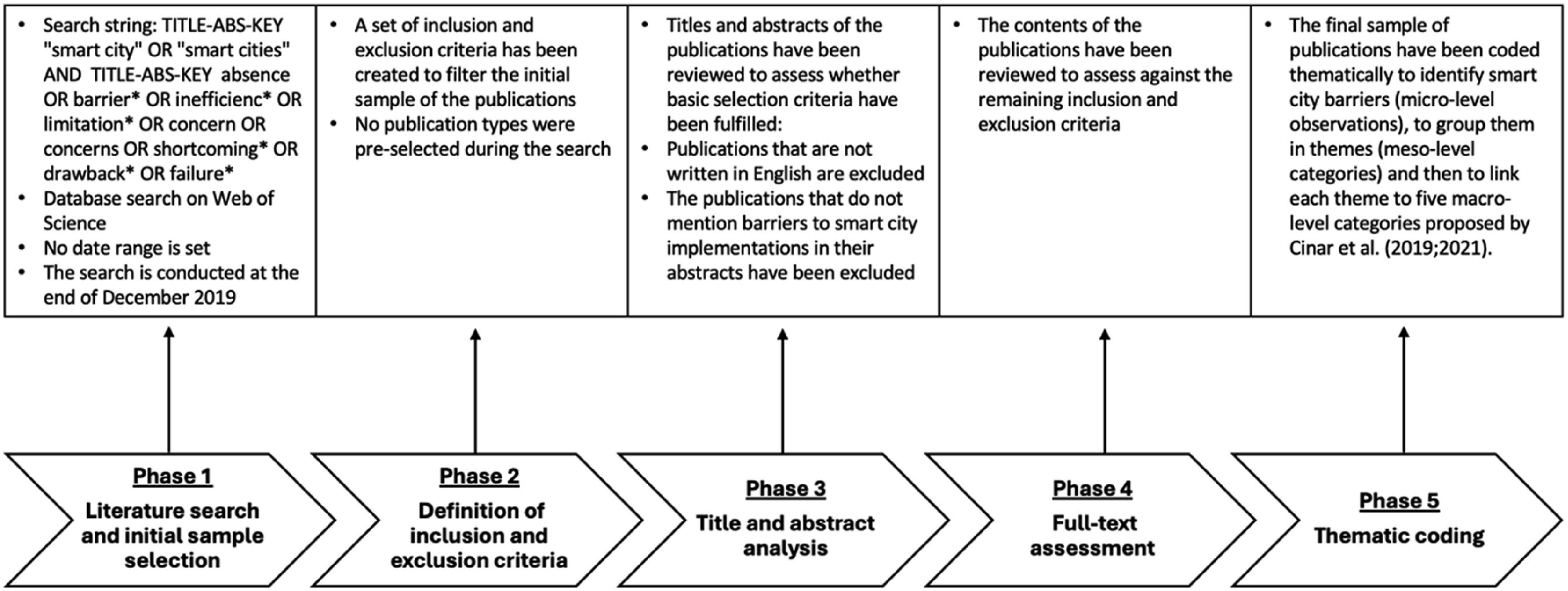
Phase 1: Literature search and initial sample selection
We started with the crafting of a search query comprising a list of selected keywords, which were used to gather relevant publications from relevant academic databases. The search query combined the locution ‘smart city’ with the term barrier and relevant synonyms and expressions that are often used to describe issues making it difficult for a project to be completed: for example, inefficiency, limitation, concern, shortcoming, drawback, failure, and absence. When possible, all the words that we selected were added to the search query in their plural and singular forms: (TITLE-ABS-KEY (“smart city” OR “smart cities”) AND TITLE-ABS-KEY (absence OR barrier* OR inefficienc* OR limitation* OR concern OR concerns OR shortcoming* OR drawback* OR failure*).
After being assembled, the search query was run in Scopus at the end of December 2019. The SLR has been undertaken as the part of a project, which ended in 2019. Therefore, the sample covers the articles that are published until the end of December 2019. The search was set to look for the selected keywords in titles, abstracts, or keyword lists of Scopus-indexed references. The selection of Scopus as our primary platform for conducting literature searches was driven by its comprehensive coverage, which encompasses a broad range of publication types. No publication types were pre-selected during the search, hence the initial sample included articles in peer-reviewed journals, books, book chapters, and conference papers for a total of 2809 unique records.
Phase 2: Definition of inclusion and exclusion criteria
The inclusion and exclusion criteria.
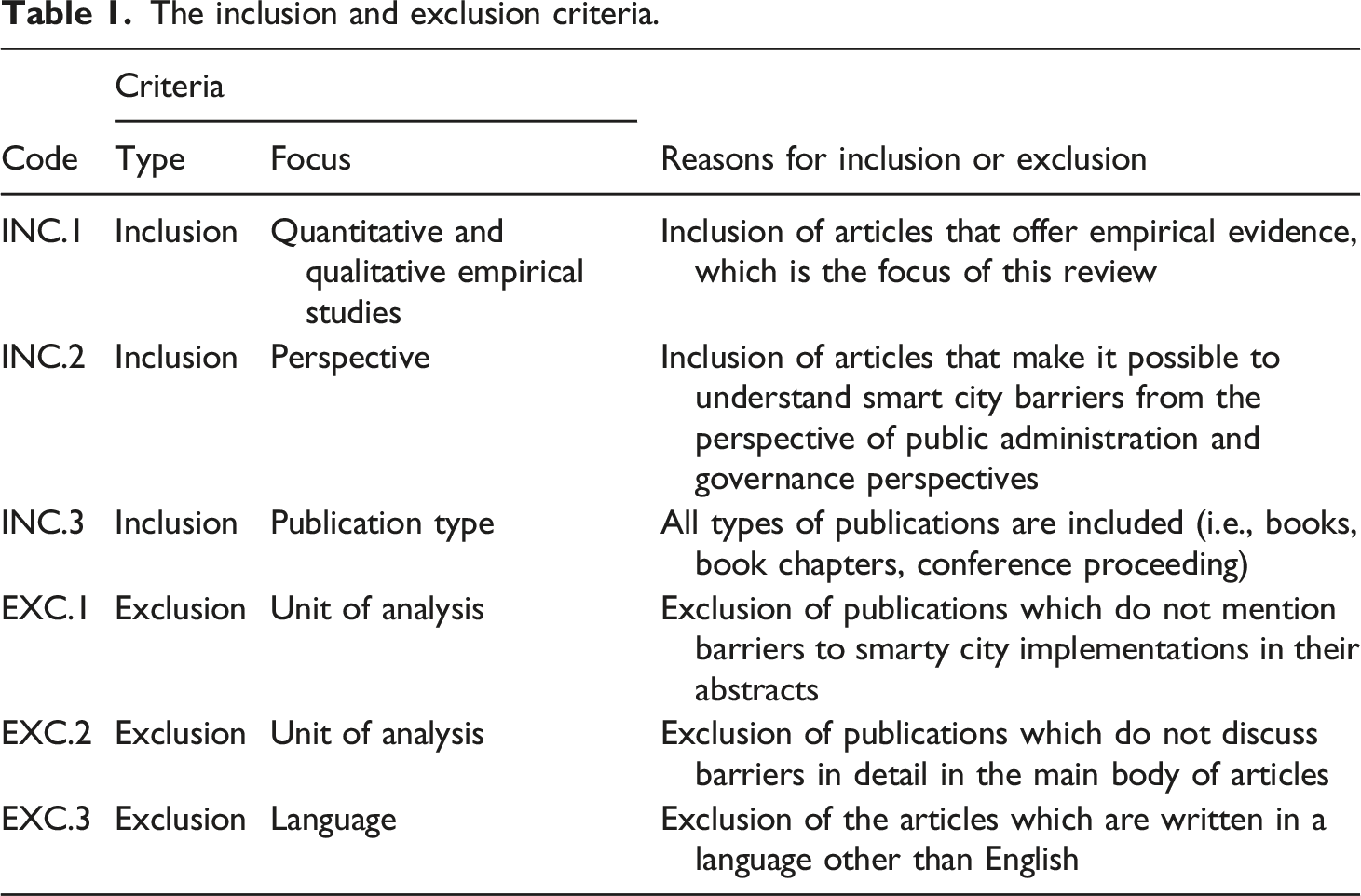
Phase 3: Title and abstract analysis
Upon reaching consensus on the selection criteria, each co-author was assigned the task of reviewing the titles and abstracts of the 2809 publications initially identified for inclusion in our study. This was done to exclude any publications that did not align with the scope of our research. To ensure consistency and thorough discussion of the decision-making process, multiple rounds of meetings were convened both prior to and during the analytical phase. Independently, every author examined all publications in the sample, after which the findings were meticulously compared on a pairwise basis to achieve unanimous agreement. This approach to qualitative data analysis, which shares similarities with consensus coding, was lengthy but secured a rigorous standard of selection (Snyder, 2019; Xiao and Watson, 2019). At the end of this phase, the authors have agreed on 398 publications for further examination.
Phase 4: Full-text assessment
The list of venues that selected publications are published.

Phase 5: Thematic coding
The coding methodology employed in this study is based on the study developed by Gerli et al. (2022), drawing inspiration from Gioia et al. (2012). After conducting the full-text assessment, the selected publications were subjected to a rigorous three-level thematic coding process. Initially, all passages that provided empirical evidence on barriers to implementing smart city projects were extracted (first-level coding). This task, undertaken by the lead author, resulted in the identification of 58 distinct barriers. Subsequently, all co-authors devised second-level codes to categorise these barriers into themes and independently matched the identified barriers to their corresponding themes. After this independent analysis, the coders convened to compare their coded data, engaging in thorough discussions to achieve consensus on emerging patterns, themes, and relationships (Richards and Hemphill, 2018).
Upon aligning the first and second-level codes, they were linked to five macro-level categories proposed by Cinar et al. (2019, 2021), which we used as theoretical dimensions. This step was carried out individually by all authors, with the results compared and deliberated upon until unanimous agreement was reached. This coding strategy significantly enhanced the reliability and credibility of the study, enabling the analysis of an extensive dataset. Furthermore, it fostered a collaborative and participatory research environment by involving multiple coders and their cross-disciplinary backgrounds in the analytical process (Cascio et al., 2019).
Discussion of the findings
Data structure: barriers to the implementation of smart city projects.

Organisational barriers
Under this category, four categories of barriers have been identified: failures in the strategy and vision, failures in leadership, failures in public procurement, and failures in data management. All these barriers reflect actions leading to the mismanagement of critical organisational issues with an impact on the delivery of individual projects and long-term digital strategies.
Failures in the strategy and vision
These barriers emerge since the early phases of smart city projects, during the development of smart city strategies and implementation plans. The reviewed studies highlighted that municipalities often struggle with the definition of long-term strategic and clear objectives and priorities (Angelidou, 2014; Janssen et al., 2019), as they tend to implement smart city projects without conducting ex-ante evaluation of the local needs that these initiatives should address (Vu and Hartley, 2018). This is exacerbated by the limited engagement of external stakeholders in strategic planning processes (Anand and Navío-Marco, 2018; Trivellato, 2017).
Furthermore, failures in strategy and vision have been associated with a lack of in-depth understanding of both technical and non-technical components in smart city projects (Nicolas et al., 2020), owing to the absence of appropriate data and metrics to evaluate the outcomes of these initiatives and map potential obstacles to their implementation (Anand and Navío-Marco, 2018; Mamay, 2019). This is again aggravated by the limited involvement of external stakeholders in strategic planning processes, due to the lack of negotiation spaces for local governments, industry partners, and other local actors to shape together the design of smart cities (Frauenberger, 2019).
Several studies have also evidenced the limited consideration for ethical and societal values in the planning process (Trivellato, 2017; Yigitcanlar et al., 2019), as local institutions driving deployment of smart city technologies tend to prioritise technological advancements over local needs (Joss et al., 2017; Reed and Keech, 2019). According to Joss et al. (2017) this reflects a lack of clarity in strategic plans and guidelines regarding the role citizens should play in smart city development. Conversely, Lee et al. (2017) related this lack of consideration for the local context to land use aspects, suggesting that urban transformations induced by industrial activities, infrastructural projects, and migration should be better reflected in technological choices embedded in smart city plans.
Failures in leadership
The reviewed literature discussed several barriers emerging when local governments fail to effectively exert their leadership over smart city projects, as they tend to adopt top-down and rigid leadership styles that discourage the participation of local stakeholders to smart city developments and constrain the application of collaborative methods for the design of smart city solutions (Trivellato, 2017; Wang et al., 2019). Scholars have also linked this barrier to the techno-centric views dominating smart city narratives, which push local governments to implement smart technologies with little consideration for the needs of local communities (Bjørner, 2021; Crampton et al., 2019; Reed and Keech, 2019), thereby causing a misalignment between the expectations of local stakeholders and the outcomes of smart city projects (Marek et al., 2017).
Additionally, from the review it emerged that leadership failures may result in unexpected delays in the completion of smart city projects due to the inability of local leaders to deal with financial constraints (Khan et al., 2020), red tape and corruption (Adapa, 2018). Even when leaders manage to secure sufficient financial resources, the literature evidenced that smart city projects may suffer from wrong budget estimations stemming from the lack of robust metrics and tools to pre-assess the capital requirements of these initiatives and to track their ongoing expenditure (Mamay, 2019).
Failures in public procurement
Smart city developments are also affected by failures in public procurement processes. The revised publications highlighted that many municipalities struggle to comply with public procurement frameworks, which have become excessively complex (Lom et al., 2016). Moreover, the limited options provided by technology providers are augmenting the risks associated with the procurement of smart city technologies (Almeshaiei et al., 2020; Silva et al., 2018). As a result, public sector organisations often fail to procure the technological solutions that are more suitable for their local projects; this is more likely to happen when municipalities are not equipped with a clear criteria and decision-making processes for technology selection (Lombardi et al., 2017).
Failures in data management
Likewise, the literature shows that local governments often lack effective methods to manage the data generated by smart city projects, due to the absence of adequate information systems and advanced technical skills (Kummitha, 2018; Setyowati et al., 2019) to manage the storage and analysis of big data collected through sensors and other sources (Ahmed et al., 2017; Costa and Santos, 2017; Kabáč et al., 2017; Park et al., 2019). Furthermore, the effective management of data is also compromised by the limited capacity and technical faults of data infrastructures and sensing devices in use within municipal governments (Escamilla-Ambrosio et al., 2018; Nelson et al., 2019; Tonekaboni et al., 2018; Valerio et al., 2017).
Municipalities also encounter difficulties in integrating existing datasets because of legacy systems that are vendor-specific and not designed to collect and integrate data from multiple subjects (Ayora et al., 2018; Rodrigues et al., 2018). This is exacerbated by the lack of technical standards for the interoperability of data originating from different sources (Ma and Lam, 2019).
Interaction-specific barriers
Under this category, two types of barriers have been identified: Failures in stakeholder collaboration and failures in project implementation. Both barriers reflect ineffective actions (or inactions) by municipal governments, resulting in the mismanagement of multi-stakeholder collaborations (that are vital for the completion of smart city projects and to boost their acceptance among local communities).
Failures in stakeholder collaboration
The reviewed literature has widely documented that municipal governments and their partners often struggle to successfully collaborate in smart city projects. While more emphasis has been placed on ineffective collaborations between public and private actors (Sandulli et al., 2017; Sangki, 2018), poor synergies amongst public sector organisations have also been reported (Gil-Garcia, 2012).
One major challenge faced in the context of smart city developments is the limited coordination amongst project partners. This may reflect the inadequacies of the contracts in place between the parties (Lu et al., 2018; Manda and Backhouse, 2019) but can also be associated with the lack of effective collaborative tools to sustain smart city projects (Paskaleva and Cooper, 2018). The review clarified that municipalities are either unfamiliar with such tools or unaware of their potential (Cellina et al., 2020). The studies in the sample also evidenced the existence of specific barriers to data-sharing between projects partners, as municipal governments and their counterparts grapple with the definition of protocols achieving fairness, integrity and security in data sharing practices (Desai et al., 2018; Sangki, 2018).
Moreover, failures in stakeholder collaboration have been linked to existing tensions amongst project partners, which in turn derive from power asymmetries and the conflicting interests existing between different stakeholders (Gil-Garcia, 2012; Manda and Backhouse, 2019; Ruhlandt, 2018). Some studies have also reported the unwillingness of private organisations to participate in smart city projects (Rana et al., 2019; Sangki, 2018) when public sector organisations lack advanced technical, managerial and infrastructural capabilities or there is limited political support for long-term partnerships (Sandulli et al., 2017; Spicer et al., 2019). Likewise, the revised studies have identified several constraints to the participation of end-users in smart city projects. From the analysis it emerged that the main obstacles to their engagement are the unwillingness of project partners to collaborate with end-users and the low responsiveness of end-users to engagement efforts. The former has been observed in public sector organisations with a risk-averse culture (Ma and Lam, 2019) or in the contexts dominated by the top-down delivery of international and local agendas for urban sustainable developments (Gupta et al., 2019; Heitlinger et al., 2019; Marsal-Llacuna, 2019).
Increasing efforts to boost the participation of residents in smart city projects are being made by municipal governments worldwide, yet the empirical research examined in this paper shows a limited interest of end-users to engage with these initiatives (Corsini et al., 2019; Marzouki et al., 2018; Mueller et al., 2018). Such behaviour has been associated with a lack of awareness on participatory methods among local communities, a more generic fear of technology and the limited trialability of smart city solutions (Freeman et al., 2019; McKenna, 2019). Furthermore, the revised literature has evidenced how the willingness of local communities to engage in smart city projects is affected by their limited trust and accountability in the public sector which, in turn, reflect widespread concerns of residents on the risks that smart cities pose to data privacy and security (Potoczny-Jones et al., 2019; Rana et al., 2019; Rinik, 2019). Additionally, the trust of citizens was found to decrease when public organisations “cannot deliver a proper level of public services” (Matheus et al., 2020: 6) and fail to fulfil their promises (Manda and Backhouse, 2019).
Failures in project implementation
Alongside collaborative tensions between municipal governments and their partners, failures can also occur in the implementation of smart city projects because of poor managerial practices and tools. In particular, the review highlighted that the use of unsuitable project management practices is still common. Municipal governments frequently apply traditional management practices that are unsuitable for the implementation of complex socio-technical projects, such as smart city developments (Alkaani and Bahith, 2019). However, even when innovative methods are adopted, public managers were found to rush the prototyping of smart city solutions without fully considering critical concerns regarding their usability, security, and efficiency (De Aguiar et al., 2018).
Moreover, implementation failures have been associated with the lack of adequate benchmarking tools and metrics to evaluate the long-term viability of smart city projects (Anthopoulos and Tougountzoglou, 2012; Pereira et al., 2018). Existing frameworks have emerged as ineffective to handle the complex and multifaceted nature of smart city developments (Lombardi et al., 2017). Plus, there is lack of consensus on how smart city developments should be monitored and evaluated (Nelson et al., 2019). This lack of comprehensive benchmarking and assessment frameworks undermine the efficient management of ongoing projects (Yin et al., 2019) but also compromise the ability of municipal governments to learn from past experiences and boost effectiveness of future decision-making processes (Wang et al., 2019).
Contextual barriers
The review revealed that contextual barriers to smart city developments can be associated with failures in markets and political systems, as well as shortcomings of the public administration. While much emphasis has been placed on contextual barriers related to the structure and functioning of the public sector, market failures were less frequently debated and analysed in the revised publications.
Failures in the market structure
The few papers discussing these barriers highlighted the lack of coordination in the supply chain of the technological components for smart city projects (Rhee, 2016). The absence of coordination between supply chain parties happens due to several reasons and scalability and replicability of smart city projects are constrained as a result. Rhee (2016) argued that the tailored nature of smart city projects limits the scalability of successful project being implemented in multiple locations due to the lack of collaborative approach to learning from existing examples and adopting similar technologies in new smart city initiatives. Next, existing physical infrastructure that facilitates the implementation of smart city technologies differs in the degree of availability and quality. This is another reason for not being able to coordinate in producing and implementing scalable and replicable smart city technologies. On the other hand, our review also evidenced the limited capability of technology suppliers to provide tailored solutions as a barrier. Beeton (2012) argued that it is mainly because of the high costs associated with developing place-based smart city applications. It must be noted, however, that Rhee (2016) argued against placing excessive emphasis on tailored digital solutions, as this contributes to the fragmentation of smart city technologies and undermine their scalability.
Our review identified that the high concentration of technology markets, which remain dominated by few large providers also restrains the scalability and economic viability of smart city projects. According to Anand and Navíco-Marco (2018), few players that dominate the market cause monopolistic competition. This diminishes the power of local authorities in negotiating for affordable and yet effective technologies to be implemented, especially in the Global South.
Failures in the political system
More frequently than market failures, the literature has discussed how failures in the political system can directly affect smart city development. First, smart city projects are severely affected by a lack of political support from elected officials and political figures, which results in suboptimal levels of investment (Addae et al., 2019), and a misalignment between local initiatives and national policies or standards (Faisal et al., 2019; Musakwa, 2017). Mosannenzadeh et al. (2017) identified two main reasons that cause the lack of political support. First, it may occur due to changes in local authorities as they may not be re-elected once their terms are over, and second, the authors highlighted that the involvement of relevant policy makers in local and regional levels may reduce the likelihood of the support coming from political actors. Political support may be influenced by political instability, another major barrier often discussed in the smart city literature, which remarked that frequent changes in the political leadership drive private investors away from smart city projects and undermine the continuity and sustainability of these initiatives (Addae et al., 2019). Also, political instability indicates the absence of the ability of authorities in establishing long-term policies which will help to promote and scale up smart city projects (Addae et al., 2019).
Furthermore, scholars have highlighted that smart city initiatives often suffer from unsuitable or missing national and local policies and guidelines to support the implementation of local projects. According to Faisal et al. (2019), the complexity of urban digital transformations partially explains why national and local governments struggle to develop adequate policies to govern smart city transitions. As a result, policy interventions are often fragmented, failing to provide a comprehensive regulatory oversight while procurement policies tend to negatively affect the participation of external stakeholders by setting requirements that are not suitable for innovative projects (Barns et al., 2017; Maccani et al., 2020). The findings of Maccani et al. (2020) show that long tendering processes arising from rigid public procurement framework where long bureaucratic processes need to be followed, restricts full implementation of projects and these projects often do not continue after piloting stages are completed. Moreover, in contexts characterised by authoritarian governmental practices, smart city policies and regulations tend to neglect the potential contribution of external stakeholders, especially citizens and community groups (Cowley et al., 2018; Leigh, 2017; Trencher, 2019). In general, the reviewed publications highlighted that national governments are more likely to follow top-down approaches when developing smart city policies (Praharaj et al., 2018; Tekin Bilbil, 2017). Conversely, scholars have stressed that participatory approaches to smart city planning and implementation could help address the insufficient consideration for inequalities and social inclusion currently observed in both national and local initiatives (Rajasekar et al., 2018; Shreepriya et al., 2018). Participatory approaches should not only consider local communities as part of the bottom-up development and implementation processes but also need to involve technology providers and all relevant public sector organisations beginning from the earliest development phases of smart city projects (Trencher, 2019). This can enable policy makers to address potential venues that require policy interventions as well as a common set of policies for design, testing, and implementation of smart city technologies (Faisal et al., 2019). Some authors have also argued that the excessive privatisation of public services is negatively affecting the extent to which smart city projects are inclusive, democratic, and responsive to the needs of local communities (Frauenberger, 2019; Perng, 2019).
Shortcomings of the public administration
Additional contextual barriers emerging from the literature can be classified as shortcomings in the organisational structures and decision-making processes of public sector organisations. Several studies highlighted the consequences of regulatory uncertainty, stemming from the lack of clear and stable regulatory frameworks. The limited coordination and integration of complementary policies and regulations results in ambiguous policy directions undermining both the political and financial support for smart city projects (Addae et al., 2019; Cowley et al., 2018; Marsal-Llacuna, 2019; Rana et al., 2019).
The reviewed publications also highlighted that existing regulations may hinder technological development because of their stringent, onerous, and obsolete requirements (Setyowati et al., 2019). Similarly, funding schemes in support of smart city developments were often found to set timeframes or financial thresholds that force municipal governments to exclude peripheral and deprived neighbourhoods from the perimeter of smart city projects (Jayasena et al., 2019). Finally, the organisational silos existing within public sector organisations were regularly cited among the barriers compromising the cooperation between government departments and agencies involved in digital transformations processes (Argento et al., 2019; Rajasekar et al., 2018).
Resource-related barriers
Four categories belong to this category: shortcomings in the enabling infrastructures, lack of skills and knowledge, shortcomings of supportive tools, and lack of funding. All these barriers have critical implications for the long-term viability and scalability of smart city projects, and are affected by economic, cultural, and political contingencies specific to urban contexts.
Shortcomings in the enabling infrastructures
Scholars agreed that robust infrastructures need to be in place for smart city deployments to succeed (Islam et al., 2020). However, many cities were found to suffer from the limited availability or quality of adequate infrastructures, especially in economically deprived areas (Addae et al., 2019; Spicer et al., 2019; Von Wielligh et al., 2018). These include both digital and non-digital infrastructures: for instance, Chen et al. (2018) showed that the adoption of smart and sustainable mobility services is constrained by the insufficient capacity of existing energy networks. Likewise, it was noted that smart city projects are often developed without fully considering the capacity of existing digital infrastructures to cope with increasing amounts of data sources and connected devices (Ma and Lam, 2019; Morrissett and Abdelwahed, 2018).
Another issue emerging from the literature is the limited resilience of urban infrastructures to both natural and man-made disasters, such as cyberattacks and civil disorders (Alabady et al., 2018; Colding and Barthel, 2017; Diallo et al., 2018). By interconnecting different infrastructures together, smart city systems may increase their vulnerability (Colding and Barthel, 2017; Garcia-Font et al., 2017; Sterbenz, 2017). Such risks are exacerbated by the lack of sophisticated detection and defensive mechanisms (Alromaihi et al., 2018; Elsaeidy et al., 2017; Mylrea, 2017; Pan et al., 2019), leaving smart infrastructures more exposed to cyber threats (Li and Shahidehpour, 2017; Pan et al., 2019; Subasi et al., 2018).
Lack of skills and knowledge
Alongside the integration of multiple physical infrastructures, smart city developments also rely on the combination of alternative skillsets and competencies, whose scarcity has emerged as a major resource-related barrier in the revised literature. First, researchers evidenced the limited availability of advanced skills and expertise within the workforce in public organisations, caused by gaps in the curricula currently taught in higher education and the high cost of IT-related training (Expósito López et al., 2019; Musakwa, 2017; Rana et al., 2019). In contexts characterised by political instability, this may pose further constraints to the ability of local administrations to attract and retain professional profiles with advanced skills (Alkanaani and Bahith, 2019).
Outside the public sector, the insufficient digital literacy of end-users was often discussed as a barrier to the effective development of smart cities, as it affects the extent to which residents, businesses and other end-users can engage with and benefit from smart technologies (Lytras and Visvizi, 2018; Masucci et al., 2019). Some authors however contested that promoting digital skills does necessarily enhance the participation of residents to smart city projects (Masucci et al., 2019), rather they emphasised the importance of regular communications to boost the acceptance and engagement of residents (Masucci et al., 2019; Musakwa, 2017; Popham et al., 2020).
Both within and outside the public sector, the reviewed literature placed much emphasis on the shortage of digital skills. Yet gaps in managerial and legal competencies were also acknowledged and discussed (Nicolas et al., 2020; Panagiotakopoulos et al., 2020; Popham et al., 2020). For example, some studies reported that local administrations often struggle to comply with privacy regulations (Matheus et al., 2020) and to leverage the potential of open data initiatives (Ma and Lam, 2019) because of their low levels of data literacy.
Shortcomings of supportive tools
Another type of resource-related barriers concerns the supportive tools employed in smart city development, that is any tool and mechanism employed to facilitate the implementation of smart city projects. Limitations were first discussed in relation to coordination procedures and other tools utilised to orchestrate all involved parties, facilitate decision-making and transfer knowledge amongst them (Ruhlandt, 2018). Earlier studies shows that ineffective coordination procedures result from a lack of appropriate governance models and competences to manage the codesign and coproduction of smart city services (Frauenberger, 2019; Paskaleva and Cooper, 2018). Furthermore, the effectiveness of coordination mechanisms and participatory practices may be hindered by rigid hierarchies and bureaucratic controls (Lin et al., 2015).
Less frequently, the literature has explored the use of ineffective risk and performance management instruments. Scholars have highlighted the limited adoption, among municipal governments, of dedicated systems to assess either risks or the outcomes of smart city projects (Picioroagă et al., 2018). When monitoring whether effective performance measures are in place, the existing evidence suggests that the performance indicators and metrics applied are not sufficiently comprehensive and robust, hence providing only a partial and superficial overview of the impact of smart city developments (Mattoni et al., 2015; Nicolas et al., 2020).
Lack of funding
Insufficient funding recurred as a significant barrier across the different stages of smart city projects (Adapa, 2018). Municipal governments often struggle to source the start-up capital required for these initiatives as well as to establish viable sources of revenue that can guarantee their continuity in the long-term (Adapa, 2018; Meijer and Thaens, 2018). Limited financial capacity of partner organisations may pose additional constraints, especially in emerging economies (Von Wielligh et al., 2018). The reviewed publications also highlighted that private sector investments are often insufficient for infrastructural projects because of uncertainties regarding the sustainability of their financial and business models (Liborio et al., 2018).
Technology-specific barriers
Finally, some barriers experienced by smart city projects reflects idiosyncrasies in the design and economics of smart city technologies. These barriers also include shortcomings and gaps in the existing regulations and business models, specific to these technologies.
Financial burdens of technology
Deploying and maintaining smart city technologies entails a financial burden for municipal governments, which emerged as a major threat to the long-term sustainability of smart city initiatives (Chinnaswamy et al., 2019; Hui et al., 2020; Yao et al., 2017). High costs have been associated with both the acquisition and maintenance of smart city technologies (Guangul and Chala, 2019; Lesperance et al., 2018; Vieira and Alvaro, 2018; Yang, 2019), representing a major obstacle to their adoption and deployment in urban contexts (Marchiori, 2017). Uncertainties on the economic sustainability of these technologies could further increase the costs and risks of smart city deployment (Liborio et al., 2018; Mary et al., 2018).
Furthermore, scholars remarked the high cost to acquire, run and maintain open datasets (Gupta et al., 2019; Matheus et al., 2020). Trade-offs emerged between the cost and quality of sensors, whose costs is also affected by interoperability issues (Kendrick et al., 2019). Accordingly, open-source standards have been advocated for to cut the cost of smart city developments (Vaidya and Mouftah, 2018).
Shortcomings in the design of technology
The review also highlighted a series of barriers reflecting shortcomings in how smart city technologies are designed and manufactured. These include the limited interoperability and user friendliness of digital technologies, which depend on the accessibility of their interfaces (Ma and Lam, 2019; Sandnes et al., 2017) and extent to which they integrate with and adapt to existing devices already in use within the population (Barnaby, 2019; Tekinerdogan and Köksal, 2018)Not only do these issues affect the adoption and usage of digital solutions: they also have an impact on the security of smart city infrastructures (Burns et al., 2018).
Other design shortcomings frequently discussed are the high energy consumption of smart technologies and the lack of automation in data processing. The former echoes growing concerns on the energy efficiency of sensors and IOT networks (Wu et al., 2019; Ye et al., 2019). The latter refers to the lack of autonomous systems for data cleansing and labelling (Xiao et al., 2018), as well as the limited diffusion of trained models and machine learning techniques for the real-time analysis of urban data (Naphade et al., 2017).
Shortcomings in the regulation of technology
Additional shortcomings were discussed in relation to how smart city technologies are (or are not) regulated (Jewell, 2018; Patel and Doshi, 2019). In the reviewed literature, existing regulations and guidelines on smart city technologies (including data privacy regulations) have been depicted as inefficient or patchy, because they fail to define clear roles and responsibilities within and across different organisations (Edelenbos et al., 2018; Mylrea, 2017; Ramos and Silva, 2019; Ruhlandt, 2018; Stefanouli and Economou, 2019; Vitunskaite et al., 2019). Furthermore, they have been criticised for offering ineffective and incomplete responses to the threats and risks associated with citywide deployments of digital technologies (De Wijs et al., 2016; Grieman, 2019; Yang and Xu, 2018), for example, in the context of autonomous vehicles (Mylrea, 2017) and wireless sensor networks (Dagher et al., 2018; Ma et al., 2018; Qiu et al., 2017).
Earlier studies have also denounced the lack of ad hoc regulations to address ethical concerns in the use of algorithmic decision-making (Brady, 2019; Lim and Taeihagh, 2019). The lack of holistic data regulations has equally been discussed as a disincentive to data sharing (Bates et al., 2018; Dagher et al., 2018; Desai et al., 2018; Madaan et al., 2018).
Gaps in the business models
Finally, the review evidenced a lack of fully rounded business models and viable scale-up strategies for smart city projects (Esmaeilian et al., 2018), which compromises the development of long-lasting partnerships and results in the early discontinuation of many of these initiatives (Belanche-Gracia et al., 2015; Li and Liao, 2018; Lim et al., 2018).
Moreover, the publications analysed in this paper showed that the business models currently adopted in smart city projects often struggle with responding to end-users’ needs because of budget constraints and a lack of flexibility (Dilawar et al., 2018; Rajasekar et al., 2018). The predominance of market-driven and top-down approaches further push municipal governments to implement smart city solutions without understanding the specific problems of different groups of users living in their areas (Kobza and Hermanowicz, 2018). In some cases, technical and functional difficulties experienced by end-users were also found to disincentivise the adoption of smart technologies (Peng et al., 2017), thereby compromising the sustainability of their business models.
Discussion and conclusions
Our findings provide additional insights into the barriers experienced by municipal governments promoting smart city development. Within each of the categories outlined by Cinar et al. (2019, 2021) we identified three typologies (failures, gaps, and shortcomings), reflecting the composite nature of the barriers hindering innovation in public sector. Drawing on these findings, we articulate a set of theoretical and practical implications, presented in the following subsections. These are followed by a series of recommendations for future research on PSI.
Theoretical contributions
Cinar et al. (2019: 284) state that “the nature of barriers is complicated and not well understood, although there has been a general perception that the barriers to public sector innovation are well studied”. Our review builds on this observation; it contributes to bridging this gap by offering a more nuanced and comprehensive framing of the barriers to innovation that public sector organisations might experience, with a focus on the fast-growing domain of smart city projects. The theoretical implications of this study are likely to benefit scholars across different domains, adding to the literature on PSI and smart city transitions.
The existing systematic literature reviews that investigate barriers to PSI focus on public sector as a whole and they present barriers without focusing on a specific administration level (Cinar et al., 2019, 2021). In this study, we only consider the perspective of local governments, using smart city project development as our empirical setting. Several studies stressed the importance of studying barriers to digital transformations at the level of local governments. This call is structured upon three interrelated reasons, which highlight the growing centrality of local governments in smart city development practices. First, local governments act as “the pivot of the network of actors that can take a role in implementing smart cities projects” (Sancino and Hudson, 2020: 716) and have the autonomy to implement technological innovation policies and administrative reforms (Weißmüller et al., 2023). Second, local governments often represent the initiator of smart city projects (De Vries et al., 2016). Third, local governments have become more entrepreneurial, with innovation that has become a means to fight poor fiscal health in the face of a growing demand for services (Andrews et al., 2021), to manage New Public Management reforms (Cinar et al., 2022; De Vries et al., 2016), and to adapt nationally developed digital transformation programmes to local-context conditions (De Vries, 2018; Nicolas et al., 2020).
Focusing on the smart city literature enabled us to gain additional insights into the barriers that public sector organisations face when developing these initiatives. Our findings support some of the findings of Mora et al. (2023), in which the authors highlighted the strengths and weaknesses in the current approaches to the governance of smart city transitions. The authors identified several challenges in relation with administrative structures, internal capabilities, technological innovation policies, implementation strategies, collaborative tools and spaces, cross-sector partnerships, technical regulations and standards, and business models (Mora et al., 2023). These findings are aligned with several barriers we identified in this systematic literature review regarding the failures in strategy and vision, the shortcomings of the public administration, the failures in data management, the lack of skills and knowledge, the shortcomings in the supporting tools, the shortcomings in the regulation of technologies, and the gaps in business models.
Finally, our analysis provides a granular and nuanced categorisation of the barriers that local governments experience when implementing smart city projects. Through a systematic review of the literature, we identified 58 barriers (micro-level), which we grouped under the five macro categories presented by Cinar et al. (2019, 2021) in their studies on barriers to PSI. Generally, our analysis highlight that, within these macro categories, there coexists different types of barriers, which can be classified in failures, shortcomings, and gaps. Failures stem from actions that do not lead to the intended outcomes because of the mismanagement of existing tools and resources, or ineffective decision-making. Shortcomings result from faults and flaws in existing institutions or tools that should instead support PSI. Lacks reflect the absence of such resources, tools, and mechanisms. By distinguishing between these three typologies of barriers (failures, lacks and shortcomings), we respond to Criado et al. (2023: 12) call for “a rigorous classification of the enablers and inhibitors of implementation”. These three typologies also help us understand the relative intensity of the barriers, which the existing taxonomies do not provide an indication about, and this understanding makes possible to configure appropriate mitigation strategies based on barriers’ severity and strength (Rjab et al., 2023). The intensity of the barriers arises from the fact that whether capabilities, conditions and tools exist, or whether they are appropriate for initiating smart city projects or can nestle the required properties to initiate viable projects. In the case of the failures, it is a combination of non-existing capabilities and inappropriate actions, as well as tools. For the shortcomings, we observed that regulations, institutions, physical infrastructure, and technological capabilities are in place; however, they are either not sufficient to enable a smooth transition to smart city technologies or they do not address (issues arising due to the implementation of a new technology. Therefore, current regulations, institutional practices and infrastructure need to be reviewed and changed wherever is necessary. The lacks (or gaps) point to resources that do not exist but essential for starting smart city projects and being able to scale-up in the long term. Also, we focused on identifying the barriers that appear in the initial stages of smart city projects. Wang (2023: 2) highlighted that “firms learn more effectively from early-stage failure experiences than from late-stage failure experiences”.
Practical contributions
Our findings also offer practical contributions for public sector officials and other stakeholders that work with local governments to initiate smart city projects. The practical contributions are enabled by implementing meso-level categories to capture the root causes of the identified barriers. We realised some of these barriers arise from the absence of required resources, expertise, or stakeholders to implement and operationalise smart city technologies, whilst other barriers arise from the mismanagement of existing resources, tools, and practices. Making this differentiation between problems will help local governments to create mitigation strategies and timelines that are realistic for solving these emerging issues identified through these barriers. Local authorities need realistic timelines more than ever because they work under immense resource pressures. It will help them to realise they will need more time to build resources and knowledge from scratch when they are not in place. Also, they will realise the timeline is different to building mitigation strategies when it comes to the barriers that focus on shortcomings, which may require a shorter period of time and resources to change/mitigate the existing practices. Smart city projects are complex and the identification of barriers will enable public sector officials to understand the complexities of their existing environments and to set-up the right conditions for a smooth implementation of smart city technologies (Criado et al., 2023). Although changing established and complex operational practices is difficult and requires the right skills, experience and cultural conditions, the results of the review can help critique, pause, and reset practice. This will be instrumental in offering cognitive resources for sustaining transformative learning and deep transitions driven by innovation efforts (Cole and Hagen, 2023).
Considering the findings of this review, several action plans can be developed in the following domains: (1) community-based problem-solving strategies, (2) risk management strategies, and (3) expertise development programs. These areas are identified as the most critical subjects that will help local authorities to re-focus their actions for predicting barriers as early as possible and mitigating any negative consequences of these barriers. Global trends in smart city implementations points in the direction towards adopting people-centred and inclusive approaches as a critical part of national policies and digital transformation agendas. However, Beckers et al. (2022) argued in the Global Smart City Governance Framework help local authorities that have difficulties in ensuring the active involvement of citizens in the initiation of smart city projects and one third or local authorities worldwide fall behind responding feedback they receive from their residents. The interaction-specific barriers along with the findings of Beckers et al. (2022) indicate that local authorities need to develop community-based problem solving strategies. Whilst it is crucial that citizens should participate in the design of smart city projects for a successful final product (Zarei and Nik-Bakht, 2021), local authorities, as well as national policy guidelines, need to acknowledge that cities have their own individual features (i.e., cultures, norms, challenges, lifestyles) that need to be considered when community based problem strategies are developed (Simonofski et al., 2021). It is inevitable that community based strategies and problem-solving mechanisms will be affected by various modes of governance (whether it is based on TPA, NPM or NPG) (Przeybilovicz et al., 2020); however, local authorities need to work on several topics that will become the essential pillars of community based problem solving strategies. This approach will also enable local authorities to embrace a structured approach towards managing their innovation which can reduce risk and uncertainty caused by implementation of new technologies. Local authorities need to identify and document engagement domains (i.e., environmental, social, political, or economic challenges), engagement goals (i.e., citizens’ needs and priorities), engagement platforms (i.e., social media, games), and finally engagement incentives to attract the attention of citizens and to maximise value proposition for them (i.e., entertainment, community interaction, learning) (Zarei and Nik-Bakht, 2021).
Next, local authorities need effective risk management strategies because risk-averse nature of public sector organisations appear as one of the strongest barriers in the design and implementation of innovation projects (Cinar et al., 2019). Ideally, risk management strategies should provide local authorities with appropriate tools and knowledge for making situational analysis to continuously increase their awareness on current and future challenges that their projects need to endure. Such analysis needs to be supported through information sharing, active cooperation between stakeholders, and building necessary capacities. However, the findings of this systematic literature review showed that local authorities either do not have structured risk management strategies specifically for smart city projects or they do use their existing tools and techniques, which do not necessarily work for radical innovations and new technologies that smart city project require. Ullah et al. (2021) argued that the existing knowledge and practices provide no comprehensive risk taxonomy or methods specifically for understanding the risk exposure in smart city projects and it makes projects more prone to failures. There is a need for developing comprehensive risk management strategies that suit the nature of complex innovations. These strategies need to provide step-by-step guidelines for local authorities to identify and assess risks that stakeholders, especially public sector organisations, may come across throughout different stages of smart city projects. A multi-layered strategy that considers organisational, technological, and environmental elements of smart city projects will provide local authorities with required knowledge and tools to identify, analyse, act upon, and monitor several factors that may hinder the implementation of viable projects (Ullah et al., 2021).
The final recommendation that policy makers and practitioners can take on board is about initiating programs which specifically focus on developing necessary skills and expertise within public sector organisations, particularly in local authorities, for managing smart city projects and digital transformations. A lack of skills and expertise in managing smart city projects and digital transformation overall within public sector organisations appear as one of the most challenging organisational barriers (Beckers et al., 2022; Cinar et al., 2019), and yet individual level skills are highly critical for enabling innovation, as well as managing smart city projects with minimum friction possible (Bartlett and Dibben, 2002; De Vries et al., 2016). Therefore, local authorities need to pay attention in enabling effective acquisition and building of required talents. Building up teams and acquiring individuals that are equipped with required managerial as well as technical skills will have an impact on several other domains within local authorities such as managing complex innovation projects, analysing, and interpreting a vast amount of data for better decision making to support policy development, and managing risks under high uncertainties. Developing training and hiring programmes for expanding internal skillsets will enable local authorities to have the expertise required to manage smart city projects and services (Beckers et al., 2022).
Limitations and agenda for future research
This review comes with limitations. We ran our search terms only on Scopus and although the database is comprehensive; some studies may be omitted. We only considered a single type of PSI while identifying implementation barriers, therefore, future studies can expand the findings of this review by considering other types of innovation such as projects focusing on the digital transformation of public service provisions and organisations’ internal IT processes. Another limitation for this review arises from the heterogeneity of the studies included in terms of areas of research, methods, outcomes, and cases/samples used, which makes it challenging to synthesise the results. Finally, the selection bias can sometimes be a limitation for systematic literature reviews as the quality of these reviews heavily relies on the selection of studies. To tackle this limitation, the search terms, the inclusion and exclusion criteria, and the database were evaluated by each author and the search strategy was built based on a consensus among the authors of this review.
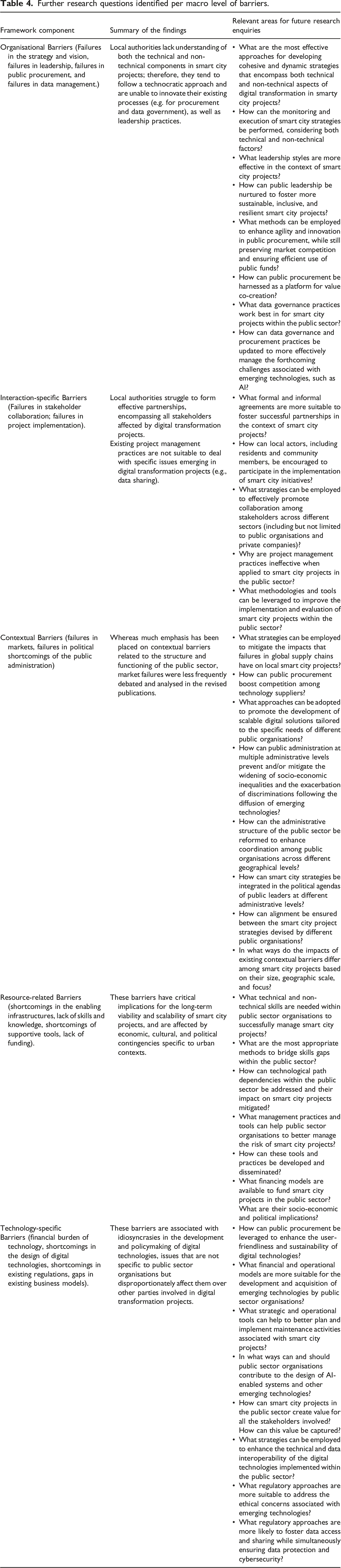
Further research questions identified per macro level of barriers.
Footnotes
Declaration of conflicting interests
The author(s) declared no potential conflicts of interest with respect to the research, authorship, and/or publication of this article.
Funding
The author(s) disclosed receipt of the following financial support for the research, authorship, and/or publication of this article: This work has been supported by the European Commission through the Horizon 2020 project FinEst Twins (Grant No. 856602).
