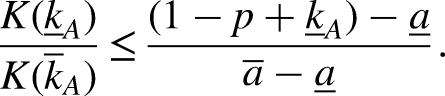
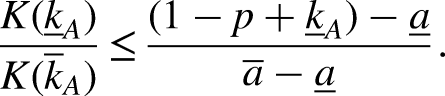
Miscalculations due to lack of information are often seen as one of the main causes of war. Yet, a privately informed country has multiple channels to share information and avoid a costly conflict. I study three ways information can be transmitted – sunk cost signals, audience costs, and military build-up. In a fully decentralised setting, where the uninformed country can perfectly adjust its response to the information it learns, the three channels produce very different outcomes. Sunk cost signals never transmit any information. Information transmission is possible with audience costs when the uninformed country sufficiently values peace. With military build-up, information transmission occurs by accident. It is a by-product of the privately informed country’s attempt to increase its strength. I contrast these findings with the case of a constrained uninformed country that can only choose between a limited number of offers.
In December 2021 and January 2022, Russia massed troops and hardware equipment close to the frontier with Ukraine for so-called military exercises. The stated political reason was to show strength, ‘a demonstration of force’ as an analysis from the Center for Eastern Studies reports it (Wilk, 2021). Russia claimed to signal its opposition to the expansion of NATO, both logistically, with an increase in the number of troops in Baltic countries, and geographically, with the potential entry of Ukraine into the organisation (Reuters, 2022). No diplomatic breakthrough came out of Russia’s ‘peaceful’ military demonstration, only an aggression against Ukraine starting on 24 February 2022.
In the Fall of 2020, at the height of the negotiation with the European Union over Brexit, the UK government led by Boris Johnson repeatedly made public its position that there was nothing to fear from not reaching a deal. This hard-line position was a way to highlight the determination of the British side. ‘There was an assumption that we were the weaker party and would have to accept certain things if we wanted an agreement’, Lord Frost, the lead British negotiator at the time, commented a few months afterwards (Daily Express, 2021). Despite all these public announcements, the two sides reached an agreement on 24 December 2020. The final document very much looks like a compromise with the UK winning on some issues, losing on others, and finding a middle point on the remaining ones (Bloomberg, 2020).
Since 2020, China has been investing massively in its military, building new capacity (such as 10 new submarines by 2030), modernising existing equipments, and improving its chain of command (Defense News, 2022). For many, this military build-up is just a preparation for war against Taiwan and, thus, the United States. Yet, not everyone agrees. For some, the growth of the Chinese army does not need to lead to conflict. It may simply be a way to improve the standing of China in the global order (Heath, 2023).
While these examples talk to different types of disputes – the first concerns a territorial dispute, the second trade, the third the relative standing of a country –, they share a few common threads. First, in all cases, it is difficult to imagine that a third party can credibly intervene to mediate between the two opposing actors. This is what I call a decentralised setting. The two sides in dispute need to resolve their issue on their own. Second, one country can be understood as communicating its resolve by its action in order to change the position of its opponent, be it Ukraine or the European Union or the United States. Russia’s, the UK’s, and China’s actions can be seen as ways to avoid wars caused by ‘miscalculation due to lack of information’ (Fearon, 1995: 381). While the jury is still out on the China–US relations, Russia and the United Kingdom achieved very different outcomes. What looks more like a pure signal, a military exercise, did not prevent a conflict; what can be characterised as building audience cost, claiming no fear of no deal, arguably facilitated a peaceful resolution.1
These examples illustrate some of the more general theoretical results presented in this paper. I study a setting in which two countries are in dispute over a good. One country is privately informed about its resolve and can undertake some action – sunk cost signals, audience costs, or military build-up – to reveal its private information before the beginning of any negotiation. If the negotiation breaks down, war ensues. I look at two different settings: a decentralised setting, where the absence of any possible mediator means that countries cannot commit and can perfectly adjust the concessions they make to their opponents based on the information they receive, and a setting, where a country faces constraints on how it can respond to new information (possibly due to the presence of external actors). In the first situation, I show that sunk cost signals are never informative, or even used. In contrast, audience costs and military build-up can serve to communicate information and can help avoiding conflicts, though for very different reasons. Audience costs work when the uninformed country sufficiently values peace. Military build-up removes the risk of war almost by accident, when the low resolve type cannot catch up with its stronger counterpart. In the second situation, in the presence of constraints on how a country can react to information, I find very little differences between the three mechanisms. They all tend to allow for information transmission under the same conditions. As such, this article highlights what works and what does not, when, and why to resolve informational asymmetries and to limit the risks of war.
Formally, in the main text, I consider a stylised model with two Countries and locked into a dispute over a good or territory which can be settled peacefully or lead to a costly war (though, one can think of any type of actors whose quarrel can degenerate into a damaging conflict). Country has private information about his cost of conflict, which can take one of two values: high or low. In contrast, Country ’s cost of war is public knowledge. At the beginning of the game Country has an opportunity to possibly reveal its private information. Country makes a take-it-or-leave-it offer to , and the latter then decides whether to start a conflict. A conflict is costly and risky, won with common knowledge probability by or .
I consider (successively) three channels Country can use to potentially reveal its private information: sunk cost signals (incurred no matter the outcome), audience costs (suffered only if a peaceful settlement is reached), and military build-up (which changes the probability wins the conflict). I also consider two distinct situations. In the first, Country can make any offer it wants to Country . This case represents a fully decentralised setting – there is no limit on what Country can do, there is no commitment possible on how it uses the information it receives. In the second situation, Country ’s set of offers is restricted. Implicitly, Country faces external constraints which limit its ability to adjust to new information (another interpretation is that the disputed good is indivisible, yet disputes are rarely over indivisible goods, especially given that monetary transfers are possible, Fearon, 1995). As such, I contrast the cases of an unconstrained Country and of a constrained Country .
I suppose that absent any information revelation by Country , a war occurs with positive probability. In turn, when all private information is transmitted, a peaceful settlement is always reached. Given that conflicts are costly for both parties, my primary focus is on the conditions for a separating equilibrium to exist, one in which ’s private information is fully revealed.
When Country can only use sunk cost signals, I show that no information is ever transmitted in equilibrium when Country is unconstrained. In fact, those signals are not even used. Country always plays a pooling strategy and never undertakes any costly action. In other words, interpretations of military exercises, verbal thereat, missile tests, atrocities as forms of signals may not be warranted in a decentralised setting.
Why is signalling completely ineffective when is unconstrained? To make sense of this, notice that if Country were to reveal its cost, Country would make a compromise offer which leaves indifferent between starting a conflict and accepting the offer. Because a low-cost Country has greater incentive to start a conflict, Country , upon learning its type, makes a more attractive offer than when it learns has a low cost. This creates an incentive for a high-cost Country to imitate a low-cost type. To guarantee information transmission, it must be that a low-cost Country pays a signalling cost to differentiate itself from its high-cost counterpart.
So far, the reasoning is the same as in all signalling models. However, it remains to consider the incentive of a low-cost Country to reveal its type. Recall that if Country learns that Country has a low cost of conflict, it makes a compromise offer that leaves this type indifferent between conflict and peace. Now suppose that a low-cost Country pretends to be a high-cost type. Country ’s offer makes with high-cost indifferent between conflict and peace, which implies that a low-cost Country strictly prefers starting a war then. That is, a low-cost Country ’s expected utility from mimicking a high cost is its expected payoff from conflict, just like when it reveals its type. Hence, a low-cost Country has nothing to gain from differentiating itself from a high-cost type. Thus, a low-cost Country is not willing to pay any signalling cost. But since signalling costs are necessary for information transmission, as per the previous paragraph, no information revelation can occur in equilibrium. As a result, the equilibrium always features pooling at the signalling stage, informational asymmetries are not resolved, and wasteful conflicts are still likely to occur.
Results change when Country is constrained. Indeed, information transmission is impossible because Country grabs all the rents from peace if it learns ’s cost of conflict (by making an offer that leaves Country indifferent between conflict and no conflict). This is generally precluded when the set of offer is limited. Still a separating equilibrium is not guaranteed since the gain for a low-cost Country of revealing its type is lower than the benefit of a high-cost Country from pretending to be strong (due to the outside option of starting a conflict). For a separating equilibrium to exist, the costs of signalling for the two types need to be sufficiently different.
Turning to audience costs, this channel of information transmission looks at first very similar to sunk cost signals. In fact, audience costsare often understood as a form of delayed signalling. This interpretation, however, misses an important aspect of audience costs in a decentralised setting. Rather than being pure waste, they increase the cost of reaching a compromise in ways that actually facilitate information transmission. To see this, notice that the high-cost Country faces the same incentives with audience costs as with sunk cost signals. It wants to mimic a low cost to obtain a better compromise offer. Hence, just like for signalling, a low-cost Country must incur some costs for information revelation to be feasible. As this cost is now an audience cost (which makes peace less attractive), Country must raise its offer to fully satisfy the low-type Country and leave it indifferent between accepting and starting a conflict. This new compromise offer fully compensates a low-cost Country for the loss it incurs due to audience costs by backing down. This proves important. In practice, it means that Country , not Country , bears the cost of information transmission. This renders information transmission feasible in equilibrium under certain conditions. A separating equilibrium exists if Country is willing to pay the cost of information transmission.
The difference between sunk cost signals and audience costs exposed above can only be seen in a setting in which Country is unconstrained. When the set of offers is limited, Country cannot propose a compromise that ‘reimburses’ Country ’s audience cost. As such in a separating equilibrium (with peace as an outcome you will remember), audience costs and sunk cost signals have the exact same properties. As a result, the conditions for existence of a separating equilibrium in a constrained situation are exactly the same with audience costs as with sunk cost signals.
Military build-up, like audience costs, can help information transmission in a decentralised setting, but for very different reasons. A low-cost country anticipates that its final payoff is always its expected payoff from conflict, either it receives a take-it-or-leave-it offer that makes it indifferent between war and peace or it finds it optimal to start a conflict. This expected payoff, in turn, is directly affected by military build-up as it changes Country ’s chances of winning the conflict. As such, a low-cost Country always chooses the level of military build-up which maximises this expected payoff. If this amount of military build-up is enough to deter a high-cost Country from imitating a low-cost type, then we obtain a separating equilibrium. A low type never seeks to differentiate itself with military build-up, yet it can still achieve information transmission involuntarily.
Yet again, this effect of military build-up and its difference with sunk cost signals and audience costs are missed when looking at a constrained Country . Once more, Country cannot adapt its offer, so military build-up cannot serve to shape the compromise Country receives to its advantage. Military build-up once more plays a similar role as costly signals and in many cases the conditions for a separating equilibrium and peace are the same as for sunk cost signals. In many cases, but not all, since we need to take into account two subtleties. With constrained offers, the military build-up may be such that a low-cost Country would prefer a conflict after investing enough to distinguish itself from a high-cost type. In this case, peace is never guaranteed on path. Alternatively, the military build-up may be such that Country prefers to avoid conflict even absent any information transmission, in which case peace can be guaranteed even in a pooling equilibrium. Both additional complications never arise in a decentralised setting because Country can always tailor its take-it-or-leave-it offer to the new situation it faces.
The rest of this article proceeds as follows. In the next section, I compare my paper with the most relevant literature. I then present the baseline model with sunk cost signals (Section 2) and solve it (Section 3). After this, I turn my attention to audience costs (Section 4) and to military build-up (Section 5). The last section concludes. Proofs of all results stated or mentioned in the main text are collected in Online Appendix A. The Online Appendix also contains several additional results for scholars who seek to better understand the problem of information transmission in decentralised settings. Online Appendix B presents a more general model to highlight once more the difference between sunk cost signals and audience costs. Online Appendix C shows how results are robust to various changes to the (general) model (such as the source of informational asymmetry). Finally, in Online Appendix D, I explain how allowing for different forms of commitment (via Nash bargaining or screening) can make sunk cost signals informative, once more showcasing the difference between decentralised and non-decentralised environments.
Literature review
A host of papers studies the relationship between uncertainty and conflict. Ramsay (2017) and Baliga and Sjöström (2013) offer two excellent overviews of the contributions on this issue, and go beyond what can be done in a shorter literature review. Here, I focus exclusively on works that deal with information transmission and provide some intuition for the main differences between my results and previous findings.
At first hand, Fearon (1997) seems to be the most closely related paper to the present work. Fearon studies how sunk signals and audience costs affect the risk of war between two countries. There are a few technical differences between the two papers. I highlight here the most important ones. First, Fearon assumes two-sided uncertainty, rather than one-sided private information. Country (country in his article) does not know the resolve of Country (country in his setting), and vice versa. Second, the uncertainty is about the benefit from the good in dispute, not the cost of conflict. Third, Fearon (implicitly) assumes that Country is constrained in the type of response it can give to Country ’s actions. Country can either challenge or not challenge. Challenging is equivalent to offering none of the disputed good and not challenging corresponds to conceding all the good to Country . Of all these assumptions, only the third proves crucial for sunk cost signals to be informative on the equilibrium path as I show in this article (see Proposition 2). When Country faces no constraint, signalling never yields any information on path (Proposition 1).
Is this difference more than a theoretical gimmick? I would argue so. Absent constraints, Country should make use of all information acquired via his opponent’s action and extract all rents yielding a breakdown in information transmission just like my model predicts. As such, it is as if there is an unmodelled third party that limits what Country can offer in Fearon’s set-up, making his setting not fully adapted to the study of decentralised information transmission.
The focus on a(n) (implicitly) constrained Country also means that one cannot perceive how different channels affect information transmission and for which reason. Indeed, in Fearon (1997), there are very few differences between the effect of sunk cost signals and the effect of audience costs. The same holds true here for sunk cost signals, audience costs, and military build-up when I consider an explicitly constrained Country (see Propositions 2, 4, and 6). When Country can make any offer it finds optimal, results look much more different. While sunk cost signals are never even used (Proposition 1), audience costs and military build-up can lead to fully separating equilibrium with no conflict on path (Propositions 3 and 5), but for very different reasons. Audience costs work, not because they tie hands, not because they are a form of delayed signalling, but because they change who pays the cost of information transmission (from Country to Country ). Military build-up provides information transmission by chance since a high-resolve Country never uses military build-up for information transmission. The richness of these different channels appears in full in a decentralised settings when a country faces no constrain on the compromises it can propose.
Constraints on the uninformed country also play a key role to allow for information transmission in other settings. In Trager (2010), cheap talk can transmit some information under some conditions only because Country (Country in his setting) can move the status quo its way by a fixed amount. Dal Bó and Powell (2009), Slantchev (2010), and Reich (2022) all restrict the set of actions Country (appropriately adapting their notation) can make. In their papers, Country offers a division of the good and Country has no choice, but to either accept the proposal or reject it (the differences between these works lie in the type of other actions Country or Country can take). Country cannot make a counter-offer that accounts for the information gained from Country ’s offer. It is this constraint that makes some information transmission possible. Again, one can think that there is some third party that forces Country to this binary choice between acceptance and war. Further, it should be noted that the form of information transmission these authors study is unable to avoid war. Indeed, the only way for communication to be effective is if conflict occurs with positive probability following an offer favourable to Country (to disencourage a weak Country from imitating strong types).2
Seen from the perspective of constrained/unconstrained Country , the works cited above are actually related to papers that explicitly incorporate a mediator (e.g. Fey and Ramsay, 2011; Hörner, Morelli and Squintani, 2015; Meirowitz et al., 2019). Those articles use a mechanism design approach which serve to determine what is feasible when some belligerents have private information. They tell us how much information can eventually be revealed. Mechanism design, however, does not offer guidance on how information can be transmitted, especially absent a third party to mediate between the potential belligerents.
None of the comments should be interpreted as criticisms of the aforementioned papers. These works all make important contributions to our understanding of how informational asymmetry can cause conflicts. Rather, those remarks are meant to highlight their scope conditions. Those works are mostly relevant in settings in which the receiver (Country ) is constrained in the offer it can make to the sender (Country ). This important, under-stressed assumption will be unproblematic in some settings (e.g. civil wars or conflicts between regional powers), but less adapted to others (e.g. disputes between major powers like Russia and NATO, the UK and EU, or the US and China). For those cases, we need a model with an unconstrained receiver.
Let me stress that the present work is not the first to look at information transmission with an unconstrained Country . Joseph (2021) studies a framework in which Countries and ( and in his notation) bargain over two issues, with uninformed about which issue weights most. Country can send a cheap talk message and Country can make any partition it wants on both dimensions. Beside the use of two dimensions versus one here, another important difference between my work and Joseph (2021) regards the outcome of the game absent any information transmission. In my case, I assume that war occurs with positive probability. In Joseph (2021), absent communication, conflict is always avoided. Hence, informational asymmetry does not cause war in the set-up Joseph (2021) considers, and the two papers are complement rather than substitute.
Arena (2013) investigates whether military build-up can help avoiding war. In his setting, Country (Country in his notation) can propose any division of the disputed good following military preparation by Country (Country in his notation).3 Arena considers two types of informational asymmetry: about Country ’s resolve (how much it values the disputed good) and about Country ’s martial effectiveness (the likelihood Country wins a conflict). He shows that military build-up helps information transmission yielding peace in equilibrium only in the case of uncertainty about Country ’s resolve. There are a few differences with the present paper. First, Arena only looks at military build-up and even then supposes that the choice of Country is binary (building military capacity raises effectiveness by an exogenous factor). I suppose that military build-up is a continuous variable, which allows me to highlight that it leads to information transmission by accident.4 I also look at two additional channels for information transmission: sunk cost signals and audience costs. As such, this paper should be seen as complementing and extending the analysis in Arena (2013).
Baseline set-up: Sunk cost signalling
I study a one-period game with two countries: Countries and . The game has three stages. First, Country undertakes some costly action. Second, Country makes an offer to Country . Third, Country decides whether to accept the offer with peace ensuing or to reject it with a conflict following. I now describe these three stages in greater details, starting with the modelling of war.
A conflict has two characteristics. It is uncertain and it is costly. The uncertainty is captured by assuming that the outcome of the game, denoted , is random when war occurs. In the main text, I assume that as it is common with , which is commonly known. The cost of conflict for Country is common knowledge and equals . The cost for Country is its private information (its type) and denoted . In the main text, I assume that Country ’s cost takes either value or value . I refer to a Country with cost () as a low-cost or high-resolve (high-cost or low-resolve) type interchangeably. It is common knowledge that has a low cost of war with probability : .
A conflict, however, is not inevitable. War depends on Country ’s choice, which I denote , with indicating that Country starts a conflict. If Country chooses peace – –, then the outcome of the game is ’s offer, denoted with certainty: with probability . I suppose that Country ’s offer must belong to a set and I consider two cases: (i) can make any offer, , (ii) can only offer one of two divisions of the good, .
Finally, at the beginning of the game, Country chooses some costly action. In this baseline model, this action takes the form of costly signalling, denoted . The cost of signalling is , with and both continuous, strictly increasing, and finite functions, with also .
Turning to payoffs, I assume that payoffs are linear in outcome in the main text. Country prefers a higher outcome and its utility can be represented as:
In turn, Country prefers a lower outcome and its utility assumes the following form:
The game, in turn, proceeds as follows:
Nature draws , with .
Country privately observes its cost of conflict and chooses its costly actions .
Country observes and publicly chooses an offer .
Country decides whether to start a conflict .
Nature determines outcome , the game ends, and payoffs are realised.
The equilibrium concept is perfect Bayesian equilbrium (henceforth ‘equilibrium’). I further assume that when indifferent, Country does not start a conflict.
Observe that the baseline model combines a form of signalling game and a basic bargaining model of conflict. From the signalling side, it includes the possibility that a country undertakes a costly action, here Country with action . These costly actions potentially reveal private information about the player’s type, here Country ’s cost of conflict. To facilitate information transmission at the signalling stage, the cost of signaling exhibits strict increasing differences (i.e. for all , ).
From the bargaining literature, the set-up supposes that Countries and ’s relationship post-signalling stage takes the form of an ultimatum game: Country makes a take-it-or-leave-it offer and starts a war if it rejects the offer. As noted above, I either assume that is not restricted in the type of offer it can make () or can only choose one of two values (). One possible interpretation is that the first case corresponds to a quarrel about a divisible good, whereas the second case represents a dispute over an indivisible good. Yet, this interpretation is slightly unsatisfactory as monetary transfers can always transform any disagreement over an indivisible good into a dispute over a divisible one (Fearon, 1995). Rather, I interpret the first case – when – as a purely decentralised setting with Country unconstrained in the proposal it can make. The second case – – supposes the presence of constraints on Country ’s offer, due (e.g.) to the presence of an unmodelled third party.
To focus on the most interesting cases, I restrict the set of parameter values with a few assumptions. Before doing so, I introduce the following notation. Let be the compromise offer (which is not always feasible) so that a type- is indifferent between accepting and rejecting the offer. Simple algebra yields: . Any offer strictly below is accepted by a country with resolve , any offer strictly above is rejected. I allow offers to be strictly above one even though the good the two countries fight over is in the unit interval (i.e., Country can extract rents from Country in some cases, like installing military bases or nuclear weapons in Country ’s territory). This is without loss of generality and it is simply meant to avoid dealing with corner solutions. Notice further that the compromise offer guarantees peace. Country is indifferent and I assume it accepts the offer then. Country strictly prefers this compromise offer, which yields a payoff of , over starting a conflict, which gives a payoff of .
To focus on the situation when conflict is due to the presence of asymmetric information, I assume that absent any new information about ’s cost, Country prefers to compromise with a high-cost Country than with a low-cost Country . This is equivalent to:
The parameter values satisfy: .
Under this assumption, absent new information, war occurs with positive probability on path when Country is unconstrained since a low-cost Country would choose to fight. Hence, information transmission at the signalling stage is a necessary condition to guarantee peace with probability one.
I also adapt Assumptions 1 to the case of a constrained Country with the added condition that the available offer can lead to peace.
When , then
Information transmission with sunk cost signals
Signalling, in theory, can reduce informational asymmetries and, consequently, the risk of costly conflict. But does it work in practice? This section highlights that the answer to this question very much depends to the context one considers – fully decentralised or with constraints on Country .
In a decentralised setting with no constraint (), a separating equilibrium does not exist. We can go further and show that signalling never reduces by any amount informational asymmetries; in fact, sunk cost signals are not even used. Country , whatever its cost of conflict, takes no costly action in the first stage. In formal terms, plays a pooling strategy with no sunk cost signals. Country , then, chooses the offer that maximises its expected payoff based on its prior belief about ’s resolve, and conflict occurs with positive probability.
When Country is unconstrained (), the unique equilibrium is a pooling equilibrium with no signalling: for all .
To understand this result, notice that upon learning , Country makes an offer that leaves Country indifferent between war () and peace (). Country offers as noted above. Let us now suppose that Country fully reveals its cost of conflict via its signalling strategy. For separation to occur in equilibrium, it must be that (i) Country with cost does not want to imitate a type with cost and (ii) a type- is willing to differentiate itself from a type-.
When a high-cost Country () imitates a low-cost one (), it obtains a better compromise offer and, thus, a strictly positive benefit from imitation, moving its loss from to , which is strictly smaller. Thus, to discourage imitation by a high cost, the costly signalling action by a low-cost Country must be strictly higher than the costly signalling action by a high-cost Country : . In turn, if a low-cost pretends to be a high-cost, Country offers . In this case, a Country with cost is no longer indifferent between war and peace, it strictly prefers a conflict. So its expected payoff is then . That is, gross of signalling, a low-cost Country obtains the same expected payoff when it imitates a high-cost as when it reveals its type. A low-cost Country ’s benefit from differentiation is null and it is never willing to pay a signalling cost to reveal its type. Consequently, conditions (i) and (ii) are never satisfied simultaneously.
The reasoning extends to the cases when types’ costly actions are only partially informative; that is, Country plays a semi-separating strategy (i.e. one type is mixing). In this case, in any form of semi-separating assessment, one of the two types obtains his compromise offer. We can then use this type to apply the same reasoning as above and rule out partially informative equilibria.
In equilibrium, all types necessarily send the same signal. Proposition 1 goes further and states that sunk cost signals are simply not used in equilibrium. Indeed, in a pooling equilibrium, Country chooses an offer based on its prior. By Assumption 1, then proposes (which yields an expected payoff of , strictly greater than the payoff from going to war, which equals ). Consequently, a high-cost Country accepts ’s pooling offer and a low-cost Country rejects it and goes to war. The latter never has an incentive to pay any signalling cost: it gets its minimum possible expected payoff, the expected payoff from conflict. Country cannot punish a low-cost Country for deviating and sending no costly signal. So the unique equilibrium must feature no signalling.
The attentive reader will have noticed that the breakdown of information transmission is due to Country fully adjusting its offer to Country ’s type. Country always proposes the compromise offer to a type , which is equal to its expected payoff from war. This suggests that when Country is unable to adapt its offer, then information transmission may be possible. Turning to the case of a constrained Country , the next proposition shows that this intuition is correct when two conditions are met (on top of those stated in Assumption 2). The first condition is that the offer that satisfies a low-cost Country () yields some rents to this type: . In other words, in line with the reasoning above, Country needs to be sufficiently constrained in what it can propose. The second condition is more technical. It states that the types must be sufficiently apart. This means that the assumption of increasing differences in signalling costs is not enough. Information transmission requires something stronger. Indeed, as observed above, the benefit of imitation for a low-resolve Country is greater than the benefit of differentiation for a high-resolve type due to the outside option of war, and signalling costs must compensate for this. I obtain:
When Country is constrained (), a separating equilibrium exists if and only if
Notice that the condition stated in Proposition 2 is necessary for information transmission. When it fails to hold, the unique equilibrium is pooling as I show in Proposition A.1 in Online Appendix A. Indeed, this condition fails either because a low-cost Country has no incentive to transmit information (if the benefit of differentiation is null: ) or because the difference in signalling costs () is not enough to compensate for the difference in the value of imitation of a low-resolve type relative to the gain from revealing its resolve for a high-resolve Country . Both yield a communication breakdown.
With Proposition 2, I recover Fearon’s (1997, Proposition 1 on pages 75–76) finding that sunk cost signals can lead to information transmission and reduce the likelihood of war. In the present set-up, I do so for the case of binary types with common knowledge cost of conflict for Country .5 This result highlights that the failure of sunk cost signals uncovered in Proposition 1 is not due to the difference in set-ups with Fearon’s (1997) canonical paper. Rather, it comes from the assumption one makes about the situation the countries face. Information transmission with sunk cost signals only occurs in the shadow of conflict when the receiver, Country in our case, is constrained in the type of responses it can make to new information, like in Proposition 2. In a fully decentralised setting, like in Proposition 1, sunk cost signals simply do not work and are not even used.
In what follows, I turn to two other ways information can be transmitted to avoid war. None of these channels are purely about information transmission, yet as we will see, they provide a way to resolve informational asymmetry in a decentralised setting.
Variation #1: Information transmission with audience costs
In this section, I replace costly signalling () with audience costs, which I denote by . While sunk cost signals are paid no matter what (see equation (4)), audience costs are paid only if a peaceful settlement occurs.6 I suppose that the cost of reaching a level of audience cost is . The function is the same as for signalling and is a continuous, strictly increasing, and finite function, satisfying . Overall, the utility of Country with audience cost is:
The rest of the game remains unchanged (with the exception that in stage 1. of the timing, Country incurs audience cost , rather than costly signals ). As before, I look at the role of audience costs in resolving informational asymmetry and removing the risk of conflict, first when Country is unconstrained, second when Country can only make one of two offers.
The first effect of audience cost is to change the compromise offer Country must make (when unconstrained) if it wants to avoid war after learning the type of Country . Since audience costs are not paid in case of conflict, the compromise offer is now for all . This first change yields a second important one. Information provision becomes possible. Under certain conditions, a separating equilibrium exists and war is avoided. I obtain:
When Country is constrained (), a separating equilibrium exists if and only if .
Why can audience costs permit information transmission when sunk cost signals never do? Recall that, with costly signalling, information transmission does not occur in equilibrium because Country grabs all the surplus from avoiding conflict upon learning ’s type. If it reveals its resolve, a low-cost Country is left with its expected payoff from war plus a signalling cost. Such type has strong incentive to imitate a low-resolve type as a low-cost would save on the signalling cost. When audience costs are introduced, a low-cost Country still only receives its expected payoff from war. However, to appease Country , Country must ‘reimburse’ the audience cost incurs because it backs down. This can be seen by comparing the compromise offer with costly signalling () and with audience costs (). As a result, in a separating assessment, Country does not pay the cost of providing information, does. This, in turn, can induce Country to reveal its type.
The paragraph above indicates that the burden for a separating equilibrium to exist does not fall on Country , which is indifferent all the time between revealing its type or mimicking another type, rather it falls on Country . It must be that Country is willing to bear the cost of information transmission. This is captured by the condition stated in the text of Proposition 3. For a separating equilibrium to exist, it is necessary that prefers peace with a high-resolve Country by offering a compromise offer over war. This explains the presence of the cost of war for Country () in the condition stated in the proposition. To recover this condition, we first need to understand what the minimum level of audience cost necessary to induce separation is. Calculations in Online Appendix A reveal that this level to satisfy: . For a separating equilibrium to exist then, ’s expected payoff from conflict () must be lower than the benefit of compromising with a low-cost Country (which equals when taking into account audience costs). This is the condition stated in the proposition, after some slight rearrangement.7
When the condition stated in Proposition 3 fails, then conflict is inevitable (see Proposition A.2 in Online Appendix A). Indeed, Country is not willing to pay the cost for peaceful outcomes with all types. We cannot exactly pin down the equilibrium (it could be pooling with war or even separating with war), but we are sure of one thing. Conflict will occur with probability at least , the probability that Country has high resolve.
The analysis above highlights that audience costs can help reducing the risk of conflict not because they are a form of delayed signalling, but rather because they change who pay the cost of information transmission. This particular effect of audience costs can also be seen when we turn attention to a situation where Country is constrained (). In this case, Country cannot in any way reimburse the cost of information transmission. A high-cost Country never incurs any audience cost (assuming a separating equilibrium exists) as it would never benefit from it since cannot tailor its offer to new information. With a limited set of offers, a low-cost Country sees no change in its benefit from differentiation from a high-cost Country . Whether it uses sunk cost signals or audience costs, this benefit is equal to the difference between the payoff from war (if it mimics a high-cost type) and getting the more moderate offer . As a result, the conditions for existence of a separating equilibrium remains unchanged compared to Proposition 1.8
When the good is indivisible (), a separating equilibrium exists if and only if
Variation #2: Information transmission with military build-up
I now consider another way information could potentially be transmitted: via military build-up by Country , which I denote by . Military build-up, like any other action so far, is costly and its cost function for a type- is , with a continuous, strictly increasing and strictly convex function satisfying and . The function remains the same as above (of course, this is for notational convenience, it is important, however, that military build-up is costlier for a low-resolve Country ). The cost of military build-up is paid no matter what, like costly signalling.
Unlike sunk cost signals, military build-up changes the probability that the outcome is ; that is, that Country wins a conflict if it occurs. I assume that with an infinitely differentiable, strictly increasing and concave function. The function also satisfies the following properties: (i) , (ii) , and (iii) . The utility of Country is then:
The rest of the game remains unchanged with the exception that Country uses military build-up () instead of costly signalling () in stage 1. of the game. Notice that Assumption 1 is unaffected by the introduction of military build-up since it only depends on the values of , , and (it can be rewritten as ).
At first sight, it may seem puzzling that military build-up can help achieving peace. Military build-up makes war more attractive for Country and could reduce its incentive to reveal its type. Yet, this logic fails to take into account that in a decentralised setting, Country must adjust its compromise offer to take into account the changes in winning probabilities. If it learns ’s cost , must propose to avoid a conflict. Though Country still makes a take-it-or-leave-it offer, its bargaining power is diminished by ’s ability to shape the military situation. Country can now influence the offer it receives with its military build-up. We know from our analysis of sunk cost signals that information transmission fails in that case because of Country ’s full control over the compromise offer. As ’s power breaks down, information transmission then becomes possible under some conditions. Military build-up does not make conflict more likely, it can actually be conductive to peace, but in its own way.
To state this result, it is useful to define the following quantities. Let be the unique solution to (the properties of and ensure that the solution exists and is unique). This is the optimal military build-up for a type- anticipating it will receive the compromise offer or have to go tot war. Let be the solution to satisfying . The value is the minimum military build-up to guarantee that a low-resolve Country does not want to imitate a low-cost type. I obtain:
When Country is unconstrained (), a separating equilibrium exists if and only if .
A low-cost Country () always expects to receive its expected payoff from war, whether it has to start a conflict or Country compromises by offering . As a result, no matter the equilibrium being played, the dominant strategy for a type- is to choose a level of military build-up which maximises the expected utility . That is, in all cases, a high-resolve Country engages in military build-up .
Information transmission arises then when a high-cost Country cannot catch up. The maximum amount of military build-up a type- is willing to incur to mimic a type- is . Separation is then possible when the value is less than the optimal build-up by a high-resolve Country (). When this condition is met, information transmission occurs as if by accident. Country learns ’s type not because Country seeks to reveal it, but because the military build-up is enough to create a wedge between high-resolve and low-resolve types.
Unlike other cases, when the condition in Proposition 5 does not hold, we do not revert to a pooling equilibrium. As I show in Proposition A.4, the equilibrium becomes semi-separating. In contrast to the previous two channels for information transmission (sunk cost signals and audience costs), military build-up always reduces the chances of war when Country faces no constraint on the offer it can make.
What happens when Country is constrained? In this case, the offer from is unaffected by the military build-up. The latter only serves as information transmission. Yet, it can have two spill-over effects. First, the investment in military may lead Country to prefer to offer even absent any new information (i.e. ). This means peace becomes possible thanks to a greater risk of defeat. Unfortunately, the second spill-over is more conductive to conflict. Separation may no longer be possible if the best offer can make () is not enough to compensate for ’s expected payoff from war (i.e. ). Notice that these additional effects are due to the existence of constraints on what Country can offer, not to military build-up per se.
Due to the observations in the previous paragraph, the statement of the next result is slightly more involved than for previous propositions. Let be the solution to . This is the minimum level to guarantee information transmission. In turn, let be the solution to . This is the maximum amount of military build-up before a type- Country prefers a conflict to the best compromise available. Finally, let be the solution to . This is the maximum level of build-up so that Country proposes absent information transmission. I obtain
If , then conflict occurs on path in any equilibrium.
If , there exists a pooling equilibrium with peace on path.
If , there exists a separating equilibrium if and only if .
The last point of Proposition 6 highlights that when the two spill-over effects described above do not bind, the equilibrium condition for separation remains the same as before (see Propositions 2 and 4). Unsurprisingly, then, when the condition fails in this case, a pooling equilibrium with war with positive probability is inevitable (see Proposition A.5). Overall, we observe very little differences between information channels when considering a constrained Country . This stands in clear contrast to a fully decentralised setting in which each mean of communication has its own peculiarities and consequences.
Conclusion
Informational asymmetries are one of the recognised causes of conflict. In the absence of a neutral third party, can belligerents find ways to communicate and reduce the risk of strategic miscalculation? What happens instead when one country faces some constraints in its response to its opponent’s action? To provide some answers to these questions, I consider a dispute between two Countries and , with Country privately informed about its cost of war. Before Country makes an offer on how to divide the disputed good and before Country decides whether to accept or go to war, the latter can take some action which can inform its opponent about its resolve. I look at three possible mechanisms to alleviate informational asymmetries: sunk cost signals, audience costs, and military build-up.
I show that when the uninformed Country is constrained in how it can respond to the privately informed Country ’s action, the three types of channels yield very similar results. This is the set-up which has usually (but not exclusively) been considered in the literature. In turn, in a fully decentralised situation, when Country can tailor its compromise offer to the information it learns, the three different channels have very different effects. Sunk cost signals never transmit any information in equilibrium and are not even used. Audience costs work if Country benefits sufficiently from peace. Military build-up can also lead to information transmission and peace, but almost by accident. It occurs when a low-cost Country ’s military build-up is so high that a high-cost type has no incentive to catch up. Audience costs and military build-up are much more than bargaining tools to get better offers. They are key mechanisms for information transmission.
In his seminar paper, Fearon (1995: 381) wrote that nothing should prevent rational leaders from using diplomacy or other forms of communication to avoid costly miscalculations [due to lack of information]. This paper confirms this insight. In particular, in a decentralised setting, I show that the conditions for information transmission are different with audience costs than with military build-up. As such, when one channel does not work, the other may help. As Fearon suggested, informational asymmetry and the miscalculations that arise from it may not be a cause of war after all.
Supplemental Material
sj-pdf-1-jtp-10.1177_09516298231203318 - Supplemental material for Decentralised information transmission in the shadow of conflict
Supplemental material, sj-pdf-1-jtp-10.1177_09516298231203318 for Decentralised information transmission in the shadow of conflict by Stephane Wolton in Journal of Theoretical Politics
Footnotes
Acknowledgements
Previously titled: ‘Signaling in the Shadow of Conflict’. I thank Patrick Bayer, Jim Fearon, Navin Kartik, Andy Kydd, Carlo Horz, Miguel Rueda, Peter Schram, Richard Van Weelden and participants at the Economic Theory Working Group at the University of Chicago in 2014 and at the Conference on Formal Models in International Relations at the Vanderbilt University for their helpful comments and suggestions. All remaining errors are the author’s responsibility.
Declaration of conflicting interests
The author(s) declared no potential conflicts of interest with respect to the research, authorship, and/or publication of this article.
Funding
The author(s) received no financial support for the research, authorship, and/or publication of this article.
Supplemental material
Supplemental material for this article is available online.
Daily Express (2021) . 2021. 'How tough did she REALLY want to be?' Frost attacks Theresa May's 'weak' Brexit strategy. 25 June 2021. Available at https://www.express.co.uk/news/politics/1454678/brexit-news-lord-frost-theresa-may-eu-negotiation-northernireland- protocol.
5.
Dal BóEPowellR (2009) A model of spoils politics. American Journal of Political Science53(1): 207–222.
FeyMRamsayKW (2011) Uncertainty and incentives in crisis bargaining: Game–free analysis of international conflict. American Journal of Political Science55(1): 149–169.
HörnerJMorelliMSquintaniF (2015) Mediation and peace. The Review of Economic Studies82(4): 1483–1501.
13.
JosephMF (2021) A little bit of cheap talk is a dangerous thing: States can communicate intentions persuasively and raise the risk of war. The Journal of Politics83(1): 166–181.
14.
MeirowitzAMorelliMRamsayKW, et al. (2019) Dispute resolution institutions and strategic militarization. Journal of Political Economy127(1): 378–418.
15.
PowellR (2004) Bargaining and learning while fighting. American Journal of Political Science48(2): 344–361.
16.
QuekK (2021) Four costly signaling mechanisms. American Political Science Review115(2): 537–549.
17.
RamsayKW (2017) Information, uncertainty, and war. Annual Review of Political Science20: 505–527.
18.
ReichN (2022) Signaling strength with handicaps. Journal of Conflict Resolution66(7-8): 1481–1513.
Please find the following supplemental material available below.
For Open Access articles published under a Creative Commons License, all supplemental material carries the same license as the article it is associated with.
For non-Open Access articles published, all supplemental material carries a non-exclusive license, and permission requests for re-use of supplemental material or any part of supplemental material shall be sent directly to the copyright owner as specified in the copyright notice associated with the article.