




Abstract
In the dynamic realm of digital entrepreneurship, understanding how digital competencies shape entrepreneurial outcomes is vital, especially with the integration of artificial intelligence (AI). This study examines how digital competencies, as framed by the Theory of Planned Behavior (TPB) and Social Cognitive Theory (SCT), influence attitudes, subjective norms, digital entrepreneurial self-efficacy, intention, and behavior in the context of utilizing generative AI (BingGPT) for entrepreneurial activities. Utilizing structural equation modelling, data from 311 respondents in Portugal were analyzed. Findings reveal that digital entrepreneurial intention directly drives digital entrepreneurial behavior, with TPB Attitude and SCT Self-Efficacy as key influencers, the latter facilitating the transformation of intention into action. A novel discovery underscores that digital competencies significantly enhance digital entrepreneurial self-efficacy, boosting confidence in digital ventures. Subjective norms do not influence intention, indicating that AI adoption, such as BingGPT, is internally motivated. The study highlights the critical linkage between digital competencies and cognitive-behavioral factors in leveraging AI for entrepreneurship. It contributes to understanding how AI technologies impact attitudinal and cognitive aspects, fostering digital business ventures, and elucidates the sequential influence of digital competencies, TPB, and SCT on intention and behavior in the AI-BingGPT domain.
Keywords
Introduction
The accelerated digitalization of the global economy driven by recent technological advances and intensified by the COVID-19 pandemic has transformed the entrepreneurial landscape and reshaped the relationship between higher education, technology, and innovation (Utomo et al., 2023). In this new context, digital entrepreneurship has gained prominence as a dynamic form of value creation that relies heavily on digital tools for business ideation, development, and scaling (Batista et al., 2023; Georgescu et al., 2022). Among the most transformative technologies is artificial intelligence (AI), especially generative AI systems such as BingGPT - which are increasingly accessible to a wider population. This transformation is also visible in developing regions, where AI adoption is increasingly reshaping entrepreneurial ecosystems. Evidence from Bangladesh shows that AI applications are extending beyond traditional sectors, influencing areas such as healthcare and sustainable development (Bhuiyan et al., 2025b; Faisal-E-Alam et al., 2025; Uddin et al., 2024). These developments illustrate how AI-driven tools, including generative systems such as BingGPT, can support opportunity recognition, resource optimization, and innovative business models even in resource-constrained environments. These tools are enabling aspiring entrepreneurs to overcome traditional barriers by enhancing decision-making, automating tasks, and generating innovative content (Duong 2024; Duong and Nguyen 2024). Importantly, AI is no longer the exclusive domain of large corporations; it is now an empowering resource for students, early-career professionals, and start-up founders.
However, the effective integration of generative AI into entrepreneurial practice requires more than access or enthusiasm. It depends on the presence of well-developed digital competencies, a combination of knowledge, skills, and attitudes that allow individuals to engage with digital technologies critically, ethically, and strategically (Arabi and Yahyaoui 2025; Tuncer and Varoglu 2025). In the context of entrepreneurship, these competencies shape not only the technical execution of tasks but also the psychological mechanisms that support entrepreneurial decision-making and action (Yang et al., 2024).
Despite increasing scholarly attention to digital skills and AI adoption, there is a lack of integrated empirical research examining how digital competencies influence key psychological factors, such as attitudes, subjective norms, and self-efficacy, that drive digital entrepreneurial intention and behavior. Theoretical frameworks such as the Theory of Planned Behavior (TPB) (Ajzen 1991) and Social Cognitive Theory (SCT) (Bandura 1999) provide a solid basis for such analysis but have rarely been applied in combination to study AI-enabled entrepreneurship.
The Portuguese context provides a compelling case for this investigation. This contrast is particularly evident in developing economies such as Bangladesh, where digital entrepreneurship is expanding but remains constrained by limited digital competencies and AI adoption. Recent studies show that digital skills are critical for effective engagement and outcomes: Khatun et al. (2026) highlight their role in e-commerce satisfaction, while Anam et al. (2026) demonstrate their importance in online education platforms. These findings reinforce that digital competencies are key enablers of digital entrepreneurship, especially in emerging contexts.
Exploring digital entrepreneurship in a developed European setting offers a valuable baseline compared to developing countries, where industry readiness for the Fourth Industrial Revolution and the transition to a “Smart” society often contend with foundational infrastructural and technological adoption hurdles (Amin et al., 2024; Bhuiyan et al., 2024a). In contrast to those emerging economies, the challenge in Portugal is not basic access, but rather advanced application. Global Entrepreneurship Monitor evidence indicates that entrepreneurial intention can be relatively high among younger adults; however, the translation of intention into entrepreneurial action may be constrained by factors such as perceived capability and fear of failure (GEM 2022). Simultaneously, although 56% of Portuguese citizens aged 16–74 possess basic digital skills (Government of Portugal 2024), these competencies may not be sufficient to support AI-based entrepreneurial activity (Dunan et al., 2025; Fourqoniah et al., 2025). Bridging this gap between intention and action, particularly in technology-rich environments, is a pressing challenge for both education and policy (Abdelmagid et al., 2025; Dunan et al., 2025; Weng et al., 2025). This study addresses this gap by examining how digital competencies influence attitudes toward digital entrepreneurship, subjective norms, digital entrepreneurial self-efficacy, intention, and actual entrepreneurial behaviour in the context of AI use. Focusing on the Portuguese population with training in entrepreneurship and prior exposure to AI tools, the research employs an integrated TPB–SCT framework to provide novel theoretical and practical insights.
This study makes four important contributions. First, it advances theoretical understanding by combining TPB and SCT in the study of AI-driven entrepreneurship. Second, it provides empirical evidence from an under-researched European context on the role of digital competencies in entrepreneurial outcomes. Third, the study reveals that digital competencies play a crucial role in significantly enhancing digital entrepreneurial self-efficacy, enabling individuals to navigate and succeed effectively in digital entrepreneurial endeavors. Finally, it offers actionable implications for higher education institutions and policymakers aiming to support digital entrepreneurship through curriculum development, training initiatives, and innovation-oriented policies.
Literature review
Theoretical framework
The Theory of Planned Behavior (TPB) is highly relevant in understanding entrepreneurial intentions, especially within the realm of digital entrepreneurship and artificial intelligence (AI). This theory posits that an individual’s behavioral intentions are shaped by three core determinants: attitude toward the behavior, subjective norms, and perceived behavioral control (Ajzen 1991; Gomes et al. 2024, 2025a, 2025b; Lopes et al. 2025, 2026). The TPB remains a robust lens for understanding AI-related behavior because perceived benefits and strengths of generative AI can shape attitude, subjective norms, and perceived behavioral control, which subsequently influence intention and use (Ivanov et al., 2024). In entrepreneurial settings, this is especially relevant because AI tools can support opportunity exploration, content generation, and preliminary market analysis, thereby influencing how individuals evaluate the desirability and feasibility of entrepreneurial action in digital environments (Li et al., 2024; Sharma et al., 2026). In the context of AI adoption, these components help explain why entrepreneurs decide to integrate AI tools like BingGPT into their business models. For instance, a positive attitude towards AI’s potential benefits, coupled with supportive social norms and confidence in one’s ability to utilize AI effectively, can significantly influence entrepreneurial behavior (Li et al., 2024). Consequently, TPB provides a comprehensive framework to analyze the motivational factors driving AI integration in digital ventures, highlighting its strong applicability to understanding entrepreneurial decision-making processes in technology-driven environments.
Social Cognitive Theory (SCT) offers a complementary perspective by emphasizing the role of self-efficacy, observational learning, and reciprocal determinism in shaping behavior (Bandura 2023; Bayrón 2013). Specifically, SCT suggests that entrepreneurs’ confidence in their ability to leverage AI technologies, along with their observations of successful AI applications by peers, can enhance their intention to adopt such tools. This perspective is particularly useful in AI-driven entrepreneurship because the effective use of tools such as BingGPT depends not only on access to technology but also on individuals’ confidence in their ability to interpret, assess, and refine AI-generated outputs for entrepreneurial purposes. Recent evidence shows that digital competencies and AI literacy tend to influence entrepreneurial intention through psychological mechanisms such as entrepreneurial self-efficacy, rather than through a simple direct effect alone (Bachmann et al., 2024; Duong 2025a). In parallel, AI can expand opportunity recognition and deepen opportunity assessment, but its value depends on the entrepreneur’s prior knowledge and judgment, reinforcing the SCT view that human agency remains central in technology-mediated action (Cristofaro et al., 2026). This proactive and self-regulative aspect of SCT indicates that entrepreneurs are not merely passive recipients of external influences but active agents capable of exercising control over their actions and outcomes (Schunk and DiBenedetto 2020). In the context of digital entrepreneurship, SCT underscores the importance of entrepreneurial self-efficacy in fostering innovation and technological adoption, as entrepreneurs learn from their environment and gradually build competence in AI utilization.
The integration of the TPB and SCT provides a holistic framework for understanding the adoption and use of AI in digital entrepreneurship. In the present study, the conceptual contribution does not lie in proposing entirely new TPB or SCT relationships, but in specifying why their integration is particularly appropriate in an AI-driven entrepreneurial context. TPB helps explain why individuals may develop the intention to engage in digital entrepreneurship with AI support, whereas SCT explains how digital competencies and digital entrepreneurial self-efficacy provide the agentic capability required to enact such intentions under conditions of technological uncertainty. For the present study, TPB captures cognitive and social influences on entrepreneurial intention through variables such as attitude toward digital entrepreneurship, subjective norms, digital entrepreneurial intention, and digital entrepreneurial behavior. Meanwhile, SCT in the present study adds depth by highlighting the role of Digital Entrepreneurial Self-Efficacy and Digital Competencies (which include Information and Data Literacy, Communication and Collaboration, Security and Protection, and Problem Solving) in shaping entrepreneurs’ agency in the decision-making process. This is especially relevant here because, although perceived behavioral control is not modelled as a separate construct, the SCT-based dimensions of competence and self-efficacy help unpack the capability side of entrepreneurial action in AI-enabled environments. In that sense, AI is treated not merely as another digital tool, but as a generative and interactive resource whose outputs must be evaluated, filtered, and strategically incorporated into entrepreneurial decision-making and behavior (Bachmann et al., 2024; Cristofaro et al., 2026; Duong 2025a). The SCT is particularly well-suited to justify these digital competencies and self-efficacy, which are central to the study’s focus on digital competencies and trust, as it provides a mechanism for how competencies develop self-efficacy and influence behavior, effectively connecting the psychological and competency-based aspects of digital entrepreneurship. Accordingly, the AI-specific extension of the framework lies in explaining not only whether digital entrepreneurship is desirable, but also whether individuals feel capable of working productively and reflectively with AI-generated outputs in the entrepreneurial process. This integration allows us to examine how all these variables collectively influence the willingness and ability of entrepreneurs to incorporate AI technologies such as BingGPT. Therefore, combining these theories offers a nuanced understanding of the multifaceted factors that drive technological innovation in the digital entrepreneurship landscape.
Digital competencies
Digital competencies occupy a central position on the European policy agenda, being regarded as essential for both work and everyday life (Vuorikari et al., 2022). These competencies represent a critical set of capabilities required for active and effective participation in the digital economy, particularly within the scope of digital entrepreneurship (Pucci et al., 2024). They encompass a wide range of domains, from basic digital literacy to advanced technical proficiency, and are constantly evolving in response to technological advancements (Bhuiyan et al., 2025b). This evolving nature is particularly evident in digital transformation contexts, where competencies must continuously adapt to emerging technologies and platforms (Khatun et al., 2025; Riaj et al., 2025). In emerging and resource-constrained environments, such competencies are even more critical, as they enable access to digital financial systems and entrepreneurial opportunities (Molla et al., 2025).
Among the core domains of digital competencies are: information and data literacy, which enables individuals to analyze markets, identify opportunities, and interpret data generated by AI tools such as AI-BingGPT (Bai et al., 2023) communication and collaboration in digital environments, which is essential for entrepreneurs operating in interconnected and often virtual ecosystems (Steens et al., 2024); safety and security, which is critical for ensuring customer trust and the long-term sustainability of digital ventures (Roll and Ifenthaler 2021); and problem-solving, which refers to the ability to use digital tools strategically to address complex and unpredictable challenges (Georgescu et al., 2022). These four dimensions operate synergistically, empowering individuals not only to function within digital environments but also to act strategically, creatively, and entrepreneurially in such contexts (Vuorikari et al., 2022).
Recent evidence further shows that digital competencies are increasingly intertwined with AI-driven data practices and information security requirements (Bhuiyan et al., 2024b). For instance, Bhuiyan et al. (2025a) highlight the role of big data analytics in enhancing decision making capabilities, while Islam et al. (2026) emphasize the importance of information security in strengthening trust and system effectiveness, both of which are critical for digital entrepreneurial activity.
The literature suggests that individuals with higher levels of digital competence are more inclined to explore business opportunities, especially in AI-mediated contexts (Duong and Nguyen 2024). Within this framework, it is plausible to argue that digital competencies play a fundamental role in shaping the psychological variables that underpin entrepreneurial behaviour. These insights reinforce that digital competencies not only support technical engagement but also shape the conditions under which individuals develop entrepreneurial intentions and behaviors in AI-enabled environments. This relationship is particularly relevant in emerging economies, where digital competencies play a critical role in enabling effective use of online platforms and AI-based tools (Anam et al., 2026).
Digital competencies positively enhance attitudes towards digital entrepreneurship.
Digital competencies encompass a wide range of skills, and they evolve with technological advancements (Ferjan and Bernik 2024). As a result, individuals with strong digital skills are more likely to perceive digital entrepreneurship as accessible, innovative, and viable, thus fostering more favourable attitudes toward entrepreneurial activity (Pham et al., 2025). Furthermore, digital competencies can enhance creative problem-solving and opportunity recognition by fostering a sense of digital self-efficacy. These competencies may also reduce fear of failure and increase individuals’ belief in their ability to succeed as digital entrepreneurs (Duong 2024). Therefore, a stronger digital skillset is likely to lead to more favourable attitudes toward pursuing digital entrepreneurial ventures, thus supporting the hypothesis that digital competencies have a positive impact on attitudes toward digital entrepreneurship. This effect may be even more pronounced in developing contexts, where digital skills directly influence individuals’ perceptions of feasibility and opportunity in digital entrepreneurship (Anam et al., 2026).
Digital competencies positively shape subjective norms related to digital entrepreneurship.
In the context of digital entrepreneurship, digital competencies can influence the social dynamics in meaningful ways. Individuals with strong digital skills are often seen as more capable, innovative, and forward-thinking, which can lead to increased social recognition and validation from peers, educators, and employers (Georgescu et al., 2022). Moreover, digital competencies facilitate participation in digital communities, professional networks, and collaborative platforms where entrepreneurial ideas are shared, tested, and refined (Falloon 2020). These digital ecosystems often function as social incubators that validate entrepreneurial aspirations and normalize risk-taking and innovation (Lee et al., 2023). Within such environments, individuals are exposed to role models and success stories that further shape the perceived social expectations related to digital entrepreneurship (Pham et al., 2025). Therefore, digital competencies contribute not only to an individual’s technical readiness but also to the social acceptance and normative support necessary for pursuing digital entrepreneurship. However, recent evidence suggests that the influence of subjective norms may vary across sociocultural contexts, particularly in digital and AI-driven environments (Duong and Nguyen 2024).
Digital competencies positively strengthen digital entrepreneurial self-efficacy.
According to Social Cognitive Theory (Bandura 2023), self-efficacy one’s belief in their ability to perform specific tasks is a key driver of entrepreneurial behaviour. Digital competencies, including skills in AI, data analysis, and digital platforms, enhance individuals’ perceived control over digital environments (Duong and Nguyen 2024). As people gain experience applying these tools in entrepreneurial contexts, their confidence to succeed digital entrepreneurial self-efficacy is reinforced through mastery experiences (Duong 2024). These competencies also reduce uncertainty and increase adaptability in technology-intensive settings, making entrepreneurial tasks feel more achievable. Observing peers succeed in digital ventures using similar skills further boosts self-efficacy through vicarious learning. In sum, digital competencies not only offer technical know-how but also strengthen the psychological readiness needed to pursue and persist in digital entrepreneurship (Yao and Li 2023).
Psychological factors
Within the framework of the Theory of Planned Behavior (TPB), attitude toward digital entrepreneurship is a fundamental antecedent of entrepreneurial intention (Hinterhuber and Khan 2025). This construct captures an individual’s overall positive or negative evaluation of starting a digital business and is influenced by beliefs about the outcomes and implications of entrepreneurial activity in the digital realm (Nizar and Pawar 2025). Factors such as perceived usefulness of digital technologies, potential for innovation and scalability, personal relevance of entrepreneurship as a career path, and the perceived balance between risks and rewards all shape this evaluative judgment (Petrescu-Mag et al., 2025).
Empirical research consistently shows that when individuals perceive digital entrepreneurship as accessible, advantageous, and aligned with their personal goals and values, their intention to engage in such activities increases significantly. This is especially relevant in technology-intensive and innovation-driven environments, where favourable attitudes toward digital tools and business models not only motivate intention but also enhance creativity, proactive opportunity recognition, and commitment to digital venture creation (Ajzen 1991; Gomes et al., 2024).
Attitudes towards digital entrepreneurship positively drive digital entrepreneurial intention.
Another key predictor of entrepreneurial intention within the TPB is the perception of subjective norms, which refers to the extent to which individuals believe that important referent groups - such as family, friends, peers, or professional mentors - support or approve of their engagement in digital entrepreneurship (Nasri 2024; Rumangkit et al., 2026). In environments characterized by uncertainty and rapid technological change, perceived social endorsement plays a critical motivational role. Social encouragement and validation increase individuals’ confidence and willingness to pursue entrepreneurial goals, particularly when the entrepreneurial path deviates from more traditional career trajectories (Duong 2025b; Ip 2025). Li et al. (2024) shows that individuals who perceive strong normative support are more likely to internalize those expectations, reinforcing their motivation to act in accordance with them. Thus, the presence of a supportive social context acts as a social catalyst, shaping positive intentions to create digital ventures. Nevertheless, prior research indicates that the role of subjective norms in shaping entrepreneurial intention is not always consistent, especially in technology-driven contexts where individual agency may prevail (Duong and Nguyen 2024).
Subjective norms positively promote digital entrepreneurial intention.
The third psychological factor, digital entrepreneurial self-efficacy, originates from SCT and refers to the individual’s belief in their own capacity to successfully perform tasks and overcome challenges in the digital entrepreneurial domain (Duong et al., 2024b). This belief system plays a critical role not only in shaping intentions but also in sustaining the motivation and persistence required to act upon those intentions. Individuals with high digital self-efficacy are more resilient when facing barriers, more confident in their ability to manage complexity, and more proactive in adopting technologies such as AI to develop innovative business solutions (Mancha and Shankaranarayanan 2020; Schunk and DiBenedetto 2020). A robust sense of self-efficacy increases the likelihood that entrepreneurial intentions will be translated into real action, particularly in technology-intensive and dynamic environments. This suggests that the impact of social influence may depend on the level of digital competence and familiarity with AI tools.
Digital entrepreneurial self-efficacy positively fosters digital entrepreneurial intention.
Digital entrepreneurial behavior
Digital entrepreneurial behaviour refers to the set of concrete actions undertaken by individuals to create, develop, and operate digital ventures (Elia et al., 2020; Darmanto et al., 2023). This includes identifying opportunities, applying digital technologies (such as AI), launching digital products or services, and engaging with online markets. Within the framework of the TPB, entrepreneurial behaviour is the ultimate outcome of a chain of motivational and cognitive processes that begin with individual attitudes, subjective norms, and perceived behavioural control, which together shape intention (Ajzen 1991).
Among these determinants, entrepreneurial intention has been widely recognized as the most proximal and reliable predictor of entrepreneurial behaviour. Intention represents a deliberate commitment to perform a given behaviour and indicates the level of motivation and readiness to act. Individuals with strong digital entrepreneurial intentions are more likely to mobilize resources, make decisions under uncertainty, and initiate venture creation activities (Aloulou et al., 2023; Pham et al., 2024). Empirical evidence supports the assertion that entrepreneurial intention is a robust antecedent of behaviour, especially in digital contexts where opportunity recognition, rapid prototyping, and market responsiveness are critical to success (Gomes et al., 2024).
Digital entrepreneurial intention positively influences digital entrepreneurial behaviour.
In parallel, digital entrepreneurial self-efficacy, as proposed by SCT, plays a direct and independent role in predicting entrepreneurial behaviour. Self-efficacy reflects the belief in one’s own ability to execute the specific actions required to achieve entrepreneurial goals (Pihie and Bagheri 2013). This belief not only shapes intention but also affects the effort, perseverance, and resilience exhibited when facing challenges during the entrepreneurial journey. Entrepreneurs with high self-efficacy are more likely to take initiative, persist through failures, adapt to new technologies, and lead digital transformation within their ventures (Ahmad et al., 2024; Malodia et al., 2023). In digital entrepreneurship - where uncertainty, rapid change, and technological complexity are common - self-efficacy becomes a decisive factor in whether or not individuals move from intention to action (Bandura 2023; Schunk and DiBenedetto 2020).
Digital entrepreneurial self-efficacy positively boosts digital entrepreneurial behaviour.
Figure 1 shows the research model. Research model.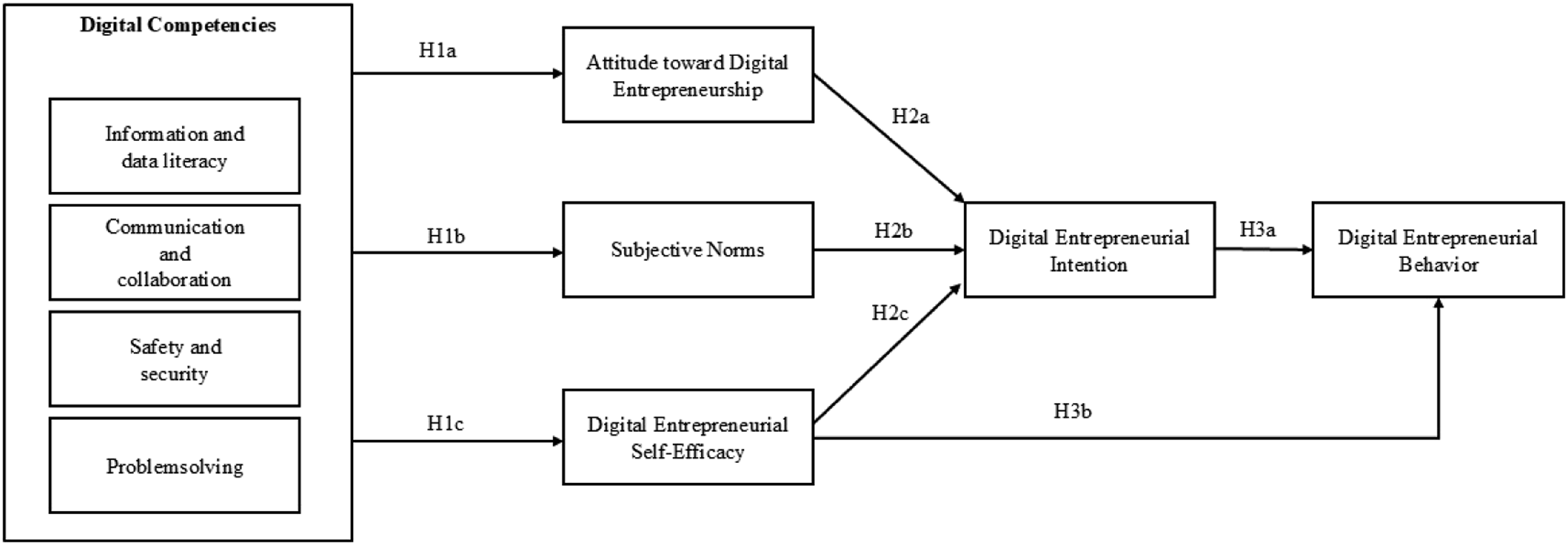
Methods
Sample collection
Data were collected from January to March 2025 through an online survey administered via Google Forms, targeting adults aged 18 and older residing in Portugal.
The selection of a Portuguese sample was strategically motivated to establish a reliable baseline for advanced AI adoption. Research indicates that digital competencies, information security frameworks, and technology adoption (such as digital banking or AI) manifest distinctly in developing economies, where they are often hindered by foundational infrastructural and accessibility barriers (Islam et al., 2026; Molla et al., 2025). By utilizing a sample from Portugal, a developed European context with an established baseline of basic digital infrastructure, this study is able to isolate and evaluate the higher-order cognitive and behavioral factors driving AI-BingGPT adoption, minimizing the confounding variables of basic technological access that typically affect emerging markets.
The survey link was distributed using a snowball sampling strategy across various social media platforms to reach a diverse participant pool. Prior to dissemination, a pilot test was conducted with 20 participants to ensure the questionnaire’s clarity, relevance, and overall suitability. The final questionnaire was structured to assess digital competencies, cognitive factors based on the Theory of Planned Behavior (TPB), Social Cognitive Theory (SCT), and digital entrepreneurial outcomes, with items adapted from validated scales in peer-reviewed studies on digital entrepreneurship and artificial intelligence adoption (Duong et al., 2024a; Duong and Nguyen 2024).
To ensure data relevance, respondents were required to have prior training in entrepreneurship and experience using AI, specifically BingGPT. To enhance sample representativeness, the invitation explicitly encouraged participation from individuals with varying levels of digital literacy, regardless of their entrepreneurial background. Informed consent was obtained from all participants before they completed the survey, which was designed to be fully anonymous and collect no personally identifiable information. A total of 311 valid responses were obtained after excluding incomplete or ineligible submissions. The data were exported into SPSS and CSV formats for statistical analysis and subsequently analyzed using structural equation modeling (SEM) techniques to examine relationships among the variables.
Measurement of the constructs
The measurement model for this study encompassed several latent constructs, each assessed through multiple-item scales that were carefully adapted from previously validated instruments to suit the context of digital entrepreneurship. Central to the model was the construct of Digital Competence, conceptualized as a second-order factor comprising four distinct but interrelated first-order dimensions: Information and Data Literacy (IDL), Communication and Collaboration (CC), Digital Safety (SS), and Problem-Solving (PS). These dimensions were measured with four, five, four, and four items, respectively, and each demonstrated robust psychometric properties. Specifically, all first-order factors exhibited satisfactory composite reliability (with CR values ranging from 0.847 to 0.899) and average variance extracted (AVE) between 0.581 and 0.639, indicating both internal consistency and convergent validity. The second-order Digital Competence factor also showed strong standardized loadings on its underlying dimensions (ranging from 0.848 to 0.935), further substantiating the hierarchical structure of this construct within the model.
In addition to digital competence, the model incorporated key cognitive variables from the Theory of Planned Behavior (TPB), namely Attitude toward Digital Entrepreneurship, Subjective Norms, and Digital Entrepreneurial Self-Efficacy. Attitude was measured using five items (CR = 0.896; AVE = 0.639), subjective norms with three items (CR = 0.838; AVE = 0.635), and self-efficacy with seven items (CR = 0.911; AVE = 0.595), all of which demonstrated excellent reliability and validity.
The outcomes of interest, Digital Entrepreneurial Intention and Digital Entrepreneurial Behavior, were also operationalized through multi-item scales. Intention was assessed with six items (CR = 0.858; AVE = 0.503), while behavior was measured using four items (CR = 0.668; AVE = 0.397). Although the AVE for the behavior construct was slightly below the conventional threshold of 0.50, it was retained in the model due to its theoretical significance and acceptable composite reliability, aligning with established methodological recommendations (Hair et al., 2017).
Across all constructs, factor loadings were statistically significant (p < .001), with the majority of standardized loadings exceeding the commonly accepted benchmark of 0.70, indicating strong reliability at the item level. While a few exceptions (such as DEI6 and DEB3) were observed, these items were preserved in the analysis due to their theoretical importance and because the overall model fit remained within acceptable parameters.
Confirmatory Factor Analysis (CFA) results supported the adequacy of the measurement model, as evidenced by fit indices within recommended ranges (CFI = 0.905; TLI = 0.899; RMSEA = 0.058; SRMR = 0.073). To assess the potential threat of Common Method Bias (CMB), we conducted Harman’s single-factor test. All observed indicators from the measurement model were entered into an unrotated principal component analysis constrained to extract a single factor. The results revealed that this single underlying factor accounted for 42.77% of the total variance. Because this value is well below the widely recommended threshold of 50%, we conclude that common method variance does not pose a significant threat to the validity of the findings in this study. Collectively, these findings confirmed that the model was both reliable and valid, providing a sound foundation for subsequent structural modeling and hypothesis testing.
Data analysis
Data analysis was conducted using Structural Equation Modeling (SEM), employing the JASP statistical software (version 0.19.3) with the SEM module, complemented by confirmatory analysis in Jamovi (version 2.3.28) for cross-validation purposes. The lavaan package in R served as the basis for model specification.
The analysis proceeded in two main stages: (1) assessment of the measurement model through Confirmatory Factor Analysis (CFA), and (2) evaluation of the structural model to test the hypothesized relationships among latent constructs. Estimation was performed using the Maximum Likelihood Robust (MLR) method, which provides standard errors and fit indices robust to non-normality.
To assess model adequacy, several fit indices were considered: the Comparative Fit Index (CFI), Tucker–Lewis Index (TLI), Root Mean Square Error of Approximation (RMSEA), and Standardized Root Mean Square Residual (SRMR). Acceptable model fit was defined as CFI and TLI values above 0.90, RMSEA below 0.08, and SRMR below 0.08, following recommendations by Hu and Bentler (1999).
Reliability and validity of the latent constructs were assessed using Cronbach’s alpha, composite reliability (CR), and average variance extracted (AVE). Discriminant validity was examined by comparing AVE values with the squared inter-construct correlations, in accordance with Fornell and Larcker’s criterion (Fornell and Larcker 1981).
The structural model was then evaluated to test the direct and indirect effects among the core constructs, using standardized regression weights and their corresponding p-values (p < .05). Hypotheses were supported or rejected based on the statistical significance and direction of these path coefficients.
Finally, the explained variances (R2) of key endogenous variables, attitude, intention, and behavior, were interpreted to gauge the model’s explanatory power.
Results
Statistical description of participants’ sociodemographic characteristics
The final sample comprised 311 valid responses from adults residing in Portugal, providing a robust dataset for analyzing digital entrepreneurial behaviors. The sociodemographic characteristics of the respondents are detailed below, offering insights into the sample’s diversity and relevance to the study’s objectives.
Gender distribution was nearly balanced, with 54.0% identifying as female (n = 168) and 46.0% as male (n = 143). The age of participants ranged from 18 to 65 years, with a mean age of 28.7 years (SD = 10.6). Notably, 71.4% of respondents were aged 18–35 years, indicating a predominantly young and digitally engaged sample. In terms of education, 76.2% of participants held a bachelor’s degree or higher, reflecting a highly educated cohort. Specifically, 42.1% had a bachelor’s degree, while 34.1% possessed a master’s degree or higher. Employment status varied, with 51.1% employed full-time, 23.5% students, 16.1% self-employed or entrepreneurs, and 9.3% unemployed or in other categories, highlighting diverse professional contexts relevant to digital entrepreneurship. Additionally, 38.6% of respondents reported prior entrepreneurial experience, while 61.4% had none, suggesting a mix of aspiring and practicing digital entrepreneurs. This sociodemographic profile underscores the suitability of the sample for exploring digital entrepreneurial intentions and behaviors among a young, educated, and professionally diverse population.
Statistical results
Summary of hypotheses testing results.
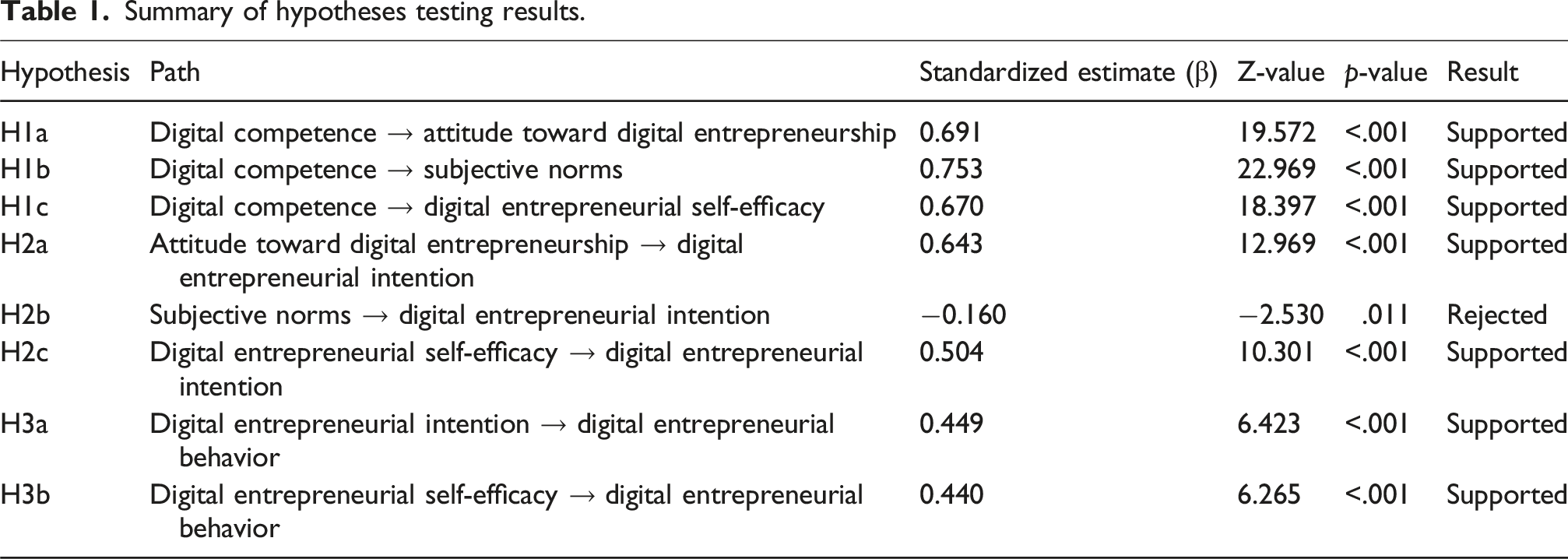
The structural model exhibited an acceptable fit to the data, as evidenced by the fit indices (CFI = 0.905, TLI = 0.899, RMSEA = 0.058, and SRMR = 0.073), confirming that the model was suitable for hypothesis testing. The relationships among the latent constructs were evaluated according to the hypothesized model. Digital Competence exerted a strong positive influence on Attitude toward Digital Entrepreneurship (β = 0.691, z = 19.572, p < .001), supporting the first hypothesis (H1a). Furthermore, in line with expectations, Digital Competence was found to have a strong positive and statistically significant effect on Subjective Norms (β = 0.753, z = 22.969, p < .001), providing robust support for hypothesis H1b. Digital Competence, additionally, showed a significant positive effect on Digital Entrepreneurial Self-Efficacy (β = 0.670, z = 18.397, p < .001), thereby supporting hypothesis H1c.
When examining the predictors of Digital Entrepreneurial Intention, the analysis indicated that Attitude had a robust positive effect on Intention (β = 0.643, z = 12.969, p < .001), providing support for hypothesis H2a. In contrast, Subjective Norms demonstrated a negative and significant association with Intention (β = −0.160, z = −2.530, p = .011), resulting in the rejection of hypothesis H2b. Digital Entrepreneurial Self-Efficacy was positively associated with Intention (β = 0.504, z = 10.301, p < .001), supporting hypothesis H2c. The direct effect of Digital Competence on Intention (H2d) was not explicitly tested, as its influence was modeled indirectly through cognitive factors.
Finally, with respect to Digital Entrepreneurial Behavior, the analysis showed that both Digital Entrepreneurial Intention (β = 0.449, z = 6.423, p < .001) and Digital Entrepreneurial Self-Efficacy (β = 0.440, z = 6.265, p < .001) had significant positive effects, thereby supporting hypotheses H3a and H3b, respectively. These findings collectively provide a nuanced understanding of the structural relationships among the constructs within the digital entrepreneurship framework.
The structural model demonstrated considerable explanatory power across the key endogenous constructs. Specifically, it accounted for 47.7% of the variance in Attitude toward Digital Entrepreneurship, 56.6% in Subjective Norms, and 44.8% in Digital Entrepreneurial Self-Efficacy. Most notably, the model explained a striking 83.0% of the variance in Digital Entrepreneurial Intention and 68.5% in Digital Entrepreneurial Behavior. These substantial proportions of explained variance attest to the model’s strong predictive capacity, especially in relation to the core outcomes of entrepreneurial intention and behavior within a digital context.
Discussion and implications
Discussion
Digital competences have a significant effect on entrepreneurial intentions by leveraging market opportunities, accessing information, improving operations, and enhancing overall business efficiency (Anam et al., 2026; Bhuiyan, 2024; Duong and Nguyen, 2024; Khatun et al., 2026; Yang et al., 2024). Due to the relevance of this theme, this study set out to examine the role of digital competencies and cognitive factors in leveraging AI-BingGPT to explain digital entrepreneurial intention and behavior among Portuguese adults. The findings largely support the hypothesized model, offering several important theoretical and practical insights, and give rise to implications for the Theory of Planned Behavior (TPB) and the Social Cognitive Theory (SCT).
First, the results confirm the multidimensional structure of Digital Competence, modelled as a second-order construct comprising Information and Data Literacy (IDL), Communication and Collaboration (CC), Digital Safety (SS), and Problem-Solving (PS), which is supported the literature related to the core domains of digital competencies (Bai et al., 2023; Georgescu et al., 2022; Roll and Ifenthaler, 2021; Steens et al., 2024). Each subdimension exhibited strong internal consistency and convergent validity, with composite reliability (CR) values exceeding 0.84 and AVE values above 0.58, aligning with recommended thresholds. The second-order factor, Digital Competence, demonstrated substantial loadings on its first-order dimensions, corroborating the hierarchical nature of digital competence within the entrepreneurial context. These results corroborate prior studies carried out in diverse economic contexts, such as the Vuorikari et al. (2022) research referring to the European context, showing alignment between Portugal and Europe regarding digitalization policies as a means to stimulate entrepreneurial business, and the research of Anam et al. (2026) refers to the influence on university students’ adoption of online education platforms in Bangladesh. Thus, our results prove that high levels of digital competence could promote business opportunities, especially when they are supported by generative AI systems, like AI-BingGPT (Duong, 2024; Duong and Nguyen, 2024), to easy access to market information, new business ideas, and to interpret, modulate, and generate data (Bai et al., 2023; Bhuiyan et al., 2025a; Faisal-E-Alam et al., 2025; Khatun et al., 2026).
Second, Digital Competence exerted significant positive effects on TPB cognitive variables such as Attitude toward Digital Entrepreneurship (Attitude) and Digital Entrepreneurial Self-Efficacy (Self-efficacy), which proved the acceptance of hypotheses H1a and H1c. These results are consistent with the findings of previous studies (Duong, 2024; Duong and Nguyen, 2024; Pham et al., 2025) and reinforce the central role of digital skills as enablers of favourable cognitive appraisals associated with entrepreneurial intentions in the digital economy. Individuals perceiving themselves as digitally competent reported more positive attitudes and expressed stronger beliefs in their entrepreneurial capabilities. Furthermore, our results demonstrated that Digital Competence exerts a strong and positive impact on Subjective Norms, validating hypothesis H1b. These results align perfectly with previous studies (Falloon, 2020; Georgescu et al., 2022; Pham et al., 2025) and demonstrate that the digital competencies of Portuguese citizens significantly shape the social dynamics and perceived social expectations related to digital entrepreneurship. Consequently, we can affirm that digital competencies foster participation in social and professional networks, enabling individuals to be recognized as capable and innovative peers within AI-driven ecosystems. In environments using AI generative tools, like AI-BingGPT, this digital proficiency allows entrepreneurial ideas to be more easily validated, stimulated, and shared among communities.
Third, Digital Competencies influence Attitude and Self-efficacy, which in turn significantly predict Digital Entrepreneurial Intention (Intention), thereby supporting some TPB constructs. Among these predictors, Attitude and Self-efficacy exhibited particularly strong standardized path coefficients, highlighting the critical role of positive personal evaluations and perceived control in shaping entrepreneurial intentions. These evidence, which allowed to validate hypothesis H2a and H2c, corroborated prior studies about the perception and beliefs derived from the individual’s overall evaluation of starting a business in the digital realm (Hinterhuber and Khan, 2025; Nizar and Pawar, 2025; Petrescu-Mag et al., 2025) and about the individual’s belief and confidence in their ability to successfully perform tasks in the digital entrepreneurial ambience (Duong, 2024; Schunk and DiBenedetto, 2020). Contrarily, the predicted effects tested by the multiple linear regression analysis showed that subjective norms don´t influence Intention (β = −0.160, p < 0.05) – the results don’t validate the hypothesis H2b, which contradicts past research (Li et al., 2024). Accordingly, we can affirm that high levels of perceived social expectations or collective opinions and influence of friends, family, and professional communities don´t leverage the intentions to develop digital ventures using the generative AI-BingGPT tool. These findings complement the TPB regarding the non-influence of subjective norms on the integration of AI technologies into entrepreneurs’ business models (Ajzen, 1991), extending the knowledge about entrepreneurs’ behavior toward AI-BingGPT.
Fourth, Digital Entrepreneurial Behavior (Behavior) was significantly predicted by both Digital Entrepreneurial Intention and Self-efficacy, proven by the results that verify the hypotheses H3a and H3b. These findings are consistent with prior studies about the Digital entrepreneurial behaviour antecedents, Intention (Gomes et al., 2024) and Self-efficacy (Bandura, 2023; Schunk and DiBenedetto, 2020), and underscore that while intention remains the primary proximal determinant of entrepreneurial behavior, as posited by Attitude TPB construct, Self-efficacy SCT construct plays a complementary role by enabling the translation of intentions into action. This evidence showed that some TPB and SCT constructs jointly can play a pivotal role in shaping Behavior when entrepreneurs decide to use the generative AI-BingGPT tool in their ventures. Model fit indices indicated an acceptable fit to the data (CFI = 0.905; TLI = 0.899; RMSEA = 0.058; SRMR = 0.073), providing additional support for the overall adequacy of the proposed model. Although the AVE for Behavior was slightly below the conventional cutoff of 0.50 (AVE = 0.397), the construct was retained due to its theoretical relevance and acceptable reliability (α = 0.668; ω = 0.682), in line with established guidelines (Hair et al., 2017). The explained variances (R2) of the endogenous constructs further affirm the model’s explanatory power: 47.7% for Attitude, 56.6% for Subjective Norms, 44.8% for Self-efficacy, 83.0% for Intention, and 68.5% for Behavior. These values are comparable to or exceed those reported in similar studies on entrepreneurial intentions in digital contexts.
Overall, these results underscore the importance of developing digital competence in fostering entrepreneurial mindsets and behaviors in increasingly digitized economies. They suggest that educational and policy initiatives aiming to enhance digital entrepreneurship should prioritize the cultivation of both technical digital skills and cognitive determinants of entrepreneurial behavior (Molla et al., 2025), as a dynamic way of value creation supported by generative AI tools, such as AI-BingGPT, for business idealization, development, and scaling (Georgescu et al., 2022).
Theoretical implications
This study makes some notable theoretical contributions to the Theory of Planned Behavior (TPB), Social Cognitive Theory (SCT), and Digital entrepreneurship in the context of AI.
First, the research model proposed in this study provides a systematic perspective on the triggers of Digital Entrepreneurial Behavior and extends the knowledge about the impact of integrating AI-BingGPT on entrepreneurial ventures. This evidence can help researchers understand the role of AI-BingGPT in fostering entrepreneurial activities. Moreover, this study provides empirical evidence on the constructs of TPB and SCT that affect individuals’ digital entrepreneurial intention and Behavior within the domain of AI-BingGPT. It has been verified that Digital competences combined with Attitude and Personal ability to perform digital tasks positively affect Digital entrepreneurial Intention and subsequently the Behavior. This evidence reveals that Behavior can be explained through the joint effect of some TPB and SCT constructs, which contribute to enrich the literature on the predictors of Intention and subsequently Behavior and provide insights to researchers on how AI-BingGPT can boost Behavior (Acikgoz et al., 2023). Accordingly, it was verified that each interaction mechanism of the TPB and SCT constructs differs in its interaction with Intention. The attitude TPB construct explains the motivation and intention of entrepreneurs to engage in digital entrepreneurship with AI-BingGPT support, while the self-efficacy SCT construct explains the entrepreneurs’ competency-based in develop entrepreneurial actions in AI environments. This theoretical significance contributes to identify the triggers of Behavior when entrepreneurs integrate AI-BingGPT in ventures. Contrary to expectations based on the TPB, we don’t observe a significant effect of the subjective norms construct on intention. This empirical evidence indicates that entrepreneurial activities are more influenced by individualistic behaviors, such as attitudes, perceived capabilities, and access to digital resources, than decisions constrained by social influence, advocacy or pressures. Accordingly, this study shows that the jointly of TPB and SCT can be used to explain phenomena related to the development of ventures in the context of a digital environment. However, social influence is not a trigger of Intention and Behavior when entrepreneurs integrate AI-BingGPT in ventures.
Second, our study highlights the importance of the generative AI technology in business development (Bhuiyan et al., 2025a), establishing a significant relationship between the adoption of AI-BingGPT and the development of entrepreneurial activities, and identifies the relevant constructs – Attitude and Self-efficacy – that translate intentions into digital entrepreneurships. Exploring how AI-BingGPT stimulates the digital entrepreneurial attitude and self-efficacy through individual digital skills and subsequently generates entrepreneurial behavioral outcomes allows us to understand which cognitive and technical factors trigger AI-driven entrepreneurship. Thus, this study contributes to understanding how the adoption of the AI-BingGPT tool affects the attitudinal and cognitive behaviors of entrepreneurs and triggers their willingness to develop digital ventures. Also, it highlights the need to integrate cognitive and technical factors to better understand entrepreneurs’ behavior in the context of the digital environment.
Third, this study provides insights into the sequential link between the mechanisms that explain the adoption of digital technologies, showing how the impacts of AI-BingGPT adoption occur sequentially through the order of the independent variables as Digital Competencies, Cognitive attitudes and beliefs, Intention, before affecting the dependent variable Behavior. This sequential process complements the theoretical understanding of the influence and interaction between digital competencies and the cognitive processes involved in the integration of AI-BingGPT on the willingness to develop entrepreneurial activities.
Finally, the current study supports previous research highlighting the rapid adoption of AI technologies to promote business activities (Batista et al., 2023; Georgescu et al., 2022; Yang et al., 2024). Accordingly, it highlights the specific integration of AI-BingGPT and its significant role in the emerging technology adoption for entrepreneurship, thereby contributing to enlarge the theoretical and empirical basis of the existing literature.
Practical implications
This study has several practical implications for researchers, practitioners/educators, managers/policymakers and the general economy, derived from the analysis of the main factors that affect Digital entrepreneurial behavior when entrepreneurs use AI-BingGPT to develop their ventures.
First, our study has implications for researchers by giving insights about the different influences of motivational and cognitive factors on Intention, which in turn affects Behavior. The findings can help researchers in exploring how each fundamental factor influences the behavior of digital entrepreneurs. Also, researchers can understand how digital competencies combined with motivational and cognitive factors can foster the development of entrepreneurial activities in the digital environment (Bandura 2023; Schunk and DiBenedetto 2020) when entrepreneurs adopt AI generative tools, such as AI-BingGPT. Accordingly, our study points out that integrating AI-BingGPT to venture generation can promote a conducive ambience for the development of digital entrepreneurial activities. Based on this evidence, researchers can contribute to the continuous development of generative AI-technologies in line with entrepreneurs’ expectations, as is the current case with AI-BingGPT, and promote the acceptance and democratization of technology tools for developing entrepreneurial activities.
Second, this study can help practitioners and educators to enhance the cultivation of students’ interest in digital entrepreneurship. Recognizing the positive impact of adopting generative AI technologies, such as AI-BingGPT, on the development of ventures (Batista et al., 2023; Bhuiyan et al., 2026; Georgescu et al., 2022), practitioners and educators are positioned to design and implement methodologies and pedagogical practices focused on AI education (Anam et al., 2026; Bhuiyan et al., 2025b, 2026; Islam et al., 2026) and the use of generative and integrative AI technologies to foster students’ confidence in adopting AI-BingGPT to develop entrepreneurial initiatives and to improve their competencies in data processing and critical analysis of complex scenarios. Thus, the integration of AI-oriented pedagogies into ventures may facilitate the generation of innovative business ideas while simultaneously strengthening students’ perceived self-efficacy in dealing with AI-BingGPT for entrepreneurial activities. For example, AI-BingGPT can be integrated into business simulations and entrepreneurship labs, allowing students to experiment with strategic decision-making and business models in virtual environments. Those pedagogical configurations can enhance students’ familiarity with AI-BingGPT and improve their proactive and self-oriented mindsets. Thus, the (new) role of practitioners and educators in this domain is to strengthen the cognitive control mechanisms and students’ ability to translate their entrepreneurial intentions into real actions and goal-directed behaviours, acting as mediators in the creative process, helping students to generate, optimize, and validate strategic scenarios.
Third, this study suggests that managers can access information about new ideas generated by digital entrepreneurs using AI technologies, such as the BingGPT tool, which can contribute to developing their strategy and innovation capacity. Hence, managers can take advantage of a digital ecosystem that promotes entrepreneurship in a plural form, promotes innovative networks, and allows large-scale access to business opportunities (Duong 2024; Georgescu et al., 2022). This can convince companies to actively integrate into AI technology ecosystems and use AI-BingGPT to optimize and continuously evolve their business models by enhancing decision-making processes and enabling more adaptive and data-driven strategies according to the dynamics of markets. This implies that companies must develop competencies in generative and interactive AI technologies whose data require careful interpretation, critical evaluation, and strategic application within business contexts. Thus, understanding the digital competencies and the cognitive factors influencing digital entrepreneurial intentions can incentivize managers to create an ambiance that promotes the adoption of AI-driven technologies and participate in digital entrepreneurial markets for the development of new ventures.
Finally, our findings suggest that extensive interactions among entrepreneurs within digital networks, where innovative ideas are exchanged and co-developed, can play a significant role in fostering economic growth. Accordingly, the exploration of generative AI technologies, such as AI-BingGPT, has the potential to foster a culture of knowledge sharing and dissemination grounded in the dynamic interactions that characterize the economic environment of innovative ventures. Moreover, such technologies may facilitate the emergence of new businesses, thereby contributing to broader processes of economic development (Faisal-E-Alam et al., 2025; Riaj et al., 2025). In fact, some of these interconnections foster cooperation and interaction among different networks and support collaboration between creative market agents, potentially shaping the economic environment (Georgescu et al., 2022). Digital entrepreneurship frequently drives the creation of new ventures and enables firms to develop, promote, negotiate, and commercialize their products and services more efficiently and profitably (Bhuiyan, 2024; Bhuiyan et al., 2025; Khatun et al., 2025; Riaj et al., 2025). In this context, government intervention plays a crucial role in fostering digital entrepreneurship. Governments can promote policies to incentivise investment and education in generative AI technologies (Bhuiyan, 2024; Uddin et al., 2024), as well as the development of digital ecosystems, which is essential for leveraging digitalization in entrepreneurship, especially in countries with (comparative) poor digitalization. Such interventions not only empower entrepreneurs but also contribute significantly to generating new business opportunities and boosting economic development. Thus, businesses and governments can use the insights and recommendations of this study to understand how digital competencies and cognitive factors in leveraging generative AI technologies, such as AI-BingGPT, trigger the intentions and actions of digital entrepreneurship to foster and drive new businesses and stimulate economic growth.
Conclusion
The influence of AI on the sharing and development of entrepreneurial ideas has been noted in recent years, representing a significant opportunity to drive business innovations. This may be supported by digital competencies to facilitate collaborative networks and cognitive factors to foster the use of generative AI technologies, like AI-BingGPT. In this vein, this current study proposed a research model to analyse the sequential relationship between Digital competencies, Cognitive entrepreneurial influencers, and Intention on Behavior, in the context of the practical applicability of AI-BingGPT to entrepreneurial activities developed by Portuguese users.
The research model tested showed that Digital competencies boost the confidence of digital entrepreneurs through the motivational and cognitive factors, Attitude and Subjective norms, as well as the competency-based factor Self-efficacy. Subsequently, Attitude and Self-efficacy positively influence Intention and action. These findings allow us to conclude that Digital entrepreneurial intention is the main direct determinant of Digital entrepreneurial Behavior, and the TPB Attitude and SCT Self-Efficacy constructs are its predecessor influencers, with the latter construct playing a complementary role in the translation of Intention into action. Therefore, entrepreneurs’ individual beliefs, confidence, and competencies in generative AI technologies appear to be determinants of AI-BingGPT usage in ventures, which is in line with the TPB and SCT. This means that self-capacity in dealing with technological and innovative communication channels can motivate entrepreneurs opting for AI-BingGPT to share and develop their entrepreneurial ventures. Thus, the adoption of the generative AI-BingGPT tool by entrepreneurs can contribute to generating large connections with companies, which can amplify the development of ventures or business models.
However, our study found that subjective norms don´t influence Intention and Behavior. This means that social influence, advocacy or pressures don´t play a major role in Intention and action when entrepreneurs integrate AI-BingGPT to develop ventures, and demonstrates that individual decisions of entrepreneurs are more individually motivated. Accordingly, we can conclude that the influence of TPB constructs on Intention does not occur in a generalizing way, but rather depends on contextual and individual factors, such as individualism, levels of digital literacy, perceived control, and the relevance of social references.
Anyway, our study allows us to conclude that jointly some TPB and SCT factors explain the individual decisions of entrepreneurs about their intentions and actions when using the generative AI-BingGPT tool in their ventures, as perceived through the interaction mechanisms between digital competencies and cognitive-behavioral factors in leveraging AI tools for entrepreneurship.
From another perspective, this study shows that the development of digital competencies, through digital literacy and communication skills, influences greater confidence, belief, and ability of entrepreneurs to deal with technology, proving that there is a linking mechanism between AI-BingGPT competencies and cognitive and behavioral factors that stimulate the development of digital entrepreneurship.
In summary, this study demonstrates how the effective connection of cognitive and competency-based factors of digital entrepreneurship collectively influences the capacity of entrepreneurs to use the generative AI-BingGPT tool in their ventures.
This study offers important insights into the understanding of digital entrepreneurship within the generative AI-BingGPT domain, but it has some limitations that can be explored in further lines of research. Firstly, the generalizability of the results may be limited by the specific geographic, cultural, and educational characteristics of the sample. Hence, other investigations could confirm if these results can be replicated in other sociodemographic realities and analyze (possible) cultural or educational implications in the adoption of AI-BingGPT to perform entrepreneurial ventures. Moreover, other studies can integrate different methods of data collection to avoid (possible) sample biases that can be derived from data collected through online platforms. Using multi-source data collection methods could increase the robustness of future research, avoiding desirability and honesty bias.
Second, this study focused on the analysis of a set of cognitive factors that influence Intention and action. However, future research could integrate an enlarged number of other cognitive influencers of digital entrepreneurship, in the domain of generative AI-BingGPT, to validate or extend the implications of this study.
Third, this study employed a quantitative method, which may neglect the impact of the subjective interpretation of data, for example, their causality. Hence, future research could be performed through qualitative methods, such as in-depth interviews or case studies, to provide deeper insights into the factors that influence entrepreneurs’ Intention and Behavior towards adopting the generative AI-BingGPT tool in their ventures.
Fourth, our study used a snowball sampling technique across various social media platforms to reach a diverse participant pool, which is a non-probability sampling technique that limits the generalization of our results to the broader population. However, this approach provides in-depth insights into specific and hard-to-reach participants, representing a valuable base for future exploratory research and for generating other hypotheses that can be tested with other samples.
Lastly, future research could explore potential moderating factors, such as prior entrepreneurial experience or exposure to digital tools, to deepen the understanding of individual differences in the entrepreneurial digital pathway.
Footnotes

Consent to participate
Consent was obtained from all the participants involved in the study.
Consent for publication
We attest to the fact that all authors have contributed significantly to the work, have read the manuscript, attest to the validity and legitimacy of the data and their interpretation.
Funding
The authors disclosed receipt of the following financial support for the research, authorship, and/or publication of this article: NECE-UBI, Research Centre for Business Sciences, Research Centre and this work are funded by FCT – Fundação para a Ciência e a Tecnologia, IP, project UIDB/04630/2025 and DOI identifier 10.54499/UIDB/04630/2025.
Declaration of conflicting interests
The authors declared no potential conflicts of interest with respect to the research, authorship, and/or publication of this article.
Data Availability Statement
The data that support the findings of this study are available from the corresponding author upon reasonable request.
Institutional review board statement
The study was conducted in accordance with the Declaration of Helsinki, and approved by the Institutional Review Board (or Ethics Committee) of Instituto Superior Miguel Torga (protocol code CE-P33-24 approved on 20 September 2024).