




Abstract
Universities are under increasing pressure to justify socio-economic benefits of degrees and to achieve positive graduate outcomes. Employability and career services are integral but require student engagement, which is often sporadic, reflecting the individuality of each learner journey. Adopting a qualitative methodology this study explored factors influencing student engagement, to inform future HE employability/careers practice. Thirty-one final year undergraduates at a post-92 university were interviewed, studying vocational disciplines including pre and post-pandemic cohorts for comparison. Thematic analysis revealed that students who embraced employability opportunities achieved career gains, but all were distracted beyond academic life. Whilst the pandemic was a compounding factor this was no more prominent than family, relationships, and finances. Bourdieusian principles were evident, magnified by the vocational discipline that students were studying. Students shared psychographic characteristics and vocational habitus, whilst expressing individual dispositions, and behaviours, which were changeable, conflicting, and influenced by multi-layered structures, and fields where they were positioned. This impacted careership and self-efficacy. Disengagement with employability/careers services was prominent, indicating pastoral, academic and professional support teams must align more closely. An individualised and fluid approach is recommended, providing an effective balance between laissez-faire employability guidance and more controlled and prescriptive support for students at risk.
Keywords
Introduction
Universities continue to be integral in developing graduates with the skills, knowledge, and attitudes for transition into work and to adapt as society demands (DBIS 2016). Employer engagement (EE) has been recognised for many years as a key driver in HE for contributing positively to related UK HE policy/outputs (Williamson et al., 2013; Wilson 2012). The Augar report (2019) reinforces this describing universities as ‘torch carriers for economic, cultural, social and environmental development’ (DBIS 2019: 9). However, there are unprecedented challenges facing HE regarding tuition fees, value for money and financial sustainability. Demands on universities continue to grow (DfE 2022), with ever evolving HE policy from Advance HE (AHE), Higher Education Statistics Agency (HESA) and associated government initiatives. Multiple targets including the Teaching Excellence Framework (TEF), National Student Survey (NSS), Knowledge Exchange Framework (KEF), Research Excellence Framework (REF), Graduate Outcomes (GO) and, compliance with HE policy and the Office for Students (OfS), hangs heavy across universities, and the burden of responsibility has arguably never been so intense.
Most recently the resurrection of the 90s term ‘mickey mouse degrees’ (Morrison 2023) and demands of a crack-down on perceived low-value degrees and ‘rip off university courses’ by the previous UK government (DfE 2023), further magnifies pressures and particularly for post-92 HE institutes (HEIs). Less traditional subjects illuminate the academic/vocational divide (Bathmaker et al., 2016; Bradley et al., 2022; Brockmann 2012; Brockmann and Laurie 2016; Ingram et al., 2023) and raises questions about graduate potential, entwined with continued class prejudice of old versus new HEIs (Shattock 2012). Academics and employability/career service teams must ensure that EE activities support students through their learner journey to provide the best chance of achieving positive GO. However, this is reliant on student engagement, which is sporadic, with careership, dependent on many factors often outside of academic life.
Focus and rationale
Macro/meso HE pressures consume universities at strategy and policy level impacting academic and support staff delivery (Petrov et al., 2016). Meanwhile, the student perspective at the micro level is often lost in this sea of political discourse, which is more prevalent than ever (DfE 2022, 2023). This study focused on students at the end of their vocational degree, with the key question ‘
Research such as the Paired Peers project (Ingram et al., 2023) investigated similar themes exposing widening participation (WP) challenges and issues relating to class, social mobility, and graduate potential, reinforcing previous studies such as Crozier and Reay (2008), Basit and Tomlinson (2012), Tomlinson (2014) and Reay (2018). As a longitudinal study undertaken in the previous decade (Bathmaker et al., 2016) the need to build on contemporary cases is important to strengthen further this research field. The rationale for this study provided a unique and unprecedented perspective by exploring one cohort in-depth, before the pandemic, and then a replicable cohort (studying the same vocational degree programme at the same post-92 HEI) directly after the pandemic, to see contemporary influence on EE opportunities, the learner journey and subsequent GO.
Challenges in defining EE in HE
EE in HEIs is a dynamic field (Bolden et al., 2009; Witty 2013) reflecting multiple pedagogic guises across societal, academic, teaching and research fields (Wedgewood 2008). Described as a slippery term it includes work/practice-based (Brennan and Little 2006; Kennedy et al., 2015; Lester and Costley 2010) real-world, vocational, and professional experiences (Tudor and Mendez 2014), experiential learning (Kolb and Kolb 2005; Mezirow and Taylor 2009) and blended learning (Garrison and Kanuka 2004). Terms are used interchangeably, creating ambiguity. For this study EE activities covered field trips, guest speakers, work experience, industry networking events and scenario-based assessments alongside career services (advice, guidance, and resources).
Numerous white papers (DBIS 2014, 2015, 2016) indicate how different stakeholders embrace terms to satisfy EE agendas stretching the political, academic, and operational spectrum (Basit et al., 2015; Cheng et al., 2021; Dhillon et al., 2011). This exemplifies the triadic nature (Aspin and Chapman 2000) of EE, highlighting benefits in economic progress, personal (humanist) fulfilment and societal dimensions such as inclusiveness and democratic understanding. Stanley and Mann (2014) summarise this as a family of human, social and cultural capital, or a web of capital (Jones et al., 2015). Whilst it has long been established that EE contributes positively to the economy (Pegg et al., 2012; Helyer and Lee, 2014) it is important macro/meso/micro-objectives work harmoniously (Bolli et al., 2018; Huddleston and Lazcik 2018). Ultimately, students should be able to engage with EE activities to satisfy personal aspirations as well as contribute socio-economically and globally (Gedye and Beaumont 2018). As Healy (2023) suggests, a more integrated approach to careers and employability learning is needed to truly empower students.
Learner transitions and career decision-making
Life transitions has been a prominent discourse for over a decade (Leicester 2011) influenced by the dynamic interaction of macro/meso HE stakeholders, the economy, and government (Burke et al., 2020; Healy et al., 2022), culminating in demands for positive GO (Madsen 2022). Bourdieusian (1990, 1993) concepts about learner agency indicate potential success or failure is influenced by habitus, the structures integral to a learner’s life and the fields in which they are placed. Different institutional forces (Raffe 2008) continue to influence the learner journey and related transitions (Shildrick and MacDonald 2006, 2007), through the life-course concept (Heinz 2009; Heinz and Kruger 2001) and ongoing socio-cultural, and economic conflict (Burke et al., 2020). Family, social-class, education, friendships, and peer groups also influence habitus, decision-making, learner trajectories and career aspirations both with positive and negative consequences, as noted by earlier studies such as Gorard and Smith (2007) Crozier and Reay (2008), Basit and Tomlinson (2012), Bathmaker et al. (2016) and Reay (2018) and more recently reaffirmed by Bradley et al. (2022) and Ingram et al. (2023). The Paired Peers project highlights effectively the opposing forces in a student’s life. On one side it recognises how the gap between classes (and pre/post 92 HEIs) reduced during the university journey with working class/non-traditional students often more capable in juggling challenges such as organising work, study, finances (Bradley et al., 2022). Conversely, it also reaffirms that these same factors limit time to build capital through EE, highlighting barriers to positive GO. By further exploring these factors across the pandemic years it was possible to gauge how they impacted on the learner journey, EE, and subsequent GO today. This also feeds into related concepts associated with careership theory.
Horizons for action, careership theory and applying Bourdieu’s concepts
Assumptions suggest career decision-making is rational, process driven, and straightforward, culminating in a logical outcome. However, this rarely fits with real life. Transitions are not linear (Christodoulou 2016; Hodkinson et al., 2007) and teachers, careers advisors and employers all influence serendipitous events, intertwined with other aspects of life. Hodkinson (1998, 2008) argues that careership (decision-making) is bounded by a person’s horizon but limited by the position they stand in and what is visible. The learner is prevented from seeing what ‘lies beyond’ (Hodkinson and Sparkes, 1997). Shields and Masardo (2017) further expose the challenges faced by learners to meet or exceed expectations and echoed in the Paired Peers project (Bradley et al., 2022; Ingram et al., 2023). Central to Bourdieu’s field theory (1990; 1993) is that social environments are dynamic, comprising of unequal forces. This is reflected in EE activities within HEIs where complex interactions between macro stakeholders (with conflicting priorities) and the pervasive influences of social structure and relational forces, impact the learner journey and career trajectory. Post-92/vocational degrees magnify these challenges, as recent accusations of ‘rip off’ degrees show (DfE 2023).
Katartzi and Hayward’s (2019) study of vocational HE qualifications revealed a misrecognition of worth, which impact a student’s self-efficacy. This exemplifies what Hodkinson et al. (1996) originally exposed, and factors within the learner fields which can help (the triumph) or hinder (the tears), of a young person’s career decision-making and subsequent transitions. Earlier studies such as Shildrick and Macdonald (2007), Kohli (2007) and Gale and Parker (2014) revealed similar issues and more recently by Bradley et al. (2022) and Ingram et al. (2023). However, this only scratches the surface of tangible barriers and intangible aspects of learning culture and the learner-society relationship, described as ‘transitional friction’ of vocational learner journeys (Katartzi and Hayward 2019). Turner and Tobbell (2018), reinforce the difficulty in reconciliation of identities during educational transitions, and propose enabling systems and practices to acknowledge differences and support change. This supports Colley et al. (2003) and James et al. (2015) who concluded that when immersed in new fields, students can develop strategies and nuanced understandings of previous experiences, background, and cultures. However, their self-efficacy is dependent on the systems and structures in place and as Healy (2023) indicates, is reliant on an effective synergy between careers and employability learning within HEIs.
Exploring EE and vocational habitus as part of the learner journey is important to understand complex layers in learner agency and how EE experiences influence learner trajectories and future careers (Bathmaker et al., 2013, 2016) particularly when studying vocational disciplines compounded by post-92 reputation. Whilst EE activities provide gains for some learners, others are left in less favourable positions, detached from capitals, which can be the difference in positive or negative GOs (Burke et al., 2020). Thus, the need to explore contemporary learner journey experiences in these settings is essential to ensure that perceived ‘low value’ degrees provide effective and empowering employability for all students to exceed their horizons.
Method
This inductive study adopted a sociological and anthropological approach focused on each student’s interpretation of EE experiences during university life. However, discussion also included pre and post university life like the Paired Peers project, and students’ experiences of ‘getting in, getting on and getting out’ (Bathmaker et al., 2016). The adopted paradigm reflected what Maykut and Morhouse (1994: 21) refer to as a journey of ‘discovery as opposed to proof’ with no ‘one’ truth or direction. The epistemology was interpretive, ethnographic, and phenomenological allowing participants to make sense of their experiences in relation to EE phenomena and associated career goals.
Whilst the study was inductive, the constructionist approach was also applicable. Differences between objectivist and constructionist perspectives were acknowledged but accepted that in practice it tends to have elements of both. A summary of literature clarified starting assumptions and research actions, then a constructionist perspective was embraced to explore participant views. Adopting qualitative methods enabled a deeper, enriched exploration of multiple dimensions through each learner’s thoughts and feelings. This was undertaken using semi-structured interviews to draw out learner experiences and facilitate meaningful reflective discussion.
Positionality, participant background and accessibility
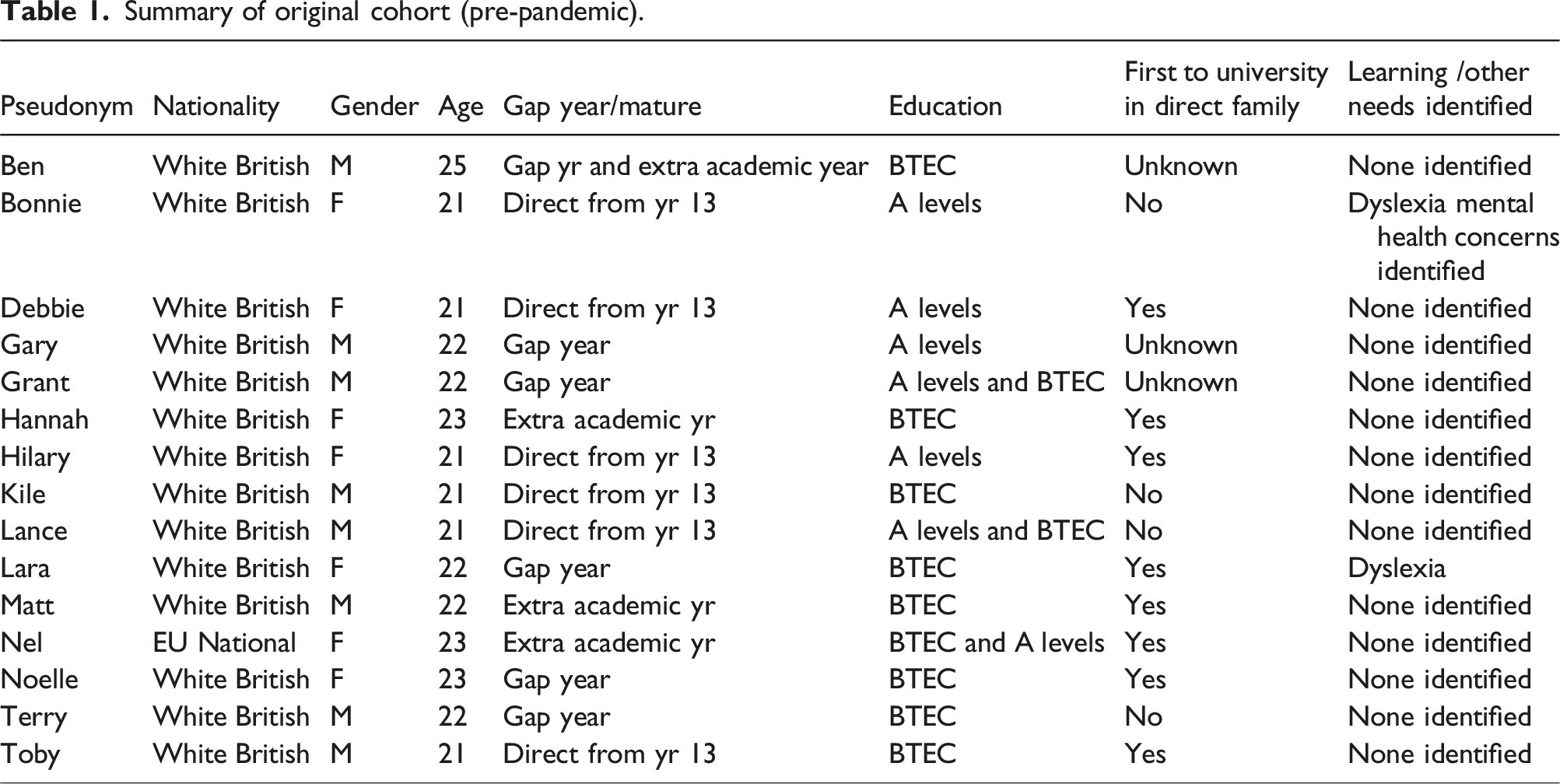
Summary of original cohort (pre-pandemic).
Summary of additional cohort (post-pandemic).
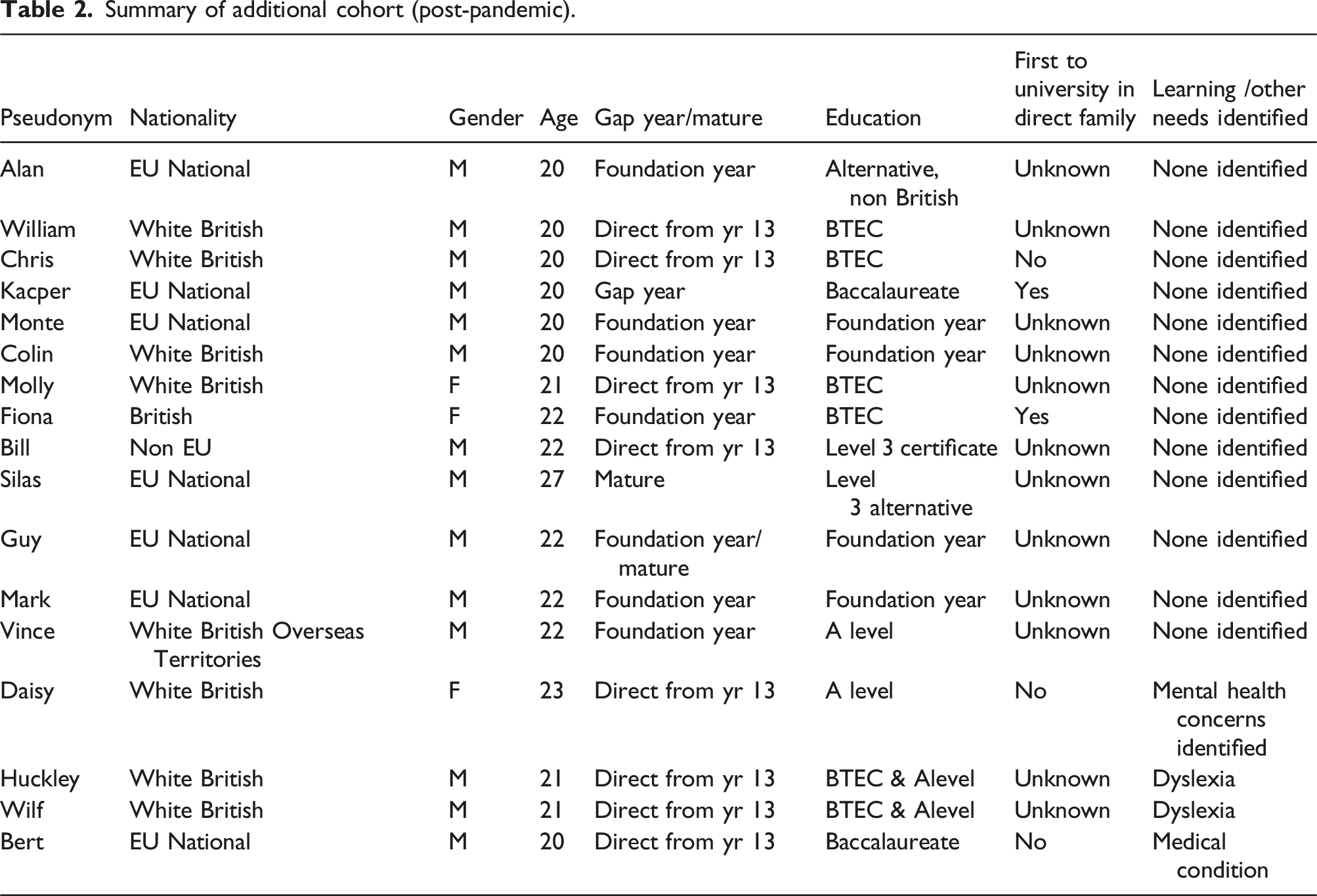
The HEI and cohorts were selected due to the relevance, appropriateness, and accessibility in exploring EE from student perspectives and relating to the growing criticism of less traditional disciplines, as ‘rip off/low-value’ degrees (DfE 2023). Unlike the Paired Peers project, this study was based solely on a post-92 HEI delivering a specific vocational discipline to provide a more focused lens. This allowed implications of vocational HE provision, WP and non-traditional learners to be considered. For this investigation, non-traditional learners represented lower classes from diverse socio-economic and cultural backgrounds, some with lower pre-HE academic achievements. This included first generation university learners and those accessing HE through non-traditional HE entry qualifications (BTEC/foundation/access courses). Most participants were reflective of a ‘non-traditional’ learner background with the minority coming from more traditional academic pathways through A level and/or grammar school roots.
This small-scale study was not seeking to be comparable or representative of undergraduate degrees/HEIs UK wide. Therefore, considerations of more deductive, positivist approaches, such as justified sample size or framing techniques for population generalisability, were not applicable. The combination of insider positionality offered a lived familiarity of the participants being researched. The risk of inherent bias was minimised through objective and rigorous thematic analysis and scrutiny of the data and process (Goetz and Le Compte 1984; Guba and Lincoln 1981).
In the original study (pre-pandemic), all fifteen participants (eight male and seven female) from the final year of a vocational undergraduate degree were interviewed. A further sixteen participants (thirteen male and three female) were recruited from a comparable final year degree programme. This secondary cohort was introduced to strengthen the findings, due to post-pandemic implications, which may have influenced credibility of the original data. It also provided a unique opportunity to compare experiences and outcomes before and after the pandemic.
Ethics
Ethical approval was sought and granted from the University’s Ethics Panel where the study was facilitated, and gatekeeper approval granted from the affiliated university where the author was employed and where the research took place. Participants were provided with background to the research, including assurances of confidentiality, anonymity, data protection and right to withdraw. Written or electronic consent was sought by all participants. The participants names were replaced with pseudonyms to protect anonymity and non-essential identifying details omitted.
Data analysis
Rigorous thematic analysis responded to the challenges of potential bias and subjectivity, strengthening ‘credibility, transferability, dependability and confirmability’ (Shenton 2004: 64; Flick 2014). This approach was effective in managing the volume and depth of qualitative material generated allowing interpretive, inductive analysis. A process was adopted incorporating initial coding/labelling and categorising as illustrated in Figure 1. Progressive categorising and theming (Figure 2) was then undertaken through repetitive analysis of the qualitative data to allow deeper synthesis, through different lenses (Seal 2016). Initial coding/labelling and categorising. Progressive categorising and theming.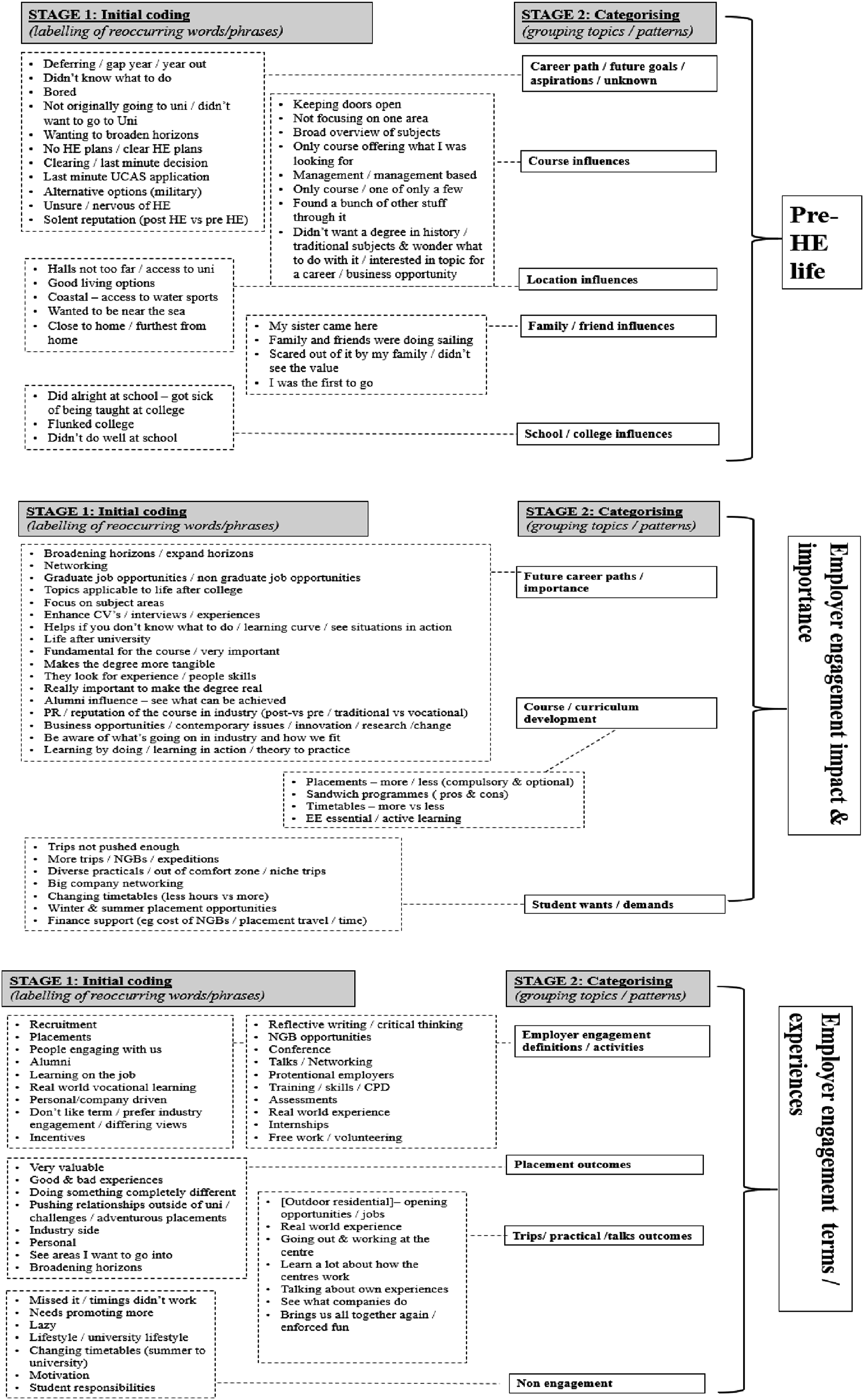
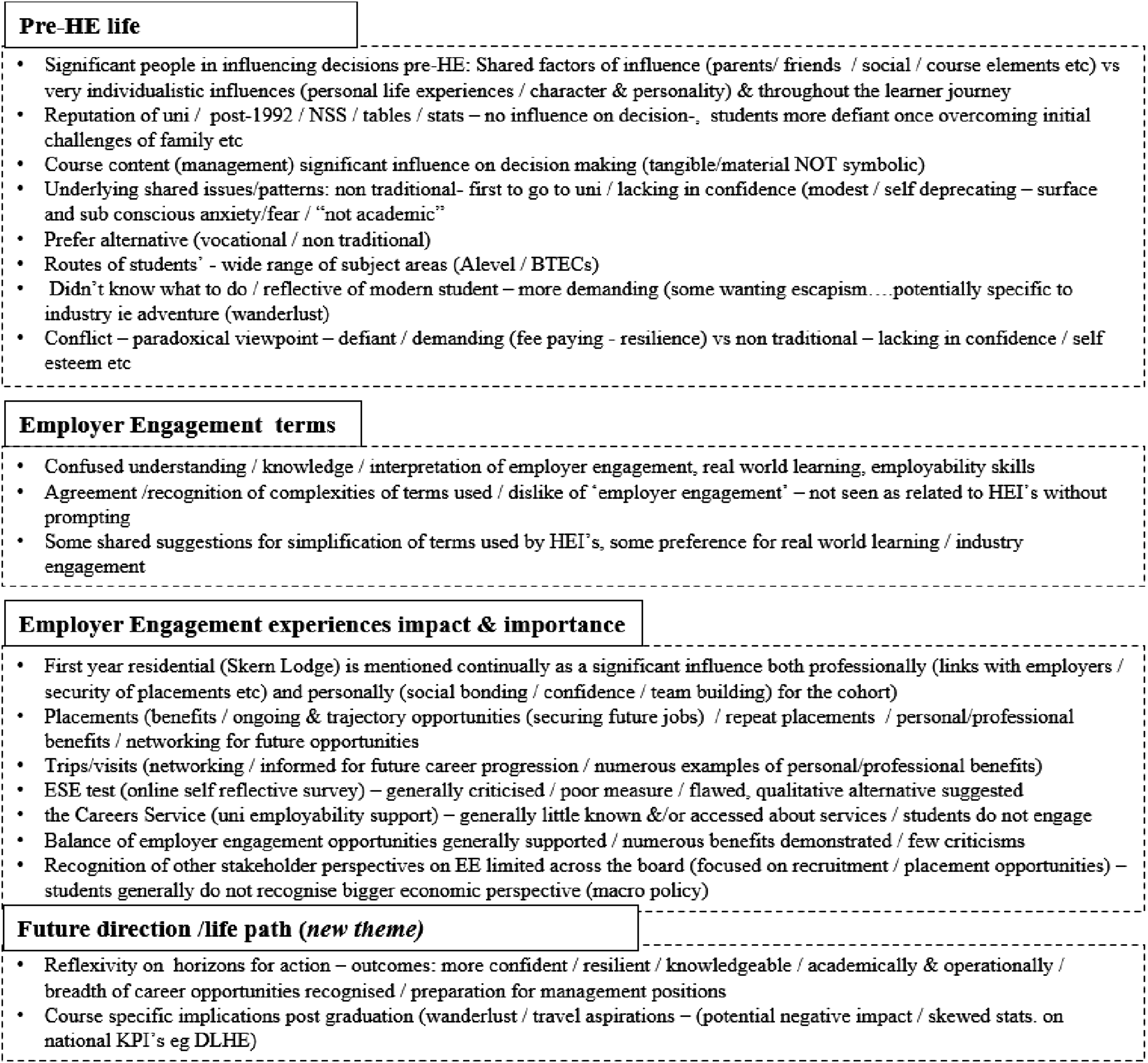
This process enabled reoccurring codes/ patterns to be explored thoroughly ensuring data was given meaning before themes were formed, defined and re-defined. Sub-categories were aligned to four overarching themes as illustrated in Figure 3 and which form the structure of the findings and discussion. Thematic illustration of study outcomes.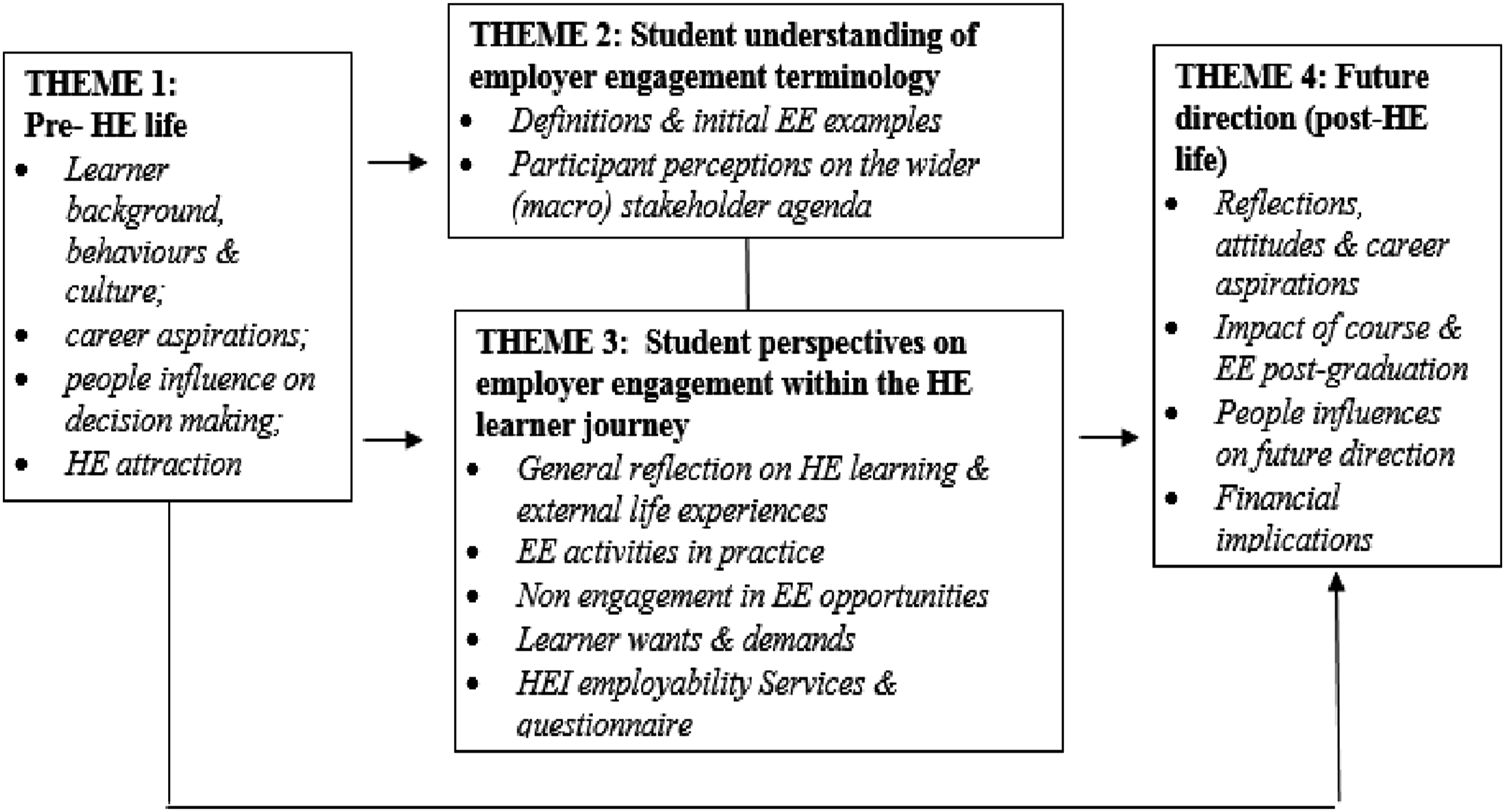
Findings and discussion
As illustrated in Figure 3, the study followed a linear fashion, much like the Paired Peers project (Bathmaker et al., 2016). However, concepts associated with this study are anything but linear as the framework in Figure 4 illustrates. This reaffirms how learning cultures, transitions, and the influence of EE experiences on a learner’s horizons for action (Hodkinson 2008) are multi-layered. It exposes the reality of complex inter-connecting macro/micro relationships across material and symbolic dimensions revealed through the participants’ narratives. Conceptual framework established from the study.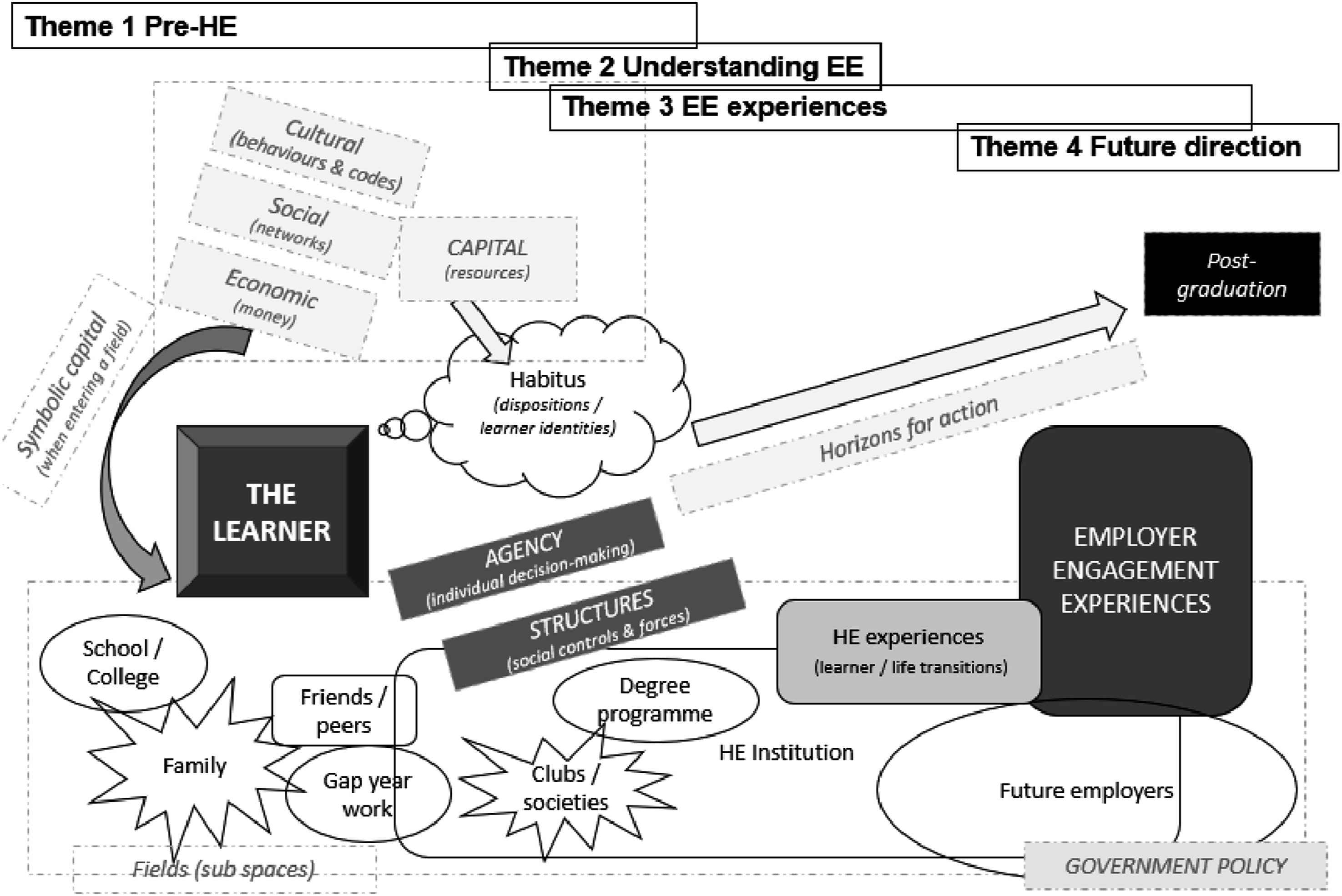
Findings and discussion in this paper focus on themes 2 and 3 relating to student reflections on EE/career services and associated challenges and barriers. However, themes 1 and 4 regarding learner identities, habitus, decision-making and the influence of horizons for action are touched upon, whilst acknowledged as significant topics independently.
Student attitudes and behaviours towards EE and career services
During interview one of the students, Lance, proclaimed “It’s not you it’s me”. By his own admission Lance acknowledged disengagement with EE activities, despite knowing how hard academics and career services worked to support him. It was an apology demonstrating how even with insight students will not necessarily engage with the tools to help them succeed. In contrast there were some students that did engage and described positive outcomes as a result. To reflect these contrasting perspectives, two vignettes featuring ‘Lance’ from the pre-pandemic cohort and ‘Fiona’ from the post-pandemic cohort, set the scene. These participants were selected not only to provide a pre/post pandemic comparison, but as they reflected shared and contrasting views indicative of students across the study.
Lance’s story
Lance’s narrative epitomises the complex layers and extrinsic and intrinsic pressures on the learner journey and subsequent engagement (or disengagement) with EE activities/career services. His HE pathway reflected academic norms having progressed directly from school, studying A Level/BTECs. Other family members were university educated, influencing his agency, and Lance’s decision to follow his sibling into HE appeared a fait accompli. Whilst not depicting all characteristics of a non-traditional learner his decision to follow his vocational habitus did differentiate from his sibling who chose a more traditional academic path. The frequent discussion of his sibling, sub consciously, revealed a rivalry and constant need to please his family. Lance was candid in his storytelling, and he often felt burdened with expectancy and achieving good grades. Lance showed conflicting attitudes and behaviours in confidence and status. At times he expressed low self-efficacy and was self-deprecating about his career potential. A combination of family pressures, being away from home, building independence, and his competitive nature only exacerbated the problem resulting in distraction and disengagement from university. This was inflamed by financial pressures and subsequent work demands as well as social distractions/relationship issues (girlfriend and housemates). This exposed a vulnerability and uncertainty, clouding his horizons. Other times Lance reflected positively and confidently, particularly when referring to EE activities he had participated in, including industry trips and networking. During these exchanges he was poised and optimistic. Work experiences and social interactions through vocational clubs/societies fuelled his career aspirations. This was an emotional ‘swing’ that continued through his narrative, whilst he recognised EE benefits, at times, factors outside of university engulfed him. Lance’s account shows how multi-layered fields and structures including family, friends, university life, clubs/societies, work commitments and other outside factors, greatly influences individual dispositions, mood, confidence, and motivation. This threatened engagement with EE activities/career services, the very support mechanisms in place to build employability and help students achieve positive GO. This dichotomy was reflective of all students interviewed and the acknowledgement that factors outside of university life have the power to influence the learner journey much more than the university experience itself. In Lance’s own words…”I think the main thing…that kind of makes you employable from uni is decisions that you make outside of uni…”.
Fiona’s story
Fiona is a non-traditional learner; her BTEC grade did not meet the eligibility for the undergraduate programme so, like several of her cohort, she studied a Foundation year allowing her HE access. Fiona is also from a working-class background whose parents had not been to university. Despite what could be envisaged as barriers to her horizons, Fiona demonstrated an inner confidence and ambition to succeed. This was evident through a gap year where she gained work experience in industry which influenced her agency to aim higher and pursue HE. Fiona talked about family influences and the worry her parents had with her moving away. The pressure to follow in her parents’ footsteps was evident. However, despite the pull from fields and structures associated with her family, culture and background, Fiona showed defiance to step away. This was magnified by her decision to start the Foundation year despite the pandemic and risk of remote learning/lockdowns. Fiona was typical of the post pandemic cohort, with similar agency that it was better to go to university and have structure as opposed to be dormant during an unknown period. Fiona, reflected on the pandemic as an opportunity not a threat, although acknowledging the hardships that it brought including remote learning and limited social interactions. However, Fiona, and her peers, reflected how the experience had built resilience, providing a unique aspect to their learner journeys and with it, a unique shared habitus. Fiona was one of few who fully committed to EE activities/career services, talking passionately about the extensive opportunities she had accessed. Fiona’s disposition was of self-motivation and a desire to achieve, evident in her attitude and behaviour to build graduate potential. She maximised opportunities, seeking work placements, undertaking mentoring/ambassador roles, and attending conferences/networking events. Fiona’s dedication, not only to her studies but to grasp every extra-curricular opportunity to benefit her future career, was clear. This included accessing careers services such as career talks, utilising CV reviewing tools and undertaking employability self-assessments to evaluate strengths and areas for improvement. Despite coming from a non-traditional background and having parents who were unsettled about her decisions to come to university, Fiona discarded these pressures. As opposed to see barriers she only ever expressed a desire to achieve and exceed beyond the original horizons in which she was placed. Fiona was in the minority and whilst others did reflect positively on their engagement with EE activities/career services, few grasped opportunities with as much zeal and dedication.
A snapshot of these students shows commonality and individuality which impacted on how they received and responded to EE activities/career services as they progressed their learner journeys. It builds a picture of multi-layered factors which influence each learner. This starts before they arrive at university, due to the original fields and structures in which they are placed, and the subsequent impact this has on their personal dispositions and career aspirations. This evolves and develops as new fields, structures and shared and contrasting habitus influence their individual HE journeys. Ultimately it is factors outside of university life that can distract or disengage students from their studies and involvement in EE/career services. The following discussion presents some of these factors and related themes.
EE terminology and stakeholder perspectives
Studies from Pegg et al. (2012) and (Helyer and Lee, 2014) noted the importance of not only understanding what EE is, but how it aids the development of transferable employability skills. However, in this study, participant understanding was lacking. Many students failed to define EE, and related terms. Whilst some like Alan admitted “I’m not sure…” others such as Kile made attempts but got confused “eerr…how you keep your employers engaged and interested?”. This was the pattern with Hilary highlighting the potential problem “I think there are just loads of different ways they can be said….”. Understanding of real-world learning was greater where participants saw direct links between themselves and employers. As Bonnie explained: “… like applying things you learn in the classroom to…going out and talking to people that work in the industry”. Similarly described by Wilf “what you learn in the classroom…into like an actual context …of the industry”. Definitions were superficial and inconsistent and as Hannah demonstrated, rarely differentiated: “professional experience and real-world learning … they’re the same thing”. Participants expressed confused interpretation of EE and interchangeable terms, and this ambiguity risks disengagement and learner exhaustion, as Toby noted “it turns your brain off”. Some like Terry, contradicted this, suggesting career services have a bigger part to play “I don’t think there is enough push… to understand it more, maybe if there was a workshop on it … there might have been…and just wasn’t listening [laughs]”. Terry magnifies the challenge for HEIs particularly with admission of non-engagement/distraction and re-affirming Lance’s point ‘it’s not you it’s me’.
It was evident that lack of awareness has the potential to impact on students’ future decision-making/careership and learner trajectories, limiting aspirations and reinforcing Hodkinson (2008). This exposes the gulf between student understanding of EE at the micro level, the meso level of the HEIs in which they are placed, and the macro environment where government policy advocates the importance to contribute to society and the global economy (, Wilson 2012; Witty 2013; Williamson et al., 2013; DBIS 2016; DfE 2022). This was illuminated when participants discussed stakeholder connections. A minority of participants acknowledged benefits to industry and HEI collaborations, but this was vague and Hannah’s reflection on the national perspective summarised the mood “I’ve never really thought about it…”, a sentiment shared by most, with Bonnie being an exception: “there’s a lot of talk about graduates, and they don’t get a job, because, for various reasons, and so I think the communication between a possible employer and student is really important because in a government sense… you’ve got all these educated people and they are not using their education … that’s why it’s really important … the benefit of everybody”
Here Bonnie touched upon the societal perspective and graduates contributing effectively to the national interest, as the DfE (2023) were recently questioning. However, this awareness was atypical and few participants self-identified as social/economic capital, reaffirming Gedye and Bueamont (2018) that students value EE intrinsically as opposed to contributing to market forces.
Overall views on the macro picture were disparate, showing little recognition of tripartite relationships and strengthening Tomlinson’s (2014) argument that student EE misconceptions must be addressed to maximise attainment and meet stakeholder demands (Basit et al., 2015; Dhillon et al., 2011). Failure to do so, risks EE being meaningless if students are unaware of the significance not only to their own learner journeys but the wider fields that they inhabit now and in the future.
Student reflection on EE experiences
Overall participants recognised the positive impact of EE activities on personal development, learner trajectories, and professionally for careers post-graduation. Hilary was typical of her peers, “before I came to uni I literally had no clue at all where or what I wanted to do… I know what options there are for me and now I have the skills to go out and do that”. Participants expressed a shared confidence in the future as Lance encapsulated: “I definitely would say my journey has influenced where I aspire to be…I’m thinking about the process… why I’m doing things… I have a different perspective”.
Discussion showed the substantive impact work placements, guest talks and industry visits had, reinforcing Colley et al.’s (2003) concepts of learner identities and transforming cultures through EE, and strengthening vocational habitus. Several participants shared how networking helped career progress, encapsulated in Matt’s narrative about the impact of a company that had attended the university: “… I got to meet the guy who runs it and that pretty much started a whole bunch of stuff…I got a job out of that…”. Matt started his own business from this interaction, demonstrating a successful tripartite. However, like Fiona, he was in the minority who seized EE opportunities, which many peers failed to capitalise on. Those that did engage demonstrated positive EE gains, developing a combination of human, social and cultural capital, reinforcing Jones et al. (2015) that some participants see their economic worth. As Wil described “I'm having … contact with an employer…basically making yourself easily hireable…having that interaction…” Many shared EE experiences which opened doors, offering a pathway, from initial networking, into substantial job opportunities, as suggested by Gale and Parker (2014).
Participants described numerous EE experiences that shaped their horizons, manifesting from educational backgrounds, socio-economic status, home life and subsequently influencing individual dispositions, affirming Bourdieusian concepts (1990; 1993). The post-pandemic cohort revealed unique shared habitus which was surprisingly positive and recognising the resilience developed. Bert’s views were typical of his peers… “and in the end I come out as a better person and I've learned quite a bit... So, in the end, all the struggles I’ve had were worth the problems”. Student agency strengthened as they progressed their journeys, enhanced through EE opportunities provided both pre and post-pandemic. However, whilst the pandemic may have been viewed more positively in hindsight, this, and other external factors were prominent, revealing a host of external challenges.
Challenges and barriers for student engagement in EE/career services
External factors outside of university resulted in distraction and at times, shared feelings of trepidation and low self-esteem. Living arrangements were prominent, whether from practicalities of landlord problems and boiler breakdowns or falling out with housemates. Hilary reflects the social challenges “out of uni wise it wasn’t good for me but that was just my house and stuff…”. She goes on to describe a course peer that had moved into her house, recounting “…we didn’t get on”. Social interactions and relationships were repeatedly discussed, impacting on all aspects of university study and EE. Those on the periphery, like Lara, struggled to fit in “my problem was I didn’t come in, I think the [EE] trips are great… but I don’t really gel with the class … I don’t really put enough effort in”. Lara described a perpetual cycle, acknowledging that poor attendance affected her ability to interact with course peers, resulting in disengagement. This was magnified during the pandemic when students were forced to isolate and/or remained at home. This was further exasperated by remote learning as Molly described “…it was all online, obviously, so you had some people that wouldn't turn their cameras on. Some people that wouldn't talk really, so it was hard” and Bill… “it was so very hard to socialise…”. Despite this there were positive accounts during that period and students like Huckley described how they maximised their ‘bubbles’ “although we were in lockdown…let's just say that…we still made sure that we…had a good time just without certain security people knowing about it”. This demonstrated how the pandemic bonded students in defiance and reinforcing unique shared habitus. Huckley went on to reflect “…I think we definitely made the most of it…given what we were given”, showing external factors were not always negative but did result in distraction and/or disengagement.
Terry was characteristic of the ’Lance camp’, revealing how the social scene caused distraction from EE, “all my house went out and peer pressure dragged me out and by that time it was 4 am…”. This emphasises the conflict between studying and outside life with structural forces such as the social scene distracting from EE opportunities. Further pressures included illness, and other factors that took students’ attentions away from university, as Gary reflected “I went through a lot of things with my family”. Finances were also influential, and most students talked about the impact, like Nell “I worked too much, I was doing crazy, crazy hours” and Gary “by the end of the first year I was at uni a lot less as that job got so much more intense”. Students regularly talked of “being in the whole debt situation” (Fiona). Students like Grant also acknowledged the juxtaposition between enjoying university life and needing to pay bills “I didn’t work very much in the first year, I just kind of enjoyed the whole uni’ experience, but my bank balance suffered for that”. As a result, student’s often chose work over EE opportunities. This resonates with the Paired Peers project findings (Bathmaker et al., 2016; Bradley et al., 2022) and similar challenges faced by WP students due to their class status (Reay 2018) and the structures and fields in which they are placed (Bourdieu 1990, 1993).
Reluctance was sometimes, less about external distractions and more about self-motivation, with students like Fiona and Matt being the exception rather than the rule. Lance was representative of the majority, when attempting to justify disengagement “oh probably nothing to do with you guys, if I don’t wanna do something … if I don’t see something with any value to myself … that sounds so selfish! [laughs]”. Others echoed Lance’s apologetic response, “I do regret not getting involved in a lot of things cos that’s what uni is about isn’t it?’ (Lara). Pressure of academic deadlines was highlighted as Nel admitted “I was stressed … I was in the library the night before, quarter to eleven, like, I can’t go on this…trip, I’ve got a dissertation, oh jeesh!”. This highlights the difficulties HEIs have in providing a balance of academic and vocational experiences which enhances learning but does not burden students. Overall non-engagement discussion was random, changeable, and lacked predictability or a systematic pattern for improvement. For the second cohort, the pandemic exacerbated pressures, although not disproportionately. Furthermore, these students looked back with ‘survival pride’ and in achieving a metaphoric badge of honour.
Student non-engagement in career services
Career services discussion alluded to vague and superficial awareness and lacked understanding. Lance reflected his peers, pre-pandemic “… they kind of promote jobs, they offer advice … um services … I don’t know exactly what services”. Others had a general apathy like Lara: “Oh, I’ve heard this… I don’t know, I’ve seen it on the portal…” and Hannah “…I couldn’t tell you where to find them”. Of those with awareness, most chose not to access career services, and there were contradictory comments about how it should be promoted. Lance warned, “If you start shoving it in people’s faces…that is just too annoying, I’m not even going to bother”. Whilst Bill noted how overwhelming it was “it is so much you don't know what to use. I struggle sometimes…”.
Communication was a key factor, typified by Terry “I have received many emails that I haven’t read [laughs]”. Whilst some, like Hannah, were critical of career services “not engaging with students enough”, there were positive comments, like Noelle “they kind of give you a calm … a grounding, sort of like a support mechanism”. This indicates career services go beyond tangible activity/resources offering psychological benefits and reassurance as well. Matt agreed: “I knew that the [career services] was there, and I knew about [the enterprise initiative] so…I found all the information, the mentorship schemes…I thought that was brilliant and above and beyond what I was expecting”.
Matt revealed strength in agency and career readiness, showing confidence had grown and reinforcing Healy’s (2023) view on empowerment. The post-pandemic cohort, also expressed improved knowledge, understanding and engagement of career services/resources. A new initiative by the career services was mentioned on multiple occasions, regarding CV updating and being career ready, as Molly summarises “…it’s all to kind of help us for when we do get to the real world and are looking to be employed”. However, despite some progression between pre and post-pandemic cohorts, most did not maximise career services. Engagement was influenced by the individual’s strength of career focus and future goals, with patterns of behaviour swinging between Lance’s perspective (the majority) and the minority, more like Fiona’s. It was apparent that participants chose not to engage either due to disinterest or, like William, who simply stated “I don't really see a need…”.
Responses to an annual employability questionnaire further confirmed the apathy in resources to aid career progression. Toby’s response was typical: “I forgot it…I didn’t engage with it at all, I don’t see much point…”, he paused, summing up the problem “I can’t remember what it’s trying to tell me”. The post-pandemic cohort echoed this, and Kacper exposed the lack of impact it had “Oh yeah, I've done them but what were they for?” adding “I think we were made to do them”. This questions whether it should be compulsory considering the lack of positive engagement but demonstrates the conflict between macro/meso targets (DfE 2022) and learner needs and wants.
Hilary argued, “I’m not really sure you can measure employability…”. There was extensive criticism of quantifiable measures and participants’ views highlighted the disparity between macro demands and learner understanding of their capital worth. According to participants like Gary, measuring student feelings and satisfaction was futile: “I can see why we do it…It could be worthwhile if you’re always consistently in the same mood, but, [laughs] no one is, it’s just one of those things. I feel like my data’s ruined cos’ in the second year I was having a bad day…it’s more of a mood test”
Reliability and value were repeatedly mentioned, with Matt confessing “I just went through it without thinking about it”. Others like Toby described it as “… long-winded...I don’t need a computer to tell me” or suggested alternatives “more practical and engaging” (Terry) and “where you can talk” (Gary). Every participant criticised employability metrics, preferring open interviews to offer more meaningful reflection and dialogue. Bonnie observed her peers “… they don’t really see the benefit of it”. This concludes a crucial warning at meso and macro level if today’s HE policy and associated targets are to be achieved (DfE 2022) and as previously warned by Tomlinson (2014).
Summary conclusion
Pressures at the macro level are powerful, substantive, and often conflicting with meso/mico priorities, compounded by complex and multi-layered influences on the learner journey. The conceptual framework in Figure 4, illuminate Bourdieusian principles in learner transitions, trajectories, careership and horizons for action. Findings offer a catalyst for future research on the nuances and powerful extrinsic and intrinsic influences of the learner journey beyond university life, and for further exploring the value of vocational degrees specifically, and subsequent GO potential.
Whilst findings support positive benefits of EE activities and career services, it highlights the complexities of the tripartite relationship. Students’ confusion in EE terminology weakens purpose, as Lance encapsulated, “if I don’t see anything with any value…”. It is essential that students are confident with EE and embrace opportunities offered by HEIs to maximise horizons and positive GO. Ultimately, HEIs must consider how best to respond to student disengagement in EE/career services. Based on findings, an individualised and flexible approach is recommended. This would provide an effective balance between laissez-faire employability guidance, offering holistic support mechanisms to build self-efficacy, self-motivation and encourage independence, alongside more controlled and prescriptive support for students at risk of underachieving.
Footnotes
Acknowledgments
Thank you to the students who took part in this study. Their willingness to give their time to engage, reflect and share their learner journey experiences was invaluable to the study.

Ethical statement
Ethical approval was sought and granted from the University’s Ethics Panel where the study was facilitated (reference ID: 26543) and gatekeeper approval granted from the primary affiliated university where the author was employed and where the research took place (ethics approval reference ID: 28111).
Consent to participate
Participants were provided with background to the research, including assurances of confidentiality, anonymity, data protection and right to withdraw. This was provided in writing and orally through a presentation and Participant Information Form. Written or electronic consent was sought by all participants.
Consent for publication
Participants were provided with a presentation on the purpose of the study and potential publication outcomes. By signing the consent form all participants provided consent for the data to be used as part of the study and associated publications. The participants names were replaced with pseudonyms to protect anonymity and non-essential identifying details omitted.
Funding
The author(s) received no financial support for the research, authorship, and/or publication of this article.
Declaration of conflicting interests
The author(s) declared no potential conflicts of interest with respect to the research, authorship, and/or publication of this article.
Data Availability Statement
Informed consent was sought for use only as part of this study, so data is not available to be shared or used beyond the scope of this study and associated publications.