



Abstract
The collaboration between higher education (HE) and education technology (EdTech) companies plays a vital role in developing digitallyembedded learning in the contemporary digital era. The partnership between HE and industry is widely recognized as a means to promote innovation. Moreover, it provides advantages to companies striving to fulfill client requirements. The HE-industry collaboration has garnered increasing attention in academic research. However, there is a lack of studies on the actors’ perspectives and on the required processes and other elements for conducting effective HE-EdTech collaboration in developing learning and teaching in HE. This study addresses this research gap by examining the interprofessional collaborative development process involved in the creation of video-supported collaborative learning. The qualitative research examines the factors of successful collaboration between HE and EdTech companies within the knowledge-building ecosystem framework, using ethnographic data. The findings indicate that the establishment of a knowledge-building ecosystem for the development of digitally-embedded learning in based on collaboration between key actors: teachers, teacher educators, EdTech companies, HE institutions, and students, the end-users and ultimate beneficiaries. The collaboration is manifested in open innovation, practice-based research, and research-based service development processes, and relies on goal setting, continuous dialogue, reflective assessment, commitment, and trust as key elements.
Keywords
Introduction
Collaboration between higher education (HE) and industry, also referred to as university-business or university-industry partnership (Plewa et al., 2015; Sjöö and Hellström, 2019), has been a prominent area in developing HE in Europe in recent years (European Commission, 2017; Vlk, 2023). Policymakers and academics have increasingly directed their attention towards the effects of knowledge transfer, research-based development, and collaboration between HE and societal organizations (Bishop et al., 2011; Rantala and Ukko, 2018). The State of University-Business Cooperation in Europe (2018) report concludes that, even if cooperation between HE and industry exists, its level in general is low. However, an increasing body of scholarly work emphasizes collaboration’s positive impacts (Bishop et al., 2011; Isaksen and Karlsen, 2010).
The HE-industry collaboration can be analyzed from various angles. According to Tynjälä and Gijbels (2012), the idea of collaboration has been associated with pedagogies. The results from the European University Association poll emphasize the significance of pedagogy-related collaboration, as the expansion of digital technology is expected to be persistent and thereby will be shaping the landscape of education and industry dramatically (Gaebel et al., 2021).
National and transnational policy strategies can drive collaboration between HE and industry. In Europe, the universities so-called ‘third mission’ emphasizes HE’s role in contributing to regional economic development and transferring academic knowledge to the private, public, and third sectors. Consequently, HE has been recognized to play a crucial role in disseminating scientific knowledge to other societies and generating innovations (Kalar and Antonic, 2015; Perkmann et al., 2013; Rantala, 2019). Although collaboration has been found challenging (Schnurbus and Edvardsson, 2022), it can act as a driving force for universities to establish collaboration with industry and other stakeholders (Siegel et al., 2003).
From an industry standpoint, a desire to hire graduates (Feller et al., 2002) and recruit interns (Siegel et al., 2003) may be the driving force behind collaboration. Moreover, the partnership between HE has been found to have the potential to foster economic expansion, particularly in small and medium-sized enterprises as well as in corporations that heavily rely on educational technology (Henttonen and Lehtimäki, 2017). The appeal of cooperation has also been observed in organizations lacking in-house research and development, since it offers the potential to access research networks and engage in collaborative efforts with several partners (George et al., 2002). Additionally, the motivation for companies to engage in collaborative activities is driven by the potential to enhance their professional learning and problem-solving capabilities, utilize recent knowledge, and find support for financing development initiatives (Perkman et al., 2013; Rantala, 2019).
While the benefits of HE-industry collaboration have been widely recognized, there are several challenges that have been identified. These challenges include the varying organizational structures of academia and business (Rantala, 2019; Villani et al., 2017), differences in organizational cultures (Bruneel et al., 2010), and significant cognitive distance that hinders effective communication between the parties (Muscio and Pozzali, 2013). Moreover, Ankrah and AL-Tabbaa (2015), Bruneel et al. (2010), and Rantala and Ukko (2018) have identified challenges faced by management. Companies may also have a deficiency in operational resources and competencies (Laursen and Salter, 2004). According to Alunurm et al. (2020), there is evidence to suggest that small enterprises focused on exporting may encounter challenges in identifying appropriate skills and competencies from HE for the purpose of collaboration. In addressing future difficulties, HE necessitates the use of contemporary educational methodologies that encompass research, innovation, and information dissemination (Good Practices in University-Enterprise Partnerships, 2010; Parjanen et al., 2022).
While there has been a growing body of research on HE-industry collaboration, there remains a dearth of studies that specifically examine the prerequisites necessary for establishing and maintaining a durable and engaging partnership between HE and education technology (EdTech) providers in the context of digitally-embedded learning. This study addresses the existing research gap. The objective of this study is to examine the fundamental factors and their interconnectedness in effective collaboration between HE and EdTech in the development of video-supported collaborative learning.
Theoretical background
Creating knowledge building approach
This study applies the concept of knowledge building (KB) (Scardamalia and Bereiter, 2014) as it offers the possibility to analyze HE-industry collaboration from the perspective of shared knowledge creation and innovations between partners. The KB approach is originally an educational model where students are engaged in knowledge creation by working with actual, real-life problems (Scardamalia and Bereiter, 2014). The KB process consists of individual and collective learning (collaboration, idea improvement, reflection, giving and receiving feedback, experimenting, and dialogical skills), social and group dynamic processes (mutual trust and respect, collegial support and encouragement, social cohesion), and professional orientation (shared vision, shared responsibility, shared focus on continuous professional learning and development) (Meeuwen et al., 2020).
De Jong (2019) asserts that participants in the KB building process co-create and develop problem-solving ideas in a setting that is safe and supportive of openness and diversity and where all the produced ideas are valued. The focus is primarily on fostering open-ended curiosity, questioning, and negotiation, which in turn leads to enhanced and shared comprehension. By sharing the responsibility and utility of ideas in an environment where all participants are legitimate contributors to the shared goals of the community. (Scardamalia, 2022; De Jong, 2019).
Higher education-industry collaboration as an ecosystem
The interaction between HE and the industry can be described as an ecosystem, where the goal is to create additional value for all involved parties (Barykin et al., 2020), and the partners in collaborating are interdependent and rely on each other (Moore, 1993). Some scholars have applied the ecosystem concept in describing the relationship, dynamics, and interconnections between education and economic partners (e.g., Niemelä, 2018; Tashfeen, 2020), as in this study.
The concept of ecosystems has been connected in discussions to business (e.g., Gupta et al., 2019; Moore, 2006), digital (e.g., Barykin et al., 2020; Koch et al., 2022), entrepreneurial (e.g., Cantner et al., 2021), learning (e.g., Crosling et al., 2015; Virolainen et al., 2021), and innovation (e.g., Adner, 2006; De Vasconcelos Gomes et al., 2018) ecosystems. However, the differences between these concepts have not been clearly communicated (Gupta et al., 2019). In the business ecosystem, organizations engage in cooperative and competitive interactions while simultaneously developing and adapting their capabilities in response to new breakthroughs (Moore, 2006; Rinkinen, 2016). The digital ecosystem is defined to consist of digital technology actors (suppliers, applications, customers, and trading partners) who are interconnected and work as a unit (De Vasconcelos Gomes et al., 2018). Furthermore, research has emphasized learning as a key process in ecosystem environments. Virolainen et al. (2021) portrayed learning ecosystems through the innovation, business, and digital ecosystem definitions, arguing that in the collaboration between education institutions, private, public, and third-sector, all actors are placed as learners. This collaboration requires and is realized through learning from each other and learning together. Whereas the innovation ecosystem is defined “as a collaborative arrangement through which firms combine their individual offerings into a coherent, customer-facing solution” (Adner, 2006, 2) and as networks that include members from both the production and user sides and whose primary purpose is to generate new value through the process of innovation (Autio and Thomas, 2014).
Recent studies on innovation have highlighted the role of outside sources in innovation (Bogers et al., 2018) ecosystems and thereby organizations increasing engagement in ‘open innovation’ (Chesbrough and Appleyard, 2007). Open innovation is based on the notion that responding to the challenges in today’s business environments requires the recognition of the shift of competition factors from organizations towards groups of companies and other stakeholders, which are linked to each other through information flows and common value creation processes to increase common value to their customers (Bogers et al., 2018; West and Bogers, 2017). In addition to private sector organizations, HE institutions are also pursuing open innovation approaches (e.g., Howells et al., 2012).
“User-orientation” aspects have been included together with the open-innovation approach (Buur and Matthews, 2008; Von Hippel, 2005) in the service development process. (Skiba and Herstatt, 2009). In service development, users can have an enhanced ability to envision various solutions, foresee potential implementation obstacles, and rule out inferior alternatives (Chatterji and Fabirizio, 2012). User-orientation means that the users are not passive objects but rather active participants (Breznitz et al., 2009). This kind of service development could also be seen as practice-based, where innovations are seen to be triggered in different places in practically oriented networks (Melkas and Harmaakorpi, 2012; Nilsen et al., 2012). Within this practical context, each partner may have a different point of view, and hence the specific problems they have in mind may differ (Melkas and Harmaakorpi, 2012). When combining the research perspective with the HE-industry ecosystem collaboration, the role of HE increases. In practice-based research, there is present professional, scientifically based knowledge and practical knowledge comprising an array of forms of knowledge and ways of doing that are tacit and practice-based and that derive from experience and interaction in a specific context (Corradi et al., 2010; Furlong and Oancea, 2007).
Knowledge building ecosystem as a frame for higher education-industry collaboration
This study examines HE-industry collaboration through knowledge building ecosystem, which is a concept formed in a research and development project ‘Video-Supported Education Alliance' (ViSuAL) (https://visualproject.eu), which this study builds upon. ViSuAL-project involved collaboration between HE and EdTech companies in Europe to develop video-supported collaborative learning (Cattaneo et al., 2022) and a model for collaboration between HE and EdTech companies (Laitinen-Väänänen et al., 2020; Parjanen et al., 2022) (see Figure 1). In the ViSuAL-project, the KB ecosystem concept was created as a framework to describe the developed collaboration model, while the KB approach was considered to extend and emphasize the aforementioned ecosystem concepts to more knowledge production and transfer directions. The KB ecosystem was considered to consist of collaboration factors such as actors, processes, and key elements that were considered prerequisites for the HE-EdTech collaboration. However, scientific research was found to be required to study the developed HE-EdTech company model and its factors, as there seems to be a lack of HE-industry collaboration studies that are education-related (Thune, 2011). In addition, ecosystem studies have frequently focused on model or system-level ecosystems (e.g., Cobben et al., 2022; Gupta et al., 2019; Virolainen et al., 2021), and the actor’s perspective has gained less attention. To fill this research gap, the objective of this study is to deepen the understanding of the essence and the interconnection of the actors, processes, and key elements in the HE-industry collaboration within the framework of the KB ecosystem. The higher education-industry collaboration model (Laitinen-Väänänen et al., 2020; Parjanen et al., 2022).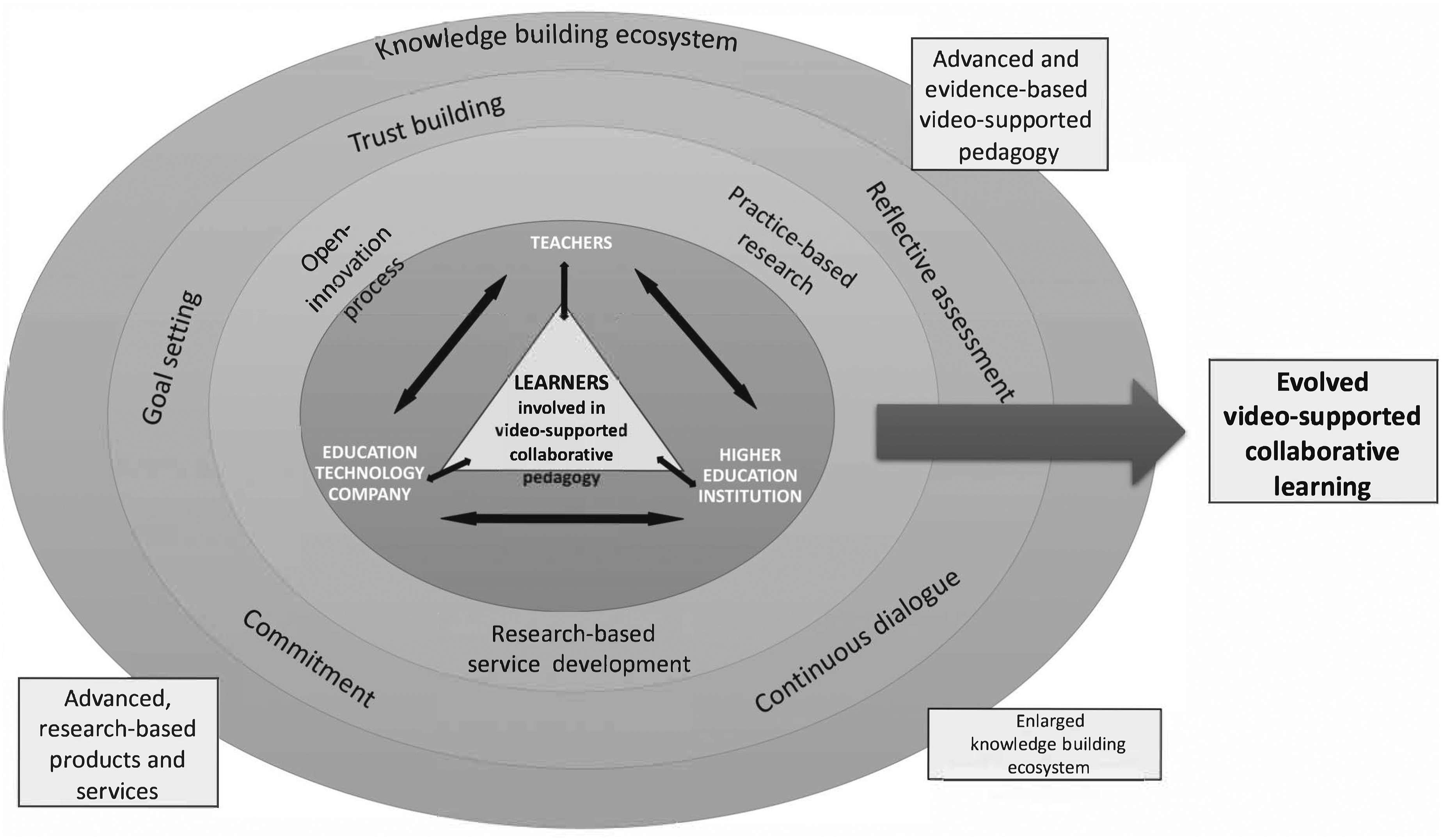
Materials and methods
Research approach
The research approach employed in this study was a qualitative case study (Eisenhardt, 1989). The comprehensive scope of the case study, its collaborative methodology, recognition of intricate circumstances, emphasis on both process and outcome, and flexible approach exemplify the advantages of employing a case study as a research strategy within this particular study. Furthermore, the utilization of diverse research methodologies in the case study facilitates the acquisition of comprehensive empirical insights into the subject matter. (Eisenhardt, 1989).
Data collection and analysis
Ethical review and approval were conducted in accordance with European Union (EU) and local legislation and institutional and company’s requirements. Written informed consent to participate in this study was provided by the participants. Participation in the study was voluntary.
The ethnographic data produced during the itinerary process of the project, consisting of interviews, various textual data, and observations, was used as research material in the study. The online and personal interviews with HE teachers and teacher educators (n = 25) and EdTech companies (n = 6) were recorded and transcribed. The interviews were conducted according to the principles of appreciative inquiry and focused on finding the positive attributes and possibilities of a collective community (Cooperrider and Whitney, 2005; Sandars and Murdoch-Eaton, 2017). The collaboratively produced text materials (e.g., post-its) were collected in two face-to-face and online co-creation workshops with project partners. In addition, the written comments (n = 5) received both from companies and the HE actors related to the outcome of the first workshop (5 text pages) were used as data in this study. Participatory observations were made by two of the investigators during the workshops.
Thematic analysis (Braun and Clarke, 2006) was carried out to transform the collected data into themes and to provide a basis for answering the research questions. Thematic analysis was chosen as it is an effective method for examining the perspectives of different participants, highlighting similarities and differences, and generating new insights. It also offers the possibility to organize, categorize, summarize, rearrange, describe, and interpret the diverse data collected, as well as being an effective method for examining the perspectives of different participants, highlighting similarities and differences, and generating new insights. (Braun and Clarke, 2006).
The purpose of a thematic analysis in this study was to organize the data to offer the possibility of identifying and interpreting the themes from the text data related to the key elements and the actors’ interconnection in successful HE-industry collaboration when developing video-supported collaborative learning. The analysis followed the framework documented by Braun and Clarke (2006): familiarizing with data, transcription, generating codes, searching for themes, reviewing themes, defining and naming themes, and producing the report. After carefully reading the report, the data was first coded under the main themes: actors, processes, and elements. These themes were further divided into sub-themes. The triangulation of investigators was employed to enhance the quality of the study (Archibald, 2016). This meant that the researchers independently analyzed the data, and their observations were collectively interpreted before drawing conclusions as results. To increase the quality of the analysis, triangulation of investigators was used. In addition, to increase the validity of the results, the partners of the ViSuAL project reviewed the results. (e.g., Patton, 2002, 543–544).
Findings
The key actors in the collaboration
Based on the data, key actors for the collaboration were identified together with the HE institutions and EdTech companies, the HE teachers, teacher educators, and learners, who are the end-users and beneficiaries of the learning process.
Although HE institutions were widely recognized for their significant role in formalizing collaboration, HE teachers and teacher educators were specifically acknowledged for their distinct and critical responsibility in developing the learning process that incorporates video elements. Based on the data, EdTech companies have the potential to establish communication with teachers and teacher educators and introduce novel technological ideas to be tested in teaching praxis. Furthermore, when planning and implementing the pedagogical process, teachers and teacher educators actively share their experience with EdTech providers and jointly assess technologies’ usability. The need for establishing a legal contract and publicly formalizing the connection between businesses and HE institutions was recognized following the utilization of teachers’ test use. Furthermore, it was noted that teacher educators play a vital role in fostering collaboration. They provide teacher students with opportunities to engage in videos and videoing in pedagogies, enabling them to gain valuable experience that can be applied within their own institutions. One of the teacher educators provided a description of the job of teachers as follows:
“This is teamwork. It must be the technology provider, along with teachers and the university. For me, the university helped a lot by making the bridge between teachers and the technology provider.”
Thus, the collaboration between people from different expertise domains seems to create an environment conducive to successful HE-industry collaboration.
Beside the teachers, the learners were mentioned in the data as important actors in the collaboration, even though they were not participating in the project as full partners. According to the teachers, the positive impacts of using videos and videoing could be seen, for example, in learners’ learning outcomes, motivation, and collaborative KB, as presented in the following quotations from teachers' interviews.
“…definitely strengthened it [collaborative knowledge building], its main purpose is to make videos together” and “students have said that they have become more courageous, they dare to stand in front of the camera, and they also see ways to use videos themselves in the future as teachers.”
The key processes in the collaboration
The model that was built unveiled three processes that were deemed essential in the context of collaboration. The aforementioned processes were designated as the open-innovation process, research-based service development, and practice-based research. The necessity for an open-innovation process was demonstrated, as exemplified by the subsequent quotations articulated by a representative of the organization.
“I think about collaborating with the university’s researchers or even professors. And even with public institutions and public administrations, for example, school directors or stakeholders, you see that we are speaking about different profiles.”
The quotation emphasizes the necessity of collaborative and creative endeavors for possible advancements, which frequently go beyond the limitations of a single organization and necessitate the engagement of other expertise. This suggests that the process of creating novel advancements necessitates the collective efforts of individuals possessing diverse areas of expertise who are brought together in a HE-EdTech partnership.
Additionally, as a representative of the EdTech company explained, it is crucial to acknowledge the significant role that users—specifically teachers, teacher educators, and students—play in the innovation processes:
“So far, I was referring to collaboration with my company and people like university researchers that would share different perspectives, but of course, final users are very important, so when you spoke about usability and accessibility, I was thinking of the final users.”
Furthermore, teachers and teacher educators emphasized the need for greater utilization of their expertise in the advancement of educational technology. However, they noted a lack of communication and collaboration between themselves and technology developers, as seen by the following quotes:
“The company should build a closer dynamic with the users.”
“There should be a coordinator between teachers and the company.”
In order to get a deeper comprehension of the factors that influence the dynamics between HE, EdTech companies, and the development of user-driven services, a research-based service development process was observed. The significance of research in evaluating the impact of technology utilization on pedagogy and enhancing student learning, as emphasized in a corporate interview:
“…and the system that we have developed is continuing to develop on the basis of both research and feedback from our users.”
In order to provide effective teaching and learning, the collaboration emphasizes the quantifiable outcomes of research-based service development:
“…and I would really love to see, as an example of a collaboration, developing specific research where a particular intervention will be implemented … we can evaluate, we can measure the impact potentially again in the first instance in the behavior of the teachers, and we can demonstrate how they can change the practice to become more effective in what they are doing.”
The aforementioned remark also underscores the significance of practice-based research in collaboration. The comprehension of the practices employed by teachers and students facilitates the interpretation of the situated learning processes that take place in teaching and learning. Teachers, for instance, expressed their curiosity regarding “how videos work in practice” or emphasized the significance of a “hands-on methodology” in conjunction with the video technology company.
It is worth noting that the teachers who were interviewed employed video technology in various educational settings, including schools and applied and academic universities. Furthermore, a diverse range of subjects was taught, encompassing disciplines such as vocational pedagogy, music, floristry, speech therapy, and management.
The key elements of the collaboration
The model presented in the study identified five essential elements that were deemed necessary for the successful development of video-supported learning in collaborative efforts between HE and EdTech businesses. The aforementioned elements were referred to as goal setting, continuous dialogue, reflective assessment, commitment, and trust building. The elements in question were not regarded as distinct entities but rather as interconnected and reliant on one another for their manifestation.
A company representative acknowledged the importance of goal setting for directing the collaborative co-creation process:
“It is most important that all or both partners start from scratch, sit down to discuss what sort of goals the project should have, and preferably have goals as realistic and concrete as possible.”
This suggests that it is important for all partners to have equal involvement in the process of goal-setting. When partners engage in the process of defining goals, they engage in a collaborative discussion where they explore several potential goals, actively listen to each other’s concerns, and together determine the order of priority and evaluate the goals.
The act of engaging in continuous dialogue was regarded as a means of effective communication as well as a valuable occasion for fostering collective comprehension and the acquisition of knowledge. Therefore, it is essential that the terminology and ideas employed align with the intended objective. According to a company representative, the explanation is as follows:
“We could use words coming from our language but in diverse ways with different nuances and with different meanings because we belong to two different professional communities.”
Also, one teacher noted:
“We may create our own concepts and ways of talking; I would like us to ensure that the concepts and language we speak are also open to our target audience without interpretation.”
Both of these quotes suggest that various types of interpretive obstacles can impede collaboration and communication across professional boundaries, emphasizing the need for specific attention in this regard.
The utilization of reflective assessment was deemed crucial for evaluating the collaborative process. The implementation of the process necessitates the inclusion of designated checkpoints at which the evaluation and assessment of the process can be conducted. During reflective evaluation sessions, the participants can engage in discussions regarding existing practices and evaluate goals by drawing upon the collective experiences of all partners involved. Reflective assessment gives the opportunity to not only retrospectively analyze past experiences but also to prospectively envision and establish novel objectives. Furthermore, it provides a platform for mutual learning, as elucidated by a teacher educator:
“I learned that people who are not pedagogical experts have a very different perspective on learning and how to design and facilitate learning.”
The dynamic nature of the surrounding environment is always evolving, as a representative from an EdTech company describes the existing business environment:
“The development pace is huge. All systems and devices move on so fast; who knows what the needs will be in the future?”
Therefore, it is imperative to consistently assess the cooperation process in light of evolving knowledge building ecosystems and the aims set out by the parties involved in the collaboration.
Commitment has traditionally been viewed as a personal responsibility for each partner involved. The company representatives explained the role of commitment as follows:
“You could underline that a prerequisite for success is to have committed IT. When they are committed and support the educational staff, everything looks much brighter in terms of collaboration.”
The objective of the EdTech company is to gain comprehensive knowledge about their own product or service, enabling them to refine it in order to better cater to the needs and preferences of potential future users. The alignment of scientific objectives with a company’s perspective may not be congruent. Nevertheless, the project workshops emphasized the significance of devising a solution that yields advantages for all parties involved. The observations revealed that the conversations emphasized the concept of “creating a win-win situation” and “finding added value for all stakeholders.” It was also emphasized that all parties involved share a common objective, namely, the improvement of teaching and learning.
The entire process of collaboration was observed to be founded upon trust, which was perceived as an essential component throughout the collaborative endeavor. One company representative described the role of trust as follows:
“In the beginning, you can’t say there was already trust; trust has been built all over the project, all over the meetings, all over the interactions, and this was the fuel for good collaboration to be enacted.”
Building trust necessitates an investment of time and becomes evident through interpersonal engagement. The building of trust extends beyond inter-organizational relationships, as it necessitates clear and systematic management and coordination of the partners involved. During the course of an interview with a teacher, the following statement was articulated:
“…the vision, as a management tool, of how to use videos is missing.”
Furthermore, teachers and teacher educators have observed that administrators may lack awareness regarding the resource requirements and challenges associated with incorporating videos into pedagogical and learning practices. Additionally, the prevailing organizational culture may not foster a sufficient level of trust to encourage the open expression of ideas or the exploration of innovative approaches to video-supported learning.
Knowledge building ecosystem as a context
The chosen knowledge building ecosystem appears to be suitable for defining the interprofessional collaboration involved in the development of video-supported collaborative learning for HE. The co-construction of knowledge was observed among partners, as articulated by a representative of the company:
“What we are seeing as potential in the platform is to really help to support the educational ecosystem that
collaborates
between the higher education institutions and the schools and the teachers and really bridge that gap between theory and practice.”
Based on the provided excerpt, it can be inferred that the partnership effectively addressed the needs of teachers and students, the ‘end-users’, by effectively connecting theoretical concepts with practical applications in the learning process.
Discussion
This study contributed to the ongoing discourse on HE-industry collaboration by examining the requisite factors; actors, processes, and key elements, and their interconnectedness in the development of video-supported collaborative learning. Additionally, the study aimed to enhance comprehension of how these elements contribute to the knowledge building ecosystem.
This study highlighted teachers, teacher educators, and companies as essential actors for fostering collaboration. The rapid emergence of digital technology poses challenges for HE to develop digitally-embedded learning practices. This is particularly evident as technological breakthroughs are conducted in private sector companies (Mattsson and Andersson, 2019). Furthermore, educational institutions derive advantages from the technical support provided by EdTech companies, particularly in cases where such support is lacking within the institutions themselves. Likewise, companies will benefit from user insights and feedback in the process of developing their products and services. After recognizing teachers from HE as key actors for developing digitally-embedded learning practices together with the EdTech companies, it is imperative to explore strategies for inviting teachers into this collaboration and supporting them in this work. One potential approach is to invite them to the collaboration during their teacher studies (OACD, 2018), although teacher education’s role in EdTech company collaboration has garnered little research attention. Compared to HE institutions, teacher education can bring a new, additional perspective to collaboration. Through teacher training, a wide range of future teachers are reached, and they can be engaged in experimenting with education technologies (Avidov-Ungar and Forkosh-Baruch, 2018). Hence, knowledge of EdTech providers, tools, and possibilities to utilize them is effectively cascaded to new generations.
Furthermore, the study highlights several processes as crucial factors for successful collaboration. According to Yu and Liu (2021), open innovation in a community facilitates the exchange of new ideas between users and companies, improving the quality of products and services. This approach recognizes the evolving dynamics of competition, shifting from individual organizations to a broader network of enterprises and stakeholders. These interconnected coalitions engage in collaborative activities and knowledge exchange, aiming to create shared value for clients (Bogers et al., 2018; West and Bogers, 2017). The open innovation approach in the university-industry collaboration context is complex because of the highly diverse organizational structures of academia and business, which generate boundaries and may limit the efficiency and effectiveness of such collaboration (Rantala, 2019; Villani et al., 2017). In addition, this study emphasized the necessity of incorporating a user-driven approach into the open-innovation processes (e.g., Baldwin and Von Hippel, 2011; Buur and Matthews, 2008). In our study, the insights of both users, teachers, and teacher educators, together with end-users, the learners, were deemed important to include in the innovation process together with EdTech companies.
The second process identified was research-based service development. In addition to open innovation, service development emphasizes a user-centric approach (Buur and Matthews, 2008; Von Hippel, 2005) and places importance on companies’ opinions. Users are not regarded as passive objects but rather as active participants (Breznitz et al., 2009), as they are thought of as co-producers and idea generators for new products or services (Prahalad and Ramaswamy, 2004; Von Hippel, 2005). During the process of collaboration, HE institutions provide a platform for EdTech developers to conduct device testing and obtain direct feedback from both users and end-users. In addition to user knowledge, in product and service development, scientific knowledge is also required (Melkas and Harmaakorpi, 2012), for example, in assessing the impacts of new innovations. By recognizing the early impacts, it becomes possible to generate relevant information that can be used for direction and future strategic decision-making. Consequently, this process can foster the mutual development of technology and innovations (Hyypiä et al., 2020). The utilization of research-based service development facilitates the evaluation of the impact of technology, hence enhancing effective teaching and learning.
Practice-based research, as the third identified process, serves HE’s perspective. It focuses on the acquisition of practical knowledge and emphasizes the inclusion of participants’ authentic voices, enabling their active involvement in the collaborative process of knowledge construction (Heikkinen et al., 2016). In a practice-based research approach, the practitioners, as users, perspective is duly acknowledged and valued. Therefore, a fundamental premise in the realm of practice-based research is referred to as ‘workability’, which pertains to the critical evaluation of the societal relevance and applicability of the outcomes (Heikkinen et al., 2016). Therefore, collaboration among HE enables the utilization of generated knowledge in society and facilitates the identification of new research challenges and agendas (Rantala, 2019).
Moreover, the model identified five interconnected elements as preconditions for successful collaboration, namely goal setting, continuous dialogue, reflective assessment, commitment, and trust building. In terms of learning, targeted and shared goals are found to be the most supportive of knowledge-building activities (Scardamalia, 2022). They have been defined to characterize collaborative interactions, interactivity, and interdependence (Jansen et al., 2009; Meeuwen et al., 2020). In addition to increasing transparency and ensuring that different concerns and ideas are considered (De Jong, 2019).
It has been argued that collective and reflective dialogue during the process assessment holds the potential to enhance practice outcomes (Cooper, 2014). And vice versa, dialogue is found to be an important interaction skill in developing interprofessional collaboration (Schwartz and Conklin, 2015). Dialogue provides a social platform and an inclusive environment where all participants can freely articulate their viewpoints, share personal experiences, and contribute novel ideas without apprehension of being disregarded (Alexander, 2004). The role of trust between team members in inter-organizational projects has been demonstrated to generate positive impacts on the acquisition of external knowledge, which in turn seems to promote product innovations (Maurer, 2010). Furthermore, it has been suggested that trust is associated with enhanced levels of productive cooperation and collaboration among individuals, groups, and entities (Bürger and Roijakkers, 2021; Häggman-Laitila and Rekola, 2014).
Finally, the knowledge building ecosystem concept seemed to characterize and describe the requisite processes and key elements identified in the model for HE-EdTech collaboration when building video-supported pedagogy. On the other hand, processes and factors simultaneously construct and maintain the KB ecosystem. Collaboration that is embodied with interaction, where communication, ideas’ sharing, and knowledge co-constructing are possible in an open and safe environment, depicts both the KB process and effective HE-industry collaboration.
The findings of this study indicate a discernible disparity or ‘distance’ between teachers, teacher educators, and EdTech providers. Previous studies have also found many challenges in working together between organizations. These include differences in organizational cultures (Bruneel et al., 2010), rigid bureaucratic structures (Siegel et al., 2003), a lack of resources (Howells et al., 2012), and a large cognitive distance that makes it hard for people to communicate clearly with each other (Muscio and Pozzali, 2013). In order to cross the various boundaries between organizations, teachers could act as ‘brokers', as suggested by Oonk et al. (2020), by transferring the end-users’ feedback and bringing their own user’s experiences into the collaboration and service development in the companies. According to Siegel et al. (2003), EdTech providers can also cross organizational boundaries (Berner, 2010). They can, as ‘boundary-spanners’, also bridge the informational and cultural barriers between companies and HE institutions. Furthermore, by doing this, companies can widen their customer networks with the support of HE institutions.
Conclusion and future studies
In the context of digital transformation in the KB ecosystem, the effective use of digital platforms and tools in the learning process calls for strong and interactive partnerships between the HE and the EdTech companies. As observed in this study, this kind of sustainable partnership asks for common goal setting, continuous dialogue, reflective assessment of the collaboration, trust, and commitment. In addition, by employing practice-based research methodology in piloting education technology into the learning process, both education and companies can benefit and receive evidence-based knowledge for development. However, it is imperative to identify the key actors (company representatives, teachers, teacher educators, and students) and empower them to test, develop, and research the collaborative KB process.
Further research is required to explore the perspective of ‘learners’ and the impact of teacher education on collaboration in developing digitally-embedded learning and pedagogy, especially as there are few studies that specifically examine the impact of student participation on university-industry collaboration (Ankrah and AL-Tabbaa, 2015).
Assessment of the study
This study managed to open a fresh look at the HE-industry collaboration in developing digitally-embedded learning. In justifying the credibility of this study, the methodological choices and the limitations can be considered. This study, focusing on one international, multi-actor process on HE-industry collaboration and applying a qualitative approach, does not offer the possibility of making generalizations. Nevertheless, the methodological decisions emphasized the perspectives of the individuals involved in the development of HE- EdTech collaboration. In terms of improving credibility, the analysis was generated in cooperation between all the authors, and in the results section, quotations from the data were presented to allow readers the opportunity to assess the analysis and interpretations made. Although the data revealed and acknowledged students as end-users and beneficiaries of successful collaboration between the HE and EdTech companies, they were not actively involved in the ViSuAL project process. Hence, the lack of student input can be seen as a weakness in this study.
Footnotes
Acknowledgments
This study was conducted and partly supported by the EU under the Erasmus + Key Action 2: Knowledge Alliances Grant [project number: 588374-EPP-1-2017-1-NL-EPPKA2-KA]. We offer our sincere thanks to Ms Anni Küüsvek for her contribution and to all the ViSuAL project partners.
Declaration of conflicting interests
The author(s) declared no potential conflicts of interest with respect to the research, authorship, and/or publication of this article.
Funding
The author(s) disclosed receipt of the following financial support for the research, authorship, and/or publication of this article: This work was supported by the Erasmus+; 588374-EPP-1-2017-1-NL-EPPKA2-KA.
Disclosure statement
The views expressed in this document are not reflective of the EU, and the EU cannot be held accountable for any potential utilization of the document’s contents.
