




Abstract
Partnerships between universities and enterprises (U-E) have become increasingly important. However, research into the style of organisational culture in these collaborations is limited. Thus, the aim of this study is to identify, using the psychometric tool developed by Cameron and Quinn (1999): OCAI (Organizational Culture Assessment Instrument), the relevance and style of corporate culture in collaboration between universities and small and medium-sized enterprises (U-SME). We decided to carry out multiple case studies, which involved the cooperation relationships between a Portuguese university and eight incubated SMEs. To obtain the data, semi-structured interviews were conducted with the aim of gaining a deeper understanding of the meaning, importance and type of organisational culture present in U-SME cooperation. The results suggest that a U-SME cooperation relationship can display different cultural traits simultaneously. The coexistence of different cultural types is since organisational culture can be influenced by different factors, such as the nature of the work, the sector in which it operates, the objectives pursued, the hierarchical levels, among others.
Introduction
Since the 1980s, and with the onset of globalisation, the competitive strategy of American companies has been based on Research and Development (R&D), which has led to an increase in the mission of Higher Education Institutions (HEIs), whose objective is the transfer of knowledge. Since then, HEIs have started to play a more collaborative role with companies, even adopting a more entrepreneurial role, thus re-establishing their role in society. Academic research has thus become an important component in the economic cycle of innovation and growth (Berbegal-Mirabent et al., 2015; Goddard, 2005; Neves and Franco, 2018).
In this scenario, universities and companies are reducing barriers and cooperative relationships are intensifying. While companies see universities as a source of knowledge, HEIs seek to apply and commercialise research results with companies, generating a relationship in which both parties’ benefit (Fischer et al., 2019; Malmi and Brown, 2008; Neves and Franco, 2018; Siegel et al., 2003; Tseng et al., 2020). Corroborating this perception, the European Industrial Research Management Association (EIRMA, 2007) recommended that knowledge transfer between universities and companies should be a permanent policy and priority for all national and/or regional public research.
In this context, small and medium-sized enterprises (SMEs) play an important role in countries' economies, as they account for a large part of the world’s business fabric and catalyse social mobility (Manzoor et al., 2019). SMEs make up the vast majority of companies and, consequently, jobs in any country in the world, making them extremely important for the global economy (Agostini and Nosella, 2019; Manville et al., 2019), so this segment of companies is the main driver of growth and development in developed and developing countries (Kumar and Rao, 2015).
Organisational agility, flexibility between business areas and proximity to customers and suppliers are key characteristics of SMEs (Pereira and Franco, 2022). Morales Rubiano et al. (2016) also highlight the fact that these small companies have a reduced structure that facilitates the flow of information between customers and suppliers, which strengthens these relationships through exchanges that enable innovation and the formation of partnerships and/or agreements (Martin et al., 2019).
Although this segment of companies has a high level of flexibility, informal communication and a simpler organisational structure, these companies face difficulties related to their small size. These difficulties relate to innovation, lack of resources, high competitiveness and lack of affinity with R&D (Agostini and Nosella, 2019). In addition, the ability to internationalise and respond to competitive and environmental pressures (Agostini and Nosella, 2019) are also considered some of these difficulties. Therefore, to overcome these obstacles, the formation of agreements/partnerships becomes a decisive factor for their survival and differentiation in the current competitive landscape (Martin et al., 2019).
In this sense, given the high level of competitiveness and more demanding markets, there is a need for companies to share knowledge through strategic partnerships in order to achieve innovative processes and differentiated business strategies. In this way, cooperation agreements have emerged as an alternative for increasing competitive advantages (Partanen et al., 2020). In this study, a cooperation agreement is defined as an explicit relationship between two or more organisations, with or without financial exchanges, which agree to share resources (Alonso and Andrews, 2019; De Man and Luvison, 2019).
In this context, universities are interested in this type of cooperation agreement with external partners, whether other universities or other types of organisations, including SMEs from various sectors (Chai and Shih, 2016). Moreover, this process generates gains for both parties and, consequently, allows for regional economic growth (Rajalo and Vadi, 2017). However, for a cooperation agreement to be successful, organisational learning is of great importance, because when organisations learn, they gain experience and produce new knowledge. This knowledge must be constantly refined so that continuous improvements in the learning process become a differentiator for good performance (Cristo-Andrade and Franco, 2020). In addition to these conditions, organisational culture is also cited by different researchers as an important variable for success in this cooperation process (Kleiner-Schaefer and Schaefer, 2022; Lv et al., 2022; Sánchez et al., 2024), as divergent cultures can constitute a barrier to this success (Kleiner-Schaefer and Schaefer, 2022).
In order to better understand this organisational asset, some researchers suggest further research into organisational culture and the formation of cooperative relationships, more precisely U-E cooperative relationships (Klimas, 2016), with the aim of gaining a substantial understanding of individual behaviours (Filippetti and Savona, 2017) and the type of organisational culture in these agreements (Hogan and Coote, 2014; Tian et al., 2018). Other authors also indicate that there is a gap that could be explored about how cultural traits influence a cooperation agreement (De Wit-de Vries et al., 2019; Franco and Pinho, 2019) and how understanding this phenomenon would help adjust processes related to companies and universities (Lv et al., 2022).
Given these gaps, this study seeks to empirically investigate the role that Cameron and Quinn (1999) organisational culture model, known as OCAI (Organizational Culture Assessment Instrument),can play in university-SME (U-SME) partnerships, as perceived by managers and university officials. The aim is therefore to deepen understanding of the role of organisational culture in U-SME cooperation agreements and to identify the degree of familiarity with organisational culture among the partners and managers involved in these relationships.
This introduction is followed by the literature review, methodology, results and their discussion, and finally the conclusions.
Literature review
University-enterprise (U-E) cooperation
Among the various forms of cooperation that can bring benefits to organisations and the economy, Debackere and Veugelers (2005) discuss the interaction between the business and scientific communities, often supported by state intervention (O’Dwyer et al., 2023). In this context, we understand the crucial role of Higher Education Institutions (HEIs) as sources of knowledge and innovative technologies that have a direct impact on the production chain. Universities and companies experience continuous economic growth, characterised by the strengthening, expansion, consolidation and integration of the science, technology and innovation system (da Cunha Lemos and Cario, 2017). This view is corroborated by Oliver et al. (2020), who explain that U-E cooperation agreements are based on the interaction between university scientists and companies, who collaborate to transform academic knowledge into practical applications for the market. This transfer of academic technology results in positive effects, including the development of human capital, knowledge and entrepreneurial spirit (Guerrero et al., 2016). To achieve these objectives, aspects such as optimising resources, results and improving business competitiveness, as well as the knowledge that must be created, shared, evidenced and disseminated within the organisation (Teixeira et al., 2019), must be considered.
In this context, in which organisations seek knowledge and universities produce it, the interaction between these educational institutions and the business sector is emerging as a widely adopted strategy in many countries to boost economic growth (Acworth, 2008; Henkel, 2007). Franco and Haase (2015) point out that universities are the main providers of cutting-edge knowledge and technology, emphasising the crucial role of these educational institutions in regional economic development. It therefore suggests that both parties will share tangible and intangible resources, in line with the theory of resource dependence, which posits that organisations need to cooperate with other institutions to gain access to resources that they do not have individually. In other words, universities expand funding opportunities for research, while companies develop innovation capacity and intellectual resources (Galvão et al., 2020). Given these circumstances, the growing need for companies to become more competitive and innovative has reconfigured their approach, coming to understand cooperation agreements as synergistic strategic tools to achieve these goals, as stated by Debackere and Veugelers (2005). The search for innovation and the emergence of technology based on scientific research pave the way for R&D partnerships between universities and companies. Universities are recognised as key institutional players in the field of innovation, not only for training skilled labour, but also for being a source of technological and industrial knowledge for the productive sector (Fagerberg et al., 2018).
Franco (2011) clarified that organisational culture plays a crucial role in the success of a cooperation agreement. When there is a certain similarity in organisational culture, the effectiveness and durability of cooperation increases (Klimas, 2016), also making it possible to optimise the quality and quantity of cooperation-related activities (Zmuidzinaite et al., 2021). However, the clash between different organisational cultures can lead to conflicting attitudes (Rodriguez-Segura et al., 2016), and is considered a factor that decreases the likelihood of a successful cooperation agreement (Barkema and Vermeulen, 1997; De Wit-de Vries et al., 2019; Hennart and Zeng, 2002; Razak and White, 2015; Vyas et al., 1995). Beerkens (2002) also pointed out that the distinctive aspects of each educational institution, such as history, geographical location, culture and language, are important variables in the process of cooperation between different organisations. Disparities and barriers between the academic and commercial domains (Jasinski, 2009; Siegel et al., 2003; Villani et al., 2017) and teams with different mentalities can affect the performance of established agreements (Zmuidzinaite et al., 2021). It is, therefore, crucial to explore the role played by organisational culture in the cooperation process, since “Organizational culture plays a significant role in improving the performance of higher education organizations.” (Sudi et al., 2024: p. 440). In other words, in the cooperation process, organisational culture plays a significant role in improving the performance of higher education institutions (Dabić et al., 2018; Klimas, 2016).
Varying organisational style and culture play a crucial role in lower performance (Barkema and Vermeulen, 1997; Beerkens, 2002; Hennart and Zeng, 2002; Vyas et al., 1995). De Wit-de Vries et al. (2019) point out that discrepancies in the institutional environment of cooperating agents can impact relationships, since organisational culture, history, structure and procedures can differ between members, resulting in setbacks in the process. In the same vein, Huisman and Van der Wende (2005), and Pavlin (2016) explain that heterogeneity in terms of culture can hinder or discourage cooperation. Meirovich (2010) suggests that when partners share similar cultural characteristics and a common language, cooperative relationships tend to be much more successful than when partners have different nationalities and cultures. Rajalo and Vadi (2017) complement this observation, suggesting that choosing a university with a similar culture is appropriate and essential for successful collaboration with companies. Leadership, learning skills, external experience and human resource capabilities are relevant in the context of organisational culture, as the cooperation process requires synchronisation between the partners with regard to resource allocation and information sharing (Hwang, 2017). In addition, Abdul-Halim et al. (2019) show that SMEs need four elements in their organisational culture - adaptability, involvement, mission and consistency - to influence the culture of innovation, both through socialisation and through the basic values, assumptions and beliefs that govern the organisation’s behaviour. These elements will promote behaviours that value creativity, willingness to take risks, freedom, teamwork, value-seeking and solution-orientation, fostering trust and respect and also facilitating decision-making (Padilha and Gomes, 2016). Furthermore, a culture that fosters collaboration, innovation and learning establishes a favourable scenario for the sharing of ideas, the fusion of individual knowledge and social interaction between team members, whether at university or in SMEs, thus a favourable scenario for U-E cooperation (Rismayadi, 2024).
Based on the above arguments and considering the context of U-E cooperation agreements, it is imperative to promote a transformation in the organisational culture of HEIs. In fact, significant differences can arise in relation to values, norms and mentalities, which highlight different objectives and goals (De Fátima Cruz et al., 2021). The prevailing cultural discrepancies between HEIs and companies, such as differences in objectives, time management, bureaucracy, flexibility, incentives and management/communication style, can represent obstacles to be overcome (Galan-Muros and Davey, 2019). Faced with this scenario, HEIs need to adapt their internal structure and implement new strategic and operational mechanisms to incorporate collaboration into their institutional missions, which not only requires a reconfiguration of the organisational infrastructure, but also an adaptation of their culture and mission (Jacob et al., 2003). It is therefore recognised that fostering a culture of cooperation in universities can be driven by the adoption of long-term strategic policies, involving the design and implementation of comprehensive and lasting decisions (Galan-Muros and Davey, 2019).
In short, partnerships between universities and companies play a crucial role in regional and global development (Madudova and Majercakova, 2017; Pereira and Franco, 2023) innovative processes and improving business strategies. Within this collaboration, universities often assume responsibility for driving knowledge-based economic development, which is essential for achieving sustainable economic growth (Madudova and Majercakova, 2017). This type of partnership acts as an essential platform for open innovation, facilitating the exchange of specialised knowledge (Osorno-Hinojosa et al., 2022). More specifically, it plays a crucial role in open innovation strategies, providing access to universities' research capabilities, academic expertise and cutting-edge knowledge, which can boost innovation and company performance (Leon-Roa et al., 2024). The recognition of universities as sources of innovation and technological advancement has increased significantly in recent years (Afcha et al., 2023; Cunningham and Menter, 2021).
Cameron and Quinn’s (1999) organisational culture traits in U-E cooperation
The concept of organisational culture (OC) became popular at the end of the 1980s (AlShehhi et al., 2021), both in the academic environment and in the press, particularly from 1983, after special issues on the subject were published in the journals Administrative Science Quarterly and Organisational Dynamics (Freitas, 1991). Motivated by the success of the Japanese culture model and the ‘Japanese miracle' that took place in that decade in the face of Western economic stagnation, organisational culture began to be looked at more closely by scholars and businesspeople.
From the moment a relationship was perceived between organisational performance and culture, organisations, leaders and those they lead began to pay more attention to this topic/subject. However, culture was ignored for a while because it encompasses values taken for granted by organisations, i.e. it concerns the informal aspects of organisations. It is about values, ideals and norms that shape the organisation’s behaviour and is only perceived when significant changes, developments or alterations are noticed by the organisational actors (Cameron and Quinn, 2011).
The psychometric tool developed by Cameron and Quinn (1999) called OCAI - Organisational Culture Assessment Instrument - aims to help organisations identify their dominant organisational culture. This instrument provides a graphical representation according to the CVF (Competing Values Framework) and helps managers understand how the organisation perceives its organisational culture.
The OCAI instrument is made up of 24 items that correspond to the six main manifestations of each of the four cultural traits: dominant characteristics, organisational leadership, employee management, organisational integration, strategic emphases and success criteria. These items do not correspond to the four types of organisational culture defined by the CVF, but their combination reflects the main values and assumptions about the functioning of the organisation (Cameron and Quinn, 2011).
The model uses four of the six dimensions, namely: organisational leadership, employee management, strategic emphases and success criteria. This is justified because the dimensions not used are directly related or similar to another, for example: organisational integration with dominant characteristics correspond to the basic assumptions of the company and organisational leadership with people management determine the patterns of interaction. Therefore, the validity of the instrument is not questioned even with the exclusion of these two dimensions, not least because other studies have measured organisational culture using fewer dimensions than those proposed by the OCAI (Alsabbagh and Khalil, 2017; Lau and Ngo, 2004; Naranjo-Valencia et al., 2019; Roldán et al., 2012).
The OCAI is based on the theoretical model known as the CVF, an extremely useful framework for organising and interpreting organisational phenomena, including helping to diagnose an organisation's culture in terms of dimensions and shared values. The CVF, which “has both apparent and empirical validity” (Cameron and Quinn, 2011: p. 50), has shown a high degree of congruence between different established and accepted schemes that organise the way people think, their values, assumptions and the ways they process information.
According to Cameron and Quinn (2011), this model is based on two main dimensions (Figure 1): the first dimension differentiates effectiveness criteria focused on flexibility, discretion and dynamism from criteria that emphasise stability, order and control. As an example, the authors cited Microsoft and Nike, which are seen as effective because they are changeable, adaptable and organic, given that the product mix and organisational form do not remain for long periods in these organisations. Universities, on the other hand, are seen as effective if they are stable, predictable and static. The continuum varies from “organisational versatility and flexibility on one side to organisational stability and durability on the other” (Cameron and Quinn, 2011: p. 52). FVC representation, adapted from Cameron and Quinn (1999).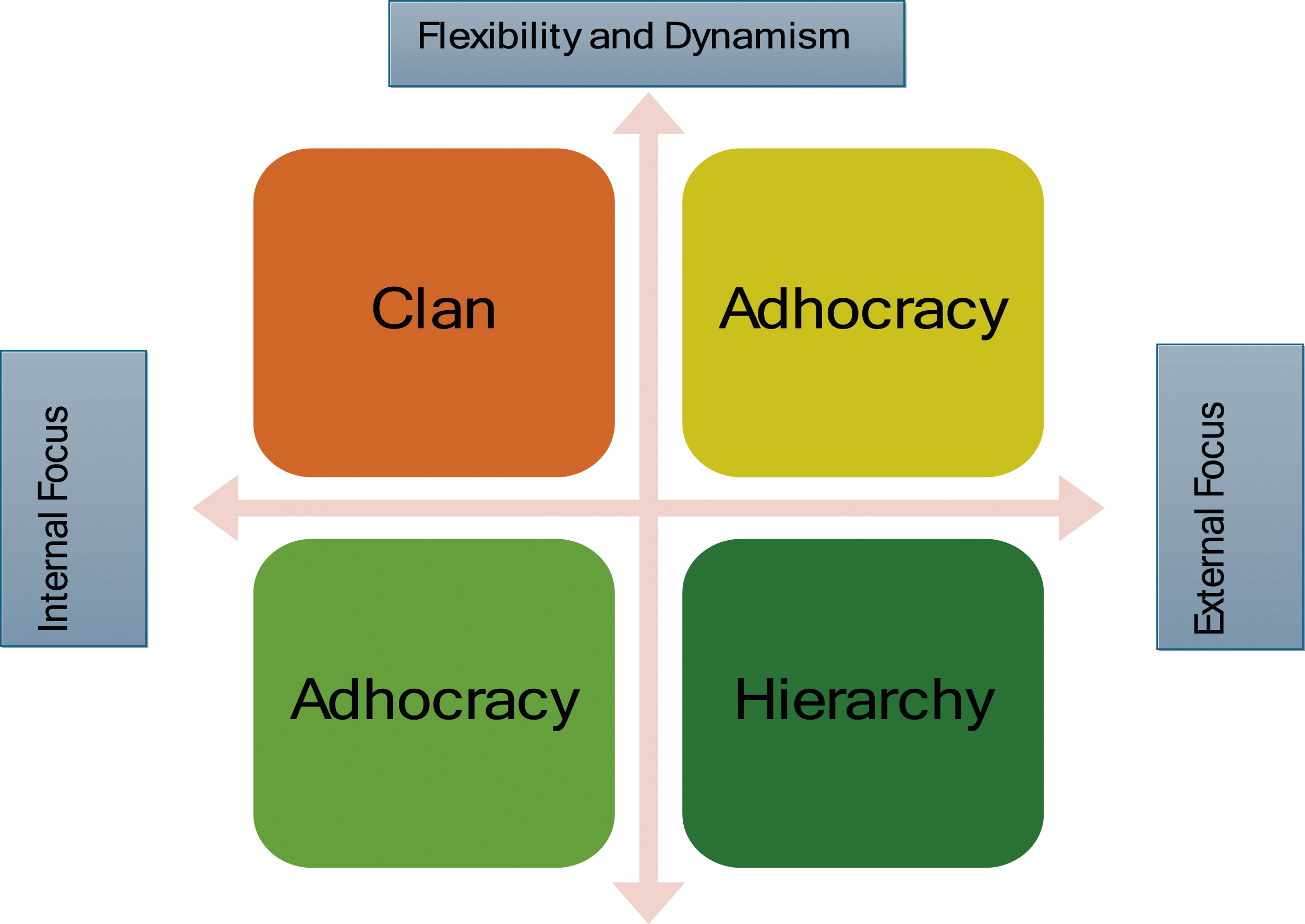
The second dimension differentiates effectiveness criteria that emphasise an internal orientation, integration and unity from criteria focused on an external orientation, differentiation and rivalry. In this case, the authors mention that some organisations are considered effective if they have harmonious internal characteristics, such as IBM, which has its “IBM modus operandi”. On the other hand, there are organisations that are successful when they act competitively and externally, such as Toyota and Honda. In this dimension, the continuum varies from “organisational cohesion and consonance at one end to organisational separation and independence at the other” (Cameron and Quinn, 2011: p. 53).
Putting these two dimensions together, four quadrants are formed that represent the inherent characteristics of the organisation related to organisational effectiveness, defining the “core values on which judgements about organisations are made” (Cameron and Quinn, 2011: p. 52). It should be noted that these core values are opposing or competing assumptions. “Each quadrant represents basic assumptions, orientations and values - the same elements that make up an organisational culture. The OCAI is thus an instrument that allows you to diagnose the dominant orientation of your own organisation based on core culture types” (Cameron and Quinn, 2011: pp. 36-37).
The first quadrant, in the bottom left-hand corner, is called “hierarchy” and is characterised by a formalised and structured working environment through procedures and organisation, thus referring to a hierarchical culture. Cameron and Quinn (2011) explain that Max Weber, a German sociologist, developed the first approach to organisation in the modern era during his studies of government organisations in Europe at the beginning of the 19th century. As the challenge was to produce goods and services efficiently for an increasingly complex society, Weber proposed the seven classic attributes of bureaucracy: rules, specialisation, meritocracy, hierarchy, separation of ownership, impersonality and accountability. These characteristics have played a strong role in achieving objectives and have been adopted by many other organisations. Therefore, this hierarchical culture is characterised by a formalised, structured work environment with well-defined procedures where leaders are organised and masterfully coordinate teams. As an example of this type of culture, the authors cited fast-food chains (McDonald’s, for example) and government agencies (Department of Justice).
At the bottom right, in the second quadrant, is the so-called “market” culture, a form of organisation that grew up in the late 1960s as organisations faced new competitive challenges. This market culture is oriented towards the external environment, focused on transactions with stakeholders (suppliers, customers, trade unions, contractors) where it is not the rules and norms that govern the conduct of organisations, but the economic mechanisms of the market (Cameron and Quinn, 2011). The assumptions in a market culture are that the external environment is hostile where consumers are demanding and the main mission is to make the company more productive and profitable with good results, i.e. good figures related to market share, superior to competitors.
The clan culture appears in the top left-hand side of Figure 1 and is classified as such because of its similarity to a family-type organisation where members share their values and beliefs in an interactive way (Cameron and Quinn, 2011). The management style is based on teamwork, employee involvement and mutual commitment, as this way the environment is healthier, more committed and loyal. This culture is characterised by a friendly workplace, where leaders are seen as mentors and there is a high degree of trust in them, the unity of the organisation is maintained by loyalty and tradition, which leads to a high degree of commitment from everyone through teamwork, concern for people and consensus.
Finally, in the top right quadrant, there is the adhocracy culture, which is the culture for turbulent times, of rapid change that emerged after the world moved from the industrial age to the information age. This type of culture is indicated in environments that promote “adaptability, flexibility and creativity where uncertainty, ambiguity and information overload are typical” (Cameron and Quinn, 2011: p. 60). In short, the adhocratic culture is present in a dynamic, entrepreneurial and creative work environment where leaders are visionary, innovative and take certain risks. This type of organisation has proactive characteristics in relation to the macro-environment, agility in the face of external challenges and entrepreneurial action by employees. Success is measured by the moment they generate unique and original products and services, becoming a benchmark in the market. This type of organisation is easily identified in the aerospace, software development or film industries, for example.
Before this taxonomy of Cameron and Quinn, Hofstede (1980) also wrote another - cultural dimensions. As a foundational framework in cross-cultural studies, Geert Hofstede’s cultural dimensions theory first articulated in 1980 (Hofstede, 1980), provides critical insights into how national cultures influence behaviour in various contexts, particularly in organizational and management settings. Hofstede identified several key dimensions that characterize cultural differences: power distance, individualism versus collectivism, masculinity versus femininity, uncertainty avoidance, and, later, long-term versus short-term orientation. These dimensions have been extensively utilized in empirical research to understand cultural impacts on workplace dynamics, consumer behaviour, and international business practices.
Power distance refers to the extent to which less powerful members of a society defer to more powerful members. This dimension has significant implications for organizational hierarchy and communication styles within multinational corporations. Research indicates that cultures with high power distance tend to exhibit more authoritarian leadership styles, while those with low power distance favour egalitarian approaches (Blanton and Barbuto, 2005; Kirkman et al., 2006; Kolman et al., 2003; Williams and Zinkin, 2008) Individualism versus collectivism addresses the degree to which individuals are integrated into groups. Individualistic cultures prioritize personal goals and autonomy, whereas collectivist cultures emphasize group harmony and interdependence. This distinction is crucial for understanding team dynamics and conflict resolution strategies in diverse work environments.
Masculinity versus femininity reflects the distribution of emotional roles between genders and the value placed on competitiveness versus cooperation. In masculine cultures, assertiveness and achievement are valued, while feminine cultures prioritize care and quality of life (Stedham and Yamamura, 2004). This dimension has been linked to various organizational outcomes, including employee satisfaction and motivation (Saribagloo et al., 2014). Uncertainty avoidance measures how cultures cope with ambiguity and uncertainty. High uncertainty avoidance cultures tend to have strict rules and regulations, while low uncertainty avoidance cultures are more adaptable and open to change (Black, 1999; Litvin, 2019). This dimension is particularly relevant in contexts such as project management and innovation, where risk tolerance can significantly affect outcomes (Pheng and Yuquan, 2002).
The addition of long-term versus short-term orientation highlights the temporal focus of cultures, with long-term oriented societies valuing perseverance and thrift, while short-term oriented cultures emphasize immediate results and respect for tradition (Chun et al., 2021; Evan and Holý, 2021). This dimension has implications for strategic planning and decision-making processes in international business contexts.
Hofstede’s dimensions have not only facilitated a deeper understanding of cultural differences but have also faced criticism for oversimplification and generalization of complex cultural phenomena (Sent and Kroese, 2020; Simanjuntak, 2022). Critics argue that the model may not adequately account for intra-cultural variations and the dynamic nature of culture over time (Chun et al., 2021; Evan and Holý, 2021). Nevertheless, Hofstede’s work remains a cornerstone in cross-cultural research, providing a structured approach to analysing cultural influences on behaviour and organizational practices across different national contexts (Kirkman et al., 2006; Steenkamp, 2001). In conclusion, Hofstede’s cultural dimensions offer valuable insights into the interplay between culture and behaviour in various settings. While the model has its limitations, it continues to serve as a foundational tool for researchers and practitioners seeking to navigate the complexities of cross-cultural interactions in an increasingly globalized world.
Research Methodology
Type of study
Given the nature of the objectives of this study, a qualitative research method was adopted. This type of approach allows the use of a variety of documents and procedures for analysing data, with the aim of collecting information and elucidating aspects of a particular topic or problem, in order to extract relevant content (Kripka et al., 2015). In qualitative research, the focus is on understanding and explaining a specific and complex social issue, where there is a scarcity of knowledge and where subjective and cultural aspects can be crucial to its interpretation and understanding (Gomes and Cesário, 2014). Therefore, in order to investigate the role of organisational culture in the cooperation process between universities and enterprises, it was considered that a qualitative approach would be more appropriate.
Within the realm of qualitative research, we chose to employ the case study method. This method is characterised by its approach of investigating a contemporary phenomenon within its real-life context, especially when the boundaries between the phenomenon and the context are not clearly defined (Yin, 2015). As highlighted by Gil (2002), case studies are often adopted by social researchers because they explore real-life situations that do not lack well-defined boundaries, describing the situation within the context in which the research is conducted and elucidating the causal variables of a particular phenomenon in complex situations that cannot be adequately analysed through surveys and experiments.
Selection of the case studies and key Informants
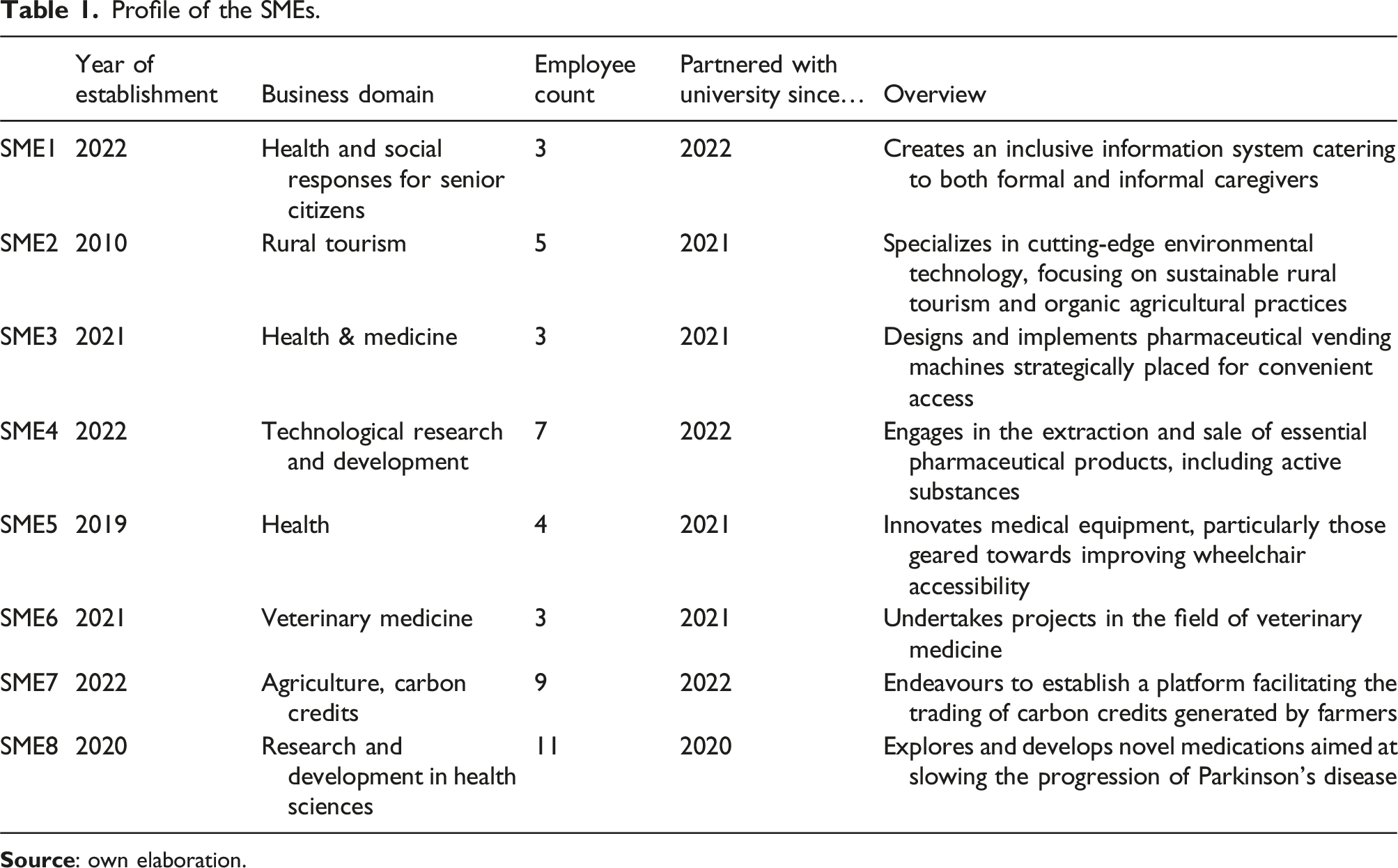
A number of case studies are described that focus on cooperation partnerships between a Higher Education Institution (HEI) and Small and Medium-sized Enterprises (SMEs) located within an incubator. Specifically, the focus is on the interaction between a university located in an inland region of Portugal and eight SMEs associated with an incubator linked to the health sector. This incubator offers support to technological start-ups and facilitates partnerships with companies in the fields of health and ICT (Information, Communication and Electronic Technologies), with the aim of promoting competitiveness and innovation.
The eight companies were selected on the basis of the following criteria: (1) compliance with the requirements set out in European Commission Recommendation (2003)/361/EC of 6 May 2003, Article 2, which defines an SME; (2) having established some kind of cooperation with the university and being incubated; and (3) company managers being available to collaborate in the study. According to Barañano (2008), sample units can be selected arbitrarily, depending on the needs of the research. Therefore, the method for selecting these companies was intentional, combining elements of criterion sampling and purposive sampling (Fletcher and Plakoyiannaki, 2011).
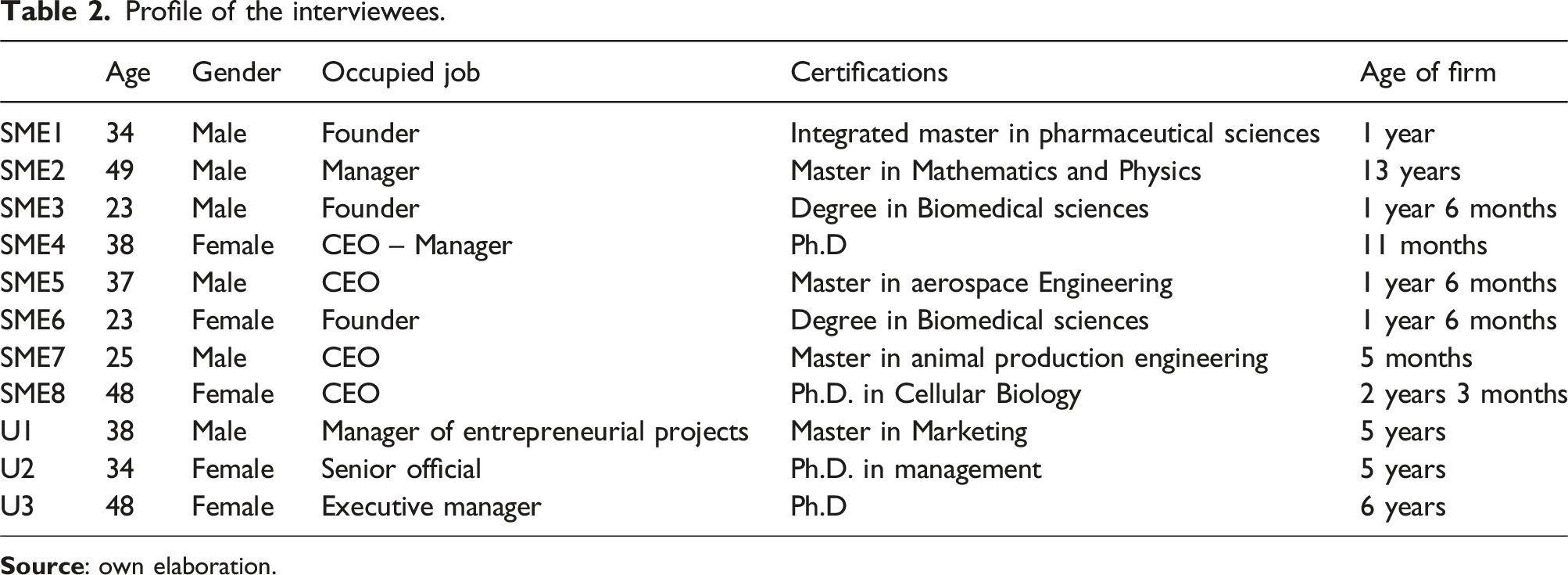
Initially, the plan was to include all 29 incubated companies, according to information available on the incubator’s website. However, only eight companies agreed to take part after being contacted. In addition to these, the incubator manager (U3) also took part, as he plays a crucial role as a link between the university and the business world. On the university side, a member of the Entrepreneurship, Career Guidance and Alumni Office (U1) and a member of the Innovation and Development Office (U2) were invited to take part. These participants were selected intentionally (Czernek-Marszałek and McCabe, 2024) considering their availability and relevance to the topic under study.
Profile of the SMEs.
Data retrieval and data analysis
Profile of the interviewees.
Ultimately, given its personal and individual nature, qualitative research raises several ethical considerations, which were addressed before the data analysis began. Following the agreement between the interviewer and the interviewees regarding anonymity, a document entitled “Information for Participants” was provided, detailing the use of the data provided (Gibbs, 2009).
Concerning data analysis, the information obtained from the interviews and available documents was examined using the content analysis method. According to Bardin (2008), this type of analysis follows systematic and objective procedures to describe the content, making it possible to infer knowledge about the conditions of these messages. In other words, it clarifies and systematizes the content of the message and its expression. In this sense, the interviews were transcribed to identify the types of organisational culture according to Cameron and Quinn (1999).
Results and discussion
The empirical data collected led to the identification of the following thematic patterns: (1) understanding the scope and influence of organisational culture in a U-SME cooperation relationship, and (2) Identification of cultural attributes in U-SME cooperation.
Understanding the scope and influence of organisational culture in a U-SME cooperation relationship
By uniting efforts and goals, cooperation pacts are nourished by deep and far-reaching bonds, which need to be handled with skill and diligence to thrive. Despite the potential benefits, there is no guarantee of success in these agreements (O’Dwyer et al., 2023) and the cultural dynamics of each entity involved, including its history, organisational structure, procedures, and practices, can be a breeding ground for conflict (Franco and Pinho, 2019). As is common in the business context, cooperative relationships also depend significantly on organisational culture, which can be a major factor in the success or failure of these partnerships (Hollebeek and Andreassen, 2018). In this respect, SME2 stated that “an organisational culture defines the parameters, and the boundaries in the cooperation agreement”, and similarly, U2 states that “we have to take as a reference the internal regulations, that is, of our institution and the entities that are involved (…). We also have to understand that there are different dynamics here (…). So, bearing organisational culture in mind, we also have to adapt to what is described in our internal regulations”. These statements show that in both the academic environment and the private sector, stakeholders recognise the sensitivity of the topic of organisational culture, as it defines the boundaries and peculiarities that must be respected and adjusted between the parties to ensure successful collaboration. This is in line with previous research (e.g., Afshari et al., 2020; De Wit-de Vries et al., 2019; Franco, 2011; Zmuidzinaite et al., 2021).
Following on from the above, the manager of SME5 emphasises that: So, so the culture is important, the compatibility”; it is also crucial to take into account the variable of organisational compatibility, which plays a decisive role in the success or failure of a cooperative partnership (e.g., Lunnan and Haugland, 2008; Park and Ungson, 1997; Zeira et al., 1997), validating the arguments about the importance of cultural affinities between collaborators (e.g., Meirovich, 2010; Rajalo and Vadi, 2017). Participant SME8 also emphasised “the importance (of compatibility) in this case between the company and the university is crucial”. In general, all the interviewees stated that it is important to have cultural compatibility, as well as respect for the way institutions operate, making adjustments when necessary to find a balance in project management, corroborating previous research (e.g., Franco, 2011; Klimas, 2016; O’Dwyer et al., 2023).
This means that there must be compatibility between the culture of the companies and that of the university, as shown by the response from SME5, which maintains that there is no barrier at this level: “Compatibility was not difficult because you know (…) we are an R&D company doing research inside our company”. This is in line with the answer given by U3, who emphasised: “a large percentage of our firms are created by the university’s researchers. So it is easy to speak in more or less the same language”. The SMEs 1, 7 and 8 interviewees also expressed the necessity of alignment between the parties. In addition, the managing director of SME1 points out that his company's organisational culture is in harmony with the “willingness to work also in partnerships, and when we are speaking about synergy, we are working with other entities”. This observation highlights the fundamental role of organisational culture as a distinctive element in initiatives involving the dissemination of knowledge (e.g., Afshari et al., 2020). Cultural differences between companies and universities represent one of the challenges of knowledge transfer, among other factors (Braun and Hadwiger, 2011). Organisational culture is recognised as a direct influencer in the process of creating and sharing knowledge, and is a significant component in knowledge management, which can facilitate or hinder the dissemination and acceptance of new ideas and scientific approaches between partners (Klimas, 2016). From this perspective, organisational culture and knowledge sharing emerge as drivers of companies' capacity for innovation, becoming a critical aspect for organisational development (Hogan and Coote, 2014; Tian et al., 2018) and for the success of cooperation processes.
By examining the culture in a relationship of mutual cooperation, as defined by O'Dwyer et al. (2023), which integrates respect, trust and understanding of each member's intentions in the agreement, we can observe the emergence of a shared culture in which synergy facilitates the process. This relationship is corroborated by the following responses from the participants: “there has to be a good balance for things to work, there has to be good behaviour. There must be respect, organisation, discipline which all members of a firm have to agree with and comply with (…) We have to be flexible “ (SME3); “I think there has to be a balance” (SME7); “being able to adapt culturally is extremely necessary” (SME8); “I think that if these people are coordinated to think in the same way, the results are better, without a doubt (SME1); “trying for a balance. We know there are aspects that each one has their way of working, but managing to balance functions” (U2); “it is necessary to reach that balance between the parties” (U3) and “they need to publish, but they also have to patent. We are speaking here about a firm that can live based on its patents, and so, I can understand the two worlds” (U3).
Furthermore, the crucial element of trust is evident in building inter-organisational relationships (Bruneel et al., 2010; De Wit-de Vries et al., 2019; Franco, 2011; Le Roy et al., 2016). In this sense, U1 reflects on these issues, stating that “we have to have a good response capacity and only by aligning a good response capacity with a good work capacity, knowledge, experience, is it possible to gain partners’ trust…”. Participant SME1 also agrees with the previous answer when he comments on issues such as flexibility, trust and knowledge management, arguing that “it is our willingness to work in partnerships (…) It is, to what extent we are willing and think it’s a bonus to work, that is, join forces for things to evolve better (…). It is the way we deal with our partners, that is, we can’t look on a partner as just a workforce, but as someone that will help us to work, it has been someone that recognises the extra value of what they are doing”.
It is noted that some respondents raised two points that are inconsistent with the theory/literature. The first was pointed out by SME6 when stating “that aspect of different cultures, we manage (…) I think it ends up enriching the project, getting new ideas for us, lets us see what is most important for our project and ends up enhancing it.” SME6 states that cultural differences may enrich a partnership, as they can embody each other's positive traits. Nevertheless, the vast literature shows that differing organisational cultures can cause conflicts and can be a barrier to cooperation pacts (Barkema and Vermeulen, 1997; De Wit-de Vries et al., 2019; Hennart and Zeng, 2002; Razak and White, 2015; Rodriguez-Segura et al., 2016; Vyas et al., 1995). The second point was made by SME4, when he said: “for me it makes no difference being similar cultures, because I worked in England. Especially with a very strongly rooted culture, Muslims, and it doesn’t make the slightest difference to me”; also highlighted by SME6, while considering compatibility to offer a positive factor: “I think that compatibility can facilitate… “. This approach, however, is at odds with the conclusions of other scholars, such as Afshari et al. (2020), who argue that organisational culture is a distinctive element in knowledge management projects. This idea is supported by Huisman and Van der Wende (2005), and Pavlin (2016), who explain how cultural diversity can hinder or discourage cooperation.
Perception and relevance of organisational culture in cooperation agreements between universities and companies.
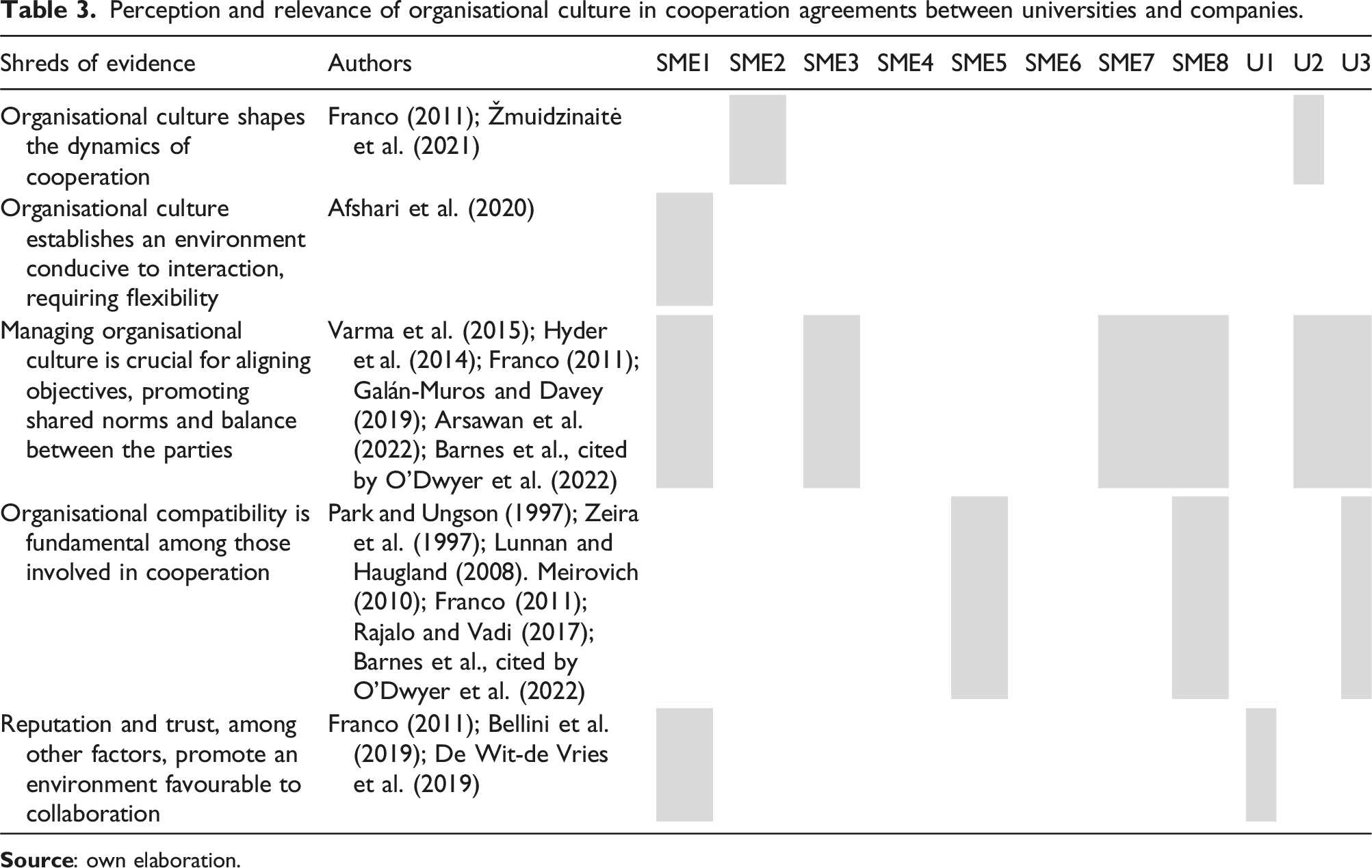
Table 3 reveals that: 1) organisational culture significantly shapes the dynamics of cooperation between universities and SMEs. This observation is in line with the arguments of Franco (2011) and Žmuidzinaitė et al. (2021), who indicate that organisational culture defines the parameters and boundaries within which cooperation takes place. All the interviewees recognised the importance of organisational culture, suggesting that it is a crucial variable in the success or failure of partnerships; 2) a recurring theme among the interviewees is the need for flexibility and cultural adaptability to align objectives and promote shared norms. This adaptability is vital for creating a positive interaction environment to facilitate effective cooperation, which was corroborated by Afshari et al. (2020), who stressed the importance of managing organisational culture to adjust expectations and procedures between the parties involved; 3) cultural compatibility is seen as an essential element between those involved in cooperation. Lack of compatibility can lead to conflicts and reduce the effectiveness of partnerships, as pointed out by studies such as Park and Ungson (1997), and Lunnan and Haugland (2008). The SMEs that took part in the study indicated that the absence of cultural barriers contributed to more harmonious cooperation, especially when the company and the university share a common ‘language’ or a similar set of values; 4) trust and reputation between the partners are highlighted as factors that create a favourable environment for collaboration, which is in line with the studies by De Wit-de Vries et al. (2019), who showed that trust is a fundamental pillar for building successful inter-organisational relationships. Interviewees indicated that trust develops through responsiveness and the alignment of work skills and knowledge, which reinforces the perception of mutual value; 5) although most interviewees recognised the importance of cultural compatibility, some pointed out that cultural differences can, in certain contexts, enrich the project by bringing new ideas and perspectives. This view, although minor, suggests that cultural diversity is not necessarily an insurmountable obstacle, but rather a factor that can be managed for mutual benefit, provided there is an understanding and respect for differences; 6) the identification of organisational culture as a crucial variable implies that SME and university managers should actively seek to align their organisational cultures when initiating new partnerships. Strategies such as cultural integration workshops, specific training, or even using the Organisational Culture Assessment Instrument (OCAI) to map and compare cultures at the beginning and end of agreements, can be useful practices for minimising conflicts and maximising synergy.
Identifying cultural traits in U-SME cooperation
Through the adapted use of the OCAI, it was possible to identify excerpts in the interviewees' responses that made it possible to subjectively position the different SMEs studied and the university involved in this case study in the different types of nuclear culture: hierarchical culture, market culture, adhocracy culture and clan culture.
SMEs in the incubation phase, such as those analysed here, are characterised by a clan culture due to their concern for employee cohesion and the need for flexibility in processes (Rukh and Qadeer, 2018). However, analysing the results obtained, we found that these SMEs also have characteristics that lead us to other types of culture. This is in line with the literature, which suggests that in all organisations it is possible to identify characteristics of each of the existing organisational cultures (Helfrich et al., 2007).
As an example of the clan culture, SME1 identifies his company as a very family-orientated environment where people share a lot of themselves: “as there are only two of us and, as well as being partners, we are quite friendly” and “we work a lot together”. SME1 also mentions that “you have to have autonomy” in carrying out the work. This position is anchored in Cameron and Quinn (2011) when they describe that employees generally work in semi-autonomous teams. SME5 also expressed traits of team/clan culture as can be seen in the following statement: “we are all friends together because the core of and start-up should be a started with friendship”. This position is reinforced again by SME5: “we are doing everything together”, and when he says that the leader is seen as a mentor: “I usually call myself a mentor”. These ideas are confirmed by empirical evidence that shows that in team/clan culture, leaders are seen as mentors (Cameron and Quinn, 2011).
SME2 also showed a propensity for clan culture, because when asked about the leadership style he followed, he said that the leader “is more of a mentor helping with choices”. In addition to the figure of the leader as a mentor, SME2 demonstrated the existence of a concern for the well-being of employees, referring to a family atmosphere: “another thing is that people have to feel good, ... generally, when a person works with a mission, such as spirit in that to achieve a result”. On the other hand, SME3 also shows that teamwork and consensus dictate the pace of decisions: “we, it's more teamwork that we have” and “the three of us talk and everyone gives their point of view for the decision”. Thus, in this type of culture, there is a concern for people and consensus (Cameron and Quinn, 2011).
SMEs 6, 7 and 8 also demonstrate the spirit of involvement and mutual commitment of their employees. SME6 states that it works as a team and, in a way, is semi-autonomous when interviewee SME6 says: “I think we work together and each one focuses on one area, when it comes to more specific things, that is, we focus on the areas in which we excel. The aim is always to work as a team” and “we do that, we have meetings and everything between everyone”.
SME7 favours a healthy environment and loyalty among employees, either through the autonomy shown: “I like to give people some autonomy”, or by creating a healthy climate: “I'm very comfortable with the people I'm working with and I think that also creates a different climate and people too, if an individual is in a constrained environment, they won't work as hard, because they'll be more concerned about what they're doing”. Finally, SME8 says that it also nurtures a spirit of teamwork and consensus, saying that “everyone has a very different role from the other and everyone contributes”.
In the clan culture, the management style is based on teamwork, employee involvement and mutual commitment, as this makes for a healthier, more committed and loyal environment. This culture is characterised by a friendly workplace, where leaders are seen as mentors and there is a high degree of trust. The unity of the organisation is maintained by loyalty and tradition, which leads to a high degree of commitment from everyone through teamwork, concern for people and consensus (Cameron and Quinn, 2011).
On the part of the university, there are two different positions: the first is focused on the hierarchy of procedures within the organisation and the second is interested in actions aimed at the market. U1 and U2 show cultural traits that refer to a hierarchical culture, marked by a formalised work environment structured by procedures and organisation (Cameron and Quinn, 2011): “a present leader is one who is aware of all the dossiers, all the projects, all the objectives, the budgets for the actions that need to be carried out” (U1). “We have a hierarchy (…) there’s a person who gives us guidelines or indications (…) we also have to adapt to what’s described in our internal regulations” (U2). The incubator manager (U3) demonstrates an orientation towards a market-orientated culture, where the focus is on the external environment and the main mission is to make the company productive and profitable with good results: “The goal is to make money. We’re going to help them be innovative if they need support, because they have this innovation and they have to have an orientation. We provide the mechanisms or facilitate them with mechanisms so that they are, in fact, innovative and can transfer it to the market and sell it. That’s my positioning” (U3). These ideas corroborate Cameron and Quinn (2011).
In short, we have a hierarchical culture characterised by a structured working environment, with well-defined procedures and where leaders are organised. The hierarchical culture was perceived in some of the SMEs studied and in accordance with U1, U2 and U3 who present it as the predominant culture. When asked about leadership, U3 said that “they orientate the company in terms of guidelines, more in terms of allocating resources and facilitating hiring”. This behaviour is also perceived by SME3 when he refers to the control of actions: “we clearly think of the idea of step by step”; as well as in the words of SME6 who says the need for a “well-established and formed base”. These statements can be verified on the basis of the theory which explains that hierarchical culture is characterised by a formalised and structured working environment and by procedures and organisation (Cameron and Quinn, 2011).
The adhocratic culture is directly related to innovation, mainly because it includes elements such as an environment of adaptability, flexibility, creativity and entrepreneurship (Cameron and Quinn, 2011; Deshmukh, 2020) expressed by SME1 when it mentions that the “primary focus is on innovation” and “We have a list of defined objectives which, to be honest, are adapted according to whether or not the goals are met”. SME2 goes on to confirm traits of an adhocratic culture when he mentions “innovative ideas” and “there’s a problem that nobody has solved, so we jump in”. Similarly, SME5 expresses this culture when it states that “So we are looking at the strategy of our company is to develop innovation” and shows an aptitude for flexibility when it comes to employees: “all people are doing all the tasks”; together SME2 refers to the need to adapt, mainly based on the expectations of investors: “When you received the first fund raising this strategy, your strategy plan might be changed based”.
SME8 also shows adhocratic cultural traits when it demonstrates that there is an interest in adaptability and flexibility for a new bias in the study based on other contributions, and explains that its entrepreneurial idea arose from the research project that “originated from a research idea that I develop at the university”. SME8 reinforces the adhocratic characteristic when he reports that: “we know we're not the only ones and that's essential, because in medicine, the more people who study problems, the better”. U2 follows the same line and explains the fact by saying that “for our work to be more efficient, you also have to bring some innovation, ...”. This opinion is in line with the work of the Innovation and Development Office, in which the culture of innovation is present in the projects. U3 also says: “I think we have a very innovation-orientated style here”.
This type of culture is indicated in environments that promote “adaptability, flexibility and creativity where uncertainty, ambiguity and information overload are typical” (Cameron and Quinn, 2011: p. 60). The adhocratic culture is present in a dynamic, entrepreneurial and creative work environment where leaders are visionary, innovative and take certain risks. This type of organisation has proactive characteristics in relation to the macro-environment, agility in the face of external challenges and entrepreneurial action by employees. Success is measured from the moment they generate unique and original products and services, becoming benchmarks in the market.
Cameron and Quinn (2011) argue that given the diversity of characteristics that organisations possess, it is understandable that they display qualities of all or almost all types of culture. It is therefore possible to establish a relationship between adhocratic culture and market culture. Both have a greater propensity for external focus, with the former having an entrepreneurial spirit and the latter having the main mission of making the company more productive and profitable (Cameron and Quinn, 2011). Udriyah et al. (2019) argue that when market orientation increases, innovation is boosted, as “market orientation and innovation have partially positive and significant influences on firm performance, both directly and indirectly”.
In this sense, the traits of the market culture were exposed in the following testimonies: “challenger can be in the sense of competitive” (SME2), “you have to make a profit” (SME2), “we think more about growing” (SME3), “success is measured by the amount of investment, the amount of funds and money raised by the company” (SME5), “financial growth, you could say” (SME6), “winning stages of competitions, making money from competitions, gaining recognition” (SME7), “each funding obtained is a criterion of success achieved” (SME8), “it would be in the sense of increasing patents, increasing, empowering entrepreneurs, increasing the number of start-ups and spin-offs created, increasing the number of projects supported, increasing cooperation between researchers with companies and industry in general is more like it” (U1), “we are always striving to increase the number of projects approved, the number of patent registrations. So, this will also then reflect the growth of the university” (U2), as well as the aforementioned U3 “transferring to the market and being able to sell”.
Market culture is oriented towards the external environment, focused on transactions with stakeholders (suppliers, customers, trade unions, contractors) where it is not the rules and norms that govern the conduct of organisations, but the economic mechanisms of the market (Cameron and Quinn, 2011). The assumptions in a market culture are that the external environment is hostile where consumers are demanding and the main mission is to make the company more productive and profitable with good results, i.e. good figures related to market share, superior to competitors.
The predominant cultural traits identified in the organisations analysed through the testimonies are described in Figure 2. The companies/interviewees marked with a green background represent the most dominant type of culture, while the other cultural traits identified (not predominant) are shown with a grey background. Cultural traits identified (Source: own elaboration).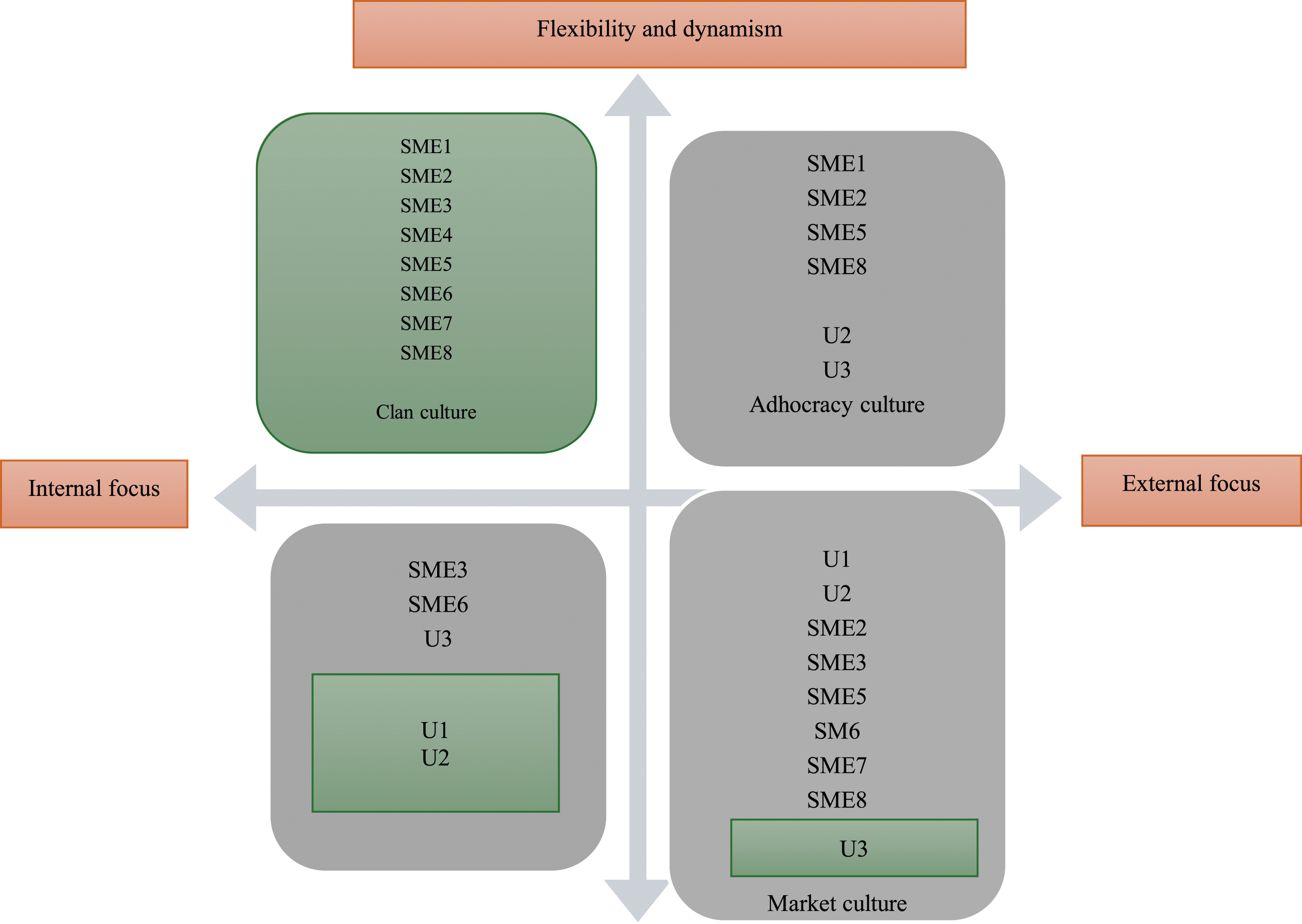
Cameron and Quinn (2011) argue that given the diversity of characteristics organisations possess, it is understandable that they have qualities from all or almost all of the quadrants of the model. Schein (2010) also defends this view when he presents the idea that a company can have several cultures simultaneously. This author considers subcultures to have their own characteristics, norms and specific values in different parts of the organisation. In this study, from the testimonies the interviewees gave, it was possible to identify other cultural traits (c.f., Figure 2, grey background), in addition to the predominant cultural traits mentioned above (Figure 2, green background).
In addition, Figure 2 allows the following arguments to be made: a) SMEs and the university exhibit a diversity of cultural traits, including clan, hierarchical, adhocratic and market cultures, which reflects the complexity and multiplicity of cultural influences present in partnerships between universities and SMEs. Cameron and Quinn (2011) argued that it is common for organisations to display characteristics of multiple cultures, which is confirmed by the results of the study. This coexistence of cultures can be both a strength and a source of conflict, depending on how these differences are managed; b) clan culture is the most prevalent among the SMEs analysed, characterised by a collaborative working environment, with an emphasis on employee cohesion, flexibility and a management style based on mentoring and participation, which means that SMEs value a family and cooperative working environment, which can facilitate adaptation and alignment with university working practices when there are shared values. Clan characteristics, such as trust and mutual commitment, are fundamental to fostering innovation and effectiveness in U-E cooperation; c) in the case of the university, there is a tendency towards a hierarchical culture, especially in the administrative areas (U1 and U2). This culture is characterised by a structured working environment, with well-defined procedures and a strong emphasis on order and control. The presence of a hierarchical culture can create challenges in terms of flexibility and agility, which is critical for innovative partnerships with SMEs. However, it also provides a stable and predictable environment, which can be advantageous for implementing long-term projects and ensuring compliance with regulations and institutional policies; d) the incubator’s management (U3) displays a strong orientation towards market culture, with a focus on productivity, competitiveness and financial results. This cultural trait is especially suited to the role of the incubator, which aims to help SMEs become more competitive and profitable, reinforcing the importance of tangible results and the economic impact of partnerships, promoting a more pragmatic and performance-orientated approach to supporting start-ups and incubated companies; e) some traits of adhocracy were identified in several SMEs, reflecting a dynamic and innovative environment where adaptability, flexibility and creativity are valued. Such characteristics are crucial for SMEs operating in fast-growing or technology sectors, where the ability to respond quickly to market changes and constantly innovate is a competitive advantage. The presence of adhocratic traits supports the agility of SMEs and facilitates the integration of new ideas and collaborative approaches; f) Figure 2 shows that it is common for organisations to display multiple cultural traits simultaneously. This coexistence reflects the adaptability of organisations to the specific context of their operations and partnerships. However, it also suggests the need for active cultural management to avoid conflicts and maximise synergy between the different cultural styles. For example, while a clan culture can promote a friendly and collaborative environment, the presence of a market or adhocratic culture can bring a necessary focus on results and innovation.
Overview of results
From the results and discussion presented above, the following arguments stand out:
Influence of organisational culture on U-SME cooperation
The study identifies organisational culture as a determining factor in cooperation between universities and SMEs, emphasizing the influence of clan, market, adhocracy and hierarchy cultures. Cultural compatibility is essential to the success of partnerships, which complements the study by Schein (2010), who argues that organizational culture is a system of shared values and beliefs that shapes organizational behaviour. The literature on U-E (University-Enterprise) cooperation highlights that cultural compatibility facilitates integration and reduces conflicts, while divergent cultures can cause friction (Filippetti and Savona, 2017; Klimas, 2016). In addition, De Wit-de Vries et al. (2019) point out that cultural differences can negatively affect knowledge transfer, which is a central objective of U-SME partnerships.
Flexibility and cultural adaptation as keys to success
The need for flexibility and cultural adaptation has emerged as a crucial theme for aligning objectives and promoting effective cooperation. This ability to adapt is seen a fundamental to accommodating the different ways of working and expectations of SMEs and universities. Organisational flexibility is emphasised by authors, who discuss the importance of adaptability for survival and success in dynamic environments. Barney and Hesterly (2004) also emphasises that flexibility can be a source of sustainable competitive advantage. Hogan and Coote (2014) argue that an organisational culture that promotes innovation and adaptation is positively associated with organisational performance, corroborating the importance of flexibility identified in the study.
Clan culture in SMEs
The SMEs analysed showed a predominance of clan culture, characterised by a collaborative, people-centred environment and internal cohesion. This culture facilitates teamwork and mutual commitment. Cameron and Quinn (2011) describe clan culture as a culture that emphasises a familiar and supportive working environment, where communication is open and leadership is seen as mentoring. This type of culture is particularly advantageous for incremental innovation and collaborative processes, which explore the relationship between organisational culture and organisational effectiveness.
Challenges of the Hierarchical culture at the university
The predominant hierarchical culture at the university, marked by a rigid structure and a strong emphasis on procedures and control, can limit the flexibility needed for innovative partnerships with SMEs. The literature suggests that hierarchical cultures can be a barrier to innovation and inter-organisational collaboration. Hofstede (1980) emphasise that cultures with a high aversion to uncertainty tend to avoid risks, which can hinder dynamic collaborations. According to Rajalo and Vadi (2017), universities with very hierarchical cultures can encounter challenges when implementing agile practices necessary for effective collaborations with the private sector.
Market culture and adhocracy in SMEs and incubators
SMEs display traits of adhocracy, focussed on innovation and adaptability, while incubators exhibit a strong market orientation, focussed on competitiveness and financial results. The adhocracy culture is associated with environments that require high adaptability and creativity, essential characteristics for SMEs in innovative sectors (Cameron and Quinn, 2011). On the other hand, market culture is orientated towards performance and tangible results, who highlight the effectiveness of market cultures in competitive environments. The coexistence of these cultures within SMEs and incubators suggests a balanced approach between the need for innovation and the search for concrete results.
Trust and reputation as facilitating elements
Building mutual trust and reputation is an essential factor in the success of partnerships. Trust enables more open collaboration and the overcoming of cultural barriers. Inter-organisational trust is widely recognised as a critical component of effective partnerships. Bruneel et al. (2010) explore how trust can reduce transaction costs and facilitate knowledge transfer. Gulati (1995) emphasises that trust is built over time and is essential for overcoming the uncertainties and risks inherent in inter-organisational collaborations. Trust is also a key factor in building social capital, which is crucial to collaborations' success.
In short, the results show that cultural differences, if not managed properly, can act as barriers to effective collaboration, while flexibility, cultural compatibility and mutual trust are key facilitating elements. Public policies and organisational strategies must, therefore, take these cultural dynamics into account to maximise the potential of U-E collaborations, fostering an environment conducive to innovation and economic development.
Conclusions and implications
The primary aim of this study was to discern the organizational culture’s role in U-SME cooperation. To achieve this, multiple case studies were employed, examining the cooperation between a university and eight incubated SMEs. The findings indicate that the comprehension and significance of organizational culture in the studied U-SM cooperation revolve around knowledge exchange, where relationships are strengthened through trust and understanding of each party’s limitations and capabilities. The necessity for flexibility from both sides was also identified as crucial for establishing shared norms conducive to a more productive and effective alliance. Consequently, cultural compatibility was deemed a pivotal factor for successful U-SME collaboration.
Based on the adaptation of the OCAI, it can be concluded that the SMEs studied have the characteristic traits of a clan organisational culture, characterised by management based on teamwork, mutual commitment, compromise and shared values and beliefs with a high degree of trust and commitment (Cameron and Quinn, 2011). On the University’s side, the technicians in the offices showed characteristics of a hierarchical culture, marked by a formal environment, with a well-defined structure, procedures and organisation; while the incubator’s management showed a more market-oriented organisational culture, whose aim is to make companies productive, competitive and profitable, with good results. This role is in line with the objective proposed by this incubator created by the university.
Given the empirical evidence obtained, it was possible to conclude that a company can display different cultural traits simultaneously. The coexistence of different cultural types is due to the fact that organisational culture can be influenced by different factors, such as the nature of the work, the sector in which it operates, the objectives pursued, the hierarchical levels, among others. It is also important to note that organisational culture is not static, but dynamic and susceptible to change over time. These changes can be driven by a variety of factors, such as the entry of new employees with different experiences and perspectives, changes in leadership and organisational policies, external events that impact the business environment and even internal or external crises.
The coexistence of different cultural traits in a company can create a rich and diverse environment, allowing different strengths and approaches to be combined to face challenges and seize opportunities. However, it can also generate conflicts and integration challenges, especially if there is no open and effective communication between members of the organisation. In this sense, managing organisational culture becomes essential in order to promote cohesion and collaboration between team members, align organisational values and objectives and ensure that the company’s culture is aligned with its long-term strategy and vision. This can involve creating cultural integration programmes, establishing shared values and promoting a culture of respect, openness and continuous learning within the organisation.
Contributions to theory and practice
From a theoretical point of view, this study represents a significant advance in understanding the dynamics of organisational culture in cooperative relationships, filling a gap identified in the literature on the subject. It also contributes to the existing body of knowledge on cooperation between universities and companies, highlighting the importance attributed to organisational culture by the partners involved in these agreements and the need to adjust it in order to align the expectations of both parties. The innovation of this study lies in exploring the perspectives of various SMEs and university representatives on the different types of culture present in university-business cooperation relationships.
From a practical point of view, this study provides valuable insights that can serve as a guiding tool for SME and university managers. The evidence obtained can help them formulate policies and strategies to improve the cooperation process between universities and companies. Specifically, the managers involved can benefit from placing greater emphasis on taking organisational culture into account in future cooperation agreements. In doing so, they can better understand the prevailing norms, procedures and cultural traits and thus align their strategies more effectively within their respective institutions.
In conjunction with these actions, it is also proposed that the OCAI instrument be applied at the beginning of a cooperation agreement and again at the end, in order to understand possible changes in organisational culture. By applying the OCAI at the start of the cooperation agreement, the parties involved can identify the differences and similarities in their organisational cultures and assess the compatibility between them. This can help define expectations, set realistic goals and identify areas that need to be worked on to ensure effective collaboration. By applying the OCAI again at the end of the cooperation agreement, the parties involved can assess the changes in organisational culture that have occurred during the collaboration. This process helps to evaluate the success of an agreement and identify areas that need to be improved in future relationships. In addition, analysing the results of the OCAI can help the parties involved in a cooperation relationship to identify specific points that need to be worked on to improve organisational effectiveness.
The theoretical implications of this study suggest applying the OCAI instrument at the beginning and end of a cooperation agreement. In doing so, the parties involved can identify changes in organisational culture over time, offering insights into how these changes affect the dynamics of collaboration. This allows for a deeper understanding of the differences and similarities between the organisational cultures of the entities involved, helping to set realistic expectations and achievable goals for the collaboration. In addition, analysing the results of the OCAI throughout the cooperation process can highlight specific areas that need to be worked on to improve organisational effectiveness and harmony between the parties. This could include developing strategies to deal with cultural differences, implementing training programmes or reviewing internal policies to improve collaboration. From a practical point of view, applying the OCAI offers a tangible tool for evaluating the success of a cooperation agreement and identifying areas of improvement for future relationships. This evidence-based approach allows the parties involved to adjust their strategies and practices based on concrete data about organisational culture and its impact on collaboration. Ultimately, this approach can contribute to more effective and mutually beneficial cooperative relationships between universities and SMEs.
The practical implications of this study are particularly important for public decision-makers since cultural traits in cooperation between universities and SMEs offer valuable insights for formulating public policies. Thus, some recommendations are presented to them. Firstly, public policies could include the creation of specific programs to promote cultural integration between universities and SMEs, such as cultural integration workshops, training in understanding different cultural traits and the implementation of assessment instruments such as the OCAI (Organisational Culture Assessment Instrument), the outputs of which would reduce potential conflicts and increase the effectiveness of collaborations. Secondly, there should be clear support for organisational flexibility and adaptation in universities, so that more flexible and less hierarchical environments are created, especially in units focused on partnerships with the private sector. This is in line with the evidence that hierarchical culture can hinder the agility and innovation needed in partnerships with SMEs. Therefore, public policies encouraging greater organisational flexibility within universities can facilitate better cultural alignments and, consequently, more effective results. The third practical implication lies in implementing fiscal and financial incentives to foster partnerships between universities and SMEs, especially in strategic sectors such as health, technology and innovation, given that the presence of market and adhocracy cultures in SMEs indicates a strong orientation towards financial results and innovation. Public policies that offer specific incentives for U-E collaboration encourage SMEs to engage more actively with universities, promoting innovation and economic development. The fourth recommendation is to expand and strengthen incubator and accelerator structures within universities, which adopt a market culture and adhocracy in line with the needs of SMEs, as this research has highlighted that market orientation in incubators is crucial to the success of SMEs, so public policies that expand support for these structures help transform academic research into marketable products and services, reinforcing the transfer of knowledge and technology. Sixthly, it is crucial to develop policies that encourage the creation of cooperation networks between universities, SMEs, government and other stakeholders to facilitate the exchange of knowledge and good cultural practices because these networks are the guiding thread for cultural alignment by providing platforms for sharing experiences and innovative solutions, helping to overcome cultural barriers and promote a more harmonious collaborative environment. Finally, the seventh recommendation concerns the importance of establishing continuous monitoring and evaluation mechanisms for partnerships between universities and SMEs to measure the impact of public policies and adjust strategies as necessary. This could include the application of the OCAI at the beginning and end of cooperation agreements, as suggested by the study, as a standard practice to assess cultural alignment and the effectiveness of partnerships, providing for implementing improvements in policies to support U-E cooperation.
Limitations and future lines of research
This study identifies several limitations which, in turn, suggest various directions for future research. One of these limitations lies in the lack of use of qualitative analysis software, such as NVivo and MaxQda, to examine the semi-structured interviews. Using these tools could enable a more detailed analysis, identifying sub-themes within each general theme and providing a more specific standardisation. Furthermore, the exclusion of other types of organisational culture, such as those defined by Hofstede (1980), represented a significant limitation. The inclusion of these concepts could have enriched the study even more. Therefore, future research could address this gap and explore different models of organisational culture. The scarcity of literature on organisational culture in U-E cooperation agreements also made it difficult to build a solid theoretical basis. Thus, it is suggested that future studies include a systematic review of the literature on the topic to provide a more comprehensive understanding. Moreover, the study focused on a single U-E cooperation relationship, limiting its generalisability. Broadening the scope to include other higher education institutions would allow for more comprehensive comparisons and generalisation of the findings. Investigating cooperation agreements between universities in different countries and cross-border companies could reveal valuable insights into how cultures impact these agreements and strategies for minimising cultural differences.
Another interesting area of research would be to explore how cultural differences influence project management in cooperation agreements. Case studies could examine how these differences affect team interaction, project management, information sharing and joint decision-making. In addition, investigating the importance of cultural adaptation in forming relationships and creating a collaborative environment could provide insights into how a lack of adaptation can affect cooperation. Another line of research could examine how culture affects value creation in U-E cooperation and whether it limits or expands the ability to create value and innovate together. Finally, studying the metrics used to evaluate the success of cooperation agreements and developing conflict management strategies to deal with cultural differences and conflicting interests could also be a promising area for future research.
However, this is a fertile field for future research, in addition to that arising from the above. One of these is the impact of cultural diversity on U-E collaborative teams. Exploring how cultural diversity influences communication, decision-making and the overall effectiveness of cooperation could provide valuable insights into how to promote more harmonious collaboration in intercultural contexts. Another interesting line of research would be the development of specific intercultural management strategies for cooperation agreements. Studying how organisations can deal with cultural differences, conflicting interests and other barriers that can arise in these agreements can help promote more productive and effective relationships between universities and companies. In addition, it would be interesting to assess the economic impact of U-E cooperation agreements. Investigating how these agreements influence regional economic growth, job creation, innovation and other relevant economic indicators can provide a deeper understanding of the value of these partnerships for the parties involved and the community at large. Analyses of successful and unsuccessful cases can also provide valuable insights. Detailed case studies of cooperation agreements that have succeeded and others that have failed can identify the key factors that contributed to these outcomes, informing best practices for future collaborations. In addition, exploring innovative partnership models between universities and businesses, such as long-term research partnerships, joint internship programmes and innovation incubators, can help drive innovation and economic development in different sectors. Other areas of research could include the impact of emerging technologies on U-E cooperation, the promotion of sustainability and social responsibility in U-E partnerships and analysing the unique characteristics of cooperation agreements in specific sectors, such as technology, health and renewable energy. This whole future research agenda shows that exploring these areas can contribute significantly to advancing knowledge about university-business cooperation and provide practical insights for fostering more effective and collaborative relationships in the future.
Footnotes
Acknowledgments
The authors are grateful to the anonymous referees of the journal for their extremely useful suggestions to improve the quality of the paper. The authors gratefully acknowledge financial support from National Funds of the FCT – Portuguese Foundation for Science and Technology within the project «UIDB/04007/2020».
Declaration of conflicting interests
The author(s) declared no potential conflicts of interest with respect to the research, authorship, and/or publication of this article.
Funding
The author(s) disclosed receipt of the following financial support for the research, authorship, and/or publication of this article: This work was supported by the National Funds of the FCT – Portuguese Foundation for Science and Technology within the project «UIDB/04007/2020».
