




Abstract
The digital economy with flexible work contexts requires graduates to enter the workplace with digital skills. While studies have examined digital literacy and skills within domains, attending to knowledge, workplace, business and digital skills, these narrow definitions overlook the importance of digital career competencies for lifelong career management. This paper reports on measures of digital career competencies (DCC) and how the dimensionality of these measures might enable universities, students, and other stakeholders to ascertain how these competencies develop. Using a pragmatic, co-created, three-study design, initial dimensions and a pool of measurement items were developed qualitatively, involving responses from 22 alumni. These items and their dimension reliability were then tested with n = 202 students, and further evaluated using a second sample of n = 156 students. The results demonstrate that DCC can be assessed using three dimensions: digital connectedness, career management, and crowdworking. The developed 8-item, three-dimension scale exhibited sound reliability and validity. The novel co-design method for measure development, and the research findings, provide theoretical and practical contributions to emerging empirical research on DCC. These measures provide a parsimonious base for assessing DCC and facilitating the development of these competencies in higher education.
Keywords
Introduction
The digital economy, accelerated by the COVID-19 pandemic, has organisations globally demanding digitally competent employees to be productive in flexible, hybrid work environments (Aroles et al., 2021; Cardenas-Navia and Fitzgerald, 2019; Vyas, 2022). Emerging technologies, innovations launched as part of Industry 4.0, digitalization and the automation of many work-related decisions bring continuous change to workplaces, as the nature of work is transformed and tasks become more complex (Aroles et al., 2021; Goulart et al., 2022; Kipper et al., 2021). These transformed environments require graduates with digital literacy and skills. While it has been posited that many university students are digital natives with innate digital literacy, who seamlessly develop digital career competencies (Prensky, 2001), Bridgstock (2019) problematises this view, with other studies acknowledging students’ lack of digital literacy (Gannon et al., 2016; Jackson et al., 2023; Janschitz and Penker, 2022). Some scholars have responded by calling for curriculum renewal to improve the digital skills within disciplines such as marketing (Mishra et al., 2017), information and technology (Cardenas-Navia and Fitzgerald, 2019), and engineering (Kipper et al., 2021), while leading industry reports conceptualise the Blended Digital Professional as having domain knowledge, workplace, business, and digital skills. Yet despite the industry calls that universities should deliver well-qualified digitally literate graduates, studies to date narrowly define employability for specific disciplinary jobs, overlooking the need for digital career competencies (Fossatti et al., 2023; Rêgo et al., 2023). These calls by researchers to study these competencies acknowledge the importance of self-management and career building skills for lifelong career management (Bridgstock, 2009) within the digital economy (Allen et al., 2022).
Career studies is a dynamic, interdisciplinary field, and while employability literature has grown recently, the field is fragmented and there is no consensus among scholars on a unifying employability theory or employability dimensions (Baruch and Sullivan, 2022). Furthermore, there is a dearth of studies within the emerging discourse arena of digital career competencies (DCC), providing an opportunity for a pragmatist co-design approach that concentrates on producing actionable knowledge by involving stakeholders as partners.
In response, this three-study research aligns with recent co-creation approaches in higher education (Cruz et al., 2022), which are novel and theory-informed to enrich DCC that supports employability and develops measures beneficial to students, alumni, and career practitioners (Fossatti et al., 2023; Kelly and Cordeiro, 2020). Much of the research regarding DCC has focused on social media and its use for professional connection and networking (Bridgstock, 2019; De Villiers Scheepers et al., 2019; English et al., 2021; Kumar and Nanda, 2024), albeit with some exceptions (Gannon et al., 2016). This focus is likely because professional social media use and mastery is considered a core employability competency (Bridgstock, 2019). Crucially, there has been less research on DCC beyond social media. While progress has been made in understanding broader employability dimensions, digital competencies are dynamic and, as hybrid models of work evolve, such competencies will play a fundamental role in graduates’ careers (Allen et al., 2022; Goulart et al., 2022). Consequently, due to emerging digital technologies and platforms (e.g., crowdsourcing) influencing career transitions, graduates need to be adaptable, lifelong learners (Bridgstock 2009); and the facilitation of student DCC has become a key area of research (Sullivan and Al Ariss, 2021).
This paper seeks to contribute to the emerging scholarship on digital career competencies (Rêgo et al., 2023) and prepare students to transition to the professional workplace by reporting on a three-study research design, which aligns with recent co-creation approaches in higher education (Cruz et al., 2022). Co-creation is novel and theory-informed, and this study particularly supports employability by developing measures beneficial to students, alumni, and career practitioners (Kelly and Cordeiro, 2020).
This paper’s aims are two-fold. First, to expand the digital literacy literature to better understand the DCC needed by students transitioning to professional work. Second, we report on the development and testing of preliminary measures for assessing DCC, incorporating both established capabilities such as career management and digital connectedness, and emerging capabilities such as crowdworking. Few previous studies have offered in-depth insights into these constructs, particularly crowdworking. Given the nascence of digital competencies, we take a novel pragmatic co-design approach providing a new perspective to the dynamic challenges faced by higher education stakeholders (Dollinger and Vanderlelie, 2021). This approach allows us to develop and explore the dimensionality of these measures to ascertain how DCCs develop to support employability. We engage a rigorous three-study, multi-stakeholder, co-created methodology that employs co-design elements. First, a general understanding of initial DCC dimensions and a pool of measurement items was developed by interviewing 22 alumni and identifying key themes and constitutive elements of DCC. Second, we tested the items and dimension reliability with n = 202 students; and, finally, we evaluated the measurement of digital career competencies using a second sample of n = 156 students to further confirm the item and dimension validity. This ‘outside-in’ co-design approach provides a novel methodological design to produce results that have value for universities, students, alumni, and industry stakeholders in the emerging area of DCC.
Literature overview
Digital career competencies for employability
Digital economy workplaces require graduates to be digitally savvy as traditional office employment includes a variety of work settings and have well-developed problem-solving, emotional, and behavioural competencies (Goulart et al., 2022; Kipper et al., 2021; Rêgo et al., 2023). Simultaneously, career paradigms emphasise the need for graduates to proactively take responsibility for career development to ensure employability (Baruch and Sullivan, 2022). Today’s graduates are considered employable if they are confident in hybrid work settings, ranging from full-time to project work and self-employment; in doing so they also produce societal and economic benefits (Aroles et al., 2021; De Villiers Scheepers et al., 2018; English et al., 2021). Digital career competencies are generic transferable skills, relevant for multiple employment contexts (Morgan et al., 2022). Arnold (2023) finds that these transversal skills, also called soft and transferable skills, were critical for media students’ employability. While employability involves multiple attributes including knowledge, skills, and perceived employability (Rothwell and Arnold, 2007), limited attention has been paid to how the shift to the digital economy has influenced the digital dimension of such competencies, including how competencies traditionally underpinned by face-to-face interpersonal communication manifest in the contemporary workplace. As such, Rêgo et al. (2023) and Fossatti et al. (2023) call for research on this emerging area after their systematic reviews. Therefore, we focus on digitally supported social connectedness, agentic career management, and crowdworking.
Social connectedness
Social connectedness focuses on how graduates capitalise on digital and analogue social networks to accrue social capital for career purposes (Cook, 2022). Social capital involves the sum of networks and human relationships that allow students to use these resources to gain employment (Tomlinson, 2017). Professional and external networks can help students build social capital, create value from these relationships, and assist in developing their employability (Barkas et al., 2021). Several scholars have examined the pedagogical use of LinkedIn for career learning (Healy et al., 2023). Bridging social capital that facilitates connection to outside groups can be developed through engagement with alumni, social-media networking (Kumar and Nanda, 2024), or work integrated learning (WIL) experiences, where connections occur through professional acquaintances (Putnam, 2001). De Villiers Scheepers et al. (2018) found WIL enables students to build agency through engagement with professional communities, develops bridging social capital, and helps form a professional identity. Yet Benati and Fischer (2020) find that students do not regard social capital development as a priority, as they do not always see the benefits of working on this important area while studying and delay building or developing relationships until after graduation (De Villiers Scheepers et al., 2018). English et al. (2021) found it was a pedagogical challenge to support the building of connectedness – and subsequent social capital – in students, but posit that universities need to view it as a long-term responsibility, as professional networks play a critical role in students gaining employment. Aspects such as a greater focus on social media training, industry-focused WIL projects, and volunteering can assist students in developing professional connections, networks, and associated social capital.
Career management
Universities increasingly focus on equipping students with career management skills to enhance their employability and career development prospects. Career management skills include developing informed career goals, understanding the labour market, cultivating job search skills, and identifying relevant opportunities (Bridgstock, 2009; Jackson and Wilton, 2017). Nicolescu and Nicolescu (2019) emphasise the importance of job-seeking skills, including finding job-search channels, using information resources in job searches, and preparing for interviews and the selection process. University strategies enhancing students’ career management skills include career services that support students to set career goals, enhance job seeking skills, secure employment, find work experience opportunities, and WIL opportunities (Donald et al., 2019), as well as disciplinary-specific interventions (Arnold, 2023).
WIL covers a range of activities such as practicums, fieldwork, internships, placements, and simulations (Jackson and Wilton, 2017), and involves industry partners in the development of students’ professional and employability capabilities (Jackson et al., 2023). Students who successfully complete mentoring programmes and WIL during study are likely to enhance their leadership and team skills and perceive the experience as valuable (Jackson and Dean, 2023). WIL thus allows students to establish early career goals, while career management skills provide familiarity with the professional context (Jackson and Bridgstock, 2021). Consequently, students’ perceived employability tends to develop during or after completing a WIL experience (Ebner et al., 2021). Likewise, perceptions of DCC would also be expected to progress through WIL experiences. However, gauging the progress is not well understood (Fossatti et al., 2023), particularly in relation to digital competencies – hence the aims of this research.
Crowdwork
Crowdwork is an increasingly important aspect of contemporary employment (Strunk and Strich, 2023). It is based on a crowdsourcing model of utilising contributions of dispersed novices and experts through open platforms to complete tasks, solve problems, and create digital goods and services (Idowu and Elbanna, 2022; Pavlidou et al., 2020). Platforms such as Freelancer.com, Upwork, or Fiverr facilitate paid and unpaid work, and are used in both the public and private sectors. For example, government and research organisations use crowdworking to engage, empower, and collaborate with citizens (Rotich, 2017), whilst private organisations are known for harnessing crowds for idea generation, open innovation, and crowdfunding (Hellström, 2016; Muhdi et al., 2011; Paschen, 2017).
Crowdwork is attractive to students and graduates as it provides flexibility, opportunity to earn a part-time income, and use and develop specialised and employability skills (Idowu and Elbanna, 2022; Pavlidou et al., 2020; Strunk and Strich, 2023). Crowdworkers in the United States derive satisfaction from their ability to use their entrepreneurial creativity, choose challenging tasks, earn income, and integrate their work with their lifestyle (Taylor and Joshi, 2019); as this type of work offers a range of benefits including flexibility, autonomy, social rewards such as peer appreciation, social identification, knowledge development, and new job opportunities (Ghezzi et al., 2018). Crowdwork capabilities enable graduates to pursue a digital-nomad lifestyle, embracing personal freedom, mobility and entrepreneurial careers (Prester et al., 2023). Similarly, crowdwork offers benefits to public and private sector organisations, and is increasingly being used in professional work contexts (Dejelassi and Decoopman, 2013; Hammon and Hippner, 2012).
Crowdworking tasks require technical skills, as well as digital collaboration and innovation; for example, students might work together on a crowdfunding campaign (Paschen, 2017; Pavlidou et al., 2020). In the digital economy, there is a growing commonality and need for open-source collaboration across various stakeholders (e.g., government, university, professional, and world of work sectors (Clifton et al., 2022). As digital technologies transform work activities into collaborative complex tasks, employees need to adapt to these changing work practices (Goulart et al., 2022). Higher education is being called on to create more entrepreneurial learning experiences to enhance students’ innovation capacity (Warhuus et al., 2017; Winborg and Hägg, 2023). The widely accepted use of crowdsourcing platforms justifies crowdwork as a critical competency. Crowdwork is supported by social connectedness and individuals’ ability to manage their professional careers.
Measuring digital career competencies
Reliable and valid measurement is a pre-condition to studying phenomena in higher education (Coetzee, 2014). Congruent with the pragmatist tradition, our co-created three-study research design was informed using mixed methods. The dimensionality of DCC is explored in the first study through interviews with n = 22 alumni. The findings of this study provided an in-depth understanding of themes associated with DCC and, through an iterative thematic analysis between the literature and interviews, an initial pool of items was generated, addressing both research aims. Studies two and three address the second research aim more specifically: to empirically test the reliability and validity of the dimensions and items associated with DCC. Notably, the method incorporated an ‘outside-in’ approach that provides a platform for co-designing the quantitative items with respondents, which fits with the DCC dimensions investigated in this study and are relevant to the hybrid economies for the stakeholders involved such as universities, students, industry, and alumni.
Research design
Study one: Exploratory interviews
Exploratory research is a common starting point to understand the dimensionality and measurement of a phenomenon (Churchill, 1979). To explore themes of DCC, study one used in-depth interviews with n = 22 alumni from a regional Australian university. This research context is particularly valuable, as the university study was based in a regional university, where it is argued, employability is more challenging (Bridgstock, 2019). Open-ended questions were used to elicit alumni views of their current employment/self-employment status, the career path taken– both during and after university – and to reflect on what was important in developing their DCC.
Involving alumni engages the principles of students-as-partners and provides graduates with co-design opportunities (Dollinger and Vanderlelie, 2021), addressing the call for such methodological design by scholars such as Fossatti et al. (2023). We embedded these principles into each interview. The co-design approach has three main benefits. First, it leverages user-involvement where alumni can provide a more nuanced understanding of their experiences (compared to professional outsiders) and suggest design improvements and evaluative measures for such experiences (Krippendorff, 2011), thus reflecting our ‘outside-in’ approach. Second, co-design offers an inclusive, human-design centred approach to developing measures, which complements traditional measures reliant on experts (see Rossiter, 2002). Third, co-design is aligned to social connectedness and crowdwork, which emerging literature supports in relation to digital career competency. Guided by Dollinger and Vanderlelie’s (2021) and Dietrich et al.’s (2017) suggestions for co-designing services with students, alumni were asked to reflect on how to best evaluate some of their suggestions. For instance, interviewers specifically encouraged alumni to consider how they would know, or what it would look like, if current students were competent in a particular area. This generated preliminary suggestions of what measuring DCC might involve, within the aims of this study.
Interviews lasted from 30 to 90 min and were undertaken between February and September 2018. Interview data was collected through audio recordings which were transcribed. Transcriptions were analysed using thematic analysis to enable the researchers to make connections between themes that emerged (Braun and Clarke, 2006). Three research team members independently analysed eight transcripts and then met to discuss the coding to ensure the trustworthiness of the findings, thus generating consistent interpretations (Lincoln and Guba, 1985). After agreeing on the coding scheme, the researchers individually analysed the remaining transcripts, thereby enhancing the rigour of the process (Lincoln and Guba, 1985).
Interviewees were enrolled in a variety of programs in Business and Arts and graduated between two and 8 years from the time the research was conducted. This allowed time for alumni to reflect on how their tertiary education developed their DCC. Furthermore, using alumni as participants, rather than current students, allowed the researchers to obtain a clearer connection between behaviours that enhance DCC during tertiary education, rather than relying on proxies in the form of attitudes.
Broadly, the findings revealed that developing professional networks while studying played a key role in developing DCC. We distilled the findings into four themes: (1) Digital connectedness (e.g., using digital platforms to follow your industry, build/connect with networks, and build professional identity); (2) In-person networking (e.g., attending industry events, finding industry mentors); (3) Career management skills (e.g., CV and job interview preparation, securing an internship; and (4) Crowdworking (e.g. problem-solving, creativity, unprompted actions to gather resources through crowdsourcing, collaboration, and funding project ideas). While these findings were derived from pre-pandemic interview data collected in 2018, many scholars such as Aroles et al. (2021) and Goulart et al. (2022) argue that these digital pre-pandemic trends and innovations accelerated the adoption of these competencies, making them commonplace within the post pandemic workplace.
The themes were reviewed independently by the research team members, discussed, and triangulated against conceptual dimensions in the literature. The triangulation resulted in three consolidated themes: Digital connectedness; Career management; and Crowdworking – representing the three dimensions of DCC. Aligned to the themes and co-design, an initial pool of 16 measurement items were generated to capture each of the thematic constructs. Following a traditional approach, three expert reviewers in the areas of employability and quantitative research were invited to examine the items (Rossiter, 2002). Reviewers assessed the conceptual definition, fit, and appropriateness of the items for each dimension to ensure content validity, and commented on the item terminology and comprehension. This process resulted in 14 measurement items. The final pool of 14 items were also shown to interviewees, who opted to be contacted about reviewing future phases of the research. This provided a final co-design feedback loop and ensured the validity of the items. The final 14 items were then empirically investigated in Studies Two and Three.
Study two: Exploratory factor analysis
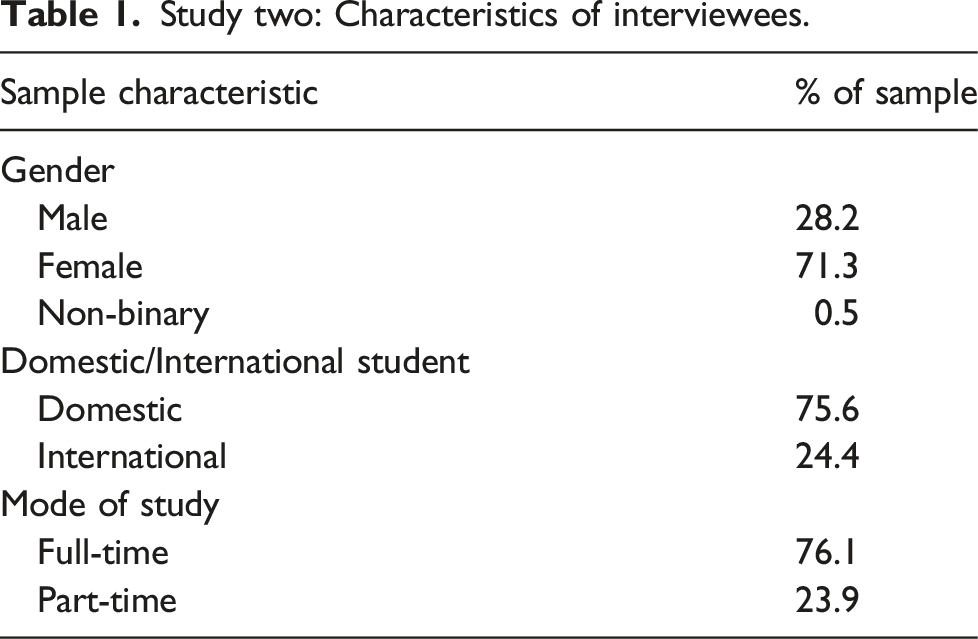
Context and participants
Study two: Characteristics of interviewees.
Exploratory factor analysis (with 14 item pool from qualitative study)
Before conducting EFA and assessing the reliability and validity of the measurement items and dimensions, descriptive statistics were examined to remove items that displayed scores indicating unsatisfactory psychometric properties (Hair et al., 2018). After examining the descriptive statistics of the scales, an EFA using the principal component method with a Direct Oblimin rotation was undertaken, similar to previous higher education studies (e.g., Choi, 2020). Reliability tests followed.
Results
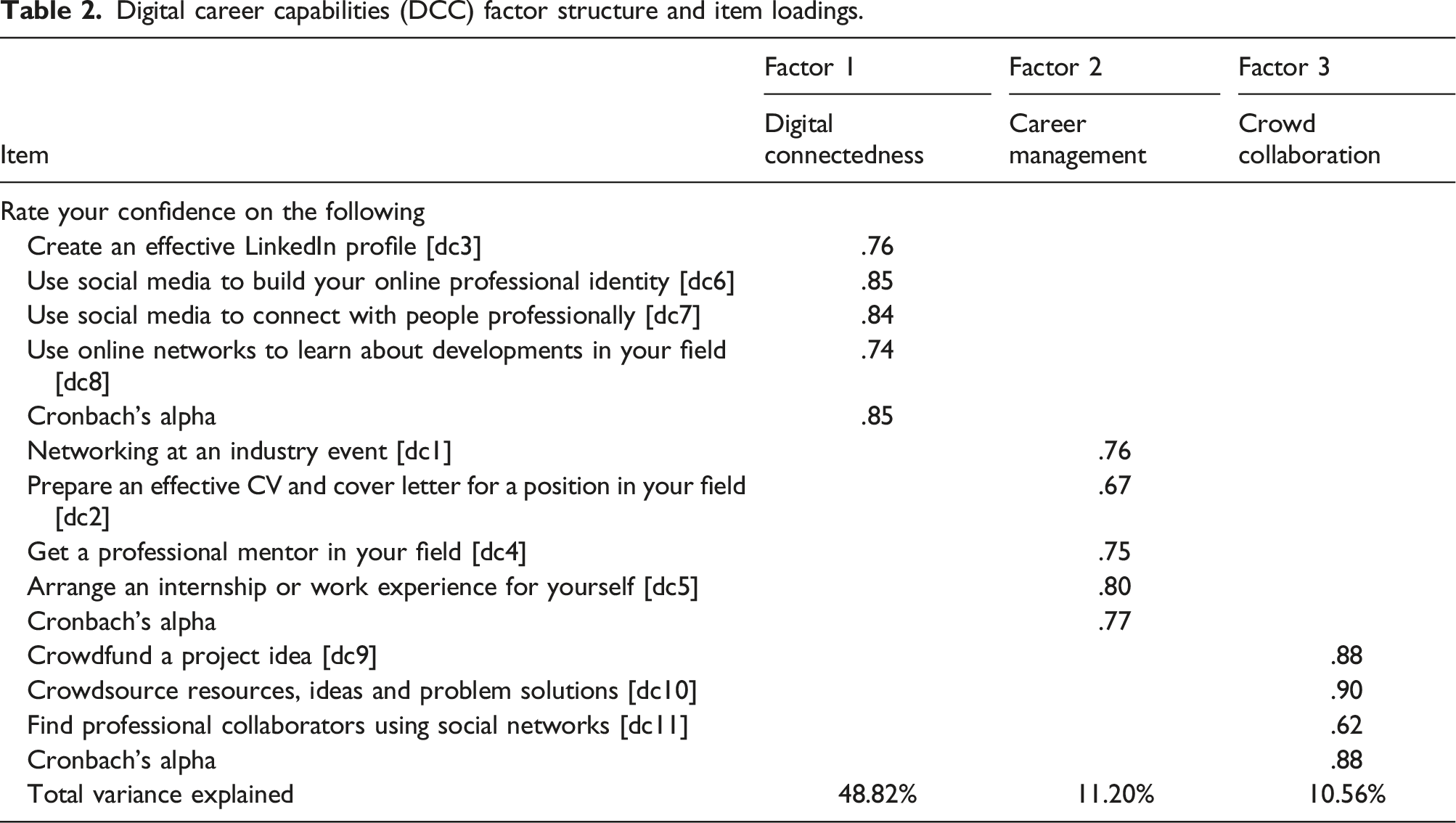
The results of the EFA (Kaiser-Meyer-Olkin (KMO)) = .857, Bartlett’s Test of Approximation Chi-Square = 11165.56, df = 55, p = .000), revealed a three-factor solution with Eigen values >1, explaining 70.59% of the total variance. The first factor (DCC dimension) explained 48.82% variance and included four items, aligned with ‘Digital Connectedness’. Items associated with this dimension relate to students’ use of digital platforms like LinkedIn to build their employability identity and develop online network connections (e.g., “use social media to build your own online professional identity”). The second factor was comprised of four items and explained 11.20% variance and represented the dimension of “Career Management”. Items focused on employability practices such as physical networking, CV development, and internship experiences. The third factor explained 10.56% variance and was comprised of three items aligned with “Crowdworking”. Items reflected students’ comfort with enterprising behaviours like crowdsourcing resources, crowdfunding ideas, and collaborating with others to obtain support for ideas.
Digital career capabilities (DCC) factor structure and item loadings.
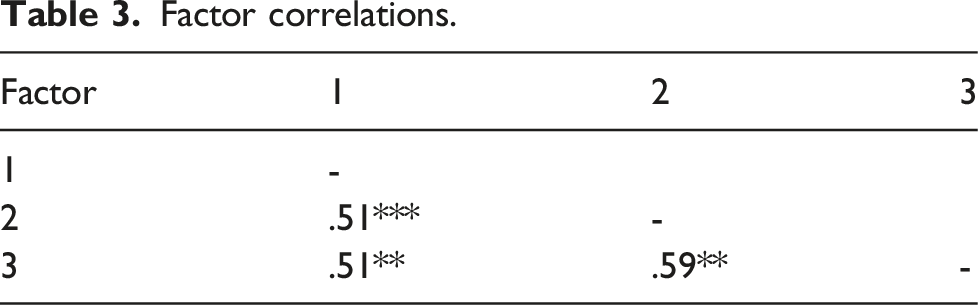
Factor correlations.
Reliability
The reliability of each factor was assessed via Cronbach’s coefficient alpha (Table 2). The results demonstrate high reliability (scores ranging from .77 to .88) with Cronbach’s alpha exceeding the recommended threshold of >.70 (Hair et al., 2018).
From the EFA, a refined 11-item scale reliably measuring three dimensions of DCC emerged. Further, given the skew towards females in the sample, a series of post-hoc test t-tests were conducted. The t-tests were non-significant, p = .150–.840, suggesting the scale is stable across male and female students. Collectively, the EFA results in study two demonstrate the multidimensional nature of DCC, reflecting both the extant literature and study one’s themes. With reliability established via EFA, a third study was conducted to robustly examine the validity of the measurement items and dimensions of DCC.
Study three: Confirmatory factor analysis
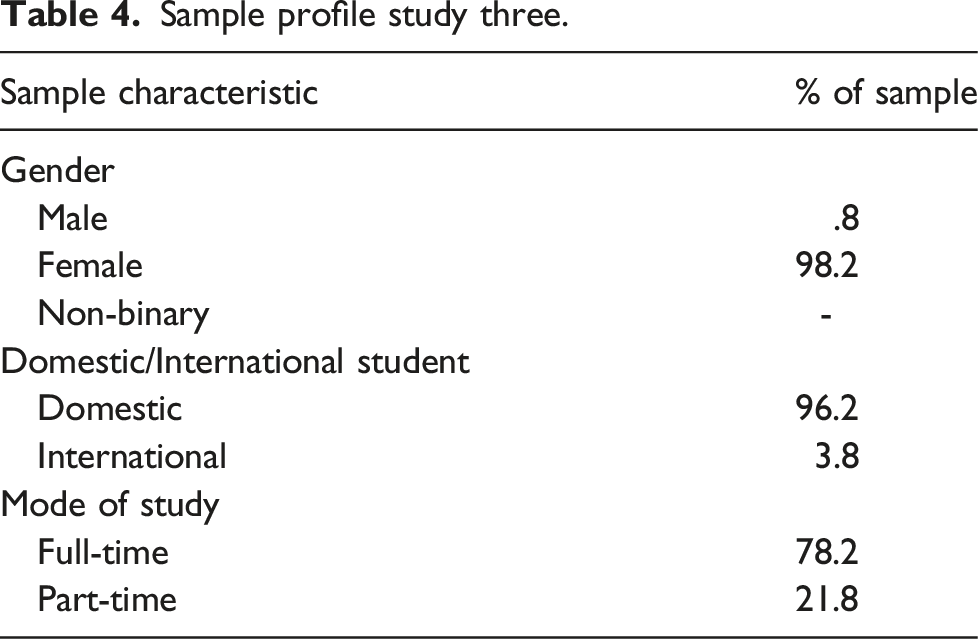
Context and participants
Sample profile study three.
Confirmatory factor analysis
Confirmatory factor analysis examined the construct validity for DCC items and dimensions. Specifically, we sought to determine and confirm if a hierarchical structure of the DCC dimensions existed, within an overall representation of DCC. Given the study’s characteristics (e.g., sample size, investigating novel theoretical constructs), CFA was undertaken using Partial Least Squares Structural Equation Modelling (PLS-SEM) in SmartPLS 3.0 (Hair et al., 2018). PLS-SEM is an alternative to covariate-based (CB) SEM and offers two benefits. First, PLS-SEM utilises non-parametric estimation, therefore it is not limited to meeting the restrictive assumptions of data distribution for CB-SEM (Hair et al., 2011). Second, PLS-SEM is less sensitive to other data related characteristics, such as sample size (Ghasemy et al., 2020). This is advantageous given that fit indices used in CB-SEM are known to fluctuate depending on the sample size.
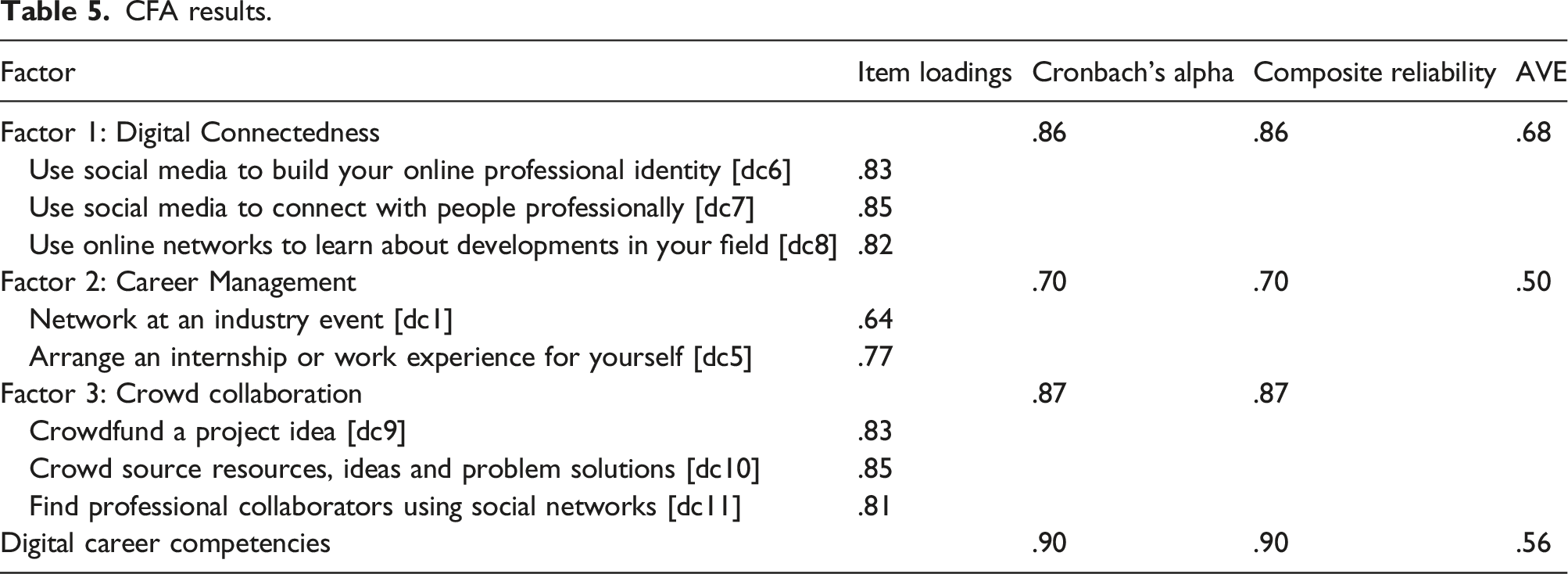
The initial CFA identified three items with low factor scores (<.60) in relation to their construct (factor) scores (dc2, dc3, and dc4). As Hair et al. (2018) recommend, the CFA was reconducted with the latter items dropped, as they were deemed unfit for further analysis. Table 6 and Figure 1 show the results, with all items exhibiting loadings >.60, supporting the hierarchical structure of DCC with loadings from the single order dimensions >.70. The SRMR for model fit was .13, suggesting a moderately strong fit to the data (Hair et al., 2018). The hierarchical dimensionality and path associations of digital career competencies.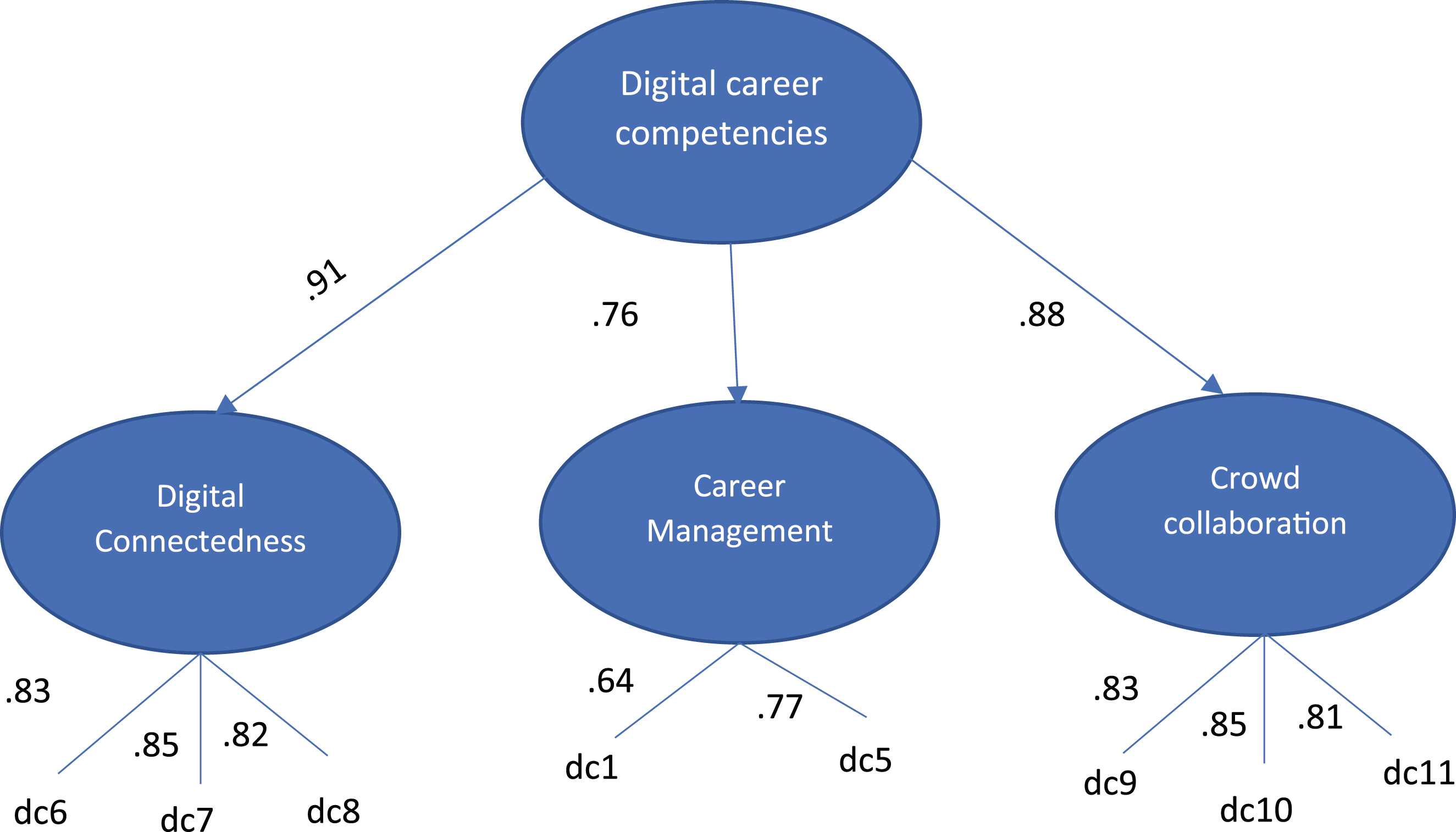
Reliability and validity
CFA results.
Correlations, discriminant validity study two.
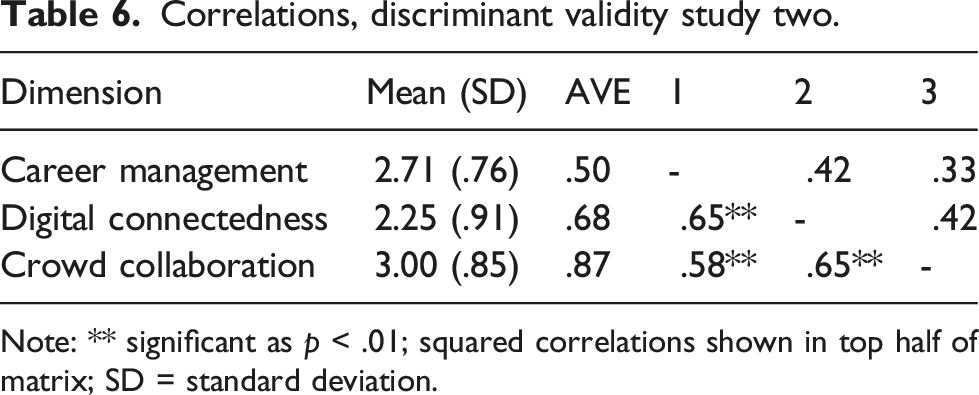
Note: ** significant as p < .01; squared correlations shown in top half of matrix; SD = standard deviation.
Study three has further refined and validated the measures reflecting DCC with a set of eight reliable and valid measurement items for three DCC dimensions. The combined findings of the three studies contribute to the empirical advancement of the multi-faceted nature of DCC in hybrid economies.
Discussion and conclusion
This study sought to first extend the digital literacy and skills focused literature to address an overlooked area by conceptualising DCC, which is needed to prepare students transitioning to contemporary work settings; and second to operationalise DCC by developing valid and reliable measures for more established capabilities such as career management and digital connectedness, and the emerging capability of crowdwork. By taking an ‘outside-in’ approach involving alumni via co-design, this paper reports on a novel methodological design, and delivers results vital to an enhanced understanding of digital employability. The rigorous three study co-designed approach supports a validated, reliable three-factor structure for DCC. Collectively, the findings of the study offer theoretical and practical implications that contribute to empirical employability research regarding the preparation of students for work in hybrid economies.
Three contributions from the study extend the existing discourses within digital skills and digital career competencies for employability. First, the findings broaden our understanding of DCC as a multi-dimensional construct, providing fine-grained understanding of self-managed digital career literacies. The digital economy requires graduates to confidently contribute across various employment settings, including virtual work (De Villiers Scheepers et al., 2018; English et al., 2021; Goulart et al., 2022). For example, Warhuus et al. (2017) advocate embedding collaboration in curricula to enhance enterprising behaviour and develop social networks in future work settings. Yet, there has hitherto been a lack of empirical studies on digital competencies like crowdworking, social connectedness, and agentic career management that can enhance students’ preparedness for current and emerging professional landscapes. In response, our study demonstrates the relevance of DCC and provides a strategy to measure it; integrates alumni as partners, called for by Fossatti et al. (2023); and identifies emergent measurement items for DCC constructs, providing a more acute understanding of DCC as a distinct phenomenon.
Second, we contribute to the literature by confirming the multi-dimensionality of DCC. We empirically demonstrate that DCC is comprised of three dimensions ─ Career Management, Digital Connectedness, and Crowdwork. Whilst career management aligns with traditional practices employed by institutions to enhance employability (e.g., career preparation, WIL, and networking), our findings confirm the strong path association (Figure 1) between career management and DCC. This is congruent with recent research (Ebner et al., 2021), indicating that DCC can be enhanced by participating in career management opportunities with professional communities (De Villiers Scheepers et al., 2018). Findings also reinforce the inclusion of digital connectedness as a dimension of DCC, determined by a very strong path association (Figure 1). Digital connectedness is particularly relevant in the digital context of professional labour markets where connectedness forged via the use of contemporary digital tools and platforms facilitates career building (English et al., 2021; Healy et al., 2023). Lastly, crowdworking encompassing agentic characteristics like proactiveness, collaboration, crowd funding, and entrepreneurial creativity (e.g., Idowu and Elbanna, 2022; Pavlidou et al., 2020; Strunk and Strich, 2023; Taylor and Joshi, 2019; Warhuus et al., 2017; Winborg and Hägg, 2023), was validated as another dimension, exhibiting a strong path association with DCC (Figure 1).
Finally, we contribute to the digital stream of employability scholarship by providing a parsimonious, reliable, and validated measurement instrument for DCC. Following a rigorous three-study design approach, our instrument exhibits a reliable and valid eight-item, three-factor structure for measuring DCC. Aligning with Bennett and Ananthram (2022), the aim of the DCC instrument is not to overtake others; rather by offering a nuanced and hierarchical understanding of the DCC dimensions and associated items, the scale could complement existing instruments that measure other facets of employability. Our findings generate insight into three areas of DCC complementing other perceptual measures of employability (e.g., Bennett and Ananthram, 2022). The theoretical implications of this study demonstrate the importance of DCC in relation to general employability, providing much-needed nuance to the conceptualisation and measurement of employability and associated digital phenomena in hybrid economies.
Given our focus on actionable knowledge, three practical implications are evident. First, measuring DCC using a validated instrument enables universities to systematically assess how curricular or employability interventions influence students’ and graduates’ DCC. Interventions should ideally be assessed longitudinally to gain insight into which areas of DCC need additional support/embedding. For instance, developing DCC with first- and second-year students might focus on supporting career management and digital connectedness. Final-year students might require experiential learning to develop crowdworking capabilities to enhance self-agency and enterprising skills required in dynamic work environments. Understanding what type of competencies to focus on, when and how, using multiple points of measurement, could support universities to assess the aspects of DCC they can impact and influence, and which might be outside of their control. As Bennett and Ananthram (2022, p. 13) note, students have the responsibility to “develop learner agency” so they can become proactive participants and shape their futures.
Second, our instrument can be adopted or adapted as universities respond to uncertain and dynamic labour markets and evolving industry requirements of graduates, including the rise of flexible work arrangements. Our instrument provides insight regarding each DCC dimension that students need to develop in various disciplines. For example, if industry expects marketing students to be digitally competent and display self-enterprise, then marketing discipline leadership could develop and track progress in digital connectedness and crowdworking dimensions of DCC.
Finally, our study demonstrates the value of understanding and measuring the digital dimensions that complement and support general employability objectives. As universities are facing increasing scrutiny globally to demonstrate employability (Winterton and Turner, 2019), further understanding of dynamic constructs like DCC could help institutions design initiatives to better support and enhance overarching employability outcomes. For instance, addressing Bridgstock’s (2019) position that whilst students are often considered digital natives, they still need to develop career competencies to leverage digital platforms, our instrument can specifically assess the levels of DCC that might contribute to broader digital literacy employability objectives within programs, and prepare students for transitioning to professional work.
Despite these findings, the present study has several limitations. Since the data was collected using samples from a regional Australian university, future research should assess the generalisability of DCC dimensions across metropolitan and other country contexts. Despite a key strength of the study being the exploration and confirmation of three DCC dimensions using a mixed-method three-study approach, future research should seek to confirm its generalisability, using multiple samples and assessing the coherence of these competencies longitudinally. As DCC represent a dynamic set of career capabilities, we acknowledge that the three competencies would evolve and we encourage future researchers to extend this work, as industry demand for crowdworking is expected to increase in future and other DCC may emerge over time, given the post pandemic workplace and industry evolution. It is acknowledged also that DCC are based on student self-perception and cannot be equated with competence certification. Some students and graduates might over-estimate their capabilities and/or have unrealistic expectations regarding entry-level positions (Hanson and Burke, 2021). Nevertheless, graduates need to be confident enough to apply for positions or take enterprising steps. Finally, this study did not assess how DCC dimensions or levels of confidence vary across key characteristics such as socio-economic or first in family status, ethnicity, gender, or year of study, or discipline, which are important areas in researching graduate employability. This presents a fruitful area for future research.
To conclude, this study provides evidence for the reliability, construct validity, and criterion-related validity of DCC, an overlooked life-long career management capability. The study illuminates the importance of using a multi-dimensional measure of students’ and graduates’ digital capabilities before and after they transition to employment in the digital economy. As universities implement interventions to enhance employability, including digital capabilities and literacy, the DCC instrument offers a measurement instrument to assess perceptions of which dimensions need improvement. As our instrument focuses on behaviour, rather than attitudinal measures, it has practical feedback value for students to identify areas of improvement at the time of assessment. The DCC scale has the potential to contribute to institutional datasets related to employability and contribute to shaping curricular renewal and graduate employability more broadly.
Footnotes
Declaration of conflicting interests
The author(s) declared no potential conflicts of interest with respect to the research, authorship, and/or publication of this article.
Funding
The author(s) disclosed receipt of the following financial support for the research, authorship, and/or publication of this article: This research was supported by grant funding from The Centre for Support and Advancement of Learning and Teaching (C-SALT) at the University of the Sunshine Coast in Queensland, Australia (Graduate Employability Commissioned L&T Grant).
