




Abstract
Employers of accounting graduates have criticised graduates’ ability to work well with others and think critically. This study investigates aspirant Chartered Accountants in South Africa (‘aspirant CA(SA)s’) perceptions of the extent to which universities should and are developing relational and decision-making (RDM) skills in accounting students. Questionnaire data from 44 aspirant CA(SA)s, employed at three offices of a large audit firm in South Africa, were obtained. The majority of participants perceive that virtually all RDM skills are developed to an intermediate or advanced level during the academic programme. However, participants also perceive that the academic programme should develop all RDM skills to a greater extent; in particular, skills relating to managing others, teamwork, relationship-building, professional scepticism, emotional intelligence and leadership, to maximise performance during the training programme. Academics may benefit from this study’s findings of perceived RDM skills deficits, and suggestions for their development, which includes collaborating with training offices.
Keywords
Introduction
“If accounting graduates will spend time on something at work, they should be prepared for it at university.” (De Villiers, 2020: 1369)
The South African Chartered Accountant (CA(SA)) qualification process requires the completion of both an academic programme i.e. an undergraduate and postgraduate qualification at an accredited South African university, and a training programme at an accredited training office 1 (SAICA, 2021b). The training programme typically spans 3 years and provides aspirant CA(SA)s 2 with practical experience, and the opportunity to further develop their professional skills and competencies. Studies have found that relational and decision-making (RDM) skills of aspirant CA(SA)s are seemingly insufficiently developed during the academic programme, and as a result, students are deemed not ‘work-ready’ (Kunz and De Jager, 2019; Webb and Chaffer, 2016). Accounting bodies and employers are negatively affected by deficiencies in aspirant CA(SA)s’ professional skills, which may have detrimental consequences within the South African financial sector.
Although employers believe new entrants to the working environment have not developed the necessary professional skills to meet their performance requirements, universities are implementing initiatives to teach and develop RDM skills (Viviers et al., 2016; Keevy, 2020). Since the release of the South African Institute of Chartered Accountants’ (SAICA) first Competency Framework (CF) in 2010 (SAICA, 2010), universities have been expected to develop pervasive skills 3 in accounting students. These skills include working effectively as a team member, managing teams and projects, communicating effectively, critical thinking and problem-solving (SAICA, 2010); synonymous with RDM skills. Universities’ responsibility to develop these skills in accounting students has therefore existed for over a decade.
Extracts from SAICA’s Competency Framework changes (SAICA, 2021d).
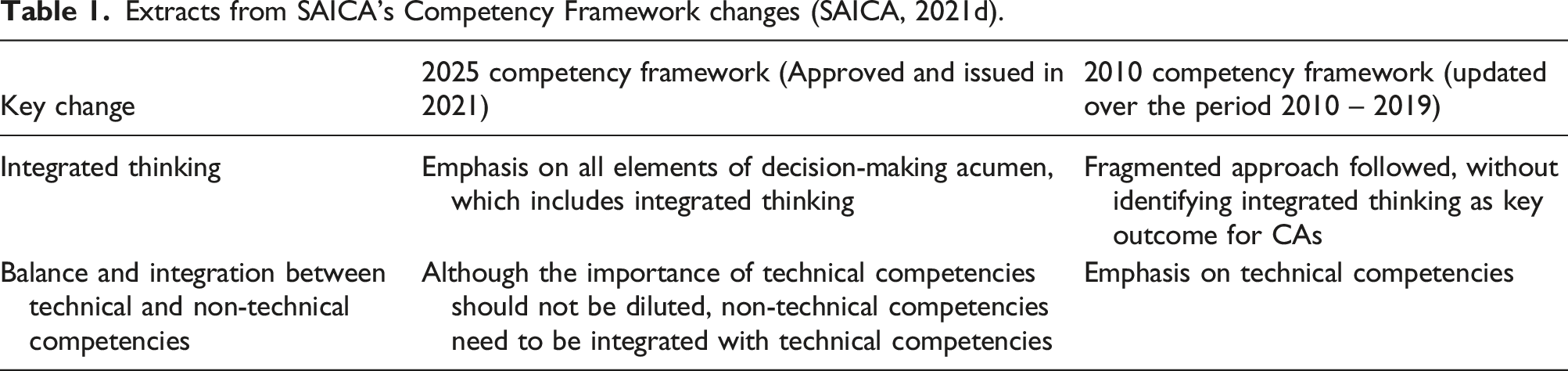
As with the previous CF, the academic programme is expected to develop non-technical and technical competencies to a specified level of proficiency (SAICA, 2021b). The extent to which accounting students possess the competencies contained within the new CF will be assessed by SAICA in the 2025 board exam, known as the Initial Test of Competence. Universities are therefore currently transitioning from the previous CF to the new CF.
Although the new CF requires greater integration of technical and non-technical skills, the development of non-technical skills such as RDM skills, has long been an expectation of the academic programme, providing the motivation for this study. The focus of this study is on two of the four acumens within the new SAICA CF, namely: RDM skills. Relational skills include communication, leadership, people, relationship-building, teamwork, self-management, managing others and emotional intelligence. Decision-making skills include analytical/critical thinking, integrated thinking, problem-solving, judgement and decision-making and professional scepticism. The new SAICA CF requires development of a larger range of RDM skills than the previous CF. For example, emotional intelligence, people and relationship-building skills did not feature explicitly in the previous CF. The present study’s focus on competencies as expressed within the new CF, is likely to enhance the relevance of the findings to universities and academics, as they continue to adapt their curricula to align with the new CF.
Academic literature on RDM skills is rich within the South African context (Villiers and Viviers, 2018; Kunz and De Jager, 2019; Keevy, 2020; Lansdell et al., 2020). However, no study has yet investigated trainees’ perceptions of the academic programme’s efficacy in developing RDM skills, as described in the new CF. Hence, the overarching question this study aims to address is: How can the academic programme better prepare CA(SA) students for the training programme, specifically with regard to RDM skills? This question was subdivided into the following three sub questions: 1. To what extent do aspirant CA(SA)s perceive their university studies developed RDM skills? 2. To what extent do aspirant CA(SA)s perceive that RDM skills should be developed at university (to assist them in maximizing their performance in the first year of their training contract and beyond)? 3. Which (if any) practical experience or teaching method at university is perceived to have helped aspirant CA(SA)s develop RDM skills?
Aspirant CA(SA)s employed at three offices of a large audit firm in South Africa were invited to respond to an electronic questionnaire that incorporated the three sub questions above. The questionnaire thus aimed to obtain perceptions of the extent to which RDM skills had been developed during university, should be developed at university, as well as recommended teaching methods or practical experiences to achieve this. The present study therefore provides insight on the academic programme from the perspective of an important stakeholder group – aspirant CA(SA)s – being those who have recently graduated, are currently entrenched in the world of work, but not yet fully qualified. Aspirant CA(SA)s are therefore well positioned to both reflect upon and identify the strengths and deficiencies in their educational journey, with respect to their preparedness for the training programme.
The findings suggest that some skills are perceived to be sufficiently well developed during the academic programme, and some teaching methods or experiences have been effective at enhancing the development of RDM skills; however, several exceptions were noted. The importance of these findings may provide academics, training programme providers and SAICA with food for thought when reviewing the effectiveness and nature of the academic programme within the CA(SA) qualification process. Furthermore, the findings provide evidence and suggestions for how the academic programme can better support accounting students to develop the RDM skills they need to thrive in the workplace.
Literature Review
The transition from university to the working environment for aspirant CA(SA)s has been a continuous discussion point of late (Barac and Du Plessis, 2014; Keevy and Mare, 2018; Kunz and De Jager, 2019; Ghani and Suryani, 2020; Lansdell et al., 2020). These discussions do not center on students’ technical capabilities, but rather their non-technical development i.e., professional skills. The burden has been placed on universities to produce ‘work-ready’ accountants (Ghani and Suryani, 2020) but these institutions already have a full curriculum focusing on technical skills (Tan and Laswad, 2018). Not only do professional skills form an important part of the competencies required to qualify as a CA(SA) (SAICA, 2021b), they also enhance the overall quality of the work produced during the SAICA training programme and beyond (Ibrahim et al., 2017); hence their importance to aspirant CA(SA)s.
Professional skills: What they are and why they are important
Professional skills are crucial if one wants to build a career. These skills include competencies such as teamwork, critical and innovative thinking, enduring uncertainty, ethical judgement and readiness to accept responsibility (Harvey, 2000; Andrews and Higson, 2008; Kalfa and Taksa, 2015; Moore and Morton, 2017; Clarke, 2018). The development of these skills aids one in becoming a well-rounded professional person (Succi and Canovi, 2020). Due to the changing global and technological environment, the need for graduates to develop professional skills, such as leadership skills, is more critical than ever for career success (Rubens et al., 2018). Accounting students will, at some point, be placed in positions in which their effectiveness is determined by the application of learnt professional skills (Rubens et al., 2018). Often, the reasons why leaders fall short of expectations can relate to their lack of professional skills (Bancino and Zevalkink, 2007). Specific skills are needed in certain job positions and a precise set of professional skills are therefore vital for aspirant and entry-level 4 CA(SA)s’ effectiveness in the workplace.
Some MBA courses address professional skills development via activities that provide students with a better understanding of themselves and how they would perform in a working environment (Rubens et al., 2018). These courses challenge students to work on their professional skills deficits (Rubens et al., 2018). Introducing these types of courses in the university accounting system may however be difficult, due to the technical nature of the curriculum and the already ‘full’ programme.
As per Figure 1 below, SAICA stipulates that professional skills form an integral part of the competencies expected of an entry-level CA(SA). Consequently, SAICA has levelled the importance of professional values and attitudes, as well as enabling competencies, with technical competencies (SAICA, 2021b). These enabling competencies consist of four acumens namely: business, digital, relational and decision-making. SAICA (2021b) describes these enabling competencies as essential skills that impact the way CA’s think and work. These skills are pervasive to the CA’s work and behavior across various environments, functions and roles (SAICA, 2021b). Professional competencies according to the SAICA Competency Framework (SAICA, 2021b).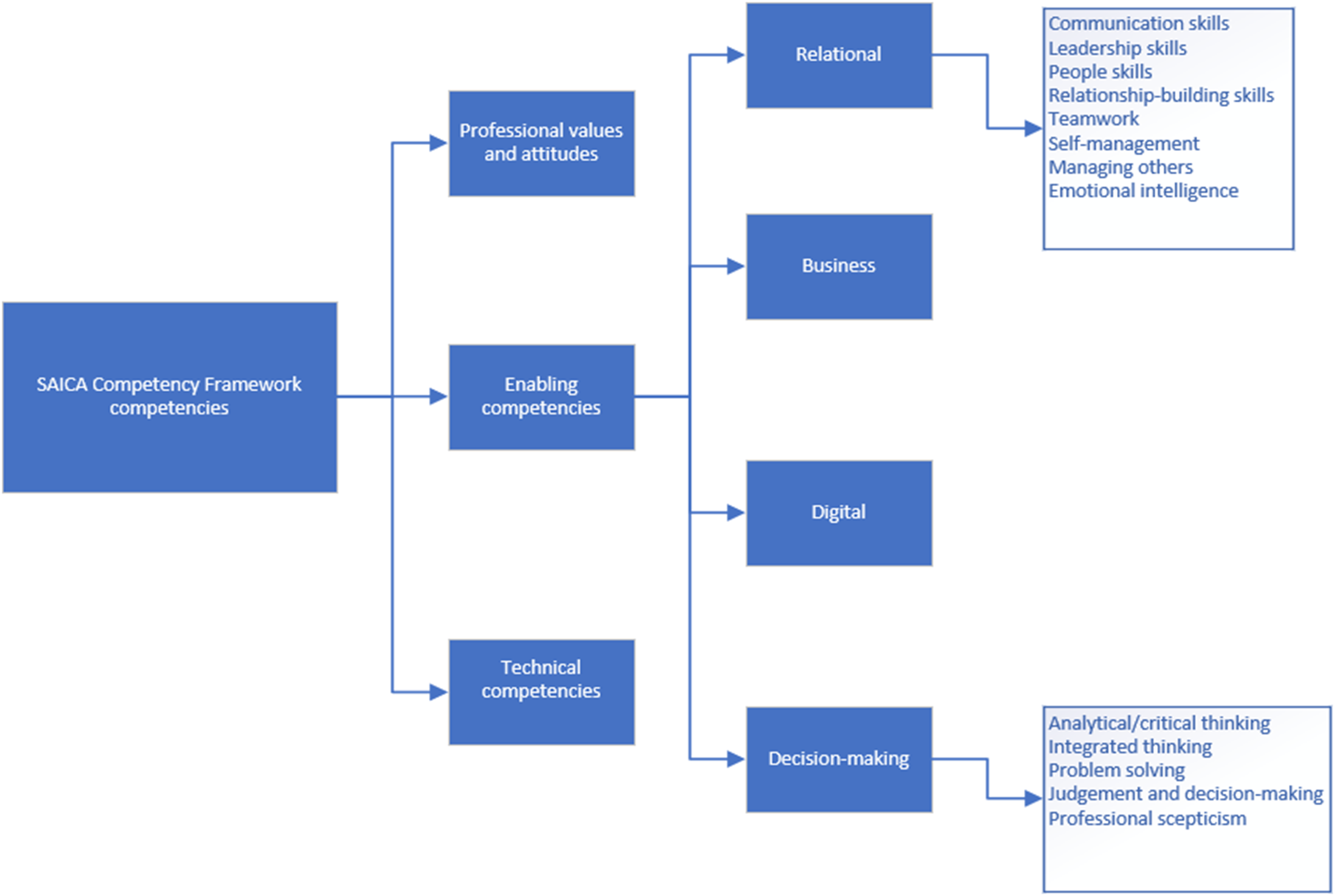
The scope of this study is limited to RDM skills. Business and digital acumen were not investigated due to their relatively more technical nature (SAICA, 2021b). Studies have found that the technical competence of aspirant CA(SA)s are considered to be at an acceptable level for employers (Villiers and Viviers, 2018; Kunz and De Jager, 2019). However, RDM skills are perceived to have not been sufficiently developed and assessed during the students’ academic programme (Viviers, 2016); hence this study’s focus on RDM skills.
Responsibility for professional skills development
Debate as to whether the responsibility for professional skills development lies with academic or training programme providers persists (Keevy and Mare, 2018; Strauss-Keevy, 2014). Furthermore, arguments that the onus of said skills development should perhaps rest with the students have been made (Succi and Canovi, 2020). A study conducted by Lansdell et al. (2020) investigated the views of entry-level CAs regarding professional skills developed throughout the training programme. The findings suggest that these skills are best learned during practical training; thereby, potentially alleviating academics of this burden. In addition, several academics allege that professional skills are learned exclusively during work experience (Ibrahim et al., 2019).
However, training programme providers consider the development of a foundational level of professional skills to be an intrinsic component of university accounting programmes (Institute of Chartered Accountants in Australia (ICAA), 2016; Keevy and Mare, 2018; Rudman and Sexton, 2017). In addition, employers expect students to be work-ready (Ibrahim et al., 2019; Kunz and De Jager, 2019). Students agree that development of these skills should form part of the undergraduate curriculum (Viviers, 2016). Ultimately, SAICA requires these skills to be developed and assessed by both the academic programme and the training programme (SAICA, 2021a). Hence the academic programme is responsible for developing these skills, to the level of proficiency specified by SAICA.
The means by which professional skills can be effectively developed in the academic programme has also received attention. Traditional lecturing methods have been argued as inadequate in transferring such skills (Keevy, 2020). Some universities have incorporated steps to address employers’ needs by inviting speakers, conducting industry visits, and providing internship opportunities; but students’ acquisition of the requisite professional skills is still lacking (Ibrahim et al., 2019). Academics have argued that how these skills are taught is for each academic to decide (Ibrahim et al., 2019). In addition, several heads of accounting departments have not advocated for the inclusion of professional skills development in their curricula (Barac and Du Plessis, 2014). It is not surprising, therefore, that while academics are aware of the need to include the development of professional skills within their teaching practice, the actual inclusion thereof is minimal (Barac and Du Plessis, 2014; Villiers and Viviers, 2018). Neglect of these professional skills would likely result in a challenging transition for accounting graduates into the corporate environment.
Means of developing professional skills
Scholars have argued that bringing another dimension to the classroom, other than the traditional teaching method, could better prepare students for the workplace (Keevy and Mare, 2018). Some academics have implemented professional skills development courses as part of their curricula (Maughan, 2016; Whetten and Cameron, 2016). Others have introduced different teaching methods, such as games and case studies which, in turn, expose students to professional skills (Keevy, 2020; Malan and Van Dyk, 2020; Viviers et al., 2016). Whatever the mechanism, unfortunately, South African accounting academics seem to have a lack of awareness of the application of alternative teaching methods (Keevy, 2016a).
Some business-related programmes require students to take self-assessments of their professional skills and to develop professional development plans (Whetten and Cameron, 2016). Students’ professional skills and confidence have been found to increase through the completion of these self-assessments and practical activities (Whetten and Cameron, 2016). Graduates commented that such activities developed their confidence and the skills necessary for identifying the best job position for them, as individuals, and that they owe their career and leadership success to such classes (Whetten and Cameron, 2016). These forms of self-assessment may therefore be useful in supporting students’ professional skills development.
Various universities have introduced additional course modules to their programmes, aimed at professional skills development. The University of Cape Town added the Business Analysis and Governance module to its accounting programme (Maughan, 2016). Students perceived that this course had a beneficial effect on the development of decision-making skills, because it motivated them to self-develop these skills (Maughan, 2016). Other authors noted that it may be possible to combine and integrate academic studies with a training programme (Lubbe, 2020). Another possibility is a three-way partnership between the student, their employer and the university (Sachs et al., 2016). There is therefore potential for greater collaboration between the academic and training programme providers in developing students’ professional skills.
Work-based learning (WBL) is another teaching method that can be implemented in accounting programmes (Ibrahim et al., 2019). WBL presents real-life work experiences during the academic programme. One of the forms of WBL is participating in a live case study. An authentic business with an unpredictable and real-life issue is introduced to the students, to improve long-term learning outcomes (Grassberger and Wilder, 2015). The benefits of this method include enhanced self-confidence, oral and written communication skills, problem-solving skills via group discussions and improved judgement of real-world situations (Grassberger and Wilder, 2015). Students would then be able to link accounting theory and application; a practice that would possibly stimulate interest in their future careers.
Keevy (2016a) also notes that the case study method has been regarded as an effective tool in the development and assessment of professional skills. The author notes that most South African accounting academics use case studies, but to a lesser degree than international accounting lecturers. This is due to the former’s lack of awareness of the professional skills that can be transferred by this method (Keevy, 2016a). Another stumbling block is that the case study method can be ineffective in a large class setting because active participation is challenging to achieve (Keevy, 2016a). Academics noted however, that communication, problem-solving and critical thinking skills might be best developed using the case study method (Keevy, 2016a). Case studies in a classroom setting are therefore well-supported as useful methods to integrate technical and professional skills and to meet SAICA’s CF requirements.
Keevy, 2016b research on the effectiveness of mentorship programmes, found that all professional skills could be addressed through this approach. Students were mentored by academic staff or audit firm employees. Mentorship programmes could therefore help students acquire a broader understanding of their future careers and gain knowledge of the professional skills needed to excel in the workplace. In one study, students confirmed that the mentor encouraged and equipped them to approach people and, thus, develop certain relational skills (Hamilton et al., 2019). Mentorship programmes are usually voluntary and if students are truly committed to their professional growth, positive outcomes appear to flow from these relationships.
Viviers et al. (2016) introduced accounting students to an educational game, called the “Amazing Tax Race”. Both students and academic staff perceived that the game positively contributed towards professional skills development (Viviers et al., 2016). Although this game required students to display a broad list of professional skills, the more notable ones were teamwork, communication (listening and verbal), and time management. The skills regarded as least prominent were written communication, professionalism, and ethical awareness. Amendments could be made to the game in order to focus more on certain professional skills deficits (Viviers et al., 2016).
The above discussion has indicated various means of developing professional skills. As the traditional classroom teaching model can become mundane and, thus, ineffective to students, the alternative approaches in teaching that address professional skills development are noted as potentially useful tools for accounting education.
Studies of primary interest to this research topic
Although many studies have been conducted on professional skills, two are deemed of particular relevance to the present study: Lansdell et al. (2020) and Keevy (2020). This is due to their recency, South African focus, and their investigation of the perceptions of trainee accountants.
Lansdell et al. (2020) disseminated questionnaires to all entry-level CA(SA)s 5 in South Africa. The authors found that most newly qualified CA(SA)s believed training programmes play a crucial role in the development of professional skills. Of the 12 professional skills included in the study, teamwork was indicated as most developed while strategic thinking was identified as least developed during the training programme. The authors encouraged training offices to better develop skills such as problem-solving, leadership, strategic thinking, listening, writing, the ability to influence others and critical thinking, as these skills were not considered to be well-developed by entry-level CA(SA)s (Lansdell et al., 2020). Although the training programme was found to play a crucial role in the development of professional skills, Lansdell et al. (2020) could not support the argument that the training programme is more effective in developing professional skills than the academic programme. It has been noted that university accounting programmes play a crucial role in developing professional skills (Tan and Laswad, 2018); providing motivation for this study.
Keevy (2020) investigated aspirant CA(SA)s perceptions of the effectiveness of different teaching methods in the transfer of soft skills during the academic programme. The study found that case studies and collaborative learning were most effective in doing so. Computer-based activities were considered least effective in transferring soft skills. Activities that require students to actively participate in the learning process, were therefore endorsed by aspirant CA(SA)s (Keevy, 2020). The present study seeks to investigate this further; specifically with regard to the development of RDM skills.
Conclusion
The reviewed literature supports the argument that, although alternative teaching methods and courses have been implemented by academics, professional skills development during the academic programme is insufficient to meet training programme providers’ ‘work-ready’ expectations. Based on the above literature review, research that investigates professional skills development during the academic programme, from the perspective of aspirant CA(SA)s currently in their training programme period, was identified as lacking. The results of this study aim to identify aspirant CA(SA)s perceptions of the level at which RDM skills were developed during the academic programme, the level at which aspirant CA(SA)s believe these RDM skills should be developed in order to prepare accounting students for the training programme, and to note any differences between these levels. Furthermore, teaching methods that aspirant CA(SA)s perceive to be effective in developing RDM skills, will be identified.
Research method
Research design and instrument
This study adopted a quantitative approach. Quantitative methods are used to obtain a numeric description of attitudes and opinions of a population by studying a sample of the population (Creswell and Cresswell, 2018). Survey instruments (or questionnaires) are a commonly used quantitative method (Creswell et al., 2007). A questionnaire was used to gather information for this study. This was also deemed to be the most effective approach to obtain the necessary data, given time constraints (Rowley, 2014).
Participants were asked the following questions
1. To what extent do you think your university played a role in developing each of the 13 RDM skills? 2. To what extent should each of the 13 RDM skills be developed at university, that would assist you in maximizing your performance in the first year of your training contract and beyond? 3. Did any practical experience or teaching method while you were a student help develop RDM skills? (If yes, please provide details on the experience and which of the 13 RDM skills were perceived to be developed).
Similar to Lansdell et al. (2020), participants needed to indicate the level of proficiency (i.e. foundational, intermediary, advanced or not developed) associated with each RDM skill in their response to Questions 1 and 2. Refer to Appendix 1 for more information on proficiency levels, Appendix 2 for a description of each RDM skill as provided to participants, and Appendix 3 for an extract from the questionnaire.
The first two questions are identical to those used by Lansdell et al. (2020); the only exception being this study’s focus on the academic programme, rather than the training programme. The third question is unique and also makes use of a comment box to gather descriptive responses about the practical experiences or teaching methods that assisted students in developing RDM skills. Barac and Du Plessis, 2019; Keevy, 2016b utilized comment boxes to obtain qualitative information to aid the formulation of conclusions. The above questions were therefore deemed appropriate for use in this study.
Population
The target population was 103 trainee accountants in their first-to third-year of the CA(SA) training programme, employed across three South African offices of one of the largest global audit firms. At the time that the questionnaire was distributed (i.e. August 2021), first-year trainees would have had at least 6 months of exposure to the working environment. Such exposure was deemed sufficient for the purpose of identifying the degree to which RDM skills are necessary for the training environment. Furthermore, being recent graduates, first-year trainees are well-positioned to relate this observation to their experience of the academic programme. The second-and third-year trainees’ more extensive training programme experience provides further relevant insight for the purpose of this study. The results from these participants, are therefore considered reliable in answering the research questions.
Ethics approval was obtained from the researchers’ university and the audit firm involved. As part of their response, participants indicated their consent for the data to be used for research purposes. A pilot study was conducted, by requesting a small group of trainee accountants to confirm their understanding of the questions and their ability to navigate the questionnaire. The pilot participants confirmed that the questions were clear, and the layout was logical.
The audit firm in which participants were employed utilized Google as its preferred communication platform. The questionnaire was distributed via email to potential participants, directing them to complete a Google Form containing the questionnaire. Once completed, each response was automatically recorded on Google Sheets. The questionnaire was sent during a period when the participating trainees were not busy with audit deadlines or study commitments.
The use of questionnaires as a data collection mechanism has been discouraged because of possible poor response rates (Creswell et al., 2007). In previous South African studies, response rates between 25% and 40% were observed (Marx, 2008; Lansdell et al., 2020). For the present study, 44 trainees responded, which equates to a response rate of 42.72%; thereby exceeding the response rates obtained in previous studies.
Analysis
Similar to studies conducted by Lansdell et al. (2020) and Ali et al. (2016), the results for Questions 1 and 2 were quantified using frequency analysis. The number of times an RDM skill was selected per level of proficiency was also calculated as a percentage. In addition, a mean score was calculated for each RDM skill, using the following scale: Advanced: 4; Intermediate: 3; Foundational: 2; Not developed: 1. This is comparable with the approach used by Lansdell et al. (2020). An analysis per university attended by participants was also performed to obtain further insight.
A comparison of the mean scores for each RDM skill based on responses to Question 1 and 2 was conducted. This comparison was used to determine whether differences exist in the extent to which participants perceive the university developed (Question 1) and should develop (Question 2) the specific RDM skill. This analysis highlighted where students deem less or more emphasis should be placed on certain skills during an academic programme. A further analysis per the trainee accountants’ year (1st, 2nd, or 3rd year) was performed to determine if the trainees’ perceptions of the importance of certain RDM skills differs as the trainees become more experienced.
Question 3 asked participants which practical experience or teaching method assisted them in developing certain RDM skills. Once again, frequency analysis was used to interpret the results. Insightful comments by participants are included in the ‘Results’ section.
Limitations
This study’s target population are SAICA trainees working within one region of one audit firm. Thus, their responses may not be representative of all South African trainees’ perceptions. Despite this, participants were found to have studied at a number of different South African universities, which increases the reliability of the findings.
This study did not consider differences that may exist between university programmes attended by participants, and the effect that these differences may have had on the results. Factors that affect students’ success have been found to include the status of the residential area of the university, the quality of teaching, preparedness for university, previous academic performance and academic literacy (Erasmus et al., 2019). A large variety in these aspects across South African accounting departments has been noted (Erasmus et al., 2019). Although all the institutions attended by participants are public institutions, other potential differences amongst these institution’s accounting academic programmes, for e.g., entrance requirements, access to physical and academic resources and teaching quality, may have influenced the degree to which students perceived that certain RDM skills had been developed. These potential differences therefore limit the usefulness of the study’s findings.
In addition, the RDM skills listed in the questionnaire were derived from SAICA’s CF and may therefore be different to those RDM skills expected of accounting graduates by other international professional accounting bodies. Nevertheless, SAICA is renowned for its rigid CF and the quality of CAs introduced to the market (Strauss-Keevy, 2014); both aspects that add to the appropriateness of the RDM skills investigated in this study.
The COVID-19 pandemic may have impacted first-year trainee’s perceptions, most of whom completed the academic programme in 2020 amidst lockdown regulations that required students to adapt to online learning. First-year trainees’ working environment in 2021 would also have been largely online. These trainees’ experience of the academic programme, and possibly their perceptions of the skills required to succeed in the workplace, may therefore be different to that of the second- and third-year trainees. However, the shift towards online education and work that arose from the pandemic may have prompted a ‘new normal’ in these areas. Therefore, the first-year trainees’ perceptions were deemed to enhance the relevance of the study’s findings.
Lastly, definitions for the proficiency levels were not provided as part of the questionnaire. Participants' answers were therefore based on their perception of what foundational, intermediate and advanced means, which may not align with the definitions of these terms within the CF.
Results
Descriptive analysis
Breakdown of universities attended by participants.
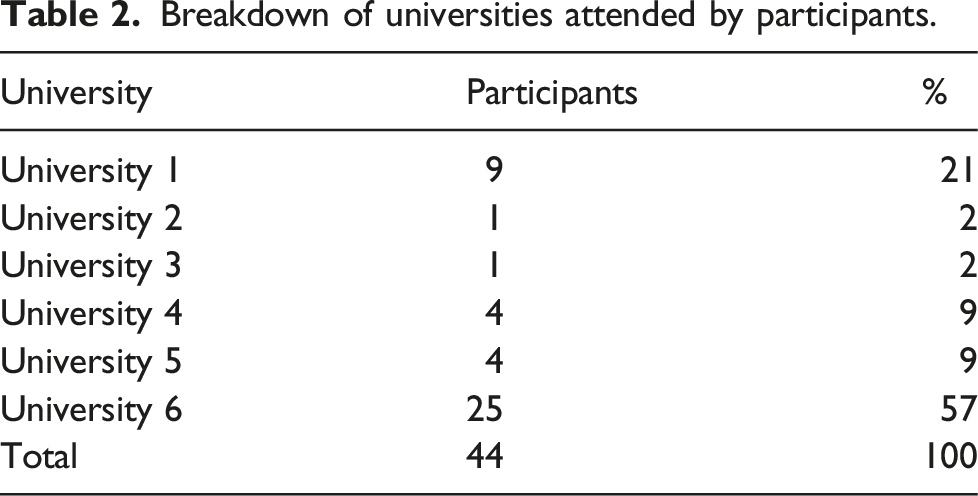
Table 2 indicates that 57% of the participants studied at University 6, whilst the rest are spread across five different universities. Due to this skewness, it was not considered feasible to perform analyses of RDM skills development per university. However, an analysis was performed to compare the mean score of RDM skills responses for University 6 participants, with other participants. For 24 of the 26 questions posed to participants, the mean score from University 6 participants was lower than the mean score from participants that attended other universities. This suggests that the results may be influenced by the university that participants attended, for which further research is encouraged.
Breakdown of training year per participant.
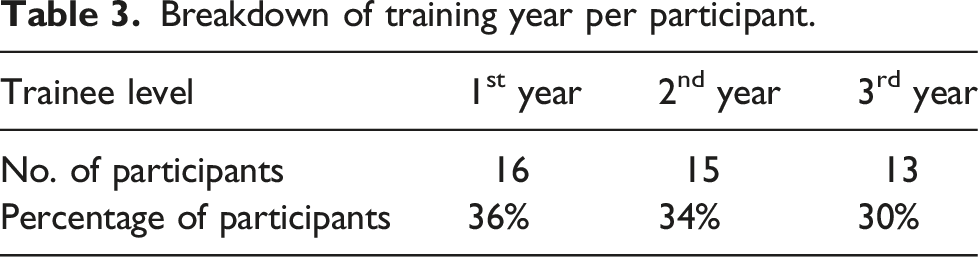
Table 3 indicates that participants were fairly evenly spread across first-, second- and third-year. The results therefore reflect the views of those involved across the duration of the training programme, and are not limited to the views of, for example, first-year trainees, alone.
Q1: Perceptions of the extent to which RDM skills have been developed during the academic programme
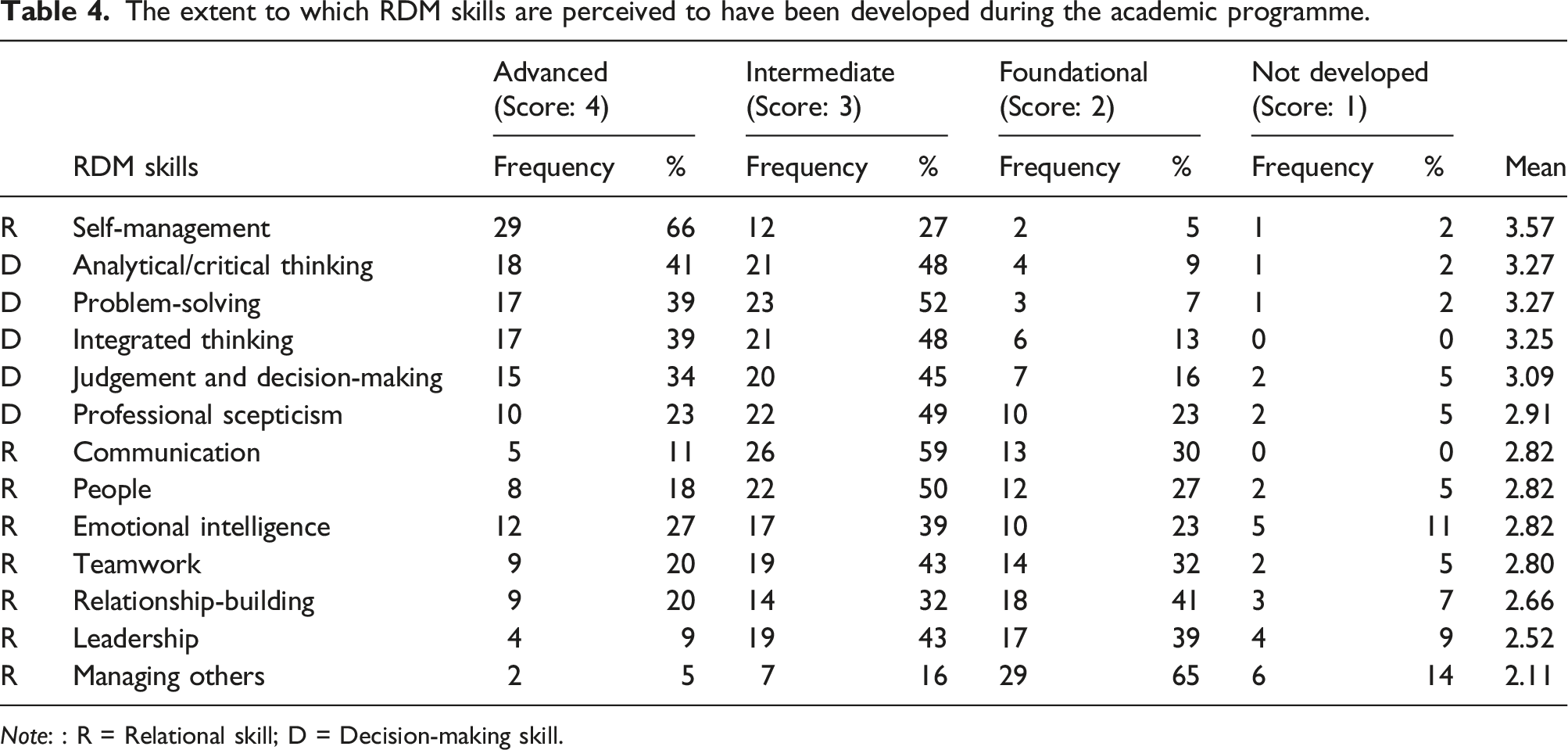
The extent to which RDM skills are perceived to have been developed during the academic programme.
Note: : R = Relational skill; D = Decision-making skill.
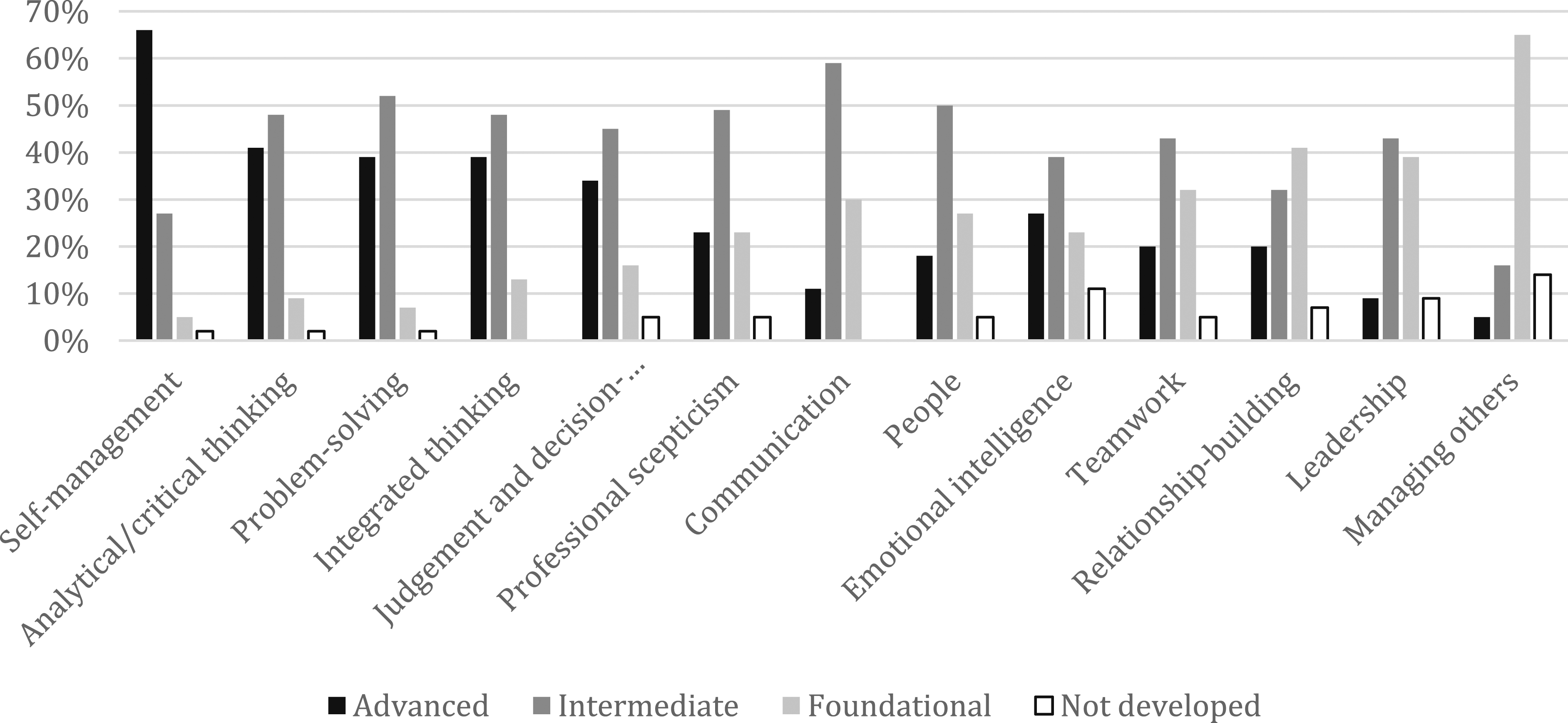
The extent to which RDM skills are perceived to have been developed during the academic programme.
As per Table 4 and Figure 2, self-management was considered the most developed skill during the academic programme with a mean score of 3.57 and 66% of participants indicating this skill had been developed to an advanced level. This result may be due to the technical nature of the university curriculum, and students needing to manage and plan their workload (Tan and Laswad, 2018; Keevy, 2020; SAICA, 2021a).
Managing others, followed closely by leadership skills, were perceived to be the least developed, with mean scores of 2.11 and 2.52 respectively. Of the participants, 65% perceived that managing others was developed to only a foundational level, and 14% perceive it was not developed at all. Regarding leadership skills, 39% perceived that this skill was developed to only a foundational level, and 9% perceived it was not developed at all, in line with the findings of Viviers (2016). Teamwork and relationship-building were also perceived to be less developed relative to other RDM skills. These results indicate limited opportunities in the academic programme to work in teams, review peers’ work, provide feedback and lead teams. Consequently, training programme providers appear to be left with the responsibility of providing further development opportunities relating to these particular skills. Rubens et al. (2018) stressed the importance of leadership skills in graduates for career success, and the SAICA CF requires managing others, leadership skills and teamwork to be developed to at least an intermediate level (SAICA, 2021a). These results therefore suggest that the academic programme needs to play a bigger role in developing these relational skills.
The five decision-making skills assessed in this study are perceived to be more developed than the eight relational skills (except for self-management), with mean scores generally in excess of 3 (i.e. intermediate level). Consequently, university curricula seem to be playing a crucial role in developing decision-making skills.
Overall, 86% of participants, or more, viewed the academic programme as having developed each RDM skill to at least a foundational level. This is encouraging, given the expectations of the academic programme (ICAA, 2016; Keevy and Mare, 2018; Rudman and Sexton, 2017; SAICA, 2021a). The findings are in line with Viviers (2016) who found that students perceived their exposure to pervasive skills development to be moderate to high.
Q2: Perceptions of the extent to which RDM skills should be developed during the academic programme
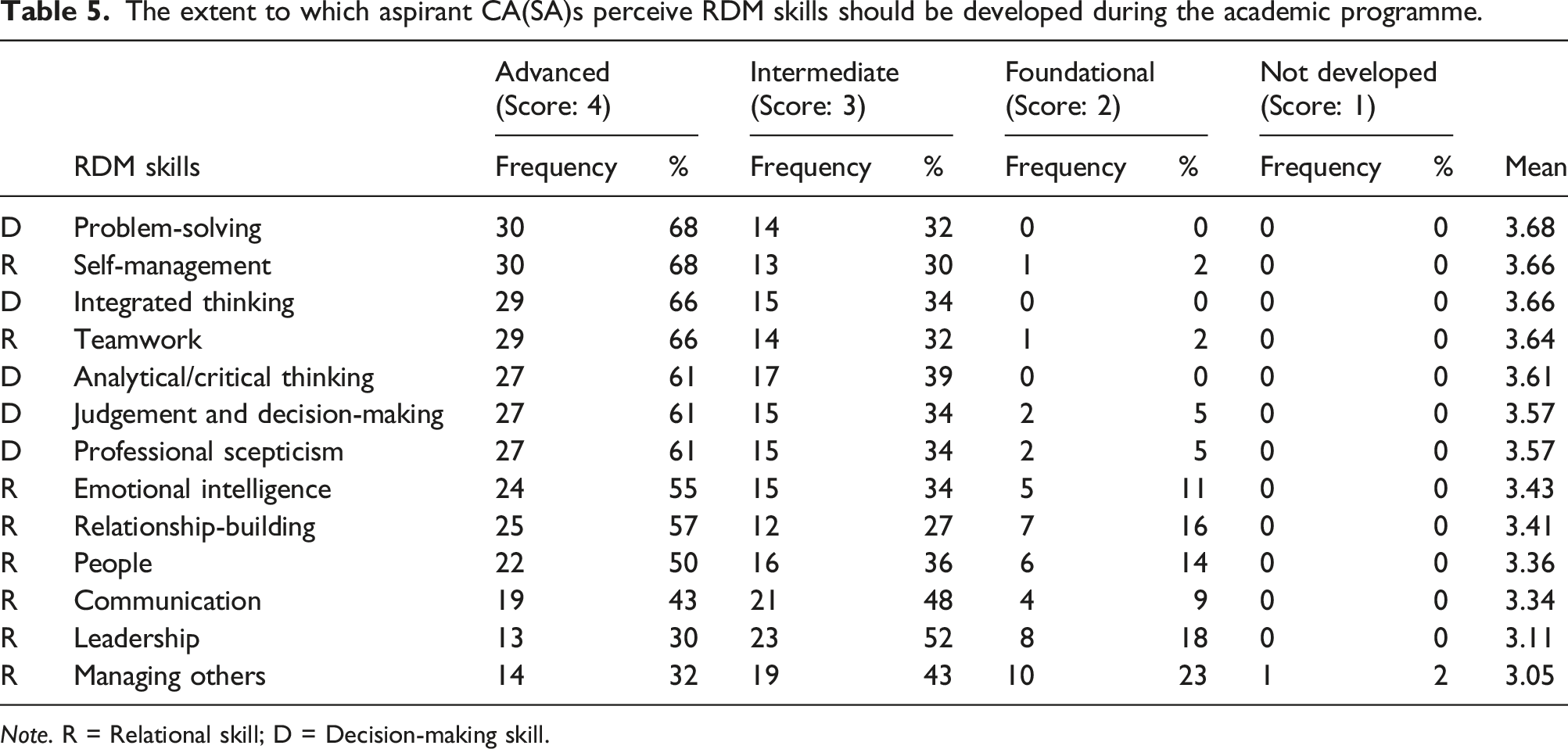
The extent to which aspirant CA(SA)s perceive RDM skills should be developed during the academic programme.
Note. R = Relational skill; D = Decision-making skill.
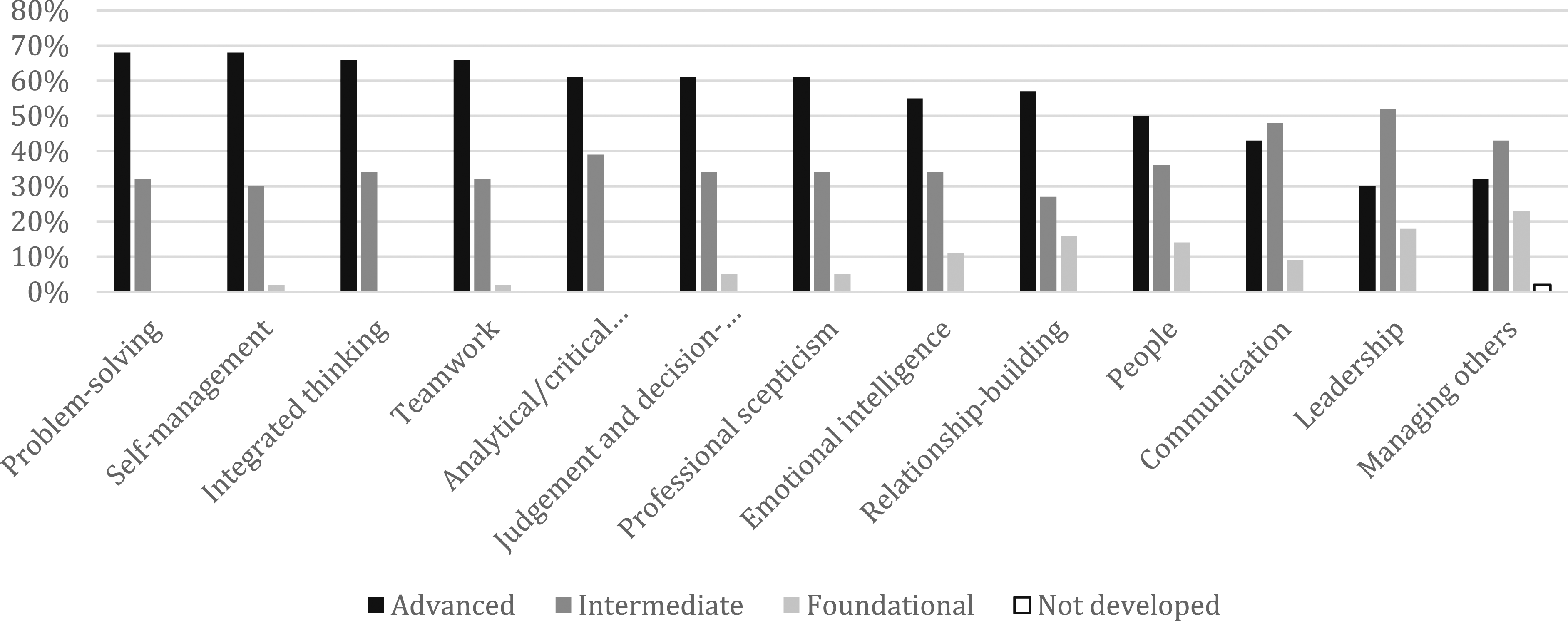
RDM skills which aspirant CA(SA)s perceive should be developed during the academic programme.
Table 5 and Figure 3 summarize the extent to which participants perceive RDM skills should be developed whilst at university, based on their training programme experience so far. All 13 RDM skills were perceived to require development, apart from one participant who felt that managing others should not be developed in the academic programme. When comparing these results with Table 4 relating to Question 1, it is apparent that overall, participants perceive that the academic programme needs to do more to develop RDM skills than it does currently.
With regards to the ranking of the various RDM skills, participants perceive that problem-solving, self-management and integrated thinking skills require the most development within the academic programme. In addition, teamwork and analytical/critical thinking skills development are well-supported. The emphasis on teamwork is notable, given earlier findings that participants deem this skill to not be well-developed as part of the current academic programme. It is likely that trainees realize the importance of teamwork in the training environment, and therefore support further development of this skill during the academic programme. The other four decision-making skills that ranked highly here, also ranked highly in earlier findings, indicating consistent support for decision-making skills development.
Strategic thinking, which is synonymous with integrated thinking and problem-solving skills, was identified as the least developed skill during the training programme in Lansdell et al.’s (2020) study. This could be the reason why participants have recognized the need for the academic programme to develop integrated thinking and problem-solving skills, to an advanced or intermediate level, within the academic programme.
Similar to earlier findings, the RDM skills that ranked the lowest in terms of what universities should be developing, all relate to relational skills such as managing others, leadership, people and relationship building. Interestingly, communication appears quite low in the rankings, although literature has emphasized the importance of communication skills in accounting students (Viviers et al., 2016). However, the mean scores for all these skills are at least 3 (i.e. intermediate level), which indicates that participants still perceive that these skills should be well-developed within the academic programme.
Figure 4 contains the means for Question 1 and 2 per RDM skill. Figure 4 indicates the disparity between RDM skills that participants deem should be more developed within the academic programme. Means for Q1 (have developed) and Q2 (should develop).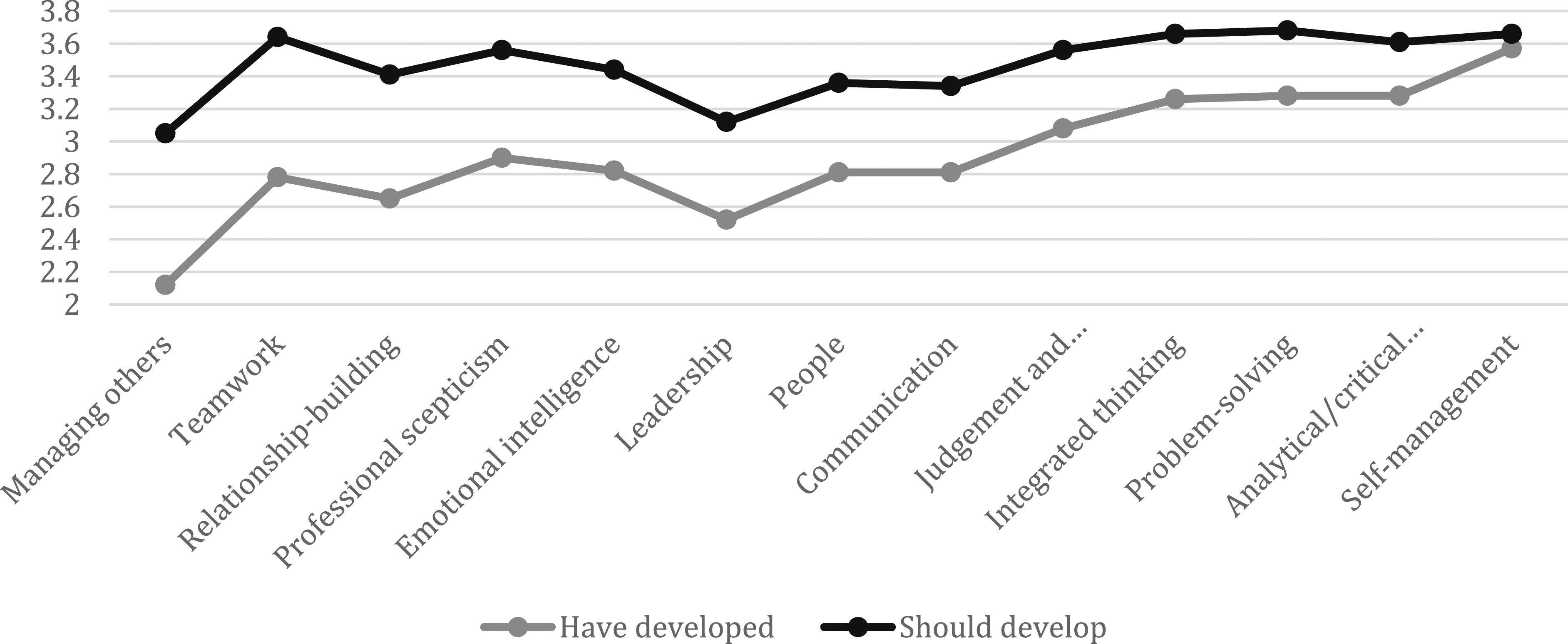
It is evident from Figure 4 that participants perceive all skills should be developed to a greater extent than they currently are. The highest increase relates to managing others and teamwork, of which teamwork is perceived to require the highest level of development (mean score: 3.64). Within the training programme, trainees constantly work in teams that contain different personalities and cultures (Mkhize, 2017). Lansdell et al. (2020) found that teamwork was the most developed skill during the training programme. It appears that aspirant CA(SA)s perceive more could be done within the academic programme to prepare candidates for their future work in teams.
Figure 4 also indicates that the largest gaps all relate to relational skills (apart from professional scepticism) i.e. managing others, teamwork, relationship-building, emotional intelligence, leadership, people and communication. Aspirant CA(SA)s therefore perceive that the academic programme needs to have a stronger emphasis on developing relational skills. This applies to decision-making skills too, but to a lesser extent.
Regarding the difference in mean scores relating to professional scepticism, it would appear that the training programme has helped trainees realize the importance of not simply accepting information as accurate, and the need to develop good questioning skills. This would explain why participants desire greater development in this area, as part of the academic programme.
Figure 5 contains a breakdown of the degree to which RDM skills should be developed in the academic programme, per trainee-year. Mean score for RDM skills level, per trainee-year.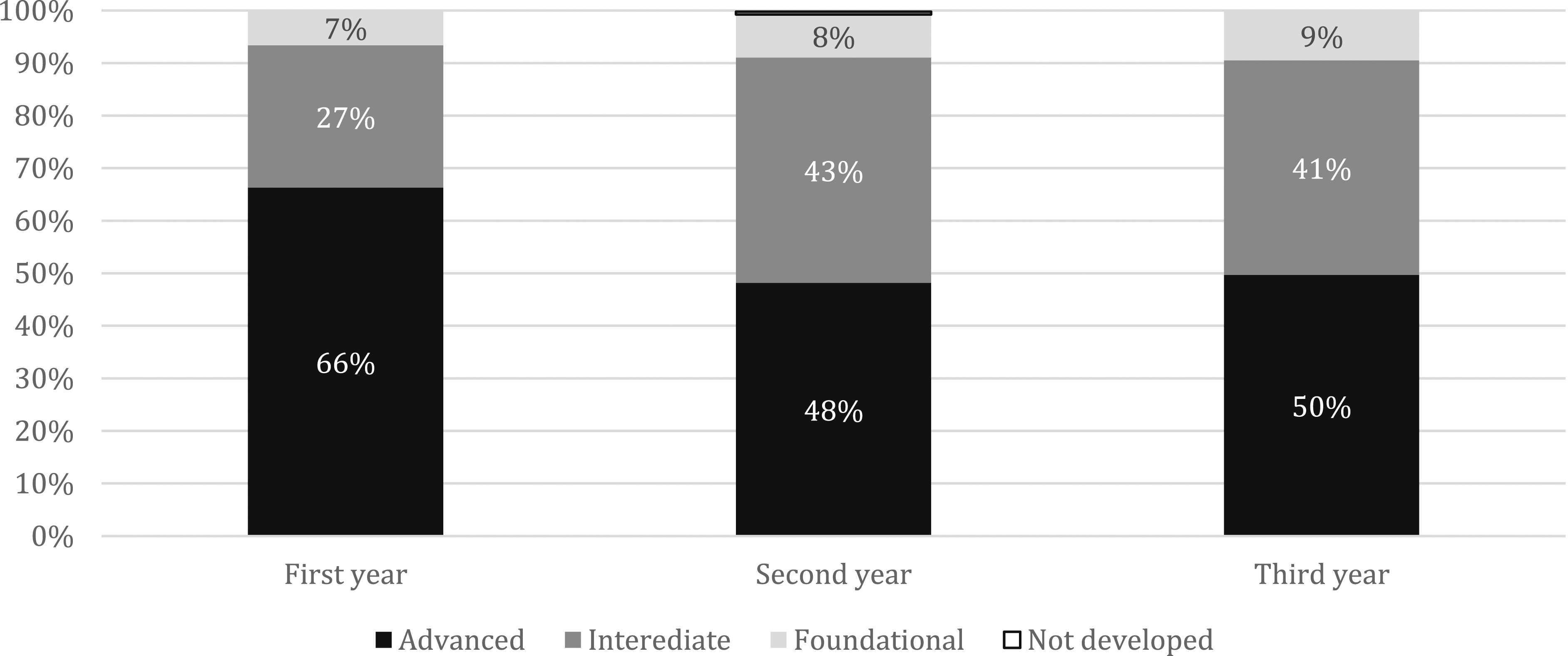
Figure 5 indicates that on average, 66% of first-year trainees perceive that each RDM skill should be developed to an advanced level, whereas only 48% of second-year participants and 50% of third-year participants perceive likewise. The data from first-year trainees therefore appears out of sync with second and third-year data (which are quite similar to each other). This suggests that first-year trainees are experiencing greater skills deficits than other trainees. This could be a consequence of the unusual academic and training environment experienced by first year trainees due to the COVID 19 pandemic. Alternatively, it could be that second and third-year trainees have adapted to the initial shock of the workplace and are now able to more objectively reflect on the role of the academic programme in developing RDM skills. Given the relatively small number of participants in each year-group, further analysis of these differences was not conducted. This therefore remains an area for future research.
Q3: Perceptions of practical experiences or teaching methods that aid RDM skills development
Practical experience or teaching method perceived to develop RDM skills.
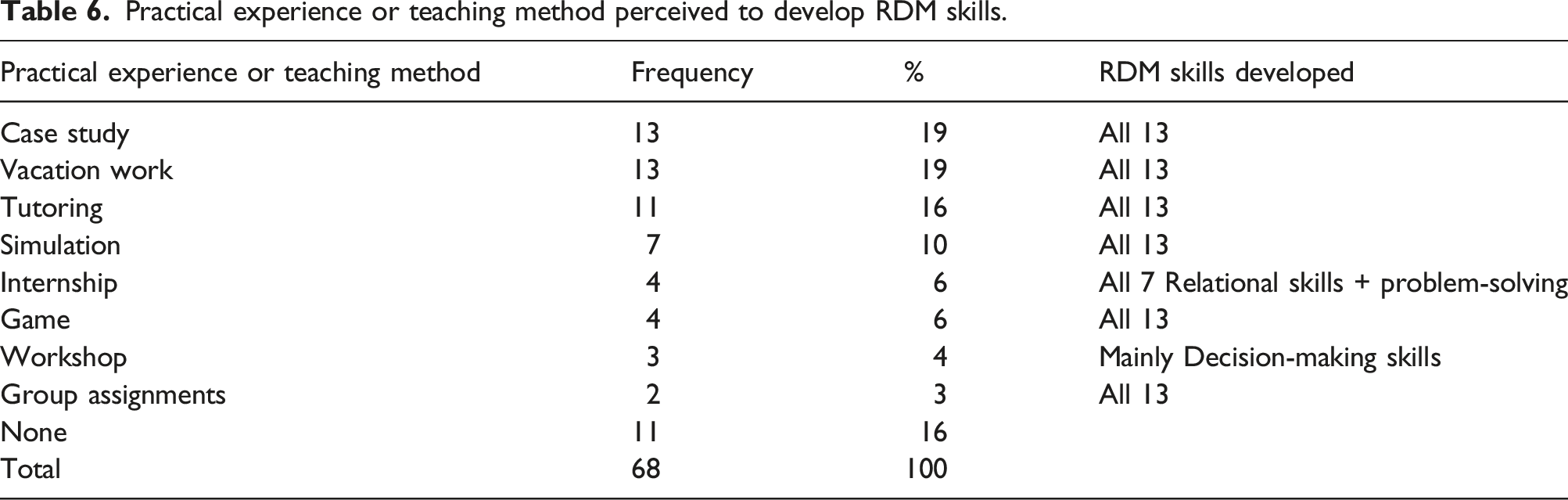
The questionnaire was structured to allow participants to identify more than one practical experience or teaching method. Altogether, as per Table 6, 68 responses were received from the 44 participants. Case studies and vacation work were indicated most frequently as the practical experience or teaching method that developed participants’ RDM skills; both comprised 19% of the responses. Participants perceived that these methods helped to develop each of the 13 RDM skills. Vacation work opportunities may not fall within the ambit of the academic programme’s responsibility; however, case studies are a teaching method that is available to the academic programme and can therefore be utilized. Keevy (2016a) found that the case study method is an effective tool for professional skills development by academics, although the authors also found that it was not often used. Based on this study’s findings, participants who were exposed to case studies as a teaching tool concur with its effectiveness in developing a range of RDM skills.
Tutoring, which closely follows case studies with 16% of the 68 responses, is also believed to help develop all 13 RDM skills. The creation of more tutoring opportunities may therefore support RDM skills development. Mentorship, which could be seen as similar to tutoring, has been noted by Hamilton et al., 2019; Keevy, 2016b as an effective tool in the development of RDM skills.
Even though ‘simulation’ was noted by only 10% of participants, participants felt that such simulations helped develop all RDM skills. This could be due to the simulation replicating the workplace and capturing the trainees’ attention. Participants perceived that group assignments and workshops (3% and 4% respectively) helped to a lesser extent in developing RDM skills. One respondent commented that limited opportunities were provided for group assignments which reduced the opportunity for developing teamwork and other associated RDM skills.
Of the total participants, 16% did not identify teaching methods or experiences that assisted them in developing any of the RDM skills. This could be due to participants not being able to recall certain experiences, or simply not having been exposed to such experiences.
Considering the earlier results that relational skills are perceived to require greater development, the answer may be quite simple: for the academic programme to incorporate more case studies, tutoring opportunities and simulations, and to consider how to work more effectively with training offices to ensure meaningful vacation work opportunities are available for students to participate in.
A noteworthy comment by a participant relating to case study experiences is as follows: “It taught me how to think ‘outside-the-box’ and working with others.Case studies as assignments where judgement had to be applied, as well as extensive teamwork that relied on communication skills”.
Further comments concerning the value of tutoring experiences follow
“When I was a tutor, I learnt relationship skills and also management skills. How to manage my time and how to manage others by guiding them and teaching them what I know.”
“By being an academic trainee, and by tutoring subjects to students, I was able to develop communication and people skills. This helped me to develop people skills and to be able to manage others. This also gave me confidence that I use now when I work with clients.”
The comments provided above give substance to the overall findings of Question 3. It also leads the way to possible recommendations for future research into accounting education.
Conclusion and recommendations for future research
This study investigated the extent to which aspirant CA(SA)s currently in the SAICA training programme deem that RDM skills were developed, and should be developed, during their university academic programme. Furthermore, this study investigated aspirant CA(SA)s views on the nature of teaching tools or experiences that they perceive assisted in developing their RDM skills.
The study found that a minimum of 86% of participants perceive that each RDM skill was developed to at least a foundational level during the academic programme. Furthermore, a minimum of 52% of participants believed each RDM skill had been developed to at least an intermediate level; the only exception being managing others, for which only 21% of participants perceived this to be the case. Managing others, leadership skills relationship-building skills and teamwork were perceived to be the least developed; whilst self-management, analytical/critical thinking and problem-solving skills were considered most developed. Overall, decision-making skills were perceived to be better developed than relational skills; the only exception being self-management skills (a relational skill). The overall findings are relatively positive regarding the extent to which RDM skills are developed within the academic programme, which differs from current literature, that the academic programme at most South African universities is not producing ‘work-ready’ trainee accountants (Ghani and Suryani, 2020).
With regards to the level at which RDM skills should be developed within the academic programme, the study found that participants perceive each RDM skill should be better developed during university. No exceptions were noted. Furthermore, all participants (with the exception of one participant’s perception of managing others) believe that each RDM skill should be developed to at least a foundational level at university. This indicates that aspirant CA(SA)s believe that the academic programme needs to do more to develop every RDM skill.
Participants’ perception of the relative value of each RDM skill appears to follow a similar order to that noted above i.e., participants believe that decision-making skills should be developed to a greater extent than relational skills; the exceptions being self-management and teamwork. The perceived value of developing teamwork skills is noteworthy, as it is also one of the skills with the greatest observed mean difference i.e., the difference between the level at which the skill should and has been developed. Other large observed mean differences include managing others and relationship-building. Therefore, although aspirant CA(SA)s believe the academic programme needs to do more to develop each RDM skill, those skills requiring the greatest increase in development, are relational skills.
Participants also perceive that case studies, vacation work and tutoring were some of the most effective methods for the development of RDM skills. Given the above findings on the need for greater relational skills development, universities may wish to consider how best to encourage students to conduct vacation work and become tutors. Furthermore, these findings indicate support for the use of case studies in developing RDM skills, in line with prior studies (Keevy, 2016a).
At the time that this study was conducted, the SAICA CA2025 CF had been published but had not yet been fully implemented within South African universities. Therefore, future studies that reperform this study after the implementation of the SAICA 2025 CF, may yield helpful insights on whether the academic programme has sufficiently adapted to develop the RDM skills that trainees require. In addition, a similar study that analyses results per university attended, may provide further insight on differences that exist at an institutional-level and recommendations for supporting universities that are lagging in the area of RDM skills development. Furthermore, replicating this study by extending the population to include other audit firms and aspirant CA(SA)s who are completing their training programme at a non-audit firm, would be a useful comparison against this study’s findings.
A key consideration arising from this study’s findings, relates to possible collaboration opportunities between academics and training programme providers. If the latter were to support academics in designing appropriate case studies (similar to Samkin and Keevy (2019)) and ensure meaningful vacation work or other work-based learning becomes accessible to students, aspirant CA(SA)s trainees could be better prepared to enter the working environment. Furthermore, given the need for increased development of relational skills, an intervention aimed at developing students’ ability to lead a team, work in a team, and manage others, whilst simultaneously learning how to manage their emotions and relationships, appears to be a necessary inclusion in the accounting curriculum.
Given this study’s focus on professional skills, several stakeholders may benefit from these findings. Accounting academics may find this research helpful as it illuminates their alumni’s views of the skills needing greater attention within the curriculum. Accounting students may find this research useful for noting which skills those that have gone before them consider most important for the working environment. Training programme providers may use the results of this study to provide professional skills workshops both at the start and throughout their training programmes.
In addition, SAICA may benefit from the results of this study’s findings on perceptions of the current status of RDM skills development in South African universities, relative to the CF’s requirements. The findings also have relevance for accreditation processes. SAICA’s accreditation process stipulates: “By accrediting a programme, SAICA certifies that: a) a provider has put in place the appropriate resources that, if utilised effectively, should enable it to deliver the programme at the required standards and levels of quality; and b) the programme meets SAICA’s requirements in terms of the standards of learning and teaching. Accreditation of a programme is not an assurance that a provider is achieving the required standard of delivery of that programme. Rather, accreditation certifies that a programme contains the requirements necessary to meet SAICA’s accreditation standards.” (SAICA, 2023: 2)
This study’s findings therefore provide evidence that academic institutions are delivering on their responsibilities to develop most RDM competencies to the required extent, in line with accreditation requirements. However, certain competencies perceived to be under-developed relative to the CF requirements, e.g. managing others and teamwork, which are required to be developed to intermediate and advanced levels respectively (SAICA, 2021a), suggest that some institutions may not be achieving the required standard of programme delivery. Although institutions are still transitioning to the new CF, developing students pervasive skills relating to plans and effectively manages teams and projects and works effectively as a team member, to the highest level of proficiency, has always been expected of academic institutions in accordance with the CF (SAICA, 2010). The criteria that informs what is deemed to be a sufficient standard of teaching and learning for accreditation purposes, may therefore warrant further consideration by professional accounting institutes.
Finally, academics from other fields interested in the relationship between academia and the workplace, and how to effectively transition students from higher education into industry, may benefit from this study’s findings on the RDM skills gap signaled in this study, and the recommendations provided to reduce this gap.
Footnotes
Declaration of conflicting interests
The author(s) declared no potential conflicts of interest with respect to the research, authorship, and/or publication of this article.
Funding
The author(s) received no financial support for the research, authorship, and/or publication of this article.
