




Abstract
Work placement learning enhances self-efficacy and work readiness for students. However, students with disabilities often have a different experience with regard to work placements. With a growing number of people with disabilities in universities, it is essential to provide students who have disabilities with an inclusive learning and working environment. Expanding on previous studies that have explored industrial work placement in higher education across different levels of disabilities, this study is contextualised in Nigeria and adopts an integrative literature review approach to critically review and synthesise the literature on student experience, disability, work placement and higher education in the country. This process enables the development of a new theoretical framework and perspective for enhancing the work placement experience of students with disabilities. The study contributes to the existing knowledge regarding work experience, students with disabilities and student experiences in developing countries. It also has practical implications for stakeholders involved in work placements for students with disabilities.
Work placement learning is recognised as an important innovation and an attempt to engage with the current educational, social and economic demands (O’Donovan, 2018; Okolie et al., 2020a). It has been defined as ‘an educational strategy that provides students with real-life work experiences, where they can apply academic and technical skills and develop their employability’ (Andrewartha and Harvey, 2017: 3). It is often considered as a form of a structured learning in which students undertake regular jobs with relevant organisations for a specified period (Bolli et al., 2021), offering them an opportunity to experience a real-life work environment related to their field of study (Nghia and Duyen, 2019; Poulter and Smith, 2006).
Work placement learning has numerous other benefits, including enhancing self-efficacy, work readiness, reflexive capabilities and networking (Chukwuedo and Ementa, 2022; Inceoglu et al., 2019; Otache and Edopkolor, 2022). However, students with disabilities often have a different experience with regards to work placements (Kim and Sellmaier, 2020; Langørgen and Magnus, 2018). Siska and Habib (2013), indicating that many educated and skilled individuals with disabilities may be unfairly barred from career prospects because there is a negative presumption about their capabilities. Kunnath and Mathew (2019) also established that poor planning, lack of implementation of disability policies, lack of disability sensitisation in society and inadequate availability of resources were typical problems in developing countries. Such concerns about the work placement experience of students with disabilities present the motivation for this study.
With a growing number of people with disabilities in universities, both visible (physical) and non-visible (intellectual) disabilities (Kane and Cooper, 2021), it is essential to provide these students with an inclusive learning and working environment (Adeyanju et al., 2019; Adefulu et al., 2020). Previous studies have explored industrial work placement in higher education across different levels of disabilities: for example, Lee et al. (2019) explored work experience placement for individuals with autism spectrum disorder; Kiesel et al. (2018) explored the experiences of social work students with disabilities; and Langørgen and Magnus (2018) explored the experience of Norwegian students with visible and invisible impairments. However, the literature is missing a conceptualisation of the work placement experience of students with disabilities in developing countries: there is a need for a better understanding of the diversity of the phenomenon to support equal opportunities for students.
This study is contextualised in Nigeria and is significant for several reasons. First, Nigeria is one of the largest developing countries and emerging economies in the world (Sharma et al., 2020; Soetan et al., 2021); it has an estimated 200 million inhabitants, or about 20% of the population of Africa (Mogaji and Nguyen, 2021). Second, according to the World Health Organization, in 2018 about 29 million of the then 195 million total population of Nigeria were living with a disability (WHO, 2021). The number of disabled individuals in Nigeria is greater than the whole population of many other countries. Third, Nigeria has the largest education system in Africa, with over 170 universities, albeit grossly underfunded (Farinloye, et al., 2020; Olaleye, et al., 2020). Finally, the country serves as a template for many other developing countries, which often share the same struggles with a growing population, insufficient infrastructure and limited land sizes (Mogaji et al., 2020). The vastness of the country, the number of universities and its position as a developing country make it an appropriate context for theoretically exploring the work placement experience of students with disabilities (Kane and Cooper, 2021; Mogaji and Nguyen, 2021).
Given this contextualisation, this study aims (1) to explore the various stakeholders that can influence the work placement experience of students with disabilities in Nigeria and (2) to present practical recommendations for these stakeholders on how to improve the work placement experience of those students. To achieve these aims, the study adopts an integrative literature review approach to critically review and synthesise the literature on student experience, disability, work placement and higher education in Nigeria. This enables us to develop a new theoretical framework and perspective (Nguyen and Mogaji, 2022a; Snyder, 2019) for enhancing the work placement experience of students with disabilities in Nigeria. In doing so, we contribute to the existing body of work on innovative work placement practices (Chukwuedo and Ementa, 2022; Madichie and Agu, 2022; Otache and Edopkolor, 2022), on accommodating students with disabilities (Lindsay et al., 2021a; Moriña and Biagiotti, 2021), on students in business schools (Griffin and Coelhoso, 2019; Neelam et al., 2019), on support during work placement (Brooks and Youngson, 2016; Long and Fynn, 2018) and on universities’ and students' involvement in career preparatory behaviours as they engage with their work placement activities (Inceoglu et al., 2019; Okolie et al., 2020a).
The rest of the paper proceeds as follows. First, we conduct a literature review on the key stakeholders in the work experience ecosystem. Second, the theoretical positioning of our study and the integration of all the stakeholders are discussed. Third, practical implications for the stakeholders, including charity organisations and policymakers, are presented. Finally, we conclude the paper with some closing remarks, study limitations and future research plans.
The stakeholders
The theoretical background of this study relies on four fundamental constructs (see Figure 1). First, the student is the primary stakeholder, the individual expected to go on a work placement as part of their university programme. However, there are inherent challenges based on their level of disability. The second construct is the sending university (the home institution). The role of the university in creating an enabling environment and providing a support network for the students is recognised in the theoretical framework. The student expects a form of support and reassurance from their university as they go on a work placement (Rillotta et al., 2022). The third construct is the recipient employer (the host institution). Increasing attention is being focused on the role of employers in ensuring that students with disabilities are well supported during their placement (Philion et al., 2021), and therefore the employer must put measures in place to enhance the experience of the student. They should have the right working environment for the student (Maher et al., 2022). Lastly, the country-specific context in this theoretical framework is recognised. Although here the focus is on Nigeria, with its inherent challenges, it is essential to consider the existing legislation (for equal opportunities), the available resources for infrastructure and the general attitude towards disabled individuals in society and these considerations are also applicable in many developing countries (Shama et al., 2022). Conceptual framework of stakeholders enhancing the work placement experience of students with disabilities in developing countries.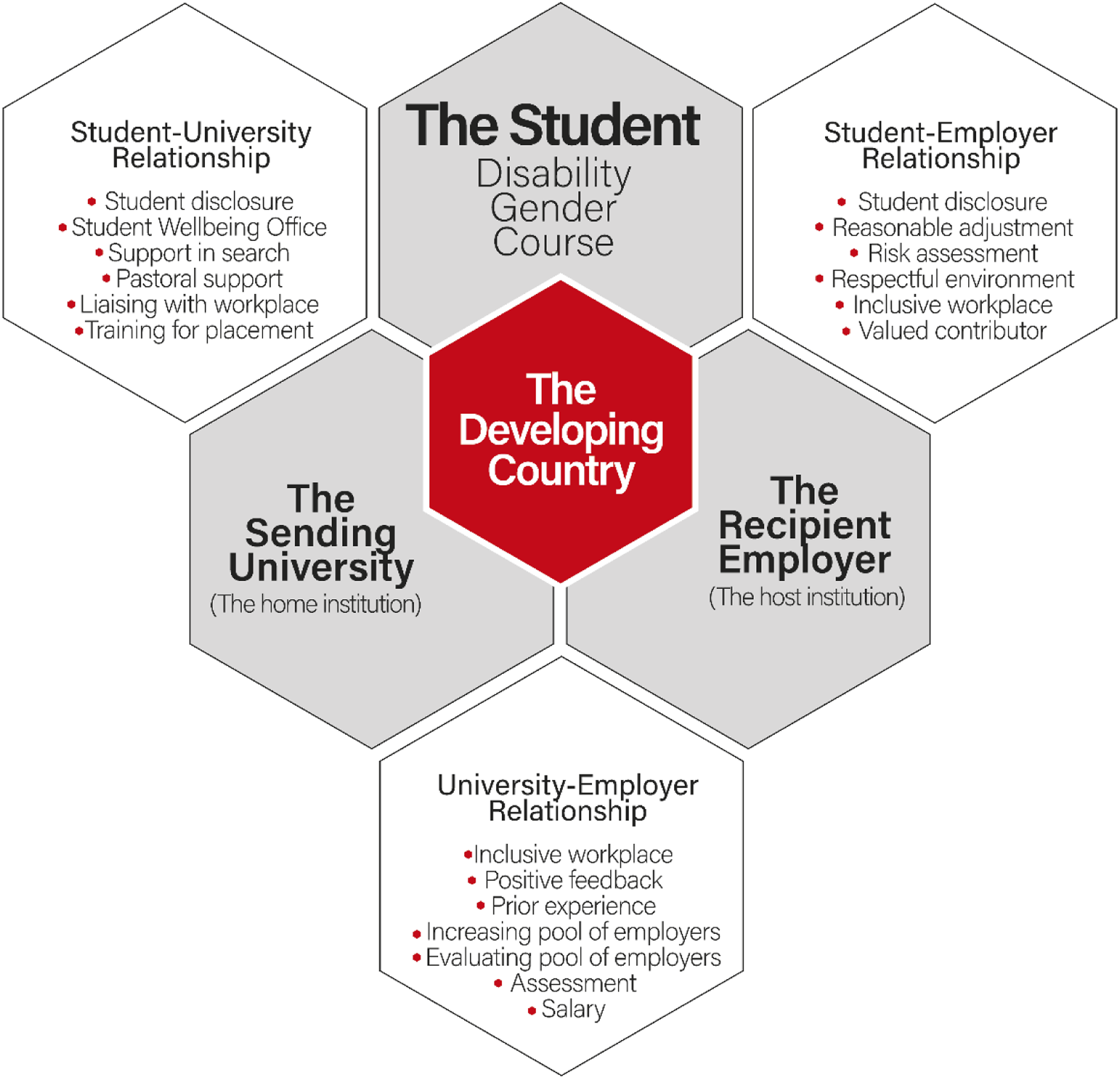
In the context of this study, these stakeholders are considered for theoretical developments in identifying how to enhance the work placement experience of students in Nigeria. Together, these four constructs – student, university, employer and country – present a lens through which the work placement experience phenomenon is viewed. Next, they are discussed in more detail.
The student
In the context of this study, the student is an individual who is expected to go on a work placement in the quest for a university education. Everyone has unique characteristics that make their experience different as they embark on their work placement (Philion et al., 2021; Rillotta et al., 2022). This study specifically focuses on disability and its impact on the student’s experience during work placement. In addition, the gender of the student and the course or programme being studied are presented as unique characteristics that can shape the work placement experience (Gallagher and Bennett, 2013; Hultman et al., 2021). This section discusses these characteristics and their impact on the work placement experience.
Disability
Students with disabilities are characterised by specific mental or physical impairments, which have significant and long-term adverse impacts on their ability to conduct normal daily activities (Maher et al., 2022; McKinney and Swartz, 2022). The World Health Organization (WHO) estimates that people with disabilities account for about 15% of the world’s population (WHO, 2021). With regard to students with disabilities, most commonly they are people with mobility issues or wheelchair users who may find usual work placement roles challenging. Unseen disabilities are also common, including dyslexia, epilepsy, diabetes and asthma, among others (Habib, 2021). Planning for work placements for students with disabilities requires the institutions and employers to acknowledge these numerous types of disability (Maher et al., 2022; McKinney and Swartz, 2022; Mogaji, et al., 2021). This consideration will enable them to plan for inclusion by accommodating the different detailed needs of each disability group for practical work placements. It will also eliminate the possibility of erroneous assumptions about the capabilities of students with particular impairments.
Undergraduates with intellectual disabilities face numerous challenges in obtaining meaningful, sustainable and well-paying employment after completing their course (Gallagher and Bennett, 2013). They mostly remain in unpaid jobs because of the challenges of preparing students with disabilities for employment (Thompson, 2020). These challenges necessitate the need for the universities to facilitate school-to-employment transitions through authentic work placements. Addressing the specific work placement needs of students with intellectual disabilities is challenging because some are non-verbal or have limited vocabulary. Therefore employers and job coaches facilitating work placements for them also require specific training and skills to provide positive and meaningful placements (Gallagher and Bennett, 2013). This effort will enable the students to work independently and foster confidence in their adult life (Dean and Sykes, 2021). Workplace dynamics also constitute a crucial consideration for students with intellectual disabilities. As much as they bring diversity to the workplace, their impacts on their co-workers cannot be accurately ascertained. Thus, work placements may help to enhance positive interactions between these students and other employees, which will be meaningful in their careers (De Bie et al., 2021; Maher et al., 2022).
Students with disabilities are in great need of meaningful work placements to enable them to secure employment after completion of their studies (De Bie et al., 2021). Employment is critical for these students: poverty rates are very high for individuals with disabilities worldwide (WHO, 2021). The issue of disability and employment has become a crucial consideration because it covers several areas of the United Nations Sustainable Development Goals (SDGs). The inclusion of people with disabilities in the workforce has numerous economic and humanitarian benefits. In most cases, it helps the individual to avoid social isolation, a common challenge among people with disabilities (Vornholt et al., 2018). Work placements provide a suitable opportunity for universities and employers to address the relevant workplace supports and ensure that the job requirements are appropriate for students with disabilities (Williams et al., 2017). They also provide an opportunity to expose students with disabilities to various workplace requirements, especially social skills, that will enable them to perform their duties adequately when they join the workforce.
Gender
Disability is frequently associated with certain levels of discrimination. However, disabled female students face double discrimination which manifests as both sexism and disability bias (Hubble and Bolton, 2021). This observation is supported by the finding that poverty levels among women with disabilities are significantly higher than among men with disabilities (World Bank, 2020). Women with disabilities are more susceptible to unemployment and, if employed, may receive significantly lower wages than their male counterparts (Gbadegesin et al., 2021; Gibbs et al., 2020). These inequalities are partly attributable to the education system, which is perceived to play a crucial role in the lack of equal opportunities for women with disabilities (Alhusen et al., 2021). There have been various legislative interventions in an effort to address this problem (Thompson, 2020). However, it remains the case that various attitudinal and physical barriers hinder disabled female students from reaping the full benefits of education. These benefits extend to work placements, which are meant to prepare students for employment after completing their studies (Wolbring and Lillywhite, 2021).
Female students with disabilities face various challenges from their peers during the work placement phase (Gibbs et al., 2020). Work placement programmes, which should help them make a smooth transition from school to employment, must be designed especially for students with disabilities. Many women with disabilities struggle with workplace expectations that often affect their overall wellbeing (King et al., 2021; Lindsay et al., 2021b). There may also be high expectations on the part of businesses, especially regarding social competence and comprehension of business operations (Edmonds et al., 2021). Most students are accustomed to the informal and lenient educational environment, so making the requisite changes during work placements can be especially difficult for female students with disabilities (Campe, 2021).
Safety in the workplace constitutes another challenge for these students. It encompasses personal and environmental protection, whereby students must adhere to an appropriate dress code, meant to prevent possible injuries or hazards (Brown et al., 2021; Godeau et al., 2021). This can be a challenge for students with disabilities because may be no specialised apparel available to suit their distinct needs. Self-advocacy can also present a challenge for female students with disabilities, especially those with language and cognitive disabilities (Mizunoya et al., 2018), who may be exposed to intimidation and exploitation by their superiors (Nembu, 2021). Thus, female students with disabilities are more susceptible to workplace-related difficulties that may affect their lives during work placements (Roulston et al., 2021).
According to a report from the United Nations Department of Economic and Social Affairs (UN, 2018) on realising the SDGs by, for and with people with disabilities, women with disabilities are two times less likely to be employed and three times more likely to be illiterate than their male counterparts. The disparities also apply to other social aspects of the gender divide, making women more disadvantaged, especially in employment. These disparities are manifested in many ways, whereby women with disabilities seem to be adversely affected (Mizunoya et al., 2018; Roulston et al., 2021).
Women and girls with disabilities are more susceptible to neglect, abuse, exploitation and maltreatment than those without disabilities (Hubble and Bolton, 2021). This factor makes women with disabilities more vulnerable than other individuals, as many of their rights are curtailed. Additionally, women and girls with disabilities are three times more likely to experience gender-based violence than non-disabled women (Hennebry and Petrozziello, 2019). These findings indicate that women and girls with disabilities tend to suffer most from gender-related issues, and these impacts spill over into other aspects of their lives, including education. Unfortunately, initiatives promoting the rights of people with disabilities often fail to account for the gender gap in disability (Patel, 2019; thus, women and girls with disabilities are more disadvantaged in most aspects of life. Appropriate interventions are therefore needed to address the gender disparity among disabled individuals, especially in education.
Courses
Course-specific challenges affecting students with disabilities in higher education are related to individual differences associated with disabilities. Disabilities differ in kind and in the extent of functional impairment (DeLisa and Lindenthal, 2016). These differences play a crucial role in shaping an individual’s identity, which eventually affects their learning experience on a given course. Functional limitations may affect functional competence, but it has yet to be ascertained whether existing assessment models afford equal opportunities to all students (Zabeli et al., 2021). These assessment models are concerned with evaluating competence, taking into account that some students have specific abilities while others are affected by disabilities (Itano-Boase et al., 2021).
Medical courses can be very demanding, and the perceived level of hardship affects students who enrol in such programmes. Therefore, there is a need to assess the challenges of students with disabilities enrolled in medical courses and the efficacy of available interventions in addressing these challenges. In addition to the demanding nature of these courses, the other issue that affects medical students with disabilities is the level of support available to them, and this challenge is reflected in the huge gap between matriculated and graduated students (DeLisa and Lindenthal, 2016). This disparity is associated with the higher costs of accommodating the students with disabilities and their motor rather than cognitive skills. The ability to move around and engage in learning activities do present a significant disadvantage for students with disabilities attending medical school (Eickmeyer et al., 2012; Karunaratne and Karunaratne, 2021).
Various course-specific challenges also affect students with disabilities enrolled in engineering courses (Clerke et al., 2021; Tennant et al., 2018). The demanding nature of the courses is a significant disadvantage for many students with disabilities since there is a considerable need for motor skills (Hadjikakou and Hartas, 2008). These skills are essential because the courses entail machine handling as a primary requirement, which might be a challenge in the school setting and during work placements depending on the type and severity of the disability. There is indeed a common belief that engineering programmes are not suitable for students with disabilities because of the associated risks and in some cases, students with disabilities are discouraged from registering for courses because of safety considerations (Beck et al., 2021). The same problematic considerations apply with regard to work placement at faculty and institutional levels. The demands might be more extensive, and safety concerns are grave. This there is an inclusion challenge for students with disabilities pursuing engineering courses (Hartman et al., 2019).
On the other hand, business and management courses are not as physically demanding as engineering and medical courses (Oginni, et al., 2022). Kotzé and Massyn (2019) noted that students are interested in business courses because of the good prospects of job opportunities and the enhanced earnings potential associated with a business career. A business degree prepares the student to work across different sectors of the economy (Mogaji, 2019) and is broad enough to provide students with a wide range of learning and work opportunities (Buchanan et al., 2007). Olaleye et al. (2020) noted the ease of establishing a business school in terms of the facilities and learning spaces required – as opposed to the requirements for many technical courses – which can positively affect the work placement and working environment of the students. Regarding work placement, students will most likely find themselves in an office setting, which should allow for a considerable number of reasonable adjustments to be made. As Courtenay and Perera (2020) observed, the pandemic created further opportunities for disabled workers to work from home and still contribute to their team, signalling better prospects for students to be supported by their employees in different ways when engaging in work placements.
The university
Universities around the world are striving to enhance the employability of their students and so to justify the student’s investment in studying on their programmes (Griffin and Coelhoso, 2019; Neelam et al., 2019). This strategic initiative towards employability spurs universities to widen their reach and seek new opportunities to assist their students in their ultimate search for work.
The focus of this paper is on enhancing the work placement experience of students with disabilities, but it is important also to consider the existing infrastructure at the university before work placement is undertaken (Neelam et al., 2019; Olaleye et al., 2020). What has been the students’ on-campus learning experience? How have they been able to access their classrooms and lecture theatres? How have they been assessed and examined? Have they felt part of the university? What sort of pastoral care has been provided? The answers to these questions can indicate the university’s level of preparedness and its willingness to support the best interests of the students when they are out on work placement. The aforementioned issues have practical implications and challenges for many universities in Nigeria and other developing countries, which are often underfunded and not well equipped to meet the needs of students with disabilities (Farinloye et al., 2020; Vasudeva and Mogaji, 2020).
It is also important to recognise that many education systems have implemented legislative regulations to promote equal opportunities for students with disabilities (Langørgen and Magnus, 2020). However, these regulations have typically not been sufficient to eliminate the barriers to participation in higher education that such students face. According to Langørgen and Magnus (2020), practical work placement constitutes one of these barriers because it entails a crucial part of the curriculum. It involves the transition from the classroom to a work environment and puts extra pressure on students to disclose their disabilities and request accommodation (Carey, 2012). Work placements for students with disabilities also put additional pressure on the university and work placement supervisors to arrange support. Most students with disabilities face challenges in redeeming their right to individual accommodation because of the complexities and difficulties in making the requisite requests (Georgiou et al., 2012). Educators also cite lack of knowledge and time to support students with disabilities: students with disabilities require more contact time than their peers (Tee and Cowen, 2012). Therefore, educators experience tensions between their responsibility to address a student’s rights and evaluate their standard of professional conduct.
As a university faces compliance challenges with international quality standards for a professional curriculum (Hill and Roger, 2016), there are limits to its options for providing flexible solutions to individual needs. In some cases, completing a certain number of placement hours takes precedence over professional content and learning outcomes and it can be difficult for students with disabilities to cope with the intense professional requirements. Universities also face a challenge in determining the individual competencies to be achieved through full-time work placement (Ashcroft and Lutfiyya, 2013). Professional curriculum requirements that stress the significance of work placement thus increase the pressure on students with disabilities and their risk of failing.
The company
The company is the recipient employer in a work placement and thus the host institution for the student. It is expected to be aware of students’ needs and to make reasonable adjustments for each individual. It is, however, important to take into account to recognise the nature of the work involved and what constitutes an appropriate adjustment to the needs of the student. For some organisations, like those in health services and teaching, where institutional adjustment may be required and an existing policy is already in place to support students with disabilities, it may be more straightforward to make adjustments than in, for example, an engineering or construction company. This highlights a difficult challenge for smaller firms in Nigeria which may not have the resources to implement reasonable adjustment.
In addition, it is essential to recognise the inherent economic challenges in Nigeria and many other developing countries, which affect the number of work placement positions available to meet the number of prospective students. Given the high level of unemployment, it is not surprising if there are insufficient work placement positions for students with no disabilities, and if students with disabilities are therefore inadvertently excluded from opportunities. Similarly, the lack of willingness to pay a salary to undergraduate students on work placement may also hinder some companies from participation.
The large informal economy in Nigeria also contributes to the shortage of work placement positions. According to the International Labour Organization, two billion people work in the informal sector in developing countries. The informal economy, including roadside selling, barbershops and hairdressing, does not provide capacity for university students seeking work placements that align with their course. Perhaps there are opportunities here for entrepreneurial students to find work placement by disrupting the informal economy and carving a niche for themselves; however, financial support and business grants for a disabled entrepreneur may not be guaranteed (Soetan et al., 2021).
The discrimination against and exclusion of students with disabilities in Nigeria are also worth exploring in the context of companies. Laws and policies are seldom in place or enforced to protect the rights of these individuals – companies are often able to find their way around the rules, further limiting opportunities. As the country’s laws do not protect students from discrimination and exclusion from work opportunities, their chances of gaining relevant experience and securing employment are further reduced. As noted by Mogaji and Nguyen (2021) in their exploration of disabled commuters in Nigeria, many organisations may simply not be willing to invest in reasonable adjustments to allow students with disabilities to work for them.
The country
Most people with disabilities are located in the developing countries of Africa, Latin America, Asia, the Caribbean and the Middle East (Eleweke and Rodda, 2002; World Bank, 2020). They face numerous education-related challenges, many of which are associated with the socio-economic status of developing economies. According to Baron and Nuebe (2012), people with disabilities constitute the most marginalised population globally. It is alarming that a significant majority of this population lives in developing countries and is adversely affected by inherent poverty.
Nigeria, one of the largest developing countries in the world with its inherent economic, social and infrastructural challenges. As already noted, it has a population of over 200 million, which makes it the most populated African country. Its education system is also the largest in Africa, with the highest number of universities (over 170) in Africa – but perhaps not of the quality of some in South Africa and Egypt, for example, which rank among the top universities in the world (Adefulu et al., 2020; Farinloye et al., 2020). The limited funds for publicly funded universities in Nigeria have been of growing concern: Olufemi (2020) reported that the education sector in Nigeria receives only 5.6% of the total budget, much below the recommended international benchmark of 15–20%. The COVID-19 pandemic has exacerbated the challenges as universities have struggled to adapt to online teaching and learning. University lecturers, under the umbrella of the Academic Staff Union of Universities, often take strike action in an effort to secure more government funding. As of August 2022, the time of writing, the union has been on strike since February 2022, with over 6 months of disruption to teaching and learning (Aladesohun, 2022). These challenges with the higher education system in Nigeria have led to an increased number of private universities, and many prospective students going abroad to study.
The National Policy on Education in Nigeria categorises students with special as follows: visual, hearing and physical impairments; intellectual disability; emotional and behavioural disorders; speech and language impairments; learning disabilities; multiple disabilities; and albinos (NPE, 2013). Though the policy promises that these students will be provided with inclusive education, they are sandwiched between an insufficient structure and institutional challenges (Ijadunola et al., 2019). The socio-economic educational challenges in Nigeria resonate with the observation that disability increases the risk of poverty and access to opportunities (UN, 2018). One of the challenges is the lack of adequate facilities and materials to support education for students with disabilities (Sarton and Smith, 2019). It is estimated that the cost of delivering education to such students is about 2.3 times higher than that of educating students without special needs (Riddell et al., 2016). This, combined with the lack of appropriate funding structures for education in developing countries, makes it a considerable hindrance to educational inclusion. Additionally, the available personnel training programmes in developing countries are not sufficient to achieve the required levels of educational inclusion, and the programmes that do exist tend to have inadequacies that hinder their effectiveness. Ijadunola et al. (2019) examined the experiences of students with disabilities in universities where the facilities were insufficient for abled students and questioned what investments the universities were making to enhance the experiences of students with disabilities.
Disability-related data in Nigeria are sparse, not least with regard to universities, and there is little or no information about students with disabilities. A 2018 report by the World Bank indicated that there were an estimated 29 million people living with disabilities in Nigeria, representing 15% of the population (World Bank, 2020). The Dyslexia Foundation has reported that 32 million Nigerians struggle with a learning disorder (Adedigba, 2018). While the Federal Ministry of Education published a fact sheet about the percentage of students with disabilities (Ministry of Education, 2019), concerns have been raised about the accuracy of the data; for example, 60 of the 146 universities reported that they had no students with special needs, while some of the federal and more reputable universities, such as the University of Ibadan, the University of Abuja and National Open University of Nigeria, Lagos, did not provide any record of students with disabilities.
The economic situation of Nigeria also poses a challenge with regard to access to work and employment. There are inadequate opportunities to participate in work-based learning, and so students with disabilities experience limited career opportunities in areas and sectors that are not considered ‘disability adequate’ (World Bank, 2020). As noted above, the Nigerian economy is largely informal, which means that it presents few opportunities for students with disabilities to use their theoretical knowledge in a suitable working environment. The National Bureau of Statistics reported that the country’s unemployment rate rose from 27.1% in the second quarter of 2020 to 33% in the first quarter of 2021, and the number of people looking for jobs will keep rising. Thompson (2020) found that people living with a disability in Nigeria faced years of vulnerability, discrimination and disadvantage in employment. They experience unequal employment opportunities and have limited rights to work and low job security. Although the Lagos State Special People’s Law (Vol 5) Section 34 and the Discrimination Against the People Living With Disabilities Prohibition Act (Section 68) affirm, respectively, the right of people with a disability to work on an equal basis with others and the provision for employment of five per cent of people with disabilities in the public sector, compliance with these laws is thought to be low (Thompson, 2020).
The Nigerian context of this study highlights the struggles of students with disabilities. As they navigate their education through insufficient infrastructures and limited facilities they are competing with many abled students for the limited number of available jobs, often with employers who are not willing to make necessary adjustments. There is thus a need to examine these institutional struggles and present practical implications to promote social inclusion, enhanced employment opportunities and career progression for students with disabilities.
Theoretical positioning
Figure 1 illustrates the four lenses through which this workplace phenomenon is viewed: the students, the university, the company and the country context. Three key relationships are identified as a theoretical and practical underpinning for enhancing students' work placement experiences, albeit still recognising the country context integrated within the three stakeholders.
The first is the student–university relationship
There is a duty of care from the university to support the student with information and opportunities to explore placement options that are relevant to their courses and that can support their disability (Griffin and Coelhoso, 2019; Neelam et al., 2019). There is also a duty of pastoral care to support the student while searching for a place and while in placement. Goodwin and Mbah (2019) recognise the need for a support framework for students with challenges relating to placement information, cultural differences and academic preparation for placement.
The second is the student–company relationship
While the student may have chosen to work in the company based on feedback and previous experience, it is important that their unique characteristics are respected and supported (Clerke et al., 2021). For their part, the student is expected to take responsibility for their learning and ensure they are not undervalued at work. Specifically in light of the pandemic and the changes to work, Chan et al. (2020) reiterated the need for companies to be mindful of their disability inclusion practices and the employment of people with disabilities in the post-pandemic job economy; this indeed does not exclude students on placement.
Finally the university–company relationship is a working relationship that can benefit both parties. There is a supply of prospective company staff from the university and opportunities for the university to improve the training and employability of its students. As Stafford et al. (2017) noted, a lack of person-centred support from institutions hinders the employability and work experience of young people with disabilities, suggesting the need for the host and home institution to work together to enhance the students' experience. Notably, the university needs to build the right relationship to benefit its students (Moriña and Orozco, 2021). It is expected to consider the best interests of its students and ensure that the company is suitable and willing to make adjustments by investigating its characteristics and its inclusion practices related to the employment of people with disabilities (Chan et al., 2020).
The country context is strongly integrated with these three relationships. Olaleye et al. (2020) highlight the state of higher education in Africa, suggesting that the infrastructure is inadequate to support students with disabilities. Theoretically, this indicates that a different working relationship needs to be explored in the context of the inherent challenges and opportunities in the country (Hinson and Mogaji, 2020; Oginni et al., 2022). This will ensure that a person-centred approach for developing the support network and evaluating the relationship is in place. Specifically, ideas from different countries should not be generalised so that the unique features and characteristics of the country in question are taken into account (Mogaji, 2016). For example, Section 91(9) of the UK’s Equality Act 2010 requires higher education providers to make ‘reasonable adjustments’ for disabled applicants and students. This requirement applies across a range of issues. However, it may not be transferable to some developing countries which do not have the financial resources to make those reasonable adjustments but which nevertheless have students with disabilities (Kieu, et al., 2020; Ndofirepi, et al., 2020). One size may not fit all. Therefore, stakeholders need to recognise their country’s context (including regulations, laws, support systems and attitudes) before developing strategies to enhance the work placement experience of students.
This study provides a theoretical contribution to the literature on work experience, students with disabilities and the backgrounds of students in Nigeria (Mogaji and Nguyen, 2021; Ndofirepi et al., 2020; Olaleye et al., 2020). It is the first to systematically identify and evaluate the stakeholders shaping the work placement experience of students with disabilities in Nigeria. We present the key relationships between the stakeholders and a theoretical assessment of work placement learning and students' experiences. The study highlights anticipated innovations in work placement arrangements to support the students and identifies the instructor and supervisor supports needed during work placement learning (Griffin and Coelhoso, 2019; Neelam et al., 2019). Specifically, we recognise the inherent challenges relating to the country context and how it can shape the student experience, through universities not having sufficient resources to support their students, companies being unable to make a reasonable adjustment to employ the student and a lack of rules and legislation to protect the rights of the students (Ndofirepi et al., 2020; Olaleye et al., 2020).
We recognise our theoretical alignment with the SDGs, especially in universities and companies working with students with disabilities (UN, 2018). Seven targets of the SDGs are explicitly connected with people with disabilities. These include Target 4.5 (‘by 2030, eliminate gender disparities in education and ensure equal access to all levels of education and vocational training for the vulnerable, including persons with disabilities’) and Target 8.5 (‘by 2030, achieve full and productive employment and decent work for all women and men, including for young people and persons with disabilities, and equal pay for work of equal value’). These targets align with our theoretical position, which recognises the need for universities and companies to support students with access to education and employment, irrespective of their disabilities, and the challenge of Wigmore-Álvarez et al. (2020) for business schools to integrate social responsibility and sustainability practices into their management systems.
While the paper presents a theoretical overview of the stakeholders, it offers opportunities for future research to examine and explore the intersection between them empirically. Our theoretical framework with three stakeholders and country context features can be adopted as a baseline for empirically understanding the work placement experiences of students with disabilities in Nigeria and other developing countries with similar institutional struggles and challenges for higher education management and work placements. Such insight will provide pedagogical theories in work placement learning and enhance related teaching policies (Chan et al., 2020; Griffin and Coelhoso, 2019; Neelam et al., 2019).
Practical implications
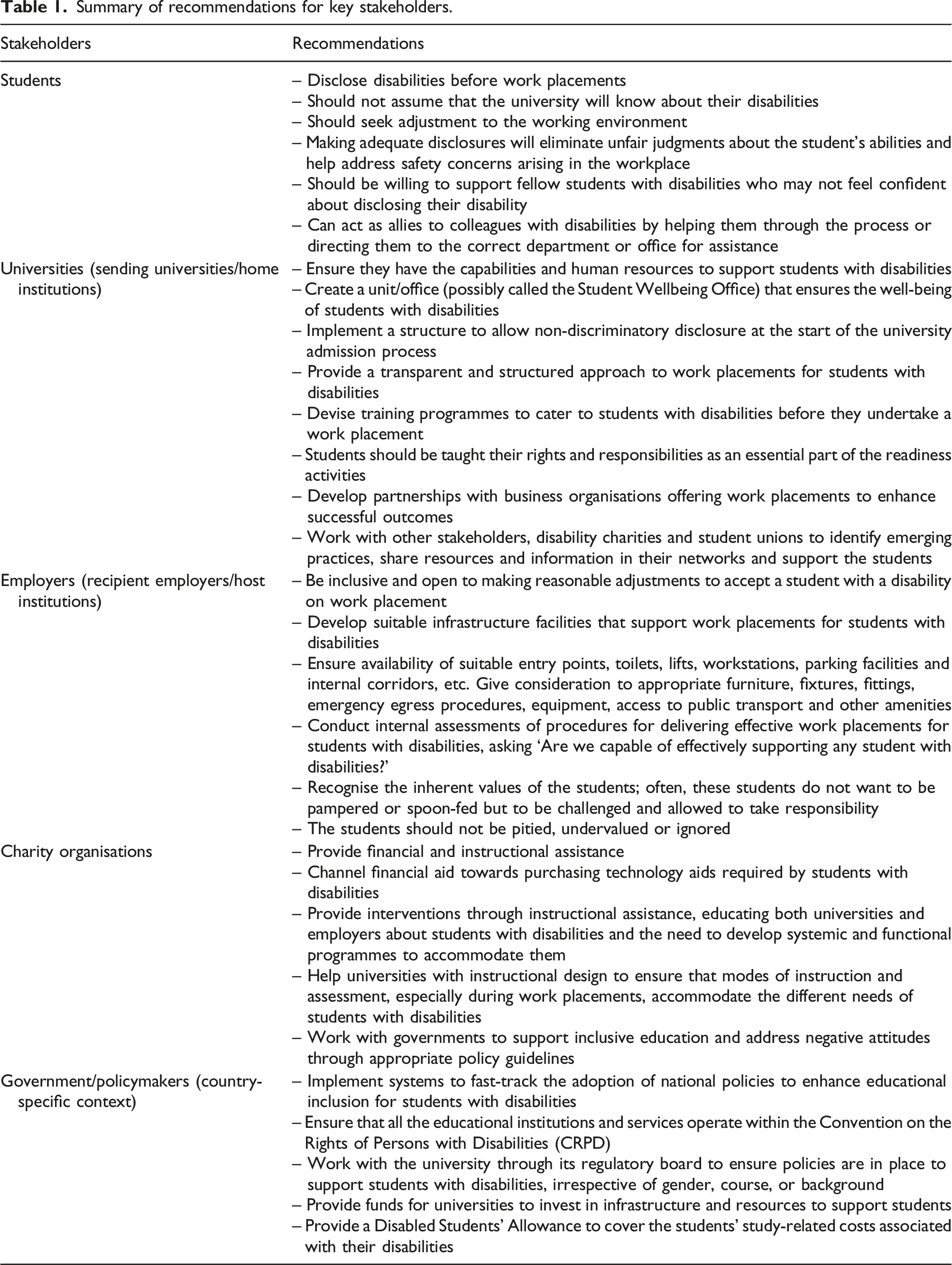
Summary of recommendations for key stakeholders.
Students’ interventions
Students should make adequate disclosures about their disabilities before work placements (Lee et al., 2019). They should not assume that the university will know about their disabilities, especially as it may not have an awareness or understanding of the type of disability in question or even the right department or office for addressing their needs. Disclosure helps to address the challenges faced by university staff and employers in providing work placements for students with disabilities (Griffin and Coelhoso, 2019); in the absence of disclosure, there may well be significant difficulties in implementing work placements (Moriña and Orozco, 2021). It has been observed that few students disclose their disabilities before work placements (Nolan et al., 2015), but disclosure and the consequent request for accommodation are important for students in order to improve their learning and work experience. Making adequate disclosure will eliminate unfair judgments about a student’s abilities and will help in addressing safety concerns in the workplace and in determining the degree of collaboration and planning required to accommodate the student’s needs (Chan et al., 2020; Goodwin and Mbah, 2019). Students should also be willing to support fellow students with disabilities who may not feel confident about disclosing their disability, especially those with a disability that is not visible – possibly becoming an ally and supporting them through the process or directing them to the correct department or office to get help.
Universities
Universities should ensure that they have the capabilities and human resources to support students with disabilities (Conroy and McCarthy, 2021). This support does not simply involve a student securing a work placement but requires the creation of a unit or an office to monitor their well-being and support them irrespective of their disability (John et al., 2021). This entity, which might be designated the Student Wellbeing Office, will then be the contact point for students experiencing difficulties and seeking assistance. Universities should also implement a structure to allow non-discriminatory disclosure at the start of the university admission process (Courtney-Pratt et al., 2018), so that it is aware of the number of students with disabilities in a cohort and can determine how best to support them during their time at the university (Chattopadhyay, et al., 2022; Watat, et al., 2021).
Universities should develop a transparent and structured approach to work placements for students with disabilities (Kendall, 2018). This approach should include careful consideration of recruitment and physical access issues and disparities in the learning experiences for such students. There is an opportunity to mainstream disability issues through increased sensitivity to the students' needs (Kiraka, et al., 2020). Such intervention will enable the university to make appropriate adjustments to various aspects of work placements to ensure that the programmes benefit all students.
Universities should also devise training programmes for students with disabilities before they undertake a work placement (Botham and Nicholson, 2014). This will help reduce the challenges faced by these students, especially female students, who may be more susceptible to workplace-related issues (Lamont et al., 2015). They should be taught their rights and responsibilities as an essential part of the readiness activity. Such training is especially important for students with behavioural difficulties because it will make them aware of the expected code of behaviour and the consequences of certain behaviours. Career planning should also be conducted during the readiness training – this will be of particular benefit to female students with disabilities who may have experienced stereotyping concerning their behaviour and career development prospects (Hodge et al., 2021). Career planning programmes can expose students to non-traditional career options and can enable them to visit businesses that promote equity and diversity (Okolie et al., 2020b). Training of this kind will help students to adjust their perceptions regarding various stereotypical situations and to develop attitudes that will help them maximise their gains from the work placement.
Universities need to develop partnerships with the business organisations offering work placements to their students to enhance successful outcomes (Adeyanju, et al., 2022; Goodwin and Mbah, 2019). These partnerships can lead to additional programme components to increase the benefits of work placements for both the students and the organisation. The programme, being developed in partnership with the business organisation, should include components providing technical support to the organisation regarding assistive technology and accommodation. This support will ensure that the organisation will be able to effectively cater to the needs of students with disabilities because through the ready availability of the required technologies. These partnerships should also help organisations develop plans for late arrivals and emergencies (Chan et al., 2020): the university might conduct training sessions to educate the organisation about disabilities and suitable risk management interventions for students with disabilities. In addition, partnerships can lead to alternative methods of evaluating student performance during a work placement.
Universities, finally, should work with other stakeholders, disability charities and student unions to identify emerging practices, share resources and information in their networks and support the students. Students need to be trained to deal with challenges at work, request reasonable adjustments and build confidence to ask for what they deserve, especially regarding their specific disability (Chan et al., 2020; Moriña and Orozco, 2021).
Employers
Employing organisations should be inclusive and therefore open to making reasonable adjustments so that they can accept a student with a disability on work placement, such as developing suitable infrastructure facilities (Chan et al., 2020; Wright et al., 2020). These facilities include, for example, suitable entry points, toilets, lifts, workstations, parking facilities and internal corridors. Consideration also needs to be given to appropriate furniture, fixtures, fittings, emergency egress procedures, equipment, access to public transport and other amenities (Medina and Gamero, 2017). Employers should conduct internal assessments of procedures for delivering effective work placements for students with disabilities, including identifying issues faced by students with disabilities and gender-related disadvantages (Lindsay et al., 2018). Importantly, employers should recognise the inherent values of the students; often, they will not want to be pampered or spoon-fed but to be challenged and allowed to take responsibility. Employers should thus endeavour to work with them and utilise their full potential, taking care not to pity, undervalue or ignore them.
Charity organisations
Charity organisations can contribute towards addressing work placement-related challenges for students with disabilities through financial and instructional assistance. Bryer et al. (2020) discuss how non-profit and faith-based organisations can build student engagement and promote well-being through university–community collaboration. These organisations can channel financial aid towards purchasing technology aids required by students with disabilities which can be used during both the academic programme and work placements (Williams et al., 2017). Such interventions will address significant barriers to inclusivity in education. Further, since charity organisations have adequate data concerning various disabilities and their associated variables, they can make effective interventions through instructional assistance. This would help educate both universities and employers about students with disabilities and the need to develop systemic and functional programmes to accommodate them (Soorenian, 2018). Instructional assistance to the employing organisation can also help in ensuring that the appropriate technologies and infrastructure are in place for students with disabilities. At the same time, it will help the university ensure that the modes of instruction and assessment, especially during work placements, accommodate the different needs of students with disabilities. Finally, charitable organisations can work with governments to support inclusive education and address negative attitudes through appropriate policy guidelines.
Government and policymakers
Governments should fast-track the implementation of national policies to enhance educational inclusion for students with disabilities. These policies should establish accountability measures that will ascertain the effectiveness of national guidelines. For example, in the UK the Disabled Students’ Commission helps universities and colleges to remove barriers preventing students with disabilities from accessing and succeeding in higher education and having the best possible experience during their studies (Jain, et al., 2022; Kane and Cooper, 2021).
Policymakers and regulators also need to ensure that all educational institutions and services operate within the Convention on the Rights of Persons with Disabilities (CRPD). The CRPD encompasses all issues and provisions for addressing the needs of individuals with disabilities. Its successful implementation will minimise problems associated with education for students with disabilities, including challenges related to work placements. Additionally, the accountability systems will help address the slow implementation of national policies and guidelines on people with disabilities.
In Nigeria, the government and other policymakers work with universities through the university’s regulatory board to ensure that policies are in place to support students with disabilities, irrespective of gender, course or background (Ndofirepi et al., 2020; Olaleye et al., 2020). We cannot, however, ignore the financial implications of this policy development, which challenges the government to provide funds for universities to invest in infrastructure and resources to support students (Mogaji, et al., 2022; Nguyen and Mogaji, 2022b), and possibly to provide a Disabled Students’ Allowance, as is done in the UK, to cover the students’ study-related costs attributable to their disabilities.
Conclusion
Students with disabilities should be able to enjoy a good experience during their work placement. However, this is far from guaranteed due to the many factors discussed above. Specifically, we have highlighted the intersection of a student’s personal characteristics (disability, gender and business and management course), the sending university (the home institution), the recipient employer (the host institution) and the Nigerian country context to explore the work placement experience of students with disabilities. Ultimately the university needs to act in the best interest of their students as they engage with companies regarding work placements (Chan et al., 2020). Furthermore, the student has been in a longer relationship with the university than with the company and there is a duty of care on the part of the university.
As students with disabilities now constitute a sizeable minority of the student population, it is crucial to develop a better understanding of their experience and how best they can be supported within and outside the university. These students have a wide range of impairments, and efforts should be made to create bespoke solutions for individual students alongside more generalised inclusive support (Kane and Cooper, 2021; Mogaji et al., 2022). For this reason, this study identified the key stakeholders in shaping the students' experience and, in addressing this research objective, proposed a conceptual framework. The framework illustrates the relationships and expectations among the stakeholders and how a student’s experience can be enhanced. In addition, we have presented practical implications and recommendations for a range of stakeholders.
Several limitations must be considered before generalising the findings of this study. First, the study was highly conceptual – there is therefore an opportunity for future research to empirically explore and validate the conceptual framework. Second, no data were explicitly collected to measure and evaluate the work placement experience of students with disabilities in Nigeria. Third, although this is a conceptual paper it focuses on the context of Nigeria and the insights may not be applicable in other developing countries. Future studies might therefore contextualise and validate the conceptual framework in different country contexts.
Footnotes
Acknowledgements
We would like to acknowledge the support of the University of Economics Ho Chi Minh towards this project.
Declaration of conflicting interests
The author(s) declared no potential conflicts of interest with respect to the research, authorship, and/or publication of this article.
Funding
The author(s) disclosed receipt of the following financial support for the research, authorship, and/or publication of this article: This work was supported by University of Economics Ho Chi Minh City.
