




Abstract
Applied areas of entrepreneurship are growing in popularity due to the ongoing need for students to gain specialised skills to find employment after graduation. This study explores how educational scaffolding can facilitate the delivery of online experiential activities to improve the entrepreneurial learning experience and the performance of music management students by using information and communications technology tools within the virtual learning environment. A case study methodology was adopted to present two scenarios of innovative online learning delivered in a postgraduate programme in music management. This research takes into consideration the difficult transitional journey for some students from studying to being immediately thrust into the workplace, which often requires different types of knowledge, experience, skills and competences. The findings show that, by strengthening industry links, tutors can build a portfolio of online practical activities that represent the ‘real-life’ industry, helping to forge long-term, collaborative partnerships to facilitate learners’ acquisition of more meaningful knowledge and opportunities.
Keywords
Over the last 20 years, information and communication technologies (ICTs) have become integrated into our society to the point of dependency and in all aspects of people’s lives (Söderström and Ytterhus, 2010). In higher education, for example, online learning is now seen as providing significant opportunities for the development of critical thinking skills (Saputra et al., 2019). Due to an increased usage of specific features in virtual learning environments (VLEs) “a variety of active and innovative teaching methods” have emerged (Moreno-Guerrero et al., 2020: 1), and the COVID-19 pandemic has accelerated the need for more meaningful engagement through online teaching (Krishnamurthy, 2020; Ali et al., 2020). Applied areas of entrepreneurship are growing in popularity due to the ongoing need for students to gain specialised skills to find employment after graduation (Archer and Davison, 2008), and there is a parallel need for more accessible modes of delivery (Peimani and Kamalipour, 2021). As higher educational provision has expanded, so too has the variety of methods used for teaching and learning. There has been a movement towards more active and experientially based learning, particularly in business and management subjects, as online learning affords higher education (HE) tutors a wealth of opportunities to design and deliver innovative programmes (Oliver et al., 2017). VLEs, such as Blackboard (Bb), Moodle and Microsoft Teams, can now support complex practical activities with featured front-end tools, such as spaces for media and text, video conferencing, discussion boards and chat – in addition to back-end tools such as content editors, collaboration management, assessment and learning analytics. The tools are, of course, very important but, without the appropriate implementation, they are redundant (Sendag and Odabasi, 2009). It is through the innovative ways academics use these technologies that they can really be brought to life to create a stimulating and beneficial learning environment.
The overall aim of this paper is to explore how educational scaffolding can facilitate the delivery of online experiential activities to improve the entrepreneurial learning experience and the performance of music management students. The study also examines how industry involvement can influence students’ motivation and understanding of the requirements of the workplace. An important aspect of this investigation is the experience of the respective co-authors and the methodological approach, and methods, they have used to collect and analyse both secondary and primary data. In fact, we have several years’ experience of delivering undergraduate and postgraduate classes to business and management students in higher education; and one author has over 14 years’ experience of working in the music industry and the other 36 years’ experience in the manufacturing sector.
Literature review
Educational scaffolding
Educational scaffolding is used as a support mechanism to assist learners with problem solving, performing tasks and accomplishing their aims in a measured self-determined approach that is independent of all tutor interventions (Bransen et al., 2021; Kunnari et al., 2021). Educational scaffolding defines the tutor’s role as that of a facilitator, whose responsibility is to enable learners to understand the knowledge they are studying (Kunnari et al., 2021). When the learner starts using this understanding of the knowledge, they begin to show the self-regulating capability of an independent learner (Bransen et al., 2021). From here confidence grows and the learner gradually reduces reliance on some of the scaffolding they initially used and eventually ceases to need any support mechanisms. Brush and Saye (2002: 2) advocate that “educational scaffolding could be embedded in a VLE to deliver learners with support while operating the VLE, and that all elements of scaffolding support introduced by a VLE are dynamic, whereas scaffolding introduced as situation-specific aids by the tutor are static and specific”.
Figure 1 illustrates how educational scaffolding could be used dynamically within a VLE to influence the learning journey (Oliver and Stoten, 2022). On the left side of the diagram are learning activities and on the right methodological scaffolding, which are independent but at the same time interrelated. Starting at the bottom right of the diagram, for example, a Blackboard Collaborate (Bb Collaborate) session should stimulate the learner’s interest and curiosity. This in turn encourages the learner to further engage with VLE content as they become familiar with the set learning journey, immediately engaging with research-rich learning, inquiry-based learning and technology-enhanced learning as they continue through the learning journey (Oliver and Stoten, 2022). Discussion boards can help to create learning circles between peers, as quizzes and questionnaires reinforce specific learning activities (Stoten et al., 2018), and, looking towards the top of the pyramid, there is more critical thinking involved, which leads to deeper exploration and understanding of the learning outcomes. The educational scaffolding model used in the VLE. Source: Oliver and Stoten (2022).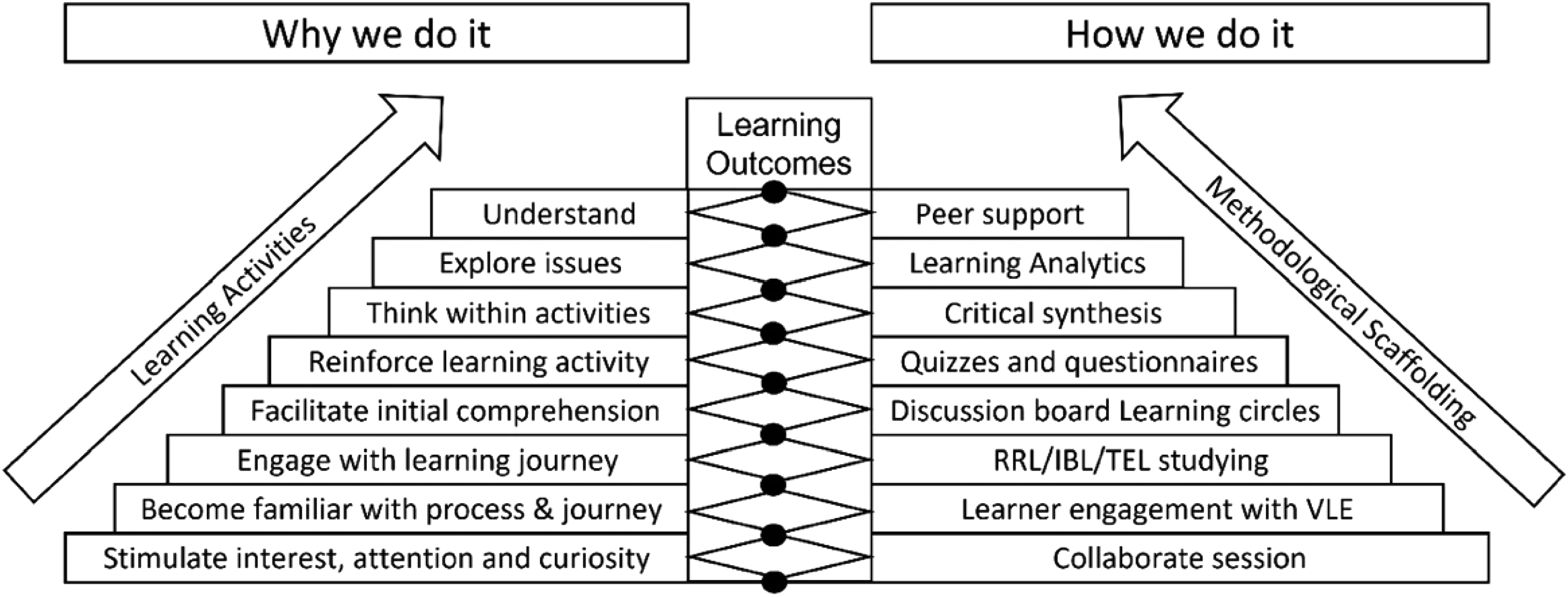
For this model to work, it is imperative that tutors place themselves in a position to master the use of digital technologies, to harness their power. In comparison with other learning theories, there are benefits to educational scaffolding as an approach. When thinking about these benefits, it is essential to consider the context in which the learning experience is delivered. Furthermore, the learning journey must be known prior to the experience planned to facilitate progression suited to the learner’s anticipated needs.
Educational scaffolding begins with early recognition by the tutor and learner of the learner’s strengths and weaknesses (Vermunt et al., 2019). This awareness on the part of the tutor enables specification of a bespoke learning experience, and learners’ self-awareness empowers them to objectively evaluate themselves, manage their emotions, align their behaviours with strong learning values and understand correctly how they can improve (Brown et al., 2020). Confidence in the delivery of workload efficiency that is structured and focused ensures that task time is improved, and that task completion is enhanced. Therefore, establishing momentum in the learning experience through the structure provided by scaffolding enables learners to spend less time searching and more time on discovery (Gillies, 2019). This results in more effective learning and creates strongly motivated, highly active and fully engaged learners. To add value to the students’ learning journey, there is a need for them to engage with real-life, practical activities in the classroom, also known as experiential learning.
Experiential learning
The term “experiential learning” is commonly used, and the approach is commonly practised in a wide range of disciplines in higher education, including medicine, the arts, hospitality and engineering (Kolb and Kolb, 2017); however, it is particularly relevant in the field of entrepreneurship education (Ahmad et al., 2018). As a basic definition, experiential learning is about “constructing knowledge and meaning from real-life experience” (Yardley et al., 2012: .161). With the continuous advances and impact of new technologies, as well as their increased uncertainty, management education more than ever has become “crucial to the success of projects and organizations” (Rezania and Blyth, 2009: 147). Managerial practice is defined by the ability for in depth problem solving based on identifying solutions to scenarios (Bougie and Sekaran, 2019). Kolb (1984) defines four key agendas of managerial learning, from experience to reflection, on to cognition and then into action. These agendas allow learners to analyse the successes and failures of their experiences; and for more industry-specific subjects, such as music management, this type of experiential learning can be extremely beneficial, allowing learners to fully synthesise and reflect on the transition from theory to practice. However, this can be achieved only if the tutor has an in-depth understanding of experiential reflection (Moon, 2004), and is able to use educational scaffolding to support the learning journey.
Organisations that are globally successful in today’s market tend to have a broader diversity of people in their workforce (Barak, 2017). Employees in these organisations therefore need to work and interact regularly with those from different cultural and socio-economic backgrounds. This can be difficult for some employees and their organisations because these types of challenges can cause misunderstandings that detract from efficient and effective interactions (Adler and Gundersen, 2007). Consequently, to be successful it is essential that organisations understand why some employees are more effective than others in dealing with situations that are culturally diverse. Kurpis and Hunter (2017) argue that university business programmes can increase their student employability by offering them more diverse development opportunities integrated into the activities of the curriculum. Gosen and Washbush (2004) support the notion that experiential learning is effective, although they suggest that there is a long-standing trend of not meeting the highest of research design and measurement standards.
Conceptual framework
We have conceptualised how the innovative use of ICTs can facilitate the delivery of online experiential activities to improve the learning experience and progression performance of music management students – thus making valuable connections between academic theory and industry practice through innovation within the VLE. This conceptual framework enables us to identify three key factors derived from our literature review: role play simulation, industry engagement in the classroom and technology-driven teaching and learning.
Role play simulation
Role play is a method of teaching and learning or of evaluating learning of curricular content that is based on a real-life situation (Cilchot, 2001). In the context of entrepreneurship education, it has become an effective pedagogical tool that offers learners the opportunity to link their “learning environment with the actual environment”, which helps “to promote integrative learning and enhance team development” (Tiwari et al., 2014: 261). In the classroom, it has been widely recognised by academics for more than four decades as a preferred pedagogical approach to improve the learning, attitudes and behaviours of learners. Role play has been defined as “an educational method in which participants assume a certain role and act” (Moreno-Guerrero et al., 2020: 2). In most situations of role play, the learner takes on the role of someone else and there is an emphasis on spontaneity and improvisation. Important benefits include the learning of the basic terminology and concepts of a specific subject; grasping interrelationships between different business functions; transferring knowledge from theory into practice; providing a common experience for class discussion; engaging students in the application of concepts; and improving learners’ ability to make decisions and interact with one another (Crossan and Sorrenti, 2003; Gentry and Burns, 1981; Knotts and Keys, 1997).
Industry engagement in the classroom
An integral part of any business and management programme, but especially of an applied pathway such as music management, is engagement with industry. A proven format for bringing together learners and music industry professionals is through the delivery of masterclasses. The premise is to support learners in building their practical knowledge and skills about their chosen industry by inviting industry experts into the classroom to lead a workshop session with students, covering a specific topic related to the module. Masterclasses are a tried and tested method in entrepreneurship education and provide students with an opportunity to actively engage with industry experts to better understand how theory can inform practice, and vice versa. According to Williams et al. (2007), for management students this type of industry exposure “maximizes students’ chances to develop autonomy and encourages students to be self-motivated” (p. 3). Industry involvement in the classroom through masterclasses can contribute to building student engagement, enhancing the learning experience and sense of belonging in higher education, especially during a time of uncertainty. However, rather than just being a one-off event, this type of engagement can support the forging of long-term, collaborative relationships between industry practitioners and academic staff and students, with masterclasses potentially creating that initial connection as well as exposing learners to ‘real world’ workplace experiences, and can provide key employability skills for future career success (Riebe et al., 2013).
Technology-driven teaching and learning
All taught sessions, whether face-to-face, online or blended, are facilitated by ICTs in some capacity (Rapanta et al., 2020). These tools enable the synchronous and asynchronous delivery of learning through interactive online sessions, including lectures, seminars, workshops and tutorials, as well as individual and group meetings incorporating additional features such as chat, screenshare, quizzes and polls.
Allowing tutors and learners to work and study using ICTs in a VLE has become a fundamental driver for innovation in teaching and learning (Peimani and Kamalipour, 2021). Due to the lockdown restrictions of COVID-19, many higher educational institutions (HEIs) had to change from delivering programmes face-to-face to delivering them partially or wholly online, with varying degrees of success (Dhawan, 2020). However, this change has had a profound effect on tutors and students alike by creating, or more likely accelerating into, a paradigm shift in the way that academic courses and modules are managed and delivered (Danchikov et al., 2021). As HEIs have transitioned into using VLEs to deliver these sessions, in some cases the pressure has intensified to be more effective and efficient in the delivery of meaningful content. Alsharo et al. (2017) suggest that knowledge sharing via the use of ICTs can positively influence trust and collaboration between participants.
The VLE also offers practical solutions, such as allowing learners to work and communicate more flexibly depending on their personal circumstances and regardless of geographical location – which can save both time and money as well as potentially increase productivity (Secundo et al., 2021). Gilbert et al. (2021: 126) define pedagogical innovation as “a process rather than an outcome and innovative teachers as people who engage in that process”. However, a common issue with making such a radical transition from in-person teaching to online is that many tutors are unable to use the technology proficiently enough to deliver a high-level experience for learners, and so the VLE becomes a barrier, rather than a driver, for innovation (Danchikov et al., 2021). Moreover, when learning online, students must be competent in using ICTs, as well as understanding the nature of their learning experience, whilst engaging with assessments appropriately (Jones et al., 2009). Therefore, HEIs have taken the initiative to identify and train virtual technology users in the necessary skills to manage and deliver courses and manage administrative duties effectively (Ford et al., 2017). Consequently, Kumar and Johnson (2019) advocate the importance of structure and scaffolding with subject and research knowledge through the various interactions within the VLE, especially regarding research design, assessment development and psychosocial support.
Research questions
To explore how HE tutors can better facilitate students to make connections between entrepreneurship theory and practice in the VLE, the following research questions were developed:
•
•
Methodology
A case study methodology was adopted to address the “how” or “why” of the social phenomenon and its interpretation (Yin, 2009). In our capacities as tutors and industry practitioners, we were able to explore the interrelationship between experiential teaching and learning by recognising that we are part of what we study; thus, showing how researchers are “shaped and affected by our fieldwork experiences” (Atkinson et al., 2003: 57).
Context
We present two scenarios of innovative online learning from one module, Copyright and Law, delivered to the same cohort of 30 students on a postgraduate programme in music management during the 2019/20 academic year. This study takes into consideration the difficult transitional journey for some students from studying to being immediately thrust into the workplace, which often requires different types of knowledge, experience, skills and competences (Kaputa et al., 2022). Due to the breakout of COVID-19 and the severe restrictions placed on the delivery methods of HEIs by the UK Government, all on-campus teaching was transferred online, and tutors delivering practical modules were required to redesign their assessments for online delivery. This created several challenges for subjects in entrepreneurship education, which ordinarily depend on practical group work and face-to-face interaction. Therefore, with more emphasis on the importance of following more structured pedagogical approaches, educational scaffolding was used to facilitate experiential learning activities at the core of the learning journey to enhance students’ understanding of how theory and practice are interdependent.
Data collection and analysis
A case study “relies on multiple sources of evidence, with data needing to converge in a triangulation fashion” (Yin, 2009: 13). Therefore, a combination of different methods was used for collecting the primary data, including participant observation, self-reflection on practice, semi-structured interviews and informal conversations between colleagues who participated in the teaching activities, as well as student feedback and VLE data. • Participant observation. Observation included analysis of the interactions between tutors, students and industry professionals’ VLE activities and was documented in the form of reflective notes. • Interviews and conversations. The data were supplemented by several semi-structured interviews and conversations with key informants (Johnson, 2008), such as tutors and industry professionals. • Student feedback. Using anonymised feedback provided by students in the form of evaluation surveys for the two modules relevant to this study, it was possible to gain valuable insights into the students’ experience as well as to identify areas for improvement. • VLE data. The learning analytics collected from VLE data helped us to utilise unknown learning patterns along with existing processes of learning (Agudo-Peregrina et al., 2014).
The data analysis was carried out following Miles and Huberman’s (1984) four steps: data reduction, data display, conclusion drawing, and verification. All data were anonymised, but collectively the data helped to provide a thorough insight into each scenario. A first-person perspective was used to describe, critically reflect on and analyse those experiences.
Case studies
Case 1: Contract negotiation as role play
Timing and phasing of contract negotiation role play.
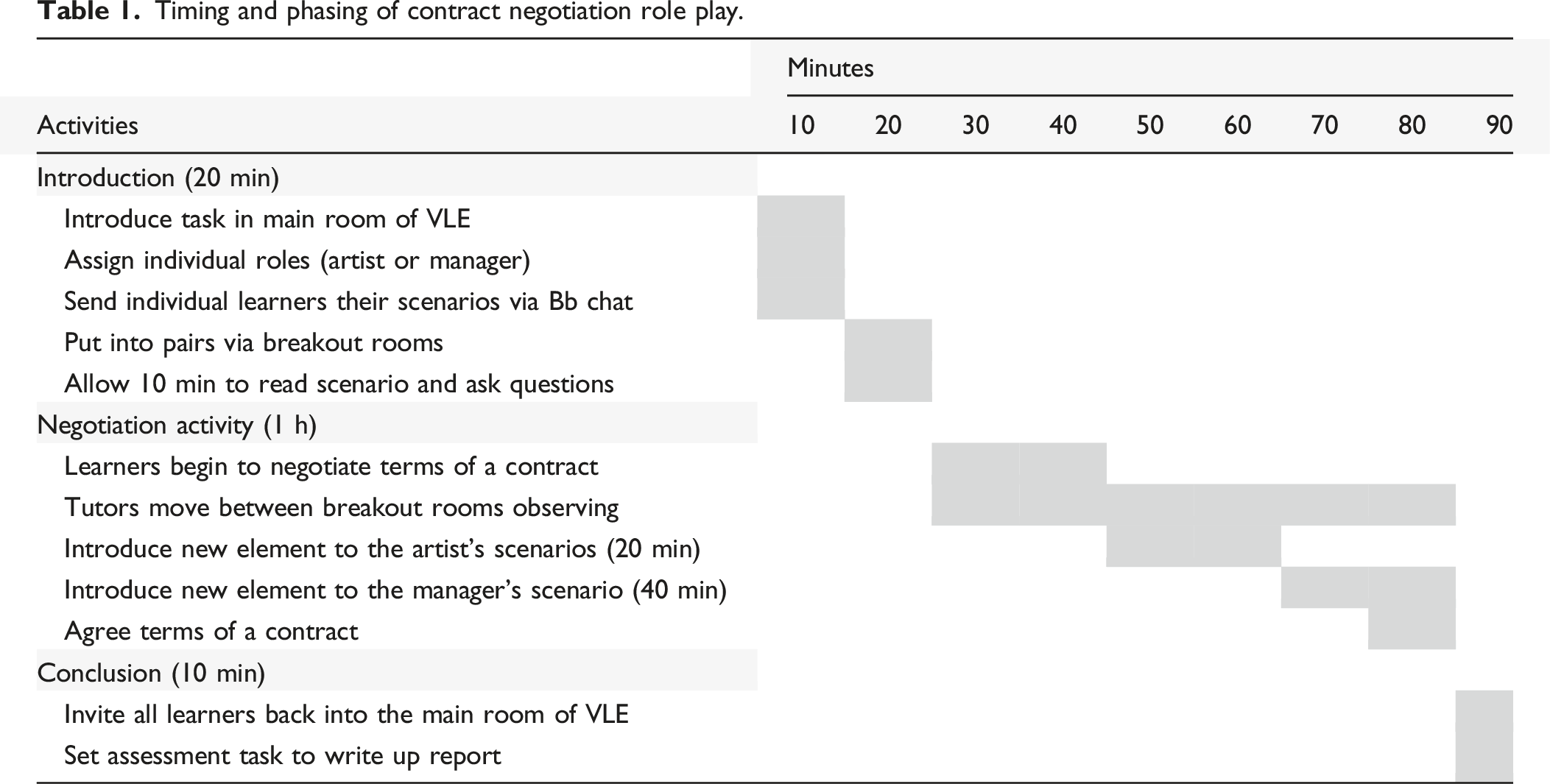
The aim of this activity was for learners to adopt the role of an artist manager or a record label executive and successfully negotiate a recording contract within a set period. The 30 students were divided into pairs and then allocated a number between 1 and 15. In each pair, one person was given a specific scenario about an artist manager and the other was given a different scenario relating to a record label manager; then they spent 10 minutes studying the brief and breaking the ice with each other in their roles. With the negotiation being online, we were able to use Bb Collaborate, initially addressing the whole group and then putting them into virtual breakout rooms of two people. They were given a maximum of 1 hour to discuss and negotiate the terms of a contract and had to come to an amicable agreement by the end of the allocated time. Students were encouraged to take notes and put their cameras on to enhance their ability to communicate well with each other.
Once the negotiations began, we (the teaching team) divided the student observations 50–50 and visited each breakout room with microphone and camera off, observing each pair for five or 6 minutes before moving to the next room. From these observations we took notes to cross-reference with the assessment’s marking scheme before swapping students to observe. Approximately 20 minutes into the negotiation, we sent direct messages via Bb Chat to each individual student informing them of a change in circumstances specifically related to their scenario, which they then had to improvise and adapt as they continued to negotiate. When a pair had agreed on the terms of a contract, they would both use Bb Raise Hand and one of the teaching team would join the breakout room to agree the successful completion of the task.
Case 2: Industry masterclass
Timing and phasing of industry masterclass.
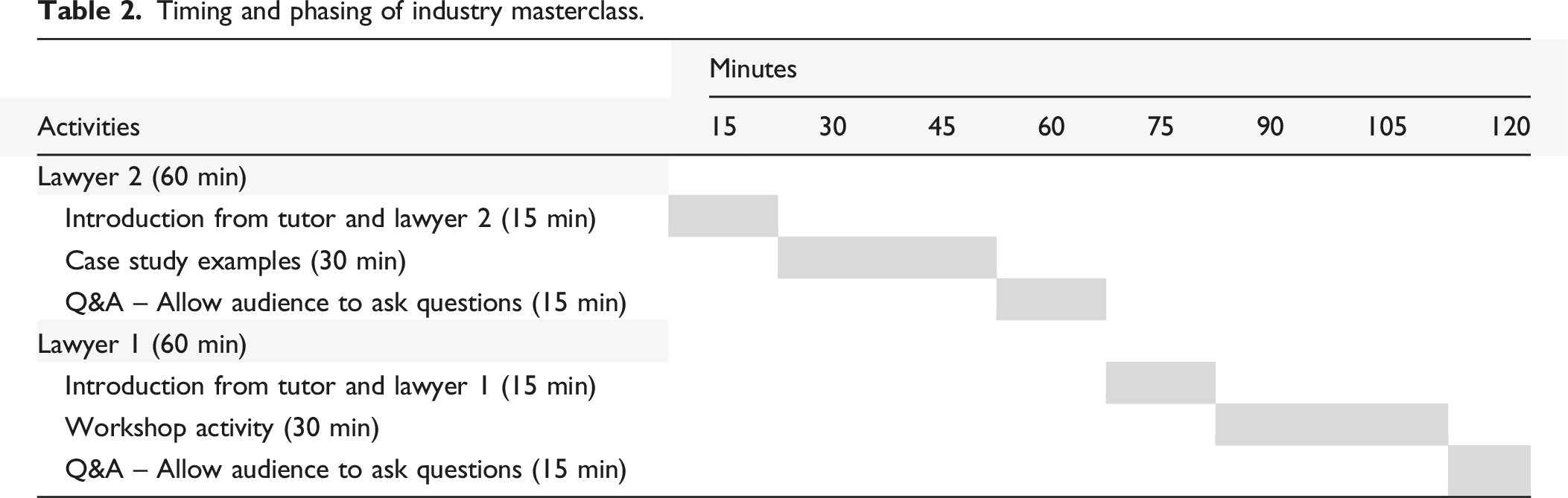
The first session, delivered by Lawyer 2, was a 45-minute lecture defining the concept of branding law and providing relevant anecdotes and examples from a daily practice of working with artists and music-based companies. The second session combined a general overview of the UK legal system with a focus on music synchronisation (a hot topic for students). We worked as technical support for the use of the VLE to ensure that the guest speakers felt comfortable and that the audience was able to hear and see them clearly via the videoconferencing software. For these sessions, we opted to use Zoom rather than Bb Collaborate or Skype Business, which were the university’s in-house platforms, mainly because it was more convenient for both our guest speakers but also due to the wider accessibility it would provide for external guests who were not registered university staff or students. Due to online delivery of these guest lectures, minimal preparation was required in comparison to organising an event in a lecture theatre, or even in a classroom. We (the teaching team) acted as curators, briefing the students beforehand about the topics for each session and, prior to the event, preparing the Zoom call and sending a link to all participants. We then agreed the format with both speakers, which included a brief introduction from us, 45 minutes for the guests to talk and 15 minutes for questions from the attendees. As curators, we also had to manage and respond to in-chat questions and the Raise Hand function during the questions and answers session.
Findings
Case 1
Due to the impact of COVID-19, we felt that for the Copyright and Law module it would be more beneficial for the students if they could have some meaningful real-life experiences. Therefore, we planned to try to replicate all aspects of the original assessment by using the VLE to its full capacity. This mode of delivery allowed us to observe each negotiation in a focused way without distraction, which helped in the assessment process. Once the role play activity had started, we were able to move between virtual breakout rooms almost anonymously, or at least discreetly, with no need for students to worry about other groups listening into conversations and thus reducing any potential competitiveness or embarrassment among the students. However, we found ourselves juggling all these breakout rooms and messages simultaneously and, as we were going through the groups trying to listen to the negotiations, we were also answering Bb Chat messages (both personal and group) from students asking a diverse range of simple to complex questions. Initially, it was chaotic because we spent time making sure that each pair had the correct information and were able to start negotiating. Therefore, the psychological and physical preparation for this type of activity is critical, especially if it is delivered online. We provided as much detailed information as possible, with simple guidance about what the students needed to complete and by when. Some students had additional support for such matters as technical issues in using the VLE, a poor Internet connection, or difficulties with operating cameras and microphones on their personal devices.
In our roles, we were more like moderators or facilitators, even though from a student’s perspective we would join each breakout room only for a short time before moving on to the next. Nevertheless, we were able to consistently assess the activity and, from our perspective, this was a much more efficient method of observation and assessment because we knew that we had limited time to move around and listen. Moreover, due to the format, we were able to perceive different details about the negotiations from an outside perspective, with more focus and fewer distractions than occur in the physical classroom.
For the students, the negotiation role play allowed them to demonstrate certain levels of knowledge and understanding of industry legal practices. However, as tutors, we had to support the process so that they felt comfortable enough to perform as they would have done in a face-to-face scenario. For this reason, a great deal of work was involved in the preparation of the virtual space – it was important that the students could complete a complicated task in a simple way. In our case we used Bb Collaborate, but it could have been any digital platform. For this experience to be realistic, and to be beneficial for the students, they must take the role of being a manager or a label representative seriously, as a professional actor would; in other words, they put themselves in that person’s position and act as if they are that person in the negotiation. In a face-to-face negotiation, if a student was unsure about something or needed to ask us a question, they might have to break out of character: however, online it was possible to communicate in private with the tutor via Bb Chat without inhibiting the student or disrupting the flow of the negotiation.
One of the students (Student A) had adjusted learning needs, which proved to be a challenging situation for this practical online assessment. However, we improvised in the moment and, when we decided on the pairs, we put Student A with an experienced and mature student (Student B). In the first instance, Student B was unsure and sent us a personal chat message asking why they had been paired with Student A, but we explained that we believed in Student A’s ability to support them through the task and then reinforced the message about how this was a simulation of what could happen in real life. We also needed to support Student A by answering several questions via Bb Chat.
Case 2
When the proposed industry masterclass was initially announced for the Copyright and Law module, it was clear that there was an appetite in students to attend this type of session. As we are their tutors, students see us in class every week, whether on campus or online, and they become used to the format of lectures and the mode of delivery, which tend to focus on theory, research and assessments. This can lead to students subconsciously perceiving the tutors simply as teachers and not recognising or acknowledging their industry knowledge and experience – seeing them rather as tutors who mark assessments. Therefore, the more opportunities there are to have external guest speakers talking directly to students the better. This is an activity that stimulates motivation and feelings of excitement. Even when we invite guest speakers from other departments, such as part-time tutors who also work as professional musicians or sound engineers – there is always a positive response from the students and the talk brings a freshness to the module that seems to reinvigorate and inspire them. Equally, we have found these music law sessions to be popular with a cross-section of students from music and arts subjects as well as from business and management, both internally and externally to the university. Overall, the masterclasses appear to meet a need that is not otherwise being filled in either the industry or academia.
Experienced industry professionals are always in high demand, so it is difficult to coordinate a day and time that is convenient for them, given their work commitments, to attend in-person for a one-hour guest lecture. In this respect we were lucky to have a list of music industry professionals who had already taught on the Copyright and Law module, but one person (Lawyer 1) had shown a keen interest in building the relationship between HEIs and the music industry. This became extremely useful to us during the pandemic lockdown as there were no longer frequent opportunities to engage with industry professionals to attract guest speakers to the campus. Lawyer 1’s suggestion of organising a masterclass session with a colleague provided a unique opportunity for students to meet two high-profile London-based lawyers who were working with some of the biggest commercial music artists in the world. For this reason, many students joined the programme with an intent to gain more knowledge and tap into the experience of tutors who might enable them to make valuable connections with the music industry.
During the session, Lawyer 1 was talking about their newly published book, reflecting on the difficulties for artists working in the music industry today. This is where education can make a positive difference because we (as tutors) are helping to co-create this culture of cross-pollination starting to happen with record labels and other music-based companies also recognising this trend. For example, 10 years ago, attempts to persuade someone from a major record label to endorse a music degree programme were met with resistance because people could not see the point. Now the landscape has changed: there is a strong dialogue between the two sectors which is having a positive impact in terms of inclusivity, workplace ethics and other issues which have needed addressing in the music industry for some time.
This type of masterclass could potentially cover several different legal aspects of the music industry but, having the lawyers involved, we were able to identify current trends and consider how to address them – for example, by organising a session on specific types of artist-management deals. Due to their experience in different types of legal contracts the lawyers made a point of asking attendees questions and requesting some clarification, which gave students the confidence to use the Raise Hand function and ask questions at the end of the lecture.
Discussion
In relation to RQ1, the study shows how HE tutors can utilise innovative technologies in the VLE to better support the implementation of industry-based activities. Both the contract negotiation role play and the industry masterclass case studies show that, when delivering practical activities online, educational scaffolding was interwoven into the whole process and became a valuable support mechanism to help learners solve problems, perform tasks and accomplish their goals independently with little or no help from the tutors (Kunnari, et al., 2021).
During the role play activity, we were able to act as facilitators by assigning to students one of the two roles – artist manager or record label executive. With some basic information, the learners were able to build awareness about their respective roles and this gave them a platform from which to start negotiating the terms of the contract. Students were required to use a combination of subject-specific knowledge relating to music law, which they would then have to bring into the negotiation in real time. In this situation, for some of the students who were experiencing it for the first time the immediate reaction was to panic or become anxious. However, the tutors were able to provide reassurance for these learners through the various forms of online communication within Bb Collaborate, such as Chat and Raise Hand. Thus, after an initially flurry of questions, the learners started to understand the task at-hand and to show self-regulating capabilities (Bransen et al., 2021). As they began to settle into their role, they were able to be spontaneous and to improvise during the conversation and, from their perspective, to become more innovative in their use of basic legal terminology and concepts, grasping interrelationships between different business functions and transferring knowledge from theory into practice (Crossan and Sorrenti, 2003; Knotts and Keys, 1997). However, more significantly, in a short space of time we could see the learners grow in confidence about how they interacted with each other and their ability to make decisions (Gentry and Burns, 1981).
Students have always been interested in learning more about the world of work and, since the COVID-19 pandemic forced us to move our activities online, masterclasses have stimulated even greater interest, maximising “[students’] chances to develop autonomy and encourag[ing] students to be self-motivated” (Williams et al., 2007: 3). Engaging with experienced industry professionals is a highly motivating factor for students and they perceive the masterclass to be one of the gateways to greater industry knowledge, an opportunity to network and, ultimately, a career in the music industry (Riebe et al., 2013). In the present case, they were able to put their skills and knowledge to the test in the critical discussions that arose before and after the lectures. Despite there being a plethora of information available online for music-related subjects like marketing, entrepreneurship and artist management, there is a definite lack of access to information about copyright, intellectual property and other legal issues. The main reason why this masterclass and others like it have become embedded in the curriculum is because the students aspire to work as industry professionals and, regardless of all the knowledge they have acquired during their time as students, they are motivated by experiential forms of learning. For example, the students see the real-life work experiences of Lawyer 1, who has over 30 years’ experience as a music solicitor working in the commercial music industry, as highly authentic and that experience helps them to construct knowledge in a more sophisticated way (Yardley et al., 2012). As tutors we recognised the value of such knowledge, and so incorporated this industry masterclass into the module schedule as a bespoke learning experience to build students’ self-awareness and help them align their academic progress with their career aspirations (Brown et al., 2020).
Regarding RQ2, this study confirmed the essential factors in developing the industry-relevant knowledge and skills of learners in HE. The VLE, and other supporting ICTs, provided the core ecosystem for tutors to deliver practical activities with flexible communication and collaboration with learners, both synchronously and asynchronously depending on the situation (Rapanta et al., 2020). Initially, COVID-19 restrictions had a negative impact on the delivery of modules such as Copyright and Law because HEIs had to move programmes online (Dhawan, 2020). However, by actively exploring ways of delivering the same activities and assessments within the VLE, new innovative tools and techniques came to the fore of our teaching practice to improve student engagement (Alsharo et al., 2017; Peimani and Kamalipour 2021). We found that breakout rooms, discussion boards, as well as the Chat and Raise Hand functions were the most effective ICT tools used during the role play activity and the industry masterclass. • Breakout rooms. Despite requiring setting up time in beforehand, the breakout rooms proved very useful for facilitating the negotiations during the role play activity. They provided a safe space for learners to talk openly without fear of judgement from their peers, and those who were normally shy in front of large groups felt secure. As tutors, we were able to move between rooms, within Bb Collaborate, to reassure learners, clarify questions and reinforce the goals of the activity (Kunnari et al., 2021). We also had an additional breakout room that was accessible only to tutors, which allowed us an online space in which to discuss our delivery strategy or problem-solve in confidence. • Chat. This function became an innovative component of the scaffolding process for delivering practical activities online as we were able to identify students’ potential strengths and weaknesses (Vermunt et al., 2019). The Chat function, embedded in the videoconferencing platforms, allowed us to efficiently provide scaffolding for learners who were having difficulty during the role play; they were able to subtly post a question to us directly via Bb Collaborate, which allowed them more time to concentrate fully on the negotiation (Gillies, 2019). However, for the industry masterclass we used the Chat function in Zoom as a main feature for the Q&A session at the end of each guest speaker’s lecture. • Raise Hand. Similarly, the Raise Hand function was useful for learners to attract the tutor’s attention without disrupting the flow of discussion or activities. For example, in the role play, once students had been assigned their breakout rooms and started the negotiation process, we moved from room to room to observe and answer questions. However, at certain points a group would have a specific question while all tutors were busy in another breakout room, so it was important for the tutors to have this structure and scaffolding with relevant knowledge and to be able to communicate flexibly using this type of VLE feature (Kumar and Johnson, 2019). • Discussion boards. Using a ‘flipped classroom’ technique, we recommended reading material to the students which was available in the VLE. The purpose was to help them develop a good understanding of the relevant legal knowledge; then, through the Discussion Board threads, they were able to share that knowledge with their peers and through reflective posts and comments, thus creating learning circles to reinforce learning (Kunnari et al., 2021; Stoten et al., 2018). When it came to the role play and masterclass activities, learners were able to tap into this pool of knowledge and use it to think critically and make a meaningful contribution in a simulated ‘real life’ experience.
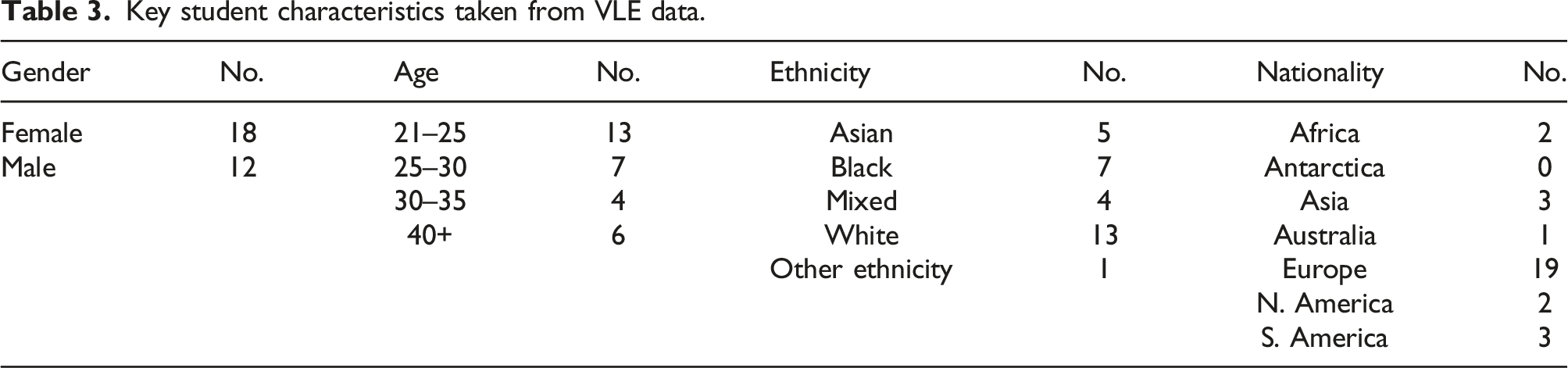
Key student characteristics taken from VLE data.
As well as facilitating the support of the needs of individual students during these activities, the ICT tools also helped to differentiate and streamline formative and summative assessments (Jones et al., 2009). Throughout the activities we provided opportunities for learners to use experiential learning as a vehicle to fully synthesise and reflect on their transition from legal theory to music industry practice, with educational scaffolding in place to support the learning journey (Moon, 2004).
Conclusions
We present here our conclusions regarding the study’s theoretical, practical and future research implications. With regard to theoretical underpinning, we relied on educational scaffolding and specific aspects of experiential learning to explain how ICT tools support both tutors and learners in the delivery of practical activities (Brush and Saye, 2002). We explained the importance of building subject-specific knowledge and self-awareness, encouraging innovation in a practical context, as well as autonomy and self-motivation, and how tutors play a significant role in scaffolding these competences. Regarding practical implications, this study is relevant to academics working in HE, particularly those involved in the delivery of applied subjects, such as music management, in the field of entrepreneurship education. If they are provided with an appropriate online set-up using a VLE, students do not have to be in an industry setting to acquire valuable experience of work situations, which can be effectively replicated and, in some cases, enhanced. Moreover, due to the improved accessibility of facilitating complex ‘real-life’ industry activities within the VLE, such as role play and masterclasses, industry professionals should be more open to the possibility of contributing to HE programmes when there is a student demand for shared industry knowledge and experience.
Such educational activities should become a focus for collaboration between tutors, students and industry professionals, with increased emphasis on how technology can be made more accessible while building connections between industry and academia (Ford et al., 2017). Tutors can formally embed practical activities such as role play in the curriculum and thus demonstrate more clearly the connection between their teaching and industry engagement. Learners can then utilise such activities as research and development for their own careers, while industry professionals can identify potential employees as well as reflect on their own practice. Overall, by strengthening industry links, tutors can build a portfolio of online practical activities that represent the ‘real-life’ of the industry (Tiwari et al., 2014), helping to forge long-term, collaborative partnerships that enable learners to gain more meaningful knowledge and opportunities.
A limitation should be acknowledged when interpreting the findings of this study. The data were gathered using personal experience methods, including observation of and self-reflection on practice, interviews and conversations with colleagues who participated in the teaching activities, student feedback and VLE data collected from a public university in the UK. We believe that this study should be replicated, and expanded upon, in future research to bring in the views of representatives from other areas of the music industry as well as other industries that harness entrepreneurship and innovation. We also suggest exploring the concept of educational scaffolding and how ICT tools, used within the VLE, can bridge the gap between academic theory and industry practice in other applied HE subjects.
Footnotes
Declaration of conflicting interests
The author(s) declared no potential conflicts of interest with respect to the research, authorship, and/or publication of this article.
Funding
The author(s) received no financial support for the research, authorship, and/or publication of this article.
