




Abstract
There is limited experience with innovation policies in rural areas, often based on a one-size-fits-all approach. However, rural businesses have diverse needs and there is difficulty in applying smart specialisation approaches for the use of European Union Cohesion funding in rural areas. A key resource in rural areas is the local university, and universities face increased demands to support local firms. This paper examines one particular case of a university in a rural region and its use of the European Regional Development Fund to support innovation activities. The challenges of working with rural businesses are explored, as is the focus on one-to-one support rather than the more collective smart specialisation approach. Universities need to take a pragmatic approach to ensure that the needs of firms can be balanced with the capacities of rural universities which are often smaller and more specialised than urban universities.
Rural businesses are diverse in their nature (Bosworth and Finke, 2020; Phillipson et al., 2019), but the high level of diversity is not sufficiently recognised in policy efforts to support rural innovation. Instead, policies are often based on one-size-fits-all approaches (Tödling and Trippl, 2005), with rural support either focused on traditional land-based businesses or falling under more generic regional support which is primarily targeted at more urban centres. Whilst recent regional development policies based on bottom-up initiatives have emerged alongside and in partnership with central government policies for driving innovation by focusing on the local specialisation of R&D activities (McCann and Ortega-Argilés, 2015), rural regions might struggle to adopt this new approach. Rural enterprises that depend on local markets can face very different challenges and opportunities from those exporting beyond the local region. Moreover, as traditional rural sectors struggle with increasing pressures for production efficiency and cost savings, they may have less freedom or capacity to invest in innovation projects.
A key element in innovation policies at the local level is the university as knowledge provider, source of training and development agency. Universities can be important sources of intra- and inter-regional flows of knowledge, especially in rural regions lacking other knowledge institutions (Charles, 2016), but there is some evidence that rural SMEs are less likely to connect with higher education institutions (Johnston and Prokop, 2021). Overall, the university’s regional role has become more emphasised in international, national and regional policies in the past decades (e.g. Roper and Hirth, 2005; Zomer and Benneworth, 2011) and higher education has faced increasing expectations to foster local economic growth and prosperity (Arbo and Benneworth, 2007; Breznitz and Feldman, 2012). Universities are also increasingly seen as playing a role in designing regional development policies, such as the European Commission Research and Innovation Strategies for Smart Specialisation (RIS3) (Goddard et al., 2013; Kempton, 2015). However, with the recent exception of the Higher Education for Smart Specialisation (HESS) study (Woolford and Boden, 2021), universities’ contribution to the implementation of these policies has not been widely investigated (Salomaa and Charles, 2021). Furthermore, there is a need to study further how the rural context shapes or influences the nature of demand and the ways in which the university can deliver innovation support in its region (Salomaa, 2019). As fostering innovation is not a straightforward task for universities, particularly in rural regions, more context-sensitive studies are required to develop an understanding of the university’s regional roles beyond simplistic one-size-fits-all solutions (Kitagawa et al., 2016) and also in the implementation of regional innovation policies.
In this paper, the practical implications of local innovation policies are reviewed to create a better understanding of how rural innovation can be more effectively supported by higher education institutions. This will be examined using an example from the Cohesion Policy of the European Union (EU), focusing in particular on the innovation support channelled through programmes led by a particular university as a key knowledge institution in a rural region. For that purpose, we ask how universities support innovation in rural regions through the practical application of EU Structural Funds (SF). This question will be investigated through a single case study of the Greater Lincolnshire Innovation Programme 2017–2019, partly funded through the European Regional Development Fund (ERDF), by assessing the innovation support delivered by the programme in the rural region of Lincolnshire, UK. The case study approach was employed to generate detailed empirical evidence on the ways in which universities can support their local businesses through SF-funded activities in a rural region. First, previous research on rural innovation and universities’ role in rural regions is reviewed, after which the chosen methods and materials are discussed. Then, the empirical and secondary data from the case study are presented and analysed to draw conclusions on how universities can enhance innovation in rural regions through effective implementation of innovation strategies, and how these delivery mechanisms could be reinforced through strengthening the internal knowledge circulation about these activities within universities.
Universities and innovation in rural regions
Innovation in rural regions
Traditional innovation models indicate the importance of intra- and inter-regional flows of knowledge, goods, people and firms (Fratesi, 2015) and present the innovation journey as one with multiple pathways that do not necessarily have a preconceived endpoint (Van de Ven, 1999). Until the 1990s, the technology push model of innovation policy dominated policy formulation, focusing on R&D infrastructure, financial incentives targeted at companies and technology transfer, whilst overlooking the absorptive capacity of local companies and their needs concerning innovation support. This was especially evident in less favoured regions (Lagendijk, 2000; Tödtling and Trippl, 2005), in which businesses, networks and various forms of supporting infrastructure are relatively sparse (Charles, 2016)
Since then, the conceptualisations of innovation processes have evolved towards more systemic models taking specific spatial and organisational dimensions into account (Cooke et al., 1997; Lundvall, 2010). In these more recent models, innovations are perceived as complex, interactive processes involving markets, policies, research and technology, ultimately leading to new knowledge and learning (Edquist, 1997; Santos and Caseiro, 2015). In a modern economy that places higher values on workforce skills and where firms’ knowledge networks evolve beyond regional boundaries, the challenge for policymakers is to anchor knowledge into the local region (James et al., 2016) whilst strengthening the regional innovative milieu (Camagni, 1995). From this perspective, Fratesi (2015) presents the basic structure of a regional knowledge economy, in which the internal circulation of knowledge – ‘the fuel of innovation’ – is ignited through frequent interactions beyond regional borders. These interactions can include trade, people and knowledge flows and movement of firms (Fratesi, 2015), which occur through different forms of network including trade-based ‘market relations’, formal and structured ‘bureaucratic relations’, ‘associative relations’ based primarily on short-term shared interests and ‘communal relations’ founded on strong shared identities (Tiepoh and Riemer, 2005).
Although emphasis is placed on networks in the new rural paradigm and in contemporary rural development theory (Horlings and Marsden, 2014; Murdoch, 2000), rural regions still have sparser networks in terms of Fratesi’s internal knowledge circulation space (Figure 1). Thus, networks straddling rural space are likely to be more heavily dominated by urban actors, such as universities. In such regions, the number of actors and the sum total of knowledge within the core knowledge circulation will also be smaller; thus the flows into and out of the region may be expected to have a greater impact on local innovation and development. However, effective tacit knowledge exchange mechanisms require intensive interactions, which is facilitated by geographical proximity (Storper and Venables, 2004; Tödtling and Trippl, 2005). To exacerbate the challenges of sparsity and distance, it is also recognised that innovation and knowledge spillovers tend to be slower in rural regions, because they tend to be more heavily reliant on exogenous forces for growth opportunities (OECD, 2014). Rural areas generally have low aggregate levels of innovation as they lack clusters of innovative businesses, large research universities and public research centres, and have an economy largely made up of SMEs and family businesses: overall they are defined by a relative sparseness. However, while the stereotypical rural business is farm-based, touristic or a lifestyle business, the reality is more diverse. Some rural areas do contain specialised research organisations, and rural areas in the UK often have a higher proportion of manufacturing than the large cities, and among those businesses are some that are highly innovative. The basic structure of a regional knowledge economy. Source: Authors’ elaboration, after Fratesi (2015).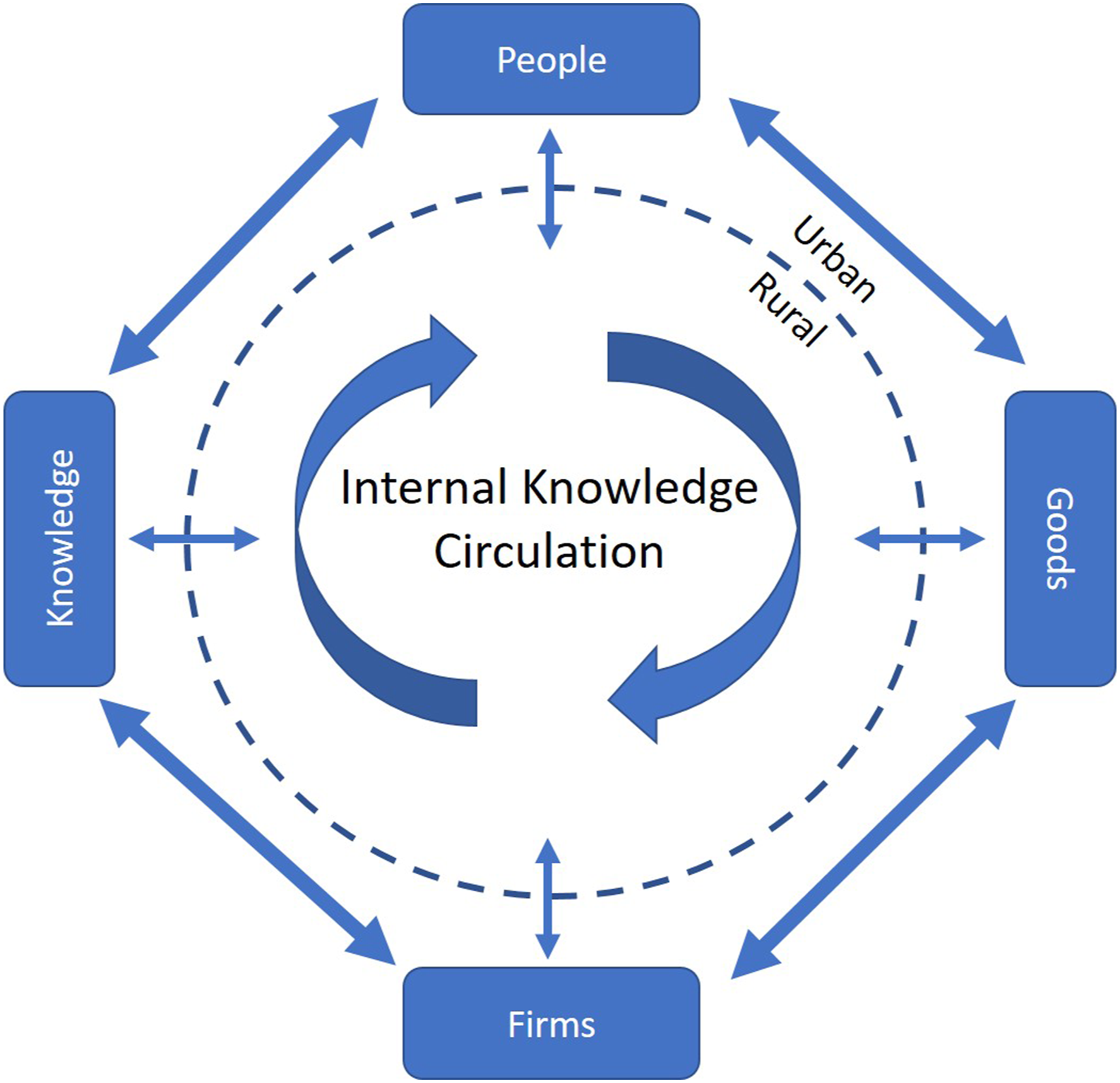
The diversity of rural economies is not just about an increased range of industrial sectors replacing an earlier reliance on land-based activities. The growth of SMEs in rural areas, partly fuelled by counter-urbanisation (Bosworth and Finke, 2020), has seen increasing urban–rural connectivity with many firms having only loose connections to their physical locality. Korsgaard et al. (2015) made the useful distinction between ‘rural entrepreneurship’, which is rooted in its spatial context and draws value from its intimate engagement with place, and ‘entrepreneurship in the rural’, which is more outwardly oriented and less dependent on local markets or local knowledge networks. Translating this into innovation we can ask, “Is rural innovation policy about innovation for classically-rural businesses, or does it include support for businesses which may be more global in focus, but just happen to be based in a rural area?”
Analysis of high-tech industry employment in the UK reveals that many rural local authorities, especially in the south and midlands, have location quotients (LQs) of above one; in some cases a rural county surrounding a city has a higher LQ than the city (Bakhshi et al., 2015), although sometimes these businesses are located just outside the main city. Large employers may account for this – such as in the Sellafield nuclear complex in Cumbria – but there are undoubtedly innovative businesses in rural settings, even in the Scottish Highlands. These businesses include those involved in innovation in rural activities, but also some that happen to be in rural locations due to the preferences of the founder and that are not otherwise connected to the rural economy. So, the level of innovation in a rural area will depend on the mix of businesses, their orientation to the rural economy, and the extent to which that area is part of a functioning innovation system.
This leads us to question the targets of innovation policy in rural areas. Should rural innovation policies focus on the more innovative businesses or those that are more rooted in the rural economy? Or should policy focus on the innovation system as a whole?
Universities supporting regional development
The role of universities has become crucial both in regional innovation strategy formulation, especially in RIS3 processes identifying regional priorities (Foray et al., 2009) and in the implementation of these strategies (Santos and Caseiro, 2015; Woolford and Boden, 2021) through the Structural Funds schemes. Knowledge-based regional development cannot be approached just as a set of top-down policies, but through multi-level governance (Marks 1992; Marks et al., 1996) policy initiatives. Their implementation requires complex, collaborative local discovery processes involving multiple actors with shared interest in “turning disadvantageous characteristics of a region into competitive assets” (Kolehmainen et al., 2016: p. 29). These collaborative knowledge generation processes can also create more sustainable changes in increasing the competency and innovativeness of the participants (Sá et al., 2018).
Previous studies indicate that both the regional and national contexts of the university are crucial in the development of the overall university engagement activities (Breznitz and Feldman, 2012); thus establishing entrepreneurial activities can be more challenging for universities based in rural regions because of a number of external factors, such as a diverse economic base, lower skills level, geographical remoteness (Charles, 2016) and weaker entrepreneurial traditions (Kempton, 2015; Oftedal and Foss, 2015). Therefore, policymakers should acknowledge the barriers created by geography affecting universities’ relationships with their respective regions. On the other hand, the impact of a specific context on their overall entrepreneurial architecture, including entrepreneurial interface structures, should also be further investigated (Salomaa, 2019). How, then, can rural universities best support innovation and what kinds of approach enables them to overcome the challenges they face?
Universities and practical implications of smart specialisation in rural regions
Central to the innovation paradigm has been a systemic approach building national and regional innovation systems from a set of constituent actors and institutions in which investment in research innovation infrastructures has gone hand in hand with the development of networks and interactions through social institutions. Such a model of development is natural for urban-focused regions with universities and research centres, but deeply problematic in rural areas. More recently smart specialisation proposes that regions should identify areas of specialised development based on existing assets and focus investment in these areas (McCann and Ortega-Argilés, 2015). The smart specialisation approach has dominated the implementation of Cohesion Policy, linking innovation and entrepreneurial discovery processes more closely to regional development (Begg, 2016). Thus, regional development policies have emphasised bottom-up initiatives, which decrease government’s role in driving innovation and local specialisation of R&D (McCann and Ortega-Argilés, 2015). It is claimed that this is also appropriate for rural areas which can specialise around the exploitation of rural resources but is this a rational or even feasible approach for rural areas without distinctive assets or a research base? Should such policies focus on traditional place-based rural sectors or innovative businesses whose engagement with the rural is limited to their location? The European Commission report on Smart Specialisation (2015, p.78) makes scant reference to rural areas, but does recognise the need to focus more on linkages between regions, including rural–urban complementarities, when considering the potential returns to regional policy investments.
As Markkula and Kune (2015) contended, the smart specialisation approach is an ‘active orchestration’ of the regional ecosystem around overlapping concepts such as knowledge co-creation and exploitation, opportunity exploration and capacity building. Correspondingly, the European Commission (2015) states that smart specialisation is a concept planned for promoting the efficient and effective use of public investment in research in order to achieve economic growth and prosperity to leverage knowledge and innovation-driven territorial growth through RIS3, which will allow regions to focus on their strengths (Sá et al., 2018). Though it aims to promote tailored solutions by enabling collaborative innovation (Foray, 2016), this approach is not always effective (McCann and Ortega Argilés, 2013); for example, the regional authorities may have insufficient capacity to manage entrepreneurial discovery processes (D’Adda et al., 2019) driving smart specialisation – the processes that create “the deployment and variation of innovative ideas in a specialised area that generate knowledge about the future economic value of a potential direction of change” (Foray, 2014: p. 495).
Kleibrink et al. (2016: p. 1439) describe smart specialisation as a policy concept “underpinned by a comprehensive transformational agenda for the way territorial innovation policies are conceived and implemented” by introducing four main novelties: (1) abandoning the sectoral focus of traditional industrial policy in favour of identifying narrower, emerging activities within and across sectors; (2) prioritising a limited set of activities; (3) identifying evidence-based RIS3 ‘priorities’, involving stakeholders (firms, research organizations, universities, civil society); and (4) building monitoring mechanisms to effectively support policy learning towards a self-correcting, sustainable policy cycle. Thus, smart specialisation needs to link together businesses across urban and rural space and to be part of the process of reconnecting economic activities and smoothing the pathways for innovation flows and collaboration. Smart specialisation, as the current dominant way of thinking, still emphasises agglomeration effects and networks of firms and institutions. Do such networks exist in rural areas, and can rural areas develop sufficient critical mass to sustain investment in such networks? If not, what kind of innovation policy should a rural area pursue? More particularly, should rural areas seek to develop place-based strategies for smart specialisation, or should they seek alternative approaches by aligning themselves with adjoining urban areas where proximity allows?
From this starting point, an evaluation of effective mechanisms to promote innovation in rural regions should focus on (i) strengthening the ‘internal knowledge circulation’ – the fuel in the Fratesi (2015) model - and (ii) reconfiguring the power balances within the intra-regional flows (the ignition or dampening effects) that can foster endogenous forms of rural innovation as well as supporting the trickle-down of external innovations. This paper focuses on the former by detecting how universities can enhance ‘internal knowledge circulation’ and support innovation in rural regions through practical implications of the EU Structural Funds. The innovation support provided by universities is assessed with regard to the types of knowledge flow and ‘novelties’ (Foray, 2014; Kleibrink et al., 2016) emerging from the implementation of regional innovation strategies.
Methods and case study overview
Methods and materials
Structural Funds are the EU’s key instruments of Cohesion Policy, implemented through national and/or regional Structural Funds Operational Programmes to support local-level projects in order to reduce economic and social disparities in Europe (EU 1301/2013). Previous studies indicate that regional RIS3 strategies guiding the access to local SF funding can facilitate matching universities’ research more closely with regional priorities (Fonseca and Salomaa, 2019), but universities’ engagement with such funding instruments is complex (Salomaa and Charles, 2021) and the regional benefits are difficult to assess (Percoco, 2017).
This is a study of universities’ role in supporting innovation in rural regions through SF funding. A case study approach is especially suitable for exploring the effects of local context on causal processes (Piekkari et al., 2009); in this case, the effects and demands of the rural region on the university in supporting local-level innovation. The study draws both from desktop research (e.g. regional development strategies) to set the context, and from ten semi-structured interviews that provide first-hand empirical data. The selected informants from the University of Lincoln (UoL) were involved either in the design phase of the Greater Lincolnshire Innovation Programme (two interviewees representing the top management of the UoL) or the implementation of the proposed activities (three administrative staff members and five academics). The professional staff were responsible for the overall project management, communication and reporting, whereas the academics were engaged with the actual innovation support activities (e.g. support provided to businesses through innovation vouchers). In addition, two complementary interviews were conducted with representatives from the Greater Lincolnshire Local Enterprise Partnership dealing with funding from the European Structural and Investment Funds (ESIF) for a more profound understanding of the regional development goals and expectations regarding the local university. The interviews took place between November 2018 and February 2019. 1 They were recorded, transcribed and analysed by the lead author. The analysis aimed to assess how the SF initiatives run by universities could enhance internal knowledge circulation in rural regions and what kind of challenges were faced in the implementation phase. Findings regarding the research question and key concepts discussed in the literature review (Foray, 2014; Fratesi, 2015; Kleibrink et al., 2016) were retrieved by utilising NVivo 11 software for coding responses from the informants and finally by drawing a thick description summarising the key results emerging from the empirical data (Denzin, 1989; Geertz, 1973). The content analysis focused on the three key points identified in the literature review: what kind of innovation support the university could offer, how the rural context shaped the provided support, and how the implementation of these innovation support activities was – or was not – aligned with regional development strategies.
Universities’ role in delivering structural funds projects in the UK
In the UK, universities are considered to be important actors in delivering ERDF projects (BIS, 2012; BIS, 2013). They are well equipped to manage the administrative processes, and also have the capacity to “lead the development of multi-party plans for realising the economic benefits of research” (BIS, 2013: p. 24). Thus universities can be ‘the biggest channel’ for delivering ERDF activities to local businesses, although there are also challenges – for example, the SMEs might not be aware of what kind of possibilities university collaboration would offer them: “the first contact and creating awareness of the capabilities of the university is a challenge in itself” (BIS, 2012: p. 38).
In the programme period 2014–2020, the EU contribution to the UK was in total £3.6 billion through the ERDF schemes – £6.7 billion when combined with national investments. In the case of England this funding was allocated to 39 Local Enterprise Partnership (LEP) areas. LEPs are the key strategic players in delivering ‘growth and jobs in their economic areas’: while they are not typically accountable bodies, they still provide important strategic oversight in their economic areas, in particular through the ESIF strategies setting regional priorities. However, it is stated in the ERDF programme for England 2 that innovation should not be bound by geographical boundaries; thus “more needs to be done to ensure that firms and research institutions are not hindered by artificial or administrative geographies” (p. 41). The 2014–20 ERDF programme was adjusted in 2017 to strengthen this strategic approach, and to reinforce the role of intermediate bodies delivering the projects.
Universities were particularly seen as key organisations in Thematic Priorities 1, Competitiveness of SMEs, and 2, Research and Innovation. There were altogether nine Thematic Priorities, but about 64.5% of the total EU contribution was allocated to the first two. 3 They could fund support activities that facilitated innovation support – for example, through investments in research and innovation infrastructure – and initiatives targeted at SMEs, such as innovation vouchers and grant schemes. Overall, the gross expenditure on R&D in the UK was below the EU 2020 target, so the ERDF funds could play a significant role in exploiting the national research base and helping SMEs to commercialise research-based products and services. In the ERDF programme for England (MHCLG, 2020), ERDF funding was indeed promoted as a possible means of strengthening collaboration between businesses, universities and other organisations. This was measured through the number of collaborations – consultancy, contract research, continuing professional development, facilities and equipment and IP services – between businesses and research organisations in the biannual UK Innovation Survey.
The University of Lincoln and European regional development fund funding in Lincolnshire
The total ERDF allocation for Lincolnshire for the 2014–2020 ESIF programme was around £73, 000, 000, of which Priority Axis 1, Research and Innovation, accounted for roughly £15, 000, 000 (GLLEP, 2017). The ESIF strategy for Greater Lincolnshire presented the UoL as one of the region’s strengths in its SWOT analysis. In particular, the importance of its School of Engineering (Lincoln) and National Centre for Food Manufacturing (Holbeach) was underlined (GLLEP, 2016). The strategic vision of the plan relied on the strong local research base: “University-led research supporting key sectors; effective knowledge transfer and good quality education and skills development” (p. 30). The aim was to make use of the “specialist knowledge from one university to support a business in another area.” (p. 114).
By the end of 2020, UoL (including the Lincoln Science and Innovation Park on the campus) had received funding for seven large-scale ERDF projects, with total of £16.8 million of requested ERDF investment (about 23% of the total ERDF funds in Lincolnshire). The public information on funded SF projects in the UK, at time of writing last updated on 25 August 2021,
4
lists the UoL as a beneficiary of projects such as the Centre of Excellence in Agri-food (£4,201,800), the Innovation Programme for Greater Lincolnshire (£1,808,693), the Greater Lincolnshire Agri-food Innovation Platforms (GLAFIP) and the Productivity Programme for Greater Lincolnshire, a successor to the Innovation Programme delivering SME support activities which started in September 2019. Two buildings on the University’s science park were also supported. Bishop Grosseteste University in Lincoln also received three projects, accounting for another £3 million of ERDF funding. This study focuses on the Greater Lincolnshire Innovation Programme because it was the first project to be funded and so was largely complete at the time of the interviews, because it was oriented to a wide range of sectors, and because it was focused on direct support for SMEs rather than on capital projects. In addressing the core research question of how rural innovation can be supported by universities, the study examines the following: • What kinds of firm should university programmes target, or should they support the innovation system as a whole? • How can rural universities overcome the challenges of delivering innovation support in rural areas? • Is it possible to implement smart specialisation type policies in rural areas? • What is the best approach to supporting rural businesses?
Greater Lincolnshire Innovation Programme – research findings
“Innovation is key to growth, and in a modern, technologically savvy and ever changing world it is vital for businesses to keep looking to the future and striving for improvement. Innovation is risky; when done well it can bring huge successes, however without the right support it can result in failure.” (https://lincsinnovation.co.uk/)
Innovation support delivered by the university
The UoL ran the Innovation Programme for Greater Lincolnshire, a project funded through the ERDF between 2017 and 2019. The programme offered a range of support mechanisms to local SMEs to cooperate with academics and students from different disciplinary areas. According to the project staff, the project supported businesses through one-on-one support meetings as well as through a range of targeted schemes as follows: 41 businesses with ‘Proof of Concept’ Grants, 45 businesses with Innovation Vouchers and 70 businesses with interns. The interviewed academics were typically engaged with a number of different collaboration projects within the Innovation Programme, often through Innovation Vouchers. In most cases, the academics involved were directly contacted by the company. These academics, especially those who had worked longer in the area, already had good connections with businesses in Lincolnshire, but had not necessarily worked with these companies before because of lack of funding. In these cases, the Innovation Programme enabled the initiation of university–business collaboration with small-scale pilots. “Actually, the business contacted me. I also knew about the Innovation Voucher scheme. So, I mentioned this to one of them, the other business knew about the scheme, and they just required my services.” (Researcher 1, UoL) “I was asked by the business. And that’s because I was in that business for 15 years – I didn’t know them, but they knew me by reputation, my door is always open – I’m asked basically ‘have you got any ideas on this?’ and then somehow I get involved.” (Researcher 2, UoL) “Quite a few academics have quite a few contacts of their own, so the Innovation Voucher, they were actually quite easy. A lot of academics had people they had been talking to but had not yet had an opportunity to work together. This provided an opportunity to do so, because it doesn’t cost the small company any money.” (Admin 2, UoL)
However, according to the admin staff, there were also many companies that had had no previous collaboration with UoL, so the Innovation Programme had do a lot of promotion work (events, existing contacts) and collaborate with regional umbrella networks, such as the Lincolnshire Growth Hub, to connect local companies with academic staff. This was more effective through Innovation Vouchers and short-term engagement with individual academics than through a similar programme run by UoL’s National Food Manufacturing Centre, which had directly recruited full-time post-docs to work with local businesses. In the latter case, their area of expertise was sometimes too narrow, or the SMEs did not have sufficient RDI resources to benefit from the support the academics could offer. “For the wider ones reaching Lincolnshire, because it is very rural, we had to do a lot of outward focus work. We went to a lot of events, hosted a lot of events, we did a big marketing campaign – it is not very easy to entice the more rural companies to actually work with us.” (Admin 2, UoL) “Well, we have a lot of business contacts, so there are various groups. So, I don’t know whether you might have heard the Business Lincolnshire Growth Hub? Also, ERDF funded. And they kind of, we work on a referral basis. So, if they have some business that has an innovative idea, then we like to think that they would then forward them on to us and vice versa. But most businesses, we kind of meet them at conferences, expos, kind of things like that, so we go out market the program, and we’ve also got an inbox, where businesses can kind of go and have a look on the website and then contact us through the innovation inbox. And also – sometimes I don’t know where they’ve gotten the contact details from.” (Admin 3, UoL)
Innovation support in a rural region
The interviewees confessed that it could be difficult to reach eligible SMEs located in rural areas of Lincolnshire, especially since there were a lot of companies without any previous experience of university collaboration. However, some of the academics thought that it could also be an advantage that there were fewer networks and organisations working in their own field; the linkages with key actors in a certain sector are more easily built when the number of companies is lower. On the other hand, there might be many relevant actors ‘hidden’ in the region. “Majority are first-timers. It’s quite a few that has probably spoken with us, and we are on their radar, but they are the ones that academics already know. So, for those ones, not any work has been conducted between them apart that they’ve had conversations. They can’t work with us because they can’t afford us, for example. And then for those companies that have never worked with us before, it’s only going to the industry-focused events to get them to know universities at all.” (Admin 2, UoL) “I wasn’t sure I would be able to find a positive about rural spread, but it’s there, isn’t it? Less people (businesses) to know and to find out who needs to know [about ERDF projects].” (Researcher 4, UoL)
One of the issues that was not completely clear from the beginning of the programme was the definition of ‘innovation’, which varied from being something new to business to creating something new for the whole sector beyond Lincolnshire. The latter approach was too ambitious for the programme, as the support delivered by the university was limited, and the involved businesses represented many sectors across the rural region. On the other hand, the university’s role in such an environment is also to help businesses understand what innovation can entail for a particular company. In the application criteria (scored from one to 7) of the programme the level of innovation was described as “… a measure of ‘novelty’ – doing something different or doing things differently to achieve a competitive advantage. Projects will score higher for new innovation to the sector or marketplace.” According to the administrative staff involved in the implementation of the programme this was something that would be more clearly defined in the university’s subsequent ERDF activities: “… what the company does, it’s completely up to them, but what they want to do with us has to be innovative. So what we are trying to do is to find companies to do things they have never done before, or to try to access some skills or machinery that they don’t have access to at the moment.” (Admin 2, UoL) “And then it has been a case of actually helping companies to understand what innovation actually is. The word doesn’t really say much, some people think of robots and curing cancer, they don’t think about innovation on a smaller scale in terms of it just being something different – and novel to you.” (Admin 2, UoL) “I think the challenges that we have faced are around innovation. So, innovation for one business could mean something different than for another. So, for example, if one business has got a special, kind of like filing systems, like a cloud base system, then another business might not have that and that might be really innovative to them and for their company, but that is something that we struggle with because we can’t support that because it’s not new to the sector. I suppose that is something down to our marketing. But we all always say whenever we’re speaking to businesses, you know, is it new to your sector and has it ever been done before. I mean as an example, I suppose, if something is being done in the agricultural sector, but it is not being done in manufacturing that would work.” (Admin 3, UoL)
The other criteria for businesses applying support from the programme were based on their ability to generate ESIF-funded outputs (development of new products, delivering products to new markets or increased RDI investment) and to exploit projects commercially (clear plan for exploitation/track record of successful commercial exploitation) and their alignment with Greater Lincolnshire Local Enterprise Partnership’s priority areas (agri-food; manufacturing and engineering; low carbon; visitor economy; ports and logistics; health and care). The Innovation Programme had a very small number of projects turned down, as the programme personnel worked with the businesses throughout the application process and advised them not to apply if they did not fit the criteria. The ones that were turned down often scored low on the ‘level of innovation’.
Innovation support and regional development strategies
The evaluation summary of the programme confirms that the whole programme was directly linked to the Greater Lincolnshire LEP and wider (regional) economic development strategies, and that it fulfilled “a key regional function by becoming ‘embedded’ as the only support activity specifically addressing innovation amongst Lincolnshire SMEs”. This was already taken into account in the design phase of the proposal: “We here in Lincoln do a lot of work with our region, with GLLEP we are very involved with what they are doing, so we are looking at what we can do as a university to help the agenda of the Council and to deliver it. So, we wrote the application to get the funding, it was in line with regional council’s expectations. We made sure that it was aligning with their long-term agenda. And we also made sure that it complemented other applications that were going into the same scheme.” (Admin 2, UoL)
However, as is typical for ERDF-funded projects, there were a number of “operational difficulties” with regard to slow take-off and delivering the expected outputs. Also, a lack of interest or previous experience on the part of the academics hindered the delivering of collaboration projects. In some cases, the programme could not match the ‘right’ company with the ‘right’ academic or the respective approaches of the company and academic were too different for the suggested project to progress: “With one of them, the business actually came in and met with the head and the academic, did a presentation and there was a lot of discussion, but I think that it become evident in the meeting that it will not progress, because the business had a really clear idea of what they need but the head of the department wanted to give them something else, marrying up – that one went downhill. It wasn’t so bad for me after all, because the business felt that as well, I wasn’t getting from the meeting what they wanted.” (Admin 1, UoL)
In regard to the internship scheme supported by the Innovation Programme, the aim was to facilitate connecting graduates with local companies to retain talent in the region and to provide highly skilled workers to them: “I think we play a key role because I think with the skills, with the talent that we produce from the University, I think that kind of develops into the economic development of the county, which is a key part as part of the ERDF, because they want you to show what you do for the economy and what are you bringing in to kind of help with the region – I think that is a key part that we play.” (Admin 3, UoL)
Most interviewees, both academic and administrative staff, pointed out the benefits of initiating long-term collaboration with small businesses, responding to regional priorities and stimulating economic growth. For the researchers, the programme provided seed money to build on large-scale research projects and, according to the evaluation summary, the higher-level interventions with local SMEs have strengthened companies’ perspectives of existing relationships with the university. At the same time, the SMEs have gained experience on external RDI funding as the university facilitated their access to funding. The Innovation Voucher scheme especially was highly appreciated by the businesses, being the only ESIF support mechanism which does not require match-funding. “I think it’s been very beneficial in linking us to companies like providing lots of opportunities there. So, we have, as part of our innovation related work, has of course to do with generating new business opportunities, new enterprises and some – so we have a Science Park. So, I think that side of activity is very important to us and to the city and regionality. So, there’s a very well understood effect that science parks helped to generate, regenerate the local economy. So, it’s a very nice model where we benefit on all sorts of levels. So, the innovation program is important because it helps to build those links and activities which can then lead on to those sorts of developments.” (Management 1, UoL) “The Innovation Programme was built to stimulate new relationships with local SMEs. And it’s absolutely doing that, that we can see the engagement hasn’t just stopped with the delivery of the innovation. It’s then gone on to lead to different things and different engagement between those businesses and the university.” (Management 2, UoL) “Particularly for SMEs, the smaller businesses, it is quite difficult for them in terms of funding and finding the ability to grow. It is really helpful for smaller businesses to access this funding. In terms of getting that expertise that they are lacking – so the Innovation Voucher enables linking them up with an academic that really helps them to move forward with their project.” (Admin 1, UoL) “I think there are things in the ERDF project where, where we have gone in and changed how people behave and think. And we’ve been able to advance their business aspirations 5–10 years.” (Researcher 5, UoL)
Discussion
The interviews identified a focus of the intervention on one-to-one assistance for firms rather than working with groups or clusters, and difficulties in reaching eligible firms and persuading them to participate in innovation projects. These are central concerns in understanding how universities can support rural innovation. There were also challenges arising from the need to satisfy the administrative requirements of the SF in terms of the types of output that were needed. Finally, there were issues around the internal engagement with the academic community. These three sets of issues form the basis of the discussion about how the university can provide practical support for rural innovation, the way universities can engage with different types of rural innovator, and the contribution to knowledge circulation within the region.
A central characteristic of the Lincoln Innovation Programme, which seems a little at odds with the ERDF orientation to smart specialisation, is the focus on support for individual firms through short-term research and consultancy projects. Instead of following a comprehensive, transformational smart specialisation agenda (Kleibrink et al., 2016), the programme initiated small-scale cooperation towards knowledge creation and exploitation (as required by the ESIF funding) as well as capacity building. Given the focus on networks and ecosystems in smart specialisation (Markkula and Kune, 2015), it might be expected that the programme would be oriented towards more collective actions aimed at groups of firms, and this might be a desirable action in a rural area where fragmentation is the norm. There were, however, three groups of reasons for a greater focus on individual firms, some pertaining to the university context, some to the rural nature of the region and some to the implementation of the ERDF.
Innovation support in rural regions
In a rural region there are typically established networks among traditional land-based industries but overlain by layers of community-oriented businesses and a more fragmented set of often externally-oriented firms that are located in the region but that have limited connections. Thus, the development of effective tacit knowledge exchange mechanisms facilitated by geographical proximity (Storper and Venables, 2004; Tödtling and Trippl, 2005) can be more complicated in rural regions, and should be addressed in rural innovation policies encouraging university–business linkages (Johnston and Prokop, 2021). Most of these rural businesses are SMEs and have little or no previous engagement with universities or with innovation support. This is in line with Johnston’s and Prokop’s (2021) findings, according to which rural SMEs are often innovative, but may have limited university connections. The challenge for innovation policy is not only to anchor knowledge in the region (James et al., 2016), but also to introduce firms to the idea of asking for support for innovation, and to identify some kind of collective growth opportunity as the focus of a smart specialisation strategy. The latter part is harder to do unless the first part has already been achieved. Smart specialisation is not intended to continue support for traditional sectors (Kleibrink et al., 2016), but to identify new entrepreneurial opportunities, perhaps grouping some traditional firms with new sources of products and services that transform their sectors. But these traditional sectors are often reluctant to innovate and lacking in capital for investment, and the new inputs needed to transform them may be difficult to identify, or even absent in the rural region. On the other hand, the externally focused and sometimes high-tech firms that may be scattered across the region as a result of the personal location preferences of the founders would tend to orient themselves towards partners in other regions, and might not be well known within their own region. The construction of new networks is consequently difficult due to limited knowledge and bounded rationality. The first step in overcoming this is for actors such as the university to build a wider set of contact networks in the region to start to identify possible connections, but then also to start to build greater awareness of the benefits of innovation and a willingness to engage among the different groups of SMEs to increase the internal circulation of knowledge (Fratesi, 2015).
Innovation support in the university context
For the university there are also underlying pressures to focus on developing links with individual businesses. One-to-one research and consultancy projects are what the university best understands and fit most closely with the modus operandi of individual academics, so there is greater familiarity with how to manage such links compared to more complex network projects. Also, universities are subject to reporting requirements on their engagement with businesses, which tend to focus on the number of individual connections and the associated income. These indicators are built into the Higher Education Business and Community Interaction (HE-BCI) annual survey and the new Knowledge Exchange Framework, and have been part of the metric for calculating the third stream funding through the Higher Education Innovation Fund. Thus, universities know that there are benefits from building individual links as they support current metrics, but that such links can also be developed into longer-term relationships that can continue to deliver income and future research collaborations. Previous studies suggest that these kinds of collaborative knowledge generation processes can also create more sustainable changes in increasing the competency and innovativeness of all the participants (Sá et al., 2018). This approach also fits with a commonly shared culture in university research and enterprise service departments which has a strong marketing focus. Universities have been exhorted by government to work with businesses, are often targeting new sources of non-student revenue to diversify income streams, and genuinely want to build relationships with firms in order to achieve mutual benefit, which include student placements and inputs to teaching as well as research activities. A key solution has been the creation of business development staff, whose role has been to market the services of the university to the business community, often seeing the development of relationships with individual businesses as the way to achieve increased university–business collaboration. This is underpinned by good practice case studies and reports. In the case of this study, the UoL is relatively young and is still developing these business links in a region where the business community does not have a strong demand for or sophistication in university connections. These are typical challenges for universities located in regions without strong entrepreneurial traditions (Kempton, 2015).
Innovation support: implementation of regional development strategies
Third, there are aspects of the management of the ERDF, especially in the UK but possibly more generally, which make the achievement of the objectives around smart specialisation difficult. It has been noted for some time that the focus on results in the ERDF places pressures on beneficiaries to ensure that they set and meet realistic targets, usually expressed in terms of increased turnover and employment in the firms assisted (Charles and Michie, 2013). Failure to meet the targets risks a clawback of funds, and, as universities often incur additional costs for the delivery of projects (hiring new staff for example), clawback is a significant risk when universities are already using some of their own funds as matched funding (Salomaa and Charles, 2021). These considerations have led many universities to take a risk-averse position with regard to the ERDF, in some cases cutting back their participation to include only the safest of projects. This often means that universities will not use the ERDF for research-based projects where there is uncertainty of outcome or project forms with which they are unfamiliar. The tendency will be to favour projects that are familiar and whose outcomes can be predicted, such as support for graduate enterprise or direct assistance to individual firms. This may not support the Commission’s wider aims for smart specialisation and experimentation within the ERDF, but there appears to be a contradiction between the goals of the programme and the ways in which member states and Commission auditors seek to account for expenditure.
Summary of key discussion points
Together these three sets of reasons have tended to focus university engagement in the ERDF towards the one-to-one support model, and particularly so in this individual case. This is not to say that the university is averse to the development of something more like a smart specialisation strategy and which can be seen in the case of UoL through actions in relation to agricultural technology (for example, the National Centre for Food Manufacturing), but such an approach is harder and riskier to develop in other sectors of the Lincolnshire economy.
Aside from these issues of orientation towards the regional SME community, the university also faces challenges internally in the enrolment of academic staff in the support activities. The development of broad programmes addressing regional needs is typically undertaken by central enterprise teams in universities rather than by individual academic groups who are more likely to focus on more specific sectoral initiatives. Academic expertise thus needs to be brought into the programme according to the demands of the SMEs and hence there are challenges in the matching of need with the supply of expertise, with the type of intervention (consultancy, internship, research project, etc.) and with the availability and interest of the academic partner.
Not all members of academic staff are interested in working with local SMEs, and some may have other commitments that limit the time available. Even though the problems identified by an SME might not require the highest level of specialisation, the problem of matching supply with demand can be more difficult for a smaller university in a rural area than for a larger city-based university. There is a danger, though, that the failure to match the needs of a firm will lead to a lack of confidence in the university and a reinforcement of the existing weaknesses in networking within the region.
In terms of internal university management, the development of this kind of generic programme will always be led centrally but there is a need to ensure the active involvement of academic staff from the relevant disciplines at an early stage. Suitable incentives are needed to encourage participation, whether in terms of financial or time allocations, although the part-funded nature of ERDF projects limits the resources available to provide financial incentives in the form of additional research funds. The greater incentive for researchers, though, is the potential for initial projects to lead to longer-term collaboration and access to nationally funded programmes such as Knowledge Transfer Partnerships.
Conclusion
This case study has explored how universities can meet the needs of SMEs in rural regions by examining how one university has used European Structural Funds to support innovation. The university sought to assist individual firms with their innovation problems through a variety of forms of assistance, across a wide range of sectors. Whilst a parallel project focused on agrifood, a regional specialisation, the main innovation programme reviewed did not have a particular sectoral focus or an orientation towards system-wide support or networking. The lack of sectoral critical mass, limited previous experience of innovation support in the region, and difficulties in reaching suitable SMEs tended to encourage a focus on the individual firm rather than smart specialisation or clusters. Although innovation policies in rural areas should focus on fostering university–business linkages (Johnston and Prokop, 2021), it is argued that systemic approaches might be appropriate only where university–industry networks are more developed, as is the case in Lincolnshire with agrifood.
Smart specialisation was intended to be an underlying principle for the ERDF in this phase of implementation but, as can be seen from this project, it was not fully implemented in all cases. The regional authority in the form of Greater Lincolnshire LEP did not play an active role in trying to shape smart specialisation communities and simply designated a set of broad sectors as a focus for policy. It was then up to the university to determine how it would interpret smart specialisation and, in the absence of a strong steer from regional or national authorities, it focused on regular university–business links.
For much of the rural economy, the immediate problem is to reach out to SMEs and identify those with potential for innovation. In this sense, then, the university takes a pragmatic approach to selecting firms for assistance and is primarily driven by the ease of supporting them in terms of their capability to respond and their match with university expertise. Whilst in agrifood the case university has sought to build expertise that matches a regional cluster, elsewhere the university expertise is internally driven and firms are selected that the university is able to help. This pragmatic approach addresses the question of what can rural universities do to overcome the challenges of delivering innovation support in rural areas. From Fratesi’s (2015) model, they have the potential to increase the flows of knowledge, people (graduates) and firms (start-ups and spin-outs), and to strengthen links to wider external environments as well as providing locally-sensitive interventions. The UoL is a medium-sized university and one that has been developing a set of science and engineering departments, yet it faces limitations in terms of the range of firms that can be supported and the number of staff willing to engage with SMEs. Many university campuses in rural areas are smaller and more specialised and hence cannot meet the needs of the broad base of SMEs in their region (Charles, 2016).
Although this study is based on a single case study and the findings are not necessarily applicable in other locations, the lack of focus on smart specialisation is likely to have been shared with other UK regions and projects. Detailed case study work elsewhere is needed to ascertain if there is a model for smart specialisation that works in rural areas lacking a strong sense of specialisation, and lacking the scale of urban centres.
The university, as an innovation partner, should recognise the differentiated nature of rural firms – not just by sector but also according to whether the location is integral to their business practices. Relating back to Korsgaard et al.’s. (2015) distinction, the innovation support needs of a ‘rural entrepreneur’ or an ‘entrepreneur in the rural’ will be contextually different and may require different individuals with different place-based, as well as subject-specific, expertise to engage in personal collaborative relationships. To fully address the diverse needs of these areas, rural universities will need to collaborate with each other and with larger urban universities to offer a fully inclusive service to the rural economy, though this might be complicated within SF projects which often have strict regional limitations for cooperation (Salomaa and Charles, 2021). However, the effectiveness of university–business collaborations arising from the implementation of smart specialisation strategies should be further explored through case studies of universities based in rural regions across the EU to identify best practices for future innovation strategy formulation.
Footnotes
Declaration of conflicting interests
The author(s) declared no potential conflicts of interest with respect to the research, authorship, and/or publication of this article.
Funding
The author(s) disclosed receipt of the following financial support for the research, authorship, and/or publication of this article: This work was supported by H2020 Marie Skłodowska-Curie Actions (722295).
