




Abstract
The advantages and importance of university–industry collaboration, particularly in curriculum design and delivery, are well-known. However, although curriculum development models are available in the literature, very few are sufficiently concrete to be applicable in practice or are generalizable beyond their discipline of origin. In this paper, a co-operative model based on the Plan–Do–Study–Act cycle is presented and described. An example of its application in the curriculum design of two courses in welding within a Manufacturing Engineering Master’s program is detailed. The model was found successful based on the evaluation of the courses by students, teachers, and the industrial representatives involved. Therefore, it proved to be an effective tool for bridging the gap between industrial needs and academia in the field of Manufacturing Engineering education. At the same time, the methodology is generalizable and is applicable to any field of education.
Keywords
Several forms of university–industry collaboration have been identified and reported in the literature (Perkmann and Walsh, 2007; Sjöö and Hellström, 2019). Collaborative research projects, human resources transfer, including the training of industry employees at universities, the participation of adjunct faculty from industry, and co-operation in curriculum development, are only a few examples of a wide range of possible collaboration forms. Researchers have worked extensively on the analysis of these collaborations, considering the benefits for the stakeholders but also the challenges and barriers that hinder cooperation in their own countries. For instance, the importance of university–industry collaboration in economic growth has been studied in the USA (Lee, 1996) and in El Salvador (Navarro et al., 2019). Specific barriers to collaboration were found in Thailand (Brimble and Doner, 2007) and Malaysia (Salleh and Omar, 2013). Thune (2011) conducted an empirical study on success factors in university–industry collaboration in Norway. In Sweden, perceptions of university–industry collaboration have been studied (Baraldi et al., 2013) and different attitudes towards collaboration reported. Sellenthin (2011) claimed that, despite the existence of public policies supporting collaboration, the willingness of researchers to engage with the industry was related to their field of research and the financial constraints experienced. On the other hand, Davey et al. (2013) found that university managers were less committed to collaboration than academics. In Japan, Motohashi and Muramatsu (2012) reported that the policies supporting university–industry collaboration increased the number of patents.
One conclusion that can be drawn from a survey of the literature is that the university–industry collaboration has proved to be a crucial element in the innovation and economic development of regions and countries worldwide, and this is why collaboration is commonly supported by public institutions in what is referred to as the Triple Helix model (Cai and Etzkowitz, 2020; Dooley and Kirk, 2007; Guimon, 2013).
This paper focuses specifically on one type of university–industry collaboration: curriculum design and development. In recent years, several examples of collaboration in curriculum design have been published in relation to different educational areas and with the same motivation—to align university education with new technological and social realities. Examples from throughout the world are available in the literature: in the field of design in Portugal (Camacho and Alexandre, 2019), in renewable energies in Latin America and Europe (Comodi et al., 2019), in the areas of tourism (Dopson and Tas, 2004) and the automotive industry (Mears et al., 2011; Tomovic, 2001) in the USA, in industrial engineering in Thailand (Koomsap et al., 2019), applied to the development of competences for Industry 4.0 in Estonia (Kusmin et al., 2018), concerning the oil and gas sector in Nigeria (Lagoke et al., 2020), in business informatics in Serbia (Matkovic et al., 2014), in banking and finance in Ethiopia (Tessema and Abejehu, 2017), in nursing in Australia (Theobald et al., 2021), and in several disciplines in the Philippines (Laguador and Ramos, 2014), Malaysia (Ma’dan et al., 2020) and Tanzania (Mgaiwa, 2021).
In the above studies, the authors examine the relationship between academia and the needs of industry in their regions or countries in the context of curriculum design. Usually, the stakeholders are involved in surveys or workshops, and in some cases specific curricula are proposed. From these studies, it is observed that either the curriculum development models proposed are very general—for example, Tyler’s Curriculum Development Model (Ornstein and Hunkins, 1988, referred to by Dopson and Tas, 2004), in which the activities for curriculum development and interaction between the agents (students, society, and academia) are not specified—or, on the contrary, the description of the interaction is so specific and detailed, as, for example, in the research by Kusmin et al. (2018), that generalization for other universities, disciplines or countries would be difficult. Only Matkovic et al. (2014) refer to a general model for curriculum development (Analysis, Design, Development, Implementation, and Evaluation (ADDIE)). In this model, an indication is provided of practical tasks and activities for curriculum development that could be applicable to other contexts.
Therefore, few extant studies provide curriculum development models that are both sufficiently concrete to be applicable in practice and general enough to be transferable to other disciplines. The purpose of our work is to help fill this gap. In this paper, a general model for curriculum design is presented with university–industry collaboration in several loops during both design and delivery, sufficiently concrete to allow its application in any discipline. In addition, the application of the model in two courses at MSc level (Welding Processes and Welding Metallurgy) is detailed.
Methodology
Background
The ambition of our organization was to develop an educational program at the Master’s level that would identify the needs of industry in a rapidly changing field, such as that of Manufacturing Engineering. In other words, we wished to fill the gap between industry’s needs and the education provided by having those needs reflected in the selection and development of courses within the program.
A Strengths, Weaknesses, Opportunities, and Threats (SWOT) analysis was conducted at the management level before starting the curriculum design process. The most important strengths identified were the solid and historical collaboration with Swedish industry, especially in engineering education and production technology research. For example, only in 2020 a total of 89 research projects ran in collaboration with industry in the Engineering Department, involving 103 Swedish and 14 foreign companies. Representative of the outputs for this co-production in research were joint scientific publications (86 publications in 2020 in collaboration with the industry) and the participation of industrial doctoral students (5 in 2020) and academic doctoral students (15 in 2020) associated with the projects. When it comes to education, in the last 5 years the offer of engineering-related courses especially developed for the competence development and lifelong learning of professionals has grown significantly. These courses are linked to production technology, are mainly given online, and apply pedagogic models dedicated to industrial students, as described by Hattinger and Eriksson (2018, 2020). In addition, co-operative education (Co-Op) in our engineering study programs at undergraduate level has been strongly connected to industry for the past 30 years by alternating theoretical studies at university with salaried internship periods in companies. This vision positioned University West as the leading university in Sweden in Work Integrated Learning. The research facilities at our Production Technology Center, built up in consortia with industries, also constituted a unique strength that supported the decision to launch the new Master’s program.
In the SWOT analysis, the Opportunity was identified as the availability of funds to develop new educational programs offered by the Swedish Knowledge Foundation, while the main Weakness related to the need to recruit personnel in specific areas which were currently understaffed. The main Threat for management related to the need to plan sustainable growth for the institution, given the increase in human resources required not only for this specific Master’s program but also for other areas under development (i.e., electrical vehicles and additive manufacturing) and in which the department was planning to grow in both education and research.
The conclusion from the SWOT analysis at management level was to support the development of the Master’s program in Manufacturing Engineering, and this is when a new model to develop the curriculum design was conceived.
Description of the model
The model for the design and delivery of courses in the program is inspired by the Plan–Do–Study–Act (PDSA) cycle (Deming, 1950). The PDSA cycle, as an iterative process, is widely used as a management tool to ensure development and continuous improvement in organizations. For example, the ISO 9001 standard, a well-known quality management system applied in industry worldwide, is based on the PDSA cycle. Healthcare is another sector in which PDSA has been commonly used to improve quality (Taylor et al., 2014). According to Tichnor-Wagner (2018), the use of continuous improvement cycles is relatively new in the field of education.
Figure 1 shows the PDSA cycle used in the conception and design of each of the courses in the program, including a description of the main activities conducted in each step. PDSA cycle applied in the design of each course in the program, including a description of the main activities conducted in each stage.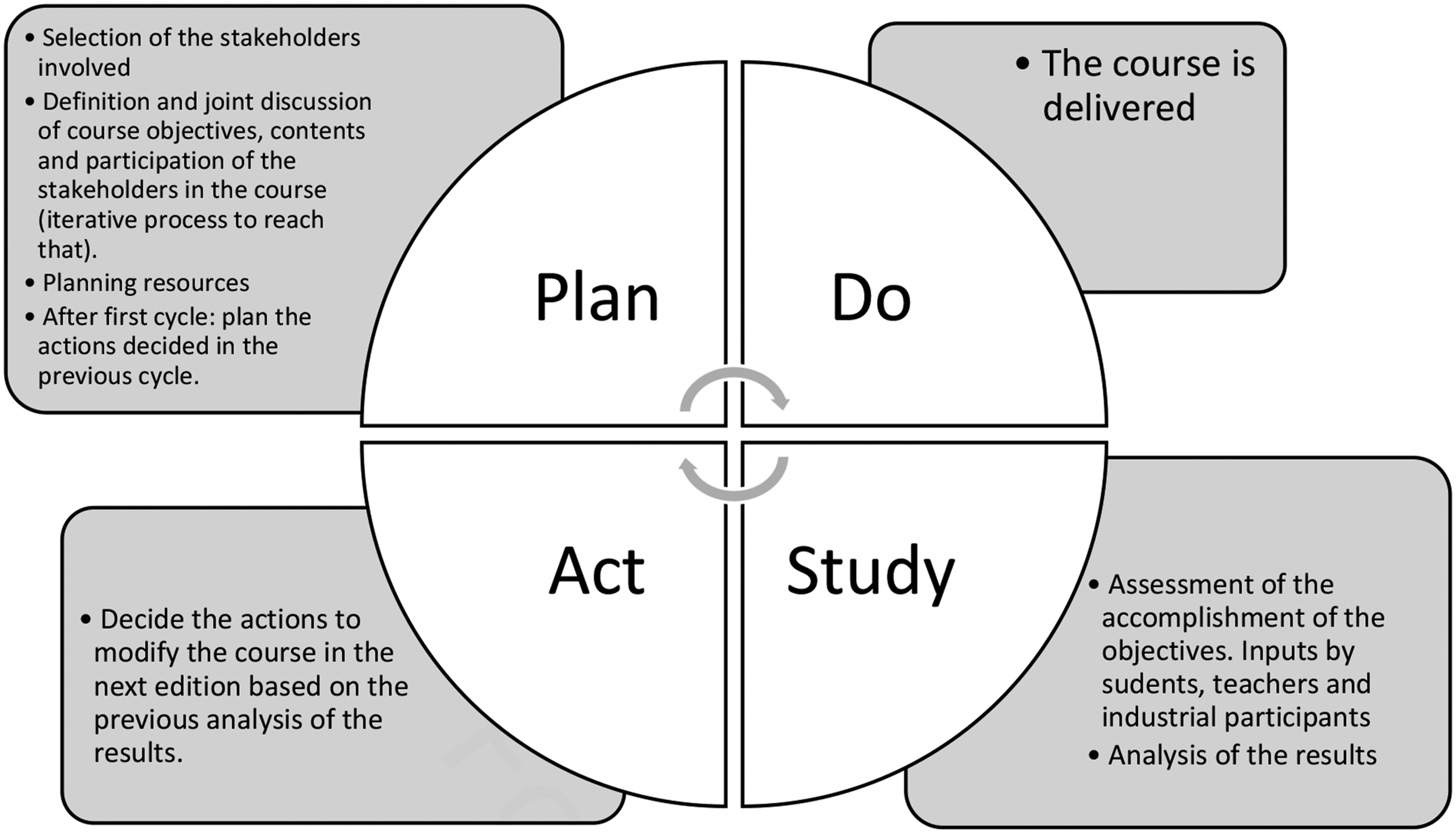
One novel approach added to the basic PDSA cycle is that in our model iterative loops were included in the Planning stage, to strengthen the collaboration with industry in the definition and discussion of course contents, and in the Study stage. This novelty in the approach is illustrated in Figure 2 and will be detailed below. University West course design model inspired by the PDSA cycle but including additional iterations in the Plan and the Study stages.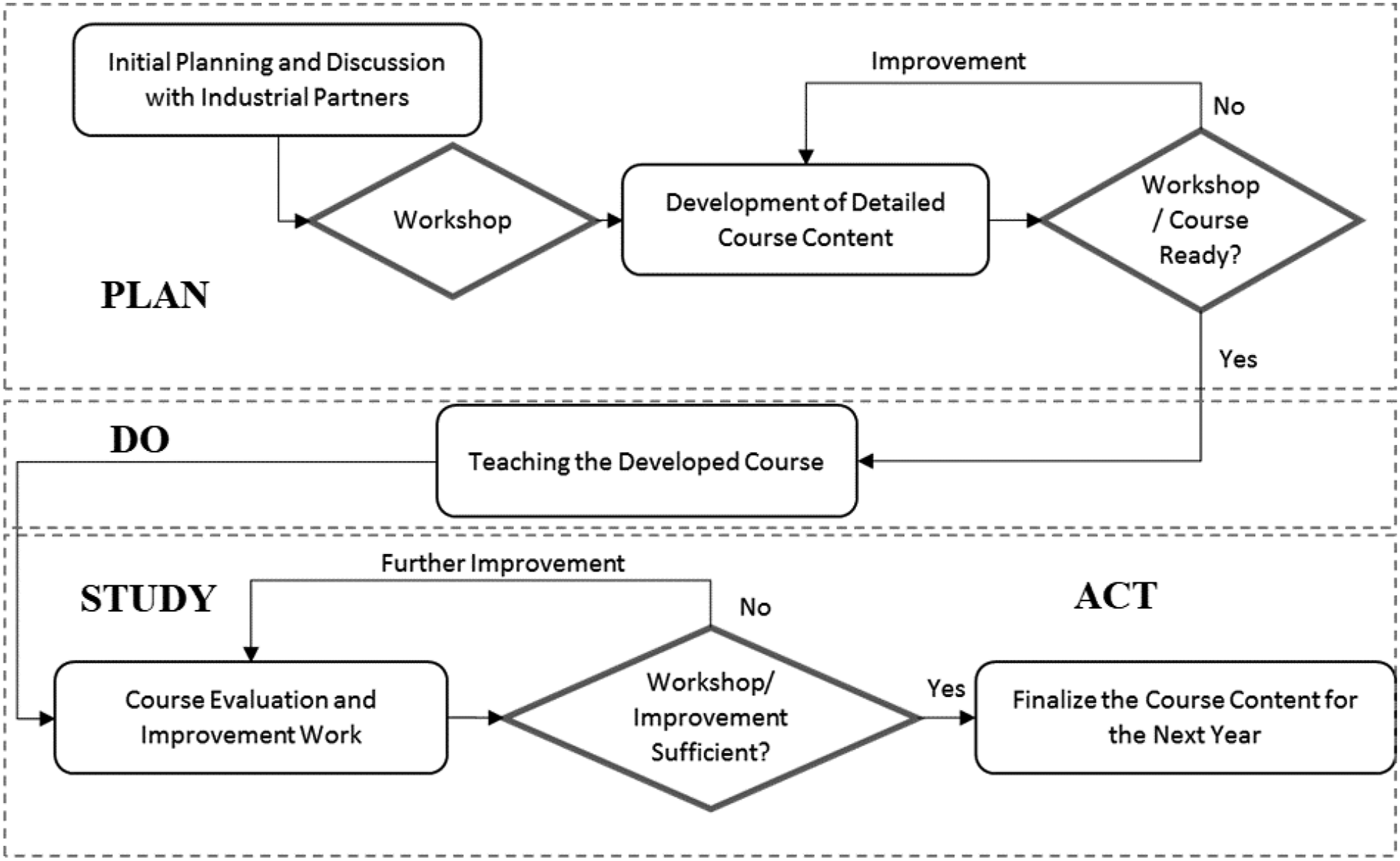
In the Planning stage, a draft course plan (objective of the course, integration with other program courses, resources, and proposed syllabus) is elaborated by university experts in the course subject, taking into consideration relevant scientific and technological contents together with novel pedagogic approaches. Then, the course coordinator selects the stakeholders (representatives from industry whose core business is related to the course subject, lecturers, program manager, and student representative) and invites them to a workshop. The draft course plan is discussed with the stakeholders and suggestions for course content and support proposals from industry are noted and discussed. After this first workshop, the course coordinator redefines the course content and planned activities in light of the outputs, and the stakeholders are called to a second workshop at which the updated course plan is presented and discussed again until it is considered ready and approved. Figure 2 illustrates this process. In successive years, the Planning stage starts with a workshop to plan the actions decided as the outcome of the previous year.
In the Do stage, the designed course is delivered to the students. Immediately after delivery of the course, the Study stage starts with surveys of the students and lecturers and the industrial representatives who participated to assess the degree to which the objectives have been accomplished. Then, the outcome of the current course and its evaluations are discussed and analyzed, again in a workshop. The workshop is attended by the course coordinator, the program manager and the industrial partners. Actions related to improvements are proposed and sketched during the workshop and, if necessary, subsequent discussion is held via e-mail or video conferencing. In parallel, the course is reported by the course coordinator to the program council, which lists the needs for improvement and proposes plans for the implementation of the improvements as part of the university-wide quality system. The course is then reconceived and is ready for another term. As there is always room for upgrading (technological and pedagogical advances), the current course is used as the initial step for a new loop. The model includes the constitution of an industrial advisory board that can be called for meetings twice per year to follow up and discuss the reports on the courses delivered during the year and to explore new forms of collaboration.
Application of the model in the Master of Manufacturing Engineering program
General aspects
The 2-year MSc program in Manufacturing Engineering offered by University West started in 2018 and was built on the grounds of the former Master’s program in Manufacturing and in synergy with the MSc program in Robotics that had already been established (four courses were shared by the programs). Figure 3 shows the structure of the program, which includes 14 courses and periods of internship in industry. Eight out of the courses were to be developed, and these were: Advanced Materials Science, Advanced Manufacturing Processes 1, Advanced Manufacturing Processes 2, Welding Processes, Welding Metallurgy, Statistical Process Control, and Design of Experiments (DOE), Surface Engineering and Additive Manufacturing. Courses in the Manufacturing Engineering Master program of University West. Note: In pale gray, the new courses developed; in white, the courses that are shared with other ongoing Master’s programs; in dark gray, the courses and periods of industrial placement.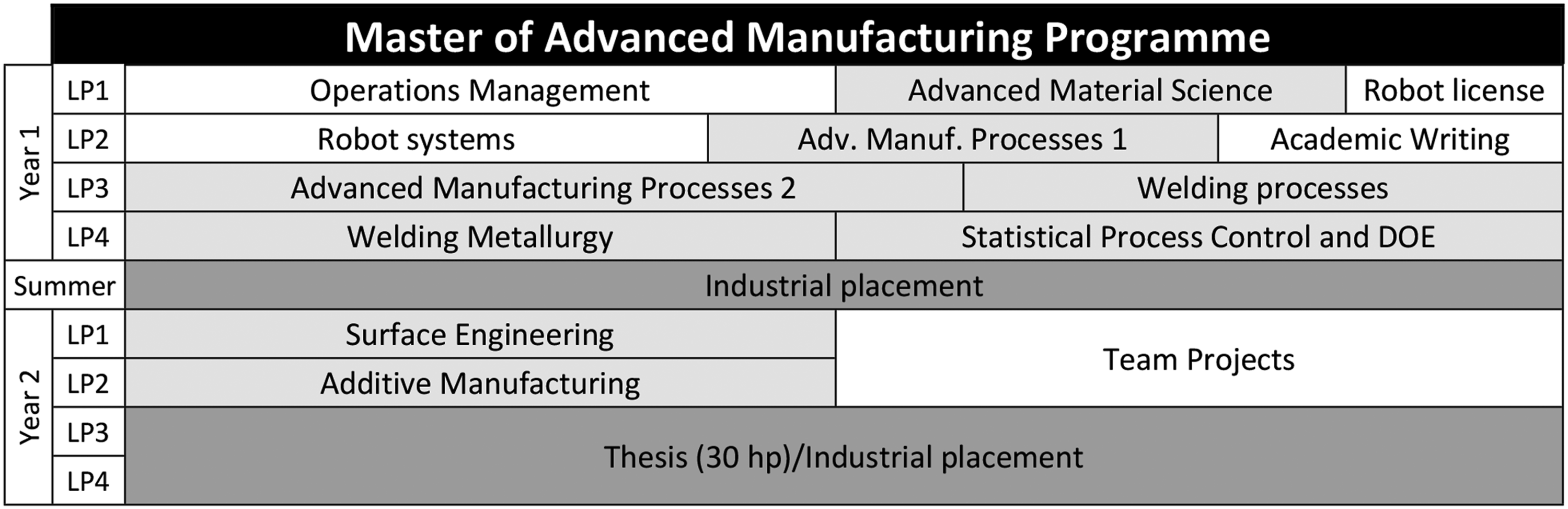
Except for the course on Statistical Process Control and DoE, which is not directly connected to industry, course managers were approached and encouraged to use the new model. Below, the application of the model is described in more detail for two specific courses in the program: Welding Processes and Welding Metallurgy.
Application in the design of the Welding Processes and Welding Metallurgy courses
In the program, the students are educated in welding technology through two sequential courses in the first year: Welding Processes (6 credits) in Learning Period 3 and Welding Metallurgy (7.5 credits) in LP4, as shown in Figure 3. For the purposes of this paper, these courses have been chosen to exemplify the application of the course development methodology. The workflow described in Figures 1 and 2 was followed.
To prepare the first workshop with industrial partners, firms in the welding sector which had previously collaborated with University West were invited, along with other welding-related companies of interest for us. The companies contacted were a maximum of 450 km from University West. To allow maximum attendance, the workshop was offered both face-to-face in Trollhättan and online. E-mail messages were sent out to key personnel in the companies. Fifty-three people from 33 welding-related companies were invited to the workshop and 20 from 11 companies attended the first event.
In this first workshop, the program manager presented the Master’s program and the Co-Operative education concept, emphasizing the PDSA cycle and the advantages for academia and the industry of developing these courses hand in hand. The course coordinators presented a proposal of the content for the Welding Processes and the Welding Metallurgy courses. The key to the workshop’s success was the lively brainstorming on course content: this revealed the interest and commitment of the business partners in contributing to the welding courses. In addition to their inputs on the course contents, the companies were invited to collaborate in several ways (Figure 4), such as offering their facilities to host study visits, providing the course with physical resources such as handbooks or specimens to investigate in the lab sessions, providing guest lecturers and co-supervising students during their internships in the companies and/or during their Master’s thesis projects. Cooperation modes discussed during the workshops and the number of companies confirming their involvement in a specific collaboration mode.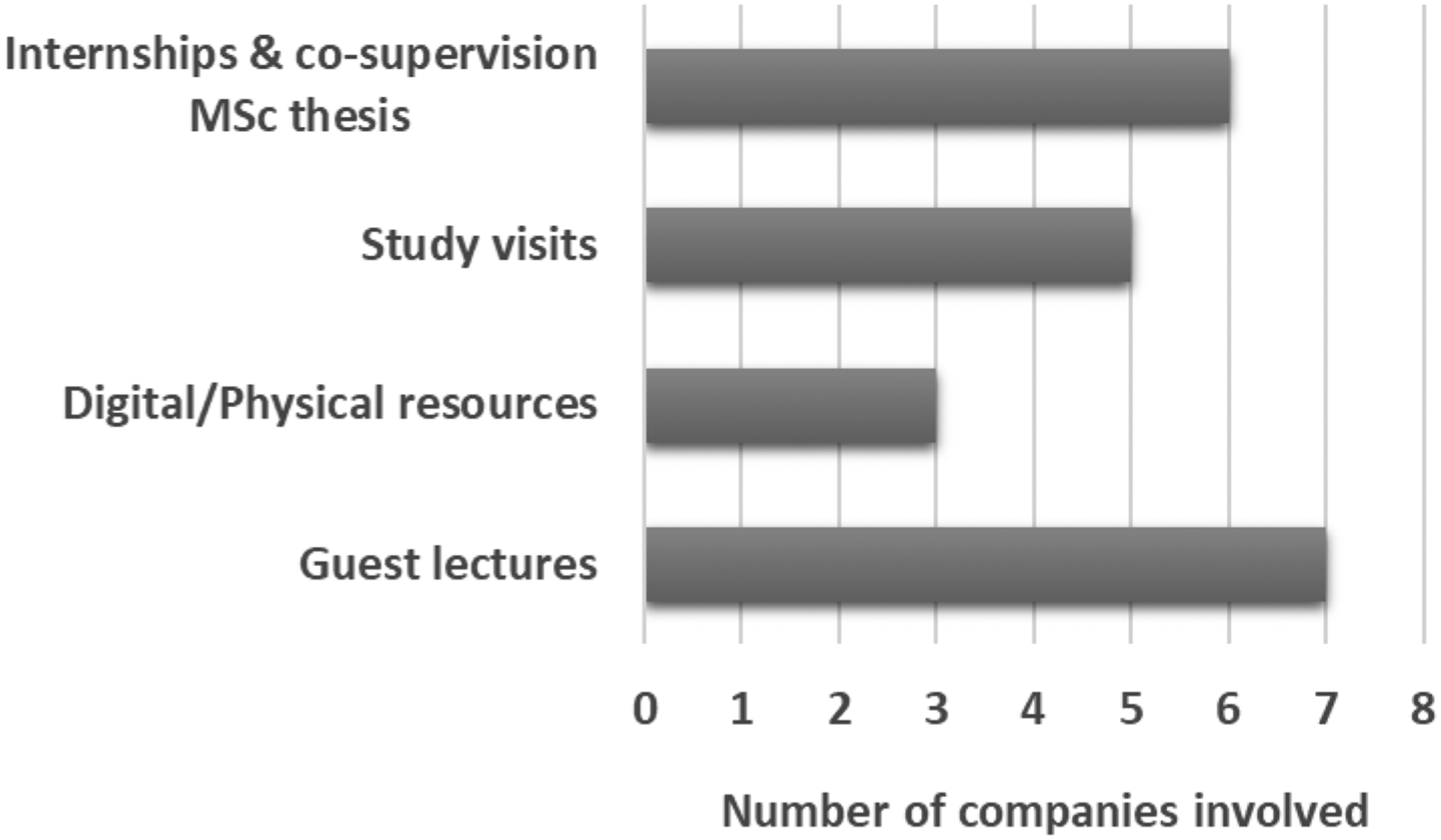
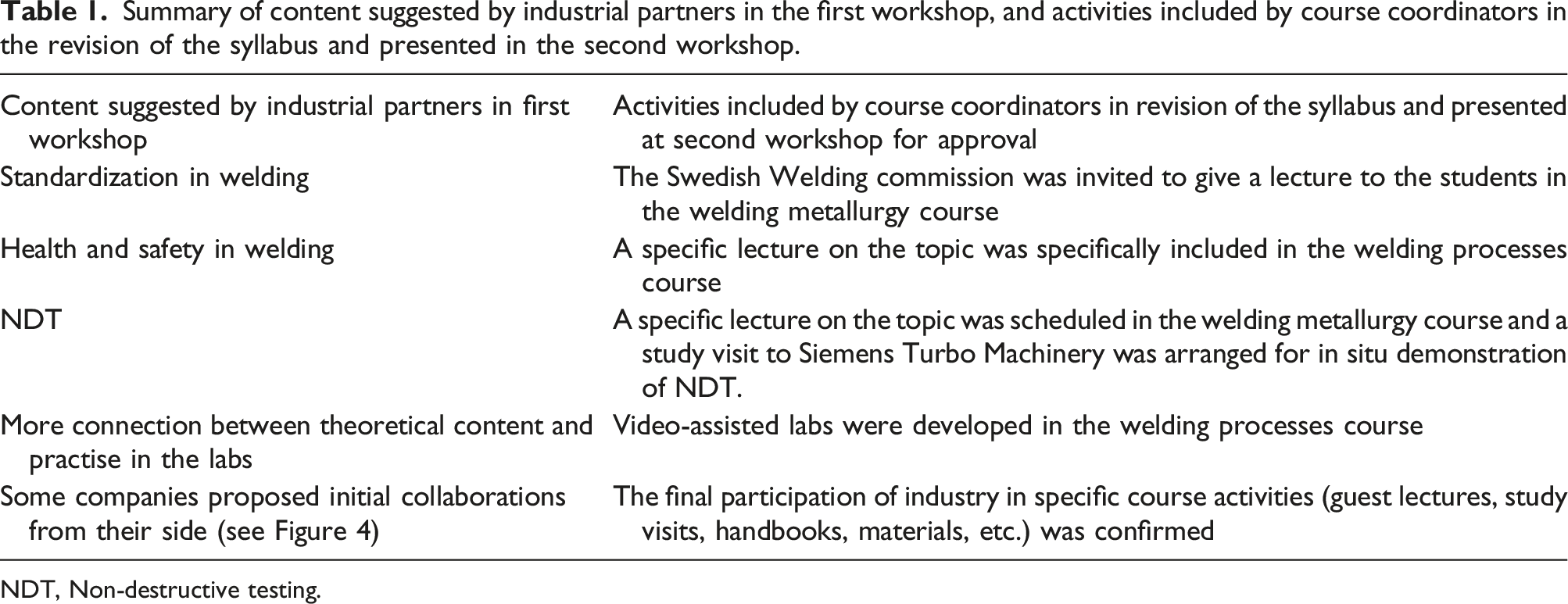
The industrial partners reacted positively to the above-mentioned modes of cooperation and there was an initial offer from their side concerning how they could contribute to and cooperate in the development of the courses. The companies’ representatives suggested adding new course contents to meet the industry’s needs, such as standardization in welding, non-destructive testing, more practical labs, and novel manufacturing processes (e.g., friction stir welding).
Summary of content suggested by industrial partners in the first workshop, and activities included by course coordinators in the revision of the syllabus and presented in the second workshop.
NDT, Non-destructive testing.
In response to the request for more lab activities, and aiming at more efficient labs, a new module of media-assisted lab classes was developed. These are non-passive welding laboratory classes assisted by video recording. This development made the labs less laborious for the teachers and more attractive and efficient for the students, while time and lab resources were used more effectively.
Once the course had been delivered, surveys were sent to students, teachers and industrial partners, and the stakeholders were called to a third workshop. The purpose was to share the feedback from the surveys and to discuss and refine the next edition of the course plan if necessary. The students’ evaluation was unanimously positive with regard to the study visits conducted and to the participation of guest lecturers from the industry. Similarly, the video-assisted labs were also positively evaluated. The participants from the companies rated their participation highly. In the subsequent offerings of the courses, the course coordinators have maintained contact with the industry and the activities have been consolidated. Before starting each course, the industry representatives were contacted to discuss the involvement of their companies and were also invited to the course coordination meeting with the teachers to agree any readjustment in activities and content. Currently the cycle has run for three times, with successful and engaged collaboration from industry and with high rates in students’ evaluation of the courses.
Discussion
Use of PDSA models in education
According to Tichnor-Wagner (2018), the use of continuous improvement cycles in education is relatively new. In terms of curriculum development in higher education, one model was found in the literature, as previously mentioned in the introductory section: the ADDIE model presented by Matkovic et al. (2014). The general model has been complemented with indications of practical tasks and activities to develop the curriculum. When comparing ADDIE with the model proposed in this paper based on the PDSA cycle, some similarities can be found. On the one hand, both are cyclical and iterative models with the aim of a continuous improvement in curriculum design and delivery, and both fit the dual purpose of generality, to be applicable in any discipline, and with a level of concreteness that supports practical development. Other similarities are found between the “Do” and “Implementation” stages, which in both models include the realization or delivery of the course. However, differences are also apparent: for example, some tasks that are in the “Planning” stage in the PDSA model are found under the stages of “Analysis, Design, and Development” in the ADDIE model.
Difficulties encountered
The main difficulty encountered in fully accomplishing the implementation of the proposed model was that of constituting an industrial advisory board, whose advice was expected to be valuable in meeting industry’s expectations at the program level. The benefits of having industrial advisory boards in educational programs have been described by Taylor and Calitz (2020) and challenges have been identified by Kullberg and Paulin (2019). The engagement of the industry representatives was well executed in the two welding courses referred to in this paper. The coordinators of other courses in the program, such as Surface Engineering, Additive Manufacturing and Advanced Manufacturing Processes, confirmed the active involvement of industry representatives in the design and delivery of their courses also. However, it was commonly observed that none of the industry representatives who were engaged in the courses wanted to step forward and offer support at the program level. One reason for this may be that they felt that their field of expertise was closely related to a specific course, and they might therefore feel a lack of command of other disciplines in the program. It may also be that the personal trust and relationship that had been created and built between the industry representatives and the course coordinators due to former collaborations served as a motivating and engaging factor for the courses, but not for the program. Bruneel et al. (2010) referred to the importance of personal trust consolidated through former collaborative experiences in encouraging new collaborations. Consistently with that view, Genheimer and Shehab (2009) pointed out that industry members with close ties to the university (i.e., alumni) are more likely to contribute as advisory board members. Therefore, personal relationships and formerly established trust are important factors that cannot be underestimated. In this case, the constitution of an advisory board in the program is still outstanding work that will require new efforts and maybe new strategies to engage industrial partners.
Strengths
After three years of offering these courses, the participation of industry in their design and delivery has been fully consolidated, which is a sign of the benefit and satisfaction for all the stakeholders. Therefore, the co-operative model presented here was found to be an effective strategy for bridging the gap between industrial needs and the university education provided in the Manufacturing Engineering field. Furthermore, the different modes of collaboration offered to the companies (Figure 4) led to an aligned curriculum, skills development, and more opportunities for students to be employed after their studies. This has been also reported in the literature by Ssebuwufu et al. (2012) and by Plewa et al. (2015). In addition, the relationship built with the industry through the process has also reinforced our collaboration in research projects.
Because of the success of this collaborative model when developing the courses in the MSc program in Manufacturing Engineering, the same approach has been adopted in the design of new MSc programs that are currently under preparation at University West. Our model has also opened the door for us to collaborate with EU partners in educational research projects, aiming at developing innovative work-based learning practices.
Conclusions
In this paper, the use of a PDSA model modified with additional iterative loops in the Plan and Study stages has been shown to be a successful model in developing and delivering courses in the MSc program in Manufacturing Engineering at University West. Differently from other approaches in the literature, the model presented here has the necessary level of generality for it to be applicable in other disciplines and at other educational levels. At the same time, it contains a description of activities which is sufficiently concrete for it to be applicable in practice.
Footnotes
Acknowledgments
The support and collaboration received by the companies and their representatives are gratefully acknowledged (in alphabetical order): Fredrik Olofsson (Brogen Industries AB), Niklas Malmberg (CEVT), Sofia Hansson (CEVT), Lars-Erik Stridh (Dunderbro Engineering), Eva-Lena Bergquist (ESAB AB), Jörgen Säll (ESAB AB), Rebecka Nilsson (ESAB AB), Ebrahim Harati (ITW Welding AB), Satya Kondapalli (ITW Welding AB), Johan Ingemansson (Lincoln Electric), Dennis Johansson (Midroc Rodoverken AB), Daniel Eyzop (Outokumpu Stainless AB), Stephen Shotton (Siemens Turbomachinery AB), Tomas Wahlberg (Siemens Turbomachinery AB), and Hubert Wilbs (TRUMPF maskin AB).
Declaration of conflicting interests
The author(s) declared no potential conflicts of interest with respect to the research, authorship, and/or publication of this article.
Funding
The author(s) disclosed receipt of the following financial support for the research, authorship, and/or publication of this article: This work was supported by grants from the Swedish Knowledge Foundation, project AMECO (grant number 20180019).
