




Abstract
The transformation of new paradigms for online learning delivery has evolved rapidly over the past few years. For postgraduate programmes, the thesis module is regularly the capstone and significant in terms of academic credits. In reality, this module can be just an ‘add on’ set of resources with no dedicated online learning space. Industry students undertaking postgraduate programmes online traditionally feel overwhelmed while embarking on a thesis. Notably, too, they face the challenge of not being on campus and having the same learning opportunities as their on-campus counterparts. This paper highlights the importance of supporting and assisting online industry learners in participating fully with their thesis. The authors identify the challenges that face these learners at postgraduate level, recognising that a new way to help and prepare them to carry out and write a good thesis is essential. By focusing on a dedicated online module for ‘all things thesis’, the paper presents the positive experiences learners can have when participating in this module. The findings emphasise the need for educational providers to offer as part of their programmes a high-quality thesis module designed to support the postgraduate online industry learner.
Roe et al. (2015) address the public perception that many online degree programmes are lower in quality than more traditional academic programmes, noting that many public and private universities have been slow to adopt online programmes. However, we now know that the number of academic accredited online programmes has significantly increased. Ng and Bharom (2018) remark that the appeal of online programmes is continuously increasing, with a major demand from adult learners who are dealing with numerous pressures from other work and life domains. A considerable amount of research over the past few years has focused on online learning and distance education as modes of teaching students. Naidu (2003) noted that for numerous learners the only feasible way to obtain information or participate in higher education courses is from online sources. The emergence of online learning has enabled us to reach audiences that previously were hard to serve. While the growth in online education has been exponential in recent years, the question of the quality of the educational experience and enhanced learner outcomes remains paramount in the minds of faculty, administration and the general public (Massy et al., 2013). Online courses are predicated on the ‘quality’ of the support systems that underlie them and their success or failure is heavily dependent on issues of quality assurance, student support services, online course design and pedagogy, and faculty development. (Estelami, 2013; Rovai and Downey, 2010; Waugh and Su, 2015). Despite the expansion in online education, quality in online courses remains one of the major concerns of faculty, administration and the participating students. With the emergence of the Covid-19 pandemic, online delivery became a viable and established delivery option not only for the third-level sector but for education in general. There is no doubt, according to Bacher-Hicks et al. (2021), that the pandemic triggered a large increase in the demand for online learning resources. Of late, there has been a heavier focus on adult industry learners who are coming back into education and requiring more flexible conditions for their learning. There has been a shift, according to Ausburn (2004), in higher education demographics, with part-time adult learners as the new majority – Ausburn also notes that these adult learners have learning needs and expectations that set them apart from their younger counterparts.
The focus in this research is therefore on the ‘industry learner’, a term that is not widely used in the academic literature: ‘adult learner’, ‘corporate learner’, ‘business learner’ and even ‘non-traditional learner’ are more familiar and recognised descriptions. These are catch-all terms that describe a learner who is an adult and variously specify or imply a learner taking part in adult education, corporate education or business education. For the purposes of this study, the ‘industry learner’ is a student participating in an academic accredited programme and working full-time in an industry setting (in the current context, manufacturing, engineering, technology, or service environments).
Diep et al. (2019) and Knowles (1984) stress that, while learners who are adults are portrayed as self-directed learners, the coherent and clear presentation of the course goals, structure and subject matter content is of crucial importance in imparting a feeling of safety. On the other hand, Ross-Gordon (2003) points out that, although adults are likely to be interested in exercising some degree of autonomy in learning, faculty and staff who facilitate adult learning should expect diversity both among learners and in situations for the same individual learner, and should be prepared to make adjustments in expectations or the level of support. With these considerations in mind, industry learners participating in programmes with a thesis or dissertation module should be provided with a structure for their online modules that will allow them to effectively and confidently organise their learning and successfully complete their thesis.
The thesis 1 is a significant piece of academic work students embark on as part of their postgraduate programme. As Webster et al. (2000) note, it is the most substantial and the most independently executed piece of work students undertake while at university. Working independently can pose many problems for students, in particular with regard to establishing research objectives, writing a literature review, establishing a research methodology and disseminating the overall research and findings. Add to these challenges with time management and organisational skills, and a student’s inexperience of the requirements of compiling a detailed academic document, and it is not surprising that the thesis learning experience can often be skewed by anxiety and the lack of a formal structure. For industry students participating in an online MSc programme, the challenges also include isolation, ‘fear of the unknown’, balancing work commitments, family commitments, travel and demanding work and academic deadlines. It is easy to underestimate the skills in terms of work–life balance required to incorporate the writing of a thesis into a high-pressure and target-driven environment, and frequently when the student has been away from higher education for a number of years. Thesis writing, according to Mochizuki (2019), is a social activity and studies of thesis writers’ experiences have suggested the interconnectedness of cognition, emotions and social context in the learning process. Daly and Scott (2011) argue that the value of the dissertation to the student is the learning experience it provides, integrating all the knowledge the student has acquired on the programme and enabling them to develop and demonstrate analytical, judgmental, presentational and communication skills. An effective learning process, according to Kolb (1984), should follow an experiential learning cycle that includes experiencing, reflecting, thinking and acting. Wagener (2018) claims that the outcome of thesis work depends as much on technical and methodological skills as on affect, self-regulation and the relationship with the supervisor.
Kjærgaard and Thomsen (2016) stress that students and lecturers are partners in the learning process, noting that lecturers cannot make learning happen without students’ active collaboration and interaction with them as well as with other students. Muirhead and Blum (2006) address vital issues associated with advising online dissertation students and argue that one of the saddest interpersonal moments in the academic community is when individuals reveal that they are not able to complete their dissertation. Park and Choi (2009) researched factors influencing adult learners’ decisions to drop out from or to persist with online learning, finding that learners who feel unsupported in an online class may discontinue their enrolment in the course. Bourdeaux and Schoenack (2016) examine adult student expectations and experiences online and find that behaviours facilitating effective communication and enabling learning lead to positive outcomes, while the poor use of pedagogical tools and behaviours that impede the learning process lead to negative outcomes.
The advantages of having industry learners participate in an online programme can be substantial, given that they bring a great deal of practical, real-life work experience to the online modules and programmes. Rovai (2007) found that the number of student posts to online discussion boards increased commensurately with the levels of workplace experience students had attained prior to commencing their programmes and noted students’ tendency to engage more comprehensively in discussions that reflected aspects of their own life experiences. Valuable skills garnered in such settings include decision making, the development of ‘soft skills’ (e.g. communication skills, collaborative and teamwork skills, hands-on problem-solving techniques, optimum time management, skills relating to workplace and cultural diversity, networking, among others). The potential for knowledge transfer in academic settings as it relates to individuals’ past and present work experiences is immense.
Against this background, the purpose of this paper is to contribute to a relatively new discussion concerning online industry learners’ requirements for thesis module delivery. The paper supports work initially carried out by Hunt et al. (2015, 2016) by identifying the needs of the online learner and the requirements that can help them to successfully navigate their research journey to successful thesis completion. Designing a thesis module online for industry learners is an underexplored area and it is envisaged that this paper will provide a blueprint for educators who wish to support their industry learners participating in online programmes at postgraduate level.
The paper will focus on feedback provided by a number of postgraduate industry students regarding their experiences and challenges during their thesis work – from starting their thesis research to disseminating their work through presentation and in writing. We looking at these factors to establish how they impact the students’ learning and experience, thus deriving the requirements for the successful design, development and delivery of an online thesis module. This online module dedicated to thesis learning and completion will provide both student and supervisor with the necessary information to improve the thesis experience and increase their academic success.
The paper contributes to the literature on online thesis module design and the role of the industry learner in establishing the requirements for thesis development and delivery. It is one of the first papers to examine in detail the experiences and findings of industry learners who have completed a thesis module in an online postgraduate programme. It contributes to our understanding of the content needed to deliver a professional and academic online module for industry learners undertaking a thesis. Furthermore, the objective of this research is to turn the requirements identified and content needed into a one-stop ‘all things thesis’ online module. The study highlights the need to engage with industry learners to establish learning requirements and align teaching activity and assessment with learning outcomes. Industry learners bring new expectations, objectives and outcomes to the design and delivery of modules.
The research approach
As noted earlier, the thesis capstone module is a fundamental aspect of most MSc programmes. However, in an online environment successful completion of this module can be a significant challenge for the learner. To better understand the experiences of industry learners who had taken a thesis or a project module as a deliverable for their academic online programme, a questionnaire using SurveyMonkey 2 was designed. The study further aimed to explore what the main requirements of an online thesis module should be. To determine the appropriate research methods for the study, the nature of the research questions was considered. In accordance with the first and topmost layer of the Saunders Research Onion (Saunders et al., 2015), the philosophy underlying this study is a combination of ‘interpretivist’ and ‘positivist’ epistemologies.
This quantitative approach involved sending the 25-question questionnaire to a sample of 120 industry learners. These learners had participated in postgraduate programmes in the areas of Supply Chain Management and Supply Chain Operations from 2017 to 2020 at the University of Limerick in Ireland. The programmes were at the Specialist Diploma and MSc levels and were delivered jointly by the university’s School of Engineering and Kemmy Business School. Recipients were asked to respond to the questionnaire on a voluntary basis and the questionnaire was circulated with an introductory email explaining the purpose of the study and assuring all participants of the confidentiality of their responses.
The questionnaire concentrated on identifying industry learners’ expectations and experiences of completing their thesis and project work in an online environment. As the thesis module is run over an academic calendar year, additional conversations with learners provided preliminary informal data to the course team, which was subsequently supported by the quantitative findings presented in this analysis.
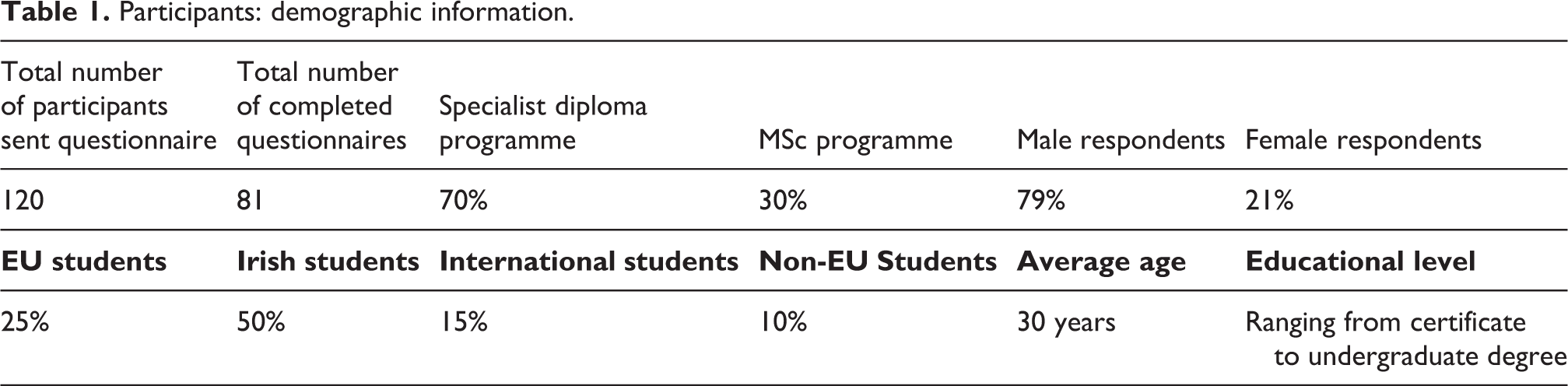
Completed questionnaires were received from 81 respondents (a response rate of 68%) – demographic information is presented in Table 1. All respondents, of whom 79% were male and 21% were female, were in full-time industrial employment, and their average age was 30. International students accounted for 15% and 10% of these were non-EU students. Of the remaining respondents, 50% Irish and 25% were EU students.
Participants: demographic information.
For the Specialist Diploma in Supply Chain Management students, the deliverable is the production of a final project report to improve a process at the learner’s organisation and is equivalent to six ECTS credits. For the MSc in Supply Chain Operations, the thesis must be focused on an industry requirement and is equivalent to 30 ECTS credits. Obtaining feedback from the learners who had completed a final project report was deemed important in order to gain a full picture of the industry learners’ experience with regard to applied and academic requirements when studying online. It also provided a larger sample size for the study, given smaller cohorts of the MSc programme. Furthermore, many Specialist Diploma students continue their studies by enrolling on the MSc programme. All the participants work in large multinationals or small and medium-sized enterprises (SMEs) and their roles concentrate on supply chain management and operations in manufacturing, service, technology or engineering environments. They have middle to senior roles in their organisation and would be considered expert in their area. They typically have an engineering or business management undergraduate degree, diploma or certificate and, as noted, are dispersed internationally. Companies participating in these programmes include, for example, Dell, Infineon, Medtronic, and learners are located in Europe, the USA, Asia and the Middle East. The initial focus in the research was on ascertaining the level of student engagement prior to undertaking the programme of study: it was established that 28% of the respondents had not enquired about capstone module requirements or were not aware of the requirements prior to enrolment. Those who had enquired had done so informally via administration, past students and module leaders.
Table 2 details responses regarding key challenges for the industry learner in completing a thesis or project. 71% agreed or strongly agreed that time was their biggest challenge. It was apparent that learners undertaking these programmes had significantly underestimated the time required to complete the capstone module. 81% found the work–life balance particularly challenging: this is a recurring issue for industry learners, and 5% of the respondents to the questionnaire did not complete their thesis on time, citing work commitments as the main reason with extensive travel also a major challenge. Responding to further questioning of their reasons for not completing the thesis or report, participants acknowledged that if they had understood the expectations prior to joining the programme they would have had an opportunity to manage their time more effectively. Key information regarding time commitment and deliverables is fundamental to securing students’ engagement with the programme: however, all respondents confirmed that there was no ‘one-stop shop’ for information and/or expectations about the thesis module online.
Key challenges for the industry-based online learner.
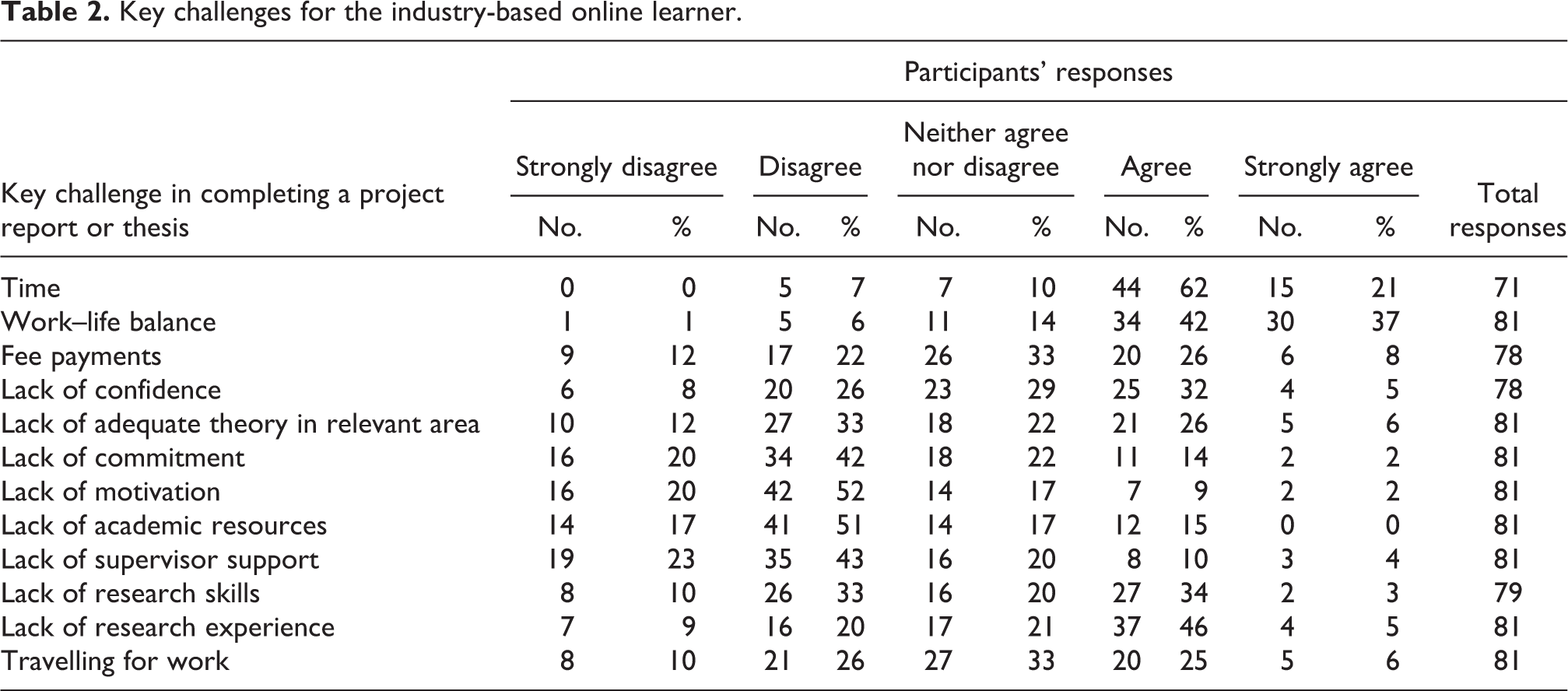
The recurrent use of the word ‘stressful’ by students was evident both formally and informally throughout the programme and the stress factor was confirmed by the questionnaire responses: 41% agreed that the amount of work required for a thesis or final project was stressful, with 6% stating it was highly stressful. Specific comments included: I found the thesis module stressful as it was a module I had not completed previously. It was fear of the unknown. The tutorials were not complete when the project was due to be submitted, therefore many missed learning opportunities to apply learning to the project. Changing circumstances of people undertaking a project/thesis do not appear to be taken into consideration. Balancing work commitments especially travel with some of the deadlines was very demanding at times. Being away from Ireland made it difficult. I didn’t know who was in my class and had no one to talk to, including my supervisor (irregular communication). I would have liked more exposure to coaching in areas of research, academic writing, citing etc. I found it difficult to balance work, completing the thesis and then trying to find out how to actually do the research, etc. We received some instruction on research methods, literature reviews and academic writing but many of the course participants were out of university for 20+ years and found it difficult to get up to speed on what was required. Academic writing, literature reviews and research methods were completely new to me and I really struggled. While the topic was challenging with very little material available on the topic it would have saved a lot of time if I got upfront support on how to approach a thesis as this was my first. As a class we knew we needed to upskill our research skills, so we just got on with it. I kept hearing identify what current practice is and support this with theory; how do I do that? I would have expected there to be a module or part of a module dedicated to research methods and supports available. I felt there was very little guidance outside of that provided by my supervisor who luckily was very helpful. We did receive guidance on the project but I really felt it was a poor attempt at trying to ensure learners would meet the standard required by the external examiners. I found the input from my supervisor of huge value to me in completing my thesis and would not have succeeded in my endeavours without that support. I don’t feel like I had enough discussion with my supervisor and going on what friends or other had received in other universities it was disappointing. I had about 3 chats with my supervisor overall. Lecturer was available to answer all questions, he was very knowledgeable and added huge value. I felt that not all students took advantage of these sessions however, opting to skip these lectures.
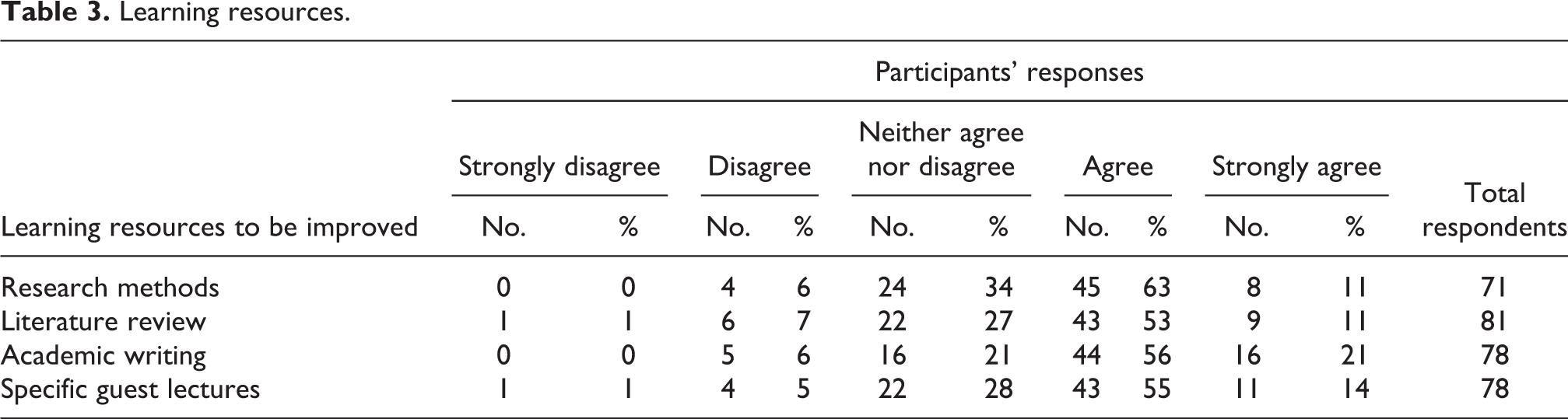
Learning resources.
Academic supervisor relationships varied too, with 60% of respondents happy overall with their supervisor experience but noting that they got what they put into the relationship. 45% chose their own project without having engaged with the supervisor to select a research area. Some supervisors were more proactive than others, and 60% of respondents felt they had received good support and guidance from their supervisor. Those who felt that they had not received support from their supervisor recognised that they had been busy with work and had not reached out to the supervisor as often as they should have – but 20% had felt they could not maintain a productive relationship online via email or telephone calls. Time zones were an issue for a number of respondents and had led to delays in responses from supervisors to queries that the learners deemed urgent. Comments included: I found the input from my supervisor of huge value to me in completing my thesis and would not have succeeded in my endeavours without that support. Level of supervisor support was very poor when completing the thesis. Response to emails often took weeks and re-sending requests. As a full-time, worker, I thought it highly inappropriate for the supervisor to be ‘too busy’ to respond in a timely manner. I was disappointed with the level of support provided.
Projects are industry-specific and are required to have a significant impact on a business operation. 21% of the respondents noted that there was a positive impact on their business processes. Furthermore, 3% obtained a promotion and a salary increase as a result of their thesis and project work, and 7% had left their organisation on completion of the project work to take up a higher position in another organisation.
On a positive note, the thesis and final project experience gave learners an opportunity to concentrate on a dedicated piece of research work relevant to them and their organisation. 66% of the respondents said they had developed critical and analytical thinking skills; 58% said they had increased their ability to problem-solve; and 64% agreed they had gained specialist knowledge.
All students were asked both in the questionnaire and verbally during their time on the programme if they would welcome a dedicated online thesis space – a module designed to support and guide them through the thesis process. All respondents noted they would very much welcome this, but it would need to be designed in a way that was easy to navigate, with relevant activities and resources: Don’t bombard the learner with lots of information that may not be even relevant. Easy navigation site, where you can find all things thesis. Recognise everyone in the class has different skillsets and some can write well but not good at presentations and vice versa. Provide support for everyone. Step everything out for me, so I can see clearly what I need to do, how to do it and when it needs to be done. Engage me, engage me with fellow classmates and engage me with my supervisor and engage my manager, can it do all that? There should be more class conferences. There should be dedicated supervisor contact time. There should be additional ‘e-tivities’ to support research learning. Additional integration was needed between the academic supervisor and the senior management team in the student’s organisation. There should be a ‘one-stop shop’ for thesis learning.
In addition, it was thought that specific learning resources should be provided relevant to: research questions; literature reviews; research methodologies; ethics; and presentation design and delivery.
Overall, from the survey and the discussions with students, the following common views and themes emerged regarding thesis learning and delivery: Students struggle with a lack of understanding of thesis requirements and the ability to match current practice in their organisation with theory while presenting their research work and findings in an academic format required by the university. Engineering students traditionally have no problem doing technical research but often find write-up and presentation difficult. Anxiety about these tasks can undermine the excellent research they have done. Unless there is a dedicated time at which students can meet and discuss their work with one another, especially for online industry learners situated across the globe, socialisation and engagement during the thesis timetable can be hit-and-miss and simply may not happen. Supervisors vary from programme to programme, and there needs to be a more formal structure for thesis learning and delivery by online postgraduate students. Academics and industry experts should recognise that the challenges facing online postgraduate online learners are significant and have a major influence on the success or otherwise of a student’s thesis experience. Participating in an online programme that requires a thesis to be completed should have a moderated module dedicated to providing students with resources, information and guided steps on how to start and complete a thesis.
From our analysis of the survey and the feedback from students we identified that the key requirement for successful thesis learning and experience is to provide a module that is clear, informative and easy to navigate. This module should include a step-by-step process for the student to establish a research topic, put together a proposal, complete a literature review, carry out a research methodology, analyse data and disseminate results through oral presentations and written academic reports. All of these requirements should be supported with a relevant repository and key design components such as discussion forums to enhance interactive learning between learners and lecturers.
At a time of significant worldwide change in education, it is more important than ever to provide students working on a thesis or project in an online environment with the tools they need to complete their work to a high standard. They need the tools and resources that will give them the confidence to complete their work and meet all academic requirements. It is with this in mind that the ‘thesis preparation module’ was designed and introduced in the MSc Supply Chain Operations programme at the University of Limerick.
Thesis module design and development
Focusing on the MSc Supply Chain Operations programme, it was decided to design and develop a new online thesis module that would support industry learners on their thesis journey. The thesis preparation module is 1 of 10 that form part of the fully online interdisciplinary programme, which was developed in conjunction with industry to provide industry employees with the skills and knowledge to work at senior management level in a supply chain operations environment.
The aim of the thesis preparation module is to provide learners not only with details regarding the mechanics of thesis work, but also with additional resources that will help them pick a research topic, create a proposal and confidently produce a literature review – which will lead to the generation of a research methodology and results for their chosen research. The module provides a ‘one-stop shop’ for thesis activities and is delivered and moderated by an experienced lecturer who teaches online industry students full-time. It is supported by a team of subject experts who have access to the module and who work directly with students with regard to the supervision of their work. The design incorporates social, cognitive and teaching features: Social features offer opportunities for students to collaborate, providing social and group cohesion. Cognitive features provide opportunities for learners to explore, to enquire and to construct new knowledge. Teaching features include design of an appropriate learning environment (with cognitive and social factors in mind), facilitating e-tivities, and offering direct instruction when required (Garrison and Cleveland-Innes, 2005; Hunt et al., 2015, 2016).
In a sense, the module might be said to follow a ‘backward design’: the outcome of the thesis is the final report so, given that the task is to compete a written researched report, the design must focus on how the student is to get there. The goal is the written thesis; the design and content of the module must provide the student with the knowledge and skills to achieve it.
Pedagogy
All participants in the module are required to have knowledge of the basic skills needed to use the Moodle learning management system (participants will have completed a 2-week induction programme, so the module focuses on ‘all things thesis’ and not on how to learn online). The thesis module is the capstone of the programme and draws from the learning outcomes delivered over its duration. Therefore, the pedagogical underpinning is to: Support students’ discovery and exploration of their research and provide them with an opportunity to enhance their self-directed integrative learning and critical reflective skills; Help students draw together a portfolio of concepts, theories, frameworks, processes and current practices in their research subject area; Enable students to demonstrate a range of skills in the production of a well-written and well-documented piece of work and present it confidently; Enhance the quality of thesis work and provide the student with confidence in their research capability and ability; Provide information and resources dedicated to thesis progression and completion; Develop a student thesis community; and Enable students to deliver significant in-depth research that meets academic standards.
For a thesis preparation module ‘learning not teaching’ is important, especially for industry-based students who might struggle with major academic projects and write-ups. The key question is: what does the student need to learn to complete their thesis report? Thinking in this way when designing the thesis module will bring a different perspective to its design, development and delivery. Because the learning environment is different from that in the institutional context, it is particularly important that the content is relevant and captures the student’s attention and that the learning pathway is easy to follow and understand. Too often there is feedback from students that modules are difficult to navigate and that there is a lack of clarity on what is required. Therefore, the design and the development of this module are learner-centred, and this approach shifts the pedagogy towards active learning in which the students are less dependent on the lecturer and take ownership of their learning.
Storyboard
The approaches to the module design are based on the Carpe Diem model of constructive alignment (Salmon and Wright, 2014). Carpe Diem is a collaborative, team-based, online learning design process created through research and prototyping. The thesis preparation module was designed by the Academic Director for the MSc Supply Chain Operations programme, who had an interest in e-learning and online development and who also had responsibility for student thesis learning and delivery. This individual had previously undertaken training in pedagogical module design and had completed two Carpe Diem workshops.
Carpe Diem differs from traditional staff development approaches in that it focuses on the learning design needs for specific units or programmes of study, thus producing a more authentic and relevant experience for those taking part (Salmon and Wright, 2014). The storyboard process of Carpe Diem used in the thesis preparation module design focuses on the students’ learning outcomes, which shape the content from the selection of resources, through the design of e-tivities to the final assessment criteria. For the thesis module, the learning outcomes were defined in terms of cognitive and affective learning, as follows:
Cognitive learning outcomes
• Ability to identify and conceptualise a relative supply chain problem or issue.
• Understand the research process and conceptualise the research process as an iterative sequence of distinct yet interdependent activities and components.
• Ability to frame, conceptualise and reflect on an appropriate gap in the wider domain of engineering practice, theory or body of knowledge.
• Conceptualise and synthesise appropriate research philosophy, epistemology and reasoning strategies.
• Visualise (if relevant to the research taken) an appropriate framework or model that
• expresses the output of the research process.
• Demonstrate the ability to reflect on how the research could further develop and evolve.
• Ability to reflect critically on the research process with a view to understanding the strengths and limitations of the research undertaken.
Affective learning outcomes
• Ability to prepare and articulate an appropriate thesis research project scope.
• Identify, critique and synthesise relevant literature themes in sufficient breadth and depth to substantiate research questions and objectives and identify any discernible gaps.
• Justify, deploy, describe and validate an appropriate research methodology that allows
• appropriate and effective addressing of the identified gap.
• Design and describe an appropriate solution or model that convincingly addresses the research objectives.
• Critically appraise, interpret, connect and integrate the research findings and results and evidence with relevant literature and current industry practice.
• Establish clear conclusions and recommendations on the implications for industry practice and the limitations of current theory.
• Determine the limitations of the present work and identify proposed areas for further relevant research.
• Communicate the research process and findings accessible to industry practitioners and academics in a clear and professional manner in keeping with the standards of academic writing and presentations.
In addition, the findings from the 81 respondents to the online questionnaire where also used to determine the content of the module. Figure 1 shows the key factors and requirements that influenced the design process of the module.
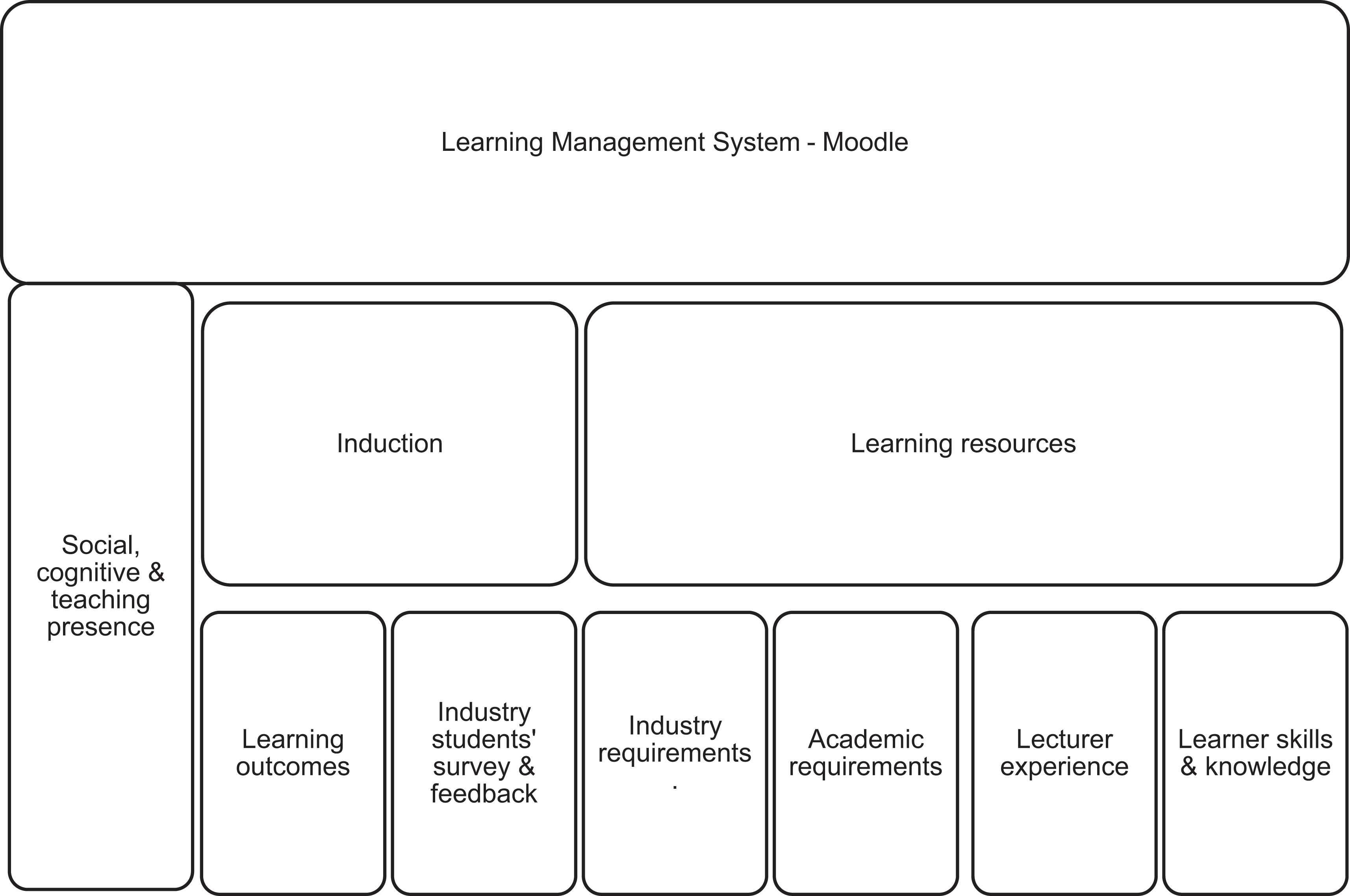
Design process influence.
The pedagogical goal of the module design is to enable the student to achieve the deliverable of the tangible product of the thesis report. The interaction of the student with the online environment requires relevant information and resources: the student is linked with the learning environment via the intended learning outcomes and the resources and supports are included in the design to facilitate the learning. For example, students should be able to download presentations, listen to lectures in the car on the way home from work, pop in online at lunch time and have full access at any time throughout the week. The module also provides students with an opportunity to engage with each other, with a view to increasing socialisation online and thus addressing the major and traditional problem of students feeling isolated as they carry out their research on their own. Including opportunities for these students to engage with other industry learners also provides a means for them to gain knowledge of current practice from organisations across the globe. The introduction of discussion forums and webinars provide the students with tools to engage with fellow classmates. Building in activities to allow for both individual and group work gives students opportunities to express themselves and to engage in knowledge exchange. The module is self-paced, with content-driven information designed in block format for easy access and viewing.
Thesis preparation blocks
Figure 2 illustrates the thesis preparation module information blocks. These provide a clear and logical structure for the students as they start out on their thesis journeys.
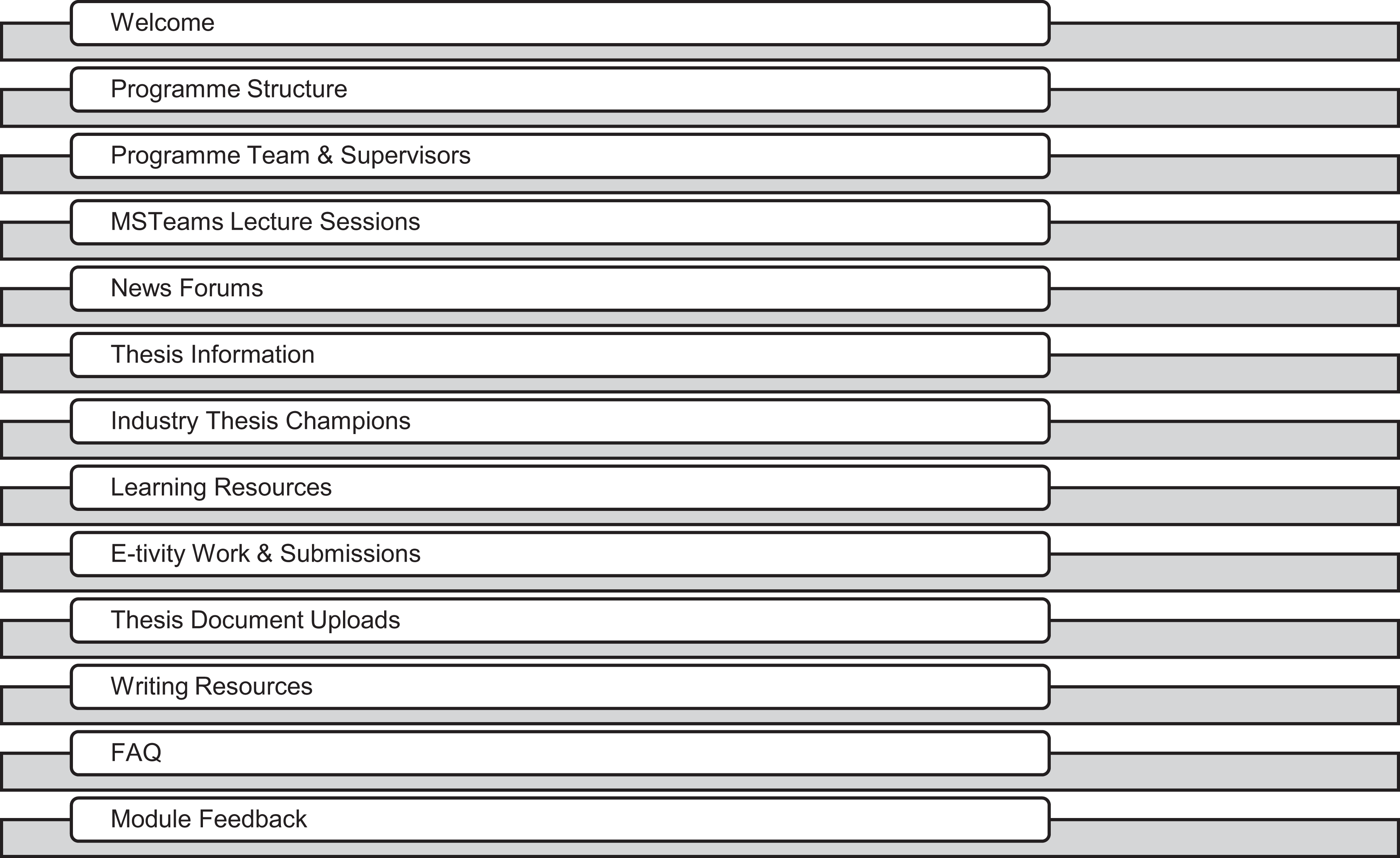
Thesis preparation module blocks.
Each block is made up of a number of resources – see the example of the news block forum in Figure 3. Virtual discussion forums are vital to the success of the module: they not only enable and encourage social interactions – there are also dedicated forums in which students discuss their work and specific research areas and questions. Social chit chat is important in the virtual class environment, but dedicated spaces for specific thesis work is also necessary.
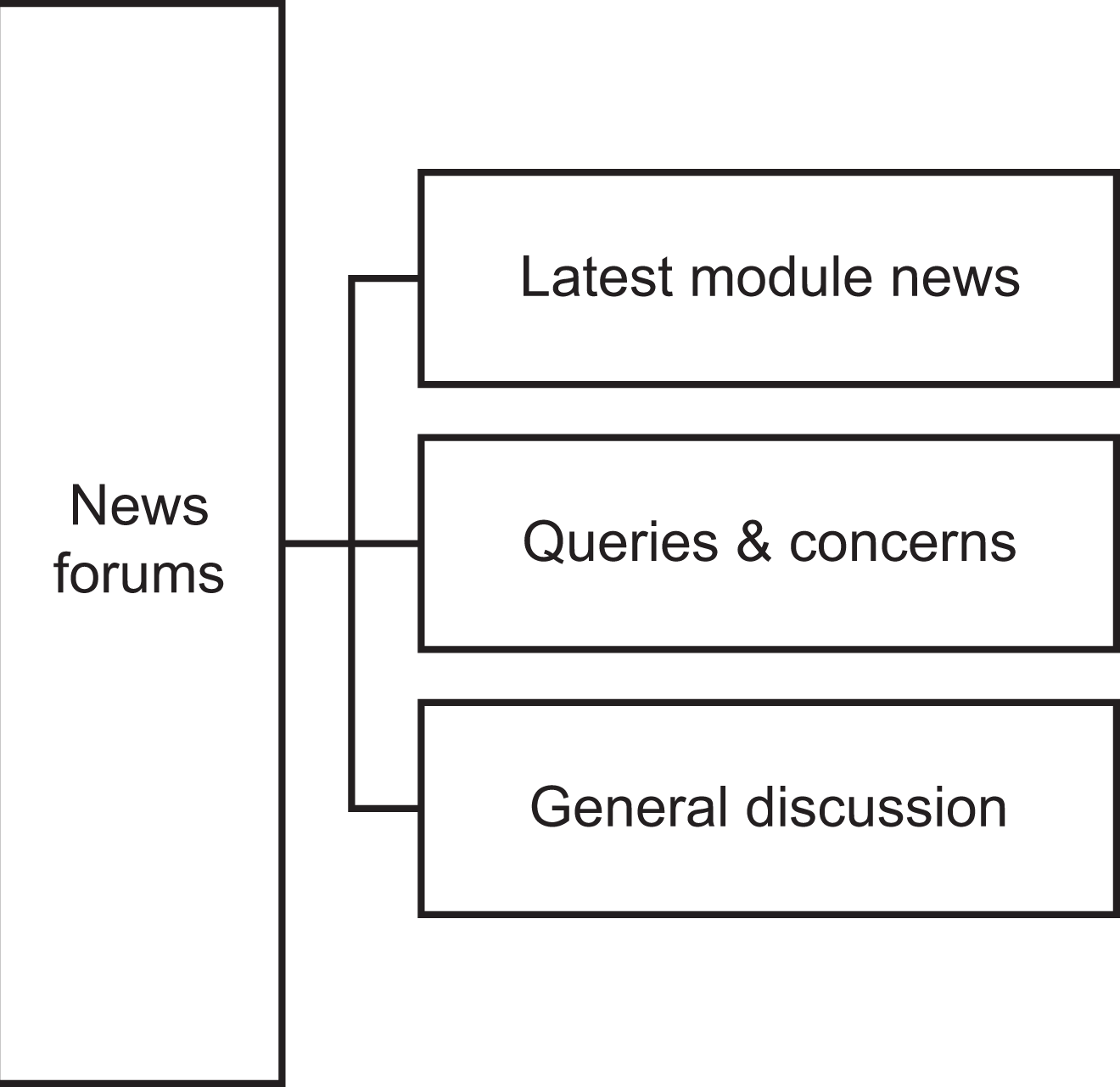
News block forum resources.
Struggles with a thesis can begin at any phase in the thesis process – from the beginning, when a student is just trying to generate a viable research idea, to writing up and meeting the deadline. For online students who are globally dispersed and working in industry, it is imperative that resources are readily available in a manner that is easy to access and understand. For example, if a student clicks on the ‘Literature reviews’ block, they are directed to a table of contents (see Figure 4) that has a number of blocks which, when opened, link to information relevant to thesis research and writing. Each title in the block content is hyperlinked to a set of resources available internally at the university or with the kind permission of external sources.
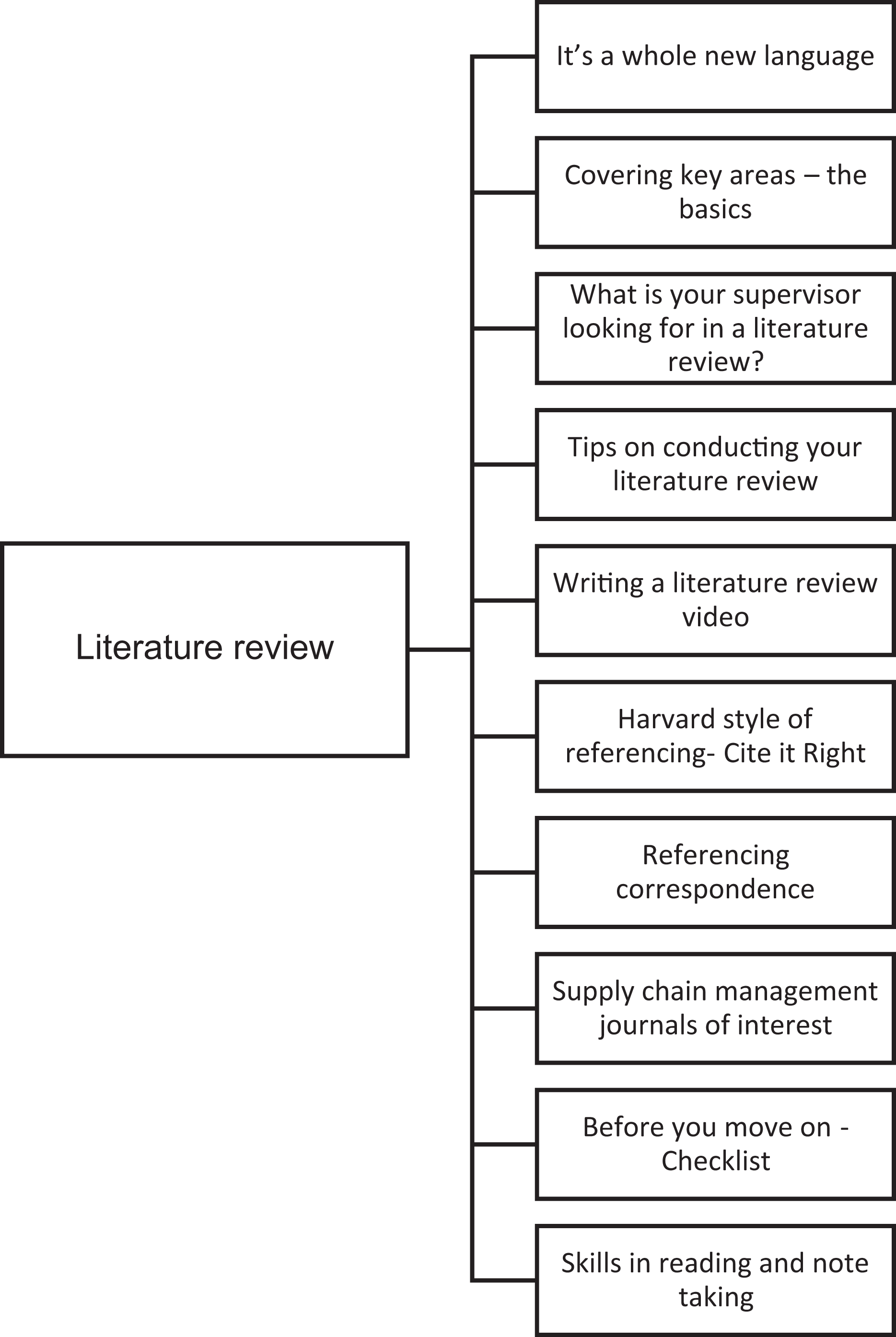
Literature review table of contents.
The information in these blocks is, typically, new to the student. Some students are learning new concepts, new processes, new ways of writing and often, for academic documents like a thesis, new vocabulary. Therefore it is important that the material is clearly relevant, visibly pleasing to the eye and easy to access, with sufficient information for the student to retain what is useful and required. When the design of the module is easy to follow and navigate and the content is specific to what is required, there is increased retention of the student’s commitment to the work, a better experience and improved performance. The blocks also provide an easy option to add or delete more content as required. Presenting content for ‘all things thesis’ in this format also provides options for a set of students with a wide variety of needs and challenges: the students are able to actively engage with the content they require.
E-tivities
One of the key features of the thesis preparation module is the introduction of a number of assessed e-tivities. Designing e-tivities to allow for a high level of complexity while keeping in mind the learning outcomes provides students with opportunities to demonstrate their ability and reach certain milestones. It is especially important for thesis work that students can develop self-efficacy and confidence, and an ‘I can do it’ attitude. Supporting the building of a thesis proposal is an effective way to achieve learning outcomes and produce a tangible product the student can work with as they start their research. Figure 5 shows provides examples of e-tivities that are designed to allow this.
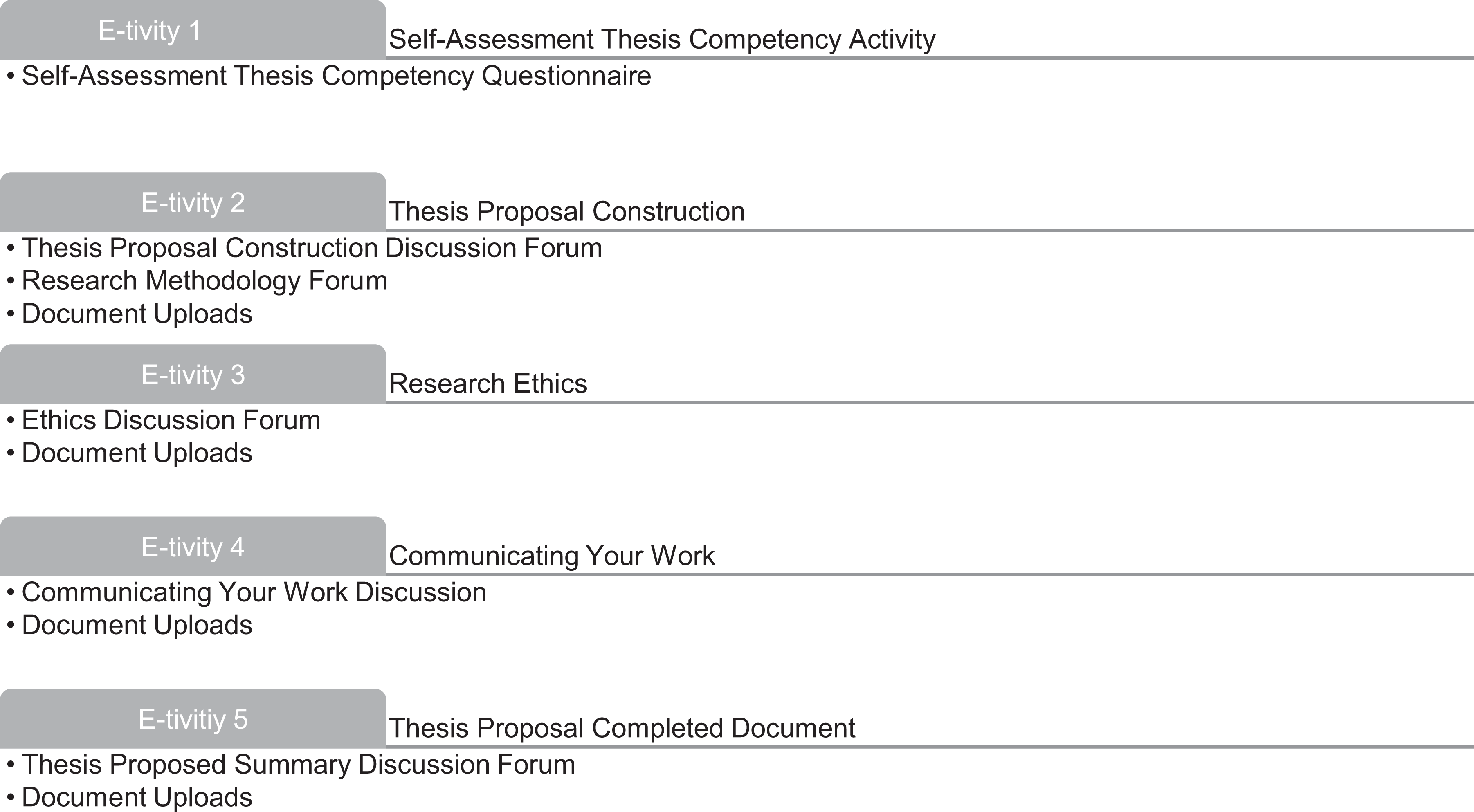
E-tivities.
These e-tivities are scaffolded in order to help the learner reach the various milestones of their thesis. E-tivities are compulsory and all tasks must be completed by the learner in order to move on to the next stage. They are the main assessment criteria for the module but are also critical in providing the student with the skills and resources to carry out research. In essence, they are the building blocks of the thesis content and write up. Each e-tivity is made up of a number of tasks. Participation in discussion forums is required and responding to the postings of others is mandatory so that engagement and socialisation are fostered. The number of e-tivities can be increased or decreased to suit the programme content and the required learning outcomes. An advantage of having e-tivities as part of the thesis module is that students concentrate on specific tasks that are building their research and starting them in the right direction with their academic writing. The process of establishing a thesis proposal from the deliverables of the e-tivities provides the student with the information they require to determine their research questions and identify current practice and research gaps in the area. While the students are working on their thesis proposals, they have a chance to engage with each other not only through the discussion forums but also through working together on, for example, Google Docs, where they are required to populate tables that are designed to obtain details from students on their areas of interest and to allow them to comment on information and exchange knowledge. Often, students will work offline together in WhatsApp groups.
During the e-tivity phase students have an opportunity to present their work online to the thesis academic team, which is made up of supervisors and the academic board for the programme. Students have a 30-minute time slot in which they use MS Teams to present their work. These sessions are important in maintaining a ‘real life’ engagement with the learner. For an online module of such significance, it is imperative to have a number of ‘human’ connections for the learner, especially when the learner is outside the campus environment and working in an industry setting.
Industry thesis champion (ITC)
All students who take the module are encouraged to discuss their research ideas, work and findings with a senior colleague at their organisation who is willing to become their Industry Thesis Champion (ITC). This individual must have knowledge and an interest in the student’s area of research. The Champion is encouraged to be a ‘sounding board’ for the student’s work, providing feedback and expanding the student’s network of contacts and resources: facilitating the development of the research and supporting the student are important roles of the ITCs and their inclusion in the programme ensures that the research undertaken is relevant to current practice and meets industry requirements. This was identified as a missing component of previous thesis modules and its absence was a recurring comment in the feedback from learners. The support of the industry learner’s employer or an industry expert is deemed a vital factor in the success of the thesis experience.
Once the thesis preparation module has been completed, students are assessed on their e-tivities, thesis proposal and first thesis presentation. The next phase for them is to complete a number of drafts of the thesis and work alongside their supervisor to complete their research work. Their final assessment is based on their final thesis report and their thesis final presentation.
Learners’ experiences and feedback
Once the content had been designed and developed it was important to navigate through the module from the student’s perspective. The module was delivered to a cohort of 10 students on the MSc Supply Chain Operations Programme in 2019.
An open-ended feedback forum was used to probe learners’ perceptions of the new thesis module design and delivery while giving them an opportunity to comment on their overall experience of the learning and the support offered and to make suggestions for improvement. The feedback was followed up with informal discussion with students to obtain greater clarity on the comments. Such evaluation on completion of the module is used not only to determine the quality of the learners’ experience but also to establish the quality of the teaching and in turn the design and delivery of the programme.
It was decided to introduce this informal type of feedback activity with 10 learners because participants in previous modules had expressed concerns about evaluation feedback surveys, pointing out they never got to see the results. Taking feedback seriously and acting on it promotes good design and delivery practice for the online modules. It was therefore decided that, for the industry learner cohort, it would be more productive to get feedback posts from them online and then to follow up with a phone call to discuss their experience.
Analysis of the learners’ responses highlighted that the module had no face-to-face component, which was highly valued and was missed initially. However, the opportunity to have so much material available in one place and readily accessible provided a significant advantage. All were happy with the scaffolding approach of the e-tivities. With each phase of the thesis journey set out, the learners knew what to do and when. The majority of respondents noted that the online module provided flexibility and many opportunities to link up with fellow learners and the module lecturer. Comments included: Regarding the thesis module, I think it was well established, clearly outlined, expectations were clear, timeframe was adequate, good reference material, and overall a nice way to break up the long process of writing a Master’s thesis. Embarking on a Master’s programme after numerous years out of academic studies in an engineering field was daunting. I have a clinical background and supply chain proved to be a steep learning curve for me. It often felt like the lecturers and other students were speaking a different language, but with the lecturer’s exceptional leadership, direction and encouragement on the thesis preparation module, I not only completed the Master’s but achieved excellent results. Having not been in academia for 20 years, the task of completing a two-year Master of Science in Supply Chain Operations degree seemed daunting at the outset. The thesis module was set up in a way to help you transition into studying again. The online thesis module provided a perfect balance between work, study and family life. Yes, it was challenging at times, that is what you expect from this type of program.
What can improve? There is a lot of great information and reference material on this thesis module. I personally don’t care for the sections where you have to click through the pages to find what you are looking for. Lots of information to go through and I did feel overwhelmed with the posts and I felt if I didn’t reply everyone knew.
I was accessing the thesis preparation module forums and then when I got no response from my supervisor I had to go and chase him via direct email or sometimes by phone.
However, one learner noted that they felt overwhelmed with the number of posts and the pressure to respond to them all, commenting that there was too much information to go through:
After this module evaluation, which detected changes in performance following the learning experience of the students, and taking on board the comments of the students, it was agreed that another redesign would take place. This further design work resulted in the following: The introduction of a self-assessment tool, which gives students an opportunity to assess their research and general writing competencies at the beginning of the module and again at the end. All students were given an additional 30-minute one-on-one face-to-face online session with the thesis preparation module lecturer to discuss their concerns about thesis work and to identify what opportunities and challenges they faced at the early stage of the thesis journey. This was followed up with another session before the thesis proposal presentation and completion stage. All supervisors involved in the thesis module are required to engage with the module from the start and to know the deliverables from the e-tivities required and the dates of important tasks for completion. It has become a requirement for all supervisors to have online module training and commitment is required from them to engage with the module lecturer and the students online.
Conclusion
This study adopted a systematic approach to reviewing the needs of industry learners completing a thesis or project online. The aim was to follow a clear path from setting the objectives of why industry learners’ experience of online thesis work is important through to establishing future needs and requirements with respect to thesis learning, completion and delivery.
Figure 6 divides the key findings of the paper into three succinct categories. It is apparent that online postgraduate industry learners face several significant obstacles when participating on an online module which do not confront traditional full-time students. These obstacles can have detrimental effects on student engagement and performance in the programme. The approach discussed in this paper has been used to examine potential obstacles and identify what industry learners need to successfully complete their thesis. As a result, the design of the module provides solutions to support such students and their learning experience.
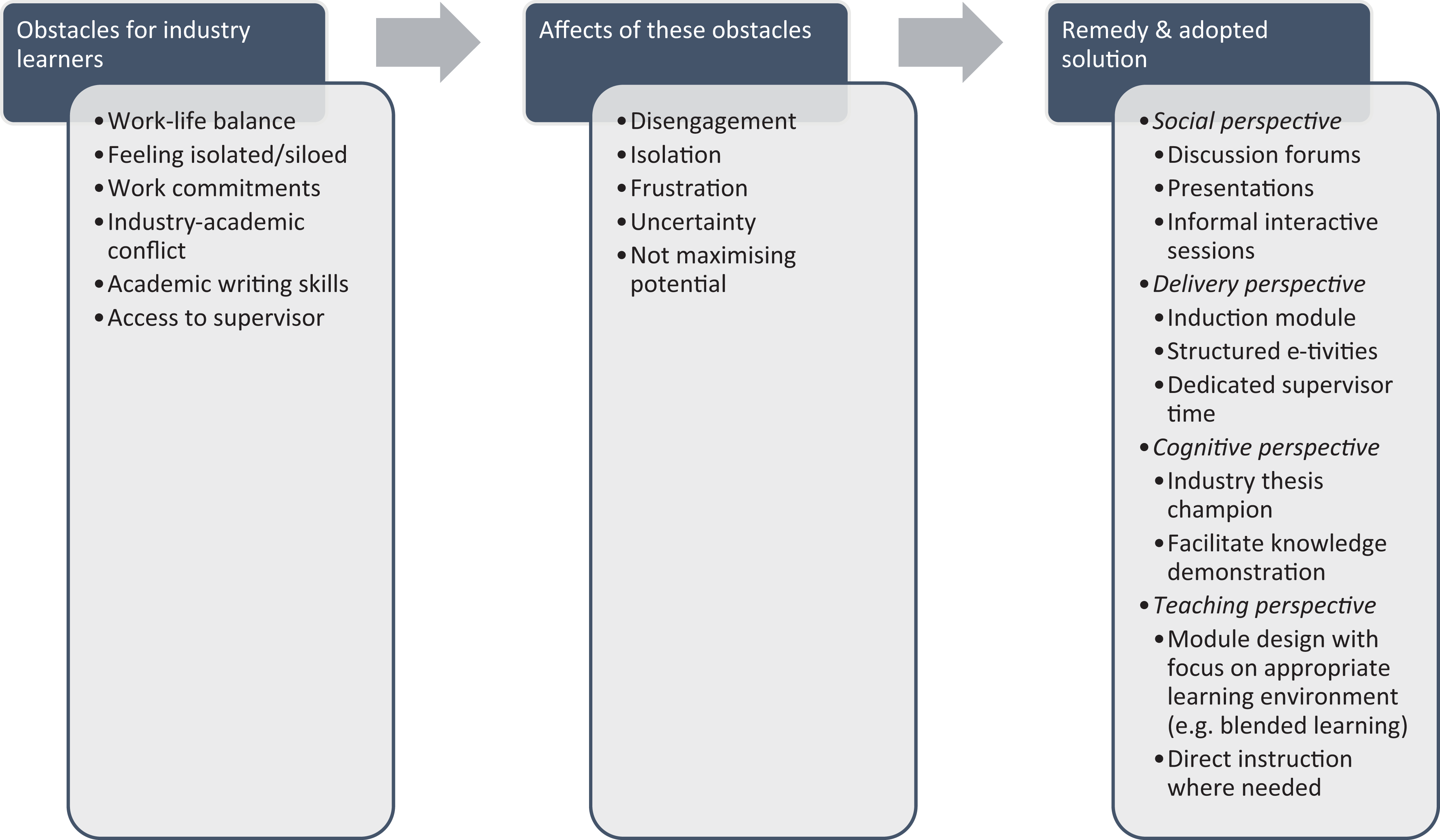
Key findings – Industry learners and online thesis module.
This study also contributes to the online thesis literature in that it proposes a comprehensive framework for supporting online industry learners to successfully complete their thesis. Previous studies have highlighted particular individual components to be included in an online thesis module, but a formal integrated framework has been lacking. This thesis module provides a framework very much in line with the experiential learning framework proposed by Kolb et al. (2001) and Rezaei-Zadeh (2014) who have proposed a process where students reflect upon their previous concrete experiences, compare them with abstract concepts; and then, make their contribution towards the future.
The feedback from students regarding the online thesis module has been positive – it has provided them with a variety of enhanced learning opportunities, enabled them to upskill in terms of research methods and techniques and engendered confidence in them to produce a tangible piece of research work of value to themselves and to their organisation. One theme that arises repeatedly with regard to the thesis module is the level of engagement – not just with the academic content, but with people (between lecturer and student and, even more importantly, among students on the programme who, despite their dispersion around the world, share in common the thesis journey). This ‘human’ engagement has significantly improved, and the design of the module now enables the students to engage in real and meaningful ways.
Online education is not a new phenomenon, but online thesis learning for industry-based students is relatively novel. It is hoped that this paper will contribute to the increasing discussion about online learning, industry learners and dedicated modules designed to support industry and meet academic requirements. From a practical perspective, it is hoped that the study will help thesis module leaders to design, develop and deliver a holistic module for improving their students’ thesis experience and success.
The module is, at the time of writing, being delivered successfully also to a cohort of geographically dispersed industry learners on the MSc Engineering Practice programme at the School of Engineering, University of Limerick, Ireland.
Footnotes
Acknowledgements
The authors wish to thank their colleagues, both lecturers and administration staff, on the Supply Chain Management programmes from the School of Engineering and the Kemmy Business School at the University of Limerick, Ireland. A special word of thanks to all our industry learners who have participated on our online surveys and informal discussions for their general engagement. Without their feedback the academic design and development of our modules would not reflect truly the requirements of industry learners.
Declaration of conflicting interests
The author(s) declared no potential conflicts of interest with respect to the research, authorship, and/or publication of this article.
Funding
The author(s) received no financial support for the research, authorship, and/or publication of this article.
