



Abstract
In the context of the rising power of capital over labour, research on labour mobilization is important. From the research literature, we know that labour mobilizations might be initiated by trade unions or via workers’ self-organization. Yet, we know little about the cultural and social processes through which individual workers come to self-organize in the first place. To address this gap, we present ethnographic research on precarious migrant workers mobilizing with the support of an Italian independent union called SICobas. Our study highlights three processes of self-organizing: formulating shared meanings of discontent, identifying as a group using symbols of inequality and exclusion, and forming communities of struggle. Drawing on Scott’s understanding of resistance, we theorize these three processes as ‘informal cultures of resistance’. This concept contributes to emergent research on workers’ self-organization, showing the significance of the cultural and social processes that can often underpin formal labour mobilizations.
Keywords
Introduction
This article focuses on the processes of workers’ self-organizing both before engagement with formal unions and in articulation with formal (independent) unions. This is an important topic as the modes of labour mobilization appear to be increasingly fragmenting from the previous dominant model of union representation (Atzeni, 2021; Cant and Woodcock, 2020; Però, 2020). This change in modes of labour mobilization appears to be particularly pertinent for the growing numbers of marginalized, gig, outsourced and precarious workers (Alimahomed-Wilson, 2019; Anwar and Graham, 2020; Barnes and Ali, 2022).
This article analytically engages with two main strands of literature on worker mobilizations (e.g. Kelly, 1998; Scott, 1990). The first strand explains worker mobilizations as emerging from cultural and social processes primarily activated by trade unions and activists (e.g. Darlington, 2018; Kelly, 1998; Tapia, 2013). The second explores how public and collective forms of resistance arise from various informal, hidden initiatives that subordinates develop against dominant groups (Scott, 1985, 1990). This second approach aligns with Industrial Relations scholars pointing to the emergence of worker mobilizations as a response to the capitalist labour process (Atzeni, 2009; 2010, 2021). This approach is also supported by emergent research on the self-organization of gig economy, platform and precarious workers, which highlights the collective dynamics underpinning the formation of these mobilizations that workers conduct either with no support from mainstream unions or alongside independent unions (e.g. Anwar and Graham, 2020; Cant and Woodcock, 2020; Però, 2020; Purcell and Brook, 2022; Wood et al., 2018).
Overall, union-centred studies (in the first approach) tend to say little about the self-organizing processes that underpin labour mobilizations, and emergent research on workers’ self-organization (in the second approach) tends to under-explore the cultural and social processes through which workers self-organize collectively. To address these research gaps, we examine the individual and collective processes through which workers self-organize. Specifically, we want to understand how individual workers formulate their collective interests, identify as a group and develop communities of struggle.
Using an actor-centred approach (Alberti and Però, 2018), this article points to key cultural and social processes that allow workers to self-organize. We analyse the case of migrant workers collectively mobilizing with the independent union SICobas in the Italian logistics sector. Our ethnographic study identifies three processes by which workers turn into collective actors and self-organize: formulating shared meanings of discontent, identifying as a group using symbols of inequality and exclusion, and forming communities of struggle. Drawing on Scott’s (1985, 1990) broad understanding of resistance, we conceptualize these processes as constituting informal cultures of resistance.
This article is divided into six sections. First, it examines the literature on resistance and workers’ self-organizing processes. Then, after providing an overview of logistics work with special reference to the Italian context, the article outlines the research methods. The fourth section presents the findings. The discussion highlights the theoretical and empirical contribution of our analysis. The conclusion outlines the study’s significance and implications for practice.
Resistance and workers’ self-organization
In accounting for workers’ collective self-organization, we deploy the concept of resistance as formulated by Scott (1985, 1990). Scott (1985) argues that resistance relies upon a basic antagonism between dominant and subordinate groups such as employers and workers. In this view, workers are not passive or powerless. On the contrary, workers recognize the injustices they experience but might sometimes have limited capacity to overcome them in an open confrontation. In Domination and the Arts of Resistance (Scott, 1990), he specifically distinguishes between open resistance and the infrapolitics of resistance. The former involves public ‘transcripts’ and direct collective initiatives such as protests and demonstrations of subordinate groups. The latter refers to hidden, informal, low-key political expressions and initiatives such as subcultures. The infrapolitics of resistance constitutes the ‘architecture’ (Geary and Gamwell, 2019) of labour mobilizing in terms of hidden forms of resistance preceding and underpinning publicly articulated forms of resistance.
However, there is limited research on the infrapolitics of resistance in the field of Industrial Relations. First, this is because scholars have long considered the emergence of worker mobilizations primarily as a matter of trade unions rather than workers (e.g. Kelly, 1998). As Atzeni (2021) argues, by focusing on trade unionists and activist-led mobilizing processes, these studies tend to show workers as ‘relatively passive recipients of the mobilization efforts of others’ (Darlington, 2018: 626) and, therefore, tend to leave unexamined workers’ self-organizing processes. Second, being hidden, the infrapolitics of resistance can be difficult to observe (Scott, 1990). However, scholars like Ackroyd and Thompson (1999) and Crowley et al. (2014) have studied (often disguised, difficult to detect) misbehaviours that allow workers to decrease employers’ dominant power and authority. Ackroyd and Thompson (1999) argue that misbehaviours arise from and are related to workers’ self-organizing processes. By self-organization, Ackroyd and Thompson refer to deeply hidden processes occurring in all workplaces that express worker capacity to form interests and identities and develop autonomy in opposition to formal hierarchies.
While Ackroyd and Thompson (1999) distinguish misbehaviour from resistance, van den Broek and Dundon (2012) argue that the boundaries between misbehaviour and resistance have become blurred because of the decline of formal systems of collective representation, deindustrialization and de-collectivization. This argument is especially pertinent regarding non-unionized workplaces, where workers might have no option except to articulate agency informally, such as via covert disruption or cultural expressions like graffiti (as noted in Scott, 1990).
A growing scholarship on workers’ self-organization in the gig economy confirms this view of worker mobilizations as underpinned by hidden and informal processes of solidarity and resistance (e.g. Anwar and Graham, 2020; Cant and Woodcock, 2020; Woodcock, 2021). Most of these studies on workers’ self-organization draw upon Atzeni’s (2010) view of ‘spontaneous, unexpected, unorganized’ forms of resistance and follow his argument that workers have an ‘active role in transforming the system that exploits them’ (pp. 20–23). They argue that gig economy, platform and precarious workers might informally disrupt the labour process while developing ‘embryonic’ solidarity, forming group identity and mobilizing as a result of highly precarious material conditions and collective feelings of reciprocity and responsibility (Anwar and Graham, 2020; Tassinari and Maccarrone, 2020; Wood et al., 2018). These self-organized collectives and collective actions tend to emerge with the support of independent unions as there tends to be limited presence or support from mainstream unions (e.g. Però, 2020; Purcell and Brook, 2022). Although these studies are important, they do tend to leave unexamined the cultural and social processes that allow individual workers to formulate their collective interests, self-organize and mobilize collectively. Also, by predominantly focusing on how solidarity and mobilizations emerge among often socially isolated gig workers (e.g. Cant and Woodcock, 2020; Tassinari and Maccarrone, 2020; Wood et al., 2018), they do not consider how self-organization emerges among workers sharing the same workplace.
Cultural and social processes in workers’ self-organization
This section examines the literature on workers’ informal cultures of resistance in studies on worker mobilizations and self-organization. Given our research focus on workers’ cultural and social processes in self-organizing, we engage with the following literature areas: (i) formulating meanings of discontent; (ii) identifying as a group through the use of symbols of inequality and exclusion; and (iii) forming communities of struggle.
Similar to Scott (1990) emphasizing the significance of workers’ cultural meanings, both union-centred studies (e.g. Kelly, 1998) and studies of workers’ self-organization (e.g. Atzeni, 2009; Wood et al., 2018) stress the important role of shared communication for mobilization purposes. While the union-centred studies assign the framing of such meanings to trade unions (e.g. Kelly, 1998; Tapia, 2013), the studies of workers’ self-organization predominantly focus on workers’ informal communicative practices (e.g. Cant, 2019; Cioce et al., 2022). Nonetheless, we know little about the cultural processes – understood as those ‘aris[ing] in conflict, creating and sustaining solidarity in opposition to the dominant structure’ (Fantasia, 1989: 19) – that allow individual workers to formulate and share these meanings.
Moreover, we know little regarding what workers do with these shared meanings. Scott (1990) argues that meanings can be ‘comparable’ and shared among those affected by similar experiences. From the scholarship on workers’ self-organization, we know that feelings (e.g. reciprocity in Tassinari and Maccarrone, 2020) accompanied by other factors (e.g. existing social and ethnic networks in Cant, 2019) can favour the building of group identity. To explain the emergence of mobilizations in the gig economy, Wood et al. (2018) draw upon Kelly’s (1998) definition of group identity – understood as a ‘process whereby people develop a sense of themselves as a distinctive group, “we”, defined in opposition to an outgroup, “them”, which has different interests and values’ (Kelly, 1998: 30). Yet, we still do not know what cultural processes allow individual workers to independently identify as a group. Specifically, left unexamined is if and how symbols – understood as shared, collective ‘bearers’ of meanings (Durkheim, [1911]1953: 87) – can help aid workers in identifying as a group.
Finally, similar to studies pointing to communities and networks for workers to self-organize and build rapport (e.g. Tassinari and Maccarrone, 2020), Scott (1990) notes that the infrapolitics of resistance tends to emerge within neighbourhoods or groups of friends, as these spaces offer a safe social environment. Però (2020) points to communities of struggle as relevant to allowing workers, particularly marginalized ones, to develop resistive initiatives while simultaneously building a safe environment by struggling side-by-side. By ‘communities of struggle’, he refers to collectives that not only allow workers to form communities of coping (Jiang and Korczynski, 2016) but also build trustworthy and resistive relationships to challenge their exploitative working conditions. That is, alongside practices ‘to get by’ (as shown in Anwar and Graham, 2020), these communities are rooted in the process of forging solidaristic bonds and action-oriented initiatives collectively. Yet, we know little about the informal processes through which these communities of struggle form.
The focus of the article is upon these three understudied self-organizing processes – formulating meanings of discontent, identifying as a group via symbols of inequality and exclusion, and forming communities of struggle.
Migrant workers in the Italian logistics sector
This article examines the case of migrant workers employed in the Italian logistics sector. These are marginalized workers – in Scott’s (1990) terms, the ‘weak’ – who are likely to develop infrapolitics of resistance. First, these workers are marginalized because most of them are concentrated in low-end job positions involving the provision of warehouse services like picking, packing, assembling, loading or unloading packages and forklift truck driving. As Dörflinger et al. (2021) note, warehouse work tends to be poorly paid, and requires low-skilled and ‘unskilled’ labour. Second, their work contracts tend to be fixed-term and insecure because of the high reliance of logistics multinational companies on subcontracting and non-standard employment practices (Alimahomed-Wilson, 2019). Third, a significant proportion of warehouse labour is undertaken by migrant workers (Alimahomed-Wilson, 2019; Barnes and Ali, 2022). Of Italian warehouse workers, 80% are migrant workers (Benvegnù and Cuppini, 2018).
Barnes and Ali (2022) argue that by segmenting the workforce, logistics companies develop hierarchies and internal divisions between privileged and marginalized workers, hindering the emergence of formal resistance. Also, a key dimension of logistics labour is its racialization (Alimahomed-Wilson, 2019), as marginalized workers’ economic exploitation is increased by the discrimination and oppression that they experience due to other aspects of their identity (e.g. migrant status). Notably, current Italian immigration laws require residence permits to be accessed via formal employment. 1 Here, to avoid insecure migrant status, migrant workers are implicitly forced into accepting poor working conditions, including unpaid overtime and no benefits. Overall, many migrant workers employed in the logistics sector in Italy face harsh working conditions that intersect with societal exclusionary treatment (Benvegnù and Cuppini, 2018).
The growing scholarship on the emergence of workers’ mobilizations in the logistics sector points to the significance of migrant workers’ concentration in warehouses based in strategic locations (e.g. Alimahomed-Wilson and Ness, 2018). In Italy, these mobilizations have also been facilitated by the presence of the independent union, SICobas. This acronym stands for inter-branch union of the committee of the base unions. Founded in 2010, SICobas’ membership has reached nearly 20,000 workers, mainly first-generation multi-ethnic male international migrants. The union organizes for fair wages, basic rights and migrant-tailored needs, and cooperates with other labour organizations and activists. Its organizing approach is participatory (see also Cioce et al., 2022), centred on workers’ assemblies, networks of shop stewards, rank-and-file active members and grassroots allies such as members of social centres. SICobas organizers – who self-define as ‘militants’ – support workers’ initiatives with legal, administrative and strategic advice and by co-representing workers during negotiations involving employers and police officers. The SICobas campaigns have generally been successful. Notably, SICobas, together with ADLCobas, has signed the FEDIT national agreement that, among other improvements, compels major logistics companies to re-hire workers when the contractor changes.
Research approach and methods
An actor-centred framework (Alberti and Però, 2018) was adopted, allowing the authors to ground the understanding of labour mobilizing in migrant workers’ views and intersected experiences.
Data collection
Ethnographic research was adopted to explore how migrant workers mobilize in the Italian logistics sector. The first author overtly conducted fieldwork for eight months (Aug 2017 to Mar 2018) and arranged debriefing and knowledge exchange initiatives until 2023. To navigate the ‘ephemeral status’ (Fantasia, 1989) of workers’ mobilizations, data collection occurred in different Italian cities – mainly Bologna and Milan, but also in Rome, Modena and Prato. In this article, we analyse data on migrant workers’ self-organizing processes occurring prior to and in between migrant workers’ mobilizations. To capture these informal, hidden processes while ensuring the confidentiality of often high-risk actions, the first author arranged interviews on these themes during or after workers’ mobilizations. Afterwards, she triangulated migrant workers’ accounts of these processes with participant observations and informal conversations (when possible) held at first-time encounters and meetings among non-unionized workers, unionized migrant workers and SICobas militants.
Most research participants were migrant workers, followed by other SICobas members, union militants, allies and mainstream union representatives. Research participants joined this research voluntarily and could withdraw at any point from conversations and interviews. The first author obtained verbal consent during conversations, interviews and recorded interviews. In addition to several informal conversations (Hammersley and Atkinson, 2007), the first author conducted semi-structured interviews (Table 1). Conversations and interviews were conducted mainly in Italian. In addition, the first author often relied on using words in Spanish, Arabic, French and English – as was common among the migrant workers themselves. In parallel, participant observations helped to identify and examine workers’ self-organizing initiatives in the mobilizing processes. In total, this research included 124 participant observations of discrete events involving public and private union meetings, such as picket lines and helpdesks. Fieldwork notes were taken on paper.
Data sources summary.
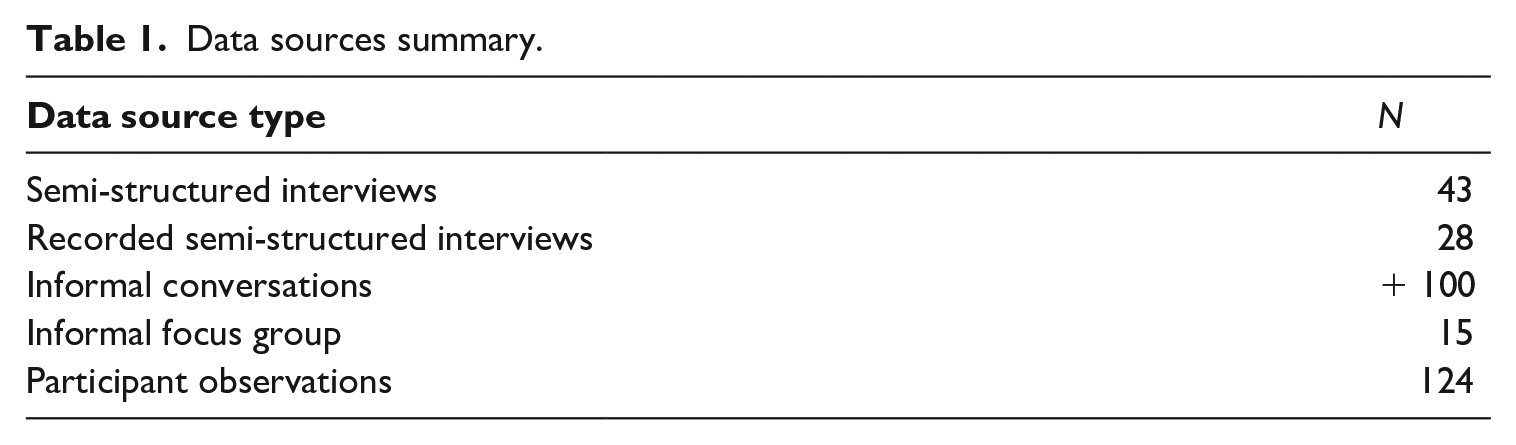
As a result of the broad access that the first author gained to migrant workers’ experiences of labour mobilizing and lives in general, our case study can be interpreted as a revelatory one (Yin, 2014). This is because this case logic entails a researcher accessing a ‘situation previously inaccessible to empirical study’ (Yin, 2014: 102). Alongside conducting participant observations of migrant workers’ involvement in union activities, the first author ‘hung out’ (as in classic urban sociological studies, e.g. Whyte, 1943; see also Browne and McBride, 2015; Rennstam and Kärreman, 2020) with migrant workers upon participants’ invitations. She attended appointments with the Immigration Office, had dinner and meetings with migrant workers’ families and joined social events outside SICobas initiatives. Here, a reflexive consideration of the first author’s positionality can explain the broad access to SICobas members. Despite displaying privileged identity traits (e.g. being White), the first author’s comparable life experiences (e.g. familiarity with low-paid work) favoured building rapport with migrant workers. Such access allowed the first author to gain a contextualized and in-depth understanding of the unfair experiences lived by migrant workers. As ‘hanging out’ would occur with more than one migrant worker, meetings often became informal focus groups (N = 15) on themes such as group identity and belonging. The first author asked for permission to take notes on paper accordingly. These informal focus groups emerged as key occasions for having a first-hand experience of how migrant workers shared and developed experiences collectively, as they would openly reflect on, mirror each other’s sentiments or include other people or meaningful anecdotes in the conversation. While the first author did not directly set up these focus groups, it is likely that her presence contributed to the collective discussions unfolding.
Data analysis and presentation
As is customary in ethnographic research, the themes examined in this article were not identified a priori but emerged during data collection and analysis. A constant comparative method called ‘grounded theory’ (Glaser and Strauss, 2008) was used to analyse ethnographic data. Here, the first author transcribed the interviews and looked for recurrent themes. After that, interview transcripts were thoroughly analysed along with field notes taken during observations, conversations and focus groups. Data were examined several times and recurrent themes were identified. To crosscheck the validity and coherence of the findings, themes were triangulated (Anteby, 2008) with relevant data collected through participant observations. To map the insights of this study, the analysis first involved identifying first-order codes. Examples of these first-order codes are ‘ethnic communities’, ‘ethnic networks’, ‘symbols’, ‘emotions of resistance’, ‘acts of resistance’, ‘accounts of resistance’ and ‘meanings of resistance’. After comparing these first-order codes with the extant literature on worker mobilizations several times, second-order codes were identified (e.g. ‘attribution’, ‘framing’). Afterwards, all authors discussed second-order codes, examined reiterating theories and patterns and agreed on the dominant, emergent theory-centric themes. All theory-centric themes were compared with the relevant extant models and outlined possible integration into theories. Specifically, in line with the theory-building technique outlined by Anteby (2008), alternative frameworks such as ‘subcultures of resistance’ were evaluated.
The case context
Here, we introduce our case study of migrant workers’ self-organization in the Italian logistics sector that led to their successful mobilizations with the support of SICobas. After that, we outline these workers’ self-organizing processes.
Prior to engaging with unions, many migrant workers experienced considerable discontent regarding working conditions. This discontent included low salaries, wage theft, insecure work contracts and dehumanizing treatment. Migrant workers were also subject to unsafe and poor treatment during breaks. For example, breaks often lasted more than four hours and were unpaid. Also, as Muhammad (Pakistani union shop steward, Bologna) noted, warehouses often did not have a canteen or break rooms, so workers were asked to take breaks outside the workplace, regardless of the weather conditions. Discontent, therefore, arose from the belief (and material experiences) of native employers and (often native) line managers violating normative expectations regarding fair and equal working. Salman (Moroccan union member, Bologna) described this vividly: ‘They treated us like animals. [. . .] I could not sleep for back pain. Work contracts lasted 3–6 months, and the residence permit was due.’ Salman’s discontent intersected with the precarity resulting from his migrant status – given that work contracts are required in Italy to secure a residence permit.
Initially, hoping to improve these extremely unfair working conditions, migrant workers joined the Italian mainstream, well-known unions. Some migrant workers even held union shop steward positions within these. However, the same workers recalled feeling frustrated for jeopardizing their livelihoods and often receiving little or no attention in return, as Haile (Eritrean union shop steward, Milan) explained: ‘CGIL officers were not listening to us, no matter what we said. We felt like risking our jobs for nothing. We wanted a better union and looked for it.’ Despite having access to resources (e.g. mainstream unions receive financial contributions from the Italian state) that grassroots unions do not have, union officers from the Italian mainstream unions confirmed their reluctance to mobilize these workers. For instance, among various reasons, Domenico (CGIL officer, Modena) pointed to migrant workers’ unfamiliarity with the local cultural norms as an issue in representing these workers: We usually deal with people that have some union culture. My view is that those who do not have a political or union culture accept any employer’s abuses or will rebel in radical ways. By union culture, I mean the knowledge of labour rights and the National Labour Contracts.
Migrant workers’ lack of ‘union culture’ led Domenico later to describe migrant workers as ‘hard to organize’. Rather than initiating workers’ mobilizations (Kelly, 1998), these mainstream union officers seemed to relegate worker resistance to unrefined rebellion. Because of the unsatisfactory support obtained from mainstream unions, migrant workers turned to SICobas. Here, as Nino, SICobas union militant, recalled, the initial interaction with migrant workers was energizing because of the great engagement and vitality that they showed: Immigrant workers get to these struggles on their own. They were like a swollen river or a boiling pot whose lid only needed to be taken off to start one struggle after the other.
In the next sections, we explain the self-organizing processes that led to the development of such a ‘swollen river’ of discontent.
Findings: The development of informal cultures of resistance through workers’ self-organizing processes
Drawing upon the themes that emerged from our analysis process, this section outlines our findings on how migrant workers formulated shared meanings of discontent, identified as a group by adopting symbols of inequality and exclusion and formed communities of struggle. Overwhelmingly, these were part of workers’ self-organizing processes.
Formulating shared meanings of discontent
Here, we focus on the progressive emergence of meanings of discontent and their implications for workers’ mobilization. Meanings of discontent stemmed from most migrant workers’ changes in perspectives regarding the conditions that had initially pushed them to work in Italy. For instance, Amir (Moroccan union shop steward, Bologna) stressed that he moved to Italy because of comparing the economic opportunities in Italy with the ones in Morocco. As he explained, he found the former more remunerative than the latter: ‘In Morocco, I had freedom, but there are no jobs. If you find a job in Morocco, you cannot buy a car. Over there you work only to eat.’
In the immediate years after migrant workers moved to Italy, Amir, like other migrant workers, initially regarded working in Italy as profitable rather than precarious. However, the unchanging poor conditions to which they were confined increasingly frustrated these workers. These conditions pushed them to demand fair wages and justice. This change in perspective is explained by Omar (Tunisian union shop steward, Bologna). Like Amir, he saw an economic opportunity in being employed at an Italian warehouse. However, he highlighted that the salary would not increase, the work was insecure, and he and his colleagues kept being mistreated due to their status as migrant workers, despite living in Italy for many years: We were fed up. Employers were shouting at us, telling us randomly to fuck off. They did not call us by name. You do overtime [. . .] the money is not there. There was no pay rise. We dealt with insecurity all the time. No matter you work for them for even 15 years, employers only want immigrant workers to pay them less and unfairly.
Omar initially felt his hard work and service would earn employers’ respect and better treatment. Later, however, Omar came to realize that this would not materialize. Other workers felt similarly: for example, Salman (Moroccan union member, Bologna) explained his own growing disillusionment with the treatment received by workers: I have done any type of work, but the pay was always low. I did night shifts, working as a baker, but I could barely pay the electricity bill. I had to go to the church to feed my family, and we are Muslims.
Salman here described multiple and interconnected dimensions of his discontent. While this was primarily framed in terms of low pay and job insecurity, he also felt a sense of shame due to choosing between feeding his family and betraying religious beliefs. More broadly, shame and unmet goals also emerged because of his inability to meet common social needs and expectations – somehow, his migration journey seemed to have failed. Similarly, after familiarizing themselves with the Italian immigration regulations, Muhammad (Pakistani union shop steward, Bologna) and his colleagues developed the desire to bring or to start their own family. Yet, the precarious economic conditions they faced made this desire hard to satisfy: ‘We wanted to bring our families. We knew we did not have a high wage, regular payroll and tax statement, but we had nothing.’
Migrant workers shared their meanings of discontent through social interactions within and outside the workplace. At work, they tended to be concentrated in logistics warehouses and occupied low-end warehouse jobs. Moreover, they often inhabited the same urban peripheries, co-habiting flats, commuting together and frequenting the same religious spaces, cafes and shops. By working and living together, these workers could intensify their meanings of discontent. Simultaneously, they could disseminate these meanings. This is explained by Saad (Moroccan union member, Bologna): Before bringing my wife here, I used to go for coffee with other Moroccans. Most of us worked and lived together. We could not afford to rent alone. We used to talk about the residence permit and problems at work all the time. When my boss sacked me out of the blue, even my neighbour, a migrant worker like me, told me, ‘These people do not want us anymore’.
When referring to ‘these people’, Saad’s neighbour blamed native employers and line managers for Saad’s job loss (as Saad clarified later). He positioned himself among the migrant workers (us) in opposition to native employers and line managers (them). Accordingly, migrant workers came to share experiences of their working and living conditions while developing a shared understanding of their discontent that spread from their immediate workplace and beyond.
A key determinant in developing this shared sense of discontent was the unchanging nature of such unbearable conditions, as both Omar and Salman noted. However, rather than feeling demoralized, migrant workers’ discontent fuelled determination and combativeness. Omar explained this as follows: ‘A certain point arrived. We did not want to cope with these poor conditions anymore. We wanted to denounce them. I wanted justice.’
Having lived in Italy and worked in these conditions for many years, migrant workers had reached a saturation point. They acknowledged that acting outweighed the benefits of remaining apparently quiescent. As Salah (Egyptian union shop steward, Milan) explained, some migrant workers started to self-organize (although unsuccessfully), blocking the warehouse on their own: We were outraged. It had been years that the same line manager treated us like animals. [. . .] We were eight Egyptian workers like me and two Eritreans. We blocked the entrance. You could see a long queue of trucks. [. . .] Afterwards, they moved me to another warehouse.
Here the pride and expression of aggressive emotions further highlight the oppositional character of these informal cultures of resistance. After joining SICobas, extreme actions like those described by Salah and slogans shouted during the picket lines further evidenced the end of migrant workers’ apparent quiescence and determination to achieve change. Some put their lives at risk, laying in front of the trucks to stop truck drivers from leaving or reaching the warehouse. Workers would even crouch under the truck as a last resort action, as in the fieldwork extract: Milan. Police officers removed the workers locked in each other’s arms, who were sitting on the floor in front of the main warehouse gate. The first truck driver of the queue created by the picket line turns on the engine to pass through this gate. The atmosphere is tense. One worker swiftly runs to the truck and crouches down underneath it. I had barely seen him. He loses his shoe, which now lies by the truck. Two other workers join him. The rest of the workers are yelling to stop the engine, hitting their hands against the truck. The driver switches off the engine. (PO_30Nov2017)
Dismantling the picket line would have meant ending the collective action for the day. These three workers, therefore, self-organized such extreme action to keep the struggle going. Ultimately, they succeeded in forcing the employers to negotiate. Others would make clear their determination, shouting, ‘I’ll die here’, in front of police officers trying to raise them from the asphalt and to put an end to their picketing actions. Workers and militants have been heavily injured as truck drivers and police officers have tried to force their way through blockades 2 .
Identifying as a group
This section explains how migrant workers developed a sense of group identity, which, although blurred and context-dependent, was also combative and solidaristic. The section delineates what these workers meant by ‘us’, revealing the importance of how workers used shared symbols of inequality and exclusion to aid the formation of group identity and, later, to aid union recruiting.
Paraphrasing Kelly (1998), migrant workers shared a sense of themselves as a distinct group in opposition to an outgroup ‘them’, made up of native employers or line managers who to these workers had different interests and values (e.g. maximizing profits; a potential sense of entitlement for the mere fact of being White natives as noted in the case study). A sense of ‘us’ emerged from sharing discontent for low wages and precarious work contracts. This discontent was often exemplified by using specific symbols around which migrant workers could easily identify each other. Symbols included migrant workers’ belongings, such as clothes, bicycles or accommodation arrangements. For example, most migrant workers read yellow high-visibility vests and security shoes as universal signs of economic marginalization. Workers assigned these meanings beyond the warehouse where they worked. An unemployed migrant woman joined a demonstration in Prato city centre because of recognizing the appearances of the migrant workers protesting as her own: ‘She asks me who the people speaking at the microphone are. She starts recording them with her phone and says, “They are like me”’ (PO_27Oct2017).
Similarly, when travelling to Madrid for an international union meeting, Ila (Moroccan union shop steward, Bologna) noted: ‘Can you see those men over there? These are like us. [. . .] You see their clothes. They must be warehouse workers. Look at their security shoes, yellow vests’ (PO_25Jan2017). As Ila later explained, by ‘us’ he meant all ‘human beings that suffer at work’. In some cases, symbols of exclusion were clothing items that directly signified particular identity aspects, such as religious affiliation. This is explained by Hindi (Moroccan union shop steward, Milan): People can look at me in such a strange way that it makes me wonder if I have done something wrong. Just for wearing my hijab. But I did become friends with Zahra. We recognized each other immediately (points to her hijab) at work. (PO_30Nov2017)
Wearing the hijab facilitated social identification processes among migrant workers. Although this item could be interpreted in a discriminatory way by Islamophobics, resulting in Hindi’s feelings of exclusion, it simultaneously represented a bridge for mutual solidarity between Hindi and Zahra. Similarly, riding a bicycle rather than driving a car or renting a bedroom with co-workers rather than a flat alone became symbolic vehicles of shared meanings of inequality and exclusion from accessing common living standards. This is explained by Amir (Moroccan union shop steward, Bologna): In four or six people, we would rent beds, share or get a bicycle. [. . .] The majority of us did not have a home, a car, did not pay for the train ticket. We earned €600 [per month]. We could not rent a flat on our own.
These symbols came to bear such shared meanings because most migrant workers could not financially afford alternative commuting or housing solutions. Only a few had family members who hosted them after moving to Italy, whereas others claimed to have been homeless and eaten rats to survive. Yet, after joining the union and obtaining victories through mobilizing, they managed to buy a car and drive to work. Accordingly, most SICobas members would draw on opposite symbols (e.g. owning a car or renting a flat) to exemplify the extent of their improved economic and social positioning. For example, Muhammad (Pakistani union shop steward, Bologna) described this as follows: ‘With SICobas struggles, life changed entirely. I bought a car and rented a big house. My mother, wife and kids all live with me now.’
Overall, the meanings attached to these symbols emerged and fluctuated along with migrant workers’ conditions of marginalization and the successful outcomes achieved through labour mobilizing. Field notes show that some migrant workers used the bike-riding symbol to recruit non-unionized workers in Modena: Picket-line outside a meat-packing company. Some migrant workers smile at each other and point to one worker riding a bicycle. I ask what they are talking about in their native language. Assi answers, ‘Now you will see all these men riding a bicycle. They finished their shift. [. . .] We were telling stories about when we had to ride a bicycle to get to work.’ Afterwards, Assi and other workers shout: ‘Brother, come here. Join the union! No more bicycles!’ (PO_17Nov2017)
Here this symbol spoke to common precarious experiences among migrant workers and conveyed the extent of the success achieved by joining the union. Also, it evoked an abstract sense of relatedness and solidarity beyond the logistics sector. When the first author asked them why they would refer to these bicycles, Sakho (who still does not drive) noted: ‘It’s just a symbol. It’s not that you do not own a car. It’s that you could now, and you could not before.’
Adopting this bicycle symbol, therefore, represented a concrete and direct expression of the wider complex exclusion that Sakho and most migrant workers lived at work and beyond, around which they ascribed or self-ascribe to this ‘us’ group. This is explained by Saad (Moroccan union shop steward, Bologna): ‘Us’ stand for warehouse workers. [. . .] Those that are exploited, migrants. [. . .] Sometimes, you can see us early in the morning, riding a bicycle. [. . .] The majority of my colleagues are Moroccan, like me. I believe that this [being Moroccan] helped me to transmit my message, to create an organization that speaks Arabic. I believe that this language helped to persuade people to organize.
In Saad’s case and in the case of many other workers, affiliation to certain networks was relevant to develop a collective group identity and to mobilize. Saad did not initiate this process in his workplace as he joined the union after his colleagues and friends did. As noted by other scholars (Cant, 2019; Cioce et al., 2022), matching ethnic identities and speaking the same language helped Saad and his colleagues to mobilize – to ‘transmit [Saad’s] message’. Moreover, as Saad later explained, ethnic affiliation could offer a trustworthy environment to migrant workers willing to resist unfair treatment at work: I felt I could not trust mainstream union officers . . .. I had seen how they treated my colleagues . . .. Initially, I was more afraid than them to mobilize. I did not want to make my wife worry. But when I was sacked without reason, I trusted a Moroccan friend. He gave me a phone number of a SICobas organizer and look what do I do know!
Accounts of migrant workers’ self-organizing attempts before joining SICobas showed that they could also build group identity beyond sharing the same ethnic affiliation. For instance, Haile (Eritrean union shop steward, Milan) organized one unofficial strike with colleagues from highly diverse countries. Youssou (Senegalese union militant, Milan) argued that he did not expect that shared ethnic backgrounds would easily turn other migrant workers into actors willing to mobilize. This was mirrored by the experience of a Moroccan union militant, Mirak, based in Bologna: ‘My Moroccan colleagues did not expect me to join the union as I was working behind a desk’.
Workers’ harsh working and living conditions, therefore, played an important role in creating group identity involving both international migrant workers and workers who had migrated within Italy – as explained by Rosa (Southern Italian worker who had recently become a union organizer, Bologna): Like international migrant workers, I came here to find something better. The situation in the South is still dramatic. [. . .] We left behind our families for being paid €600 per month and treated like a towel for their feet. This frustrated all of us. Who makes us do it, after all? That’s why we stand up for our dignity first.
Rosa felt united with fellow international workers due to unmet economic goals and the high costs of leaving those they loved behind. Rather than ethnic or gender affiliation, the low pay, poor treatment and unfulfilled expectations for a general improvement in living conditions made Rosa and other workers feel like a group and brave enough to pursue these collective interests within the workplace.
Overall, the contours of the group ‘us’ were not always well defined, and they became more blurred according to different contexts. Group identity could extend to either being labelled a ‘paesano’ (literally fellow countryman in Italian) of/with a fellow worker, a precarious worker, a warehouse worker, ‘Black’, ‘Mao Mao’, or later, a SICobas member. Specifically, if one worker addressed international or internal migrant workers as ‘Mao Mao’, that meant they were part of the ‘community of struggle’ (Però, 2020), as Elena (Southern Italian union shop steward, Milan) explained: We have some kind of ‘racism’ against who is not a Mao Mao. We call each other Mao Mao. Black people call Mao Mao White ones, and vice-versa. It is good. Haile made me think about it. He said that if until yesterday that nickname was meant to diminish us, now we take control of it. It can no longer be a negative term if it belongs to us.
Employers initially used this nickname to call international migrant workers because they could not pronounce their names or wanted to mock them. In Italy, this term is often used as an insult. Yet, by adopting this term, employers, like other natives, revealed blindness and ignorance of its origin – as Mau Mau were hard to defeat anticolonial insurgents in Kenya (Branch, 2007). Here, history seemed to repeat itself as these workers demonstrated extraordinary courage and combativeness. Migrant workers reclaimed this term and used it to build solidarity among each other and, therefore, sustain and reinforce group identity.
Forming communities of struggle
This section examines the intertwined, simultaneous processes of forming communities of coping and building resistive and self-organizing initiatives. These processes led to the emergence of communities of struggle.
Given the unequal and poor treatment outlined in the previous sections, migrant workers were unlikely to seek help from line managers or employers. Like group identity, the willingness to resist collectively and help each other emerged from the meanings, symbols and identification processes resulting from marginalization. If workers shared similar class and migrant status experiences, they were more likely to identify each other as sympathetic colleagues, exchange support and form collectives. This is explained by Abd (Moroccan union shop steward, Bologna): He [another migrant worker] helped me because he understood my pain. He knew how it felt not speaking Italian, fearing losing the residence permit . . .. Yes, it was a form of resistance. The resistance to keep going with the little you have. There was no union back then.
This suggests that informal resistive initiatives and mutual support could arise from sharing poverty, insecure jobs and migrant status, as well as speaking Arabic. Insecure labour arrangements, along with the lack of union presence at Abd’s workplace, implied that workers had few resources and alternatives except being on each other’s side to survive these conditions. Within these communities, resistance and support could also involve revealing hidden, resistive knowledge against precarious labour, as Abd described: Another migrant, a friend, asked me to stop by his place during breaks to learn his job. He said, ‘Forklift drivers come and go, but my job is important for the company, and if you learn it, you are the only one at the workplace that can do it’. [. . .] When my friend had to leave the job, I was the only one capable of doing it. I got a permanent contract.
Here Abd and his fellow worker helped each other as the former managed to secure a permanent job, whereas the latter was able to leave the job quickly. Like Abd, this worker knew how hard being in precarious jobs was. Yet, he had managed to obtain a more secure contract by deeply understanding the labour process and the bargaining power resulting from certain job positions. Sharing these informal resistive cultures ended up shaping and informing workers’ collective mobilizations, given that later migrant workers used this knowledge to develop strategic actions – either when they self-organized walkouts independently or when they collectively mobilized with SICobas. This is explained by Salah (Egyptian shop steward, Milan) when describing how he and his fellow workers organized a warehouse blockade: We knew what entrance to the warehouse mattered. You would not tell from the outside. We knew the right time for the blockade: the shift starting at 10 pm really counted for that warehouse and we were usually assigned to it. Blocking the warehouse gate would have taken too many people as security would have immediately seen us, so we blocked the street entrance, which was tight enough for the 10 of us to cover it.
These communities of struggle also constituted an empathetic and responsive environment to exchange views and plan actions. When deciding to confront employers overtly, attitudes of resistance and solidarity played a key role in building migrant workers’ self-organizing initiatives, as Qasim (Moroccan union shop steward, Bologna) noted: I lived with Ejaz and Saad before they brought their wives here for many years. We have worked together since we moved here to Bologna. Before mobilizing at the workplace, we made a vow not to betray each other and to show up at the picket line.
Ejaz and Saad (Moroccan union shop stewards) were nearby and nodded in understanding. These workers developed a community of struggle when they moved together to resist low pay and rent prices. That is, by ‘making a vow’ and organizing together, migrant workers could strengthen and deepen these strong social bonds and mutual trust. Despite the risk in undertaking collective actions, jeopardizing these actions could have been even riskier – meaning betraying migrant workers’ own limited local friends and support network. Living together also facilitated migrant workers’ accountability and commitment to participate in collective action. In line with the somewhat solemn nature of making vows, the first author described the first encounter between SICobas and other workers willing to mobilize as follows: Milan. First meeting between 19 migrant workers and SICobas. These workers asked for a collective meeting. They arranged it near these workers’ warehouse, but somewhere difficult for their managers to see. The atmosphere is serious and suspicious. They arrive in groups of three to four and softly greet each other. [. . .] They want night shift pay and fair payslips as someone’s friend [a SICobas member] has achieved. [. . .] They have a plan. [. . .] They want to know what SICobas organizers think of it. (PO_10Dec2017)
This seemingly contradictory behaviour – being willing to conduct extreme collective actions but being hushed and suspicious– shows that these workers were not taking self-organization lightly and cared about each other despite their shared despair over their working conditions. Specifically, communities of struggle simultaneously facilitated self-organization, friendship and solidarity. For example, Haile (Eritrean union shop steward, Milan) recalls the first wildcat, unofficial strike at his warehouse as follows: We had to wait outside for one hour, then work for 15 minutes and out again. It was so cold. I remember one of my co-workers forcefully said, ‘We either die or rebel here’. Two or three days afterwards, we did not return to work after the one-hour unpaid ‘break’. The line managers offered us 30 minutes [instead of 15], but we did not enter anyway, as we wanted assurances regarding the duration of the breaks. Supervisors made some promises, but 13 colleagues were fired. [. . .] Yes, we all joined SICobas, so we still meet at picket lines.
Haile and his colleagues were drawn to each other as a result of these highly precarious working conditions and the discontent attached to them. Later, by joining the same union, they maintained their friendship and solidarity despite working in different workplaces and the bitterness of this unsuccessful self-organized collective action. After joining SICobas, these actions became ‘simpler’ as they could rely on a broader community committed to improving such conditions and ready to support each other. For example, Omar’s colleagues immediately stopped working after being fired soon after joining SICobas. Here, these workers felt that one of ‘them’ was a victim of unfair treatment and should not face it alone: The supervisor said I was bringing terrorists at work and had to go away. So I vented, told him everything that crossed my mind, and left. But my colleagues saw me. They asked me what had happened, followed me . . .. Outside, we were 46–47 people. We had been living and working together for years.
Omar (Tunisian union shop steward, Bologna) was quickly reinstated. Being a member of this horizontal collective affected whether and how injustices were perceived. This self-organizing walkout showed the high level of unity existing among these workers. More crucially, it also revealed migrant workers’ willingness and readiness to self-organize in solidarity with each other when necessary. Later, workers’ self-organization was reinforced by SICobas’ successful mobilizations which helped to engage workers across different struggling communities, as noted in the following research diary notes: After eight-hour warehouse assemblies, Ejaz discovers that approximately 15 workers have heard of SICobas and are ready to walk out in a nearby warehouse. Ejaz’s car is full of flags, warm clothes, bagged food and several water bottles. None in the car knows these workers, but we are going anyway. These workers have asked the union to go there so they can do this safely. Saad hopes that someone will make a BBQ. (PO_25Oct2017)
Unsurprisingly, Saad ironically commented on our arrival: ‘Stop the car. I see some freezing unfortunates like us.’ Struggling communities developed at work, along ethnic lines and/or in neighbours and could come together to defend even those they did not know. Unlike Omar’s case, unity here developed in the collective action process as a result of sharing meanings of discontent and the symbols of inequality and exclusion.
Discussion
Workers’ self-organization is becoming increasingly important after a period where the union mode of workers’ organization was seen as dominant. This article examines how workers self-organize against the growing labour precarity and beyond mainstream union representation. We have argued that Scott’s (1985, 1990) concept of the infrapolitics of resistance is a key analytical starting point for analysing workers’ self-organization. We acknowledged that studies on workers’ self-organization in precarious contexts have already identified key worker-led informal, hidden dynamics and factors that allow workers to form collectives independently and mobilize (e.g. Anwar and Graham, 2020; Atzeni, 2010, 2021; Cant and Woodcock, 2020; Purcell and Brook, 2022; Wood et al., 2018; Woodcock, 2021). Yet, here, we identified a research gap regarding the cultural and social processes that unite individual workers and aid their self-organization and mobilization. The above studies tend not to explain how individual workers formulate their collective interests, identify as a group using symbols of inequality and exclusion, and develop communities of struggle. In this article, we point to three processes of workers’ self-organizing, and we conceptualize these as constituting ‘informal cultures of resistance’.
We showed that migrant workers in the Italian logistics sector independently created these informal cultures and independently organized walkouts and blockades, blaming native employers and line managers for the extremely precarious conditions that they collectively faced. They asked mainstream unions for representation but felt neglected and finally successfully mobilized with the support of SICobas. Frustration and anger for being confined to harsh working and living conditions negatively changed migrant workers’ perspectives on the conditions that had initially attracted them to Italy. By working and living together, migrant workers came to share meanings and developed group identity through symbols (Durkheim, [1911]1953), which evoked unequal and exclusionary conditions. Also, as a result of a trusting environment and mutual support within communities of struggle, migrant workers developed enough confidence to self-organize and collectively mobilize for fair working conditions.
Although SICobas mobilizations emerged thanks to the cooperation between union militants and migrant workers, it was the workers’ informal cultures of resistance which brought workers together as a contentious self-organized collective capable of undertaking industrial actions. Although quiescent in the public transcripts (Scott, 1990), migrant workers resisted day-to-day exclusion and inequality ‘with the little’ they had, such as these informal resistive cultures. Migrant workers shared these cultures, initiated and fostered sympathetic, trustworthy relationships and exchanged support. Moreover, these workers’ commitment and participation in subsequent union initiatives, such as recruiting non-unionized workers, increased.
The article conceptualizes the self-organizing processes – formulating shared meanings of discontent, identifying as a group through symbols of inequality and exclusion, and forming communities of struggle – as informal cultures of resistance. These processes constitute cultures in the sense that they revolve around shared meanings among a group who come to see themselves as a group. They are cultures of resistance because they are formed in opposition to the employer and come to inform public forms of opposition to the employer.
More broadly, the concept of the informal cultures of resistance sits well with Scott’s (1990) wider theorizing regarding the infrapolitics of resistance. Scott emphasizes that social scientists must move away from a simple focus on public, observable acts of resistance to also consider the ways the weak communicate with each other, creating value systems and meanings counter to the dominant, and this ‘infrapolitics of subordinate groups . . . provides much of the cultural and structural underpinning of the more visible political action on which our attention has generally been focused’ (Scott, 1990: 184). Therefore, informal cultures of resistance can act as the architecture of resistance in the transition of workers possessing little, individual ‘weapons of the weak’ (Scott, 1985) towards these workers coming together and mobilizing collectively. We elaborate on the concept of informal cultures of resistance as a theoretical contribution in two senses below.
First, the concept of informal cultures of resistance can complement union-centred research on social processes that make the emergence of worker mobilizations possible (Darlington, 2018; Kelly, 1998; Tapia, 2013). It does so by highlighting the active role of workers – rather than trade unions only – in formulating meanings of discontent and building group identity independently. The concept, therefore, helps to shed light on how informal workers’ resistive cultures come into being and can lead to workers self-organizing even when union leaders do not initiate such processes. Moreover, it aids in appreciating further the overall processual character of workers’ collective resistance, which can emerge as a hidden or individual response to the labour process (Atzeni, 2021) and transition into public industrial action when supported by those (independent) trade unions willing to make workers’ resistive initiatives effective.
Second, the concept of informal cultures of resistance can add to research on workers’ self-organization and mobilization in precarious contexts (e.g. Alberti and Però, 2018; Geary and Gamwell, 2019; Tassinari and Maccarrone, 2020; van den Broek and Dundon, 2012; Wood et al., 2018). It does so by pointing to the cultural and social processes through which individual workers come to formulate their shared interests and come to identify as a group. Although symbols of inequality and exclusion are not necessary to develop group identity (Kelly, 1998; Wood et al., 2018), we argue that they facilitate the swift acknowledgement of homogeneity among workers’ corresponding personal representations of feelings (Durkheim, [1911]1953). This is important among workers facing communication barriers (e.g. Cioce et al., 2022) and those needing to quickly build solidarity in the collective action process (e.g. Atzeni; 2010; Fantasia, 1989). More broadly, the concept of informal cultures of resistance can illustrate the cultural and social processes underpinning the development of other self-organized networks (e.g. Anwar and Graham, 2020), whose combativeness and readiness to resist interlocks with survival initiatives, mutual support (Jiang and Korczynski, 2016) and industrial action.
Conclusion
Drawing upon Scott’s understanding of resistance (1985, 1990), this article examines how individual workers turn into collective actors and self-organize. There is a research gap on this issue in both union-centred studies (e.g. Kelly, 1998) and in developing research on workers’ self-organization in precarious contexts (e.g. Atzeni, 2010; Tassinari and Maccarrone, 2020; Wood et al., 2018). Specifically, this article points to three self-organizing processes undertaken by workers – formulating meanings of discontent, identifying as a group through symbols and forming communities of struggle. We conceptualize that these three self-organizing processes constitute informal cultures of resistance. Such informal cultures of resistance can be a crucial underpinning for worker mobilizations.
The concept of informal cultures of resistance emerges from our revelatory case study design logic (Yin, 2014). Revelatory cases allow for generalizing in terms of creating an opportunity to bring inaccessible and difficult to detect cultural and social processes into the analysis. Specifically, here, this concept reveals the – often hidden – antagonism and energy of workers’ informal resistance (Scott, 1990) that can establish the architecture for collective mobilizations. Accordingly, it can complement both research strands on labour mobilizing (e.g. Kelly, 1998) and self-organizing processes (e.g. Atzeni, 2010; Geary and Gamwell, 2019; Però, 2020; Wood et al., 2018).
In considering potentially important boundary conditions for generalizing, we acknowledge that there are two key elements in the case that favour the emergence of these cultures. First, the workers developing these cultures are marginalized, precarious workers who have long been concentrated in low-end jobs and discriminated against along ethnic and racial lines. Second, the likelihood of developing these cultures increases when these workers work and/or live side-by-side as they have more chances to share and fuel discontent rather than those who are ‘isolated’ as typical in gig and platform economy jobs (e.g. Tassinari and Maccarrone, 2020; Wood et al., 2018). Further research can help establish whether our theoretical analysis can be generalized into cases where these conditions do not pertain.
The concept of informal cultures of resistance is also potentially significant for practitioners, in terms of aiding labour organizations to build a more inclusive understanding of marginalized workers’ resistance. Rather than dismissing workers’ energy as unrefined rebellion, labour organizations can develop mobilizing practices that constructively engage with and support workers’ self-organizing initiatives. As we have shown in this article, engaging with workers’ informal cultures of resistance can benefit labour organizations in many ways. For instance, such engagement can assist recruitment as well as co-developing group identity and collective mobilizations.
Footnotes
Acknowledgements
We would like to say a big ‘thank you’ to the migrant workers, SICobas militants and other labour organizers who participated in this research. We also wish to thank Professor Kirsty Newsome, Professor Miguel Martínez Lucio, Professor Ken Kamoche, Dr Simon Parker and Dr Joe Kearsey for their important feedback on the research project. We are also very grateful to Dr Elizabeth Cotton and the three anonymous referees at WES for their generous and helpful comments on previous drafts.
Funding
The authors disclosed receipt of the following financial support for the research, authorship, and/or publication of this article: The development and revision of this article were supported by the Economic and Social Research Council [ES/W005751/1].
