



Abstract
Focusing on management consulting firms, this study scrutinizes a core group of knowledge workers revealing the complexity and diversity of meanings attached to their trust-related decisions, emotions and behaviours. Drawing on 50 interviews utilizing critical incident technique with management consultants working in leading UK and US consulting firms, the study offers insights into the complex nature of human interactions and their embeddedness in social contexts. The study provides context-specific insights into an environment that, despite its claims to nurture trust, is inherently riddled with tensions arising from internal competition. Three main constituents are highlighted: (1) trusting trustors and trustworthy trustees; (2) the cruciality of giving and receiving support; and (3) building relationships and developing networks. This study draws on social exchange theory and critically assesses its heuristic explanatory power in the context of the management consulting industry. Further implications for future theory and practice are discussed.
Keywords
Introduction
The nature of work and employment relationships has gone through major transformations over the years, with knowledge workers having been described as the vanguards of the new era in work and employment relationships (Bäcklander et al., 2021; Donnelly, 2006, 2009, 2015; Mallet, 1975). Yet, few scholars have focused their interest firmly on the role of trust in relationships between knowledge workers (e.g. Heckscher and Adler, 2006). This partly stems from the predominance of unitarist, functionalist and etic assumptions in mainstream trust research, which often extrapolate theories developed in one context to all others without distinction (Isaeva et al., 2015; Siebert et al., 2016). Consequently, the unique aspects and significance of knowledge work have been overlooked in the field of trust.
Focusing on management consultancy firms, this study scrutinizes a core group of knowledge workers (Alvesson, 2001; Donnelly, 2009, 2015; Muzio et al., 2011) examining the complexity and diversity of meanings consultants attach to their trust-related decisions, emotions and behaviours. We conducted a qualitative study, which we consider the optimal methodological approach for exploring the phenomenon of trust within the complex and dynamic field of management consultancy (Cerruti et al., 2019). With the aim of capturing the lived experiences of our participants and gaining in-depth understanding, of the meanings they attach to their reality, we employed in-depth, semi-structured interviews using the critical incident technique (CIT). This overall approach allowed us to break away from a functionalist perspective, acknowledging the situationality and subjectivity of social worlds. In particular, we seek to answer three questions: (1) How is trust manifested in management consultants’ relationships? (2) What are the constituents of employee trust for these workers? (3) How does the application of social exchange theory (SET) as a heuristic tool enhance our understanding of the development and sustainability of trust within the social interactions and relationships between management consultants?
Consultancy’s evolution can be traced back to the early 20th-century Taylorist movement, with significant development in the field occurring post-Second World War in the US and UK (Gross and Poor, 2008). The focus on these two countries in the research reflects their pivotal roles as leaders in the global management consultancy market (Consulting US, 2020; Donnelly, 2015). Their influence extends beyond market size to set trends, standards and practices worldwide. By examining the US and UK consulting industries, the research taps into mature, sophisticated consultancy ecosystems, ensuring the findings have broad relevance and applicability across diverse global contexts.
Although the literature on employee trust is rich and extensive, most studies almost exclusively focus on the individual aspects; for example, only the psychological states of individuals (Rousseau et al., 1998) or trustees’ trustworthiness (Mayer et al., 1995), to the detriment of understanding the overall picture (Cook and Santana, 2020). Similar to general employment relationship research (Budd, 2020; Godard, 2014), research on employee trust has been criticized for its increasing ‘psychologization’ and for becoming unitary (Isaeva et al., 2015; Siebert et al., 2016). Drawing too much on such a perspective can be limiting, ignoring the complex nature of human interaction and its embeddedness in social contexts (Lewis and Weigert, 1985, 2012; Weber and Carter, 2003). Despite existing contributions from a sociological perspective on trust (Bachmann and Inkpen, 2011; Fox, 1974; Lewis and Weigert, 1985, 2012; Siebert et al., 2015) and the emergence of context-specific studies (e.g. Prichard et al., 2014; Sampson et al., 2019), the research in this area remains notably scarce.
While the existing body of literature primarily highlights the various benefits of trust – for instance, within employment relationships (Isaeva et al., 2019) – it points out trust as a crucial form of social capital that promotes social cohesion, cooperation and economic prosperity (Fukuyama, 1995). Moreover, trust is associated with enhanced employee performance (Colquitt et al., 2007; Zak, 2017), increased levels of employee motivation (Zak, 2017), improved collaboration and cooperation (Lewicki et al., 1998) and superior organizational citizenship behaviour (Dirks and Ferrin, 2001). Therefore, it is clear that a detailed and critical exploration of trust’s situated and context-specific characteristics is essential for advancing employment relations research, particularly in knowledge-intensive industries. This study aims to contribute to this body of knowledge not only by providing context-specific insights into the dynamics of trust within management consulting but also by uncovering the underlying sources of trust, thereby enriching our understanding of its role and significance in professional settings.
In our exploration of management consultants, we emphasize the importance of adopting a sociological perspective, drawing extensively on Granovetter’s (1985) theory of embeddedness from the new economic sociology. This approach allows us to understand the exchange of advice for economic gain not merely as transactions but as actions deeply rooted in the complex web of social relations, thereby revealing the complex interplay between social networks and organizational dynamics (Glückler and Armbrüster, 2003). Through the lens of SET, as elaborated by Blau (1964), our study explores the complex processes of trust development, sustainability and challenges within the dynamic and interconnected environment of management consulting. This comprehensive examination extends the traditional application of SET, uncovering the underpinning social exchanges that constitute the foundation of trust among management consultants.
Our research contributes to the broader discourse on trust by illuminating how trust is constructed, maintained and challenged against the backdrop of the competitive yet collaborative tensions that define the management consulting sector. By highlighting the crucial role of social embeddedness – a concept pioneered by Granovetter (1985) – in shaping trust dynamics, our study captures the broader social and organizational contexts that facilitate or impede the cultivation of trust. This approach enriches our understanding of SET in a complex professional setting by detailing the mechanisms through which social capital and reciprocal exchanges contribute to a sustainable framework of trust within management consultancies.
Theoretically, our work advances SET by elucidating the multifaceted influence of social embeddedness on trust dynamics, addressing a significant gap in existing research. By applying this theory to the complex domain of management consulting, we showcase trust as both an antecedent and a product of the rich fabric of social exchanges typical of knowledge-intensive work environments. Practically, the study outlines the critical significance of recognizing and leveraging the social networks and structures within which consultants operate, suggesting that a deeper understanding of these complex relationships is pivotal for fostering trust and enhancing cooperation within management consultancies.
Overall, our contribution lies in detailing the foundational elements of trust within the competitive yet collaborative atmosphere of management consulting and in elucidating how these elements interact with the broader social and organizational landscape. This comprehensive analysis sheds new light on the complex mechanisms of trust in a sector where fostering such trust is both vital and challenging, offering valuable insights for both theory and practice in the realm of professional services.
The remainder of this article consists firstly of a brief discussion on the current state of literature on trust, including trust within employee relationships, followed by conceptual considerations concerning SET and an introduction to the context of management consultancies. Next, we outline our methodology and then discuss the findings, reflecting on their empirical and theoretical implications before drawing conclusions and offering an agenda for future research.
Trust within employee relationships
Trust has been suggested to be seen as ‘a foundational orientation between self and other’ (Lewis and Weigert, 2012: 26) and a reflexive process of interactions between beliefs and expectations of the trustor and their act of trust, comprising complex feedback loops among cognitional and emotional judgements (Lewis and Weigert, 1985, 2012; McAllister, 1995; Möllering, 2006). Subsequent conceptualization and operationalization depend on whether trust is viewed as a rational, cognitive calculation and an assessment of risk (Coleman, 1990), or as non-calculative, affective and essentially being reserved for personal relationships (Williamson, 1993), or, as we see it, as encompassing notions of both emotional feelings and rational thinking (Lewis and Weigert, 1985; Möllering, 2006), constituting a fundamental embedded mechanism to coordinate expectations and interactions (Bachmann and Inkpen, 2011).
Much research links employee trust solely to psychological aspects, including the trustor’s own propensity (disposition) to trust and their internal assessment of the trustee’s trustworthiness (characteristics that constitute antecedents of trust) (McAllister, 1995; McKnight et al., 1998; Mayer et al., 1995). Mayer et al. (1995) link trustworthiness to the trustee’s ability (competence, skills and knowledge), benevolence (benign motives and genuine concern) and integrity (honesty, fairness and principles) – known as ABI. The relative importance of the three elements of ABI, however, will be highly dependent upon the situation, where ability might be seen as more important on issues concerning trusting someone with technical matters, whereas benevolence and integrity might be considered more strongly in a different context; for example, when trusting management to support one’s career advancement (Prichard et al., 2014).
The general trust literature in the field of management studies has grown tremendously over the past couple of decades, becoming highly developed and differentiated. For example, a number of scholars have intensely discussed the importance the reciprocal aspects of trust in organizations (de Ridder, 2004; Sampson et al., 2019).
While previous literature has explored reciprocity in various organizational settings, we pinpoint the unique challenges and opportunities for reciprocity in management consultancy, where the drive for individual achievement often competes with the need for collaborative success. Our study identifies gaps where existing literature on reciprocal trust may not fully account for the nuanced ways in which competitive pressures influence reciprocal behaviours and trust dynamics in knowledge-intensive firms.
Beyond dyadic organizational relationships, employee trust has been shown to be specifically influenced and shaped by a third-party’s perceptions and judgements (i.e. trust transferability) (Ferrin et al., 2006). Socialization processes and associated high levels of perceived organizational support and employees’ organizational identification therefore contribute to employee trust development (Eberl et al., 2012).
Adopting a sociological or relational perspective, our approach conceptualizes trust not merely as an individual’s psychological state, but as a characteristic inherent to social relationships among two or more actors (Cook and Santana, 2020; Siebert et al., 2015). In work contexts, this relational understanding of trust is particularly relevant, influencing teamwork and intergroup collaboration (Schilke et al., 2021). Trust arises from the complex interactions among organizational members, leading to shared perceptions of trustworthiness and trust (Sampson et al., 2019). This sociological approach highlights the importance of viewing trust as a dynamic, relational attribute, crucial for enhancing collaborative understanding within organizations.
In this study, we adopt, and subsequently broaden, SET to scrutinize trust dynamics within management consultancy. Integrating aspects of emotional intelligence, non-rational decision-making and the impact of competitive pressures, we uncover the complex emotional and calculative dimensions of trust that extend beyond conventional reciprocal exchanges. This refined approach amplifies the theory’s applicability, providing a deeper insight into professional relationships in knowledge-intensive sectors. Our research not only applies but also enriches the theory, highlighting the complex interplay of factors influencing trust formation and maintenance in management consulting. We now proceed to examine the foundational principles of SET.
Social exchange theory (SET)
SET, originally formulated by Homans (1961), Blau (1964) and Emerson (1972a, 1972b), provides a theoretical framework for analysing the dynamics of social behaviour through the concept of exchange. Homans introduced the foundation of SET by investigating the role of individual behaviour within interactions, asserting that these behaviours are motivated by the assessment of rewards and costs. Despite critique for its reductionist perspective, Homans’ approach significantly influences the study of social interactions by highlighting the rational assessments individuals conduct within social contexts (Cook et al., 2013). This rationale aligns with the behavioural tradition of trust, linking trust decisions to rational calculations, yet it does not fully encompass the complexities of trust within workplace environments (Lewicki et al., 2006).
Blau expanded on Homans’ groundwork by presenting a more economic and utilitarian perspective, applying economic principles to the analysis of social behaviour. Blau envisioned social exchanges as voluntary acts driven by the expectation of benefits, integrating the impacts of social structures, trust, power and inequalities into his analysis.
Notably, much research on SET leans towards a psychological perspective (e.g. Emerson, 1972a, 1972b), diverging from its sociological roots (Cook et al., 2013). Our study’s sociological focus, therefore, enriches the broader literature by reinvigorating SET’s relevance and versatility across disciplines.
In developing our analysis, we draw particularly on Blau’s (1964) insights, which recognize the complexity of human actions and the complex nature of social exchanges, extending beyond mere reward-cost calculations to encompass wider societal influences (Cook et al., 2013). A pivotal theme in Blau’s work is the critical role of trust in facilitating social exchanges. Trust is identified as an essential component that nurtures mutual obligations and anticipations, fostering enduring relationships marked by reciprocity. Research indicates that social exchanges cultivate an obligation, initiating a ‘virtuous circle’ where trust leads to further trust (Fox, 1974; Siebert et al., 2015). This concept is especially pertinent in exploring trust within employment relationships, where the anticipation of rewards and the evaluation of costs and benefits are vital in promoting trustworthy behaviour and sustaining relational bonds (Hardin, 2002; Schoorman et al., 2007; Serva et al., 2005; Wasti et al., 2011).
While Blau’s understanding of social exchange forms the starting point of our study, it is important to note that our approach is not limited by it. Instead, we leverage his insights as a foundation upon which to explore and expand, aiming to capture the nuanced and multifaceted nature of social exchanges in contemporary contexts. In line with Granovetter’s (1985) perspective, our study integrates a sociological examination of trust with the concept of embeddedness, highlighting the complex social processes and structures arising from interactions, a key focus in Blau’s (1964) seminal work. This approach aligns with the principle that social exchanges are not isolated transactions but are deeply ‘embedded’ within networks of continuous social relationships (Cook et al., 2013).
Despite the prevalent use of SET in social sciences, its application to intra-organizational relationships within knowledge-intensive firms, particularly beyond the context of knowledge sharing (Cross and Dundon, 2019), is notably limited. This limitation is even more pronounced in the exploration of trust dynamics within management consultant relationships, marking a critical area for further research. Addressing this void is essential to enhance our understanding of trust’s formation and maintenance within consulting firms and its influence on organizational outcomes.
The consulting sector, which heavily relies on intellectual capital and necessitates effective collaboration, accentuates the vital role of trust in securing operational efficiency and project success (Alvesson, 2001; Donnelly, 2009, 2015; Robertson and Swan, 2003). By applying SET within this setting, our study endeavours to reveal strategies for fostering trust among consultants, providing practical insights to boost performance and cohesion within consulting firms. This focused approach not only aims to fill a recognized gap in the existing literature but also to improve intra-organizational relations within the consulting industry, offering significant contributions to the academic and practical understanding of these dynamics.
Management consultants as a core group of knowledge workers
Knowledge workers, highly educated and skilled, are essential in professional-service sectors like management consultancy, where they apply their knowledge to meet complex client needs (Alvesson, 2001; Bäcklander et al., 2021; Donnelly, 2009; Muzio et al., 2011; Swart and Kinnie, 2003; Truss et al., 2012). Despite the growing interest in knowledge-intensive firms, the concept of trust among knowledge workers and its development within these organizations remains underexplored. Trust is crucial for knowledge workers, who operate in roles requiring autonomy and discretion, contrasting with traditional roles characterized by low discretion and mutual distrust (Alvesson and Robertson, 2006; Fox, 1974; McGovern, 1996; Mallet, 1975; Siebert et al., 2015).
Recent trends, however, indicate a shift towards low-trust environments, marked by increased managerial oversight and control measures, challenging the autonomy of these workers and potentially leading to dissatisfaction and distrust (Adams, 2015; Evetts, 2006; Klikauer, 2015; Numerato et al., 2012; Siebert et al., 2015). The rise of managerialism further complicates trust dynamics, suggesting a need for a critical re-evaluation of trust and autonomy in professional settings.
In the context of management consulting, characterized by uncertainty and ambiguity, trust is pivotal in balancing autonomy with control for efficiency (Abgeller et al., 2024; Bachmann, 2001; Robertson and Swan, 2003). The sector’s lack of formal institutional frameworks complicates the development of institutional trust, essential for coordinating expectations and reducing uncertainty (Glückler and Armbrüster, 2003). This highlights the importance of understanding trust among organizational members and calls for empirical research into trust dynamics within professional-service organizations.
Expanding on this discussion, it is essential to grasp the complexities of trust within management consulting, especially with changing managerial practices. This understanding sets the stage for the next section, focusing on the research methodology aimed at examining trust dynamics more closely.
Methodology
Our qualitative study explored the lived experiences of participants and the meanings they attribute to their social environments (Patton, 2015). We gained access to two leading UK consulting firms through senior members who served as gatekeepers without influencing data collection. Aimed at achieving heterogeneity, our method highlighted key themes across varied experiences, providing profound insights (Isaeva, 2018). We initially interviewed 30 individuals from these companies, expanding our research through referrals to 50 participants across five top UK consulting firms (80%) and a US branch of one firm (20%), representing two significant markets (Donnelly, 2015). Our diverse sample included a balance of grade, age (average 36.3 years), experience (average 13.6 years) and gender (50% each). See Table 1 for participant demographics.
Participant profiles.
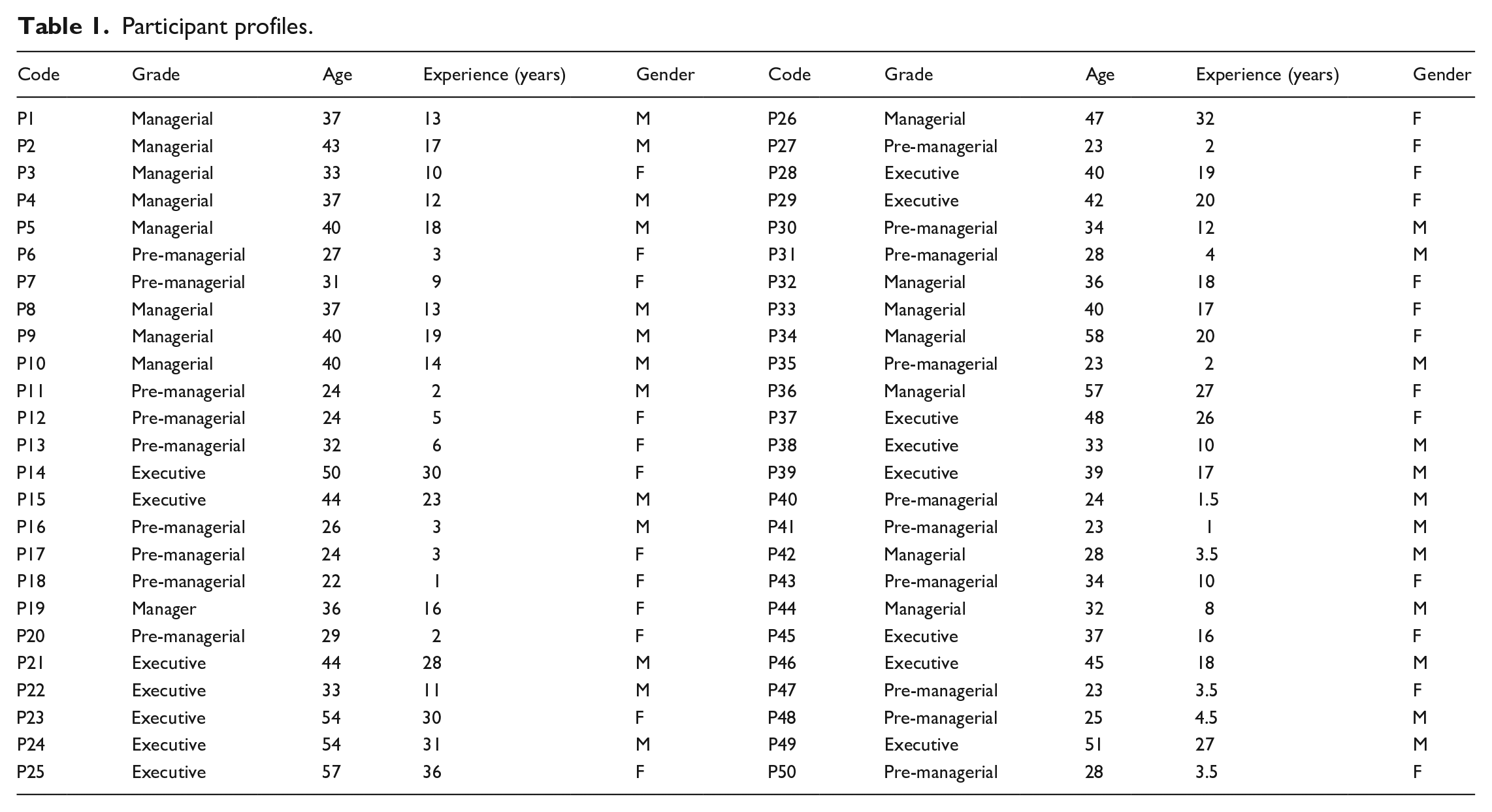
Following ethical approval, the lead author conducted in-depth, semi-structured interviews using the CIT (Flanagan, 1954). Interviews lasted about an hour, conducted as: 17 face-to-face, 24 via videoconferencing and nine by telephone; participants showed consistent responses across all formats. This method involved participants recounting two significant work-related incidents that highlighted trust dynamics, providing insights into how trust is developed and experienced (Cope and Watts, 2000; Lyon et al., 2015; Sharoff, 2008; Sloan and Oliver, 2013).
Participants answered open-ended questions about ‘critical incidents’ that influenced trust, including events that increased trust towards a colleague, and identifying a trusted individual within their organization. This approach aimed to capture emotional and nuanced aspects of trust, while minimizing recall bias by focusing on detailed, behaviour-driven accounts of trust-related incidents. Following Flanagan’s guidance, the flexible interview structure revealed previously unnoticed events, enriching our understanding of trust (Snodgrass et al., 2009). Participants openly shared their experiences, allowing for an in-depth exploration of trust perceptions. Throughout these interviews, participants narrated trust incidents, while researchers interpreted these stories, enhancing the study’s insight into trust dynamics. All interviews were audio-recorded and verbatim transcribed.
We applied reflexive thematic analysis (Braun and Clarke, 2022) for data analysis. The first two authors started by identifying semantic codes and then manually grouped these into sub-theme/initial concepts based on consistent meanings, incorporating established terms from trust literature where relevant. For instance, ‘insights of others’ trustworthiness’ and ‘confirmation of others’ trustworthiness’ were categorized under ‘third-party trust’ (Ferrin et al., 2006). Following the creation of sub-themes, each author and an external researcher, who followed the same analytical process independently, examined the relationships between sub-themes to form thematic maps. These maps outlined the connections from sub-themes to overarching themes. The development of the final thematic framework was a collaborative effort, culminating in a consensus-based thematic map through discussions among all authors and the external researcher, ensuring a comprehensive analysis.
From the mapping and discussions, two overarching themes emerged related to trust development among management consultants: (1) ‘Context of trust’ and (2) ‘Constituents of trust’ (Figure 1). The ‘Context of trust’ theme included ‘Organizational support for trust’, ‘Inherent competition challenging trust’ and ‘Trust development as a process’. Heeding Braun and Clarke’s (2022: 88) guidance that sub-themes should be used sparingly and only when adding value, no sub-themes were added to the thematic map for the first main theme (Figure 1).
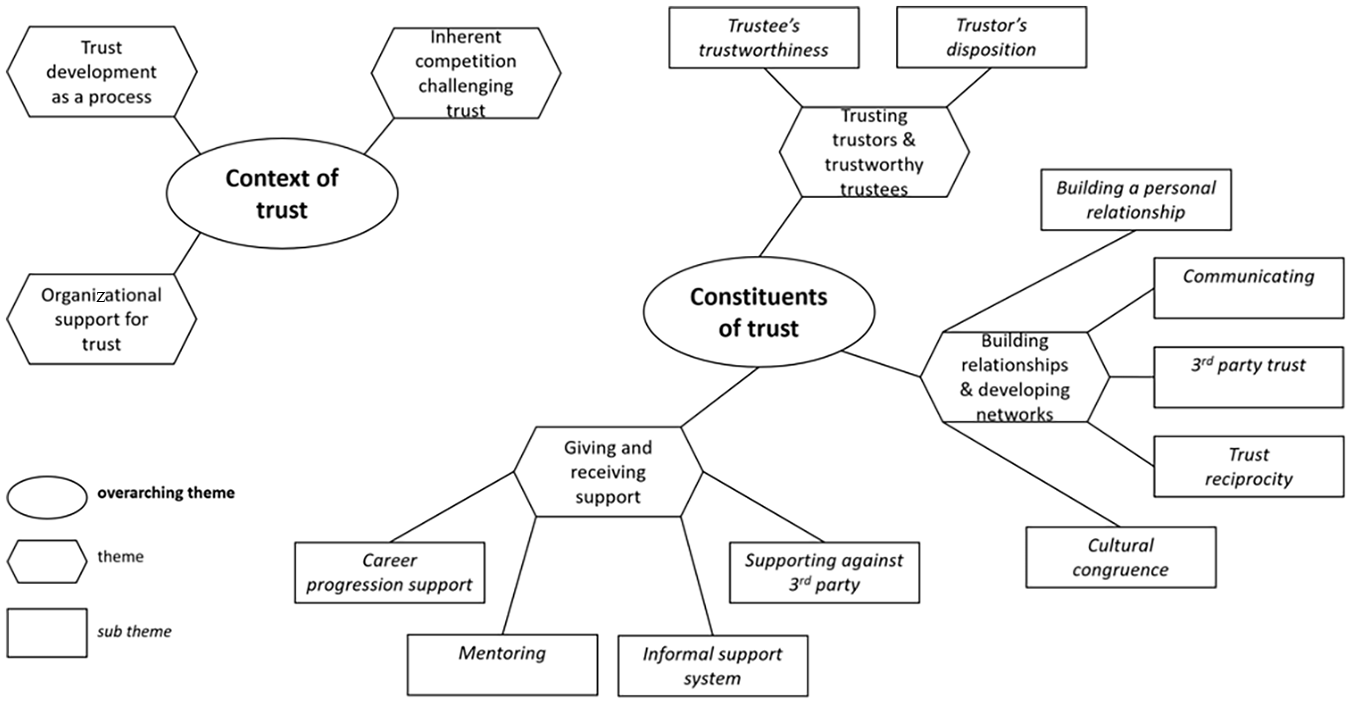
Thematic map.
The overarching theme ‘Constituents of trust’ encompassed three themes: (1) ‘Trusting trustors and trustworthy trustees’; (2) ‘Giving and receiving support’; and (3) ‘Building relationships and developing networks’ – each with its sub-themes (see Figures 1 and 2 for details). Theoretical saturation was achieved by the 26th interview (Saunders and Townsend, 2016), but the first author continued interviews to ensure comprehensive data collection. Aside from grade, which is discussed where pertinent, there were no notable response differences based on gender, age, or location (US vs UK). We now proceed to our analytical findings.
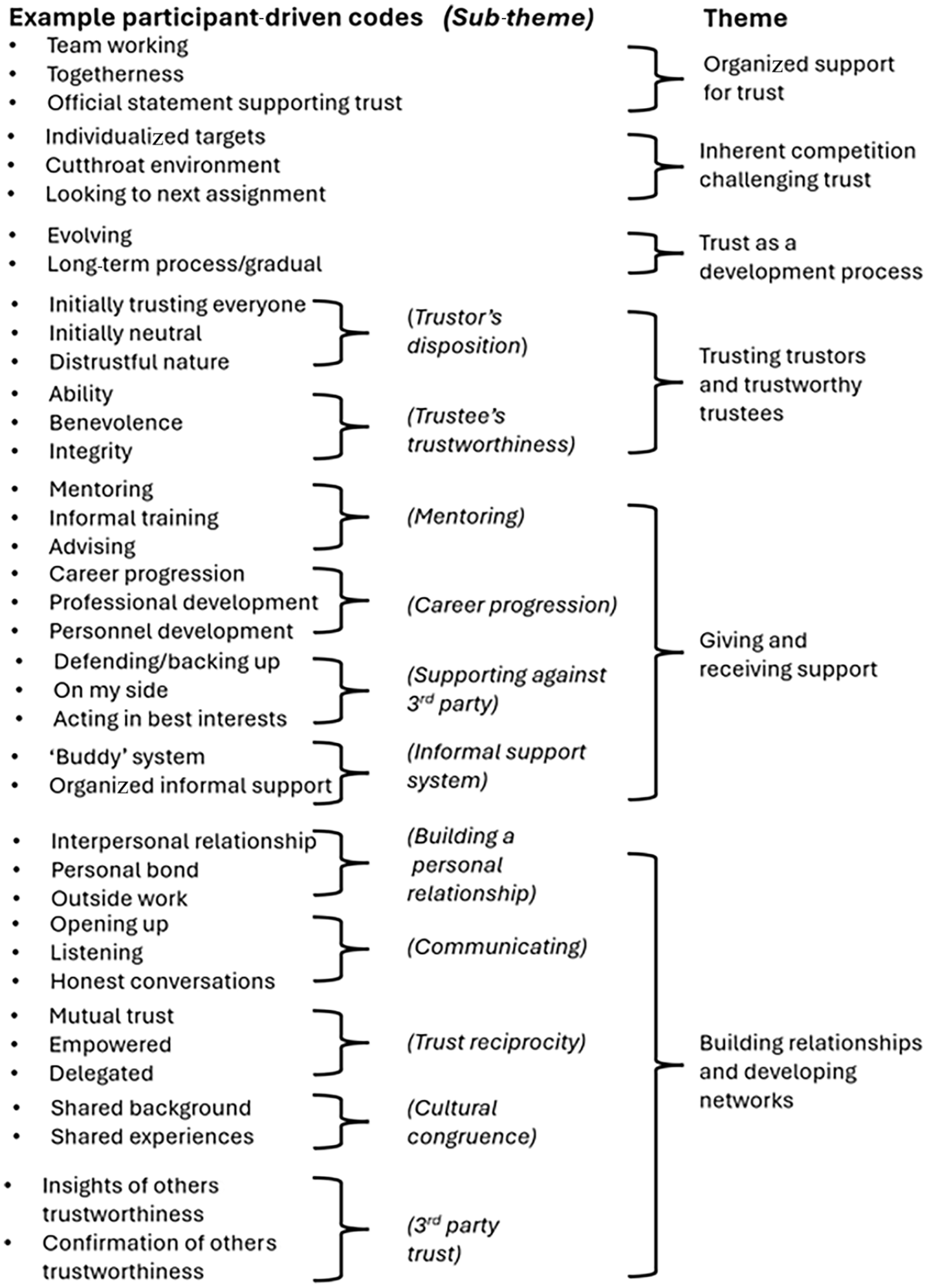
Detailed codes and themes.
Findings: The development of trust
Trust in the context of management consultancy
Examining trust in management consultancy highlights the importance of context in shaping interactions. This analysis focuses on trust components and the settings in which they manifest. Many consulting firms position trust as a fundamental value in their mission statements, a perspective reinforced by our interviewees. One executive shared that within their organization they ‘very much support trust and togetherness and team working’ (P49, Executive).
Trust is fostered through various social exchanges, from instrumental acts like sharing crucial project details to relational exchanges such as providing emotional support and mentorship. These actions shift trust from a mere stated value to an observable result of intentional social interactions within the consultancy environment.
They also illuminate a paradox within the consultancy industry, where trust, despite its recognized importance, is often at odds with the sector’s inherent competitiveness. The drive among consultants ‘to take the revenue’ or ‘to take the kudos for things that have been done’ (P28, Executive) creates significant hurdles for trust development. The industry is depicted as ‘cut-throat’ and ‘a dog-eat-dog world’ (P10, Managerial), leading to a scenario where consultants must continuously strategize their next move or project, often at the expense of trust: ‘you’re not aware of too much of the trust and you always need to be thinking of your next move or the next project’ (P31, Pre-managerial).
This creates a complex social exchange dilemma, where the benefits of collaborative exchanges – such as enhanced team performance and successful project outcomes – must be carefully weighed against the individual risks, including the potential to be outcompeted by peers.
Another participant further elucidates: Working in the cut-throat world of management consulting has certainly taught me that trust here is a double-edged sword. While we all recognize the value of collaboration and support, there’s a constant awareness that helping someone could inadvertently benefit a rival. This reality creates an environment where information sharing is limited, and colleagues are often seen as potential competitors. It’s a fine line we walk, trying to build trust selectively while safeguarding our own strategic positions. (P1, Managerial)
Participants overwhelmingly emphasized the evolutionary nature of trust, using phrases such as trust ‘evolves over time’, ‘develops step by step’, ‘is a long-term process’, ‘is a layering process’, or ‘is a journey’. This highlights the complex, processual nature of trust building in management consultancy, shaped by the frequency, quality and context of social exchanges. Such descriptions highlight trust as incremental and situational in development, aligning with the perspective of trust as a journey marked by successive exchanges. They spotlight the significant time and effort required to nurture trust, suggesting that the constituents of trust may develop variably over time.
The constituents of trust
The workplace, viewed through the lens of SET, emerges as a dynamic social arena where individuals forge connections and alliances, navigate power dynamics and strive for recognition. Trust, in this context, acts as the cornerstone facilitating smoother and more meaningful social exchanges. Particularly within the competitive milieu of management consultancy, where the development of trust faces significant challenges, our research identified three main themes of trust constituents: (1) trusting trustors and trustworthy trustees; (2) offering and receiving support; and (3) building relationships and developing networks.
Trusting trustors and trustworthy trustees
In any organization or professional setting, beneath the surface of formal transactions and prescribed responsibilities, there lies a rich tapestry of social interactions that profoundly shape individuals’ trust of others. It is important to highlight, however, that the foundation of inter-personal trust could take root long before any actual interaction occurs. These preconceptions, the initial disposition or propensity to trust others, could significantly influence the dynamics of trust that unfold during social exchanges. For example, the participants described initially being either trusting towards everyone, being neutral or distrustful, arguing that trust needs to be earned.
Participants as trustors also reported that their propensity to trust others is influenced by gut feeling, intuition, or instinct (concepts not commonly discussed in relation to trust in the literature). This was especially in early encounters when not much was known about the other party, prior to any actual, substantive exchanges between the individuals: Well, I go a lot with my gut feeling; the problem is that when you don’t know somebody too much you kind of have to trust your feeling . . . that kind of first impression that you have about somebody. (P50, Pre-managerial)
Participants as trustors also overwhelmingly talked about considering the trustee’s characteristics and behaviours – in other words, their trustworthiness. Mayer et al.’s (1995) ABI classification represented a good fit with participants’ criteria to assess trustworthiness. However, the ABI constituents emerging from the study data are more varied than those described by Mayer et al. (1995), with several new concepts emerging. Overall, the authors categorized almost half of mentions of ABI-associated concepts as benevolence, two-fifths as integrity and a small proportion (around one-tenth) as ability.
Ability-associated concepts, such as competence/ability/capability, knowledgeability and confidence, were discussed mainly when describing trusting one to do a task (A trusts B to do X), whereas in the general trust accounts (A trusts B) these factors were rarely mentioned. Considering the nature of the industry and the overall recruitment of highly talented individuals, a certain level of ability was automatically assumed: ‘From a base line, I think we have brilliant people at [Organization]’ (P28, Executive).
Benevolence-associated concepts such as caring, availability and understanding, as well as the closely related concepts of altruistic motivation/unselfish behaviour and non-opportunistic behaviour, were discussed frequently alongside the concepts of approachability, being friendly, nice, kind, personable, and modesty. Among these concepts, caring, approachability and availability were discussed mostly in association with trusting superiors. The latter two were especially voiced by those participants holding junior roles: I would also say they are a lot more senior than I am, so I also think that examples where they’ve given me a lot of time and support have also helped build my trust in them. Because I know that time is precious to them and yet if I need them then I can rely on them and they will make time for me, which I think is really important. I know I have that security in them. (P27, Pre-managerial)
In contrast, understanding was discussed more often in association with trusting those peers who demonstrate empathy and understanding: He demonstrates that he understands any pressure that I am under or anything I am dealing with. He is very aware of other people. Because he is aware of other people and demonstrates a good degree of empathy, it means that I trust that he would understand how I am feeling, what I need from him or what I need to get done within the work and outside of the work. (P8, Manager)
Participants also talked about trustees’ honesty, openness, keeping confidentiality, fairness, reliability, discreetness, transparency, loyalty, consistency and promise fulfilment. Such aspects of integrity emphasized their ‘very strong sense of personal values as an individual and as a corporate citizen’ (P23, Executive), implying the trustee had no hidden agenda or unethical motives and would not knowingly harm a trustor. An executive consultant revealed the interlinked facets of various integrity-associated concepts and, in particular, the importance of integrity within the consultancy industry: I suppose the watchword was integrity and what do you mean by that . . . well, it’s just being straight with each other and saying the same things to one person that you will say to another. Another way to define these things is to put the team and the task above personal gain, so that’s a facet of integrity. [. . .] Most people in this sector are ambitious, they’re bright, they want to see progression, promotion, money and all those things. So, it’s important that the people you work for, you work with, have that sense that they want for you what you want for you, that conveys trust, the idea that both of you, the boss and the junior guy, share a kind of future vision of what you will later be; that’s critical. (P47, Pre-managerial)
Within exchanges marked by significant power imbalances, the interactions between the higher-ranking trustee and the trustor are often underlined with tension. The trustee’s actions can critically affect trust, with their recognition of the trustor’s accomplishments serving as a key factor that may influence the trustor’s career path. Honest feedback and fair assessments from superiors are crucial, as these interactions not only reveal the trust placed in them but also have a substantial impact on career decisions, including progression and promotion. Trustors are highly conscious of this dynamic, emphasizing the importance of fairness and transparency in their superiors’ evaluations.
Giving and receiving support
In the highly competitive field of management consulting, trust is challenged by the constant fear that helping colleagues could weaken one’s competitive position, resulting in a scarcity of information sharing and a need for consultants to carefully balance collaboration with self-preservation. Consequently, demonstration of support within the exchanges, especially by one’s superior (mentioned by the majority of the participants), was seen as something that could overcome inherent competition, alleviating any associated tensions. One concept discussed within this theme concerned superiors’ mentoring, training and advising their subordinates. For example, a junior participant described her relationship with her mentor: I do see them as a mentor . . . I feel like that through joining the company and I do think at the root that this person essentially helped me to join and has helped me since joining. I do feel an alliance and a more rooted trust. (P27, Pre-managerial)
Similarly, participants considered career progression support and superiors’ investment in their professional and personal development as contributing to their trust: I do trust that person because they have invested in me . . . in my career development. (P38, Executive)
Many, in describing their superiors, emphasized similar actions such as ‘defending them’, ‘backing them up’, ‘looking out for them’ or ‘being on their side’. Such support was particularly trust building when they acted in the trustees’ best interests in third-party discussions, especially with senior directors. An executive described her past experience: I got this new performance review manager. She truly believed in me and helped and advised me on things I could do to improve myself in my role. Then we had a meeting to calibrate everyone. [. . .] She told me what she’d said, and she truly stood up for me; she really gave a comprehensive case, and it was then that I fully trusted her. To say, do you know what, this person is actually acting in my best interests, she really is looking out for me. (P29, Executive)
Virtually all consulting organizations have a support system designed for newcomers and especially for junior members. Every newcomer is assigned a member of staff called a ‘buddy’ (or similar), providing informal support that subsequently contributes to trust between the parties: When you join . . . you are given somebody called a buddy and that means that when you have certain questions . . . then you speak to that person, so that you don’t have to keep asking basic or what might be considered like a silly question to senior people. [. . .] I think you become more friends with that person, and I think through that it means that the stuff that happens, like extracurricular things, like you go out for drinks and things like that . . . and I think that’s what helps build the trust, really. (P17, Pre-managerial)
In the competitive landscape of management consulting, the interplay of giving and receiving support reflects core principles of SET, where social behaviour aims to maximize benefits and minimize costs. Through mentoring, advising and establishing support systems, such as the ‘buddy’ system for newcomers, trust emerges as a critical outcome of these strategic exchanges. Acts of support from superiors, particularly in defending or advocating for subordinates, effectively navigate the balance between collaboration and competition, fostering trust and loyalty. This reciprocal dynamic of support showcases the application of social exchanges in professional contexts, highlighting how trust is built and sustained amid competitive pressures.
Building relationships and developing networks
In our research, we found that interpersonal relationships are fundamental to cultivating trust among colleagues. It is imperative to contextualize our findings, especially since participants emphasized the prevalent competitive undercurrents and the resulting tensions. Such a backdrop frequently casts colleagues in the light of potential competitors. In these settings, the nuances of interpersonal interactions and social exchanges are paramount for building trust.
Interpersonal relationship building was mentioned by nearly two-thirds of participants, being most frequently discussed in the context of trusting peers. All considered that developing a personal bond helped to build a deeper level of trust. In particular, knowing another colleague outside their professional capacity allowed for having a more holistic picture of that individual: I trusted her because I knew her in a personal capacity; whereas, colleagues at work, you can trust in them, but you don’t know if they are ever their true selves because you have a professional persona, you put your uniform on and you put your work face on and you are at work and that never necessarily means that you are the true you. (P27, Pre-managerial)
For many participants, consultancy work requires travel: ‘Where you’re away from home, you eat together every night, you get to know each other, so we built a personal relationship’ (P21, Executive). They argued this ‘just brings you close . . . you’re with your colleagues more than you are with your wife or your girlfriend, or whatever it is’ (P31, Pre-managerial). This, they feel, enables trust to develop quickly: Since we were in a different country, we were living in a shared apartment block, so we were living together as well as working together. So, I think that definitely helped build a much closer relationship beyond the office and it made the whole process much quicker to gain each other’s trust, because you get to know them as a person rather than just as a colleague. (P30, Pre-managerial)
Communication was perceived as similarly important and mentioned by over half of participants. They emphasized issues such as opening up, listening, having open and honest conversations and using body-language cues. Opening up, where a trustee shared personal or confidential information, was more frequently mentioned in relation to trusting peers and was perceived as especially important in leading to a deeper level of trust, providing a sense of security: They’ve shared their own vulnerabilities and I think that’s the key, right . . . it’s less likely that they’re going to go and share your information if they feel like you know the nature of their vulnerabilities. (P33, Managerial)
Trust reciprocity was mentioned by over a quarter of participants who argued that being trusted by the trustee facilitated or reinforced mutual trust, noting ‘if someone trusts you, it is easier to trust back’ (P6, Pre-managerial) or ‘her trusting me makes me trust her more’ (P13, Pre-managerial). This was especially important for those holding junior positions, where being entrusted by their superiors with important tasks made it easier to establish mutual trust. Those in more senior positions outlined different aspects, such as not being micromanaged by executives, being empowered or being delegated responsibilities or control: ‘The level to which they delegate or the amount of responsibility they delegate is an indication of how much they trust you’ (P24, Executive).
The few participants who mentioned having shared cultural backgrounds (cultural congruence) felt this facilitated and accelerated trust development, helping relationship building and providing a common ground. An executive reflected: We were both the same age, and we were both from the same town; we had quite a strong connection. [. . .] It takes a while to break down those barriers with people. I think with him it was just a case of having some kind of connection that helped to break down that barrier. [. . .] Through that kind of connection, I think that trust was built up. (P39, Executive)
A minority of participants also considered third-party trust as playing a significant role in relation to building trust. For them, other organizational members’ beliefs about the trustee’s trustworthiness were considered influential in two ways. First, it offered insights in the initial stages of a relationship, when participants did not yet have enough knowledge about the trustee: ‘When everyone around you has been saying how trustworthy the person is . . . you can have a fairly high level of trust to start with’ (P41, Pre-managerial). Second, third-party trust during the later stages of the trustor–trustee relationship provided confirmation of the trustors’ own views: I suppose, the [trusting] belief is reinforced by what the others around me say. And they tend to express the same sort of opinion. (P2, Managerial)
Our findings transcend the original scope of SET, moving towards a more comprehensive understanding that incorporates the relational and emotional aspects of trust development within management consulting. Participants detailed how building personal connections and engaging in transparent communication – such as sharing personal stories or entrusting significant tasks – lay the groundwork for deeper trust. These actions, from mutual vulnerability to trust reciprocity, embody the theory’s focus on the reciprocal nature of social interactions. In environments where colleagues might be seen as competitors, the deliberate fostering of these exchanges is essential for mitigating tensions and establishing a foundation of trust. Through shared experiences and open dialogue, trust develops more rapidly and is further solidified, illustrating the vital role of social exchanges in transcending competitive barriers, and strengthening organizational unity.
Discussion
In this article, we explore the constituents of trust within management consultancy, highlighting its pivotal role and identifying gaps in understanding trust development among consultants, essential for organizational success (Zak, 2017). Our research makes two primary contributions. First, we identify crucial elements of trust in consultancy, providing strategies for trust building in competitive settings. Second, we enhance SET by including the challenges of consultancy work, emphasizing emotional and relational exchanges beyond its traditional economic focus (Blau, 1964). This enhancement reveals a complex social exchange dilemma, illustrating a novel insight into how trust navigates the competitive pressures of consultancy. Our study not only broadens the application of SET to a specific organizational context but also introduces the theory’s adaptation to encompass a wider range of social interactions, crucial for understanding trust’s complexities in competitive environments.
Aligned with existing research (McKnight et al., 1998; Mayer et al., 1995), our findings emphasize that an individual’s disposition to trust significantly influences trust development between individuals. This disposition varies; some individuals are naturally inclined towards trust, while others are more sceptical, viewing trust as something to be earned. However, this variation suggests that the often psychologically focused discussions around trust dispositions also have deep sociological roots. These inclinations are shaped by one’s cultural background and past experiences (Schoorman et al., 2007), which are, in turn, influenced by interactions within the social world. The current application of SET does not adequately acknowledge this aspect. It fails to incorporate how past experiences and an individual’s inherent trust propensity, present before any direct exchange, affect trust dynamics. By highlighting these points, our study provides a distinctive contribution to SET, suggesting a broader, more integrated approach to better understand the complexities of trust development.
At its core, the prevailing theory posits that trust is rooted in rational actions, driven by economic calculations of costs, benefits and potential rewards (Blau, 1964). From this perspective, trust emerges from consistent behaviours and social exchanges, forming expectations about future interactions (Hardin, 2002). However, our findings suggest that such a purely rational approach does not encompass the entire spectrum of trust development. Some participants, for example, emphasized their reliance on gut feelings, instincts, or intuition when making trust decisions. This points to a possible irrational component that mainstream trust research has not fully addressed.
Moreover, our study highlights that within elite organizations, benevolence and integrity significantly outweigh ability in trustworthiness assessments. This emphasis likely stems from the assumption of uniform competence among team members, a result of stringent selection processes characteristic of top-tier consultancy firms (Muzio et al., 2011; Robertson and Swan, 2003). Such firms prioritize a skilled workforce to maintain their competitive advantage, relying on the cultivation of a team that is not only proficient but also dedicated and loyal. A notable aspect of fostering this environment is the establishment of responsible autonomy, reducing the reliance on direct managerial oversight by ensuring all employees are knowledgeable and capable (Abgeller et al., 2024).
Incorporating the notion that our interpretations and actions in trust building are shaped by interactions with others and our contextual surroundings, we recognize that trust is not solely an internal cognitive assessment. Individuals actively engage in interpreting and reassessing trustworthiness cues from others, influenced by their social contexts and ongoing relationships. This dynamic process signifies that trust evolves within these ever-changing environments, as contextually embedded actors continuously re-evaluate and adjust their behaviours based on their interactions and the surrounding social fabric (Emirbayer and Mische, 1998). Thus, trust assessment and development are not static or purely psychological but are deeply embedded in the social interactions and structures that define our professional and personal lives.
Our investigation further elucidates how support from superiors within consultancy firms critically navigates the complexities of trust development. Echoing Blau’s (1964) observations on the influence of power disparities in social exchanges, our findings emphasize the significance of managerial support.
This form of support, essential for both career progression and effective socialization (Eberl et al., 2012; Prichard et al., 2014), acts as a counterweight to power imbalances, shifting competitive dynamics towards a more collaborative and team-oriented approach, (Cook et al., 2013). Such a shift reveals the contribution of our research: it demonstrates that the active provision of support by superiors not only champions mutual success but also mitigates the adverse impacts of power differences, enriching the application of Blau’s framework to the specificities of trust and power within the consultancy sector.
We further demonstrate that the development of trust is embedded in complex social structures (Glückler and Armbrüster, 2003; Granovetter, 1985). Participants emphasized the importance of personal connections, particularly those extending beyond professional boundaries, as key to trust formation. This is especially relevant in consultancy, where shared experiences and accommodations foster close bonds. This aligns with Williamson’s (1993) conception of trust as primarily affective and non-calculative, traditionally seen in personal rather than professional spheres. Yet, our findings suggest a fusion of social and commercial logics within organizational relationships, involving both cognitive and affective judgements (Möllering, 2001, 2006). Thus, our application of SET expands its original economic focus to embrace the complex realities of contemporary work relationships, illustrating the theory’s adaptability to the complexities of trust in modern organizational contexts.
Furthermore, trust reciprocity aligns with Blau’s (1964) foundational principles of SET, where reciprocity highlights that cooperation or assistance is given with an expectation of similar returns in the future. Trust reciprocity exemplifies a sophisticated application of SET, illustrating a virtuous circle of mutual trust and trust development, resonating with Gouldner (1960), and further explored by researchers (e.g. Sampson et al., 2019; Serva et al., 2005; Wasti et al., 2011). This mutual trust, especially significant when initiated by senior organizational members, suggests a reciprocal dynamic foundational to social exchange.
Diverging from Blau’s initial focus, our study explores the less-explored aspect of social exchange: the role of communication and vulnerability in trust development. Unlike traditional views that frame vulnerability primarily from the trustor’s perspective, we found that trustees’ willingness to share personal or confidential information, thereby making themselves vulnerable, is pivotal in engendering trust. This observation extends seminal definitions of trust, such as those by Mayer et al. (1995) and Rousseau et al. (1998), which conceptualize trust as the trustor’s willingness to accept vulnerability. Our findings suggest a reciprocal vulnerability, where trustees expose their own vulnerabilities, thereby enhancing the trustor’s confidence in them. This reciprocal aspect of vulnerability and trust not only contributes to the dynamics of trust in social exchanges but also extends Blau’s work by incorporating the complexity and depth of communication and vulnerability in trust relationships.
Our findings also demonstrate that perceptions of trustworthiness are influenced not just by dyadic exchanges but also by third-party opinions within organizations. This broader view acknowledges that third-party perceptions shape initial trust judgements and later confirm the trustor’s evaluations, significantly impacting the development of an individual’s reputation for trustworthiness and collective trust judgements within the organizational context (Ferrin et al., 2006; Hardin, 2002). Consequently, our analysis indicates the need to broaden the traditional SET focus on dyadic relationships to include third-party influences, showing that trust judgements stem not only from direct interactions but from the entire network of organizational relationships. This expanded perspective, highlighting that trust development is supported by complex interactions among organizational members leading to shared interpretations of trustworthiness and collective trust perceptions, enriches SET by introducing a multi-dimensional understanding of trust within organizational settings (Sampson et al., 2019; Shamir and Lapidot, 2003).
Our trust development model (Figure 3) illustrates the constituents of trust as identified in our study, mapping out how trust judgements evolve through assessment and verification. This process acknowledges that trust is dynamic, subject to change with ongoing interactions that can either enhance trust or lead to its deterioration, highlighting the necessity for its continuous cultivation.
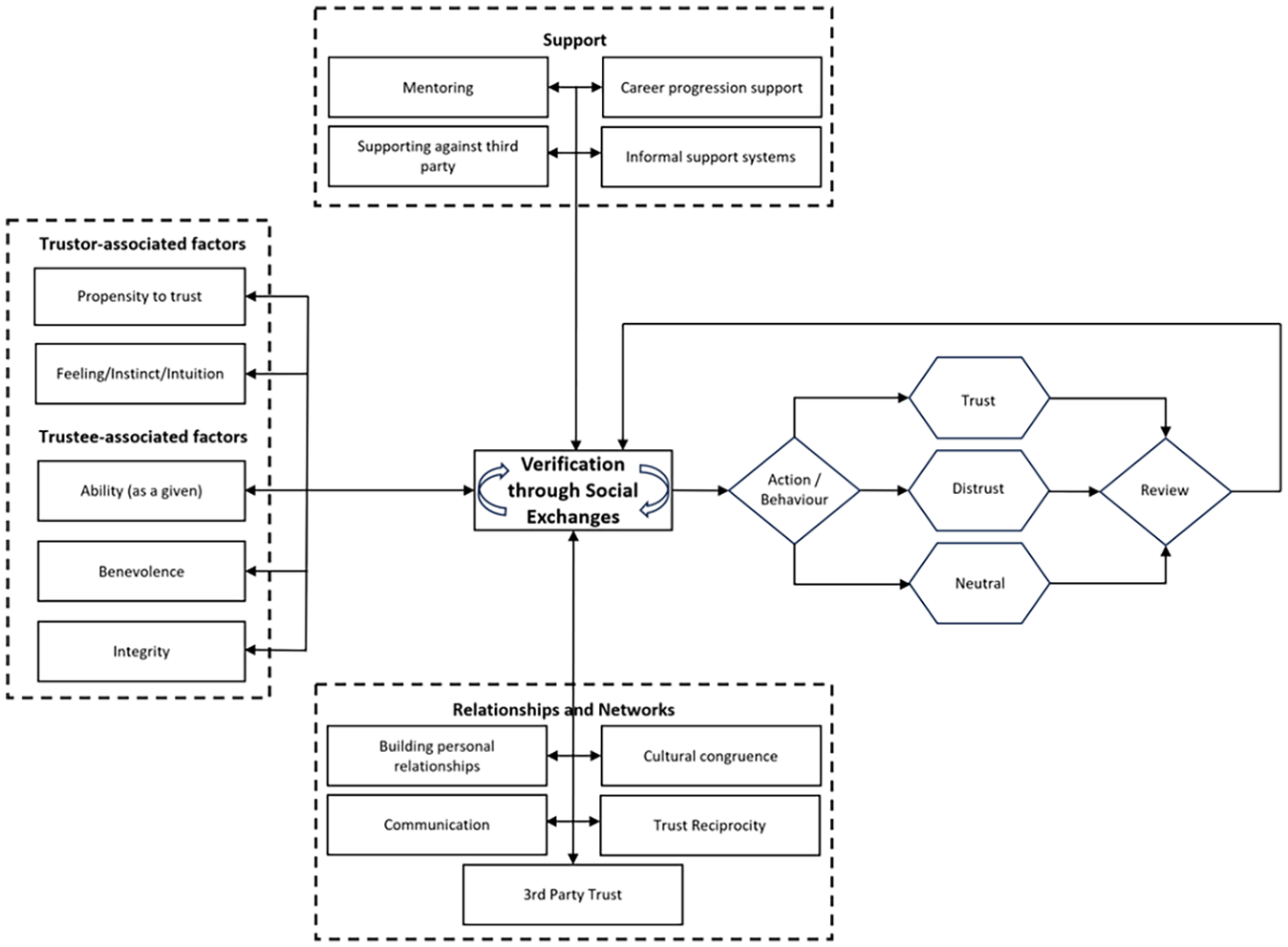
Trust-development model.
Overall, the study findings support key principles of SET while also revealing its limitations in capturing the full dynamics of trust. By extending SET through a comprehensive examination of how trust is shaped by broader factors such as contexts, relationships, social structures and power imbalances, including the identification of a complex social exchange dilemma, our work offers a more accurate reflection of the dynamic nature of trust in the consultancy sector. This approach provides a holistic view that not only encompasses traditional economic transactions (Blau, 1964) but also the sophisticated web of social interactions. It is within this expanded framework that our figure finds its place, primarily representing the constituents of trust yet situated within a discourse that acknowledges trust development’s wider influences. Consequently, our analysis not only brings to light the social exchange dilemma but also enhances SET’s relevance to contemporary professional settings, introducing a new lens for understanding trust in management consulting. This enriched perspective lays a foundation for further research and practice, aiming to navigate and elucidate the complexities of trust in professional environments.
Conclusion and directions for future research and practice
Our study on trust development within management consultancies offers a comprehensive extension to SET, moving beyond a focus on internal cognitive processes to include the broader social context in which trust is embedded. By exploring the dynamic interplay between trust constituents, contexts, relationships, social structures and power imbalances, we provide a holistic view of trust dynamics in organizational settings. This approach not only acknowledges the complexity of trust development but also highlights the significance of personal connections and the quality of interpersonal relationships in fostering trust, even in competitive industries. Through this lens, our research contributes to a deeper understanding of how trust evolves, emphasizing that it is shaped by a complex array of both individual and collective factors. This expanded perspective enriches the theoretical discourse on trust, offering insights into the multifaceted nature of trust development and maintenance in the modern workplace.
Regarding practical recommendations we highlight that in consulting firms, where professional excellence is ensured through selective recruitment and thorough performance reviews, trustworthiness hinges largely on perceptions of benevolence and integrity. To foster trust in such environments, organizations should prioritize nurturing benevolent behaviours and uphold high integrity standards. Initiatives aimed at enhancing support networks, improving communication and facilitating socialization processes are crucial for deepening trust (Eberl et al., 2012). It is essential for organizational practices and policies to be scrutinized and adjusted to promote these trust-building behaviours. This may involve re-evaluating reward systems to shift the focus from competitive to collaborative outcomes among employees, aligning organizational culture with the principles of trust development identified in our study. Ultimately, creating a culture where trust thrives is not just beneficial – it is a strategic imperative for consultancy firms aiming to lead in an increasingly interconnected and relationship-driven business landscape.
Footnotes
Acknowledgements
We extend our gratitude to Editor Rory Donnelly and three anonymous reviewers whose invaluable feedback significantly enhanced our article. Additionally, our thanks go to the management consultants who generously shared their time and insights with us.
Funding
The authors received no financial support for the research, authorship, and/or publication of this article.
