




Abstract
Using the UK Household Longitudinal Study we examine how flexible working is associated with the division of housework and childcare among dual-earner heterosexual couples with young children. Although flexible working may enable better work-family integration, it can also reinforce traditional divisions of domestic labour where women perform more housework and childcare. The degree to which this occurs may vary across arrangements due to differences in the flexibility and permeability of boundaries. We also expect occupational variations but in a paradoxical manner; the constraints and resources workers have may cause the associations to conflict with assumptions based on gender role attitudes. Results show that arrangements that allow more boundary blurring, such as homeworking, are associated with more traditional divisions of childcare but not necessarily of housework. Flexitime, especially for the lower-skilled/paid occupations, enables a more egalitarian division of labour, possibly because it is used to maximise households’ working hours and income.
Introduction
Flexible working can help tackle gender inequalities by allowing mothers to remain employed and by reducing their likelihood of reducing working hours (Chung and Van der Horst, 2018; Fuller and Hirsh, 2018). However, flexible working has the potential to reinforce traditional gender roles (Chung and Van der Lippe, 2020; Clawson and Gerstel, 2014; Lott and Chung, 2016) by expanding mother’s time spent on housework and childcare (Hilbrecht et al., 2008; Sullivan and Lewis, 2001), and expanding father’s time spent on paid work (Lott, 2019; Lott and Chung, 2016).
Increasingly, there is evidence that gendered outcomes resulting from flexible working arrangements (FWAs) depend on occupational groups and the type of arrangement in question (For evidence from the US see, Clawson and Gerstel, 2014; Kim, 2020). Workers in lower-income/skilled jobs 1 tend to have more traditional attitudes about gender roles (Knight and Brinton, 2017) and prefer more traditional divisions of labour (Stanczyk et al., 2017). However, members of these groups may display much more egalitarian divisions of housework due to financial resource or job-related constraints (Lyonette and Crompton, 2015). The flexibility and permeability of boundaries enabled by FWAs may also determine the degree to which workers can enact their gender roles (Clark, 2000; Lott and Chung, 2016). Working from home, or a lot of schedule control, may lead workers to follow traditional gender roles (Kurowska, 2020) to a greater degree than arrangements like flexitime, which has constraints that may limit the degree to which couples follow traditional divisions of labour (Kim, 2020). In fact, research shows that workers use flexitime to maximise their households’ working hours and income, resulting in a more egalitarian division of labour, especially among workers in lower-income occupations (Clawson and Gerstel, 2014).
This paper contributes to the existing studies by exploring the intersection of occupational class and arrangement type using large-scale panel data from Understanding Society: the UK Household Longitudinal Study (UKHLS). This enables us to better understand whether, for whom, and which type of FWAs lead to patterns of unequal division of domestic labour among heterosexual couples. More specifically, unlike previous studies, we are able to distinguish the impact of different FWAs – namely flexitime, working from home, and schedule control – and their associated use with the division of housework and childcare. What is more, our key contribution lies in our exploration of how associations vary by occupational class, an area that still lacks large scale quantitative evidence. In this paper we focus on dual-earning parents with young children (under 12) because the nature of FWAs and the amount of housework are significantly different for this group.
Background
Definitions and determinants
In this paper, we focus on FWAs that give workers control over when or where they work (Kelly et al., 2011). The UK offers a unique opportunity to assess different types of FWAs due to the right to request flexible working, introduced to address the work-life balance needs of parents (Lewis et al., 2008: 272). Initially introduced in 2003, the right was only available to parents of children under age six and children with a disability up to age 18. In 2007, it was extended to parents of children below age 17, and in 2014 to all workers. In this paper, we focus on two FWAs specified in this right, namely flexitime and working from home. Flexitime allows workers to change the timing of their work (e.g., altering start and end times), which can also include the ability to select the numbers of hours one works per day or week and possibly accumulate hours for days off in lieu. Working from home allows workers to work outside their normal office space, at home, for personal reasons. In addition, the data in this paper includes schedule control – which refers to workers’ control over their work schedules. Unlike flexitime, schedule control may be more linked to the nature of the job/company, and entails more flexibility in one’s schedule compared to flexitime (see also, Chung and Van der Horst, 2020; Lott and Chung, 2016). As Table 1 in the Appendix shows, although the two concepts are similar, they are arguably distinct arrangements. Although FWAs can also include arrangements like part-time work, we do not examine this given the focus of this article.
Housework refers to unpaid work necessary to maintain the family and home (Coltrane, 2000). Routine housework refers to work that must be done on a daily basis (e.g., cooking, washing dishes, cleaning, laundry) and there are more constraints on when these tasks must be completed. Non-routine housework includes home repairs, garden work, and paying bills; there is more flexibility in terms of when these tasks can be carried out. Childcare can also be distinguished into routine and physical aspects of caring for children, such as feeding and cleaning, and non-routine care, which includes enrichment and educational activities (Craig and Mullan, 2011; Craig and Powell, 2011). Women spend significantly more time on routine housework and childcare than men (Bianchi et al., 2012; Coltrane, 2000), often preventing them from being active in the labour market (Craig and Mullan, 2011; Young, 2018). This is because routine housework and childcare usually need to be carried out at fixed times which may conflict with work schedules and responsibilities.
A number of theoretical perspectives can explain how couples divide housework and childcare (Bianchi et al., 2000; Hook, 2010). The time availability perspective suggests that the division of housework is rationally distributed depending on the amount of time each household member has to do it, and related to FWAs, when that time is available. The relative resources perspective argues that the division of housework/childcare is determined by the relative resources each partner brings to the relationship. The gender or ‘doing gender’ perspective argues that societal gender roles determine how housework/childcare are divided. Women perform more housework and childcare because they are seen to be responsible for these activities (Taylor and Scott, 2018), and doing these activities is a performance of their assigned gender role (West and Zimmerman, 1987). Studies show that even when women earn more money (resources) or work longer hours (less time available), they still do more housework/childcare than men (Lyonette and Crompton, 2015; Van der Lippe et al., 2018). This is because their breadwinning status contradicts prevalent gender norms in most societies, and women performing (or being forced to perform) housework/childcare enables them and their male partners to reclaim their gender identities (West and Zimmerman, 1987). Similarly, an individual’s and their partner’s attitudes towards gender roles are important factors in determining who acts as the breadwinner and who performs housework/childcare (Schober, 2013).
Given the fixed nature of routine housework/childcare tasks, having control over when and where workers can do remunerative work helps workers schedule work around familial responsibilities (Clark, 2000). For example, fixed – especially full-time – work schedules may prohibit parents from dropping-off and picking-up their children from school, cooking dinner, or take an active role in children’s bedtime routines. FWAs can allow workers to adjust work schedules around family schedules. Further, it allows ‘tag-team parenting’ (e.g., one parent completes school drop-offs but works later, while the other works earlier and does pick-ups) to extend family time. This allows parents to care for children without reducing their working hours or relying on external help (Craig and Powell, 2012), in a way that mirrors shift work (Presser, 1988, 1994). Having control over the timing of one’s work may also allow workers to carry out certain time-specific homemaking tasks – especially routine housework like cooking and shopping – that may not have been possible without such flexibility. Working from home allows workers to blend work, housework/childcare, as two or more activities can often be done simultaneously (Andrew et al., 2020; Schieman and Glavin, 2008). Additionally, working from home eliminates commuting, which provides workers more time for housework/childcare (Allen et al., 2015; Peters et al., 2009).
Variations across gender and occupational class
Our main contribution to the literature is to evidence how the association between flexible working and division of housework varies depending on occupational class, arrangement type and gender. Many studies have evidenced the fact that flexible working and involvement in housework/childcare is moderated by gender (e.g., Chung and Van der Lippe, 2020; Clawson and Gerstel, 2014). Fathers generally experience more work demands compared to mothers. For example, fathers’ commuting times and working hours are longer than that of mothers (Joyce and Keiller, 2018). In addition, previous literature shows that FWAs may be especially beneficial for those with high work demands (Karasek, 1979). Considering this, we could expect that fathers’ capacity to take part in housework/childcare may be especially enhanced through FWAs. However, previous studies have shown that the positive relationship between FWAs and increased engagement in housework/childcare mostly pertains to mothers rather than fathers (Kim, 2020; Kurowska, 2020).
Based on border theory (Clark, 2000), flexibility and permeability in the work-family life boundary will result in the expansion of the sphere an individual identifies with more. Due to societal norms around gender roles (Scott and Clery, 2013), women use and are expected to use FWAs to meet family demands (Hilbrecht et al., 2008; Sullivan and Lewis, 2001). In fact, such beliefs may explain why women are less likely to access FWAs that offer them more control over when and where they work (Brescoll et al., 2013). FWAs do not change the gender normative assumptions or power dynamics relating to who should carry out housework and childcare, but it can remove some work-related restrictions that might have prevented mothers from carrying out both paid and domestic work (Chung and Van der Horst, 2018; Sullivan and Lewis, 2001). Similarly, gender norms may also prevent men from using FWAs to assume more childcare responsibilities and housework; men may fear losing their masculine (Rudman and Mescher, 2013) and ideal-worker identities (Williams et al., 2013), which for them may feel more consequential. Moreover, men’s prior bargaining power within the household (as breadwinners) could explain why men tend to keep stricter boundaries between work and family (Sullivan and Lewis, 2001) or end up working longer hours when working flexibly (Chung and Van der Horst, 2020; Lott and Chung, 2016). In this sense, FWAs can enable more contemporary enactment of gender roles (see also, Knight and Brinton, 2017) providing mothers the ability to work while maintaining their central roles in housework and childcare and maintaining men’s central roles as breadwinners. Given the changes in the norms around fatherhood (Working Families, 2017), one might expect a different outcome for childcare, especially enrichment and interactive childcare (see, Carlson et al., 2021). However, as our data mostly captures routine childcare, we do not expect to find a positive association between FWAs for fathers and childcare in this study.
Of the different types of FWAs, we expect those with more boundary blurring potentials to be more problematic – namely, working from home and ‘a lot’ of schedule control. Flexitime is less likely to reinforce traditional gender roles (Clawson and Gerstel, 2014; Kim, 2020), because the flexibility and permeability between work-home boundaries are more constrained by this type of arrangement. Moreover, couples may use flexitime to extend their working hours while maintaining parenting time (Chung and Van der Horst, 2018); as often occurs in the case of shift work (Craig and Powell, 2011; Presser, 1988) to ensure maximum financial security for a household. Evidence of this is found in Kim’s (2020) study of American parents, where he shows that the use of flexitime increased fathers’ engagement in routine childcare but working from home did not.
One of the key contributions we aim to make in this paper is to further evidence that this gendered pattern in the relationships between FWAs and housework/childcare is moderated by occupational class. However, when considering occupational variations, we expect paradoxical outcomes depending on whether one considers gender ideologies or the constraints and resources each group faces (Lyonette and Crompton, 2015). Workers in lower-income occupations generally hold more traditional gender role attitudes (Knight and Brinton, 2017; Scott and Clery, 2013), and prefer a more traditional division of labour (Stanczyk et al., 2017). Workers in higher-skilled/income occupations are likely to have more egalitarian views on gender roles and have the resources to deal with housework and childcare by, for example, outsourcing the work (De Ruijter and Van der Lippe, 2007; Schober, 2013). This leads us to expect that while mothers in higher-income occupations are less likely to use FWAs to perform more routine housework/childcare, this may not be true for those in lower-income occupations. For example, a lack of control over one’s work in lower-income jobs has been noted as a key reason why women in such occupations are unable to carry out as much housework as they desire (Stanczyk et al., 2017). Further, in a US-based study, mothers in lower-income groups increased their involvement in routine childcare when working flexibly, but mothers in medium-to-higher income groups did not (Kim, 2020). Due to the rise in intensive parenting cultures (Wall, 2010), mothers in higher-income occupations have been increasing the amount of enrichment care they provide to their children (Wishart et al., 2019). This explains why FWAs are often associated with higher motherly involvement in enrichment childcare, even among the higher-income occupations (Kim, 2020). Despite this, we do not expect to find a strong positive association between FWAs and childcare among mothers in higher-income occupations in our study, as the data largely measures routine childcare.
On the other hand, workers in lower-income occupations may experience stricter restrictions at work (e.g., less control over other aspects of one’s work) and lack resources (e.g., financial resources) that would enable them to perform such gender roles (Roy et al., 2004; Tubbs et al., 2005). Thus, when given access to FWAs, both women and men in lower-income occupations may need to use these tools to perform more housework/childcare and ensure better integration of work and family demands. This can result in a more equal division of housework for this group in practice (Lyonette and Crompton, 2015). This is especially true when we consider the use of flexitime. If flexitime is used to maximise financial security of the household, as indicated in the previous section, this is more likely to be the case among the lower-income occupations as the need for additional income is more pertinent to this group of workers. Workers in higher-income occupations, particularly men, face ‘constraints of a higher-status worker’ (Schieman et al., 2009), meaning they are more pressured to adhere to the ideal worker norm and increase their working hours or work harder when boundaries between work and family life are blurred (Ashforth et al., 2000; Chung and Van der Horst, 2020). Thus, FWAs for higher-income occupations may result in a reduction in housework/childcare involvement. This may be especially evident among fathers, due to breadwinning responsibilities, resulting in more traditional divisions of labour compared to their lower-income counterparts. This explains why Clawson and Gerstel (2014) find that schedule flexibility led to more traditional divisions of labour among higher-income workers while it led to more egalitarian division of labour among lower-income occupations. For workers in lower-income occupations, flexitime was a crucial tool primarily used to ensure both partners maximised their working hours.
In sum, we come to the following hypotheses for the paper;
H1: Flexible working is associated with higher levels of parental involvement in routine housework and childcare.
H2-1: Working from home and ‘a lot’ of schedule control increases the involvement of mothers but not fathers in housework and childcare, resulting in a more traditional division of housework and childcare.
H2-2: Flexitime increases the involvement of both mothers and fathers in housework and childcare, potentially resulting in a more egalitarian division of housework and childcare.
H3-1: Working from home and ‘a lot’ of schedule control increases mothers’ involvement in housework and childcare, especially for lower-income occupations, resulting in a more traditional division of housework and childcare.
H3-2: Working from home and ‘a lot’ of schedule control decreases fathers’ involvement in housework and childcare, especially for higher-income occupations, resulting in more traditional divisions of housework and childcare.
H3-3: Flexitime increases fathers’ involvement in housework and childcare, especially for lower-income occupations, resulting in more equal divisions of housework and childcare.
Data and methods
Data
This article uses UKHLS (University of Essex, Institute for Social and Economic Research, 2018) waves 2, 4, 6, and 8 (2010/2011; 2012/2013; 2014/2015; 2016/2017), a UK longitudinal household panel, which at wave 1 included approximately 80,000 individuals in 40,000 households. These four waves include information about respondents’ FWAs and the distribution of housework between cohabitating couples. We focus on individuals in cohabitating or married heterosexual relationships where both partners were employed for the duration of all waves and had at least one child under the age of 12. Of the individuals who participated in the survey, 44,308 did not participate or were not cohabitating at wave 2. Additionally, 22,543 were excluded as they were not employed and thus FWAs could not be measured for these workers. Another 2,764 individuals were excluded as they did not have at least one child under the age of 12. These exclusion criteria resulted in sample of 1,694 individuals (847 couples) at wave 2. Individuals who had separated or divorced or whose children became older than 12 during the four waves were excluded from the sample. Detailed information regarding the sample and interview procedures are available (Lynn, 2009). Through wave 8, the majority of study participants were interviewed face-to-face using computer-assisted personal interviews, with a few completing the questionnaire via web.
Dependent variable
The two dependent variables pertaining to couples’ division of routine housework and childcare were measured at waves 2, 4, 6, and 8. The first variable was the number of routine domestic labour chores an individual is responsible for. In the survey, respondents were asked who carries out routine and non-routine housework in their households. Routine housework includes grocery shopping, cooking, cleaning, and laundry (i.e., washing/ironing). Participants were asked to select one of the following responses: self, spouse, shared, paid help, or other. Each housework item created a dichotomous variable; the respondent was responsible, versus shared/spouse/others were responsible for the task. The four activities were summed to have a range from 0 to 4 (0 meaning all chores were shared or someone else was fully responsible for them; 4 meaning the respondent was solely responsible for all chores; scores of 1–3 meaning responsibilities for chores were mixed). Responsibility for childcare included the same response categories as the routine housework variables. Due to data restrictions, we were unable to examine childcare in a more defined manner that distinguished between different types of care, such as routine and enrichment care (e.g., Craig and Powell, 2011). However, the way the question is posed, and knowing that the majority of childcare parents perform is routine care (Walthery and Chung, 2021; Wishart et al., 2019), we assumed the question largely refers to routine childcare. This dichotomous variable was coded as follows: the father was responsible or both parents shared the responsibility for childcare (reference = 0) versus the mother or someone else was responsible for childcare (1). The latter two categories were combined because previous studies have shown that even when parents outsource childcare, mothers typically assume the mental labour relating to the outsourcing and possibly perform additional tasks around managing childcare (Tomlinson, 2006; Walzer, 1996). We also measured the hours spent on routine housework using the following question: ‘About how many hours do you spend on housework in an average week, such as time spent cooking, cleaning and doing the laundry?’ This is a continuous variable ranging from 0–168, but was top coded at 40, excluding seven observations. Finally, one’s share of housework is the proportion of one’s own hours of housework divided by the total hours of housework reported by both partners. Although survey methods may not be as accurate as time diaries, they produce comparable results (Schulz and Grunow, 2012).
Independent variables
At waves 2, 4, 6, and 8, all employees were asked whether certain FWAs were available to them and whether they used any of those methods. There were eight types of FWAs: part-time working, term-time only working, job sharing, flexitime, compressed work weeks, annualised hours, working from home, and other arrangements. Flexitime, compressed work weeks, and annualised hours were grouped under flexitime, working from home was used as a single item. We distinguished between three categories: those for whom such arrangements were
Control variables
In addition to the couples’ working hours, shift work patterns, relative resources (relative income, education levels [reference: GCSE or lower]), gender role attitudes, and use and availability of FWAs, we include in the model a number of factors that influence the amount of housework and childcare couples perform and how they divide it (based on studies such as, Bianchi et al., 2012; Craig and Mullan, 2011; Schober, 2013). This included the number of children within a household and the age of the youngest child, as having more and younger children in a household increases childcare and housework demands; home ownership (reference: rental) – due to upkeep of the house; chronic illness/disability, as it may hinder parents’ ability to perform some types of housework/childcare (reference: no chronic illness) (Bianchi, 2000); ethnic minority status (reference: white British), which has been shown to influence housework distribution (Kan and Laurie, 2018); and whether couples were married or cohabitating (reference: cohabitating) and for how long. Although newlyweds are more likely to distribute housework equally, the longer a cohabitation lasts, the more it shifts to a traditional gendered division of labour where the woman takes on more responsibilities (Grunow et al., 2012). One’s age, one’s partner’s age, and the area in which one resides (i.e., urban [reference] or rural) may also influence the division of housework due to differing social and normative contexts and socialisation processes. Additional information regarding coding can be found in the Appendix.
Analytical scheme
We used random effect models for our analyses (for more, see the Appendix) that were separated by gender, as we hypothesised that the association between FWAs and domestic labour would differ by gender. As our key objective of the paper is to evidence occupational variations of this relationship, we included an interaction term with occupational levels. Here, we distinguished between managers, professionals, and associate professionals (ISCO 1-3) and other workers (ISCO 4-9). Previous studies (e.g., Chung, 2019; Chung and Van der Horst, 2020) show that there are clear divisions between these two groups of workers in terms of access to and outcomes of FWAs. Our main findings appear in the tables and full models in the Appendix. All analyses were conducted in Stata 16.
Results
Analytical sample
Due to changes in certain characteristics (i.e., age, household income, age of youngest child), descriptive statistics are presented for wave 2 only (Appendix Table 2). Examination of those characteristics at waves 4, 6, and 8 revealed similar results. Women were responsible for 2.48 routine domestic chores, while men were responsible for only 0.43. Similarly, women spent more hours (13.36) on housework than men (5.53). Women’s share of housework was 0.70 (SD = 0.20), while men’s was 0.30 (SD = 0.20). More than half of women reported that they were mainly responsible for childcare (54%), but according to the male sample, this was not necessarily the case (45% reporting mothers/others were responsible).
A larger proportion of women used flexitime (15%) compared to men (11%), while a larger proportion of men (7%) used work-from-home arrangements than women (5%). More women reported they had ‘no control’ over their schedules (34%) compared to men (23%), and accordingly, more men reported ‘a lot’ of schedule control (38%) compared to women (27%). Close to half of the respondents were in managerial, professional, or associate professional roles (48% of women and 50% of men). Unsurprisingly, (Appendix Table 3) those in higher-income occupations were more likely to use flexitime (19% of women and 13% of men) or work-from-home arrangements (7% of women and 12% of men), than those in lower-income occupations (flexitime: 12% of women and 8% of men; work-from-home: 3% of women and 2% of men).
Multivariate regression
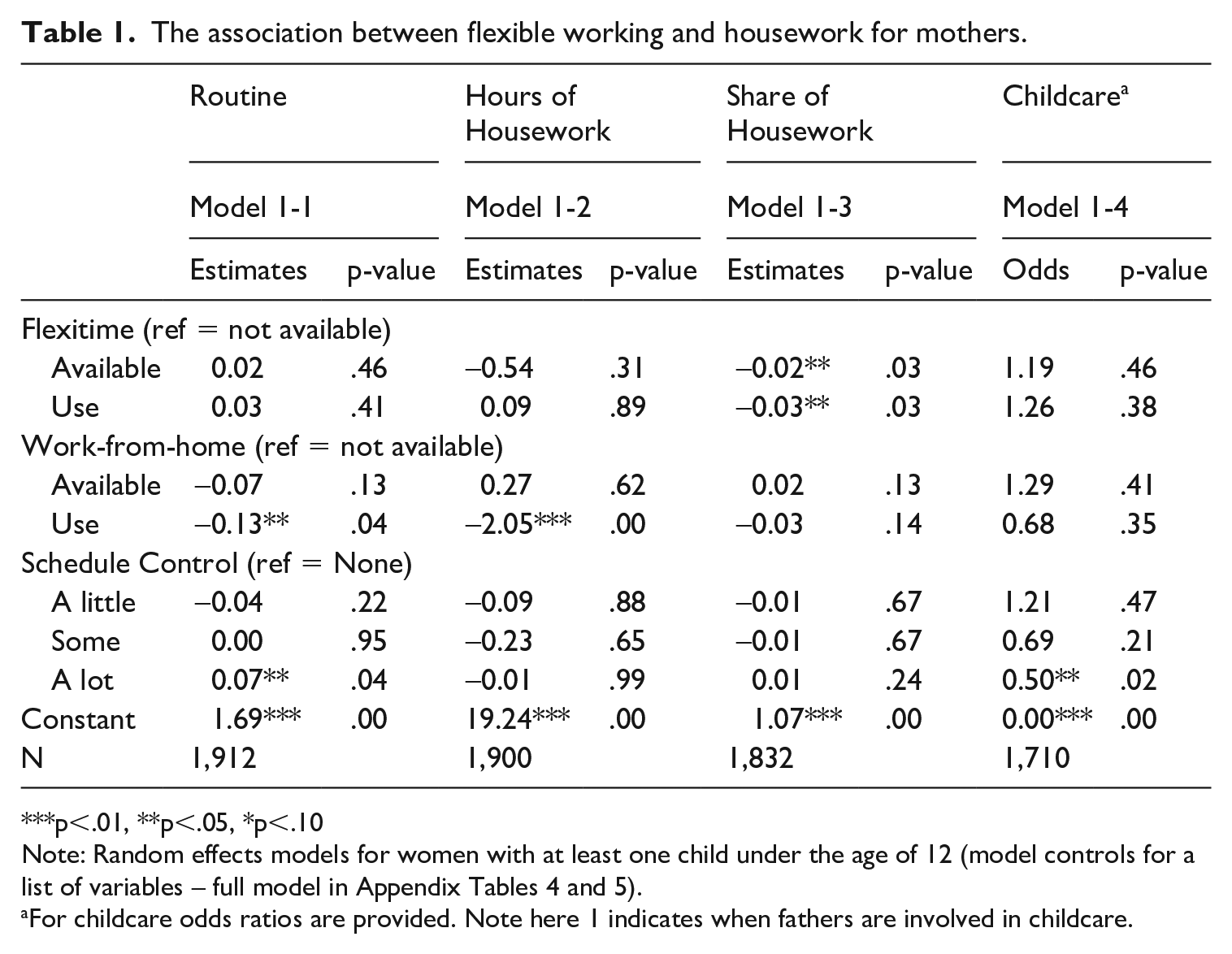
As Model 1-3 in Table 1 shows, mothers who had access to (−0.02, p<.05) or used (−0.03, p<.05) flexitime reported performing a smaller share of housework compared to those who did not. Similarly, mothers who regularly worked from home reported that they were responsible for fewer routine tasks (Model 1-1:-0.13, p<.05) and spent fewer hours on housework (Model 1-2:-2.05, p<.01) compared to those who did not. This finding was confirmed in the fathers’ models, which show that partners (i.e., mothers) with FWAs (flexitime or working from home) increase the proportion of housework that men performed (see Appendix Table 6). Contrarily, mothers with ‘a lot’ of schedule control assumed more routine housework tasks (Model 1-1:0.07, p<.05) and were less likely to report that childcare is shared/father were responsible (Model 1-4: odds=0.50, p<.05).
The association between flexible working and housework for mothers.
p<.01, **p<.05, *p<.10
Note: Random effects models for women with at least one child under the age of 12 (model controls for a list of variables – full model in Appendix Tables 4 and 5).
For childcare odds ratios are provided. Note here 1 indicates when fathers are involved in childcare.
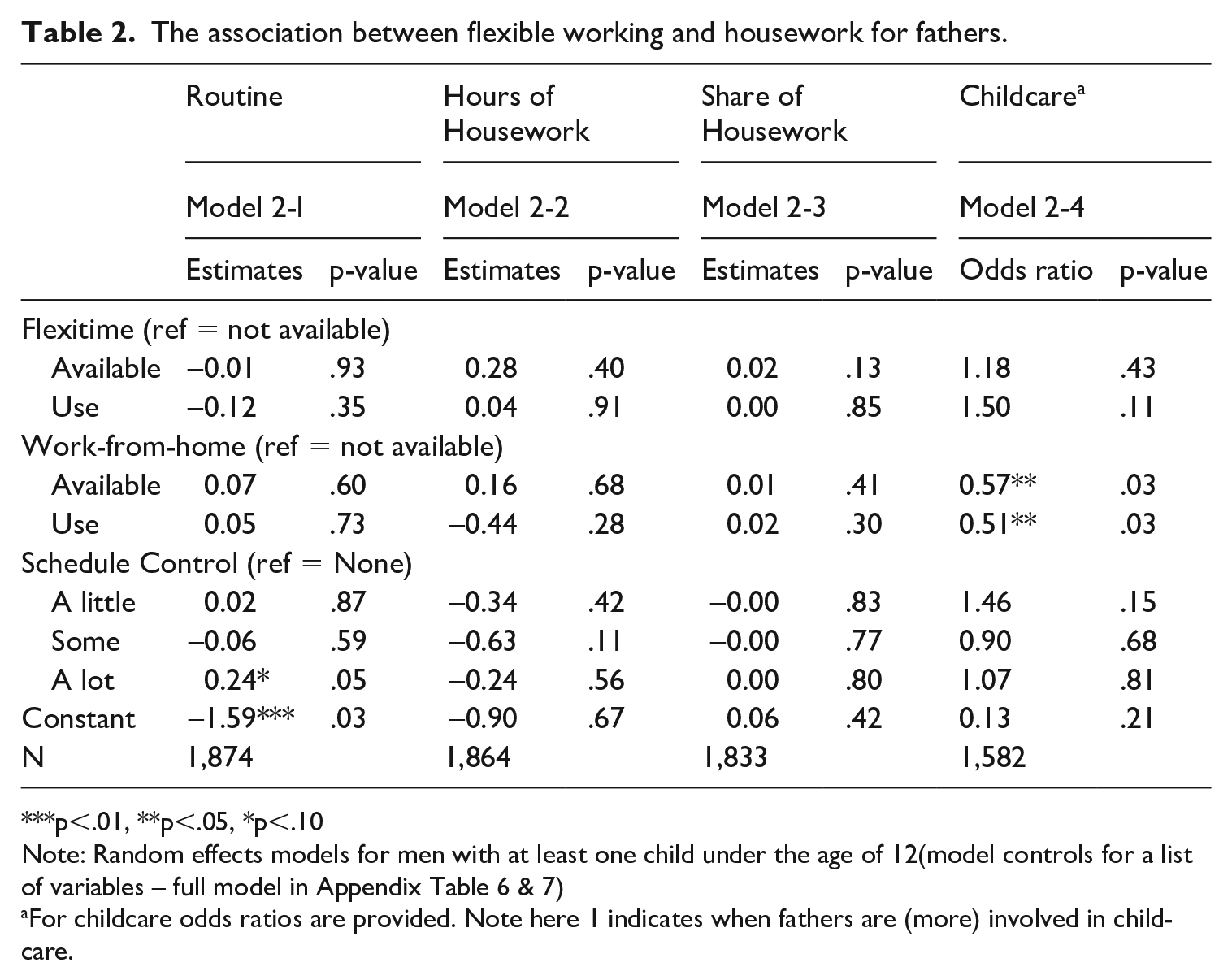
As Table 2 shows, other than ‘a lot’ of schedule control marginally increasing fathers’ share of routine housework tasks (Model 2-1:0.24, p=0.05), none of the flexible working arrangements revealed significant associations with fathers’ routine housework patterns. However, fathers who worked from home (Model 2-4: odds=0.51, p<.05) or had the option available yet did not use it regularly (Model 2-4: odds=0.57, p<.05) were significantly less likely to report that they shared or were mainly responsible for childcare, compared to those who did not have access to the arrangement.
The association between flexible working and housework for fathers.
p<.01, **p<.05, *p<.10
Note: Random effects models for men with at least one child under the age of 12(model controls for a list of variables – full model in Appendix Table 6 & 7)
For childcare odds ratios are provided. Note here 1 indicates when fathers are (more) involved in childcare.
The results partially confirm Hypothesis 2-1 that schedule control and (to some extent) working from home reinforces traditional divisions of labour among couples. Schedule control increased women’s involvement in care and housework (see also, Kim, 2020), while men tended to reduce their childcare responsibilities when working from home (for examples from the US and Germany, Kim, 2020; Lott, 2019). Also confirming Hypothesis 2-2, the results indicate that flexitime enables more egalitarian divisions of housework among heterosexual co-resident parents. On the other hand, the results also indicate that working from home reduces mothers’ proportion of housework responsibilities, which contradicts our expectations.
Interaction with occupational class
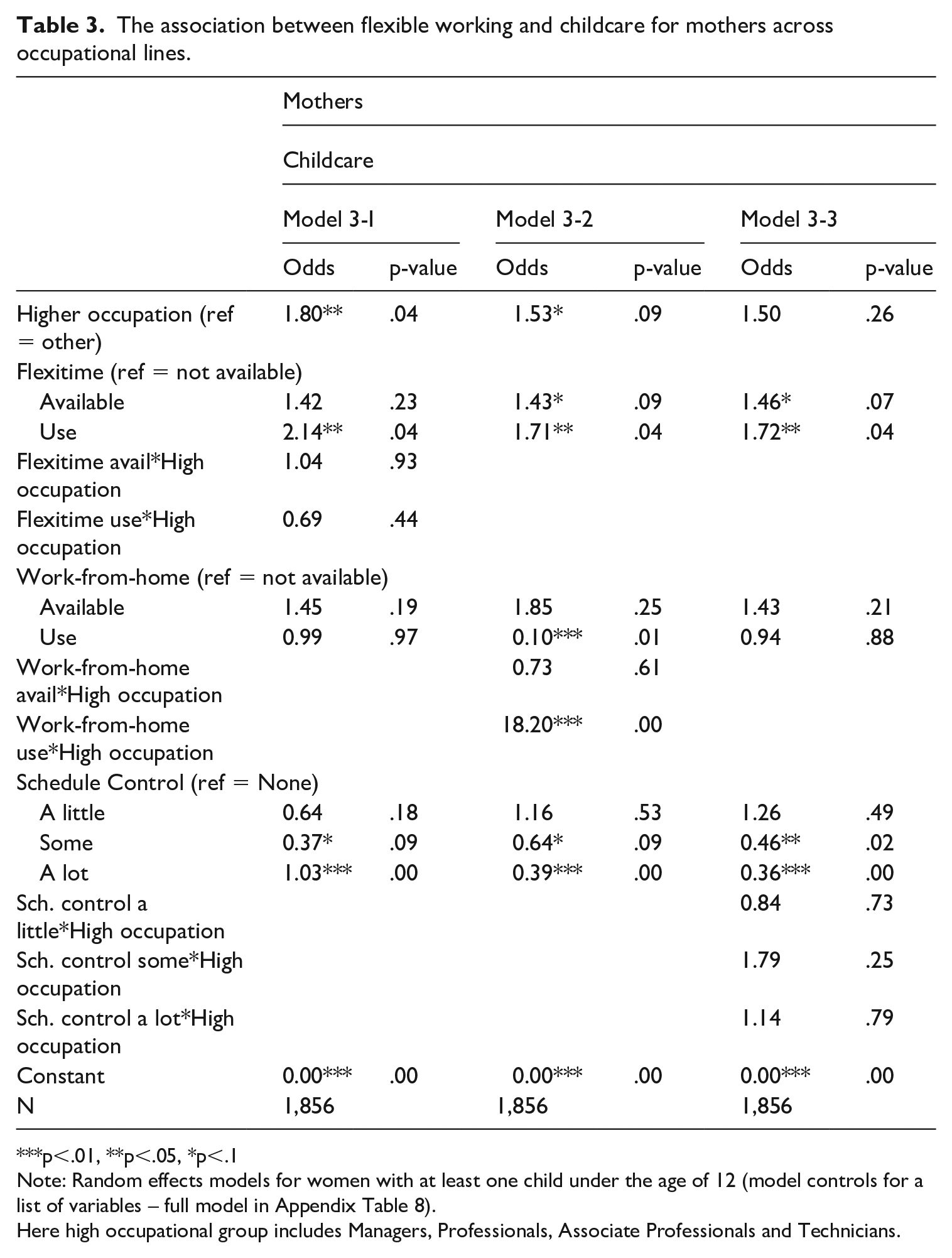
The main focus of this paper, examining the occupational class variation in the association between FWAs and gendered patterns of housework/childcare is presented in Tables 3 and 4. Only the significant results are provided here. First, mothers in higher-income occupations were more likely to report greater involvement of fathers in childcare. Additionally, when separating the relationship between FWAs and childcare across occupational-lines, the coefficient for flexitime use became significant (Model 3-1: odds=2.14, p<.05; Model 3-2: odds=1.71, p<.05; Model 3-3: odds=1.72, p<.05). This indicates that flexitime use among women in lower-income occupations was significantly associated with higher likelihoods of fatherly involvement in childcare. This result mirrors findings in previous studies (Clawson and Gerstel, 2014; Craig and Powell, 2011); mothers in lower-income occupations use flexitime to increase their working hours without relying on secondary childcare arrangements (Presser, 1988), by increasing father’s involvement in childcare.
The association between flexible working and childcare for mothers across occupational lines.
p<.01, **p<.05, *p<.1
Note: Random effects models for women with at least one child under the age of 12 (model controls for a list of variables – full model in Appendix Table 8).
Here high occupational group includes Managers, Professionals, Associate Professionals and Technicians.
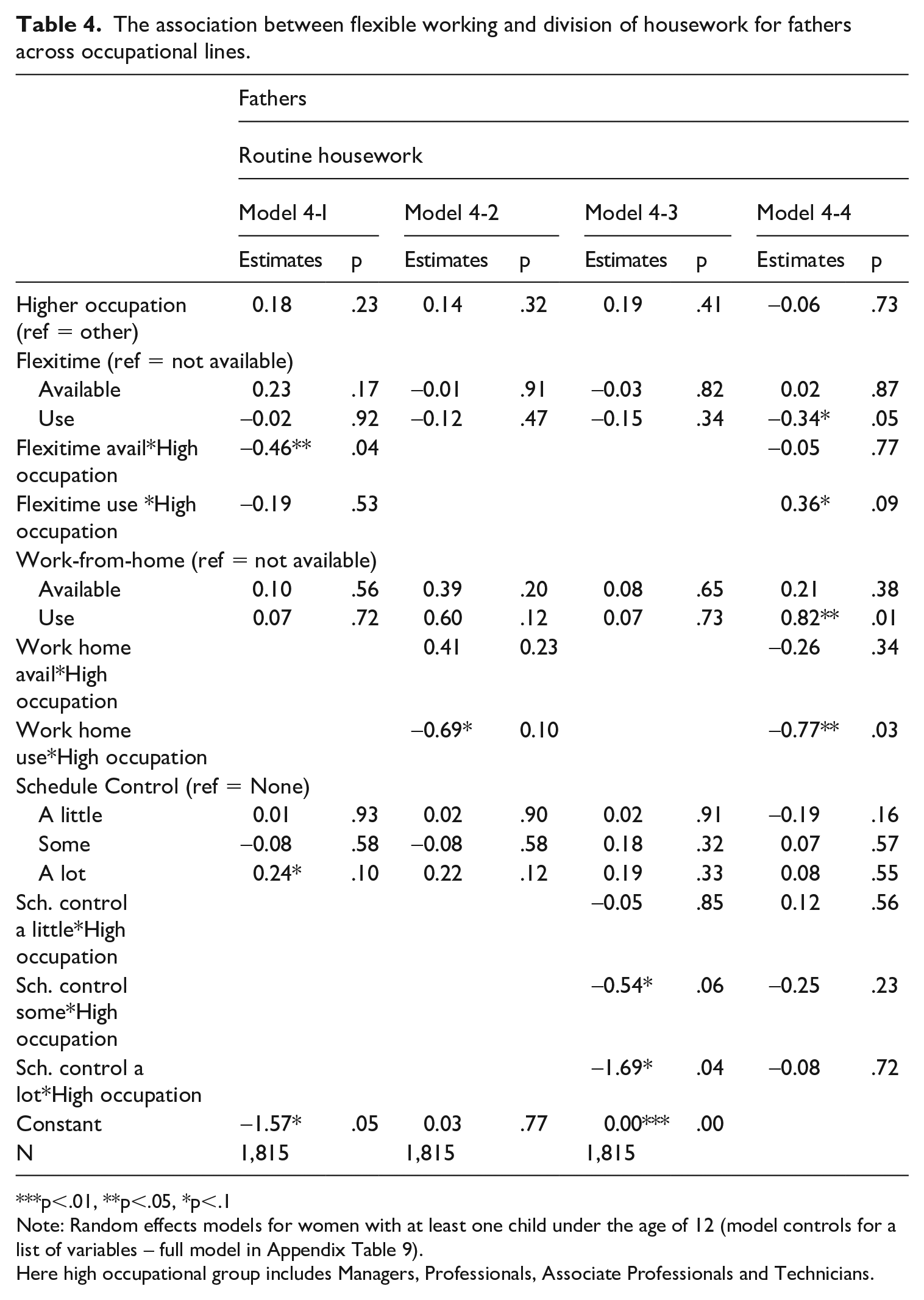
The association between flexible working and division of housework for fathers across occupational lines.
p<.01, **p<.05, *p<.1
Note: Random effects models for women with at least one child under the age of 12 (model controls for a list of variables – full model in Appendix Table 9).
Here high occupational group includes Managers, Professionals, Associate Professionals and Technicians.
As Model 3-2 in Table 3 and Figure 1 show, women in lower-income occupations who work from home were significantly more likely to be responsible for childcare (odds ratio for work-from-home use=0.10, p<.01). Homeworking may allow mothers in lower-income jobs to combine childcare and work without relying on fathers’ involvement who may use this opportunity to participate more in remunerative work (see also, Kim, 2020). The opposite was true for women in higher-income occupations (Model 3-2: odds for work-from-home use*higher occupation=18.20, p<.01), where working from home was linked to a slightly higher likelihood of couples sharing childcare responsibilities. For women in higher-income occupations, working from home might have helped them sustain, but not increase, their childcare involvement while maintaining their work intensity and career responsibilities (Chung and Van der Horst, 2018; Fuller and Hirsh, 2018). Finally, by introducing the interaction term, Model 3-3 makes evident the relationship between schedule control and mothers being responsible for childcare. Women in lower-income occupations with schedule control were significantly less likely to report they shared childcare with fathers (Model 3-3: ‘some’ odds=0.46, p<.05 and ‘a lot’ odds=0.36, p<.01).
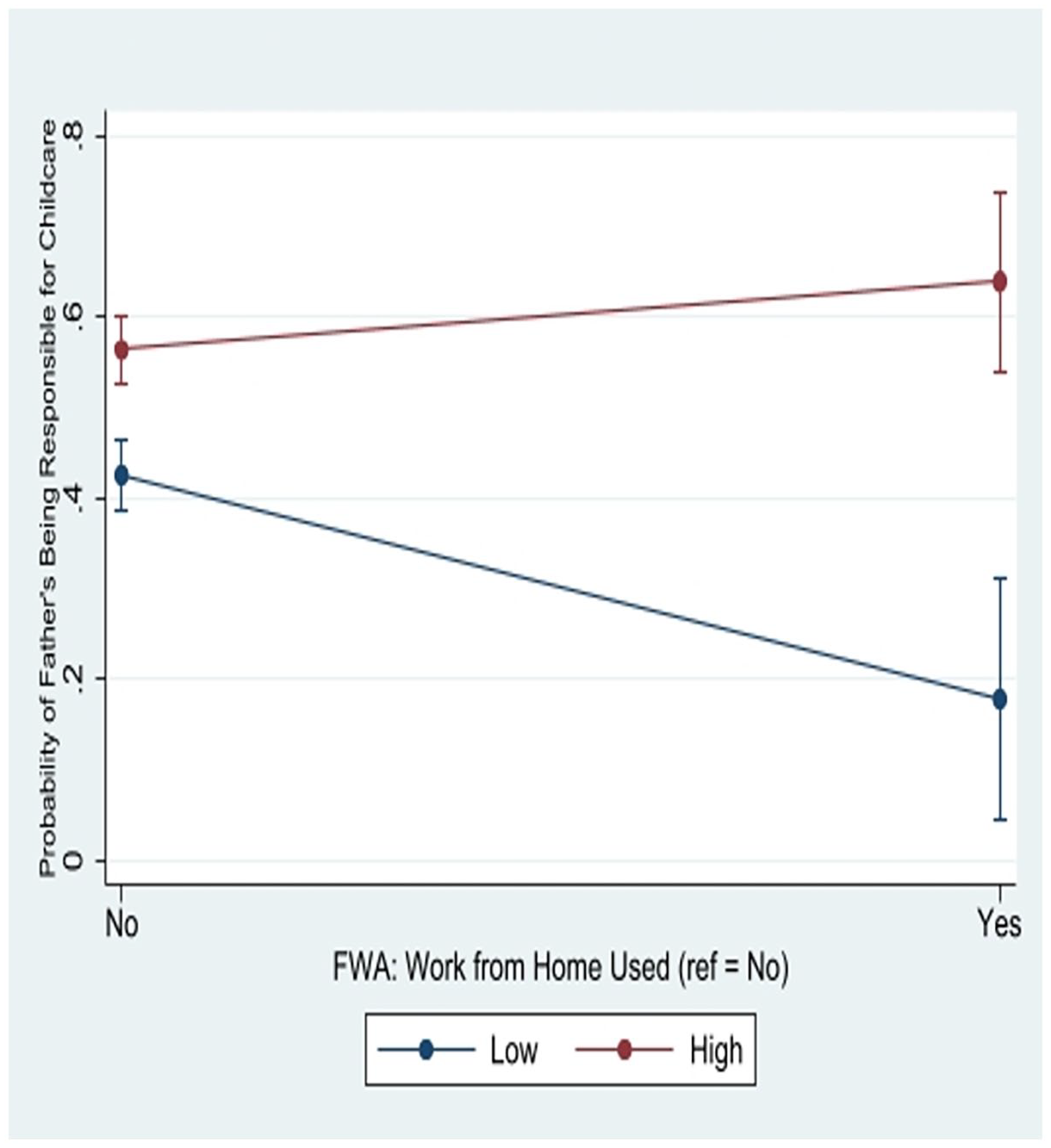
Association between mothers working from home and likelihood of parents sharing or fathers being mainly responsible for childcare by occupational level (high=Managers and (Associate) Professionals, low=others).
Finally, Table 4 and Figure 2 provide information about how fathers’ use of FWAs shape their responsibility in routine housework across occupational class lines. First, the results show no differences across occupations in the amount of routine housework tasks fathers took up. However, occupational class significantly moderated the association between flexible working and taking up routine housework tasks. Specifically, the interaction between occupational class and the availability of flexitime (Model 4-1: −0.46, p<.05), schedule control (Model 4-2: ‘some’=−0.54, p=.06, ‘a lot’=−1.69, p<.05), and working from home (Model 4-2: −0.69, p=.10; Model 4-4: −0.77, p<.05) show that FWAs were more likely to be associated with fathers’ increased participation in routine housework tasks for those in lower-income occupations.
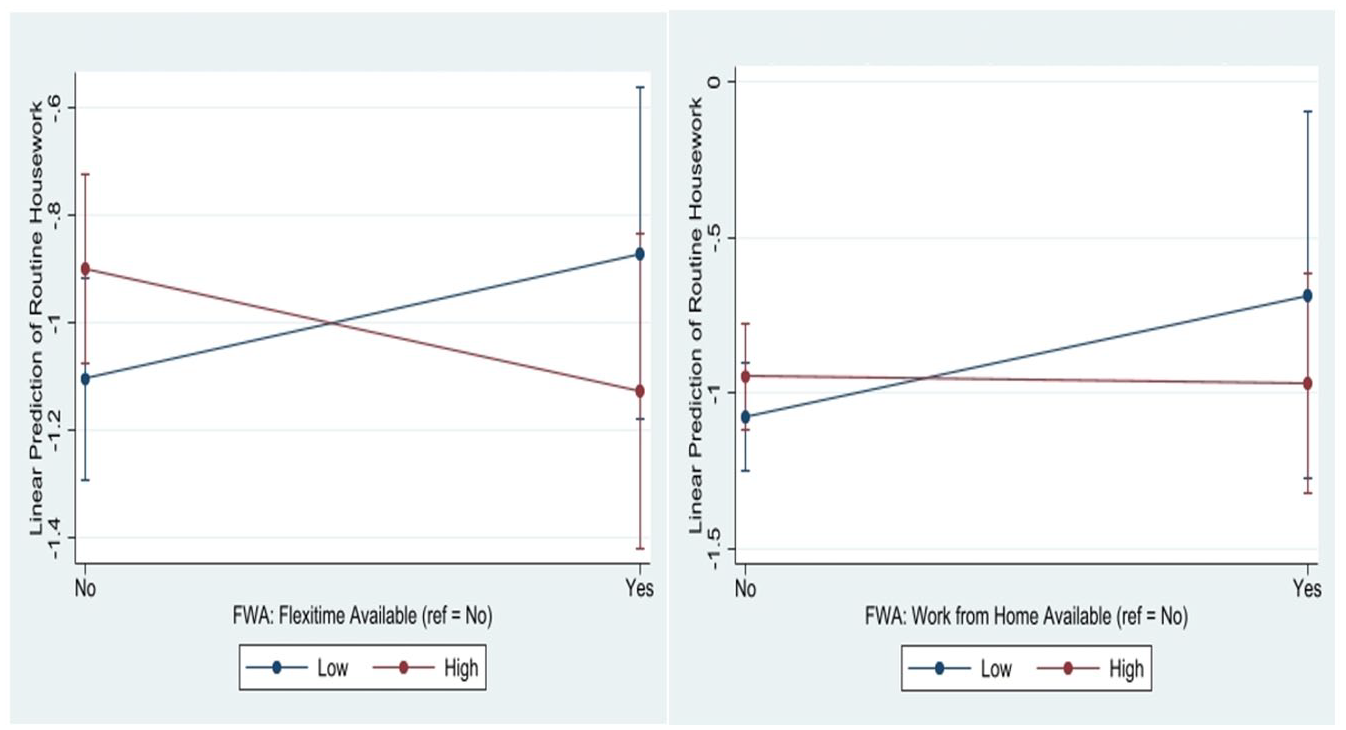
Association between flexitime and working from home and number of routine housework carried out by fathers by occupational level (high=Managers and (Associate) Professionals, low=others).
Robustness tests
Although schedule control, flexitime, and working from home are theoretically distinct arrangements, individuals may in practice use these arrangements in combination. In fact, many people who used work-from-home arrangements also had ‘some’ or ‘a lot’ of schedule control (e.g., 93% of men and 79% of women working from home have ‘some’ or ‘a lot’ of schedule control), although a majority of those with ‘some’ or ‘a lot’ of schedule control did not work from home (see also Appendix Table 1). Based on this, we ran an additional robustness test, removing schedule control from our model (see Appendix, Tables 10–13). We found that the coefficient sizes did not change much while significance levels changed for the following: the relationship between mothers who work from home and responsibility for fewer routine housework tasks found in Model 1-1 became insignificant (Appendix Table 10), and the positive association between flexitime and childcare among mothers in lower-income occupations (Appendix Table 12) became insignificant. The former result somewhat explains the contradictory result we found in Table 1.
Furthermore, we tested to determine whether the gendered outcomes of FWAs across different occupations are largely due to differences in gender role attitudes among these groups. Note that participants were only asked about their gender role attitudes in waves two and four; thus, the mean was imputed for waves six and eight. This assumes that gender role attitudes did not change between the waves, which may be incorrect, as changes could have occurred with births or the increasing age of children (Baxter et al., 2015). Having tested the interaction between individuals’ gender role attitudes, instead of occupational levels, and FWAs, the results were insignificant. This indicates that the variations in occupational classes cannot be purely attributed to differences in attitudes.
Discussion/conclusion
This article contributes to the existing literature around flexible working and division of housework and childcare among heterosexual coupled-parents by examining how these relationship may vary across occupational class lines. Results show that, women who used or had flexitime available performed fewer routine housework tasks, spent fewer hours completing housework, and completed a smaller share of housework tasks. Consequently, we somewhat reject Hypotheses 1 and 2-2 for mothers in that not all FWAs lead to increased female involvement in housework and childcare. Women in lower-income occupations who used flexitime were also more likely to indicate that their partners were fairly involved in childcare. Men in lower-income occupations who use flexitime were also more likely to report that they performed more routine housework. This confirmed Hypotheses 2-2 and 3-3 with regards to mothers, in that relatively constrained FWAs – namely, flexitime – resulted in a more equal division of unpaid labour between couples due to increased fatherly involvement (see also, Langner, 2018; Presser, 1988). What our study shows is that this relationship is especially true among lower-income occupations.
However, per Hypothesis 2-1, FWAs that result in greater blurring of boundaries between work and home life – such as high levels of schedule control or working from home – were generally associated with unequal divisions of housework and childcare. This was especially true for mothers in lower-income occupations, who were more likely to report that they bore most of the responsibility for childcare; working from home and having high levels of schedule control increased this likelihood, confirming Hypothesis 3-1. Mothers in managerial and professional roles were more likely to report that their partners were more involved in childcare overall and the use and access to FWAs had not changed this balance. Fathers who worked from home (regardless of occupational class) were less likely to be significantly involved in childcare, confirming previous studies (Kim, 2020; Sullivan and Lewis, 2001). However, working from home was also associated with greater responsibility for more routine housework tasks but only among men in lower-income occupations. For this group, the ability to work flexibly may assist in meeting household demands that they were previously not performing due to a lack of resources or other factors. This again confirms Hypothesis 3-3 based on a resource constraints perspective.
These results are unlikely to stem solely from variations in gender role attitudes, as our robustness tests show. Again, resource constraints and the ways workers in different occupations use FWAs (Allen et al., 2015) may offer better explanations. Arrangements that allow for greater blurring of boundaries may require that workers devote more attention to work, especially among fathers in higher-income occupations (Ashforth et al., 2000; Chung and Van der Horst, 2020), resulting in reduced performance of housework and childcare. For women in higher-income occupations, FWAs may ensure continuous labour market presence during motherhood (see also, Chung and Van der Horst, 2018; Fuller and Hirsh, 2018) while resisting falling into the more traditional divisions of labour, possibly through outsourcing housework and routine childcare (De Ruijter and Van der Lippe, 2007). Due to the cost and lack of outsourcing opportunities, women – and to a certain degree, men – in lower-income occupations may use FWAs to meet childcare and other housework demands. As such, FWAs may be especially important in enhancing the work and care capacities of working parents in lower-income occupations, allowing them to better integrate work with family demands (Kim, 2020; Trades Union Congress (TUC), 2017). It is useful to note here that for many of our results, the differences lie between workers who have access to FWAs versus those who do not, rather than between those who use FWAs or not. This may be, on one hand, due to the fact that having FWAs available can be a resource for workers even if they do not make use of it regularly (Chung and Van der Horst, 2018). However, this can also entail that rather than FWAs, there may be confounding factors unobserved in the data (e.g., family-friendly work environment, public sector) that is driving the result.
Flexible working has been hailed as a useful policy tool to tackle both the work-life balance demands of working families and gender inequality issues in the labour market. Our study shows that flexible working arrangements may provide families with critical support when resources to meet childcare and housework demands are limited. This highlights the need to strengthen the rights for flexible working especially for those in lower-paid occupation, who lack such opportunities (Chung, 2018, 2019; Stewart and Bivand, 2016).
Flexible working arrangements, especially those with more boundary control and permeability possibilities, however, also have the potential to lead to contemporary enactment of traditional gender roles by allowing female partners to work while maintaining the unequal division of unpaid work at home (Chung and Van der Lippe, 2020). Our study has shown that although couples in lower-income occupations may desire more traditional divisions of labour, these goals may not necessarily be borne out due to the limited resources available to these workers, and due to a greater need for financial stability. Similarly, although couples in higher-income occupations may strive for equal divisions of labour through flexible working arrangements, career devotion may constrain this group of workers. This paper provided a first glimpse into these paradoxical gendered outcomes of flexible working arrangements across occupational groups and various types of such arrangements. Future studies should explore these issues further to better understand what the expansion of flexible working arrangements might mean for gender equality in the future and how this varies across different groups of workers.
As flexible working becomes more of a norm, we need to ensure that we are able to benefit from its use whilst being cognisant of the potential problems it can bring. This study adds to growing research showing how flexible working can be useful especially for those without other resources available to meet work-family demands. On the other hand, it also provide evidence to show that its potential for blurring of boundaries may result in unintended negative consequences (Chung, 2022b), in this case, for gender inequality. Policy makers both at national and company levels need to be aware of such issues, and introduce other policy measures to help shape our gender and work cultures. This can include generous paternity leave packages that can shift norms around whose role it is to care, or push towards a reduction in working hours to help change work cultural norms (Chung, 2022a). This will ensure that the expansion of flexible working practices does not result in exacerbating the problems of gender inequality either in the home or in the labour market.
Supplemental Material
sj-docx-1-wes-10.1177_09500170221096586 – Supplemental material for Flexible Working and the Division of Housework and Childcare: Examining Divisions across Arrangement and Occupational Lines
Supplemental material, sj-docx-1-wes-10.1177_09500170221096586 for Flexible Working and the Division of Housework and Childcare: Examining Divisions across Arrangement and Occupational Lines by Heejung Chung and Cara Booker in Work, Employment and Society
Footnotes
Acknowledgements
We would like to thank the anonymous reviewers and the editors for their constructive feedback on this paper.
Funding
The authors disclosed receipt of the following financial support for the research, authorship, and/or publication of this article: This research was partially made possible due to the funding provided by the Economic and Social Research Council Future Research Leader Scheme for the project Work Autonomy, Flexibility and Work-Life Balance (Grant ES/K009699/1).

Supplemental material
Supplemental material including the appendix for this article is available online.
Notes
References
Supplementary Material
Please find the following supplemental material available below.
For Open Access articles published under a Creative Commons License, all supplemental material carries the same license as the article it is associated with.
For non-Open Access articles published, all supplemental material carries a non-exclusive license, and permission requests for re-use of supplemental material or any part of supplemental material shall be sent directly to the copyright owner as specified in the copyright notice associated with the article.
