




Abstract
Structural changes in the labour markets of developed economies, and changes in their institutional characteristics, have led to growing unease about the nature of low-paid employment. Related concerns have been expressed about the persistence of low pay, the fragmentation of work and the growth of under-employment. While all these factors have potential implications for individuals’ earnings, less is known about the connection between labour market change, patterns of sectoral growth and decline, and household poverty outcomes. This article shows distinct patterns of poverty outcomes by sector of employment, after controlling for other factors. However, household characteristics, in particular the presence of a second earner, do strongly mitigate the poverty risk. Overall, the findings demonstrate that policymakers need to develop a coherent policy towards poverty that recognises the nature of jobs growth and the distribution of ‘good jobs’ across households.
Introduction
The past three decades are characterised by considerable change in the labour markets of many developed countries on both the supply and demand sides. Key features are structural changes in the industrial and occupational composition of jobs, as well as a parallel process of labour market de- or re-regulation (Forde and Slater, 2016). Changes in industrial and occupational composition are characterised by their polarising form, with increasing concentrations of workers in more highly paid as well as lower-paid positions, but a hollowing-out in the middle (Autor et al., 2006; Goos and Manning, 2007). Explanations for this phenomenon encompass technological change and globalisation (Goos et al., 2014); as well as changing patterns of demand for different types of services, with affluence among one segment of the population creating greater demand for various forms of (lower-paid) personal services (Sassen, 2001).
These changes give rise to concerns about low pay, job quality, social mobility and poverty outcomes. The increasing prevalence of in-work poverty is notable in the United Kingdom (UK); while the poverty risk remains higher for those out of work, households with at least one person in employment now account for the majority of working-age poverty (MacInnes et al., 2014). These issues are of relevance to sociologists with interests in employment and poverty issues within households. Moreover, the problem of in-work poverty is not solely a UK issue. While the prevalence of low pay in the UK is comparatively high (Schmitt, 2012), in-work poverty is an ongoing issue in the US (Kalleberg, 2009) and is of increasing concern in a range of other European countries (see Cantillon, 2011; De Beer, 2007; Frazer and Marlier, 2010). This is particularly important given the prevalence of ‘work first’ employment strategies in many countries.
The growth of in-work poverty demonstrates that while employment can be an important route out of poverty (Browne and Paull, 2010; Smith and Middleton, 2007), the quality of job entries is a critical factor in encouraging sustainable exits from poverty (Tomlinson and Walker, 2010). Studies demonstrate that a sizeable group of workers remain in low-paid work for extended periods of time, experiencing little wage progression (D’Arcy and Hurrell, 2014; Kumar et al., 2014).
Low pay does not necessarily translate to poverty at the household level; cross-national studies provide evidence that low pay at the individual level tends not to be very strongly associated with poverty because of the mediating factors of household composition and other household income (Frazer and Marlier, 2010; Maitre et al., 2012). Yet being in low-paid employment is found to raise the risk of household poverty (Cribb et al., 2013; Eurofound, 2010).
There is an important unanswered question around how the structure of the contemporary labour market is linked to household outcomes in relation to poverty. Shildrick and Rucell (2015: 31) describe how:
[t]he relationship between poverty and employment is a complex and not particularly well-understood one … but it is an increasingly crucial part of the jigsaw in the fight against poverty.
This article therefore presents a detailed exploration of the links between the sector of employment and poverty outcomes and develops this analysis to assess family characteristics and labour market experiences jointly. It makes two main contributions. First, it provides a detailed account of the relationship between the sector of employment and poverty outcomes in the UK – directly linking labour market experiences to poverty. Second, it considers these relationships within the household context, by examining experiences of different earners within the household and across different household types. This helps develop a better understanding of the relationship between employment at the individual level, mediating factors at the household level, and overall poverty outcomes. In doing so, an attempt is made to isolate the sector effect on poverty by controlling for other factors which influence poverty outcomes. This is a central task in understanding the nature of the social impacts of the contemporary labour market.
The focus on sectors is a way of dividing types of employment. Sectors are a useful lens because they capture the way work is structured. Sectors are also characterised by very different employment conditions and average skill levels (UKCES, 2010). They are also a helpful unit of analysis as results can be interpreted in light of sector-level projections for parts of the economy that are likely to grow, and those likely to decline, over the medium-term. This helps develop an understanding about likely future trends around the nature of employment and job quality. UK projections suggest a polarising trend in future employment growth; with growth in higher-skilled/higher-wage sectors, such as professional services and ICT, occurring alongside growth in parts of the low-paid labour market, such as in accommodation and food services, retail and residential care (Wilson et al., 2014). Finally, sectors are the delivery site of some forms of policy interventions and approaches such as sector-based skills policy and industrial strategies (Green et al., 2017). There is a growing interest in sector-based industrial strategies focusing primarily on high-value sectors (Mayhew and Keep, 2014). The 2017 publication of the UK Government Green Paper Building our Industrial Strategy builds on this interest (HM Government, 2017). On the other hand, a number of policy and practice interventions aligned to sectors focus on sectors typified by low pay. These include programmes developed under the UKCES Futures Programme targeted at worker progression in the retail and hospitality sectors (MacKay et al., 2016); and sector-focused approaches to wage progression, in particular low-paid sectors, developed as part of city approaches to devolution (Sissons et al., 2016).
There is of course heterogeneity within sectors, which include a range of different occupations. Analytically, this issue is difficult when using broad categorisations, such as ‘the service sector’. At a more detailed level, however, sectors can help inform debates about the way in which the labour market is changing and the implications for workers (Grint and Nixon, 2015). There is also a broad commonality between some sectors, including around the relationship between skills, gender and low-paid service work, which cuts across sectors such as retail, hospitality and social care (Grint and Nixon, 2015).
The article is structured as follows. The following section reviews the literature on labour market change. The policy context to low pay and poverty in the UK is then considered. The methods and data are subsequently outlined, followed by the results of the analysis. The penultimate section discusses the implications of the analysis for concepts and theories of the sociology of work and employment, and for sociological research on poverty. The concluding section considers the broader implications of the findings.
Labour market change and insecurity
In common with other developed economies, over the last 30 years the UK has experienced a shift in employment away from production into a diverse range of service sectors (Crompton et al., 2002; Fernandez-Macias et al., 2012). It is argued that this shift has led to a higher degree of polarisation in the labour market. Prominent contributions to this debate have come from both economics and sociology.
Studying change in the US labour market during the 1990s, the sociologists Wright and Dwyer (2000, 2003) developed a method of benchmarking change against initial job quality. They found a trend towards growing polarisation of employment. The same technique was more recently applied in a cross-country comparison by Fernandez-Macias et al. (2012), revealing evidence of the structural upgrading of employment in selected countries, with the strongest employment growth orientated towards higher-skill/higher-wage jobs. This process is also frequently associated with (more modest) growth in comparatively low-paid work. In economics, widely cited work by Goos and Manning (2007) and Goos et al. (2014) demonstrate the phenomenon of labour market polarisation in the UK and elsewhere. Although other authors suggest that increases in the incidence of low-wage and high-wage employment in the UK are not as great as might be expected given compositional shifts in occupational structure (Holmes and Mayhew, 2012, 2015).
A second body of influential literature rooted in sociology and social policy considers the wider changes in labour market institutions and employment relations which relate to neoliberal labour market reforms aimed at reducing regulation and increasing labour market ‘flexibility’ (Greer, 2016; Kalleberg, 2009). Successive waves of reforms have reduced labour market regulation in many developed countries (Davies and Freedland, 2007), and it is argued that these changes have generated a structural change in the conditions for labour, leading to increased precarity for many workers (Kalleberg, 2009; Standing, 2011). Related to such issues there is a growing concern about the development of a low-pay/no-pay cycle (Cappellari and Jenkins, 2008; Shildrick et al., 2012).
The extent to which the UK labour market has become more insecure in recent years is a contested area. Research demonstrates there is a significant proportion of the workforce who are employed in insecure and poor-quality jobs (Bailey, 2016), with the poor conditions of employment experienced by these workers exacerbated by the weakness of their employee voice (Pollert and Charlwood, 2009). However, evidence on whether the proportion of workers in precarious employment is growing is less clear cut, although perceptions of precarity may have increased over time. Recent estimates suggest that while the proportion in insecure employment 1 has not grown significantly in the last 20 years (from 30% in 1994 to 32% in 2014), the nature of insecurity for those in poor-quality jobs may have deepened (Gregg and Gardiner, 2015).
Both the polarisation thesis and accounts of labour market flexibility and precarity point towards a significant segment of the labour market where poor-quality work is prevalent. The causal explanation of the allocation of individuals into this segment is, however, subject to different emphases. The standard neo-classical literature views outcomes primarily as returns to skills. Recent sociological accounts of these changes are important in emphasising that many jobs which are classified as low skilled actually require specific skills sets, though not high levels of formal qualifications – as exemplified by care workers. These assessments of job skill content are bound up with gendered perceptions of work (Gatta et al., 2009).
Bringing a household dimension into understanding contemporary labour market change is an important task. While there is good evidence of the links between individual job quality and well-being, the financial implications of poor-quality work are also contingent on household factors. There is therefore a need to better understand the nature of the relationship between employment in low-paid sectors and household poverty; enabling a broader understanding of the implications of contemporary employment structure. Much of the policy focus has been on employment as a route out of poverty; however, if poverty is prevalent among those in work, and is linked to particular parts of the economy, this suggests a need to address underlying structural concerns, rather than relying solely on policies which seek to ‘change the trajectories of individuals’ (Bryne, 2005: 82; Wright Mills, 2000).
Policymaking, employment and poverty in the UK
At the household level, poverty is an outcome of the combined incomes of individual wage earners, other sources of household income, socio-demographic characteristics of the household and the cost of living. Policymakers can therefore potentially target a range of policy domains relevant to poverty outcomes, including those relating to labour market regulations and institutions, design of tax and social security systems, early years provision, childcare and housing (among others). Some of these relate to individual experiences, others also have a household focus (notably social security payments).
UK Labour governments from 1997 to 2010 placed the emphasis on tackling poverty (particularly child poverty) on both wages (with the introduction and growth of the National Minimum Wage, NMW), and on other sources of household income through the establishment and expansion of a tax credits system. During the early 2000s, increased expenditure on social security payments through tax credits, targeted particularly at low-income families with children, reduced the incidence of poverty among this group (Brewer, 2012). A third emphasis of anti-poverty policy was the encouragement of the creation of more dual-earning households, attempting to redress the polarisation of work distribution across households (Gregg and Wadsworth, 2011).
Since the election of the Coalition Government in 2010, and the subsequent Conservative Government in 2015, there have been notable changes to social security policy. The most significant change perhaps is the introduction of Universal Credit: a new, single, working-age social security payment payable to both those out of work, and those in work and on low pay. Universal Credit is being phased in by 2020 and will, for the first time, include in-work conditionality and an expectation that very low earners will seek to increase their wages and/or hours worked. Simultaneously, fiscal austerity has seen large reductions in public spending on welfare, including on in-work social security payments. In the context of changes to the in-work social security system, the Government is placing greater emphasis on the role that changes in employer behaviour might make in addressing low pay and in-work poverty. This includes introducing a ‘National Living Wage’ introduced at £7.20 per hour in April 2016 (and with the intention of this rising to £9 by 2020). The ‘National Living Wage’ is in effect a rebranded NMW, although the introduction and proposed extension to the rates of payment are non-trivial. The income tax personal allowance has also increased. Taken together the evidence on these policy changes suggests large income reductions for some low-income households (due to changes in social security), with only limited compensation from wage and tax changes, and a slight overall increase in poverty (Finch, 2015).
The relationship between individual labour market experiences and household poverty is clearly significant here. If future progress on poverty becomes ever more dependent on labour market outcomes, addressing the conditions of work will be an important element. Yet there has been comparatively little emphasis in industrial strategy on low-paid sectors or more generally on the conditions of employment within these sectors, which constitute a significant proportion of the UK economy and which are not projected to decline in size. It is this relationship between individual employment and household poverty outcomes which is the subject of the following analysis.
Methods
In order to analyse linkages between individual labour market experiences and household poverty outcomes, data are utilised from the Family Resources Survey (FRS) and Households Below Average Incomes (HBAI). 2 The FRS is a large annual survey which provides detailed information about living conditions in the UK (Department for Work and Pensions, 2014b). The survey allows for analysis at the individual, family and household level and contains detailed information about incomes and expenditures. The survey samples around 20,000 households each year.
Although the FRS is a comparatively large survey, here three years of data are pooled to increase the sample size in order to be able to robustly disaggregate the data by sectors (some being considerably smaller than others). The years covered by the analysis are 2009–2010, 2010–2011 and 2011–2012. The sample is limited to those in employment, or, in the case of the household analysis, where at least one member of the household is in employment. It is further limited to those aged 16–64 years (an approximation of ‘working age’). The self-employed are excluded. Self-employed incomes are less accurately recorded than earnings of employees in household surveys, and reported income poverty tends to correlate less well with other poverty measures such as material deprivation among the self-employed (see Ray et al., 2014). To allow for comparability across households, the analysis is restricted to single ‘benefit unit’ households (i.e. ‘complex households’ are excluded; see Barnes and Lord, 2013). 3 Household poverty rates are matched onto the FRS from the HBAI dataset. All poverty rates reported are equivalised for household size (using the Organisation for Economic Co-operation and Development (OECD) scale). Equivalisation is a process which adjusts the resource needs to account for differences in household size and ages using weighting; aiming to make poverty calculations comparable across different household types.
Descriptive analysis is presented first, showing the patterns of poverty outcomes by sector of employment. 4 This includes estimation of the poverty rates within sectors as well as the overall composition of in-work poverty across sectors. The analysis includes presentation of results for individuals as well as for households. Where household results are presented, a measure of ‘main earner’ is used, as the poverty risk for households is higher for individuals when a household’s main earner is employed in a low-paid sector (Cribb et al., 2013). The main earner is simply the highest earning member of the household (based on gross weekly earnings). Households are disaggregated into dual earning – those with both adult partners in employment; single-adult households; and dual adult/single earner – where one partner is working but the other is not.
The analysis of households is then extended through the estimation of a probit regression model describing the relationship between the sector of employment of different members and poverty outcomes. The dependent variable is a binary measure of household poverty taking the value 0 for not in poverty and 1 for being in poverty. There is a broad literature on the measurement of poverty which highlights the multi-dimensional nature of poverty and the difficulties in producing a single consistent measure (for reviews, see Mullan et al., 2011; Nolan and Whelan, 2010). In this article, an income poverty measure is used after accounting for housing costs (AHC). The reference level for the poverty measure is having less than 60 per cent of median household income (adjusted for household size). The housing costs which are deducted are rent (gross of housing benefit), water rates, mortgage interest payments, structural insurance premium, ground rents and service changes. While there are limitations to using the relative measure, it remains the standard and official measure of poverty, and it correlates strongly with other poverty measures.
The independent variables of primary interest here are those which measure the sector of employment of household members. Again, household members are assigned as either main earners or second earners on the basis of employment income. The reference category in each case is manufacturing, a large sector and one which can be categorised as being on average medium paid. Some sector aggregations are necessary because of the relatively small size of a number of sectors which yield limited samples and to aid presentation of results. This includes aggregating utilities employment (mining and quarrying and electricity, gas and water supply) with construction; aggregating employment in finance, ICT and real estate (i.e. business and other market services); human health with social work; and public sector administration with education. Employment in agriculture, forestry and fisheries was dropped from the analysis due to small numbers of observations and no logical sector to combine with. The total sample size of the model is 26,439 households.
A range of other independent variables are included which are likely to influence poverty outcomes. Family circumstances have been shown to have an important influence on poverty risk. The presence or absence of other earners in the household influences the likelihood of being in poverty. Having children can reduce labour supply due to the need to fit in the demands of paid employment with caring responsibilities, so a variable measuring the number of children is included (Lyonette et al., 2011). Qualifications may influence the distribution of wages within as well as across sectors. In addition, age is included in the models. Wage earnings vary across the life course and have been shown to peak at 38 for women and 50 for men (Office for National Statistics (ONS), 2014). Finally, controls are included for region of residence, the year of survey and the hours worked of the main earner. The reported standard errors are bootstrapped to better reflect uncertainty arising from measurement error (see Department for Work and Pensions, 2014b).
The relationship between economic sector and household poverty
Individual employment and household poverty
Turning first to the poverty rate for individuals by sector of employment, Figure 1 presents the poverty rate within different sectors (i.e. the proportion of employees within the sector living in a household in poverty). The highest poverty rate, by some margin, is found in accommodation and food services, where almost one-quarter of employees are in poverty. High rates are also observed in administrative and support services (15.6%), residential care (14.0%) and in the retail sector (13.9%). As would be expected, there is a strong relationship here with sectors characterised by comparatively low pay.
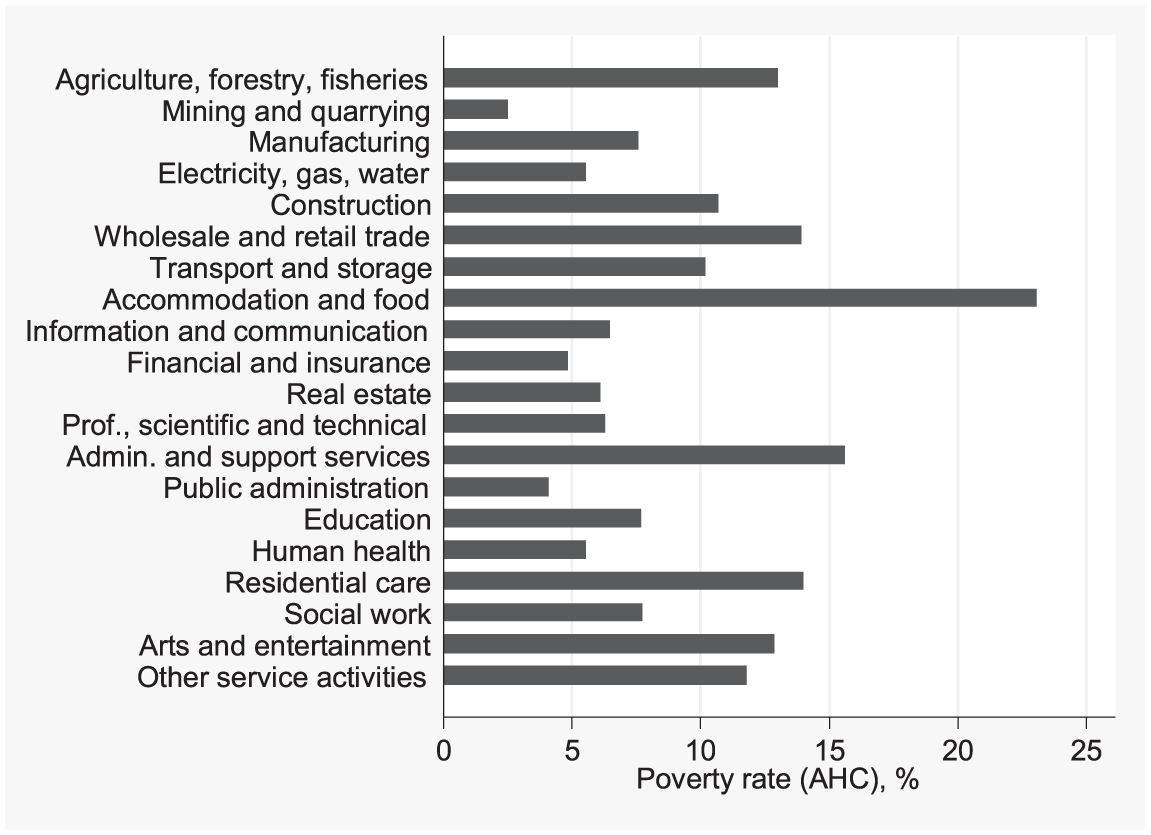
Poverty rate (AHC) within sectors for individuals, 2009–2012, UK.
Part of the explanation for these differences will relate to differences in patterns of working hours across sectors. To assess this, the same analysis is run restricting it to workers on full-time hours only (defined as working more than 30 hours a week). The same broad trends are apparent although the proportions are lower, demonstrating that differences in patterns of hours explain only some of the difference between sectors. Of those individuals in full-time employment (Figure 2), 14.9 per cent of those in accommodation and food services sectors are in household poverty, and in residential care the proportion is 10.7 per cent. Comparatively high rates of poverty among full-time workers are also observed in agriculture (12.2%), retail (10.1%) and administrative and support services (10.9%). The implication of this is that while working full-time generally reduces the poverty risk, there remains a significant minority of workers in many sectors where full-time work does not support a standard of living above the poverty line.
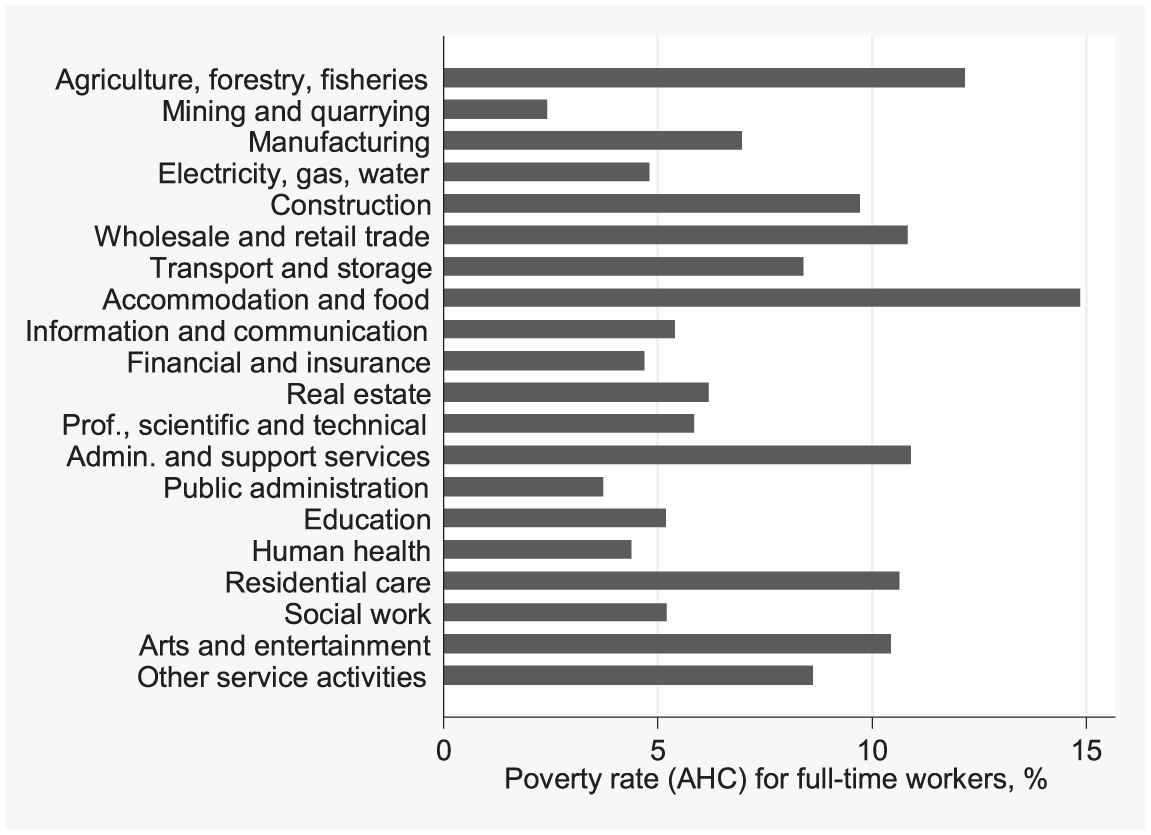
Poverty rate (AHC) within sectors for individuals, full-time only, 2009–2012, UK.
While it is instructive to look at poverty within sectors to gauge the pervasiveness of poverty in particular parts of the economy, the sizes of the sectors discussed are quite different. Therefore, the rates of poverty within sectors do not necessarily give a good perspective of rates of in-work poverty across the whole economy. Figure 3 shows the distribution of in-work poverty across all sectors of employment. Viewed in this way the picture is somewhat different. Around one-fifth of in-work poverty is accounted for by a single sector: retail. Comparatively high levels are also found in accommodation and food services (10.8%), as well as in the manufacturing (8.9%) and education (8.9%) sectors. Residential care accounts for 4.3 per cent of total in-work poverty. These figures highlight that poverty is relatively widespread across sectors of the economy. Sectors which are not typically viewed as being on average poor quality or low paid, such as education, manufacturing, construction and health, account for a significant proportion of poverty. The implication of this observation is that while sector-focused policy may be one avenue for addressing working conditions and outcomes in sectors with a high proportion of workers in poverty, poverty is spread across the economy, meaning broader-based policy is also needed.
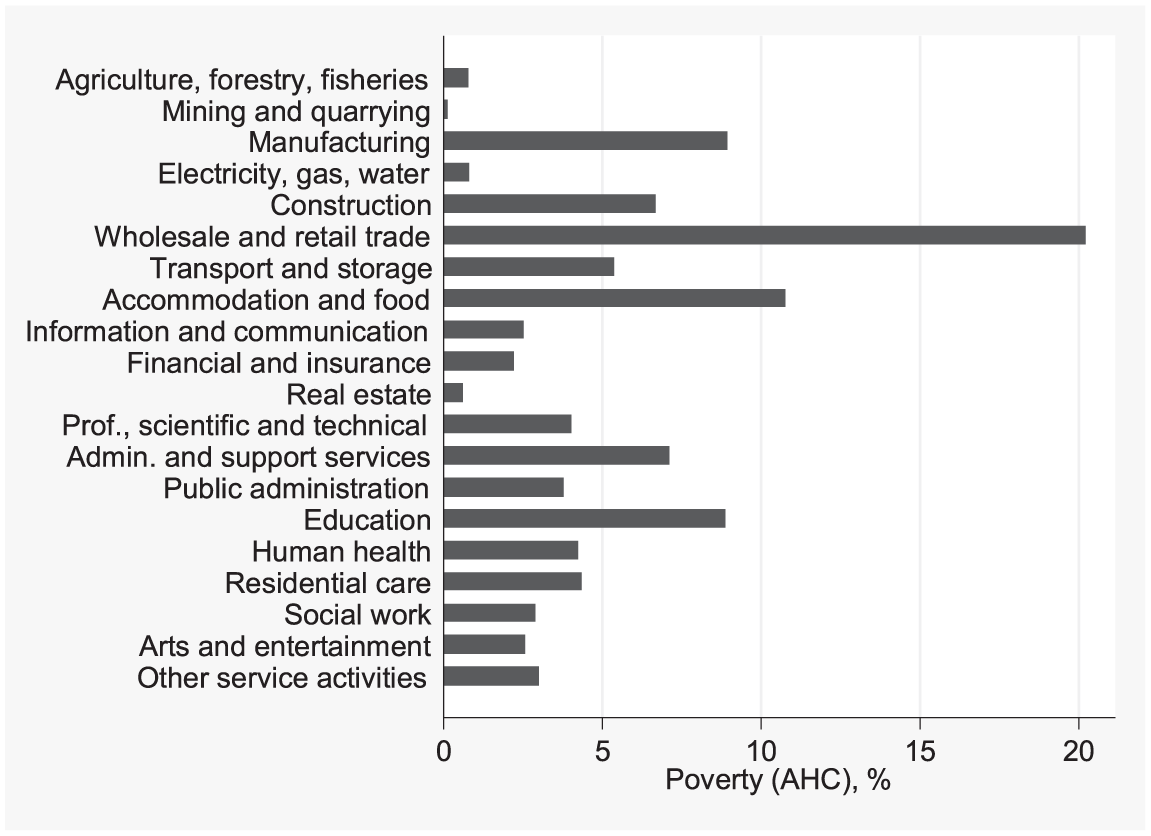
Poverty rate (AHC) across sectors for individuals, 2009–2012, UK.
Household employment and household poverty
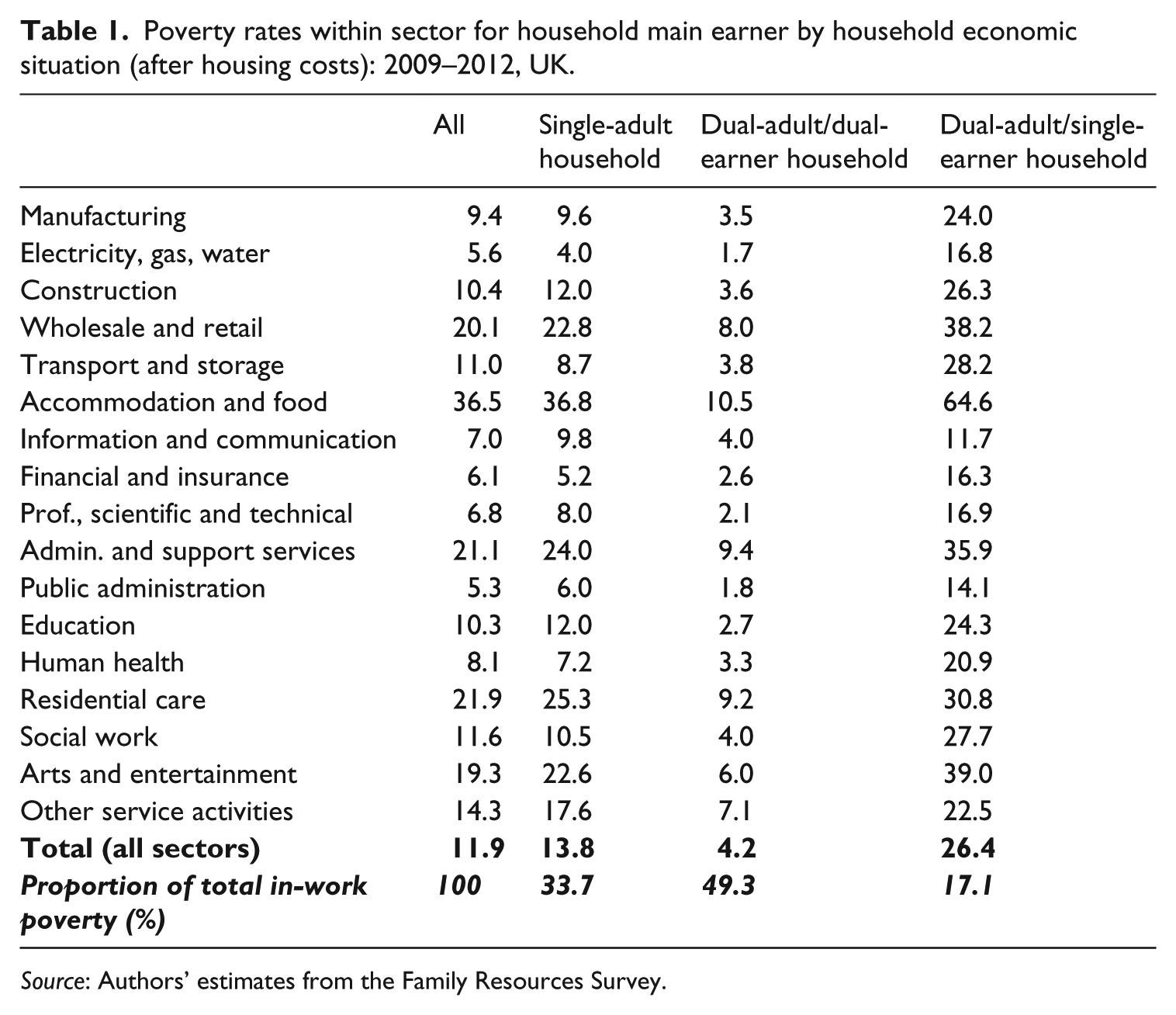
Poverty outcomes obviously reflect more than sector of employment. An important determinant of the relationship between individual labour market experiences and household poverty outcomes is the presence or absence of other earners within the household. Table 1 presents rates of in-work poverty by sector of employment for different household earning types. Across all sectors, as would be expected, household type plays a strong role in influencing and mediating poverty outcomes. The in-work poverty rate for dual-adult households with a single earner is much higher than those for dual-adult households with two earners (at 26.4% and 4.2%, respectively). This highlights the importance of household labour supply in insulating households from poverty, although around one in every 27 dual-earning households remains in poverty. For single-person households the poverty rate across the economy is 13.8 per cent. In terms of the overall proportion of in-work poverty accounted for by each household type, dual-adult/single-earner households account for around half of in-work poverty; single-adult households around a third; and dual-adult/dual-earning households around 17 per cent.
Poverty rates within sector for household main earner by household economic situation (after housing costs): 2009–2012, UK.
Source: Authors’ estimates from the Family Resources Survey.
Accounting for household type, there remain significant differences in outcomes by the sector of the main (highest) earner in the household. At the extreme end of the spectrum, for dual-adult households (i.e. two adults with or without children) with a single earner in accommodation and food services, almost two-thirds of households are in poverty (64.6%). Poverty rates also exceed 30 per cent in single-earner, dual-adult households where the employed individual is working in retail, administrative and support services, residential care and arts and entertainment. These sectors all also have poverty rates exceeding 20 per cent for single-person households. The poverty rates for those in dual-earning households are much lower across the board. However, the poverty rate remains over 10 per cent for dual-earning households with a main earner in accommodation and food services, 9.4 per cent in administrative and support services, 9.2 per cent in residential care and 8 per cent in retail. The figures show that while household labour supply is an important mechanism to reduce poverty risk, poverty rates remain comparably high in a number of low-paid sectors, even when household labour supply is high.
Household employment, household characteristics and poverty outcomes
The analysis of sectors and poverty outcomes is extended by modelling poverty outcomes as a function of the sector of employment of household wage earners after controlling for a range of other household characteristics, so isolating any specific sectoral effect. This is estimated using a probit model. The results presented in Table 2 demonstrate the influence of the sector of employment once other factors are controlled for. Turning first to the sector of employment of the main wage earner, the patterns observed in the descriptive analysis largely hold. Relative to the reference category of manufacturing, a higher chance of in-work poverty is observed in accommodation and food services, administrative and support services, residential care, retail and other services sectors. All these relationships are statistically significant. Lower rates of poverty are associated with the main earner being in employment in finance, ICT and real estate, professional, scientific and technical posts, and the public sector and education. These patterns are largely mirrored when considering the role of the sector of second earners. There is a strong association with increased poverty outcomes and second earner employment in accommodation and food services, administrative and support services, residential care, retail and other services. In contrast, there is also a positive relationship between second earner employment in construction and utilities and in-work poverty. It is less clear what is driving this relationship, although one possibility is the more fragmented nature of employment in construction with less consistency of working hours. This may be a particular issue over the period covered here, when construction was depressed in the aftermath of the economic crisis. Where there is no second earner the poverty risk increases significantly for dual-adult households; it is also higher for single-adult households.
Regression results on household poverty (AHC).
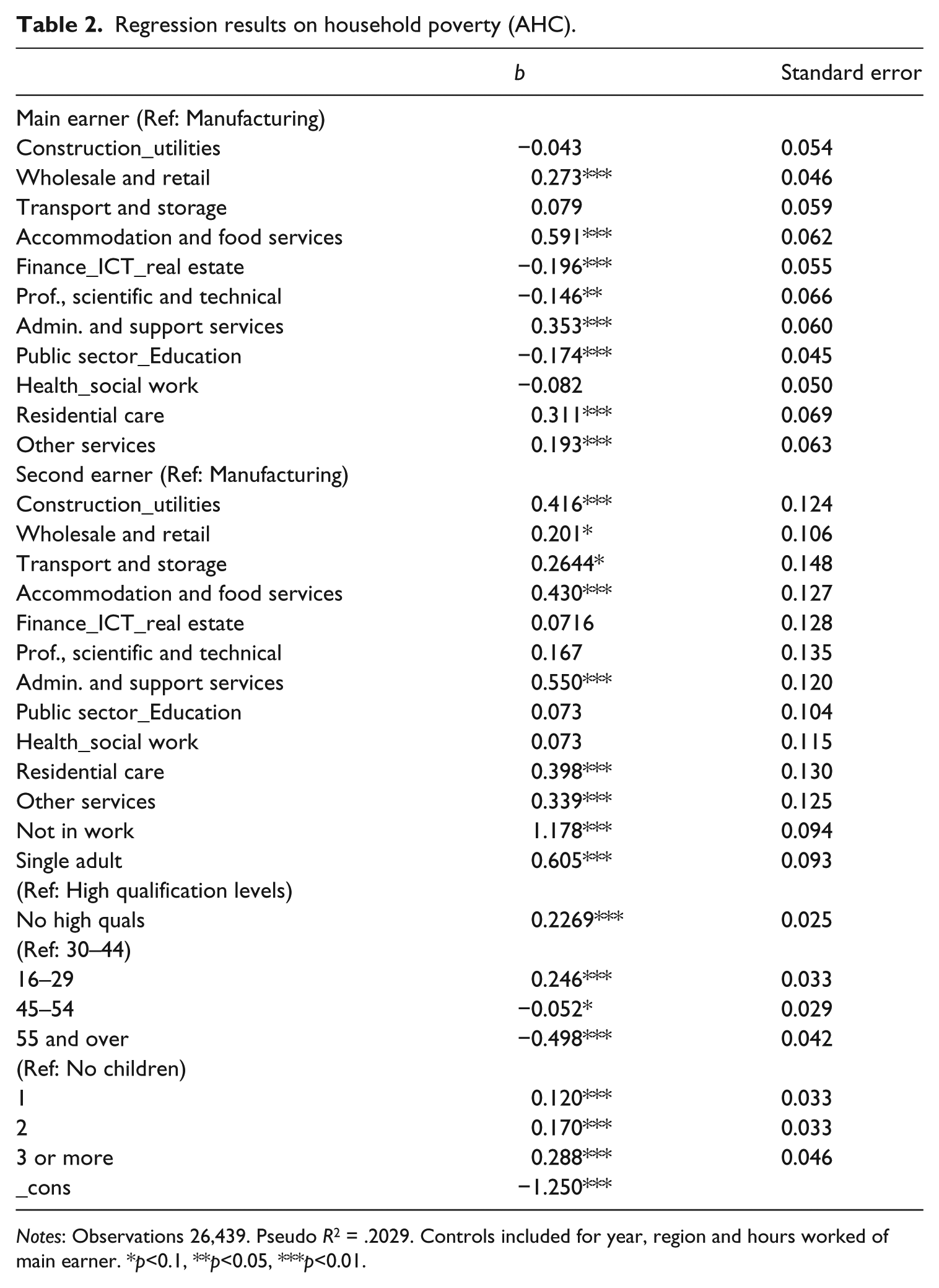
Notes: Observations 26,439. Pseudo R2 = .2029. Controls included for year, region and hours worked of main earner. *p<0.1, **p<0.05, ***p<0.01.
Of the other variables, being in a lower-qualified household raises the likelihood of poverty. This is unsurprising given the relationship in general between qualifications and wages. Poverty is also most strongly associated with younger households and having children. The age finding in part reflects the comparatively higher housing costs faced by young people. These findings highlight the important intersection between work and household characteristics in influencing poverty outcomes.
To assess the scale of the effect associated with different sectors, the model’s average marginal effects (AME) of the main earner variable are displayed in Figure 4 along with the 95 per cent confidence intervals. The marginal effects can be interpreted as showing the percentage point change in the probability of poverty resulting from working in a particular sector relative to the reference category of manufacturing. The largest marginal effect (at the point of the central estimate) is around 12 percentage points in accommodation and food services; in admin and support services the effect size is around 6 percentage points; in residential care and in retail it is 5 percentage points. These effect sizes are quite large and demonstrate the importance of sector of employment in understanding the relationship between work and poverty. Figure 5 provides the marginal effects for second earners. As would be expected, these are smaller in magnitude and are estimated at around 6 percentage points in accommodation and food services, and 4 percentage points in admin and support services, construction and residential care. The marginal effects for single-earner, dual-adult households are very large at 19 percentage points; for single-adult households the figure is 7 percentage points.
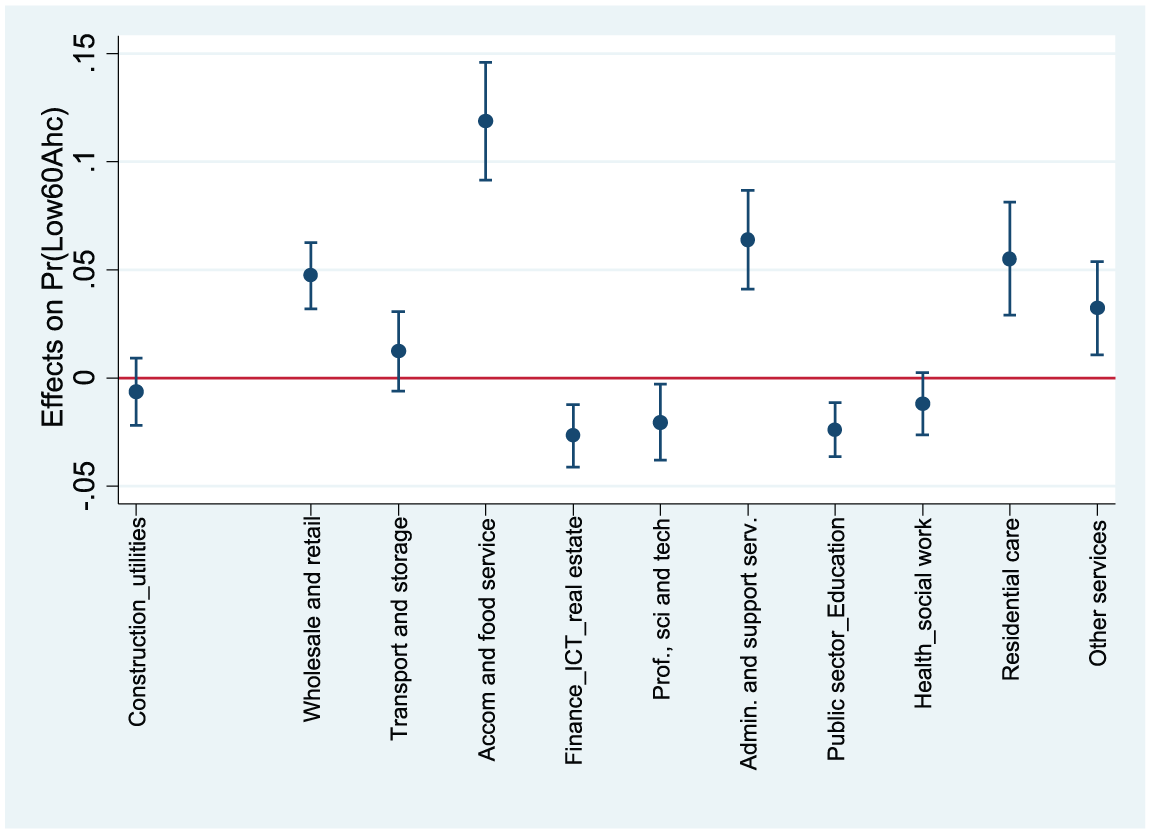
Average marginal effects of sector of main earner on poverty (AHC).
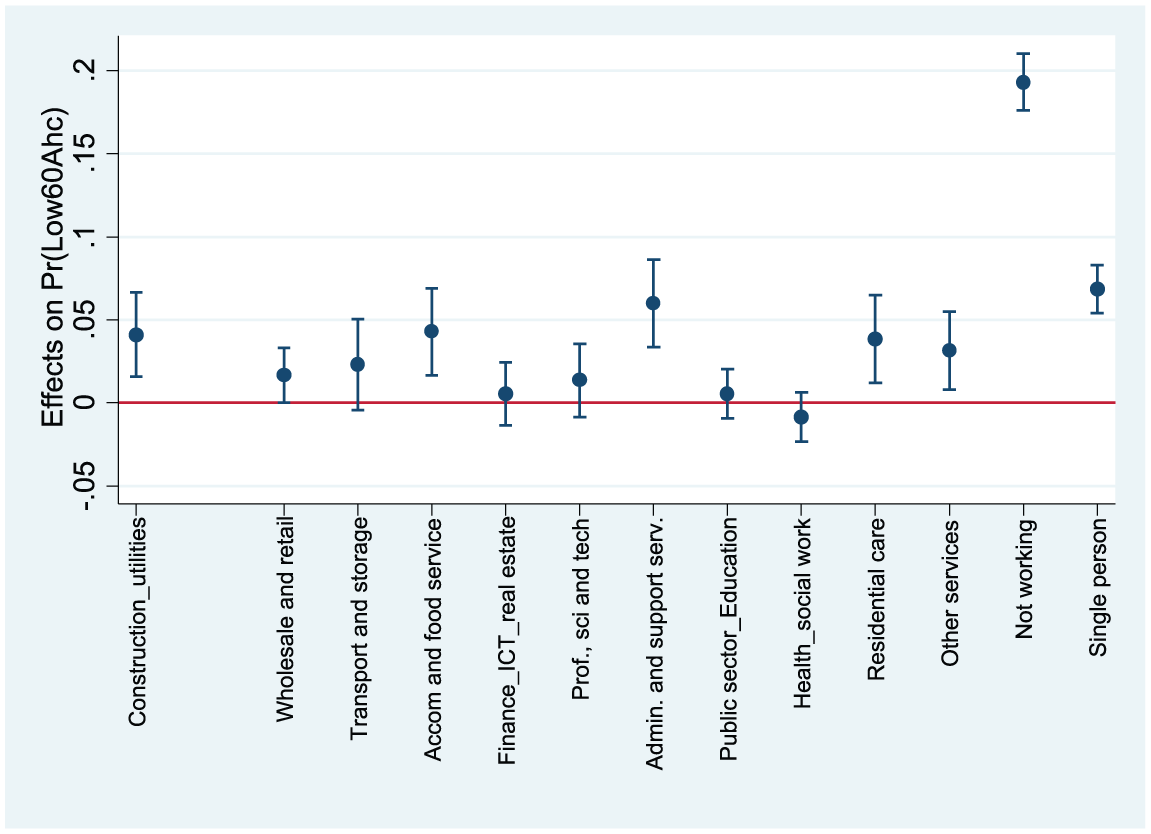
Average marginal effects of sector of second earner on poverty (AHC).
Overall, the results demonstrate the composite effect of combinations of individual labour market experiences and household characteristics in generating poverty outcomes. They show that the sector of employment influences the likelihood of being in poverty.
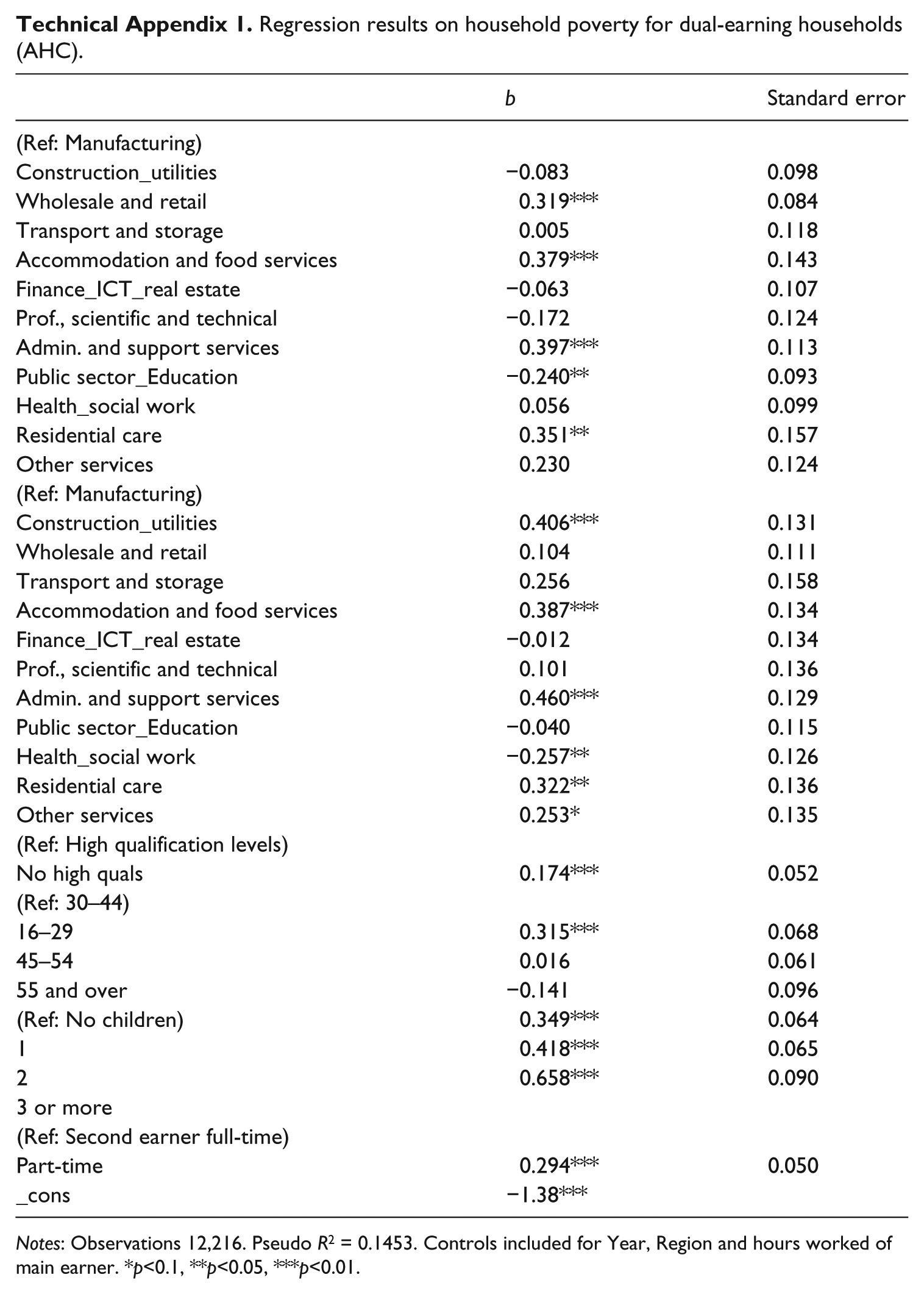
So why do individuals choose to work in, or find themselves working in, certain sectors? Skills and qualifications limit access to particular types of jobs, while the geography of labour demand shapes opportunities locally. Caring responsibilities are also associated with a greater likelihood of choosing part-time work, particularly for mothers, as a method to ‘ease work–family conflict’ while providing a household income (Lyonette et al., 2011: 34). As such, they will also influence in part the choice of sector of employment, as potential work options may be constrained. The choice of sector might relate to the availability of suitable hours and/or geographical accessibility of different types of employment (McKie et al., 2009). Some forms of specialist employment are more likely to require longer commutes, whereas retail is fairly ubiquitous. To assess the impact of part-time working of second earners on poverty, a second model for dual-earning households only is presented using the same variables as the full model but with the addition of a variable for part-time working (defined as less than 30 hours a week) (the full results are available in Technical Appendix 1). The average marginal effect (shown in Table 3) for part-time working suggests that, relative to full-time working, part-time employment raises the poverty rate by around 2–3 percentage points. Part-time working among second earners therefore increases the risk of poverty in comparison to full-time working, but the change is significantly less than that associated with not being in work. This suggests that part-time working can be a good settlement between the need to balance caring and income generation, although it might also be taken to suggest the need to improve the conditions of part-time opportunities for those in low-income households.
Average marginal effects of part-time working of second earner.
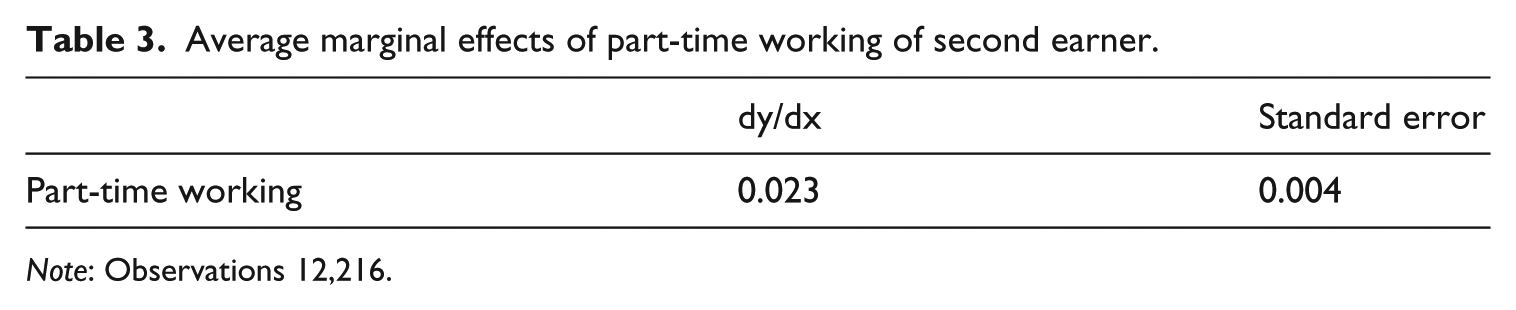
Note: Observations 12,216.
Discussion
The data presented support the view that in a changing economy, patterns of sectoral growth and decline will matter for associated poverty outcomes. In-work poverty is an issue of increasing concern in many countries and its growth in the UK creates a challenge for policymakers. It is becoming more widely recognised that being in a job is no longer a guarantee of a decent standard of living, and that issues of job quality are important. The relationship between employment and poverty is, however, complex. Individual labour market experiences of low pay do not map neatly onto experiences of poverty at the household level and many low earners are not in low-income households.
The existing evidence suggests that ‘poor-quality’ jobs are now a persistent feature of the UK labour market. Empirical and theoretical accounts point towards changes in the labour market associated with de-regulation and with a process of polarisation, while future employment projections suggest continuing growth in several high-poverty sectors. These accounts of labour market change focus on patterns of change at the individual level. In this article, the study of labour market structures is extended to encompass outcomes at the household level and to examine the links between the nature of the contemporary labour market changes and poverty outcomes.
Household poverty is an outcome of a combination of labour market and household characteristics, mediated by the national system of welfare and local costs of living. Dual-earning households have lower poverty rates consistently across sectors, poverty rates decline with age, while having children increases the likelihood of household poverty. Part-time working for a second earner has a higher poverty risk than full-time work, but significantly less so than non-employment.
Even when controlling for household characteristics, the sector of employment of both main and second household earners still matters for the poverty outcomes. In dual-earning households, poverty rates exceed 8 per cent where the main earner is employed in a number of low-paid sectors. The analysis here provides further grist to the reaction against the popular discourse on poverty as reflecting individual inadequacies and lack of work ethic (Shildrick and Rucell, 2015), with long hours of work in some sectors not serving to protect individuals from poverty.
The ongoing process of labour market change raises important questions for policymakers as well as for understandings of the sociology of work. The findings show the complex nature of the relationship between employment and policy, and a duality in understanding the way that employment patterns relate to poverty outcomes. Household patterns of work influence the poverty risk. Most importantly, second household earners significantly reduce the risk of poverty. This suggests a need to increase (household) labour supply (the number of workers in the household or numbers of hours worked). However, there are obvious limits to this. At the household level these include caring responsibilities and disability, which may limit options. While labour market decisions are also constrained by availability of (local) opportunity, labour market choices ‘always take place within particular contexts’ (Lyonette et al., 2011: 45).
This raises the issue of wider labour market structures. The consistent sector effect which we find points not towards an individual deficit model, but to a wider concern with the nature of the contemporary labour market which is shaping patterns of poverty (Bryne, 2005; Wright Mills, 2000). This is in turn bound up with industrial change, the search for labour market flexibility – which has been pursued by successive governments (Davies and Freedland, 2007; Greer, 2015), and the polarisation of labour market opportunities. As the analysis here shows, the outcome is not just precarity in employment for individuals, but this process also exerts an influence on wider patterns of household inequality and poverty – suggesting poor job quality is likely to be associated not just with damaging individual effects, but with wider household and societal implications. More broadly, this finding suggests the need for consideration of how different forms of work are valued and rewarded in the labour market; this chimes with the call from Gatta et al. (2009) regarding the need for better recognition and rewarding of skills in service sector occupations, if household poverty is to be addressed.
The research highlights a number of important topics for sociological investigation in the context of on-going changes in the labour market. These include the need to continue to develop detailed understanding of the process of labour market decision-making at the household level in terms of sectoral and occupational choices and constraints. Critically these decisions are also structured by opportunities available locally and constraints of entry, hours and work flexibility in different sectors. Better understanding of employer decision-making about employment conditions and job design across sectors is therefore a critical area for further research.
Conclusions
The findings reported here have important implications for policy towards welfare and employment. Policy has moved away from redistribution through the (in-work) social security system to focus on increases to the personal tax allowance and the minimum wage. The net result of changes to the social security system and to the minimum wage will be lower household incomes for a large number of households (Finch, 2015). Where the norms of living standards are set by those in dual-earner households, reforms to social security have clear negative implications for households where dual-earning is not possible. This is an important limit of employment policy as an anti-poverty strategy.
The role of the state as an employer and as a purchaser of services is also raised by this analysis. A number of comparatively large poverty sectors include those which are either predominately in the public sector, or which are to a large extent dependent on public funding (such as social care). Recent research has pointed to the role fiscal austerity is playing in eroding terms and conditions in parts of contracted out service provision such as social care (Cunningham and James, 2014).
The findings also highlight the need to address conditions within large service sectors including retail and food and accommodation. From a policy perspective, the evidence points towards the possibly of different types of approaches. More targeted policy at low-paid sectors, such as through standard setting and procurement, is one route. The relatively broad base nature of poverty across sectors, however, suggests a need to also focus on wider institutional factors.
Going forward, the relationship between employment change and poverty will be subject to a number of pressures. Brexit may reduce the UK’s employment outlook in the near-term, and austerity will continue to limit the prospects for transfers through in-work social security payments. Technology will continue to shape the characteristics of the labour market, both in terms of the content of jobs but also potentially in the amount of work available. All these factors will have important implications for the evolution of the relationship between the employment structure and household poverty.
Footnotes
Appendix
Regression results on household poverty for dual-earning households (AHC).
| b | Standard error | |
|---|---|---|
| (Ref: Manufacturing) | ||
| Construction_utilities | −0.083 | 0.098 |
| Wholesale and retail | 0.319*** | 0.084 |
| Transport and storage | 0.005 | 0.118 |
| Accommodation and food services | 0.379*** | 0.143 |
| Finance_ICT_real estate | −0.063 | 0.107 |
| Prof., scientific and technical | −0.172 | 0.124 |
| Admin. and support services | 0.397*** | 0.113 |
| Public sector_Education | −0.240** | 0.093 |
| Health_social work | 0.056 | 0.099 |
| Residential care | 0.351** | 0.157 |
| Other services | 0.230 | 0.124 |
| (Ref: Manufacturing) | ||
| Construction_utilities | 0.406*** | 0.131 |
| Wholesale and retail | 0.104 | 0.111 |
| Transport and storage | 0.256 | 0.158 |
| Accommodation and food services | 0.387*** | 0.134 |
| Finance_ICT_real estate | −0.012 | 0.134 |
| Prof., scientific and technical | 0.101 | 0.136 |
| Admin. and support services | 0.460*** | 0.129 |
| Public sector_Education | −0.040 | 0.115 |
| Health_social work | −0.257** | 0.126 |
| Residential care | 0.322** | 0.136 |
| Other services | 0.253* | 0.135 |
| (Ref: High qualification levels) | ||
| No high quals | 0.174*** | 0.052 |
| (Ref: 30–44) | ||
| 16–29 | 0.315*** | 0.068 |
| 45–54 | 0.016 | 0.061 |
| 55 and over | −0.141 | 0.096 |
| (Ref: No children) | 0.349*** | 0.064 |
| 1 | 0.418*** | 0.065 |
| 2 | 0.658*** | 0.090 |
| 3 or more | ||
| (Ref: Second earner full-time) | ||
| Part-time | 0.294*** | 0.050 |
| _cons | −1.38*** |
Notes: Observations 12,216. Pseudo R2 = 0.1453. Controls included for Year, Region and hours worked of main earner. *p<0.1, **p<0.05, ***p<0.01.
Acknowledgements
We are grateful to the three anonymous referees as well as the Editor, Melanie Simms, for their valuable comments on the article. The data used are Crown Copyright and are reproduced with the permission of the Controller of HMSO and the Queen’s Printer for Scotland.
Funding
The research was funded by the Economic and Social Research Council (Grant ES/M007111/1).