




Abstract
The economic crisis that led to recession in the UK in 2008–9 impacted in multiple ways on work and economic life. This article examines changes to the work-time of employees. The UK stood out for its recessionary expansion of work-time underemployment. Working in a job that provides ‘too few’ hours can have serious ramifications for the economic livelihood of workers. Working-class workers are central here. Drawing on analysis of large-scale survey data, the article identifies that workers in lower level occupations experienced the most substantial post-recessionary growth in the proportions working ‘too few’ hours. Did these work-time changes narrow or widen class inequalities in feelings of financial hardship? The article concludes that although middle-class workers also saw their financial positions damaged, this so-called ‘first middle-class recession’ did not erode class inequalities in financial hardship among UK workers.
Introduction
The economic crisis has impacted across the globe, but the form and severity of its effects have varied by country. Lallement noted in this journal in 2011 that levels of unemployment, and societal labour market adjustments to job loss, varied substantially across nations, but he suggested that part of what marked the UK out was its post-recessionary growth in ‘work-time underemployment’. An increase in the number of workers with ‘too few’ hours raises questions about recessionary ramifications for the UK work-time regime (Rubery et al., 1998). These are also class concerns: work-time and work-time preferences are classed in Britain. The article is stimulated by the potential impact of recessionary work-time developments on the financial well-being of workers in the UK: did work-time changes erode class inequalities in feelings of financial hardship?
Data from the British Household Panel Survey (BHPS) and Understanding Society (US) facilitate the examination of class variation in work-time and in financial hardship before and after the onset of the recession in 2008. The next section of the article considers potential recessionary changes in the number of working hours in the UK. This is followed by discussion, first, of the classed nature of work-time underemployment and, second, of the linkages between working ‘too few’ hours and financial difficulties. After outlining the methodological approach, findings are presented on financial hardship and work-time in the UK before and after 2008. It is concluded that in the context of debates over the ‘first middle-class recession’ and the ‘squeezed middle’, the growth in work-time underemployment signalled instead poor recessionary outcomes for the financial positions of working-class employees in Britain.
The recession and work-time
The economic crisis ignited interest in the ramifications of recession for multiple aspects of our working lives. This article focuses upon work-time in the UK. A great deal of research attention has been dedicated to exploring rising levels of unemployment, including variation between countries, and societal responses to job loss. Lallement (2011) grouped European societies according to their dominant methods of labour market adjustment as unemployment levels began to rise after recession hit: variety in societal work-time strategies and outcomes are central to his account. What is clear from the existing literature on work-time and economic crisis is that recessions can have quite contradictory impacts on the number of hours committed to the labour market. Certain developments in the labour market in a recession can lead to drastic cuts in paid work-time, but – during the same recession – longer hours in the labour market can result for some workers due to quite different processes. These debates are summarized below using studies after the 2008–9 recession.
Unemployment and work-time reduction: The rise in the level of unemployment that follows a recession necessarily brings about substantial reductions in the paid work-time of those who have lost their jobs, certainly if the period of unemployment is prolonged. Although levels of unemployment in the UK after 2008 did not reach the high rates recorded during previous recessions, initially unemployment did rise steeply (Campos et al., 2011; Gregg and Wadsworth, 2010; Grimshaw and Rafferty, 2012: 4; Hogarth et al., 2010; Lallement, 2011).
Work seekers and work-time reduction: Considering those looking for a job, Lyonette and Baldauf (2010) discuss how organizational work-time responses to economic crisis can mean that jobs that would previously have been available full-time to applicants might instead be offered only in a part-time capacity. Early post-recession research showed that part-time employment grew in the UK soon after the recession began and, moreover, the bulk of new part-timers cited their inability to find full-time work as the main reason for part-time working (Parek et al., 2010).
The employed and work-time reduction: The third potential work-time outcome of economic crisis is a cut to the working hours of the employed. Usual overtime hours are commonly the first hours to be shed, followed by cuts to contractual hours, perhaps here for a negotiated time-delineated period (Hijzen and Venn, 2011; Lallement, 2011; Van Wanrooy et al., 2013). A potential result of such work-time measures is the expansion of using so-called economic short-time workers (ESTWs). At their extreme, ESTWs, though employed, might be ‘zero hours workers’ with no hours at all. There were almost two million ESTWs in Europe by 2009, already three times more than had existed only one year previously (Hijzen and Venn, 2011: 36).
The employed and work-time expansion: The fourth potential work-time outcome of recession is longer hours for those in paid work. This can result if companies attempt to improve competitiveness at a time of crisis and/or deploy existing staff to cover the work of those who have been ‘let go’. Longer hours can also result from workers’ informal attempts to preserve their own jobs: to display strong work commitment in a time of job uncertainty and cutback (Chandola, 2010). Work-time intensification can occur too if workers need to work a longer week to boost their take home pay.
Given these four potential work-time scenarios emerging from the 2008–9 recession, what was the aggregate work-time picture? Overall, hours fell in the UK after the onset of recession (Gregg and Wadsworth, 2010; Grimshaw and Rafferty, 2012). Bell and Blanchflower (2013) have argued that work-time changes heralded an expansion in ‘work-time underemployment’ and a reduction in ‘work-time intensification’. In Lallement’s analysis of dominant labour market adjustments, cited earlier, the key feature of the UK recessionary labour market was a growth in work-time underemployment.
This article thus focuses specifically upon labour market work-time in the UK. Because of this, the core sample under investigation consists of working age employees. This excludes, among other groups, the unemployed, whose financial situations are likely to be far more precarious than those of employees, and the self-employed, whose work-time is difficult to compare with that of employees. In its focus on employees and class, the article does not address in detail other inequalities in work-time, and neither does it provide a household level of analysis. The article thus concludes with suggestions for further research into the economic consequences of the crisis.
Work-time and class
There are a number of dimensions to work-time but ‘too many hours?’ has been the most long-standing work-time research question in the literature. Veblen’s (1963 [1899]) interest in long hours of paid work can be traced through to fears about a ‘harried’ society in the 1970s (Linder, 1970), into Schor’s (1991) discussion of the growth of a ‘long hours culture’ and ‘greedy’ organizations in the US and, later, debates over the notion of ‘total time commitment’ for executives across Europe (Riedmann et al., 2006).
These debates are all classed. In the UK, long hours working is concentrated among men at the top and bottom of the occupational hierarchy, but it is the middle-class workers – those with a ‘salary’ rather than a ‘labour’ contract, to use Erikson and Goldthorpe’s (1992: 42) Weberian class ‘ideal types’, who have dominated the ‘too many’ hours literature (Hammermesh and Lee, 2007). A labour contract is based upon the purchase of a quantity of time, while workers with a salary contract have more autonomy and discretion over their work-time (Erikson and Goldthorpe, 2002). Middle-class men with more work-time autonomy are the long hours workers who are most likely to express a preference for working fewer hours (Fagan, 2001). Their ‘too many’ hours have been identified as a problem in large part because they leave little time to dedicate to other areas of their lives. Yet ‘too few’ hours can also impact negatively on workers. In particular, working in a labour contract job that provides ‘too few’ hours can have serious ramifications for the economic livelihood of workers, in the short and longer terms.
An interest in economic livelihoods links us to Weberian analyses of class that are dominant in Britain, and that have shaped influential class schemas (as discussed later). In Goldthorpe and McKnight’s (2005) research into the economic basis of social class, for example, they draw upon the Weberian idea that people in different class locations inhabit very different ‘economic worlds’. Key to this is that economic worlds do not refer only to class inequalities in income, but also to economic security, economic stability and economic prospects. The economic is linked directly to work-time underemployment in this article. When a worker has a labour contract based on the purchase of time, post-recessionary work-time cuts can create economic difficulties among the working class, significantly impacting take-home pay. Indeed, looking to studies on work-time and class, a real fear of work-time underemployment marks the economic worlds of the working class. For example, Lautsch and Scully’s (2007) US research into the impact of organizational work-time restructuring found that threats of impending work-time cuts were causing severe financial worries among the working-class respondents. In the UK, Warren et al. (2009) found similar economic-based fears about potentially working ‘too few’ hours expressed within working-class families. Boulin et al.’s (2006) analysis of large-scale data demonstrated the economic importance of long hours in labour contracts for low-wage workers across the globe.
In this light, did recessionary cuts in hours and the proposed growth in ‘work-time underemployment’ signal severe economic problems for workers in the UK? Were those in working-class jobs faring particularly poorly or was the ‘middle’ squeezed the most?
Financial hardship, recession and class
The impact of the crisis has been wide-ranging but this article focuses purely upon its economic consequences. The economic is important: it interrelates closely with other areas of life and has critical ramifications for well-being in general (Gudmundsdottir, 2011). The article is concerned with class variation, and change over time, in financial hardship. Rather than examine objective indicators, however, feelings of financial insecurity are the focus. Multiple studies have shown how important it is to explore subjective measures of economic lives (Stiglitz et al., 2007). Weller’s (2012) US research into the financial impact of job loss stressed that, even though it might suggest an over-individualized approach to the analysis of economic crisis, researching subjective feelings of financial hardship is valuable for exploring the impact of austerity on peoples’ everyday lives. Moreover, in-depth studies in the UK have long revealed how central worries about finances have been to working-class lives in post-war Britain (Kempson, 1996; Skeggs, 2011).
Weller’s study also suggested four ways in which this crisis might have more wide-ranging and deeper consequences for peoples’ feelings of financial hardship than did its predecessors. Class is important to all. First, she argues, middle-class and not just working-class households might be facing financial problems this time because of the impact of this recession on middle-class jobs. Second, there are now far more casual workers than in previous decades, and so a lower proportion of employees have work-based financial security nets. Third, the rollback of welfare benefits has heightened the risks of financial insecurity. Fourth, more households are in debt than were in previous decades, and even ‘Ordinary workers’ households are now embedded in complex long-term financial arrangements that commit them to onerous repayment schedules, reduce their cash reserves and simultaneously limit their access to savings’ (Weller, 2012: 22).
The potential class ramifications of this recent crisis are clearly open to research. As it rolled out, the crisis was trumpeted as the ‘first middle-class recession’, due in large part to early, well publicized mass lay-offs in the financial sector (Vaitilingam, 2009). The middle class also appear in debates about the ‘squeezed middle’, including notably in the speeches of the Labour Party leader Ed Miliband (for example, on the day he took over as party leader and at the 2013 Labour Party Conference (Labour Party (2014)). Yet numerous analysts have already pointed to the heavier impact on working-class finances of post-recessionary increases in living costs. Levell and Oldfield (2011), for example, calculated that poorer households in the UK saw much higher inflation on average than richer households. The poorest fifth of households faced an average annual inflation rate of 4.3 per cent between 2008 and 2010, compared with 2.7 per cent for the richest fifth. Increases in the prices of gas, electricity and food have hit poorer households particularly hard (and see Dolphin, 2009). The Resolution Foundation (2012) predicted that these problems will have long-term and classed financial ramifications, so much so that ‘low income households in 2020 now look likely to have incomes 15 per cent below those in 2008’ compared with 3 per cent lower for middle-income households (p. 76).
In this context, this article examines the growth in work-time underemployment in the UK, feelings of financial hardship, and class. Before moving on to its findings, the next section outlines the methodological approach.
Researching work-time, financial insecurity and occupational class
The article draws upon secondary analysis of large cross-sectional data from the British Household Panel Survey (BHPS) and Understanding Society (US). The BHPS collected nationally representative details on labour force participation and standards of living, as well as on a range of other social, demographic and attitudinal topics, for 18 years (Taylor, 2010). The BHPS was then incorporated into and replaced by US which tracks 100,000 individuals in 40,000 British households (US, 2011). The most recent full wave of US data (Wave C. Released 2013) that was available at the time of analysis was collected over a two-year period (2011–12).
For our concerns with class, the article focuses upon a measure of occupational class: variation by socio-economic group (SEG). There are multiple ways to operationalize and measure class. In the UK, Weberian-inspired approaches dominate those class schemas that have a theoretical grounding. Neo-Marxist schemas such as that of Wright have failed to take such a strong hold (see the recent review by Savage et al., 2013). Rose and Pevalin’s (2005) NS-SEC (National Statistics Socio-economic Classification), for example, builds upon and adapts Erikson and Goldthorpe’s (1992) Weberian-rooted class schemas. The NS-SEC was devised to offer a robust and theoretically grounded means with which to explore class inequalities, and it is widely used now. Unfortunately it is absent from the early waves of data analysed for this article. The article thus explores the SEG variable that is available consistently across the waves. SEG reflects one of the foundations of the Erikson/Goldthorpe schema – the identification of employees with a ‘salary contract’ (namely managers and professionals), intermediates and the remainder with a ‘labour contract’. Rose et al. concluded that occupationally based classifications such as SEG do remain useful in class analysis, often for such pragmatic reasons as their wide availability (Savage et al. also note the pragmatic in choice of variable when analysing class in surveys that are not ‘bespoke’). The limitations of this variable are returned to at the end.
For work-time, usual weekly hours are examined (paid normal and overtime, plus any unpaid overtime). The work-time underemployed are taken to be those employees who, when asked ‘Thinking about the hours you work, assuming that you would be paid the same amount per hour, would you prefer to …’, responded ‘work more hours’.
To explore financial hardship, two subjective indicators are focused upon. Respondents are asked to report whether they are managing financially or finding it difficult (‘How well would you say you are managing financially these days?’); and what they had or would like to be able to afford for their households. 1 For affordability, a question is explored that taps into the impact of recession on a key aspect of peoples’ lives: a holiday away from home (for at least one week a year, not staying with relatives at their home). Holidays were selected because this indicates class variation in the opportunity to be able to afford a concentrated time of rest and leisure time during a time of economic crisis. In their qualitative research into what the UK population believed to be a minimum basic income, Davis et al. (2012) found that ‘All groups agreed that it was essential for people to be able to have a break away from home each year’ (p. 22). But, after ‘family treats’, holidays were identified as the most likely area of recessionary household cutbacks by respondents in an early survey carried out by the Association of British Insurers (ABI, 2009; and see Collard and Davies, 2014). European Foundation for the Improvement of Living and Working Conditions (2012) research found that, across Europe, ‘The inability to pay for a week’s annual holiday away from home (not staying with relatives) is associated with particularly low satisfaction with standard of living’ (p. 45). Furthermore, in the data that is analysed here, compared to the other items available (such as being able to buy new clothes, keep your home warm, feed visitors once a month), holidays were rated as wished for but unaffordable by the largest group of employees in 2008–9 (10% of male and 12% of female employees). Holiday affordability was also chosen because, if employees in 2008–9 could afford to pay for a holiday, then the vast majority could afford all the others items too (e.g. 99% could afford to buy two pairs of shoes, 96% to replace furniture, and 95% home contents insurance).
These variables were chosen because they draw expressly upon respondents’ subjective evaluations of their lives. Yet such variables are known to present challenges for interpretation in surveys, and indeed other types of research. In terms of class, for example, Crompton (2006) argued peoples’ evaluations of their lives are ‘shaped by (among other things) habit, low expectations and unjust background conditions’ (p. 50). The limitations of subjective indicators of financial hardship are returned to, to end. We will see too how respondents in surveys commonly group together when asked to evaluate aspects of their lives. Given the focus of the article on the economic impact of recession, it explores which respondents choose the most ‘problematic’ categories that indicate financial difficulties.
Work-time, class and recession
The first of the UK’s recent recessions began technically in April 2008 and lasted for 18 months (Bell and Blanchflower, 2013). Looking at employees in the data-sets and their hours spent in the labour market (all hours including unpaid overtime), Figure 1 displays how work-time was classed in the UK. For men, very long hours (over 48 a week) featured most among salaried managerial workers (a third worked these long weeks), but were prevalent too among professionals and manual workers. For women, there were high levels of part-time working (fewer than 30 hours a week) among ‘Junior non-manual/Personal service’ and ‘Semi/Unskilled manual/Other’ workers (around half work part-time). Between 2005–6 and 2011–12, female employees’ weekly work-time remained rather stable on aggregate. Overall, men saw more change, including a doubling of part-time working (albeit from a low base: from 3 to 7% of male employees). 2 Part-time working grew most for those men working in ‘Junior non-manual/Personal service’ and ‘Semi/unskilled manual/Other’ jobs, and for women in ‘Professional’ and ‘Skilled manual’ jobs. For men, there was also a fall in very long hours working in manual occupations.
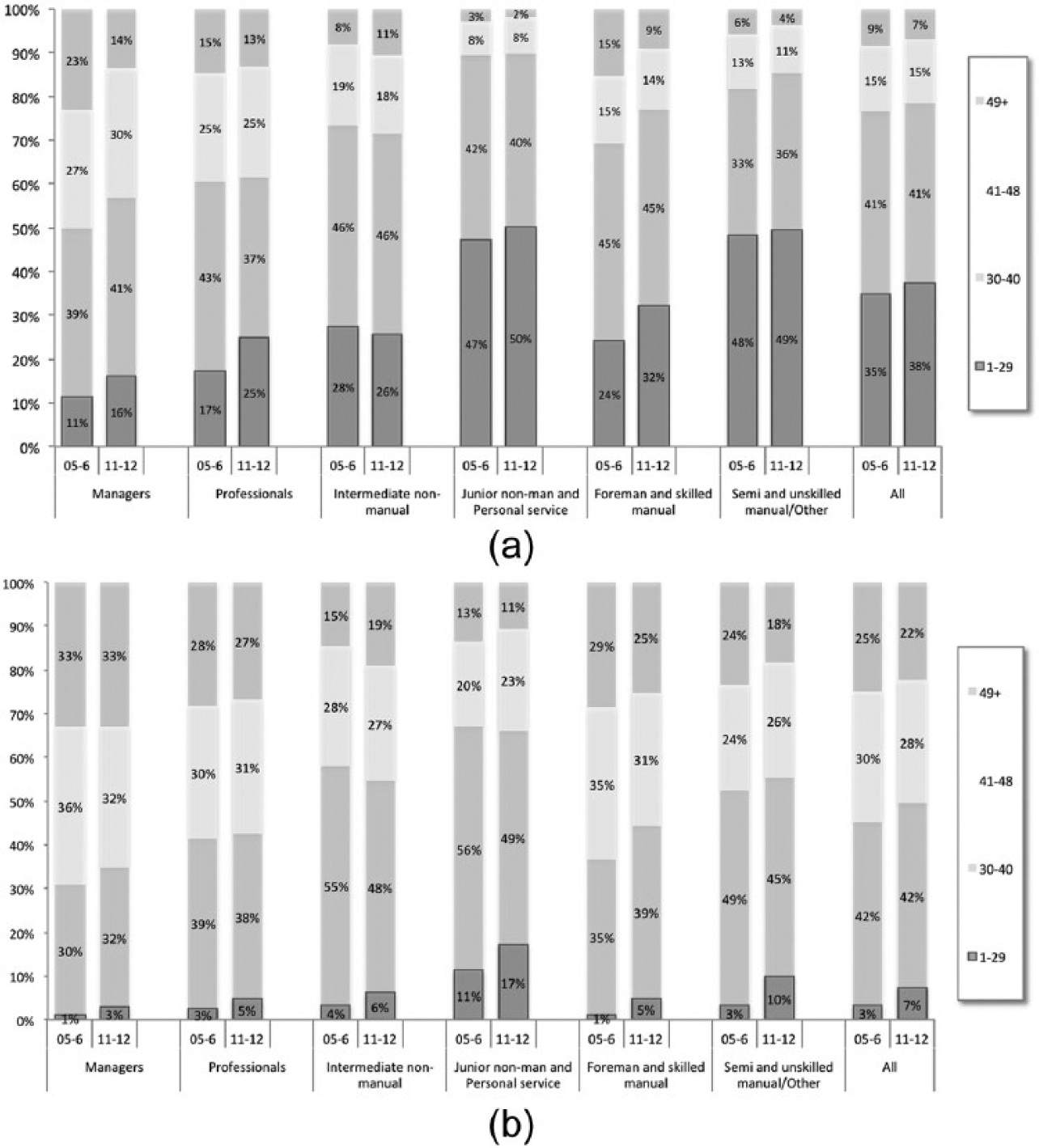
Hours in job (all hours including unpaid overtime), 2005–6 and 2011–12. Employees aged 18–64: (a) women and (b) men.
The article is interested too in work-time underemployment among employees: those who wish to work more hours. Data on hours preferences were available only from the BHPS. Comparing preferences over time (years 2005–6 and 2008–9), the dominant picture before and after the recession began was that employees in the sample were happy with their hours of work, in the sense that the majority expressed a preference for continuing with their current hours (over 60% of women and men; Figure 2). Only a small percentage of respondents were working ‘too few’ hours, and the overall proportions were similar for women and men. Understanding Society does not ask a work-time preference question, but LFS data show that work-time underemployment had grown in the UK to 10 per cent of workers by the close of 2012 (ONS, 2012; and see Bell and Blanchflower, 2013). The BHPS data can be used to see which workers were most likely to be work-time underemployed: in 2008–9 it was female and male respondents in semi/unskilled manual and junior non-manual work.
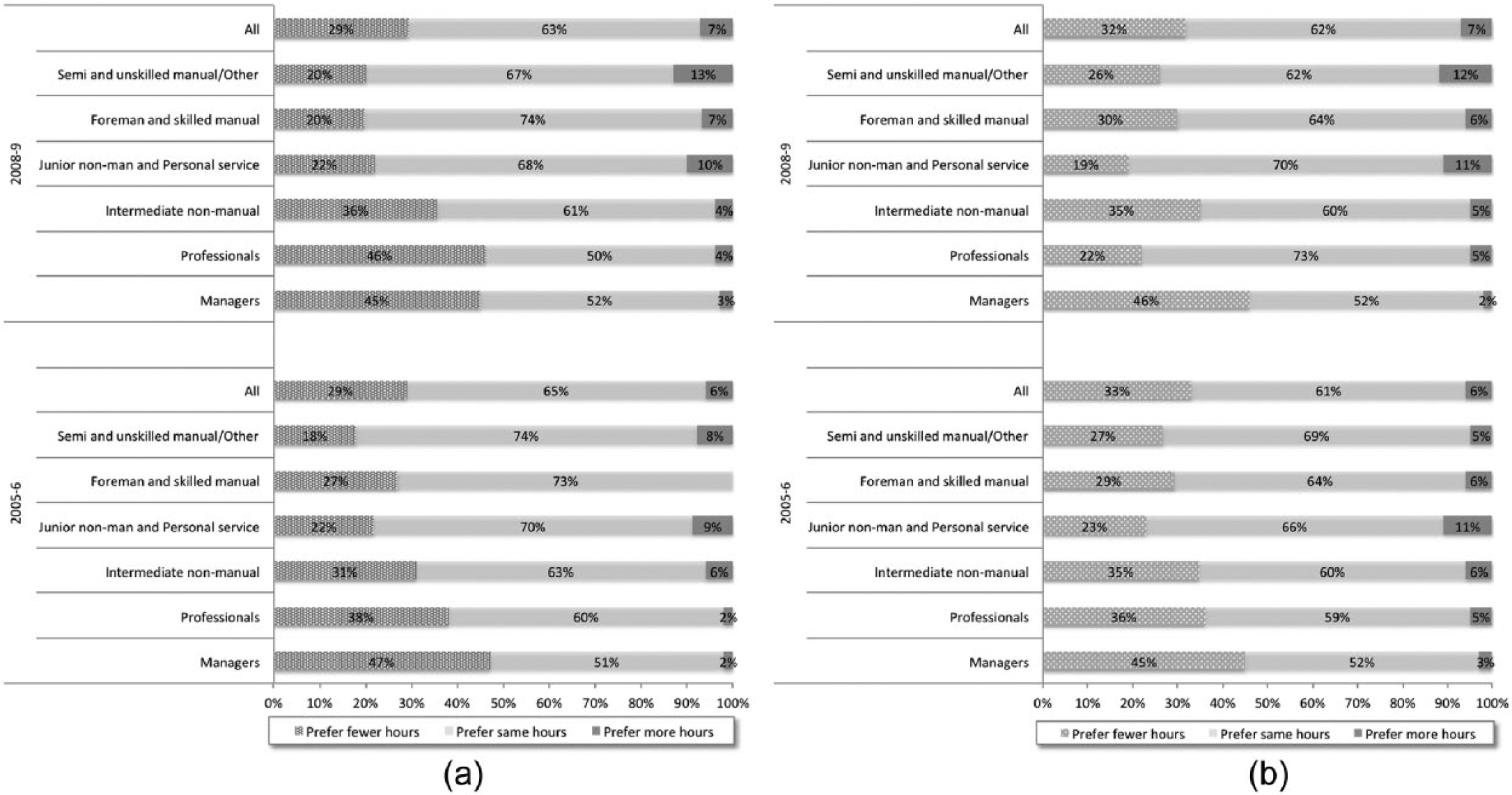
Hours preferences of working age employees by socio-economic group (2005–6 and 2008–9): (a) women and (b) men.
Work-time underemployment was related to actual hours worked, as we might expect. Part-timers (working 1–29 hours a week) were the group of women and men most likely to say that they would prefer longer hours (Figure 3), men especially. The proportion of part-timers who were work-time underemployed had already grown by 2008–9, particularly for men (up to fully 39% of part-timers from 25% in 2005–6) and those in lower level jobs. Of course, there are more women than men working part-time in Britain: the (weighted) sample for 2008–9 included 187 women and 69 men who were working part-time and wanted more hours. The potential economic ramifications of work-time underemployment are considered next.
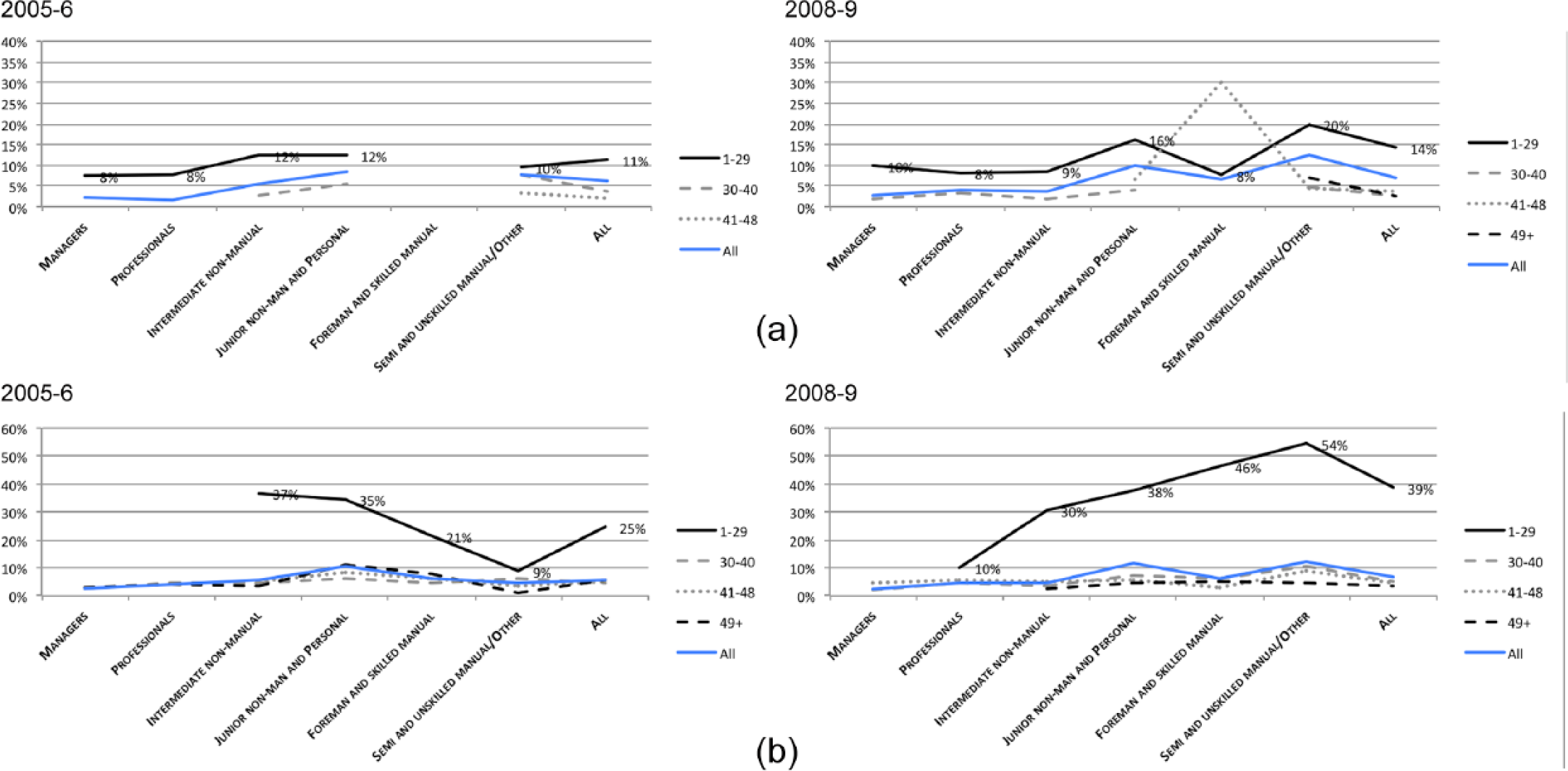
Proportion of employees (aged 18–64) who want to work more hours, by socio-economic group and work-time: (a) women and (b) men.
Work-time, class and financial insecurity
Were those working ‘too few’ hours experiencing financial problems?
1 Financial difficulties
Respondents’ subjective feelings of financial difficulty are considered first. Were the workers ‘doing okay’ (merged categories ‘living comfortably’/‘doing all right’) or in financial difficulties (‘just about getting by’/‘finding it difficult’), and how did they fare after the recession began?
First, Figure 4 shows that wanting to work more hours was indeed likely to be associated with being in financial difficulty. In 2005–6, women and men who expressed a preference for working more hours were twice as likely to report being in ‘financial difficulties/just being able to get by’ as those wanting to continue the same or work fewer hours. By 2008–9, the financial disadvantage felt by work-time underemployed women had eased a little, but it had deepened for the men so that fully 53 per cent reported being in difficulties. Work-time underemployed men were more likely to report financial difficulties than other male employees for each category of work-time (Figure 5; and see Blyton and Jenkins, 2012). The same was true for women, though fewer women than men working longer hours wanted to work more hours.
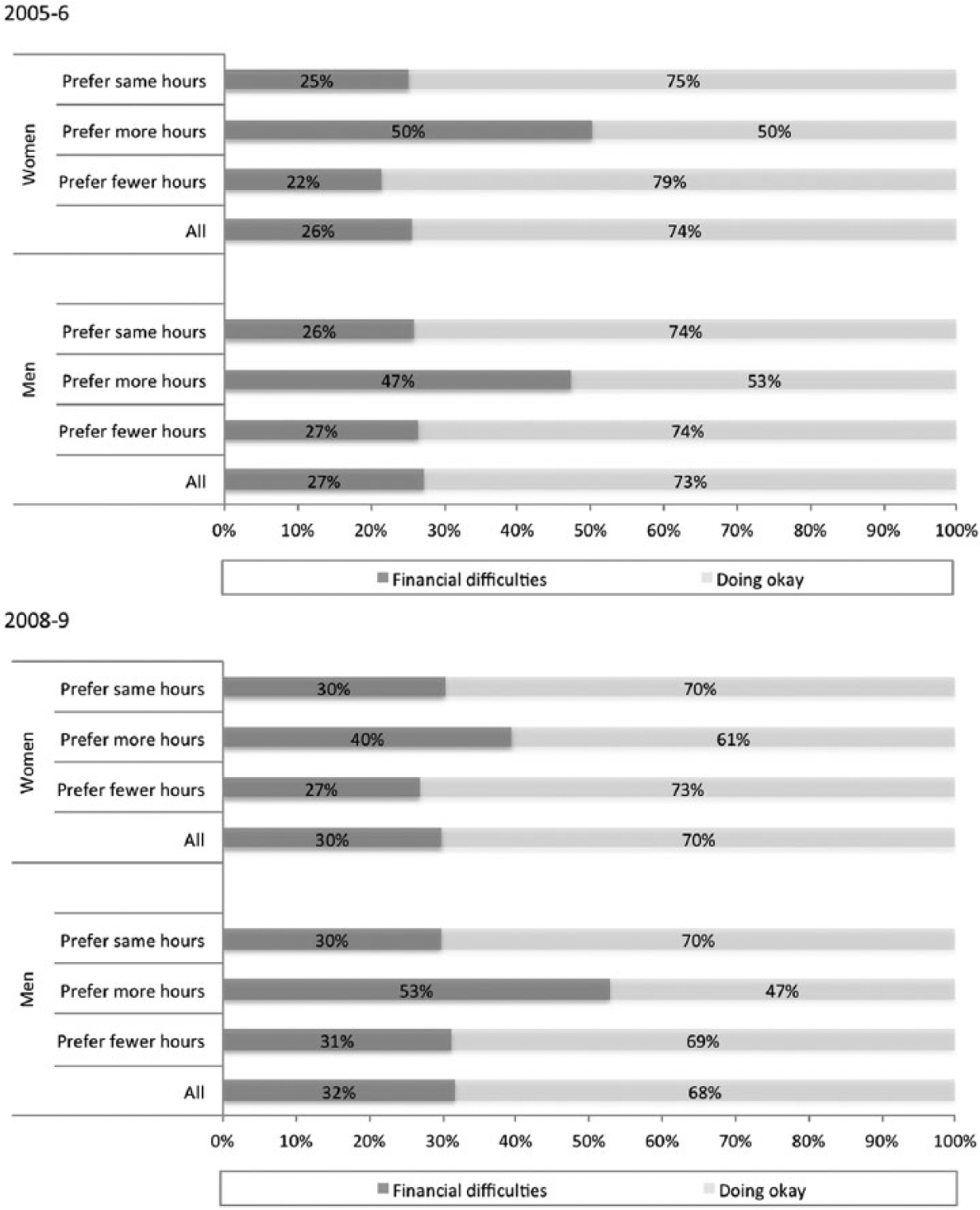
Proportion of employees (aged 18–64) in financial difficulties by hours preferences.
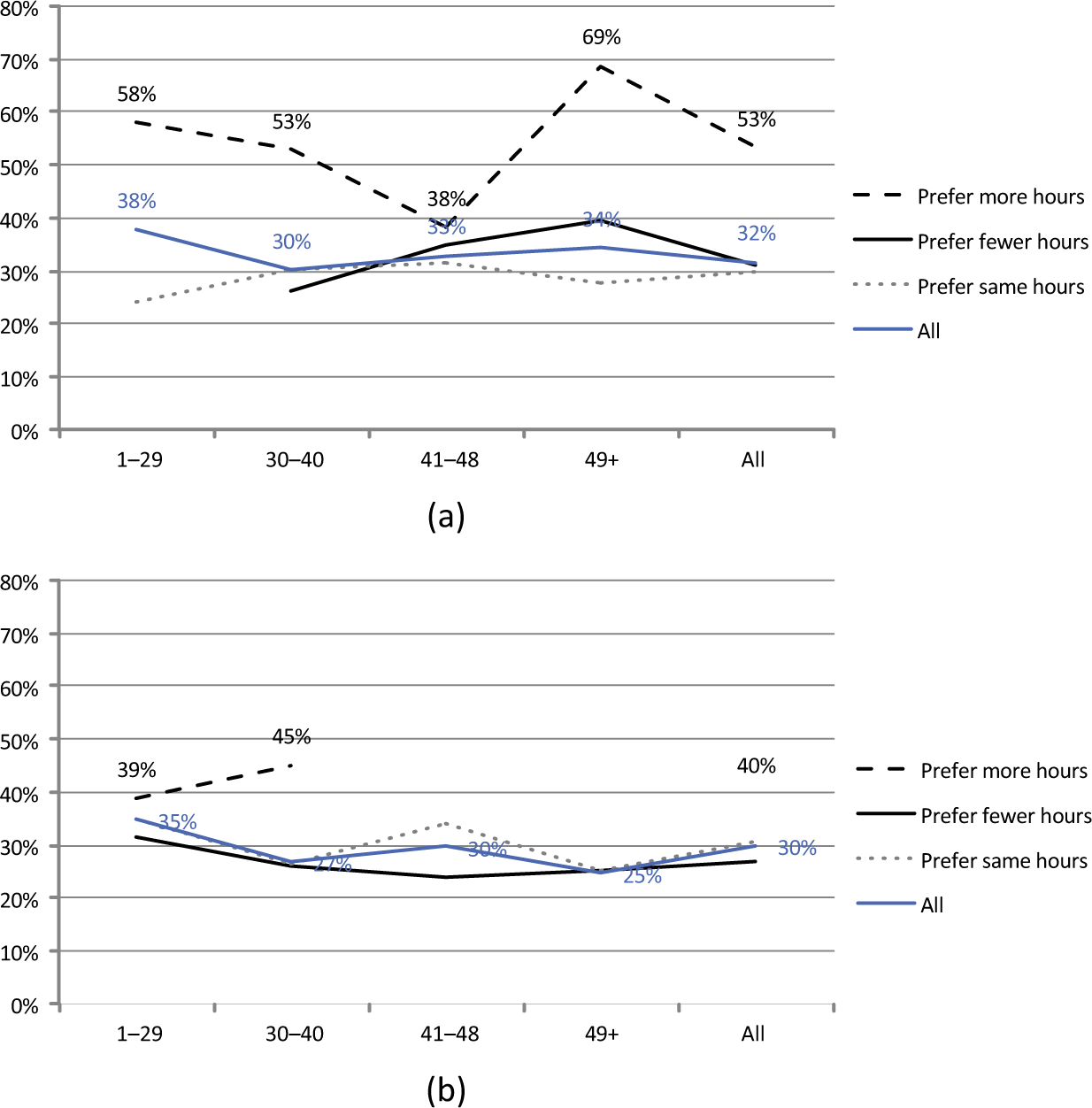
Proportion of employees (aged 18–64) in financial difficulties, by hours preferences and work-time (2008–9): (a) men and (b) women.
Looking specifically at SEG, however, was there an overall weakening or deepening of class inequalities in financial hardship over time? Was there evidence of a middle-class crisis, of the financial squeezing of the middle? Figure 6 presents the proportion of employees who felt that they were in financial difficulties. It is grouped by SEG and sorted according to the level of financial difficulty that was reported after the start of the recession. By 2011–12, there was a separation of the salariat and intermediate non-manual from other employees. In the top ‘above average financial disadvantage’ section of the chart lie the manual and junior non-manual workers, for women and men. The group seeing the most substantial increase in financial problems by 2011–12 were the skilled manual/‘foreman’ workers.
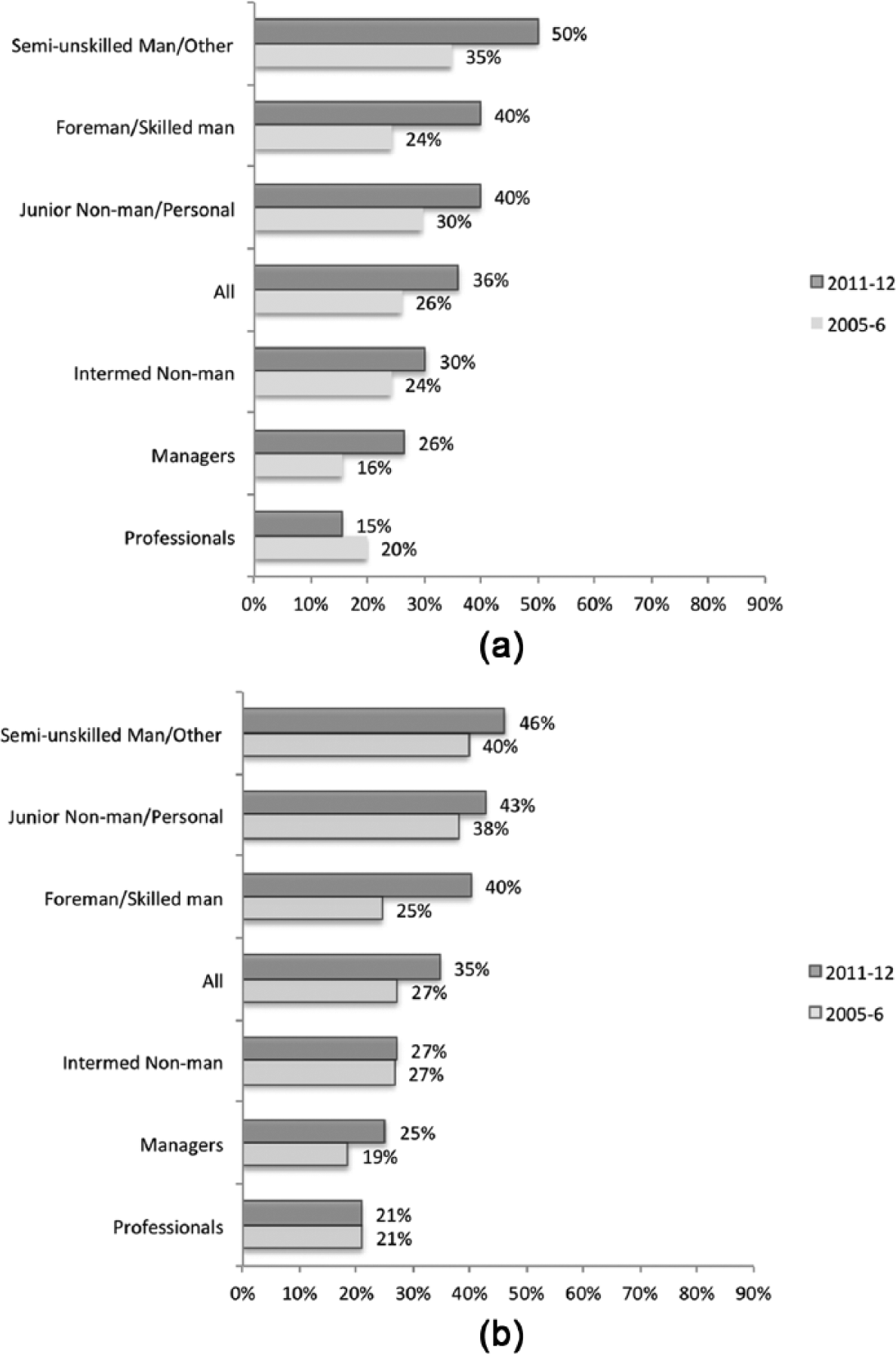
Employees (aged 18–64) reporting ‘financial difficulties/just about getting by’,* sorted according to highest level of difficulties in 2011–12: (a) women and (b) men.
Figure 6 compares financial hardship at two points before and after the recession. Figure 7 instead charts changes over time, from 2005 onwards. It reveals some classed consistency in that manual and junior non-manual workers (the lighter lines) dominated ‘above average financial difficulties’, for women and men. They show too a wider class gap between the top and bottom by 2011–12. What the charts also suggest, however, is an easing off of the rise in financial difficulties, a fall for some groups: perhaps a levelling off in financial hardship but at a rate above the pre-recession level, overall.
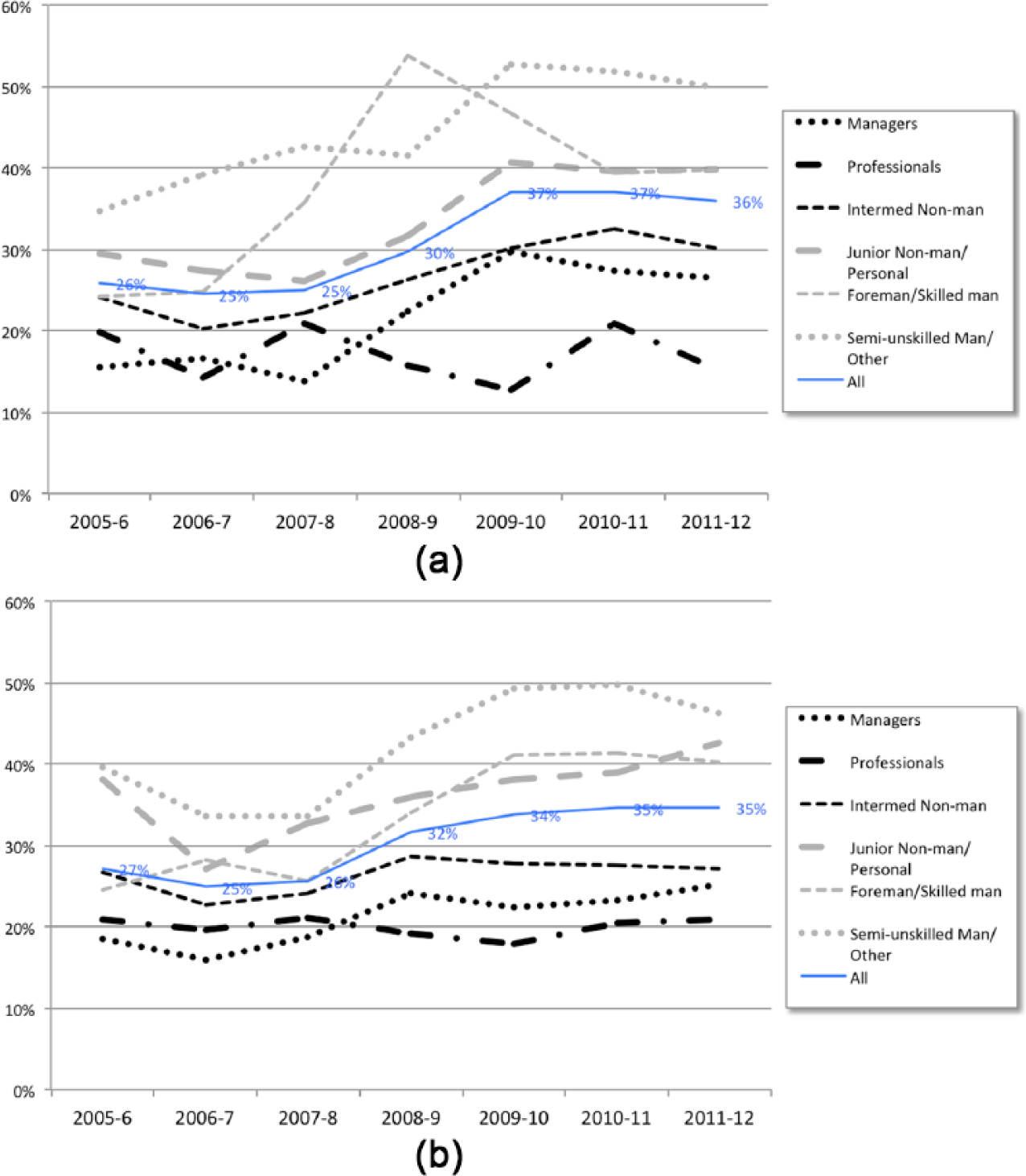
Employees (aged 18–64) reporting ‘financial difficulties/just about getting by’* by socio-economic group (2005–2012): (a) women and (b) men.
2 Affordability of a holiday
The work-time underemployed again reported the most financial problems, before and after the recession began (years 2005–6 and 2008–9; Figure 8). More work-time underemployed women than men reported problems affording holidays. Similarly, there was real recessionary growth in the proportions of employees who felt financially excluded from this. Looking at employees by SEG up to 2010–11 (variable not available in 2011–12) there were increases across all groups in those who could not afford a week’s holiday away from home (Figure 9). But clear class inequalities persisted, and widened, over time. By 2010–11, the figure for ‘Semi and unskilled manual/Other’ employees stood at fully a third.
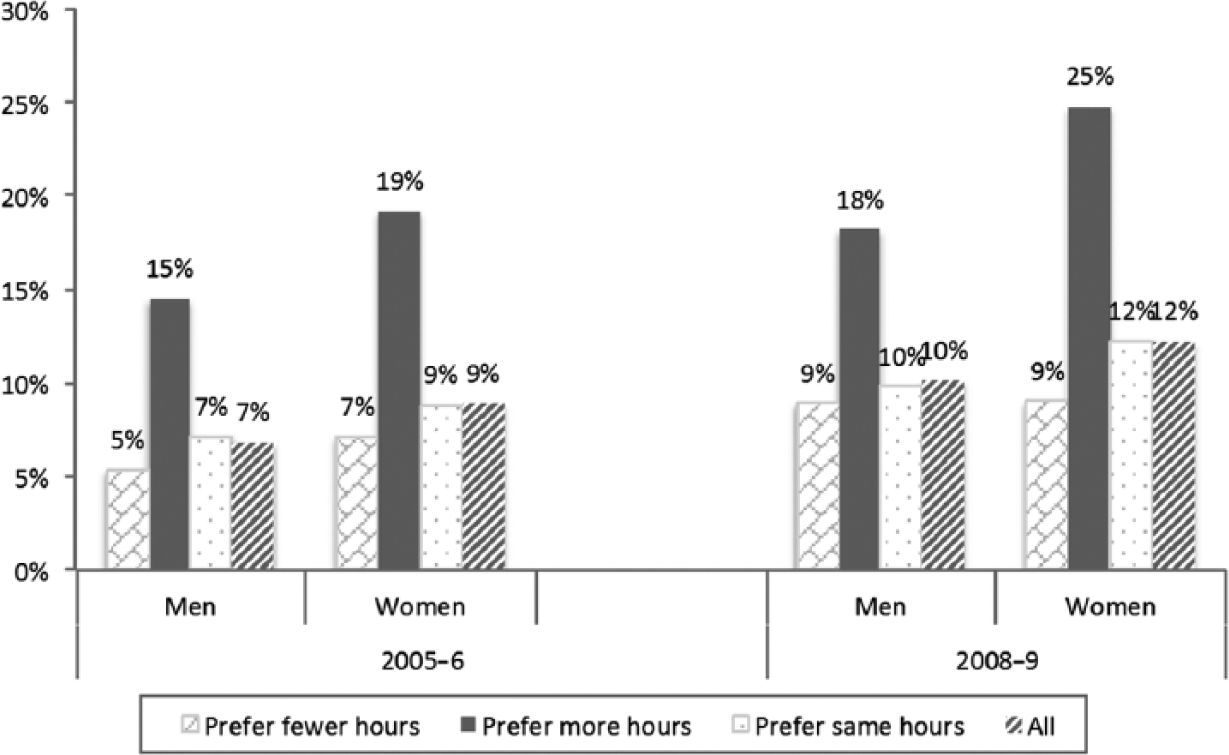
Proportion of employees (aged 18–64) who would like but can’t afford to pay for a holiday away from home by hours preferences.
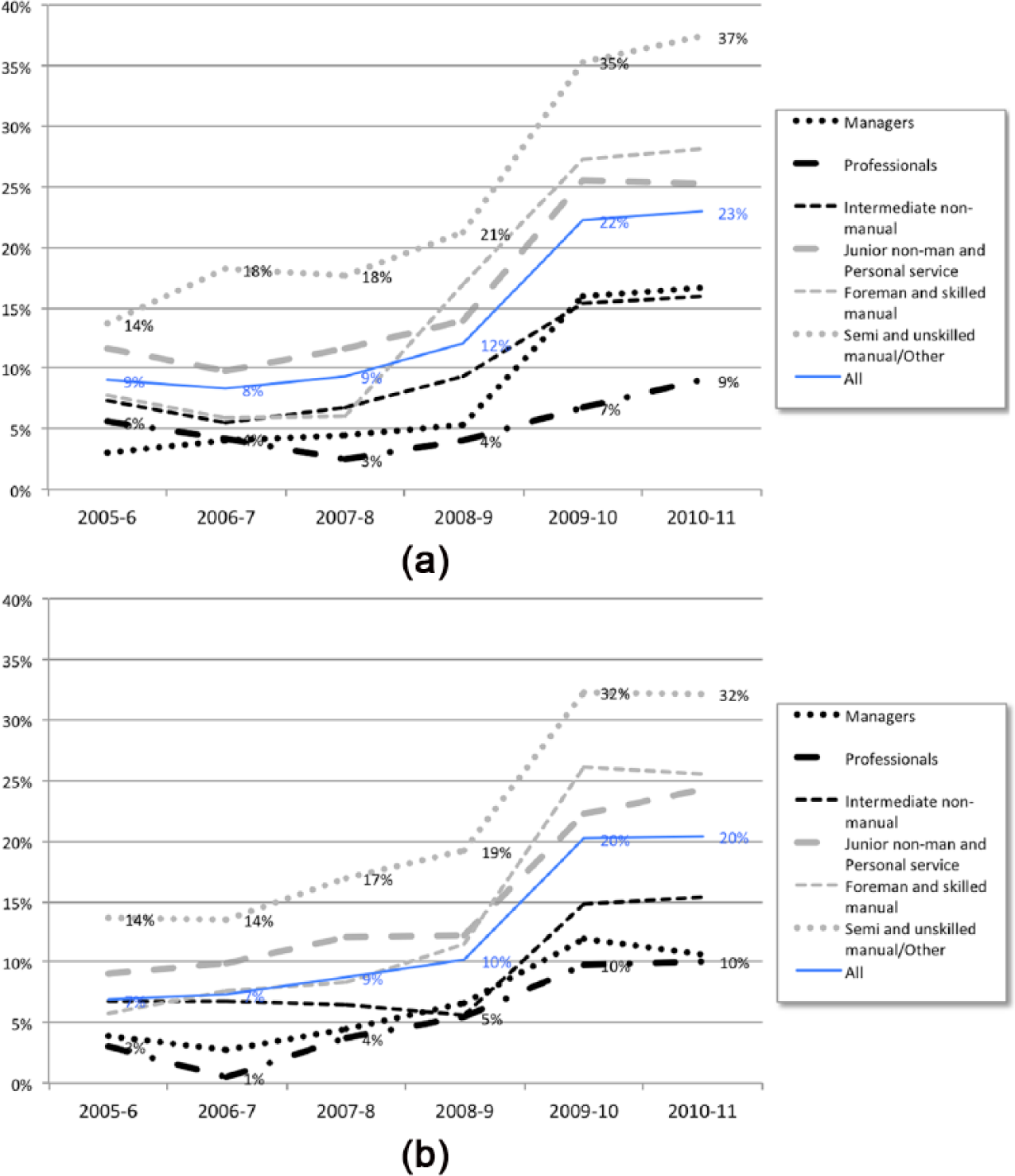
Proportion of employees (aged 18–64) who would like but can’t afford to pay for an annual holiday (2005–2011): (a) women and (b) men.
3 Multivariate analysis
Lastly, the article considers whether the picture portrayed so far of substantial class inequalities in Britain stands up under multivariate analysis. Binary logistic regressions were carried out with the feeling of financial hardship variable as dependent (data on holidays showed similar results). This variable was recoded into a dummy variable with those who reported being in ‘financial difficulties or were just about getting by’ as 1 and ‘Other’ as 0. The following independent variables were added in a series of logistic models: first only SEG (reference: managers); then a dichotomized work-time variable (reference: part-time hours); then a batch of background variables that includes partnership status (reference: not in a couple); responsible for a child aged under 16 (reference: no child); age in years; age squared. Rather than focus here on the fit of the model to try to explain the dependent variable, these regressions are used to see whether the significance of class persists or disappears after these controls are added. 3
The final models using data from 2005–6 and 2011–12 are presented in Table 1. In 2011–12, class indeed remained significant after controlling for the other independent variables. For women, all the groups were different to managers in their experience of financial hardship: professionals were less likely to be in financial difficulties (odds ratio of 0.5, statistically significant at 0.05 level) but all other groups were more likely (statistically significant at 0.001 level). Semi/unskilled manual/Other workers were over twice as likely to be in financial difficulty as female managers (odds ratio of 2.6), after controls. Full-time women fared better than part-timers (though statistical significance was lost after adding in the background independent variables). The results were similar overall for men in 2011–12: class remained statistically significant in the final model. As for women, the semi-skilled and unskilled male manual workers fared far worse financially. Male full-timers were also significantly less likely to be in financial hardship than part-timers (odds ratio of 0:7). The significance of this classed picture was rather stable over time, though with some groups seeing a slightly widening gap in their financial positions (relative to managers) after 2005–6, while gaps had slightly narrowed for others.
Logistic regression models. Working age employees.
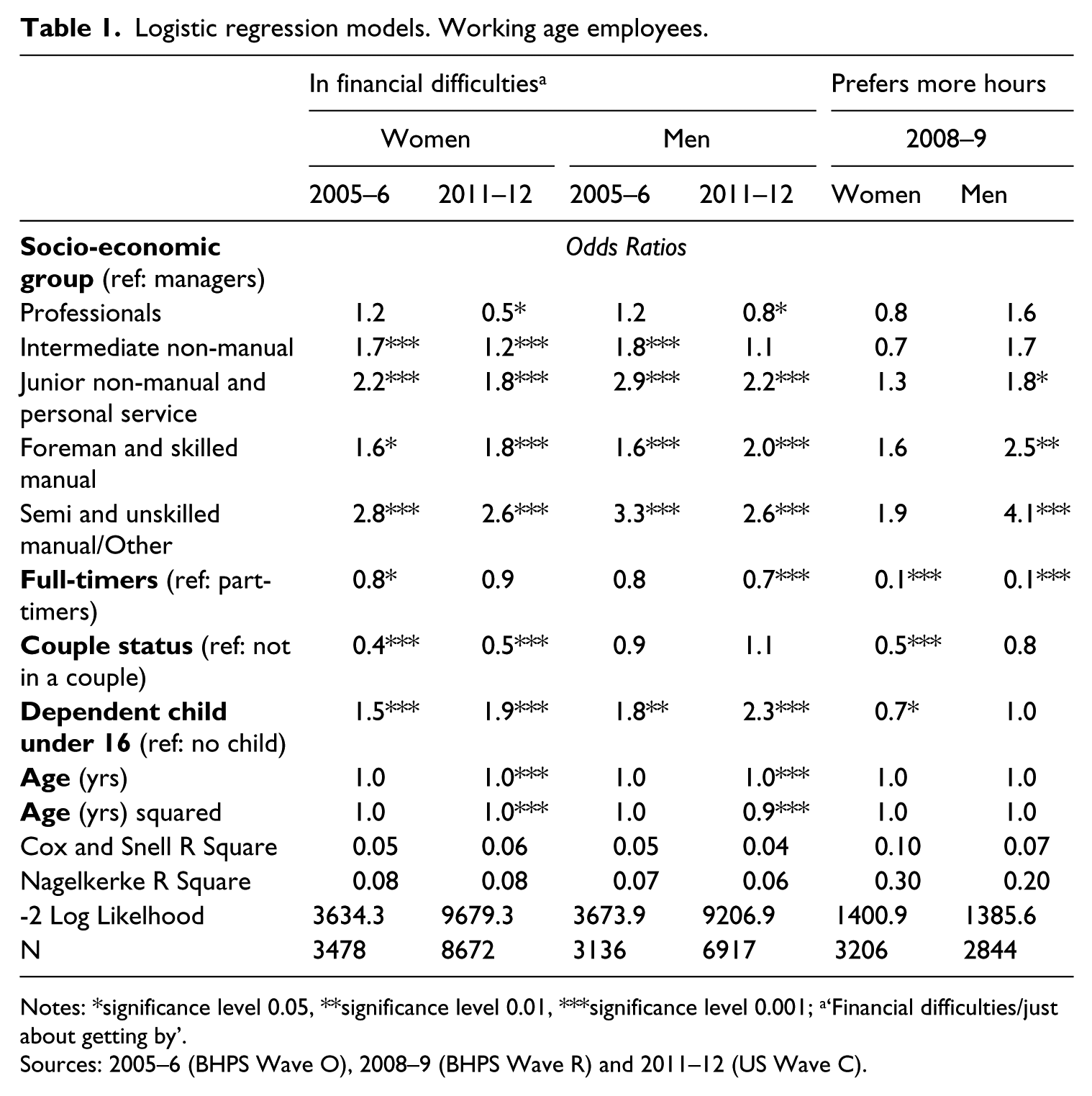
Notes: *significance level 0.05, **significance level 0.01, ***significance level 0.001; a‘Financial difficulties/just about getting by’.
Sources: 2005–6 (BHPS Wave O), 2008–9 (BHPS Wave R) and 2011–12 (US Wave C).
Finally, a similar model was devised for the likelihood of being ‘work-time underemployed’ (only in 2008–9; US does not include this variable): preferring to work more hours rather than reduce/continue the same hours. Female and male full-timers were less likely to be work-time underemployed than part-timers. Class was an important indicator for men but not women, after controls, with men in lower level jobs standing out. Compared with male managers, semi-skilled and unskilled men were four times more likely to be work-time underemployed (odds ratio of 4:1).
Discussion and conclusions
The economic crisis impacted in multiple ways on work and economic life in the UK. This article explores work-time, stimulated by the recessionary growth in ‘work-time underemployment’. Hours spent in the labour market are fundamental to the financial security of most workers, but studies have shown that a fear of the economic consequences of working ‘too few’ hours features strongly in accounts from the working class. This article thus proposed that post-recessionary work-time changes raised concerns about the financial situations of workers in the UK, and for the working class in particular. Work-time underemployment is far more likely to impact on the economic worlds of workers with labour contracts who are paid by unit of time than on the middle class with a salary contract in which levels of autonomy over work-time are higher.
Rather than a crisis for the middle class, the article shows that work-time under-employment was indeed more likely to impact lower manual workers. Furthermore, these workers were at much greater risk of dissatisfaction with their finances. The article shows that many middle-class workers also saw their levels of financial security under attack, but, by 2011–12, the so-called first middle-class recession had not eroded class inequalities in subjective financial hardship in the UK. The gap between the salariat and those on a labour contract, especially between the salariat and those in semi-skilled and unskilled manual positions, was stark in 2011–12, reinforcing the distinctions between their ‘economic worlds’. The post-recessionary overall growth in reported financial hardship appears to have been easing by 2011–12, however. Further waves of data are needed to explore whether stability or a reduction in hardship followed, into 2013 and onwards.
The article focuses upon subjective assessments of financial situations as a valuable indicator of the impact of the economic crisis on peoples’ everyday experiences, and of any growth over time in the prevalence of financially strapped lives. Subjective data are not without their challenges, however. Subjective measures of financial well-being are valuable because they encourage respondents to reflect on their aspirations as well as their current situation, but aspirations, experiences and life chances are classed. Thus we might see respondents whose economic worlds appear scarred by real financial difficulty rating their financial situations comparatively well. If financial hardship is routine and expected in an economic world, as Skeggs (2011) argues has been case for much of the working class in post-war Britain, such respondents may not emerge as the most subjectively financially disadvantaged. This article might be underestimating their financial problems. Furthermore, given the focus on change over time, and only on employees, rather than reporting more financial hardship as the crisis deepens, those who are in jobs may feel subjectively better off even if their economic worlds are objectively worse than they were before the recession hit. A separate article explores variety in objective measures of financial well-being.
The article utilizes SEG as a measure of occupational class. Some limitations to this approach were identified earlier in a discussion of the increasing use of the Weberian-grounded NS-SEC. Yet Savage et al. (2013) have criticized even this dominant schema in the UK (and see Crompton et al., 2000). Drawing upon Bourdieu’s analysis of capital, they developed a ‘bespoke’ class survey to capture the role of social and cultural processes in generating class divisions. The authors conclude that a fragmentation is occurring in the traditional middle- and working-class divisions in Britain that the dominant schemas utilize, and propose instead a seven-class schema polarized by an Elite with very high economic, social and ‘highbrow’ capitals and the Precariat who fare poorly on all forms of capital. That study provides a more sophisticated and multi-dimensional analysis of class inequalities than this article has been able to offer using the BHPS and US, though of course it does not provide the picture of change over time that BHPS/US has allowed here (and see Bradley, 2014 for a critique of their approach).
Finally, in its emphasis on occupational class, the article does not address important questions about other inequalities in work-time and financial insecurity. In terms of gender, for example, there has been a growth in part-time employment for men overall, more underemployment among men, but higher levels of problems affording holidays reported by women. The gender impact of this crisis is fascinating but this impact is lagged and the data analysed pre-date major on-going direct changes to women’s working lives. It was in 2012 that the Fawcett Society argued that women were facing a ‘triple jeopardy’ in the UK: hit hardest by the deepening cuts to public sector jobs, wages and pensions as well as to services and benefits, and left to ‘fill the gaps’ that the withdrawal of services creates (Fawcett Society, 2012: 5; and see McKay et al., 2013; Rubery and Rafferty, 2013). A key research question for further study is just how this triple jeopardy might play out for different groups, from diverse social backgrounds, as the crisis persists. On-going research is essential to examine how the economic crisis and policy responses are impacting work and economic lives, to identify which groups of workers are carrying the heaviest burdens of financial hardship, and to also explore whether the intensification of hardship is easing.
Footnotes
Acknowledgements
Many thanks are due to the anonymous reviewers and the corresponding editor of this journal for their very helpful comments and advice. BHPS and US data were made available through the UK Data Archive and were collected by the Institute for Social and Economic Research (University of Essex) and the National Centre for Social Research.
Declaration of conflicting interests
Neither the original collectors of the data nor the Archive bear any responsibility for the analyses or interpretations presented here.
Funding
This research was funded by award BR100093 from the British Academy.