




Abstract
The paper diachronically examines the white hanbok as the material and symbolic site of interaction between the hegemonising and the hegemonised in Korea. It traces the changing status of the white hanbok from the end of the 19th century to the present—from being part of unconscious material culture, to the synecdoche of the colonised nation, to the symbol of resistance, to the membrane of a ‘homogeneous nation’, to the symbol of democracy. It analyses the white hanbok as a paradoxical skin—at once inclusive and exclusive—of Korean ethnonationalism, as well as a permeable membrane between the self and other of national identity. By exploring the white hanbok in relation to the ongoing movement towards a decolonised democratic nation, the paper reveals the entwined relations between material objects, practices, and nationalism in Korea.
The Sorrowful People (슬픈 족속, 1938)
1
Yoon Dong-ju (2016) White towel folds around her ebony hair,
(흰 수건이 검은 머리를 두르고)
White rubber shoes cover her leathery feet.
(흰 고무신이 거친 발에 걸리다)
White jeogori-chima 2 shrouds her sorrowful body,
(흰 저고리 치마가 슬픈 몸집을 가리고)
White strap fastens her slight waist.
(흰 띠가 가는 허리를 질끈 동이다)
The Korean poet Yoon Dong-ju (1917–1945) was 20 years old when he wrote the poem ‘The Sorrowful People’ in 1938. He was imprisoned in 1943 for participating in anti-Japanese movements and remained there until his death in February 1945, only 6 months before the liberation of Korea. Given that Yoon’s entire life was marked by the absence of a sovereign nation (1910–1945), his choice of the word joksok—translated here in the title as ‘people’—stands out. The word implies a blood relation; the woman in the poem may therefore be his mother or sister, but she could equally be any Korean woman within the particular context of this paper. Yoon’s choice of word transmits this time of loss and existential crisis when imagined 3 blood relationships replaced a national identity, giving people a sense of collective belonging.
The humble white clothing featured in the poem presents the idea of ‘white-clad people’, a self-referential phrase first used by Koreans in the early 1920s. This paper explores the white hanbok as a paradoxical skin—at once material and symbolic, at once expansive and exclusive—of the imagined blood relations. As the permeable membrane between the ‘outside’ and ‘inside’ of the body, skin has a powerful symbolic function of generating metaphors for boundaries between the self and others. (Lee, 2016: 13) This symbolic function of skin is perhaps most powerfully present in clothing. Cultural customs such as wrapping, adorning, and veiling all carry this need to create social membranes and, for this reason, the way people clothe themselves constitutes the most immediately perceptible form of a society’s uniqueness. (Fanon, 1965: 35) The white hanbok used to belong to a part of Korean material culture so intrinsic that its significance could not be conveyed through concrete material items. At the same time, precisely through its material use and maintenance, the white hanbok saturated everyday lives. Such material and non-material aspects were at the centre of colonial assimilation projects that aimed to eradicate Korean-ness. The poem portrays how the non-human surface was enmeshed in colonial power relations: through the enigmatic figure in white, people and things merge into a single body of the colonised.
The young poet appears to project affection, resentment, and a shade of shame, onto the figure in white. Such ambivalence is a familiar Korean response to the white hanbok: it generates feelings of attachment to and detachment from the nation. This complex emotional economy may be glimpsed through the emotionality of jeong and han, the two contrasting yet closely related feelings that shaped Korean sentiment from the beginning of Japanese rule. Jeong can be explained as a substance of human bonding that develops over time as people live through varied experiences together. It synthesises a wide range of emotions into a warm and enduring connection. On the extreme negative side of the spectrum is han, a repressed and unresolved sense of loss, unfairness, and resentment. Eloquently melding jeong and han is the line in Yoon’s (2016) most celebrated work, ‘Proem’ (서시, 1941): ‘I shall love all that is dying away’ (모든 죽어가는 것을 사랑해야지). The figure in the white hanbok condenses in itself ‘all that is dying away’: dispossessed people, plundered land, and suppressed language, culture, and religion. As will be examined in this text, Japanese colonial rhetoric claimed han as being intrinsic to Korean nature and history as a means to legitimising the suffering inflicted by its imperial violence. It can be said that Imperial Japan’s stigmatising of the white hanbok gave the collective wounds, or han, a socially recognisable form, which then functioned for some as the drive to resist assimilation; for others, however, it functioned as a source of inferiority and self-pity.
This paper diachronically examines the white hanbok as the material and symbolic interface between the hegemonising and the hegemonised from the end of the 19th century to present-day Korea. Since the liberation and the war, and despite its disappearance from the everyday landscape, the white hanbok has continued to reside in the public imagination. The diverse perception of the white hanbok—immaculately starched, bloodstained, smeared with ink or with colonial rhetoric—may frame the ways in which the ambivalent national ‘self’ continuously revises itself in relation to ‘other’.
The paper begins by reflecting on the white hanbok as part of unconscious material culture, taken for granted until the inflow of foreign customs towards the end of the 19th century. It goes on to discuss how existential threats triggered the custom to be consciously recognised as the collective practice of ‘we’. The prohibition of the white hanbok by Imperial Japan was an essential part of the assimilation policy that aimed to turn Koreans into useful second-class imperial subjects. I suggest that this assimilation policy gave birth to ‘double consciousness’ (Du Bois, 1897) as well as to modern Korean nationalism: with the white hanbok serving as the veil that engenders double consciousness, and as the binding membrane of nationalism. The paper then traces the changing status of the white hanbok through the South-North division, the Korean War, and internal conflicts that occurred under authoritarian governments in South Korea. In the struggle to survive post-war poverty, the physical link between the white hanbok and the Korean people broke for good. The material death, however, reinforced its symbolic status as the phantasmic membrane of a ‘homogeneous nation’. During the democratic movements of the 1980s, the white hanbok functioned as an ambiguous symbol representing communist agitators, idle student unionists, or the people’s will as sovereign. The paper concludes by speculating about the role of the white hanbok within a potentially ‘open’ nationalism, pointing out the inseparable relations between practices, material objects, and national identity.
Like oxygen in the air: the unconscious surface
Although the white hanbok had long been favoured by Koreans, it was with the interference of Imperial Japan that the garment became a contentious issue (Seo, 2014: 163). The term ‘hanbok’ itself only emerged in the late 19th century in relation to Japanese and Western dress, which were subsequently called hwabok and yangbok respectively (Kim, 2021). 4 The naming of something so habitual as the everyday dress suggests a more conscious awareness of others and their differential customs. Over a hundred years later, in 2020 and 2022, the hanbok’s identity became the subject of heated public disputes when it was claimed to be part of Chinese cultural assets (Yim, 2020; Lee, 2022). 5 The sense of absurdity expressed by the South Korean public and media in response to these claims testifies to the extent to which the hanbok, and what constitutes ‘Korean’, had been taken for granted prior to such controversies.
Until the end of the 19th century, the Korean landscape was steeped in the white hanbok. Historical records
6
show that the colour white and especially white clothing had been favoured since the Kingdom of Buyeo (4th century BCE494CE) (Seo, 2014: 158–160; Kim and Kim, 2006: 3, Park, 2014: 46–47). Figures 1 and 2 Although official uniforms and clothing for children and special occasions were colourful, in everyday life, people across social classes were clad in white. The custom continued despite over 25 prohibitive regulations issued during Goryeo (the Korean kingdom of 918–1392) and Joseon (the Korean kingdom of 1392–1910) (Park, 1995; Park, 2014: 47–49).
7
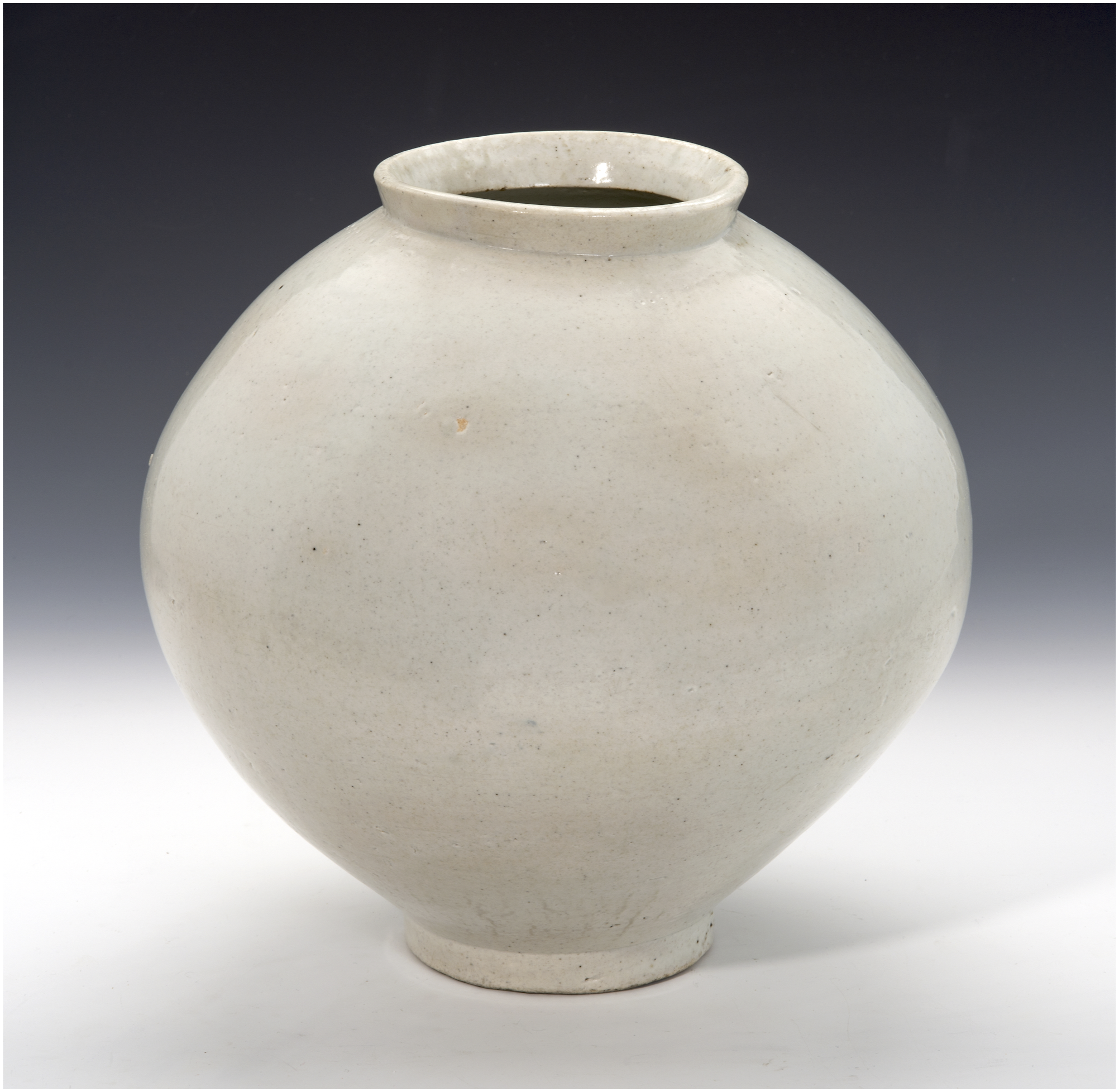
The colour white was associated with sunlight in the agrarian culture of ancient states that worshipped heaven as providence. White-coloured clothes and food were thus essential parts of collective shamanic rituals held at times of drought, flooding, planting, and harvesting (Kim and Kim, 2006: 6, 12, 16; Kim, 2009). Imported religions such as Buddhism, Taoism, and Confucianism quickly adapted to the existing belief system, incorporating the use of white in related customs and cultural forms (Kim and Kim, 2006: 5–6; Seo, 2009, 2014). Figure 3. Ssireum (Korean wrestling) by Kim Hong-do. The 18th-century. Ink on paper. 26.9 × 22.2 cm. National Museum of Korea. Ppal-lae-teo (a wash place) by Kim Hong-do. The 18th-century. Ink on paper. 28.0 × 23.9 cm. National Museum of Korea. White porcelain Moon Jar. Late 17th–mid 18th century. Namgaram Museum and National Museum of Korea. The surface and form of the white porcelain Moon Jar resonated with the Confucian ideals of frugality and integrity. 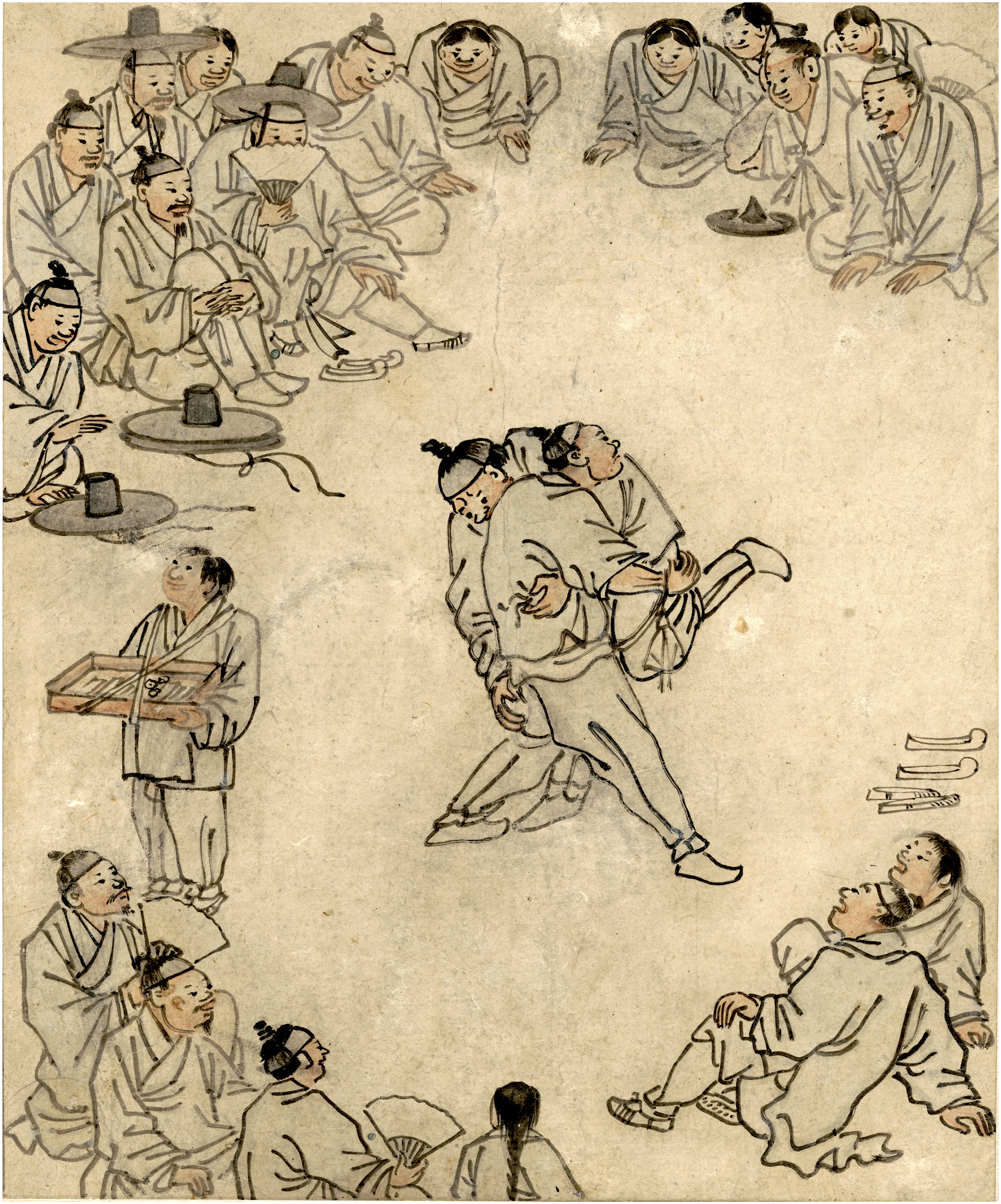
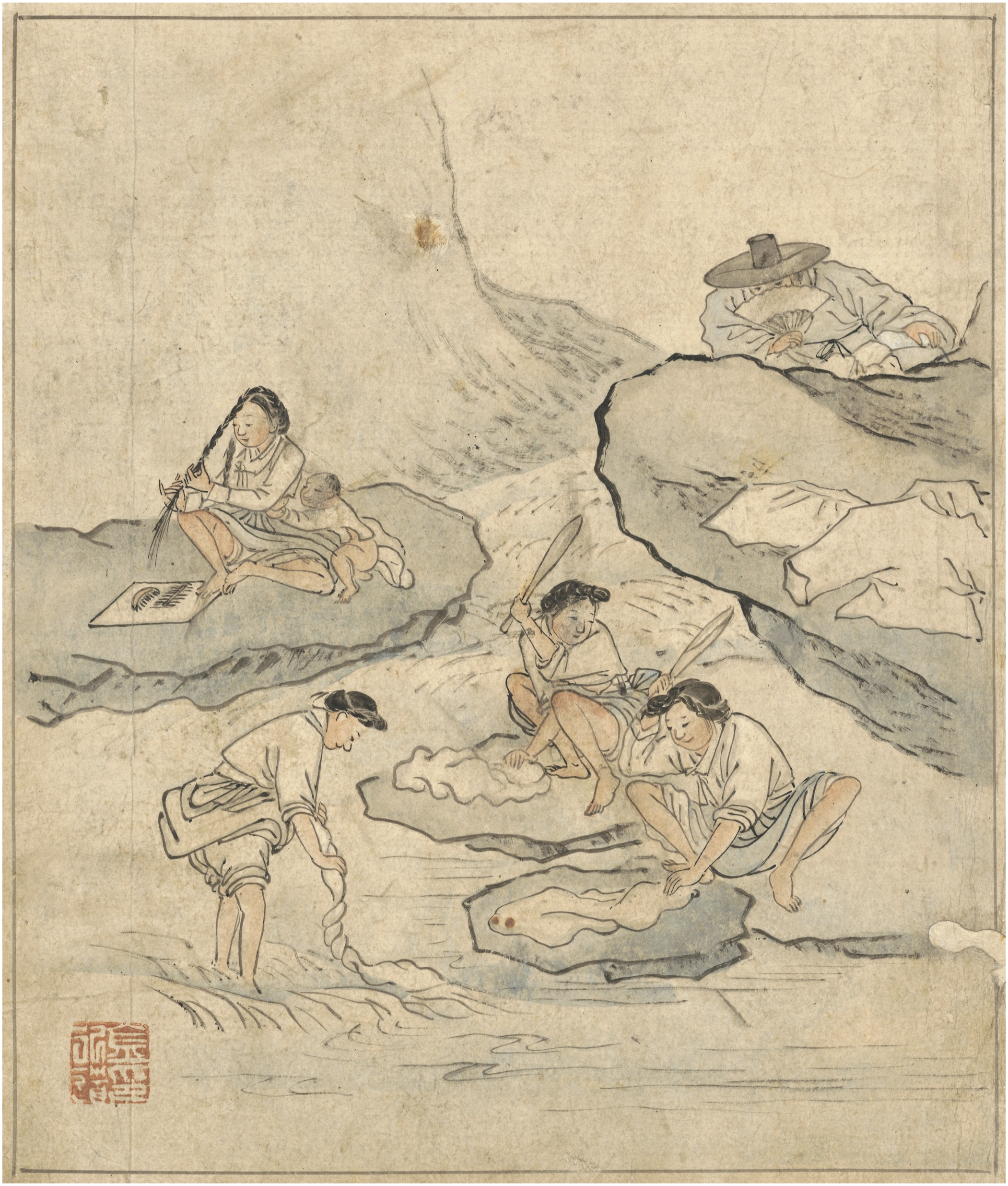
Maintenance of the white hanbok was thus an important everyday practice. The effort put into keeping the white hanbok whiter generated an elaborate process of care. The rhythmic tapping sound of fulling paddles
8
was part of the soundscape, and scenes of white-clad women washing clothes along riverbanks are familiar material in literary and visual culture depicting ordinary lives up to the 1950s.
9
Figure 4 Permeating the everyday, the white hanbok was a skin-like surface, or an air-like environment, through which people shaped their social, religious, and aesthetic values Figure 5 A laundry spot by the Daedong River. Photocard. 14.2 cm × 9 cm. Busan Museum. A market day in a countryside town (1906–1907). Photography. 13.8 cm × 9.3 cm. National Folk Museum of Korea. 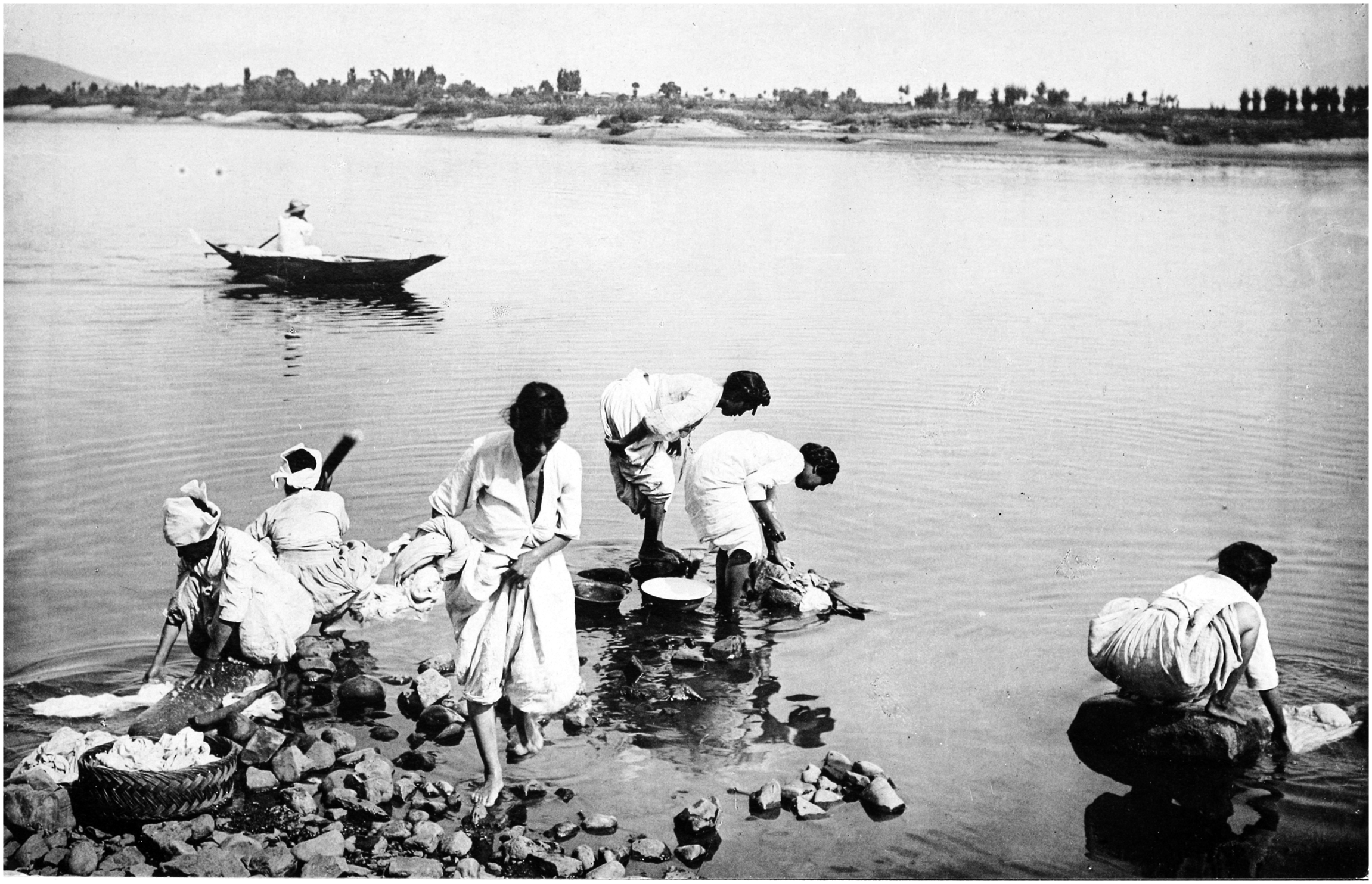
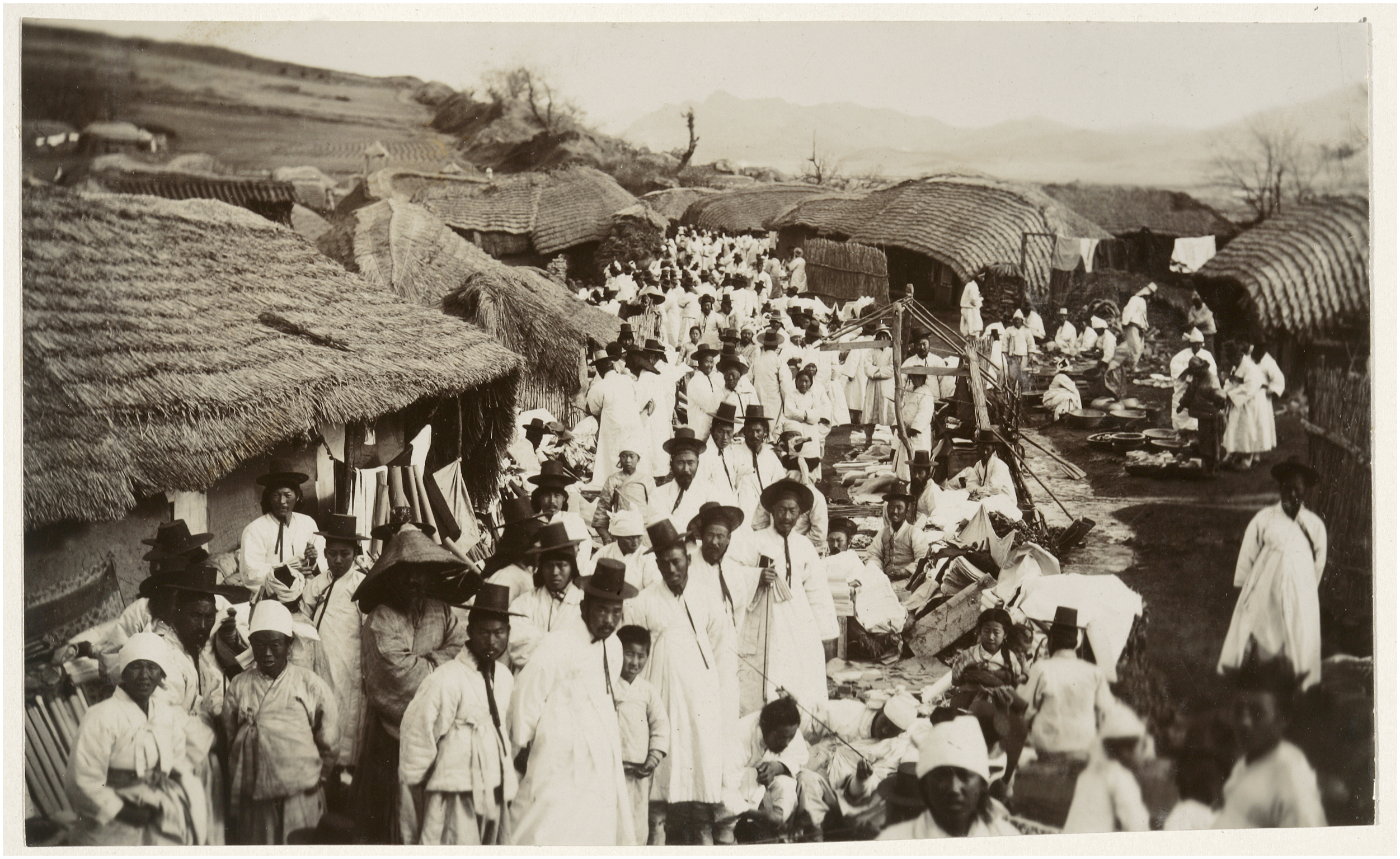
As everyday clothes become socialised by human practices of creating, maintaining, changing ownership, or discarding them, the process generates meanings and values that bind self and society. This socialising process explains how different meanings may be attached to the same clothes as they shift across specific coordinates of space and time. (Metzger, 2014: 14) At a material level, clothes and people wear each other through lived experiences, and the visible or invisible wear on the surface, the smell, sound, or feel of clothes on the skin, can act as mnemonic devices. Such embodied and sensorial memory of clothes, however, are ephemeral and fragile, especially when it comes to everyday clothes. Even when they are preserved in archives, they become ‘extra-ordinary’, taken out of their everyday context. This slipperiness of everyday clothes is precisely due to their function as the second skin. Clothes hold a unique position in the realm of everyday objects thanks to their material and sensorial properties and their proximity to the body. As the skin preserves the history of external disruptions and psychosomatic interactions in its form, texture, and colour, revealing much about the body and mind, clothes also record external influences in the form of wear and tear, while being shaped, stained and styled by the wearer’s body and psyche. Clothes are thus both a physical and psychological extension of the wearer and their skin. The parallels between the body, skin and clothes become even more cogent when the wearer enters a social realm. If biological skin is taken for granted until it is violated or fails, the social skin comes into self’s notice only with the appearance of ‘other’. The human skin is almost always socialised—racialised, gendered, or otherwise classified—and this implicates power. Such aspects of the skin can easily be analogised to clothing. If skin is the container for the socialised body, this paradoxical nature of the skin as both an inclusive and exclusive barrier is also powerfully present in clothing. Clothing is thus a matrix of social interactions and power relations, and this is precisely the reason why Imperial Japan, throughout its 35-year occupation, attempted to eliminate the white hanbok from the Korean landscape. This impingement also brought the unconscious surface into the individual and collective consciousness.
The veil: A paradoxical skin
The geopolitical reality of the Korean Peninsula has always been complicated: the saying ‘a shrimp among whales’ sums up the position of Korea, and it was especially so from the mid-19th to the early 20th century. In addition to China and Japan—with which Korea has a long history of conflicts and negotiations—Russia, the United States, and the European colonialists also took an interest in the peninsula. Following a series of critical events—the First Sino-Japanese War (1894–1895), the Russo-Japanese War (1904–1905), and the Taft-Katsura Agreement (1905)—Korea endured 5 years as a forced Japanese protectorate before being annexed in 1910. The loss of nationhood and the ensuing existential threats aroused in Koreans an acute sense of ‘we’ as a collective subject sharing distinctive ways of life. This section examines the white hanbok as a site of conflict between coloniser and the colonised, as the surface ‘between a colonial regard and an anticolonial stance’ (Metzger, 2014: 12), revealing why the white hanbok came to hold a particular significance within ambivalent Korean self-images. It also problematises the idea of ‘non-Western modernity’, by exploring how Imperial Japan’s assimilation policy amalgamated Westernisation, modernisation, and colonisation.
Westernisation of Korean clothing culture
Western clothing was introduced in Korea after the opening of ports to Japan in 1876 (The Treaty of Ganghwa Island). Meiji Japan, having implemented sartorial reform that mimicked Euro-American customs, pressured Korea to accept similar changes via several dress reform acts. The most radical of these, the Eulmi dress reform (1895), included an ordinance prohibiting topknots, further simplification – narrower hanbok in black – of official uniforms after the Gapsin dress reform (1884), and permission to wear Western clothing. (Kong, 2005: 43, Lee, 2015a: 108–109). The fact that this reform was imposed shortly after the Japanese government’s brutal murder of the Korean queen significantly influenced public perception and resistance. 10
Across the social classes, the most unsettling aspect of the reform was the ordinance about cutting men’s topknots. Koreans customarily kept their hair long, as prevailing ethics regarded the hair as having been gifted by people’s parents (Kong, 2005: 65). Cutting the topknot was, therefore, deeply unfilial behaviour; a grave punishment imposed on convicts. People thus perceived the ordinance as a ‘barbarian’ and ‘inhuman’ persecution, a sentiment effectively reflected by the Confucianist scholar Choi Ick-hyun’s declaration that he would rather be beheaded than have his topknot cut (ibid: 44). Further, as the neo-Confucian political ideology and educational principles regarded individual ethics and filial piety as the bases of social and monarchical order, many equated the loss of hair with the loss of the established social order (Kim, 1995). The widespread public refusal to cut topknots was met by enforcement of the ordinance on the streets and house searches being carried out by the authorities. This led to an explosion of anti-Japan sentiment, resulting in uprising of the nationwide militia (the Righteous Army of Eulmi) in October 1895 (Yoon, 1995). The uprising ended in August 1896, when a new administration suspended many acts of the dress reform, including those regarding topknots.
The reforms were part of a forced modernisation process that continued through the Korean Empire (1897–1910) (Lee, 2018: 47). At the turn of the century, because the reform was led by the pro-Japan government and organisations, Western clothing was interpreted as corresponding with Japanese interference in Korean sovereignty (Lynn, 2004: 78–79), and with the idea of Japan and the West as unity (왜양일체). In the same way that the Japanese General Government Building in Seoul—the symbol of colonial power—was a Western-style structure, the Western clothing that Japan introduced to Korea mirrored the identity of Meiji Japan that had been constructed between the Occident and the Orient. Western clothing and architecture projected the power relations between Japan and the West onto the relationship between Japan and Korea by introducing a Japanese version of Western modernity (Kim, 2013: 148). Therefore, Westernisation of Korean clothing culture was a process of refraction, and the prohibition of the white hanbok as part of the assimilation policy effectively reveals this refracted modernity, inseparably merging Westernisation with colonisation.
Prohibition of the white hanbok
The prohibition of the white hanbok was initially limited to official uniforms, but from the beginning of the 1920s, the authorities began to suppress it across class, gender, and on non-official occasions. (Kong, 2005: 48–51; Cho, 2010: 686–688; Park, 2014: 56; Lee, 2015a: 236) Figure 6 The tense political climate at the end of the 1910s may provide the context behind this change. After a decade under the brutal military rule of Japan, a series of independence movements broke out in 1919. In February, Korean resistance leaders in Manchuria and Korean students in Tokyo respectively issued independence declarations. These were followed by the explosion of the March 1st Movement throughout the peninsula (see The New York Times, 1919a, The New York Times, 1919b, The New York Times, 1919c). As a result, the Japanese government replaced the military rule with the so-called cultural policy. Although it appeared to be relatively lenient, the underlying aim of the new policy lay in depreciating and eliminating Korean culture, and the suppression of the white hanbok was an important step towards fulfilling this aim. Many remaining photos of the March 1st Movement are filled with white-clad crowds clearly linking the white hanbok with collective resistance. As anthropologist Dorinne Kondo ([1997] 2014: 16) suggests, ‘at times the surfaces of the body are the most readily available sites for inscribing resistance’ and the white hanbok, as the interface between Korean bodies and their wretched world, was being transformed into the site of anti-colonial struggle. A banner for promoting non-white clothing during the Japanese rule. The National Women’s History Exhibition Hall. 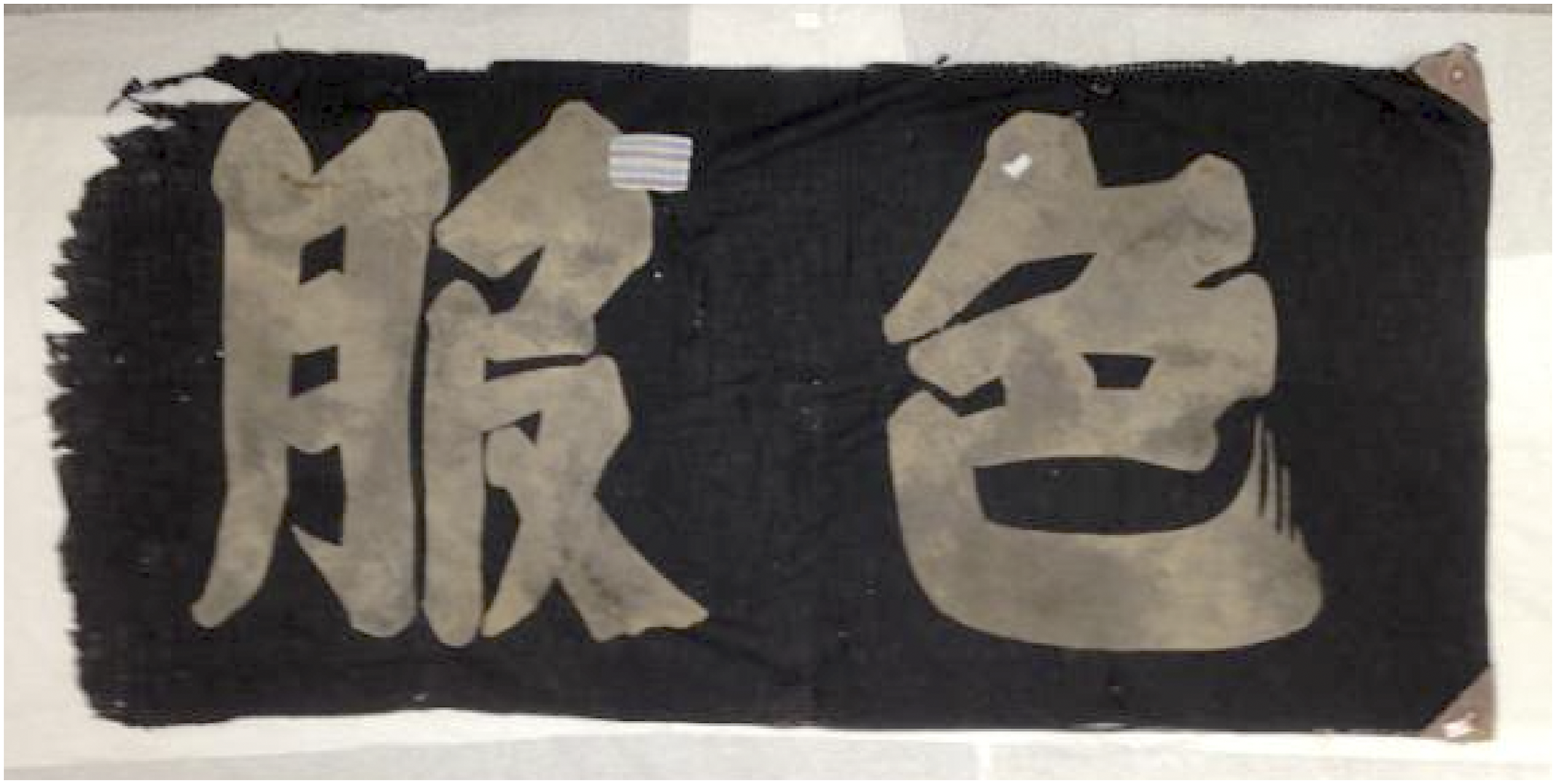
The ostensible rationale behind the prohibition of the white hanbok was based on modern values: to improve standards of hygiene and to liberate women from the labour of maintaining the white hanbok (Kong, 2005: 48–51; Park, 2014: 56; Cho, 2010: 687). The actual purpose, however, was to control the labour force and divert it to the effective running of the colonial economy (Cho, 2010: 682, 693). 11 By the 1930s, the prohibition became a concrete policy of the imperial administration through strict enforcement and systematic coercion. Police and local government officials would stop people on the streets and carry out house searches, spraying ink or stamping slogans on the white hanbok. Those who wore a white hanbok were ineligible for food rations, education and other basic social needs, and were denied access to public spaces and buildings. (Kong, 2005: 51, 54; Cho, 2010: 709; Park, 2014: 64).
Another, even more critical, purpose of the prohibition was to overturn established Korean ways of life (Henry 2014: 5, 52). The assimilation policy aimed to obliterate the Korean language, culture, and history, turning the people into second-class subjects who could be exploited for imperial expansion. Koreans were forced to adopt a Japanese name (1940–1941) and speaking or writing Korean was prohibited in all educational and official settings, in which everyone had to routinely recite ‘the oath of imperial subjects’. The traditional religion, musok (Korean shamanism), was condemned and banned as mere superstition, and visits to Shinto shrines became compulsory instead (ibid: 4). The branding and smearing of the white hanbok was thus part of the mechanism of colonial control aimed at erasing Korean-ness from the most fundamental layer of life.
The assimilation policy stained the white hanbok both materially and metaphorically: it negated Korean history as well as denigrating the people and material culture as inferior to those of Japan, closely following the methods of Western colonisers posing as ‘civilisers’ who ‘enlighten’ the colonised. Claiming that Koreans and Japanese people had a common origin but that the former were intrinsically subordinate to the latter, the assimilation project was promoted as a process of ‘development’. From the end of the 19th century, Japanese historians, anthropologists, commentators, and travel writers propagated views that contrasted ‘stagnant’ Korea with ‘progressive’ Japan and ‘lazy’ Koreans with ‘dynamic’ Japanese people (Cho, 2010: 693; Lee, 2015b: 303; Maldonado, 2020: 189). Their views linked similar negative stereotypes to aspects of Korean material culture. For example, they suggested that the ondol—the underfloor heating system essential in harsh Korean winters—made Koreans lazy. The long white robes of Korean men supposedly proved their decadent, lazy, and arrogant attitude (Maldonado, 2020: 189–190). Popular Japanese narratives regarded the Korean taste for white clothes as a ‘backward’ habit, originating in a collective lack of colour sense, perpetual poverty, and prolonged national mourning. 12 For instance, when attempts to suppress the white hanbok did not yield a noticeable result during the 1920s, the Japanese authorities blamed this failure on a lack of dye material and related skills (Cho, 2010: 697). Koreans, by contrast, enthusiastically embraced newly introduced chemical bleaching methods for keeping their hanboks whiter (Lee, 2015a: 302). Closely following the methods and practices of Western history and anthropology, Japanese scholarly and journalistic texts served to reinforce colonial power, to bring about the systematic destruction of Korean cultures. The aim of their assimilation policy was to mark Koreans with inescapable difference.
Refracted modernity and orientalism
Although racial prejudice is a typical feature of unbalanced power relations, the stereotyping of Korea under the Japanese assimilation policy was distinct in that it reflected the West’s influence on Japanese selfhood during its modernisation process. Reflected in the stereotyping, in other words, was a Japanese self-image constructed between the West and the East in the mould of Western Orientalism (Kikuchi, 2004: 91). After opening its ports to the United States in 1853, Japan radically Westernised itself. The Westernisation of Japanese clothing—a voluntary, systematic, and top-down process—exemplifies this transition. Its rapid process was greatly motivated by the fact that Meiji Japan considered Euro-American cultures to be superior, and by a strong desire to demonstrate its new alignment with Western, rather than Chinese, power (Slade, 2009: 54–55). By aligning with the West, Japan also absorbed images of the Orient constructed by Western Orientalists such as Lafcadio Hearn and Bernard Leach, who stereotyped images of the Orient as either ‘primitive’ and ‘child-like’, or ‘mystical’ and ‘spiritual’ (Kikuchi, 2004: 14). Japanese intellectuals responded to such portrayals by intensifying an image of the ‘mystical Orient’: they highlighted Eastern religion, philosophy, and aesthetics, classifying related cultural outputs according to the Western mould. The result was that Japan’s modern identity became constructed in the mould of ‘Japan as other’, as cast by Western Orientalism. In time, the admiration of Western culture was met with growing cultural nationalism in Japan (ibid.: 77–79). However, Japanese intellectuals still sought to refute Western authority by adapting Western systems of knowledge about the non-West (Brandt, 2000: 714).
Simultaneously Westernised and Orientalised, Imperial Japan projected Orientalist images onto other Asian nations while dissociating itself from them (Yoon, 2010: 133; Kikuchi, 2004: 123; see also Tanaka, 1993). Exoticising the East was part of the Western imperialist agenda, and Imperial Japan even furthered this agenda. The Japanese variant of Orientalism was a product of the ambivalence—between the inferiority that Japanese people felt in relation to Western powers and cultural nationalism (Brandt, 2000: 731; Kikuchi, 2004: 139)—and the transplantation of this ambivalence into colonial narratives with similar racial undertones. These contradictions of Japanese identity persist, as Kondo ([1997] 2014: 57) writes: ‘Western Orientalizing, counter-Orientalisms, self-Orientalizing, Orientalisms directed at other Asian countries […] the interweavings of such constitutive contradictions produce “Japan”.'
The politics of Western and Japanese views of the Orient is exemplified by views on the Korean aesthetic popularised by Yanagi Sōetsu, the Japanese founder of the mingei theory. The mingei theory itself was based on the logic of cultural improvement: the enlightened Japanese ‘seeing eye’ (chokkan) discovers ‘wild’ forms of Korea, ‘elevating’ them to the realm of taste, connoisseurs, and philosophy. It was not just about being inspired by Korean ceramics, but rather ‘civilising’ an ‘unrefined’ form as raw materials free for the taking. Along the same vein, Yanagi set out his view on the Korean aesthetic—the so-called beauty of sadness—in his 1922 work entitled ‘Korean Art’, alleging that the white glazes emblematic of Joseon ceramics signified the ‘sad and lonely’ demeanour of Korean people, who lived in perpetual mourning and experienced repeated foreign invasion (Bailey, 2013). Yanagi claimed the wounds Imperial Japan inflicted on Korea as being intrinsic, deserved, and the nation’s inevitable fate, promoting, as a result, the legitimacy of Japanese rule in Korea (Brandt, 2000: 723–724, 2007: 3). Yanagi then applies the same idea to the white hanbok: ‘[t]he people, by wearing white clothing, are mourning for eternity. … Is not the paucity of color true proof of the absence of pleasure in life?’ (Yanagi cited in Brandt, 2000: 735; see also Kikuchi, 2004: 133). Such views clearly show that clothes can function in similar way to how the skin becomes a condensation of racial discourses. (Metzger, 2014: 12) In Yanagi’s logic, this characterisation of Korean art and material culture meant the tragic impossibility of an independent Korea.
Yanagi’s aesthetics of colonialism are strongly influenced by Western Orientalist views on Japanese culture—denigrating the people and culture while appearing sympathetic—and this disavowed Korean agency (Ko, [1931] 1966; Naoki cited in Kikuchi, 2004: 138). The rhetoric significantly influenced Japanese views of Korean culture during the colonial period and beyond, contributing to a broader discourse that naturalised Japanese colonialism (Brandt, 2000: 736).
Double consciousness
Colonial narratives regarding the white hanbok therefore exemplify how Korean people and culture were falsified through the prism of both Western and Japanese Orientalisms (Yoon, 2010: 127). More broadly, they show how colonisers hegemonise and structure knowledge production, delineating what can be known and what remains hidden, whose views matter, and whose narratives count as history. Japan’s Orientalist views on Korea dominated textbooks, museums, public discourse, popular media, art, and academia, and produced hegemonic representations, significantly influencing the way Koreans perceived themselves and their own culture. In other words, once instilled in Korean minds, these falsifying views gradually created a veil that filtered Koreans’ views about themselves. 13 Sociologist and psychoanalyst W.E.B. Du Bois (1897) uses the metaphor of a veil to portray the African American double consciousness; that is, the sense of always looking at one’s self through the eyes of denigrating others. As a fundamental figure in Du Bois’s sociological theory of race relations in post-civil war America, the veil alludes to racial stereotypes or ‘the occluded vision of those on the dominant side’, as well as the impact this blindness has on the marginalised. (Lemert, 1994: 386; Blau and Brown, 2001: 221, 230) Not unlike the African American experience that Du Bois conveys, Koreans under Japanese rule were born with a veil in a world saturated with denigration and discrimination that defined their selfhood. Exiled within their own home, ‘straitly foreordained to walk within the Veil’ (Du Bois, [1903] 2015: 69), the Korean individual and collective self was acutely marked by the hegemony—and perhaps it still is: the imaginary stain on the white hanbok has proved to be more difficult to erase than any material stain.
For some, however, the veil offered ‘the gift of second-sight’ (Lemert, 1994: 388). Just as it allowed Du Bois (1897) to see in himself ‘some faint revelation of his power, of his mission’, the double consciousness strengthened a sense of collective belonging and resistance, leading to what may be regarded as the birth of Korean modern nationalism. In these contrasting ways, the smearing of the white hanbok brought the unconscious skin into the view of the collective consciousness. As suggested above, the March 1st Independent Movement (1919) may have led the Japanese authorities to perceive the white hanbok as a distributed site of resistance. In the following two decades, the widespread refusal to assimilate reinforced such perception (Park, 2014: 53). Anthropologist James Scott (1989: 33–37) contends that anonymous everyday practices, although not openly declared or consciously organised, can amount to political actions of resistance. Just as millions of anthozoan polyps create a coral reef, thousands of acts of implicit insubordination and evasion can create a political barrier reef, exerting relentless pressure on the relevant authority (ibid: 49, 54). The initially passive refusal to change an established lifestyle grew into a wilful act of resistance, and everyday clothes become established as a political site on which national identity could be shaped.
As the assimilation policy intensified to control every aspect of Korean lives in the years approaching and during the Pacific War (1937–1945), people appropriated the policy according to their own needs. For example, during compulsory visits to the Shinto shrine on Namsan (a mountain in central Seoul) (1937–1945), most Koreans, although appearing compliant, did not pray before the deities. Some would turn up in unseemly clothes and use their appearance as an excuse for not praying, actively exploiting the rhetoric of colonial racism and modernisation (Henry, 2014: 1–4, 191). As Imperial Japan hurtled towards the Pacific War, its intention to plunder Korean labour and resources became even more conspicuous, for instance, by directly comparing the cost of maintaining white clothes with the cost of war supplies and munitions (Cho, 2010: 690–691, 693). During the war, Japan imposed a total mobilisation of Koreans in the forms of military conscription, forced labour, and sexual slavery. 14 By this stage, Koreans directly equated the suppression of the white hanbok with the general suppression of Korean people (Song, 2007: 108; Seo, 2014: 158).
Dong-po: The membrane of the homogeneous nation
The emerging Korean modern nationalism in the absence of sovereignty is effectively captured in the phrase baegui-dongpo or baegui-minjok (‘white-clad people’). The phrase conveys the idea of the white hanbok as a skin that binds the people together, perhaps reflecting how external threats can reinforce the phantasy 15 of an intact national skin. While functioning as a drive for resistance, the idea also contains an acute sense of loss: the smeared white hanbok became a synecdoche of the dispossessed nation, on which exploited bodies, torn-down ancient buildings, and plundered land and resources were superimposed. Amid continuing crises in the latter half of the 20th century, this skin would stiffen into an exclusionist nationalism—the myth of the ‘homogeneous nation’.
To explain the phantasy of an intact national skin, the word dongpo (the latter half of the phrase baegui-dongpo, ‘the white-clad people’) is a good place to start. The typical Korean sense of nation conflates ethnicity and race with the belief in a common prehistoric origin and an uninterrupted ‘bloodline’. 16 In constitutional law, the principle of bloodline or jus sanguinis defines the notion of nationhood (Shin, 2006). The contemporary meaning of the word dongpo clearly reflects this principle. The syllable dong means ‘same’, and the syllable po is associated with the placenta or a womb-like space. 17 The literal meaning of dongpo can thus be ‘born out of the same womb’. However, it is never used to denote siblings, instead referring exclusively to large communities instead. Compared with the subtler evocation of familial ties in words such as ‘fatherland’ and ‘compatriot’, dongpo is a strikingly material and visceral expression linking diasporic Korean communities around the world by their bloodline. According to the Overseas Koreans Foundation Act (2020)—‘Koreans’ in its title is the official translation of dongpo—anyone with a ‘Korean bloodline’, regardless of their nationality or country of residence, is considered dongpo (KOSTAT, 2020).
The inclusivity and exclusivity simultaneously implied in dongpo reflect the complex Korean history between the late 19th century and the 1940s. Before the Russo-Japanese War (1904–1905), its meaning used to be much more comprehensive (See Kwon, 2005), as political thinkers referred to like-minded thinkers from China, Europe, the US, and Japan as dongpo; at the turn of the century the word also carried a racial nuance, tying Korea, China, and Japan together under a single East Asian identity against the encroaching Euro-American power (Huh, 2009: 17–18). After the end of the Russo-Japanese War in 1905, however, when Japan’s imperialist intentions became clear, the meaning of dongpo quickly turned ultra-nationalistic, becoming almost identical to its current use. Faced with the impending loss of the nation, Dangun—the mythical founding father of ancient Korea (Gojoseon)—was rediscovered as the all-encompassing parent of dongpo (Kwon, 2005: 278, 283), and the print media celebrated the ancient history rather than that of waning Joseon (ibid.: 282).
The need to believe in a distinct identity grew even more important under colonial rule, as many moved abroad either as independence activists or as forced labourers, military conscripts, or sexual slaves in Japanese occupied territories. 18 The loss of their nation left Koreans with only the phantasmic membrane, dongpo, to cling to, and the white hanbok eventually emerged as the membrane of the ‘homogeneous’ yet dispersed community. In this sense, the word dongpo embodied the changing meaning of the nation and its membership as Korea experienced the demise of the monarchy, loss of the nation, and the emerging sense of an imagined community in which its people were sovereign (ibid: 283, 285).
It was precisely this democratic potential that was emphasised in the new word minjok (meaning ‘people’, the latter half of the word baegui-minjok, ‘the white-clad people’). The word jok translates as ‘clan’ or ‘race’, and the meaning of the word min evolved from meaning commoners within a monarchical class system to meaning the members of a democratic state. The word has its roots in the Japanese idea of minzoku (Huh, 2009: 17) which emerged during the 1880s to claim a distinct and homogeneous Japanese identity. From the end of the 19th century, however, this initial claim was replaced by the ‘mixed nation theory’ to legitimise expansion of the Japanese empire (Oguma, 2002: 81, 285). Against this imperial notion of a pan-Asian identity, Korean intellectuals widely promoted the word minjok to communicate the sense of an exclusive community with a shared ancestry, history, culture, and language (Kwon, 2005: 283–284; Park, 2021; Huh, 2009: 17). Within the Japanese system of constitutional monarchy, minzoku are subordinate to the sovereign emperor (Oguma, 2014: 10–11), whereas Korean minjok, having emerged in the absence of a monarch, considered the people as the objects of allegiance (Park, 2021; Huh, 2009: 18–20). It thus marks the beginning of Korean modern nationalism (Kim et al., 2019: 180), carrying a strong implication of resistance against external threats and internal political oppression (Kwon, 2005: 284).
Involuntarily dispersed all over Northeast and Southeast Asia, Korean people felt a sense of collective belonging through the ideas of dongpo and minjok, of which the mythical yet material substrate was found in the white hanbok. The white hanbok served both as a protective layer and as connective tissue helping the people to make sense of traumatic experiences, and the myth was especially potent when the collective identity was at risk. Since the 1920s, the phrase ‘the white-clad people’ has frequently been used as a byword for Korean people in a nationalistic mood 19 (Park, 2014: 51).
Material death, immaterial remains: The division and internal conflicts
The status of the white hanbok further evolved in response to continuing internal and external conflicts. After the liberation in 1945, the idea of minjok became even more exclusionist with the addition of the word danil (‘single’, ‘sole’). The notion of danil-minjok (‘homogeneous nation’) reflects the acute sense of crisis that reverberated through right-wing nationalists when the United States proposed temporarily dividing the peninsula bordering China and the Soviet Union (Huh, 2009: 23–25). In the hope of preventing this division, nationalist leaders promoted the idea in tandem with the image of white-clad people. The idea of white-clad people invoked in critical periods since the 1920s was thus consolidated as the figure of the homogeneous nation and would be reinforced from that time onwards.
Despite widespread yearnings for unification, with the start of the Cold War, the peninsula was divided into the capitalist Republic of Korea (August 1948) and the communist Democratic People’s Republic of Korea (September 1948). Less than 2 years after the division, on 25 June 1950, North Korea invaded South Korea. With the devastation of the war, the link between the white hanbok and Korean people was to break for good. When the war came to a halt with a truce, in 1953, leaving the two Koreas in smouldering ruins, the ultimate priority for most people was to survive brutal poverty. In South Korea, supplies smuggled out of American army bases were valuable commodities: cardboard boxes and flattened metal cans were useful construction material for makeshift huts, and leftover food turned into watery soup was a lifeline for many despite occasional cigarette butts found in it. As for clothing, smuggled military uniforms were sought-after items. To avoid detection, they were dyed before being sold on street corners: military blankets were converted into winter coats and parachute fabric was used for blouses or shirts. Urban dyehouses thrived while catering for the demand. The dye used on American military uniforms replaced colonial smearing of the white hanbok in the post-war struggle for survival. The example indicates how the make-do life of relying on foreign aid and contraband hastened the replacement of the hanbok by Western clothing as everyday dress across classes and genders.
The material death of the white hanbok, however, heightened its symbolic status. In the following three decades, as people rebuilt their lives from the ruins of war and moved towards economic stability and democracy, the white hanbok became the site of ‘emotional and imaginative investment, taking centre stage in post-conflict narratives and memory performances’ (Dziuban and Stańczyk, 2020: 386). For some, the image of a clean and crisp white hanbok represented the idealised pre-colonial Korea; for some, the mud- or blood-stained surface was a symbol of minjok and nationalism; for others who could not lift the veil of colonial rhetoric, it was a source of shame and the proof of inferiority.
Just as material disappearance of the white hanbok reinforced its immaterial value, the myth of a ‘homogeneous nation’ was fortified by the physical division, as the South and the North each claimed to be the sole legitimate successor of Dangun’s ‘bloodline’. The first government of South Korea adapted Dangun’s founding principle (‘devotion to the welfare of mankind’), thus claiming its legitimacy. The idea of a five-thousand-year-old nation uniquely comprising Dangun’s descendants has since been inculcated in South Korean pupils throughout the education system (Huh, 2009: 7; Park, 2021). 20 North Korea, in its turn, established Juche (‘self-reliance’) as its political ideology to justify the hereditary dictatorship. The sole ruling party claims that Kim Il-sung, the first ‘great leader’, was born on Baekdu Mountain—the birthplace of Dangun and therefore of Korean minjok. (Lee, 2009: 119). In 1993, the party also claimed to have uncovered Dangun’s remains near Pyongyang. (Huh, 2009: 27, see also Park, 2000).
Post-war South Korean nationhood has been shaped by its changing relation with North Korea. The idea of homogeneity means that South Korea perceives North Korea ambiguously, both as self and as other, rendering the paradoxical skin of dongpo even more complex. The Preamble to the Constitution of South Korea states that its mission is a peaceful reunification and the solidarity of minjok via justice, humanity, and the love for dongpo. At the same time, the perception of the North as ‘other’, and a source of constant threat and fear, is so powerful that it was often exploited for justifying tight authoritarian controls until the 1980s (Vogel, 2013: 528; Lee, 2015b: 126–128). The successive authoritarian governments (1948–1987) seldom failed to label democratic uprisings as pro-communist riots. To counter such accusations, the leaders of democratic movements in the 1980s often deployed the white hanbok as a symbol of democracy, reunification, and anti-American nationalism (Park, 2014: 45; Gan, 1998: 159–160; Seo, 2015). Figure 7 Because the hanbok had long disappeared from the everyday landscape by then, reserved only for special occasions in colourful designs, the white hanbok was particularly performative, rendering the wearer highly visible in the crowd. In this way, in its gradual transmutation into an ambiguous symbol, the white hanbok performed different roles through division and war, the abject post-war poverty, ideological conflicts, and the authoritarian controls (Huh, 2009: 18–20). The pallbearers in white hanbok during the funeral procession for Lee Han-yeol, who died during a student protest and subsequently became the symbol of June democracy movement in 1987. Photography. Korea Democracy Foundation. 2010. 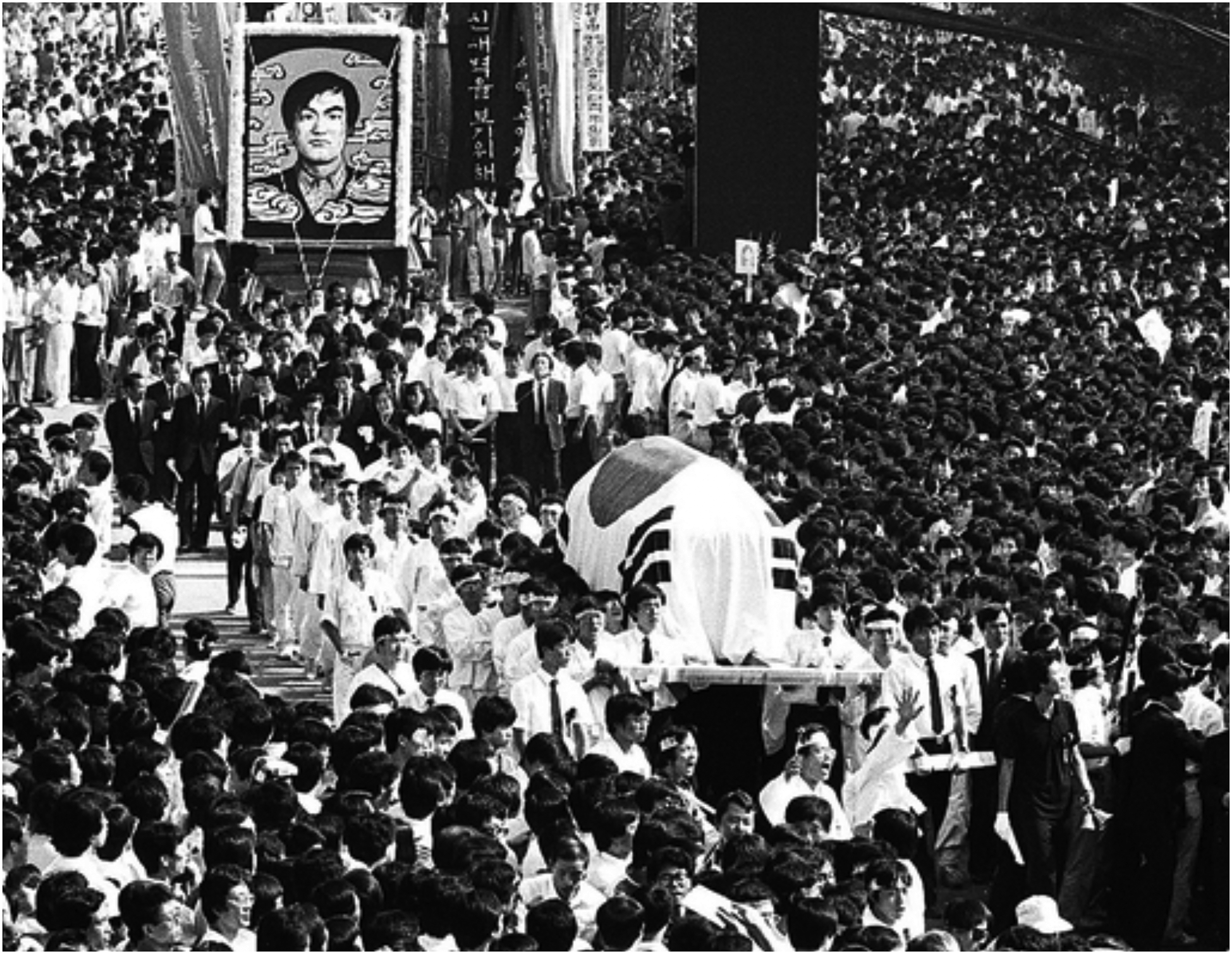
The future of the white hanbok
After a turbulent hundred years, South Korea entered a relatively stable phase in the 1990s. Its economy has significantly improved, and the insecurity felt in relation to North Korea has been replaced by relative confidence or even indifference despite continuing hostility. 21 Accordingly, the myth of a ‘homogeneous nation’ and the accompanying figure of the white hanbok may be going through a transition. If the idea of danil-minjok was perhaps an essential phantasy during the past crises, the xenophobic nationalism that now exists must be replaced by a more tolerant and open sense of nation (Huh, 2009: 8; Kim et al., 2019: 179–180). For many South Koreans, the idea is still something to be proud of, despite the fact that the nation is moving rapidly towards a multiracial and multicultural society (Kim et al., 2019: 177–178).
Since 2007, the UN Committee on the Elimination of Racial Discrimination has been expressing concern about the persistent societal discrimination against foreigners in South Korea, pointing out that terminology such as ‘pure blood’ and ‘mixed blood’, and the ideas of racial superiority that it may entail, continues to be widespread in society (United Nations, 2007: 90–91). Accordingly, efforts are being made across governmental, educational, and cultural sectors to overcome this inculcated idea. 22 However, there are also significant concerns about the uncompromising geopolitical reality. With the continuing isolation of North Korea and its persistent military threats, rising tension between the United States and China, and the hyper-nationalisms in East Asia, 23 nationalism is an existential necessity that cannot be easily abandoned (Kim et al., 2019: 181; Huh, 2009: 9). If a robust sense of national belonging is a necessary condition of a democratic and liberal state (Fukuyama, 2018: 9–10), there may still be a role for the white hanbok to play within a healthier nationalism.
This paper explored the changing role and perception of the white hanbok since the late 19th century to the present. As Franz Fanon (1965: 63) suggests in A Dying Colonialism vis-a-via the veil of Algerian women, there is ‘a historic dynamism’ of the white hanbok that is perceptible in the process of colonisation, modernisation, democratisation, and decolonisation of Korea. Until the late 19th century, the clothes were largely unnoticed and merged into the everyday landscape. With the appearance of foreign customs in a volatile political climate, both the people and their clothes acquired new boundaries and names (dongpo, minjok, hanbok). Their loss of sovereignty prompted the white-clad people to emerge as the subject as well as the object of allegiance, and the white hanbok served as its mythical binding membrane. During the process of post-war recovery and decolonisation, the white hanbok was an ambiguous symbol, representing loss, nostalgia, pride, resistance, resentment, and/or shame.
These changes reveal that existential crises and hardships profoundly shaped the collective self: Korean identity is indelibly marked by its traumatic yet transformative journey. As Du Bois’s veil induced the despair of exclusion but also endowed the excluded with a second sight (Lemert, 1994: 388), the journey helped Korea to perceive itself as a resilient people who understands what it means to be violated and marginalised. In this respect, the white hanbok is the intangible heritage holding the imprint of this journey. The white hanbok in Yoon Dong-ju’s poem is superimposed with ‘ghostly national imaginings’ (Anderson, 2006: 9) of the anonymous white-clad people. As the material and symbolic support during the crises, it has become a palimpsest of the complex emotional economy of han and jeong, communicating the types of experiences that are often met with silence.
Unlike refugees fleeing their homeland and embarking on a physical journey across border(s), Korea journeyed through an exile within its own land. For this reason, it is perhaps difficult to define the arrival or the end of the journey, especially with superpowers surrounding the still-divided peninsula. Moreover, the journey may never end, because the existing liberal democracy cannot be taken for granted and there are no grounds for complacency. If Korean identities today are built around the shared experiences of the journey as the connective tissue, it should be continuously revised by foregrounding the inclusive aspects of the paradoxical skin. This endless renewal necessitates remembering the stained white surface while reappraising it in the light of future situations. The white hanbok in the public imagination may one day possess the charm of old fabrics that Georg Simmel (1958: 383–385) muses on in his essay ‘The Ruin’. In old fabrics, the outer wear and the inner disintegration that occur through the passage of time turn any patterns or colours into a ‘peaceful unity of belonging’. It is the potentially unending task of remembering and reappraising that may allow the nation to associate this sense of peacefulness with the white hanbok.
Footnotes
Declaration of conflicting interests
The author(s) declared no potential conflicts of interest with respect to the research, authorship, and/or publication of this article.
Funding
The author(s) received no financial support for the research, authorship, and/or publication of this article.
