



Abstract
This article explores the relationship between children’s visual and material cultures and the official cultural heritage of terrorism. Drawings and cuddly toys have become a significant, yet overlooked, part of ‘difficult’ heritage of impactful violent events. The focus is on two museum collections dedicated to the 2017 terrorist attack in Stockholm – the active contributions of young people (8–25 years old) to the collections, and their presences constituted by artefacts. Examining both provides insights into the politics of cultural heritage and how heritage can be produced and presented.
Introduction
The drawing shown above, lying in an archival storage box (Figure 1), was left at the spontaneous memorial in central Stockholm in the aftermath of the terrorist attack on 7 April 2017. Rakhmat Akilov, now sentenced to life imprisonment for several counts of terrorism, highjacked a truck and drove it at high speed along the busy pedestrian street Drottninggatan, finally crashing into the department store Åhléns City. Five people, including an 11-year-old girl, and a dog were killed in this attack, and many more were injured. In the following days, a spontaneous memorial emerged on the site of the attack, and thousands gathered for a peaceful demonstration in the nearby square, attended by the prime minister and members of the Swedish royal family. Alongside the drawing above, thousands of other everyday objects – such as flowers, notes, candles, letters, and toys – were brought to the site of the attack to commemorate the victims. Unlike the majority of the objects that people left at the spontaneous memorial, which were later disposed of, this anonymous drawing was one of the items collected by the Stockholm City Museum to document the aftermath of the attack (see Nystrand Von Unge, 2019). The drawing now belongs to the museum’s collection Dokumentation 14.53 and has become part of what this study will refer to as the cultural heritage of terrorism. Drawing by an unknown author. The text says: “I think it’s sad what’s happened. The flower, the teddy bear, and the heart are for those who died. We’re thinking about them.” Stockholm City Museum, accession no. A 5/2017, photo by the author.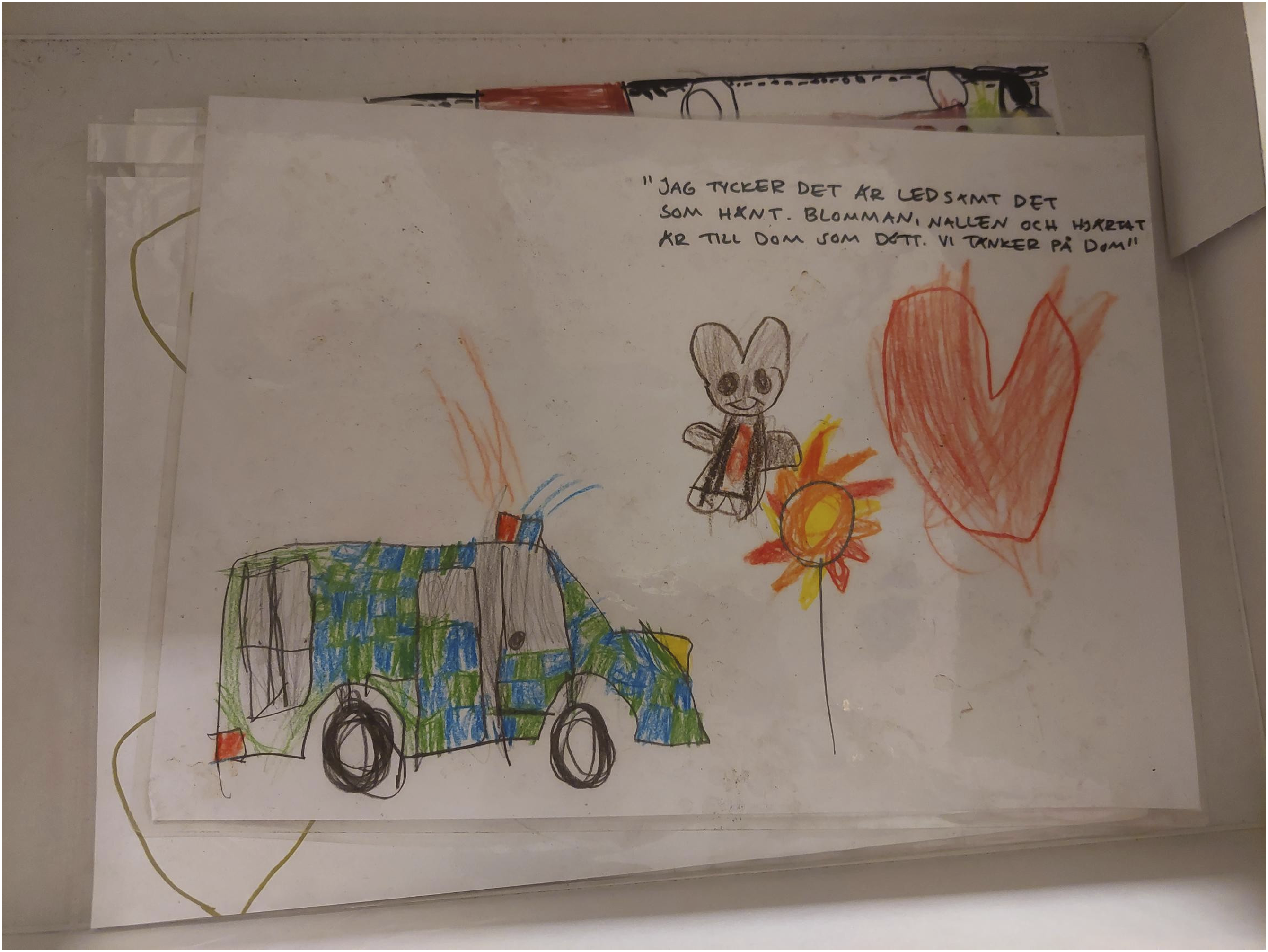
Figure 1 demonstrates an example of children’s voices in archived material which, alongside children’s experiences and cultural production, are often overlooked and underexplored (Darian-Smith and Pascoe, 2013; Freeman and Kuecker, 2023; Sánchez-Eppler, 2013; Sparrman and Aarsand, 2022). Children’s contributions to cultural heritage constitute one of the pillars upon which the current study builds. The other pillar is artefacts that are usually linked to childhood and children’s culture and thus constitute childhood norms and ideals. Cuddly toys and drawings are a common sight at spontaneous memorials commemorating victims of terrorism, other violent events, and natural disasters. While soft toys have been recognised as public symbols of loss, objects of comfort, and symbols of childhood (Cook, 2009; Nieuwenhuys, 2011; Sturken, 2007), their place and role in cultural heritage has barely been explored. Plastic figurines, squiggly drawings, and other DIY objects have also become an important part of collective public commemoration, although in any other setting they are immediately identifiable as children’ culture. How do their status change when these objects are transported from memorial sites into museums and reclassified as cultural heritage?
There are numerous examples of objects belonging to children’s culture in the official heritage of terrorism; that is, heritage which is recognised, collected, categorised, and managed by established heritage institutions and thus legally protected by the state (Harrison, 2013). At least two more terrorist acts took place in large cities in Europe later the same year as the Stockholm attack, and were documented by collecting objects from the spontaneous memorials, including thousands of cuddly toys. 1 The two museum collections created in the aftermath of the 2017 attack in Stockholm contain toys, perler bead figures, and dozens of drawings, photographs, letters, and personal stories by young people (aged 8–25 years). Looking at the photographs of this spontaneous memorial site, it is visible that, while toys and drawings are present, tributes such as flowers and candles are much more numerous. Police cars covered in piles of flowers became one of the recurring visual symbols of the public reaction to the attack in the Swedish news media and on social media. 2 Yet the museum collections, and thus the cultural heritage of the attack, are filled with objects such as drawings and toys. With this observation in mind, the current study aims to explore the role of children’s culture as part of the cultural heritage of terrorism. How are objects of children’s culture, such as toys and drawings, presented in the museum collections? What are the outcomes of the strong presence of children’s culture in this cultural heritage?
This study examines children’s distinct presences in the museum collections: children’s contributions to those collections, artefacts that appear to have been made by a child, and objects that are commonly associated with children and children’s culture. By doing so, the study makes the childhood norms and ideals that are produced in the official cultural heritage of terrorism visible and discussable. Heritage is a process within which the ‘experiences and values of children, childhood and adulthood are negotiated and re/created’ (Smith, 2013: 123) by heritage practitioners and audiences. This calls for attention to and examination of the relationship between heritage and childhood.
The cultural heritage of terrorism can be seen as a ‘dark’ or ‘difficult’ heritage from which, alongside knowledge about other difficult events of earlier and contemporary history, children are often shielded. Yet it has been argued that pandemics, wars, displacement, and other impactful and challenging social events and experiences, are part of many children’s lives – enough to be acknowledged and documented (Freeman and Kuecker, 2023; Kerr et al., 2022; Swedish Archive of Children’s Art, 2023; Patterson and Friend, 2021; Zhurunova, 2023). This study’s contribution is to explore how children’s culture, and with it childhood norms and ideals, are part of the heritage of such events.
Spontaneous makeshift memorials and cuddly toys
Cuddly toys ‘out of place’
Cuddly animals, such as bears and rabbits, have long been a staple in the material and visual cultures of children: as playthings; characters in books, films, and TV; and mascots and brand symbols for family theme parks (Caldas-Coulthard and Van Leeuwen, 2003; Cardell, 2015; Druker, 2021; Lee, 2008; Valtonen, 2016; Varga, 2009). Cuddly toys symbolise innocence, comfort, and safety. These mass-produced toys are often made soft to the touch, cuddly, and anatomically modified; for example, with claws and sexual organs removed (Nieuwenhuys, 2011). In a cultural heritage context, toys are often used to represent children and childhood, as museums and other established cultural heritage institutions favour the collection of toys, clothes, and photographs of children (Pascoe, 2013; Roberts, 2006). There, objects made for children often embody adult nostalgic visions of children in the past, rather than provide insights into children’s lives and experiences (Darian-Smith and Pascoe, 2013; Pascoe, 2013). But cuddly toys also appear in places and practices extending beyond playrooms and TV screens, and in contexts that are not necessarily connected to childhood. They are part of many charity campaigns, hand-made by volunteers and produced by companies that themselves run the campaigns (e.g. Hrechaniuk, 2021; Malkki, 2015). Soft toys are also used by mothers to decorate new-borns’ life-support machines in neonatal units (Landzelius, 2001). In this case, cuddly toys can also be seen as mediators between worlds separated by the plastic walls of the life-support machine, and ‘across the borders of uncertainty’ (Landzelius, 2011: 343). Graves, makeshift memorials, and other places of individual and collective mourning and commemoration provide another example of cuddly toys being included in unexpected and less taken-for-granted practices and places.
Cuddly toys in practices of collective commemoration
The drawing in Figure 1 shows and mentions three symbolic offerings that can often be found in large numbers at spontaneous memorials: a heart symbol, a flower, and a teddy bear. Teddy bears and other cuddly toys are particularly interesting because of their traditional connections to children’s culture and material qualities of plushiness and softness, which distinguish them from other objects brought to memorials (Arvanitis, 2019; Cook, 2009; Doss, 2008; Johnson Bowles, 2022; Malkki, 2015; Sturken, 2007). Temporary memorials spontaneously emerge as a collective and public practice of commemorating victims of terrorism and other acts of violence, natural disasters, or the passing of political figures and celebrities such as Princess Diana (Johnson Bowles, 2022). Doss (2008) argues that the word ‘spontaneous’ refers to the fact that these memorials often emerge immediately after an event, rather than because they consist of random objects gathered at a random site.
Makeshift memorials are led by a number of conventions and rituals, of which children’s culture has become a taken-for-granted part. One such convention is that objects brought to memorials are often inexpensive, readily available objects of a similar kind (Johnson Bowles, 2022), such as small, mass-produced toys, no matter whether those commemorating or being commemorated are children or adults. Compared to other commemorative objects, such as flowers, toys may be easier to preserve, and they carry the connotations of innocence and comfort discussed above which future museum visitors may connect with. Unlike toys used in displays to engage visitors with the often difficult and controversial history of children’s migration (Heinrich, 2014), the Stockholm collection is yet to be displayed at the museum or online. Yet it is worth examining the outcomes of these and other objects of children’s culture becoming heritage of terrorism and other violent events.
Heritagisation of children’s culture
Heritagisation offers an understanding of heritage as an ongoing process, and is one concept forming the theoretical framework of this study. Childity and traces of children and childhood have previously been used to capture the discursive, visual, and material constitutions of childhood and children, and in this study they help me to grapple with the complex notion of children’s culture.
Childity and the present absences of children
Children’s culture is used in this study as an umbrella notion for children’s own cultural productions, such as drawings or games, as well as culture produced for children, such as toys or TV shows. Based on who its producers and target audiences are, distinctions have been made between culture by children or children’s culture; culture for children; culture with children; and culture among children (Mouritsen, 2002; Orrmalm, 2020; Sparrman, 2012; Sparrman et al., 2016). While distinguishing different types of culture can help to unsettle power structures and raise questions about children’s agency and participation, it has also been problematised as imprecise and potentially misleading. Rather than being seen in terms of contrast or hierarchy, relationships between different cultures have been reconsidered as those of mutual interdependence and relationality (see Sparrman, 2012). Since this study examines both children’s contributions to the collections and artefacts that are usually linked to childhood, it similarly interrogates and explores the boundaries and relationships between various types of visual and material culture involving children.
Children are not always involved as producers or co-producers of culture for them or about them. However, the presence of the child figure or childhood in visual and material culture is often ephemeral yet perceivable. Childity (Sw. barnighet; could also be translated as ‘childiness’) has been developed as a critical theoretical and methodological tool for examining how children are visually constructed as the age category ‘children’ (Sjöberg, 2013). Unlike the everyday words ‘childish’ and ‘childlike’, childity does not have condescending connotations or translate an adult perspective on what a child can and cannot look like (Andersson et al., 2017; Lövgren and Sjöberg, 2017; Sjöberg, 2013). Interrogating how childity is produced implies looking for visual elements that make it possible for somebody to appear as a child, or for something to remind one of and represent childhood with or without children in the picture. For an image to appear childy, it does not necessarily need to display children’s ‘characters or bodies’ (Sjöberg, 2013: 56, my translation), but can visually invoke the presence of childhood by depicting objects such as toys and fashion.
Similarly, the notion of traces has been used to capture the presence of the child figure or childhood in the absence of actual children, although with a stronger focus on materiality and spatiality (Kraftl, 2020). Describing a doll left behind in an otherwise abandoned space, which invoked a stark child presence, Kraftl (2020: 61) reflects upon it as one of ‘traces of childhoods, and of individual children’. Looking into traces, absences, and displacements of childhoods seems to clash with a child researcher’s endeavour to instil children’s presences into spaces where they may not have been heard or seen as agentic (Kraftl, 2020). Yet, following traces of childhood can also be productive and, in this study, the concepts of traces and childity are used as analytical tools to help interrogate childhood norms and ideals in cultural heritage. More specifically, how these norms and ideals are constituted discursively, visually, and materially.
Transforming culture into heritage
To explore the relationship between children’s culture and cultural heritage, the notion of heritagisation is useful. This concept has been used to examine the process and outcomes of the transformation of recent historical events, cultural and media practices, sites, and artefacts into cultural heritage (Milošević, 2018; Sau-Wa Mak, 2021; Waller and Waller, 2021). Cultural heritage is seen as actively produced and shaped by various actors through practices such as collecting, archiving, categorising, discarding, displaying, and digitising (Milošević, 2018; Waller and Waller, 2021). Studies that use the concept often draw attention to what can be called unofficial (Harrison, 2013: 592), or bottom-up, heritage created by individuals and groups of people, often through everyday practices (e.g. Sau-Wa Mak, 2021). But heritagisation can also be accomplished by collaborating actors, cultural heritage institutions, governments, and local authorities, with the latter lobbying for preserving certain objects and sites (Milošević, 2018; see also Nystrand Von Unge, 2019).
The heritagisation and memorialisation of terrorist attacks specifically can be achieved in a variety of ways. The 2012 massacre on Utøya in Norway, which was explicitly targeted against young people, has been memorialised by rethinking and repurposing the site of the attack and creating a permanent monument (Dietze-Schiderwahn, 2017; Young, 2016). Another alternative is documenting spontaneous public responses to a violent event by selectively preserving makeshift grassroots memorials (Milošević, 2018; Silvén and Björklund, 2006; Witting, 2018). In either case, it has been argued that attaching new meanings to places, practices, and objects is an integral part of transforming them into cultural heritage (Milošević, 2018). For instance, candles and toys collected from a memorial site are no longer seen as ordinary everyday objects but expressions and markers of individual and collective mourning and grief (Nystrand Von Unge, 2019).
However, preserving ephemeral and temporary memorials by collecting and archiving a selection of the objects left there is a debated practice. There are practical, temporal, and material challenges to preserving fragile objects and organic matter, such as paper and flowers, that have been exposed to the elements for a prolonged period of time (Witting, 2018). Likewise, there are ethical complexities. On the one hand, taking care of objects that are otherwise likely to be thrown away or composted can be an act of respect towards the victims and those who contributed to the memorial (Belle Vue Productions and Arvanitis, 2018), a form of ethical disposal, and a memorial performance in itself (Arvanitis, 2019). On the other hand, heritagising and ‘cementing’ memorials that are usually expected by the participants to remain temporary is not self-evidently beneficial (Johnson Bowles, 2022). While people participating in collective commemoration rarely count on their offerings to last ‘forever’ (Johnson Bowles, 2022: 16), this is the direct opposite of the goals pursued by cultural heritage institutions, which preserve heritage for the foreseeable future. Thus, heritage institutions are faced with the dilemma of weighing the importance of documenting the event against potential ethical issues, such as repurposing people’s tributes and an absence of consent from the individuals whose offerings are being archived (Arvanitis, 2019; Milošević, 2018; Witting, 2018).
Two museum collections
This study was carried out as part of the larger research project Children’s cultural heritage – the visual voices of the archive (Swedish Research Council reg. no. 2020-03095), which focuses on children as cultural heritage producers. The empirical material analysed in the present study consists of two museum collections produced in the aftermath of the terrorist attack in Stockholm (Hartig and Boogh, 2020; Nystrand Von Unge, 2019). The collection, entitled Dokumentation 14.53, after the exact time of the attack, was jointly created by two local heritage institutions: the Stockholm City Museum and the Stockholm County Museum. It includes a selection of objects from the spontaneous memorial on Drottninggatan, together with the sheets of chipboard that temporarily replaced the smashed Åhléns City windows, and which were covered with inscriptions and sticky notes bearing condolence messages. The collection also contains 26 drawings donated by a schoolteacher whose class was at the nearby cinema on the day of the attack. The digital part of this collection is openly available online and consists of photographs and personal stories collected via the Stockholm County Museum’s platform Samtidsbild. These were sent in by members of the public following the museum’s open call. 3 Additionally, the Stockholm City Museum carried out a photo documentation of the spontaneous memorial, which is available through the digital database. 4
The second museum collection, entitled #openstockholm, has been created by the Nordic Museum, which is a national-level institution. It has a pronounced focus on social media and consists of digital pictures and survey responses sent in by members of the public. The contributors were asked to share whether they had posted photographs on social media and hashtags such as #openstockholm (Eriksson, 2018; Hartig and Boogh, 2020). With the exception of a number of photographs which the contributors did not wish to publish, this collection is openly available via the online collecting platform Minnen. 5
The collections described above include both analogue and digital objects. Out of more than 100 tangible artefacts collected from the memorial by the Stockholm City Museum, nearly 60 are of interest in this study – mainly drawings, a few collages, several cuddly animals, perler bead figures, and McDonald’s Happy Meal toys. The digital pictures and personal stories included in both collections are also numerous: 177 individual contributions, many of which include several pictures. Out of this total number, 21 contributions were sent by children and young people aged 8–25 years, consisting of four long stories and 55 photographs with accompanying text and survey responses. Given that museums tend to mainly collect children’s toys and clothes (see e.g. Roberts, 2006; Sanchez-Eppler, 2013; Smith, 2013), the large number of children’s own productions is especially notable. This overview of the collections shows that they include various examples of children’s visual and material culture. Given the study’s focus on childhood norms and ideals, drawings, photographs, and stories of and about children submitted by adult contributors are also relevant, such as the photo documentation of the memorial by the Stockholm City Museum, which captures a number of toys and drawings.
The artefacts include administrative metadata used to manage the collections (accession or registration numbers), and descriptive metadata; for example, information about or provided by the contributor, such as name and age (Dahlgren et al., 2021). The artefacts collected from the memorial are largely anonymous, containing little or no personal detail about the people who made them or left them at the site. The artefacts preserved at the Stockholm City Museum are usually gifted to or bought by the museum; 6 however, in this case, the objects were collected from a public space on the museum’s initiative. The contributors may be unaware that their objects have become part of the museum’s collection since it proved impossible to trace them to obtain consent. As demonstrated below, this poses certain challenges for the future use of the artefacts, but can also be used productively to examine the relationship between children’s and adults’ cultures.
Uncertain (children’s) objects
In this section, two pairs of examples from the collections are discussed. Such a juxtaposing technique reveals tensions and foregrounds differences, while drawing attention to absences and silences (Vogel, 2021). At the same time, juxtaposing excerpts and examples does not claim that difference is innate to the material; instead, it acknowledges that difference is produced in part through the analytical technique (Vogel, 2021; see also Hrechaniuk, 2021). The intention is to make differences and similarities, presences and absences more visible and discussable. The examples discussed in the next two sub-sections were chosen to illustrate the variety and breadth of children’s culture and to include both objects for children and those that could have been made by children.
Cuddly toys in and out of memorial spaces
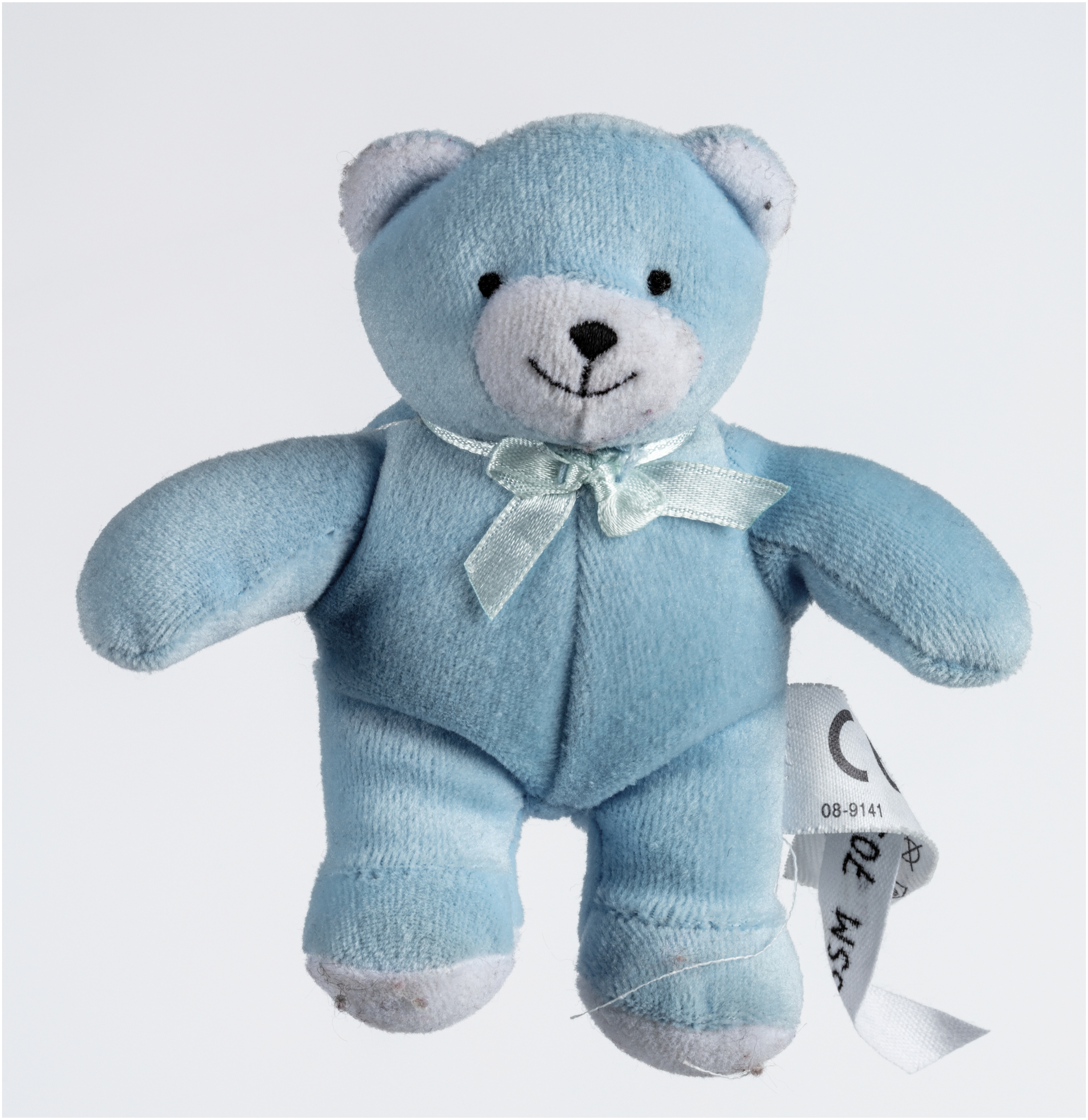
The first two examples of children’s culture in the cultural heritage of terrorism (Figures 2 and 3) were selected because of how common cuddly toys are in commemoration practices and collections documenting them. Both artefacts are from the collection Dokumentation 14.53 at the Stockholm City Museum, yet they are artefacts of different types. This invites a discussion about what these differences entail for how children’s culture is constituted as part of cultural heritage. Figure 2 is a photograph is included in the museum’s documentation of the spontaneous memorial on Drottninggatan and is available via the open access digital database. Figure 3 is also a professionally taken photograph of a blue teddy bear, one of the tangible artefacts that the Stockholm City Museum collected from the memorial. Photograph of the spontaneous memorial. Stockholm City Museum, reg. no. 3.6/1540/2017, photographer Mattias Ek, CC BY. Photograph of an artefact from Dokumentation 14.53. Stockholm City Museum, object no. SSM_70387_0, photographer Göran Sehlstedt, CC BY.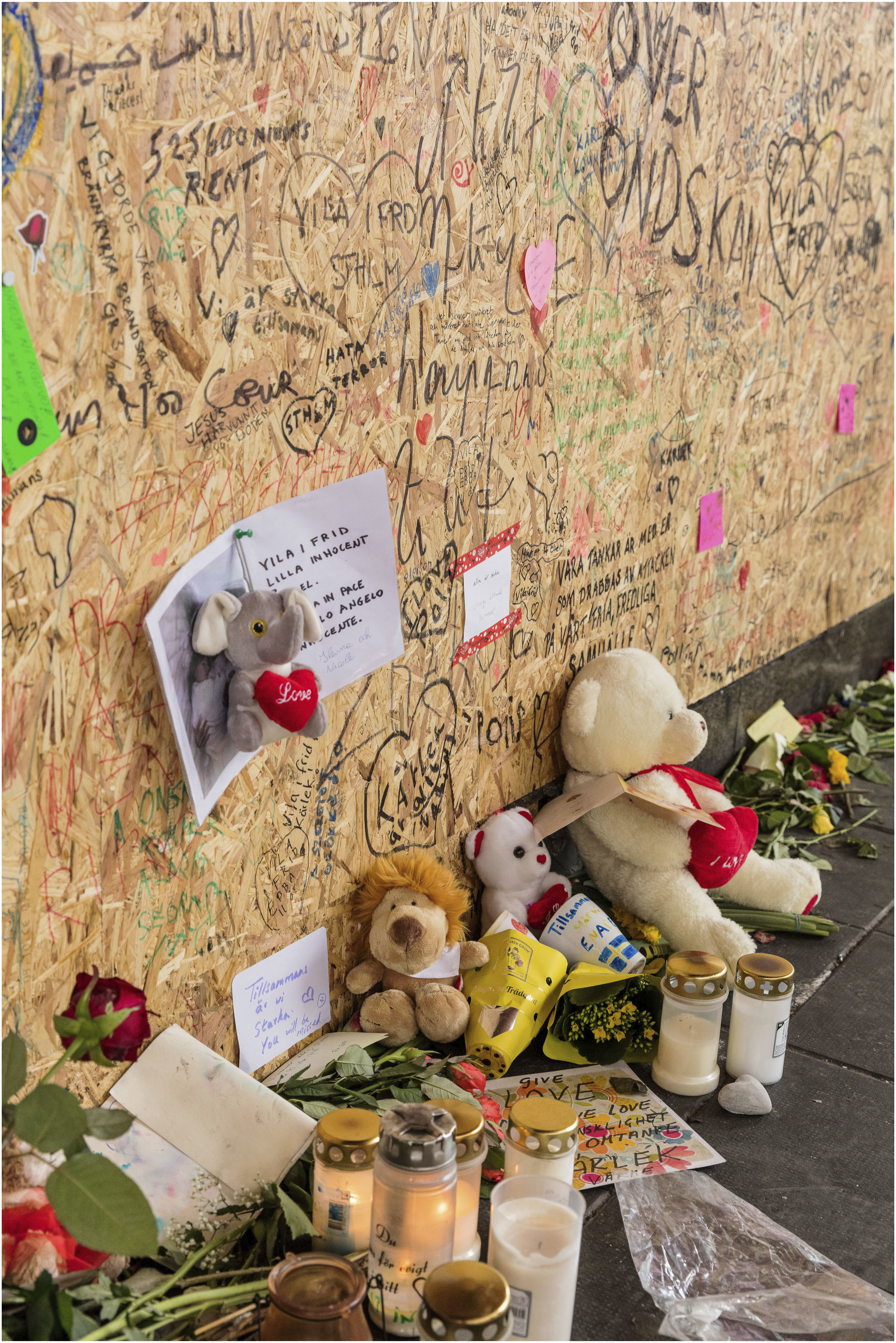
In Figure 2, the cuddly toys are visibly placed in the setting of the spontaneous memorial. There are four toys of different sizes: two bears and a lion are sitting on the ground, leaning against the chipboard, and an elephant is suspended from the chipboard by a pushpin. The sheets of chipboard visible in the background place the photograph by the department store Åhlens City, where they were used to temporarily replace the shop’s windows smashed by the truck. Three of the animals are holding red stuffed hearts with inscriptions ‘love’ and ‘I love’ on them. Hearts, and inscriptions such as ‘love’, ‘rest in peace’, and ‘we are strong together’ are also visible in the background, written directly onto the chipboard with black, red, green, and blue marker pens. Several of the ‘rest in peace’ messages are addressed to the 11-year-old girl who died in the attack. The messages cohesively communicate hope, togetherness, love, support, and solidarity. The toys on the ground are surrounded by other objects that are also commonly left at makeshift memorials: lit memorial candles, notes, drawings, cut flowers and potted plants, a flower bouquet wrapper, and a heart-shaped stone. The photograph, which shows a relatively small section of the memorial, is crammed with objects, text inscriptions, and layers of meaning.
While only the photograph of the toys in Figure 2 has been preserved, the blue teddy bear in Figure 3 is preserved at the museum as a tangible object. The description in the object’s metadata reads: ‘Commemorative object in the form of a small polyester teddy bear with a silk blue bow around its neck’. It is thus categorised as primarily a commemorative artefact, which also happens to be a soft toy (cf. Hall and Nyberg, 2006; Silvén and Björklund, 2006). There is a long tag attached to the toy’s left leg, but the brand has not been identified. A few split threads are hanging from the tag but, apart from a few dirty spots on the white muzzle, the insides of the ears, and the tops of the feet, there seem to be no signs of wear or use. The impression of the toy being new is perhaps emphasised by the clean and empty light grey background. In other collections, dirt and soot from the candles on the objects from the memorial, including cuddly toys (Hall and Nyberg, 2006), visually marked them as special and commemorative objects, rather than playthings.
Juxtaposing the two photographs makes it visible that the blue teddy bear lacks situatedness: relating to the immediate visual context of where it was collected, or information about its origins. Given this openness, the blue teddy bear appears to be, in a more pronounced way, a ‘childy’ object, rather than the commemorative object that it is categorised to be by the museum. It can be seen as an uncertain, liminal object. Photo documenting, as exemplified by Figure 2, cannot preserve the materiality of the artefacts, but it provides an important visual setting for them. The toys in the photograph, although absent from the collection in their tangible form, are visually constituted as commemorative objects. The ambition to preserve tangible ‘originals’, such as the blue teddy, can be seen as striving to prioritise authenticity (cf. Lixinski, 2022). However, in the special case of collecting objects from a public memorial, this has led to generating artefacts with sparse metadata, which will impact upon future opportunities for display and research. Unlike gifted artefacts, those collected from the memorial came with neither the giver’s consent nor a deed of gift (Sw. gåvobrev), thus raising questions about a respectful and ethical approach to interpreting and displaying such objects.
It has been suggested that, like art, spontaneous memorials need to be seen as a single object, rather than a collection of individual items (Gibson and Blaymires, 2023; Johnson Bowles, 2022). Disassembling a memorial, and storing its individual parts separately, diminishes its entirety and dismisses the intent of the artist or artists (Johnson Bowles, 2022; Arvanitis, 2019). Photo documentation, as illustrated in Figure 2, captures some of that entirety, if not in its tangible form. The blue teddy bear and other anonymous and seemingly intact artefacts, which read as children’s culture rather than commemorative objects, can also be seen as contributing to the ‘cutification’ of cultural heritage. Selective sentimentalised depictions of children and childhood in museum collections and displays dominate much of mainstream heritage, reinforcing ideals of childhood as a time of innocence and play (Darian-Smith and Pascoe, 2013). In Dokumentation 14.53, a fraction of the collected tangible artefacts are cuddly toys (10 out of 100); while, for example, the La Rambla archive which documents a spontaneous memorial in Barcelona includes over 4 000 toys out of the total of over 7 800 items. The sheer number of toys, their anonymity noted above, and the fact that for the toys to be collected, other types of objects had to be left out, all contribute to the potential sentimentalisation and cutification of heritage. It has been suggested that cuteness offers a sense of timelessness and nostalgia, and thus a sense of security (Kao and Boyle, 2017). This can potentially clarify the appeal of ‘cute’ artefacts which reinforce the messages of empathy and support that dominate the rest of the collection (cf. Gibson and Blaymires, 2023). Yet it is worth interrogating what kind of cultural heritage of terrorism such unsituated artefacts produce, how it can be used, and by whom.
Drawings and boundaries between children’s and adults’ cultures
The following two examples are drawings preserved in the collections of the Stockholm City Museum (Figure 4) and the Nordic Museum (Figure 5). Out of all the different types of children’s creations, drawings and paintings are most commonly preserved as heritage (e.g. Hodgson, 2023). Another reason for selecting these examples is to examine how creations by children, and objects that appear to have been created by children, are presented in the collections. As will be clarified shortly, like the blue teddy bear (Figure 3), these are uncertain artefacts with limited metadata. But this uncertainty can be used in productive ways to unsettle the taken-for-granted boundaries of children’s culture. Doing so could help to nuance how children’s culture and childhood norms are constituted in cultural heritage that is intended to capture society’s response to an impactful violent event. Drawing by an unknown author. Stockholm City Museum, accession no. A 5/2017, photograph by the author. Photograph of the drawing sent in by Camilla (last name anonymised). Nordic Museum, archival code M9/00022, CC BY.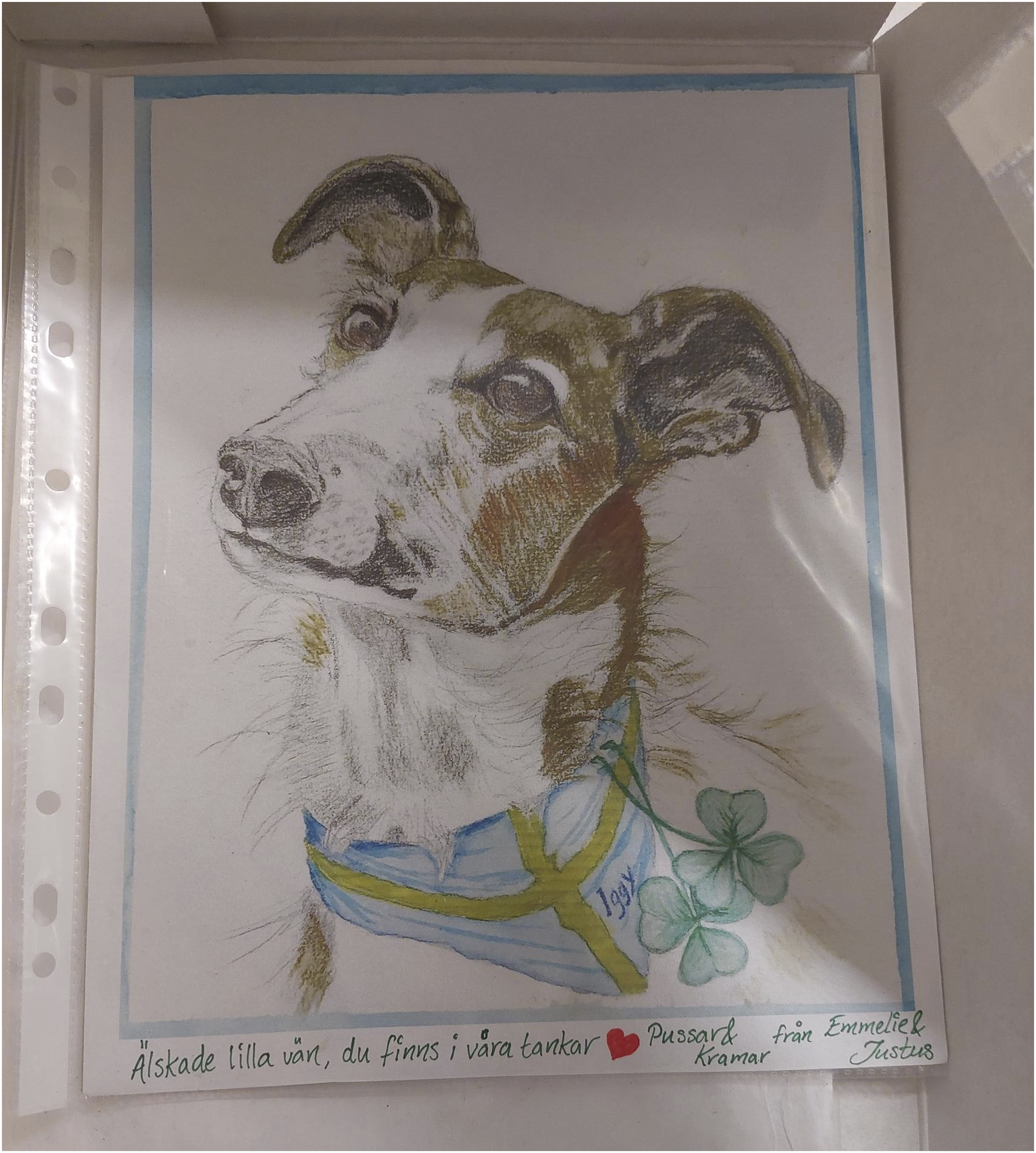
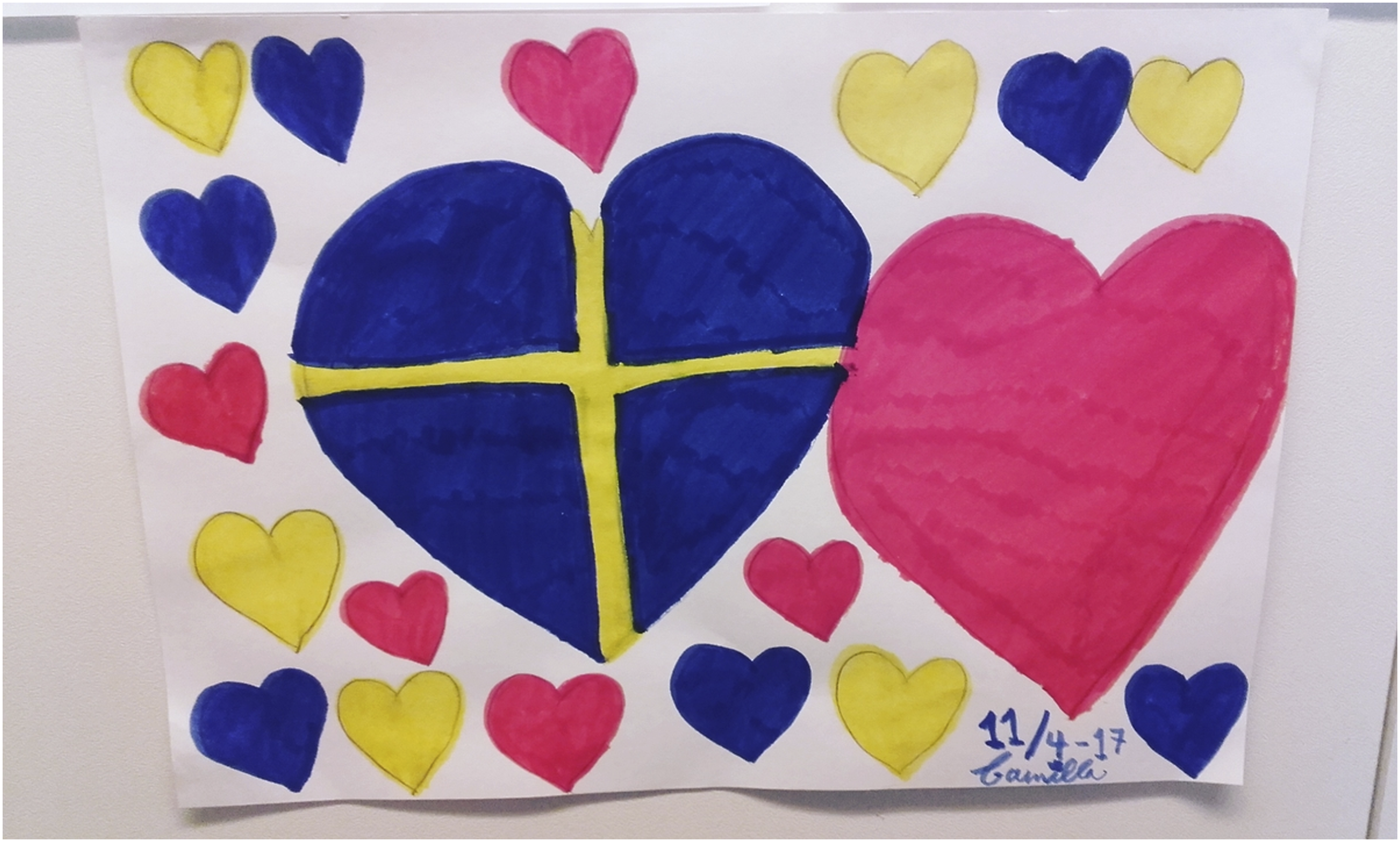
Figure 4 shows a pencil drawing of the dog Iggy, who was one of the victims of the attack. A smaller makeshift memorial dedicated to Iggy was created at the site, where people left drawings, poems, dog toys, and chewing bones, a few of which are included in the collection. This is a realistic portrait against a white background, with a blue frame around it. The angle, the composition, the dog’s pose and facial expression closely resemble a photograph of Iggy that circulated in the news media in the aftermath of the attack. 7 The drawing differs from the photograph in the addition of a scarf around the dog’s neck, which has the same pattern as the Swedish flag and carries the dog’s name. The two clover leaves tucked under the scarf may be a reference to the rescue centre in Ireland from which Iggy was adopted, 8 which also shows the artists’ familiarity with Iggy’s story.
The inscription across the bottom reads: ‘Darling little friend, you are in our thoughts  Kisses & hugs from Emelie & Justus.’ The two first names in the inscription and the exact place from which the drawing was collected is the only available metadata about this artefact. The scarcity of metadata generates uncertainty about the authorship that cannot be resolved. ‘Emelie’ and ‘Justus’ could both be adults, or children, or an adult and a child. Drawing and drawing activities are often associated with childhood, children’s leisure, and creativity (e.g. Aronsson, 2022; Bendroth Karlsson, 2014; Änggård, 2005). On the other hand, the portrait appears to be technically advanced and thus the opposite of ‘childlike’. The drawing is clean; the proportions seem realistic and precise, and so are the smaller details such as pencil strokes for individual hairs in the dog’s fur. The handwriting at the bottom is neat and could equally be an adult’s or a teenager’s.
The neatness and skill alone, however, are far from definitive criteria. Making digital and analogue drawings is a hobby followed by many young people, who spend considerable amounts of time practising and perfecting various drawing skills (Hrechaniuk and Aarsand, 2024). By discussing the uncertain authorship of the drawing, I do not aim to establish who actually made it. The discussion is rather intended to challenge taken-for-granted ideas and productively unsettle the boundary between adults’ and children’s cultural production. Conventionally, young children’s drawings are defined by vivid creativity and lack of skill, with skills progressing with age and experience (Aronsson, 2022). The relationship between age and skill is not a given, however, but rather can be seen as constituted by and constituting the childity of a drawing (cf. Sparrman, 2019).
To further discuss how childity is visually constituted, it is useful to juxtapose the drawings in Figures 4 and 5. The other drawing in this example is a photograph of a painting donated to the Nordic Museum and openly available on the collecting platform Minnen. The contributor Camilla submitted the photograph of this drawing, two photographs from the memorial and the peaceful demonstration, and brief survey replies to the museum’s questions about posting on social media in the aftermath of the attack. ‘Love’ is the word that recurs throughout her responses: Camilla shared photographs online with the hashtags #love and #loveisstrongerthanhate and referred to the peaceful demonstration she attended as a ‘love manifestation’. Chiming into the theme of love, the painting in Figure 5 depicts 19 hearts of different sizes and colours. One of the two largest hearts is painted in the blue-and-yellow pattern of the Swedish flag. Part of the inscription submitted together with the drawing also emphasises the love theme and reads ‘Stockholm in my heart’. In the bottom right-hand corner, there is a date and the first name of the author.
Seeing the painting by itself, it is not unimaginable to interpret it as having been made by a child; however, the available metadata adds a different framing. The inscription reads: ‘A drawing I made at work after the terrorist attack’, and according to the metadata Camilla was in her 30s at the time of contributing to the collecting initiative. This example further unsettles the boundary between adults’ and children’s cultures, but in a different way than the example in Figure 4, since there is little uncertainty about the authorship. Yet, even with the knowledge of its authorship, why might the painting appear to have been made by a child? The composition, placement, and painting technique largely produce what can be called a certain childity of the painting. The large blue-and-yellow heart is quite well-centred, while the pink one appears to be a later or unplanned addition. The yellow cross in the blue-and-yellow heart is asymmetrical and not centred – the horizontal line is uneven, and the vertical line does not hit the bottom point of the heart. In the yellow hearts, where the paint is more transparent, there are visible pencil lines, showing that the shapes might have been sketched in pencil and then painted over. The shapes of the hearts are rough and uneven rather than smooth. This painting is a clear example of the non-linear relationship between (drawing) skills and age. It unsettles the often taken-for-granted boundary between adult competence and children’s lack thereof, and reminds us that age is a category that is produced and re-produced in social relations and practices (Krekula and Johansson, 2017).
This discussion has sought to examine how drawings are presented in the collections, and it came to unsettle the boundaries between adults’ and children’s cultures by focusing on examples that challenge them or create uncertainty. Neither of the analysed collections separates children’s and adults’ contributions, thus making them more of a shared, collaborative heritage. Children’s and adults’ joint participation in the commemorative practices is visible in the personal stories and photographs preserved in the collections, such as buying or laying flowers, or attending the demonstration together. The potential of this provocation has yet to be acknowledged or explored by either child studies or heritage studies. This said, anonymity and uncertainty surrounding artefacts can potentially pose challenges to heritage practice and theory. For example, it can conceal children’s contributions and once again obscure the politics of heritage and its production (Harrison, 2013). It can also interfere with future interpretations and use of the artefacts and leave open questions about intellectual ownership and copyright (see Dahlgren et al., 2021; Sparrman and Aarsand, 2022; Tebeau, 2021).
Discussion and conclusion
It has been argued that collective remembering and commemoration is central to cultural heritage (Smith, 2013), which thus logically includes children. The two museum collections dedicated to the 2017 terrorist attack in Stockholm document both individual and collective commemoration practices, such as posting online or attending a makeshift memorial, in which cuddly toys, drawings, and other objects from children’s culture have become a staple. The intention in this study was to acknowledge and explore the links between children’s culture and the cultural heritage of terrorism, which have been largely overlooked in both child studies and heritage research. Children actively contributed to the heritage of the attack by submitting their own digital contributions to the collections. But childhood norms and ideals are also constituted by artefacts such as cuddly toys and drawings. Since the boundaries between these two types of artefacts have proved to be blurred and unstable, in the analysis the focus has been on both children’s contributions and the traces of childhood (Kraftl, 2020).
I have suggested that the artefacts gathered from the spontaneous memorial in central Stockholm and via digital collecting have a complex and uncertain ontological status. Cuddly animals, plastic toys, drawings, and paintings are simultaneously recognisable objects of children’s culture, commemorative objects, museum artefacts, and heritage objects. I have argued that anonymity, lack of visual context, and metadata about the artefacts can open them up for multiple interpretations. Anonymous drawings can create productive tensions and unsettle the linear relationship between age and skill, and the binary of children’s–adults’ cultural production. The boundaries between culture for, by, with, and among children have already been examined and nuanced (e.g. Mouritsen, 2002; Sparrman, 2012). Similar discussions focusing on intersections, overlaps, and joint cultural production, instead of sustaining a binary, could be useful concerning children’s and adults’ cultures. While gaps in metadata can be used productively to unsettle the seemingly self-evident, they also have implications for heritage practice. In particular, for archiving and classification, since metadata determines the possibilities for understanding, interpreting, and using the artefacts (Dahlgren et al., 2021). Collecting without adequate descriptive metadata could risk undoing the work of ethical collecting, and lead to collections becoming ‘attics’ where things are preserved but remain unseen and unused (Tebeau, 2021).
I have suggested that contributing to the ‘cutification’ of the heritage of terrorism and other violent events could be one outcome of the fact that toys, drawings, and other childy objects constitute a large proportion of this heritage. ‘Cutification’ here refers to the proliferation of a particular kind of visual and material cultures of childhood that promote ideals of childhood play and innocence. Even though categorised as commemorative objects, cuddly toys may not appear as such when seen in the digital database or displayed for visitors, and instead contribute to the production of sentimental childhood. Endearing cuddly toys bring comfort in the face of the tragedy of a terrorist attack and are coherent with the messages of empathy, love, and support with dominate the Stockholm collections and other so-called first wave collecting initiatives (Gibson and Blaymires, 2023). The Stockholm City Museum reflected that the collection does not capture the heated debates and hostile messages directed against the Muslim population that circulated in the aftermath of the attack (Nystrand Von Unge, 2019; Ulfstrand, 2017). Objects that expressed sympathy and solidarity were prioritised when collecting from the memorial site, which is not unusual for documentation that takes place in the immediate aftermath of a terrorist attack (Gibson and Blaymires, 2023). What also contributed to the coherence of both Stockholm collections is a relatively homogenous group of contributors who sent in their digital stories and photographs. Despite the museums’ efforts to reach out to diverse groups, this did not guarantee a wider diversity within the collections (cf. Dahlgren et al., 2021; Zumtrum and Krebs 2022).
One suggested way to manage excessive and one-sided ‘cutification’ of heritage could be preserving integrity of the memorial as a whole rather than prioritizing individual objects (Arvanitis, 2019; Gibson and Blaymires, 2023; Johnson Bowles, 2022). This can be done by collecting every single object from the site and/or by means of photo documentation (demonstrated by Figure 2). Another possibility is collecting so called second wave responses, that is personal stories, photographs, and objects of later memorial practices, in addition to the immediate responses of the aftermath of the event (Gibson and Blaymires, 2023). Although certainly requiring resources, such reflexive approaches to the heritagisation process can help situate individual artefacts, and include a wider range of children’s experiences and traces of childhood.
Footnotes
Declaration of conflicting interests
The author(s) declared no potential conflicts of interest with respect to the research, authorship, and/or publication of this article.
Funding
The author(s) disclosed receipt of the following financial support for the research, authorship, and/or publication of this article: This work was supported by The postdoctoral project 'Children's cultural heritage and terrorism' (Dnr 2023-00086) was supported by the Linköping University.
