




Abstract
In 2022, the Chilean literary award Premio Medalla Colibrí had a children’s jury for the first time. This article has been written by four researchers, two adults and two children, who participated in this process and then studied the experience. We did interviews with different people involved and an analysis based on the notion of wonder. Here, we present some reflections on the criteria used by the children’s jury and some findings that surprised us during the research process.
Keywords
Introduction
This article is based on research carried out by four researchers who have been working collaboratively as part of an initiative for recommending children’s literature and other cultural work called #EstoTbn. Together, we address the experience of the first children’s jury that gave a literary prize in Chile, in which the four of us were involved. We defined two central questions for this research article: a) Why did the awarded book win?, and b) How did other people see the first children’s jury? Even considering we were involved in giving such a prize, we were interested in researching why it turned out the way it did. We decided to interview different involved actors: the publisher of the awarded book, the authors, a representative of the institution that organises the literary award, and two other children who also participated as members of the jury. To analyse the data, we worked with the concept of wonder, asking ourselves what surprised us about each interview and what surprised us about the research process, trying to identify the affects and conceptual assumptions involved in the process. Regarding the relationship between the researchers and the conditions of research production, we highlight that it was mainly the child researchers who proposed the research questions, the methodology, and the interview questions. Without having planned it, the adult researchers positioned themselves as research assistants for the child researchers.
This article is, therefore, an inquiry into a case of children’s cultural participation that is explored with intergenerational collaborative research practices, and that wonders about its scope and limitations. The four researchers have written this article in an effort to maintain an accessible language. We are aware that the children’s jury was developed under the premises of an institution related to publishing, and that this text follows the editorial and academic standards that govern in an adult world.
The article is structured by the following sections: “A Literary Prize Given by Children” shows the background and development of the award Premio Medalla Colibrí; “Research Production and Conditions” describes the methodology and the development of the fieldwork; “The Search of Wonder” presents the analysis and includes some initial findings; “Wonders around the Methodology and the Research Itself” reflects on the writing process, including some discussion and conclusion.
Finally, we included a postface written by the adult researchers in which this experience is put into dialogue with recent discussions about the notions of the adult and the child in children’s literature and childhood studies and with some issues about participatory research with children. In the postface, we relate more explicitly to the questions presented in the call for papers for this special issue.
A literary prize given by children
The four people who wrote this text have been involved since 2020 in #EstoTbn (that may translated as #ThisAlso), an initiative for recommending children’s literature, arts, and media. #EstoTbn started during the pandemic as an experimental research project around the recommendation of cultural works. The project aimed to expand the literary and emotional repertoires traditionally offered in educational initiatives by producing other forms of involvement and exploring the possibilities of challenging adultist circuits of cultural work’s recommendation for children. Macarena García-González and Ignacia Saona are the founders. Agustín Arriagada and Mika Saintard, have participated in recommending cultural works and in different workshops since the initiative was founded. Agustín and Mika attend different schools, and before getting involved in #EstoTbn they did not know each other.
At the beginning of 2022, the Chilean section of the International Board on Books for Young People (IBBY) approached #EstoTbn to explore possibilities of children’s participation in the Premio Medalla Colibrí (Hummingbird Medal Award), a national award for children and YA literature. IBBY-Chile has organised this award since 2012. Adult juries made up of specialists give awards to recently published books in different categories (picturebooks, children’s fiction, YA fiction, poetry, etc.). The invitation to collaborate with #EstoTbn led to the creation of the country’s first children’s jury for a literary prize in Chile. Our proposal for a children’s jury aimed to challenge some problems identified around children’s literature and prize culture, such as how these awards reproduce social exclusions by favouring certain authors over others (Kidd and Thomas, 2017).
Macarena and Ignacia invited children participating in the #EstoTbn initiative to take part. The jury was constituted by those who could make it to the Santiago Public Library for the first meeting (see Figure 1), five boys and five girls. Children were invited to revise books from two categories that were also assessed by adult juries: translated books and picturebooks. Macarena and Ignacia decided to work with these categories in which there is no explicit classification in relation to age appropiatedness (such as the case in children's or YA fiction). Combining the two categories —translated books and picturebooks— also sought to avoid comparisons between the preferences of the children's and adults’ jury. We did not want this experience to be reduced to a confrontation with the decision of expert adults as if the children’s jury represented a univocal voice of the “true” readers of children’s literature. The child jury preparing the shortlist for the literary award.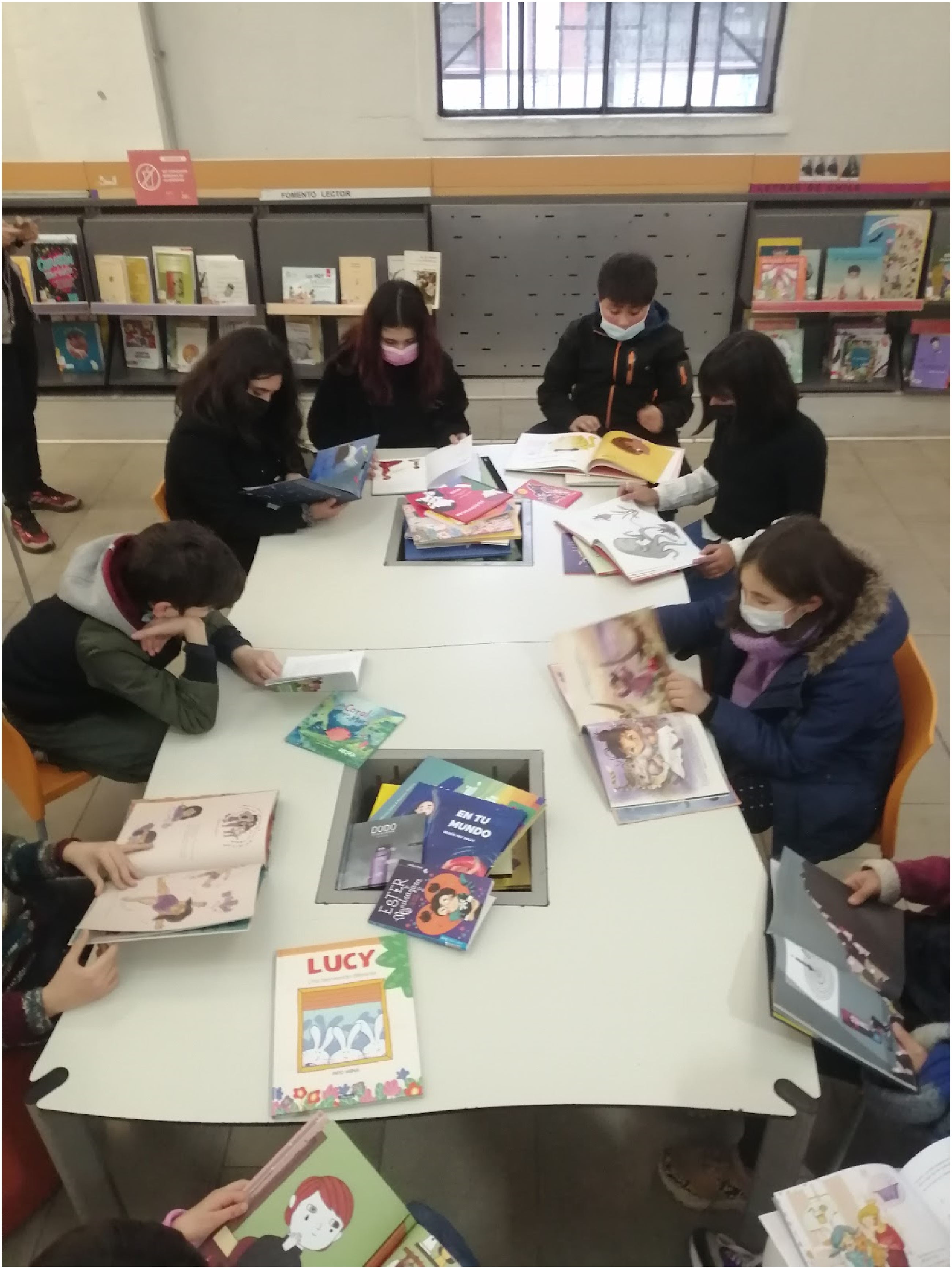
The deliberation process took place between the end of June and the beginning of November 2022. In the first meeting the children reviewed 39 books and shortlisted eight of them. In a subsequent session, a couple of weeks later, they added three more books to the shortlist; the 11 books were then sent to each child to be read at home. In-person and virtual group sessions followed. In these sessions they discussed the books and shared written reviews aiming to reach an agreement about the awarded books. They discussed all the books and then decided to score each of them with a grade to identify which books would remain on what they called ‘the podium’.
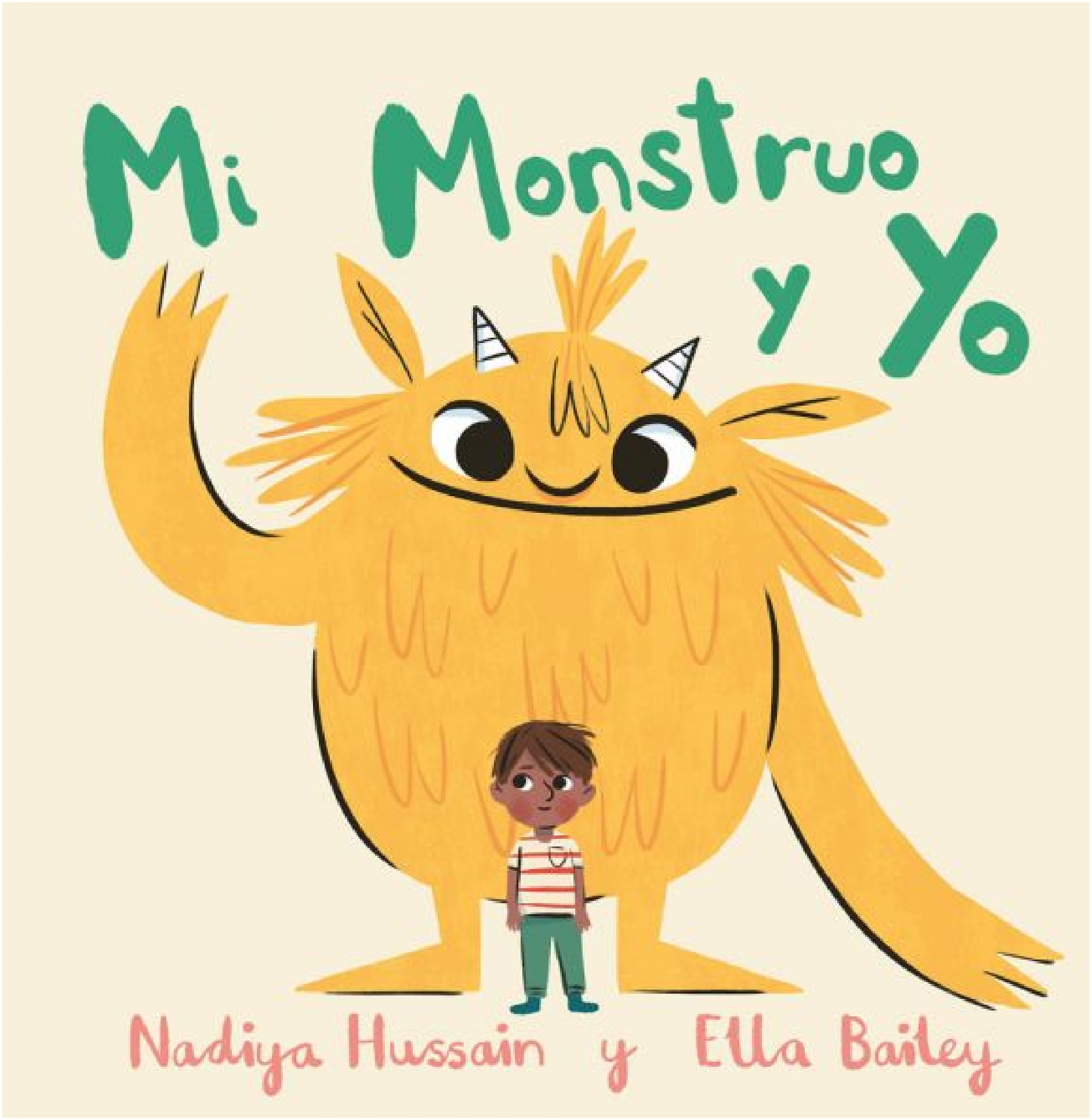
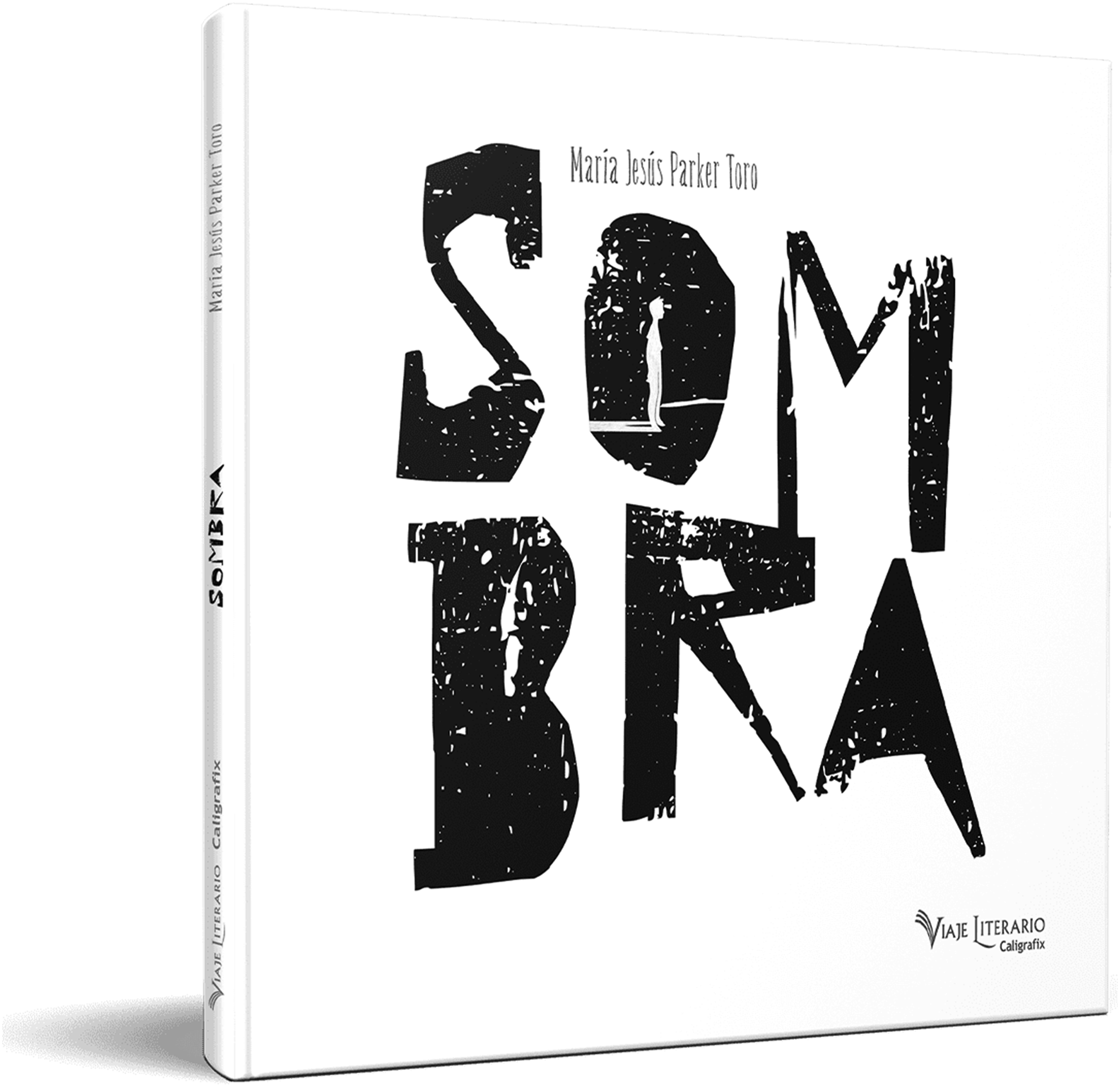
Finally, the winner was the book Vida, una historia larga [Life, a long story] written by Jakob Brodersen and Pernille Engsig Eskildsen, illustrated by Kamilla Wichmann, translated into Spanish by Camila Bunster Danklefsen, and published by Saposcat in 2021 (Figure 2). The two other books on the podium were Mi monstruo y yo [My monster and I] published by ZigZag (Figure 3), and Sombra [Shadow] published by Caligrafix (Figure 4). Front cover of the awarded book: Vida, una historia larga. Front cover of the book selected as second place: Mi monstruo y yo. Front cover of the book selected as third place: Sombra.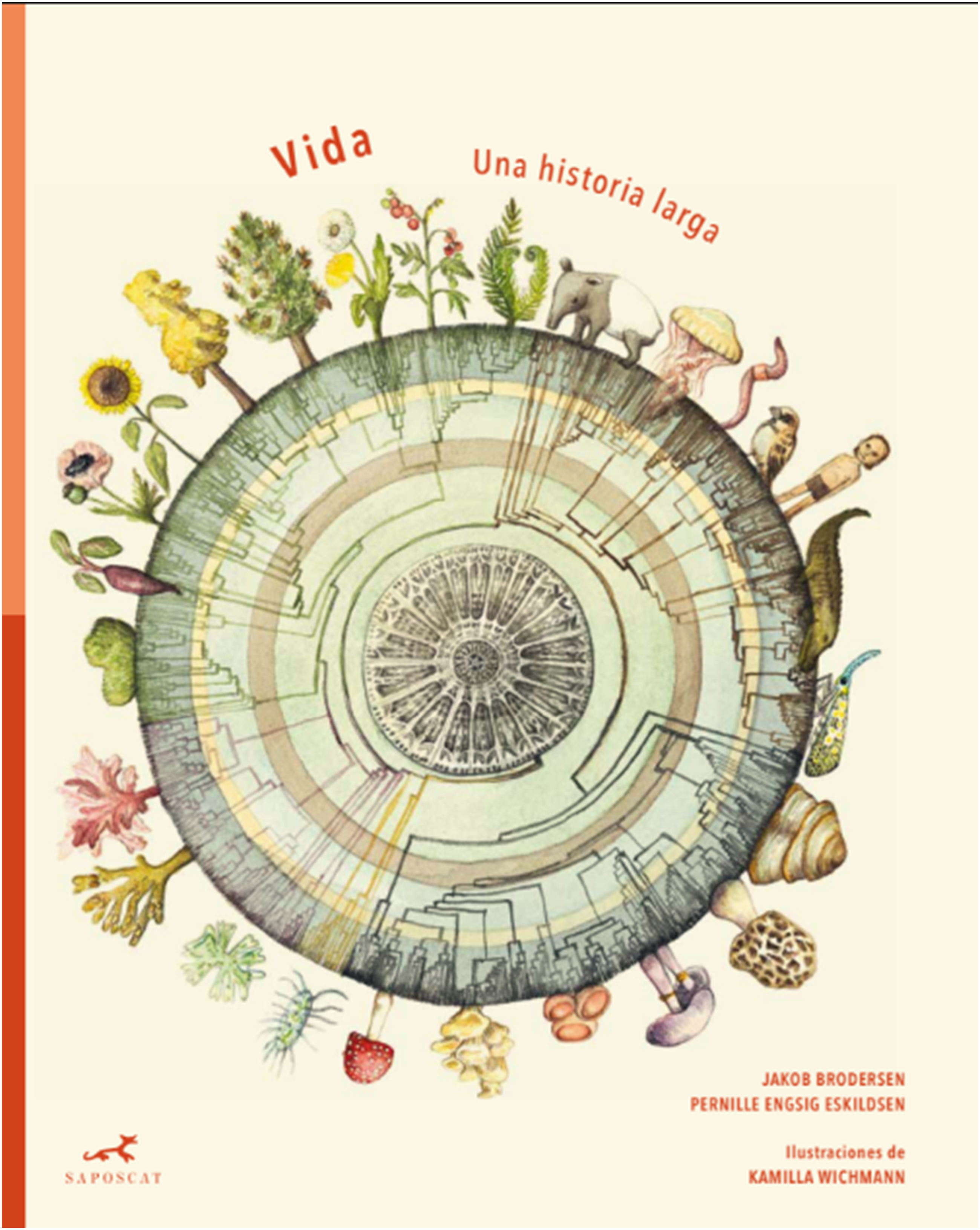
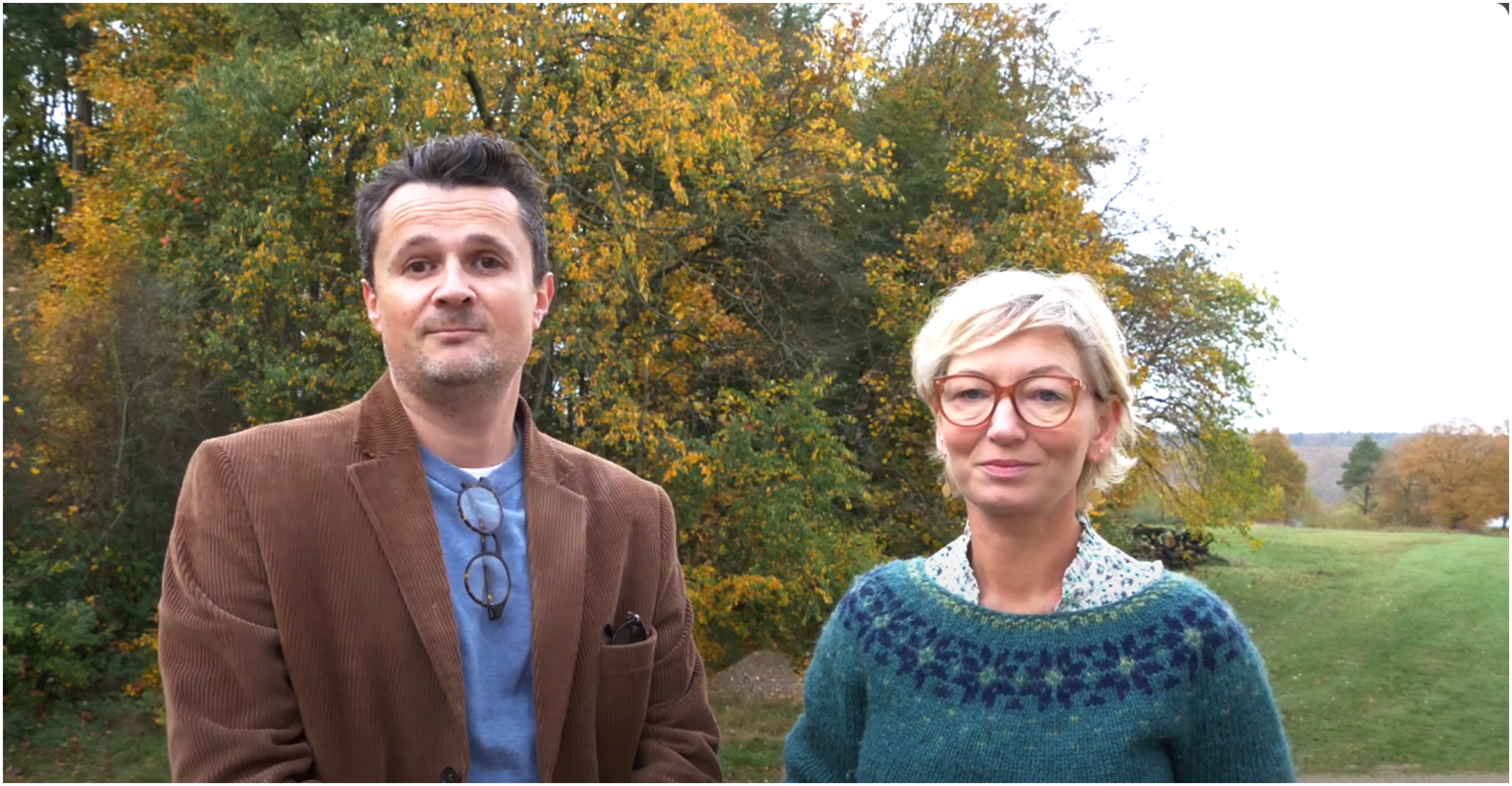
For the Premio Medalla Colibrí award ceremony, held in a cultural centre in Santiago, Chile, the children that had formed the jury went on stage, just as the other jurors from other categories. One of us, Agustín Arriagada, who was 11 years old at the time, read a speech, narrating the deliberation process and sharing some of the arguments used to define the winning books. The publisher of each awarded book went on stage to receive the prize (Figure 5). Furthermore, the Danish authors of Vida, una historia larga, Jakob and Pernille, sent a video greeting and thanking the children’s jury (Figure 6). The publisher receives the award from the children in the award ceremony. Screenshot from the film the authors sent for the ceremony.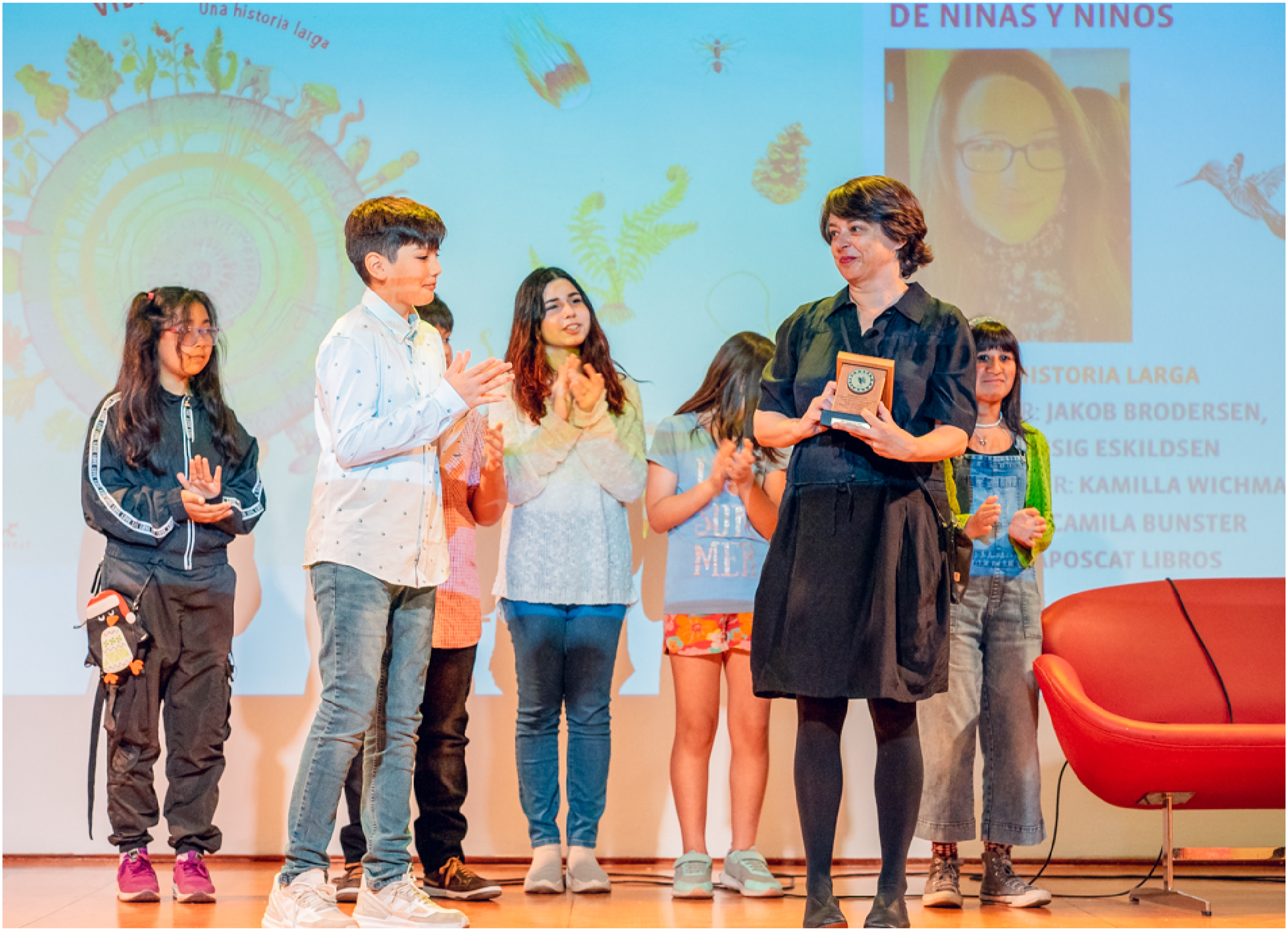
When the call for papers for this special issue was published, Macarena and Ignacia invited two of the children from the jury, Agustín and Mika, to join them in writing about the experience of this first children’s jury for children’s literature in Chile. Therefore, the case of children’s cultural participation (the children’s jury) was the context in which the intergenerational research team emerged, and it was later decided to produce this article through collaborative research practices.
As with other research teams, this one was formed by affinity. The adult researchers invited these children not only for the affinities they had with them but also with their parents, who throughout the years have supported the children’s involvement in the #EstoTbn initiative. We acknowledge this not only to be transparent about the inclusion/exclusion criteria but also because it renders visible how children’s participation in scholarly and cultural projects is very often dependent on their parents’ engagements and how such engagements match the researchers’ expectations.
Research production and conditions
After receiving an affirmative response from both the children and their families regarding getting involved in this research, the adult researchers wrote a proposal for the editors of this special issue. Macarena and Ignacia decided to wait for the editors’ response before starting to work with Agustín and Mika, concerned about generating expectations that might not be met.
When Macarena and Ignacia received a preliminary approval, we held our first meeting where the research questions were defined. After a shared brainstorming, the four researchers agreed on two orienting questions: the first one was written down as “¿Por qué ganó el libro Vida?” (Why did the book Vida win?) and the second one as “¿Cómo otras personas vieron el primer jurado de niños y niñas?” (How did other people see the first children’s jury?). Adult researchers consider these questions were first posed by the child researchers. The questions do not directly address the inquiry on intergenerational collaboration, but we considered that this slight displacement allowed us a more complex exploration of our joint work. Regarding the methodology, we decided to carry out a research and data production phase so that the writing was not solely based on our reflections. Agustín was enthusiastic about interviewing several actors and formulate questions to each of them. The rest of us agreed.
Inquiries that involve children as co-researchers often rely on innovative methodologies —as photovoice, film or collage— that are often proposed by adults under the assumption that they are more familiar to children. In this case, Agustín and Mika proposed to do interviews. They were familiarised with responding to interviews in the frame of our joint project since 2020 and liked the idea of moving from the position of research participants to researchers. They indicated that conducting interviews would be the most appropriate and simplest way to produce information. Also, they considered that they already had the contacts of the people they wanted to interview or the support to reach them. In addition, doing interviews would allow us to continue conducting our research remotely, by videocalls.
Having defined the research questions and methodology, Macarena submitted the project for ethical approval at the university where she works. At the same time, we asked the editors of the special issue for an extension of the deadline for submitting the manuscript. From the beginning, we anticipated that the research and writing of this text might take longer than expected.
Given the enthusiasm to start, the adult researchers clarified to the child researchers that the publication of the text they were going to write was not guaranteed since, once they sent it, the journal would have to evaluate it in its entirety and could request changes or clarifications. It was agreed that if the article was rejected, they would look for another journal to publish it.
The university took longer than usual to respond to the request since the evaluators identified some issues: first, Macarena had contacted the children before presenting the project to the Ethics Committee, and, second, this research was going to require quite a bit of the child’s time. The evaluators also asked for clarification on how participants were recruited. Macarena prepared a document in which she explained that in this research, more than participants, the children were co-researchers which made it necessary to contact them beforehand. Recruitment, therefore, was based on an affinity to work together. As Mika was 10 years old and Agustín was 12, the adult researchers considered that it was necessary for them to comply with the procedures for child research participants too. Therefore, the adult researchers asked the children and their parents to sign consent forms and shared with them Participant Information Sheets.
In material terms, none of the researchers received financial compensation for participating in the writing of this text. For Macarena, this is considered part of her work. Ignacia, Agustín and Mika took the research and writing of this article as a voluntary activity. But previously, when the children’s jury for the Premio Medalla Colibrí was formed, both Macarena and Ignacia got involved in the project as part of their work, while Mika and Agustín agreed to participate in exchange for books as compensation.
Typically, ethical committees request to identify the risks and benefits to which participants in academic research are exposed and assess the balance between the two. In this case, the risk seemed to be the heavy workload for those involved, which may open a discussion around recognising intellectual work, informational capitalism, child labour, and academic extractivism. On the other hand, there are benefits related to the increase in the reputation of young researchers, gain of academic experience and visibility, a stimulus to personal and intellectual development, and the contribution to the development of new knowledge. However, we should also consider as benefits the crystallisation of intergenerational collaborations in novel ways that push -even slightly- the limits of what is imagined as part of academic knowledge production, prompting the interest of the child researchers to participate.
Once we had the ethical approval, we met to plan the data production. The child researchers created a list of people they were interested in interviewing: the publisher, authors, members of the IBBY-Chile board, and fellow children’s jury members. The adult researchers proposed interviewing adult juries who had evaluated the same books.
Then, the team met to develop questionnaires for the interviews.
The team meetings, as well as the interviews, were all carried out virtually, as we were living in different cities. Due to everyone’s availability, and different time zones, sessions were held mainly in the morning on weekends and a few sessions in the afternoon on weekdays.
We all agreed that the child researchers would ask the questions to the interviewees, while the adult researchers would take notes and moderate if necessary. Four interviews were conducted and recorded: with the publisher, with the two authors of the awarded book, with one of the representatives of IBBY-Chile, and with two children who were also members of the jury. In the interview with the authors, the adult researchers did have a more active participation, mainly to compensate for the difficulties of everyone who participated in that videocall speaking in a second language (English) with different proficiency levels.
The questionnaires contained up to six questions each. After these have been done, we often asked some other questions and/or share comments. The involvement and enthusiasm of the researchers varied. For example, at the end of one of the interviews, Agustín asked Mika if she wanted to delve deeper into any of the topics discussed, to which she responded she would prefer not to, that she just wanted to listen to the conversation.
At the end of each interview, the research team waited for the interviewee to disconnect from the videocall to develop an initial analysis phase, which we describe in the next section.
The search for wonder
After each interview and in subsequent meetings, the adult researchers asked the child researchers (and themselves) what had surprised them about the interviews. Macarena and Ignacia became as-if-research-assistants outlining possible narrative and conceptual relationships while seeking for validation of the child researchers, as if leading researchers. The question about what surprised us also led to reflections about what else has been unexpected about the research process: how questions were asked and answered, and what happened when we had time to add aditional questions. This methodology was inspired by Maggie MacLure’s reflections on “The Wonder of Data” (2013). In this article, MacLure presents wonder as a possible device to explore the relationalities of data-researchers-analysis: “Wonder is relational. It is not clear where it originates and to whom it belongs. It seems to be “out there”, emanating from a particular object, image, or fragment of text; but it is also “in” the person that is affected. A passion: the capacity to affect and to be affected. When I feel wonder, I have chosen something that has chosen me, and it is that mutual “affection” that constitutes “us’ as, respectively, data and researcher. In contemporary materialist terminology, wonder can be thought of as entanglement or «intra-action» (eg, Barad, 2007), or the movements of desire and intensity that connect bodies —human and nonhuman, animate or inanimate, virtual and actual, including bodies of knowledge— in/as an assemblage (Deleuze and Guattari, 2004). We, and the data, do not preexist one another”. (229)
In what follows, we present different surprises identified by the research team in the collective analysis sessions:
Interview with the publisher of the awarded book
• “The publisher thought the children liked the illustrations, the humour, the sarcasm, and things like that”. • “She didn’t seem so surprised that Vida won because it is an informative book, and those books are in fashion now”. • “I think that’s really interesting because there was a lot of discussion, especially in the children’s jury about what books teach you, remember? In the shortlist there was a book about emotions, and the children discussed whether the book taught something good there. There was this notion that if a book teaches you something it is better, and this is related to the trend of informative books that the publisher mentioned”.
So, the main thing we learned from wondering about the interview with the publisher was that she was not surprised the book Vida had won. We also realised that her appreciation of the book coincided quite strongly with what children’s jury argued.
Interview with the authors of the awarded book
• “I was surprised that the Danish authors could be actually interviewed for this research. And they were interested, during and after the interview, in us as members of the jury”. • “The book Vida was created by the authors to answer questions from their own children, curious children that had unanswered questions. The authors decided to write this book because they could not find any other that answered those questions”. • “The authors really wanted to have this interview, they were prepared and looked even a bit anxious. I think they were really interested, they asked you (child researchers) if you have been on the jury and were interested in knowing what you thought of the book. They seemed to be surprised when you mentioned that it was humorous. I think that is what surprised me the most, that they were surprised by that”.
By wondering about this interview, we learnt that the book authors were excited about being interviewed by members of the children’s jury. We also learned that authors have written the book to answer questions of their children, that they crafted this book by being interested in children's curiosity.
Interview with the representative of the institution that organises the award
• “[I did not know] all the things that IBBY-Chile had to do to organise the entire ceremony. I realised that our participation was very important because of what she said. It surprised me a lot that we were so very important in this ceremony”. • “They said they were proud. It was the first time that children were on a jury, and they were proud that we had done well”. • “I’m surprised that IBBY’s people were surprised that the jury was critical. I don’t know how they imagined a children’s jury would work. Why did they think it was such a good jury?”.
After interviewing one the Premio Medalla Colibri organisers, we learnt that they were very proud of our work as child juries. It also became clear that not all of us understood from the beginning how important this jury was. We were surprised that the people in IBBY did not expect a child jury to be harsh on books we did not like.
Interview with other children who were members of the jury
• “The children of the jury remembered all the books and some of them had their copies next to them while we interviewed them. They remembered the discussions. I liked that. One thing that caught my attention -and I still don’t know how to unfold- is that someone said the scores they gave to each book were not that important, that the most important thing was the discussion and the arguments. They gave these marks to the books, but ultimately it was not the most important thing”. • “The children indicated that they did not choose a book because it was the best, but because as one of them said “the children” would like it. They were thinking about other potential readers. The jury decided that Vida, una historia larga was the closest thing to a book that a child would like. They even argued that they may have been wrong because they were not that young anymore. And they remarked that it was a lot of work to decide for the prize and that they did have many meetings to choose a winner, due to the fact that there were very varied opinions”. • “I was surprised by how important it was for them to participate in the jury, they mentioned many things that happened to them after being part of the jury. Like a boy that received a acknowledgement at school. Another child whose mother later bought more books for him. All these things that happened after the award to the members of the children’s jury surprised me a lot”. • “I was also surprised that you were all so happy to meet up after all these months. And after we finished the interview, you (the child juries) kept talking a while and recommending stuff to each other”.
We learned from wondering about this interview how serious the child juries were about the work they have done and how they cherished the memories of being part of the jury. We also noticed that the jury members had different accounts of why the book Vida had won and we were surprised to find that they were different from each other. We noted that the child juries worked with a notion of imaginary and ideal child readers as the ultimate beneficiaries of their deliberation work. The adult researchers registered as suprise that the jury members were so happy to see each other again and that they took the opportunity to talk about other books and make recommendations to each other.
Wonders around the methodology and the research itself
The analysis occurred quite spontaneously, talking about what made us wonder. Although agreements were usually reached in each meeting, at the beginning of a new session we asked ourselves what we remembered from the previous session. We audiorecorded these meetings and the transcriptions have been used for the production of this text.
Once we finished the interviews and carried out a collective analysis session of all of them, we sketched the structure for this text and wrote down a list of the information every section should contain in an online shared document. The adult researchers were in charge of completing the information based on the transcriptions. Later in the process the adult researchers had separate meetings with each child researcher to show progress, consider edits or the incorporation of additional sections. To finish, we had another collective meeting to share all the comments and contributions and decide on a title from a list that was compiled from previous discussions. Agustín chose the title “When a Children’s Literary Jury Imagines Other Children as Potential Readers: A Case of Collaborative Research”. This title aimed to bring together the paper’s double aim. On one hand, this article aimed to describe why a certain book won the Premio Medalla Colibrí, while on another one, it delves into a case of children’s cultural participation in a literary jury to address intergenerational collaborations. One of the reviewers of the first manuscript sent to the journal commented that such a title appeared to be misleading, and that we could come closer to the matter of collaboration. In the revision process, we discussed other titles and the possibility of moving the notion of “collaborative research” up front, but we finally decided to maintain the original title because we wanted to stress the things we learned during the research process and from wondering about it.
In our final collective meeting, Agustín said he would not add anything else to the document because it seemed long enough, but that the section of wonder could be better if the comments could be presented in a less colloquial way. The adult researchers rewrote that section following these indications. Macarena and Ignacia also shared with the children a postface in which additional theoretical discussion have been elaborated. The postface was planned as a separate section to alleviate the demand on the intergenerational collaboration and the child researchers’ workload.
The entire text was written and edited in Spanish, the mother tongue of the four researchers, and then translated into English. After receiving the comments and suggestions by the editors and the reviewers, the review process of this article was done directly in English, and complementary translating main observations into Spanish when consulting with the child researchers regarding the modifications and clarifications to be made.
While our research was initially guided by the two research questions posed by the child researchers —“why did the book Vida win?” and “how did other people see the first children’s jury?”— the search for wonder in each phase led us to understand this article as attentive to human and more-than-human intra-actions. The adult researchers first invited the children to do research about the children’s jury and opened the ground for them to share what they considered could be investigated about such an event. The research questions aimed to understand a process that had been relational, that is, not solely focused on individual agencies, but rather on the emergence of an institution: the first children’s jury for the Premio Medalla Colibrí. The question about what surprised us after the interviews sought to make visible we all were affected by both the research process and the jury initiative. Each of us had different emotions associated with the jury, and the question about our surprise also allowed us to realise how our versions of what had been relevant changed when listening to the interviewees’ answers and to the fellow researchers’ commentaries. Our attention to wonder, therefore, was not only related to what our ‘informants’ could say, but also to our assumptions and how they emerged and changed. Paying attention to our wonder was a way of paying attention to our different conceptions of childhood, of children’s literature, participation, and research, and how they came into being by entanglements with other elements. All these notions gave shape to whatever we were trying to find out in this study.
When writing down all the things that had surprised us, we realised that we recurrently found ourselves wondering on notions of the ideal child as the addressee of our work. The publisher referred to a trend in children's literature about informative books being preferred by others. The authors of the awarded book had mentioned they have written Vida for ‘the children’, trying to answer questions no other book or text was answering. The institutional organisers of the award —from IBBY— had an idea of children as the true readers of children’s literature that should have a voice in their award system, and the children’s jury reflected on how to make a decision for other ‘children’, who were considered to be younger (and different). The adult researchers also recognised how a certain notion of the child as agentic gave shape to their expectations for the child jury. The research process for this article allowed us to identify how we all had certain ideas about children that were matched with our ideas of doing better for them. We all revolved around notions of the best interests of the child. Even the child researchers have strong ideas about how to do their work in the best interests of children. We came to understand, therefore, that we were continuously producing children for our work.
Postface
This article is related to a broader exploration of how to overcome adult-child asymmetries in children’s literature studies. In what has been taken to be a seminal text in children’s literature studies, Jaqueline Rose claimed, in 1984, that children’s literature was impossible because it was not created by children, nor chosen by them, but rather written, published, and selected by adults that would create a child according to their fantasies. After Rose, children’s literature scholars extensively discussed the adult-child power relationships and the othering of childhood (see, e.g., Hollindale, 1988; Lesnik-Oberstein, 1994, 2004; Nodelman, 2008; Rudd, 2010; Stephens, 1992; Zipes, 2001; Zornado, 2001). In what Beauvais (2013) describes as “post Rosean” turn, Maria Nikolajeva (2009) coined the concept of aetonormativity, in which she uses the prefix “aeto-”, from the Latin pertaining to age, to speak of a normativity of adulthood. Drawing a parallel with the notion of heteronormativity, Nikolajeva argues that childhood and the child are seen as deviating from the norm, while adulthood remains the norm. This conceptual framing puts children as if in need of improvement; children’s literature would be one of many tools used to “empower the child” (15).
In yet a different, more affirmative, approach to adult-child power imbalances, Marah Gubar (2013) proposes a move from what she calls the “deficit model” in which the child is in need of some knowledge that adults would have to a “kinship model” that would start from the recognition that children and adults are not so different, but “fundamentally akin to one another” (299). Gubar makes an argument of how literature scholars—such as herself and Karen Sánchez-Eppler on whose work she strongly relies—may contribute to childhood studies: “If childhood studies scholars want to continue talking about agency and analysing children’s writing, then perhaps we should back up a step and articulate in positive terms a theoretical model of what it means to be a child. Such a schema could help us to generate a more specific account of what we mean when we say that children have agency, which could then enable us to tweak or transform whatever discipline-specific methodologies we use to guide our analyses of children’s words and actions” (292). Gubar argues that children do have agency, but an agency that “is not synonymous with autonomy” (293) and wonders if research in children’s literature is able to give room to other objects of study such as texts written by children.
Justyna Deczcz-Tryhubczak and her colleagues have taken this discussion about adultism in the children’s literature field to question the research practices calling for participatory research in which intergenerational collaborations are sought after (cf. Chawar et al., 2018; Deszcz-Tryhubczak, 2016, 2023; Deszcz-Tryhubczak et al., 2019; Deszcz-Tryhubczak and Jaques 2021). Together with Mateusz Marecki, she has conducted participatory research with children inviting them as co-authors in two research articles (Chawar et al., 2018; Deszcz-Tryhubczak et al., 2019). In these articles, the team reports on two studies undertaken with a school teacher, Ewa Chawar, with different groups of children in relation to the Polish canon of school readings. The articles were co-authored with seven child researchers the first, and five the second. In both, the argument is structured with subheadings that make it clear who authors each section: the subheading “Justyna and Mateusz” takes most of the space introducing the project, the related literature, and the theoretical framework, while the children provide brief comments on research findings. Both articles include a comment by the school teacher on how beneficial this study has been for the pupils. These articles have inspired our effort in this project while, at the same time, have shown, or warned, how the discourse about participation seems to erase the difficulties and complexities of bringing children’s perspectives into quite adult-framed activities. Deszcz-Tryhubczak et al. (2019) define the projects as “child-led research” (5) premised “on the belief that young citizens have the right to make informed decisions and voice their opinions on all matters that directly concern them” (5). The tension between the promise of having children leading and that of enabling them to voice their opinions is felt throughout the article. The researchers do not distinguish between what they term “child-focused” and “child-led” research, yet they do highlight multiple concerns in relation to participatory approaches: “These include tokenism, an overfocus on specific age and ethnic groups (white primary schoolers from the West), simplistic and overoptimistic views of children’s agency, the idea of monolithic childhood constructs, the risk of overwhelming children with too much responsibility and the power imbalances resulting from blurring the boundaries between adults’ support for and supervision of their young collaborators” (6).
Deszcz-Tryhubczak and colleagues’ work was influential in rethinking our positionality specially in how they highlight the overoptimistic views on children’s agencies. We depart from an acknowledgement that there is no such thing as child-led research, but that we can try to provide some space for children’s leadership in the research and writing process. When aiming to become skilled research assistants to our child co-researchers, we seeked to provide the conditions for their work and tried to follow their instructions. We prepared materials and a list of possibilities for each meeting and asked for their guidance. We remained aware that becoming skilled research assistants was a way of playing roles, a make-believe effort, as research remained to be organised by a predominantly seemingly adult entanglements of forces. Becoming skilled research assistants was a tactical move to be comfortable within the rules of academic research we have learnt over the years, a make-believe we could easily play, and, perhaps, also a way of a way of denying that the intergenerational collaboration could do little to escape the power exercised on us by conventional academic publishing.
The question of the positionality of the adults doing research with children has been addressed by other researchers, especially ethnographers. Christensen (2004) points at how in most projects researchers do not delve into what kind of adults they are to the children involved. We initially thought we were already recognizable to them as researchers and facilitators from our shared work in the #EstoTbn iniciative and the children jury organisation, but our position necessarily shifted when the objective of the collaboration was to collectively produce a research article. Oriented by childist philosophies (Deszcz-Tryhubczak and García-González, 2023), we sought to challenge the adultist order through intergenerational collaboration, but we could not help feeling haunted by a certain naivety when we rested in such idea.
To navigate our role as research assistants we were inspired by Peter Kraftl’s (2020) reflection on the “range of ways for thinking about children, and doing childhood research, after childhood” (2). Kraftl notices how childhood studies focus on notions of voice and agency is unable to account for the complexities of children’s lives and that recent calls for “decentering the child” (Spyrou, 2017) are not enough as they do not provide a conceptual framework to account for the complexity of resources that make childhoods and children’s lives. Kraftl proposes the concept of “after childhood” to include and promote practices of moving children in and out of the focus of the research and to account for the complex networks of which children and childhoods are part. The “after childhood” lens allowed us to zoom out from an interest in childhood and children’s lives into other things and intensities that get entangled with them as, in this case, with institutions of children’s literature and reading promotion and how books for children get to be recommended. Kraftl concept of “after childhood” is useful to understand our teaming up with child researchers as part of the entanglement of more-than-human forces that were producing the inquiry about a literary jury. We, adult researchers, had started from an acknowledgement that the creation of a children’s jury for a literary award is an adult-oriented idea in which the participation of children could easily fall as a form of tokenism. Roger Hart (1992) famously described children’s participation as a metaphorical “ladder” that climbs from no participation through various stages of tokenism to what he understands as full participation, creating a methodological hierarchy in which the best practice is the one in which children are full participants of the research project. Researchers tend to agree on how to foster children’s participation, the projects and methods need to be related to children’s interests (Gallacher and Gallagher, 2008). Bodén (2021) traces several recent discussions about ethics in childhood studies showing how research with and by children is considered to be good, while research on children is ‘bad’. Gallacher and Gallagher (2008) and Bodén (2021) warn us on how the emphasis on placing children as co-researchers obscures power relationships and offer a rather simplistic and reductive understanding of how other epistemologies are made possible. The ‘after childhood’ approach, on the other hand, provides a conceptual and methodological framework in which it is easier to understand that research with and by children is always messy and that distinguishing them should not be the point. This new materialist orientation allowed us to move from an initial orientation on the “ethics of inclusion” (Bodén, 2021) to a more open exploration of what such inclusion entails and how it can be related to power relationships. We took distance, therefore, from the paradigm of participatory research as related to emancipatory promises to think about how to provide space for collaborations that allowed us to know differently. Knowing differently was enabled by our commitment to wonder. Only when we were open to notice what we would not have expected to notice, we could become researchers with them.
This article is part of a broader body of work we have conducted with critical posthumanism inquiring into young people’s relationships with texts (García-González and Deszcz-Tryhubczak, 2020; García-González et al., 2023; García-González et al. 2020). Working with posthumanism, we contend, allows us to blur the children-adult divide as both categories are “intra-actions” (Barad, 2007) within broader entanglements of more-than-human forces (see Alanen, 2020). We, as adult researchers, do not aim to recognise or facilitate the expression of children’s voices but rather aim playing a part in a broader co-production about children's culture. Critical posthumanism leads us to shift our attention from the discursive to the material to find new ways of knowing that do not rely on verbal language and (humanist) discourse as the organising principle. In this research, we took advantage of the agentic force of the journal's call for this special issue to produce the intergenerational editorial collective as a force to plug into our desires and statements about intergenerational collaboration in relation to children’s literature and prize culture.
This article was first written in Spanish including phrases from our verbal discussions recorded in Zoom. The translation into English produced a seemingly more academic discourse, but we still can recognise our conversations in the written text. Most of the writing has been done by the adult researchers. The children have not read other research articles before and were surprised the article had to be so long. They were proud of having achieved this, but seemingly disappointed that their friends and family would not enjoy the final version. Yet they kept working with us in this text. The children researchers were less enthusiastic about the review process of the article.
This postface has been written entirely by the adult researchers and shall be read as such, as supplementary text. This postface was shared with the children explaining that we did not expect them to read or edit this part, aware that it was not only too much workload but presumably also too boring for them. We are aware that this postface aims to frame the previous text in relation to the expectations of an academic article as if the text co-authored with children was not enough. The rest of the article has been agreed by the four of us. They would have written part of the article differently, and we also would. Honestly, each one of us would have probably written this differently, but this is what we agreed on. This is not an article aiming to give voice to children, but rather on exploring ways in which we may work and write resarch articles with them.
Footnotes
Declaration of conflicting interests
The author(s) declared no potential conflicts of interest with respect to the research, authorship, and/or publication of this article.
Funding
The author(s) disclosed receipt of the following financial support for the research, authorship, and/or publication of this article: UKRI (EP/X033937/1).
