




Abstract
This article presents a scoping review which aims to unpack current understandings of young people’s co-production within third-sector organizations. We reviewed 31 articles about young people’s third-sector services and identified three major stakeholder groups: young people, frontline practitioners and organizations, each with their own requirements in terms of support and guidance. Furthermore, while co-production might be an attractive prospect to policymakers, the transitional nature of youth presents bespoke challenges to success for this diverse demographic. Considering the existing evidence in the field, this paper summarizes key knowledge, debates and tensions, while pointing towards a future research agenda and study implications. It also contributes a synthesized understanding of how, why and under what conditions young people co-produce third-sector services, highlighting the need for tailored support, practitioner training and policy frameworks that move co-production with youth from a policy objective to sustainable practice.
Introduction
Co-production offers a policy solution with the potential to save costs, promote citizen participation and increase performance and efficiency within services. As such, interest has increased globally over the last few decades, particularly among academics and those tasked with reforming and reshaping public services (Bovaird et al., 2019; Brandsen & Honingh, 2016; Steiner et al., 2023). Central to current understandings of co-production is the notion that public services cannot be provided effectively by organizations acting alone; rather, public services depend on at least some level of involvement from the citizens they serve (Bovaird et al., 2015; Ostrom & Ostrom, 1977).
By involving young people in collaboration, negotiation and active citizenship in governance processes, co-production can promote a culture of participation, contributing to participatory democracy (Checkoway, 2011). When well executed, co-production offers a meaningful way for youth to engage with governance processes. This type of active citizenship is important in the long term, preventing declining political engagement among younger generations. Furthermore, meaningful co-production also has the potential to enhance the relevance, responsiveness and effectiveness of services aimed at this demographic group. However, when co-production with young people is ill-conceived or tokenistic, their influence is limited in the short term (Hartas & Lindsay, 2011), and they can become reluctant to engage in future civic participation endeavours (Augsberger et al., 2018).
Despite the potential challenges, young people’s participation in the planning, delivery and evaluation of the services they use is increasingly recognized as a legal right, with a growing number of countries taking steps to incorporate the United Nations Convention on the Rights of the Child into their national law (Stalford & Lundy, 2020). This presents a challenge for young people’s organizations, who now carry a legal responsibility to ensure the participation opportunities they offer to young people are meaningful. Services operating in the third sector may be better positioned to absorb these changes because they utilize collective action with (or on behalf of) the state, serve the broader community rather than generating profit (Steiner & Farmer, 2024) and are delivered under circumstances that would not be considered compulsory (Salamon & Sokolowski, 2016). Centralized services, on the other hand, often fail to fully account for the unique needs, aspirations and lived experiences of young people (Vanderhoven et al., 2020).
In light of the above, we ask: ‘what is known about young people’s co-production of third-sector services, and what do we need to know?’. To answer this question, our review unpacks current understandings of young people’s co-production within third-sector organizations. The review also has the potential to act as a precursor to a full systematic review that would shed further light on the conditions for successful co-production with young people, and the factors which influence them. In the following sections, we first outline the background literature on co-production, before highlighting some of the barriers and unintended consequences that make meaningful participation challenging for young people to achieve. Next, we detail our methodology guided by Arksey and O’Malley (2005) and Munn et al. (2018). We then present our findings from the 31 articles and theses we identified. Our discussion draws attention to the key debates and tensions in this under-researched field, and presents a research agenda to explore whether co-production is a feasible vehicle to balance young people’s rights with fiscal pressures, democratic governance and improved service performance. We also discuss some of the challenges we faced in locating literature for this study in the hope that future researchers may find our methodological contribution useful.
Background Literature
Co-production
Ostrom and Ostrom (1977) are largely credited with applying the term co-production to public service delivery contexts, describing how public services are influenced by multiple actors, including citizens, at stages which extend beyond simply the point of delivery. The years following Ostrom’s work saw increased academic interest in co-production (Brudney & England, 1983), but enthusiasm had waned significantly in policy circles by the end of the 1980s, not least because of the introduction of New Public Management (see Brudney, 2019). More recently, co-production has undergone what Bovaird et al. (2019, p. 229) call a ‘resurgence’ of interest among academics and policymakers alike.
Building upon Ostrom and Ostrom’s description above, co-production posits that service users and their communities are active participants who engage at different points of the service design or delivery process (Bovaird et al., 2015; Brandsen & Honingh, 2016). It requires a collaboration between the state or organizations acting on behalf of the state and lay stakeholders from the citizenry (Nabatchi et al., 2017). Lay stakeholders, which in the case of many services could include young people, should be regarded as important actors whose contributions mean they exert influence over an organization’s social impact (Benjamin, 2020).
As a result of fiscal and ideological pressures, co-produced services are increasingly seen to transfer power to citizens, create economic savings and make services more efficient by engaging directly with the people who use them (Fotaki, 2015; Verschuere et al., 2012). However, critics suggest that rather than being eliminated, the state’s costs and responsibilities are instead transferred to citizens in the form of time and effort with no monetary compensation (Brandsen & Honingh, 2016; Markantoni et al., 2018; Pestoff, 2006).
Despite its democratic promise, co-production is not a guaranteed ‘win-win’ for citizen and state. Although often framed as a transfer of power to the citizenry, poor implementation can lead to problems which may in fact be costlier to fix in the long run. Without clearly defined roles, for example, questions arise around who holds responsibility and, subsequently, accountability should the service fail (Steen et al., 2018). The inherent need to balance professional input with citizen involvement can also lead to conflicts between diverse stakeholders (Bovaird, 2007). Furthermore, with regard to citizen involvement, it is not uncommon that those with greater resources are better positioned to co-produce, further excluding those who are already marginalized (Steen et al., 2018).
Identifying and Analysing Co-production
Co-production can take place between organizations and citizens on three levels, with a degree of overlap (Brudney & England, 1983; Nabatchi et al., 2017; Steiner et al., 2023a). At the individual level, where organizations and citizens collaborate in an endeavour which almost exclusively benefits the citizen; at the group level, where organizations work with multiple citizens with a shared interest primarily to deliver benefits at the individual level for group members; and at the collective level, where organizations, alone or in collaboration with each other, work with citizens to deliver benefits to individuals and to wider society. In addition, the 5Ws Framework (Steiner et al., 2023a) (Figure 1) offers a tool to unpick and analyse co-production processes across the five dimensions of where, when, who, why and what.
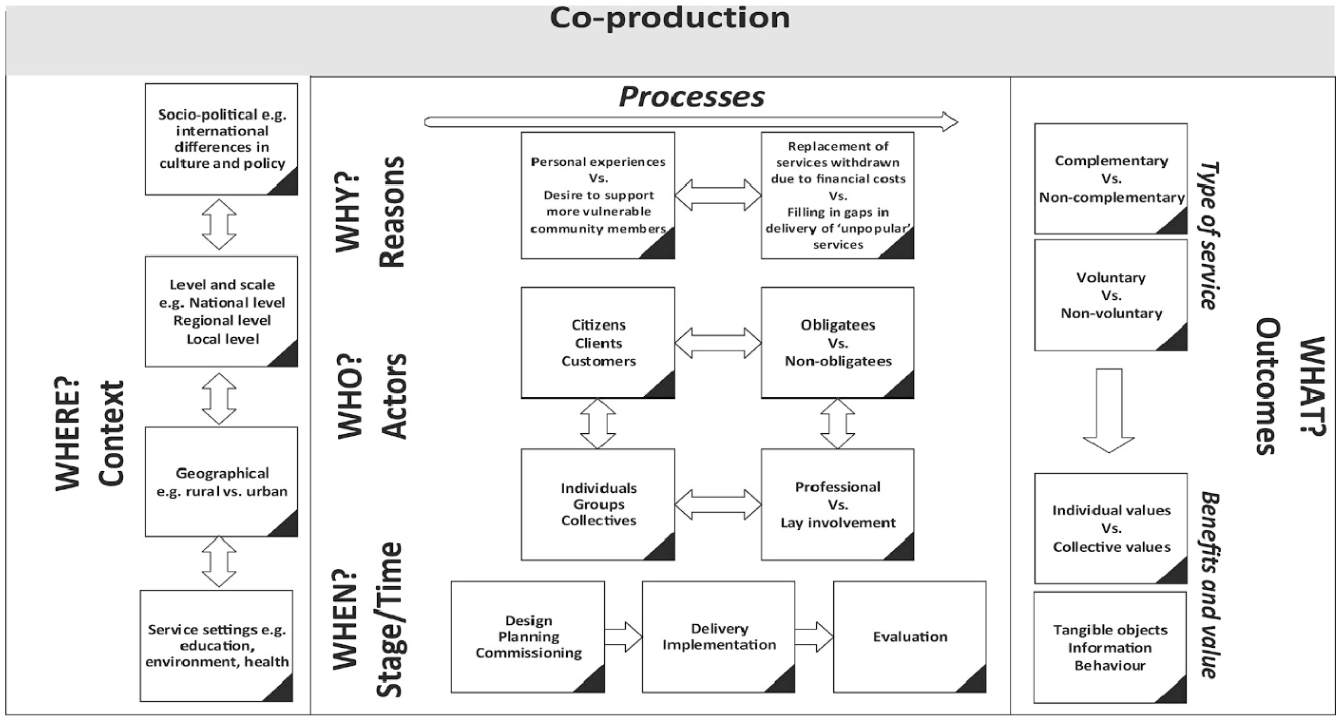
The 5Ws of Co-production (Steiner et al., 2023a). Mono-directional Arrows (→) Refer to a Consecutive Process in Time; Bi-directional Arrows (↔) Refer to Areas of Mutual Influence.
‘Where’ addresses the context that influences a service, and within which it operates. This includes the geographical location and physical spatiality of the service setting, but also extends to intangible factors like socio-political climate, policy support and the sector within which the service is delivered (Steiner et al., 2023a).
‘When’ refers to the temporal phases of the service cycle. These phases fall into three broad categories: design, including commissioning and planning; implementation, including delivery, and evaluation, including monitoring and assessment (Steiner et al., 2023a).
‘Who’ implores us to identify the actors that play a part in the service cycle, and ask questions about their participation. Co-production requires a collaboration between the state (or organizations acting on behalf of the state), considered to be ‘regular producers’, and lay stakeholders, or ‘citizen producers’ (Brudney & England, 1983; Nabatchi et al., 2017). This also raises questions about the extent to which lay stakeholders are involved, and the extent to which organizations rely on their contribution to function effectively (Alford, 2016). Lay stakeholders, depending on the nature of the service, can be classified as citizens, clients, or consumers (Steiner et al., 2023a). Citizen producers are most likely to engage with the service process as individuals rather than as groups or collectives (Bovaird et al., 2015).
‘Why’ refers to the actor motivations to participate in the service process. Motivations at the individual level include altruism, access to community, shared experiences and peer support. At the collective level, motivations include feeling a need to step in when a centralized service is withdrawn, and a desire to provide a service where no other service would exist (Steiner et al., 2023a).
‘What’ has reference to the kind of service in question, and the benefits that service subsequently produces. Services can be categorized as being complementary, operating in addition to ‘core processes rather than part of it’, or non-complementary, operating where no other service would exist otherwise (Brandsen & Honingh, 2016, p. 432). The benefits, or value, produced can be conceptualized as being private or public, usually with at least some degree of overlap (Alford, 2016). Private value is typically, although not wholly, confined to the individual level and primarily benefits those who are directly involved. Public value, on the other hand, is felt on the collective level, with benefits felt by both individuals and wider society (Brudney & England, 1983; Nabatchi et al., 2017).
Barriers to Participation for Young People
For young people, defined as anyone under the age of 18, the right to participate in making decisions about matters affecting them is recognized by the United Nations under Article 12 of the United Nations Convention on the Rights of the Child (United Nations General Assembly, 1989). As more countries move towards incorporating the Convention into law (Stalford & Lundy, 2020), facilitating young people’s right to have their say on the services they use is increasingly no longer simply a moral obligation, but a legal one.
Yet, challenges persist. Youth are frequently positioned as passive recipients of services rather than active agents in their design and delivery, limiting genuine collaboration and their perceived legitimacy in decision-making processes (Sutherland et al., 2023). This notion is echoed in other recent studies that draw attention to the way even unintentional adultism, wherein adults interact with young people along relatively inflexible, hierarchical lines (Flasher, 1978), can restrict agency and increase feelings of powerlessness among the youth served (Hall, 2019; Kennedy et al., 2021). Poorly implemented participation also carries with it the risk of reducing young people’s input to tokenism, whereby their views and methods of expression are ‘limited’ for performative reasons, or with perceived good intentions (Lundy, 2018).
Given the transitional nature of adolescence and early adulthood, young people’s priorities and capacities can fluctuate rapidly (Head, 2011). This complicates sustained engagement in long-term service co-production projects and makes it difficult to develop approaches to youth co-production that are both responsive and transferable. However, a major caveat highlighted in the youth participation literature is that equitable access is a persistent challenge (Fields & Green, 2025; Mhater & Deber, 1992). Despite the best efforts of services to reach a diversity of young people, additional effort is typically required to engage the most marginalized. When services have insufficient organizational capacity to reach the socially excluded, co-production can reinforce pre-existing social inequalities (Augsberger et al., 2018). Young people may also face barriers to participation in the shape of personal or parental literacy, neurodiversity and physical disability. As with co-production involving adults, it is often young people who already possess particular resources, abilities and skills who are most likely to engage in co-productive behaviours (Augsberger et al., 2018; Head, 2011).
Methodology
Our rationale for adopting a scoping methodology is twofold: First, our research question is broad and seeks to summarize the current state of knowledge in a very broad field. A scoping review offers a suitable match for this endeavour (Arksey & O’Malley, 2005; Munn et al., 2018). Second, scoping reviews are recommended for topic areas that have not previously been subject to a comprehensive review (Arksey & O’Malley, 2005). By mapping the key concepts, tensions and knowledge gaps, we identify the areas where more specific questions can be posed to increase understanding of this under-researched area (Munn et al., 2018). Our scoping review followed the recommendations of Arksey and O’Malley (2005) and Levac et al. (2010) over the following five stages:( a) identification of the research question, (b) identification of relevant studies and study selection, (c) data charting and collation, (d) summarization and (e) reporting of results.
We aim to unpack current understandings of young people’s co-production within third-sector organizations. To do this, we took a literature-focused approach that initially targeted journal articles. Difficulties in locating a sufficient number of published sources saw us extend our inclusion criteria to incorporate theses and dissertations. The search for literature took place between December 2023 and June 2025 using ProQuest, Scopus, EBSCOhost and Google Scholar. Advice on the most relevant databases for our topic area was sought from an academic librarian at our institution. Only articles published in English were included for review due to limitations on time and resources, but also because of potential problems associated with translating concepts across different languages. Nevertheless, our review does include a few articles that present evidence from non-English-speaking countries. No grey literature was included because of our specific focus on research knowledge and the difficulties associated with systematic searching.
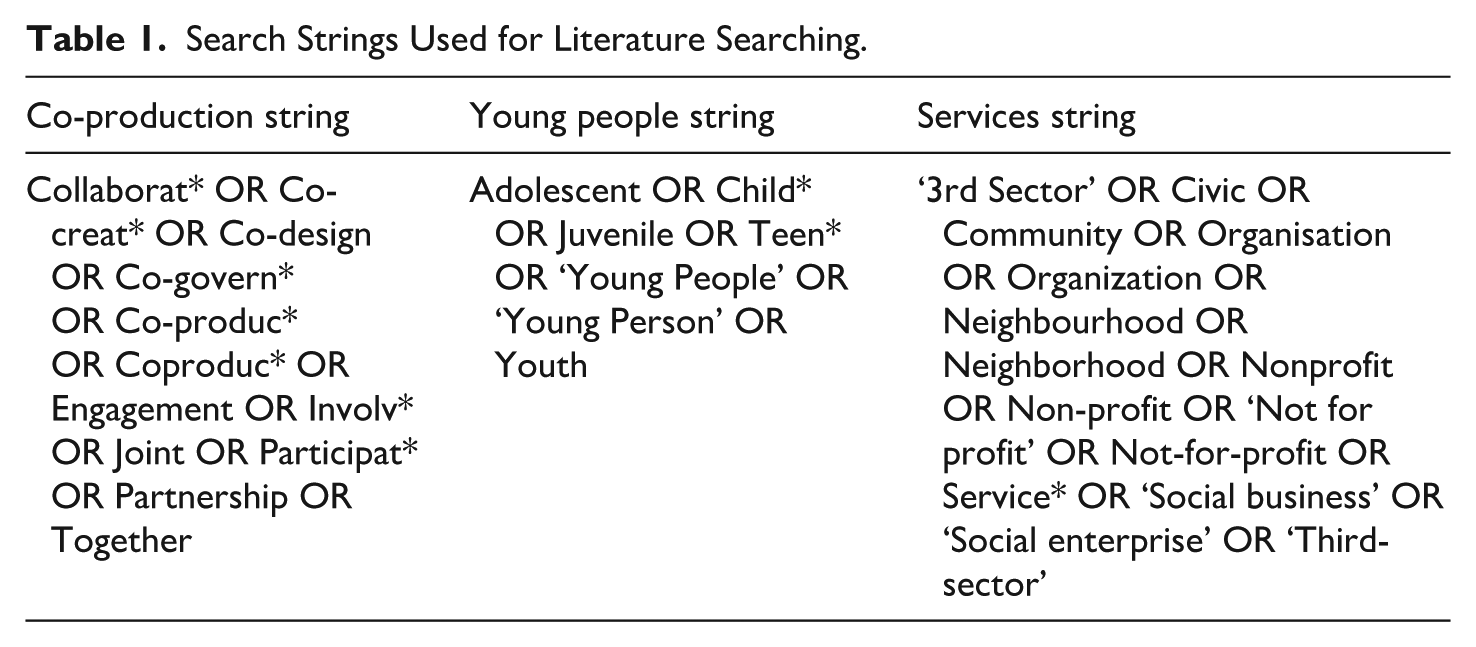
The eligibility criteria were as follows: (a) dissertations, theses or empirical articles with a primary focus on community-based or third-sector organizations that serve young people; (b) sources documenting young people’s services which utilize co-production or co-production-like elements in their planning, delivery or evaluation stages; and (c) sources published in the English language. The relevance screening and data characterization templates were checked by two researchers, with revisions made as required before they were implemented. From the initial search results, 20% of the excluded sources were selected at random and re-verified to confirm they did not meet the inclusion criteria. The search terms used aimed to address the research question across three dimensions: co-production, young people and service provision. A detailed breakdown of the keyword search terms is displayed in Table 1. These terms were developed using an academic thesaurus and checked for accuracy against our previously known articles. The same strings were used to search titles and abstracts in each database.
Search Strings Used for Literature Searching.
Overall, we screened the abstracts of 1,823 sources, with 145 full-text sources reviewed. Thirty-one sources were included in the final corpus as shown in Figure 2, four of which were theses. A detailed summary of our included sources is included in Supplemental Online Appendix 1.
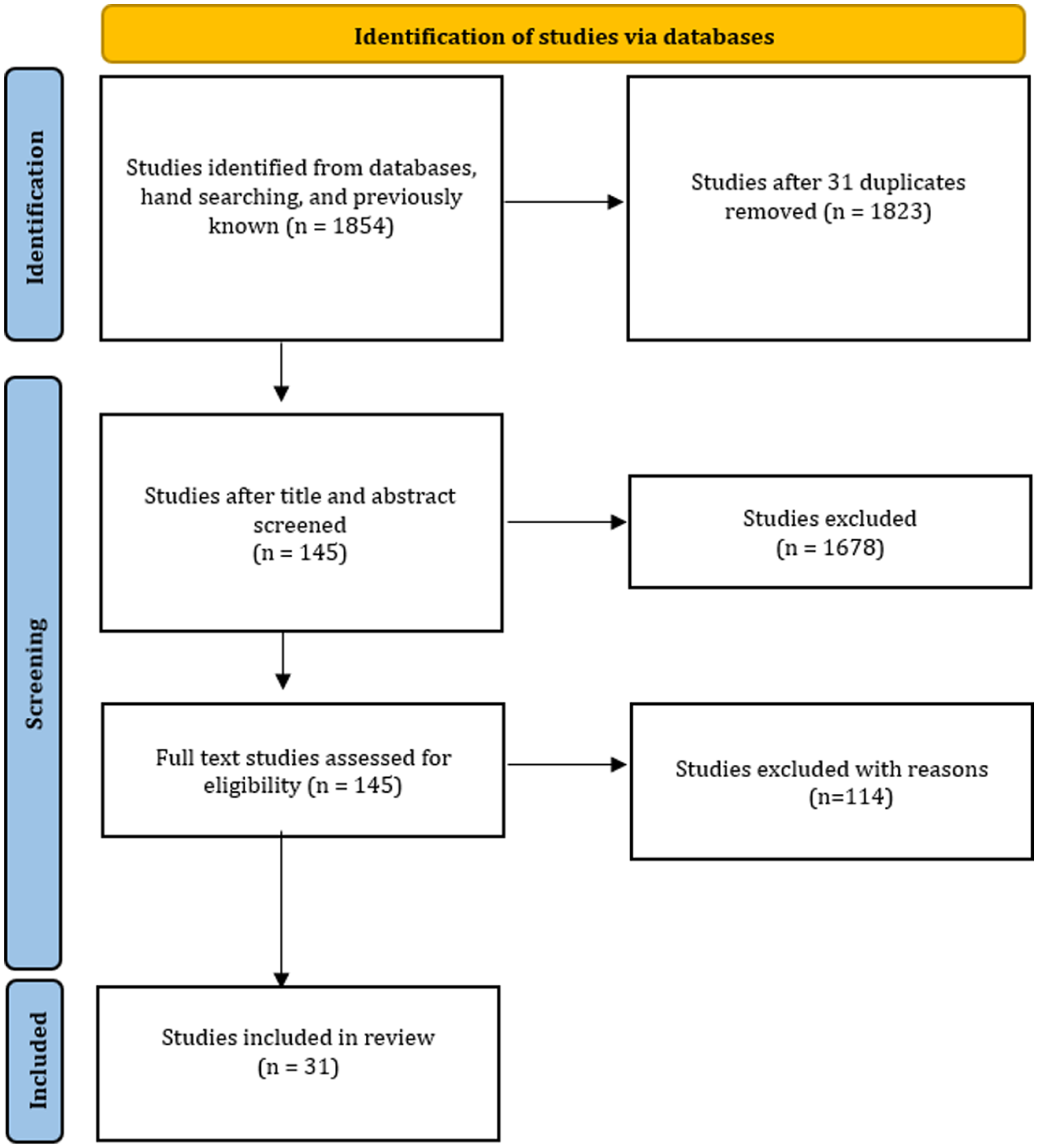
PRISMA Flowchart of Included Studies.
The search for relevant literature was challenging. Although our search strings were specific enough to retrieve a manageable number of results, relevant published articles were sparse. Many were easily discarded because they clearly did not meet our inclusion criteria. Others, however, would appear promising but, upon closer inspection, merely offered examples of youth engagement rather than co-production. To increase our corpus, we extended our inclusion criteria to include theses and dissertations by repeating our search using ProQuest’s Dissertation and Theses Database. This increased our yield but, again, it was not always immediately clear if the results did in fact contain examples of co-production. To make a judgement on the relevance of each source, we utilized the 5Ws Framework (Steiner et al., 2023a), outlined earlier in this paper, as a lens to interrogate the sources where co-production was not immediately obvious.
Thematic coding targeted information which could best answer our review question (Crabtree & Miller, 1999) with posteriori themes uncovered and pursued throughout the analytical process (Fereday & Muir-Cochrane, 2006). Themes were discussed and sorted initially into three overarching subgroups: young people, practice and organizations. The research team then agreed upon a coding framework which guided further iterations of data analysis, aided by NVivo qualitative data analysis software. Limitations on resources meant that the coding process was undertaken by a lone researcher, with discussions held to reach consensus where uncertainty around classification or meaning was present. As such, we acknowledge the risk of potential bias in our findings and conclusions. Nevertheless, we argue that analysis undertaken by an individual can be sufficiently rigorous, when researchers strive to uphold stringent underlying principles (Tracy, 2010).
Findings
General Characteristics of Included Studies
Articles that met the eligibility criteria and were included in our review were all published between 2004 and 2025. Around half of the articles come from the United States (50%), followed by the United Kingdom (22%), with smaller representations from Canada (10%), Finland (6%), Sweden (3%) and Portugal (3%) respectively. Most of the articles (60%) focus predominantly on older teenagers aged 15 to 18, 30% focus on preadolescents and young teenagers ages 9 to 14, with the remaining 10% focusing on children and family services. Just over half of the articles address young people’s service participation practices (55%), with 45% addressing the operation of non-profit services.
Co-production With Young People in Action
Within the articles of this review, there are diverse examples of young people co-producing as individuals, in groups, and as larger collectives. At the individual level, young people are supported to negotiate multi-provider models to make decisions about their care (Bolin, 2018; Tuurnas et al., 2015), develop strategies for positive behavioural change (Caló et al., 2020; Millar et al., 2020) and act as part of adult-young person dyads who work together to improve their communities (Sullivan & Larson, 2010). As groups, young people are acting as peer-supporters (Kiili et al., 2021; Millar et al., 2020), advocating for other young people (Issahaku & Adam, 2022; Regal, 2022) and training professionals as experts by experience (Aeschbach et al., 2024; Phelps, 2017). And, as collectives, young people are involved in organizational governance (Canas et al., 2019; Zeldin, 2004), political action such as demonstrations and rallies (Issahaku & Adam, 2022; Schwarz & Suyemoto, 2013) and are empowered to directly lobby politicians (Regal, 2022; Sullivan & Larson, 2010).
The co-production undertaken by the young people in this review typically happens across the three distinct stages of planning, delivery and evaluation. With regards to planning, young people are engaged in designing outreach and awareness activities (Canas et al., 2019; Griffith & Johnson, 2019), planning conferences and events (Larson et al., 2005; Norman, 2021) and making funding and policy decisions (Milbourne, 2009b; Zeldin, 2004). In terms of service delivery, there are examples of young people acting in the capacities of peer-mentors (Gaby, 2018; Nicholas et al., 2019), consultants (Aeschbach et al., 2024; Phelps, 2017) and working in partnership with adults to deliver public value (Cullingworth et al., 2022; Sullivan & Larson, 2010). With regard to evaluation, the young people in this review are participating in formal organizational evaluation procedures (Aeschbach et al., 2022; Nicholas et al., 2019), having informal conversations with adult practitioners who respect their views (Cullingworth et al., 2022; Griffith & Larson, 2015) and engaging in identifying and solving problems of key importance to their organizations (Phelps, 2017; Zeldin, 2004). More information about this review’s included articles, the services within them and the nature of the co-production they feature is included as Electronic Supplementary Material.
Offering Meaningful Engagement With Young People
One of the most evident themes in our findings is the notion that co-production has a myriad of developmental and pro-social benefits for young people. When participating in co-production, young people can typically expect to grow in confidence and self-esteem (Caló et al., 2020; Zeldin, 2004), gain leadership skills (Gambone et al., 2006; Rodrigues et al., 2022), develop resilience (Millar et al., 2020; Motley & Aeschbach, 2025) and increased their civic engagement (Schwarz & Suyemoto, 2013; Tiffany et al., 2012). Pro-social and developmental benefits were mentioned in 17 of 31 articles. It is important to note, however, that not all young people will experience all of these benefits. Adults, for example, may fail to recognize the agency of young people (Kiili et al., 2021), and the key aim of a service may not necessarily be to provide these benefits (Cullingworth et al., 2022). In addition, young people may self-exclude because of scepticism about service goals (Zeldin, 2004), previous negative experiences (Collins, 2022; Milbourne, 2009b), or negative perceptions of adults (Griffith & Johnson, 2019; Sullivan & Larson, 2010).
Through practices such as role-modelling (Griffith & Larson, 2015; Norman, 2021) and exposure to wider social circles (Larson et al., 2005; Nicholas et al., 2019), the findings show that young people can learn and apply positive behavioural lessons elsewhere in their lives (Aeschbach et al., 2022; Rodrigues et al., 2022). The findings also suggest that young people place high importance on the development of practical, transferable skills (Phelps, 2017; Wright et al., 2014). The caveat here is that most of these reports come from organizations that deliver ‘high-quality’ services, that is, those working intentionally to consider the role of young people, and their needs to become effective contributors (Aeschbach et al., 2024; Gambone et al., 2006). How, and if, these benefits are experienced by young people who co-produce lower quality co-produced services is not well documented.
Putnam (2000, p. 35) defines social capital as the ‘features of social organizations, such as networks, norms, and trust, that facilitate action and cooperation for mutual benefit’. The findings show that the social capital young people build through their service participation can support social cohesion (Phelps, 2017; Sullivan & Larson, 2010) and provide firsthand experience of the adult world (Jarret et al., 2005; Sullivan & Larson, 2010). Furthermore, young people are found to perceive these experiences to be particularly desirable (Griffith & Larson, 2015; Nicholas et al., 2019; Phelps, 2017).
Thirteen of the 31 articles show that when co-producing a service, young people benefit from the provision of support, time and resources (Griffith & Johnson, 2019; Schwarz & Suyemoto, 2013). For instance, our review contains examples of services that routinely adopt practices such as mentoring (Canas et al., 2019; Norman, 2021) and training young people (Aeschbach et al., 2024; Jarret et al., 2005). The findings suggest that, typically, without additional support, young people struggle to become and remain engaged in co-production processes (Caló et al., 2020; Motley & Aeschbach, 2025).
Although none of the included articles specifically address motivation, many touched upon the mechanisms of securing lasting buy-in from young people (Aeschbach et al., 2022; Regal, 2022; Zeldin, 2004). Instrumentally, the articles in our review contain examples of organizations sharing decision-making powers (Bolin, 2018; Zeldin, 2004), being transparent when shared decision-making is not possible (Larson et al., 2005; Regal, 2022) and providing clear structures for participation (Aeschbach et al., 2022; Gambone et al., 2006). From the perspective of young people, the themes of feeling valued and being able to make a difference commonly appear when they discuss their motivations (Bolin, 2018; Collins, 2022). Notably, only a handful of articles mentioned compensating young people for their efforts (Aeschbach et al., 2024; Canas et al., 2019; Schwartz & Suyemoto, 2013). Relationships also feature prominently in 10 of the 31 articles. The findings suggest that young people place their trust in those they can connect with through interests or experiences (Norman, 2021), those they perceive to acknowledge their agency (Wright et al., 2014; Zeldin, 2004), and those who are available when they need them (Bolin, 2018; Zeldin, 2004).
The findings show that young people are most likely to participate when they perceive the services they access to have value to them (Bolin, 2018; Milbourne, 2009b). The articles in our review also show examples of young people placing value in validation through peer support and connections with specific individuals (Griffith & Larson, 2015; Issahaku & Adam, 2022) and appreciating services that ‘rip up the schedule’ and are prepared to bend the rules to work for them (Cullingworth et al., 2022; Millar et al., 2020, p. 94). The evidence suggests young people are more likely to be exposed to co-productive experiences they find valuable through ‘bottom-up’ services (Gaby, 2018; Regal, 2022), which are typically small-scale, more flexible and organized by those closest to the issue at ground level, compared with their top-down, centralized counterparts. On the other hand, participation opportunities in the larger, top-down services occur periodically for a limited number of the most engaged young people (Gambone et al., 2006).
The 18 articles in our review with direct input from young people suggest that they are willing to participate. This willingness to participate is present despite a suggested awareness among young people that they do not always bring the same level of knowledge and experience (Issahaku & Adam, 2022; Jarret et al., 2005). The findings, however, also show that participation can be challenging for young people. They can, for example, have difficulty negotiating unfamiliar situations such as power-sharing and assuming responsibilities which are usually reserved for practitioners or professionals (Milbourne, 2009b; Zeldin, 2004). It can also be difficult to sustain their interest and engagement without considerable effort (Milbourne, 2009a).
Developing Supportive Organizational Structures and Processes
Many of the organizations detailed in the included articles were selected because the authors perceived them to be ‘high-quality’ (Jarret et al., 2005; Motley & Aeschbach, 2025). At the organizational level, the findings suggest that high-quality services intentionally make participation easier for young people. We found examples of organizations targeting issues and activities that resonate with young people, such as identity (Gambone et al., 2006; Nicholas et al., 2019), engaging in frequent dialogue with young people about their participation (Gaby, 2018; Zeldin, 2004) and proactively recruiting adults who are ‘youth-friendly’ (Sullivan & Larson, 2010, p. 114).
Trusting young people with decision-making responsibilities can increase their sense of ownership, increasing the likelihood that they co-produce effectively (Bolin, 2018; Gambone et al., 2006). On the contrary, when organizations give insufficient effort and attention to equality of status, they risk further marginalizing vulnerable young people and perpetuating negative stereotypes (Collins, 2022; Zeldin, 2004). Making this switch to horizontal decision-making structures can be impeded by long-standing workplace cultures that are slow to change (Kiili et al., 2021; Zeldin, 2004). Evidence suggests that smaller, bottom-up services are better equipped to make this transition because they have greater flexibility than their centralized counterparts (Caló et al., 2020; Cullingworth et al., 2022).
The multi-stakeholder networks required to co-produce effectively appear to be vulnerable to issues related to communication (Tuurnas et al., 2015). Findings suggest that having named individuals responsible for overseeing the process is one of the key actions organizations can take to mitigate this (Milbourne, 2009b; Sullivan & Larson, 2010). The articles reviewed also show examples of individuals overseeing the process between multiple organizations (Cullingworth et al., 2022) and individuals overseeing the process within organizations (Millar et al., 2020). However, the reliance on a small number of certain individuals highlights the fragile nature of community collaborations (Milbourne, 2009b; Tuurnas et al., 2015). In addition, the findings show that organizations can have difficulties making sense of what are often complex and disjointed service landscapes (Milbourne, 2009a; Tuurnas et al., 2015).
Many of the organizations in our review operate in a favourable, if not actively supportive, policy context (Cullingworth et al., 2022; Millar et al., 2020). The evidence shows that supportive policy means organizations can more easily draw on the strengths of each other (Cullingworth et al., 2022; Milbourne, 2009b), and the young people who access them (Bolin, 2018; Gaby, 2018). However, in less favourable policy contexts, organizations must make difficult decisions about the breadth and depth of their services (Milbourne, 2009a). Research suggests that services that are not well supported have more worries about funding, spend more time on administrative tasks and are more likely to be measured against short-term performance targets (Milbourne, 2009b). There are also questions about whether adopting a co-produced approach serves the interests of organizations, or the state, because of the way it moves the burden of responsibility for service delivery onto smaller providers (Milbourne, 2009a).
Finally, our findings suggest that organizations are not always well equipped to measure indicators of ‘success’, such as interest (Gambone et al., 2006), connectedness (Caló et al., 2020) and peer relationships (Wright et al., 2014). The findings show that organizations themselves can struggle to develop measurement and evaluation tools (Regal, 2022), and there is uncertainty about what to prioritize (Milbourne, 2009a).
Aligning and Supporting Frontline Practices
Thirteen articles contain input from frontline practitioners involved in service co-production. The findings indicate that organizations face difficulties in attracting adults who are both suitable and willing to co-produce. The additional regulations associated with working with young people make this task even more challenging (Milbourne, 2009a). The shortage of suitable individuals means practitioners often find themselves performing multiple roles beyond their job descriptions, such as securing funding (Milbourne, 2009a), or acting in the capacity of friends, teachers and mentors to young people (Larson et al., 2005; Sullivan & Larson, 2010).
Our review suggests that practitioners can be apprehensive about working with young people on an equal basis, and that negative stereotypes of young people often lie behind these apprehensions (Kiili et al., 2021; Zeldin, 2004). The findings show that, among frontline practitioners, there are doubts surrounding young people’s abilities (Kiili et al., 2021; Zeldin, 2004) and commitment (Bolin, 2018), as well as questions about what their involvement means for their identity as professionals (Bolin, 2018; Kiili et al., 2021). This is not true for all, however, with evidence suggesting that those working in smaller organizations appear much more likely to view participation in a positive light (Caló et al., 2020; Millar et al., 2020). Moreover, those exposed to intensive collaborations with young people have more favourable opinions of their character and abilities (Motley & Aeschbach, 2025; Sullivan & Larson, 2010). However, it is common for adults and young people to have contrasting ideas about service goals and relevance because of their different experiences and worldviews (Nicholas et al., 2019; Tiffany et al., 2012).
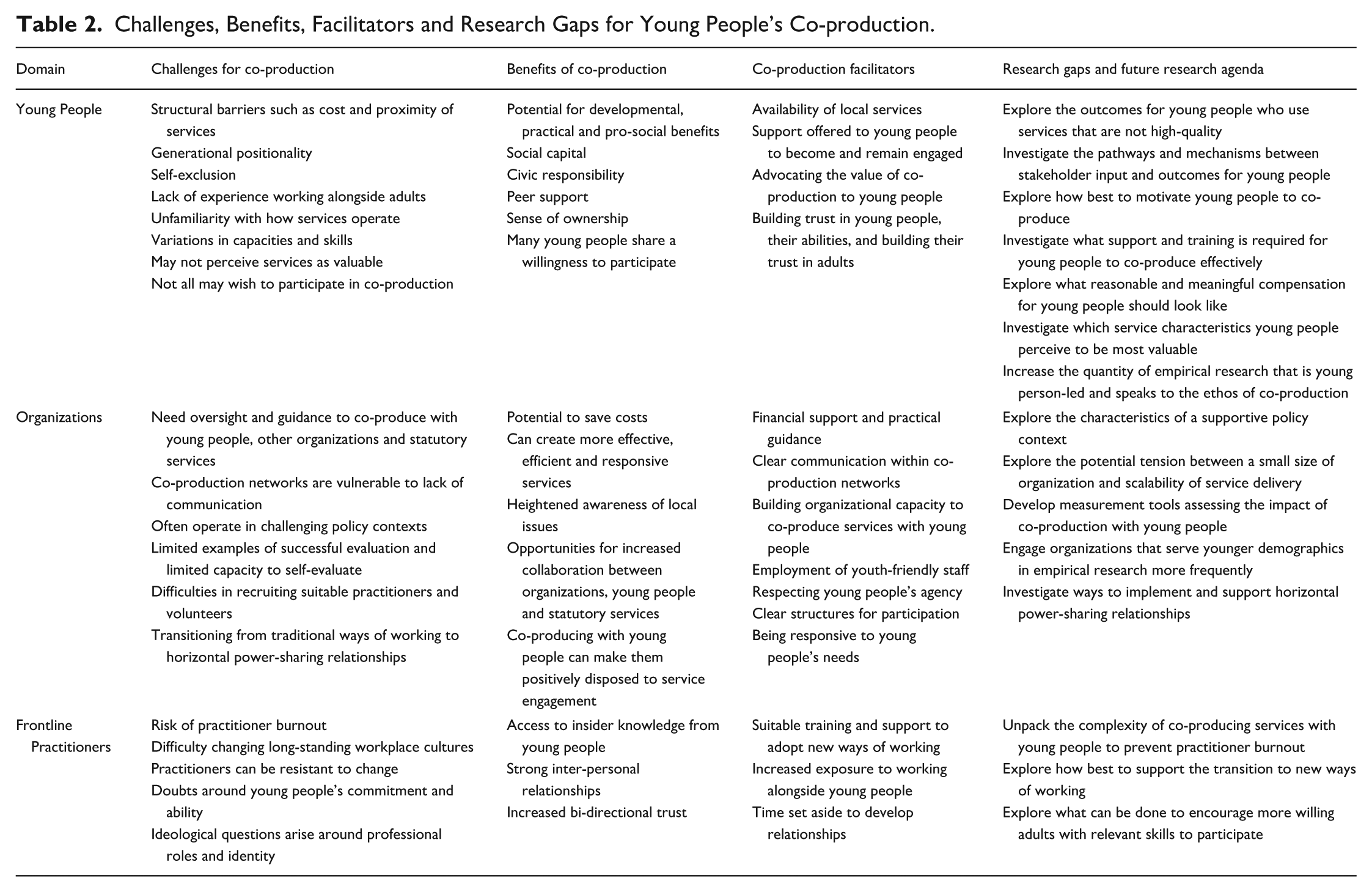
Research shows that working in partnership with young people can make practitioners uncomfortable and resistant to change (Cullingworth et al., 2022; Sullivan & Larson, 2010). Evidence suggests one of the primary sources of negative attitudes is inexperience in negotiating such radical practice changes (Tuurnas et al., 2015; Zeldin, 2004). Indeed, much like the young people they are working with, practitioners also need time and support to change their practices (Canas et al., 2019; Gambone et al., 2006). In this regard, there is a pertinent need for training on how to adapt to working in partnership with young people, while still delivering a high-quality service (Cullingworth et al., 2022; Kiili et al., 2021). Table 2 summarizes the findings laid out in the subsections above, and lays out the challenges, benefits and facilitators for the three main stakeholder groups: young people, organizations and practitioners. It also highlights the key knowledge gaps where future researchers should focus their attention.
Challenges, Benefits, Facilitators and Research Gaps for Young People’s Co-production.
Discussion
As more countries continue to incorporate the United Nations Convention on the Rights of the Child (United Nations General Assembly, 1989) into national law, organizations are under increasing pressure and scrutiny to ensure young people can realize the rights they are legally afforded. The requirement that organizations comply with the Convention presents a need for more empirical evidence that can inform policy and practice. The growing efforts to embed co-production in service delivery processes, galvanized by the influence of the Convention, make this study and research agenda particularly timely. We focus on young people’s co-production in the third sector because of the way services in this context typically utilize user and citizen participation to meet their aims, and benefit their wider communities (Salamon & Sokolowski, 2016); one of co-production’s prerequisites. In doing so, we draw attention to the key debates and tensions in the field, and present a research agenda to explore whether co-production is a feasible vehicle to balance young people’s rights with fiscal pressures, democratic governance and improved service performance.
When undertaking this review, locating relevant literature was challenging. Often, sources had a focus on engagement, but it was not always immediately apparent if and when activities which could be considered co-production had taken place. While the term ‘co-production’ itself is used in the sources with a policy focus, the sources concerned with young people’s development use alternative terminology. Indeed, our search for literature found greater success when we expanded it to include the terms co-creation, co-design and co-governance. The ‘wooliness’ of the term co-production is well documented (Osborne et al., 2016; Steiner et al., 2023a), and its apparent cross-sector flexibility means there is no universally recognized definition (Bovaird, 2007; Nabatchi et al., 2017). However, despite the reported uptick in interest around co-production within policy circles (Bovaird et al., 2019; Brandsen & Honingh, 2016), it is striking that the term itself does not feature more prominently in the literature on young people’s third-sector services.
One explanation for this might lie in the way that these two differing groups of scholars approach the concept and the notion of young people’s participation in service processes more broadly. On one hand, those who study co-production from a policy perspective come from a somewhat traditional school of thought, where its utility as a vehicle to save money and make services more efficient is equally as important as user participation (Milbourne, 2009a; Tuurnas et al., 2015). Those with an interest in young people’s development, on the other hand, see co-production as a means to empower young people and increase their agency (Gambone et al., 2006; Nicholas et al., 2019). There is, thus, a degree of conceptual overlap, but tension also exists between the two camps and how they view co-production. This tension also plays out in practice, where the state’s interest in co-production is driven by its wish to save money and increase efficiency, but offering meaningful opportunities for young people to engage in service processes is both costly and time-consuming. Interestingly, none of the sources in our review bridge this gap. This is perhaps because this tension makes it difficult to realize both sides of the definition simultaneously. In relation to the points above, we argue that research should explore why there is such a lack of cases against an apparent backdrop of political support.
Unpicking this tension, our findings suggest that young people typically require tailored support and training to engage in co-production (Griffith & Larson, 2015; Phelps, 2017). As a result, co-produced services may in fact be costlier and less efficient, at least in the short term. The transient nature of youth also means that training and support are not a ‘one-and-done’ undertaking. More likely, support and training will have to regularly accommodate new cohorts as young people age and progress to adult services. The tensions outlined above raise the pertinent question of whether co-production with young people should be considered the same way as co-production with adults. If co-production is to be pursued as a feasible way to deliver young people’s services, in the same way it is when adults are involved, research should focus on understanding when its costs outweigh its benefits.
Our review brings to light many of the potential benefits young people can expect as a result of participating in co-production, such as increased confidence, self-esteem and social capital. We do, however, acknowledge the possibility of survivorship bias in that studies which report positive outcomes are more likely to be completed, submitted, accepted and published. Furthermore, little is said in the sources in our review about the consequences of poorly implemented co-production. This could be in part due to the tendency for researchers to focus on services that are deemed to be high-quality (Aeschbach et al., 2024; Gambone et al., 2006). However, as highlighted in the youth participation literature, poorly implemented participation initiatives can reduce young people’s input to tokenism and exacerbate pre-existing inequalities (Augsberger et al., 2018). Nevertheless, the potential benefits young people are exposed to as a result of their engagement in successful co-production can lead to positive long-term outcomes, reducing the likelihood that they become a drain on the state (Collins, 2022). Thus, we argue that policy makers are correct to have an interest in co-production, but short-term cost/benefit perspectives should make way for long-term thinking.
A key barrier in this respect is young people’s unfamiliarity with how services operate beyond simply the point of delivery. Indeed, it is not always clear if young people are aware that they are co-producing the service they access. While some of the studies in our review detail the steps services take to facilitate young people’s participation, we did not find any articles where the co-production or participation support needs of young people were the main focus of inquiry. Similarly, although many articles touched on what motivates young people to participate, our review did not uncover any that primarily focused on motivation. It would seem, however, that many young people possess a collective willingness to participate and take ownership of the services they use (Issahaku & Adam, 2022; Jarret et al., 2005). As such, research should turn its attention to how best to harness the enthusiasm of those who wish to participate and advocate the value of co-production to those who are reluctant. It is also within reason to suggest that organizations need support and guidance to reach the most marginalized.
We also raise the ethical question of payment for young people’s co-productive efforts. When services transition from municipal control to a co-produced model, it is common for citizens to receive no monetary compensation. Instead, they gain greater autonomy and control over the service (Fotaki, 2015). While it may be true that young people can increase their autonomy and control via engaging in co-production, their generational positionality and lack of experience mean they are unable to take control to the same degree as adults. The literature on compensating young research participants suggests that compensation should be meaningful, but not potentially coercive (Morrow, 2012; Schelbe et al., 2014). Given that young people may be asked to assume responsibility and therefore a degree of risk for aspects of a service, research should look to uncover what reasonable, meaningful compensation looks like in this arena.
Our findings suggest that young people are most likely to be exposed to opportunities to meaningfully co-produce within small bottom-up organizations, and those that are less likely to have access to public funding. In contrast, it appears that large-scale organizations which receive substantial public funding do not typically operate a co-produced service model. In policy terms, larger endeavours may take priority, but co-production with young people is less likely when the stakes are higher; for example, when large sums of public money are involved or organizations serve large numbers of young people. It would be beneficial to explore the reasons behind this. A particular concern for bottom-up services is a lack of suitable practitioners and volunteers, meaning a small number of people perform multiple roles to keep services operating (Larson et al., 2005; Sullivan & Larson, 2010). This is concerning from a young people’s rights perspective. When organizations must divert time and resources towards staffing issues, a situation presents wherein young people’s rights may be compromised by the very organizations tasked with upholding them.
In light of the above, we argue that co-production with young people is an under-explored research area, deserving of greater attention than it currently receives. While policy makers continue to view it as a way to make services more efficient, save money and increase user participation, it is important that we increase our understanding of how to co-produce successfully with this diverse demographic. Co-production has the potential to act as a vehicle towards empowerment for young people, but if it is not implemented properly, it carries with it the possibility of disillusioning them and further deepening existing inequalities. It is our hope that future researchers can use this work as a jumping-off point which summarizes the current field of knowledge and points the way towards future avenues of exploration in this developing academic area.
Limitations
One of the biggest challenges in the undertaking of this review was the difficulty in finding empirical sources which contain examples of co-production, rather than simply engagement. The difficulties in locating relevant literature were compounded by the ‘wooliness’ and flexibility of the term (Steiner et al., 2023a). By using the 5Ws Framework, we were able to make a judgement on whether co-production was present, but this information was not always readily apparent in the sources we read. The difficulties we encountered in locating literature that contained examples of young people’s co-production, and literature which used the word specifically, meant that many of our results were returned as a result of other keywords. Although every care was taken to ensure our search strings were comprehensive, it is entirely possible that relevant articles may have been missed. With regard to the points above, we flag co-production’s conceptual flexibility as a major challenge that future researchers should be conscious of.
Due to the scoping nature of our review, the study may not have captured all existing knowledge about the co-production of young people’s services. Most notably, our included sources say little about the unintended negative outcomes of poorly implemented co-production. Future researchers may wish to broaden their search to include grey literature, theoretical articles and opinion pieces to better illuminate this aspect of young people’s co-production.
While our scoping review looks only at young people’s co-production in the third sector, we suggest that this work can act as a precursor to a full systematic review that would offer much more depth of understanding on this topic (Munn et al., 2018). Future researchers may also wish to conduct a comparative review, which considers public sector services, to better understand how approaches, benefits and risks differ across sectors.
Conclusion
This scoping review summarizes the current state of the field and points towards avenues for future research to better understand the distinct benefits and challenges of co-producing services with this heterogeneous demographic. As well as making services more responsive, democratic and efficient, co-production can act as a vehicle towards young people’s agency and empowerment. However, poorly implemented co-production endeavours risk reducing young people’s efforts to tokenism and exacerbating existing social inequalities. Currently, as a result of this academic field being in its relative infancy, many decisions made by organizations and policymakers are not grounded in empirical evidence. To remedy this, our article outlines a future research agenda which we hope will inform how best to co-produce effectively with young people, if a co-produced approach is indeed the best course of action.
Supplemental Material
sj-docx-1-nvs-10.1177_08997640251397657 – Supplemental material for Co-producing With Young People in the Third Sector: A Scoping Review and Future Research Agenda
Supplemental material, sj-docx-1-nvs-10.1177_08997640251397657 for Co-producing With Young People in the Third Sector: A Scoping Review and Future Research Agenda by Callum Morrison, Artur Steiner, Danielle Hutcheon and Kareena McAloney- Kocaman in Nonprofit and Voluntary Sector Quarterly
Footnotes

Funding
The authors received no financial support for the research, authorship and/or publication of this article.
Declaration of Conflicting Interests
The authors declared no potential conflicts of interest with respect to the research, authorship and/or publication of this article.
Data Availability Statement
The articles used in the scoping review of this paper are listed in the Supplemental Online Appendix.
Supplemental Material
Supplemental material for this article is available online.
Author Biographies
References
Supplementary Material
Please find the following supplemental material available below.
For Open Access articles published under a Creative Commons License, all supplemental material carries the same license as the article it is associated with.
For non-Open Access articles published, all supplemental material carries a non-exclusive license, and permission requests for re-use of supplemental material or any part of supplemental material shall be sent directly to the copyright owner as specified in the copyright notice associated with the article.
