




Abstract
Volunteers occupy a unique position in organisations; not paid employees yet operating within organisational structures. Volunteering is also an additional life role, managed alongside home, family and, for many, work roles. Despite such complexities, our understanding of volunteer experiences and expectations is limited. We explore the experiences of 72 volunteers using a psychological contract lens (53 volunteers before the COVID-19 pandemic and 19 volunteers during the first national lockdown). Our findings offer insights into consistency across volunteers’ expectations (i.e., of collective commitment, shared values, and organisational and peer support) and two distinct aspects of experience aligning roles to the COVID-19 imperative (i.e., motivation and role flexibility). Implications for organisations are discussed in relation to volunteer support, engagement and retention, including ‘buddy’ systems, peer support networks and open communication regarding expectations.
In the United Kingdom, participation in volunteering has been steadily declining over the last 10 years, and volunteer levels are at a record low (Kanemura et al., 2022). Government data records that, in 2021/2022, 16 million people in England took part in either formal or informal volunteering at least once a month, and 25 million people volunteered at least once in the year, which is the lowest ever recorded participation rate (Department for Culture, Media & Sport, 2023). The number of people who engaged in regular volunteering alongside paid work declined from 32% to 24% between 2020/2021 and 2021/2022 (Department for Culture, Media & Sport, 2023). The downturn in participation in volunteering appears to align with general U.K. attitudes shifting towards self-interest, related to both the COVID-19 pandemic and austerity politics (De Vries et al., 2023). The pandemic had a significant impact on volunteer experiences and organisational management (Kanemura et al., 2022; Luksyte et al., 2021), with events across the world highlighting the increased reliance on formal and informal volunteers to support affected communities (Lai & Wang, 2023; Nahkur et al., 2022). Reduced levels of volunteering, combined with high turnover rates in the first year following recruitment of volunteers (Kragt & Holtrop, 2019), mean that nonprofit organisations in the United Kingdom have increased challenges in both recruiting and retaining volunteers (Englert et al., 2020) that may be further impacted by volunteers’ own shifting organisational and role expectations in this context.
Volunteers differ from employees in many ways. Although it is recognised that volunteers occupy a unique position in organisations that cannot be understood by simply extending practices, measures and theoretical tools used in relation to paid employees (Alfes et al., 2017), the absence of their voices in organisational and HR discourses remains a key barrier to solving these recruitment and retention challenges in the United Kingdom. Volunteers are not formally bound to a specific organisation to earn a wage (Nichols, 2012) and often volunteer due to an intrinsic motivation to give back to and support their communities (Kragt et al., 2018; Kragt & Holtrop, 2019). These differences are reflected in the relationship between a volunteer and their volunteer organisation(s). Compared with those of employee–employer relationships, volunteer–organisation relationships are more informal in nature, reflecting a different power dynamic, and are often more values-based and ideological in nature (Hager & Renfro, 2020; Hoye & Kappelides, 2021). Volunteering also creates additional demands on an individual, both in terms of their time and resources. For many, volunteering is a role that must fit alongside existing work and nonwork roles and, as such, requires focused HR management.
In this article, we explore this complexity of volunteering through an in-depth qualitative examination of U.K.-based volunteers’ experiences, some before and others during the COVID-19 pandemic. Specifically, we will explore the lived experiences of volunteers through a psychological contract lens (Rousseau, 1990) to illuminate the expectations and interpretations of the exchange relationships underpinning their experiences. Prior research has provided evidence of various qualities and experiences typical of those volunteering in everyday contexts (Ganzevoort & van den Born, 2023), including what leads them to quit (e.g., conflict, personal circumstances and lack of support) as well as what motivates them to continue (e.g., pleasure in volunteering activities). In addition, others have focused on those who volunteer during times of disaster, or crisis, highlighting many similarities with ‘everyday’ volunteering, but notable differences such as the role of external rewards and engagement in shifting narratives regarding volunteers themselves (Breen et al., 2024), as well as the impact of training and previous experience on volunteer resilience (Ghodsi et al., 2022). In direct response to the COVID-19 pandemic and to better understand the impact of this crisis on volunteering, much research has been conducted to explore change in volunteers and volunteering during that time. For example, research has investigated the changes in volunteering rates and differences in the groups likely to volunteer during the pandemic (Dederichs, 2023). In our article, we do not aim to quantitatively compare those who volunteered during the pandemic to those who volunteered prior, or continued to volunteer during, the pandemic. Instead, we aim to use data from volunteers across different time periods (pre- and during the COVID-19 pandemic) to further our understanding of volunteer experiences during a time of crisis, and the role of the psychological contract in volunteering more generally.
We, therefore, begin by setting out the psychological contract framework, before considering the application of this framework to volunteering specifically and highlighting the need for additional work in this area. We then explore a broad range of volunteer voices, some before and some during the COVID-19 pandemic to deepen our understanding of volunteer expectations in their own words across these shifting contexts. We go on to use this psychological contract informed analysis to offer nonprofit organisations evidence-based, practical suggestions to help them meet the volunteer retention and engagement challenge.
Psychological Contracts
With conceptual foundations in social exchange (Blau, 1964) and the norm of reciprocity (Gouldner, 1960), psychological contracts are defined as the set of individual beliefs that a person has in relation to the reciprocal obligations and benefits established in a relationship of exchange (Rousseau, 1990). An obligation within the relationship arises from a promise being perceived to have been made by the organisation (Rousseau, 1989). On making such a promise, either implicitly or explicitly, there is then an obligation to fulfil this promise, which in turn shapes and provides structure to the future of the relationship (Rousseau, 1990). Within the employment relationship literature, there is recognition that employees hold multiple-foci social exchange relationships across organisational agents, supervisors and co-workers (Alcover et al., 2017; Cropanzano & Rupp, 2008), as well as holding both individual level and team level psychological contracts, which can, together, impact on organisational engagement and turnover intentions (Laulié et al., 2023). Both organisations and employees regularly make promises to one another, and these are evident in multiple stages of the relationship, both formally (such as selection interviews) and informally (such as the motivational incentives offered). There are potential benefits of keeping promises for each party in the exchange; thus, it is crucial that there is trust in this process (Rousseau, 1995). Trust has been found to increase the likelihood of the future reciprocation of obligations (Coyle-Shapiro & Parzefall, 2008) and, within the employment literature, has been found to have implications for both employees and employers (Barney & Hansen, 1994; Dirks & Ferrin, 2001; Searle & Ball, 2004). Employees who feel that they can trust their employer, for example ‘tend to feel more obligated, expect to do more, and perceive themselves as having promised to do more than those who do not trust their employer’ (Roehling, 2008, p. 284), as well as having been linked to negative turnover intentions (Won et al., 2023).
The contents of psychological contracts – what the obligations of each party are, or what is exchanged in the relationship (Conway & Briner, 2005) – will vary across individuals and will be informed by both individual and organisational factors (Sherman & Morley, 2015). An understanding of psychological contract contents offers a broad perspective on which elements of the relationship such obligations are focused on, and the reciprocal nature of the obligations, for example, being offered training and benefits in return for effort and commitment. It is also important to consider the process-based nature of such a relationship. Psychological contracts encompass both emotional and nonemotional mental processes (Rousseau, 2011) and are considered cognitive schemas that guide how a person makes sense of the information and experiences they encounter (Rousseau, 2001; Sherman & Morley, 2015). Expectations of the relationship can be informed by past employment and pre-employment experiences, as well as the positive and negative experiences within an organisation (Sherman & Morley, 2015). Experiences within an organisation also feed into reciprocity, which has been identified as playing a key role in the ways a contract is accepted, declined or changed (Oorschot et al., 2021). As such, psychological contracts are dynamic and underlined by the cognitive, psychosocial and emotional processes of an individual.
Psychological contracts have been shown to impact the behaviour of both organisations and employees (Hiltrop, 1995; Rousseau, 1990). This is particularly evident when there is a perception of nonfulfilment of a contract promise through breach and/or violation; contract breach being the cognitive understanding that the other party has not fulfilled their obligations, whereas contract violation is an emotional reaction to the perception that the other party has wilfully failed to fulfil their obligations (Rousseau, 2011). Contract breach and violation have been shown to have far-reaching consequences for job satisfaction and organisational commitment (Coyle-Shapiro & Kessler, 2002), counterproductive workplace behaviours (Griep et al., 2023), perceptions of trust (Zhao et al., 2007) and intention to leave work (Lester et al., 2002), among others.
Psychological Contracts and Volunteering
While it is accepted that the unique ‘employment’ relationships of volunteers cannot be understood by transferring employee related measures to their experiences and expectations (Nichols, 2012), employment-based theories can be applied to the volunteer context to help us gain greater awareness of these experiences. Psychological contract theory is particularly useful for understanding volunteer unspoken expectations of their organisational exchange relationships. It has been argued that the theory can explain the ‘constant calculations that volunteers make to determine whether they should engage or continue to engage the community organisations that need them’ (Hager & Renfro, 2020, p. 287). As such, it offers an important and fruitful perspective through which to expand our understanding of volunteer expectations and, in so doing, improve volunteer retention.
The very nature of volunteering extends the meaning and utility of the concept of psychological contracts by incorporating a more values and ideology-based understanding to the framework (Hager & Renfro, 2020; Kappelides et al., 2023; Kappelides & Jones, 2019). Work within this area has highlighted that, while the fundamental attributes identified within an employment-based exchange relationship, including obligations, benefits and mutuality (Hiltrop, 1995; Rousseau, 1990) are relevant to volunteer relationships, they are not the complete picture. For volunteers, the exchange relationship has been conceptualised as the obligations, rights and rewards that a volunteer believes they are owed in return for their voluntary efforts and commitment to a group or organisation (Hager & Renfro, 2020). Evidence suggests that decisions to engage with specific organisations are guided by the alignment of values (Vantilborgh et al., 2012), and that clear and well aligned values between both parties result in more effectively understood mutual obligations (Barrett et al., 2017). Breach of these obligations when linked to a volunteer’s ideological beliefs has been found to result in engagement with corrective behaviours, such as organisational dissent or voicing discontent (Thompson & Bunderson, 2003). Mutual obligations, therefore, play a fundamental role in the positive perception of the relationship, with expectations being met and obligations being fulfilled reflective of contract fulfilment (Vantilborgh, 2015). The norm of reciprocity posits that when an organisation fulfils its obligations, this will be met with positive outcomes, such as increased commitment (Gouldner, 1960). Low fulfilment of volunteer contracts, however, has direct implications for volunteer retention, as it has been linked to a higher intention to leave (Vantilborgh, 2015). Importantly, it has been found that the ideological elements of a volunteer’s psychological contract play a crucial role in the continuation of the volunteer when faced with a contract breach or violation (Kappelides et al., 2023).
In addition, the multiple-foci social exchange relationships held by employees across organisational agents, supervisors and co-workers (Alcover et al., 2017; Cropanzano & Rupp, 2008) have also been reflected in the exchange relationships of volunteers (Hoye & Kappelides, 2021). While the relationships between volunteers and the wider organisation and its agents are important, particularly during recruitment, interactions with peers and supervisors are far more frequent and can also contribute to the maintenance of a volunteer contract and their retention. For example, the value-based elements of volunteer psychological contracts have been found to include peer support between volunteers (Barrett et al., 2017). Volunteering has been identified as contributing to a sense of social connectedness (Kragt, 2021), which positively impacts on well-being and retention of volunteers (Bowe et al., 2020; Gagné et al., 2020; Gray & Stevenson, 2020; Luksyte et al., 2021). Evidence suggests that volunteers perceive commonalities in values and goals as contributing to deep relationships with their peers (Englert et al., 2020), suggesting peers can play an important role in understanding volunteer experiences of their exchange relationships.
This Study
Hoye and Kappelides (2021) have highlighted the utility of the psychological contract framework in understanding volunteer management and experiences. However, they also indicate a range of limitations in the existing evidence base. This includes the limited range of research methods utilised in the research to date, and among other things, the need to understand the dynamic nature of psychological contracts and their potential impact on volunteer experiences and intentions. Moreover, while psychological contract theory is affirmed as a relevant and useful framework through which to understand the nature of the exchange relationship between volunteers and organisations in their systematic review, only three U.K.-based research articles in this area were identified in their review. Thus, there is a clear need to add to this nascent body of literature through expanding on the contexts in which volunteering is examined.
Drawing on a psychological contract lens (Rousseau, 1990), this study, therefore, aims to address gaps in the literature by illuminating expectations of volunteers that organisations need to satisfy. We take a specifically U.K.-centric position to address the need for more context-specific research in this area. In addition, we explore a broad range of volunteer voices, some before and others during the COVID-19 pandemic to deepen our understanding of U.K.-based volunteers’ experiences in their own words and qualitatively explore these experiences across a range of volunteering contexts, to include times of crisis. Our phased data collection spans two contextually different time points: before and during the COVID-19 pandemic. Analysing data from both time points provides us with an important opportunity to examine experiences across different contexts and during situations of immense social and psychological challenge, such as the pandemic, and their relationships with volunteer expectations. By adding a unique perspective to the existing literature on volunteer psychological contracts, our contributions are twofold. First, we provide new insights into volunteer expectations and engagement. Second, we provide practical, contemporary suggestions on the management of U.K.-based volunteers that may help improve volunteer retention.
Method
Participants
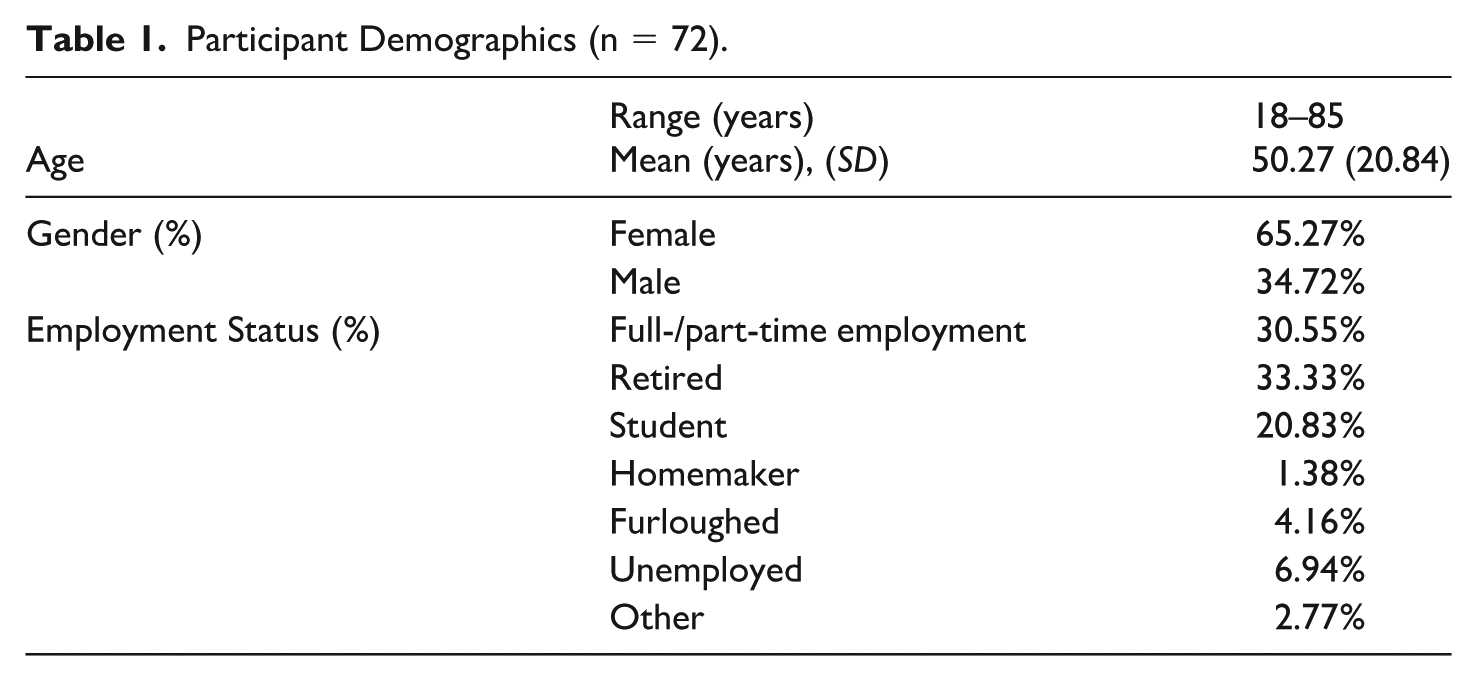
In total, 72 participants with diverse volunteering profiles were recruited, across a broad age range, time committed to volunteering roles, types of volunteering activity, stages of volunteering (e.g., retired volunteers, new and experienced volunteers and working volunteers) and work profiles (e.g., full-time, part-time, homemaker, unemployed and furloughed – for those recruited during the COVID-19 pandemic). Participants were recruited from across different local authority areas in the South and the South-West of England. Inclusion criteria were that participants were aged 18 or over and self-identified as being involved in volunteering activities.
The type of volunteering activities and the volunteer organisations the participants volunteered for were varied, including befrienders, youth clubs/groups, delivery and collection services, creation and distribution of personal protective equipment (PPE), older adults’ services, search and rescue, countryside and conservation, church/religious projects, advice and support groups, emotional support, and supporting health and well-being services (see Table 1 for participant information).
Participant Demographics (n = 72).
Each participant’s interpretations of their volunteering experiences were explored through in-depth interviews. The interviews were semistructured, with focus given to the relationships they had with and within the volunteer organisations and the ways in which they managed their volunteering roles. Participants were asked a series of open-ended questions relating to their volunteering experiences, such as their volunteering history, and the interactions they have had with other volunteers and volunteering organisations. Question development was informed by the authors’ experiences of working alongside volunteers, volunteer organisations and volunteering membership organisations. For example, participants were asked ‘When did you become interested in volunteering?’, ‘How would you describe the group of people that volunteer in the organisation?’ and ‘How would you describe your experience of being a volunteer?’ The questions were intentionally open and wide-ranging to enable participants to discuss all relevant experiences of volunteering.
Data collection was in two phases: Phase 1 (before COVID-19) interviews were conducted between August and November 2019 (N = 53), and Phase 2 (during the first U.K. lockdown) interviews were conducted between March and July 2020 (N = 19). The same interview protocol was used for both data collection periods. Data were collected as part of a larger, mixed-methods study (see Gray et al., 2024). Recruitment at both phases of the study reflected a diversity of volunteering profiles across a broad spread of societal contexts. Participants for both phases were recruited through the same avenues to ensure a form of continuity in participant types, with different participants at each phase. Recruitment avenues included two volunteering membership organisations, which represent volunteering organisations across the South of England, and through targeted recruitment of volunteers to address underrepresentation of some volunteer profiles (e.g., university volunteering centres were approached to gain access to younger volunteers). To protect participant anonymity, organisation, place and colleague names were removed at the point of transcription, and participant numbers were used.
Procedure
Participants were contacted directly by one of the researchers to organise the semistructured in-depth interview. Interviews were conducted face-to-face (Phase 1), via telephone (Phases 1 and 2) or via video call (Phase 2) by three trained interviewers. Interviews lasted between 40 and 101 min; the variation in interview durations was, in part, attributed to the breadth of volunteering experiences participants were able to reflect on and discuss during the interviews. Before the interview, participants were provided with a participant information sheet and consent form and were asked to complete a short demographic questionnaire to establish age, gender and employment status. This information was provided and gathered in-person or electronically (via Qualtrics), depending on how the interview was being conducted. Participants were informed of their right to withdraw and were offered a small monetary reward, in the form of an e-voucher, to compensate them for their time.
Data Analysis
Interviews were audiorecorded and transcribed verbatim. Data were analysed using an inductive data-led approach, following Braun and Clarke’s (2006, 2021) six-phase process of reflexive thematic analysis. Lincoln and Guba’s (1985) evaluative criteria were applied throughout to ensure the trustworthiness of the analytic process and the resultant output. The analysis was conducted by two of the researchers, who familiarised themselves with the whole data set by reading, re-reading and note-taking. To optimise the credibility of the analysis, initially each of the researchers independently coded five of the transcripts, generating inductive codes derived from the data set, for example ‘skills leading to increased responsibility’ and ‘sense of obligation to others’. Initial codes and thoughts were then discussed and agreed, through analyst triangulation (Patton, 1999), in relation to the direction of the interpretation before the remaining transcripts were distributed equally and inductively coded by both researchers. Following the coding process, initial themes were generated by one of the researchers and were, again, discussed, and disagreements between the coders were resolved at this stage. The initial themes were developed and refined into a final set of themes and subthemes, reviewing these against the coded extracts and the overall data set.
Data from Phase 1 and Phase 2 were analysed together, with indexing of data according to phase of data collection (Phase 1 pre-COVID and Phase 2 during COVID), as well as volunteer status (i.e., those from Phase 2 who were regular volunteers and continued volunteering during the pandemic and those from Phase 2 who took up volunteering during the pandemic for the first time), in order that these contextual factors could be used in the analytic process. There was ongoing discussion between the researchers throughout the analytic process, with the whole analytic team involved in the defining and refining of the final meaningful themes from the data set and naming them appropriately. Throughout the analytic process, there were regular discussions between all researchers to allow for reflexivity, in particular prior experiences and knowledge of the volunteering context and the potential for this to guide the direction of interpretation and conclusions. Such discussions afforded a deeper understanding of the data, through acknowledging the many and varied perspectives of the complexities within the volunteering context. Finally, the themes, interpretations of their meaning and supporting extracts from the data were written up for reporting.
Results
The COVID-19 pandemic was an intense period of social and psychological disruption that saw a seismic shift in community volunteering in the United Kingdom and a recognition that volunteering during a ‘crisis’ is experientially different to volunteering during ‘normal’ times (Gray et al., 2024). By exploring the experiences of volunteers through a psychological contract lens, we aimed to enrich our understanding of volunteers’ expectations of their organisational exchange relationships and to discover the nature of these expectations across contextually different volunteering experiences (i.e., volunteering in ‘normal’ times and volunteering during a disaster or crisis). We found that volunteers’ expectations across both contexts remained consistent in four important ways, namely expectations of collective commitment, shared values, organisational and peer support and facilitation of role boundaries. However, we also found that two important and distinct aspects of experience were evident in data from during the pandemic, particularly for those who were first-time volunteers during the pandemic, namely increased role flexibility and goal-focused motivation to align roles to the COVID-19 imperative. Participant experiences are supported through direct quotations, with the phase of data collection reflected following the participant number: ‘ph1’ identifying those from Phase 1 and ‘ph2’ identifying those from Phase 2.
Consistent Expectations of Volunteer Psychological Contracts
Volunteers’ expectations were found to centre on four important aspects that were consistent across both contexts, each discussed below.
Collective Commitment
An important narrative shared by participants across both phases of data collection was the sense they needed to feel part of a collegiate group that shared an obligation to be committed to each other. This is reflective of the social exchange nature of psychological contracts and the sense that interactions are interdependent on the actions of another person, as outlined in Social Exchange Theory (Blau, 1964). As illustrated in the extract from Participant 13, it was clear that being committed and not letting down volunteering colleagues underpinned their continuation as a volunteer:
P13/ph1:
Okay. Do you think you’ll continue volunteering?
Yeah, I suppose I will, because I think we all feel a certain obligation towards doing it, to be honest . . . You continue because, I suppose, to some extent, you don’t want to let your colleagues down, in my case anyway.
Participants volunteering during the pandemic remained conscious of this shared obligation, describing themselves as all being ‘in it together’ (P54/ph2).
Feeling committed towards fellow volunteers before the pandemic was related to a sense of equity between volunteers. While there was often some recognisable hierarchy within volunteer organisations, this was coupled with an understanding that it did not reflect the relative importance of volunteer contributions: ‘there’s no I’m this person, and says you do as I say we all listen to each other’s opinions. We’re all there for each other’. (P15/ph1). The Social Identity Approach (SIA, which draws on Social Identity Theory, Tajfel & Turner, 1986 and Self-Categorisation Theory, Turner et al., 1987) can be used to explain the motivating force of this sense of togetherness. SIA proposes that our social identities (the understanding we have of ourselves in light of our group memberships) inform our understanding of the world and our experiences within it, including our relations with others both within and outside of the group(s) with which we are associated (Haslam et al., 2012). SIA has been identified as a useful psychological framework through which to understand collective helping behaviour (Gray et al., 2024).
The expectation of collegial commitment contributed to a sense of social purpose and meaningful endeavour for volunteers before the pandemic, and this was extended to new volunteers during the pandemic: ‘I decided it was time to give back to the community that had supported me’ (P55/ph2). Previous research has highlighted that volunteering has benefits in building a sense of community identity and support (Bowe et al., 2020; Gray & Stevenson, 2020), which is reflected here, where the participant psychological contracts contained an expectation of personal and collegial obligation towards their fellow volunteers and their communities. This sense of commitment was perceived at an interpersonal, rather than organisational, level as an expectation within dyadic and group relationships, so is something that organisations should look to relationally facilitate.
Shared Values
Among those who volunteered regularly, the collective commitment and sense of obligation participants described in relation to their fellow volunteers and communities was developed through a unified set of volunteering values and motives. For some, these shared values were in being ‘very dedicated, very focused on doing the best’ for the community (P3/ph1), or wanting to improve their communities:
P5/ph1:
How would you describe the people you work with?
Almost all of them I would say are very kind and, you know, wanting a better environment, and wanting a better place, and all have the similar motivation to me really.
These shared values extended to the nature of volunteering itself. There was a shared perspective that volunteering is, and should be, an expected practice within the community, enacted by all community members: ‘it’s almost like a non-question, it’s so obvious, you know what are we actually all here for?’ (P2/ph1); ‘Because they want to make a difference. And I think that’s the important thing. I think we volunteer because we want to be part of making the difference’. (P60/ph2). These data support previous literature proposing that to understand volunteer psychological contracts, it is necessary to incorporate values and ideological elements to the framework (Hager & Renfro, 2020; Kappelides et al., 2023; Kappelides & Jones, 2019). While empirical research investigating values of psychological contracts as a specific dimension is still in its infancy (Hager & Renfro, 2020), there is evidence that clear and well aligned values between both parties result in more effectively understood mutual obligations (Barrett et al., 2017). Such clarity heightens the ideological element of the contract that, in turn, enables psychological contract fulfilment and contributes to the retention of that volunteer when faced with a contract breach or violation (Kappelides et al., 2023).
The wider volunteering literature points towards the importance of understanding volunteer values. For example, an alignment of values fuels the decision of a volunteer to begin engagement with a specific organisation (Vantilborgh et al., 2012), a sense of shared values underpin deep and loyal relationships between volunteers (Englert et al., 2020) and their decisions to remain in volunteering roles (Gray & Stevenson, 2020). Shared values in this study contributed to a sense of obligation towards peers, which would have positive consequences for the organisation. As such, the findings from this study support the need for further research into the value-based dimensions of volunteer psychological contracts if we are to gain a more holistic understanding of how volunteers experience their exchange relationships.
Organisational and Peer Support
Volunteers expect the organisation to facilitate friendships and social support in return for their volunteering efforts. Support networks, made up of both peers and the volunteer–organisation, formed a crucial component of volunteer psychological contracts in this study and can be seen across a range of volunteer experiences. All participants identified peer support as a fundamental expectation of volunteering that contributed to their positive volunteering experiences and their willingness to stay. Feeling supported started with experiencing welcoming and supportive acts by existing volunteers during their early socialisation into the organisation and was maintained through social events, social media groups, online group chats and informal chats. The informal support afforded to volunteers from their peers helped develop a sense of connection and trust:
P15/ph1:
Yeah. And how would you describe the group of people that volunteer with you?
To be honest, we’re just like close friends.
Okay.
The second you’ve joined the team, it’s like you’ve known each other for years. Everyone says hello to you from the first minute . . . It’s a great vibe within the team, considering the situations that we deal with. And, like I say, any issues, we’re all there for each other.
The importance of early interactions with peers in the development of volunteers’ psychological contracts has previously been highlighted (Hoye & Kappelides, 2021) and, in this study, was found to facilitate both friendships and role confidence. Those who had less positive experiences of volunteering often described this in terms of an absence of friendship, experienced as lack of support, role uncertainty, not feeling valued or feeling like an outsider: ‘to start with it wasn’t particularly supportive, because I was new coming in’ (P60/ph2).
Participants who had experience of volunteering in multiple organisations reflected on an inconsistent organisational approach in support for new volunteers. Where the organisational approach was perceived to be a positive one, it was often described in relation to formal and organised support structures, and resources available for adequate training. For many participants, organisational support needed to be through clear and effective organisational structures that allowed for a direct link to support when required:
P2/ph1:
Um what kind of support do you think is given to newcomers?
Very very variable. So, I think the [name of volunteer organisation] – brilliant. Because it’s a structure set up, it’s very simple, very straightforward, and you’re inducted, you’re trained, and you have to be okay at that before you’re allowed to actually be a volunteer with it. And you’ve got somebody there constantly on e-mail and you’ve got you know phone number umm and they will be in touch with you and you can be in touch with them, so lots of support and help to get into it, and it’s very clear.
Several participants talked of the benefit of a ‘buddy system’ (P14/ph1), or the importance of knowing that someone from the organisation, such as a paid employee or experienced volunteer, was available to call upon for support if needed. Not providing organisational support at a procedural level was regarded as a psychological contract breach by some more experienced volunteers who felt a responsibility to fulfil this role: ‘I have complained a couple of times because I’ve ended up taking people through an induction process that I would have assumed had been done much earlier’. (P4/ph1).
Previous research has highlighted the different components of organisational commitment within volunteer psychological contracts: supporting and developing relationships with organisational agents, training and development provision, and active development of a community (Ghodsi et al., 2022; Hoye & Kappelides, 2021). Our research shows how, across participants, there was a clear sense that the obligation of organisational support was not met when such aspects were left to volunteers to manage themselves.
Role Boundaries
Volunteers expect the organisation to respect their role boundaries, and this was discussed by participants in relation to respecting the amount of time they could offer their volunteering role(s) and organisational clarity around the expectations of time contribution. For participants across both phases of data collection, there was conscious management of the time spent engaging with leisure, family and volunteering, which for many had been developed over time. Accepting such management of one’s time and contributions was perceived by many participants as a reasonable expectation that organisations should have of volunteers: ‘If you’re away you’re away, if you’re not there that weekend you’re not there you know. There’s no debate it’s just how it is’. (P7/ph1). The blending or creation of borders between one’s various roles is known as boundary management (Cruz & Meisenbach, 2018) and is something that is influenced by ever changing social expectations (Kirby et al., 2003). As a life enrichment role, with processing similarities to the roles one assumes in work and home life, volunteering requires both physical resource and time and, as such, needs to be managed alongside these roles (Cruz & Meisenbach, 2018).
Active management of boundaries was seen by participants across employment status, age and length of time volunteering. However, for some participants, an effective approach to managing these boundaries had not yet been achieved, with volunteering roles impacting their personal lives: ‘it does prevent me doing some of the things I would otherwise do, because I’m conscious of coming in’ (P13/ph1). Such commitment to the role further reflects the strength of obligation evident in the psychological contracts of volunteers. However, difficulties in managing multiple roles, and the demands that comes with, have been found in previous research to create conflict (Olson-Buchanan & Boswell, 2006). Such difficulties could contribute to justifications made by volunteers in stepping back from their roles altogether.
Acceptance of volunteers’ boundaries was also seen by some participants as fundamental in their ability to contribute to the organisation, and those using the services being provided, in a genuine and meaningful way:
P10/ph1:
Has your volunteering experience been what you had originally expected?
Yes. I enjoy it, you know. Yeah, I do . . . But, as I say, I now know where my boundaries are, and what I’m prepared to do, and what I’m not prepared to do, in commitment, and time, because otherwise I think you can be overcommitted, and then it’s almost like a dilution.
Not effectively setting and managing boundaries was seen by many of the participants as eventually leading to overcommitment, which was perceived as being a failure in their side of the commitment relationship: ‘it’s not fair to take on so much that you can’t do anything properly’ (P5/ph1), which would not be compatible with their motivation to contribute in a meaningful way. However, the ability to be boundaried, for some participants, was complicated by a misalignment between the expectations of the role and the reality of what was required, particularly in terms of time: ‘I’d have probably got more involved in volunteering earlier if people were actually really honest with me as to what the commitment on my side is, was going to be’ (P71/ph2). Open and honest dialogue between organisations and volunteers in relation to the time commitment required feeds into expectations and experiences of the exchange relationship. Volunteer dissatisfaction has previously been linked to the experience of unmet expectations (Hoye & Kappelides, 2021), while perceptions of contract breach have been found in volunteers whose understanding of the obligations in the relationship were either incorrect or were not complete (Kappelides et al., 2023). As such, the role that organisations can play in the effective management of volunteer time is of particular importance. The time commitment required for volunteering roles was discussed by several participants as a barrier to volunteering or as a reason for them leaving an organisation.
In summary, we found that participants generally seek a sense of social purpose and friendship through volunteering, which was evident across both phases of data collection. In exchange for their time and volunteering efforts, participants implicitly expect the organisation and the organisation’s existing volunteers to provide a collegiate, supportive and equitable environment, and to be respectful and accommodating of their wider lives and roles. Failing to meet expectations seems to appear when the organisational systems lack clarity or fail to provide necessary people support.
Specific Volunteer Expectations During Times of Crisis
In addition to the core expectations that remained unchanged across both contexts, there were also two important and distinct aspects of volunteer experience during COVID-19 that informed expectations of the exchange relationship during that crisis. The focus of these expectations was related to motivation and a sense of agency over role flexibility, both discussed below.
Goal-Focused Motivation
There was a sense of shared values or motives for volunteering in participant accounts from Phases 1 and 2 among those who volunteered regularly, or who had volunteered before the pandemic and continued to do so during it. However, this was not the case in the accounts of Phase 2 participants who took up volunteering during the pandemic for the first time, that is, those who had not previously volunteered. For these participants, volunteering was less about the sense of collective commitment and shared obligations to fellow volunteers, and more about filling a void, or obtaining a goal that met their own specific needs. For example, volunteering for these participants often served a function of keeping active or busy in the time they had gained through being furloughed ‘I’m doing something rather than nothing’. (P72/ph2), or having travel plans cancelled:
P56/ph2:
Did you have any ideas of what you hoped to get out of volunteering when you started?
It was just something to fill the time with because when COVID hit it was like oh gosh, all these plans that I had for summer are not going to be happening anymore, so it was sort of something to do as opposed to it being a real reason for me choosing to do it I guess.
There was also a sense for these participants that their experience was not always positive and that they did not perceive the peer support and collegiality expressed by those who were already volunteering before the pandemic. For example, one participant commented on the lack of community: ‘I didn’t really hear from anybody again and it would be different nurses on different shifts every week I went, so it didn’t feel like a community or anything’ (P65/ph2), while another identified how the practicalities of volunteering during the pandemic was having a direct impact on their experience: ‘. . . it’s so difficult with COVID because you can’t really get together, can you? It’s not really an experience you can sort of build at the moment, I guess’. (P56/ph2).
While those who had not previously volunteered described their initial involvement with volunteering in terms of a goal of filling their time, through the less positive elements of their experience they do indicate that there were expectations of involvement beyond this. an expectation of being a part of a community. Moreover, it was the specific dynamics of the COVID-19 pandemic (i.e., social distancing measures preventing ‘getting together’) that contributed to the difficulty in experiencing this sense of community. It has been pointed out that those new to volunteering during COVID-19 had potentially fewer opportunities to access networks of peer or organisational volunteer support and did not perceive a sense of belonging towards a specific group or organisation during this time (Drury & Tekin Guven, 2020; Kanemura et al., 2022), which may explain why the experiences for these participants reflected less of the community-based discussions than those who had experience of volunteering before the pandemic. Furthermore, satisfaction of those volunteering during natural disasters has been shown to be increased through levels of knowledge in the volunteering tasks (Jamie et al., 2023), which may have contributed to the less positive experiences described by those new to volunteering during the pandemic where the tasks required were often less certain.
Despite the less positive tone in the experiences of some participants who were new to volunteering during the pandemic, others still saw volunteering as providing a potential source of social purpose in the future, because of their engagement: ‘going forward I want to do something’. (P56/ph2). Evidence suggests that this may be due to an increase in perceived accessibility in those who more spontaneously engaged in volunteering during the pandemic, as a result of their normal lives being disrupted (Wong, 2024). Previous research has also pointed to a complex set of experiences for volunteers during the COVID-19 pandemic and the well-being of new, existing and stopped volunteers in relation to the amount of time spent volunteering (Gray et al., 2024). Although the focus of this previous research was around community identification and well-being, it does highlight that a one size fits all approach is not sufficient when considering the experiences of volunteering during a time of such social and psychological challenge.
Agency Over Role Flexibility
While the notion of volunteering roles gradually evolving over time into something larger, more complex or different to the role initially taken on was evident in participants’ accounts in Phase 1, those who were interviewed in Phase 2 appeared to be more agentic in flexibly evolving their roles to respond to the rapidly changing context of the pandemic: ‘there was some days when we were working from 9 o’clock in the morning until 7 o’clock in the evening which is not what I normally do’ (P68/ph2) and ‘So it’s nice that I’m able to transfer experience and skills’ (P70/ph2). As such, volunteers interviewed in Phase 2 could be said to be engaged in a process of job crafting; a proactive behaviour involves the meaningful alteration of the self, others or the context through task, relational and/or cognitive crafting (Grant & Ashford, 2008), with the aim of creating a working environment that has meaning and is valued (Demerouti, 2014; Wrzesniewski & Dutton, 2001). This demonstrates how volunteers attempt to achieve social purpose and meaningfulness through volunteering in times of crisis by taking a more self-reliant stance in the enactment of their roles, which places fewer implicit expectations on the organisation itself.
The flexibility and autonomy that is often synonymous with volunteering roles make job crafting a useful concept to apply to the volunteer context (Englert et al., 2020; Walk & Peterson, 2022), particularly in relation to the process-based nature of exchange relationships. The rapid evolution of volunteering roles during the pandemic meant that volunteers were more likely to have more than one volunteering role, with each role often carrying an increased workload due to an increase in demand following restrictions and/or cancellations: ‘these days, all of a sudden appointments are coming up for Saturdays and Sundays . . . and that’s become more frequent after of course a lot of appointments were cancelled, er, at the beginning of the Covid outbreak’. (P66/ph2), or because others could no longer contribute:
P62/ph2:
How have your other volunteering roles been affected by Covid?
I’m working hard and I’m picking up the pieces where there haven’t been other volunteers able, those that are shielding, those that don’t want to come and join in again, and those who are busy trying to do their other things. So, I’ve found myself working a lot harder.
Literature investigating job crafting in a volunteering context is limited; however, Walk and Peterson (2022) provide evidence that volunteers who engage in task crafting (making physical modifications to the role, such as an adaptation of the nature or number of activities carried out), were positively related to both organisational identification and satisfaction. The evolution of roles during the pandemic was mostly associated with increased responsibility, pressure and time commitment. For participants who showed an absence of task crafting, this evolution became problematic because they were unable to flexibly adapt their roles, contributing to them leaving their volunteer roles because they felt unable to meet their obligations: ‘I stopped that when I became team manager because it was really too onerous to be honest to be doing that as well’ (P63/ph2).
In summary, volunteers during the pandemic were able to maintain their sense of social purpose and meaningful work through job crafting. The common external threat of the virus appeared to allow for greater flexibility in how volunteers approached their roles and the expectations of their exchange relationship with the organisation.
Discussion
These findings both contribute to and extend our limited understanding of volunteer psychological contracts, through an exploration of volunteer experiences and expectations during ‘normal’ times and how volunteer expectations might be altered during a period of crisis – during the COVID-19 pandemic. We found that volunteers are intrinsically motivated by a sense of social purpose and friendship and the obligations underpinning their psychological contracts were in their sense of commitment towards fellow volunteers and those utilising the service(s) they volunteer for in the wider community. In addition, a sense of shared values was a key motivating force for continuing in a volunteer role, supporting existing literature focused on the importance of a value-based component to volunteer psychological contracts (Hager & Renfro, 2020; Kappelides et al., 2023; Kappelides & Jones, 2019). In return, the volunteers expect the organisation to provide a collectively committed community of volunteers, structural support from the start of the exchange relationship and respect for role boundaries that enables them to achieve a sense of life enrichment from their role by protecting both their time and the quality of their contributions. These core expectations remained unchanged during the period of COVID-19 for those who were existing volunteers, suggesting they are crucial to volunteer experiences, regardless of the context in which the volunteering is occurring.
During the pandemic, we found two important ways that volunteers’ expectations of the exchange relationship differed from these core expectations, particularly for those who took up volunteering during the pandemic for the first time. Providing insights into how organisations can facilitate more meaningful volunteering opportunities during times of crisis by better fulfilling their psychological contract obligations. Those who first began volunteering during the pandemic were goal, rather than value, focused, which contributes to a growing body of literature highlighting difference between those who volunteer during times of disaster or crisis and ‘everyday’ volunteers (Breen et al., 2024; Ghodsi et al., 2022). Many of the volunteers who began their volunteering experiences during the COVID-19 pandemic also struggled to find a sense of community, or collegiality in their experience, which was a clear deviation from those who had experience of volunteering before the pandemic. The unique nature of the COVID-19 pandemic and the restrictions in place during this time, such as social distancing measures, may have contributed to the experiences of connection and community for these volunteers. However, it must be acknowledged that some participants expressed an intention to continue volunteering because they found a sense of social purpose in their volunteering role, despite the challenges they faced in taking up volunteering during the COVID-19 pandemic. A new sense of commitment towards the community that felt worthy of acting on was evident during the pandemic, perhaps reflective of an increase in perceived accessibility (Wong, 2024). Organisations should recognise that these new, and often spontaneous, volunteers may have different expectations in terms of goal focus and may need more support to shift towards to a less transparent, more value-based orientation, as well as with integration into the volunteering ‘community’.
Volunteering roles are synonymous with flexibility and autonomy (Englert et al., 2020; Walk & Peterson, 2022), so there is some expectation that a volunteering role will evolve over time. During the pandemic, however, the rate of role evolution was rapid. In making sense of such change (Gledenhuys et al., 2021) and affording such extensive flexibility, we can perhaps look to the exceptional nature of the pandemic (De Vries et al., 2023) and the potential for this experience to have been perceived as substantially different to those obligations ordinarily underpinning volunteer psychological contracts. However, organisations can also learn from the increased use of job crafting during the pandemic. Enabling volunteers to flexibly adapt their roles to better suit their motivations and strengths will potentially help them manage their role boundaries, feel they are being respected in the exchange relationship and increase their engagement and retention.
In line with existing literature (Cnaan et al., 2022), it is evident from our research that volunteering peers are front and centre in contributing to the positive exchange relationships of volunteers and their ongoing commitment to the volunteer organisation. Our findings point towards shared experiences of mutuality, reciprocity, obligation and shared values between volunteering peers. This supports existing literature, where peers play a role in the early development of a volunteers’ psychological contract (Hoye & Kappelides, 2021) and form a part of the contents of their value-based contract (Barrett et al., 2017). These experiences have practical implications for the way volunteer organisations support their volunteers and manage exchange relationships, all of which are proposed with the intention of complimenting existing support structures and processes.
Practical Implications
The findings from this study identify steps that volunteer organisations can take to better support their volunteers and improve engagement and retention. First, where it is possible, organisations should ensure each volunteer has a centralised nonvolunteer contact, or ‘buddy’ who has responsibility for providing direct organisational support to that volunteer. This would be in addition to the more informal peer support between volunteers, which has been found previously to play an important role in the development of volunteer psychological contracts (Hoye & Kappelides, 2021). Such support would afford volunteers an extra layer of guidance in their role, particularly when they are newly recruited, and reflect from the organisation a willingness to invest time and resources into the integration of new volunteers.
Second, organisations should take responsibility for developing a peer support network between volunteers to realise the relational and social benefits of volunteering. This may be through the designation of physical space for volunteers to meet on a regular basis, working with volunteers to support the coordination of social events, or development of online groups that volunteers are encouraged to join and engage with. By developing and taking ownership of the peer support network, organisations can create a sense of community and demonstrate commitment to all volunteers, encompassing both new recruits and established volunteers. This approach acknowledges the importance of peers in the development and maintenance of volunteer psychological contracts (Barrett et al., 2017; Englert et al., 2020; Hoye & Kappelides, 2021).
Finally, organisations should be open and honest with volunteers regarding the time they will need to commit to the role and enable effective management of that time by building in opportunities for role flexibility through job crafting (Englert et al., 2020; Walk & Peterson, 2022). Changes or developments in expectations should be closely monitored and openly discussed with volunteers to ensure clarity over the role being committed to. In communicating openly about changes in expectation, any potential for the volunteering role negatively impacting on nonvolunteering commitments will be minimised. It will also positively contribute to the underlying exchange relationship between volunteer and their organisation, by limiting the opportunity for perceptions of contract breach (Kappelides et al., 2023).
Limitations and Future Research
The findings from this study have contributed to an understanding of volunteer experiences across two contextually different points in time. However, the participants across these time points were different, limiting the extent of our understanding in the ways experiences and expectations changed over time. Future research would benefit from a longitudinal study following individual volunteers across different situations and roles to understand how variations and changes in social context impact experiences, engagement and sense of social purpose. This would be particularly beneficial for volunteering organisations to understand, as the long-term impact of the ‘groundswell’ of new COVID-19 volunteers – and their experiences – is yet to be fully understood. A substantial proportion of those volunteering during the COVID-19 pandemic had never volunteered before (Kanemura et al., 2022; Mak & Fancourt, 2022), and there is evidence that this new cohort of volunteers was typically younger, often with different skill sets (Mak & Fancourt, 2022). While we have no way of knowing whether those who began volunteering during COVID-19 did in fact continue volunteering post the pandemic, volunteering rates since the pandemic would suggest not (Kanemura et al., 2022). Therefore, more work needs to be done to understand how to re-engage these volunteers who may not have had the same opportunities to establish psychological contracts needed to sustain volunteer engagement.
Conclusion
The findings from this research offer a unique perspective on the expectations of volunteers, both during ‘normal’ times and a period of social crisis. Importantly, for existing volunteers, there are core implicit expectations of the organisation in exchange for their time, regardless of the context within which they are volunteering. These include a collegiate, supportive and equitable environment, which accommodates their wider lives and roles. During a period of disaster, or crisis, those new to volunteering often struggled to integrate into the volunteering communities within which they were contributing and expressed more goal-focused motivations for doing so. Volunteer organisations can support their volunteers across both ‘everyday’ and ‘crisis’ contexts by including ‘buddy’ systems, developing a peer support network and maintaining open communication regarding expectations, while also acknowledging that in a time of social crisis, new and unexperienced volunteers may need some additional support in developing a value-based orientatiwhe volunteering ‘community’.
Footnotes
Acknowledgements
The authors would like to acknowledge the contributions of our collaborating organisations: Hampshire County Council and Community First Hampshire, as well as the members of the Volunteering Research Hub, who helped with the collection of the data.

Funding
The authors received no financial support for the research, authorship and/or publication of this article.
Declaration of Conflicting Interests
The authors declared no potential conflicts of interest with respect to the research, authorship and/or publication of this article.
Data availability statement
The data are not publicly available due to ethical, legal or other concerns.