




Abstract
By now, the idea that marketization can induce nonprofit mission drift seems common knowledge. However, there is limited insight to what extent this argument holds across (a) different aspects of nonprofit marketization and (b) different organizational, sectoral, and welfare state contexts. Drawing on survey data collected among nonprofit executives across three different welfare state regimes, this study examines to what extent nonprofit marketization is related to a critical manifestation of mission drift: nonprofit creaming behavior. Best understood as nonprofits prioritizing more easy-to-serve clients over those with more complex needs, we find that nonprofit creaming behavior is (a) to different extents reported by one out of five nonprofits surveyed and (b) positively associated with resource competition and commercial venturing regardless of the organizational, sectoral, and/or welfare state context. Accordingly, our findings constitute a universal warning for nonprofit marketization adherents.
Introduction
In the nonprofit literature, mission drift is typically understood as one of the cardinal sins for nonprofit organizations (NPOs) (Jones, 2007; Suykens, Hvenmark, & Hung, 2025). Broadly defined as the perceived discontinuity between the organizational identity and actions, mission drift prominently features as a risk in both nonprofit marketization (e.g., Suykens et al., 2019) and social entrepreneurship studies (e.g., Ebrahim et al., 2014). Manifestations of nonprofit marketization include, yet are not limited to, increasing competition for public service contracts in so-called quasi-markets with contract performance being verified through compliance with predefined targets (e.g., Bode, 2006), a growing focus on commercial venturing (e.g., Hung, 2020), and/or the implementation of corporate management instruments (e.g., Keevers et al., 2012). Often, business and nonprofit logics are theorized as conflicting (Eikenberry & Kluver, 2004; Frumkin & Andre-Clark, 2000), as these embody the risk that financial motives override the prosocial goals, and thus, induce mission drift (Ebrahim et al., 2014).
Similar to nonprofit marketization, mission drift is a catch-all term. For instance, mission drift interchangeably refers to NPOs’ budging on their goals by (a) putting funders’ goals over their own mission in order to secure funding (e.g., Anheier, 2014), (b) focusing on those who can afford instead of those most in need (e.g., Khieng & Dahles, 2015), and/or (c) holding back organizational criticism toward the government to safeguard public funding (e.g., Arvidson et al., 2018). On the whole, nonprofit mission drift is most typically understood as the organizational choice for financial stability at the cost of social goal fulfillment, which in turn is argued to jeopardize organizational authenticity (Grimes et al., 2019). This choice can be deliberate (e.g., Greer et al., 2018), forced (e.g., Lee et al., 2017) or subtly emerge over time (e.g., Minkoff & Powell, 2006).
Although dominant, this understanding is lopsided for two reasons. First, on a conceptual-theoretical note, appearing out of character does not need to be negative by default. NPOs operate in fast-paced environments in which they need to navigate ever-changing political decision-making, resource dependencies, and service-user demands. Approached from this perspective, mission drift is best understood as organizational responsiveness to external changes, thereby not jeopardizing but strengthening organizational longevity (Grimes et al., 2019). Adding to this train of thought, when does mission shift imply drift? Minkoff and Powell (2006) show that nonprofit missions are far from static. Nonprofit managers can display a wide range of organizational response strategies to institutional pressures (Oliver, 1991), and accordingly, can decide to change the mission statement proactively to safeguard both organizational authenticity and responsiveness. In this scenario, the main managerial challenge comes down to the question of how “to adapt to changing circumstances without robbing a nonprofit of its compass and values” (Minkoff & Powell, 2006, p. 607). Second, on an empirical note, the argument that nonprofit marketization is likely to induce mission drift largely hinges on conceptual-theoretical (e.g., Eikenberry & Kluver, 2004), anecdotal (e.g., Jones, 2007), and/or small-N evidence (e.g., Beaton, 2021). Large-N research on mission drift is limited and tends to examine one manifestation of nonprofit marketization in relationship to mission drift (e.g., Hersberger-Langloh et al., 2021) or takes an indirect approach in measuring mission drift through the use of secondary data sources (e.g., mission alignment; Ma et al., 2018; e.g., cross-subsidization; Park et al., 2022). Consequently, large-N analysis of the extent to which key aspects of nonprofit marketization are likely to induce mission drift among NPOs is lacking to date.
Against the backdrop of this broader debate, our study draws on survey data collected from nonprofit executives across three different welfare states (i.e., Belgium, the United States, and Sweden) to verify the extent to which different aspects of nonprofit marketization stimulate nonprofit creaming behavior. A key indicator tied to the critical mission drift frame (e.g., Cooney, 2006; Gallet, 2016; Greer et al., 2018; Hustinx & De Waele, 2015; Khieng & Dahles, 2015; Suykens et al., 2019), nonprofit creaming behavior or cream skimming is best understood as NPOs’ serving more easy-to-serve clients over those with more complex needs (Greer et al., 2018). 1 This is no trivial issue. Nonprofit creaming behavior is, among others, observed in welfare-to-work initiatives (e.g., Rees et al., 2015), hospitals (e.g., Ellis, 1998), social service providers (e.g., Henderson et al., 2019), immigrant nonprofits (e.g., Lee et al., 2017), and microfinance organizations (e.g., Pedrini & Ferri, 2016). In line with the critical understanding of mission drift, we hypothesize a positive relationship between marketization and nonprofit creaming behavior and construct both linear and ordinal regression models to test our hypotheses.
Our study contributes twofold to the nonprofit management literature. First, it provides a litmus test for the critical understanding of mission drift by verifying to what extent different aspects of nonprofit marketization induce nonprofit cream skimming across different organizational, sectoral, and welfare state contexts. Doing so, we tie in with recent calls that nonprofit research can benefit from more cross-country comparison (Anheier, 2023; de Morais Holanda et al., 2023; Simsa & Brandsen, 2021), as it sheds light on which mechanisms are context insensitive and, thus, hold true regardless of contextual differences that exist across (Abner et al., 2017). Second, understanding which aspects of nonprofit marketization are (un)likely to stimulate nonprofit cream skimming provides actionable knowledge for practice. Essentially, it informs (a) nonprofit managers under what conditions perceived organizational authenticity might be at risk and (b) policymakers under which circumstances public funding may hit the target but miss the point, as nonprofit creaming behavior comes down to overpaying for easy-to-reach goals without tackling the core issue at hand (Carter & Whitworth, 2015). In the following, we formulate our hypotheses and explain our research design. We then present our findings and conclude with a discussion about the implications for nonprofit management research and practice.
Hypotheses
Typically, two related yet different levels of nonprofit marketization are discerned. On one hand, marketization can be studied at the public–nonprofit relationship level. Here, the emergence of the New Public Management (NPM) stands tall as a key driver, as this paradigm propelled the emergence of quasi-markets where NPOs are either invited or required by governments to compete for public service contracts with contractual output rigidly controlled by the awarding government (Suykens et al., 2022). On the other hand, scholars employ concepts such as commercialization (e.g., Guo, 2006; Hung & Suykens, 2023) and managerialization (e.g., Beaton, 2021; Hvenmark, 2016) to describe how earned income schemes and corporate management instruments are increasingly introduced at the organizational level, thereby affecting the day-to-day functioning of NPOs. Both levels of nonprofit marketization may be associated with nonprofit creaming behavior.
Public–Nonprofit Relationship
Typically, public–nonprofit relationships are approached from a principal-agent perspective (Piatak & Pettijohn, 2021). In essence, this theory posits that the information asymmetry between the principal (governments) and the agent (nonprofits) likely induces the agent to pursue different interests than those forwarded by the principal. To counteract this, it prescribes the principal to rigidly control the agent’s behavior to ensure behavioral compliance. Turning to a quasi-market context, governments aim to mitigate agency problems by (a) employing competitive tendering to select those service providers whose goals align most closely to their own and (b) making funding disbursements and contract renewal conditional upon meeting predefined performance targets (Witesman & Fernandez, 2013). This contractual mold constrains NPOs’ behavior, as they need to first project and subsequently deliver on fundamental output indicators like the number of people served, the number of services delivered, and/or the number of programs delivered. Given that failure to meet contractual obligations likely has a significant financial impact, nonprofit creaming behavior may loom large, as one way of meeting imposed output performance targets is to prioritize those most easy to help over those with more complex issues (e.g., Dart, 2004a). To date, this is arguably best described in the work-to-welfare field.
In many ways, research on the U.K. Work Programme constitutes a salient case on how a highly competitive mixed-form market induces creaming behavior among service providers (Carter & Whitworth, 2017). In essence, the emergence of large end-to-end public service contracts drastically increased the presence of for-profit service providers in the welfare-to-work field, as often, NPOs lacked the organizational capacity (i.e., insufficient staff), focus (i.e., focus on specialized service delivery instead of an end-to-end approach), and/or were unwilling to take the financial risk to execute said contracts. In this context, discounts provided in contractual biddings to acquire market share, adherence to the black-box model awarding service providers with complete freedom over intervention design, and pay-for-performance as the contractual basis for contractual payout were, among others, potent drivers of creaming in the U.K. welfare-to-work field (Carter & Whitworth, 2015, 2017; Rees et al., 2015, 2024; Whitworth, 2021). Comparing welfare-to-work policy between Germany and the United Kingdom, Greer et al. (2018, p. 18) add to the external validity of these findings, as they observe that contractual pay-for-performance arrangements propelled work integration programs across both countries to engage in creaming and parking of clients. For instance, one of the managers interviewed stated that: “So you get less people into work, and because you’re getting less people into work you target, and because it’s outcome based, you’re going to target your resources at those people who are easiest to help. So you’re going to aggressively park and cream. You cream by targeting the easy ones, you park by identifying the people you can’t help and ignore.” Essentially, organizational uncertainty tied to contract assignment and retention induced a managerial culture where quick, standardized sorting procedures were used to decide who to serve, and who to send away. This approach was strengthened by offering front-line employees low base pay that they could compensate with a bonus for every job placement they achieved. In a similar vein, studying Christian-based work integration social enterprises (WISEs) in Australia, Gallet (2016, p. 434), for instance, finds that intense competition for public contracts and the subsequent payment-by-results method stimulated WISEs to focus on “those service transactions that attract the highest fees thus limiting services to those jobseekers who are unlikely to achieve a job outcome.” Doing so, these organizations constricted their social services from a holistic approach—that is, focusing on the full range of issues of clients—to those elements that were specified in the public contracts, thereby shifting from tailored services to a “one-size-fits-all” approach.
Following from this, we hypothesize that: the extent to which nonprofits engage in creaming behavior is expected to increase when nonprofits (H1) report a high level of perceived resource competition, (H2) highly perceive themselves as public contractors, and (H3) report a high level of output-based public control.
Organizational Level
At the organizational level, concepts like commercialism and managerialism stand tall in the nonprofit marketization literature (Maier et al., 2016). Although far from settled (Child, 2010), consensus is growing that commercialism is best understood as NPOs’ reliance on earned revenue from service fees, sale of products loosely related to the mission (e.g., sale of t-shirts), and for-profit subsidiaries (Brown, 2018; R. Dart, 2004b; McKay et al., 2015). Nonprofit commercialism is associated with exclusion mechanisms (Hung & Berrett, 2023; Suykens & Verschuere, 2021). Essentially, commercialism entails the introduction of financial barriers to service consumption (see, e.g., Khieng & Dahles, 2015; Toepler, 2006). In a WISE context, exclusion mechanisms are typically more subtle. Here, organizational dependency on a production logic to create social value encourages staff members to develop an implicit categorization of so-called weak(er) and strong(er) trainees as the main criterion for work division, resulting in uneven learning opportunities (Hustinx & De Waele, 2015). Adding to this point, Cooney (2006) describes how the in-house training of welfare recipients ranged from “inventing work” when market demand was low to rearranging the educational blueprint when market demand was high, resulting in a suboptimal training sequence. Finally, turning to the microfinance field, Sangwan and Nayak (2022) offer compelling evidence that microfinance initiatives in India are more inclined to provide loans to wealthier, younger, and non-agricultural borrowers, as these are considered more likely to repay the loan at hand. On the whole, nonprofit commercial venturing can induce a creeping shift in focus from serving those in need to those who can afford, and/or are able to participate, thereby conflicting with the traditional aspiration of NPOs to reach underprivileged groups in society. Accordingly, we hypothesize that: the extent to which nonprofits engage in creaming behavior is expected to increase when they report high levels of commercial income (H4).
Less tangible than commercialism, managerialism is perhaps best understood as “an ideology prescribing that organizations ought to be coordinated, controlled, and developed through corporate management knowledge and practices” (Hvenmark, 2016, p. 2849). Carriers of managerialism include, yet are not limited to, nonprofit professionals holding managerial degrees (e.g., think of a MBA, see: Suarez, 2010), business professionals switching careers to the nonprofit sector (e.g., Niendorf et al., 2023), consultants (e.g., Beaton, 2021), and corporate management instruments (Hvenmark, 2013). In turn, in the name of professionalization and good management, this induces a growing focus on rational calculus, process standardization, and performance measurement among NPOs (Keevers et al., 2012). Some studies provide evidence in favor of this evolution. Hersberger-Langloh et al. (2021), for instance, find that the basic prescriptions of strategic management—that is, clear goal definition, regular planning, and evaluation of performance information—are positively related to nonprofit goal fulfillment. Adding to this, Shirinashihama (2019) finds that managerialism strengthens organizational efficiency, allowing NPOs to achieve more objectives with fewer resources. Although agreeable at first sight, managerialism is likely to affect nonprofit professionals in more subtle and often critical ways given its strong emphasis on efficiency and effectiveness as key principles driving organizational behavior (Beaton, 2021; King, 2017; Maier & Meyer, 2011; Willner, 2019). Dart (2004b), for instance, describes how Canadian nonprofit service providers introduced a business planning approach to restructure their program. Propelled by the ambition to increase their service volume without hiring more staff, they decided to limit themselves to offering standardized services to easy-to-serve individuals while referring more complex cases to other organizations. Following from this, we hypothesize that: the extent to which nonprofits engage in creaming behavior is expected to increase when nonprofits use business-like management instruments (H5).
Method
Data Collection
This study draws on cross-country data collected from NPOs active in Belgium (N = 559), the United States (N = 349), and Sweden (N = 535). Compared to international comparisons on public agencies (Verhoest et al., 2016), top public managers (Hammerschmid et al., 2016), and local governments (Kim et al., 2013), NPOs are arguably a more volatile unit of analysis. Here, international comparison is hampered by a lack of (a) cross-national agreement as to which organizations are counted as “nonprofit” (Salamon & Sokolowski, 2016), and (b) valid population parameters (Searing et al., 2022). Taking this into account, we aimed to strengthen population equivalence twofold.
First, all NPOs included in our sampling conform to the operational-structural definition of Salamon and Anheier (1992), which essentially argues that key-defining traits of NPOs constitute (a) being formally organized, (b) founded by private citizens, (c) self-governing, (d) voluntary participation, and (e) adherence to (a limited) distribution constraint. Second, in line with previous cross-country comparisons in the public (e.g., Verhoest et al., 2018) and nonprofit management fields (e.g., Wiepking et al., 2021), this data collection was executed by a research consortium consisting of one researcher per participating country.
Depending on the availability of primary (typically researcher constructed and owned) and/or secondary nonprofit population databases (typically government-constructed and owned), different decisions were made in different countries when selecting the nonprofit population database to start from. In essence, this decision-making process is best understood as a trade-off between mapping breadth and depth. Primary population databases are characterized by “less breadth but more depth” as researchers typically map only a handful of fields of activity, yet typically in an in-depth manner (e.g., Dart et al., 2010). In contrast, secondary population databases constructed by the government are best described as “more breadth and less depth.” Secondary databases often exist because of taxation or formal recognition purposes and, therefore, are skewed in favor of larger, more established NPOs (see, e.g., Grønbjerg et al., 2010). Yet, several studies point out that business-like behavior such as commercial venturing is important for small-scale initiatives balancing on the verge of (in)formality, as these typically rely on mixed income streams (e.g., Suykens et al., 2021; Teasdale et al., 2013). With these different logics in mind, we selected our nonprofit population databases in the following way:
For Belgium, we departed from an existing population database of Flemish NPOs active in the human well-being (N = 603), sociocultural (N = 1713), and social economy sectors (N = 159). This database was the result of a systematic mapping via desktop research and elite interviews in 2017 (Szekér & Van Gyes, 2019). These NPOs are predominantly active at the regional level, meaning that they (a) provide services beyond the local community, (b) engage in politicization or advocacy efforts aimed at the supra-local level, and/or (c) are umbrella organizations covering the Flemish region. Human well-being NPOs include care initiatives targeting minors, people with disability, or underprivileged people. The social economy sector consists of WISEs, which provide vocational training to disadvantaged workers. The sociocultural sector, on the contrary, is more diverse. Here, we included professional associations, patient associations, social rights movements, political organizations, sociocultural associations, youth associations, ethnic-cultural associations, and faith-based associations.
For the United States, we derived a sample framework from the Business Master File managed by the Internal Revenue Service (IRS), which is publicly accessible. We proportionally stratified our sample on field of activity (NTEE) and organizational size, and limited our selection to 3530 NPOs. NPOs reporting zero annual income and zero personnel were considered inactive, and excluded from the sample. Furthermore, we decided to limit our selection to NPOs based in Hawaii (N = 1750) and Arizona (N = 1750), which are in many aspects “most different” states. Respectively, these two states differ in terms of political color (i.e., typically democrat vs. republican), industry (i.e., little vs. high diversified economy), race (i.e., high vs. low ethnical diversity), and of particular interest here, composition of the nonprofit population (i.e., the largest nonprofit subsector in Hawaii is Arts, Culture, and Humanities. whereas in Arizona it is Human Services). Doing so, we aimed to capture contextual differences at the field level (e.g., resource competition, nonprofit–business relationships) within the same country context.
For Sweden, population data for the nonprofit sector are available, yet not public. Consequently, we bought a sample from Statistics Sweden, the public agency responsible for producing and disseminating official statistics. After verification that Statistics Sweden’s conceptualization of civil society was consistent with our inclusion criteria, we ordered a sample framework of 3,500 NPOs that was proportionally stratified on (a) legal category which serves as a proxy for “field of activity” and (b) within the legal category, organizational size. Sweden Statistics removed inactive organizations from the sample.
On the whole, 9,505 NPOs were sampled across three countries. Subsequently, job students were hired to identify contact details—that is, the email address of the organizational leader and/or the general email address—via systematized desk research. This endeavor resulted in a final sample of 5961 NPOs (62.7%). The survey was sent out digitally between March and September 2022. In each country, four digital reminders were sent during this period. In addition, printed surveys were sent out in both Belgium and the United States with a $1,500 budget each. 2 Ultimately, we achieved a full response rate of 18.29% (Belgium), 16.56% (Sweden), and 11.91% (the United States) (see Table 1).
Cross-Country Samples.
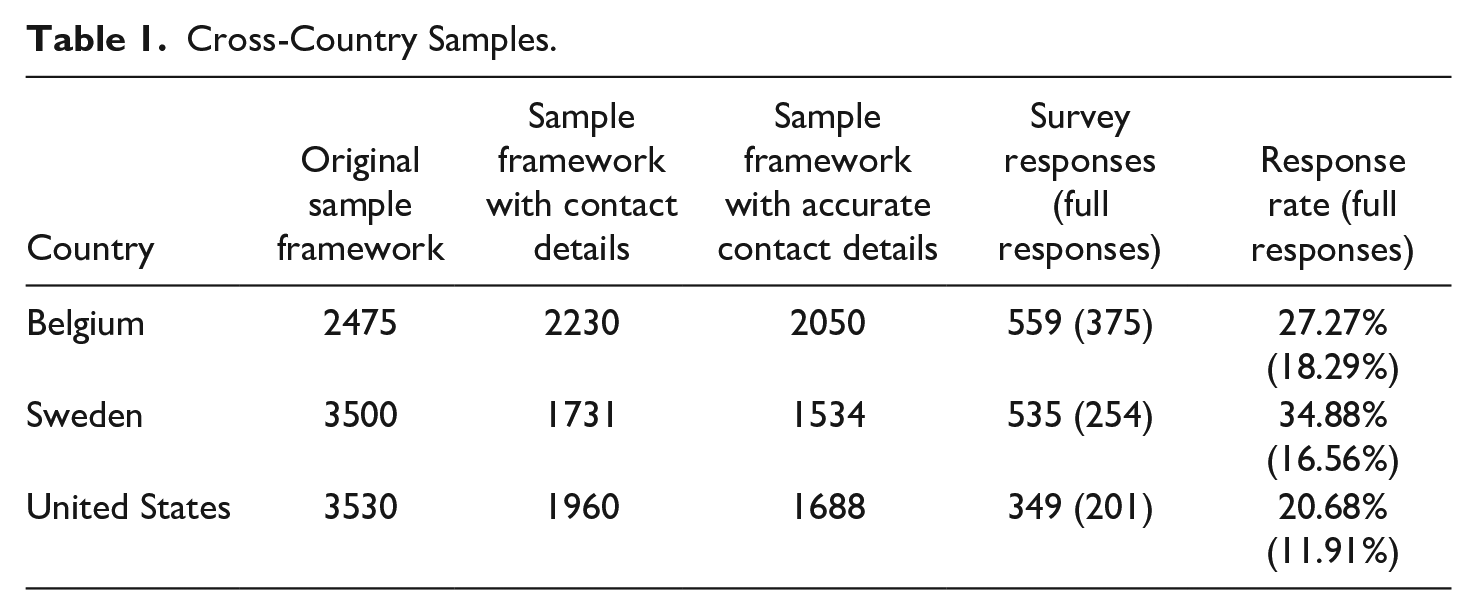
Given our aim to maximize contextual variation, claims of representativeness are unwarranted. This is not necessarily problematic, as the survey response is large enough to conduct inferential statistics and thus, effectively control for under- and over-sampled population characteristics (cf. Verhoest et al., 2018). In addition, following the prescriptions of Jilke et al. (2015) and Lee et al. (2012), we adapted our survey design to strengthen measurement equivalence while mitigating survey error. In terms of measurement equivalence (Tsai et al., 2022), we ensured accurate survey translation via extensive in-team discussions and piloting in all three countries. Finally, to counteract social desirability bias, we ensured respondent anonymity, posed neutral questions, and created respondent distance via online survey administration (cf. Larson, 2019).
Measures
Dependent Variable
The dependent variable of this study is nonprofit creaming behavior. Respondents were asked on a 9-point Likert-type scale (“strongly disagree” to “strongly agree”) to indicate to what extent the following dynamic occurred at their organization “Sometimes, my organization prioritizes easy-to-reach individuals over individuals with more complex demands.”
Independent Variables
In line with our theoretical framework, nonprofit marketization is measured at the public-nonprofit and the organizational level. At the public-nonprofit level, we focus on resource competition, public contracting, and output-based public control. Resource competition was measured by asking respondents to indicate on a 4-point Likert-type scale (“no competition” to “strong competition”) to what extent their organization competed for income with (a) “other nonprofit organizations,” (b) “government agencies,” and (c) “business enterprises.” To get a more general measure for resource competition, we constructed an index by calculating the sum scores. For public contracting and control, we asked the respondents to indicate on a 5-point Likert-type scale (“not at all” to “a lot”) to what extent the governmental level most important to them (a) “views my organization as a public service delivery contractor” and (b) “controls the output of my organization.”
At the organizational level, we focused on commercial income and management tool use. In terms of commercial income, respondents were asked to provide a percentual estimate to what extent their organization depended on (a) revenue generated through the sale of services and products and (b) investment returns. In order to ensure common understanding, the latter was explained by adding “real estate investments, rental returns, stock shares, bonds” as examples. Subsequently, in order to get a measure of commercial income, we aggregated both categories into one measure. Drawing inspiration from Suykens et al. (2023), management tool use was measured by asking the respondents to indicate on a 5-point Likert scale (not applicable—often used) to what degree they utilized the following management tools: SWOT analysis, SMART analysis, lean management, benchmarking, pay for performance, quality norms, key performance indicators, business process reengineering, total quality management, and the balanced scorecard. Here again, in order to ensure common understanding, we provided brief explanations for each management tool (e.g., lean management: systematically refining operational procedures in order to eliminate waste). Subsequently, we constructed an index by calculating the sum scores to get a general measure of management tool use for the NPOs at hand.
Control Variables
We control for potential spurious effects at the country, sector and organizational levels. First, we included country dummies in our model (reference: the United States). This is important, as our countries correspond with different welfare state types. These are argued to have followed different historical trajectories, which resulted in a different position and function for NPOs in society at large. A traditional example of a corporatist welfare state, Belgium is characterized by a large nonprofit sector that is closely intertwined with the state in terms of policy formulation and implementation. In contrast, Sweden is best understood as a social-democratic welfare state. Largely composed of volunteer-based associations connecting people around leisure, sports, and religion, only a smaller segment of the Swedish nonprofit sector consists of large(r) professionalized NPOs that focus on public policy participation and public service delivery. Yet another variation is found in the United States, a typical example of a liberal welfare state regime. These welfare systems are characterized by a large nonprofit sector that provides public services at arm’s length from the government. Taking a bird’s eye view, research indicates that different patterns of marketization appear in different welfare state systems when studied at the nonprofit organizational level. In short, research suggests that marketization appears as a creeping process in corporatist welfare states like Belgium (Bode, 2011; Suykens et al., 2020), rather fragmented in social-democratic welfare states like Sweden (i.e., different manifestations appear in different nonprofit segments) (Enjolras, 2002; Hvenmark, 2013), and is perhaps most outspoken in liberal welfare states like the United States (Brown, 2018; Hwang & Powell, 2009). Second, in terms of sector, respondents were asked to indicate their primary field of activity within the International Classification of Nonprofit Organizations (Salamon & Anheier, 1996). Although creaming behavior is ethically a no-go across nonprofit fields, this is perhaps most so for NPOs providing social services to vulnerable target groups. Accordingly, we included a dummy indicating a primary focus on social service provision, which we contrasted with membership of all other primary fields of activity. In addition, and third, we accounted for differences at the organizational level. For one, we controlled for the different organizational roles NPOs can perform. Here, respondents had to indicate on a 5-point Likert-type scale (“not at all” to “a lot”) to what extent their organization fulfilled the following roles: (1) “to offer services to end-users or clients” (service delivery), (2) “(to try) to influence policymakers” (political advocacy), (3) “to create awareness about- and act on social issues” (civic engagement), and (4) “to promote a sense of community” (community building). To account for differences in professional capacity, respondents were asked to indicate the number of volunteers and professionals their organization had. In order to alleviate respondents’ burden, we used the ordinal classes for both questions (1 = 0; 1 = 1-2; 3 = 3-10; 4 = 11-50; 5 = 51-150; 6 = 151-500; 7 = Over 500). Subsequently, we calculated a professionalization ratio by dividing the number of professionals by the number of volunteers. Here, the argument is that large(r) organizations are more likely engaged in public service contracts, which in turn may induce creaming behavior. Finally, we controlled for organizational age by asking the respondents about the founding year of their organization without accounting for name changes and organizational mergers (1 = before 1900, 2 = 1910–1920, 3 = 1921–1940, 4 = 1941–1960, 5 = 1961–1980, 6 = 1981–2000, 7 = 2001–2020, 8 = after 2020). Inspired by the notion of the liability of newness, younger organizations may tentatively be more likely to engage in creaming behavior to secure much-needed funding to avoid organizational closure in comparison to older, more established organizations.
Statistical Analyses
We conducted ordered logistic regression models to predict the influence of marketization on creaming behavior, as our dependent variable is measured on a 9-point Likert-type scale ranging from strongly disagree to strongly agree. Meanwhile, we also ran ordinary least squares regression models to examine if our results remain valid because ordinal variables are often treated as interval ones in data analysis practices. Furthermore, we used the multiple imputation (MI) technique to handle missing data (cf. Enders, 2022) because our dependent variable and most of our independent variables have a higher share of missing data ranging from 12.94% (resource competition) to 22.03% (management tool). According to Newman (2003), among various missing data techniques, the MI approach yields smaller errors in model estimations. As our dependent and independent variables are measured through the same survey, common method bias might be an issue. To minimize potential bias, we adopted two remedies suggested by Podsakoff, MacKenzie, and Podsakoff et al. (2012). First, our survey respondents do not know that this study specifically focuses on nonprofit marketization nor creaming behavior. Instead, we introduced this study to them by stating at the beginning of the survey that our study aims to understand their organizations’ financial strategies and performance measurement. Second, we used different scales to measure different variables. For instance, we used an ordinal scale to measure perceived public contractors but a ratio scale to measure commercial income.
Results
Interestingly, descriptive analysis of our dependent variable learns that little over one out of five respondents (20,4%) agree to varying degrees with the statement that their organization displays at times creaming behavior (see Graph 1).
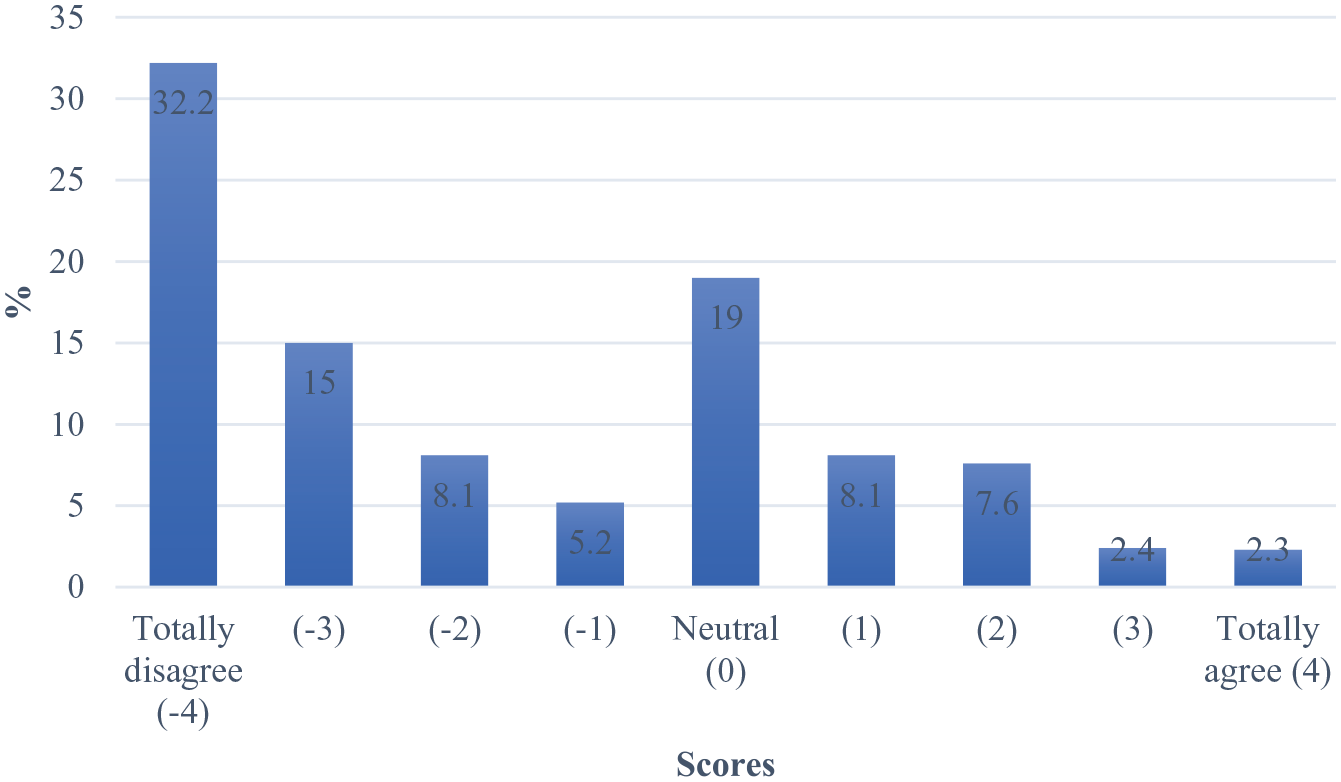
Distribution of the dependent variable (N = 751).
Turning to the descriptive statistics of the other focal variables (see Table 2), we note higher variation in commercial income. Some NPOs heavily rely on commercial income, while others have only a small portion of their revenue from commercialization. In terms of country distribution, there are 403 NPOs from Belgium, 301 from Sweden, and 231 from the United States. Furthermore, out of the 935 NPOs, 177 are classified as social services organizations.
Descriptive Statistics.
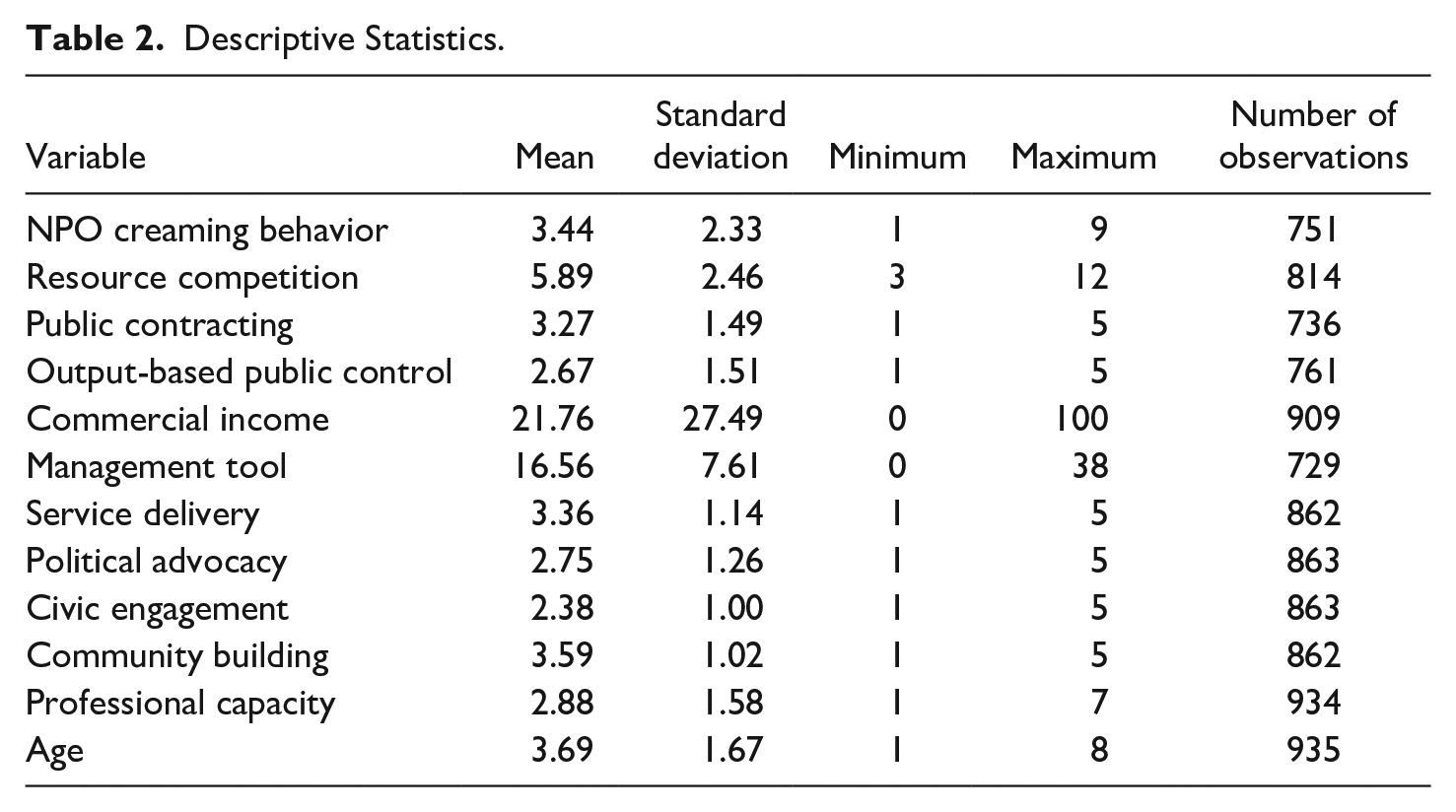
Table 3 presents the correlation matrix. Notably, the management tool and professional capacity exhibit the highest correlation at 0.54. None of the other variable intercorrelations approach 0.55. Moreover, the variance inflation factors range from 1.15 to 1.85, with the average variance inflation factor (VIF) at 1.49. Therefore, multicollinearity should not be an issue in our regression models.
Correlation Matrix.
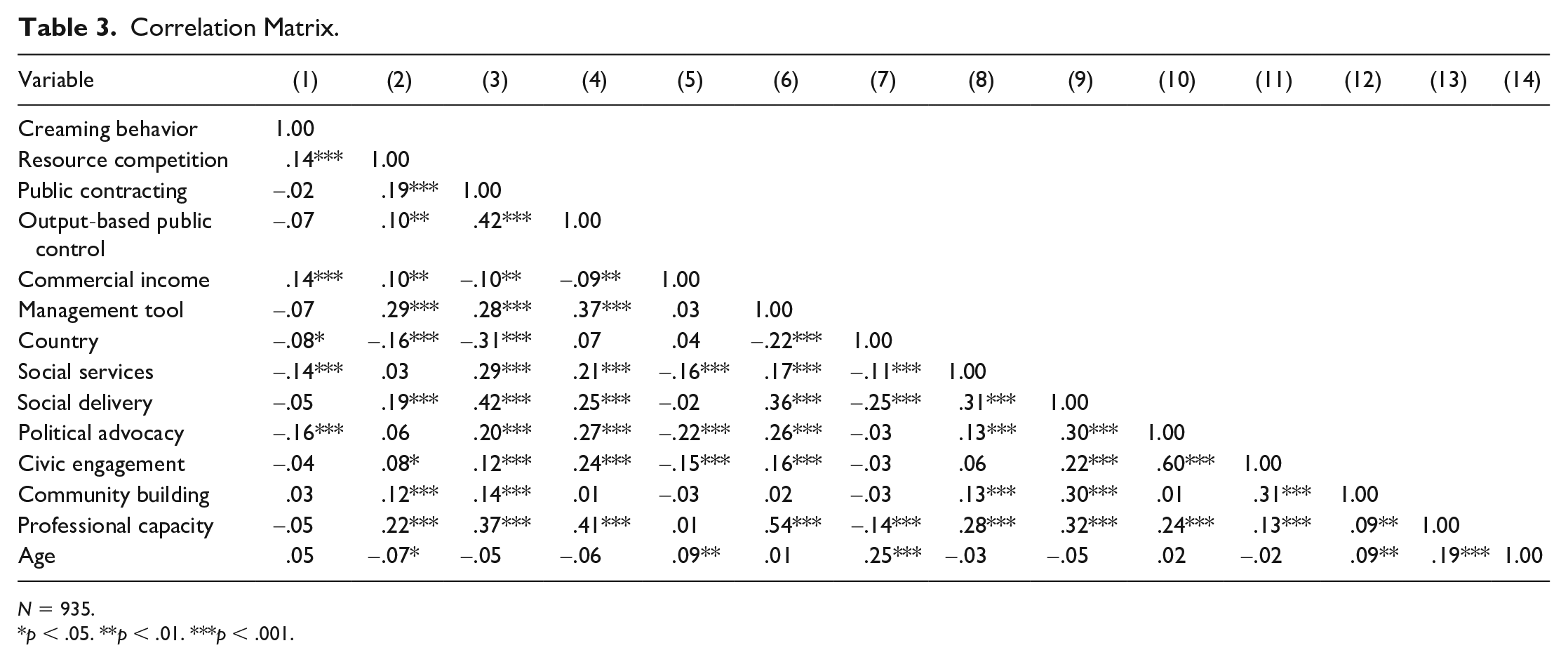
N = 935.
p < .05. **p < .01. ***p < .001.
Our model explains 11% of the variance to which NPOs engage in creaming behavior (see Table 4). At the public–nonprofit relationship level, we find that resource competition is positively associated with nonprofit creaming (support H1). When NPOs perceive higher competition for resources, they are more likely to prioritize easy-to-serve clients, as indicated by a 0.13-point increase in their reported creaming behavior for each step up in perceived competition (β = .13, p < .01). This said, both self-perception as a public contractor and output-based control by the governmental level most important to the NPO at hand are unrelated to creaming behavior (do not support H2 and H3). Turning to the organizational level, we find that commercial income is positively associated with creaming behavior among NPOs, yet only to a minor extent (low coefficient) (support H4). As NPOs become more dependent on commercial income, they report higher levels of creaming behavior. Specifically, each additional 1% of revenue derived from commercial sources is associated with a 0.01-point increase in creaming behavior (β = .01, p < .05). Adding to this, we find that management tool use does not facilitate but counteracts creaming, yet here again, to a modest extent (do not support H5).
Regression Results.
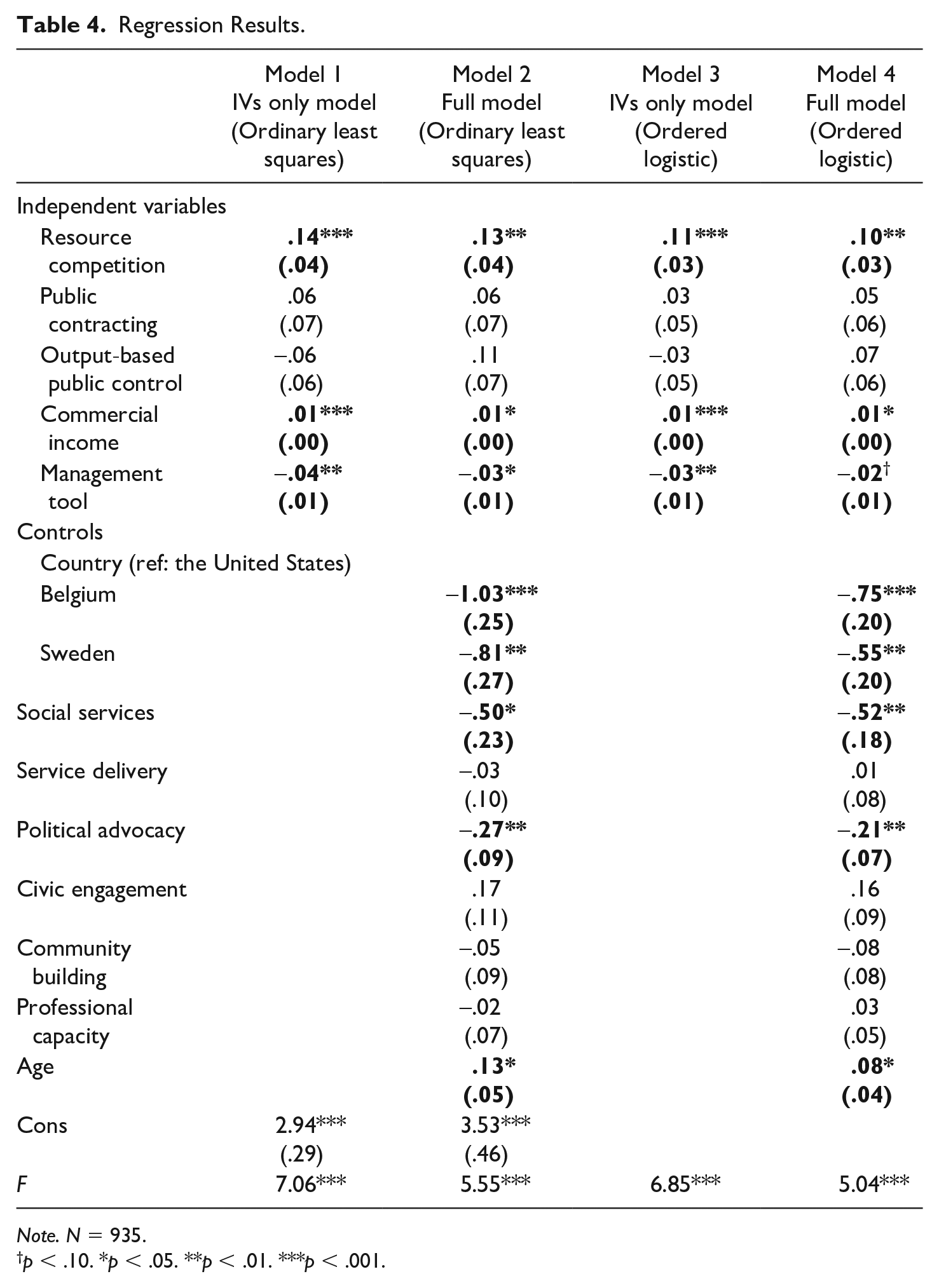
Note. N = 935.
p < .10. *p < .05. **p < .01. ***p < .001.
In terms of our control variables, we find that U.S.-based NPOs are more likely to engage in creaming behavior in comparison to Belgian and Swedish NPOs. In terms of organizational task, we find that NPOs (a) focusing on political advocacy and/or (b) belonging to the social service field of activity are less likely to yield to creaming reflexes. In contrast, both NPOs’ professional capacity and engagement in societal roles like community building, civic engagement, and service delivery were unrelated to creaming behavior. Finally, we find that old(er) NPOs are more likely to engage in creaming behavior in comparison to young(er) NPOs.
Discussion
Is marketization positively associated with nonprofit creaming behavior? Whereas previous research typically tackles this question by studying one aspect of nonprofit marketization in one particular organizational (e.g., Beaton, 2021) or sectoral context (e.g., Pedrini & Ferri, 2016), we draw on cross-country survey data to verify to what extent different aspects of nonprofit marketization explain nonprofit creaming behavior across different organizational, sectoral, and welfare state settings. Doing so, we find that nonprofit cream skimming is (a) reported by 20% of the respondents and (b) correlated with several key aspects of nonprofit marketization regardless of contextual variation. These findings hold several implications for nonprofit management research.
First, at the public–nonprofit relationship level, we identify resource competition as a salient predictor of nonprofit creaming behavior. This resonates with the money-over-mission trade-off central to the critical mission drift literature (e.g., Gallet, 2016; Greer et al., 2018; Rasiah et al., 2017). The underlying mechanism is straightforward. Resource competition adds to resource uncertainty, essentially forcing NPOs to adopt creaming as a coping strategy. For instance, with organizational resources at a status quo and organizational funders unresponsive to crisis situations, NPOs are likely forced to make tough choices and focus on more easy-to-help clients in order to avoid organizational demise (Lee et al., 2017). Contrasting with resource competition, we observe null findings for the extent to which NPOs (a) engage in public service contracting and (b) are subjected to output-based control by the government most important to them. Here, it might not be a matter of how much (intensity) but rather the way how NPOs engage in public service delivery on behalf of the government (manner). For instance, not the involvement with public service contracting itself, but the design of public service contracts such as pay-by-results clauses, fixed-cost fees versus cost-reimbursable funding, black-box approaches, and contract duration may explain why some NPOs display creaming behavior, while others do not (cf. Carter & Whitworth, 2015; Piatak & Pettijohn, 2021; Rees et al., 2013, 2024; Torfing & Sørensen, 2018). The study by Bennett and Savani (2011) provides a case in point, as they describe how British nonprofit service providers turned the tables by making the contracting government more dependent on them than vice versa. In a similar vein, public control can range from lenient (little reprimands when failing to meet contractual targets) to strict enforcement (refusal of payout and/or no contract renewal). We encourage future research to dig deeper and examine aspects tied to the implementation of public contracting and control.
Second, at the organizational level, we find that organizational dependency on commercial income is positively associated with nonprofit creaming behavior, albeit to a limited extent. Commercial income is typically considered (a) a financial gap-filler strategy for NPOs faced with decreasing levels of public and/or donative funding (Suykens et al., 2021) and (b) a key aspect of social entrepreneurship, as typified among others by microfinance institutions and WISEs (Defourny & Nyssens, 2017). Here again, resonating with the critical body of literature on mission drift, our findings corroborate the idea that commercial income is likely to induce a creeping shift in focus from serving those in need to those who can afford or are able to participate (Cooney, 2006; Hustinx & De Waele, 2015; Khieng & Dahles, 2015; Toepler, 2006).
Third, turning to managerialism, we find that management tool use does not induce but counteract nonprofit creaming behavior. This result ties in with recent quantitative studies finding positive links between managerialism and (a) organizational performance (Hersberger-Langloh et al., 2021), (b) organizational efficiency (Shirinashihama, 2019), and (c) societal role uptake (Suykens et al., 2023), while contradicting qualitative studies showing opposite effects (e.g., Dart, 2004a; Hvenmark, 2013; Kreutzer & Jäger, 2010). This resonates with the observation of Maier et al. (2016, p. 79) that “studies focusing on negative effects of becoming business-like use qualitative methods, whereas studies on positive effects make use of the full methodological spectrum.” Part of the explanation for this void may lie in the notion that critical case studies might not discuss the average or median case of their sector and, as such, shed light on the effects of highly managerial NPOs. Connecting these paradoxical dots, we encourage future research to examine NPOs’ implementation strategies of corporate management tools, as the effects of said tools may be largely a function of how they are introduced instead of the extent to which they are used. In specific, salient issues to consider include, yet are not limited to, selective versus non-selective implementation (e.g., Beck et al., 2008), the extent to which the management tool at hand is tailored to the organizational needs (e.g., Hvenmark, 2013) and the extent to which management tool use constitutes an imposed or a proactive organizational choice (e.g., Mathys et al., 2024).
Fourth, our control variables shed light to which extent “context matters.” In addition to the explanatory value tied to nonprofit marketization across different contextual levels, we find that NPOs focusing on (a) political advocacy and/or (b) social service delivery are less likely to engage in creaming behavior. This is unsurprising, as the former tends to focus on achieving systemic change by influencing policymakers instead of serving clients, whereas the latter exists precisely because of the need to serve vulnerable target groups. Hence, for social service NPOs, engaging in creaming practices would typically result in the loss of organizational authenticity (e.g., Carter & Whitworth, 2017). This said, the positive association between nonprofit cream skimming and NPOs engaged in fields of activity outside of social service delivery is not necessarily a sign of creaming behavior, as these NPOs can make the legitimate choice to focus on serving one or more particular segment(s) of the population. Here, qualitative examination can unravel the intention(s) behind this organizational choice, and, subsequently make a more evidence-based assessment to what extent cream skimming is prevalent among these organizations. The observation that old(er) NPOs are more likely to resort to creaming strategies than their younger counterparts suggests that not the liability of newness argument but insights from population ecology theory (Hannan & Freeman, 1977) may explain the prevalence of nonprofit creaming behavior. Older organizations may have established networks and relationships with particular groups or communities over time. From this perspective, it might be more straightforward for them to continue working with familiar populations rather than branching out to serve new groups where needs may be greater (Lee et al., 2017). Last but not least, we find that NPOs in the United States are more susceptible to creaming behavior in comparison to Belgian and Swedish NPOs. Multiple factors are likely at play and may relate to differences in terms of the (a) implementation of the NPM reforms (Pollitt & Bouckaert, 2017), (b) adherence to neoliberal ideology (Dart, 2004b), and/or (c) historical starting position for the national nonprofit sector at hand (Salamon & Anheier, 1998). For now, our findings point to the relevance of NPOs’ perceived resource competition. Not only was resource competition identified as a salient driver of nonprofit creaming behavior, but interestingly, U.S.-based NPOs (standardized M = .410/median = .333) reported higher average levels of resource competition than Belgian (standardized M = .303/median = .222) and Swedish NPOs (standardized M = .283/median = .222). Given the tremendous diversity couched under country dummies, in-depth comparative case studies are warranted to explain these different positions toward creaming behavior.
Limitations and Future Research
Before formulating our concluding thoughts, it is important to acknowledge the limitations underlying the conceptual and methodological choices of our study. First, in terms of conceptual choices, we realize that our survey measures do not grasp nonprofit marketization in full (for an overview, see Maier et al., 2016). This said, the conceptual focus at hand allowed us to examine nonprofit marketization for a cross-country sample, as all our respondents were well-positioned to reflect on their organization’s relationship with the government, as well as their organizational income and management, despite the many contextual differences that exist across. In a similar vein, organizational creaming is one of several possible dynamics of mission drift detrimental to NPOs’ authenticity. Other dynamics include, yet are not limited to, vendorism (i.e., prioritizing funders’ goals over organizational goals—see, e.g., Jones, 2007) and compromised advocacy (i.e., holding back criticism toward the government in order to safeguard public funding—see, e.g., Arvidson et al., 2018; Suykens, Hvenmark, Hung, Raeymaeckers, et al., 2025). We encourage future research to go beyond our conceptualization, and doing so, corroborate, nuance, and/or refine the arguments presented in this article.
Second, in terms of methodological choices, conducting cross-country data collections is an onerous task that requires significant time and funding and is best understood as a series of micro-decisions while going forward (Pollitt, 2011; Verhoest et al., 2018). Although countermeasures were taken in the research design to mitigate equivalence issues (Tsai et al., 2022), common method bias (George & Pandey, 2017), and social desirability bias (Lee & Woodliffe, 2010), these issues can never be ruled out completely in a cross-sectional study design based on perceptual measures. In addition, the use of cross-sectional data does not allow causality claims nor to assess how the observed relationships evolve over time. Here, repeating the survey over time to create panel data, and/or employ experimental research designs may offer a promising way forward.
Conclusion
This article departed from the observation that there is an ever-growing critical debate on the nexus between nonprofit marketization and mission drift, essentially arguing that nonprofit marketization may induce a drift away from NPOs’ prosocial mission in favor of financial gain (Ebrahim et al., 2014; Greer et al., 2018). More recently, this critical debate was complemented by a more positive reading of mission drift, as it can also signal NPOs’ responsiveness to ever-changing contextual conditions and challenges (Grimes et al., 2019). Lending credence to the critical mission drift frame, we identify both resource competition and commercial income as predictors of nonprofit creaming behavior that hold beyond contextual variation. Accordingly, this paper is best read by proponents of (a) public service quasi-markets where resource competition reigns supreme and/or (b) nonprofit commercialization as a purposeful financial strategy, as a universal warning that these dynamics are likely to crowd out the behavior central to NPOs’ uniqueness to aid, assist, and support those in society who are most in need, yet are often difficult to reach.
Supplemental Material
sj-docx-1-nvs-10.1177_08997640251343052 – Supplemental material for More Easy to Serve Inc.: Cross-Country Evidence on the Link Between Marketization and Nonprofit Creaming Behavior
Supplemental material, sj-docx-1-nvs-10.1177_08997640251343052 for More Easy to Serve Inc.: Cross-Country Evidence on the Link Between Marketization and Nonprofit Creaming Behavior by Ben Suykens, Johan Hvenmark, ChiaKo Hung and Bram Verschuere in Nonprofit and Voluntary Sector Quarterly
Footnotes
Declaration of Conflicting Interests
The author(s) declared no potential conflicts of interest with respect to the research, authorship, and/or publication of this article.
Funding
The author(s) disclosed receipt of the following financial support for the research, authorship, and/or publication of this article: This research was supported by FWO (Research Foundation Flanders) research grant no. 1293122N.

Supplemental Material
Supplemental material for this article is available online.
Notes
Author Biographies
References
Supplementary Material
Please find the following supplemental material available below.
For Open Access articles published under a Creative Commons License, all supplemental material carries the same license as the article it is associated with.
For non-Open Access articles published, all supplemental material carries a non-exclusive license, and permission requests for re-use of supplemental material or any part of supplemental material shall be sent directly to the copyright owner as specified in the copyright notice associated with the article.
