




Abstract
Since their legal establishment, philanthropic foundations have raised concerns due to the power they exert through their distribution of resources, oftentimes in vast amounts. Many academic fields have researched these power relationships, but as of yet, no review of this research has been completed to identify how foundations exert or are controlled by power. This article fills that void through an integrative literature review (ILR) of 219 peer-reviewed academic articles on power and philanthropic foundations. Using Fleming & Spicer’s framework of the “faces of power,” we categorize this research into the types of power discussed: coercion, manipulation, domination, and subjectification. We also look at the sites of that power—within the organization, through, over, and against it. After providing examples of each type of power, future research avenues are presented, including identifying how foundations operate in interorganizational networks, “power-with” situations, and how foundations situate themselves socially and politically.
Introduction
From the establishment of the earliest modern foundations in the United States at the turn of the 20th century to the present, academics, government leaders, the media, and members of the public have been concerned with the power of foundations. In 1909, The Survey, published by the Charity Organization Society of New York City, had multiple editorials and articles regarding the new major foundations being formed by Rockefeller, Carnegie, and Russell Sage. While many contributors heralded these new philanthropic efforts, others expressed concerns that the government may be better suited to solving these issues and called for the regulation of foundations and other large donations (Allen, 1909). These debates were brought to a head in The Congressional Commission on Industrial Relations (1913–1916) (Walsh Commission), which “set out to study the connections between concentrations of economic power and the emergence of large-scale philanthropies founded by major industrialists like John D. Rockefeller and Andrew Carnegie” (Arnove & Pinede, 2007, p. 389). Critics decried the danger of concentration of power in so few hands, particularly the growing influence that business leaders would have on the research and institutions they funded (p. 25). These early critiques spawned sporadic Congressional investigations and government efforts to regulate foundations (Roelofs, 2007).
Contemporary critiques mirror these earlier concerns. In the prologue to The Givers: Wealth, Power and Philanthropy in a New Gilded Age, Callahan described the Chan-Zuckerberg initiative as an “undemocratic power grab” (Callahan, 2017, p. 4). Amid these critiques, there have been calls for academics to pay more attention to power and philanthropy (Skocpol, 2016). As Youde (2019) observed: The burgeoning role of philanthropy in global politics has attracted significant criticism for crowding out certain voices, the lack of public accountability, its reification of a neoliberal economic and political system that gives rise to systematic inequalities in the first place, and for imposing its preferred solutions on situations rather than accounting for local interests and needs. These are serious and substantial charges, and they point to the importance of giving independent analytical weight to philanthropic organizations operating within international society (p. 55).
In response to these calls, this paper offers an integrative literature review (ILR) on power and philanthropic foundations. We do not argue whether foundations have power, rather assume they “. . . are a multipurpose tool for shaping the world as one wishes it to be shaped. They provide the means for imposing one’s definition of the proper affairs of men [sic] upon other men (Perrow, 1972, p. 14)” (as quoted by Fleming & Spicer, 2014, p. 1). We investigated how foundations have been researched in terms of their power or the power exerted upon them. From there, we categorized and synthesized past research on philanthropic foundations and power, drawing upon an existing typology of power, the “faces of power” (Fleming & Spicer, 2014; Lukes, 1974). Our multidisciplinary review identified 219 published, peer-reviewed articles. We found a robust and growing body of academic literature on foundations and power emerging across various academic disciplines including political science, sociology, and international relations, and applied fields such as nursing and accounting. Our categorization identified major trends and themes in the study of power and foundations, offering a “common linguistic framework” (Cooper, 1988, p. 108) and identifying potential avenues for future research.
This analysis is important for at least three reasons. First, despite popular and academic recognition of the importance of studying societal power centers (Zald & Lounsbury, 2010), organizational theory has largely ignored the study of foundations (Goeke, 2021). Yet, scholars recognize that as key actors in societal networks, foundations are carriers, promoters, and enforcers of societal ideologies (Scott, 2009). Second, because scholars from various disciplines study foundations in many contexts, the existing literature uses a variety of terms and theories to describe actions of influence—including control, manipulation, and hegemony. However, many studies do not define these terms nor explicitly identify a theory in use, making it difficult to integrate knowledge across bodies of literature. Using Fleming and Spicer’s’ (2014) existing organizing framework, we synthesize the literature. This synthesis allows us to identify a toolbox of theories that can be used to frame future research on foundations. In addition, our review identifies opportunities for additional research that can build and extend theory about foundations and power. Foundations are an important manifestation of elite power and studying power in the context of foundations can also contribute to broader theories of power. Most notably we find that Fleming and Spicer’s framework neglects a fifth site of power that is increasingly important in understanding foundation power: interorganizational networks. Third, from a policy perspective, the increase in the number and financial wealth of foundations, coupled with the decrease in government capacity, has allowed foundations to exert greater financial, social, and political influence (McGoey, 2015; Montero, 2020). We argue that foundation power remains undertheorized in governance frameworks (Betsill et al., 2022) and warrants increased scholarly and practitioner attention.
We begin by discussing Fleming and Spicer’s (2014) categorization, which guides our analysis and the methods by which we identified research to include in this review. We then apply this framework to the existing studies and discuss the implications for future research.
Foundations
Foundations are nonprofit organizations that serve as intermediaries making grants from a long-term endowment to unrelated organizations for scientific, educational, cultural, religious, or other charitable purposes (https://cof.org/content/foundation-basics#what_is_a_foundation). Endowments are established through gifts of excess capital from elite 1 individuals, families, and corporations and have general, long-term missions. Foundations are subject to government regulations that may restrict the use of their endowments, the distribution of grants, and participation in the political process.
Endowed through private gifts, foundations enable donors and their trustees to enact their interests, values, and vision of the public good perpetually. Such gift arrangements are hierarchically structured relationships that create involuntary relationships of subordination, dependence, and obligation of the receiver toward the giver (Ostrander & Schervish, 1990). These hierarchical relationships create unequal social relationships between donor- and recipient-side actors. Furthermore, foundation donors, trustees, and staff often occupy elite social, cultural, and political positions that enable them to define philanthropic transactions and influence societal and political issues. Foundations’ unique missions, resource environment, and legal structure make them a perfect site for studying power (Goeke, 2021).
Defining Power in Organizational Studies
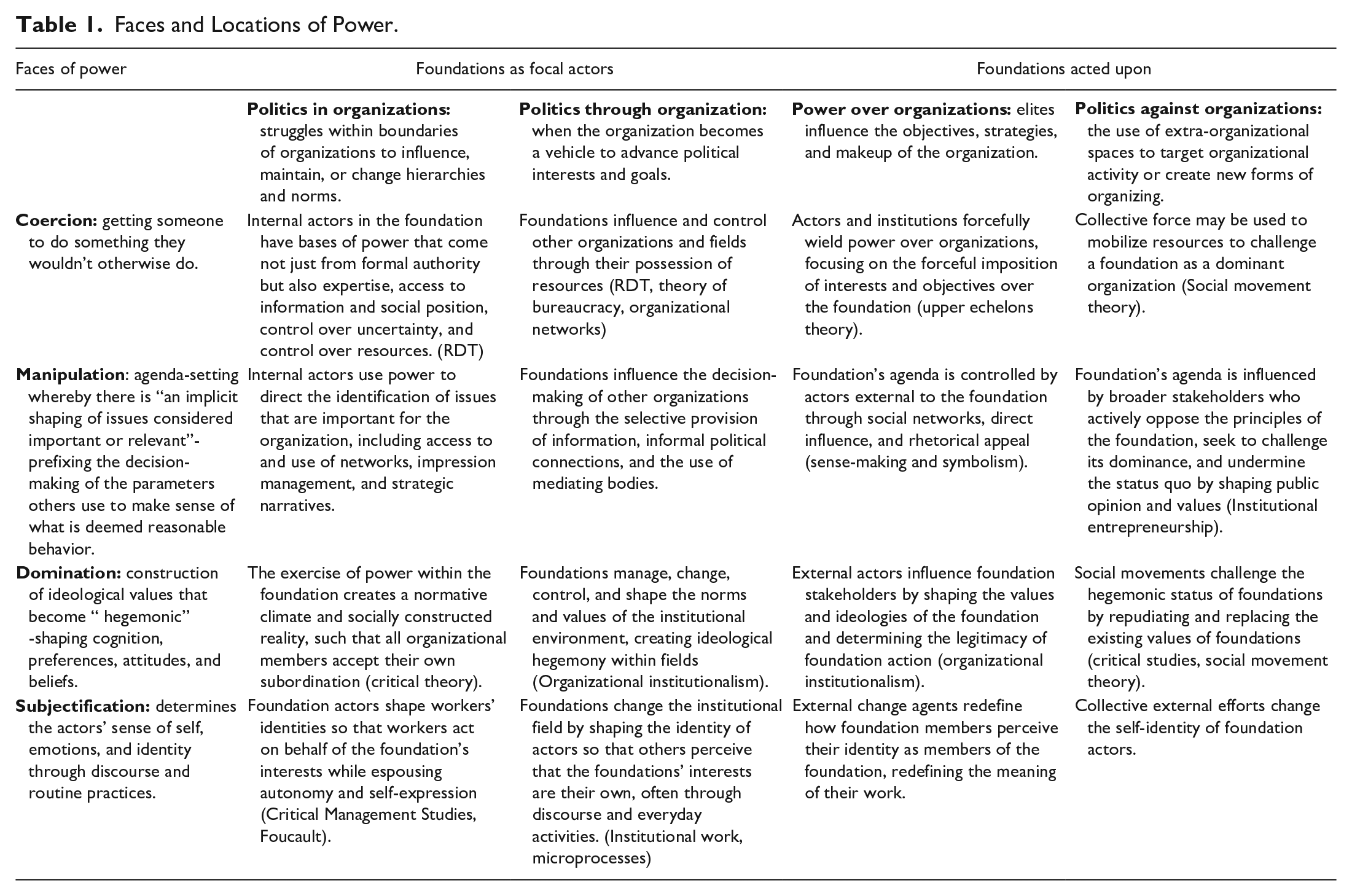
We adopt Fleming and Spicer’s (2014) framework on organizational power to analyze the extant research and see how it “fits together” (Cronin & George, 2023, p. 170). Fleming and Spicer define power as a resource to get things done through other actors, by influencing relations and the distribution of resources between actors. We use the Fleming & Spicer framework to guide our literature analysis for multiple reasons. First, their framework offers an organizing tool that reviews a vast body of literature on power and organizations. Second, consistent with the theory of philanthropy as a social relationship (Ostrander & Schervish, 1990), this definition recognizes that power is not an attribute but resides in the relationships between actors. Third, this framework emphasizes that power is not necessarily malevolent, but foundations may use power to achieve positive outcomes of shared goals (Clegg et al., 2006). Finally, the framework offers a unique contribution to the study of power and organizations by recognizing that Lukes’s (1974) enduring distinctions between episodic and systemic power that describe four faces or types of power–coercion, manipulation, domination, and subjectification–occur at multiple sites. As a result, their framework moves past identifying power within and between organizations to recognizing that elites and social movements may also influence organizations. Ultimately, rather than offering a theory that can explain a particular manifestation of power, Fleming and Spicer’s frameworks points to the potential for scholars to use diverse theories, including Weberian concepts of authority, resource dependence theory, organizational institutionalism, sense-making, and social movement theory to frame studies of the multiple types and sites of power.
The first two faces of power—coercion and manipulation are episodic modes of influence, “identifiable acts that shape the behavior of others” (Fleming & Spicer, 2014, p. 3). In contrast, domination and subjectification are systemic and mobilize “institutional, ideological and discursive resources to influence organizational activity” (p. 3). While the terms used to describe the faces of power may imply that the “. . . power of A will always be detrimental to the interests of B,” the faces of power approach recognized that the enactment of power could also benefit B’s interests (Baldwin, 2021). When applied to foundations, scholars can distinguish between the direct effects of grant-making and policy influence and highlight the less obvious roles that foundations have played in establishing organizational fields, creating global hegemony in academic disciplines, and even exerting influence over values and identities.
Fleming & Spicer’s typology extends Luke’s typology to recognize multiple sites of organizational power, including relationships within the organization, and the influence of external actors (governments or social movements). Their descriptions of the sites of power assume that context matters and that the social interactions in which organizations are embedded create a web of power relationships “. . . where everyone to some degree is both oppressor and oppressed” (Hafer et al., 2022, p. 271). Incorporating the four sites of power establishes 16 forms of power relevant to the study of organizations. Table 1 offers a summary of each type of power as it relates to foundations and identifies some of the key theories that have been used to explore various types of power.
Faces and Locations of Power.
Methods
We conducted an integrative review (ILR) of the literature across various disciplines to explore how academic research has studied foundations and power. An ILR “. . . is a form of research that reviews, critiques, and synthesizes representative literature on a topic in an integrated way such that new frameworks and perspectives on the topic are generated” (Torraco, 2016, p. 356). An ILR moves beyond a systematic review that describes the current state of the literature to synthesize “knowledge from across research approaches in a fragmented field” (Cronin & George, 2023, p. 168), including qualitative texts, historical or case studies, and quantitative analyses. ILR uses a framework to better understand the topic (Cronin & George, 2023; Torraco, 2016), spanning research communities, and providing synthesis and a common language.
To understand how scholars have researched foundations and issues of power, we used diverse search terms to identify literature across multiple disciplines. Then, we screened and analyzed the literature based on our inclusion criteria. Finally, we coded the articles’ descriptions of power and foundations using Fleming and Spicer’s framework. Below, we describe the key decisions that shaped our review.
Step 1: Identification of Publications
The study of foundations occurs across various disciplines. To avoid limiting our search to a particular discipline, we searched the Web of Science and Google Scholar databases to identify the universe of academic publications that studied power and foundations. We searched for the following keywords: “power” and “foundations” or “philanthropy” in document texts.
We included all articles that had been published in a peer-reviewed journal. This biases our sample by excluding those emerging pieces that have not yet been published or excluded from publication by the institutional standards that control academic publishing. We also excluded book chapters, books, and White papers, which may have biased the sample along disciplinary lines, as some disciplines are more likely to publish books. Due to the researchers’ linguistic abilities, all articles in the sample were written in English. Finally, we limited our search to works published between 1969 and 2023. We selected 1969 because of the significance of the 1969 Tax Reform Act, which focused increased attention on the power of foundations. We recognize that all these choices inherently bias our study (Bearman et al., 2012). This left us to review 442 potential sources.
Step 2: Screening and Selecting Relevant Publications
We then screened each article to ensure it focused on power and philanthropic foundations. First, articles had to focus on power in the context of foundations rather than individual philanthropists/donors. Although it is hard to separate the influence of individual donors, such as Andrew Carnegie or Bill and Melinda Gates, from the works of the foundation, we removed any studies that did not describe a foundation as a focal actor. Similarly, we excluded any articles that dealt with questions of power within nonprofit organizations that were not grant-making organizations. Of those remaining articles, we read and took notes on the full text to confirm the capacity or exercise of power. This included attention to concepts like influence, agenda-setting, and hegemony. Due to the multidisciplinary nature of philanthropy and its intellectual connection to the humanities (Payton & Moody, 2008), we also included rich case descriptions rooted in humanities traditions.
Finally, based on our screening, we supplemented our sample through backward and forward searches based on works cited in the references or that later cited these works. By using multidisciplinary databases and forward/backward searching, we identified synonymous concepts across multiple disciplines (Cronin & George, 2023, p. 177). The final sample included 219 peer-reviewed journal articles.
Step 3: Analysis of the Literature
Through this process, we found that abstracts were good indicators of the faces and locations of power discussed in the full text. We coded systematically based on the Fleming and Spicer categories, only using notes from reading full texts to supplement the discussion of our findings. Authors rarely used the same language to describe the faces or sites of power, and the language used across fields differed for the same concepts. Therefore, our categorization was often subjective, as is often the case in ILRs (Cronin & George, 2023). In addition, some types of power, such as coercion, may be readily observable, while other types of systemic power, such subjectification that occurs through identity formation, are less observable to scholars undertaking research and are less well theorized. We recognize that as scholars coding such studies, we may have also been less attuned to their appearance in the literature.
To avoid privileging one type of power, we coded each article with up to three of the 16 types of power. Two coders reviewed each article, which was assessed for inter-coder reliability. Each coder recorded the distinct language or summary from the abstract as a qualitative variable within the database to support their coding decisions. For example, in the article by Barkauskas (2022) entitled “Common Purposes: Defining the Reform Capabilities Created by Private Foundations through Strategic Giving in Support of the Common Core State Standards,” the initial coder chose coercion-through as the first face/location and supported this choice in the qualitative variable, writing, “use of grants to change policy.” However, a second coder chose domination-over supported by the statement, “common values shaped funding priorities.” Up to three codes were kept. When the two authors disagreed on the type of power described in the abstract, the coders discussed the coding until they reached a consensus.
Findings
Descriptive Analysis
Scholarly attention to power and foundations has steadily increased, particularly since 2006 (Figure 1). However, our decision to limit our review to articles published since 1969 truncates this starting point.
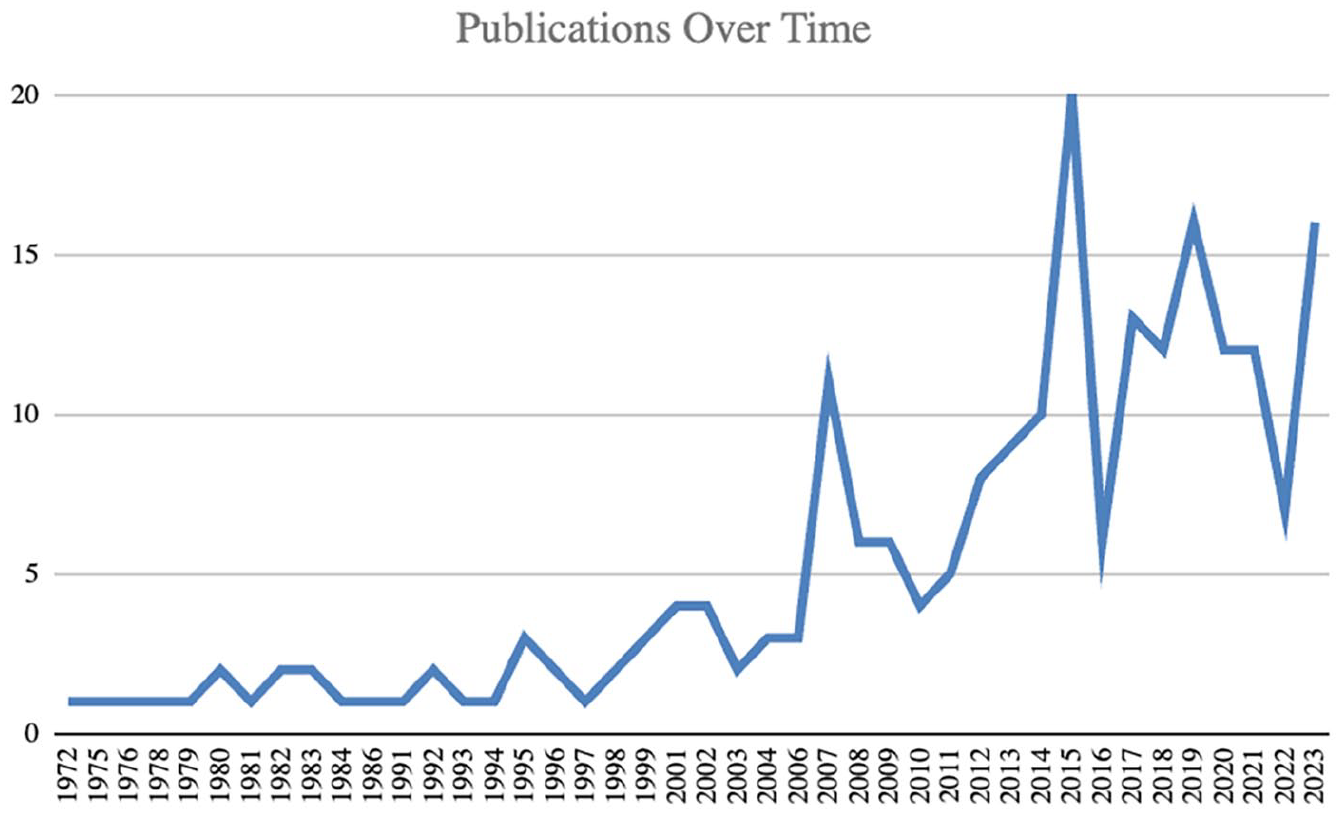
Amount of Research on Power and Philanthropy Over Time.
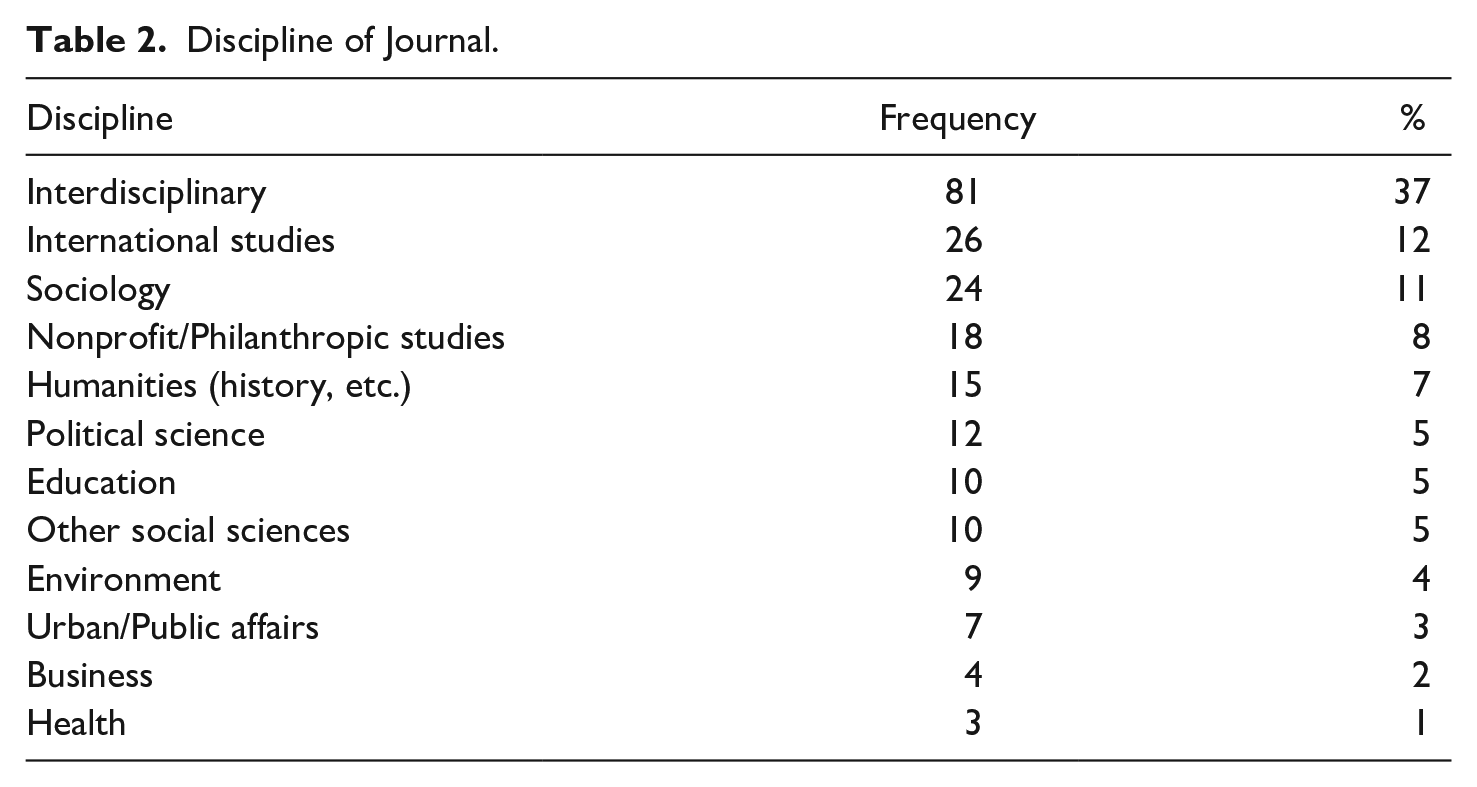
Articles have appeared in journals across multiple academic disciplines (Table 2). More than a third of this research (37%) has appeared in interdisciplinary journals, such as The International Journal of Sociology of Agriculture or The American Journal of Economics and Sociology.
Discipline of Journal.
A variety of terms are used to describe power. The most commonly used term is “influence” (see Table 3). Thirty percent of the articles use multiple terms.
Explicit Use of “Power” Terminology.
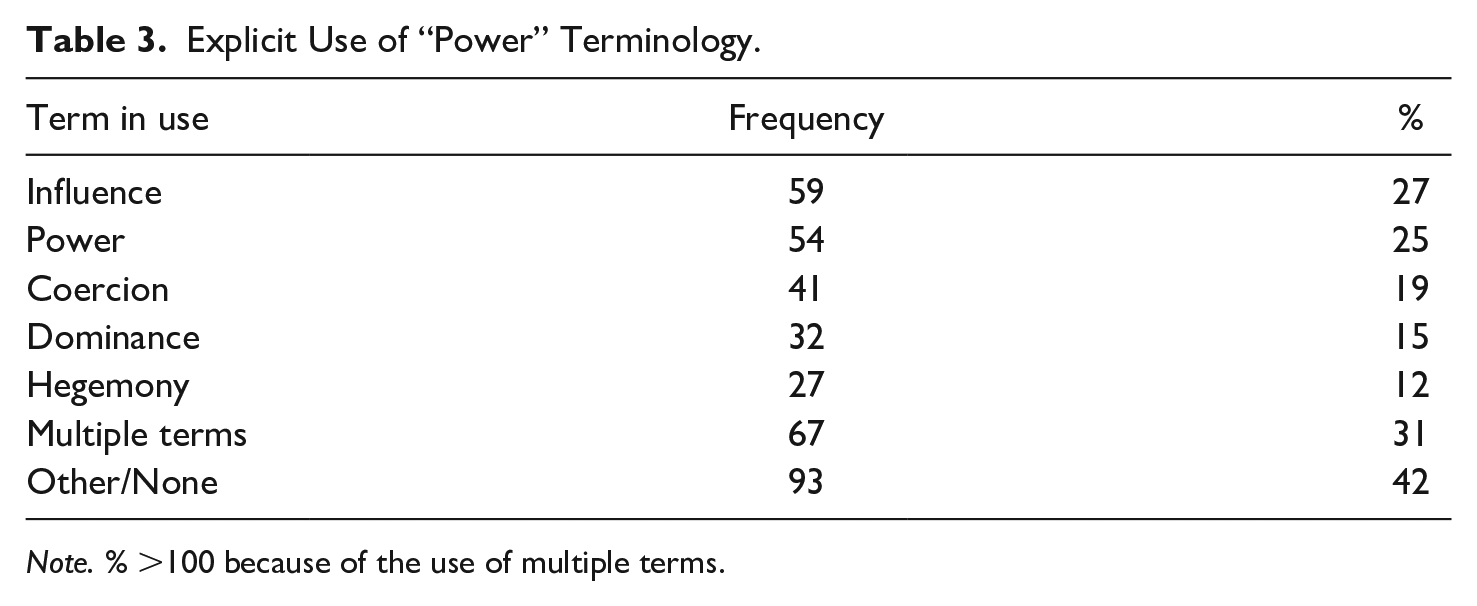
Note. % >100 because of the use of multiple terms.
While most studies focused on foundations headquartered within the United States, one-third (33%) of the articles focused on foundations’ activities in non-U.S. contexts. Many of these studies focus on the influence of U.S. foundations abroad, consistent with the interest of foundations in international affairs. Growing attention is paid to the development and role of foundations abroad, particularly in Europe and China. Studies of Chinese foundations have paid close attention to the influence of government and corporations over foundations. As seen in Table 4, most of these articles focused on North America, but this may also be partially attributed to our inclusion of only articles written in English.
Geographic Context of the Article.
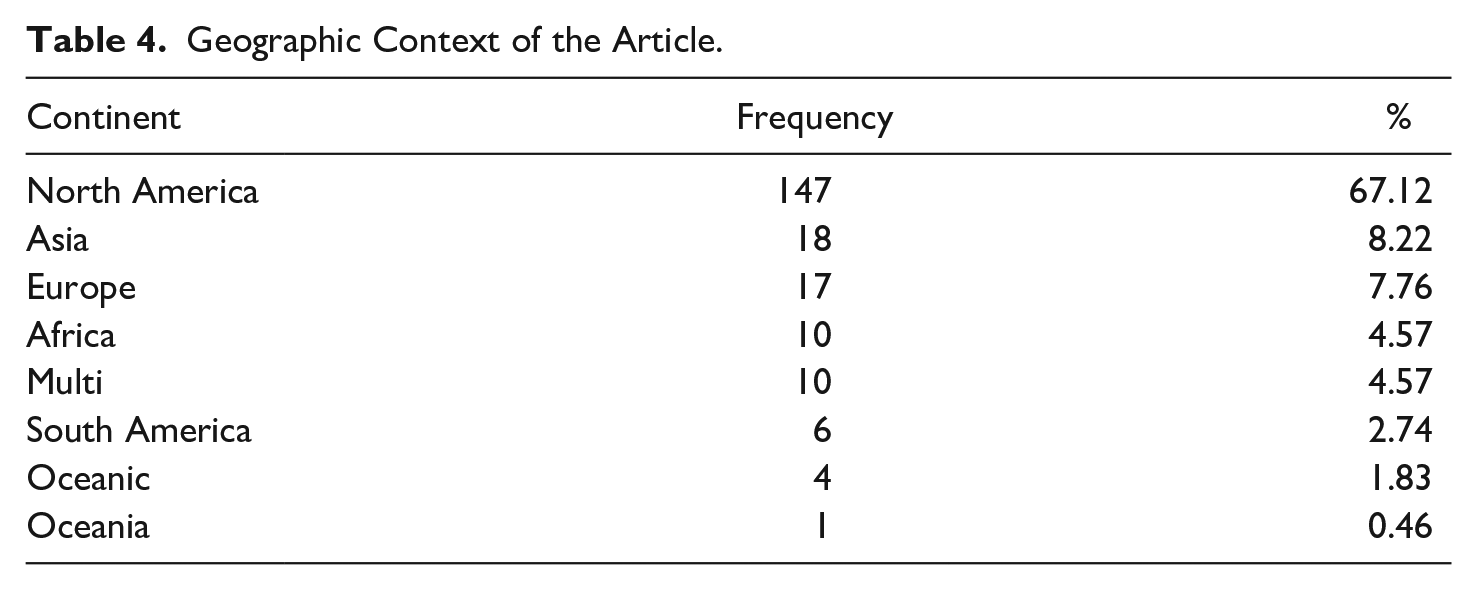
Thirty-four percent of the articles focused on the activities of five foundations: Carnegie, Rockefeller, Ford, the Bill and Melinda Gates Foundation (BMGF), and the Soros Open Society. Moving from a description of the literature, the following section describes the types of power being studied using Fleming and Spicer’s typology of organizational power to organize our review.
The Faces of Philanthropic Power: An Application of Fleming & Spicer’s Typology
One of Fleming and Spicer’s (2014) unique contributions to the study of power and organizations is the recognition that the faces of power occur within, through, over, and against organizations (Table 5).
Frequency of the Locations of Power.
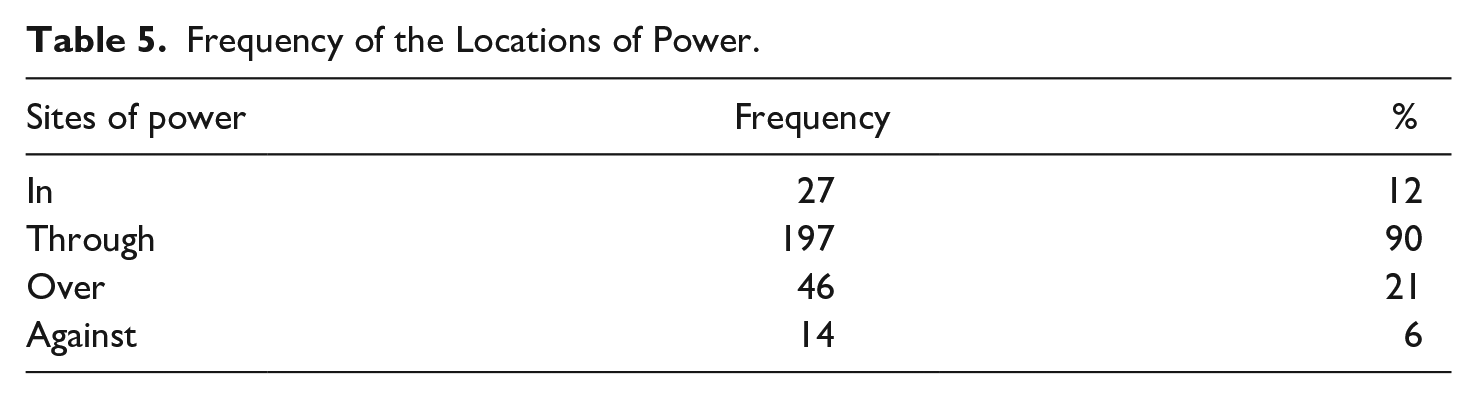
Power within the organization highlights the internal struggles aimed at influencing, preserving, or altering hierarchies and established norms. This would include research that explores conflicts between employers and employees. Only 12% of the articles in our sample described power within foundations (Table 5).
Next is power through organizations. When the organization as a collective entity serves as a means or agent to advance its interests and objectives. In this capacity, foundations can influence other organizations (such as grantees), industries or fields of organizations, or even governments to establish favorable operational conditions. In the context of this ILR, we observe that most existing research (90%) has focused on power through philanthropic foundations. This is consistent with the long-term critiques of foundations.
Other actors also influence foundations. Power “over” “points to how elites might compete to influence the objectives, strategies, and makeup of the [foundation]” (Fleming & Spicer, 2014, p. 8). Elites include governments, other organizations, and even the organization’s board members. Early studies of foundation power have, for example, described interlocking directorates between elite philanthropic and government organizations (Berman, 1977). While there is some evidence that the influence of such interlocks is decreasing, Arnove and Pinede (2007) observed that they continue. While . . . it can no longer be said that foundation trustees are merely an insular group of older, white Anglo-Saxon males belonging to the same exclusive social club . . . but neither could they be considered as radical or working outside the framework of the current American or global political economy. The trustees still tend to be well-connected members of the establishment; a majority occupy powerful positions in business . . ., government, education, and law. Moreover, many have long-established ties to the philanthropic world as prominent members of institutions and agencies that have been the beneficiaries of foundation largesse (Arnove & Pinede, 2007 pp. 417–418).
Twenty-one percent of the articles described the power that others, including board members, have over foundations.
Power against an organization comes from extra-organizational actors, such as social movements. This focuses on the collective efforts of external actors who wish to change the operations of the focal organization. As seen in Table 5, scholars have paid little attention to how collective efforts exercise power against foundations.
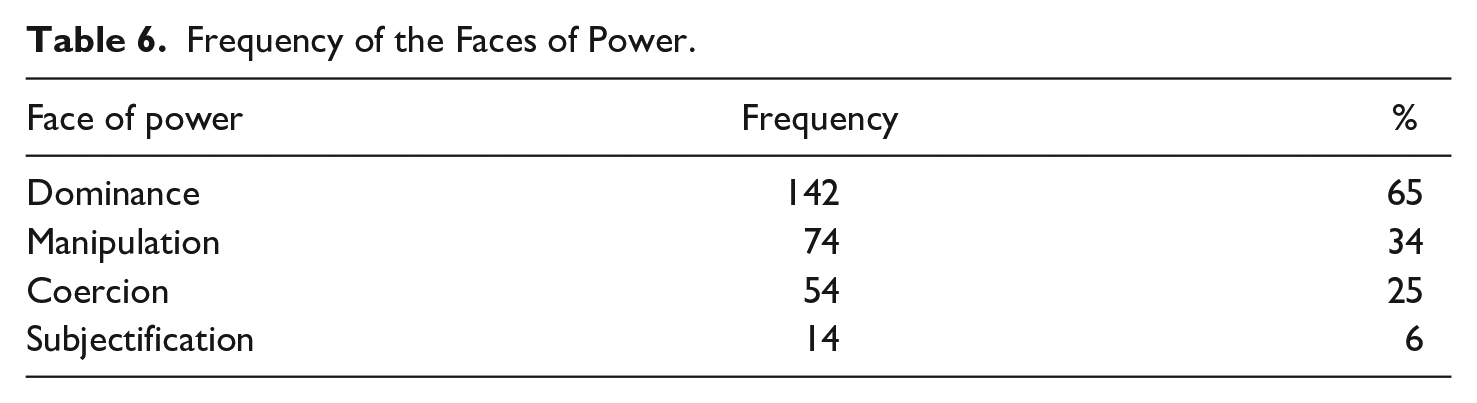
After understanding where and how power can be exerted, one must address the type or “face” of power itself. Below, we describe the four faces of power in the foundation literature and illustrate the types of power in our sample. Table 6 notes the frequency with which each face of power was addressed in the reviewed literature. We review the faces first by episodic means of power, then by systematic faces of power.
Frequency of the Faces of Power.
Coercion
Drawing upon early studies of decision-making in communities (Hardy & Clegg, 2006), coercion is the episodic capacity to compel an actor to do something they would not otherwise do and is enforced through a “comply or face consequences” approach. While compliance may occur legally, organizations may feel compelled to comply with actors who possess valuable financial resources or other forms of social and cultural capital. One-fourth of the articles in our sample described coercion.
Our review describes many examples of coercion through foundations. Foundations may establish procedures and performance markers that organizations must meet to receive funding. For example, Quinn et al. (2014) investigated how foundations pushed the formation of charter school management organizations (CMOs). “Foundations sought to manage this rapid growth by developing and enforcing new evaluative frameworks to assess, legitimize, and ultimately elevate the CMO form. These frameworks took the form of time-stamped metrics in grant contracts, which specified the milestones that CMOs were required to meet to receive funding” (p. 957). Charter schools seeking funding had to reorganize their structure, boards, and management teams with time-bound deadlines that may or may not have considered the school’s educational outcomes. In a study of a transnational network of foundations funding environmental conservation, Beer (2022) described how the funders engaged in “strings-attached philanthropy” by requiring state compliance with conservation standards, including management standards, monitoring and assessment, and community engagement before funds were disbursed. Finally, Barkauskas (2022), in the article noted earlier, addresses how grants were given with the expectation of changing policy, using their funding coercively.
Although most of the studies focus on foundations as having the ability to influence the actions of others (coercion-through), particularly historical reviews of philanthropy identify coercion-over situations where governments controlled foundations through IRS regulations and laws restricting their participation in the political process (Arnove & Pinede, 2007; Berry & Goss, 2018; Oelberger & Shachter, 2021; Williams & Doan, 2021). We found limited descriptions of coercion within foundations. Ostrander’s (1995) detailed descriptions of the tensions between staff and volunteers that emerged across race and class lines, particularly the social and cultural capital that White fundraisers had to shape the foundation’s activities, is a notable exception.
Manipulation
Manipulation, often described in political science literature as agenda-setting, is the implicit capacity to establish what topics are important and acceptable for discussion. Manipulation limits discussion topics, allowing an elite actor to control decision-making boundaries (Isaac, 1987). Scholarly attention to manipulation arose from recognizing that conflict on issues may exist but that “interests and grievances might remain inarticulate, unarticulated, and outside of the decision-making arena” (Hardy & Clegg, 2006, p. 373). Manipulation may occur through informal mechanisms, such as the selective provision of information or the use of mediating bodies, such as think tanks or policy centers, to give the appearance of neutrality and deliberations. One-third of the studies in our sample described power as manipulation. For example, examining the activities of the “Big Three” U.S. Foundations (Ford, Rockefeller, and Carnegie), Arnove and Pinede (2007) concluded that these foundations still “. . . determine what issues merit society’s attention, who will study these issues, which results will be disseminated, and which recommendations will be made to shape public policy” (p. 422).
Manipulation also occurs through setting the strategic agenda for another organization. Francis (2019) described how the Garland Fund manipulated the civil rights movement in the 1930s by shifting the priorities of the National Association for the Advancement of Colored People (NAACP) from preventing racial violence to desegregating education through litigation. The dominant narrative that remains of the NAACP’s work is one of peaceful protest and legal challenges to segregation, not its work against racial violence. Similarly, in the late 1960s through the 1970s in the United States, foundations redefined the priorities of the Black Power movement from community organizing to “a crime-busting process of community organization” (Collings-Wells, 2022, p. 740). Another example comes in Kohl-Arenas’s (2015) article, which shows philanthropies trying to draw social movement organizations’ attention away from inequities.
Domination
Lukes (1974) argued that power can shape an actor’s perceptions, thoughts, values, and beliefs in a manner that makes them willingly accept their role within the existing order so that subordinates come to accept the given order (Hardy & Clegg, 2006). The result is that these values and beliefs become hegemonic through fields and society. The dominated cannot envision an alternative or view the status quo as natural and unchangeable. Hierarchical relations “. . .appear inevitable, natural, and thus unquestioned” (Fleming & Spicer, 2014, p. 5). Organizations establish and perpetuate “ideology,” which creates shared assumptions and ideals that lead to limited choices and desires (Fleming & Spicer, 2014). Ultimately, conflict and grievance are avoided by “. . .influencing, shaping, and determining the perceptions and preferences of others” (Isaac, 1987, p. 13).
Our analysis suggests that, consistent with critiques of foundations’ influence over public policy and societal values, particularly the critiques of international hegemony and cultural imperialism, almost two-thirds of the articles in our sample focused on power as domination (Table 5), and 44% of the articles described domination through foundations.
Many studies, particularly a set emerging from early historical accounts of the field of education, describe the foundation domination of societal values and ideologies through their influence over academics and the development of academic fields. Seybold (1980) described how the Ford Foundation steered political science away from the study of power and elites in democracies, shifting the focus to political participation (voting behavior), the distribution and change in political values, the characteristics of political leaders, and the formation of public opinion. Through intermediaries such as The Center for Advanced Study in the Behavioral Sciences, they redefined the field of political science, creating hegemonic norms and ideologies within the study of political behavior. Other examples include foundations promoting the broken windows theory of policing (Collings-Wells, 2022), and the global pervasiveness of market solutions to the environment (Beer, 2022; Holmes, n.d.) and social issues (Kohl-Arenas, 2015). Kohl-Arenas (2015), while also coded as describing manipulation through philanthropic organizations on social movements, also described how Carnegie’s capitalistic gospel of self-help dominated waves of social movements, from the Settlement House movement at the turn of the 20th century to the War on Poverty and the Farm Workers movement. This is one example of how multiple faces of power are present in one article.
Our review also highlights that foundation values and ideologies are not static but are subject to ongoing negotiation and contestation with cross-sectoral actors. As Kohl-Arenas (2015) observed, “Even though philanthropists may have particular interests, and even though they may think that they employ very strategic interventions, dominant ideas are structured by complex social, cultural, and political relationships and not solely by intentions” (p. 810). The global rise of neoliberal and pro-market values has supported the rise of financialized logics of philanthropy, including venture philanthropy championed by Silicon Valley entrepreneurs (Moody, 2008) and “philanthrocapitalism” (Montero, 2020; Tedesco, 2015).
Subjectification
While domination shapes ideology and creates shared assumptions and ideas, subjectification controls actors’ sense of self, emotion, and identity (Fleming & Spicer, 2014, p. 6). While the first three faces of power assume that A exercises power contrary to the wishes of B, the fourth face of power assumes that individuals (or subjects) are socially constructed (Digeser, 1992). Emerging from Foucault’s (1977) work on governmentality, subjectification normalizes a particular way of being in a social order. Rather than being acted upon, individuals become “subjects of power” who internalize dominant practices as part of who they are.
Because of the hidden nature of subjectification, our review finds a limited number of studies (6%) that described it. Berman (1977) wrote about the Carnegie Foundation’s support for the Tuskegee philosophy of education in the United States and Africa, which sought to make sure that through vocational education, Black citizens would be trained as “. . . semi-skilled, semi-literate, and docile member[s] of a burgeoning working class,” (p. 74) who would be accepting of the existing social, political, and economic orders. Routine philanthropic practices make the influence of foundations almost invisible as altered consciousness and routinized behavior shape individual and collective identities. Now that each face and locus of power have been identified in the literature, we move forward to identify areas for future research.
Evaluation and Opportunities for Future Research
As seen in the analysis above, there are clear “gaps” in the types of power being studied. We address this and then dive deeper into our analysis to identify theoretical opportunities for additional research.
Our review of the literature on foundations and power aligns with Fleming and Spicer’s (2014) categorization of organizational power: . . . power is not only exercised through highly visible acts of direction or even backroom politicking. It also infuses many of the systems, processes, ideas and even identities that organizations constitute (Fleming & Spicer, 2014, pp. 29–30)
Despite the focus on domination-through, we did find evidence of the other 15 types of power in the literature. Since foundations have limited regulatory power or direct legal authority over actors, much of their power comes from the ability to shape societal values, interests, and identities.
One gap in the literature is lacking evaluation of political relationships within a foundation. We also find limited attention to how government and social movements shape foundation actions, values, and even identities, or in our parlance, “power against” foundations. The rise of populist, right-wing governments, the backlash against the Washington consensus, and new global restrictions on civil society indicate the need to research government regulation of foundations and broader social movements against foundations (Dupuy & Prakash, 2020).
While Tables 5 and 6 suggest gaps in our understanding of these sites of power, our review suggests that there are also theoretical opportunities that warrant further investigation. First, we propose that the Fleming and Spicer framework neglects an important power site: interorganizational networks. Second, consistent with the networked nature of philanthropic action and critiques of the faces of power framework, we identify the need for attention to “power-with” and processes by which collective action is taken. Third, although there is a long history of documenting the outcomes of foundation funding, we need to better understand the social mechanisms of power (Arrigoni, 2022; Bartley, 2007; Quinn et al., 2014) following sections, we further explore each of these areas.
The Site of Action: Interorganizational Networks
The study of elites and their interactions has long been central to community power research. Foundation scholarship explores historical ties among foundation trustees, government, and corporations (Berman, 1977; Carroll et al., 2020; O’Connor, 1996). Carroll et al. (2020) highlight “a tightly-knit configuration of corporate, state, and civil-society actors” governing clean growth ENGOs (p. 109) and conclude that “the hegemonic power of corporate capital is widely diffused through these networks” (p. 130). Arrigoni (2022) argues that foundations wield power by occupying interstitial spaces that foster cross-field innovations. Shifts in global economics, the tech and finance sectors’ dominance, and weakened governments may alter these networks. However, the Fleming and Spicer framework identifies four sites of power, neglecting this fifth site of power: interorganizational networks. Understanding foundation interlocks, their global influences, and their role in elite governance warrants greater scholarly attention, particularly regarding their ties to government and private industry. Studying power in, through, and over foundation networks (a fifth site of power) has the potential to advance foundation theory and advance theories of power in elite interactions.
Networks of Foundations
A growing body of research uses social network techniques to show how foundations coordinate grant-making strategies or collaborate to shape policy (Bartley, 2007; Carroll et al., 2020; Diehl, 2020; Hertel-Fernandez et al., 2018; Reckhow & Snyder, 2014). These networks influence diverse fields, including education (Reckhow & Snyder, 2014), forest certification (Bartley, 2007), foster care (Bushouse & Mosley, 2018), sustainable food systems (Guthman, 2008), and the community foundation movement (Vogel, 2006). Operating locally, nationally, and cross-nationally, they exhibit “network power,” defined as the ability of linked agents to collectively alter their environment for mutual gain (Booher & Innes, 2002, as cited in Hafer et al., 2022).
While studies describe network architecture and effects, many questions about power persist. As politics in the United States and Europe polarize, concerns arise about how foundation networks, think tanks, corporations, and policy centers impact political systems (Cunningham & Dreiling, 2021). Although U.S. law restricts foundations from direct lobbying, coalitions increasingly influence policy through intermediary organizations. Traditionally, foundations aimed to moderate social movements for stability. However, growing evidence suggests funders now align along ideological lines (Cunningham & Dreiling, 2021) and actively shape policy by backing advocacy groups aligned with their agendas (Reckhow & Tompkins-Stange, 2018). For example, Brulle (2014) described how networks of Canadian foundations and their associated intermediary organizations have advanced the “climate change counter-movement (CCCM)” (p. 1), promoting not only funding but also providing “political constructions that provide order and meaning to fields of activity” (p. 2).
This raises critical questions: Do foundations catalyze existing policy networks or create new ones? Under what conditions do networks align ideologically? How do they navigate lobbying restrictions? What are the power dynamics within these networks, especially regarding intermediaries? Finally, how do these dynamics reflect corporate and government interests?
Public-Private Governance Networks
As government austerity measures reduce state capacities, public/private networks increasingly influence public service design and policy implementation. Foundations now collaborate with governments, corporations, non-governmental organizations (NGOs), and social movements (Beer, 2022; Mahajan, 2018; Partzsch & Fuchs, 2012; Reckhow, 2016) both within and across borders (Carroll et al., 2020; Montero, 2020). For example, Mahajan (2018) finds that the Gates foundation learned how to work with India’s national government over time. Foundations fund these initiatives and assume roles traditionally held by the government, gaining rule-setting power and shaping societal values and identities (Guthman, 2008). Decisions in these collaborations often serve as micropolitical acts that redefine governance.
Understanding collaborative public management requires understanding power dynamics (Hafer et al., 2022). Despite the myth of open participation, governance collaborations are inherently top-down (Gray et al., 2022; Purdy, 2016). Foundations shape these networks by controlling who participates and framing their processes (Guthman, 2008; Purdy, 2016). They limit participation directly through selective invitations or indirectly by imposing participation costs (Guthman, 2008). Governance processes “police” collaborations, legitimating certain participants while excluding others. Since foundation funding for service design and implementation has historically represented a small fraction of total funding for public services, questions remain about the diverse sources of power (financial, cultural, social, and discursive legitimacy) that enable foundations to shape these processes and participant selection.
The Processes of Power-With
The “faces of power” approach often views power as dominance-over, where one actor restricts another to advance self-interest, overlooking collective goals (Haugaard, 2012; Ocasio et al., 2020). However, “power-with” emphasizes collaboration, where dominant actors enhance others’ power to achieve mutual outcomes (van Baarle et al., 2024). For instance, foundations may rely on grantees’ legitimacy to achieve their goals, illustrating that power can both constrain and enable, expanding the capacities of all parties involved (Haugaard, 2012).
The debate over power-over vs. power-with involves social control versus resource mobilization. Social control theory suggests foundations co-opt, 2 channel, or capture grantees to align with elite interests (Jenkins & Eckert, 1986; Roelofs, 2007). In contrast, resource mobilization theory (McCarthy & Zald, 1977) views foundation-grantee relationships as power-with, enabling grantees to advance marginalized groups’ interests by providing essential resources (Hertel-Fernandez, 2016). For example, American Foundation funding supported indigenous-led rainforest conservation in British Columbia (Tedesco, 2015).
Our review identified two possible processes of power-with that warrant further study: creating aligned interests and empowering structures.
Creating Aligned Interests
Resource mobilization theory assumes foundations fund organizations whose “public-regarding values” align with those of marginalized beneficiaries (Goeke, 2021; Jenkins & Eckert, 1986). Studies also highlight co-learning processes that shape philanthropic goals, mobilizing foundations to support marginalized groups (Kohl-Arenas, 2017; Ostrander, 1995; Partzsch & Fuchs, 2012; Scully et al., 2018). For instance, Kohl-Arenas (2017) used Goffman’s framework on “presentation” to show how foundation officers broker political opportunities for marginalized organizations. These dynamics open possibilities to explore how marginalized groups influence or resist domination by foundations.
Critical theory offers a lens to examine interest alignment. James-Gallaway (2019) argued that White philanthropists’ self-interested, racist support for Black schools converged with underserved Black communities’ needs for funding. However, this support, rooted in racist values, perpetuated domination and hindered long-term progress for Southern Blacks (Anderson, 1980; James-Gallaway, 2019). While James-Gallaway provides examples of interest convergence in education, more case studies are needed. Can marginalized groups, through goal alignment, resist and shift the interests of elite philanthropists?
Empowering Structures and Processes
Dominant actors may also deliberately create structures and processes that empower subordinates, engaging in “power-with” (van Baarle et al., 2024). Through an integrative review, van Baarle et al. (2024) identify various mechanisms that support power-with, which may lead to a better understanding of the enabling side of power. In foundations, this includes adopting participatory grant-making practices (Ostrander, 1995), giving circles, decentralized decision-making, and resident advisory councils. Ostrander’s (1995) study of the Haymarket Fund suggested that representative boards shifted grant-making power to marginalized communities. Foundations may seek consensus among multiple stakeholders by supporting participation in setting the agenda and designing new initiatives, the “gold standard in grant making” (Kohl-Arenas, 2015, p 799).
However, critical perspectives on participatory practices describe participatory structures and processes as more performative than substantial. Through participation, marginalized actors may come to assume the values of elite foundations and not be able to imagine any other way forward or may trust the foundation so as not to question the path forward. Participation becomes a social process of domination and subjectification. Such critiques warrant further exploration–do participatory structures and processes shift power, or do they simply create the trust that facilitates alignment with the foundation’s interests?
The Social Processes of Systemic Faces of Power
The mechanisms by which episodic forms of power are enacted are direct and overt–regulations, penalties, threats, distribution of funds–and may be openly resisted and debated. However, systemic faces of power (domination and subjectification) are hidden and work more subtly to shape and restrict what is considered important. The normalization of ideas and identifications occurs through social systems that create and reinforce hierarchical relations (Fleming & Spicer, 2014; Lukes, 1974). Although we have many descriptions of the outcomes of foundations’ influences, much of the research has ignored social mechanisms (the how) by which domination and subjectification occur.
How do some ideas, values, and identities become dominant while other ideas are ignored or abandoned? (Hehenberger et al., 2019, p. 1689). A growing body of scholarship drawing upon concepts from social movement theory, institutional work, institutional entrepreneurship, and multiplicity of logics examines how actors “create, transform, maintain, or disrupt institutions” (Lawrence & Buchanan, 2017, p. 491) and has been applied to the study of foundations. This literature examines the set of social and political processes by which systemic forms of power emerge (Hehenberger et al., 2019), questions that Bartley noted, “even the best research has often glossed over” (Bartley, 2007, p. 231). Our review suggests that the processes of domination and subjectification warrant additional exploration.
Suppression of Alternative Ideas
To better understand how some ideas become dominant, Hehenberger and colleagues (2019) took a micro approach to explore the emergence of a new ideology–impact investing. Over time, diverse actors from various fields came to share a belief that social change could occur through investing in social enterprises, emphasizing financial sustainability, scale, and measurable impact while suppressing cultural awareness, local values, participatory approaches, and beneficiary engagement. They found that suppression occurred by (a) devaluing the contributions of philanthropic and nonprofit actors; (b) prioritizing new tools and practices over solving complex social issues; and (c) simplifying the solution by focusing attention on a subset of ideas. In a case study of a progressive foundation that led a network to advance sustainable agriculture, Guthman (2008) described similar processes of simplification that emerged through processes of balancing the multiplicity of participant interests, lacking good data, and needing measurable solutions led to simplification that ultimately delimited the thinkable (p. 1248). These cases described how ideas become dominant through negotiated micropolitical processes, illustrating how ideologies are constructed through social interactions in which power imbalances are inherent (Purdy, 2016). These examples raise questions about how positions in the network structure, including who controls the agenda and the resources foundations bring to these networks, shape which ideas become dominant.
Knowledge Creation and Idea Orchestration
Since their emergence in the early 20th century, U.S. foundations have supported the creation of knowledge networks to legitimize new ideas (Parmar, 2002, p. 14). Using Bourdieu’s framework, Parmar (2015) argued that foundations built knowledge networks to coordinate research and disseminate results to legitimate knowledge and enhance their reputational capital.
However, evidence suggests that foundations are increasingly moving away from “an expert-led model of change,” in which foundations fund independent empirical research to influence policy and then rely on impartial intermediary actors to disseminate evidence within the field (Reckhow & Tompkins-Stange, 2018). Instead, foundations act as idea orchestrators (Lubienski et al., 2016) or policy entrepreneurs using foundation-funded intermediary organizations (think tanks and advocacy networks) to promote ideas that align with foundation goals (Montero, 2020; Reckhow, 2012; Tompkins-Stange, 2013). At the same time, foundations have played a growing role in supporting nonprofit journalism (Wright et al., 2019). Important questions remain about foundations’ roles and the processes by which they support knowledge creation and dissemination and misinformation.
Do foundations promote their own ideas, or do they reflect the ideas and positions of the key advocacy organizations with which they have aligned (Bushouse & Mosley, 2018)? If foundation ideas are driving policy innovations, studies of power within foundations will help to unpack how some ideas rise to the top, including processes of decision-making and power dynamics within the foundation. If foundations support the interests of advocacy organizations, alternative questions emerge about advocacy organizations’ sources of power within the policy networks and the political dynamics of power-over and power-against foundations. These questions are important as foundations become ideologically oriented around progressive and conservative ideologies.
Framing
Framing is a social process that gives meaning and defines situations, essential for agenda-setting and institutionalizing ideas (Fleming & Spicer, 2014). As Kohl-Arenas (2015) noted, “private foundation’s ideas and language . . . constitute a structured practice with real, lived effects” (p. 809). Foundations often use framing to generate consent around social issues and solutions. For instance, the BMGF framed gender inequality as economically inefficient (Smith et al., 2023). Similarly, foundations have framed poverty as resulting from poor decisions, promoting solutions focused on self-reliance, entrepreneurialism, and market strategies (Kohl-Arenas, 2015). Such framing sets agendas, alters societal values, and shapes identities (domination and subjectification).
However, framing for legitimacy can decouple issues from solutions. Arnove and Pinede (2007) observed that while the Big Three foundations adopted radical rhetoric addressing inequality, their programs remained unchanged or reinforced market mechanisms driving inequality. Movements like venture philanthropy (Moody, 2008) and impact investing (Hehenberger et al., 2019) reframe foundations as investors, shifting away from traditional charity. This raises questions: Is subjectification through identity framing inevitable? If not, how and when can powerful actors, such as foundations, resist societal pressures to reframe their work and identities?
Constructing New Organizational Forms and Fields
Finally, our review points to foundation projects that have created new organizational forms and new fields to institutionalize ideas. Foundations are well suited to lead field-building efforts as they sit between sectors, enabling them to combine elements from multiple fields to create organizational innovations (Arrigoni, 2022; Quinn et al., 2014). Examples include charter schools (Quinn et al., 2014), forest certification (Bartley, 2007), and the creation of venture philanthropy (Moody, 2008) and impact investing fields (Hehenberger et al., 2019). Drawing upon concepts from organizational institutionalism, these studies described foundations combining grant-making with social mechanisms, including evaluative frameworks assessing and enforcing standardization and supporting new professionals that build expertise and instill norms. While the lens of institutional entrepreneurship has been used to study the emergence of new organizational forms and fields, we need more understanding of foundations’ work to legitimize them. As Quinn and colleagues (2014) noted, their research on the creation of the charter school movement focused on “a handful of large, high-engagement foundations, which are not characteristic of the broader foundation field” (p. 963). What are the characteristics and actions of foundations (and their networks) that can institutionalize practices through new forms?
Conclusion
Public discussions of power often emerge from a normative question. Do foundations exert too much power? Should foundation power be limited? The answers to these questions often depend upon the issue and the “evaluator’s” ideological perspective. Liberals express concern that right-wing foundations have played a role in reducing government oversight and promoting the global hegemony of neoliberalism. Conservatives critique the role that liberal foundations have played in funding progressive activists (Goss, 2007, p. 1179). Academic literature and public critique sometimes acknowledge that while foundations advance elites’ political, economic, and cultural interests, they have also empowered marginalized interests (Callahan, 2017; Francis, 2019).
Rather than critiquing foundations because they exercise power, our paper is neutral about the normative dimensions of power. Instead, we draw upon an existing framework of power to organize a diverse and growing body of literature across disciplines. While the faces of power framework may have dominated the debates on power, it is only one approach to studying power (Baldwin, 2021). There are other appropriate frameworks that one might use. However, as a typology that emerged from the study of community power and was then applied to organizational studies, it seemed a fitting place to start to organize the sprawling literature on foundations and power.
Our review of this sprawling body of literature found commonalities across disciplines and issue areas to identify future research. First, we have found distinct gaps in the research on power and philanthropies based on the Fleming and Spicer framework, particularly the absence of research on various faces/locations. In reviewing the literature, we also must ask why so little has been investigated regarding networks of philanthropies and their power, how philanthropies shape and are shaped by social norms, and whether we can view their actions in a more positive light in terms of shared power with grantees, or “power-with.” Future research could also explore the methods through which we study power and philanthropy. Are there ways to empirically measure these concepts or can this research only be explored through qualitative means and case studies? These areas merit deeper exploration for researchers interested in the influence of philanthropy on our society.
Given the global rise of right-wing populist movements and a global recession in democratic values and practices (Dupuy & Prakash, 2020), questions are arising about what effects these global movements will have on foundations and their ability to shape public policy and narratives. Right-leaning foundations have been very successful in spreading conservative ideology, and we are now seeing the results of their work (Hertel-Fernandez, 2016; Hertel-Fernandez et al., 2018). In various countries across the globe, lawmakers have passed legislation that restrains the power of philanthropies, particularly of those with opposing political viewpoints to their own. How will these laws affect foundations and their capacity to use their power in such restrictive climates? Will foundations increasingly align along ideological lines? How might foundations use their various sources of power in alignment with or against such global pressures? Will the shifting political climate push foundations to reframe their efforts to appease populist pressures or comply with potential new restrictions? For good or bad, foundations are embedded in larger political and social systems and their power in turn impacts societies through the many avenues noted herein. Yet, the future of these impacts are currently uncertain.
Footnotes
Data Availability
A link to a Zotero library is available upon request.
Declaration of Conflicting Interests
The author(s) declared no potential conflicts of interest with respect to the research, authorship, and/or publication of this article.
Funding
The author(s) received no financial support for the research, authorship, and/or publication of this article.
Ethics Statement
There are no human participants in this article, and informed consent is not required.
