




Abstract
This article investigates the complex interactions between local and national economic contexts and volunteering behavior. We examine three dimensions of local economic context—economic disadvantage (e.g., the percentage of families living in poverty), income inequality, and economic growth (e.g., the change in median household income)—and the impact of a national/global economic jolt—the Great Recession. Analysis of data from the Current Population Survey’s (CPS) Volunteering Supplement (2002–2015) reveals that individuals who live in places characterized by economic disadvantage and economic inequality are less likely to volunteer than individuals in more advantaged, equitable communities. The recession had a dampening effect on volunteering overall, but it had the largest dampening effect on individual volunteering in communities with above-average rates of income equality and higher rates of economic growth. While individuals living in rural communities were more likely to volunteer than their urban counterparts before the recession, rural/urban differences disappeared after the recession.
Introduction
Scholars and the popular press have raised alarms about declines in philanthropic behavior, specifically financial giving and formal volunteering on behalf of U.S. nonprofit organizations. The percentage of American households donating to a charitable organization has declined from 66% in 2000 to only 49.6% in 2018. Similarly, data from the U.S. Census Bureau indicated that a lower percentage of Americans are volunteering and that this decline is particularly steep in rural communities (Grimm & Dietz, 2018; Paarlberg et al., 2022). Similar declines in volunteering behavior have been noted in England and Wales (Lim & Laurence, 2015).
While many have speculated about individual- and community-level social changes driving these declines in civic participation, one explanation is the economy. Popular media coverage and multidisciplinary studies have increasingly paid attention to how global and local economic conditions shape the civic health of communities. While many places have become wealthier over time, this accumulation has been distributed unevenly geographically (Alonso-Ferres et al., 2020), particularly after the Great Recession of 2008. Persistent poverty, economic stagnation, and rising inequality have created left-behind areas (McCann, 2020; Rodríguez-Pose, 2018), which may have social and political consequences. A growing sentiment that “some places don’t matter anymore” may have created “geographies of discontent” that fueled the rise of populism in the United States and Europe (McCann, 2020; Rodríguez-Pose, 2018) and dampened civic engagement. While declines in giving and volunteering may predate the Great Recession (Lim & Laurence, 2015; Paarlberg et al., 2022), the 2008 phenomenon seems to have exacerbated these trends. More than a decade later, neither giving nor volunteering rates have rebounded, raising important questions about the effects of economic shocks on volunteering.
Empirical findings on community economic context’s influence on volunteerism are mixed. There is some evidence that residents in economically disadvantaged communities may be more likely to respond in a pro-social manner (Rotolo et al., 2015), as individuals are more likely to come together in “hard times.” However, other studies suggest that residents living in such communities are more likely to disengage from formal helping behavior (Lim & Laurence, 2015). Also, the effects of economic disadvantage (lack of income) may be different than the effects of income inequality or general economic declines. Furthermore, the effect of a temporary widespread economic shock (such as a global recession or the economic shutdown during the COVID-19 pandemic) may vary from these long-term conditions, leaving scholars to conclude that local economic context’s relationship with civic engagement is complex (Besser, 2009). In addition, volunteering declines appear particularly steep in rural places, long viewed as quintessential centers of civic engagement (Besser, 2009; Putnam, 2000; Wuthnow, 2019). Might economic conditions, compounded by the lingering effects of the recession, be driving these ongoing declines?
In this article, we examine the complex interactions between economic conditions (local and global) and individual volunteering across rural and urban contexts. Specifically, we examine three questions:
This study draws upon a diverse body of social science literature, including sociology, political science, economics, social psychology, and rural sociology to offer hypotheses, and tests the resulting model using the Current Population Survey (CPS) Volunteering Supplement, which includes more than 990,000 respondents between 2002 and 2015.
This article contributes to the scholarly and practitioner conversations on declining rates of volunteerism. While many studies have traditionally examined the individual economic factors associated with volunteerism, such as income and employment, we contribute to the growing body of scholarship that examines how the economics of places shape individual volunteering, offering one of the few studies to parse out the complex relationships between economic context and individual volunteering across rural and urban settings. As public policy increasingly relies upon private volunteer efforts, particularly in times of economic distress, it is critical to understand how economic context might shape local response (Jones et al., 2016; Mohan & Bennett, 2019) and the capacity of communities facing economic hardship to respond to their own needs.
Economic Context as a Driver of Volunteering Declines
Volunteering, like most forms of collective behavior, is inherently rooted in place, which structures social relationships, provides signals about need, and supports access to financial and social resources that enable and constrain action on behalf of others (Paarlberg et al., 2022; Rotolo, 2000; Rotolo & Wilson, 2012, 2014). Social scientists have long shown interest in the relationship between national economic trends and individual behavior, including political and non-political civic engagement; however, the Great Recession of 2008 and the economic shutdowns during the COVID-19 pandemic have spurred additional research. While much of this literature has focused on how the economic position of individuals affects their behavior, a “sociotropic” perspective suggests that individuals act based on how they assess their national and community economic well-being, rather than on their perceptions of their individual-level economic circumstances (Kinder & Kiewiet, 1981; Lim & Sander, 2013, p. 16). Sociotropic concepts are often utilized to track the effect of economic circumstances on individual-level political behavior (Kinder & Kiewiet, 1981).
Scholars have used a variety of theories drawn from the context of political behavior to explain the relationships between macroeconomic context and individual civic behavior (Borbáth et al., 2021; Lim & Sander, 2013). However, these studies often posit opposing relationships and return contradictory evidence. For example, research using a needs-based perspective suggests that economic hardship signals needs and promotes grievances that mobilize individual engagement (Grasso & Giugni, 2016). Thus, there is some evidence that, during economic downturns or when places experience distress, individuals mobilize to act (Custers et al., 2019; Grasso & Giugni, 2016; Rotolo et al., 2015). However, conflicting findings maintain that individuals in economically challenged contexts retreat from civic life, regardless of their personal economic fortunes (Lim & Sander, 2013). Studies on civic withdrawal under economic distress often focus on supply-side mechanisms, emphasizing the lack of financial and social resources and the breakdown of group solidarity that occurs during economic declines (Grasso & Giugni, 2016).
We start by overviewing the relationship between national/global economic conditions, specifically economic jolts, and volunteering. To untangle the diverse body of research on economic conditions and civic engagement, we then organize our review around three enduring dimensions of the local economic context that dominate research on its relationship to civic engagement: economic disadvantage, income inequality, and long-term economic decline. We then detail the literature on the moderating effects of recession and other economic shocks on the relationship between economic conditions and individual civic behavior. Given the growing attention paid to the economic decline in rural places and its potential to mobilize political behavior, we briefly summarize the unique context of economic hardship in rural America. Our review of past research focuses on general forms of civic engagement, including both political (e.g., protest behavior) and non-political (e.g., volunteering) community engagement; however, as our research question focuses on volunteering, we highlight the differences between these forms of engagement as they emerge in our review.
National/Global Economic Conditions: Economic Jolts
In the years since the Great Recession of 2008, a growing body of research has examined how temporary economic jolts impact civic engagement. From a needs-based perspective, a rapid increase in needs triggered by a national recession might motivate people to get involved (Lim & Sander, 2013). Lim and Laurence (2015) described the sense of nostalgia, often emanating from the popular media, that pulls people together for mutual aid during hard economic times. As with the aftermath of a natural disaster, a recession may trigger two motivations: norms of responsibility and interpersonal motivations, such as shared identity and reciprocity (Hung et al., 2020). Hard times may produce a sense of community, neighborliness, increased empathy, and a realization that needs cannot be met through traditional market and government solutions (Alonso-Ferres et al., 2020; Custers et al., 2019; Rotolo et al., 2015). One way that individuals cope during hard times is to build cooperative networks (Alonso-Ferres et al., 2020). Custers and colleagues (2019) found that, during the 2008 recession, perceived problems in Dutch neighborhoods were associated with increased civic participation. Rotolo and colleagues (2015) found that U.S. metropolitan regions experiencing the highest rate of foreclosures also experienced increases in volunteering. Finding that homeowners represented most of the increased volunteerism, they posited that homeowners empathized with victims of the foreclosure crisis and were more likely to feel they had a “stake” in their community. In addition, during a recession, nonprofit organizations may respond to increased needs by more actively recruiting volunteers (Lim & Sander, 2013).
However, other empirical studies of volunteer response during economic recessions provide mixed results, some of which contradict this rosy picture. Lim and Laurence’s (2015) study of trends in civic engagement between 1973 and 1994 found no evidence that national recessions affected either political or nonpolitical community engagement. Focusing on the Great Recession of 2008, Lim and Laurence (2015) found that both formal and informal volunteering in England and Wales declined during the recession, regardless of whether or not individuals experienced financial hardships. Similarly, Putnam (2000) found that membership in civic associations declined during the Great Depression. One examination of Western European civic engagement during the COVID-19 pandemic linked individuals’ perceptions of growing economic threats with lower levels of political and civic participation (Borbáth et al., 2021).
There are many potential supply-side explanations for these declines. The opportunity cost of volunteering might increase during economic hard times as individuals feel less secure financially and face greater uncertainty (Borbáth et al., 2021). As Lim and Sander (2013) explained, “In severe recessions, people may also be anxious about their economic wellbeing and security and work harder at their workplaces, impinging on time and energy they could devote to community” (p. 16). Recessions also affect the subjective well-being of individuals during economic downturns, when they are more likely to experience worse mental health, more stress, lower self-efficacy, higher in-group biases, and decreased trust in others (Alonso-Ferres et al., 2020) and all types of institutions (Lim & Sander, 2013). During economic downturns, organizations that recruit and use volunteers face constrained resources and may be less able to promote participation (Custers et al., 2019).
Demand- and supply-side explanations predict a decrease in volunteering following a recession, so our first hypothesis is:
Local Economic Conditions
Individual behavior is not only shaped by economic jolts but also by local economic conditions, often long-term and particularly impactful on individual civic behavior (Lim & Sander, 2013). This perspective is consistent with the urban studies theory of “neighborhood effects” (Custers, 2021) which posits that people’s environmental context influences their life chances beyond the effect of their individual-level characteristics (Sampson, 2012). Three economic conditions have figured prominently in the growing body of research on civic engagement: economic disadvantage, income inequality, and long-term economic decline.
Economic Disadvantage
Social science theory generally considers civic participation to be driven by both needs and resources. From a needs perspective, economic disadvantage may spur engagement as participation becomes more urgent and the demand for volunteers increases (Custers et al., 2019). In the face of need, people may perceive that “we are in this together.” Custers and colleagues (2019) posited that community needs in lower socioeconomic status (SES) neighborhoods, appearing as litter, crime, and physical deterioration, are more obvious and spur action.
Meanwhile, grievance theories from political science suggest that economic disadvantage may actually spur engagement in protest or adversarial types of organizations (Grasso et al., 2019). In support of this, Grasso and colleagues’ (2019) cross-national study of various forms of participation in the midst of the Great Recession found that protesting and striking are higher in places with higher levels of unemployment and that unemployment levels did not dampen more conventional types of engagement, such as volunteering for a political party. Alternatively, individuals living in high-income communities “. . .may either use their relative prosperity as a substitute for personal involvement, i.e., they have the collective resources to hire staff for community projects and do not need as many volunteers, or possibly have residents who are more involved in the labor market than residents of other towns and thus have less time for civic engagement” (Besser, 2009, p. 191).
However, most studies, consistent with supply-side perspectives and theories of social disorganization, generally find that civic participation and helping behavior are highest in economically advantaged communities and lowest in economically disadvantaged places (Bécares et al., 2011; Custers, 2021; Letki, 2008; McCulloch et al., 2012; Mohan & Bennett, 2019). In a study of British neighborhoods, Letki (2008) found that neighborhood economic disadvantage, which dampened the organizational involvement of residents, is the single strongest predictor of social capital (even when compared with individual-level characteristics). Similarly, in a study of the determinants of the likelihood of volunteering in England, Mohan and Bennett (2019) found that this dampening effect of deprivation holds across volunteering for a variety of organizational types.
Individuals living in economically advantaged places have resources that support their own participation and that of their neighbors, resources often lacking in disadvantaged places. Generalized trust and various forms of civic participation are lower in poor communities (Letki, 2008). Furthermore, deprivation reduces social cohesion (Bécares et al., 2011) and fosters competition for resources (Letki, 2008). As economic disadvantage in a place increases, residents may experience a collective sense of powerlessness, competition, alienation (Laurence, 2011; Sampson, 2012), reduced sociability (Letki, 2008), and decreased trust in others (Lim & Laurence, 2015). W. J. Wilson’s (2012) theory of “neighborhood social isolation” posits that poor neighborhoods are socially detached from middle- and higher-income communities, which decreases individuals’ motivations, opportunities, and invitations to participate in voluntary activities. Adolescents raised in poor neighborhoods are less likely to be socialized to participate because they are less likely to be exposed to people, events, and discussions that invite participation (Gimpel et al., 2003). In contrast, people in high-income places, surrounded by participants in civic life, may feel more social pressures (invitations, norms, and obligations) to join in (Custers et al., 2019; Oliver, 1999). From an investment perspective, individuals living in a distressed community focus on meeting pressing material needs, possibly leaving them less willing and able to dedicate themselves to cooperative activity providing no immediate benefit (Grueter et al., 2020; Lettinga et al., 2020; Parboteeah et al., 2004). More practically, individuals living in more affluent contexts have greater resources at their disposal to care for others (Paskov & Dewilde, 2012). They can also invest their financial and social capital in local organizations, which in turn stimulates the participation of others (Custers, 2021).
Due to the increased need and decreased resources in communities with economic disadvantage, we hypothesize that volunteering is lower in disadvantaged communities:
Economic Inequality
As income inequality increases around the world, a growing body of work has considered the relationship between income inequality and social outcomes, including various forms of pro-social behavior. However, evidence of the association between inequality and philanthropic behavior is far from conclusive. Many studies have documented a negative relationship between income inequality and several forms of political participation (Andersen, 2012; Lim & Sander, 2013; Scervini & Segatti, 2012), giving (Duquette & Hargaden, 2018), and volunteering (Lancee & Van de Werfhorst, 2012; Lim & Sander, 2013; Rotolo & Wilson, 2014; Veal & Nichols, 2017). Using Current Population Survey (CPS) data, Rotolo and Wilson (2014) found that income inequality is negatively related to both secular and religious volunteering rates in U.S. cities. Similarly, in a cross-national study, Lancee and Van de Werfhorst (2012) linked higher inequality levels with lower participation in civic associations.
There are numerous explanations for how inequality dampens volunteering (Schröder & Neumayr, 2019). The psychosocial perspective (Werfhorst & Salverda, 2012) suggests that income inequality, like other forms of diversity, leads to status differentials between people, increasing social distance, and social disorganization (Collins & Guidry, 2018). In the face of extreme social differences, people will be less likely to trust each other (Fateh Ahmad & Majid, 2022), share common values and priorities, feel solidarity with the larger community (Paskov & Dewilde, 2012), and cooperate to supply public goods (Rotolo & Wilson, 2014). Inequality may also be associated with less tolerance for out-groups (Andersen & Fetner, 2008) and lower willingness to associate with others they consider different (McPherson, 1983). Concepts of “social affinity” (Duquette & Hargaden, 2018) and “contact hypothesis” (Lancee & Van de Werfhorst, 2012) posit that income inequality creates social distance between community members. People will feel less affinity with and empathy for those who are unlike them, making them less likely to provide support to others as incomes and lifestyles diverge. In unequal communities, poorer individuals are also more likely to distrust institutions, a source of inequality, decreasing their odds of civic participation (Uslaner & Brown, 2005, p. 876).
From a resource perspective (Lancee & Van de Werfhorst, 2012), places with high levels of inequality also have large gaps in the social, cultural, and economic resources that individuals need to participate. In such contexts, (a) people at the bottom of the income ladder lack the resources to participate, and (b) communities feature public underinvestment in human, physical, and social systems (Lancee & Van de Werfhorst, 2012).
Both perspectives imply that inequality dampens volunteering behavior, leading to our next hypothesis:
Economic Decline
For the past three decades, globalization, deindustrialization, economic concentration, and agricultural corporatization have led to uneven rates of economic growth and decline across places, creating long-term changes (and disparities) in the economic fortunes of local communities. Rodríguez-Pose and colleagues (2020) suggested that place-based long-term economic decline creates perceptions of “interterritorial inequality,” a sense of segregation from the broader society; this distance fuels anger and resentment at their community being left behind and considered relatively insignificant (Rodríguez-Pose, 2018). In addition, communities in decline may feel a reduced sense of shared community identity and have less access to broader, nonlocal social networks and role models that support local engagement. Individuals in “left behind” communities may also feel hopeless and powerless, doubting that their efforts will make a difference, leaving little reason to participate (Bartle et al., 2017; Rodríguez-Pose, 2018). Prolonged economic decline might dampen residents’ sense of “collective efficacy,” a shared belief that others will take action on behalf of the community (Sampson, 2012). Long-term decline also has a sociopsychological effect. Those who choose to stay while friends and family depart for greater opportunity experience sadness and identity loss.
From a resource perspective, long-term decline reduces the capacity of local organizations to support volunteering; declining areas may be more likely to experience larger cuts in government service spending, as they have less long-term ability to generate tax revenue (Gray & Barford, 2018). A robust economy provides the skills and social networks that are essential for volunteerism (Tolbert et al., 2002; Verba & Nie, 1987), characteristics lost in communities facing long-term declines. This context may be particularly detrimental for youth who may face less socialization to engage and limited opportunities to serve in the workplace and civic organizations (Emmenegger et al., 2017).
These impacts of long-term economic decline support our next hypothesis that volunteering will be damped in communities experiencing decline:
The Moderating Effect of National (Global) Economic Jolts
There is also some evidence that the negative effects of national/global shocks on the economy (recessions), as proposed in H1, moderate the effect of local economic conditions. Research has increasingly suggested that national or global economic shocks impact communities differently. However, the few empirical studies testing these differences produced mixed findings. Testing the differential effect of the Recession across neighborhoods in Rotterdam (2008-2013), Custers and colleagues (2019) found that the volunteering gap between high- and low-SES neighborhoods narrowed. Although low-SES neighborhoods had lower rates of civic engagement than more affluent neighborhoods prior to the recession, they found small increases in volunteering rates in economically disadvantaged neighborhoods and a decline in affluent neighborhoods during the recession (Custers et al., 2019). Their analysis supported a “needs” perspective: volunteering in economically disadvantaged neighborhoods was spurred by perceptions of urgent needs and community struggles during the Recession.
However, other studies indicate a stronger negative effect of recessions on individuals living in economically ailing communities, who already lack the material resources, collective efficacy, and cultural norms that support engagement (Lim & Laurence, 2015; Lim & Sander, 2013). In response to “hard times,” residents of economically vulnerable communities may recede further from civic involvement, instead focusing their attention on survival on the home front. Such places may lack the financial capacity, social resilience, and norms of community engagement required to respond to cyclical economic downturns (Lim & Laurence, 2015, p. 323).
Custers and colleagues (2019) partially reconciled these conflicting findings in their study on the Netherlands, where economically disadvantaged neighborhoods received greater governmental support for service delivery, creating a supportive institutional environment. Given the U.S. (and U.K.) context of three decades of limited government, we expect that the recession will have a stronger negative impact on economically vulnerable communities (those that are economically disadvantaged, have high rates of income inequity, and face long-term economic decline).
We extend our hypotheses to capture these moderating effects:
The Special Case of Rural America’s Decline
While volunteerism has historically been higher in rural than in urban places (Paarlberg et al., 2022), there is reason to expect that the dampening effect of economic vulnerability on civic engagement may be stronger in the former. Scholars and public commentators increasingly describe how economic re-structuring has fueled “rage” and the feeling of “being left behind” in rural places (Cramer, 2016; Rodríguez-Pose et al., 2020). In the United States, in particular, many residents perceive that rural places do not get their share of respect, resources, or voice in national discussions (Wuthnow, 2019). Rodríguez-Pose and colleagues (2020) maintained that these attitudes of “being left behind” have fueled anger and resentment in those communities, which feature a strong sense of community identity and attachment. While such anger may have fueled populist voting and political participation in both urban and rural communities, we posit that certain aspects of contemporary rural life may cause rural residents to withdraw.
First, the face of economic disadvantage may be different in rural places, where low wages and the boom/bust of resource extraction make employment less of a buffer against poverty (Bounds, 2019; Thiede et al., 2018). Although poverty rates are at near highs in rural places, and their employment rates continue to decline (Allard, 2019), poverty is less concentrated and often hidden (Thiede et al., 2018). Social attitudes toward poverty may also vary, as the rural poor are less likely to define their quality of life based on income levels (Milbourne & Webb, 2017).
Second, rural places are less likely to be connected to institutional resources that sustain them during hard times. Although rural places may host more informal associations and churches per capita (Wuthnow, 2019), their urban counterparts generally offer, proportionally, more organizational and institutional financial resources—including Medicaid providers, early childhood education and child care, affordable housing, and other human services (Allard, 2019). Third, rural places may have different social structures and norms that shape civic engagement (Bernard et al., 2019), with residents more likely to describe a strong sense of community, associate themselves with a community of place, and feel an obligation to help others in their community (Milbourne & Webb, 2017; Wuthnow, 2019). Individuals living in poverty in rural places are more reliant upon these social networks for support. In addition, changes in local support structures caused by outmigration and aging populations limit the self-help capacity of rural places, and strong institutionalized values, such as patrimony and self-reliance, serve as mechanisms of inclusion and exclusion (Bernard et al., 2019; Milbourne & Webb, 2017). Similarly, while religious congregations and other informal associations may play a very important role in meeting needs (Lee & Bartkowski, 2004), these are often exclusionary. Finally, while rural communities may be more reliant on neighbors and families for support, long-term decline has accelerated the exodus of educated young people, reducing the capacity for collective care, and creating a sense of loss for those left behind (Wuthnow, 2019).
These unique conditions of rural communities lead us to consider a three-way interaction between local economic conditions, recession, and rurality:
Method
Data
The current study utilized the Current Population Survey’s (CPS) September volunteering supplement, 2002–2015. This two-stage stratified probability sample of U.S. households, created to provide a representative sample at the national and state level, is conducted monthly by the U.S. Census Bureau and the Bureau of Labor Statistics to gather information on labor force involvement and individual- and household-level characteristics. The CPS survey interviews approximately 56,000 households each month, collecting information on all household members aged 15 and older. The volunteering supplement includes survey items specific to the respondents’ volunteer work. The current study used a pooled dataset of 1,072,000 respondents who answered these items or about 90,000 individuals in each survey year.
While each respondent in the dataset was assigned a county Federal Information Processing Standards (FIPS) code, 59.44% of the publicly available data (mostly in rural areas) lacked county codes to honor respondent confidentiality. The authors were granted permission to access the full dataset within a Census Bureau Research Data Center thereby obtaining the geographic identifiers of participants in rural areas (county FIPS codes). This allows us to examine the effects of rurality, specifically in terms of how the effects of community economic contexts on volunteering may differ between U.S. rural and urban places (testing H6a-H6c). Due to missing contextual and individual-level data, our final sample includes 997,000 respondents over the 13-year study period. Individuals were the unit of analysis in our study.
Variables
Dependent Variable
The primary variable for this study is whether an individual participated in volunteer work through or for an organization during the previous year, constructed from two survey questions. The first question asked whether the respondent had participated in any organizational volunteer activities since September 1st of the previous year. The second question asked whether the respondent had taken part in any volunteer efforts that they might not have thought of as volunteering, such as activities for youth organizations or children’s schools, during the same period. Respondents giving a positive response to either question were considered volunteers and were coded as 1 on the volunteering variable. Those who responded no to both questions were coded as 0. Twenty-nine percent of respondents reported volunteering.
Independent Variables
The main explanatory variables are the recession and county economic context variables. To test the effects of economic recession on volunteering, we included a binary variable of post-recession (1 = 2009 or later; 0 = 2008 or earlier). We used 2009 as the start year for the recession: the 2008 survey, conducted in September 2008, occurred prior to the economic collapse later that month. Our binary variable categorized 2009–2015 as recession years, to capture its long-term effects on civic behavior (Custers et al., 2019). Economic disadvantage was estimated as the percentage of families living in poverty in the county, averaging 9.4%. Second, the county’s GINI income inequality coefficient served as a proxy for community inequality. The mean value on the GINI index in the sample was .44.
This study’s final economic contextual variable was the percent change in median household income from 1990 to 2000, calculated by subtracting the 1990 county median household income (all values adjusted to 2015 dollars) from the 2000 value, divided by 1990 county median household income, and multiplied by 100. In our sample, county median income increased an average of 33% between 1990 and 2000, controlling for inflation. This economic change variable supports our investigation into economic decline and volunteerism: the 1990s were a period characterized by strong economic growth. Across all 3,100 counties in the United States, median household income rose an average of 78% (SD 17.04). Only one U.S. County (in North Dakota, population ~2,000) experienced a decline in median household income from 1990 to 2000 (−2.74%).
Another main variable of interest was rurality. This study defined rural counties according to the U.S. Department of Agriculture’s (USDA) rural/urban continuum codes (in 2003 and 2013). 1 Counties classified as 1, 2, or 3 on this continuum (large and small metropolitan areas and adjacent) were considered urban; all other non-metropolitan counties (4–11) were classified as rural. Twenty-two percent of respondents in the sample lived in rural counties.
Controls
This study design featured both individual- and county-level controls. Individual-level controls included age, age-squared, gender (1 = female, 0 = male), race (1 = White, 0 = otherwise), ethnicity (1 = Hispanic, 0 = non-Hispanic), education (1 = bachelor’s degree or higher), household income (adjusted to 2015 dollars and logged), homeownership (0 if not, 1 if so), U.S. citizenship (1 if a U.S. citizen, 0 if not), marital status (1 = married, 0 = otherwise), number of children, employment status (1 = employed, 0 = if not employed), and business/farm ownership (1 = someone in the household owns a business/farm, 0 = otherwise). The abovementioned variables are typical correlates of volunteering in the volunteerism literature (Musick & Wilson, 2007; Rotolo & Wilson, 2012; J. Wilson, 2012).
Similarly, county controls, used in other studies of volunteering (Paarlberg et al., 2022; Rotolo & Wilson, 2012; J. Wilson, 2012), included the log of median household income (at the county level) and the proportion of the county’s population holding a bachelor’s degree, both obtained from the U.S. Census Bureau’s website. Second, the study considered measures of religiosity (the rate of religious adherence and the count of faith-based congregations) as well as civic infrastructure, measured as the number of nonprofit organizations per 10,000 people in the county. 2 Third, the study accounted for the county’s national region. The southeast United States was coded as 1, while all other regions were coded as 0: The southeast region has been found to have historical traditions that limit association activity. Finally, we included a racial diversity index, adapted from the Herfindahl-Hirschman index (Hirschmann, 1964). We constructed this measure by subtracting the sum of the squares of the percentages of four races (Whites, Blacks, Native Americans, and Asians) from 1.
A full list of the variables in our models and their summary statistics appear below in Table 1.
Descriptive Statistics.
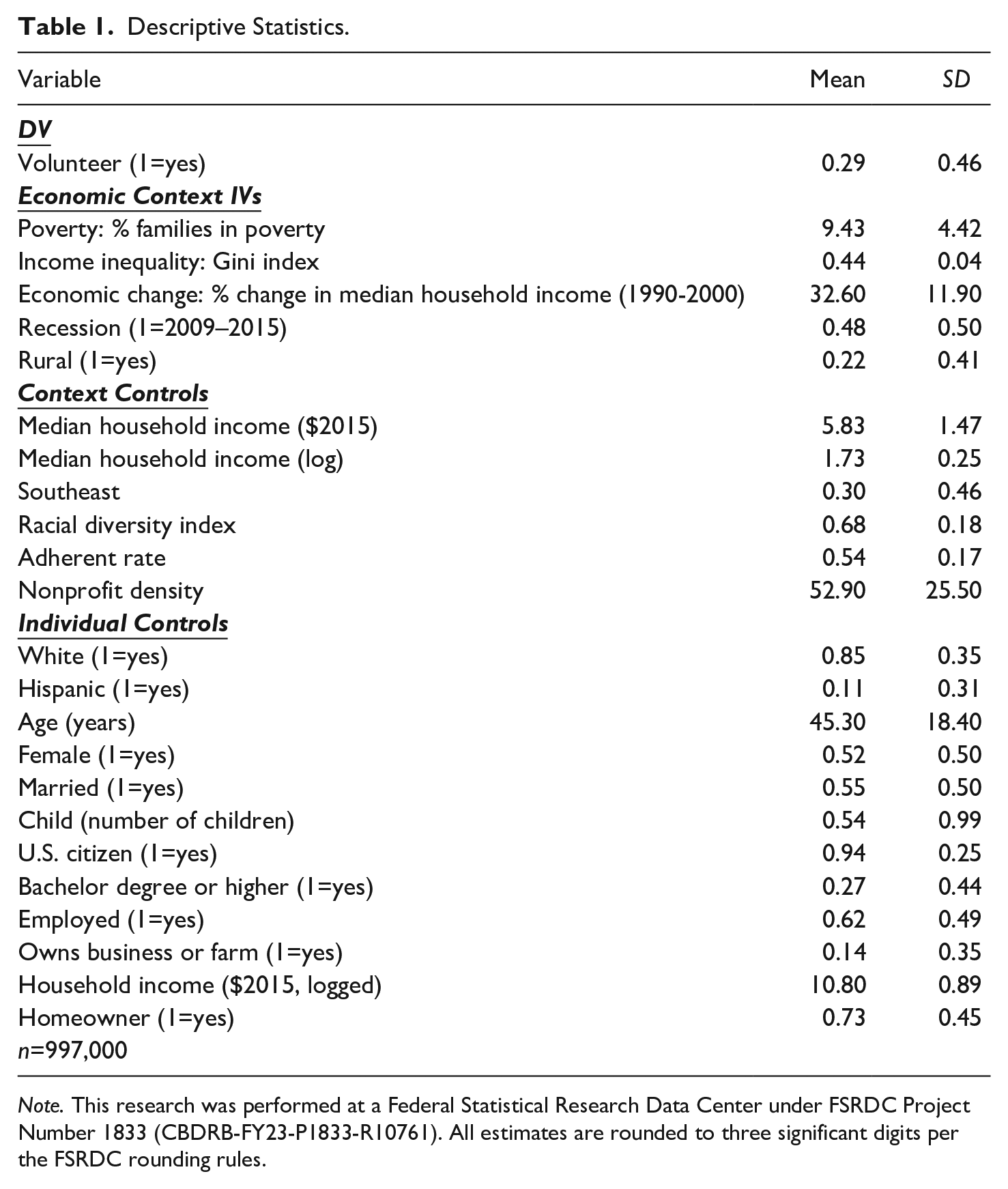
Note. This research was performed at a Federal Statistical Research Data Center under FSRDC Project Number 1833 (CBDRB-FY23-P1833-R10761). All estimates are rounded to three significant digits per the FSRDC rounding rules.
Modeling Approach
The binary volunteering variable served as the dependent variable for all four logistic regression models. The base model included the recession dummy variable (testing H1). The next three correspond to (a) the effects of the three economic contexts on volunteering (testing H2a-H2c; Table 3), (2) moderating effects of the recession on the relationships between economic variables and volunteering (testing H3a-H3c; Table 4), and (3) moderating effects of recession and rurality on the relationships between economic contexts and volunteering (testing H4a-H4c; Table 5).
All models included clustered robust standard errors by county accounting for unobserved heterogeneity across counties. Each model controlled for the following individual/household and county-level characteristics described earlier: median family income, southeast region, racial diversity, adherent rate, and nonprofit density, and the following individual-level characteristics: age, age squared, gender, race (white), ethnicity (Hispanic), education, household income, homeowner, citizenship, marital status, number of children, employment status, and business/farm ownership. We excluded these coefficients from the regression tables to focus our attention on the complex interactions and because of the well-established effects of these controls.
Results
Table 2 presents the results for the base model, including all controls and the recession dummy variable (2008–2015). In this simple model, the recession is negatively related to the likelihood of volunteering (p < .001), providing support for H1.
Logit Regression Model: The Effect of Recession and Rurality on Volunteering.
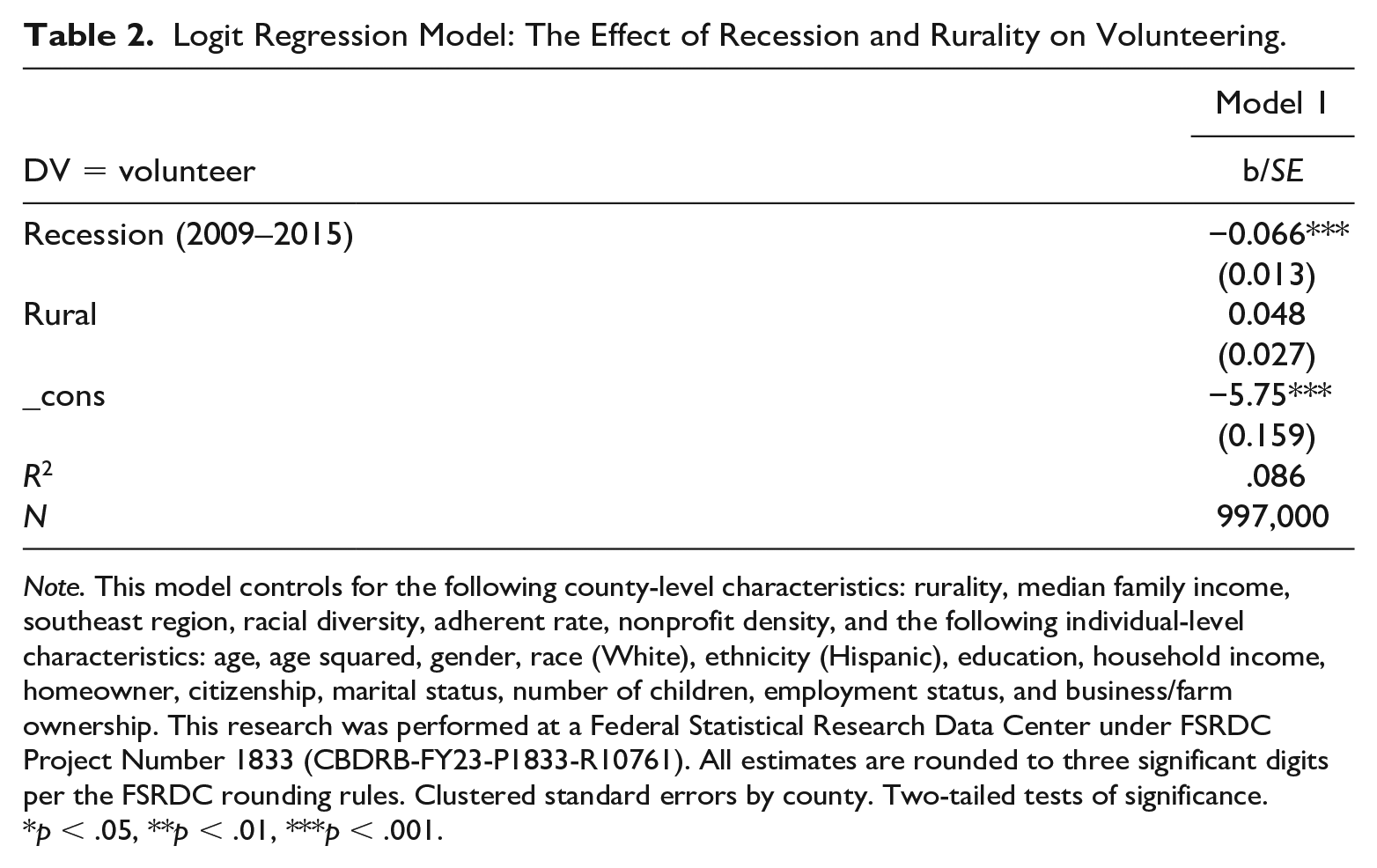
Note. This model controls for the following county-level characteristics: rurality, median family income, southeast region, racial diversity, adherent rate, nonprofit density, and the following individual-level characteristics: age, age squared, gender, race (White), ethnicity (Hispanic), education, household income, homeowner, citizenship, marital status, number of children, employment status, and business/farm ownership. This research was performed at a Federal Statistical Research Data Center under FSRDC Project Number 1833 (CBDRB-FY23-P1833-R10761). All estimates are rounded to three significant digits per the FSRDC rounding rules. Clustered standard errors by county. Two-tailed tests of significance.
p < .05, **p < .01, ***p < .001.
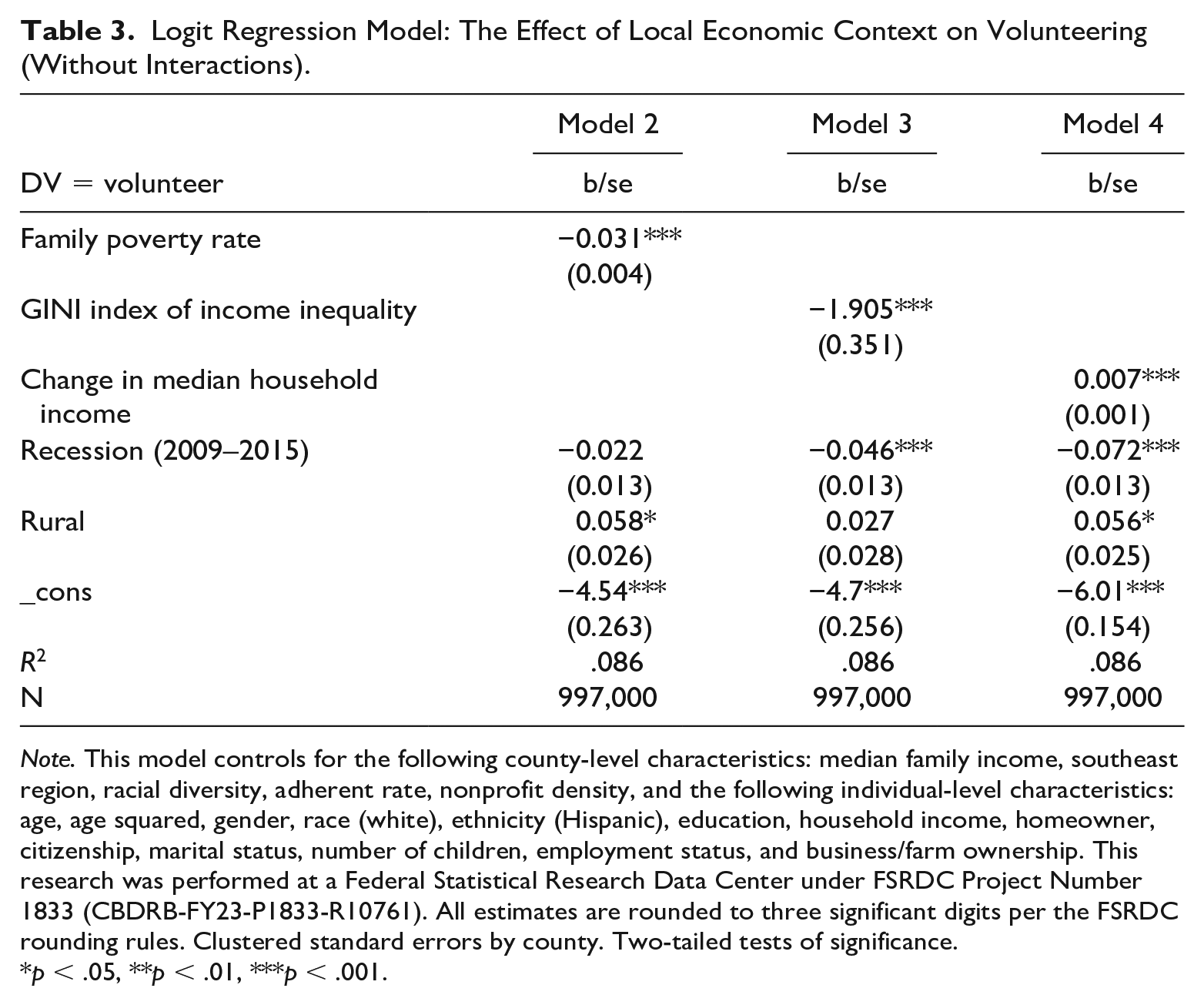
Table 3 presents the effects of the three economic variables on volunteering (without interactions). All three economic contexts are significantly associated with volunteering. First, economic disadvantage (measured by family poverty rate) is significantly and negatively associated with volunteering (p < .001), providing support for H2a. Second, the GINI coefficient is negative and significant (p < .001) in all three models Model 3, suggesting that community inequality negatively affects volunteering, supporting H2b. Finally, the percent change in median household income is significant and positive (p < .001), indicating that county economic growth increases individuals’ volunteering propensity, while economic stagnation dampens volunteering rates, other things being equal. 3 This supports H2c.
Logit Regression Model: The Effect of Local Economic Context on Volunteering (Without Interactions).
Note. This model controls for the following county-level characteristics: median family income, southeast region, racial diversity, adherent rate, nonprofit density, and the following individual-level characteristics: age, age squared, gender, race (white), ethnicity (Hispanic), education, household income, homeowner, citizenship, marital status, number of children, employment status, and business/farm ownership. This research was performed at a Federal Statistical Research Data Center under FSRDC Project Number 1833 (CBDRB-FY23-P1833-R10761). All estimates are rounded to three significant digits per the FSRDC rounding rules. Clustered standard errors by county. Two-tailed tests of significance.
p < .05, **p < .01, ***p < .001.
Recession, while significant in models on the effects of inequality and economic change, was insignificant in Model 2, suggesting that poverty mediates the relationship between the recession and the likelihood of volunteering. Overall, the results indicate significant effects of economic disadvantage, inequality, and change on volunteering, other things being equal.
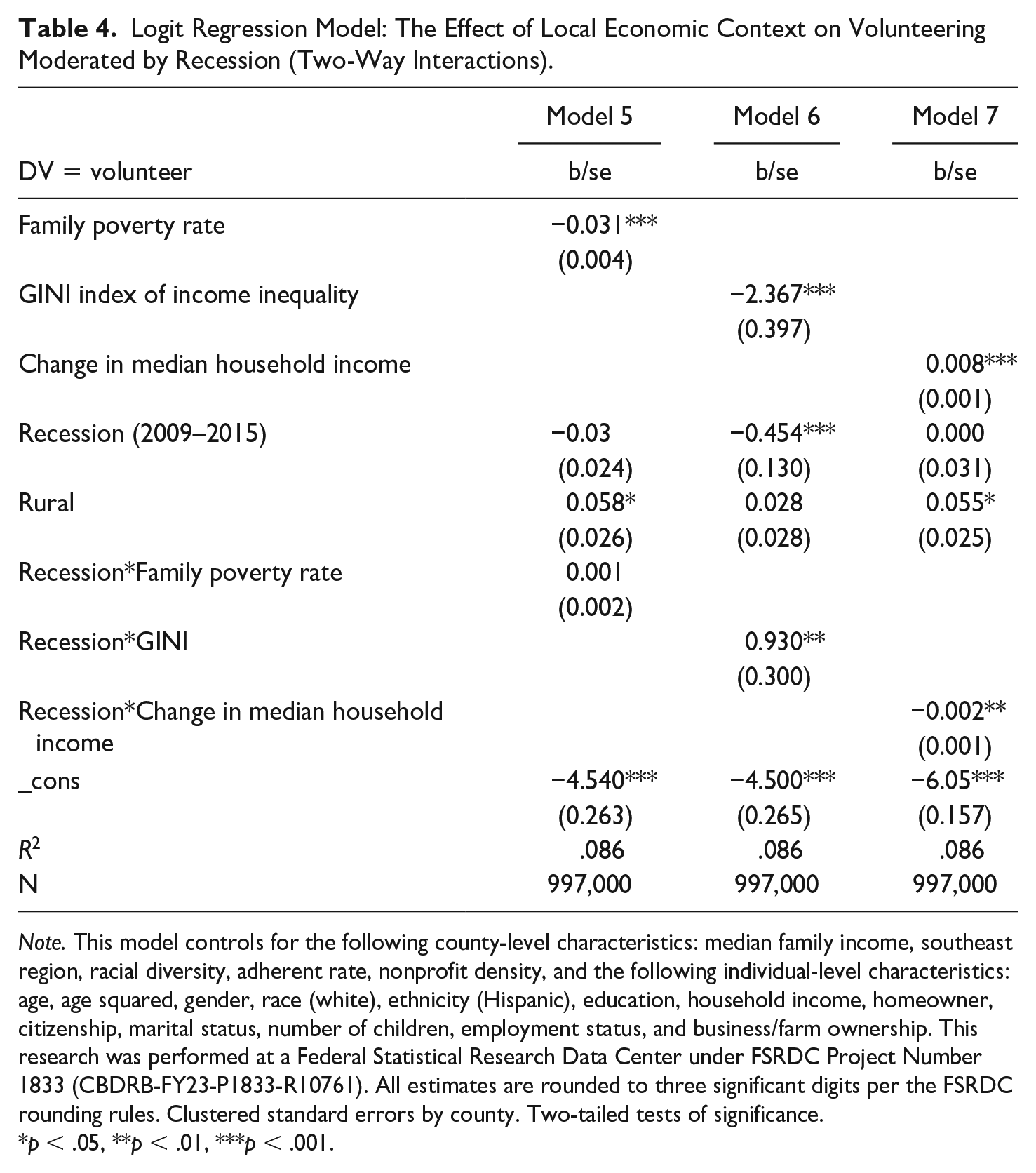
The models presented in Table 4 examine the moderating effects of recession on the relationships between the three economic variables and the likelihood of volunteering. The first interaction term between recession and economic disadvantage (family poverty rate) is not significant (Model 5). Second, the two-way interaction between recession and income inequality is positive and significant (p < .01; Model 6). Finally, the two-way interaction term between recession and percent income change is negative and significant (p < .01; Model 7). However, merely looking at the p value of the interaction term is insufficient for identifying a statistical interaction in a non-linear model (Long & Mustillo, 2021; Mize, 2019; Mustillo et al., 2018). To investigate these relationships further, we created predicted probability plots for all our two-way interactions (as recommended by Mize [2019]), which are presented in Figures 1 to 3.
Logit Regression Model: The Effect of Local Economic Context on Volunteering Moderated by Recession (Two-Way Interactions).
Note. This model controls for the following county-level characteristics: median family income, southeast region, racial diversity, adherent rate, nonprofit density, and the following individual-level characteristics: age, age squared, gender, race (white), ethnicity (Hispanic), education, household income, homeowner, citizenship, marital status, number of children, employment status, and business/farm ownership. This research was performed at a Federal Statistical Research Data Center under FSRDC Project Number 1833 (CBDRB-FY23-P1833-R10761). All estimates are rounded to three significant digits per the FSRDC rounding rules. Clustered standard errors by county. Two-tailed tests of significance.
p < .05, **p < .01, ***p < .001.
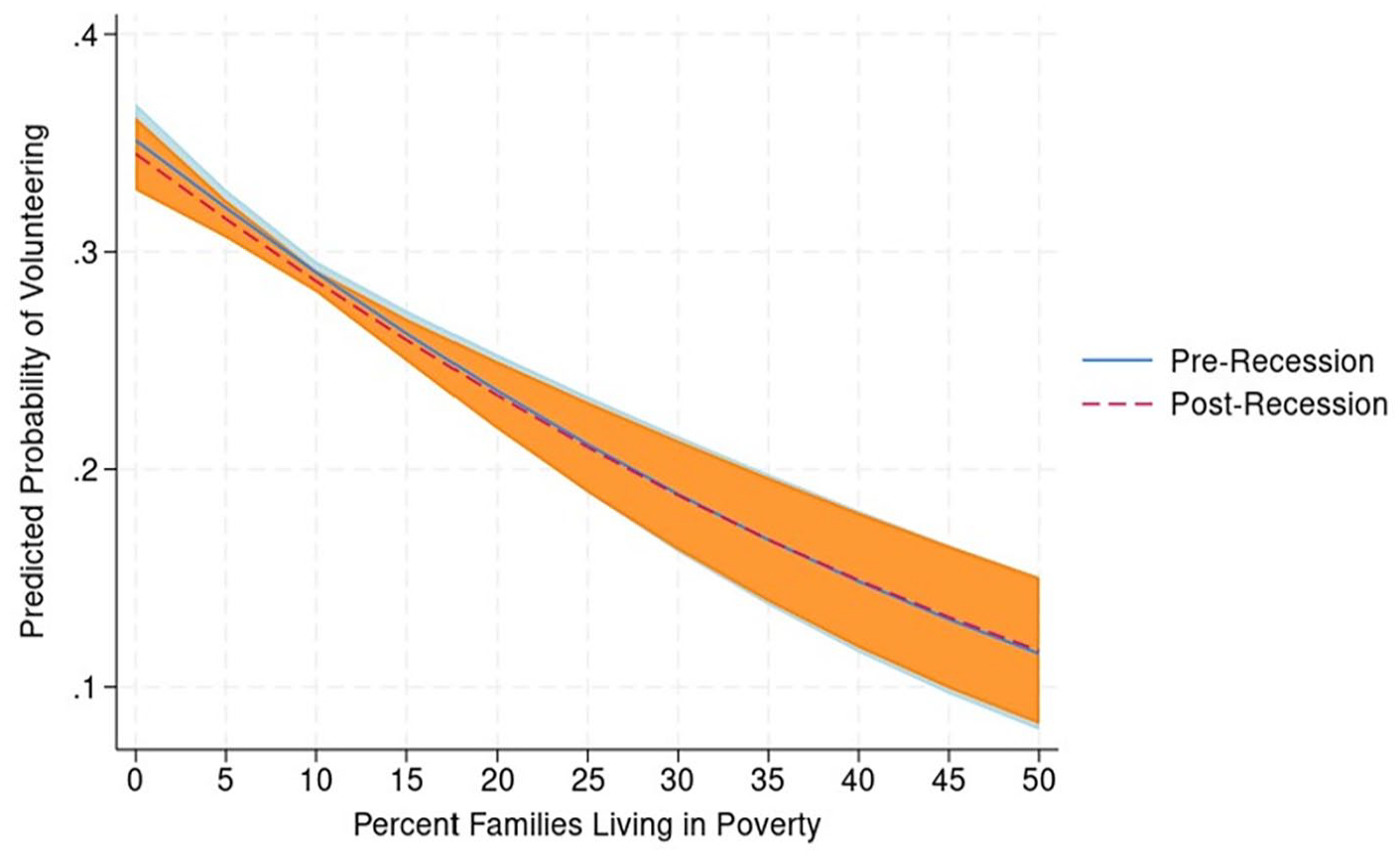
The Effect of County Poverty Rate on Volunteering Pre- and Post-Recession.
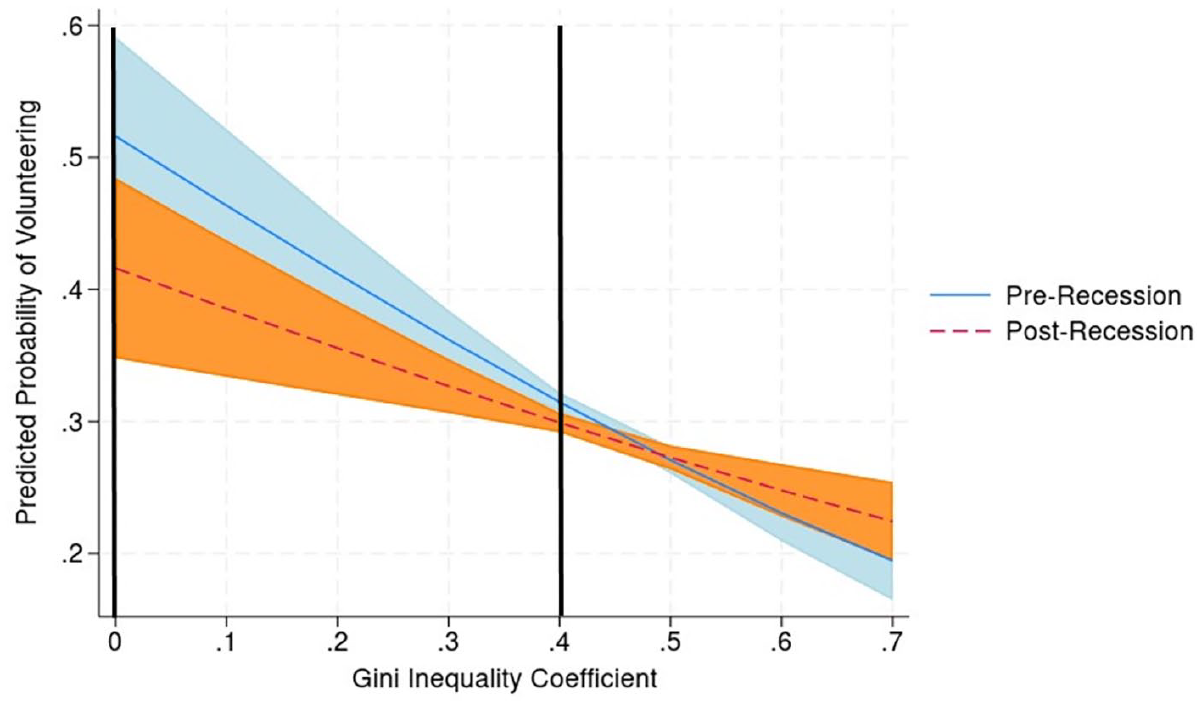
The Effect of County Income Inequality (GINI) on Volunteering Pre- and Post-Recession.
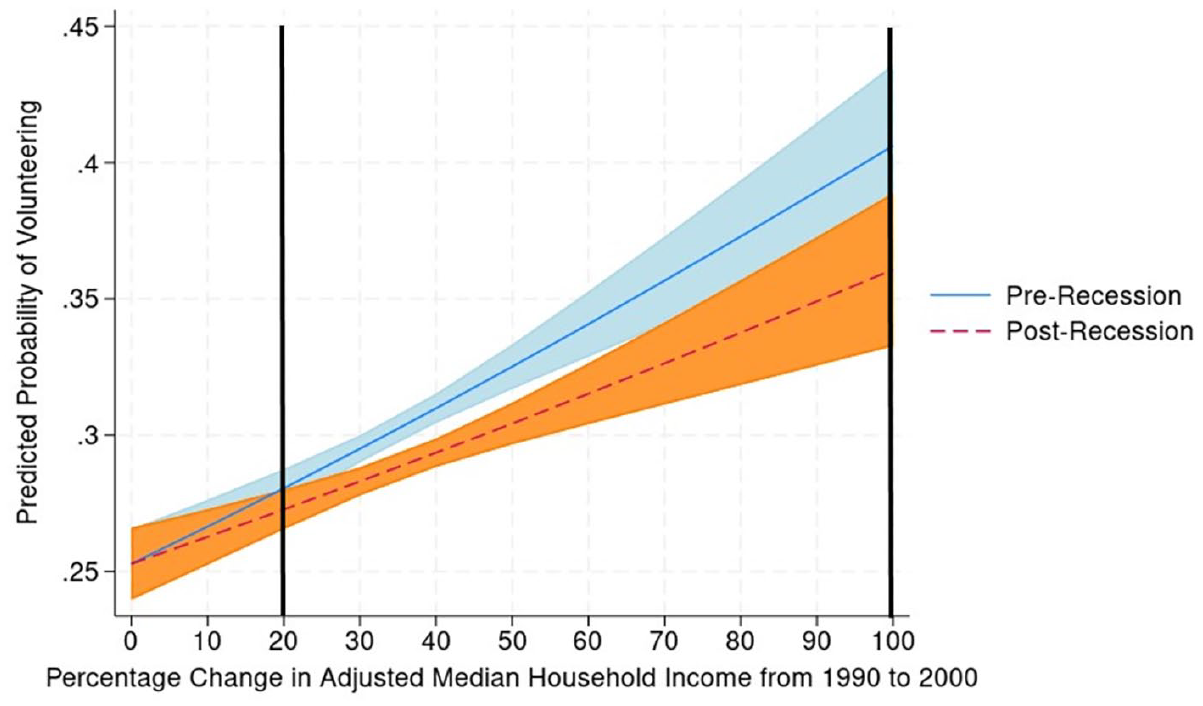
The Effect of County Economic Growth (Change in Median Household Income) on Volunteering Pre- and Post-Recession.
The plots show how the predicted probability of volunteering varies for different values of family poverty rate (Figure 1), income inequality (Figure 2), and percent change in median household income (Figure 3), in both the pre-recession (solid line) and post-recession (dashed line) periods. Each graph includes vertical line(s) to show the ranges where the effects of economic variables significantly differ before and after the recession. As seen in Figure 1, the effect of economic disadvantage on volunteering does not differ before and after the recession, meaning that H3a is not supported. Figure 2 shows that the effect of county income inequality on volunteering is significantly different in pre- and post-recession years for respondents living in counties with lower levels of inequality (GINI ≤ 0.4). Therefore, the recession had the strongest dampening effect on individual volunteering for respondents in counties with more economic equality, contrary to our expectations. H3b was not supported. Figure 3 shows that the effect of county economic growth (percentage change in median household income) also differs pre- and post-recession for respondents in counties that had experienced a 20% or greater growth rate. For these respondents, as county median income increases, the gap between the predicted probability of volunteering before and after the recession also increases. This suggests that the recession dampened volunteering more for individuals in high-growth counties but had a non-significant effect on individual volunteering in low-growth counties where the likelihood of volunteering was already low. This contradicts H3c. Taken together, we find no support for our third set of hypotheses for a general moderating effect of recession. Instead, we find that the recession had a dampening effect on volunteering for individuals living in places that were more economically advantaged—lower rates of income inequality and higher economic growth (measured by the percent change in median household income).
The last set of models (shown earlier in Table 5) tests the three-way interaction effects of local economic context, recession, and rurality on volunteering. To examine these complex relationships, we present predicted probability plots for all of our three-way interactions, as shown in Figures 4 to 6.
Logit Regression Model: The Effect of Local Economic Context on Volunteering Moderated by Recession and Rurality (Three-Way Interactions).
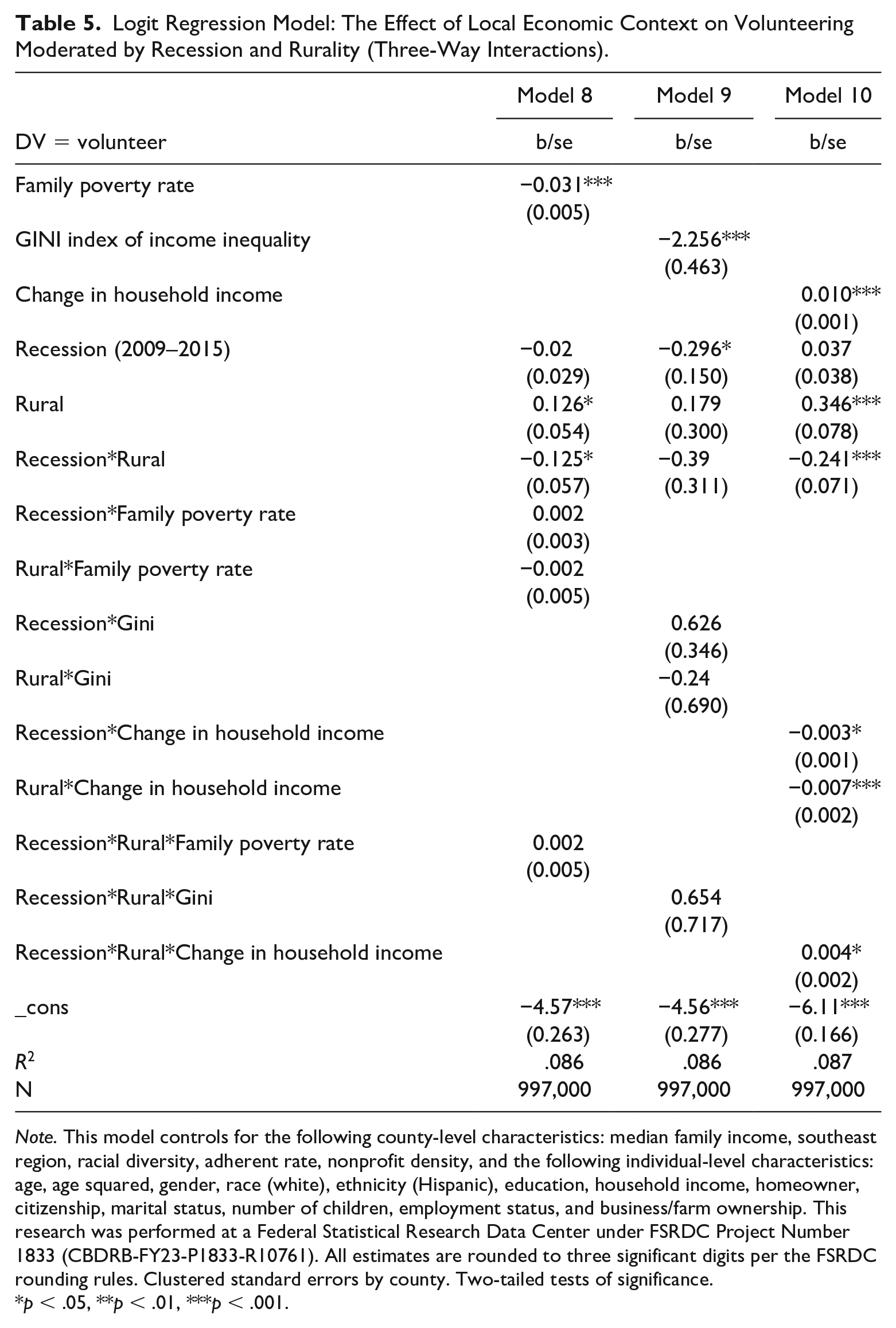
Note. This model controls for the following county-level characteristics: median family income, southeast region, racial diversity, adherent rate, nonprofit density, and the following individual-level characteristics: age, age squared, gender, race (white), ethnicity (Hispanic), education, household income, homeowner, citizenship, marital status, number of children, employment status, and business/farm ownership. This research was performed at a Federal Statistical Research Data Center under FSRDC Project Number 1833 (CBDRB-FY23-P1833-R10761). All estimates are rounded to three significant digits per the FSRDC rounding rules. Clustered standard errors by county. Two-tailed tests of significance.
p < .05, **p < .01, ***p < .001.
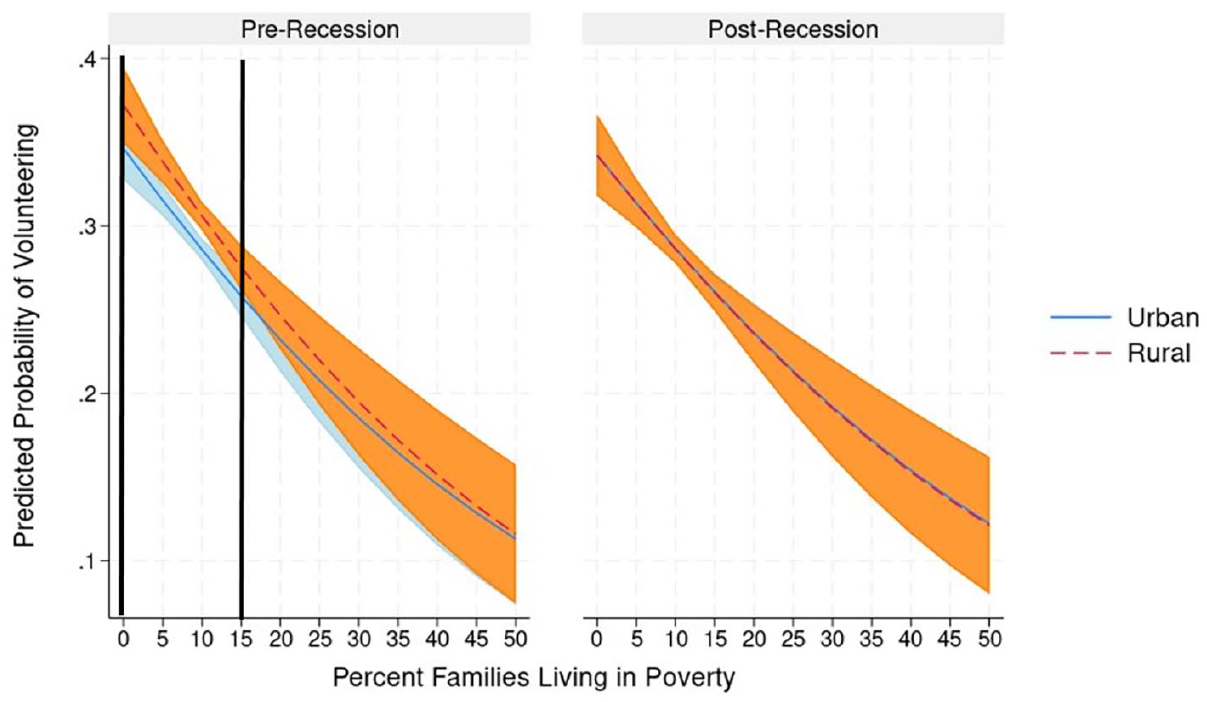
The Effect of County Poverty Rate on Volunteering Pre- and Post-Recession Across Urban and Rural Respondents.
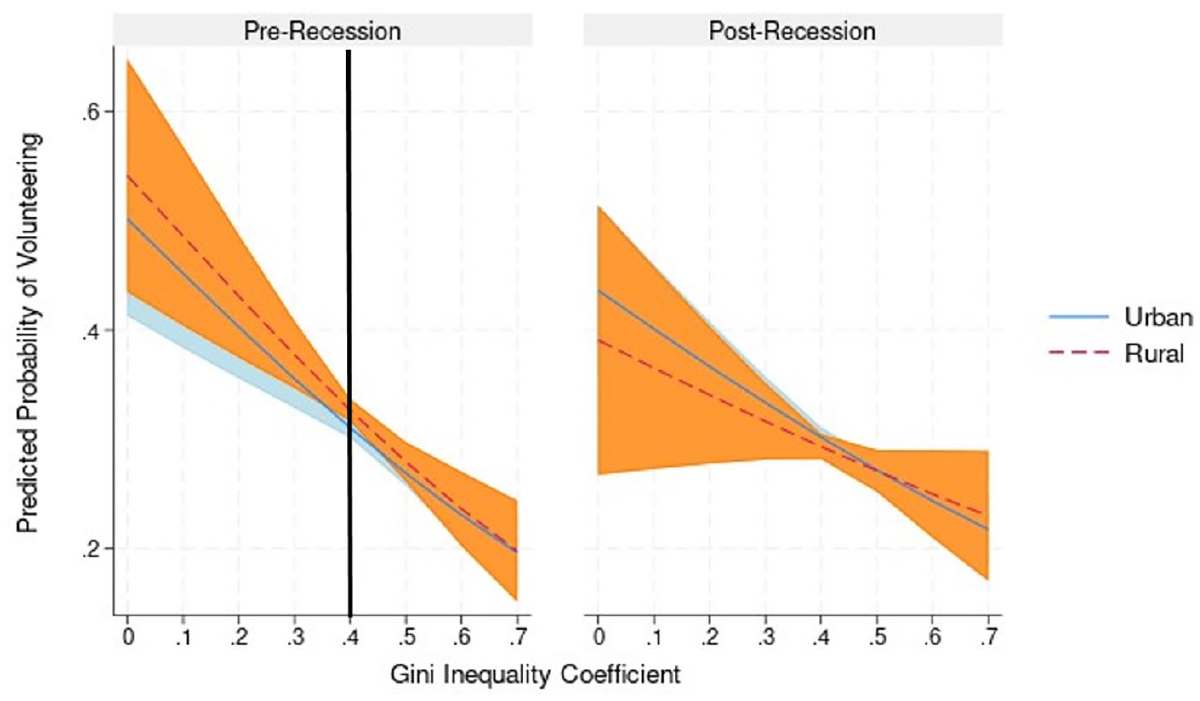
The Effect of County Income Inequality (GINI) on Volunteering Pre- and Post-Recession Across Urban and Rural Respondents.
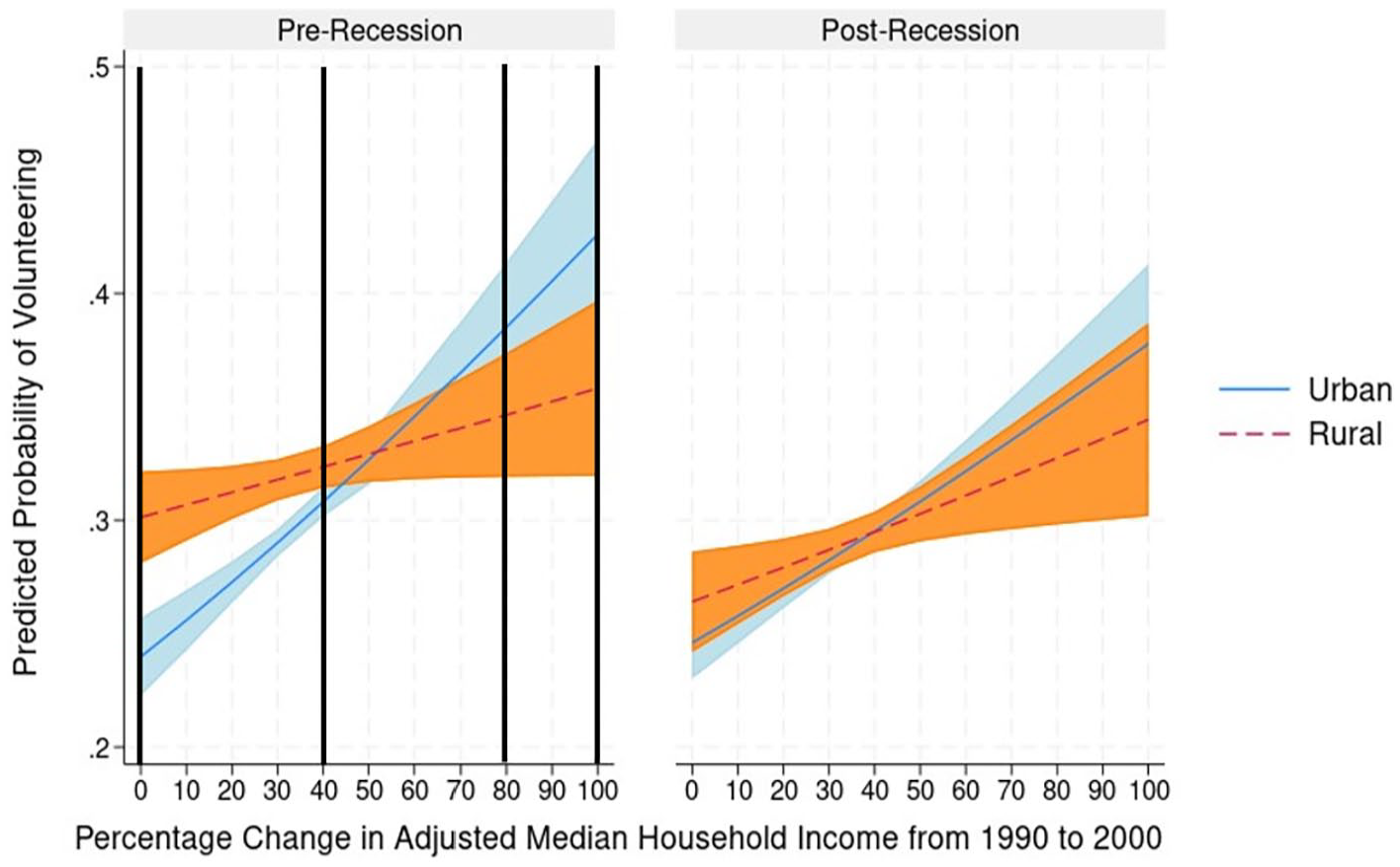
The Effect of County Economic Growth (Change in Median Household Income) on Volunteering Pre- and Post- Recession Across Urban and Rural Respondents.
These plots depict the change in the predicted probability of volunteering across different values of family poverty rate (Figure 4), income inequality (Figure 5), and percent change in median household income (Figure 6). Each figure includes two graphs, one each for the pre-recession and post-recession periods, each of which has two different lines representing respondents living in urban counties (as a solid line) and rural counties (as a dashed line). We added vertical lines to show the ranges where the effects of the economic variables statistically differ by rurality. Figure 4 shows that in pre-recession years, rural residents living in counties with lower levels of economic disadvantage (families living in poverty ≤15%), are more likely to volunteer than individuals in urban counties, all else being equal. This pre-recession “rural advantage” disappears as county poverty rates increase. In addition, there are no differences in the likelihood of volunteering across rural and urban places after the recession. H4a is partially supported. Similarly, Figure 5 shows a significant rural/urban difference in the effect of income inequality on volunteering when GINI equals 0.4, but this difference disappears after the recession. We, therefore, do not find support for hypothesis H4b. Figure 6 shows that the effect of county economic growth, measured as the change in median household income, on volunteering differed for rural and urban residents pre-recession. Individuals living in rural counties with lower economic growth rates (40% or less) were more likely to volunteer than individuals living in urban counties with similar growth rates. In contrast, individuals living in urban counties with higher economic growth rates (80% or greater) were more likely to volunteer than individuals living in rural counties with similar growth rates. Post-recession, these differences no longer exist.
Discussion
This article began with three research questions about the impact of economic factors on volunteering—the effects of national/global and local economic conditions, the moderating effect of the recession, and the moderating effect of rurality. We discuss our results pertaining to each of these research questions.
The Effects of Economic Conditions on Volunteering
Our results indicate that local economic conditions have a statistically significant effect on volunteering when controlling for other factors. As expected, individuals in the United States who live in places characterized by economic disadvantage and economic inequality are less likely to volunteer than individuals in more advantaged, equitable communities. Individuals living in communities that experienced economic growth were more likely to volunteer than those living in communities of stagnation or decline. These findings align with other empirical evidence that civic participation is higher in economically advantaged communities (Custers, 2021).
Given the nature of our data, we can only speculate on the specific mechanisms by which community economic hardships decrease volunteering and we call for future research to investigate how individual characteristics and behaviors interact with local economic conditions. For example, the relationship between income inequality and volunteering is complex and may be moderated by individual income (Filetti & Janmaat, 2018). The rich/poor volunteering gap may increase in the face of higher inequality (Lancee & Van de Werfhorst, 2012; Schröder & Neumayr, 2019). Consistent with theories of relative power (Filetti & Janmaat, 2018), higher income inequality may concentrate power in the hands of a small elite class. Less affluent individuals may feel powerless, unrepresented by institutions, and believe the system is rigged against them, leading them to further disengage as economic prospects dim (Uslaner & Brown, 2005). Future studies can shed further light on our results by modeling the interactions between community context and individual characteristics, particularly an individual’s economic situation. In addition, while popular pieces, such as Tight Rope: Americans Reaching for Hope (Kristof & WuDunn, 2020), have shed a spotlight on how local economic stagnation has affected individual attitudes and opportunities, the study of volunteerism would benefit from greater qualitative exploration of the complex relationships between volunteering, place, and economic conditions (Bécares et al., 2011; Letki, 2008; McCulloch et al., 2012; Mohan & Bennett, 2019).
Regardless of the mechanisms that drive the negative relationships between various forms of place-based economic disadvantage and volunteering, these findings raise important policy questions about the ability of disadvantaged communities to improve community conditions through their own voluntary efforts. If community disadvantage dampens volunteering (and other civic behaviors), then community mobilization in areas of disadvantage will be more difficult, costly, and time-consuming. Community development requires holistic approaches that focus on both economic and civic development.
The Effects of the Great Recession on Volunteering
This article also investigated how the Great Recession moderated the influence of local economic conditions on volunteering behaviors. First, we found that the Great Recession decreased the likelihood of volunteering. This provides additional empirical support for the negative effect that economic jolts, such as global economic recessions, have on volunteering and civic participation, as noted in previous empirical research (Borbáth et al., 2021; Lim & Laurence, 2015). From a practical perspective, in times of economic downturn, local organizations (Gray & Barford, 2018) may have reduced capacity to recruit and support volunteers and/or individuals experiencing greater economic hardship may have less time to volunteer. However, these negative effects persisted more than 5 years after the technical “end” of the recession, suggesting that the economic jolt may also have had lingering social or psychological affects, which continue to dampen volunteering.
The effect of the recession differed across communities in ways that we did not expect. The negative effect of poverty was consistent pre- and post-recession. Individuals in economically disadvantaged communities may already lack the necessary resources to support civic participation, such as social networks, organizational resources, and collective efficacy (Lim & Laurence, 2015; Lim & Sander, 2013), so the recession had little impact on volunteering in those areas. However, the recession dampened the positive effects of income equality and economic growth on volunteering. The recession had the largest dampening effect on communities that have above-average rates of income equality and higher rates of economic growth. These results combine to suggest that, while the Great Recession decreased volunteering, the effects of the recession were more pronounced in previously advantaged communities. We can only conjecture about the possible mechanisms behind the lingering effects of the recession. For example, the recession may have permanently changed local economic structures in ways that are not captured by our data, such as long-term loss of wealth in economically vibrant communities or long-term changes in local job structures, such as the increase in part-time and contract employment, both of which may have increased individuals’ sense of economic insecurity.
The Effects of Economic Conditions on Volunteering in Rural and Urban Places
Finally, the study examined how the relationship between economic conditions and volunteering varies across rural and urban respondents. First, we found that the recession erased any advantages that economic conditions afforded both urban and rural places. Urban declines in volunteering were highest for respondents in places experiencing the highest rates of economic growth. Residents in urban places, which are often associated with higher costs of living, may experience higher rates of economic uncertainty post-recession. This personal uncertainty may have pushed the opportunity costs of volunteering too high for these individuals (Borbáth et al., 2021; Lim & Laurence, 2015), leading them to shift their energy from voluntary to income-generation activities (Lim & Sander, 2013).
We also found that the recession had the largest dampening effect on volunteering in rural communities relative to urban communities in those places in which rurality had previously provided an advantage. While rural volunteering rates have historically been higher than urban volunteering rates (Paarlberg et al., 2022), steep post-recession declines in the likelihood of volunteering in rural places with stagnant economies may partially explain the convergence of volunteering behavior across rural and urban places. This finding aligns with the emerging concern that rural places experiencing economic declines are increasingly feeling left behind and isolated from the rest of the United States, leading to civic withdrawal (Rodríguez-Pose, 2018; Rodríguez-Pose et al., 2020; Wuthnow, 2019).
However, we also found that rural places with low to moderate levels of income inequality (i.e., more equality) also experienced a decline in the likelihood of volunteering that appeared to erase the pre-recession “rural advantage.” Unfortunately, our understanding of the complex relationships between rurality, community economic conditions, and volunteering is limited. Rural places are also experiencing other systematic changes (Thiede et al., 2018; Tolbert et al., 2002; Wuthnow, 2019) such as the hollowing out of local government, the loss of local businesses and family farms, secularization, aging of the population, and outmigration of educated youth. These conditions may exacerbate or otherwise interact with the effect of local economic context on volunteering. Furthermore, rural places typically rely upon a small number of civic leaders to voluntarily meet the needs of the community, meaning that the loss of leadership and social networking opportunities associated with these changes can further dampen volunteering in previously active communities. Given the important role that local helping, both formal and informal, plays in meeting the needs of rural communities, the decline in volunteering post-recession are very concerning and has implications for democratic functioning and community cohesion, particularly in rural communities.
Limitations
This article finds that local economic conditions matter for individuals’ volunteering, and these relationships may differ in pre- and post-recession years, and in urban and rural areas of the United States. While this study provides evidence that economic context matters for volunteering, several limitations necessitate future research. First, our findings may not be generalizable to other countries. As suggested earlier, the United States has less generous social welfare programs, which may have exacerbated the negative effects of the recession. Other countries might have done more to strengthen local institutions pre- and post-recession; future cross-national studies may better illuminate these relationships. In addition, because social welfare spending is a state function in the United States, future U.S. studies should include controls for differences in social welfare spending and eligibility criteria across places.
Second, while these findings suggest statistical relationships, as noted earlier, future research should dig further into these dynamics. For example, why have volunteering rates remained depressed long after the official end of the recession, particularly in rural places? Is the sharp decline in volunteering a function of the reduced capacity of anchor institutions, such as local schools, hospitals, and places of worship? Alternative explanations include the loss of leadership that comes with changing population structure due to an aging population, brain drain, or declining religiosity. However, it is important to take into consideration the increased uncertainty or polarization that may have resulted from the recession. While some of these questions may be tested using statistical techniques, such as an Oaxaca decomposition or additional interaction terms, community case studies may also enhance our understanding of declining volunteering.
Finally, this model only examines the general likelihood of volunteering. Testing how economic conditions affect the type of volunteering across communities facing different economic conditions may help to unpack the mechanisms at work. For example, volunteering in communities with greater economic advantage might be dominated by leisure activities (e.g., sports) and elite interests (e.g., the arts). Individuals may be more likely to drop these activities during economic downturns and not resume them later (Custers, 2021).
Conclusion
This article contributes to the growing literature theorizing and empirically confirming that volunteerism is shaped by community context, including the local economic context. While local economic conditions clearly influence volunteering, not all local economic conditions, shaped as they are by global/national economic jolts and rurality, have the same effect. This demonstration of the complex relationship between local economic conditions and volunteering implies that researchers should be careful about making sweeping generalizations based on one or two economic variables.
This work also contributes to the larger literature on volunteerism by helping to explain how a combination of individual and community factors is driving a decline in volunteering in the United States. Our research shows that rural communities may be losing their volunteering advantage. While individuals living in rural communities have historically been more likely to volunteer than individuals in urban places, urban and rural volunteering rates are converging—particularly after the recession, potentially exacerbating rural communities’ challenges and their ability to self-organize for community benefit.
Policies and interventions designed to increase volunteerism cannot be agnostic to these contextual effects. While many policy makers and community leaders are seeking to increase volunteering and civic participation, efforts to raise rates of volunteerism in hopes of building stronger, economically robust communities will not necessarily work without efforts to build the economy (McCulloch et al., 2012). In addition, while we might expect that economic development might lead to greater levels of civic engagement, our post-recession models do not necessarily suggest that economic growth will lift volunteering rates. Given the important role that informal networks have long played in rural communities (Wuthnow, 2019), it is unclear what role the constellation of nonprofit, public, and private organizations that support volunteering can play in rebuilding volunteering in rural places. However, our results suggest that policy solutions to increase volunteering (especially for rural communities) will be more successful when they include both economic and civic development.
Footnotes
Acknowledgements
Any views expressed are those of the authors and not those of the U.S. Census Bureau. The Census Bureau has reviewed this data product to ensure appropriate access, use, and disclosure avoidance protection of the confidential source data used to produce this product. This research was performed at a Federal Statistical Research Data Center under FSRDC Project Number 1833. (CBDRB-FY23-P1833-R10761)
Declaration of Conflicting Interests
The author(s) declared no potential conflicts of interest with respect to the research, authorship, and/or publication of this article.
Funding
The author(s) disclosed receipt of the following financial support for the research, authorship, and/or publication of this article: This material is based upon work funded by the Office of Research and Evaluation at AmeriCorps (formerly the Corporation for National and Community Service) under Grant No. 18RE207108 and Grant No. 22RE249331. Opinions or points of view expressed in this document are those of the authors and do not necessarily reflect the official position of, or a position that is endorsed by, AmeriCorps.
