




Abstract
Social enterprises (SEs), hybrid entities balancing revenue generation and social or environmental goals, often employ bricolage due to resource constraints. Interviews with 37 SE managers unveiled two pivotal bricolage strategies—utilizing SE status–related marketing resources and leveraging available technological resources—as well as how their interplay influences geographical expansion and the contingent roles of stakeholder participation in facilitating their impact. Quantitative studies of 778 U.K. SEs confirm that the predominant facilitator of geographic expansion is the utilization of status-related marketing resources, surpassing the impact of leveraging available technological resources. SEs’ efforts to utilize SE status–related marketing resources should be harmonized with community participation, whereas SEs aiming to leverage available technological resources should align their efforts with employee participation. We also underscore the substitution dynamic between these two bricolage strategies. However, SEs prioritizing employee participation are better positioned to mitigate the challenges arising from this substitution than those emphasizing community participation.
Introduction
Social enterprises (SEs) represent a distinct organizational paradigm, blending attributes of both the for-profit and nonprofit models (Defourny & Nyssens, 2012; Fitzgerald & Shepherd, 2018). At their core lies an operational framework wherein they participate in commercial activities to generate revenue while exhibiting a commitment to social or environmental objectives woven into their mission and ethos. These objectives are central, rather than ancillary, to SE decision-making. The scholarly interest in SEs spans disciplines, leading to multiple working definitions reflecting varied research foci, but no universal standard definition exists. 1 Nevertheless, the central characteristics remain unchanged despite different SE perspectives—that is, they pursue both financial viability through commercial ventures and positive societal/environmental impacts. This research defines SEs as organizations that aim to generate commercial revenue by selling products or services supporting their social/environmental mission 2 (Di Domenico et al., 2010; W. Liu et al., 2021; Tasavori et al., 2018).
It is common for SEs to operate in devolved areas with limited resources. Moreover, capital markets specifically tailored to support their operations remain underdeveloped (Bojica et al., 2018; Lumpkin et al., 2013). An additional hurdle arises from the limitation imposed by serving marginalized communities, preventing SEs from raising their prices to expand their profit margins (Hota et al., 2019). These constraints (limited financial resources and a lack of pricing flexibility) highlight SEs’ distinctive funding and sustainability challenges that they must navigate to fulfill their social and environmental objectives. This often leads SEs to adopt bricolage strategies which involve improvisation and adaptability, using their limited resources at hand to achieve the desired outcomes (Desa & Basu, 2013; Janssen et al., 2018). Empirical evidence indicates that bricolage strategies allow SEs to overcome resource constraints and pursue new opportunities while advancing their missions (Kwong et al., 2017; W. Liu et al., 2021; Tasavori et al., 2018).
A literature review identified several significant gaps. First, although the roles of bricolage in SEs’ operations are highlighted (e.g., Fayolle et al., 2020; Holt & Littlewood, 2017; Truong & Barraket, 2018), few studies differentiate between the various types of bricolage or examine their impacts (e.g., Cheung et al., 2019; Tasavori et al., 2018) and none explores their interplay. Understanding the distinct impacts and potential synergies of different bricolage types arising from their concurrent use provides actionable insights for SE managers into strategically adopting bricolage strategies aligned with resource constraints and operational priorities. Second, previous studies acknowledge the important role of stakeholder participation in SEs’ implementation of bricolage strategies (Di Domenico et al., 2010; Fayolle et al., 2020). No study has gone further to empirically investigate the influence of different stakeholder groups’ participation. Such insights are indispensable for SE managers, who are responsible for discerning and implementing strategies to enhance SEs’ overall efficacy in deploying bricolage strategies. Third, previous studies examine various outcomes of bricolage strategies (e.g., Bacq et al., 2015; Bojica et al., 2018; Kickul et al., 2018), but the effect of bricolage strategies on SEs’ geographical expansion has been neglected. It is vital to understand this impact, as geographic expansion allows SEs to (a) broaden their mission reach and serve more people, (b) diversify their income via new markets, (c) craft localized solutions, and (d) mitigate region-specific risks 3 (Chliova & Ringov, 2017; Corner & Kearins, 2021; Giudici et al., 2020; Powell et al., 2019).
To address the identified research gaps around SE bricolage strategies, we conducted two studies focused on SEs in the U.K. context. The United Kingdom was selected as the empirical context, given its robust SE landscape of more than 100,000 organizations contributing £60 billion to the economy annually (Social Enterprise U.K., 2018), with shared characteristics such as a distinct social purpose, earned income, and the reinvestment of profits into their mission (Richardson, 2015; Temple, 2017). First, we interviewed 37 SE managers. Based on their responses, we identify two pivotal bricolage strategies: utilizing SE status–related marketing resources, leveraging available technological resources, and how their interplay influences geographical expansion, as well as the contingent roles of stakeholder participation in facilitating their impacts. Second, our findings were empirically tested by analyzing a unique data set, the 2017 State of Social Enterprise Survey. We found that the SEs’ efforts to utilize SE status–related marketing resources should be harmonized with community participation, whereas SEs aiming to leverage the available technological resources should align their efforts with employee participation. We also identify the substitution dynamic between these two bridge strategies. However, SEs prioritizing employee participation are better positioned to mitigate the challenges arising from this substitution effect than those emphasizing community participation. The theoretical contributions and managerial implications of these findings will be deliberated upon in the concluding section below.
Review of the Previous SE Bricolage Literature
The number of studies examining SE bricolage strategies has steadily increased in recent years, and they fall under several interrelated themes. First, the conceptual and qualitative research has primarily focused on understanding the nature of the bricolage strategies that SEs adopt (e.g., Fayolle et al., 2020; Janssen et al., 2018; Kannampuzha & Suoranta, 2016; Servantie & Rispal, 2020). This has led academics to distinguish between various types of bricolage strategies and explore their applications and limitations in more detail (Barraket et al., 2019; Cheung et al., 2019; Kwong et al., 2017). For example, Tasavori et al. (2018) differentiate between internal bricolage (employing the at-hand resources inside the SEs) and network bricolage (utilizing resources within SEs’ pre-existing personal and professional networks).
The second research theme investigates the impacts of SE bricolage strategies, which researchers have investigated both qualitatively and quantitatively. Among the qualitative studies, some have sought to understand the nature and range of consequences that can arise from implementing bricolage in a social venture context (e.g., Kang, 2017; Sunduramurthy et al., 2016; Truong & Barraket, 2018). Other quantitative studies have empirically tested the effects of bricolage strategies on crucial outcome variables (e.g., Bacq et al., 2015; W. Liu et al., 2021). The most commonly examined outcomes are: (a) social value creation and impact (e.g., Di Domenico et al., 2010; Ghalwash & Ismail, 2022; Scuotto et al., 2023) and (b) financial sustainability (e.g., Cheung et al., 2019; Hota et al., 2019; Holt & Littlewood, 2017; Sunley & Pinch, 2012). Simultaneously, some scholars have studied alternative outcome variables that can also stem from bricolage strategies, such as growth (e.g., Bojica et al., 2018), innovation (e.g., Kickul et al., 2018), opportunities exploitation and exploration (e.g., Ciambotti, Sgro, et al., 2023), and others (Intindola & Ofstein, 2021; Xiabao et al., 2022).
The third research theme focuses on understanding the key antecedents and drivers that lead SEs to engage in bricolage strategies. For example, studies have shown that the institutional and resource constraints faced by SEs can promote improvisation and bricolage approaches (Desa, 2012; Desa & Basu, 2013). Ghalwash and Ismail (2022) found that encountering complex social problems and challenges can motivate SEs to leverage their limited resources creatively. Beyond external factors, scholars have also explored the internal drivers rooted in the social entrepreneurs themselves, such as passion and social networks. Ciambotti, Sgro, et al. (2023) suggested that social entrepreneurs’ relational capital and connections provide access to resources that facilitate bricolage. In a complementary study, Ciambotti, Zaccone, & Pedrini (2023) proposed that entrepreneurial passion supplies the motivation and persistence required to build successful ventures under resource constraints.
A fourth research theme explores the boundary conditions that can impact the effectiveness of SEs’ bricolage strategies (e.g., Barraket et al., 2019; Fayolle et al., 2020; Sunduramurthy et al., 2016). Some scholars have explicitly focused on the composition of the founding team and management. Bojica et al. (2018) found that gender diversity, tenure diversity, and prior private sector experience can influence SEs’ ability to implement bricolage successfully. Others have considered the broader ecosystem. Desa and Basu (2013) highlighted that environmental munificence shapes the viability of bricolage approaches within a given context. Di Domenico et al. (2010) explained that persuading stakeholders to participate and leverage their resources is critical if bricolage strategies are to make an impact. Finally, aspects of the SEs have been studied, especially concerning their culture and governance. Hota et al. (2019) suggested that enhanced trust, transparency, community engagement, and innovative transactions are needed if bricolage is to further goals like social value creation and financial sustainability.
In general, these studies provide valuable insights into the benefits and limitations of SEs’ bricolage strategies and highlight the need for further research into how SEs employ these strategies in pursuit of various organizational objectives. Our study, however, is unique in several ways. First, we focus specifically on SEs’ efforts to pursue geographic expansion objectives—a vital goal if SEs are to acquire the necessary resources and serve wider audiences (Chliova & Ringov, 2017; Corner & Kearins, 2021; Giudici et al., 2020; Powell et al., 2019) but one that has been relatively neglected in the SE bricolage research. Second, we seek to differentiate the different types of bricolage strategies more subtly based on the specific resources’ SEs leverage and how these resources interplay to facilitate geographic expansion. The existing categorisations only roughly distinguish between SEs’ use of internal versus external resources (e.g., Kwong et al., 2017; Tasavori et al., 2018), so we wish to provide greater clarity in this respect. Third, we investigate the boundary conditions and contingencies associated with SEs’ effective implementation of bricolage strategies to foster geographic growth. Here, we examine the role of stakeholder participation, which prior studies have only implicitly addressed in terms of its influence on the success of SE bricolage efforts (e.g., Bojica et al., 2018; Di Domenico et al., 2010; Sunduramurthy et al., 2016; Truong & Barraket, 2018). Fourth, we used a mixed-methods design. A qualitative research methodology facilitates a nuanced contextual comprehension (Tracy, 2010), which we use to explore how SEs employ bricolage strategies to enable geographic expansion and contingencies. Quantitative research tests qualitative findings to improve generalizability (Cameron & Golenko, 2023). Unlike the prior SE bricolage research, that used either qualitative (e.g., Di Domenico et al., 2010; Molecke & Pinkse, 2017) or quantitative (e.g., Desa & Basu, 2013; W. Liu et al., 2021) methods, our study leverages both. We will now describe our research methods and findings.
Study 1
Qualitative Interviews and Data Analysis
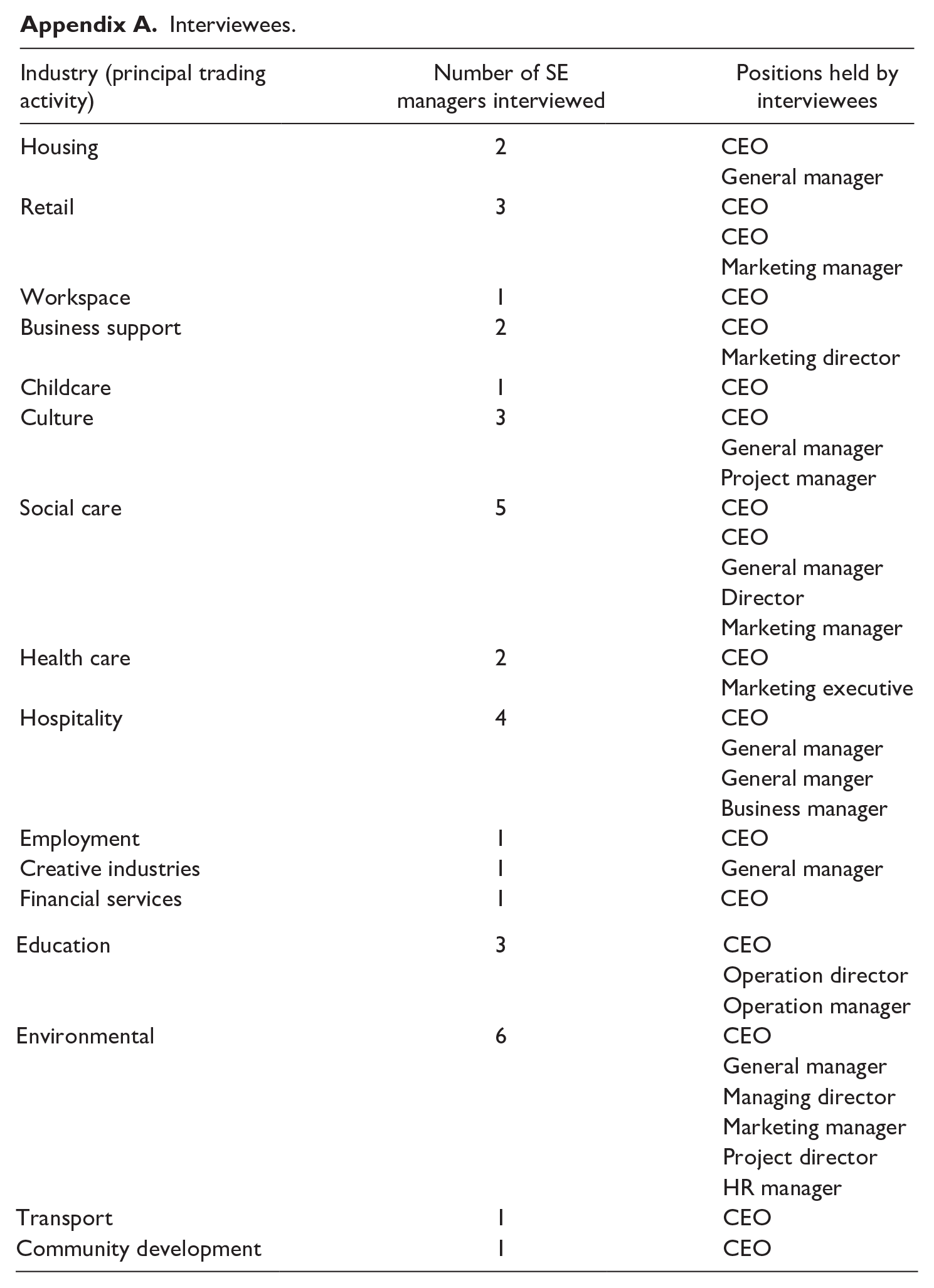
Between June and December 2017, we conducted 37 in-depth interviews with various SEs, as detailed in Appendix A. The initial selection of five SE representatives was facilitated through the authors’ professional networks, and further participants were identified using a snowball sampling technique, whereby initial interviewees recommended other potential candidates. Each interview was approximately 45 minutes in duration and adhered to a guided discussion format as proposed by Yin (2002). A semistructured interview protocol was utilized throughout the study. At the onset of each interview, an overview of the research study was presented to ensure that participants were fully informed about the objectives and scope of the investigation. Participants were then shown the industry sector list from the State of Social Enterprise Survey 2017 and asked to self-identify their sector. This approach enabled us to gather insights from representatives across 16 diverse industry sectors, significantly enhancing the depth and breadth of our study. This varied sample ensured that our findings are applicable and robust across different contexts, thereby improving the quality and impact of our research by integrating a broad spectrum of perspectives and insights. This methodological approach not only ensures a high degree of relevance and applicability of the findings but also underpins the credibility and rigor of our analytical process.
Subsequently, to determine whether the interviewees possessed the knowledge and experience required to respond to our interview questions, we engaged them in a preliminary discussion regarding the background and operations of their respective SEs. In addition, we determined whether their portrayals aligned with their previously self-identified sectors. Following this introduction, a three-pronged question directed the dialogue with each interviewee, addressing the following dimensions: (a) How do you articulate and conceptualize bricolage in the context of your organization’s strategic and geographical growth pursuits?; (b) What obstacles or constraints have materialized when deploying bricolage for geographic expansion?; (c) Before deciding to implement bricolage, what factors and evaluations influence that deliberation? While the core interview questions established a foundation, supplementary probing was sometimes necessary for clarification. In some instances, we introduced additional queries, asking the interviewees to furnish concrete examples of how their organizations have deployed bricolage to facilitate their geographical expansion. Recognizing qualitative research’s dynamism, our interviews embraced flexibility. As the context warranted, the informants shared narratives beyond the prescribed questions, capturing nuanced insights into utilizing bricolage strategies for SEs’ geographic expansion.
Our team conducted a systematic thematic analysis aligned with the established procedural guidelines (Finlay, 2021; Guest et al., 2011). In the first phase, we fully immersed ourselves in the qualitative interview transcripts to gain a profound understanding of the content discussed. The second phase involved a systematic organization of the data corpus, creating coherent, and meaningful groupings while generating initial descriptive codes. These codes captured salient phrases and comments made by the interviewees, focusing on the construction of bricolage strategies, the intricate processes and dynamics involved in their enactment, and their objectives, particularly facilitating geographical expansion. A diverse array of revelatory codes emerged, including insights into optimizing the resource portfolio, mitigating potential risks associated with specific bricolage approaches, and reconciling improvisation with strategic clarity. Each of these codes provided a deeper understanding of how SEs navigate complex challenges through adaptive strategies. To ensure the rigor of our analysis, we employed a two-stage interview data coding process. Initially, the first author coded all the interviews, creating templates based on these initial codes. Subsequently, a second author tested these templates independently across different data sets for their applicability and relevance. The consistency and accuracy of our coding procedures were confirmed by achieving a 95.385% intercoder reliability rate, reflecting a substantial agreement between the coders regarding the coding decisions.
The third phase involved a targeted interrogation of the coded extracts from the interviews, aiming to discern coherent patterns that emerged across the data set and to identify areas of convergence and divergence among the responses. Through careful induction, collectively shared themes were produced, highlighting commonalities, and distinct perspectives held by the SEs regarding their use of bricolage strategies. In the last phase, an examination of the interrelationships among these identified themes was conducted, refining the thematic boundaries within our study. This process involved pruning redundant themes and honing a tightly integrated framework that elucidates how SEs employ bricolage strategies to facilitate geographical expansion, demonstrating the dynamic interplay between resource constraints and strategic innovation. The framework is visually represented in Figure 1. To further elucidate the complex interrelations among the constructs within our framework, we have developed several research propositions designed to explain the mechanisms through which bricolage strategies are operationalised and the effects they have on the geographical expansion of SEs. For those interested in a deeper exploration of our analytical methodology and the data structure that supports our findings, we direct readers to Online Appendix 1, which provides additional evidence and a detailed breakdown of our data structure, offering further transparency and insight into the rigor of our research process.
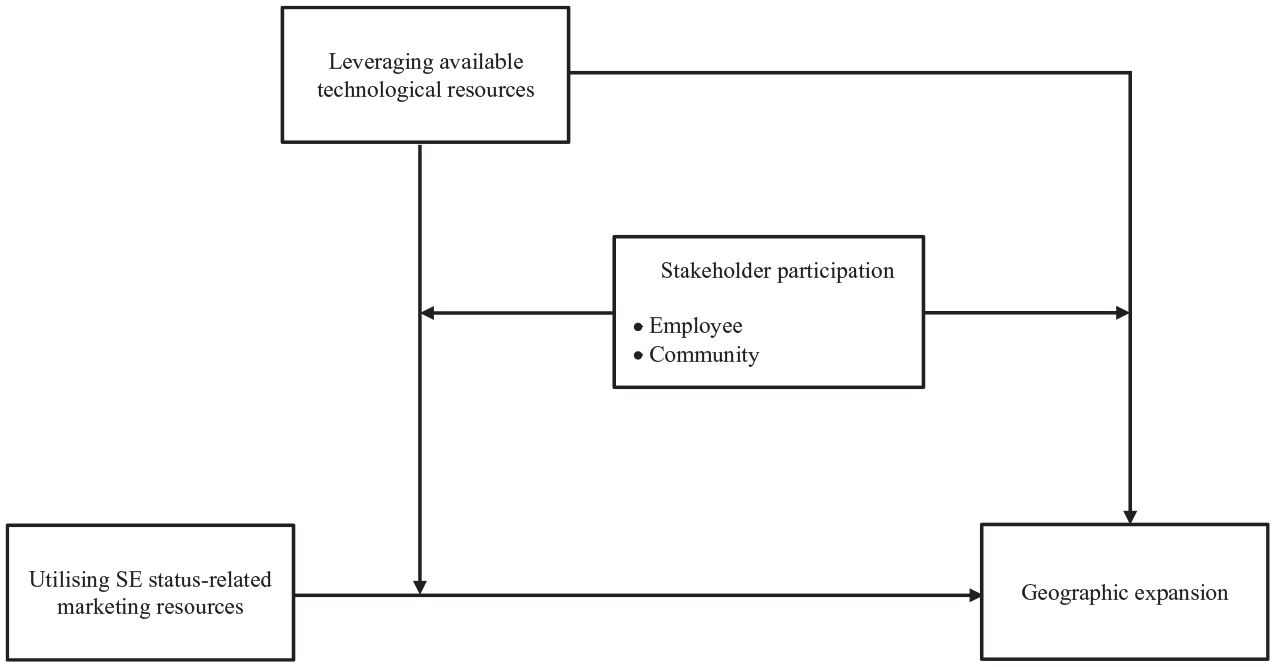
Conceptual Framework.
Qualitative Findings
Resources are often limited in SEs, making innovative approaches necessary for their maximization. SEs employ bricolage, which creatively repurposes the limited resources to meet specific organizational objectives (Bacq et al., 2015; Di Domenico et al., 2010). Through bricolage, SEs are encouraged to think beyond the traditional resource paradigms, enabling them to stretch their capabilities and innovate. Our analysis reveals that by adopting bricolage strategies, SEs effectively leverage their status-related marketing resources, leading to significant outcomes, including geographic expansion. There are three primary reasons why this strategy works effectively for SEs.
First, SEs have a unique opportunity to extend their influence and operations by leveraging the heightened public awareness that their nonprofit activities generate. By capitalizing on their esteemed organizational status, SEs can promote their products or services more effectively (Kannampuzha & Suoranta, 2016; Liston-Heyes & Liu, 2013). This strategic positioning facilitates easier access and growth into new markets, as their established reputation often diminishes the barriers to entry and expedites their acceptance in new locales. Hospitality SE general manager echoed this point:
Our SE enjoys widespread recognition as an organisation that profoundly impacts our community. Even in areas where we do not have a retail presence, individuals are often familiar with our brand. As such, placing our logo on merchandise can quickly capture their attention. Upon seeing the logo, customers recognise that the products originate from us.
The second reason is that SEs’ unique status identity distinguishes them from traditional commercial entities that provide similar products and services. This goes beyond the surface layer of distinguishing characteristics. Instead, it is deeply ingrained in SEs’ missions, values, and operational methods, emphasizing social, or environmental concerns (Lin et al., 2021; Tsai & Lu, 2023). Differentiation from the competition is crucial because it appeals to a specific segment of conscientious consumers and provides a competitive edge (Weerawardena & Mort, 2012). A Culture SE project manager supports this viewpoint:
There is a distinct way we operate with heart, and I think that makes an impression—that is what sticks in people’s minds about us and what we do. We are aligned with our products, our impact, and our ethics. If you support us, you know the full story, which allows us to reach more people since so many people in different regions are connected with our cause.
By demonstrating their commitment to social or environmental objectives, SEs influence their consumers and communities, facilitating their expansion into new markets. As well as expanding geographically, this expansion is a strategic move to amplify their impact, leveraging their unique status identity to gain a wider audience and establish a presence.
Third, SEs often have a significant degree of credibility. The public tends to trust SEs considerably from the perception that SEs are committed to higher values than mere profit. Consequently, SEs can expand their customer base more easily across different regions due to their trustworthiness and ethical appeal (Bolzani et al., 2020; Lückenbach et al., 2023). A Social Care SE CEO commented:
Our status holds massive importance, symbolising our solid dedication to the community. It serves as a sign people can believe in, giving supporters a real sense of purpose and pride, knowing their contributions make a difference that matters. A key focus lies in pushing our branded stuff to make our growth aims happen. This emphasis, together with building trust through fact-backed efforts and putting the community first, will not only strengthen the support we already have but also push us toward making our expansion dreams a reality.
By leveraging their reputation for being committed to social values, SEs can attract customers who are increasingly seeking ethical and responsible businesses. This dynamic illustrates the importance of credibility in contemporary marketplaces and underscores the importance of trust in fostering business growth and expansion.
In addition to using status-related marketing resources, our analysis indicates that SEs’ geographical expansion is significantly aided by adopting bricolage strategies by utilizing pre-existing technological resources. SEs typically face constraints related to financial and human resources (Hota et al., 2019; Servantie & Rispal, 2020). Through improvisation and recombination, SEs can take advantage of their existing technological assets to address fresh challenges, which allows them to innovate on a limited budget. This bricolage approach of utilizing the available technological resources confers two key benefits upon SEs.
First, it enables SEs to use their existing technological resources, particularly communication. SEs benefit greatly from enhanced communication capabilities, which facilitate coordinating activities across multiple locations. The Environmental SE CEO commented:
Using communication tools boosts teamwork among our crew. No matter where they are based, our staff can work together properly on projects, share ideas, and chip in toward our shared goals with the help of communication tools like [specific tech platform].
It is believed that improved coordination contributes to enhanced operational effectiveness by streamlining the processes, eliminating redundancies, and facilitating a more agile response to changing circumstances (Pankaj & Seetharaman, 2021; Roberts & Pakkiri, 2016). SEs can manage and grow their operations more efficiently by utilizing technology to overcome distance barriers. Embedding their social mission in a broader context, reaching many beneficiaries, and launching their products or services in new markets represent more than simply spreading their footprint.
Second, technology can also be an integral part of optimizing operations during geographic expansion. Managing operations across different regions becomes increasingly challenging as SEs expand their geographic reach. As technology streamlines processes, improves data management, and enables real-time decision-making, it plays a crucial role in resolving these complexities (Ali et al., 2023; He et al., 2022). SEs can maintain operational consistency and quality across existing and new locations by reducing the burden on their human resources and minimizing errors. A creative industries general manager suggested:
Taking on project management gear XXX [specific tech] has boosted how clear our workflows are. Everyone on the crew can access project updates, share files, and team up in real time, no matter where they are based. We can adjust quickly to changing situations, which is a key part of running an SE properly.
Also, employees can spend more time on strategic tasks and innovation rather than bogged down with administrative tasks. In addition, using data analytics tools, SEs can gain insights into market trends, customer preferences, and operational performance across various geographical regions. Therefore, SEs can make informed decisions regarding where to expand, what to offer, and how to allocate their resources effectively.
Although it is crucial to adopt bricolage to leverage both status-related marketing and technological resources, a compelling argument is that leveraging status-related marketing resources may be more important than technological resources in aiding their geographic expansion. This prioritization is because marketing resources directly address the need to connect with new customer bases and stakeholders in different geographical regions. A Culture Social Enterprise general manager commented:
Despite the clear benefits of tech tools in improving coordination across our expanding organisation, we understand that success depends not only on fancy technology. The most important factor lies in building trust and credibility, especially in the new communities we are entering. This is why, when launching in new markets, we emphasise promoting our SE status and organisational reputation when marketing our products.
Establishing a brand presence and trust in new areas requires marketing strategies tailored to the local culture, social context, and economic environment (Bolzani et al., 2020). In unfamiliar markets, marketing efforts can also significantly enhance SEs’ visibility and credibility. Although technology undeniably improves operational efficiency and communication, most of its impact is internal and process-focused (He et al., 2022). Conversely, marketing aims to influence customers’ perceptions and behavior directly (Tsai & Lu, 2023; Weerawardena & Mort, 2012). When expanding into new markets, attracting and retaining customers, partners, and supporters often provides a more effective to establish a foothold and generate revenue. Based on the above discussion, we formally propose that:
While bricolage strategies should be adopted by utilizing SEs’ status-related marketing and technological resources, our interview data also indicate that stakeholder participation is an essential boundary condition for these strategies. Involving the stakeholders in the decision-making process can significantly impact resource utilization effectiveness (Huybrechts et al., 2014; Larner & Mason, 2014; Pestoff & Hulgård, 2016), particularly in the geographic expansion context. The two distinct forms of stakeholder involvement are community stakeholders and employees.
Gaining the approval and support of the community stakeholders (e.g., local residents, businesses, and institutions) is vital for SEs to establish their external legitimacy and effectively expand their operations into new regions. External legitimacy plays a crucial symbolic role in determining SEs’ capacity to operate sustainably within unfamiliar socioeconomic landscapes, regulatory frameworks, and cultural norms (Pestoff & Hulgård, 2016). Stakeholder backing can greatly influence SEs’ ability to navigate these complex local contexts and provide tacit approval, financial support, advocacy, and network access (Bolzani et al., 2020; Huybrechts et al., 2014). A Social Care SE director echoed this sentiment:
Putting a spotlight on our SE status is crucial when marketing our services. By actively involving the community and incorporating their perspectives, we not only enhance the authenticity of our message but also demonstrate a genuine commitment that goes beyond traditional marketing approaches.
Beyond legitimacy, engaging community partners fosters a collaborative environment conducive to knowledge sharing, a critical asset when venturing into new territories. Local stakeholders contribute diverse perspectives and innovative ideas that enrich SEs’ understanding of the potential opportunities and challenges (Ciambotti, Sgro, et al., 2023). Involving community stakeholders in the decision-making processes enhances SEs’ understanding of the market conditions, cultural nuances, and community needs, allowing them to tailor their strategies and services more precisely to the local expectations. A Hospitality SE general manager suggested:
We were able to shape our hard work to tackle an urgent problem by tapping into what the community stakeholders already knew. We got some great ideas about how to connect with people better when marketing what we do and how to use technology to share content that gets people invested. So basically, sitting down with the community stakeholders gave us crucial insider knowledge to gear our marketing and tech game towards what truly matters to the people.
Although SEs rely on creatively utilizing both their marketing and technological resources—a process known as “bricolage”—this requires involving the community stakeholders. However, as a Business Support SE CEO suggested, it is most beneficial for them to focus on engaging their community stakeholders in marketing-related bricolage activities:
The role of community stakeholders in technology stays important, but the focus changes slightly. We seek community input when we choose and take on tech tools, but the impact on authenticity is not as big as in marketing. We want the tools we adopt to fit the preferences and access of the community since technology follows universal principles to a certain extent.
By integrating themselves into the community’s fabric, SEs can gain valuable insight and align their offerings and messaging with the prevailing community values. In guiding SEs to target their marketing efforts effectively, community stakeholders are invaluable in understanding the community dynamics, preferences, and communication nuances (Tsai & Lu, 2023). In addition to providing critical insights into the most effective communication channels and culturally relevant engagement strategies, they also provide insights into the potential barriers to message reception. By incorporating this external expertise, SEs can leverage their marketing resources more accurately and efficiently (Liston-Heyes & Liu, 2013). This precise marketing resource allocation is crucial for SEs, particularly when seeking to expand geographically, where the resources are often limited and the margin for error is small. Moreover, proactive engagement with their community partners lays the foundation for establishing externally legitimate operations. It enables SEs to operate more effectively, innovate within the local context and achieve sustainable growth and social impact in new regions (Weerawardena & Mort, 2012). Through thoughtful, strategic engagement with their community stakeholders, SEs can ensure that their marketing efforts are efficient, culturally attuned, socially relevant, and impactful. Based on the above discussion, we formally propose:
Proposition 2: Community (stakeholder) participation is more likely to complement the effects of utilising SE status-related marketing resources on SE geographic expansion than leveraging the available technological resources.
As core internal stakeholders, employees are vital to the fabric of SEs, significantly influencing their internal dynamics, culture, and strategic direction. Our analysis indicates that their involvement markedly affects the efficacy of bricolage efforts in harnessing marketing and technological resources. Involving their employees in the decision-making not only establishes internal legitimacy but also cultivates a sense of ownership and commitment (Larner & Mason, 2014; Liston-Heyes & Liu, 2013). A Community Development SE CEO commented:
Our employees are integral to our journey, serving as co-pilots. They will play a bigger role as we grow and face new challenges. To ensure all marketing and technical strategies we adopt align with our mission and bolster our collective progress, their deep understanding of our values and the communities we serve is key.
This involvement ensures that they feel recognized and are genuinely invested in developing status-related marketing or technological strategies for the SE. Moreover, integrating employee insights into their decision-making processes allows SEs to access diverse knowledge and perspectives, especially from those involved in daily operations or with long tenure (Servantie & Rispal, 2020; Truong & Barraket, 2018). An Education SE CEO commented:
Our ability to listen to the employees with this insider view will allow us to constantly tweak both our external messaging [marketing] and our internal tools [technologies] so they can match the needs of different communities and the dynamics of the organisation in a way that is really tailored to each community.
The employees profoundly understand the SEs’ resources and optimal allocation methods. By utilizing this internal knowledge, SEs can more effectively and innovatively apply their status-related marketing and technological assets. This approach improves resource utilization and promotes a collaborative, innovative working environment.
Compared to status-related marketing resource utilization, employee participation significantly impacts how SEs leverage their technological resources, especially regarding geographic expansion. Employees possess a practical understanding of the workflows, operational challenges, and the potential for technology to enhance efficiency and effectiveness (Kwong et al., 2017; Tasavori et al., 2018). By interacting directly with the existing technology, they better understand the capabilities, limitations, and practicalities of integrating new technological solutions (Bojica et al., 2018). Due to their technology-related experience, they can quickly identify technological improvements that will streamline operations, improve interlocation communication, and facilitate SE geographical expansion. On the contrary, while employees can offer valuable insights into the marketing strategies, these strategies often require a more external approach, encompassing understanding, and engaging with new market dynamics, customer preferences, and competitive landscapes. A Culture SE CEO commented:
We learned a valuable lesson in employee perspectives from our geographic expansion—our teams gave us useful insight into how our marketing efforts and tech use were received. In comparison between the two, I feel that employee insights are particularly important in using technology. By including employee voices in our tech decisions, we ensure that technology is driven by what matters to our workers, not what might benefit in theory.
Employees often contribute to these areas, but their insights focus internally on operations rather than external, market-focused strategies crucial to effective marketing. Based on the above discussion, we formally propose:
Proposition 3: Employee participation is more likely to complement the effects of leveraging the available technological resources on SE geographic expansion than utilising SE status-related marketing resources.
Furthermore, employing bricolage to exploit status-related marketing resources and harness technological resources simultaneously yields significant benefits. By judiciously integrating technology into the communication strategies, this approach seeks to increase these strategies’ influence and scope. An Environmental SE’s marketing manager commented:
Our newly redesigned website marks a significant leap forward. We have honed the user interface, simplifying navigation and fostering an intuitive browsing experience. The information architecture has been streamlined, allowing users to access the content they seek seamlessly. Furthermore, the website is a potent platform for communicating our environmental commitments and unwavering stance on marine issues. This aligns seamlessly with our strategic decision to leverage our established reputation in marketing our products.
In order to deliver commercial, socio-environmental messages efficiently and effectively, technology enables targeted, and personalized content (Roberts & Pakkiri, 2016). Resource-limited SEs can also collect and analyze consumer data to improve their marketing strategies and message resonance (Pankaj & Seetharaman, 2021). Through integrating technology and marketing, market engagement becomes more informed and impactful.
Despite the advantages, the simultaneous use of marketing and technological resources can also present considerable challenges, especially for SEs with limited resources. An Environmental SE project manager commented:
We had to choose between kicking off a massive marketing campaign or putting money into technology for wider geographic reach. Knowing our limits, we used technology to open new doors in a specific area. With this approach, we focused on the chance for a lasting impact rather than quick wins in branding, which fits better with our long-term aims.
Financial limitations hinder access to sophisticated technological tools to enhance marketing efforts. In addition, a dearth of skilled personnel impedes the effective administration and use of these technologies. SEs often struggle between addressing their immediate operational needs and making strategic, long-term investments in marketing and technology. This split focus can lead to ineffective decision-making and prioritization, adversely affecting SEs’ efficiency of SEs and capacity to leverage technological advancements in their marketing efforts. Thus, while integrating technology and marketing holds considerable promise, a meticulous balance must be created between managerial attention and strategic foresight to navigate these competing priorities effectively. Based on the above discussion, we formally propose:
Proposition 4: Utilising SE status-related marketing resources will substitute for leveraging technological resources to facilitate SE geographic expansion.
Resource-constrained SEs may face organizational challenges when implementing bricolage strategies by leveraging marketing and technological resources to achieve geographic expansion. However, stakeholder participation in decision-making emerges as a potentially effective mechanism for fostering the more impactful utilization of these strategic assets (Ko & Liu, 2020). In particular, employees can represent vital internal stakeholders, providing critical knowledge about the workflows, processes, and resource constraints to inform the technology integration and marketing initiatives. Their hands-on understanding lends relevance and pragmatism to strategy formulation. Moreover, greater employee participation and input enhance the organization-wide goal alignment while simultaneously fostering ownership over bricolage initiatives and leveraging status-related marketing and technological resources. An Environmental SE’s HR Manager reflected on these issues:
Our organisation boasts several systems to harness our exceptional team’s finest ideas and suggestions. We have established an innovative area where everyone can engage in conversation and employ technology to share their insights. It resembles a large-scale online brainstorming session, which is excellent as it draws out the intelligence from all team members. We ensure that we heed their ideas and involve them in decision-making processes, particularly concerning our expansion and specifically in the areas of marketing and technology projects. The essence lies in utilising their expertise and allowing them to contribute to our success significantly.
This facilitates coherent, unified implementation efforts. While community stakeholders offer an invaluable perspective and help to maintain legitimacy (Huybrechts et al., 2014), an overt focus on their diverse goals can hamper the SEs’ responsiveness and day-to-day operations. A Health Care SE’s Marketing executive commented:
Gathering support from all corners can feel like a juggling act. We are looking at diverse potential backers, ranging from private donors to eager volunteers, each with distinct expectations for our expansion plan. Navigating through everyone’s needs while ensuring they are fully on board with the programme presents a considerable challenge.
Therefore, employee involvement is integral to successful bricolage strategies in this context. With informed employees’ greater participation, resource-constrained SEs can develop strategies that resonate with their capabilities and market realities. This allows them to optimally leverage the marketing and technology in an integrated manner despite the limitations. Based on the above discussion, we formally propose:
Proposition 5: Employee participation is more likely than community (stakeholder) participation to mitigate the substitution effect of utilising SE status-related marketing resources and leveraging the available technological resources in facilitating SE geographic expansion.
Study 2
Data and Measurement
In the formulation of our research propositions in Study 1, we articulated the relationships among two distinct bricolage strategies (utilizing SE status–related marketing resources and leveraging available technological resources) alongside two forms of stakeholder participation (employee and community) and their influence on geographic expansion. These propositions are structured such that their validity can be empirically tested, presenting a hypothesis-driven approach to understanding the dynamics at play within SEs. In Study 2, we employed data from the State of Social Enterprise Survey to test these research propositions. The survey, commissioned by Social Enterprise U.K., is administered every 2 years, using telephone interviews and online surveys targeting SE management teams (Temple, 2017). The questions vary in different years. Recent surveys from 2019 and 2021 introduced modified questions. The 2019 edition omitted inquiries on technology utilization capability. The SEs were not asked about the use of organizational status in marketing or technology usage in the 2021 version, indicating that the survey foci evolved over time. Hence, we depend on the 2017 survey, as it aligns more closely with the objectives and variables relevant to our study.
The “State of Social Enterprise 2017” survey, covering 1,581 U.K. SEs, is accessible due to the authors’ purchased rights, although the official report is also available via the Social Enterprise U.K. website (www.socialenterprise.org.uk). The majority of the respondents (84%) are England-based, with notable concentrations in London, the Midlands, the South, and the North. The remainder are from Scotland (7%), Northern Ireland (3%), and Wales (5%). The official report by Temple (2017) serves as a valuable resource, offering comprehensive insights into other facets of the survey sample.
We assess “geographical expansion” based on the yes-no survey responses to the question—Has your organization expanded into new geographic areas in the last 12 months? To explore “utilizing SE status-related marketing resources,” we used responses to the survey question: To what extent does your organization promote your SE status in marketing its goods/services? We measured the responses to this question using a 4-point Likert-type scale. To consider “leveraging available technological resources,” we used responses to a survey item that asked the respondents to rate, on a 5-point Likert-type scale, their organization’s ability to make effective use of the available technology. Finally, we proxied “stakeholder participation” based on the SEs’ responses to the following two prompts: My staff are actively involved in the decision-making (of the organization)—for employee participation in the decision-making—and My community is actively involved in the decision-making (of the organization)—for community (stakeholder) participation in the decision-making. The responses were coded using a 4-point Likert-type scale.
We included several control variables to rule out alternative explanations for SEs’ geographical expansion. First, we control SE size, assessed based on the respondents’ responses to SEs’ annual revenue bandings (from 1: £0–£10,000 ~ 7: over £5 million). The prior research shows that larger SEs have more available resources that can be used for geographic expansion (Barraket et al., 2019). Second, we control the SEs’ trading age based on the respondents’ answers to approximately how long your organization has been trading (from 1: 1–6 months ~ 8: more than 20 years). We selected this control variable because SEs with longer trading ages tend to accumulate more commercial experience and networks that can be used to facilitate geographic expansion (Dufays & Huybrechts, 2014; Smith & Stevens, 2010). Finally, we control for SEs’ industry sector based on the respondents’ self-reported answers. There are 23 industry sectors, and we chose “others” (industry) as a baseline for creating dummy variables. We select this control variable because organizations in some sectors are more easily and likely to scale up than others (Smith & Stevens, 2010).
In the Social Enterprise U.K. survey, the respondents were given the option to select “do not know” or “prefer not to say,” and could also leave the question unanswered, resulting in missing values. After removing these invalid responses, 778 valid observations were distilled from the original pool of 1,581 responses. Notably, 38.217% of the participants said their organizations extensively utilize their status when marketing goods and services. Furthermore, 21.687% of the respondents highlighted that their organization possesses a robust capability to make effective use of the available technology. Regarding participative decision-making, 61.419% indicated that their staff are significantly involved, while 19.737% reported a high level of community engagement in the decision-making processes, with an additional 33.560% acknowledging some degree of community involvement. A basic description of statistics is shown in Table 1.
Descriptive Statistics.
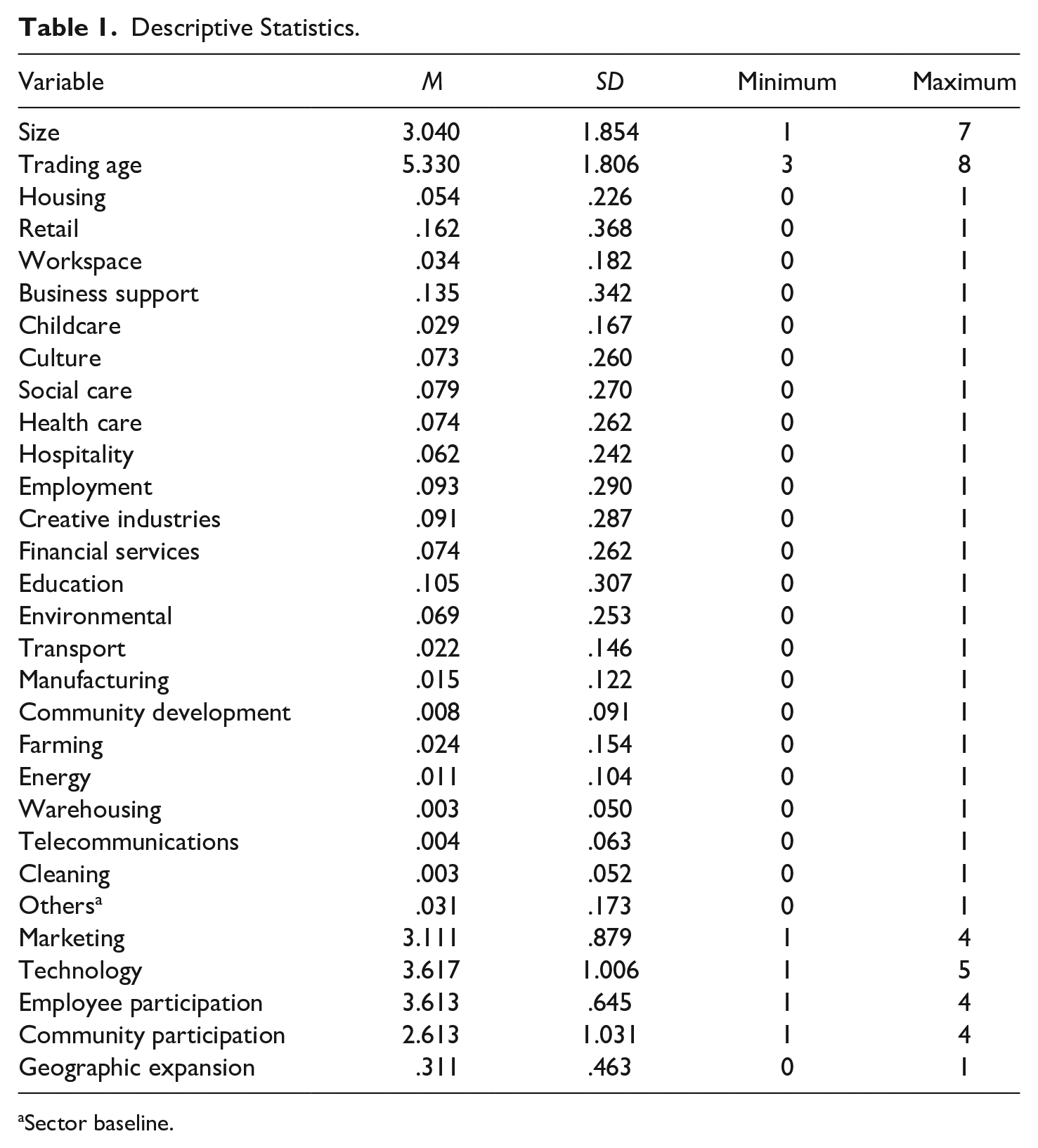
Sector baseline.
Since we used self-reported variables collected from a cross-sectional survey, we tested for the possibility of Common Method Bias (CMB). We applied the marker variable technique (Malhotra et al., 2006) to use the SEs’ response to the question—“how capable is your organisation at developing and implementing a business plan and strategy?” as a marker variable. We found that the marker variable’s adjustment did not change the sign or significance level of any of the correlation coefficients, so we concluded that the extent of CMB in the data is too small to impact our results significantly.
Quantitative Findings
The correlation coefficients (Online Appendix 2) indicate that the significant correlations between our core variables are below 0.3, thus reducing the risk of collinearity. Moreover, the variance inflation factors (VIFs) are well below the critical value of 10, indicating a low likelihood of multicollinearity. In Table 2, we present the logistic regression results. Our logistic regression analysis (Table 2, Model 1) shows that the odds ratios for utilizing status-related marketing resources (1.267) and leveraging technology (1.044) on geographic expansion are above 1, affirming that both bricolage strategies positively impact geographic expansion. However, only status-related marketing resource utilization has a statistically significant effect. This supports Proposition 1 that leveraging organizational status through marketing has a stronger influence than using the available technologies in enabling SEs’ geographic growth. Model 2 shows that the interactions between resource strategies and stakeholder participation have odds ratios above 1. The significant interactions confirming Propositions 2 and 3 are: utilizing marketing resources x employee participation (1.174) and leveraging technology x community participation (1.329). This supports marketing-community and technology-employee pairings as complementary in enabling geographic expansion. Furthermore, Model 2 shows that the interaction between marketing resource utilization and technology leveraging has an odds ratio below 1 (0.831), thus supporting Proposition 4, that these strategies can substitute for each other in facilitating geographic expansion. Finally, Model 3 shows that the significant three-way marketing/technology/employee participation interaction (1.476) versus the marketing/technology/community participation interaction (0.851) confirms Proposition 5, that employee involvement mitigates the substitution effect between these bricolage strategies more effectively than does community stakeholder participation. To further facilitate these interpretations, in Figure 2, we plot the two-way and three-way interaction effects.
Results.
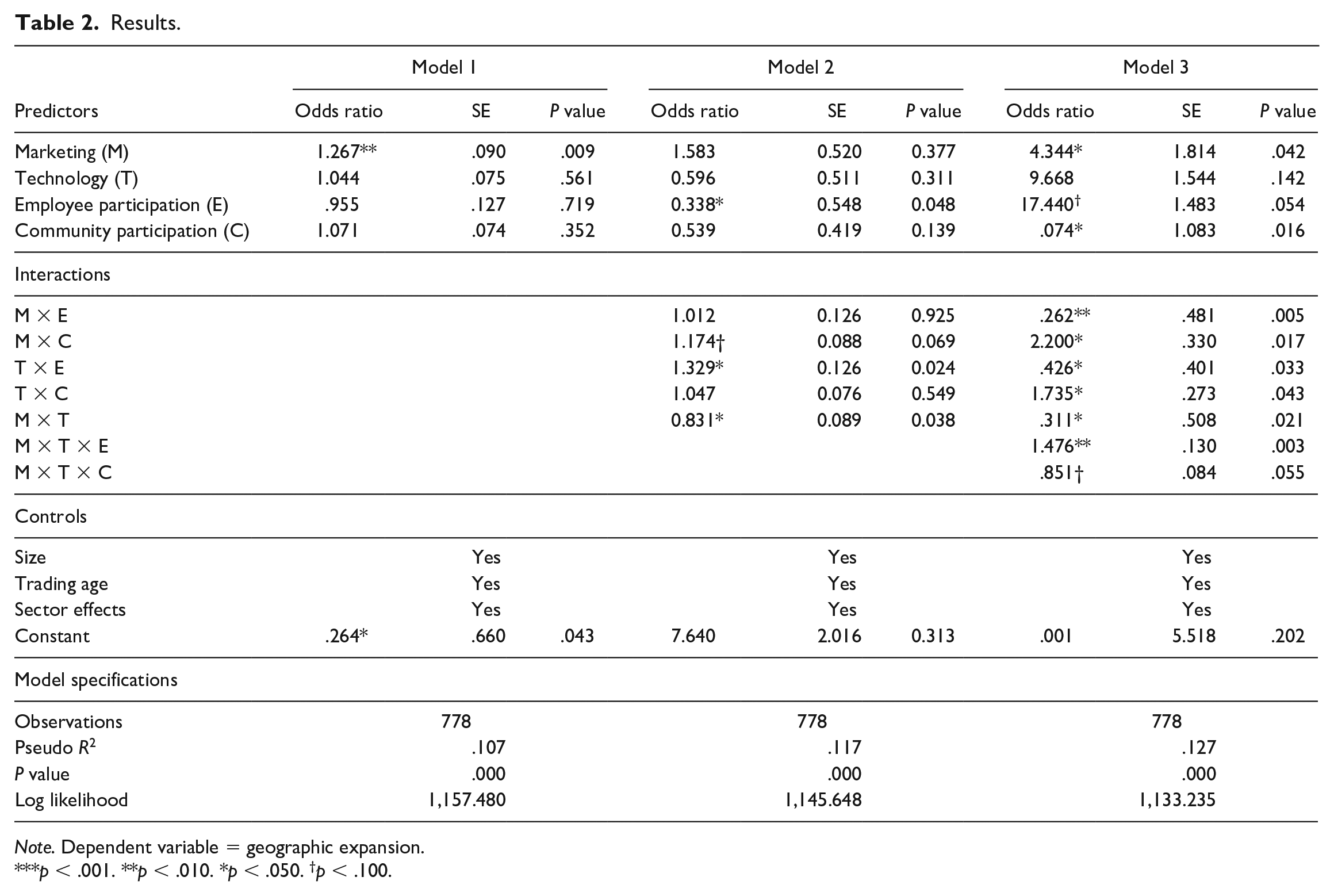
Note. Dependent variable = geographic expansion.
p < .001. **p < .010. *p < .050. †p < .100.
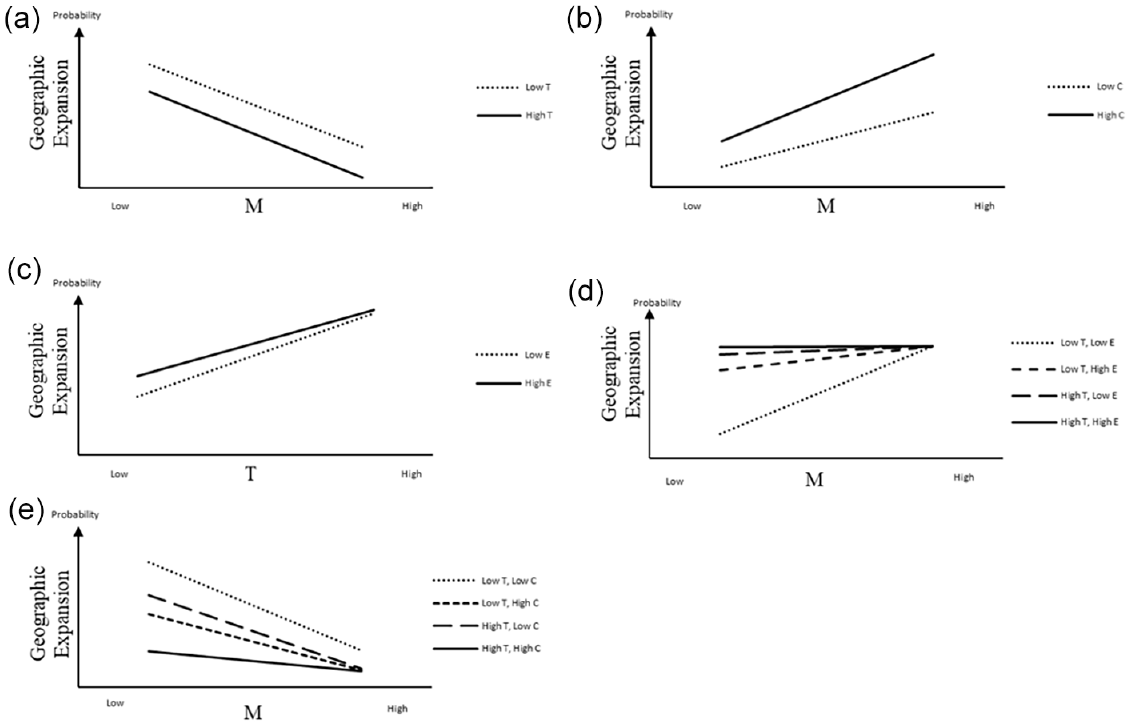
Graphical Representation: Moderating Effects: (a) Two way interaction: M-T, (b) Two way interaction: M-C, (c) Two way interaction: T-E, (d) Three way interaction: M-T-E, and (e) Three way interaction: M-T-C.
Discussion
Contributions
Our study makes several significant contributions to the relevant SE bricolage literature and the theory of entrepreneurial bricolage in general. First, we build on the existing SE bricolage scholarship (Cheung et al., 2019; Servantie & Rispal, 2020; Tasavori et al., 2018), which emphasizes the importance of innovative use but does not examine any resource specifics. We identify that SEs significantly utilize SE status–related marketing and the available technological resources to facilitate their geographical expansion, with greater adeptness in employing marketing resources. These findings also align with and enrich the cause marketing discourse in the sector, which traditionally focuses on cross-sector collaboration (e.g., Austin & Seitanidi, 2012a, 2012b; G. Liu, 2012). We propose a novel perspective wherein SEs independently adopt cause marketing by leveraging their status-related resources, expanding this strategic repertoire while fostering greater self-reliance. In addition, we connect these findings to research on SE technology use (e.g., Ali et al., 2023; Frączkiewicz-Wronka & Wronka-Pośpiech, 2014; He et al., 2022), stressing the improved operational effectiveness and efficiency. Overall, our research contributes to the growing knowledge of SE bricolage by underscoring the complexity of the resource environments within SEs and provides a roadmap for how these organizations can effectively harness diverse resources to achieve geographic expansion.
Second, we identify stakeholder perception as a critical boundary condition that influences the efficacy of bricolage strategies in enabling SE geographical expansion. While the previous bricolage research acknowledges the importance of stakeholder participation for effective implementation (Di Domenico et al., 2010; Kang, 2017; Sunduramurthy et al., 2016), we explore how different participation types affect specific bricolage strategies. Using SE status–related marketing resources requires harmonizing initiatives with community stakeholder involvement to enhance the impact by aligning the marketing with the community’s expectations and values. Alternatively, SEs must align their efforts with employee participation when leveraging the available technological resources to ensure adaptability, innovation, and practicality. Furthermore, our work intersects with the SE governance literature (Huybrechts et al., 2014; Pestoff & Hulgård, 2016), suggesting that stakeholder involvement is pivotal if SEs are to establish organizational legitimacy and acquire essential knowledge. By integrating stakeholder insights into SEs’ strategic planning and operations, the bricolage strategies are not only innovative and cost-efficient but also grounded in the stakeholders’ realities and aspirations.
Third, our research adds a critical perspective to the SE bricolage literature by identifying a key challenge: simultaneous resource leveraging can impede geographical expansion. While previous studies emphasized bricolage’s benefits (Cheung et al., 2019; Tasavori et al., 2018), we simultaneously highlight the substitution effect risks when leveraging marketing and technological resources. This aligns with the ambidexterity literature (Gupta et al., 2006; Tushman & O’Reilly, 1996), cautioning resource-constrained organizations like SEs against deploying multiple strategies. Furthermore, we find that SEs prioritizing employee participation can mitigate the substitution risks more efficiently, highlighting the employees’ vital role in implementing multiple bricolage strategies effectively. We also observe that community stakeholder involvement can negatively moderate the concurrent marketing and technology leverage. This suggests that complexity and potential community goal conflicts may impact bricolage implementation more profoundly than previously thought. Together, our study underscores that balancing various bricolage strategies is crucial, and our findings offer insights into managing the resources and stakeholders to support sustainable geographical expansion.
Finally, our research significantly contributes to entrepreneurial bricolage theory (Baker & Nelson, 2005; Senyard et al., 2014) by extending its applicability to social entrepreneurship. We explore SE bricolage’s distinct landscape, focusing on leveraging two key resources: SE status–related marketing and technology resources. This reflects SEs’ unique nature and needs, where marketing and technology play pivotal roles in achieving mission-driven goals. In addition, we underscore stakeholder participation as a crucial boundary condition for successfully implementing bricolage strategies in the SE context. We argue that understanding and integrating stakeholder participation is necessary to enhance the implementation of bricolage strategies. This perspective acknowledges the complex ecosystem within which SEs operate, where the stakeholders’ interests, expectations, and involvement significantly influence the decisions and outcomes (Huybrechts et al., 2014; Pestoff & Hulgård, 2016). Together, we offer insights into the complex interplay between implementing bricolage strategies and managing stakeholder participation, providing a framework for SEs to successfully navigate the distinct challenges and opportunities within their operating landscape.
Managerial Implications
Our study carries important implications for SE managers. First, prioritizing SE status–related marketing resources is more important than leveraging technological resources for geographic expansion. Given their limited resources and efforts, SE managers should focus on marketing strategies. Second, the success of bricolage strategies depends on the type of resources used and the corresponding stakeholder involvement. It is essential for SEs to utilize SE status–related marketing resources to harmonize their efforts with community participation. Conversely, SEs focusing on leveraging technological resources should align with employee participation. Therefore, SE managers aiming to use SE status–related marketing resources in their bricolage strategy should actively involve the community stakeholders to boost the SE’s status and deepen the community ties. Alternatively, employee involvement will help those focusing on technological resources to ensure innovative, efficient technology use, aligned with the SEs’ operational and strategic needs.
Third, our findings suggest a substitution dynamic between two bricolage strategies. SEs prioritizing employee participation navigate this dynamic more effectively than those emphasizing community involvement. Therefore, SE managers are advised to avoid employing both strategies concurrently due to potential complexities. If this is unavoidable, involving employees in the decision-making is recommended to ensure the balanced integration of marketing and technological initiatives aligned with the SE’s strategic goals and operational realities. Finally, the inherent risks associated with geographic expansion for SEs are undeniable, particularly those with limited resources. Challenges, such as cultural differences, regulatory hurdles, and operational complexities, present significant obstacles to successful expansion (Kerlin, 2009; Peredo & McLean, 2006). Despite these challenges, our research aims to guide SE managers in implementing bricolage strategies effectively to achieve geographic expansion. Managing these complexities requires managers to consider their organization’s unique context and limitations, and strategically leverage either community or employee participation, depending on their focus—marketing or technology. Our findings offer a framework to help SEs mitigate the risks while capitalizing on the opportunities of geographic expansion.
Limitations and Future Research Opportunities
Our study is not without caveats. First, regarding the qualitative interviews, we notified potential participants that we were interviewing SE representatives. As SEs have varied definitions, although we asked the interviewees at the outset to discuss their organization and ensure that it met our definition of SEs, as engaging in commercial trading to support social/environmental missions, differences may persist. Future research should explore more effective ways to screen participants, such as highlighting the study’s SE definition upfront.
Second, as Appendix A shows, out of 23 SE industry sectors identified in the 2017 State of Social Enterprise Survey, we could only interview representatives from 16 sectors. Consequently, specific SE perspectives may not be reflected in our qualitative findings. In particular, many unrepresented sectors comprise a smaller number of SEs—for instance, just four of the 778 SEs in our quantitative data set were categorized as “Telecommunications.” Although such minority groups may be limited in size, their insights remain valuable. Future studies should, therefore, strive to incorporate viewpoints from all sectors to promote a more comprehensive understanding of the SE environment. Moreover, as the 2017 Survey fails to describe each industry sector in detail, the classification relies on the SE representatives’ self-identification. Different representatives may define their operations differently, even if we discussed their history and activities to determine their alignment with the sector of focus. Moving forward, researchers should aim to establish more precise SE sector descriptions to ensure clarity.
Third, snowball sampling, which involves initial SE representatives identifying subsequent interviewees, may not provide equal participation opportunities for all SEs. This can lead to selection bias and yield nonrepresentative samples. Alternative sampling techniques could be leveraged in future studies to mitigate these limitations.
Fourth, a notable limitation in qualitative studies is the lack of detailed information on the duration of the interviewees’ involvement in marketing and technology-related decision-making, as well as their understanding of stakeholder engagement. Assumptions about the interviewees’ knowledge, based solely on their managerial roles, may inaccurately reflect their insights. To enhance future research’s validity, it is imperative for researchers thoroughly to document these aspects, thus enabling them to interpret their results with greater precision.
Fifth, we must acknowledge some of the limitations of the thematic approach despite its usefulness when analyzing our interview data and developing relevant frameworks. Qualitative interpretation risks subjectivity and bias (Finlay, 2021), potentially overlooking data or overemphasizing aligning aspects. Our small sample (37 SEs) makes Generalizability difficult, as categorizing the data into themes may oversimplify complex perspectives. To enhance the Generalizability and further validate the reliability of our findings, future research should utilize larger, more diverse samples, as well as employ third-party coders.
Sixth, our study is based on interviews and data from the “State of Social Enterprise” survey collected in 2017, which introduces a significant limitation regarding the age of this information. In particular, post-2017 developments, such as the impact of COVID-19, probably led many SEs to incorporate new technologies in their business operations, a shift which our data set does not capture. Nonetheless, our findings remain relevant, especially regarding geographic expansion objectives. While acknowledging that the utilization of historical data is common in academic research, as highlighted by Ketchen et al. (2023), it is crucial to acknowledge the constraints that older data may impose on the present applicability of our results. Therefore, we advocate that future research might collect more contemporary data to validate and perhaps extend our findings’ implications.
Seventhly, the Social Enterprise U.K. survey administration represents a limitation, as we lacked control over the questions posed and the sampling. Although largely consistent, some questions varied across different survey editions for unclear reasons. Still, this did not impede our ability to utilize the data to test our framework. However, the external administration does mark a constraint in our research approach that is worth acknowledging. Future studies could develop quantitative data collection processes to validate our model.
Finally, despite its considerable breadth and detail, the State of Social Enterprise Survey 2017 possesses inherent limitations due to its cross-sectional nature, reliance on nonrandomized sampling techniques, and dependency on self-reported data. The variables under scrutiny are derived from single, one-dimensional constructs, lacking multidimensional, or alternative instrumental variables for validating the results. A notable example of this limitation is the absence of alternative measures for verifying SEs’ geographic expansion. Consequently, we would encourage future researchers to design comprehensive, large-scale surveys incorporating randomized sampling and multidimensional constructs to validate this research’s findings robustly and build upon the foundational knowledge that it provides.
Conclusion
SEs often operate in resource-constrained environments. Our mixed-method study reveals that SEs employ two main bricolage strategies: leveraging SE status–related marketing resources and utilizing available technological assets. The interplay between these strategies, influenced by stakeholder participation, is crucial for geographical expansion, which is critical for broadening SEs’ reach, diversifying income streams, and devising localized solutions. Marketing resources are most effective when combined with community involvement (a form of stakeholder participation), while technological resources yield better results when aligned with employee participation (another form of stakeholder participation). A substitution dynamic exists between these strategies, with employee-focused SEs navigating this effect more adeptly than community-focused ones. These findings highlight the importance of effectively adopting bricolage strategies and the nuanced roles of stakeholder participation in facilitating their impact, offering a strategic roadmap for SEs aiming to expand their influence and effectiveness. We hope that further research continues to explore how bricolage strategies affect SEs’ operations, impacts, and boundary conditions.
Supplemental Material
sj-docx-1-nvs-10.1177_08997640241262225 – Supplemental material for Bricolage Strategies, Stakeholder Engagement, and the Geographic Expansion of Social Enterprises
Supplemental material, sj-docx-1-nvs-10.1177_08997640241262225 for Bricolage Strategies, Stakeholder Engagement, and the Geographic Expansion of Social Enterprises by Wai Wai Ko and Gordon Liu in Nonprofit and Voluntary Sector Quarterly
Footnotes
Appendix
Interviewees.
| Industry (principal trading activity) | Number of SE managers interviewed | Positions held by interviewees |
|---|---|---|
| Housing | 2 | CEO |
| General manager | ||
| Retail | 3 | CEO |
| CEO | ||
| Marketing manager | ||
| Workspace | 1 | CEO |
| Business support | 2 | CEO |
| Marketing director | ||
| Childcare | 1 | CEO |
| Culture | 3 | CEO |
| General manager | ||
| Project manager | ||
| Social care | 5 | CEO |
| CEO | ||
| General manager | ||
| Director | ||
| Marketing manager | ||
| Health care | 2 | CEO |
| Marketing executive | ||
| Hospitality | 4 | CEO |
| General manager | ||
| General manger | ||
| Business manager | ||
| Employment | 1 | CEO |
| Creative industries | 1 | General manager |
| Financial services | 1 | CEO |
| Education | 3 | CEO |
| Operation director | ||
| Operation manager | ||
| Environmental | 6 | CEO |
| General manager | ||
| Managing director | ||
| Marketing manager | ||
| Project director | ||
| HR manager | ||
| Transport | 1 | CEO |
| Community development | 1 | CEO |
Data Availability Statement
The data are not publicly available due to ethical, legal, or other concerns.
Declaration of Conflicting Interests
The author(s) declared no potential conflicts of interest with respect to the research, authorship, and/or publication of this article.
Funding
The author(s) received no financial support for the research, authorship, and/or publication of this article.

Supplemental Material
Supplemental material for this article is available online.
Notes
Author Biographies
References
Supplementary Material
Please find the following supplemental material available below.
For Open Access articles published under a Creative Commons License, all supplemental material carries the same license as the article it is associated with.
For non-Open Access articles published, all supplemental material carries a non-exclusive license, and permission requests for re-use of supplemental material or any part of supplemental material shall be sent directly to the copyright owner as specified in the copyright notice associated with the article.
