




Abstract
Volunteers are integral to civic and social life, and leadership is integral to keeping volunteers satisfied and committed. However, volunteer leadership research is hindered by the dispersion of leadership theories and the absence of a specialized leader behavior assessment tool. To address this, we developed and validated a four-dimensional scale for evaluating the behaviors of leaders of volunteers. Using confirmatory factor analyses, we confirmed a four-factor, hierarchical model in an Australian emergency volunteer sample. Concurrent validity was confirmed in relation to satisfaction with leadership, overall satisfaction with volunteering experience, and affective organizational commitment. Further details of quantitative studies for scale evaluation are provided. This study provides researchers and practitioners with a valid and reliable instrument to assess different aspects of effective leader behaviors within the volunteering context. Implications, limitations, and future research directions are discussed.
Keywords
Introduction
Our collective need for and reliance on volunteers is abundantly clear: from hospice care to animal welfare, education, and emergency management—around the globe people and places rely on the services of volunteers. However, the declining trend in volunteering poses significant challenges for those dependent on these services (Innes & Gates, 2023). As the need for solutions to counter the decline in volunteering increases, there is a growing interest in exploring the topic of volunteer leadership (Almas et al., 2020; Benevene et al., 2018; Tsai et al., 2024). This comes as little surprise, considering that leadership has been consistently linked to a range of positive outcomes, including satisfaction and commitment (Borgmann et al., 2016; Eva et al., 2019). This highlights the importance of measuring leader behaviors to sustain volunteer involvement. Yet, existing studies on volunteer leadership are spread across a myriad of leadership theories, either adopting broadly defined leadership styles such as transformational and servant leadership (Mayr, 2017; Ngah et al., 2021), or a few specific leader behaviors such as developmental, empowering, and ethical behaviors (Benevene et al., 2018, 2020). As a result, the findings may be fragmented for practitioners to clearly decipher what effective leadership means for volunteers. This underscores the necessity to discern what behaviors today’s volunteers look for in a leader and synthesize the recent findings into a cohesive scale tailored for evaluating leaders of volunteers.
For many governmental agencies and organizations throughout the non-profit sector, volunteers are indispensable in supporting service delivery (Harp et al., 2017). For instance, fire services in Australia rely heavily on the ongoing involvement of highly trained, long-term, and committed volunteers, who possess the requisite qualifications and skills to respond to complex emergencies (O’Halloran & Davies, 2020). However, the trend of declining volunteering rates (Innes & Gates, 2023), coupled with a growing preference for short-term volunteering (Hyde et al., 2016), poses a serious challenge for organizations alike. The increasing occurrence of disasters triggered by natural hazards (Chen, 2022; Gazley & Prakash, 2023), serves as a reminder that our communities are deeply dependent on dedicated volunteers.
According to prior research, poor leadership practices can reduce volunteers’ willingness to continue their services (Esmond, 2016; Lantz & Runefors, 2021). Developing the leadership capability of leaders and volunteers is a crucial issue for different types of volunteering organizations, yet there has not been a consistent understanding of what leader behaviors satisfy the managerial requirements while simultaneously improving the satisfaction and commitment of volunteers. Leadership and management practices in the volunteering context can be different from those in the traditional organizational paradigm (Bowers & Hamby, 2013; Posner, 2015). For volunteers, ceasing their volunteer work incurs minimal cost, and previous studies have suggested that they may possess distinct expectations and motivations compared to paid employees (Boezeman & Ellemers, 2009; Fallon & Rice, 2015). In addition, leaders of volunteers lack remuneration as an incentive or leverage (Vieira Da Cunha & Antunes, 2022), further highlighting the uniqueness of volunteer leadership research.
Against the backdrop of declining numbers of volunteers, this study develops a comprehensive, yet succinct scale that can be used to assess how specific leader behaviors can improve volunteer satisfaction and commitment. To do so, we draw on and integrate extant theory and evidence from the fields of leadership (e.g., Hassan et al., 2018; Posner, 2016; Yukl, 2012) and volunteer management (e.g., McGill et al., 2019; Schönböck et al., 2016; Waikayi et al., 2012).
The focus of this study is the behaviors of those who are formally appointed or selected as a leader of volunteers, responsible for guiding and supervising them (hereafter: volunteer leader). This focus aligns with the definition of volunteering, a form of helping behavior that is “. . . long-term, planned, prosocial behaviors that benefit strangers and occur within an organisational setting” (Penner, 2002, p. 448). This definition highlights the significance of structured environments and leadership in shaping volunteer experiences (Nesbit et al., 2018). Relatedly, as volunteers are not compensated, it is crucial to identify volunteers’ expectations of those who play crucial roles in building a desirable work environment. When alignment between perceived and preferred behaviors of formal leaders is achieved for volunteers, it may create greater satisfaction among volunteers and as a consequence, higher commitment to volunteer service (Chacón et al., 2007).
This paper proceeds as follows: We begin with a review of why there is a need to develop a scale for assessing volunteer leader behaviors and an examination of the criteria for effective leadership in the volunteering context. Next, we outline the methods employed to develop and evaluate the Effective Volunteer Leader Behavior Scale, which was completed in five stages. Finally, we conclude this paper by discussing the implications, limitations, and potential directions for future research. By examining and validating effective leader behaviors in an unpaid work setting, this study contributes to the theoretical and practical understanding of volunteer leadership.
Addressing the Need for a Volunteer Leader Behavior Scale
The field of leadership boasts myriad theories that could be applied to volunteers, but the diversity of these theories presents multiple challenges. First, most leadership theories were established and validated on the underlying assumption that followers work to be paid (Riggio et al., 2004), which is not the case in the volunteering context (Jäger et al., 2009; Posner, 2015). Volunteer dynamics such as the workforce’s fluidity, leaders’ roles, and the varied expectations from volunteers, organizations, and the community influence the varied characteristics of effective volunteer leader behaviors (Gulliver et al., 2023). Several leadership styles and behaviors have been shown to be effective within the volunteer context (e.g., Benevene et al., 2020; Schneider & George, 2011), but the adoption of varied leadership theories can hamper our ability to make meaningful comparisons between studies and articulate practical implications for end users.
Prescribing a particular leadership style as the gold standard for volunteer leaders risks restricting volunteer organizations’ ability to comprehensively understand, assess, and develop leadership in their specific contexts. For instance, transformational leadership is often considered effective, yet its measures have been criticized for not sufficiently differentiating between behavioral dimensions (van Knippenberg & Sitkin, 2013). Its focus on inspirational motivation and idealized influence may also overlook the significance of task-oriented behaviors (Yukl, 1999), which can be paramount for providing task clarity in less structured environments like volunteering. Likewise, measures of servant leadership (Liden et al., 2008) or perceived supervisory support (Eisenberger et al., 2002), which concentrate on supporting followers, may not capture other varying functions of leadership roles expected by volunteers, such as problem-solving or networking with external parties to obtain necessary resources. Consequently, existing measurements of these popular leadership theories might lead to a skewed or incomplete representation of effective volunteer leader behaviors.
Considering the identified limitations, it appears that developing a descriptive behavioral scale under volunteer-centric conditions may provide useful insights into effective volunteer leadership. This study seeks to better capture the multifaceted aspects of volunteer leader behavior, rather than prescribing a single leadership style. Our aim is to offer a practical and evidence-based tool that delineates distinct leader behaviors, each serving a specific and well-defined purpose within volunteering contexts.
Keeping Volunteers Satisfied and Committed
Retaining volunteers is a priority for volunteering researchers and practitioners, as high volunteer turnover can be expensive and labor-intensive (Allen & Mueller, 2013). Affective organizational commitment often serves as an important indicator of whether an individual will continue working for the same organization (Maertz et al., 2007). Affective organizational commitment refers to an emotional attachment that individuals have toward their organization (Meyer & Allen, 1991). It is an emotional bond rooted in positive feelings, such as liking, loyalty and a sense of belonging that develop over time through familial and cultural socialization (Bergman, 2006). The measure of affective organizational commitment was initially developed within the traditional organizational paradigm; however, it has also proven to be a valuable tool for studying the degree of attachment volunteers have with their organizations (Newton et al., 2014).
With regard to improving the affective organizational commitment of volunteers, Chacón et al. (2007) suggested that satisfying volunteers’ expectations in terms of their given tasks, volunteer management, and self-efficacy would help foster long-term commitment. Similarly, in their study on volunteer firefighters, McLennan et al. (2009) found that volunteers’ dissatisfaction with the volunteering experience was the primary cause of volunteer resignation, alongside reasons beyond the control of organizations (e.g., health concerns and family commitments). More specifically, volunteers who expressed dissatisfaction reported issues related to volunteer management and poor leadership practices. Building upon these empirical findings, the present paper employs volunteer satisfaction and commitment as key criteria to identify effective leader behaviors from the volunteer literature, and assesses the criterion validity of the scale in the subsequent sections.
Method
To ensure the rigor of our proposed volunteer leader behavior scale, we integrated the recommendations from Boateng et al. (2018) and Crawford and Kelder (2019), whose work has guided the scale development process in recent leadership studies (e.g., Gocen & Sen, 2021; Mohd Yusoff & Tengku Ariffin, 2023; Weber et al., 2022). After consulting with representatives of emergency management organizations (the context in which this research took place), we identified practical constraints associated with administering a lengthy survey. As such, we adopted the recommendations from Fisher et al. (2016) for developing a shorter scale. Furthermore, acknowledging the extensive array of scales within the leadership domain, we positioned our study as preliminary development work based on a priori established constructs and sought guidance from previous scale development studies that adopted more concise research procedures (e.g., Barbuto & Wheeler, 2006; Sendjaya et al., 2008). Consequently, five research stages were undertaken: (1) domain specification and item generation, (2) evaluation by subject matter experts, (3) pre-test cognitive interviews, (4) pilot study, and (5) main study. The protocols for data collection, covering stages 2 to 5, and all research study materials were approved by the authors’ university research ethics committee. Any potentially identifiable information remains confidential.
Stage 1: Domain Specification and Item Generation
In conceptualizing the construct and dimensionality of effective volunteer leader behavior, we selected Yukl’s (2012) hierarchical taxonomy of leadership behaviors as the guiding framework. This decision was informed by the taxonomy’s comprehensive nature, recency, and empirical support across different studies (Behrendt et al., 2017), aligning with our aim to encompass leader behaviors with explicit and targeted objectives, rather than adopting a pre-determined style of leadership.
The taxonomy was initially developed in 2002 and refined in 2012 through an extensive review of the literature that sought to categorize leader behaviors that have been linked with criteria of effective leadership, such as members’ perceived leadership competence, satisfaction, and performance (Yukl, 2012; Yukl et al., 2002). It classifies 15 leader behaviors into 4 meta-categories according to 4 types of managerial objectives: task, relations, change, and external orientations (Yukl, 2012). The clear categorization of leader behaviors has helped inform several advancements in leadership research, including shared leadership (Grille & Kauffeld, 2015), athlete leadership (Maechel et al., 2020), British-specific sectors (Hamlin & Hatton, 2013), and the construction industry (Cabrera-Caban, 2016). Recent empirical studies have also confirmed the 15 listed behaviors and their relationships to leadership effectiveness (Hassan et al., 2018; Yukl et al., 2019).
Taken together, all four orientations are relevant when it comes to leading and managing volunteers in a way that is either required or expected. This presents an opportunity for us to make the first attempt to validate a holistic scale for measuring volunteer leader behaviors. The breadth and clarity of Yukl’s (2012) taxonomy can help to untangle the confounding behaviors described by various leadership theories and is therefore suitable to guide our conceptualization.
Based on the definitions of the 15 leader behavior components outlined in the taxonomy, we developed 15 items that correspond to each of the four orientations. We also evaluated leader behaviors that were not described in Yukl’s (2012) taxonomy but have been recurrently linked with effective leadership in the volunteer literature. As a result, we included three additional items distinct from Yukl’s (2012) 15 behavioral components: facilitating training (Esmond, 2016; Fahey et al., 2014), role modeling organizational values (McCormick & Donohue, 2019; Posner, 2015), and promoting teamwork (de Prada Creo et al., 2021; McLennan, 2010). The objectives of these three additional leader behaviors still fit within the task and relations-oriented dimensions of the taxonomy. Adding additional items to the existing construct to better reflect the new findings is a common practice (Harkness et al., 2010) and is often used by leadership studies to improve the conceptual coverage of the studied context (e.g., Kuknor & Bhattacharya, 2021; Wilson et al., 2020). By the end of this first stage, we had developed 18 draft survey items through an iterative review and revision process following the meetings with a three-member research committee (Rodrigues et al., 2017). The items developed from the leader behaviors discussed for each orientation, and the revisions made through subsequent stages of scale development, are displayed in Supplementary Table 1.
Stage 2: Expert Evaluation
To establish the content validity of our draft items, we invited eight experts to review them and assess whether they accurately measure what they claim (Rubio et al., 2003; Yusoff, 2019). All eight experts possess multidisciplinary expertise, spanning the fields of leadership, volunteering, and organizational research, among others; one is a specialist in emergency management, and another is a specialist in survey methodology. This multifaceted panel ensured both the general applicability of our scale and its specific relevance to our study context.
The invited experts received an email containing an introduction to the study, the guiding definitions of the constructs and sub-dimensions, and a link to an online form for evaluating the drafted items (Rubio et al., 2003). This form asked experts to rate each item in terms of (a) how strongly the item relates to the leadership orientation it is aligned with (i.e., does it measure the orientation based on the definition provided?) and (b) how well the item adequately represents a behavioral component as a single item (i.e., does it capture the important aspects of a specific behavioral component as a single item?) (Fisher et al., 2016). Both questions used a 4-point Likert-type scale (Rodrigues et al., 2017; Yusoff, 2019). Qualitative feedback was solicited for each item following the two rating questions. At the end of the form, the experts could view the full list of items and were encouraged to provide any additional comments on the survey (Rubio et al., 2003).
After collating the expert reviewer feedback, two forms of content validity index (CVI), item-CVI and scale-CVI, were used to calculate the agreement of experts on each of the items’ relevance to the construct (Yusoff, 2019). Seventeen out of 18 items obtained item-CVI results above the suggested cut-off score of 0.83 (Lynn, 1986). The scale-CVI/Ave for all items ranged from 0.90 to 1, indicating good content validity (Rodrigues et al., 2017).
The qualitative feedback from the experts was extensive, with three main suggestions for improving the survey: (1) enhancing the clarity of wording, (2) increasing the relevance of items to the volunteering context, and (3) addressing potential issues for factor analysis due to overlapping concepts between items from different dimensions. Consequently, even though the CVI results suggested that only one item did not meet the cut-off score and required revision, we ultimately modified a total of six items to provide greater clarity at the end of this stage.
Stage 3: Pretesting With Cognitive Interviews
Next, we conducted pre-tests with 12 participants who had experience volunteering with a registered Australian organization on a weekly or monthly basis. Seven of them were emergency volunteers. The remaining five were social services and wildlife conservation volunteers. We used a technique called cognitive interviewing (Beatty & Willis, 2007), where participants were asked through individual online meetings to “think aloud” when answering each question and share detailed information in response to additional verbal prompts (Alaimo et al., 1999; Willis & Artino, 2013). This allowed us to examine if the target population of the study understood and answered the questions as intended and how their thought processes might influence the data being collected (Willis & Artino, 2013).
Participants were also asked to rate their agreement on the 18 leader behavior statements against two questions: (1) whether their leader engages in the behavior and (2) whether they think it is important that their leader engages in the same behavior. They were also encouraged to share specific examples against their ratings. We coded the transcript from each pre-test interview on a question basis using NVivo 12 qualitative analysis software. Following the recommended coding approaches of Fowler et al. (2016), answers to each question were labeled and tabulated in terms of four key components: (1) comprehension of the question, (2) retrieval of the needed information, (3) proper estimation, and (4) selecting an answer. With this approach, we were able to systematically evaluate the items, their order, as well as the design and instructions of the survey for making necessary adjustments (Boateng et al., 2018).
The results of the pre-test interviews showed that some participants were uncertain about which leader they should be answering the question about. This is because they often work with different leaders depending on the situation (e.g., attending training or delivering services). Participants who had not been volunteering for more than one year or volunteered less frequently also tended to consider their overall experience with the organization instead of recalling the direct interactions with their immediate supervisors. While this indicates the need to acknowledge the multifaceted nature of “leadership” and the fluidity of supervisory roles in volunteering contexts, this study concentrates on the perception that volunteers have toward a single leader. To this end, we added a question asking participants to write down the title of their leader’s position. In addition, we slightly modified or augmented six items and the instructions to make it easier for participants to comprehend the questions and relate them to their volunteering experience.
Stage 4: Pilot Study
After the pre-test, we conducted a pilot survey as a small-scale rehearsal of the main study to examine the feasibility of (1) the final draft survey instrument, (2) the survey administration process, and (3) obtaining preliminary data.
Through social media advertisements and collaboration with emergency management organizations (i.e., those that have “recognised roles in the formal emergency management plans and standard operating procedures that structure emergency management activity in Australia” [McLennan et al., 2021, p. 8]), 69 emergency volunteers from five different states of Australia participated in the pilot. The pilot participants were active volunteer members of a diverse array of emergency management organizations, including ambulance, fire, state emergency, aquatic rescue and safety services, and other emergencies, disaster relief, or recovery support services. These organizations offer support during disasters and play a critical role in formal emergency management plans in Australia (e.g., State Emergency Service, 2023). Many also respond to year-round emergencies such as road crashes, search and rescue operations, and medical emergencies. Australia’s wide range of well-established, volunteer-involving emergency management organizations across the nation makes it an ideal context for our study’s focus on the behaviors of formal leaders.
Based on the results of Stage 3, in the leader behavior section of the survey, participants were instructed to think about their volunteer experience in non-emergency situations, such as training sessions or other volunteer activities. This was to unify and facilitate understanding of the study’s results, ensuring that participants reflected on their experiences with the leader who is involved in a day-to-day organizational context. Participants were also instructed to think of the term “leader” as someone who holds a formal leadership role in the organization and is responsible for guiding or supervising them. They were then asked to write down the job title of their leader. For each of the 18 leader behavior statements, participants were asked two questions (i.e., perceived and preferred leader behavior). The perceived leader behavior questions are prefaced with “My leader. . .”; the preferred leader behavior question was presented closely and read as “I think it is important that my leader engages in the above behaviour.” Both questions use a 7-point Likert-type rating scale, with 1 meaning strongly disagree and 7 meaning strongly agree. Participants were also asked to describe a time when their leader demonstrated good leadership and provide additional comments in an open-ended format.
Pilot study participants rated the importance of all 18 leader behaviors highly, with mean scores ranging from 6.15 to 6.51 (using a 7-point Likert-type scale). Internal consistency (Cronbach’s alpha) of the four perceived leader behavior dimensions ranged from 0.93 to 0.98. There were also positive and strong correlations between each perceived leader behavior dimension and satisfaction with leadership (mean zero-order r = 0.87). Answers to the open-ended question about personal experiences with good leadership also revealed several examples that aligned with the specified behavioral components. These results helped to preliminarily validate the feasibility of the listed leader behaviors in the emergency volunteering context. No issues that could cause measurement errors were identified. As a result, we did not make any changes to scale.
Stage 5: Main Study
For the main study, participants were recruited through social media and collaboration with volunteer-involving emergency management organizations in Australia. In addition, we used Facebook advertisements (paid posts) to promote the survey. The advertisements targeted users over 18 years old, located in Australia, with interests related to emergency volunteering topics (e.g., community emergency response team, volunteering, State Emergency Service, Disaster Risk Reduction, and Surf lifesaving) and/or possessed relevant demographic characteristics (e.g., firefighter/ medic, community, and social services).
Since there were no differences in the scale between the pilot and the main study, we sought to confirm if the variances in each of the measures between the two samples were the same and then combined the datasets (Thabane et al., 2010). During the data cleaning and merging process, we removed instances where participants consistently chose identical options throughout the survey or only answered questions concerning volunteering organizations and roles on the survey’s initial page. To avoid potential duplicate entries, the participant information sheet indicated that they might receive multiple invitations due to different rounds of survey recruitment and, if so, they do not need to retake the survey. In addition, we inspected for matching IP addresses and further verified by reviewing the demographic information provided in the respondents’ answers. Consequently, 479 survey responses were retained for further analyses. We used a pairwise deletion method to handle missing data; however, cases with missing values in any of the perceived leader behavior items were deleted for conducting the confirmatory factor analysis.
Participants Characteristics
The average age of the 479 participants was 51.42 (SD = 15.43), 66.6% male, 22.3% female, 1% non-binary, 1.3% preferred not to specify, and 8.8% did not answer. The average tenure is 15.47 years (SD = 12.52). Just over half (53%) hold leadership-related roles. Such a high proportion of leaders is not unusual in this context, where the command-and-control structure includes multiple levels of leadership accountability to ensure someone is equipped to take command when needed. Participants are active volunteer members of emergency management organizations across all 8 states and territories of Australia: fire service (54.3%), state emergency service (27.1%), ambulance service (7.3%), aquatic rescue and safety services (4.8%), and other emergencies, disaster relief, or recovery support services (6.5%). This distribution and demographic profile closely align with broader patterns in emergency volunteering in Australia, suggesting our sample is representative of the study context. Volunteers of these organizations typically attend volunteer activities on a weekly to monthly basis, with monthly volunteer hours ranging from under 10 to over 40, depending on the season and training requirements.
Measures
Perceived and Preferred Volunteer Leader Behavior
The instructions and the preface of each item remained consistent with those described in the pilot survey. Participants were asked to rate both their perception of and preference for the described behavior on a 7-point Likert-type scale ranging from 1 (strongly disagree) to 7 (strongly agree).
Career Motives for Volunteering
Five items from the career motive subscale of the Volunteer Functions Inventory developed by Clary et al. (1998) were used to assess common method variance. Participants were asked to indicate their career motivation for volunteering using a 7-point Likert-type scale, with 1 indicating (not at all important/accurate) importance and 7 (extremely important/accurate). An example item is “Volunteering can help me to get my foot in the door at a place where I would like to work.”
Satisfaction
To evaluate criterion validity, we measured two aspects of volunteer satisfaction: (1) satisfaction with leadership and (2) overall volunteering experience.
Satisfaction with leadership: This was measured via a single-item question, “In general, how satisfied are you with the leadership provided by your leader?,” with a 7-point Likert-type scale, 1 (very dissatisfied) and 7 (very satisfied). The item was adapted from Chelladurai (1984) and J. J. M. Dwyer and Fischer (1990). Participants were asked about their satisfaction with leadership before being presented with the 18 volunteer leader behavior items. This was to reduce the chance that participants’ perceptions about leadership could be biased by the listed leader behavior items (Gehlbach & Barge, 2012).
Satisfaction with overall volunteering experience: A single item, “Overall, I am very satisfied with my volunteering experience at this organization,” was used with a 7-point Likert-type scale ranging from 1 (strongly disagree) to 7 (strongly agree).
Affective Organizational Commitment
Six items from Meyer et al. (1993) were used to measure affective organizational commitment along a 7-point Likert-type scale, from 1 (strongly disagree) to 7 (strongly agree). To align with the volunteering context, one item, “I would be very happy to spend the rest of my career with this organisation,” was adapted to “I would be very happy to keep volunteering with this organisation for as long as possible.”
Evaluating the Final Scale
Confirmatory Factor Analysis
Four hundred fifty-nine survey responses with no missing values in the 18 items of the perceived leader behavior were subject to confirmatory factor analysis (CFA) with maximum likelihood estimation using AMOS version 29. We first evaluated the first-order, four factors model. The chi-square value of the model was χ
CFA Model Fit Indices and Model Comparison.
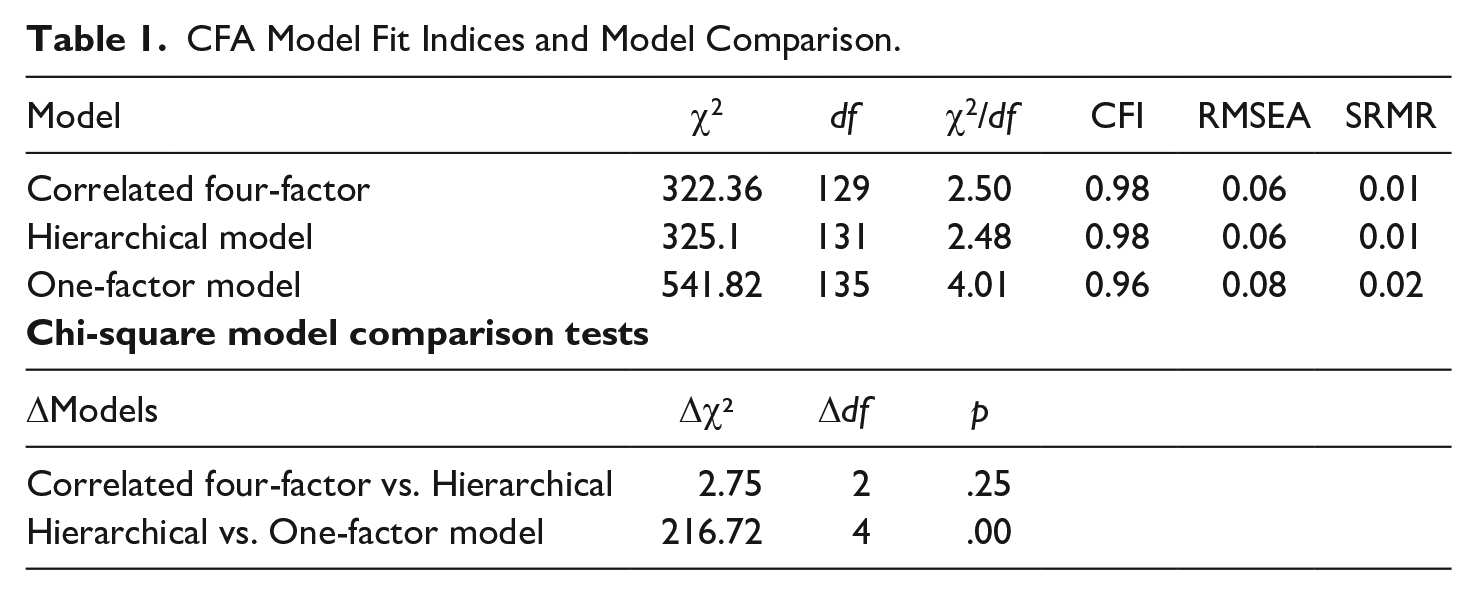
As the correlations between the four factors were high, ranging from 0.94 to 0.97, thus suggesting a common second-order factor (Kline, 2016), a model fit of a four-factor second-order model (a hierarchical model, see Figure 1) was also examined. The model fit of the hierarchical model was similar to the four-factor first-order model, χ
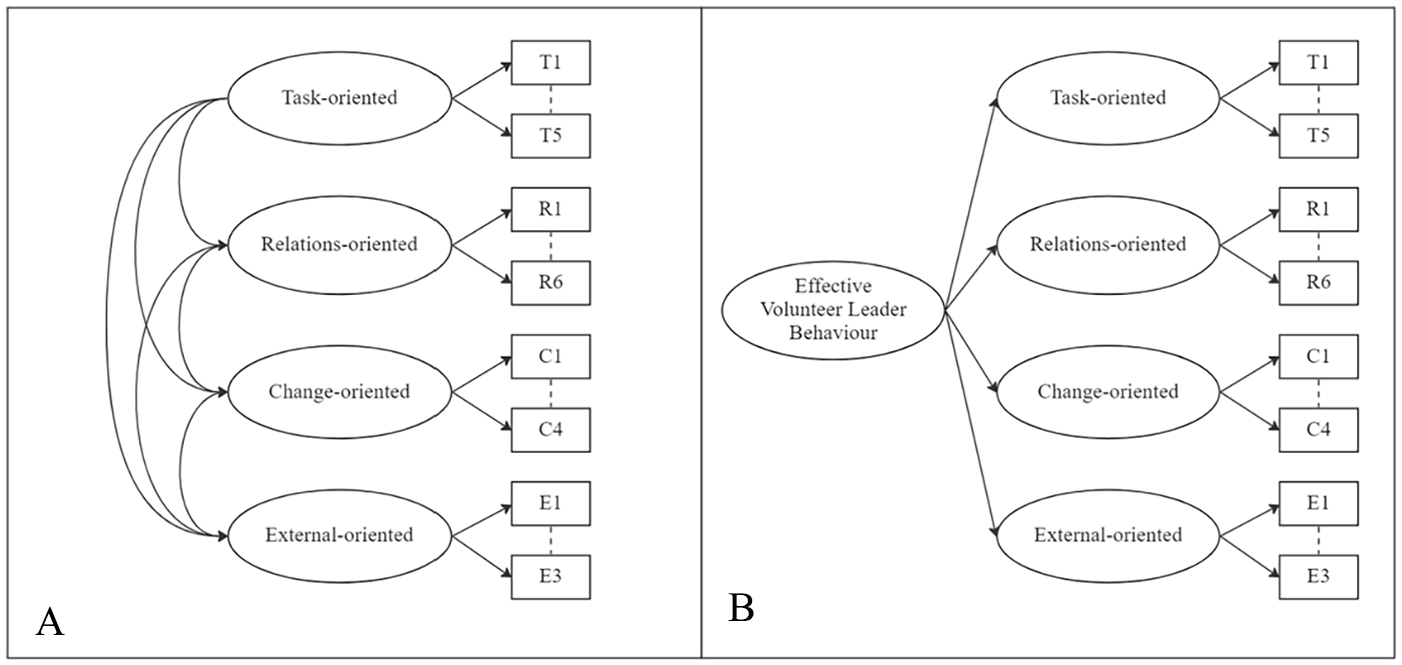
CFA Models With 18 Perceived Leader Behavior Items. (A) Correlated Four-Factor Model. (B) Hierarchical Model.
Convergent Validity and Reliability
The convergent validity of the hierarchical model was assessed by examining whether the factor loadings exceeded the recommended value of 0.7 (Hair et al., 2010), average variance extracted (AVE) above 0.5 (Fornell & Larcker, 1981; Hair et al., 2010), and composite reliability above 0.7 (Hair et al., 2010; MacKenzie et al., 2011). The factor loadings of the 18 items ranged from 0.86 to 0.99 (Table 2); the factor loadings of the four first-order constructs in the second-order model ranged from 0.97 to 0.93. In the first-order factors, the AVE estimates ranged from 0.79 to 0.83 (Table 3). The AVE of the higher-order factor was calculated using the four path coefficients from the higher-order construct to the first-order constructs (MacKenzie et al., 2011), which is 0.96. The composite reliability (CR) of the first-order factors ranged from 0.93 to 0.97, and the second-order factor achieved 0.99. These results support the convergent validity and internal consistency of each dimension.
CFA Results and Descriptive Statistics of Perceived Volunteer Leader Behavior.
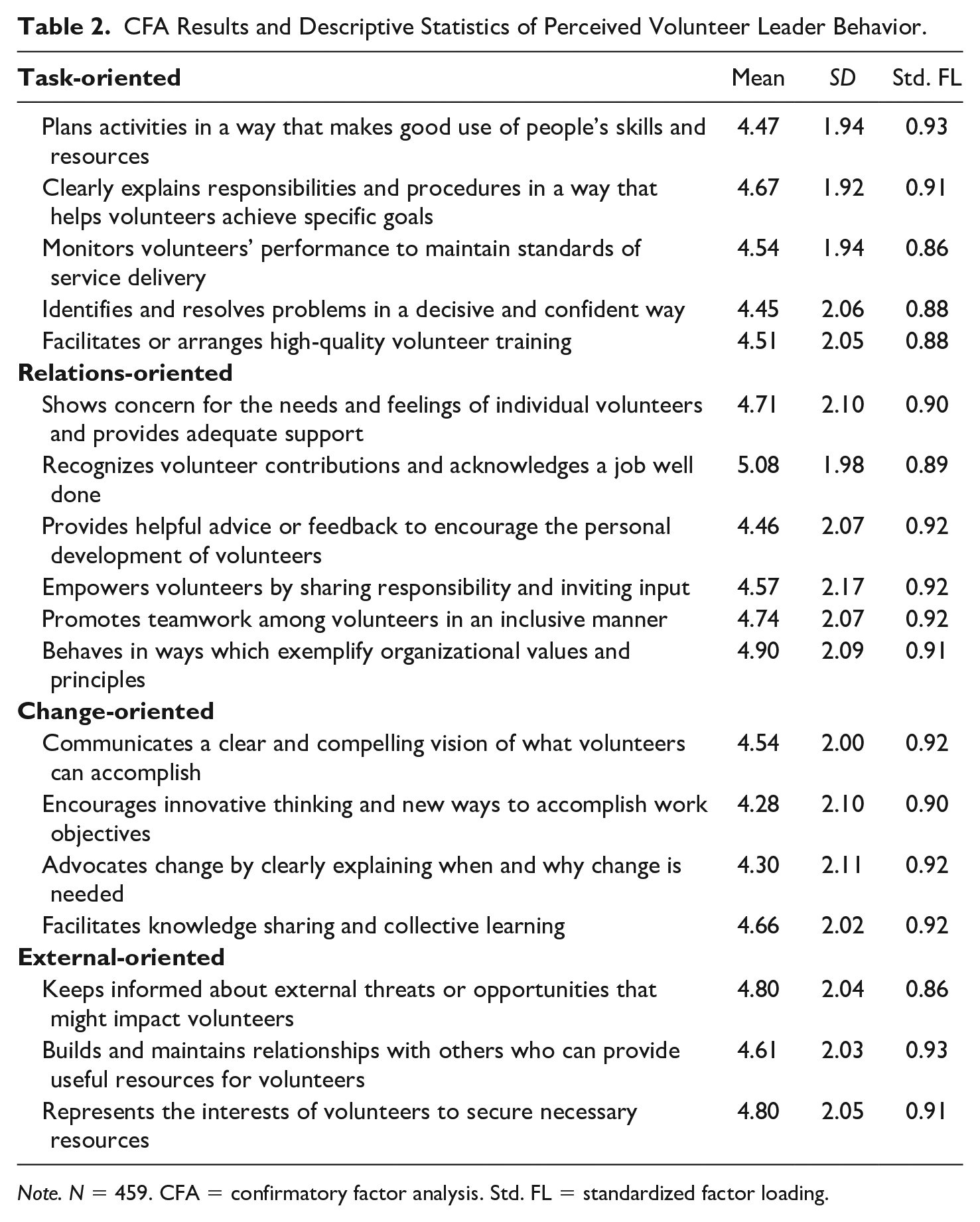
Note. N = 459. CFA = confirmatory factor analysis. Std. FL = standardized factor loading.
Composite Reliabilities, Average Variance Extracted, Means and Standard Deviations for Latent Factors of Perceived Leader Behavior.
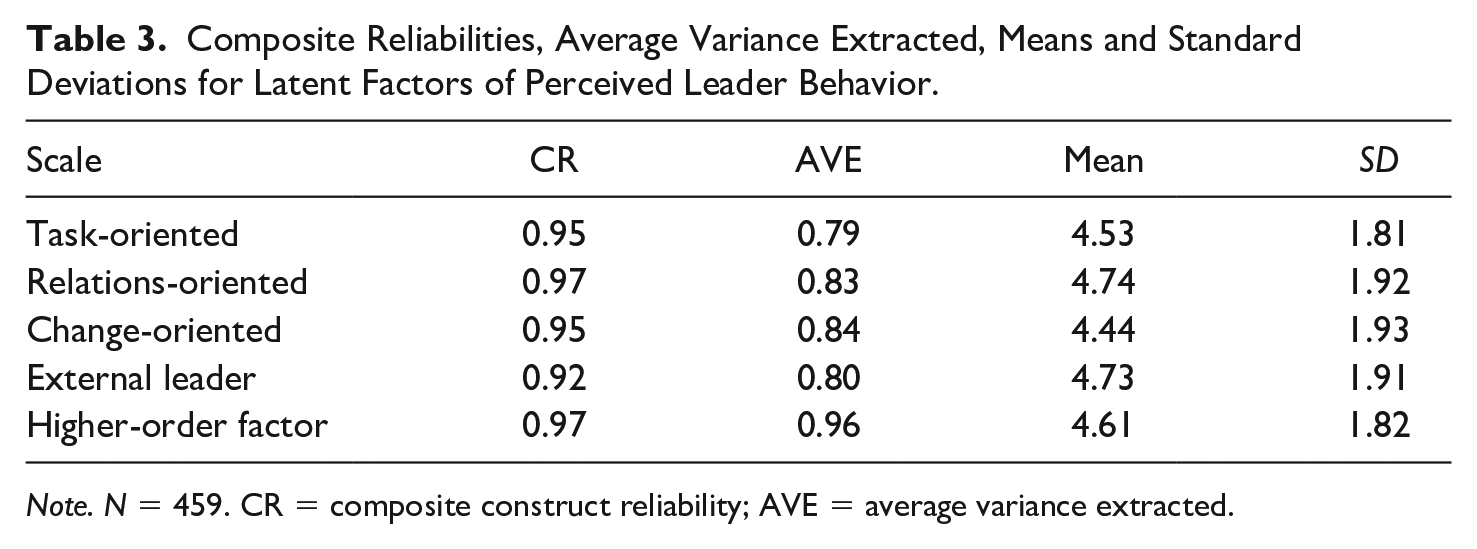
Note. N = 459. CR = composite construct reliability; AVE = average variance extracted.
Multidimensionality of the Scale
In line with the recommendation of Rönkkö and Cho (2022), we also inspected the upper limit of the confidence interval of each correlation between the four dimensions (using bootstrap with 1,000 replications). The values for each dimension pair exceeded 0.95, indicating a moderate to severe problem of discriminant validity between the four dimensions. This result suggests that the volunteer leader behavior scale should be unidimensional rather than multidimensional, a concern that is also shared with other leadership scale validation studies (Grille & Kauffeld, 2015; Sendjaya et al., 2008; Takamatsu, 2022). Therefore, we compared the hierarchical model with a one-factor first-order model (which assumes the 18 items were measuring a single, unidimensional construct). The chi-square difference test revealed that there was a significant difference between the two models (Δχ2[Δdf] = 216.72[4], p < .001), and as shown in Table 1, the hierarchical model exhibited a better model fit. This result provided preliminary evidence supporting the multidimensionality of effective volunteer leader behavior.
Measurement Invariance
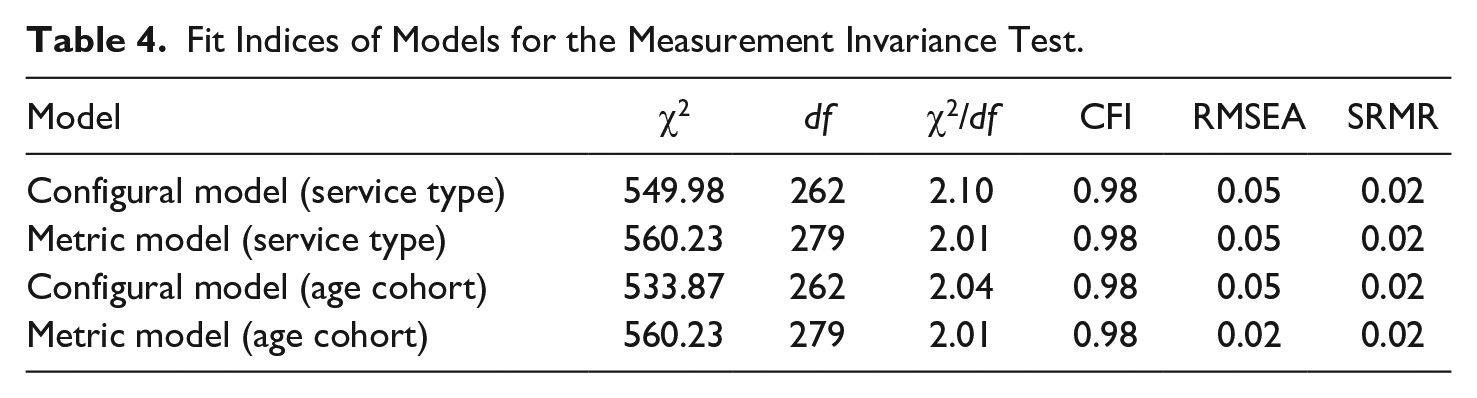
Configural invariance and metric invariance tests were conducted to ensure that the scale yields consistent results across different groups (Byrne & van de Vijver, 2010). We set up two sets of groups, one based on the type of volunteering services (fire services and non-fire services volunteers), and another based on their age (age under 50 or, unspecified and 50 and over). Each set underwent configural and metric model examination and comparison. The models maintained identical patterns and factors as the original hierarchical model. Both configural models (two groups with free and fixed parameters) demonstrated a good model fit, as shown in Table 4. The configural models were used as the baseline models for comparison with the corresponding metric models (two groups with equality constraints on the factor loadings). Since the changes in the CFI absolute values were both less than 0.02 (Meade et al., 2008), we can conclude that the proposed hierarchical model has evidence of metric invariance.
Fit Indices of Models for the Measurement Invariance Test.
Concurrent Validity
To establish concurrent validity, the correlations between each dimension of the perceived effective volunteer leader behavior and the three outcome variables were calculated. As shown in Table 5, all dimensions demonstrated (1) very strong correlations with volunteers’ satisfaction with leadership, (2) strong correlations with volunteers’ overall satisfaction with their volunteering experience, and (3) moderate correlations with affective organizational commitment. These results support the concurrent validity of the final scale.
Correlations Between Effective Volunteer Leader Behaviors and Outcome Variables.
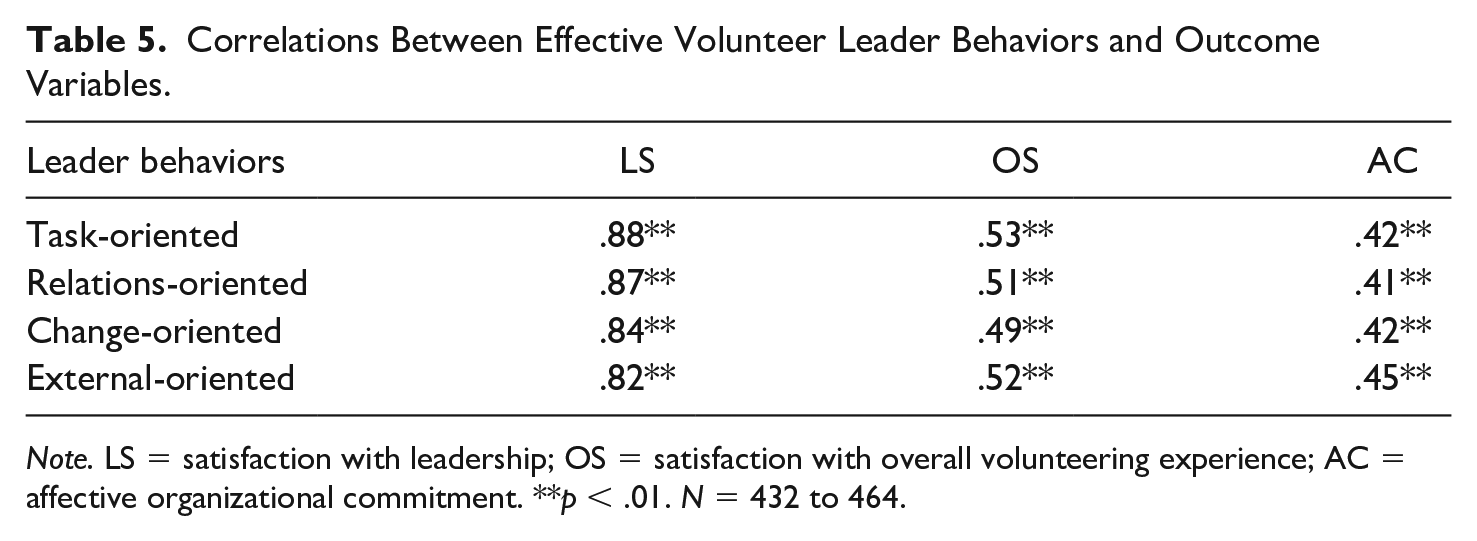
Note. LS = satisfaction with leadership; OS = satisfaction with overall volunteering experience; AC = affective organizational commitment. **p < .01. N = 432 to 464.
As a preliminary assessment of the predictive validity of our scale using cross-sectional data, we conducted a series of multiple regression analyses and an ordinal logistic regression. These analyses examined the relationship between the alignment of preferred and perceived leader behaviors and key outcomes including satisfaction, commitment, and intention to remain. We calculated the discrepancy scores of each leader behavior orientation by subtracting the mean scores of perceived leader behaviors from those of preferred behaviors (Song & Meier, 2022). The predictor variables were tested a priori to verify there was no violation of the assumption of no multicollinearity. Table 6 reports adjusted R2 values for leadership satisfaction (0.68), volunteering experience (0.24), and organizational commitment (0.13), while Table 7 indicates a Nagelkerke R2 of 0.06 for intention to remain, suggesting a reasonable predictive validity.
Multiple Regression Analysis Results.
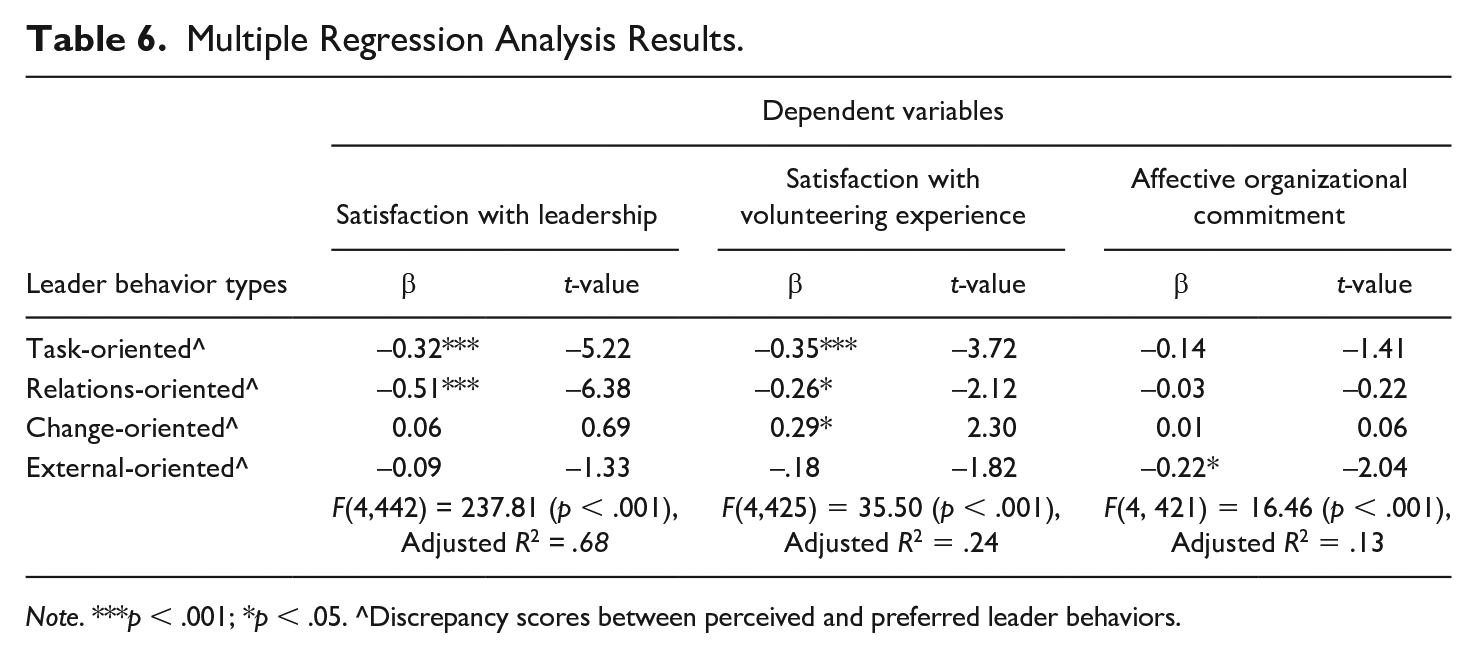
Note. ***p < .001; *p < .05. ^Discrepancy scores between perceived and preferred leader behaviors.
Ordinal Logistic Regression Analysis for Length of Intention to Remain.
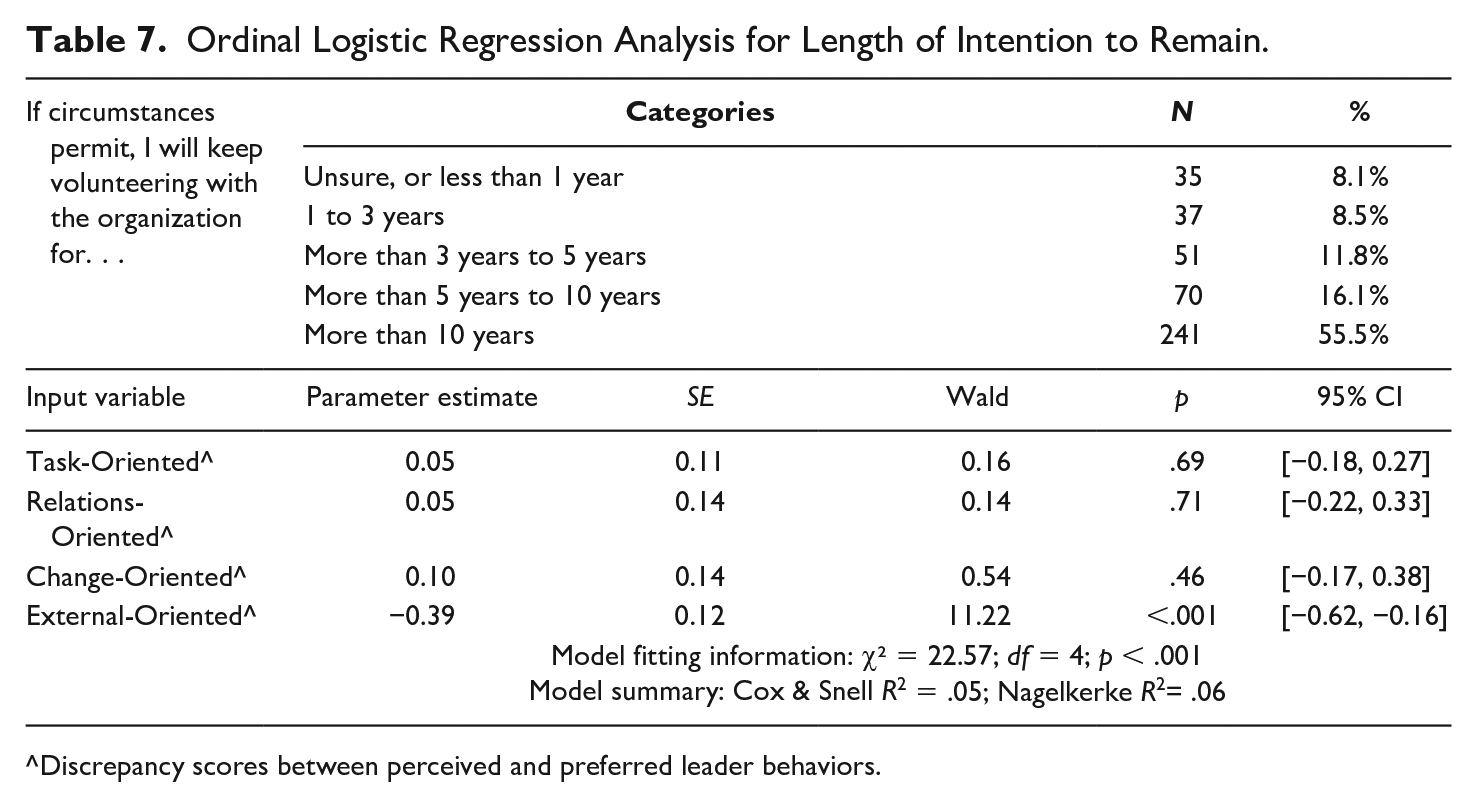
^Discrepancy scores between perceived and preferred leader behaviors.
Common Method Variance
We assessed the presence of common method variance using the CFA marker technique (Williams et al., 2010). This technique allowed us to evaluate the impact of common method variance while controlling for measurement error, making it a more suitable approach than the correlational marker technique (Podsakoff et al., 2012). Career motives for volunteering served as the marker variable, as it is a theoretically distinct construct from perceived leader behaviors (Lindell & Whitney, 2001). In comparing the models fitted as suggested by Williams et al. (2010), we found that there was no significant difference between the baseline model and the common method variance model (see Table 8, Baseline model vs. Method C model), indicating no presence of common method variance. It should be noted that further model comparisons (comparisons between Model C, Model U, and Model R in Table 8) suggested that unrestricted method variance could be affecting the correlations between the four dimensions of perceived volunteer leader behavior in the sampled data.
Model Fits of CFA Marker Technique and Model Comparison.
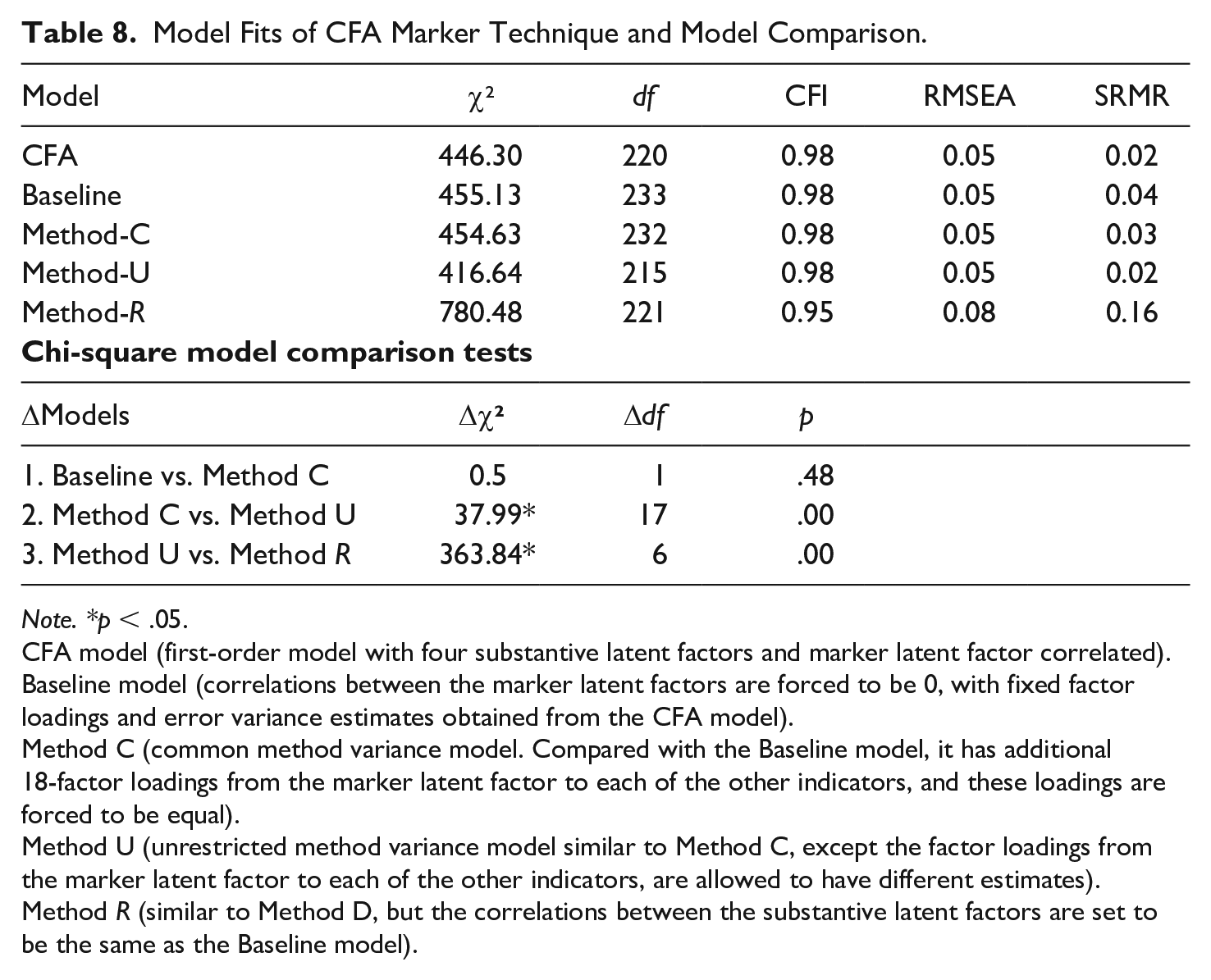
Note. *p < .05.
CFA model (first-order model with four substantive latent factors and marker latent factor correlated).
Baseline model (correlations between the marker latent factors are forced to be 0, with fixed factor loadings and error variance estimates obtained from the CFA model).
Method C (common method variance model. Compared with the Baseline model, it has additional 18-factor loadings from the marker latent factor to each of the other indicators, and these loadings are forced to be equal).
Method U (unrestricted method variance model similar to Method C, except the factor loadings from the marker latent factor to each of the other indicators, are allowed to have different estimates).
Method R (similar to Method D, but the correlations between the substantive latent factors are set to be the same as the Baseline model).
Discussion
To address the need for a more holistic tool for assessing effective volunteer leader behavior, we developed a new scale through a five-stage process and evaluated the final scale through the preliminary validation of a single survey sample. Each stage of this study was valuable in progressively improving the scale, ensuring the scale was both theoretically sound and practically relevant. Importantly, during the pretesting stage, we discovered the challenge of defining “leader” from the volunteers’ perspectives. This discovery suggests that volunteers’ perceptions of leadership are not only influenced by formal roles delineated within organizational hierarchies but also by the contributions of other members and the organizational function at large.
In our preliminary validation of the scale through the data collected from the pilot and main survey, we confirmed that the construct is well presented in a four-dimensional hierarchical model. Similar to other leadership studies, strong correlations between the four dimensions were found (Sendjaya & Cooper, 2011; van Dierendonck & Nuijten, 2011). This suggests a higher-order factor, wherein the extent of how volunteers perceive each leader’s behavior is likely influenced by their overarching perceptions of their leaders. Hence, a hierarchical model with four first-order factors may best represent the effective volunteer leader behavior construct.
Despite the high correlations between the four dimensions, we established discriminant validity between the dimensions by finding a better fit in the hierarchical model compared to a single-factor model, which provides some support for the multidimensionality of the construct (Hair et al., 2010). Convergent validity and reliability were confirmed, indicating the internal consistency of the scale items in each dimension. The measurement invariance test results showed that the dimensionality is consistent across different groups. Concurrent validity was established, as each of the four dimensions is correlated with satisfaction with leadership, satisfaction with volunteering experience, and affective organizational commitment, indicating that our proposed volunteer leader behaviors are appropriate for generating positive psychological outcomes for volunteers. Finally, we systematically assessed the possible influence of common method variance using the CFA marker technique, which further consolidates the dimensionality of the scale.
Implications
This study contributes to existing knowledge of volunteer leadership by expanding theoretical understanding and providing a valuable methodological contribution to the literature. It builds on previous efforts to identify organizations’ expectations for leadership skills and qualities (Morrison & Greenhaw, 2018) and makes the first attempt to create a leader behavior scale specifically tailored for volunteering. This study’s findings support our conceptualization of effective volunteer leader behavior, which is largely based on Yukl’s (2012) taxonomy of leadership behaviors and existing volunteer studies. As such, the applicability of Yukl’s (2012) taxonomy of leadership behaviors in the volunteering context is confirmed. In addition, external leader behavior has not been assessed in volunteer leadership studies. While such behavior has been mentioned anecdotally since volunteer-involving organizations often need to acquire external resources, our scale development process provides evidence that external-oriented leader behavior is as important as the other three orientations of leader behavior.
In terms of practical implications, our scale was developed with the usefulness of volunteer-involving organizations in mind. We reviewed not only academic journal articles but also relevant industry reports and consulted with key stakeholders from the volunteering sector. As each scale item describes an observable leader behavior, the classification of the items should provide greater clarity for volunteer-involving organizations in understanding the main objectives of different orientations of leader behavior. Our scale can be a practical tool for those seeking to understand volunteers’ perceptions of their leaders, or to identify which leader behaviors are valued by volunteers. This information may help inform management decisions regarding the development of volunteer leaders.
Limitations and Future Research
The study has several limitations that need to be acknowledged, pointing to areas for future research to further refine and validate the findings presented. First, our sample included only emergency volunteers in Australia. These volunteers tend to have more lasting relationships with leaders (Rice & Fallon, 2011). While this makes emergency volunteers a strong candidate for our scale development, and their importance cannot be understated, it may not fully encapsulate the experiences of volunteers in other settings. For example, the high-stakes nature of the work (McNamee & Peterson, 2016), the length and intensity of volunteer involvement, and the structure of volunteer management (Esmond, 2016) are characteristics unique to emergency volunteering. As such, future research should examine the applicability of the scale in different volunteer contexts.
Second, a potential limitation is our use of single-item questions to represent specific leader behaviors within the four dimensions. While the adequacy of single-item questions was assessed during the expert evaluation phase, their use might lead to some loss of information. Relatedly, the high-reliability scores, while indicating the internal consistency of the items in measuring each dimension, may suggest item redundancy. However, despite these considerations, our developmental work is an important first step to provide preliminary evidence of the relevance of each specific leader’s behavior. Future research could aim to more accurately assess these behaviors or refine our scale to enhance precision and applicability in various contexts.
Third, our findings showed a significant amount of shared variance between the four dimensions. The high correlation between relations and change dimensions can be explained by transformational leadership theory, which encompasses components similar to both relation and change-oriented behaviors (Bass, 1999). For instance, a leader who supports volunteers’ needs is likely to communicate and promote necessary changes. While task and external dimensions also exhibited high correlations with all other orientations, which led us to suggest a higher-order factor indicating overall leader effectiveness, future research could explore the unique contributions each dimension makes to different outcomes, such as perceived leadership effectiveness.
Fourth, despite adjusting the order of survey questions to reduce bias and using the CFA marker technique to indicate no presence of common method variance, biases may still exist due to our cross-sectional method. Future research could consider collecting data for criterion variables at different time points or assessing volunteer turnover rates to increase confidence in findings (Podsakoff et al., 2012).
Fifth, convergent and discriminant validity were examined within the constructs of the developed scale instead of through comparison with other established leadership scales. This is due to our focus on creating a tool for assessing “types of leader behaviors” expected by volunteers, enabling volunteer-involving organizations to clearly understand and develop volunteer leaders according to their specific contexts. This focus deviates from presuming a leadership style, such as transformational or authentic leadership, as the gold standard for volunteer leaders to achieve. We acknowledge that the nature of leadership theories often entails some degree of overlap, given that leaders are the ones who engage in a range of leadership behaviors for different objectives and roles. Our study aimed to distinguish these behaviors in a way that is clear and actionable for those in leadership roles within volunteer organizations. Future research can consider action-based research in partnership with volunteer organizations to compare the practical application of our scale against other established leadership scales.
Finally, in our preliminary assessment of predictive validity, we found that the alignment between preferred and perceived leader behaviors has explanatory power regarding volunteer satisfaction, commitment, and intention to stay. However, our findings also indicate that different leader behaviors may vary in their predictive power over these outcomes. Therefore, future research should adopt a longitudinal study to investigate how the alignment of preferred and perceived leader behaviors influences the expected outcomes.
Conclusion
It is widely acknowledged that leaders are integral in sustaining volunteers’ intention to remain with their organizations. Effective leadership in the volunteering sector can help to ensure a sustainable pipeline of volunteers who bolster community resilience and provide invaluable support to the missions of non-profit organizations. To assess effective volunteer leader behaviors in a systematic manner, we developed an 18-item survey that evaluates four different aspects of volunteer leader behavior. Our preliminary findings support the scale’s reliability and validity within a sample of emergency volunteers in Australia. However, further comparisons with other leadership constructs and validations in other types of volunteering are needed for confirmation. We encourage additional research contributions to the field of volunteering and the pursuit of further insights into the topic of volunteer leadership.
Supplemental Material
sj-docx-1-nvs-10.1177_08997640241254081 – Supplemental material for Leading Volunteers Effectively: Development and Preliminary Validation of the Volunteer Leader Behavior Scale
Supplemental material, sj-docx-1-nvs-10.1177_08997640241254081 for Leading Volunteers Effectively: Development and Preliminary Validation of the Volunteer Leader Behavior Scale by Amber CY Tsai, Toby Newstead, Gemma Lewis and Swee-Hoon Chuah in Nonprofit and Voluntary Sector Quarterly
Footnotes
Declaration of Conflicting Interests
The author(s) declared no potential conflicts of interest with respect to the research, authorship, and/or publication of this article.
Funding
The author(s) received no financial support for the research, authorship, and/or publication of this article.

Supplemental Material
Supplemental material for this article is available online.
Author Biographies
References
Supplementary Material
Please find the following supplemental material available below.
For Open Access articles published under a Creative Commons License, all supplemental material carries the same license as the article it is associated with.
For non-Open Access articles published, all supplemental material carries a non-exclusive license, and permission requests for re-use of supplemental material or any part of supplemental material shall be sent directly to the copyright owner as specified in the copyright notice associated with the article.
