




Abstract
With the occurrence of high-profile scandals in the nongovernmental organization (NGO) sector, scholars and practitioners alike have questioned why “good” organizations behave badly, yet little empirical research has explored this topic in depth. The present study examines the NGO halo effect, a conceptual framework that proposes three mechanisms to explain how NGO moral goodness can lead to NGO unethical behavior, that is, moral justification, moral superiority, and moral naivety. Through an analysis of 34 interviews with NGO staff and volunteers, we identify 151 unique cases and 17 different types of unethical behavior. We find that 92% of these cases are related to the halo effect, with 22% through moral justification, 25% through moral superiority, and 45% through moral naivety. This study provides empirical support for the NGO halo effect as a factor for understanding NGOs’ unethical behavior, with implications for future research.
Despite being touted as the “benevolent sector” (White, 2010), nongovernmental organizations (NGOs) continue to engage in unethical behaviors, with many high-profile scandals causing public concern. In the wake of these headlines, scholars have examined several factors to explain NGOs’ unethical behavior. Past research has considered individual-level factors (Andreoli & Lefkowitz, 2009), including those in positions of power (Fremont-Smith & Kosaras, 2003; Gibelman & Gelman, 2004) and level of salary (Greenlee et al., 2007); organizational factors, such as type, size, and age of the NGO (Archambeault et al., 2015; Dang & Owens, 2020; McDonnell & Rutherford, 2018); governance and management systems (Gibelman & Gelman, 2001; López-Arceiz & Bellostas, 2020; McDonnell & Rutherford, 2018); organizational culture and climate (Ma et al., 2022); accountability systems (Chu & Luke, 2023; Lamothe et al., 2022); and resource dependency (Beaton et al., 2021).
While many factors have been examined, to date, no unified theoretical framework has been proposed and tested to identify potential mechanisms that encourage or enable NGO unethical behaviors. However, scholars have posited that the same general organizational characteristics that explain the good side of organizations can also explain their unethical side (Durkheim, 1985/1996; Kaptein, 2022; Vaughan, 1999). Drawing on this premise, a conceptual model on the NGO halo effect explains how the same inherent characteristics that explain NGOs’ perceived moral goodness can also explain NGO unethical behavior. The model proposes that a perceived sense of moral goodness within NGOs can lead to the NGO being glorified by its staff and volunteers, creating the belief within the NGO that it is morally better than it actually is. The glorification of moral goodness is termed as the NGO halo effect, and the model conceptualizes organizational-level factors for how the NGO halo effect can explain NGO unethical behavior (de Bruin Cardoso et al., 2023).
The NGO halo effect proposes that moral goodness can explain unethical behavior within NGOs; however, the conceptual model has not been empirically tested. Drawing on qualitative evidence from 34 interviews with people working or volunteering in a range of NGOs across the globe, we explore whether and how the NGO halo effect explains not only instances of unethical behavior by and within NGOs but also individuals’ perceptions of the NGO as ethical. Examining the validity of the NGO halo effect contributes to the growing literature on NGO unethical behavior (e.g., Chapman et al., 2022; Dolšak & Prakash, 2022; Lamothe et al., 2022) and shows whether NGO unethical behavior can be seen as congruent with the positioning of NGOs as moral organizations (Greitemeyer & Sagioglou, 2018). Our research also responds to calls for empirical research to understand how (un)ethical behavior within organizations is promoted (Mitchell et al., 2020; Treviño et al., 2006, 2014).
In our analysis, we identify multiple examples of NGO unethical behavior, and we discuss why these examples can be explained by the NGO halo effect. The conceptual model identifies three moral mechanisms that enable NGO unethical behavior, and we present empirical support of their validity. We further find that several mechanisms can explain the same type of unethical behavior, and we discuss how this expands and deepens understanding of the NGO halo effect. We close by proposing new directions for empirical research on the NGO halo effect.
The NGO Halo Effect
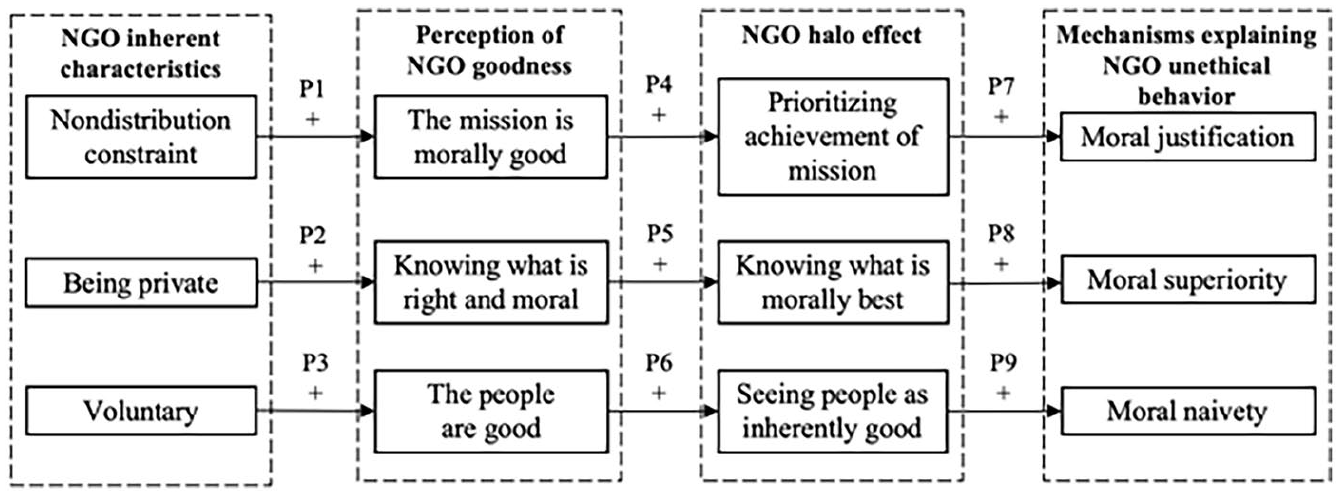
The halo effect is the tendency for a general positive impression to lead to an overall positive impression (Thorndike, 1920), giving rise to distortions and false generalizations in the way something is generally assessed (Festinger, 1957). The halo effect stems from cognitive dissonance theory (Festinger, 1957) and explains that to feel confident in upholding their general impressions, people can create delusions about how they appraise something or someone, including themselves. Studies note the “pervasive” and “powerful influence” of the halo effect on organizations (Rosenzweig, 2007, pp. 7–9), although a limited number of studies discuss a halo effect in relation to NGOs. The conceptual model of the NGO halo effect indicates that a halo effect can be internally present within NGOs when its people perceive the NGO to be morally good, which can lead the people to distort the degree of goodness and believe the NGO to be morally better than it is (de Bruin Cardoso et al., 2023). The NGO halo effect conceptual model presents, as shown in Figure 1, how the glorification of moral goodness can explain NGO unethical behavior.
Conceptual Model of the NGO Halo Effect.
The NGO halo effect explains that three characteristics inherent to NGOs (Salamon & Sokolowski, 2016) can lead to the perception of NGOs as morally good organizations and that when this perception is glorified, it can lead to unethical behavior. First, the nondistribution constraint highlights that the purpose of NGOs is to serve the public good and not to create something of value primarily for the persons undertaking the activities (Keck & Sikkink, 1998). This can lead to the perception that an NGO’s mission is morally good, elevating its importance. The model proposes that elevating the importance of the mission can lead the NGO to prioritize achieving the mission over how it is achieved. Prioritizing the mission can lead to an ends-justifies-the means mentality whereby any means—ethical or not—can be justified by the organization for the sake of achieving the mission, that is, moral justification.
Second, being private allows an NGO to determine its mission in service of the public good according to what it considers to be good. This can lead to the perception that the NGO is knowledgeable about what is right and moral, which, when glorified, can lead to the belief within the NGO that it knows better than the law or conventional conceptions of moral goodness. This glorified belief can lead the NGO to not conform to laws or socially accepted conditions of what is good and bad, that is, moral superiority.
Third, the voluntary characteristic refers to people’s willingness to give their time, money, or labor to support an NGO’s mission without the expectation of receiving anything in return (Borzaga & Tortia, 2006; Frumkin, 2009), which can lead to the perception that people working and volunteering in NGOs are morally good. When this perception is glorified, an NGO’s people are believed to be inherently good. Managing their ethics would therefore not be seen as necessary by the NGO, increasing the risk for unethical behavior not being prevented, detected, or responded to, that is, moral naivety.
Research Design and Methodology
In this study, we examine whether there is empirical support for the conceptual model about the glorification of NGOs and the resulting moral mechanisms leading to NGO unethical behavior. We utilize a qualitative methodology involving semi-structured, in-depth interviews with 34 individuals from the NGO sector. We first conducted a pilot study, in which we evaluated the interview protocol and study design by interviewing an initial set of respondents (n = 7). Participant feedback during the pilot phase allowed us to iterate on the interview questions and adjust the interview approach for subsequent interviews. In this section, we elaborate on sampling and recruitment, data collection and analysis, and strategies for addressing validity and reliability.
Sampling and Recruitment
We refer to Salamon and Anheier’s (1992) structural-operational definition of NGOs to determine what type of organization is included in our sample. Salamon and Anheier identify NGOs as (a) formal, (b) private, (c) nonprofit distributing, (d) self-governing, and (e) voluntary. While many different terms have been used to describe these organizations, we use the term NGO.
Individuals received email invitations to participate in an interview in which they would be asked to reflect on and share how mission drives behavior at an NGO where the respondent currently or previously worked or volunteered. One person declined, resulting in a final sample of 34 interviews. As empirical research of unethical behavior by organizations is generally challenging because organizations tend to hide this behavior rather than make it public (Pierce & Balasubramanian, 2015), we wanted to generate rapport and trust in the confidentiality of the interview (Maxwell, 2013). The first author’s work experience with NGOs allowed her to approach professional contacts who work and volunteer in NGOs and to create an enabling environment motivating respondents to be frank in their responses (Webster et al., 2014). Twenty-three people (68%) were identified via the lead author’s network and 12 (35%) people were identified via snowballing (Mason, 1996). Of those interviewed, 25 (74%) respondents were women and nine (27%) were men; 29 (85%) were staff and five (15%) were volunteers; seven (21%) worked for more than 20 years, 20 (59%) worked between 5 and 20 years, and eight (24%) worked less than 5 years at the NGO; and nine (27%) worked in Africa, five (15%) in Asia, one (3%) in Australia, nine (27%) in Europe, five (15%) in North America, and two (6%) in South America.
While our sample is a convenience sample, we intentionally sought to identify and recruit individuals who represent different types of NGOs across different geographies to generate a sample that better captured the heterogeneity of the NGO sector. See Table 1 for an overview of the NGOs included in our sample.
Overview of NGOs Included in the Study.
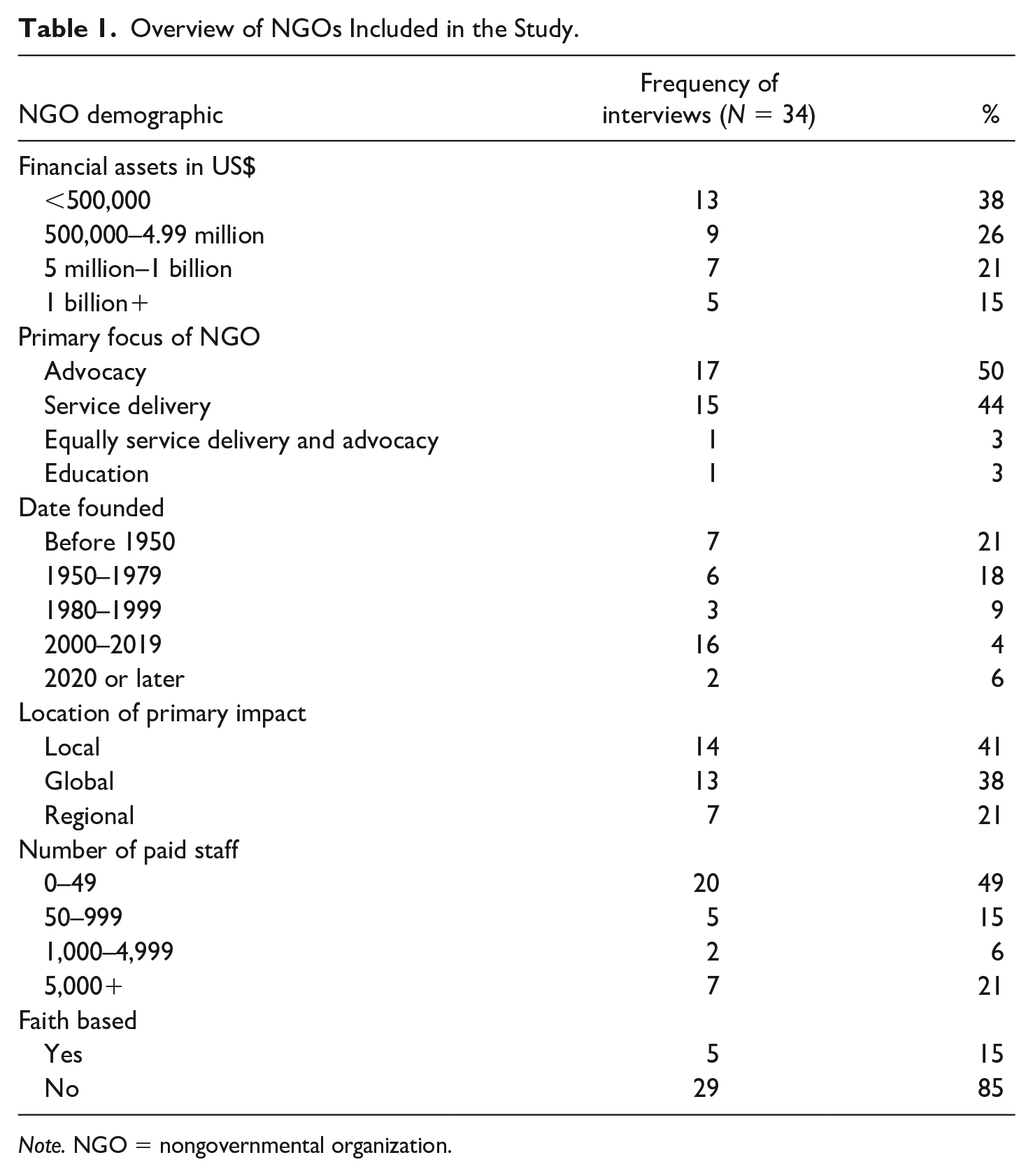
Note. NGO = nongovernmental organization.
Data Collection
Data were collected using semi-structured, in-depth interviews. We first collected contextual information about the NGO and asked respondents to explain the NGO’s mission. We then sought their perception on how critical the mission is, how the organization deals with moral norms that are different to the organization’s belief about what is good and right, and whether a code of ethics was seen as necessary for the NGO. The following semi-structured questions were generally asked: “What is your organization’s mission?”, “What drives the mission?”, “How important is the mission in your organization?”, “How does your organization deal with laws or outside opinions that are different from your organization’s mission?”, “Do you believe your colleagues to behave in line with the organization’s mission?” and “Do you believe a code of ethics is necessary for your organization?”
We asked respondents to provide concrete examples of behaviors that took place in and by the NGO to understand how respondents’ perceptions relate to behavior and vice versa, and to identify different types of unethical behavior occurring in NGOs as per the aforementioned definition. Where unethical behavior was thought to be identified, follow-up questions and active listening techniques (Riessman, 2008) were used to encourage the respondent to narrate as much detail as possible to determine whether the behavior was classified as unethical, and whether the behavior could be explained by the mechanisms of the NGO halo effect. As the main inquiry of this study is to determine whether and how the NGO halo effect can be present, we did not explore the presence of other explanatory factors for NGO unethical behavior, such as those referred to in the Introduction. In addition, we did not ask respondents to define unethical behavior. All interviews were recorded after obtaining consent from the respondents (Mitchell & Clark, 2021). Interviews lasted on average 59 minutes and were transcribed, resulting in 578 pages of single-spaced transcripts.
Data Analysis
To our knowledge, this is the first empirical study on the NGO halo effect, and we sought to identify different examples of unethical behavior within or by NGOs to investigate whether and how unethical behavior can be related to the NGO halo effect. In this study, we define unethical behavior according to a widely accepted definition, that is, behavior that violates generally accepted moral norms of behavior (Jones, 1991; Treviño et al., 2006). As we wanted to understand respondents’ perceptions of seeing and explaining unethical behavior, we focused our analysis on unethical behavior within or by the NGO with which the respondent was affiliated, and not on unethical behavior that was referenced in other NGOs. For the examples of NGO unethical behavior that could not be explained by the three mechanisms conceptualized in the NGO halo effect, we identified and interpreted patterns (Alvesson & Kärreman, 2011) to propose how the conceptual model can be elaborated upon. Based on this definition and approach, we identified 151 unique cases of unethical behavior.
The first two authors undertook the data analysis; we read the transcripts multiple times and coded all transcripts, a process which allowed us to refine and consolidate the codes. A total of 25 codes were used: 17 were for examples of NGO unethical behavior, four for the NGO halo effect, and four for the NGO halo effect as an explanation for NGO unethical behavior. The codes on NGO unethical behavior were developed inductively and were consolidated across multiple stages of analysis. The eight codes on the NGO halo effect were derived from the conceptual framework and refined based on the pilot phase. While the conceptual model identifies three mechanisms each for the NGO halo effect, and for the NGO halo effect as an explanation for NGO unethical behavior, we included a fourth code in both coding groups to capture additional themes.
Strategies for Improving Validity and Reliability
We undertook several strategies to improve the validity and reliability of our findings (Ravitch & Carl, 2019). First, we used memoing, debriefs, and dialogic engagement among study authors to ensure consistency and clarity in the coding process and subsequent interpretations of the findings. Second, we sought to strengthen the validity of our study through the use of a pilot phase, for participants to validate researchers’ interpretation of their interview. Third, we utilized two coders for all transcripts and conducted multiple rounds of coding, allowing us to compare and discuss application of codes to ensure consistency and reliability of the results. Fourth, the third and fourth authors provided quality assurance of our findings by reviewing outcomes.
Findings
In this section, we present and discuss our findings on why and how the NGO halo effect explains different types of NGO unethical behavior. We first present an overview of the types of NGO unethical behavior identified in the interviews, followed by evidence of the NGO halo effect. We then discuss evidence of the NGO halo effect as an explanation of unethical behavior.
NGO Unethical Behavior
Through the interviews, we identified a range of examples of NGO unethical behavior. In analyzing the data, we first coded each instance where we noted unethical behavior, and then we applied specific codes describing the type of unethical behavior. We then identified the number of unique cases that provided sufficient data for us to investigate whether unethical behavior could be attributed to the NGO halo effect. We identified 151 unique cases, which we grouped into 17 different types and six categories of unethical behavior. We also calculated the number of interviews in which each unique case of unethical behavior had occurred. Table 2 presents the frequency of the different types of unethical behavior we found in relation to unique cases and in relation to the interviews.
Types and Frequency of UB.
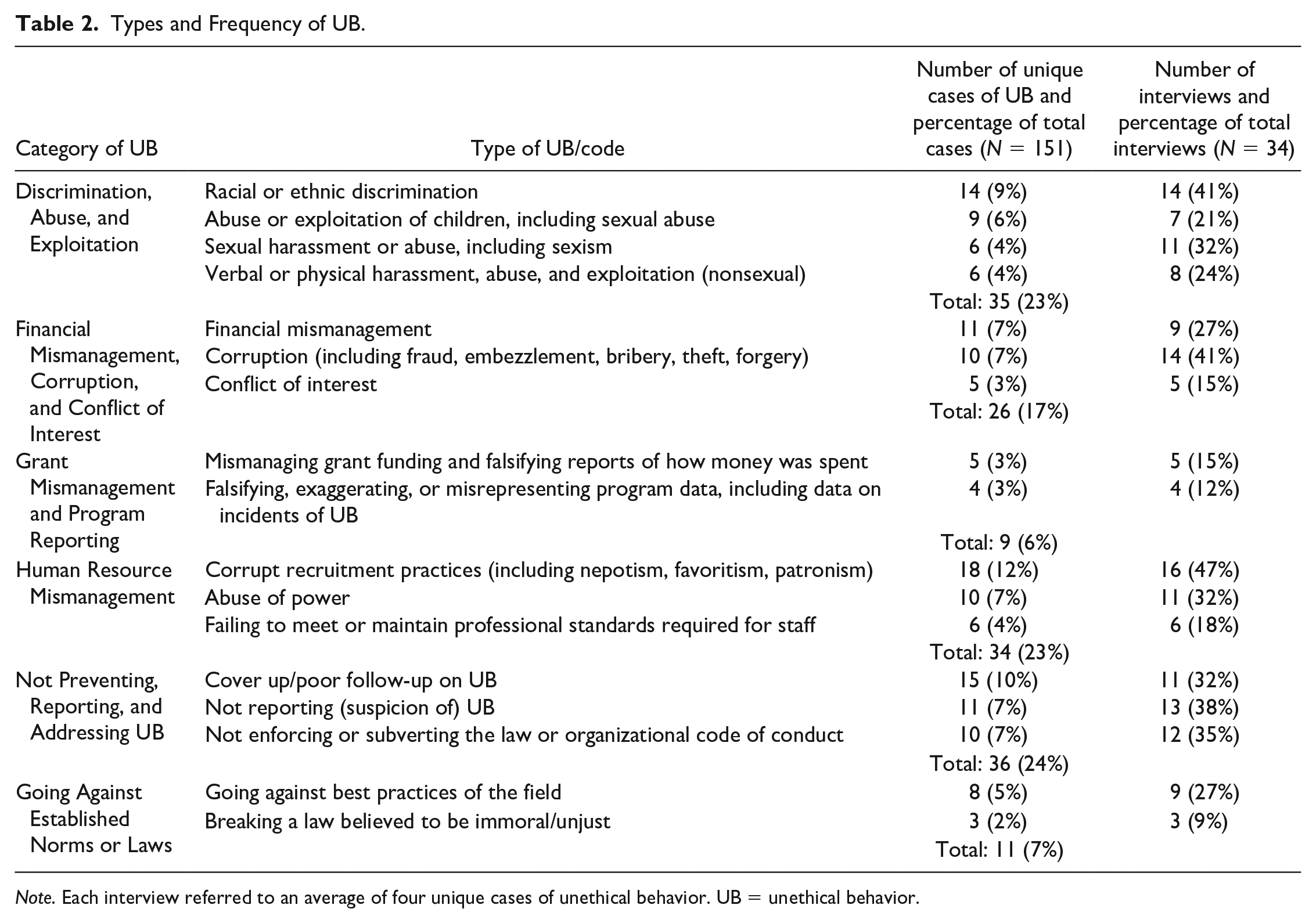
Note. Each interview referred to an average of four unique cases of unethical behavior. UB = unethical behavior.
Our findings offer insights into the various types of unethical behavior that take place within NGOs. Table 2 shows a wide variety of unethical behaviors, indicating that unethical behavior is a common occurrence among NGOs in this study. Respondents noted multiple examples of different behaviors to occur within their organization. For example, during the 7 years working for the NGO, a respondent “encountered racism, sexism, intimidation, sexual and other transgressive behavior, lying, slander, nepotism, and not addressing unethical behavior even though you see it” (Interview 19). The average number of unique cases of unethical behavior mentioned across the interviews was four. Thus, our data demonstrated a wide range of NGO unethical behaviors across multiple types of NGOs.
Respondents also described unethical behavior to occur regularly and repeatedly within their NGO, and they noted a general inclination to misbehave. For example, one respondent noted that, “defrauding the organization or defrauding beneficiaries happens all the time” (Interview 16), and another respondent commented, “harassment, bullying, abuse of power, the administration colluding with fraud and embezzlement, it’s everywhere” (Interview 15). Another respondent, spanning a 20 plus year career in the NGO sector, noted that “sexual harassment, abuse of power, and bullying occur in every organization that I’ve ever worked in. I’ve never been to a position where there’s been none of that” (Interview 18). These quotations indicate that NGO unethical behavior is frequent and constant, a finding also reinforced by the number of interviews with unique cases of different unethical behaviors.
While we identified 17 distinct types of unethical behavior in our analysis, there were a few cases that appeared most often across our dataset. As indicated in Table 2, the most frequent case of unethical behavior included corrupt recruitment practices (n = 18), which we describe below.
Corrupt recruitment practices pertained to the way in which NGOs engaged in favoritism, nepotism, and patronism in (re-)employing staff and consultants, and (re-) contracting procurement services. It was by far the most prevalent example of unethical behavior described by participants and was mentioned in almost half of the interviews (47%). Participants described a lack of transparency in hiring and contracting processes; unfair or preferential treatment given to previous associates; discrimination based on gender and race; and nepotism. In some cases, individuals ignored the hiring procedures that had been established by the organization, or disregarded the recommendations provided by other staff, to hire their preferred candidate. According to one respondent,
We understand after two months that actually not only were our terms of reference not taken into consideration, but a new terms of reference were created . . . Our initial terms of reference were not considered, and then the recruitment was done without us having a say . . . When that person arrives we understand that this person already had experience with the organization and so obviously they knew each other. (Interview 20)
In addition, respondents also indicated discrimination, as noted by one participant:
Four people had applied for a job, two women, one African man, and one middle-aged white man. And I ask you, who do you think got the job? If you look at relevant experience and personality, I don’t think it was a fair choice. (Interview 5)
The NGO Halo Effect
Through narrative analysis, we found evidence of the NGO halo effect across our sample. Glorification of people was found in 29 interviews (85%), followed by glorification of knowing what is moral and right, which was found in 25 interviews (74%). Glorification of the mission was found in 19 interviews (57%). Figure 2 shows how often we found elements of the NGO halo effect. We explain each of these in detail below.
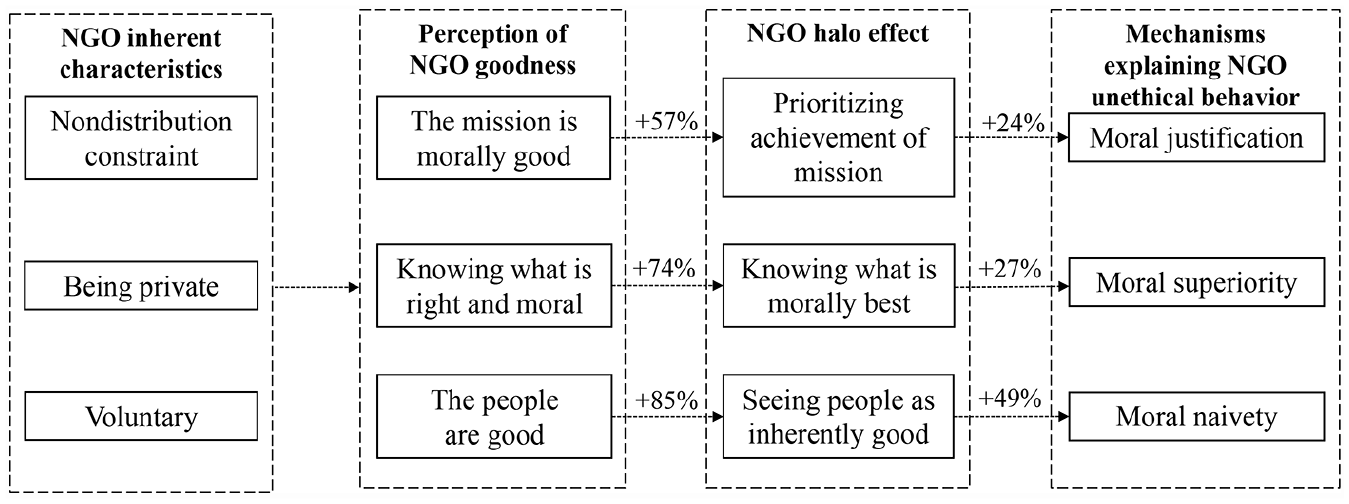
The NGO Halo Effect as an Explanation for NGO Unethical Behavior.
Glorification of Mission
Glorification of mission relates to how respondents elevated the importance of their NGO’s mission. Respondents spoke highly and lovingly of their NGO’s mission. When talking about the mission, respondents expressed happiness and pride, such as by smiling, placing a hand over their heart, speaking in an upbeat manner, and pumping their fists. Respondents referred to the mission as hope; one respondent said, “hope with a capital H” (Interview 22), a calling, a reflection of personal identity, the source of motivation and driving force, a marriage commitment, “the magic” (Interview 30), and was compared with “medicine, a vaccine . . . fluoride in the water, so you know, it benefits everyone” (Interview 31). Another respondent described the mission as “part of their DNA” and showed the interviewer a talisman, noting that they give a similar talisman to new staff and partners, as a “reminder to always keep an eye on the mission” (Interview 22). This shows that working or volunteering in an NGO is not considered as merely a job, but that the mission is intertwined with respondents’ identity and ethos.
Respondents frequently referred to the need to achieve the mission and noted a sense of urgency in doing so. Respondents referred to the mission as very important and critical and placed greater emphasis on achieving the mission, rather than the means by which it was achieved. As one respondent noted,
We are not married to how we do it, we’re married to the problem we’re solving. If we found out tomorrow that giving hot dogs to children is more effective for [the mission of] religious freedom, then we’ll sell hot dogs. (Interview 31)
Another respondent noted, “We’re like racehorses with blinders. We’re looking at the finish line. We don’t care about the rest” (Interview 18).
Often, a sense of struggle amplified respondents’ commitment to achieving the mission. When talking about the struggles of achieving their mission—usually externally driven events such as natural disasters, humanitarian crises, war, or COVID-19—respondents cried or expressed anger and frustration; several respondents noted they were heartbroken when they felt progress toward their mission was threatened. Despite the challenges, respondents generally vowed to keep going, noting that they are in it for the long run, as highlighted by the following quotations: “Struggles are not for nothing! We are here with a calling, and that keeps us going” (Interview 22); “I am not a pacifist, and if I saw the need to have an armed guard outside of our office to defend what we stand for, I would not think twice about it” (Interview 31); and “We won’t leave until our mission is achieved. Or we will die fighting one way or the other. This is the hill we will die on or we will achieve success” (Interview 30). We found evidence of glorification of the mission in 19 interviews (57%).
Glorification of Knowing What Is Moral and Right
While glorification of the mission captures the participants’ sense of the preeminence of the mission in and of itself, glorification of knowing what is moral and right encompasses respondents’ understanding of what is believed to be moral and right within and by their organization. This perception was frequently noted when respondents—without prodding by the interviewer—juxtaposed their NGO with other organizations (both those with similar and dissimilar missions), policies and laws, or prevailing norms. Others being wrong, unjust, or naive was often referenced. The comparison invoked a sense of respondents wanting to distinguish their NGO and claim that their NGO knows what is morally better than others.
Responses indicated that a belief in knowing what is better also equated to the belief that they knew how to do better than others. One respondent noted, “We understand the science of this better than a lot of others . . . there’s a gap between what we do and what they do” (Interview 31). Respondents referred to their NGO being best placed to carry out their mission compared with NGOs with similar missions, and respondents accordingly felt the need to justify the persistence of the NGO’s existence, as reflected in the following quotations: “We’re really good, we bring a broad systematic approach around health, and others are unable to do that, so we’re required because we have that role” (Interview 29), and “We know what we do is right, we have zero percent doubt that what we do is good, it’s about convincing others that taking a step forward to think like us is necessary” (Interview 21).
Respondents’ belief in knowing better also showed that respondents felt the need to convince others to believe and do as they do. A respondent noted, “Part of our innovative thinking is trying to get people to change their hearts and minds, to provide those aha moments . . . so they can apply it to all the work they do” (Interview 30). Respondents noted that others’ differences were embraced as opportunities for winning them over to the NGOs’ views, and when that was successful, respondents shared a clear sense of pride: “We engage them in value dialogue . . . We see that our values are now seen as normal in Africa, Asia, South America. It’s beautiful, because we see that we are right” (Interview 22). These quotations demonstrate the way in which respondents utilized a belief in their moral superiority as justification for convincing others to adjust their approach and do as the NGO does. We found evidence of the glorification of knowing what is moral and right in 25 interviews (74%).
Glorification of People
This mechanism covers examples in which the people within NGOs perceive themselves and their colleagues to be exalted and morally superior. These perceptions about the NGO’s people seem to arise from a dual belief in their inherent virtues and an identification of the NGO as a place that both attracts and amplifies these virtues. Some respondents described themselves as inherently or genuinely good, and three respondents identified themselves as radicals. One respondent described himself as “righteous, doing God’s work . . . invincible and entitled” (Interview 14). Another respondent noted, “I’m an American dude with some little Harvard degree that thinks he can come into Cambodia and tell everybody what to do, that’s insane. But I’m doing it” (Interview 33). Others referenced themselves as “the elite, well-bred” (Interview 2), “frontline soldier” (Interview 31), and “having 20/20 vision” (Interview 30).
Respondents noted how the mission was a “binding force” (Interview 22) among colleagues and indicated how a shared belief in the goodness of the mission affected their perception of their colleagues. Respondents referred to their colleagues as family; trusted as the right people for the job; and heroes, saints, or angels. A respondent mentioned, “We had one person who slept on the floor of the office for a year. We never asked that of them, but that’s what they did. I definitely recognize that as heroic” (Interview 31). Respondents explained their positive perception of their colleagues was due to their “strong moral compass” (Interview 7), “endless motivation” (Interview 16), and “genuine selflessness” (Interview 9).
In addition, some respondents expressed the belief that they and their colleagues inherently know what is right and moral, and that, therefore, ethics management is not necessary. For example, one respondent said, “You shouldn’t have to have [a code of conduct] really, should you? You shouldn’t have to have it written down, that’s bonkers” (Interview 4). Another respondent stated, “Everyone should be operating from the same moral compass and hold the same moral values and attitudes towards human dignity and respect. There’s assumptions that everyone would operate from that same perspective” (Interview 7). Other respondents noted that due to focusing on meeting the mission, there was no time for ethics procedures such as trainings or robust background checks, stating, “We work in good faith and trust . . . Our induction is ‘welcome, there’s a shitload of work, good luck’. More or less everyone in the sector works that way” (Interview 19). Another respondent noted that “we don’t have time to do background checks, especially for volunteers. As long as values are aligned, that’s considered enough” (Interview 25). These quotations illustrate the tendency within NGOs to view staff and other internal stakeholders as inherently trustworthy and behaving according to an intrinsic moral compass. We find evidence for this mechanism across 29 interviews (85%).
How the NGO Halo Effect Relates to NGO Unethical Behavior
We next turn to our analysis of how unethical behavior is related to the NGO halo effect. We investigated whether and how the 151 unique cases of unethical behavior we identified could be understood by the three different moral mechanisms of the NGO halo effect. Our analysis suggests that the NGO halo effect explains unethical behavior in 139 out of the 151 unique cases (92%). Of 151 unique cases, we identified moral justification in 33 cases (22%), moral superiority in 38 cases (25%), and moral naivety in 68 cases (45%), while 12 cases (8%) cannot be explained by the NGO halo effect. Ten percent of cases can be explained by one mechanism, 45% by two mechanisms, and 45% by three mechanisms. Table 3 illustrates how many times each moral mechanism was used to explain the unique cases of unethical behavior. Figure 2 also presents the frequency of the moral mechanisms as an explanation of unethical behavior.
The Halo Effect as a Mechanism for UB: Summary of Findings (N = 151 Cases).
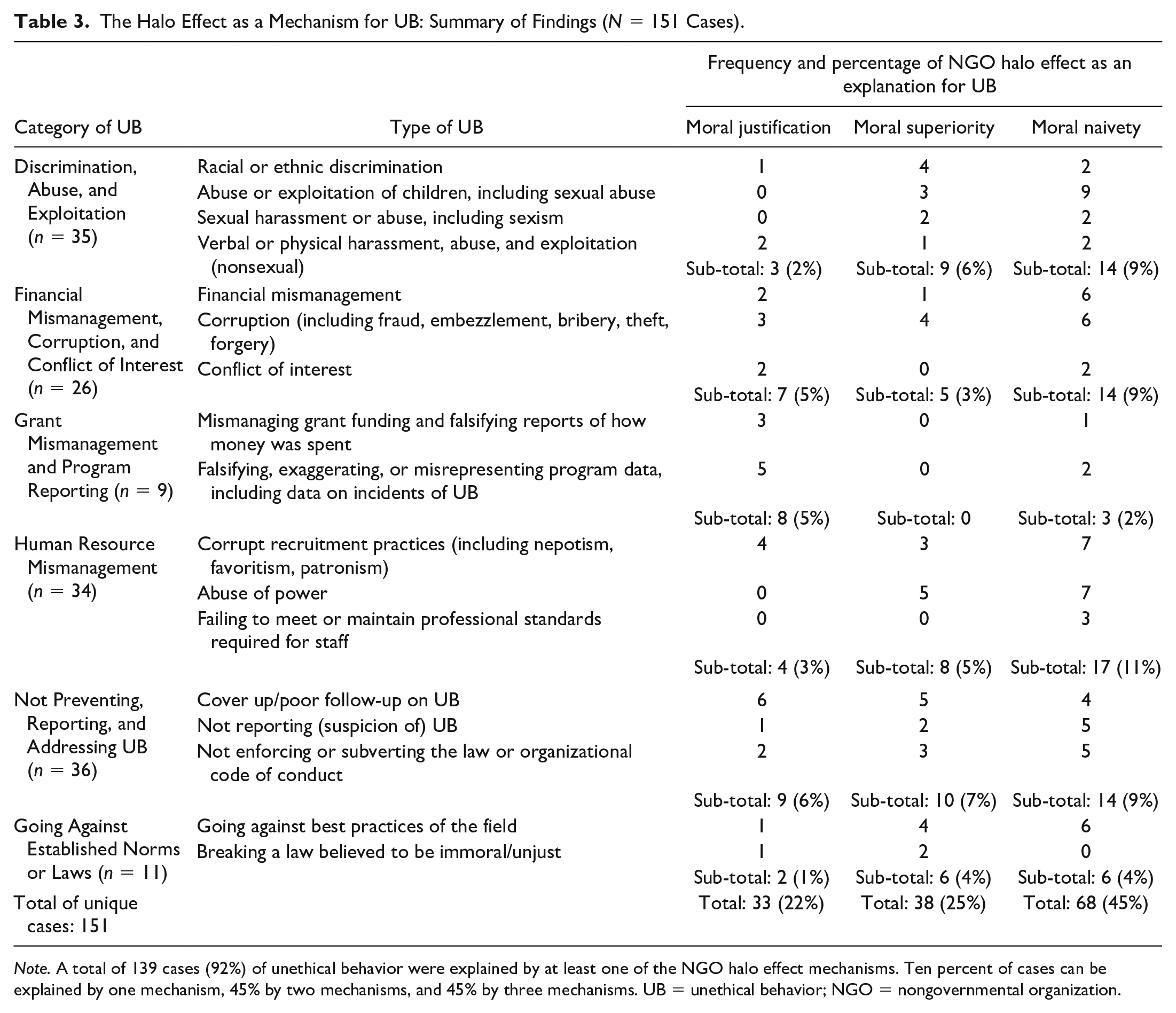
Note. A total of 139 cases (92%) of unethical behavior were explained by at least one of the NGO halo effect mechanisms. Ten percent of cases can be explained by one mechanism, 45% by two mechanisms, and 45% by three mechanisms. UB = unethical behavior; NGO = nongovernmental organization.
Moral Justification
Moral justification captures examples of unethical behavior justified by respondents as a means to achieve the NGO’s mission. Moral justification explains 33 cases (22%) of unethical behavior described by participants. We find that moral justification explains the occurrence and continuation of certain types of unethical behaviors in and by NGOs, namely, falsifying, exaggerating, or misrepresenting program data and cover up/poor follow-up of unethical behavior in the name of prioritizing the mission.
An ends-justifies-the means mentality was used to explain falsifying, exaggerating, or misrepresenting program data. One respondent noted that their NGO has
a lot of rules about how you do [research] interviews. But the reality of certain situations is that they often can’t be followed, and sometimes there is a disconnect between the existing rules . . . But we’re an advocacy organization, so we will go public with what we find. (Interview 13)
Data were misreported, usually to donors, in the name of keeping the NGO afloat to meet its mission. One respondent noted that, “Donors think you are a kind of funnel that you pour money into and programs immediately come out” (Interview 16), putting pressure on NGOs to
divert money to other programs in the organization, because donors do not fund administration costs and adequate salaries for staff. To balance out costs and not lose staff, you get some salaries from this and that project, and you find that you are not able to report adequately. You decide to share the same report with different donors. We are trying to meet our needs. (Interview 12)
These examples show how NGOs can justify breaking their own ethical codes and manipulating donors as a means to fulfill their mission.
Moral justification also explains why NGOs cover up or poorly follow-up on instances of unethical behavior, as addressing unethical behavior is seen to detract time and resources away from the mission. Focusing on the mission, that is, through “an obsessive focus on the end result, and not be too distracted by something else” (Interview 23), gives the perception to the self and to others that the NGO is doing good. The following example shows staff justifying willingly forgoing their 13th month of salary due to budget cuts resulting from financial mismanagement:
We have a strong family culture, and we don’t play the blame game . . . We don’t acknowledge that a mistake has been made. We encounter challenges together, and now we need to fundraise even more, work even harder altogether to make sure the mission survives. We feel our mission is so important and so unique and necessary. (Interview 19)
Respondents indicated that incidents are poorly addressed because systems that prevent and respond to unethical behavior are not prioritized, for the same reason that they detract from the mission: “We don’t have time to do checks, we don’t have time to train everybody on systems . . . it is the thinking that other things [the mission] are more important” (Interview 16). Another respondent noted a similar justification for prioritizing the mission: “All systems and checks come afterwards. We will go clandestine . . . we need to intervene, and go very fast” (Interview 11). Moral justification thus explains how an ends-justifies-the-means mentality can present the opportunity for unethical behavior, as ethics programs and addressing incidents of unethical behavior are considered to be of lesser importance than achieving the mission.
Moral Superiority
While moral justification explains unethical behavior in the name of meeting the mission, moral superiority explains unethical behavior in the name of knowing what is right and moral and accordingly, eschewing laws, policies, and norms that are not believed to be in line, including those internal to the NGO. Moral superiority explains 38 cases (25%) of unethical behavior described by respondents. We find that moral superiority explains why NGOs feel motivated to break the law or fight against value-based systems they believe to be wrong and immoral. We further find that moral superiority can take place in NGOs whereby certain people within the NGO believe to know what is best and justify making decisions in the name of the NGO, while contradicting organizational policies.
Moral superiority explains examples of NGOs breaking the law due to people in the NGO believing that their mission is right and moral, while laws, policies, or the system within which the NGO operates are believed to be wrong, immoral, and in need of correcting. Reflecting on the NGO’s mission, a respondent noted that “some organizations believe their mission is so important that they’re above the law, or that they believe the law to be unjust” (Interview 14), which leads to “disrupting the status quo. It’s necessary to break the rules as I don’t think change within the current system and structures is possible if we just obey the rules” (Interview 25). In three interviews, respondents shared that their websites were curated to facilitate registration of their NGOs, such that the missions presented on their websites did not fully represent what the NGO stood for, as it would be considered “too political, too divisive” (Interview 26). Using this kind of deception in the NGO registration process was ultimately seen as necessary, however, to “follow the principles of justice and equality that we had learned . . . We wanted to break the law to bring about justice” (Interview 14). While these respondents rationalized breaking the law, a belief in what is right and moral can also lead to positive—as opposed to negative—deviance by NGOs as they seek to contribute to the greater good, such as in bringing about justice and human-rights reform.
Moral superiority explains examples of unethical behavior in NGOs due to some individuals—namely, international staff, senior managers, older White men, or tenured staff—perceiving themselves to know what is right and moral. Particularly when there are weak accountability structures, moral superiority can be perpetuated. For example, as one respondent explained, “At the higher management levels there aren’t any structures watching them, so they can act like kings and queens and do more or less whatever they want” (Interview 29). Such people can feel entitled to make unilateral and untransparent decisions on behalf of the NGO based on their belief that they know what is best for the NGO, despite their decisions superseding codified organizational policies or norms. For example, one interview shared evidence of moral superiority exhibited by a HR senior manager failing to investigate reports of unethical behavior:
She’s the one who knows things and thinks she is doing the right thing [by not investigating]. She says of the others, “All these people [who reported], they don’t know anything, poor people. Maybe they don’t know what harassment is. I have to teach them and they will learn eventually.” (Interview 2)
This example shows how some people believe to know what is right compared with others working in the same NGO and seems to justify why people disregard organizational policies.
Moral Naivety
Moral naivety explains when respondents did not see the need for internal ethics programs or the management of ethics, for example, needing or implementing a code of conduct, transparently conducting investigations into incidents of unethical behavior, and upholding disciplinary procedures, due to respondents’ belief in staff and volunteers being inherently good. Moral naivety was the most frequently identified mechanism explaining unethical behavior (45% of cases).
While most respondents noted that “their” NGOs had codified policies and procedures for managing ethics and integrity, some also noted that this had not always been the case. Respondents in smaller and younger NGOs admitted to not initially having policies in place or having considered trainings on ethics management due to “100 percent trusting at face value” (Interview 1) their colleagues. There was also a belief that “believing in the greater good necessarily means that we are all good people and so less inclined to bullying and harassment” (Interview 15). The inherent trust eventually led to incidents of unethical behavior, such as nepotistic hiring, a financial advisor embezzling more than US$ 5,000 over a 6-year period, and exposing children to harm. Respondents explained that policies were developed after incidents of unethical behavior, and that after “complete panic and being traumatized” (Interview 19), it was a “learning on the job” (Interview 18) experience to recognize why and how the NGO had to build, manage, and maintain an infrastructure that could detect, prevent, and respond to different types of unethical behavior. In addition, a belief in inherent goodness coupled with a lack of reflection—either about the self or the organization—inadvertently perpetuated racist and colonialist mind-sets, as illustrated by this respondent:
I can say “oh no, I’m not racist,” but I actually can be because of the structures within which I work, even if my intention is not to be like that. The lack of reflection on our industry’s story—and there’s a history to how it’s linked to colonialism—and the role of our NGO is astonishing. (Interview 29)
These examples show how not having ethics management in place and not reflecting on one’s personal ethics can contribute to the occurrence of unethical behavior.
However, we also find that even when policies and procedures are in place, they are often not enforced in instances of unethical behavior. Respondents reported a general inclination to avoid dealing with unethical behavior, explaining that a “blind eye is turned, and unethical behavior is swept under the carpet” (Interview 15); “no one is ever fired” (Interview 19); and “we are too forgiving and let too many mistakes pass by” (Interview 23). Believing in and working toward the same mission indicates that there is less inclination to see unethical behavior as unethical, but merely as “mistakes without malicious intent” (Interview 1). While most respondents mentioned holding themselves to high standards, upholding codified measures such as investigating reports and taking disciplinary action in cases of unethical behavior were considered “too harsh” (Interview 1). In one case, checks and balances were considered to be the reason for mismanagement: “So many of the problems that arise in project mismanagement have to do with management systems. I think a lot of aspects can be solved with the right level of trust” (Interview 23).
In cases where donors require NGOs to have policies and procedures in place, they are often not accompanied by accountability measures. There was a perception among respondents that donors do this for lip-service only, as the requirements are often not accompanied by monitoring mechanisms. For example, several respondents noted that after due diligence on ethical compliance, the donor did not ask about activities relating to ethics management. This indicates a level of inherent trust in the NGO and its people, yet respondents noted that “people don’t necessarily know what they’re doing. There’s a lot of incompetence [when it comes to managing ethics]” (Interview 18). Another respondent noted that trusting and expecting the NGO to automatically implement ethics management without accountability measures being in place “allows the NGO to be shielded from scrutiny and accountability. I think that gives many people a sense that they can take advantage of and behave badly because nobody is there to hold them accountable” (Interview 15). These examples show how despite the presence of ethical codes and procedures, trusting in the goodness of people—both within the NGO and by the donor—takes precedence over implementing procedures.
Discussion
We present the first empirical investigation of the halo effect concept (Festinger, 1957; Thorndike, 1920) as applied specifically to NGOs. Based on 34 in-depth interviews with respondents from NGOs across various geographies and domains, we present why and how different types of unethical behaviors in and by NGOs can be related to this NGO halo effect. As summarized in Table 2, we identified 151 unique cases pertaining to 17 different types of unethical behavior. In grouping these 17 types of unethical behavior into six categories, we demonstrate that unethical behavior takes place in many forms across different types of NGOs. These categories point to the ways in which unethical behaviors relate to and are motivated by both internal and external contexts and opportunities, as well as the inability of codified laws, policies, protocols, and related procedures to fully prevent, detect, and respond to unethical behaviors. These areas also suggest that people within NGOs are exposed to possibilities for both situational (i.e., when the environment permits or encourages unethical behavior) and intentional (i.e., when people purposefully choose to behave unethically to meet their needs) offending (Kleinewiese, 2022; Wikström, 2006).
We identified the presence of the NGO halo effect across our sample. Evidence from the interviews point to the ways in which the perception of NGO moral goodness can be inflated, and we show the high likelihood of the NGO halo effect being present among staff and volunteers as they glorify the mission, their knowledge of what is moral and right, and their own and colleagues’ inherent goodness or morality. Our analysis suggests that 92% of the 151 cases we identified in our study are related to the NGO halo effect. This finding suggests that it could be psychologically easier to ignore, neutralize, rationalize, and justify unethical behavior rather than to spend resources on detecting, preventing, and addressing it, as doing so could mean questioning the strongly held belief in the moral goodness of the mission, the people, and the sector as a whole. Thus, our findings are in line with previous research on the halo effect generally (Festinger, 1957; Thorndike, 1920) and show support for the NGO halo effect specifically.
The three NGO halo effect mechanisms were not evenly applied across the cases of unethical behavior, with moral naivety being the most widely exhibited mechanism (45% of cases). One possible explanation for this finding is that glorification of an NGO’s people was both self-perceived by the respondents and projected onto colleagues. Furthermore, when talking about the perceived goodness of their NGO’s mission, respondents often had the tendency to talk about themselves and their colleagues, indicating that the belief in being inherently good is coupled with a belief in the NGO’s mission as being morally good.
In addition, moral naivety tends to explain both the occurrence of and subsequent failures to respond to unethical behavior, for example, forgiving people for their misconduct and trusting they will not transgress again rather than upholding codes of conduct. NGO employees are often praised for being passionate about the mission, committed to bettering society, and willing to take relatively less pay and work long hours in service of a cause. These characteristics can be harnessed toward positive ends. However, as our findings indicate, they can also contribute to unethical behavior, as the presence of the NGO halo effect (the glorification of the NGO’s people) creates a mechanism (moral naivety) by which people are inherently trusted to know what is moral—and accordingly are believed to behave ethically—creating opportunities within the NGO to rationalize not developing or applying ethics management procedures, leading to and sustaining unethical behavior.
Our study deepens and expands understanding of how the perceptions of moral goodness by people within the NGO can drive or sustain various types of unethical behavior in or by the NGO. We can envisage that when multiple mechanisms are at play, they can make unethical behavior more likely. For example, when behaviors are believed to be aligned with the mission (moral justification) and when people are inherently believed to behave morally (moral naivety), then unethical behavior in the name of the mission might be rationalized or justified because of the belief that the NGO’s people are inherently moral, thereby perpetuating unethical behavior. While the exact confluence of factors that leads to the creation of an NGO halo effect is difficult to parse out, our research suggests that once it is present, it creates a feedback loop, much like the circular shape of an actual halo, through which both antecedents and consequences of unethical behavior are produced. In this way, the halo functions as a driver, mediator, and response to unethical behavior. It is through the NGO halo effect that many examples of unethical behavior become, paradoxically, congruent with the positioning of NGOs as morally good organizations (Greitemeyer & Sagioglou, 2018; White, 2010). We present an elaborated model of the NGO halo effect in Figure 2, indicating how NGO inherent characteristics can be related to NGO unethical behavior. Figure 2 shows the percentage of interviews where we identified the NGO halo effect, and the percentage where the NGO halo effect explains cases of unethical behavior.
This research contributes to the study of organizational ethics in NGOs in several ways. First, the extant literature on this topic has been largely prescriptive, suggesting best practices to promote organizational ethics, and descriptive, detailing the extent to which NGOs adopt such practices (e.g., Bromley & Orchard, 2016; Chu & Luke, 2023). Moreover, the former category has often drawn from the business ethics literature, which, while useful, does not offer explicit consideration of the unique characteristics of NGOs and their broader role in society. While this literature provides practical guidance for NGOs and offers insight on sector-level trends, it does little to explain why unethical behaviors persist in a sector frequently touted as “benevolent” (White, 2010) and “virtuous” (Dolšak & Prakash, 2022), leading to calls for more thorough examination of the “sectoral causes” of unethical behavior (Chapman et al., 2022). Second, while others have pointed to the probable role of NGO culture in promoting unethical behaviors, such as sexual abuse and harassment, and offered policy and management approaches for addressing this challenge (e.g., Bruno-van Vijfeijken, 2019; Lamothe et al., 2022), possible pathways or mechanisms linking organizational and sectoral culture to (un)ethical behaviors have remained largely under-theorized and untested. Our research addresses these gaps in the literature on ethics in NGOs by proposing a unified conceptual framework to explain the link between NGO characteristics and (un)ethical behaviors and providing empirical evidence to support the presence of an NGO halo effect that acts as a mechanism for such behaviors. In doing so, it addresses the call for more empirical research that investigates ethical and unethical behavior in organizations (e.g., Mitchell et al., 2020; Treviño et al., 2006, 2014) and introduces several possible pathways for future studies to further test the NGO halo effect across contexts and using a variety of methodologies, which we describe in greater detail in the next section.
Our findings contribute to theoretical and empirical understanding of how and why NGOs engage in unethical behavior and point to the NGO halo effect as a promising conceptual framework to ground future research. Nevertheless, this study has several limitations. First, it is a qualitative study designed to investigate a previously untested conceptual framework. The relatively small sample size and study design limit our ability to generalize these findings to the population of NGOs. Second, we cannot conclude that the NGO halo effect is the primary or sole cause of unethical behavior in NGOs; rather, we can suggest that there is evidence pointing to the NGO halo effect as a salient factor in contributing to many examples of unethical behavior observed in our dataset. Finally, the present study utilizes a sample of participants across different geographies and cultural backgrounds. Individual identity and lived experience play a critical role in qualitative inquiry and further impede our ability to make generalizations to the broader population of NGOs and their employees. Additional data are needed to interrogate the influence of social and cultural norms, as well as intrinsic and extrinsic motivations, in shaping participants’ understanding and reporting of incidents of unethical behavior in their organizations in a deeper way.
While our results are promising, future research is needed to see the ways in which results differ across geographies, service domains, and other organizational characteristics. For example, we propose that an NGO’s organizational characteristics could correlate to the size of the halo effect and subsequently the degree to which the NGO can be blinded to their unethical behavior. Although we sought to include NGOs that varied in terms of size, age, location, and domain in our sample, future research is needed to evaluate whether these factors mediate or moderate the halo effect. We could anticipate, for example, that larger assets and net income could reinforce the belief within the NGO that its mission, its knowledge of what is right and moral, and its people are important and needed, as otherwise, it would not generate the funds that it does.
Future research could also measure the extent of the halo effect within and across different types of NGOs, and the strength of correlation between the halo and the perception of unethical behavior by and within NGOs. The strength of the halo and its correlation to unethical behavior could also be investigated in different types of organizations wherein a perception of moral goodness may exist, for example, companies with corporate social responsibility initiatives, social enterprises, and philanthropic foundations. The qualitative evidence presented here could be used as the basis for developing a scale to quantitatively measure the presence and strength of the halo as an explanatory factor for unethical behavior across a broader sample of NGOs and different types of organizations.
Future research can also investigate whether the halo relates to ethical behavior, and particularly, whether the halo enables and sustains different types of ethical behavior. Similar to the conceptual framework of the NGO halo effect as a factor for unethical behavior, a conceptual framework could be devised and validated to show how the halo can lead to moral mechanisms that promote ethical behavior. Future research can also investigate the effectiveness of management interventions in addressing the halo to mitigate unethical behavior and motivate ethical behavior.
Conclusion
The primary goal of this study was to explore the empirical validity of the NGO halo effect as a conceptual framework for understanding the ways in which NGO characteristics can relate to unethical behavior. As such, we sought to make a theoretical contribution to the study of unethical behavior in NGOs and the factors and conditions that enable it to occur. We have outlined these contributions to the literature and to the study of organizational behavior more broadly in the preceding section, and we believe that some of the suggestions for future research outlined above will yield additional insights.
Our findings also offer some insights for practice. First, the presence of the NGO halo effect suggests that policies and procedures, including codes of ethics and other documents, are not enough to ensure individual and organizational compliance with either ethical or legal guidelines. Beliefs in the supremacy of the mission, the inherent goodness of NGO employees, and the strengths or effectiveness of the NGO’s mission relative to other policy interventions or organizations can be positive indicators of NGO employees’ commitment to “doing good” in service to society, but they can also lead them, somewhat paradoxically, to be more willing to eschew policy and procedure when it seems justified or even convenient. Thus, active and ongoing engagement with these policies through periodic trainings, including during the initial onboarding and orientation process, and workshops to revisit and revise them as needed, are imperative. During these trainings, NGO leadership should consider directly highlighting examples of situations where ethical dilemmas commonly arise (e.g., as a result of balancing funding shortfalls with donor/funder intent) and suggest tools and approaches for employees to address and mitigate them. In addition, such trainings should strive to cultivate NGO employees as empowered decision-makers, capable of making ethical decisions on behalf of the organization at their discretion and with collaborative input from team members at all levels, rather than framing organizational ethics as an abstract concept or aspiration, or the exclusive purview of NGO leadership.
Moreover, NGOs need to consider not only the normative value of written ethics policies but also their strategic value. How might NGOs build codes of ethics—including statements about aspirations, values, conduct, and reporting mechanisms—into their organizational logic? Strategic objectives can include statements about expected norms and values, reinforcing their importance. More importantly, however, NGOs should consider the role that ethics plays in shaping the day-to-day activities, outputs, outcomes, and, ultimately, impact of their work. In what ways does a commitment to organizational ethics eliminate cognitive dissonance between the NGO’s mission, vision, and values, and the on-the-ground realities that can lead employees to feel pressured to bend or break the rules? Finally, NGO leadership should be honest about where they draw the proverbial line, both implicitly and explicitly, with regard to these expectations for organizational ethics, and renew their commitment to lead by example and empower employees to hold each other accountable.
The presence of the NGO halo effect is not inherently problematic. Indeed, it makes sense that individuals would view the organization that they work for and their colleagues in a generally favorable light. However, our analysis found evidence of the NGO halo effect in the majority of cases of unethical behavior. These results illuminate the ways in which the presence of the NGO halo effect can contribute to ethical blind spots within the organization that may enable unethical behaviors to arise or be used to justify or defend them when they do. Thus, NGOs should be aware of the ways in which perceptions of their mission, knowledge of what is right and moral, and people both internally and externally can be both assets and liabilities and seek to develop not only policies and procedures but also an organizational climate that truly promotes the ethics and values that they seek to embody.
Footnotes
Data Availability Statement
The data are not publicly available due to ethical, legal, or other concerns.
Declaration of Conflicting Interests
The authors declared no potential conflicts of interest with respect to the research, authorship, and/or publication of this article.
Funding
The authors received no financial support for the research, authorship, and/or publication of this article.
