




Abstract
Voluntary contributions are a crucial resource for nonprofit organizations and challenging to acquire. Social information on other people’s contributions has been found to positively influence individual giving behavior. However, a clear understanding how social information reference groups impact volunteering intentions is missing. Drawing on social comparison theory, we conducted a survey experiment with variations in social information reference groups to shed light on mechanisms within social comparison processes in volunteering. Results show that volunteering intention increases when social information refers to reference groups similar to recipients (ingroups) compared with reference groups without similarities (outgroups). This effect is mediated by group identification. In contrast, shifts in volunteering aspiration are anchored by observed performance levels and independent of reference groups. The study contributes to the social information literature and suggests the need to distinguish different forms of social information to understand social comparison processes in volunteering, relevant for researchers and practitioners alike.
Introduction
Volunteers constitute an essential resource for nonprofit organizations (NPOs) (Carpenter & Myers, 2010). Especially in younger generations, however, volunteering activity is in decline due to changing life concepts and a new work culture (Francis, 2011). As the demand for voluntary labor significantly exceeds the supply (Emrich & Pierdzioch, 2016; Francis, 2011), volunteer-dependent organizations need to adopt specific human resources management (HRM) practices (Guo et al., 2011). In particular, to successfully identify and activate new sources of voluntary labor, it is essential for NPOs to gain a deeper understanding of the factors that drive volunteering intention.
Drawing on social psychology, notably social comparison theory, nonprofit researchers have identified social information—information on the behavior of others, for example a person’s characteristic or performance level, such as hours volunteered (Wood, 1996)—as one factor that influences an individual’s prosocial behavior (van Teunenbroek et al., 2019). According to social comparison theory, in the absence of objective means, people use social information to evaluate their own behavior or performance (Festinger, 1954). So far, studies report mixed results on how the variation of such information influences volunteering intentions. While a number of studies report positive or indirectly positive effects of social information on volunteering (Cao, 2018; Diner et al., 2018), others report no effects or even negative ones (John et al., 2019; Moseley et al., 2018).
Overall, while researchers are increasingly interested in the connection of social information and volunteering, there remain gaps in the research regarding how different social information impacts volunteering intentions (Cao, 2018; van Teunenbroek et al., 2019). In particular, researchers have called for further investigations on the effect of the nature of social information reference groups in volunteering (Francis, 2011; John et al., 2019; Moseley et al., 2018). Francis (2011) explicitly calls for further volunteering research on different types of reference groups in experimental settings. While first findings suggest that comparison outcomes may differ depending on the nature of the social information reference groups (Festinger, 1954; Suls et al., 2002; van Teunenbroek et al., 2019), to the best of our knowledge no study has thus far explicitly compared the influence of variations of social information reference groups, for example ingroups with shared features and outgroups without similarities, on volunteering intentions.
Moreover, there are few insights into which mechanisms lead to changes in volunteer intention when individuals are confronted with social information. Researchers have thus called for the investigation of additional paths through which social information may influence volunteering (Cao, 2018; John et al., 2019). Two possible mechanisms involved in the social comparison process activated by social information may be group identification—a person’s felt similarity with reference groups—(Tajfel, 1974; Tajfel & Turner, 1979) and aspiration shifts—a person’s shift in the personal aspiration of future performance (Festinger, 1942).
We address these two research gaps and aim to answer the following research questions: (a) How does social information on various reference groups influence volunteering intentions? (b) How is the processing of social information influenced by group identification and aspiration shifts? To answer our research questions, we develop a multiple mediation model, which we test with an online survey experiment with 228 participants. The experiment has a 3 × 1 between-subject design with three different social information reference groups, two ingroups and one outgroup. To test our hypothesized model, we apply structural equation modeling and discuss the results against the theoretical foundations and the current state of research on social information and volunteering. Overall, our study makes a manifold contribution to research and practice.
We add to social information research by confirming social information reference group effects in individual volunteering intentions. We show how ingroups, sharing features with the recipients, change recipients’ volunteering intention compared with outgroups that lack such shared features. Moreover, we advance the theoretical understanding of social information processing by identifying mechanisms driving volunteering intention. Our findings show that group identification drives volunteering intention in case of social information on ingroups, highlighting the influence of social identity in explaining prosocial behavior (Drezner & Pizmony-Levy, 2021; Tajfel & Turner, 1979; Thoits, 2021). In contrast, shifts in aspiration remain unaffected by variations in reference groups (Hertzman & Festinger, 1940). Instead, shifts in aspiration are triggered by social information performance levels, for example the average number of hours volunteered by others, confirming previously identified boomerang effects (Alpizar et al., 2008). These findings allow us to deepen the understanding of the different components of social information: We show that while group identification is dependent on the reference group features, aspiration shifts are contingent on performance levels. Finally, we derive propositions for further research on social information in volunteering contexts. Moreover, our findings are highly relevant for practitioners and can be used to derive practical recommendations on how to apply social information to recruit volunteers.
Conceptual Foundations and Hypothesis Development
Social Comparison Theory in Nonprofit and Voluntary Research
Prior research within the field of nonprofit and voluntary management has already drawn on social comparison theory to explain mechanisms in prosocial behavior, such as charitable giving and volunteering (Moseley et al., 2018; van Teunenbroek et al., 2019). Social comparison theory is a fundamental research stream within social psychology and examines the processes linked to comparison with other individuals or within social groups (Festinger, 1954). It aims to explain the circumstances under which comparisons with the social environment occur and how they affect individuals. The key assumption of social comparison theory is that people seek to evaluate their own behavior, but this self-evaluation is volatile in the absence of physical or social means. Therefore, without the possibility of objective evaluation, people look to their social environment to assess and subsequently adapt their own behavior (Festinger, 1954). This information on the behavior of others is called social information (Wood, 1996) and occurs in forms such as a person’s characteristics or performance.
Within the nonprofit literature, social comparison theory has been most frequently applied within the research on charitable giving (van Teunenbroek et al., 2019). In this context, most studies report a significant positive impact of the presence of social information anchor levels of other donor’s monetary contributions on the recipient’s charitable giving behavior (Frey & Meier, 2004; Martin & Randal, 2008; Smith et al., 2015), implying a complementary relationship between the two (Shang & Croson, 2009). However, not all findings point into this direction. Alpizar et al. (2008) find evidence of a boomerang effect of social information performance levels, such that social information on lower giving rates may have a decreasing effect on personal contributions. Similarly, Croson and Shang (2013) provide empirical evidence that social information of performance anchors too far from the individual donation level tend not to impact personal contributions. Meyer and Yang (2016) propose distinguishing two components of social information: the “extensive margin,” describing how many other people engage in a certain behavior, and the “intensive margin,” the amount of contribution by each individual (Meyer & Yang, 2016). They report that social information positively shapes participation rates (extensive margin) but had a decreasing effect on the donation amount (intensive margin). Studies in charitable giving have also considered potential ingroup effects on donation behavior. For example, Meer (2011) finds evidence for higher charitable giving outcomes in cases where the reference group is known to the donor.
Based on the assumption that volunteering is a concept without clear objective means and thus subject to the use of social means (Moseley et al., 2018), a small body of literature has applied social comparison theory to volunteering. In the context of volunteering, Diner et al. (2018) report that participants increase voluntary contributions to a web-based citizen science project when confronted with high social information of performance, that is, the number of other participants’ contributions. Cao (2018) finds an indirect positive effect of the provision of social information on volunteering intention as compared with the absence of social information. Conversely, other studies report no or even negative effects of the presence of social information on volunteering: Data from a large study in the United Kingdom show that student endorsements actually reduced volunteering time (John et al., 2019). Confirming this, Moseley et al. (2018) find that social information performance levels (individual and relative) have no effect on volunteering time and even a negative effect in the case of students whose volunteering level lay below the provided social information performance level. Overall, following the categorization of Meyer and Yang (2016), these studies focus on the number of other people volunteering (extensive margin) and their individual contribution (intensive margin) as two components of social information. A third component, the reference group, has been mostly neglected in research to date. While Linardi and McConnell (2011) found that people tend to remain at volunteering tasks longer in the presence of peers, there are no insights into the role variations in reference groups play for social information outcomes. In a self-report study on student volunteers, Francis (2011) finds that a majority of young volunteers indicate their close social surrounding as crucial for their individual volunteering behavior. The author thus calls for further research investigating different types of reference groups in experimental settings and on the basis of theories from social psychology (Francis, 2011). We aim to close this research gap and outline our hypotheses and model in the following.
The Role of Reference Groups in Social Information and Volunteering
Social comparison theory suggests that outcomes of social information may vary depending on whom the information refers to, such that the tendency to compare and adapt the own behavior rises with an increase in relevance and similarity with the reference group. Thus, if social information refers to a group perceived as similar, there will be a tendency to reduce discrepancy in behavior through imitation (Festinger, 1954). A number of studies within the social comparison literature confirm that outcomes of social information may vary depending on whom the information is about (Gerber et al., 2018; Suls et al., 2002; Wood, 1996).
Against this background, it is essential to compare the role of different reference groups (Tajfel, 1974) in volunteering decisions. According to social identity theory, individuals base their sense of identity on group memberships and those group memberships are significant for comparison processes (Tajfel, 1974; Tajfel & Turner, 1979): People are naturally prone to adhere to social groups and thus divide the world into ingroups (“us”) and outgroups (“them”), a process referred to as social categorization (Hysenbelli et al., 2013; Tajfel & Turner, 1979). There is not one set of features distinguishing ingroups from outgroups. Rather, depending on the context, individuals categorize their social world into groups they psychologically identify as members of (ingroups) and groups they lack membership with (outgroups) (Tajfel, 1974). Possible drivers of ingroup perception may be a similar life situation, comparable attitudes, and opinions, or shared membership in social groups (Molloy et al., 2011). Research shows that people tend to evaluate ingroup members more positively (Hewstone et al., 2002), more actively seek their approval (Abrams et al., 1990), and are overall more strongly influenced by ingroup than by outgroup members (Barnum & Markovsky, 2007).
On this basis, we assume that in volunteering contexts people tend to compare more directly with ingroup than with outgroup members and are more likely to intend to adapt their own behavior to imitate ingroup behavior (Tajfel & Turner, 1979). Against this theoretical background, we argue that social information on ingroup members will have a significantly stronger effect on volunteering intention than social information on outgroup members. We hypothesize
Processing Reference Group Social Information in Volunteering Contexts
To gain a clearer understanding of how social information about volunteering is processed by individuals, we develop a model that includes two potential theory-based mechanisms as mediators in the relationship between social information and volunteering intention. Based on social identity theory, we argue that group identification is one mechanism in the social information process. Social identity theory states that the adherence or categorization into groups “provides their members with an identification of themselves in social terms” (Tajfel & Turner, 1979, p. 40). Following this understanding from social identity theory, group identification can be defined as “the extent to which one has a sense of belonging to a social group, coupled with a sense of commonality” (Sani et al., 2015, p. 466). This group identification thus consists of two elements: the observed similarity and the sense of belonging to a certain group. Building on social identity theory and social comparison theory, we assume that individuals when confronted with social information from ingroups—reference groups, with whom they share similar features—will perceive a higher group identification compared with outgroups. Moreover, research has identified social identification with peers and a sense of belonging as mechanisms driving prosocial behavior, such as volunteering to help cardiac patients and their families (Thoits, 2021) or to support one’s alma mater (Drezner & Pizmony-Levy, 2021). This increased group identification thus leads to a stronger pressure to reduce discrepancy within the group, resulting in the imitation of the ingroup behavior (Tajfel & Turner, 1979). In line with this, we assume that group identification functions as mediator through which ingroup social information influences volunteering intentions such that social information on ingroups will lead to higher group identification and hence result in higher volunteering intentions as compared with social information on outgroups. We hypothesize the following mediation effect:
To enlarge our understanding on how social information on different reference groups is processed via a second mechanism, we draw on aspiration theory. The level of aspiration has been the center of attention in a number of studies (Helzer & Dunning, 2012; Quaglia & Cobb, 1996) and is defined as the individual expectation of future behavior or performance and functions as benchmark for evaluating the personal success: If the level of aspiration is met or exceeded, an individual experiences success, whereas not meeting or underscoring the level is associated with failure (Festinger, 1942). According to social comparison theory, the level of aspiration is volatile in the absence of comparison and hence settles at the current individual performance level.
Following aspiration theory, whenever individuals engage in social comparison, their level of aspiration moves toward the perceived behavior of the reference group (Festinger, 1942; Lewin et al., 1944). Those movements in aspirations, or aspiration shifts, are defined in the literature as the “discrepancy between the individual’s expressed level of aspiration and his immediately preceding performance” (Schultz & Ricciuti, 1954, p. 267). Hence, aspiration shifts express how much more (positive shift) or how much less (negative shift) participants intend to volunteer relative to their current volunteering level. The aspiration level thus allows us to draw conclusions about an individual’s self-evaluation in relation to information about others, that, depending on the information’s nature, may in a second step induce changes in behavioral intention. Studies on group effects in aspiration show that within groups, there is a tendency to aspire to the collective level of aspiration of the group (Quaglia & Cobb, 1996). That is, within groups, participants shift their aspiration level such that it will meet or proximately exceed the ingroup level. Combining this with findings from social comparison and social identity, stating that individuals compare more strongly with ingroup than with outgroup members, we suggest that there will be more positive and negative aspiration shifts in the ingroup compared with the outgroup setting. These aspiration shifts will in turn induce changes in volunteering intention, thus making aspiration shifts the second mediator in our model. We hypothesize
Figure 1 displays the hypothesized multiple mediation model.
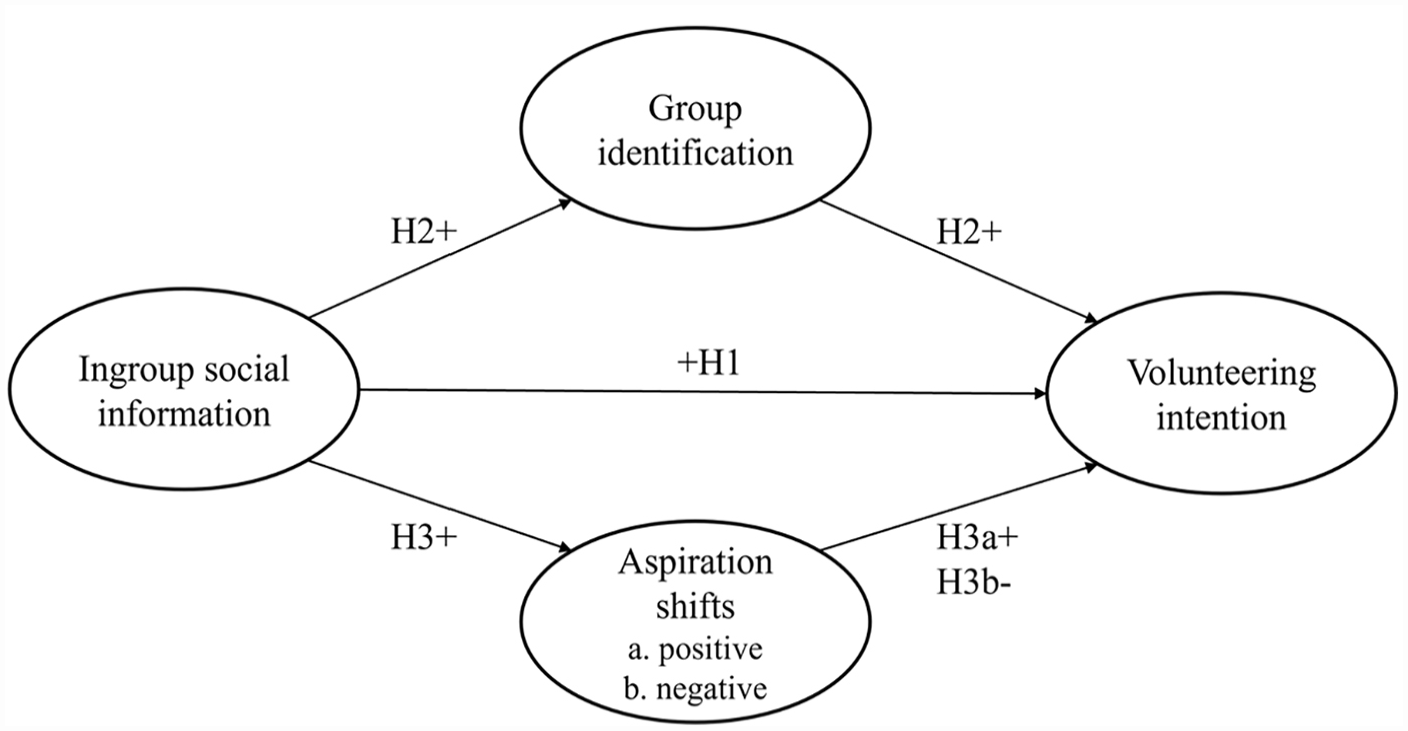
Hypothesized Multiple Mediation Model.
Data and Methods
To investigate the proposed research model, we conducted a survey-based experiment. The data and code that produce the findings and Supplemental Materials are available at the Open Science Framework (OSF, https://osf.io/bnyft/?view_only=6427fda8d383432083278b4970388eef). The Supplemental Materials include the measuring instrument and an overview of the literature reviewed. The experiment has been approved by the ethical board at the researcher’s university.
Participants
We collected our data from a student sample between December 2019 and January 2020, as young adults in the social sphere of university represent a suitable group for investigating ingroup effects (Molloy et al., 2011). Furthermore, students are a valuable resource for volunteering due to their higher time flexibility and are thus a realistic target for recruitment by NPOs (Francis, 2011). To allow for a realistic ingroup setting, participants had to be enrolled at the same university. The invitation to participate in the survey experiment was distributed via the university’s student associations, social media platforms, and direct personal contacts. To identify the minimum required sample size for our experiment, we conducted an a priori power analysis based on our model specifications and an expected effect size relying on prior findings from Cao (2018). Cao (2018) reports an effect size of f2 = 0.06 for the effect of the presence or absence of social information on volunteering intention. Assuming a power of at least 0.8, our calculation of the required sample size led to N = 204. In total, 245 questionnaires were collected. We excluded questionnaires with failed attention checks (six cases), missing information on the dependent variable (four cases), and outliers (six cases reported unrealistically high hours of free time), leading to a final sample of 228 cases. Overall, 61.40% of the respondents were female, 38.16% male, and 0.44% diverse. The free time available after subtracting all study-related duties was 36.03 hours per week on average. About 58.33% of the respondents volunteered in their free time with an average duration of volunteer activity of 4.5 hours per week. About 79.82% of students indicated that they would stay at the university in the upcoming semester. See Table 1 for sample characteristics.
Demographic Comparison Across Groups.
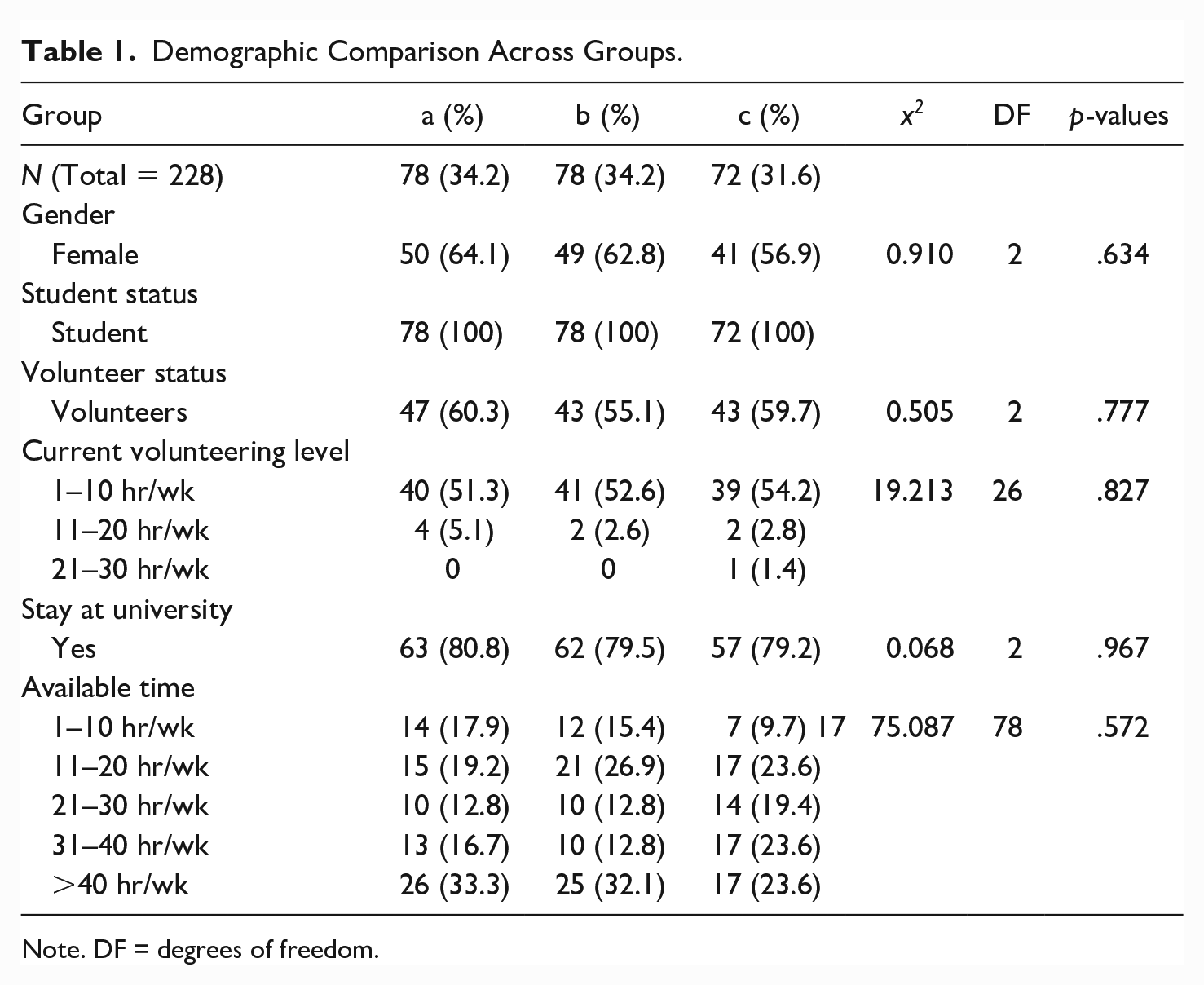
Note. DF = degrees of freedom.
Experimental Design
After a short introduction and provision of baseline information, respondents indicated their current volunteering level: Whether they were currently volunteering and if yes, how many hours per week on average. Afterward, participants were randomly assigned by the online survey software to one of three experimental vignettes with a call to volunteer for NPOs in Germany. We formulated the call without naming a specific organization or cause to prevent potential biases due to the mission of the NPO. Our call to volunteer consists of four distinct components of social information: First, the behavior the social information refers to, in our case volunteering. Second, we included the number of people volunteering which we set to 50.5% as extensive margin. Third, we provided an intensive margin with a performance level indicating the hours volunteered weekly on average, which we set to 3.5 hours weekly. Both margins are in line with data from the national volunteer survey for the year 2014 (Hameister et al., 2017). The final component, the reference group, was manipulated applying a 3 × 1 between-subject factorial design. We provide three treatments, each with a different comparison target, keeping all other information constant (Aguinis & Bradley, 2014). The vignette of the call to volunteer reads as follows: Nonprofit organizations in Germany need your support! We are looking for volunteers who want to get involved and make a positive contribution. Every year, more than 50.5% of {students at the [Name of Institution]—people in Germany—senior citizens in Germany} volunteer in non-profit organizations and initiatives. On average, every {student at the [Name of Institution]—person in Germany—senior citizen in Germany} contributes 3.5 hours per week to voluntary projects.
We chose the three reference groups for the following reasons. Based on theoretical considerations, we assumed that in the context of our experimental setting, both university students and the general population would be perceived by the recipients as their ingroup. First, students live in the same social surrounding and share a similar phase of life. Aspiring to obtain a university degree, students can be assumed to have a comparable achievement motivation and similar goals (Molloy et al., 2011). Moreover, students enrolled at the same educational institution share an official group membership. To enforce this group membership, the name of the university was explicitly included in the vignette. Controlling for student status at the specific institution, we made sure all participants were enrolled in a presence-based university setting in Germany. As our second ingroup, we choose the recipient’s fellow population. A shared location of residence is a common ingroup condition applied in prior studies investigating the effect of the fellow population (Cao, 2018). As we control for student status at the specific institution, all participants lived in Germany at the moment of participation in our study. As third reference group, we presented social information about senior citizens who function as an outgroup for university students. Senior citizens exhibit substantially less similarity with university students due to factors such as age and phase of life. Hence, they are likely to be perceived as an outgroup (Cadieux et al., 2019).
After presenting the vignette, we assessed our outcomes of interest. We asked participants to indicate their intention to volunteer with a German nonprofit organization after reading the call. Furthermore, participants indicated the aspired level of volunteer engagement in the upcoming weeks (in hours per week) and their group identification with the reference group. Furthermore, we included a manipulation check, questions to control for social desirability response biases and an attention check. The experimental design is shown in Figure 2.
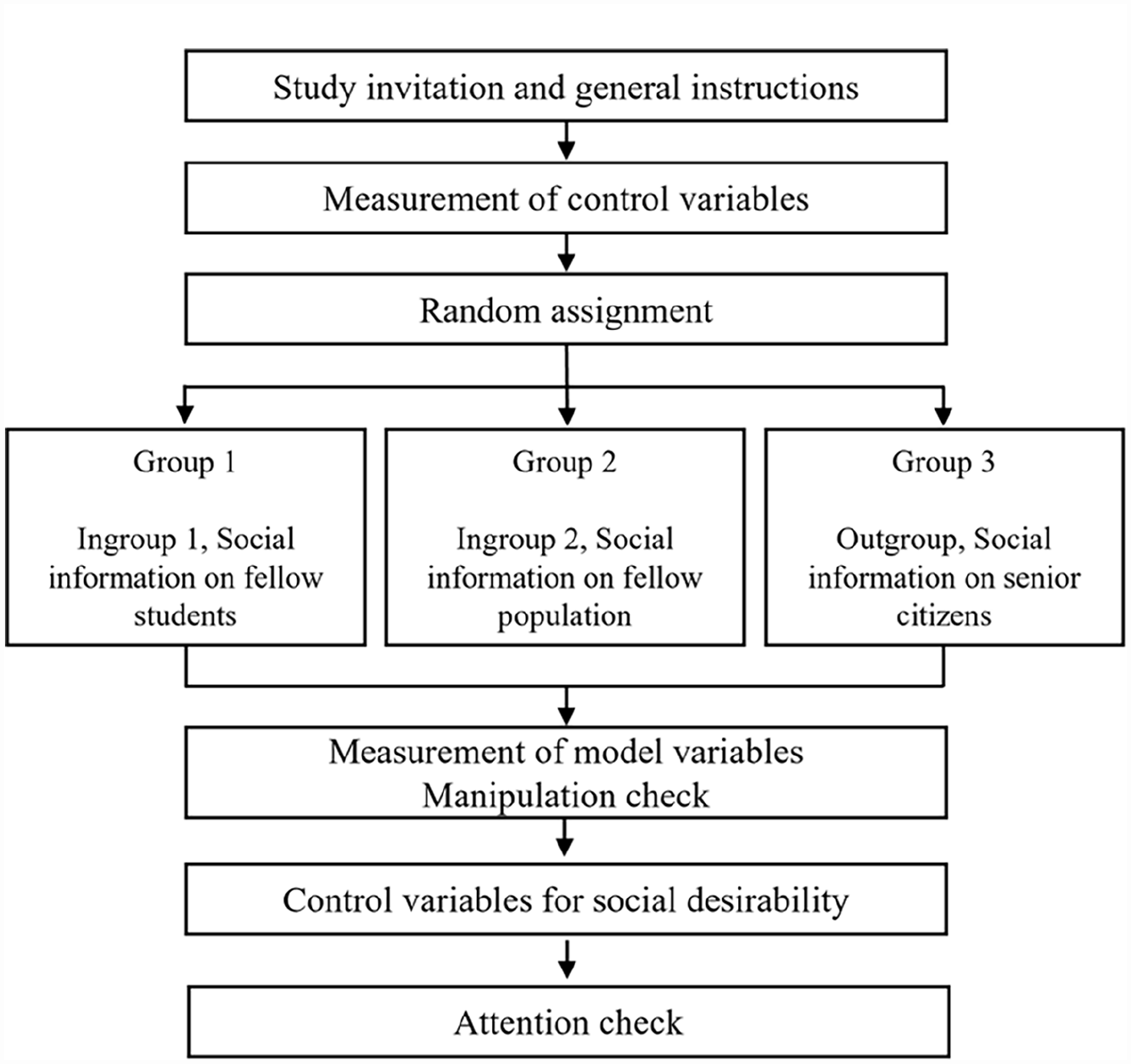
Experimental Design.
Measures
All scales and items were adopted from the literature. We used global scales when measures referred to explicit reactions or ask for directly measurable values (Hair et al., 2017).
Data Analysis
To analyze differences between the experimental groups, we conduct a one-way analysis of variance (ANOVA) and t-tests using the statistical software SPSS. To assess the proposed relationships between the constructs, we apply a variance-based partial least squares structural equation modeling approach (PLS-SEM) (Breitsohl, 2019) estimating ordinary least squares regressions (Hair et al., 2014). PLS-SEM is especially appropriate for our study, as it can handle complex theoretical systems like the proposed multiple mediation model with two mediators and several categorial treatment groups (Hair et al., 2014; Iacobucci, 2012) and fits non-normal distributed data (Reinartz et al., 2009). The path analysis is performed in the software program SmartPLS 3 (Ringle et al., 2015). 1
We follow the guidelines for statistical mediation analysis with multicategorial independent variables proposed by Hayes and Preacher (2014). To allow for comparison between more than two experimental groups in a multiple mediation model with categorical independent variables, an indicator coding system is introduced. K-2 dummy variables are chosen to represent the k = 3 levels of the categorical variable of our treatments (Hair et al., 2014). The two dummy variables are expressed as D1 (ingroup 1 [IN1]) and D2 (ingroup 2 [IN2]) and set to 1 whenever a case was part of a group and 0 if not. The outgroup functions as the comparison group in the subsequent analysis (Hayes & Preacher, 2014).
Display of Results
Hypothesis Testing
Prior to the hypothesis testing, the sample data set is examined with respect to underlying statistical assumptions. Testing for multivariate normality of the model variables, both the Kolmogorov–Smirnov and a Shapiro–Wilk test yielded significant results (p < .001) for all constructs, indicating that the sample data were not normally distributed. A mean-based Levene test, to check for homoscedasticity, yielded an insignificant result for volunteering intention, F = 1.311, p > .05, confirming the similarity of variance across the experimental groups (Hair et al., 2014). Harman’s (1976) single-factor test shows 25.81% (Model 1) and 25.69% (Model 2) of variance explained by the first factor; hence, our results are unlikely to be affected by common method bias.
To assure that the experimental results are not confounded by systematic differences among the experimental groups, we confirm the successful randomization among the treatment groups by means of a one-factorial ANOVA showing insignificant differences between the group means (p >.05 for all variables; see Table 2). To account for potential social desirability biases, mean difference tests yield no significant differences for the three experimental groups (all p > .106; see Appendix A).
Randomization Check.
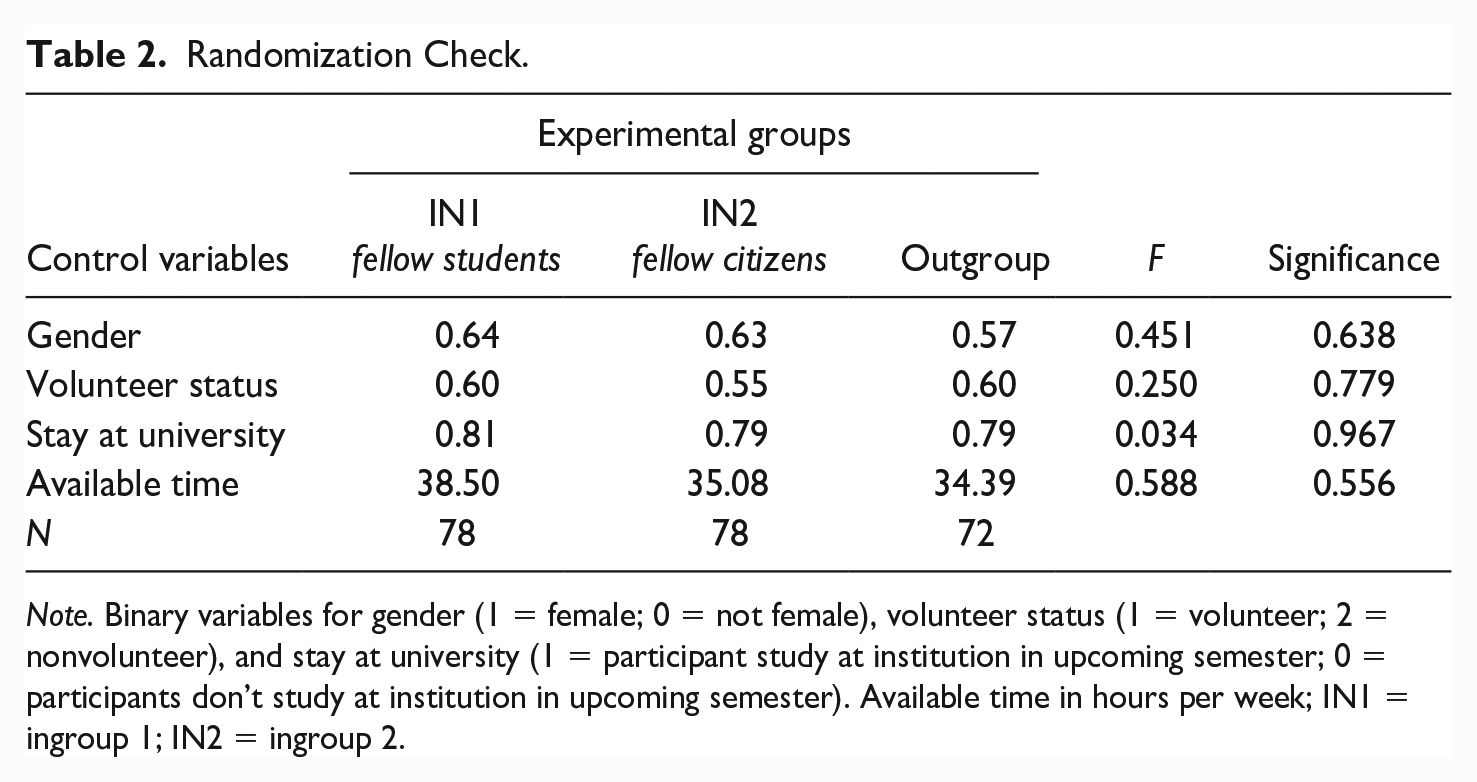
Note. Binary variables for gender (1 = female; 0 = not female), volunteer status (1 = volunteer; 2 = nonvolunteer), and stay at university (1 = participant study at institution in upcoming semester; 0 = participants don’t study at institution in upcoming semester). Available time in hours per week; IN1 = ingroup 1; IN2 = ingroup 2.
Next, we assess the manipulation check for perceived relevance across the three treatments. We apply t-tests despite non-normality of our data due to a sufficiently large group sample size (Döring & Bortz, 2016). Results confirm that the perceived relevance is significantly different between the outgroup and IN1, F = 1.182, p < .001, and IN2, F = 3.059, p <.001, respectively, confirming the successful manipulation (see Appendix B for detailed results). The graphic in Figure 3 shows the differences in sample means.
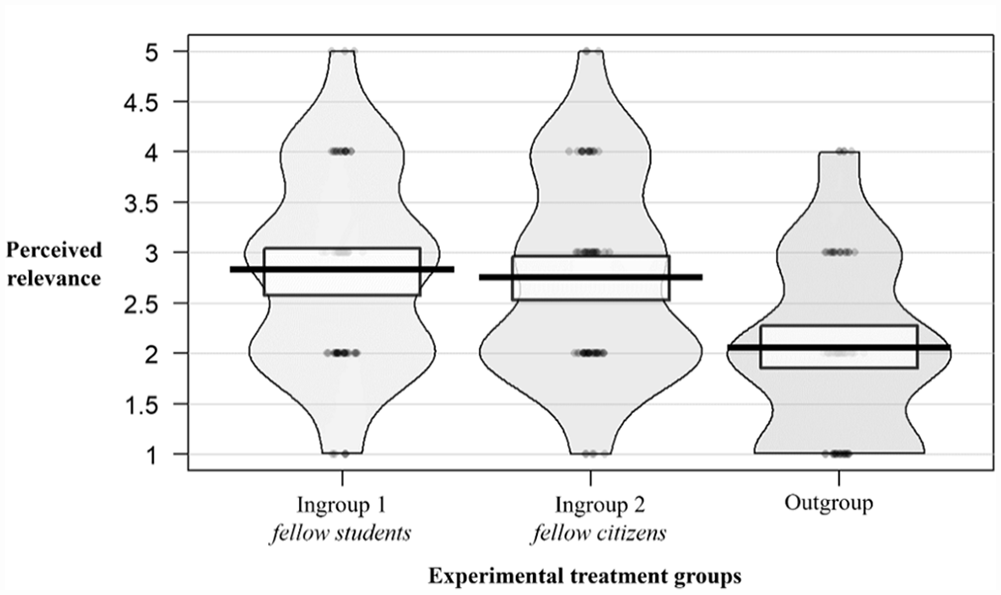
Mainpulation Check.
To test our hypotheses using PLS-SEM, we consecutively analyze the two main model parts, the outer model and the inner model. The outer model evaluates the measurement model and provides information about the measurement model fit to account for validity and reliability of the chosen scales (Hair et al., 2017). Cronbach’s alpha and composite reliability are used to evaluate the internal consistency of the measurement scales (Hair et al., 2017). All scales employed show high internal consistency with values exceeding 0.7 for Cronbach’s alpha and composite reliability. The average variance extracted (AVE) values are above 0.5, indicating that more than 50% of the variance of the indicators are explained by the construct, providing support for sufficient convergent validity (Hair et al., 2017). We can confirm discriminant validity, as all heterotrait–monotrait ratio of correlation (HTMT) values are below 0.85 (Hair et al., 2017).
Analyzing the inner model, the PLS algorithm evaluates the relationships between the latent variables by maximizing the variance (R2) in the endogenous variables explained by the latent variables related to it. To run the algorithm, we apply the recommended path weighting scheme, which generally provides the highest R2 values for the endogenous variables (Hair et al., 2017) and activates raw data transformation to generate standardized data for the variables. To assess significance, we use bootstrapping with 5,000 bootstrap samples (Hair et al., 2017). To examine the predictive capacity of the research model, we provide Stone–Geisser’s Q2 values via a blindfolding procedure with a recommended omission distance of D = 7 (Hair et al., 2017). We report the structural model analysis results in Table 3 (see Appendix C for path model setups).
Structural Model Analysis.
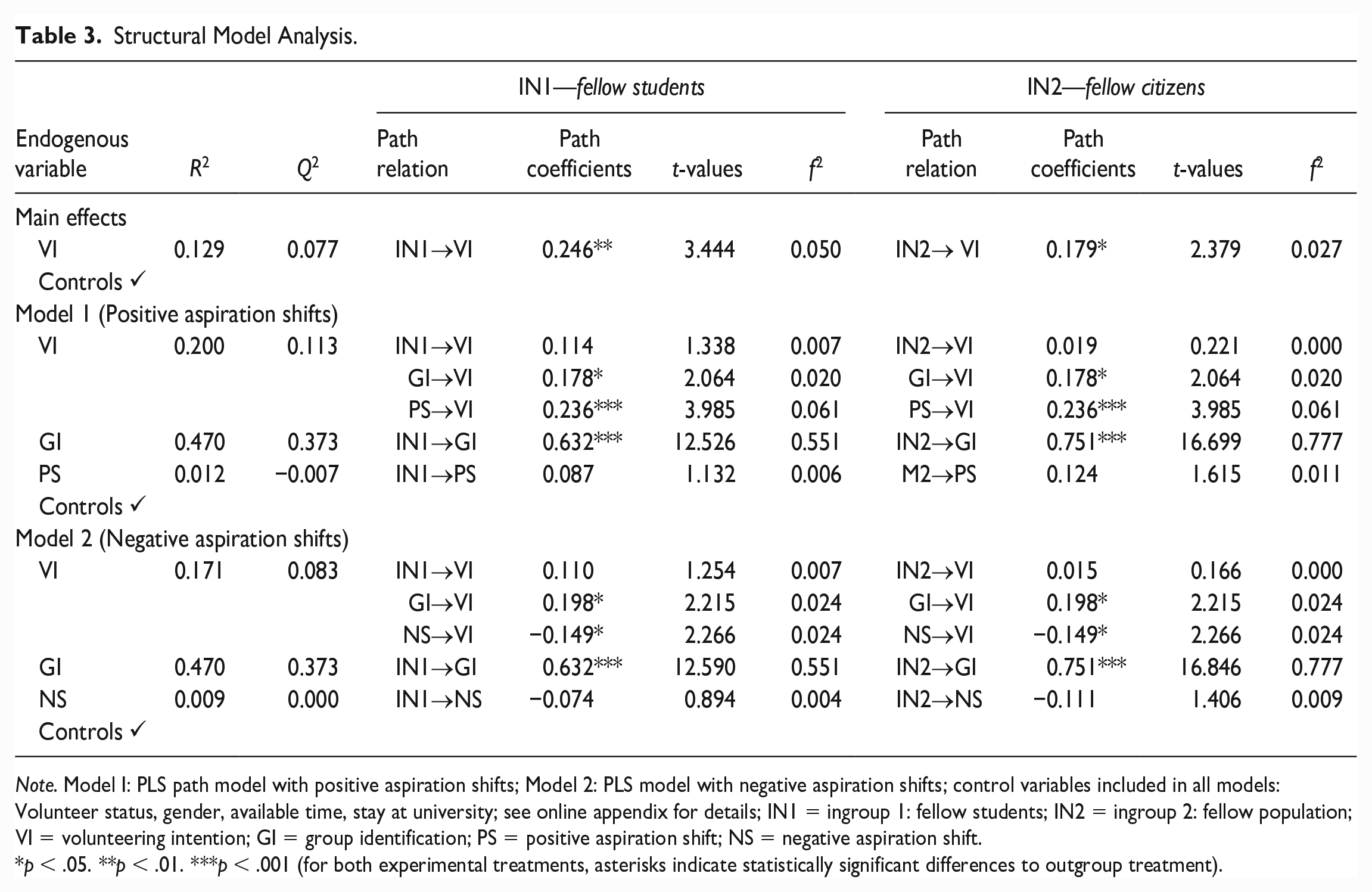
Note. Model I: PLS path model with positive aspiration shifts; Model 2: PLS model with negative aspiration shifts; control variables included in all models: Volunteer status, gender, available time, stay at university; see online appendix for details; IN1 = ingroup 1: fellow students; IN2 = ingroup 2: fellow population; VI = volunteering intention; GI = group identification; PS = positive aspiration shift; NS = negative aspiration shift.
p < .05. **p < .01. ***p < .001 (for both experimental treatments, asterisks indicate statistically significant differences to outgroup treatment).
In line with the procedure of mediation analysis, we first analyze the main experimental effects of the two ingroups on volunteering intention. Despite having confirmed the successful randomization between all experimental treatments, we explicitly include the control variables into the model to avoid potentially confounding effects of the path relationships. Recipients of both IN1 (0.246, p < .01) and IN2 (0.179, p < .05) treatment show a statistically significantly higher volunteering intention compared with the outgroup treatment recipients. Evaluating the goodness of fit of our model, the main effects of the experimental treatments account for R2 = 0.129 of variance in volunteering intention and show a small out-of-sample predictive power of Q2 = 0.077 (see Table 3). Considering effect sizes, both main ingroup effects (IN1: f2 = 0.050; IN2: f2 = 0.027) on volunteering intention are small (Hair et al., 2017). Thus, we confirm H1.
Subsequently, we jointly introduce the two mediators and calculate the structural model for positive (Model 1) and negative aspiration shifts (Model 2) separately. Including both mediators into our model, R2 is increased to a value of R2 = 0.200 (Model 1) and R2 = 0.171 (Model 2), indicating the models’ predictive relevance (see Table 3). Q2 is increased to Q2 = 0.113 (Model 1) and Q2 = 0.083 (Model 2), describing a medium predictive relevance of the models. Table 4 summarizes the mediation effects in both models. We report p values and CIs obtained in the bootstrapping analysis indicating the statistical significance of the direct and indirect path relationships.
Summary of Mediating Effects and Hypothesis Testing.
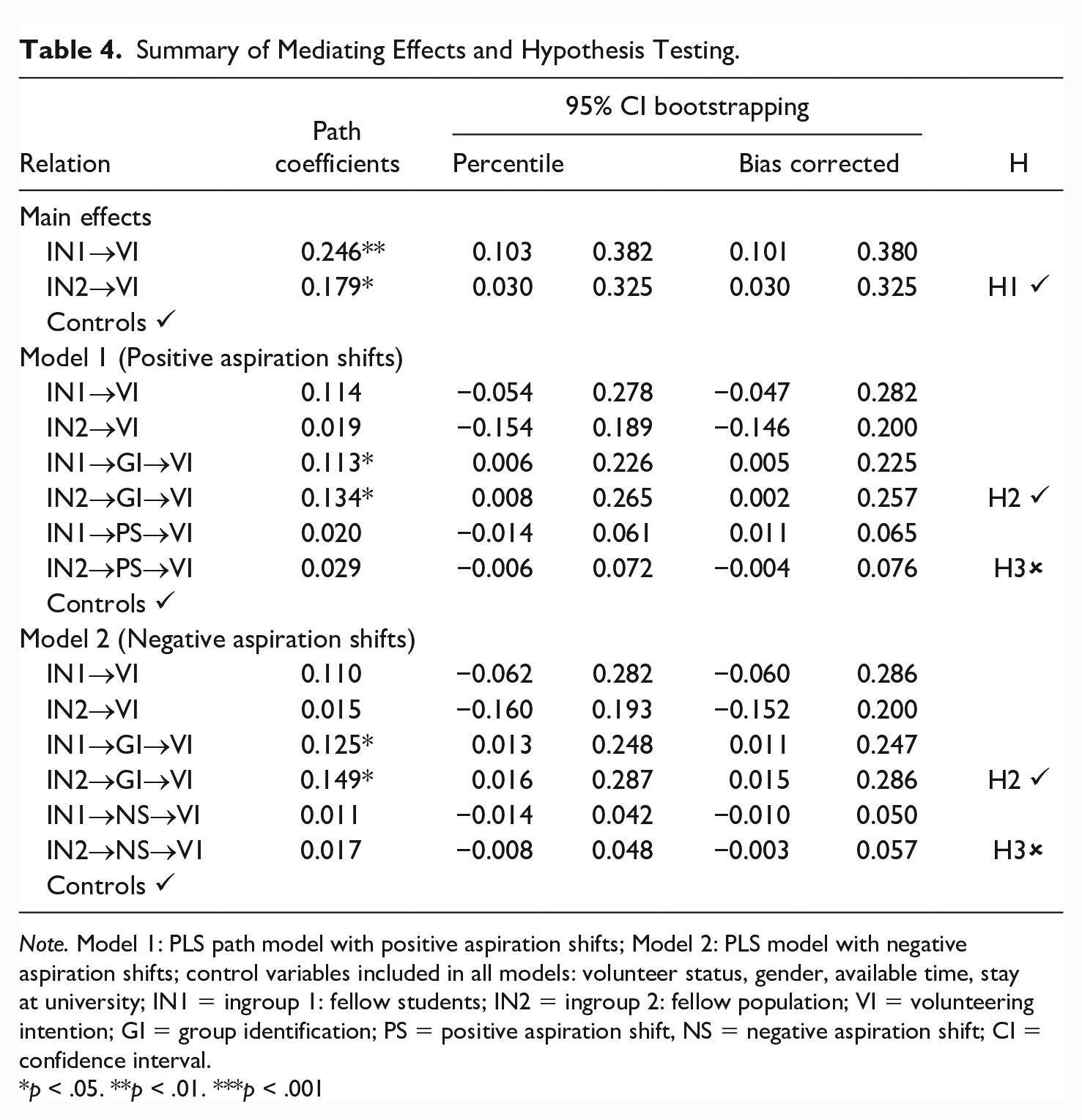
Note. Model 1: PLS path model with positive aspiration shifts; Model 2: PLS model with negative aspiration shifts; control variables included in all models: volunteer status, gender, available time, stay at university; IN1 = ingroup 1: fellow students; IN2 = ingroup 2: fellow population; VI = volunteering intention; GI = group identification; PS = positive aspiration shift, NS = negative aspiration shift; CI = confidence interval.
*p < .05. **p < .01. ***p < .001
We hypothesized a positive mediation effect of the relationship between social information and volunteering intention through group identification (H2). Both IN1 (0.632, p < .001) and IN2 (0.751, p < .001) exhibit a statistically significantly higher level of group identification compared with the outgroup, which is in turn positively related to volunteering intention (Model 1: 0.178, p < .05; Model 2: 0.198, p < .05). Both ingroup treatments have large relative effects on group identification with an effect size of f2 = 0.551 (IN1) and f2 = 0.777 (IN2), respectively. In turn, there is a small effect of group identification on volunteering intention (f2 = 0.020) (see Table 3). As the indirect effects are statistically significant in both models (IN1: 0.113, p < .05 and .125, p < .05; IN2: 0.134, p < .05 and .149, p < .05), while the direct effect is no longer statistically significant after introducing group identification as mediator, there is an indirect-only mediation of the relationship between ingroup social information and volunteering intention in both model setups (Zhao et al., 2010). Hence, we confirm H2.
Regarding aspiration shifts, neither of the two ingroups significantly differs statistically from the outgroup regarding positive aspiration shifts (Model 1) and negative aspiration shifts (Model 2). While the reference group has no statistically significant impact on aspiration shifts, both positive aspiration shifts (0.236, p < .001) and negative aspiration shifts (−0.149, p < .05) are statistically significantly related to volunteering intention, such that positive aspiration shifts lead to an increase in volunteering intention, while negative aspiration shifts lead to a decrease in volunteering intention. The effect of positive (f2 = 0.061) and negative (f2 = 0.024) aspiration shifts on volunteering intention is small (see Table 3). Overall, we find no mediation effect of aspiration shift on the relationship of ingroup social information and volunteering intention, and hence, we reject H3.
Sensitivity Analysis
In a last step, we explore the role of aspiration shifts in more detail. We analyze how reactions to social information depend on the performance level (intensive margin) of 3.5 hours of volunteering per week, provided in the experimental vignettes for all three groups. We split every treatment group into participants whose initial volunteering level lay either above or below this performance level. Using paired t-tests, we compare the current volunteering level with the aspired volunteering level in the future in those six subgroups and evaluate both the direction of possible shifts and their statistical significance (see Appendix D for detailed results). Figure 4 illustrates the up- and downward shifts of aspiration in the six subgroups.
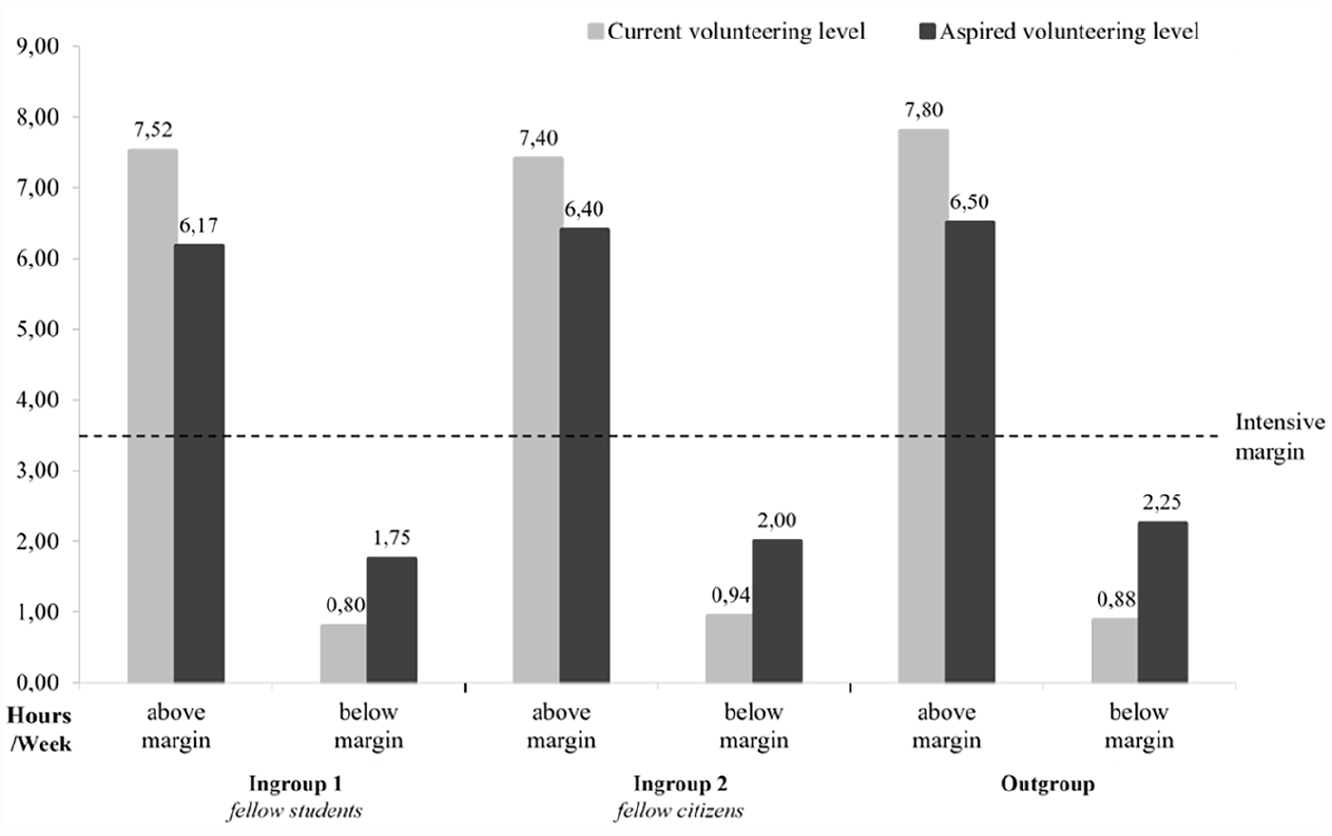
Aspiration Shifts in Relation to Social Information Performance Level.
Results show that independent of the treatment groups, participants whose initial volunteering level lay above the anchor of 3.5 hours per week express aspirations lower than the current volunteering level, hence a negative shift in aspiration. Conversely, those participants volunteering less than 3.5 hours per week show a positive shift and a higher aspiration relative to the initial volunteering level. Across all experimental groups, the shift of aspiration moves in the direction of the performance level of 3.5 hours, thus indicating a boomerang effect shifting volunteering intention toward the social information performance anchor.
Discussion and Future Research
By applying social comparison theory (Festinger, 1954), we investigate the effect of the variation of social information reference groups on volunteering intention and individual reactions arising within the social comparison process. The findings of our survey experiment suggest that different reference groups influence social information effects on volunteering intentions. We show that intentions for voluntary contribution are higher when social information refers to ingroups compared with outgroups. Group identification functions as a mediator in explaining this effect: As recipients identify significantly more with ingroup members, their volunteering intention increases. Overall, these findings suggest that group identification is a crucial factor driving volunteering intentions, adding to the discourse on social identity in volunteering (Drezner & Pizmony-Levy, 2021; Thoits, 2021).
Analyzing the way social information is processed, the study further provides empirical evidence that volunteering intention is predicted by aspiration shifts. Recipients self-evaluate their volunteering performance when encountering social information of performance levels. Results within this study indicate that the aspiration is anchored by social information performance levels—the intensive margin (Meyer & Yang, 2016)—instead of different reference group information. Importantly, instead of relevant social groups, mere relative performance level information induces an intention of individuals to reduce nonconformity and imitate other people’s performance (Festinger, 1942; Lewin et al., 1944). We find evidence that the social information performance induces a boomerang effect in volunteering intentions, similar to charitable giving (Alpizar et al., 2008). Like a boomerang, the individual volunteering intention approaches the performance level displayed in the social information. Our findings suggest a demotivating effect for recipients with volunteering levels above, and a motivating effect for recipients with volunteering levels below the social information anchor level. This confirms previous findings in the literature suggesting that recipients aim to reduce tensions related to nonconformity with the reference group (Quaglia & Cobb, 1996) and is consistent for social information across different comparison groups.
Our findings confirm and stress the need to distinguish different social information components (Meyer & Yang, 2016), such as the reference group and performance level, in volunteering as they trigger different and independent mechanisms within social comparison processes. On one hand, social information on reference groups can increase the volunteer intention via group identification if the target group is perceived to be an ingroup. On the other hand, social information on performance levels induces changes in volunteering intention via aspiration shifts across different targets, independent of the perceived relevance the target group has for an individual.
With these results, we contribute to both the social information and the volunteering literature threefold. First, we add to the understanding of social information in volunteering as a multipart construct affecting the social comparison process in different ways. Highlighting distinct components of social information brings more clarity to the way social information should be investigated and discussed in future research and applied in practice. Second, we confirm social information ingroup effects in volunteering decisions. With this finding, we not only provide evidence for the overall importance different types of social information play for volunteering decisions (Cao, 2018; John et al., 2019; Moseley et al., 2018), but generate insights how different social information reference groups influence volunteering outcomes. Third, we add to the understanding of mechanisms driving social information effects on volunteers and identify additional paths explaining social information effects.
Our findings are relevant for practitioners, as we provide implications for NPOs on the effective use of social information in the context of volunteer recruitment campaigns. Those implications are especially valuable due to a potential detrimental effect of social information hypothesized in the literature (van Teunenbroek et al., 2019). We recommend that nonprofit managers consider two key strategic elements of social information separately: Social information of reference groups can be constructed in a way that promotes group identification, to increase the willingness to participate in volunteering activities, by pointing out the volunteering activity of groups the recipients identify strongly with, for example through storytelling. Second, NPOs can provide social information on group performance in combination with a performance level. However, the performance level needs to be selected with care to trigger motivating effects (when the anchor exceeds the current level of the recipient’s volunteering) and avoid demotivating effects (when the anchor is lower than the current volunteering level of the recipient). A prior analysis of current volunteering levels of the predefined target groups is helpful to tailor the recruitment messages specifically to distinct groups with the employed anchor levels adapted to the amount of volunteering already done.
This study has some limitations which open areas for future research. Despite being close to university students’ real-life situation as volunteering calls are quite common in the university setting and, therefore, likely to be relatable to students, the experiment is based on a hypothetical scenario, which reduces the ecological validity compared with field experiments or observation (Highhouse, 2009). Future research could analyze actual volunteering calls from NPOs including social information to meet this limitation. Furthermore, as done frequently before in volunteering research (Bang et al., 2019; Cao, 2018), we measure intentions as outcome of social information and not the actual volunteering behavior. While research has shown that intention strongly and positively predicts the actual behavior (Fishbein & Ajzen, 2010), a clear limitation of this study is that behavioral outcomes may differ from the expressed intention. Hence, future research is needed to analyze whether the intention shifts through social information found in our study truly translate into shifts in hours volunteered. This may for example be done through longitudinal research designs.
Moreover, due to our experimental setup, we investigate differences between ingroup and outgroup social information effects in volunteering. Consequently, our findings must be interpreted strictly as a comparison between the presented treatment groups. We did not investigate the effect of the mere presence as compared with the absence of social information. While this has been investigated in prior studies (Cao, 2018), future research should integrate both approaches to further advance the research on social information reference groups.
In line with our experimental design, we used a snowball sampling approach that was driven by the condition of enrollment at the university. While done frequently in the nonprofit literature, this approach comes with limitations as convenience samples may reduce the representability with regard to the overall population (Jeworrek & Mertins, 2022; Knowles & Gomes, 2009). In addition, using a student sample may reduce the external validity of our findings (Bodem-Schrötgens & Becker, 2020). While we base our conceptual model on theories from social psychology, which are likely to apply to humans in general, future research is required to investigate whether our findings can be transferred to nonstudent groups as well. Moreover, 55% to 60% of our study participants are volunteers, which is above the average of German young adults (Federal Ministry for Family Affairs, Senior Citizens, Women and Youth, 2021). However, our sample may well be representative of student volunteering activity in Germany, as a higher education status is associated with more volunteering activity (Federal Ministry for Family Affairs, Senior Citizens, Women and Youth, 2021). However, until transferred into other contexts by future research, our findings should be discussed in the context of student volunteering. Following Francis (2011), we argue that young volunteers in the sphere of universities constitute a valuable resource for NPOs and provide valuable insights into future trends in volunteering relevant to nonprofits in the long term (Bodem-Schrötgens & Becker, 2020).
Finally, apart from the two mechanisms identified in this study, there may be additional paths through which social information affects volunteering intention (Bang et al., 2019; Cao, 2018). Future studies should explore other mechanisms that contribute to explaining volunteering intentions. For example, researchers could replicate this experiment with concepts such as felt stress level or jealousy, to get a more complete picture of emotional reactions to social information. Overall, the field of social information and volunteering provides many opportunities for future research and is of growing importance for NPOs to tackle the challenge of decreasing voluntary contributions.
Footnotes
Paper Appendices
Aspiration Shifts in Relation to Social Information Performance Level.
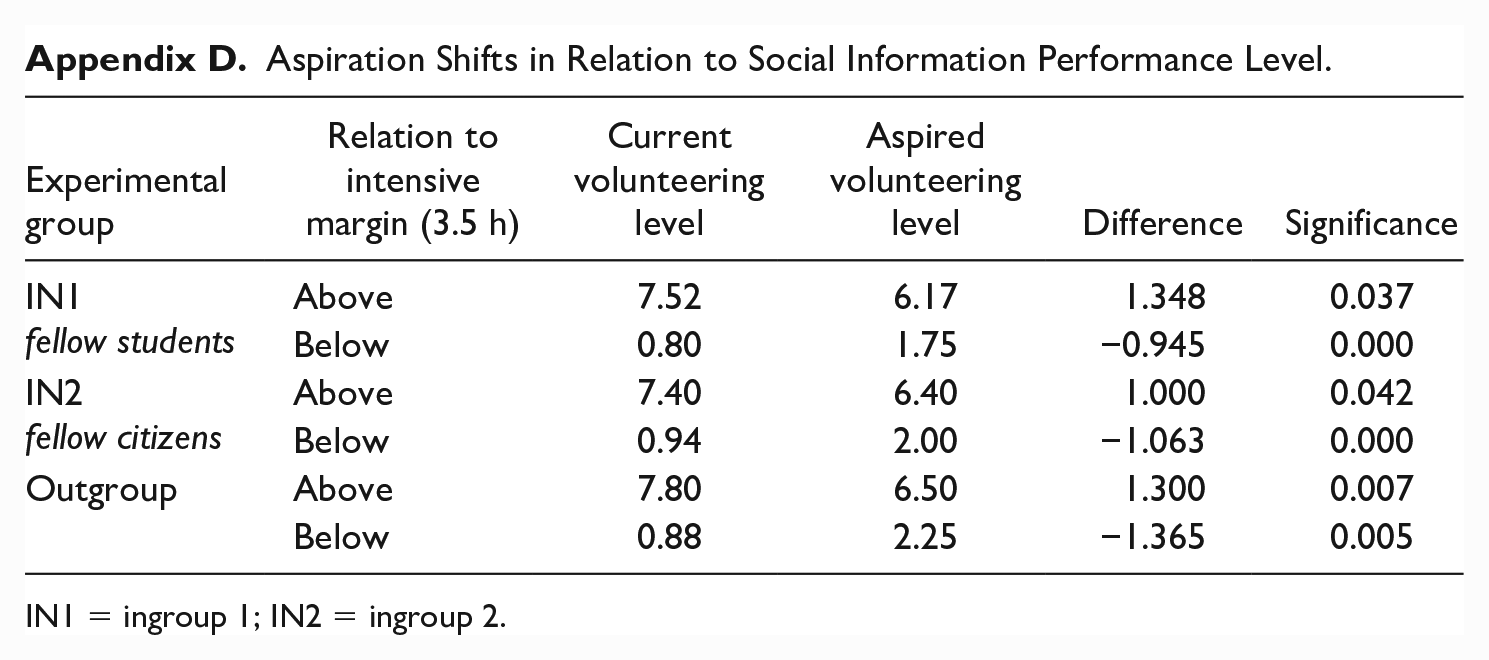
| Experimental group | Relation to intensive margin (3.5 h) | Current volunteering level | Aspired volunteering level | Difference | Significance |
|---|---|---|---|---|---|
| IN1 fellow students |
Above | 7.52 | 6.17 | 1.348 | 0.037 |
| Below | 0.80 | 1.75 | −0.945 | 0.000 | |
| IN2 fellow citizens |
Above | 7.40 | 6.40 | 1.000 | 0.042 |
| Below | 0.94 | 2.00 | −1.063 | 0.000 | |
| Outgroup | Above | 7.80 | 6.50 | 1.300 | 0.007 |
| Below | 0.88 | 2.25 | −1.365 | 0.005 |
IN1 = ingroup 1; IN2 = ingroup 2.
Data Availability Statement

Declaration of Conflicting Interests
The author(s) declared no potential conflicts of interest with respect to the research, authorship, and/or publication of this article.
Funding
The author(s) received no financial support for the research, authorship, and/or publication of this article.